
Joseph Sciuto's Blog: A Curious View: A Compilation of Short Stories by Joseph Sciuto, page 4
January 27, 2025
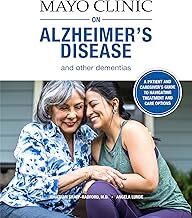
“MAYO CLINIC ON ALZHEIMER’S DISEASE AND OTHER DEMENTIAS.”
About a half a year ago I lost a childhood friend to Dementia. Like so many kids in the Bronx we grew up on basketball courts in a housing project called Parkchester. My friend was around 6ft. tall and built like a bull with broad shoulders that seemed like they could block out the sun. Needless to say, it was nearly impossible to box him out under the basket and grab a rebound.
He was diagnosed with dementia a few years back, and it moved rapidly through his brain and at the end, this mighty basketball warrior, looked like a skeleton.
I had read many articles on Alzheimers’ and Dementia and when talking to a close friend of mine whose mother was suffering from dementia I told her about a new procedure that could stop Dementia if diagnosed early enough. The only problem was that the procedure and research I told her about dealt with Depression, not dementia. When it was pointed out to me by a doctor friend I felt terrible and since then I have not been able to get in touch with my friend whose mother is suffering from dementia.
My false claim has haunted me ever since. I was so sure I was giving my friend a slice of hope in an otherwise dark arena.
Since then, I have made it a priority to get to know as much about Alzheimers’ and dementia as I possibly could and I started by reading the Mayo Clinic’s book on “Alzheimers’ and Dementia” written by Jonathan Graff-Radford, M.D. and Angela M. Lunde, M. A.
The book is a comprehensive look at the differences between Alzheimer’s disease and the different types of dementia. It is guide on how caregivers could best approach and care for loved ones suffering from Alzheimers’ and dementia. It is a carefully laid out approach…starting from before a person is diagnosed, to the different stages the patient will go through, and how caregivers could best deal with the grief, sorrow, and guilt associated with taken care of a loved one suffering from dementia or Alzheimers’.
I strongly recommend this book.


January 19, 2025
“Endurance,” by Alfred Lansing.
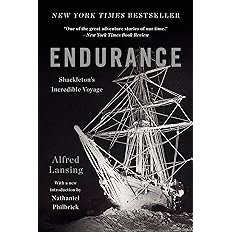
“Endurance,” was originally published in 1959 by Mr. Lansing. It received excellent reviews but its sales were not very good and its publication was stopped. It was not until three-and-a-half-decades later that it was re-leased by “Carrol and Graf” (a decade after the author’s death) and since has become a best selling novel.
It recounts polar explorer Ernest Shackleton and his crew’s voyage on the Endurance that set sail for the Antarctica in 1914 and after fighting its way through a thousand miles of packed ice, a day short of its destination, it became locked in an island of ice. For the next ten months the ice moored ship drifted until it was crushed between two ice floes.
Such began the incredible journey of survival of Ernest Shackleton and his crew. It is a story that will keep you on the edge of your seat. Simply incredible!!!!!!!!!!!
January 13, 2025
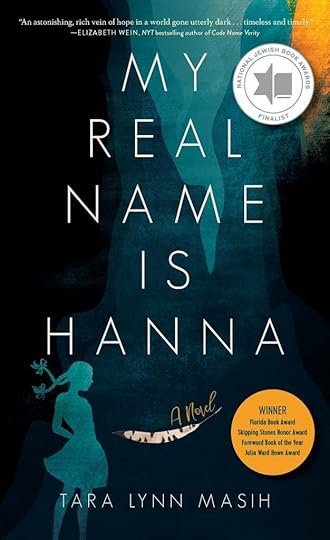
“MY REAL NAME IS HANNA,” BY TARA LYNN MASIH
Over many years, I have read numerous books on the Holocaust and for most of my life I have refused to visit Germany, Italy, and Japan because I felt that the atrocities those countries committed before and during World War 2 were unpardonable.
I have written about the Holocaust and have befriended a number of Holocaust survivors who were nice enough to tell me their painful stories.
Many people have asked me if I think I would have done anything different if I was a German soldier and my response has always been the same. “I would hope to God that I would have had at least the courage to put a gun to my head and kill myself before killing innocent women, children, and the elderly.”
It really bothered me that after Hamas’ brutal attack on Israel on October, 7, 2023 that killed over 1300 hundred innocent civilians and took a couple of hundred hostages that once Israel responded with massive force, killing tens of thousands innocent Palestinians, the narrative suddenly changed and it was Israel who was committing genocide and being blamed for carrying out a Holocaust.
Don’t get me wrong, I feel terrible about what is happening to the innocent Palestinians, but to hear college students across our campuses protest the killing of the Palestinians and calling Israel’s response to Hamas’ attack genocidal and a Holocaust tells me that they are ignorant and need to take some history lessons on the Jewish Holocaust that killed over six million innocent Jews during World War 2 and the genocide of Jews throughout history dating back over two thousand years.
A week ago I wrote a review on John Boyne’s, “All the Broken Places,” that dealt with the culpability of a twelve year old German girl, whose father was the commander of one of the most notorious concentration camps during World War 2, who escaped to Paris before the allies could arrest her. I ended the review by writing, “that Mr. Boyne’s book is a reminder that to forget the lessons of history is as much a crime as a twelve year old girl witnessing these crimes and doing nothing.”
Ms. Maish’s historical novel, “My Real Name is Hanna,” is a powerfully told story about the Nazis’ genocide of one-and-a-half million Ukrainian Jews during the German invasion of that country. It is told through the eyes of a young Teenage girl name Hanna whose family and relatives have to leave their home in a small Ukrainian city and first hide out in a cabinet deep in the forest and finally for nearly a year live in a tunnel of caves further into the forest to escape the Germans and the Ukrainian non-Jews who cooperate with the Germans.
Hanna’s family, relatives and friends are traditional Jews who celebrate the holidays and practice their religion diligently but as their survival becomes more and more endangered, battling sickness and starvation, they need to compromise many of those traditions but never their morality and kindness toward their fellow human beings in dire situations.
Hanna is an unforgettable character but she is just one of many unforgettable, extremely well developed characters in this must read novel. Ms. Masih’s writing is not as descriptive as in a previous collection of wonderful short stories I read, but one nevertheless gets an haunting, memorable feeling for the forest and the deep dark tunnel of caves they are forced to hide in…not from the foxes or bears or owls but from the immoral and unethical German soldiers and their Ukrainian accomplices.
Another remarkable work from this amazingly talented writer.
January 8, 2025
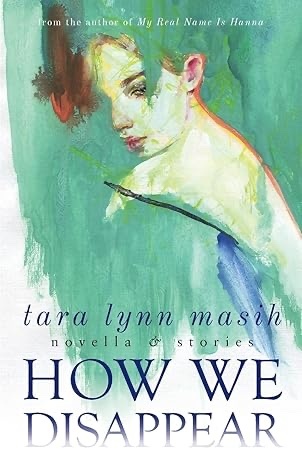
“HOW WE DISAPPEAR,” BY TARA LYNN MASIH.
It was late spring 1982 and I was attending one of my final classes before graduating from lovely Stony Brook University. The class, “The Modern Novel,” was taught by Professor Louis Simpson (Pulitzer Prize winning poet and World War 2 hero).
Toward the end of the class, a student asked the question, “Professor Simpson, do you think the novel is the best form of writing to express your ideas and opinions? After all, it gives you the longest latitude to get across your message.
The Professor studied the student for a long quizzical moment and then simply shook his head and replied, “And what makes you believe that length matters in how good or poor a piece of writing is? If you remember the novels we studied in this class, “Heart of Darkness, The Sun Also Rises, and A Portrait of the Artist as a Young Man,” they are all considered relatively short novels and yet hold the distinguished honor of being considered three of the greatest novels ever written.
“Length has nothing to do with the quality of writing, the expressing of ideas or opinions, or the effect it has on the reader. I have spent more time analyzing Hemingway’s short story, The Snows of Kilimanjaro than I have spent on Tolstoy’s 800 page novel, Anna Karenina.
“I have spend a lifetime analyzing T.S. Elliot’s poem, The Wasteland while I don’t think I have spend 5 minutes thinking about Hemingway’s 450 page novel, For Whom the Bell Tolls, which reads more like a screenplay written for Hollywood than any great piece of writing.
“In the case of writing, size really doesn’t matter. It’s quality that matters.”
I fully agree with Professor Simpson and I imagine most writers, teachers, and professors of literature would agree. I personally love all forms of writings, including letters, novellas, critical essays, etc. The most important quality I look for in all writing is HONESTY, and in Tara Lynn Masih’s, “How We Disappear (a novella and a collection of short stories)” I found honesty running through the entire collection like blood through the body.
In fact, in the final piece, a novella titled “An Aura Surrounds That Night,” I felt the writing to be so honest and powerful that I went back and read it a second time I was so convinced it had be biographical.
The title of the collection can be somewhat deceiving (even though I love the title). One can disappear in many ways and in all the stories that is exactly what happens creating a collection so varied and a collection with so many great characters and storylines that it is impossible not to be highly, highly impressed with the writing.
Ms. Masih chooses many different locations, including the Dakotas, Puerto Rico, France, England, Arizona, The Netherlands, Canada, Mississippi, and Long Island. Her writing is descriptive and you get a real feel for all the locations that are very much well developed characters in the stories.
I liked all the stories and if I had to pick my very favorites they would be Delight, Agatha, Bird Man, If You Had Stopped, and the novella, An Aura Surrounds That Night.” One is about a deformity that a lady has to cope with, one about a famous author, one about the body of a dead pilot shot down and killed over the Netherlands, one about a makeshift fruit stand on a highway, and the novella about a family farm on Long Island.
A truly remarkable collection which I highly, highly recommend.
January 7, 2025
The Transformative Power of Love in ‘Miracle of the Rising Sun’

The novel encourages us to open our hearts to others, offer support, and create loving connections to help us overcome our challenges. Love, in its many forms, can transform lives and bring healing and happiness.
Joseph Sciuto’s novel “Miracle of the Rising Sun” highlights the power of love to heal and transform lives. It explores how love helps the characters in the novel overcome their traumas and find hope and happiness.
In the novel, Nick and Alicia’s relationship is a central example of the healing power of love. Nick, a wartime reporter with PTSD, and Alicia, a supermodel recovering from a brutal attack, find solace in each other. Their love helps them heal from their past traumas and see a hopeful future. This shows us that love can provide the strength and support needed to overcome even the most difficult challenges.
The novel also portrays the importance of creating a family of choice. The characters, who are initially strangers, come together to form a supportive and loving family: Bee, a ten-year-old girl. Christine, a mother struggling with guilt, and others all find a sense of belonging and acceptance within this new family. This demonstrates that love and support can come from unexpected places and that we can create our own families to help us through tough times.
Acts of kindness play a significant role in the characters’ journeys. Small gestures of love and support, such as listening, helping, or simply being there for someone, make a big difference in their lives. These acts of kindness help to build trust and create a sense of safety and belonging. The novel reminds us that even small acts of love can profoundly impact someone’s life.
“Miracle of the Rising Sun” teaches us about the transformative power of love. Nick and Alicia’s relationship, the creation of a family of choice, and acts of kindness all show how love can heal and bring hope. The novel encourages us to open our hearts to others, offer support, and create loving connections to help us overcome our challenges. Love, in its many forms, can transform lives and bring healing and happiness.
Crafting Stories That Echo the Human Spirit
January 5, 2025
“ALL THE BROKEN PLACES,” BY JOHN BOYNE.
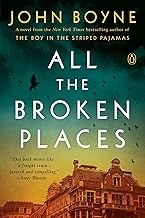
This is the first novel I have read by Mr. Boyne but it most certainly will not be the last. It reads like a race car going at two hundred miles an hour. It is exceptionally well written and the character of Gretel, a ninety-one-year-old lady, who lives alone in a fashionable part of London is unforgettable.
The daughter of a father who was the commandant of one of the Reich’s most notorious extermination camps escapes to Paris before her mother and she are arrested by the allies and put on trial and possibly sentenced to death like her father.
Gretel, who is twelve years old, when they escape to Paris is forever traumatized, regardless of how hard she tries to forget, by what she witnessed and was complicit to, yet remained quiet; fearful that she might some day be recognized, arrested, and have to spend the rest of her life in prison. She lives under aliases throughout her life.
Gretel is the narrator of the story which switches from the time she lived with her parents, to the time after the war and her life in Paris and Australia and finally to her life in London and to the present day.
At the center of this amazing story is the question of complicity. After all, Gretel is only twelve when she escapes with her mother.
The Holocaust is a subject that has riveted me throughout my life. I have written about it, read numerous books on it, and have known and befriended survivors of the Holocaust. For a good part of my life I refused to ever visit Germany or Italy because of their complicity in starting World War 2 and the unpardonable atrocities that would be released on the European continent and beyond.
I have been asked numerous times about the crimes against humanity that took place in these camps, “And do you think if you were a young German soldier that you would have acted any differently?”
And my response has always been, “I would hope to God that before I killed innocent women, children, and the elderly, that I would have the courage to at least put a bullet to my head.”
“All the Broken Places,” is a book that should be read not only for its historical value but in my lifetime I have not seen a decrease in anti-Semitic rhetoric and behavior but a frighten increase and Mr. Boyne’s novel is a reminder that to forget the lessons of history is as much a crime as a twelve year old year witnessing these crimes and doing nothing.
December 31, 2024
“THE ENCHANTED,” BY RENE DENFELD.
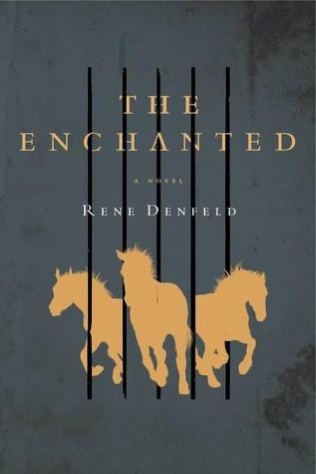
Wow! After reading numerous books on the Russian Gulags, looked at dozen of movies about prison life, read Capote’s “In Cold Blood,” I thought I might have become a little de-sensitized to stories about prison life but boy was I wrong.
Ms. Denfeld’s novel, “The Enchanted,” is truly a stunning departure from anything I have read about prisons, death-row inmates, the legal system, and the people who work in such environments.
It’s as though she has taken the harsh reality of Joseph Conrad, the musical and magical aspects of Toni Morrison and Capote, added her own investigative style and has created a transcendental, enchanting, yet chilling story about death row inmates and those who work in and around the prison system.
A truly remarkable achievement.
December 15, 2024
WENDY WATERS “MIRIAM:LA COLOMBE BLANCHE.”
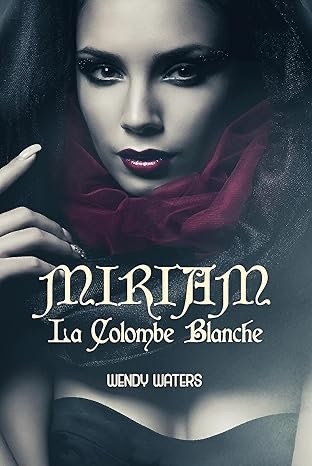
By almost all measures, Ms. Waters would be considered an accomplished, multi-talented artist, except for the fact that she doesn’t have the name recognition that usually accompanies such a talent, but hopefully her latest book, “Miriam: La Colombe Blanche,” will change all that.
Ms. Waters is an award-winning author and novelist, composer, lyricist and librettist (a person who writes the text of an opera). She has written three musicals: “ALEXANDER, FRED and MIRIAM,” and has had songs from three musicals performed at the historic Pheasantry Hub in London that has hosted legends such as Queen, Lou Reed, Thin Lizzy, Bonnie Langford and was home to Eric Clapton.
“Miriam: La Columbe Blanche,” is not only a highly ambitious project, covering a period of time from 1588 to 2024, but beautifully written with mesmerizing lyrics interjected throughout the novel. But what is most astonishing is her ability to take Historically dominant figures such as Shakespeare, Christopher Marlowe, Voltaire, kings and queens, Marchioness, and courtesans and literally change the personalities of these individuals that completely goes against the historical records and she gets away with it because her development of these characters as she sees them is so powerful…and with a little help from the devil and the temptation of literary immorality, wealth and power it works wonderfully.
Miriam, the main character in the novel, is first introduced to us as a virginal, gorgeous servant who works in the kitchen, along with her mother and friends. She stands out not only because of her beauty and her flowing curls of red hair but because of her voice which is heavenly, majestic, and mesmerizing.
She is chosen as one of the servants to serve the Marchioness, her daughter Elizabeth, her husband Master Rathe, and whatever guests might be sitting at the table. Master Rathe is not only mesmerized by Miriam’s voice, but by her beauty.
He seduces her and she becomes pregnant and when his wife Elizabeth becomes sick with tuberculosis it is Miriam who is chosen to take care of her. When Elizabeth dies, her death is blamed on Miriam. Master Rathe wants nothing to do with the baby Miriam carries. She is quickly convicted of the murder and is to burn at the stake. About to burn at the stake in front of a blood thirsty audience, the devil, Stanas, intervenes and offers her immortality in exchange for a partnership that will last for an eternity.
She accepts and is to remain at the radiant age of twenty-two for eternity with the miraculous voice that charms both Queens and Kings and all that hear her sing. She is part of the devil’s plan to take over the world with her voice and the works of Marlowe, who he has also worked out a deal with just as he is arrested and branded as a hectic and eventually put to death. In exchange for his life, Marlowe allows Stanas authorship of all his works.
Marlowe, unlike Miriam, rejects immortality and dies at the age of ninety-one. Stanas at the same time has made a bargain with Shakespeare who seeks literary immortality more than anything in the world. He accepts the plays from Stanas and pens such plays as “Hamlet,” as his own. If this sounds convoluted, believe me it is not. It is a clever way to highlight the length and power artists have over entire populations of people and to the extent they will go through to live on long after they have died.
It also highlights the universal power of music to move, excite, mesmerize, and incite armies to go fight. Stanas’ entire plan to rule the world is based on the notion that “words, music, and art can just as easily take over populations and countries as armies and advanced weaponry.
Ms. Waters is a unique and imaginative talent that I hope and pray more people get acquainted with. I was so impressed that I nominated her novel, “Miriam: La Colombe Blanche,” as my favorite book of the year in the voting for The 2024 National Book Critics Circle Award.
December 9, 2024
“Beyond the Page: Joseph Sciuto’s Literary Exploration of Life’s Challenges,” by Craig Richer, Newsroom Editor, The Hudson Weekly
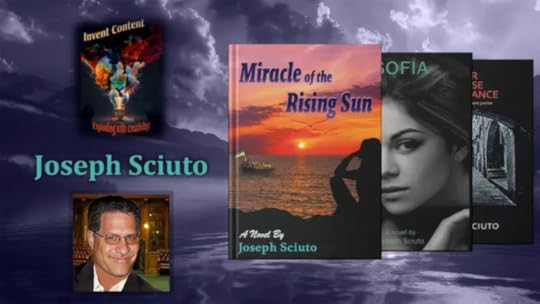
In the expansive world of contemporary literature, few authors manage to capture the raw, unvarnished truth of human existence as powerfully as Joseph Sciuto. Through works like Miracle of the Rising Sun, Sciuto offers readers a window into the complexities of the human condition, exploring themes of trauma, resilience, and the elusive search for meaning in a chaotic world.
Sciuto’s life story is as compelling as the characters he creates. Born and raised in the Bronx, he spent his early years in his grandmother’s house, living with his parents and two brothers in a predominantly Italian-Irish neighborhood. For the first decade of his life, this tightly-knit community provided a strong foundation of family and cultural values.
At the age of 18, Sciuto enrolled at John Jay College of Criminal Justice with the ambition of working for the FBI. However, after a few years, he realized that law enforcement was not his true calling. He transferred to Stony Brook University, where he majored in Psychology, English, and Anthropology. This multidisciplinary education further broadened his perspective, providing him with the tools to explore the complexities of human nature—both in his studies and, eventually, in his writing.
After college, Sciuto moved to Hollywood with a friend who would go on to become a prominent film editor. There, he landed a job at the West Hollywood Palm Restaurant, a legendary establishment that served as a speakeasy for the rich and famous during the 1980s, 90s, and early 2000s. The Palm was a place where a Hollywood mogul might be seated at one table, while an adult star held a table at the next. This eclectic environment introduced Sciuto to some of the most fascinating people in the world, many of whom would inspire the characters in his novels.
During this time, Sciuto also embarked on a series of transformative journeys, traveling to El Salvador and Guatemala during the civil wars to witness the conflicts firsthand. In 1988, he visited South Africa at the height of apartheid, just as the winds of change were beginning to blow. These experiences deepened his understanding of global struggles and the human condition, adding layers of complexity to the stories he would later write.
Sciuto’s novels stand out not just for their compelling plots, but for their deep exploration of the human psyche. In Miracle of the Rising Sun, his latest work, Sciuto tells the stories of individuals who have faced unimaginable hardships—a supermodel disfigured by a brutal assault, a war correspondent scarred by the horrors of conflict, a military widow grappling with grief, and a young girl traumatized by abuse. These characters are more than just survivors; they are representations of the many facets of the human spirit.
The novel’s title, inspired by a quote often attributed to John Lennon, encapsulates the essence of Sciuto’s storytelling philosophy: every day brings its own miracles, though they often go unnoticed. In Miracle of the Rising Sun, Sciuto reminds us that these small, daily miracles—the rising of the sun, and the persistence of hope—are what sustain us through life’s darkest moments.
The book’s nonlinear structure, rich with flashbacks, allows Sciuto to delve into the inner worlds of his characters, revealing how their past traumas continue to shape their present lives. This narrative approach is a hallmark of Sciuto’s work, one that he attributes to his desire to tell stories that reflect the complexity of real life.
In Miracle of the Rising Sun, Sciuto also tackles the profound issue of suicide among individuals who have experienced extreme stress. He poignantly illustrates how the failure to seek help or to receive adequate support, can lead to devastating outcomes. The novel’s message is clear: in times of grief, isolation is not the answer. Instead, Sciuto advocates for the power of connection, urging those who are struggling to reach out to others who have faced similar challenges.
Sciuto’s work is deeply personal, shaped by both his life experiences and his philosophy of letting characters drive the narrative. A turning point in his career came when he received advice from the legendary playwright Sam Shepard, who told him to “let your characters do the writing, and you just follow what they say.” It was advice that took Sciuto twenty years to fully embrace, but once he did, he found himself able to write nine novels in as many years. This character-driven approach has become a defining feature of his work, allowing for stories that are as unpredictable as they are authentic.
Despite the success of his novels, Sciuto remains grounded, driven not by fame but by a genuine love for storytelling. His humility is evident in his reflections on the recent passing of his wife, with whom he shared 34 years of marriage. Her sudden death has deeply affected him, and he candidly admits that he would trade all his novels to have her back. Yet, even in the face of this profound loss, Sciuto’s dedication to his craft remains unwavering. He is currently focused on publishing his wife’s final book, a project that he describes as his gift to her—a testament to their shared passion for writing.
This clarity is paired with a deep sensitivity to the emotional and psychological struggles of his characters, making his work both engaging and thought-provoking. Whether he’s writing about the horrors of war, the brutality of a crime, or the quiet desperation of those left behind, Sciuto’s work is a mirror to the world, reflecting the harsh realities of life while also offering a glimmer of hope.
Joseph Sciuto’s contribution to modern literature is undeniable. His novels, rich with psychological depth and emotional honesty, offer readers more than just stories—they offer a profound understanding of what it means to be human. In a world where pain and suffering are all too common, Sciuto’s work serves as a reminder that resilience, hope, and connection are the true miracles that guide us through life’s darkest moments.
November 29, 2024
“MIRACLE OF THE RISING SUN,” BY JOSEPH SCIUTO
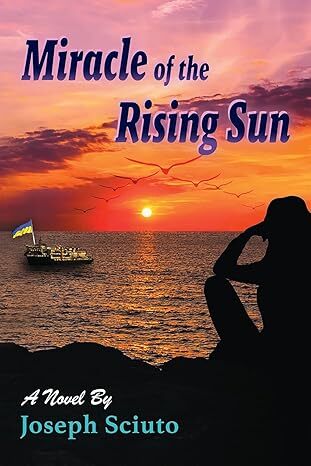
Available December 5, 2024, at Amazon, Barnes and Noble, Joseph Beth and over 200 bookstores across the U.S and the world.
“I understand the nightmares. I still have them. They haven’t gone away. But you know what helps? Knowing that you love me so much, despite all my problems, and maybe because of them…”
Joseph Sciuto’s ninth novel, MIRACLE OF THE RISING SUN, is a riveting portrayal of a diverse group of individuals who have experienced life-changing trauma.
Nick, a wartime reporter who, after ten years of covering wars, only sleeps forty-five minutes a night to avoid the nightmares of reliving his horrifying experiences.
Alicia, a twenty-three-year-old supermodel, is the victim of a brutal rape and beating that destroys her beauty and her life. She retreats from the world, hiding in her apartment, ashamed.
Bee, a ten-year-old child, lives with the fear of being placed with yet another foster family that abuses her.
Christine, a fifty-year-old mother, who lives with the guilt of neglecting her son when he was growing up and with the fear of the subsequent choices he makes as an adult.
From Hollywood, to New York, Paris, Ukraine and Washington D.C., Nick, Alicia, Bee, Christine, and a circle of strangers come together to form a family. Their support, compassion, and love offer relief from the horrors of the past and the promise and hope of a better tomorrow.
A Curious View: A Compilation of Short Stories by Joseph Sciuto
- Joseph Sciuto's profile
- 169 followers

