
Joseph Sciuto's Blog: A Curious View: A Compilation of Short Stories by Joseph Sciuto, page 49
December 6, 2017
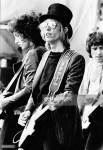
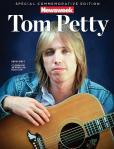
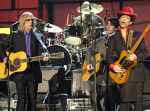
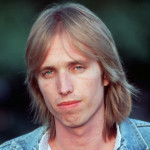
A CURIOUS VIEW: THE DAY THE MUSIC DIED…OR NOT? REMEMBERING TOM PETTY
A CURIOUS VIEW: THE DAY THE MUSIC DIED…. OR NOT? REMEMBERING TOM PETTY
Back in the day when I was a young, rebellious teenager, I would wait anxiously, hoping that my favorite song would come on the radio before I went to that horrid place called High School, “where the teachers that taught me weren’t cool…holding me down…turning me ‘round…filling me up with their rules,” The Beatles.
The song that I was waiting and praying to come on the radio was the classic, “American Pie” by Don McLean: A seven-minute eulogy to the late Buddy Holly, who, along with Richie Vallens and The Big Bopper, died tragically in a plane crash back in 1959.
Drinking from a bottle of Gordon’s Gin, I was not only risking being late for school, but also having my parents catching me as I was drinking from that bottle of gin. The punishment would be severe: A loss of my allowance, pleads to the Almighty for guidance, the never ending question, “What have we done wrong to deserve this?” And, of course, no outdoor privileges, which would have been devastating because I was addicted to basketball and the courts that were right outside our apartment in Parkchester.
Yes, “I was a rebel without a clue,” as Tom Petty sang in one of his famous songs. The power of music is a scientific fact. It can change a frown into a smile and make an average movie such as “Ghost” into a giant box office hit…thanks to the song, Unchained Melody, written by Alex North and Hy Zaret and sung in the movie by Todd Duncan … but originally made famous by the Righteous Brothers.
The recent deaths of musical icons such as, David Bowie, Lou Reeds, Chuck Berry, Fats Domino, and the recent and tragic death of Tom Petty make one reflect even more on the power and inspiration of this greatest of all art forms.
The morning after the murder of John Lennon, I was sitting in the study lounge in my college dormitory cramming for a final’s test later that morning. I don’t recall the test I was studying for, but I remember quite clearly the words of a middle age black lady who used to clean the building. Previously, I had only said ‘hello’ to her throughout the rare times I saw her. She started before dawn and unless I was up from the night before still partying, I did not wake up before dawn.
She entered the lounge with her bag of supplies and immediately started cleaning. Unaware that I was in the lounge, she turned on a small transistor radio that was naturally playing Beatles’ music.
Finally, when she did notice me she went to shut off the radio and I insisted she keep it on. She looked at me and remarked, “Can you believe someone killed that young man? He made such beautiful music, I don’t understand. I love his music.”
I looked at her as tears swelled in her eyes and travelled, unchecked, down her cheeks. We talked for a few minutes and discussed out favorite Beatle songs. She went back to work as I laid my head against the wall behind my chair and listened to “Norwegian Wood” and “Girl” from the Rubber Soul Album. I remembered the first time I heard both songs and the euphoric feeling the music generated inside me. It was sublime. That morning, it was a dismal reminder of the senseless violence that existed in our society.
Music has existed, in some form or another, since the beginning of time. It is mentioned throughout the Bible, allured to throughout Greek and Roman mythology, and antiquated musical instruments have been found dating back ten thousand years.
It is the only art form that can be found in all other art forms. In Literature, Joyce’s “Ulysses” has an unmistakable musical cadence that runs throughout the novel… a result that Joyce said he was hoping to produce. The same can be said for Hemingway’s masterpiece, “The Sun Also Rises,” and F. Scott Fitzgerald’s “The Great Gatsby.” Lord Byron’s epic poem, “Don Juan” is an astonishing, lyrical work of art that could just as easily be sung as recited.
In galleries and museums throughout the world, the paintings and sculptures of artists as diverse and brilliant as di Vinci, Michelangelo, Rembrandt, and Picasso reflect, in nearly every stroke, the influence of music.
Soldiers have marched into battle accompanied by musicians. Ball players enter games as Queen’s song “We Are The Champions” blasts from arena speakers, and I remember shooting alone on the basketball court outside our apartment in Parkchester listening, on my portable radio, to “Silly Love Songs” whose upbeat sound made me believe that with enough practice I might one day be the next Walt Frazier playing for my beloved New York Knicks.
Tom Petty, as much as The Beach Boys, The Eagles, and The Mama And Papas, symbolized the California experience. His lyrics were as strong and powerful as the lyrics of such legends as Billy Joel, Elton John, Bob Seger and Bob Dylan. He played with the greatest rock and rollers of his time, Eric Clapton, Prince, George Harrison, Dylan and McCartney and he always shined like the brightest of all stars.
He fought the record companies and insisted that his albums were never overpriced. He never forgot his humble roots growing up in Florida and he never wanted working class people shut off from his music because of greedy record executives.
Tom Petty died suddenly and unexpectedly at the age of sixty-six. I remember driving down Ventura Boulevard thousands of times in the thirty-one years I lived in beautiful Southern California. Today, I could never think about Ventura Boulevard without Mr. Petty’s lyrics from the song Free Fallin’ ringing loudly in my ears:
All the vampires, walking through the valley
Move west down Ventura Boulevard
All the bad boys, standing in the shadows
And the good girls are home with broken hearts
One of the famous lyrics from the song American Pie is “And the day the music died” but in truth the music never dies. I realized that back when I was talking to the cleaning lady, as tears swelled in her eyes, and the Beatles music played nonstop on her small transistor radio.
On the day Mr. Petty died, his music played continuously on all the rock and roll stations across our great country. And I will never stroll down Ventura Boulevard without seeing the shadows of vampires walking alongside me. Rest in Peace, Tom Petty.




November 11, 2017
A CURIOUS VIEW: VETERANS DAY: WASHINGTON, HAMILTON, LINCOLN, T.R. AND TRUMAN
While I am quite aware that President Lincoln did not serve in the military, he visited the front lines enough times that I give him a pass.
Just imagine this imposing figure…a tall, lanky man…looking through a pair of binoculars, standing erect, beside Union soldiers who were crouched down as they discharged their weapons toward the Confederate front line.
One of the most amazing things about Mr. Lincoln is that he lived long enough to be shot by John Wilkes Booth. His stature made him a target which, even through a cloud of gun smoke, stood out like a sequoia in a forest full of saplings.
One of the things these five veterans had in common was their undying belief in American ingenuity.
Overlooking New York Harbor after they had won the Revolutionary War, Washington and Hamilton stood side-by-side and envisioned our country as an industrial giant that would be the envy of the world.
President Lincoln’s enthusiasm for new technologies and inventions was one of the driving forces behind the Union’s victory. He encouraged gunmakers and the Department of War to invent superior weaponry that eventually helped put an end to the Civil War.
After the war ended, he refused to punish the South any further because he saw a united country that would be more powerful and inventive than any other country in the world.
More than any other president, Theodore Roosevelt (T.R.) epitomized the greatness of our country.
T.R. understood that American ingenuity was so powerful that something as uncompromising and difficult as building the Panama Canal was not only possible, but achievable.
Where the French had failed in building the canal, America would succeed. And succeed we did, making fools of the critics.
On a visit to America, H.G. Wells visited President Roosevelt at the White House. They had a long conversation after which a reporter asked Mr. Wells what he thought about President Roosevelt.
Wells replied, “I’m the pessimist, and the president is the optimist. He sees the future in a way I cannot even envision. That is the type of faith he has in the American people.”
Think about the depth of that statement for a moment. Wells, a prolific author, envisioned Martians invading Earth in WAR OF THE WORLDS, time travel (THE TIME MACHINE), hybrid human beings (THE ISLAND OF DR. MOREAU) and the ability to change one’s body to refract light (THE INVISIBLE MAN) …all written before 1898.
When a four-time Pulitzer-Prize-winning science fiction author marvels at another man’s ability to envision the future, that is a sincere compliment.
After making what was arguably the most difficult decision the world has ever witnessed, President Truman undeniably ended World War II, resisting attempts to punish the German and Japanese people any further.
Along with one of the great cabinets in U.S. history, Truman instituted the Marshall Plan. He rebuilt Europe’s ravaged continent with American ingenuity and instilled democratic values in our adversaries that have withstood the test of time.
The above veterans, like so many other veterans, witnessed the horror of war first-hand. They saw fellow soldiers killed and maimed.
Yet their vision for our country never waned.
They believed in something much bigger than themselves.
They believed in a country with unlimited possibilities and creativity.
People speak, with awe, at the technological revolution that is taking place in our country, but I can assure you that Presidents Roosevelt and Lincoln would have expected nothing less.
In fact, they would have been greatly disappointed if we had not improved our capacity to communicate with each other…to cure diseases that once were thought to be incurable…or to live a more comfortable life with such things as air conditioning and microwaves and, of course, cable TV.
They also all understood that none of this would be possible during their lifetimes or in the future without a strong, second-to-none, military.
The soldier is our first line of defense…the safeguard that makes everything else possible.
Statistics on veterans committing suicide after returning from war zones and combat are a relatively new thing. As of now, we have no exact statistics on the number of veterans who committed suicide after returning from our most deadly and costly wars.
Our profound gratitude goes to the veterans who came back with debilitating injures and emotional scars that will last a lifetime.
And we send a silent prayer of thanks to the servicemen and women who made the ultimate sacrifice so that we can be free.
Thank you to all our veterans. We are, and will remain, grateful for your service.
A CURIOUS VIEW: VETERANS DAY: WASHINGTON, HAMILTON, LINCOLN, T.R. And TRUMAN
[image error]
Washington, Hamilton, Lincoln, T.R. and Truman…presidents and statesmen who have many things in common, but none more striking than their military service and courage.
While I am quite aware that President Lincoln did not serve in the military, he visited the front lines enough times that I give him a pass.
Just imagine this imposing figure…a tall, lanky man…looking through a pair of binoculars, standing erect, beside Union soldiers who were crouched down as they discharged their weapons toward the Confederate front line.
One of the most amazing things about Mr. Lincoln is that he lived long enough to be shot by John Wilkes Booth. His stature made him a target which, even through a cloud of gun smoke, stood out like a sequoia in a forest full of saplings.
One of the things these five veterans had in common was their undying belief in American ingenuity.
Overlooking New York Harbor after they had won the Revolutionary War, Washington and Hamilton stood side-by-side and envisioned our country as an industrial giant that would be the envy of the world.
President Lincoln’s enthusiasm for new technologies and inventions was one of the driving forces behind the Union’s victory. He encouraged gunmakers and the Department of War to invent superior weaponry that eventually helped put an end to the Civil War.
After the war ended, he refused to punish the South any further because he saw a united country that would be more powerful and inventive than any other country in the world.
More than any other president, Theodore Roosevelt (T.R.) epitomized the greatness of our country.
T.R. understood that American ingenuity was so powerful that something as uncompromising and difficult as building the Panama Canal was not only possible, but achievable.
Where the French had failed in building the canal, America would succeed. And succeed we did, making fools of the critics.
On a visit to America, H.G. Wells visited President Roosevelt at the White House. They had a long conversation after which a reporter asked Mr. Wells what he thought about President Roosevelt.
Wells replied, “I’m the pessimist, and the president is the optimist. He sees the future in a way I cannot even envision. That is the type of faith he has in the American people.”
Think about the depth of that statement for a moment. Wells, a prolific author, envisioned Martians invading Earth in WAR OF THE WORLDS, time travel (THE TIME MACHINE), hybrid human beings (THE ISLAND OF DR. MOREAU) and the ability to change one’s body to refract light (THE INVISIBLE MAN) …all written before 1898.
When a four-time Pulitzer-Prize-winning science fiction author marvels at another man’s ability to envision the future, that is a sincere compliment.
After making what was arguably the most difficult decision the world has ever witnessed, President Truman undeniably ended World War II, resisting attempts to punish the German and Japanese people any further.
Along with one of the great cabinets in U.S. history, Truman instituted the Marshall Plan. He rebuilt Europe’s ravaged continent with American ingenuity and instilled democratic values in our adversaries that have withstood the test of time.
The above veterans, like so many other veterans, witnessed the horror of war first-hand. They saw fellow soldiers killed and maimed.
Yet their vision for our country never waned.
They believed in something much bigger than themselves.
They believed in a country with unlimited possibilities and creativity.
People speak, with awe, at the technological revolution that is taking place in our country, but I can assure you that Presidents Roosevelt and Lincoln would have expected nothing less.
In fact, they would have been greatly disappointed if we had not improved our capacity to communicate with each other…to cure diseases that once were thought to be incurable…or to live a more comfortable life with such things as air conditioning and microwaves and, of course, cable TV.
They also all understood that none of this would be possible during their lifetimes or in the future without a strong, second-to-none, military.
The soldier is our first line of defense…the safeguard that makes everything else possible.
Statistics on veterans committing suicide after returning from war zones and combat are a relatively new thing. As of now, we have no exact statistics on the number of veterans who committed suicide after returning from our most deadly and costly wars.
Our profound gratitude goes to the veterans who came back with debilitating injures and emotional scars that will last a lifetime.
And we send a silent prayer of thanks to the servicemen and women who made the ultimate sacrifice so that we can be free.
Thank you to all our veterans. We are, and will remain, grateful for your service.


November 4, 2017
A CURIOUS VIEW: THE WEST HOLLYWOOD PALM RESTAURANT, SATURDAY NIGHT WITH SAM SHEPARD AT TABLE 34X
The infamous Palm Restaurant of the 70’s, 80’s, and 90’s was similar in one way to almost any great, or not so great, restaurant where I have had the pleasure dining… it had that one table where absolutely no one wanted to be seated.
At The Palm, it was #34X.
Not only was it close to the kitchen and extremely small, it was wedged between a small dividing wall directly across from two six-top tables no more than five feet away.
If the cramped proximity to other diners were not enough to make #34X blatantly undesirable, the deluge of traffic passing through those five feet was never-ending,
Waiters and busboys hustled in and out of the clamorous kitchen which rang out with the constant clang of pots and pans, while slightly-tipsy customers stumbled past it to the restrooms with the mistaken impression that speaking as loudly as possible was an acceptable approach to addressing their companions above the din.
And this cacophonous parade always reached its peak as it passed Table #34X.
The Palm Restaurant was a Hollywood icon where the status and power of La La Land was paramount (and Paramount).
Industry trade papers and gossip magazines judged the career viability of industry players based on the location of the tables at which its denizens dined.
Often, the table at which you and your guests were seated was a make-or-break event in which your very status was either given a rose or voted off the island.
If the front four tables, reserved for the uber-elite, were synonyms for success dressed up in white tablecloths, then poor #34X would have been considered the last and most horrifying circle in Dante’s “Inferno.”
So, imagine my surprise, one Saturday night over thirty years ago, when I looked down at table #34X and saw Sam Shepard, dining alone at that outpost of social and professional embarrassment.
Tall and ruggedly handsome, not only was Shepard one of the great playwrights of his generation, he recently had been nominated for an Academy Award for his performance in “The Right Stuff.”
Hesitantly, I approached the table with bread and butter and expected the usual complaint about the table and how it was a disgrace to be seated there.
But to my amazement, Mr. Shepard greeted me graciously and exclaimed, “Wow! This place is really packed. I can’t believe they sat me so quickly. I didn’t even have a reservation.”
He ordered a beer and before I had time to turn away, he gently touched my arm, smiled, and said, “Why not make that two beers.”
By the time I got back, he seemed to own the entire space around him, sizing up the rowdy bar crowd with a steely gaze, much like Wild Bill Hickok, whom Shepard had portrayed in “Purgatory.”
He ordered a steak and salad and, as he waited for his food, I told him, “You know it’s strange, but I have studied your work in some of my English classes.”
He seemed surprised and laughed, “Guess your teachers didn’t put much thought into the curriculum if they had you studying my work?”
It seemed surreal, maybe because he was so young, and everybody else I had studied in my English classes were so…dead.
Or, maybe it was because there was nothing pretentious, or phony, or superior in his attitude and manner.
“And who else have you studied?” he asked, trying to put me at ease.
“Joyce, Yeats, Conrad, D.H. Lawrence, Shaw, Tennessee Williams,” and I went on and on as though I was trying to impress him.
Not once did he interrupt me.
Finally, after feeling like a total fool, I stopped and gathered my wits. Sam smiled and said, “I really like D.H. Lawrence’s work. How about you?”
“Absolutely, one of the giants,” I replied with relief at his graciousness.
For the next fifteen minutes, we discussed D.H. Lawrence as waiters, busboys, and customers started complaining about my lack of response to their requests.
After all, who was this nobody… sitting at this tiny table … to whom I was giving all my attention?
Begrudgingly, I returned to my responsibilities, rushing through them so I could return to the gracious wordsmith seated at the outpost of public relations unacceptability.
I quickly returned to #34X where Sam asked me about my own writing.
I told him about the strict and regimented approach I was following to ensure that my output was steady.
He smiled slightly with a look that only a wealth of experience can bring.
“Loosen up,” he suggested. “Let your characters do the writing for you.”
At that time of my young life, his sage advice, while welcomed, was somewhat beyond my understanding.
It took twenty-five years for his words to gain clarity as I unconsciously followed his advice.
My characters developed their own voices instead of having me speak for them…they were doing the work, and I was the mere scribe who took down their dictation.
True to Sam’s prediction, I really started to enjoy writing.
Writing is no longer like Hemingway described as “slicing open your wrists and slowly bleeding to death.”
It has become a much more creative, satisfying, and quite frankly, life-saving endeavor.
I often think back to that night when The Fates intervened, colliding my world with that of a man had been lauded with a Pulitzer Prize, Obie Awards, many critics association awards and Oscar, Emmy, Golden Globe and Screen Actors Guild nominations.
I fondly remember the night when I met Sam Shepard.
I shook his hand as he got up to leave.
He thanked me for the wonderful conversation and wished me luck.
At that moment, my luck took a turn for the better.
I was fortunate enough to have received writing tips from Sam Shepard.
Six months later, Sam came back to the restaurant, on a much less crowded night.
He was alone and asked to be seated in my section.
As we talked, I was amazed that he remembered, almost verbatim, what we had discussed six months earlier at that miserable little table, #34X.
It was a gracious and thoughtful display exhibited more by “true kings” than by pretenders to the throne.
By all accounts, Sam Shepard eschewed the limelight. He spent much of his time at his horse farm near Midway, Kentucky, where the locals found him to be “a regular guy, just like everybody else.”
How wonderful a world it would be if everybody were as gracious, thoughtful and talented as Sam Shepard.
Sam Shepard passed away last week at his home in Midway. He leaves behind three children, two sisters, a cadre of fans and some very wise words…
“Let your characters do the writing for you.”
I shall, Sam. I shall. And thank you.


October 31, 2017
A CURIOUS VIEW
The infamous Palm Restaurant of the 70’s, 80’s, and 90’s was similar in one way to almost any great, or not so great, restaurant where I have had the pleasure dining… it had that one table where absolutely no one wanted to be seated.
At The Palm, it was #34X.
Not only was it close to the kitchen and extremely small, it was wedged between a small dividing wall directly across from two six-top tables no more than five feet away.
If the cramped proximity to other diners were not enough to make #34X blatantly undesirable, the deluge of traffic passing through those five feet was never-ending,
Waiters and busboys hustled in and out of the clamorous kitchen which rang out with the constant clang of pots and pans, while slightly-tipsy customers stumbled past it to the restrooms with the mistaken impression that speaking as loudly as possible was an acceptable approach to addressing their companions above the din.
And this cacophonous parade always reached its peak as it passed Table #34X.
The Palm Restaurant was a Hollywood icon where the status and power of La La Land was paramount (and Paramount).
Industry trade papers and gossip magazines judged the career viability of industry players based on the location of the tables at which its denizens dined.
Often, the table at which you and your guests were seated was a make-or-break event in which your very status was either given a rose or voted off the island.
If the front four tables, reserved for the uber-elite, were synonyms for success dressed up in white tablecloths, then poor #34X would have been considered the last and most horrifying circle in Dante’s “Inferno.”
So, imagine my surprise, one Saturday night over thirty years ago, when I looked down at table #34X and saw Sam Shepard, dining alone at that outpost of social and professional embarrassment.
Tall and ruggedly handsome, not only was Shepard one of the great playwrights of his generation, he recently had been nominated for an Academy Award for his performance in “The Right Stuff.”
Hesitantly, I approached the table with bread and butter and expected the usual complaint about the table and how it was a disgrace to be seated there.
But to my amazement, Mr. Shepard greeted me graciously and exclaimed, “Wow! This place is really packed. I can’t believe they sat me so quickly. I didn’t even have a reservation.”
He ordered a beer and before I had time to turn away, he gently touched my arm, smiled, and said, “Why not make that two beers.”
By the time I got back, he seemed to own the entire space around him, sizing up the rowdy bar crowd with a steely gaze, much like Wild Bill Hickok, whom Shepard had portrayed in “Purgatory.”
He ordered a steak and salad and, as he waited for his food, I told him, “You know it’s strange, but I have studied your work in some of my English classes.”
He seemed surprised and laughed, “Guess your teachers didn’t put much thought into the curriculum if they had you studying my work?”
It seemed surreal, maybe because he was so young, and everybody else I had studied in my English classes were so…dead.
Or, maybe it was because there was nothing pretentious, or phony, or superior in his attitude and manner.
“And who else have you studied?” he asked, trying to put me at ease.
“Joyce, Yeats, Conrad, D.H. Lawrence, Shaw, Tennessee Williams,” and I went on and on as though I was trying to impress him.
Not once did he interrupt me.
Finally, after feeling like a total fool, I stopped and gathered my wits. Sam smiled and said, “I really like D.H. Lawrence’s work. How about you?”
“Absolutely, one of the giants,” I replied with relief at his graciousness.
For the next fifteen minutes, we discussed D.H. Lawrence as waiters, busboys, and customers started complaining about my lack of response to their requests.
After all, who was this nobody… sitting at this tiny table … to whom I was giving all my attention?
Begrudgingly, I returned to my responsibilities, rushing through them so I could return to the gracious wordsmith seated at the outpost of public relations unacceptability.
I quickly returned to #34X where Sam asked me about my own writing.
I told him about the strict and regimented approach I was following to ensure that my output was steady.
He smiled slightly with a look that only a wealth of experience can bring.
“Loosen up,” he suggested. “Let your characters do the writing for you.”
At that time of my young life, his sage advice, while welcomed, was somewhat beyond my understanding.
It took twenty-five years for his words to gain clarity as I unconsciously followed his advice.
My characters developed their own voices instead of having me speak for them…they were doing the work, and I was the mere scribe who took down their dictation.
True to Sam’s prediction, I really started to enjoy writing.
Writing is no longer like Hemingway described as “slicing open your wrists and slowly bleeding to death.”
It has become a much more creative, satisfying, and quite frankly, life-saving endeavor.
I often think back to that night when The Fates intervened, colliding my world with that of a man had been lauded with a Pulitzer Prize, Obie Awards, many critics association awards and Oscar, Emmy, Golden Globe and Screen Actors Guild nominations.
I fondly remember the night when I met Sam Shepard.
I shook his hand as he got up to leave.
He thanked me for the wonderful conversation and wished me luck.
At that moment, my luck took a turn for the better.
I was fortunate enough to have received writing tips from Sam Shepard.
Six months later, Sam came back to the restaurant, on a much less crowded night.
He was alone and asked to be seated in my section.
As we talked, I was amazed that he remembered, almost verbatim, what we had discussed six months earlier at that miserable little table, #34X.
It was a gracious and thoughtful display exhibited more by “true kings” than by pretenders to the throne.
By all accounts, Sam Shepard eschewed the limelight. He spent much of his time at his horse farm near Midway, Kentucky, where the locals found him to be “a regular guy, just like everybody else.”
How wonderful a world it would be if everybody were as gracious, thoughtful and talented as Sam Shepard.
Sam Shepard passed away last week at his home in Midway. He leaves behind three children, two sisters, a cadre of fans and some very wise words…
“Let your characters do the writing for you.”
I shall, Sam. I shall. And thank you.
A Curious View: A Compilation of Short Stories by Joseph Sciuto
- Joseph Sciuto's profile
- 169 followers

