Susan Rooke's Blog, page 7
June 7, 2018
Vichyssoise: A Recipe
“Summer is my favorite time of year!” said no one in my Texas family, ever. Which might explain why my parents appreciated the cooling serenity of chilled soups in the summer and wanted me to enjoy them too. When I was only 5 or 6, they introduced me to vichyssoise at one of their favorite San Antonio restaurants: the wonderful (but gone now, sadly) La Louisiane. (Read a 2015 article about it from the San Antonio Express-News here.)
That restaurant bears much of the responsibility for beginning my lifelong love affair with food. Going there as a little girl was a huge treat for me, and created some of my fondest food memories. We introduced Katie to La Louisiane when she was quite small and she dove wholeheartedly into all of it. Except for the vichyssoise. What can I say? She takes after her father.
I was in my 20s before I took a stab at making vichyssoise myself. By then I’d eaten it at many other restaurants, and knew that it could vary wildly. Too much of what I had after La Louisiane’s was thin and oddly flavorless. So I played with recipes from a number of sources until I came up with a version that pleased me. I hope it pleases you too.
VICHYSSOISE
In a large saucepan or medium stockpot, melt over low heat:
5 Tbs. unsalted butter
Add:
2 medium yellow or white onions, thinly sliced
3 leeks, white and pale green parts only, cleaned and thinly sliced (see Notes on Leeks below)
½ tsp. salt
Toss all together to mix. Then cover and cook gently for 20 minutes or until vegetables are well-softened. Then add to the pot:
5 c. chicken broth (a good prepared broth, not too salty, is fine)
3 large, floury potatoes, peeled and thinly sliced (I like russets)
½ tsp. salt
a few dashes of white pepper
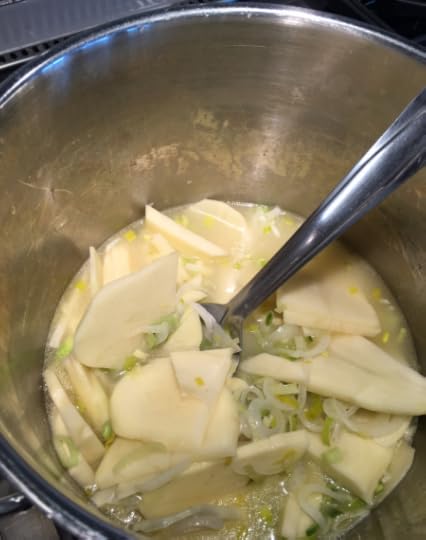
Bring heat up to a simmer and cook until potatoes are very soft (about another 15-20 minutes of cooking after the soup simmers). Stir it occasionally; thinly sliced potatoes can stick together. Remove from heat and set aside until the soup is cool enough to put in a blender.
Once the soup has cooled sufficiently, blend it (you’ll probably need to do it in batches) to a smooth consistency. Transfer to a large tureen or other container suitable for the refrigerator. Then stir in:
1 c. milk (whole or 2%)
2 c. Half & Half
1 tsp. salt
a few dashes of white pepper
Cover and refrigerate the soup until it’s completely chilled. If you can wait 24 hours before adding the final ingredients below and then serving it, the flavor will continue to improve. (I’m terrible at waiting that long.) When ready to serve, add:
1 c. Half & Half
½ c. heavy cream
salt to taste (I add about 1 tsp. more)
white pepper to taste
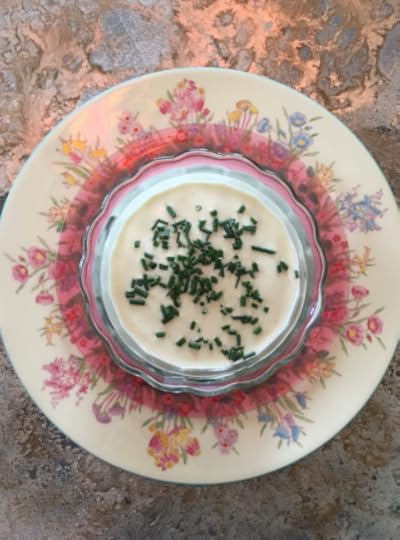
Serve cold and sprinkle each serving with snipped fresh chives. Unless you don’t (see General Notes below).
Notes on Leeks:
• Cleaning the leeks is the most tiresome part of the prep, but it’s also the most essential. I start by cutting off the dark green, fibrous tops, then looking in the center of each. If there’s a pale green, delicate core, I save it to use. The rest of the tops go in the trash. Yes, there’s probably a use for those trimmings, but it isn’t worth my time and water to wash them.
• Then closely trim off the root end and, if the leeks are *ahem* old and thick through the middle, peel off and discard the wrinkly outer white layer. If they’re young and thin, you might need 4 instead of 3. Next comes the cleaning. Leeks are filthy, and nothing ruins silky, pale greenish-white soup like finding a mudslide in the bottom of the cup (or worse, on the spoon you’ve just removed from your mouth).
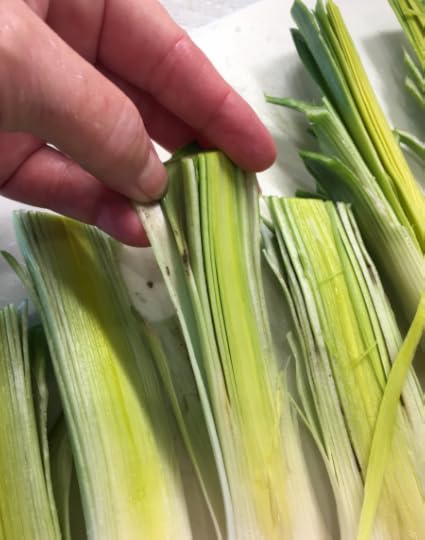
• Cut the remainder of the stalk in half lengthwise. Working with one half-stalk at a time, hold it under gently running water and peel back the layers, one at a time, and rinse, rinse, rinse. Sometimes the dirt is so engrained that you’ll need to scrape it off with a fingernail or paring knife. (Some recipes tell you to put them in a bowl of water and swish them around. Sorry, but that won’t get it all.)
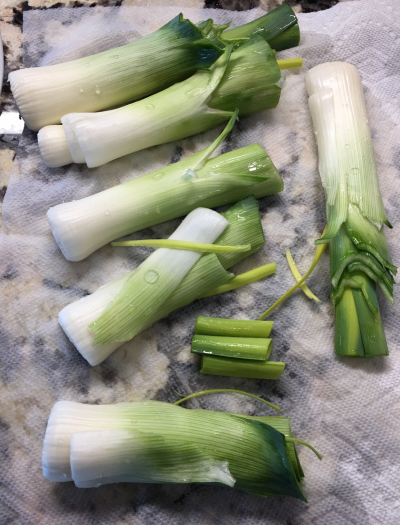
• Once you’re satisfied with their cleanliness, turn the stalks upside down on a paper towel to drain until you’re ready to slice and cook them. Here are the cleaned stalks. I’ll trim a little more of the dark green from a couple of them before slicing.
General Notes:
• If the idea of chilled leek and potato soup is abhorrent to you (as it is to Glen and Katie), heat it up. If you serve it hot, you could throw grated cheddar, bacon bits, chives and fresh ground black pepper on it and call it (somewhat misleadingly) Baked Potato Soup.
• No fresh chives? Use sliced green scallion tops.
• This recipe makes a lot of soup. Because of the dairy products I wouldn’t be comfortable freezing it, but you can certainly halve the quantities. It’s flexible, so just guesstimate on, for instance, the potatoes. Use 2 medium ones instead of 3 large, etc. It will still be delicious.
• I like to salt it at each stage rather than trying to get it right all at once. The flavor changes subtly with refrigeration and with time.
• A large tureen is pretty for serving at the table, but unless it’s a party, I serve from the kitchen these days. The stockpot I cook it in is large enough to hold everything through the final step. It also, conveniently, fits in the fridge.
• If you want a thinner soup, add milk (whole or 2%) after the final step until it’s the consistency you prefer, then adjust the seasoning. And remember too that one person’s large potato is another person’s ginormous potato. The bigger they are, the thicker the soup will be.
Bon Appétit!


May 24, 2018
Vanilla Ice Cream, Chocolate Shell Topping: Recipes!
Less than 2 weeks ago, I had an unexpected root canal. I was a dental work newbie, so it took me by surprise. I’d never had a cavity, no orthodontia. My sole experience was with wisdom teeth removal. But after it was over, several friends who are more dentally savvy than I am told me, “You need ice cream!”
Well, really. Who doesn’t?
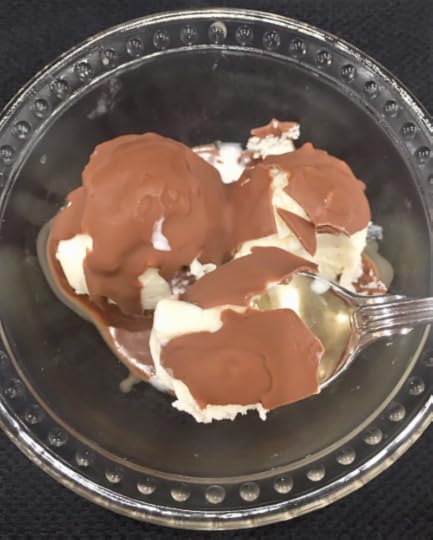
And since by last week we’d hit 97° in Central Texas, it was clear what the subject of this week’s post was meant to be. So today I present to you a recipe for Vanilla Ice Cream: smooth (very important, since my temporary crown is now in place), delicious, and the easiest ice cream I make. No cooking of custard required. Lest you think vanilla sounds too tame, I’m also sharing my equally easy recipe for Chocolate Shell topping. Spoon it on, let it harden, and you have what amounts to a rich and wonderful ice cream bar in a bowl, no stick necessary.
Here’s the Cuisinart ice cream maker I have. One of their more basic models, it’s super easy to use and makes ice cream in about 25 minutes, requiring no ice or salt. I keep its removable cream can stored in the back of my freezer so that I’m always prepared for ice cream emergencies. (Beats the heck out of root canal emergencies.)
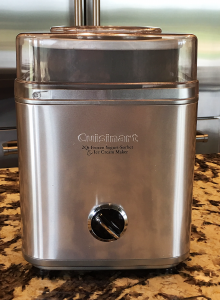
VANILLA ICE CREAM
In a large mixing bowl, put:
1 c. sugar
1/8 tsp. salt
2 c. half-and-half
1 ½ tsp. good vanilla extract (I like Nielsen-Massey)
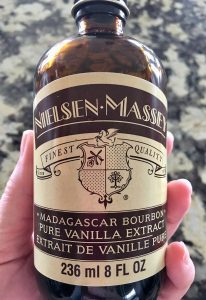
Beat ingredients together until the sugar is mostly dissolved. A hand mixer is fine for the job. Then add:
2 c. heavy cream
Stir all together until thoroughly blended and pour into the cream can of your ice cream maker. Process according to manufacturer’s instructions, then transfer to a suitable container and finish hardening the ice cream in the freezer. Makes about 1 ½ quarts. Now you’re ready for the:
CHOCOLATE SHELL TOPPING
In a glass (or other microwave-safe) bowl, put:
12 oz. Hershey’s Milk Chocolate bars, chopped
1 c. coconut oil (Spectrum is widely available, and it’s good)
Microwave in about 20-second bursts, checking and stirring in between, until the chocolate has liquefied into the coconut oil. Stir together thoroughly, and that’s it! Now just spoon some over your dish of ice cream. If you like rather a lot of Chocolate Shell (as I do), it’s a good idea to put the dish of ice cream in the freezer for a couple of minutes so the topping will harden more quickly.
Notes:
• If you’re thinking of lowering the fat content, I have one (inadvertent) experience to offer: Once I accidentally bought “fat-free” Half & Half and then used it to make ice cream before I caught the mistake. It wasn’t terrible. We all ate it without complaining. However, it wasn’t quite the consistency or taste I aim for. Fat-free Half & Half strikes me as a weird, egregious oxymoron, and a possible crime against nature besides. I’m much more careful to read the label now. But I grudgingly have to admit that it wasn’t bad.
• If you aren’t a chocolate fan, or if you don’t have any dental work to be careful with, this vanilla is also wonderful with crisp cookies like Tuiles or Molasses Crisps, and perfect on an ice cream cone.
• If your kitchen isn’t too hot, you can store your Chocolate Shell at room temp. Otherwise, I’d refrigerate it. It will harden in the fridge, but a few quick spins in the microwave will liquefy it again.
• You can make the Chocolate Shell in whatever portion size you like. Halve it, or even double or triple it. It will keep a long time in the refrigerator.
• Don’t be put off by how the chocolate and the coconut oil look before they’re all properly stirred together. The first time you make it, you might think it looks pretty disgusting (I did!), but I promise it turns out really well in the end.
• I think the Hershey’s Milk Chocolate is wonderful here, producing a rich ice cream bar flavor. But feel free to try any kind of chocolate, milk or dark or anything in-between.
Enjoy!
Back in August of 2017 (23 posts ago!), I wrote a post sharing two more of my very easy and very delicious homemade ice cream recipes: Coffee Cinnamon and Chocolate Pecan Brickle. If you haven’t tried those yet, you can find the recipes here. In that post I said, “In the future I’ll share a cheat I use to make a “cooked custard” ice cream without actually cooking anything.” And I will, specifically the Pistachio Ice Cream that makes Glen’s eyes roll back in his head. But that will have to wait until this dental work is all behind me and I can eat nuts again. That’s at least three weeks away, so . . . sorry, Glen.
In the meantime, I’m thinking my recipe for Vichyssoise might be just the ticket.
May 10, 2018
Crawfish: Laissez les Bons Temps Rouler!
How many of you out there enjoy boiled crawfish but shy away from preparing them at home? The poundage! The timing! The massive boiling pot! The mess! Not to mention finding a good source for live ones. It’s all kind of intimidating, I think. Which is why Glen and I didn’t eat them as often as we wanted to.
We had depended on regular trips to Louisiana to ease the cravings, but haven’t made it there in five or six years now. Yes, we could eat them elsewhere, but it just isn’t the same as sitting in a roadside dive in the Pelican State, zydeco on the jukebox, the steamy funk of boiling crawfish rolling out the kitchen door and over the oilcloth-draped tables (the better to wipe off the cocktail sauce and juicy spatter, my dear).
Then in April of last year, Glen suggested that we buy a batch of live ones and try cooking them ourselves. “How hard can it be?” he said.
“But I don’t know where to buy them,” I said.
“Go to H-E-B.” And not only our local grocery has them, he told me. In fact, for a brief window of time each spring, lots of other places in this part of the world (that is to say, Louisiana-adjacent) sell them too. Unsurprisingly, I’d never noticed this.
“Okay!” I said. I researched the cooking process online and discovered that everyone’s advice was a little different. Many sites assumed no sensible home cook would dream of boiling them in the kitchen, and instructed they be cooked outdoors over a propane burner in quantities large enough to feed six or more people, then eaten at a picnic table. I guess Louisianans are hardier than I am, but here in Central Texas that’s not my idea of a heavenly crawfish experience. As I write this on May 8th it’s 90° outside. Call me a pantywaist, but I prefer to eat steaming hot food indoors with AC, please. But after reading up on it, I put together a plan, noting each step so that, if it was successful, there would be no guesswork when crawfish season came around this year.
It was easy. And the crawfish were so delicious that we’ve cooked them twice already this May.
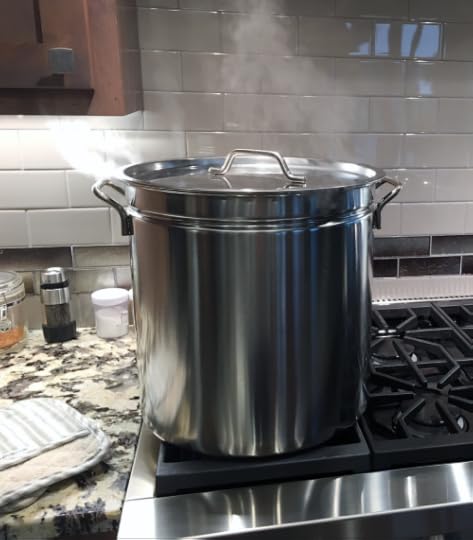
Before you start, you will need a big pot with an insert. Not commercial kitchen-sized, though. Just big enough to cook 10 lbs. of crawfish in. (That’s the minimum amount we can buy where we shop.) This pot is a Bayou Classic, about 14” tall and 13” across. You can get it from Amazon too.
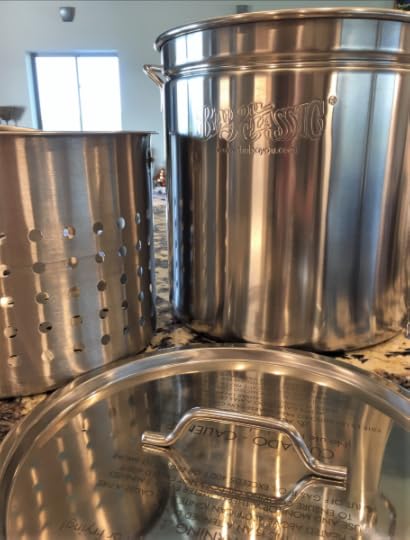
You’ll also need crawfish seasoning. We use Crawfish Town USA’s, which you can buy right from the restaurant in Henderson, LA, or online here.

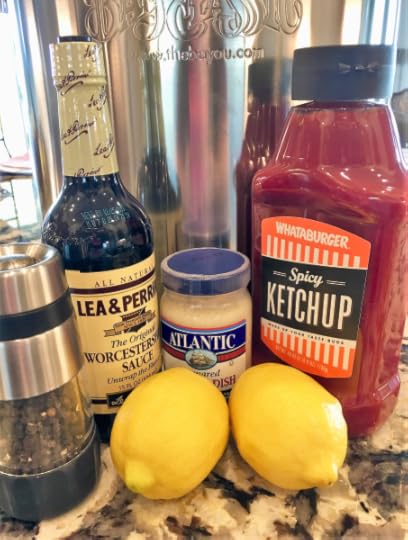
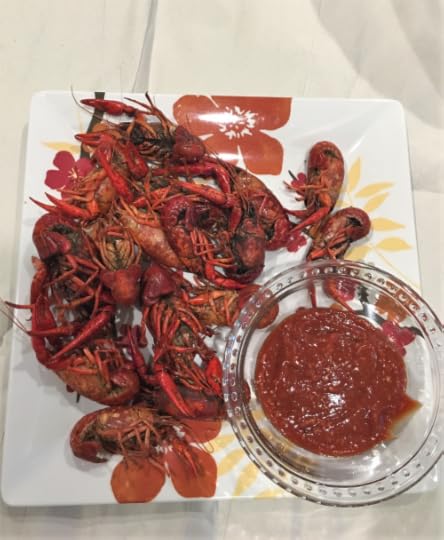
You’ll need lemons, too, both for the cooking and for the cocktail sauce (if you’re making your own). To make mine, I use Whataburger Spicy Ketchup, a few dashes of Lea & Perrins Worcestershire Sauce, several generous spoonfuls of Atlantic Horseradish, freshly ground black pepper and fresh-squeezed lemon juice. I have no recipe; I learned how to make it by watching my father do it after he’d shucked a mess of Gulf oysters. He added Tabasco too, but with this Whataburger ketchup and a good horseradish, I find I don’t need it.
To drink, Glen and I recommend a good local beer. Two of our favorites to accompany boiled crawfish are Shiner’s Ruby Redbird (a lager), and Real Ale Brewing Co.’s Devil’s Backbone (a Belgian-style Tripel). Wildly different flavor profiles, but each married beautifully with the zingy spice and cocktail sauce sweetness.
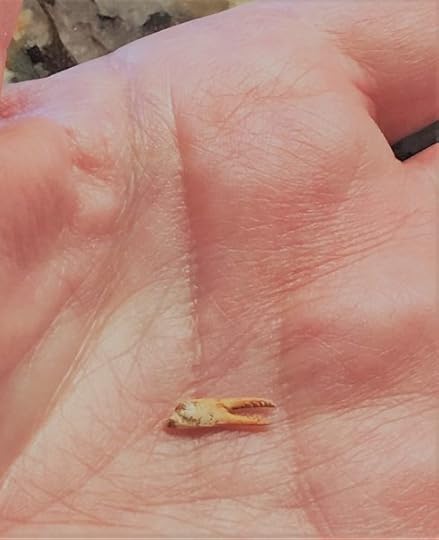
And don’t forget to have plenty of newspaper or oilcloth to cover the dining table with. Unless you choose to eat them outdoors. Which means you won’t find this under the dining table five days later:
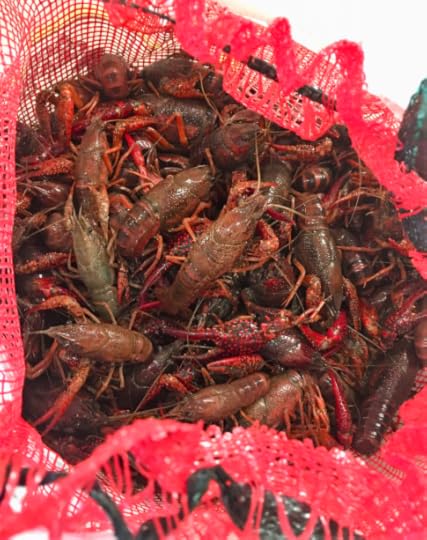
Once you’re set with all that, you’ll need some lively crawfish (depending on your purveyor, they may have to be ordered a few days in advance of the feast).
BOILED CRAWFISH, AN UN-RECIPE
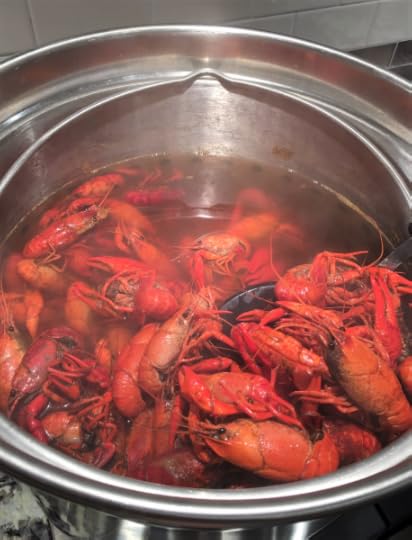
• Put the crawfish pot insert in the sink and fill it with 10 lbs. live crawfish. Rinse them well in cool water. They should be pre-rinsed when you buy them, but you’ll still need to do this. If they’re filthy, well, it takes longer, and you may need to rinse them in batches. Watch out for those claws.
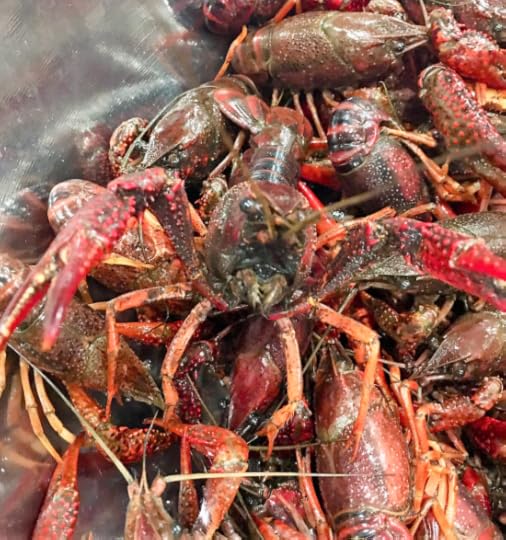
• Now put the insert with the crawfish into the pot and fill with cool water to comfortably cover the crawfish. This is to make sure the boiling water will cover them once you start cooking them. Then remove the insert and crawfish to rest in the sink again. They like to crawl out, so keep an eye on them.
• Add a halved, juiced lemon to the water in the pot and bring it to a boil. This takes time, so a beer while you wait can be pleasant.
• When the water boils, add about 1 ½ cups of crawfish seasoning, or more to taste, and continue boiling for 10 minutes.
• Now put the insert holding the crawfish into the pot. Bring the water to a reboil and boil for 4 minutes.
• Turn off the heat and add about 4 cups of ice to the pot. Let the crawfish set for 30 minutes in the gradually cooling water to absorb the seasoning.
• Scoop some out and dig in. It’s okay to leave the rest in the pot as you eat.
NOTES:
Any leftover crawfish can be reheated easily the next night:
• Boil a fresh pot of water with another juiced lemon and about 1/3 the amount of crawfish seasoning you used to cook them initially. (Adding fresh seasoning to the water ensures that the flavor won’t be leached from the meat in the reheating process.)
• Boil for 10 minutes, then add the leftover cooked crawfish.
• Leave the heat turned to high for maybe 30 seconds, then turn it off. Do not bring to a reboil. Add about 4 cups of ice to the pot.
• Let the crawfish set in the seasoned water for 20-30 minutes before plating them.
The pot will be very heavy with the water in it, let alone with the additional 10 lbs. of crawfish. Glen does the lifting. But if no one in your house can do this safely, pour the water into the pot once it’s on the stove, via pot filler or pitcher. Use a pitcher or some such to empty the pot once the water has cooled.
Enjoy!
A footnote: I was going to title this post “Crawfish: Boil ’Em. Eat ’Em. Suck Their Tiny Heads.” And then I remembered the spam comment disaster that arose from my ice cream blog post of a few months ago. I won’t reproduce that title exactly here for fear of causing another flood of spam, but it included the words “leave,” “’em” and “screaming.” In that order. Little did I know I was opening the floodgates to hundreds of bot-generated spam comments for Viagra and Cialis, which have now given way to hundreds for stop-smoking drugs. Heaven only knows what mayhem “suck their tiny heads” would cause!
April 26, 2018
The Story Behind the Story
Hi, Everyone! So here we are after successfully dodging the latest End of the World on April 23rd (henceforth to be known by the acronym EOW, and pronounced YOW!). For many reasons, I’m glad we aren’t all toast (so many cocktails, so little time!), but chiefly because I want to share some exciting news concerning The Space Between. No, not lead-story-on-Entertainment–Tonight news. Guillermo del Toro and Peter Jackson aren’t in a bidding war for the movie rights. Yet. (She says hubristically.) This news is about an honor I first learned of in January, four months after the book was published September 12, 2017. All the recognized authors were asked to keep quiet about it until the results were released a few days ago. Et voilà. Behold my happy results from the Shelf Unbound book review competition:

I can’t tell you how good this feels. As many of you know, The Space Between (TSB) was over a decade in the making. I typed the first word on September 1st, 2005. Twelve interminable years later, it was finally published. Why so long? Three reasons:
1. I sometimes put the manuscript aside to percolate while I worked on its sequel and on writing poetry. Those were weeks and months well spent. By the time TSB was published last year, dozens of my poems had appeared in dozens of wonderful publications (with three poems nominated for the Pushcart Prize and one for Best of the Net), and the TSB sequel was ¾ complete.
2. I occasionally sought traditional publication, querying several agents and a handful of publishers (two behemoths and a few small independents). Three of the small publishers folded after I queried them. Those were weeks and months completely wasted. While the novel was making the rounds, the lighthouse at Rubjerg Knude could’ve fallen into the North Sea in the time I spent waiting for replies. (The very positive comments I got from two publishers helped keep me going.)
3. But here’s the biggest reason. I wrote the 1st draft—51,000 words—in 30 days. That’s right. I’m a NaNoWriMo veteran.
NaNoWriMo, or National Novel Writing Month, is a wonderful concept. Founded in 1999 by Chris Baty, NaNoWriMo offers foot-dragging writers one simple premise: Yes, you CAN write a 50,000 word novel in 30 days. All you have to do is meet a daily word count goal and muzzle your snide inner critic until it’s time for the revision process. Since I already had four or five unfinished novel manuscripts laying about, one almost 80 pages long, I found the idea hugely appealing. My m.o. was to start writing a novel with enthusiasm, then get bogged down in minutiae and over-editing, unable to advance the plot. NaNoWriMo, I was sure, could push me over the novel-finishing hump.
For some reason, Mr. Baty chose November for the endeavor, but, what with Thanksgiving and all the other obligations of the holiday season, I thought November was a terrible idea. So I chose September. The Daughter’s high school fall term was back in session, and the home coast was clear for the quiet pursuit of novel writing. 1,667 words per day. Glen and I made several day trips that month, but I took pen and paper with me. I never missed a day’s total. And I got it done.
Except . . . I didn’t, really.
Yes, for the first time ever, I had the first draft of a novel on paper. But it was short. More of a long novella, actually. And yes, the story arc was complete. But only to encompass those 51,000 words. Why was that a problem? Because I hadn’t written a slim volume of literary fiction or an Agatha Christie-style murder mystery. I’d written a multi-worldbuilding fantasy, and at 51,000 words, I was still at least one world short.
So I kept going, draft after draft. Over the next eleven years and eleven months, vital characters surfaced from my subconscious, insisting on being included in the book. I wove them in, creating an intricate, twisting plot with several timelines. In doing so, The Space Between grew plumper by 100,000 words. In the final eighteen months before publication, I trimmed it back 25,000 words, and that’s where it stayed.
When I began writing TSB’s sequel, The Realm Below: The Rise of Tanipestis, I knew if I followed the NaNoWriMo method I’d be faced with the same problem at the end of the first draft. So I took a deep breath, and (nervously) embarked on it the old-fashioned way. Happily, my successful NaNoWriMo experience gave me much-needed confidence, and my characters, both old and new, pitched in to help.
Despite the difficulties the process presented, it’s not an overstatement to say that NaNoWriMo changed the course of my life. Without it, The Space Between probably wouldn’t exist. I wouldn’t be writing this post today. I wouldn’t have that fancy Notable Indie badge to flash. And most important of all, I wouldn’t have you.
You, dear readers, are the reason The Realm Below will be out by the end of this year instead of, oh, let’s say another twelve years from now. Thank you. I’m blessed to have you in my life.
And honestly, we’re all blessed we didn’t get smacked by the planet Nibiru. Yet. (EOW!)
April 12, 2018
The Realm Below: A Sample
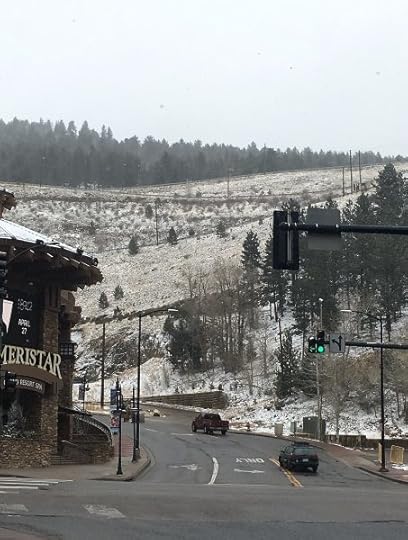
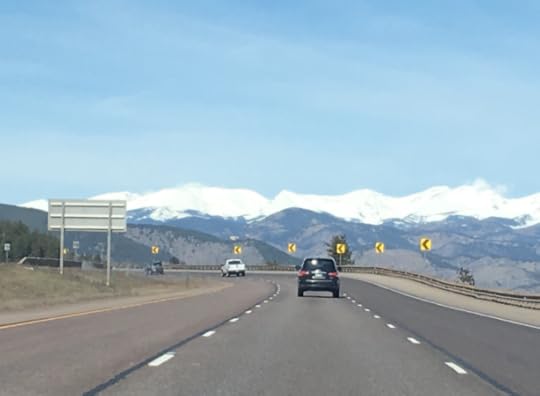
The sequel to The Space Between is getting closer to completion every day. Well, maybe not today. Glen and I are on vacation today, drinking The Daughter’s sophisticated hand-crafted cocktails, eating The Son-in-Law’s fabulous Eggs Benedict (I wish I’d taken a picture of the plated effect, but I was too busy devouring them to think of it) and enjoying some colder weather. (With April snow! It started as we were leaving a casino in the mountains of Colorado.)
But soon vacation will be over, and I’ll get back to writing The Realm Below: The Rise of Tanipestis. It’s the second book in the Space Between series, and publication is planned for later this year. The closer I get to finishing the manuscript, the more excited I am to share snippets of the book with readers. Starting today, with the prologue. First, a bit of background:
It is the dead of winter. Satan is in hiding in the Space Between, abandoned by his baffled army of followers after his unexpected transformation into a snakelike creature, thanks to the cat Kindle’s act of retribution. Alone and cold, he has sought warmth and refuge in the burning corpse of Fellson, the corrupt Penitent, and wishes desperately for his “pet,” the monster Tanipestis, to come to his aid.
Prologue: Satan Wakes
From dreams of warmth he woke freezing. The pyre of his former lover Fellson’s body had burned down around him, most of it reduced to ash, and now the cold iron of the winter soil chilled his dry, scaly skin. He coiled more tightly around himself, burying his reptilian nose in the flesh sheathing his countless ribs. If only Tanipestis were here! But he had called and called, his mind imploring, hurling thoughts toward the monster’s cavern dwelling place deep in the Realm Below, and Tanipestis could not hear him. How he missed the comforting blue flame! Now he was on his own, lost in the Space Between, without any notion of how he was to return to his kingdom.
He felt terribly exposed. The cold night sky glittered overhead, the midnight blue heavens slowly turning, visible through the cage of Fellson’s charred ribs that arced above him. Fruitlessly he strove to burrow his slim, triangular head down into the earth. As if purposely preventing him from entering, the earth remained a stony, closed door. For Tanipestis the earth would open willingly, he thought, and accept the last Titan to its accustomed home. But such was not the case for Satan, the lord of the Realm Below. No. Foolishly he had left Tanipestis behind, thinking he would have no need of the creature here. Now he was alone and barred from safety. The earth here did not open for him. And he did not dare venture out to slither across the ground. Not even in the night.
In another world entirely, but in other ways quite near, in the way of time, for instance, someone else awoke from dreams. It was the Titan of the Fire in the Earth, and its name was Tanipestis. Neither male nor female, carved not from flesh, but from sharp anthracite, it burned with a low, constant blue flame. Scattered here and there on its flinty body, high and low, front and back, were numerous eyes. Tanipestis saw things with a clarity multiplied many times, for each eye was a faceted diamond that glinted from one of its gleaming black surfaces. Perhaps such clarity of sight negated curiosity, as the creature always saw nearly everything there was to see. Usually that was quite enough. Now it looked about the cavern of its master Satan, and saw that its master still had not returned. Then, into its incurious mind came a thought, as though willed to do so. Tanipestis was certain the thought had originated outside of itself. It begged him, in words something like this:
Come to me, Tanipestis. I need your flame!
The thought persisted over time, often quite forcefully, until Tanipestis grew accustomed to it, never troubling itself to identify the source. The months went on. In the Space Between, a year of seasons passed. Winter gave way to a wet spring, which became a humid summer, and then autumn’s golds and russets painted the land. At last ice again rimed the banks of the fast-running river by the Keep, and snow frosted the heavy limbs of the ancient yew tree—the Tree of Life—in the Garden Field.
In the Realm Below, however, there were no seasons, merely a dull uniformity of days—a brownish haze of perpetually chilly air, a muted light from the feeble disc in the sky. In such timelessness, Tanipestis did not notice when the thought dimmed at last to silence.
**********************************
Thank you, Dear Readers! Back soon . . .
March 29, 2018
Family Easters: Mislaid Eggs, Immovable Feasts
As Easter 2018 approaches, I’ve been thinking about Easter holidays from my childhood, and I realized there are just two I can remember. Probably because both had residual effects that lingered long after Easter Sunday was over. One of those is the episode I call The Year of Mislaid Eggs.
It was the early 1960s. My mother Eloise was a meticulous record keeper who listed everything she thought notable, whether it was spring bulbs she’d planted, countries she’d visited or marriage proposals she’d received. Naturally, she recorded details from each Easter egg hunt too. One year, though, after making notes of how many eggs she’d hidden and what colors they were, she forgot to note where she’d hidden them. Our house sat on a wooded lot of several acres. There were lots of possibilities.
Most of the eggs—the less determined ones—were apprehended on the day of the hunt, but a handful were not. We kept looking for them over the next couple of weeks, finally tracking down all but one. The Fugitive. That egg eluded us for a long time—months—but eventually we came upon it by accident, five or six feet off the ground in the fork of a live oak. It had been on the loose for so long that we left it where it was. We joked that we did it out of respect, honoring its long bid for freedom. Honestly, though, the egg was so disgusting by then that none of us would touch it.
And then there was the episode of The Easter Bunny Cake.
Mother was known for her enthusiasms, some of which she foisted on me. There were the ones I enjoyed: rock hunting, card games, communicating with the spirits of the dead. And there were the ones I could have done without. I was forced to collect useless memorabilia: matchbooks, antique buttons, souvenir spoons, Hummel figurines, hotel keys. I had to take sewing lessons—from several instructors, and with no regard for my spectacular ineptitude. One of her notions that still makes me shudder was the (thankfully) brief period in 6th grade, when she was determined to make me look like a British schoolgirl. That meant I had to dress in a long, shapeless skirt of houndstooth check, and a prim white blouse with a Peter Pan collar. I have no idea if that was an accurate British schoolgirl imitation or not. But imagine wearing that outfit and walking for the first time into a classroom full of 11-year-old staring strangers. The fall term has already been in session for 2 months, and all the other girls are wearing miniskirts. The only way it could have been worse is if I’d worn clothes I’d sewn myself.
The Easter Bunny cake had its genesis in another of her enthusiasms. She decided the dining table needed a special decoration for the family Easter dinner. Therefore, she would focus her considerable culinary skills on baking a realistic white rabbit cake for the centerpiece.
It was gorgeous. The rabbit crouched low on the platter, about 20” nose-to-tail, with its long ears flat along its back. She covered it liberally in white frosting and sweetened shredded coconut—two abominations right there—and gave it pink jellybean eyes. She was so pleased with the way it turned out that no one was allowed to cut into it. Which was fine with me, since I had no intention of eating that cake anyway. Then or now, endlessly masticating sweetened shredded coconut gummed together with white frosting would be one of my least favorite things to do. It’s like a scene from a Ren & Stimpy cartoon.

(And don’t get me started on jellybeans.)
To preserve it for our viewing pleasure as long as possible, the cake was subsequently sealed beneath a plastic dome and placed in the front yard. It peeked out from under a bush beside a curve in the driveway. How decorative it looked. And so true-to-life that arriving guests who were unaware of its presence would stop their cars, fearing they were about to squash the family pet. This was entertaining to watch from the kitchen window, much more fun than eating it would have been. Eventually, though, the plastic dome yellowed, and so did the coconut. Into the trash the whole thing went, never to be mistaken for a pet—much less a dessert—again.
Over the years, Glen and Katie and I have formed our own family Easter traditions, and they’re much more relaxed. We can’t always get together for the holiday any more, but we cherish the times we do. Our routine doesn’t vary much. Eighteen hard-boiled eggs for Katie. Eighteen for me. Cups filled with egg dye. Ella singing in the background (Cole Porter’s “I Love Paris” is a great choice), a modest champagne to sip and something delicious to nibble on as we while away the afternoon, coaxing the eggshells to bloom with lovely hues. Glen admires our creations, then hides plastic ones in the yard. The real eggs remain pristine until they’re eaten.
No fugitives. Not a rabbit cake in sight. Which means that when Katie’s my age, she probably won’t remember any family Easters.
Dang it. I guess I’ll have to make a rabbit cake now.
Happy Easter, everyone!

March 15, 2018
Post-Apocalyptic Off-Grid Living: A Handy Plan
Have you ever watched those TV shows about people who choose to build their homes in remote locations that have no access to utilities, Wi-Fi or Whole Foods? Without even a Starbucks in sight? Alaska, the deep woods of Maine or Washington and the windy mountain valleys of the American West are popular places for this, apparently. The typical episode follows the intrepid homebuilders (often a couple who are constructing their off-grid dream home themselves, with the aid of a host of their handy friends) through material shortages, scary weather events and roofing near-disasters, until their new home, a marvel of innovative engineering and fabulous rainwater collection systems, is complete. And the interiors of these homes are always stunning. Because we all know that everyone who builds off-grid in America has a keen sense of proportion and impeccable taste.
Sure they do.
One of the networks has a promotional spot for its own such show that, in about 15 seconds, informs viewers how to build an off-grid hot tub. “First, locate a spring!” the announcer chirps. After that, we’re told it’s just a simple matter of installing your gravity-fed PVC plumbing into the rock face of the sheer cliff that you’re building your vast, cantilevered deck from.
Right. Because it’s that easy. (And while you’re at it, don’t forget to locate a hot spring.)
Peeved as I am with the formulaic presentation of these shows, the way they alternate between over-simplifying the building process and then threatening catastrophe right before each commercial break, I have to admit I’m also fascinated with them. Especially now. After all, we live in interesting times. Then there’s the fact that Glen is preparing to move his workshop out here to the forever homestead. It’s the last step necessary to complete our transition from city living to country living, and it will make us more self-sufficient. Bearing all this in mind, it’s only sensible to be prepared to follow in the Timberland bootprints of those off-grid pioneers on TV. And I’m confident that if the zombies, the antichrist, the Illuminati and Tony Orlando and Dawn unite their dark powers to bring the apocalypse down on our heads, we could manage off-grid too. Yes, through no talent or foresight of my own, I somehow managed to marry the most capable, self-sufficient man I’ve ever met. How capable and self-sufficient? Well . . .
He can construct or remodel a house, erect the steel fencing around it and repair whatever needs fixing around the place.
(I can cook!)
He can weld anything weldable, and his welding truck is equipped with every tool, fitting, clamp, fastener, pipe, lubricant and spare part you’d need to build a rat trap or a small, functional cannon.
(I can cook.)
He can catch fish and shoot game, process it for the table, smoke it or grill it in/on the pit he designed and built, and plant and tend a garden.
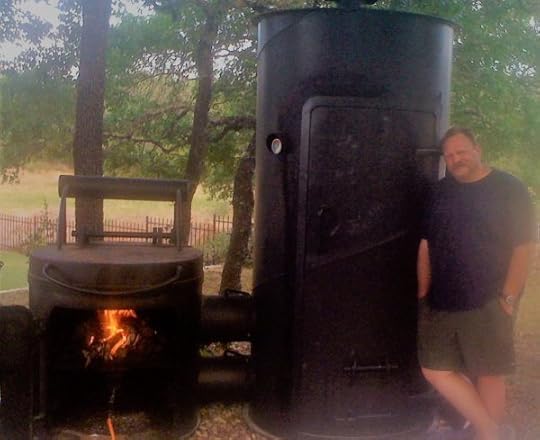
(I can catch fish too! And, um . . . I can cook . . .)
He can grow and harvest hay to feed the livestock, do vet work in a pinch, run water lines and install cattle troughs, and breed/train champion show horses for the arena or working horses for ranching.
(I can . . . Oh, who cares?)
Though it might not be useful for apocalyptic purposes, he can also do graceful and intricate hand engraving, and he knows his way around a telephoto lens. As if all that weren’t enough, animals and small children love him. And none of the above talents are his day job, which is to work the heck out of a real estate contract. (That probably wouldn’t be good for much either in the scenarios I’m envisioning.)
Since it seems that handy men tend to have handy friends, we too are blessed to know a host of handy folks who might like to build things shoulder-to-shoulder with Glen and ride out the apocalypse with us. Among the handiest is The Daughter’s husband, Wesley. Wesley is an actual engineer; he doesn’t play one on TV. (Good job, Katie!) We’ve invited them to live on the homestead with us in the event of end times, not just to entertain ourselves playing poker and Cards Against Humanity, but also because Wesley will need to design us a fabulous rainwater collection system, a couple of water wells and at least one oil well to keep the tractor going. (And a natural gas well, maybe? I don’t know, Wesley, what do you think?) I feel sure Glen will have everything he’ll need in his welding truck and workshop for the two of them to build all of that and drill the wells. In the meantime, Katie can make the cocktails. I’ll cook. It’ll be fun.
Glen got home from work as I was typing that last paragraph. When I went to greet him, he told me, “If you’re going in to town tomorrow you’ll need to go a different way. The bridge over Brushy Creek is shut down.”
My pulse took a jump. What now? “It is? Why?” I asked.
“Looks like somebody’s making a movie. A film crew has it blocked off.”
Ah. Well, Dear Reader, you’ll never guess. Turns out it’s not a movie. The bridge is closed because Fear the Walking Dead, the hugely popular post-apocalyptic AMC television drama, is filming an episode there. A mile from our house. (Isn’t synchronicity grand?)
So fortunately, this is only a drill. For now. All the same, though, you might want to get to work on those schematics, Wesley.
March 1, 2018
Where (and When) Do You Get Your Ideas?
Most writers of fiction are asked, at some point in their careers, “Where do you get your ideas?” Our responses tend to be vague. Because, really, who can nail that down? Is it the subconscious? Carl Jung’s “collective unconscious”? Do we snatch them, as Willie Nelson has said he’s done with his songs, “out of the air”?
To my readers who write fiction: Can you tell me with certainty where you get your ideas? Sometimes I’ve had a notion strike me out of the blue with such force that it felt as if a being from a vastly superior parallel universe murmured the suggestion in my ear. No, it may not be as reasonable as the other theories (even Willie’s), but ideas have to come from somewhere. And whatever great, bubbling aquifer of creativity they arise from, I’d like to tap into it any time I please.
Any time I please. Is that possible? Maybe for people who diligently practice mindfulness and meditation. Or who smoke a lot of grass. I do neither. (And if you read February 15th’s post “After the Glory Days,” you know I’m telling the truth!) But thinking about it, I realized that ideas do tend to flow more easily at certain times for me. Which makes the “when” of the creative process as important as the “where.” When is it most likely that an especially good idea will break the surface of my conscious mind? Well, there are two times during the day most likely to spark this kind of creativity: Either when I’m exercising, or I’m dreaming.
“Exercise” in this case means some activity that’s repetitive and not too demanding, which allows my mind to wander. In particular, walking. (In nature. I don’t mean from the parking lot into the hair salon.) It works well for those times when I need an unexpected solution to a plot problem, or to dig into a character’s motivation.
Dreams, however, especially the ones that occur in the hour before I wake up, are far more likely to allow those nudges from a parallel universe. This period of time is when my characters become physical, reaching out touch me from whatever land of mist they occupy. They talk to me about themselves, and they tell me their names. Once I’ve awoken, I’ve researched these names, and some of them have surprised me. Here are just three examples (the first is from The Space Between, the other two are from its sequel, The Realm Below):
• Allowyn: He’s Lugo’s son, and is the only member of the Penitent faery tribe who’s born without flaws. As such, Allowyn is meant to marry the “perfect” human female, Mellis, in order to one day get the Penitents back in the Maker’s good graces. His name appears to be a variation (just one of many in several languages) of the Welsh name Alwyn, which means “noble friend,” or “friend.” Allowyn as it’s spelled means “freedom lover.” An interesting insight, since his desire for freedom is something Allowyn decides to explore to the max in Book 2.
• Bryngwyn: She’s a mountanous white sow, a new character in Book 2, and she’s the animal companion of another new character, Pollector (see the 3rd name below). I’d begun writing her into the story without naming her yet, then one morning before dawn I dreamed the word “Bryngwyn.” It sounded Welsh to me, but for all I knew, I’d made it up. When I awoke, I googled it and discovered that it is indeed Welsh, and means “white hill.” The perfect name for her, but it was disconcerting to realize I had no recollection of ever hearing that word in my life.
• Pollector: This character is also known as The Wanderer. He’s a human being who, because of an evil act he committed long before the book begins, is condemned to perpetually travel among the three contiguous worlds of the Space Between, the Realm Below, and the world of humankind. He has a bizarre disfigurement that is meant to serve as a lesson warning everyone who sees him of the punishment for evil deeds. No spoilers here, so I won’t tell you what Pollector looks like. But after a dream in which his name and his bizarre appearance were revealed to me, I woke up thinking about the name. Pollector. And it occurred to me that it was meant to be a composite of two words: “poll,” meaning “head,” and “lector,” meaning “lecturer.” Most appropriate.
So where on earth did these names and characters come from? I’d always leaned toward believing it’s a mix of my own subconscious with a boost from the collective unconscious. But then, just this morning, I dreamed another one. Not a character, but just a word: “Inviction.” I was so excited about it when I woke up. Maybe I’d experienced another nudge from the being in that vastly superior parallel universe! When I looked it up on the Dictionary.com phone app, though, I was crestfallen. There was no definition for “inviction” (my spell-check never heard of it either). And that seemed to be the end of it.
But writing this, I decided to try one more time. So I googled it:
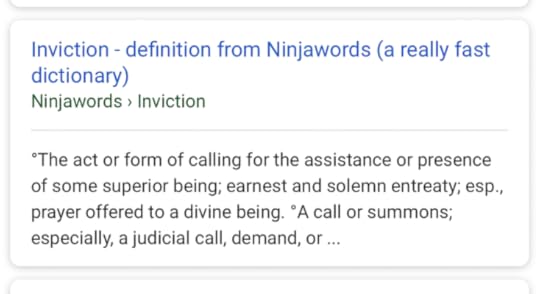
Well, that settles it. I’m going with the parallel universe theory of idea origin.
February 15, 2018
After the Glory Days
Do you ever catch sight of yourself in the bathroom mirror while brushing your teeth and think, “Yeah . . . my best days are behind me . . .”? Boy, I do. Even my teeth aren’t as good as they used to be.
Excitement! Hotness! Talking my way out of speeding tickets! All a distant memory now. Okay, maybe hotness was never on the table, but occasionally I did have excitement, and I also managed to talk my way out of quite a few speeding tickets. Sometimes I did both at once. But now? I hallucinate for fun.
Normally, I can shrug off my creeping, dull decrepitude (except while lying awake at 3 a.m.), but something on Twitter brought it to mind a couple of days ago, and I’m still thinking about it. A friend of mine tweeted an entertaining prompt that was making the rounds: to state “3 Random Facts” about yourself. Hers were that she got to meet Muhammad Ali and shake his hand, she’s not a fan of chocolate, and she loves to fish.
Then she tagged several people, including me, to tweet 3 Random Facts about ourselves. I figured the aim was to come up with something fun and quirky, so, after some thought, I tweeted this (“I can row a rowboat” and “I wanted to be a nun when I was a child” didn’t make the cut):
1. I can witch for water.
2. I stood in North Korea when visiting the DMZ.
3. I smuggled a dried llama embryo into the U.S. from Bolivia.
Then I, in turn, tagged several more people. (Thank you, my dear Claire M., for tweeting your 3 Random Facts in response! FYI, Claire has, among many other gifts, the talent of making elaborate, gorgeous doodles.)
It didn’t take long for Fact Number 3, the dried llama embryo, to be noticed and raise questions, and soon a couple of people started tweeting jokes about how “awesome” I was. It was funny and gratifying, creating one of those rare moments that make Twitter seem like it’s just some friends hanging out together, but on opposite sides of the world. Once I stopped laughing, however, I looked over my random facts and realized something:
1. I was 7.
2. I was 11.
3. I was 14.
Not only did all these so-called awesome things happen before I’d hit mid-adolescence, but also, Number 1 may not even be true. I’d first written “I’ve witched for water,” but had to shorten it due to Twitter’s tweet-length constraints. I did know how to witch at one point, but do I now? I’d like to think so, but who knows? (Here are the two blog posts I wrote last year about 1 and 3.)
Wow. Have I really not been awesome since I was 14? (Delusional doesn’t count as awesome.) I racked my brains. Surely I could dredge up something notable that’s happened more recently, but no. That’s when I came to the sobering conclusion that my 3 Random Facts are misleading, so far behind me in the rearview mirror that they might as well have happened to someone else. Nowadays I’m a big chicken, I don’t travel outside the U.S., and even if I did, I would never dream of slipping some disgusting, improperly dried magical totem through Customs. Yuck.
It became evident that I needed to make a new list. One that, in the spirit of honesty and self-acceptance, represents more accurately the person I am today. And is probably, leaving aside a few aberrant moments, closer to the person I’ve really been all my life. So here goes:
1. I am known to put off going to the doctor for any reason, for as long as I possibly can. To keep my teeth from falling out of my head, I do make an exception for the dentist.
2. I have never once worn a top that bares even the merest 1/8” of cleavage. Never. Probably because my mother wore enough such tops for both of us, as well as for all the rest of our female relatives. And friends.
3. I haven’t had a ticket for speeding, or for any other moving violation, since 1984.* And sadly, it’s not because I’ve talked my way out of them.
*This is apparently considered prudent, rather than wimpy, in some circles. For example, it’s one of the questions my life insurance company asked me last year before renewing my policy. At a really good rate.
Also, I gave some consideration to “I have a plantar wart on my right foot” and “Glen and I are in bed most nights by 9:15,” but neither of those made the cut for this new list.
So . . . “awesome” at this stage of my life has largely gone the way of the dodo. But then I realized there is one Random Fact that keeps getting awesome-er as time goes on. In fact, its awesomeness increased in amplitude just yesterday, as it has every year on Valentine’s Day since 1984. Glen and I celebrated our wedding anniversary. Yesterday was # 34.
Thirty-four years! And still crazy about each other. You know, it’s not magic and it’s not illegal (well, it might be in some states), but it feels amazingly awesome to me.

February 1, 2018
Seeing Things. Again. And *sigh* Again.
As I’ve written in previous posts, hallucinations are kind of a normal thing for me. Ever since experiencing high fevers as a child, I’ve seen and heard things that I later learned weren’t real. Or, at least that’s true of much of what I hallucinate, but other times I’m not so sure. For example, I’m willing (eager!) to believe that the black, hairy spiders the size of dinner plates streaming down my bedroom walls in the first light of dawn are mere illusion. Since I’m in a transitional, hypnopompic state when I see them, I’m completely paralyzed in bed and at their mercy. If they were real, they could easily wrap me in silk and snack on me at their leisure. The fact that they fade from view as soon as I’m able to move again is reassuring, so I’ve learned not to be too fussed when I see them. They’re just the figments of a wandering brain.
But I’ve had other hallucinations, particularly of the auditory sort , that were frightening. There’s been at least one that I’m certain was caused not by me, but by some outside, malevolent force. Thankfully, that kind is very rare. But despite my history of life in the illusory lane, no hallucination I’d ever experienced—harmless or otherwise—prepared me for what happened when Glen and I moved into our “forever home” in February 2017.
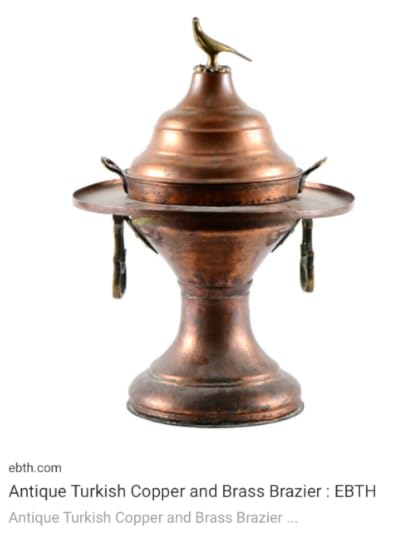
Soon after we set up the larger furnishings in the new house, Glen moved the rest of the boxes and smaller items into the garage. Among them I noticed one of my favorite pieces, an antique brazier that my mother had bought when I was a little girl. She passed it on to me many years ago, and I probably ruined its value as an antique by promptly having it polished and lacquered to preserve the copper finish. She’d always told me it was Persian, but after seeing this similar Turkish one pictured below, I have my doubts.
In any case, I’ve always treasured it, and I wanted to find a good place for it in the forever home. And every day when I saw it in the garage amidst all those unpacked boxes, I felt guilty that I hadn’t.
Then one day last April, I went in the garage to fetch something. Again I looked toward the brazier, angry and upset with myself for having neglected it. (Yes, I tend to anthropomorphize inanimate objects.) Instead, there was an empty spot on the concrete floor where the brazier had stood for weeks.
I turned the house inside out looking for it. I searched every room, every closet, every dim corner of the attic. So did Glen, and so did Katie when she visited soon after. Nothing. I grew increasingly upset over the next few months, unable to account for its disappearance. The Husband and The Daughter both reassured me that it would turn up, and Glen even suggested it must be packed away in a moving box. I dismissed that ridiculous theory out of hand. How could it be in a box? I’d seen it every day for six weeks running!
By Thanksgiving I’d lost hope of ever setting eyes on it again, but the garage had cooled off from summer’s heat by then, so I got to work on finishing the last of the unpacking. Books and family memorabilia were most of what remained, marked as such by the movers. One box, however, was a mystery, unmarked. It was larger than the rest and surprisingly light. When I cut it open, I saw a mass of packing paper cushioning the contents. And I unwrapped it to find this:
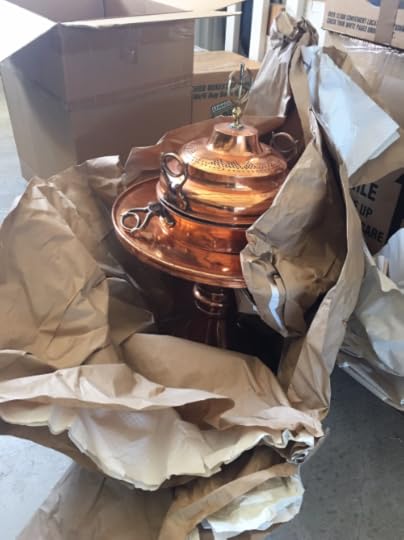
Hunh. What do you know? Glen and Katie were right . . . again.
That was two months ago. Now that much of the astonishment has worn off, the first thing that strikes me about this latest hallucination is that the duration alone makes it highly unusual. But there’s something else about it that I can’t put my finger on. As if it wasn’t the product of an annoying trickster brain, but originated instead from something outside of my own psyche. As if something—or someone—asked for my attention. It’s just speculation for which I’ll probably never have an answer, and I suppose it doesn’t matter. The happy outcome is that the brazier was never lost. Thank heavens.
Welcome to your new home, brazier. It’s good to see you. For real, this time.
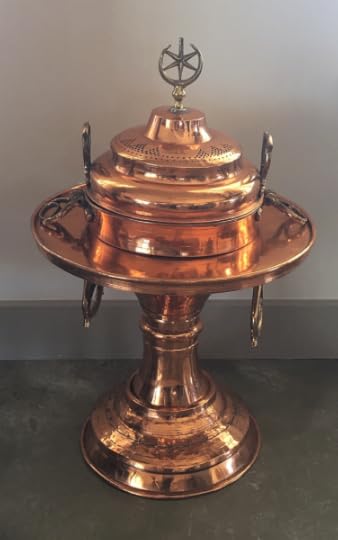
p.s. While proofing this post just now, I received an email advertisement from Best Buy. Guess what was in the subject line? “Experience sounds like never before.”
Pffffft. Amateurs. I could tell them a few things about experiencing sounds.