Ben Hobson's Blog, page 3
April 11, 2018
Facing Historical Inaccuracy Questions
By now I’ve done a few library chats, which are fantastic. You sit in a room full of people who have read your book (or are pretending they’ve read it) and you get to connect to everybody there in different ways. It’s so interesting to here how people approach your story. I think I look at it through a very specific type of lens – like I’m trying to puzzle out the why of the reaction, and not just responding to it. Each to their own, and all that.
Traditionally, though, I’ve found, is that sitting right next to me will be one particular type of reader. A reader who is very heavily invested in finding as many flaws in your research as possible. And then seems to take great delight in detailing them all.
I also received a fan letter (I know? Right! How amazing?!) which had one paragraph full of kindness (aw) and then five paragraphs of my historical inaccuracies. I actually had answers for a lot of them, but answering them feels like being defensive over something not worth defending.
Mark Twain famously said, “Never let the truth get in the way of a good story.” – and I wholeheartedly agree. I will always do my utmost to get every conceivable detail correct, but – with full honestly – I really don’t care if I miss the mark on some things. I know this will sound like sacrilege – but truly, I don’t. I don’t care if a person wouldn’t have said “pop the boot” in 1961. You get what I mean by that, right? Does it actually matter?
The 2000 film Gladiator had a director’s cut edition released on DVD a few years ago (which was awful) and attached to this was an in-depth documentary on the making of the film (which was fantastic). In this he detailed how they came to design the amount of armoured skirt the roman soldiers wore. Apparently the garb worn way back when was far more garish, and far shorter. We’re talking stubbies short. So they had a choice: work with accuracy in mind, or work in an effort to make things palatable for a modern audience. They chose the latter.
Now taking this argument to its logical extreme – that you don’t have to care about historical accuracy at all – is also worrying. Or is it? Would it really matter, in a work of fiction, that something anachronistic occurs? Sometimes it does, for me. But I try not to let it. I remember watching Windtalkers as a kid (hot dang if you have not seen it there’s Nic Cage and WW2 and John Woo get thee to a downloadable-film-streaming-whatever now) and Nic Cage picked up a .50 cal and started firing it from the hip with one hand. That certainly took me out of the film. But I’d just been into WW2 history – watching Band of Brothers, reading Ghost Soldiers, and so on – so I knew this was inaccurate. It certainly wrecked my enjoyment of the film.
So what purpose does being invested so heavily in detail serve?
I find it strange that people would read a book, or watch a film, or listen to a piece of music in an effort to simply nitpick accuracy. I get the why – it makes you feel superior, no? – but surely it mustn’t be enjoyable. I’d say the best bet is to be on the side of the creator – give them the benefit of the doubt. Just – come on. Get into the mood of the thing, not in the detail of it. There’s no heart to be found in that.
Or am I wrong?
P.S. It may have been a BAR rifle that I’m thinking of in Windtalkers, as I can’t find evidence of my memory being real. But here is Nic Cage. Enjoy all that he is.
[image error]


December 6, 2017
Longlisted and France and New Stuff
Hello! It’s been a while since I visited. And why haven’t I? What a dweeb! Oh wait! I’m a full-time teacher and husband and father and oh yeah! Let’s forgive ourselves!
Anyway, I thought I’d update you fine folk regarding the latest news about To Become a Whale, and future projects!
1. Longlisted for an award!
This is very rad. I’ve been longlisted for the Indie Book Awards Debut Fiction category. This came out of nowhere. I drove to work and looked at my notifications and saw I’d been tagged in an award tweet. I always thought there’d be some kind of trumpets, or something…
[image error]
This is hugely gratifying. There are some real heavyweights on that list – books I’ve read, books I’ve read about – and to be included in such company feels like a big thumbs-up from the Australian independent booksellers. So good. Indie booksellers are a huge boon to authors – word of mouth spreads far more consistently and is far more reliable than other forms of mass marketing. I’ve loved partnering with indie bookstores – the people are uniformly wonderful. Man. I am just utterly chuffed.
2. Being published in France!
You read that right. We’ve sold To Become a Whale in France!
[image error]
One of those things you’d never bother dreaming about but is super super cool when it happens. I am super-excited by this. The translator (an Australian living in France) is currently working on the translation. Imagine my book being in the hands of super-nice French people! They usually invite debut novelists over to foreign countries to do a bit of a book tour, right? Right?!
3. New book!
I’ve finished work on a new book I am very excited by! I’ve worked on this while simultaneously working on the edits and changes to To Become a Whale, and after my fourth or fifth draft, I’ve sent this on to my publishers. There’s no guarantee they’ll like the book, they’ll see a market for it, that I managed to write something good twice in a row, but you know what? I really like it. So if it goes ahead or not, I’m still proud of it.
But let’s hope it goes ahead!
It’s very different. Multiple, shifting perspectives, crime, violence, humour, historic, not-historic, future, small-town, morality. It’s all good! I’d buy it and read it and like it. I think.
4. New new book!
I’ve also started work on a new new book. This one is scary and far too big for me to understand yet. So I’ve started plodding away at generating words. We’ll see where it goes. It is a very vulnerable book and writing it is hard, but again, you gotta go to those places if you want to produce something worthwhile.
Thanks! Leave a comment and converse with me!


September 22, 2017


August 22, 2017
The Guts
I haven’t posted here in a while. I’ve never been a big blogger. I love reading other people’s blogs, but for some reason never value my own thoughts in the same way. Probably the same for every person, I bet!
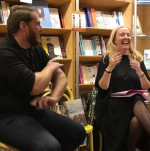
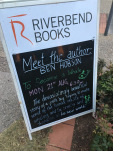
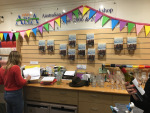
The whirlwind of activity following To Become a Whale’s publication is still going, and it’s so much fun. It is truly special to be invited to a book club and have people connect with something you’ve created in a meaningful way. I love hearing readers’ reactions, truly, even when they’re not that charitable. It’s still astounding to me that people are reading it at all! And hearing people describe how they’ve been moved, or they’ve recommended it to their spouse/friend/co-worker, or they understand their own fathers in a new light – I mean, come on. Can’t really put that stuff into words.
I’m finding again and again people asking questions about how I put the book together – why did I feature the dog, why were his grandparents antagonistic toward his father, why Tangalooma, why is the father missing fingers – and again and again I’m finding my answer is – I don’t really know.
In hindsight, I do know. In hindsight I’ve applied craft and purpose to these things, and I understand now their function within the narrative. But when I start writing, I really don’t foresee much of this. I didn’t put Albert (the dog) in because he would highlight the differences between the two disciplinary ideologies of the father and son – I put him in because the father said, in the story, “Guess we better get you a dog, then.” – it was as much of a surprise to me as it is (hopefully) to an audience. The father’s missing fingers weren’t created to better capture his broken masculinity – he just didn’t have fingers.
I am not a believer in “the character told me to do it” – that’s weird, hocus pocus, in my book. But I do believe in the power of the subconscious. I think, subconsciously, I’m much smarter than I am consciously. If I’m in a scene – really feeling it – then I’m all the characters. Then I’m reacting honestly. If I’m writing fast enough – without stopping to consider – then I’m reacting, not choosing, which I think is closer to how real life operates. And if you’re engaged thematically, somehow, it seems, all these things tie back together at the end.
A new novel I’m working on is about objective moral values – what is right, and what is wrong, and how, in a nihilistic society, in a morally relativistic society, can we honestly live with purpose – and as I was writing all of a sudden, there on a verandah, swung a dead pig. I didn’t know where it came from, but I thought it was interesting, and was maybe hinting at a type of sensibility present in the character who shot it. I didn’t know that later, that same pig would feature in a crucial moment between a father and his wayward son. I was setting something up, without meaning to. It was just there.
I like to call this “writing from the guts” – after the old Hemingway adage (which I’m not sure he actually said) – “There’s nothing to writing; you just sit down at a typewriter and bleed.” – this is how this feels. It feels honest. If I think too much I end up over-intellectualising everything, and then everything, to me, doesn’t feel vital anymore.
Anyway, I think I’m rambling, so best finish up. If you ask me about why I did a thing in To Become a Whale the answer will most likely return; just because I thought it should happen. I used to feel bad about writing this way – like there was something wrong with not thinking too hard about things – but it seems to work for me. I like what I write. And I guess that’s what counts.
Hopefully I’ll see you at an event soon!


July 3, 2017
The Ever-Shifting Goal Posts (If You Let Them)
I’ve been thinking about how to phrase what I’m about to say without sounding like I’m whining. Trouble is: I probably am. And that’s the point.
My recently released novel, To Become a Whale, has been doing very well (I think!) – most people who’ve read it have been incredibly positive. I’ve met book store owners who have championed the book, for no other reason than to be supportive. I’ve received messages out of the blue on twitter and facebook about my book; old friends, people who I haven’t heard from in years. It’s been overwhelming how kind everybody has been. This review in the Sydney Morning Herald was also huge. So overall, this has been very rewarding. Everything I always dreamed.
The point of this post, however, is to describe something uglier within myself. I’m hoping, in doing this, that other writers will be able to relate. I’m also hoping to help those of you who have your heart set on being published.
Here’s the thing: no matter what success you find externally, you’ll always find a way to feel unsuccessful. If you, like me, are hardwired to look for the negative, or, maybe, you don’t have a firm internal validation point, then no matter the success, you’ll always be looking to the next thing.
This is what has happened to me. I think you’d call it envy. Maybe insecurity.
When I didn’t have any short stories published, that was the goal. I’d watch other authors find success in that area and I’d not hear back from magazines for a year before receiving a rejection slip or three and I’d looked heavenward and cry.
Then I had a few short stories published. For a moment I felt successful. I quickly found a different goal. Maybe if I can just kick it through there, then I’ll be important. Then I’ll feel good about myself.
For years I watched others get book deals. I’d write a whole novel – really agonise over it – and receive rejection after rejection. So I’d write another one. Same deal. Others around me moving on, finding success.
Like external success was some magic bullet to me feeling good about myself.
So I got a novel published. And it is wonderful and amazing.
But, now? I’ve only moved the goal posts.
So I’ll look at other authors who are getting better reviews than me. I’ll watch other books be invited to more in-stores than me, sell their foreign rights, and so on. And I’ll feel upset again. Like I’m not important. Like what I’ve done doesn’t matter.
This is an ugly side of human behaviour. I’m praying for a change in heart. Where is my heart focussed? Why do I care so darn much what other people think?
Anyway, here’s the takeaway: if you are looking at being published like it’s some magic bullet to a better life, it’s not. It’s amazing and fun and continue to aim for it, but don’t rely on it to change how you feel about yourself. Only you can do that.
Don’t be like me, always focussed on what you don’t have. Focus on the success you already have! If it’s nothing beyond finishing a story you’re proud of: celebrate! If you’ve had a few stories receive some attention: hurray! Focus on the people who are supporting you. How fantastic is it that they’re in your life? Focus on your own sense of creative pride: how do you feel about what you’ve written?
I hope I haven’t come off sounding whiney, or self-important. I’m doing my best to have a positive outlook. Just sending up the flag of solidarity to those of you who are like me.
Pictures like the one below still leave me speechless.
[image error]


June 11, 2017
My Book Launch
It’s been a massive month! It’s overwhelming to read people’s responses to To Become a Whale. It’s so strange to think about a bloke in Victoria, who Facebook messaged me out of the blue, who read it in one sitting. It’s awesome. Thank you to all those who’ve read it and reached out to chat with me about it. It’s humbling and amazing.
The launch was amazing. Avid Reader hosted, Rohan Wilson spoke, my parents were there, my friends, family, co-workers. Other Brisbane writers. I was incredibly nervous leading up to the event but once I stepped behind that podium, and opened my mouth, I was strangely fine. I think I like public speaking but truly hate the build up.
Below I thought I’d share a few photos and my launch speech, in full. One features my son, Charlie. It was great having my kids at the launch. Love living life with them.
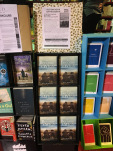
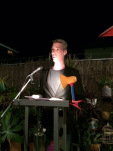
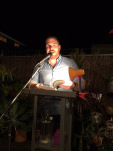
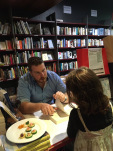

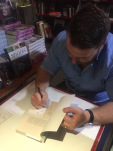
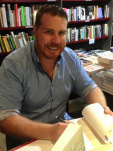
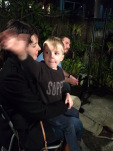
Here’s the speech:
Thank you so much Rohan. Rohan is pretty much my favourite Australian author – which is a bit embarrassing to say in front of him – but he is. It is a huge honour for you to launch my book, and I seriously thank you.
This speech has been difficult to write for me. Part of the problem is my being the centre of attention. Standing up in front of all of you, talking about something I’ve put so much of myself into – feels risky. It feels vulnerable. And it is.
When I was a kid I was bullied in high school. No more so than any other kid, but it did affect me. It made me feel small – which I know might seem funny, given the size of me, but that’s what bullying does. It makes a person feel inferior not just to the person bullying, but in general. It can still affect me now. You can ask Lena – the first draft of this speech was me apologising a bunch. Sorry I can’t thank you all. Sorry if you don’t like the book. It was my first try! Unfortunately it’s still my first, go-to reaction.
There’s a lot of this in To Become a Whale. Our culture teaches us that, as men, we can never ask for help, because to do so would betray the fact that we are not truly men. Look at the old stereotype of a man not being able to ask for directions, driving aimlessly for hours until he accidentally finds where he needs to go. It’s such a sad picture of what we’ve been taught. Rather than admit a weakness a man will keep stumbling around in the dark, just hoping things will work out so he won’t appear a fool.
I want to read to you now a passage from To Become a Whale. Just a bit of backstory, to set the scene. The boy has been thrust into the world of flensing and processing whales and so far he feels he isn’t up to the task. He is “on the hose” – the ramp they towed the whales up was wooden, so somebody would have to wet the whole thing so the whales would easily slide up. Sam has also, previously, accidentally stolen a whetstone from another crew member, and feels very guilty because of this. This picks up with Sam on the hose, tired and feeling isolated.
PASSAGE
So when I was a kid, and I needed help, I didn’t know how to ask. I didn’t know I could. Feeling weak was weakness. Feeling scared – you are a coward. You aren’t a real man.
Men, in this country, are three times more likely to commit suicide. Six men, on average, take their lives every single day. Suicide is the leading cause of death for men under the age of 54. Men just don’t deal with these problems. They store them up inside, let them fester. These are sobering realities. A lot of me wonders how many of these men, were they encouraged by their culture to admit their weakness – that weakness is not cowardice – would still be here today.
If this book helps add to this conversation then I feel I’ve done my job. This book is about this topic; men not having the vocabulary to express themselves, not feeling they can admit weakness in front of the “other blokes”. Boys looking for direction, not being sure who to ask.
Admitting weakness is not weak – it’s courage. Admitting need is not cowardice – it’s strength. Being a man is not prideful soldiering on. Being a man is, in humility and with sober-judgment, taking a good hard look in the mirror.
I’m up here now, in front of all of you – a prospect that would have terrified me as a kid – and I am proud of myself. I am proud that I’ve been brave enough to put my heart in this book. I’m proud I wrote it at all. It was really hard! I’m proud of what it says. I’m proud of my wonderful family. I’m proud of my God. And I’m proud to know all of you fine people.
So – as a test of my ability to not feel awkward and weird about my achievements anymore – I will now sit at a table, over there, and sign copies of my book. Thank you for listening, for being here, and for celebrating To Become a Whale with me.


May 31, 2017
What Kind of Day Has it Been?
I really don’t know how to sum up my last few months. But I haven’t been on here for ages! So here’s a bunch of things that have happened that I can barely understand.
My book was released out into the world. Yep! Last Wednesday! I actually can’t find the words for it. It seems completely unreal. People have tweeted me photos from all across Australia, featuring them with my book in their hands!
[image error]
Look at that wonderful thing. It’s so beautiful. Ah! Gosh! Words!
My launch is in two days. Rohan Wilson, who’s pretty much my favourite Australian author, is launching my book! I’m nervous and afraid and excited and humbled. So there’s that. If you’re keen on coming there are still a few spots available over at Avid Reader.
My book has been reviewed a bunch over at Goodreads! Some very kind people have written incredible reviews that sum up my book far better than I can.
I was even in the paper! The newspaper review was great, though it seemed to read a bunch into my book I hadn’t intended. But ah well! That’s the beauty of reading, isn’t it? Each person gets to bring themselves to the text. It’s as much of a mirror as any other art-form. I love it so much.
I’ve been invited to speak at a bunch of things! Here, at a literary salon. Here, at a breakfast bookclub. I’ve also been interviewed a bunch! There’s even audio, here!
It’s been an absolute roller-coaster. I’m so grateful to everybody. So much kindness!


March 2, 2017
Why Gaming Matters (To Me)
I missed my first few days of high-school. Being an overly nervous kid, and being prone to throwing up when nervous later in life, I can’t really remember if I was sick as in germ-sick, or simply anxious. And, once I arrived on the third day, the anxiety, if it existed at that young age, did not simply vanish. It deepened.
It’s hard to say what I was worried about; I’m not sure worry always manifests itself in logic – it seems much more prone to be birthed in assumptions and fear. My assumption was that I wouldn’t fit in. My fear was that I’d be made to feel that way. And there were certainly students who took delight in feeding my fear. I was teased a lot, rocks were thrown at me, and, most cruelly, I was laughed at.
Part of the reason I was mocked was because of my love for Nintendo.
[image error]
I used to take the Nintendo magazines I obsessively collected and cut out the individual figures (so carefully!) and stick them onto A4 sheets of paper. I was making posters. And I took these to school sometimes, to show my friends. I remember being laughed at, and being made to feel ashamed of what I’d created.
Nintendo was the first thing I was ever good at. I couldn’t handball to save my life. Car engines made me nervous. But by gum I could pass Facility in Goldeneye 007 on Agent mode in under 2:10, earning myself the invincibility un-lockable. I didn’t know how to talk to girls. But man could I make the insane leap off the track at the start of Rainbow Road in Mario Kart 64 and land the almost impossible jump onto the opposite track, cutting half my lap time.
The Nintendo Switch arrives tonight, at midnight. I’ve made it a point to celebrate this with my kids. Nintendo nights are now about our family. After collecting them tomorrow, after kindy, we’re going straight to the store to pickup our preorder and then driving home. Tonight we put the Wii away to make room. And there will be hotdogs. And ice-cream.
There’s nothing shameful in being different.
[image error]


February 3, 2017
Dem First Pages Feels
It was hot. I drove home from work, ran into my house, and set the slow cooker to keep warm instead of auto. My parents-in-law and sis-in-law were coming around for dinner, and I didn’t want my pulled pork to get dry. I checked the mailbox and saw we’d been left a parcel. I’d pick it up on my way to pick up my children from kindy.
I knew it was coming. The first pages of my novel. So as I exited the post office with the rather large, A4-sized package under my arm, it was with a big grin on my face. I sat back in my car, turned on the air-conditioner, and looked at this package. Addressed to me.
It’s hard to describe the feeling of looking at your own words, typeset and lovingly etched into professional looking (and feeling – it’s bible-thin!) paper. I have never been so proud of something in my life. There’s ten years worth of blood and sweat and rejection in that thing.
[image error]
I feel really good about this.


December 31, 2016
The Editing Process
As the new year begins I thought I’d finally write something I’ve been wanting to write for a long time. As an emerging author, without any experience in discussing my work critically with anybody professional, I found the editing process daunting, scary, concerning. So, even though my own experience is still fairly limited, I thought I’d show you all what life looks like behind the editing curtain.
A few things to begin with:
This book has been through roughly eight substantial edits (not including the small, section by section stuff) so what you’re about to see is only a small smattering of changes.
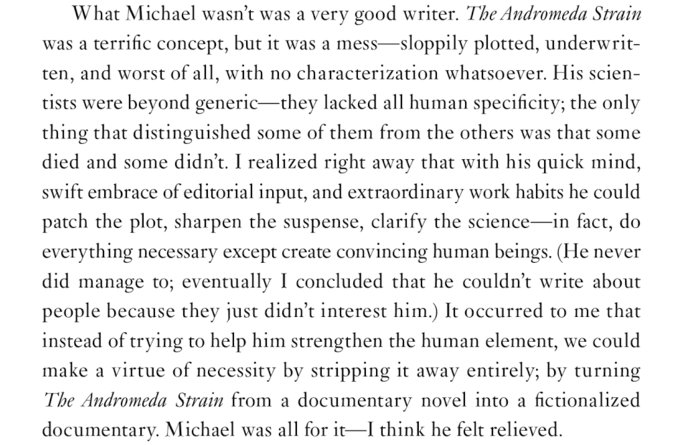
This experience of mine is the norm, not the exception. In reading I found, time and time again, how valuable editors are in crafting final drafts. There’s the famous example of Harper Lee handing in Go Set a Watchmen and her editor suggesting she rewrite the story, set in the past, from Scout’s perspective (which went on to become To Kill a Mockingbird). And I recently read this account of editing Michael Chricton (one of my early favourite authors – still love the Lost World). Read that here.
Anyway, onto the edits! I’m going to show you three versions of the same scene, as they’ve progressed over the years. This is not a full and complete look at all the changes, but an overall picture.
The First Draft
This was my very first draft of this book. I started writing first in July 2014, so it’s been worked on for a while. This entire draft was written in the present tense, only because it was what I was most comfortable with. This is fairly rough, and you can see that in the language, but the ideas and some of the phrases are all there.
[image error]
There’s some good stuff there, but overall it’s still pretty rough. There’s repetition of ideas, and the language itself is a little dead. It’s not as visceral as this scene needs to be.
The Third Draft
The biggest change actually came between draft two and three. After writing the first draft, then editing that, I went and saw an author speak at Avid Reader. This author, Rohan Wilson, really inspired me to write using my own voice. I think I’d been trying to write what others wanted to hear: not what I actually wanted. So I did a page one rewrite. I had the current document opened on the left side of my screen and I completely rewrote it on the right hand side. I changed from present to past tense, and I changed a lot of the language. It became much terser. Notice, too, how different the page number count is. This section has mostly stayed the same but man, there’s been so much story change in this book. Entire chapters cut, entire chapters written and inserted.
[image error]
I like a lot of what’s here, but again, it’s fairly fresh, and needs tightening up. There’s even some tense problems (They kicked at the newly dead and held none of the fear they once had). I think this draft is much stronger, though, in projecting an image. The first draft was a bit weak-sauce – this one is tough.
The Professional Edits
I’m going to finish by giving you a look at the current state of this passage. There’s no guarantee it will stay this way, but it’s been through so many stages now I think it’s just about done. I’ll talk about this after you’ve read it.
[image error]
So, a few things here:
An entire subplot involving a guy named Harry has been added to this section of the book. It actually worked really well to have him be the one shooting the shark – it helped convey his overall menacing image.
All the parts in red are professional edits: I don’t actually have to accept any of these changes. My job now is to go through them and decide if I like them. In my mind: I’d be a fool not accept such professional and thorough feedback. They know what they’re doing much more than I.
Notice now how much clearer the tone of this is. The edits have taken away some of my frilly language and inserted, clear, precise language instead. I much prefer this. It can be difficult to see the forest when you’re stuck within the trees. An editor, or any outside eye, really helps with this.
Notice the red in the second last sentence. The editor has changed the word it to the carcass. This is to make sure the subject of the sentence is clear for readers. Again, something to keep an eye on when I’m writing new books.
In the third last sentence the phrase, he struggled to saw and wrenched the thing and has simply been removed. This has already been established earlier and doesn’t need to be repeated.
Some of the details have been removed for the sake of pace – it can be easy to get bogged down into too much detail. A lot of the time a reader will simply skip over description to get to meat of the scene. Elmore Leonard said, “I try not to write the bits people skip over.” – good advice!
Overall the picture of this shows me just how invaluable editors are to the writing process. There are very few musicians in the world who are fully capable of writing and recording albums of quality – most often they need other professionals to write parts, change dynamics, and craft an overall song. If I wrote this song, the numerous editors and early reader feedbacks have been the other musicians, helping me make this song into the best version of itself.