
Daley Downing's Blog, page 23
September 5, 2018
A Question of Ethics?
I’m having a bit of a crisis here. In the last few months, I’ve heard numerous reports about Amazon.com and the corporate bully it’s become. Workers in several states and even foreign countries have gone on strike to protest unsafe conditions in the processing centers. Staff have been seriously injured on the job, and Amazon’s response was to basically pretend it didn’t happen.
Indie authors are struggling with Amazon, too. Recently, the website’s review policy changed, and many reviews were taken down without warning or consent of the people who posted them. Others (trad pub authors as well) have had their Kindle version ebooks hacked, and Amazon didn’t seem to care or be ready to do anything about it.
Customer service for many — writers, readers, and purveyors of other sorts of goods — has either been nonexistent, or so unhelpful it may as well not have occurred. More and more frequently when you turn on the news, there’s another interview with a former employee, a report on another business sector the conglomorate giant is trying to acquire, or statistics of how often we use this company.
And it concerns me. Because here we are in a supposedly civilized, advanced society, that has ethics and laws, and apparently we’re ready to forget all of this with a click of the mouse. Because of the savings. The great bargain. The quick shipping. Heaven’s sake, I ordered something from Amazon last month myself.
But, if when we place our order, an employee — a hardworking person with a family to support — is then thrown into a system of tumult and chaos, just to ensure our item is located, packed, and ready to mail in the time it takes a cheetah to chase down its dinner, is it really worth it?

Plus, aren’t we in a free market? With fair trade regulations? Shouldn’t we relish the fact that we live in countries (appealing to all Westerners, and even non-Westerners, here) where we do have choices? And order from some of these other businesses?
Every time you comparison shop for a book, a DVD, a video game, pet food, running shoes, school supplies, a set of tires, Amazon automatically comes up in the search engine. It’s taken a bit of extra time and energy, but I’ve started deliberately finding alternatives. Barnes & Noble sells books, movies, and CDs. Target and Walmart, CVS and Walgreens sell plenty of household wares and school stuff. You can go to Old Navy.com and find clothing for your whole family at reasonable prices. Overstock.com for that new duvet or shower curtain. Zappos for those Nikes.
And a lot of these companies have reputations as good employers.
I’m not a conspiracy theorist by any means, but as I see Amazon attempting to build their corporate empire more and more, I can’t help but think: “And one ring to rule them all.”

Although as a freelance author, I’m an independent contractor, I feel more comfortable having my publications associated with Barnes & Noble. I’m very pleased with Nook Press, they’ve been efficient and helpful, and my books look lovely, and they’re a company I’m proud to be connected to.
I could’ve gone with Amazon for self-publishing. So many folks do. But there was just something about the idea that made me nervous. Very unsettled. And I’ve learned over the years to trust my instincts.
Do I fault my fellow indie authors who chose Amazon? No. It’s a big name, it’s well-known, it’s easily accessible. I heard the siren song myself.
For me, though, self-publishing is the culmination of a life-long dream. To have my books in my hand, and be able to show them to other people and say, “I wrote this!” Throughout my youth, I’d walk into bookstores like Barnes & Noble and imagine finding a cover with my name on it.
In an actual, brick-and-mortar bookstore.
Probably this is one of the things about Amazon that bugs me the most. It’s encouraging a trend towards doing everything online, less and less in person. Going into a B&N, or a Waterstones, picking up the book, sniffing the ink, rubbing the pages… No, it’s not a weird book geek thing. It’s amazing. A part of life no one should be without.
And as a writer, who deeply appreciates the craft and art of creative writing, I honestly feel that this experience is something that should always be available to authors as well.
So, what to do now? I don’t approve of flatout boycotts. I don’t want to call for one, because of all the indie authors I know or know of who use Amazon. Or the staff who like their jobs.
And yet…
And yet, we do have other options.
And some of those other options seem to come without heavy ethical debate.
Do I have concrete answers? Not all the way around.
Do I want people to start thinking about this stuff? Yes. Absolutely yes.



September 3, 2018
My Love for the Undersung Stiefvater
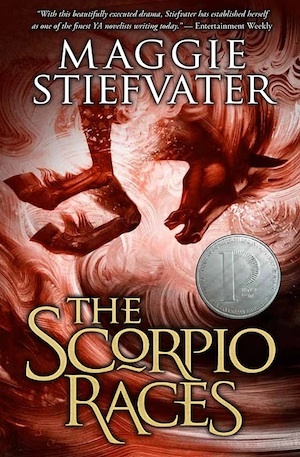
In the last 10 years, I’ve only discovered a handful of new authors who really excite me. Maggie Stiefvater is one of them. I adore her flowing, lyrical prose, her in-depth characters, her willingness to try new takes on common mythos or story forms. I have read almost everything she’s published, and been severely impressed by nearly all of it.
Which is why it’s a source of ongoing irony and bittersweet realization for me that I cannot stand The Raven Cycle. When people ask if I’ve read it, with a heavy heart, I roll my eyes and answer, “Yes…and I wish I liked it.”
Why didn’t I like The Raven Cycle? Well, several reasons. One: It relied too heavily on archetypes — the special snowflake (Blue), the tragic star-crossed lovers (Blue and Gansey), the apparently fruitless quest for a lost king. And I thought that wasn’t really a Stiefvater trait. Two: It had wayyyy too many throwaway secondary characters and subplots — again, that felt out of character (for me) for this author. Three: The pacing felt totally off. I honestly thought she could’ve written one novel detailing, start to finish, Blue and Gansey’s particular journey, and then spent the other 3 in the series focusing on all the subplots, like all the psychics and the lost Welsh king and the Raven Academy and dream thieves. Everything seemed to go on tooooo long.
So, in short, her bestselling series is not for me, and it kind of made me sad.
But, the biggest disappointment — in my opinion — was the fact that I was constantly comparing The Raven Cycle to her other books…and found it continually lacking.
The first Stiefvater book I ever read was The Scorpio Races, and from then on, I was hooked. Her style, her characters, the way she slowly unwound a story, so that one could simply enjoy the path she took the reader down, was so glorious and mesmerizing. Since making the transition from juvenile to adult fiction, I’d found myself more and more let down; genres were leaving a strong impression of cliches and worn-out devices; I prayed there had to be more to it than this. When I picked up The Scorpio Races in the library, I didn’t even notice, or care, that it was marked as YA. I was just sucked into the world of man-killing horses off a remote British island, and didn’t want it to end.
More than re-igniting my love for reading, Stiefvater prose and concepts hinted to me there may be different (better) ways of writing.
While The Scorpio Races is far from a forgotten novel, many fans of The Raven Cycle either aren’t aware Stiefvater wrote other titles, or they haven’t been read. Whenever I see Scorpio getting love on social media, I do a little happy dance.
Ms. Stiefvater has amassed a good bibliography for her age. While her most recent release, All the Crooked Saints, has been getting a bunch of attention, and Raven fandom is definitely going strong, I’ve seen my other favorite of hers, The Wolves of Mercy Falls, sadly sliding into the background.
A few months ago, I introduced White Fang to the catalogue of Stiefvater, and it was such a brilliant experience — for both of us. He fell in love (a bit literally in terms of Isabel Culpepper) with Shiver, then raced through the rest of the series. He was awed by the ending of All the Crooked Saints, and ate up The Scorpio Races. And he wholeheartedly agrees with me about The Raven Boys.
So, what makes this author’s earlier works truly stand apart? Considering that, at any given time across the last year, all 4 books of The Raven Cycle are somewhere on the bestsellers list, why is it that this quartet falls hopelessly short for these bookdragons?
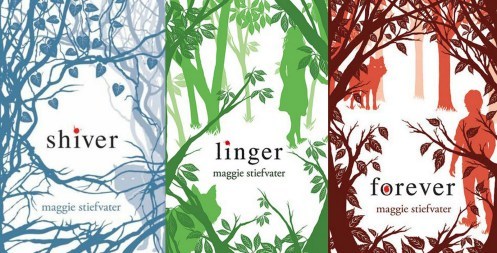
The Wolves of Mercy Falls is written so compactly; no, it isn’t an action-packed, quick-paced page-turner. It focuses on a character-driven plot, and if you’re after lots of explosions, you’ll need to try something else. But there is such beauty in this slow and relaxed unfolding of the tale of Sam and Grace, Isabel and Cole. And there isn’t a single secondary character or subplot that doesn’t seem to fit or becomes an unnecessary tangent. Stiefvater remembers all these little references and mentions from earlier, and keeps going back to them. She knows just who’s important to each main character, and why they need to pop up again at this point, and why it will matter later to the individual arc. By the last page of Forever, I didn’t think there were any loose threads (apart from one minor niggle, which she then addressed in Sinner).
The characters are not trope-y. Grace is an ordinary teenager, who is thrust into extraordinary circumstances; she isn’t a special snowflake, she doesn’t have a quest, the fate of the world doesn’t rest on her overburdened shoulders. As much as I love Harry Potter, we need to move beyond The Chosen One. It was sooooo refreshing to read about normal adolescents concerned with normal things: their parents, their significant other, friends, teachers, college, if they remembered to charge their phone. It’s real, it’s relatable.
Yet while most of the characters are teenagers, the focus isn’t on high school drama, another huge plus. Grace and Isabel know there are more important things in life, and they want to concentrate on them, rather than get swept up in hystrionics that won’t matter worth a speck in 6 months. Even as an adult, these girls were highly sympathetic.
Successfully writing deep first person POV is tough — and Stiefvater pulls it off. Switching voices and getting the reader to believe you’ve changed narrators is even tougher. She manages this, too. Usually switching narrators trips me up when reading, but not with Wolves. I know Grace, and Sam, Isabel, and Cole, and how they understand each other. I get a look at the relationships from both sides. It’s such a well-rounded portrayal.
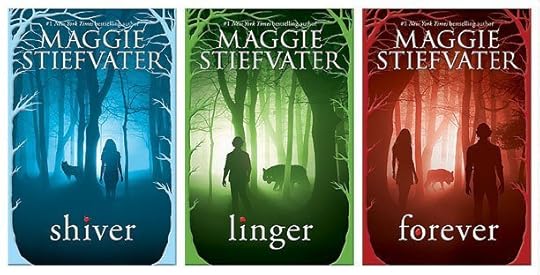
I just didn’t develop the heart for the Raven characters that I do for Wolves and Scorpio. And while Crooked Saints didn’t frustrate me, I simply wasn’t as impressed as I hoped to be. While I’ll happily look forward to what Ms. Stiefvater produces next, I’m rapidly coming to peace with the fact that, for me, her works are in two camps.
Literature is completely in the eye of the beholder. Readers shouldn’t be made to feel bad about that. I believe this is a perfect example of “it just wasn’t my cup of tea.”
And I have honestly tried all of her novels that I’ve read with an open mind. My favorites will remain my favorites; my reasons will stay the same. But this doesn’t discount me from wanting to dive into whatever is printed in the future with her name on the cover. Regardless of the premise, tale, or potential tropes inside.
That’s probably the highest compliment we can give an author.
September 1, 2018
This Transition Can Bite Me

The last couple of weeks of summer have been, for me, packed with impending changes. Despite being on the autism spectrum, I do not hate change as a rule; it depends on what the change is, whether I have notice of its intentions to enter my life, and if I feel it’s necessary. In these circumstances, I knew it was coming, and I expected it, and to a point, I’m ready for it.
I’m ready for the boys to go back to school (they may agree, or have other ideas). But I’m not ready, literally, in terms of acquiring all the supplies they may need throughout the coming 10 months, or emotionally, in that I feel unprepared to have a 10th grader in my family.
For months now, I’ve been asking White Fang if he was ready to turn over his layout to Muffin. “The layout” is a combination of Thomas the Tank Engine tracks and accessories and trains, arranged in a minature version of the Island of Sodor, on which has also dwelled (since about 2015) Lego Minecraft servers and important Lego City vehicles or buildings. (The Arctic Ice Breaker and Weather Station is especially impressive.)
Anyway, Muffin has, off and on, eyed the layout with something approaching coveting, as he is now old enough to play with almost all of it (apart from some of the Lego sets where the box states ages 8 plus). A few times, a power struggle has almost resulted. The old guard and the new; the teenager harboring fond memories, and the preschooler wanting to take advantage of all these toys he hasn’t played with yet, right in his midst.
Then, this past week, I made one more proposition to White Fang: I will dismantle and rebuild the layout, appropriate for Muffin, packing away the Lego sets. Honestly, I was stunned when he said yes.
And so, I undertook this mammoth task (White Fang collected Legos from 2009-2016, and nearly all of them lived on his layout since Muffin was born). Across two days, I attacked that corner of the basement with at first enthusiasm and passion; then, a twinge of sadness; then, eventually, a feeling of relief (and a fair number of impolite phrases).
As I worked, I couldn’t help but flash back to the first time White Fang built each of these sets, the joy and pride on his face when he finished, and the care with which he brought the new addition to the basement and chose a place for it.
The lighthearted way he said to me a few days ago, “I can always rebuild them,” threw words like mature and growing up into my brain, and tightened my throat.
I’m not crying, you’re crying.
Although Muffin was at first reluctant (yes, after all that) to play with the new layout, he did, and enjoyed himself. Trains are not a huge passion for him, but he likes them, and the bridges and tunnels and pretending the engines are on a quest. So, while at this present moment the layout is resting, I know it will continue to be used in the future.
All my effort was worth it. As I anticipated it would be. I just didn’t expect…well, I didn’t expect to feel anything beyond sweaty and victorious.
Then there was the whole job interview/car shopping situation. These particular issues I haven’t mentioned here, partly because so much was up in the air, and trying to write about the in-progress stuff was turning me into a flailing, wailing, melting mess on the carpet. So, now that certain things have processed and concluded, here we go:
Since early 2016, I have been without a vehicle. I was driving an older sedan that was on its 8th life. Then, before I had Muffin, one bitterly cold winter day, I was on a country road, hit a patch of ice, and then a ditch. (And, yes, I was carrying Muffin in utero at the time. It was terrible.) After that, even with the (expensive) repairs, the car never ran quite right. And in January 2016, it reached a point of needing far more work done than we could handle; so we sent it to the scrap yard.
Hence, I have been walking everywhere, or somebody else’s passenger, for the last two and a half years. At first, it was all right; for probably the first 12 months, I didn’t complain. We couldn’t take on a car payment, and I was more concerned about my children having food and clothing. But bit by bit, this endless loop I’ve run to the post office and library and drugstore and back to my house has ground down my soul.
Last year, the pain of the endometriosis made pushing Muffin’s stroller up the hill practically unbearable. And I was really, really done with this walking setup. However, we weren’t in a financial position to get a second vehicle.
Fast forward to now, and the fact that the song-and-dance of looking at cars, getting a price estimate, and continuing to look had begun — and then suddenly escalated. There was a vehicle quite near home that was affordable. And it was in good condition. And available immediately. So the purchasing bit happened pretty fast.
A lot of this had to do with the job interview I also had this summer. My first one in a while, because many of the positions I’ve applied for since Muffin was about a year old have never gone beyond me submitting my resume and getting a flat-out no (it’s already filled, or I’m not what they’re looking for, or whatever). This situation felt different, promising.
However, nothing more positive happened. And I was gutted. This always happens anymore; there’s just something about me that either makes people wary, or that doesn’t sit totally comfortably with them. Even if I don’t tell them I have autism, I’m nowhere near as good at masking as I used to be; I honestly don’t have the energy for it I did 10 years ago. So, even for the people that can tell there’s something “quirky” about me and don’t mind, it frequently means they end up hiring somebody else.
I am so tired of feeling like I can’t get ahead. At least I will have access to a car for errands now. That’s little comfort, though, since I was planning out a commute to a part-time income.
To everything, there is a season. I won’t regret saying goodbye to the season of walking everywhere. But I was anticipating replacing it with an entirely different sort of season, and I will miss that.
In the midst of all this, I realized that there was a reason the books I bought with birthday gift cards felt familiar: I had already requested them from the library, and simply had to wait a while for those new releases. Now, they’re on their way to arriving at my local branch. Buyer’s remorse, I am thee.
Anybody interested in only paying $12 for “The Book of Speculation” by Erika Swyler, or “Mez’s Magic: The Lost Rainforest” by Eliot Schrefer? (I in fact got these titles mixed up with other stories, but now that they’re almost at the library, I will read them anyway, dang it.) Or for “Fawkes” by Nadine Brandes (I waited a long time for it, yes, but I don’t need 2 copies). And, yes, somehow I forgot I had already read “Children of Blood and Bone” by Toni Adeyemi. Any takers? I have Paypal; and I swear on my grandmother’s grave (yes, she is in Heaven, don’t worry) not to share your address with anybody other than the post office.
Also, because I need to focus on the good and remember what I have accomplished this year, I am running a sale for the remaining first editions of Masters and Beginners: Volume 1. Only $8 — yes, that includes shipping — per copy. If you’ve been meaning to start reading my YA fantasy series, this is a great time to go for it! All first editions feature precious Toby on the cover, and I’ll have signed it. And you can brag that you’ve chatted with the author and follow her blog. A heck of a deal, really.
My goal was to enter the finale of this summer with grace and skills. I did learn how to eat fried rice with chopsticks.
But otherwise, this transition can bite me.
August 23, 2018
Do You Have to Have a Theme for Blogging?
I’ve touched on this in the past, but I’m thinking more and more about it lately. On the whole, I struggle with sticking to a layout that’s pretty rigid and too predictable; this may sound surprising to those of you who know I’m on the autism spectrum. But I, as an individual, get bored easily, and if things always stay exactly the same, never providing the opportunity for growth, then that rankles me.
To a point, it helps your reader base if they can more or less know what to expect when they return to your site. Humans are creatures of habit — even neurotypical ones — and they do like routine and not having their socks knocked off at every turn. And while I generally stick to the same bunch of topics, I know that setting those boundaries too strictly will eventually do me in.
Some pros of having a theme for your blog:
Readers who like to view recurring content and discussions won’t be disappointed.
There are memes, tags, and challenges to follow for many different categories and subjects, so you can find a lot of source material when you’re not sure what to post about.
Some cons:
It’s too easy to run out of ideas, tags, challenges, memes, or get bored with all of the above.
You can feel too fenced in or limited, and may purposefully avoid bringing up an important topic because it doesn’t fit in with your “typical fare”.
Posting to a tight schedule can become time-consuming and stressful.
All of this creates disenchantment with blogging itself, and you wonder why you started this in the first place.
Okay, I’m being a little dramatic.
Or, am I?
I’ve only been blogging for 3 years, and in that short time, I’ve seen a lot of people come and go, take a hiatus only to never return, or their posts grow more and more infrequent, and they’ll claim it’s just life, but the fact is, they’re enjoying the break from the unnecessary stress that can come from trying to develop and maintain a popular site.
Those who started blogging just for fun don’t really feel they’re missing out on much by quitting (especially when it isn’t fun anymore). But some of us are aiming to create a brand — like yours truly, since being a self-published author means doing all the marketing oneself — and keeping up this platform becomes important.
At least in some capacity. A lot of indie authors reach a point where we need to devote more time to actually writing, editing, formatting and designing, rather than the meme of the week. Though readers — who are bombarded with literally millions of options of titles/series/authors — will often respond more favorably to an indie author who has a medium where they share some personal details, offering a connection to the person behind the work, rather than the email address that endlessly spams you, “Buy my new book!”
Hence why I try to keep this space a combination of discussion, updates, and random thoughts, not simply newsletter-ish content.
Especially when I don’t have anything significant to announce. Or, when it would all amount to, “I’m still struggling with the same WIP I complained about 6 weeks ago.” People get bogged down by that.
Plus, there’s more to me than being a writer. Yes, I hope to earn at least part of my living from book sales, and be known around the internet as an author first, blogger or Twitter persona or stay-at-home mom later. However, I do have a life away from my manuscripts — and that life helps fuel my inspirations, plots and characters, so it can still hold interest for my readers.
And not all of these things are books. Which is a major reason I’ve always been reluctant to classify myself as solely a “book blogger.”
When I first came to WordPress, I was really unsure what I wanted my niche to be, or if I even wanted to declare one. After several months, I realized that nailing down a few particular subjects to commonly converse about with others would aid my focus, and in building a base. (A base is a big deal if you’re undertaking a more expansive endeavor, like launching your author brand.)
So I turned to my reading habits and writing plans — and it did help. But now, it’s become complicated.
As I mentioned above, posting about my writing, as opposed to seriously sitting down and writing, can begin to feel like a stall tactic. And that is not how I spend the majority of my life (even when I wish I could), because there are so many other aspects to my day.
Also, as I said, I tend to get bored easily. When something starts to seem stale, I itch to go after new stuff. This doesn’t mean I’ll suddenly abandon my plans for the rest of my fantasy series (don’t worry), but I will give up sticking to a schedule for reviews or announcements.
So, I guess from here on out, I’m declaring my blog a non-niche or theme-less one. Maybe it’ll be a little more difficult to explain what my blog’s “about”…or, will it be easier? I won’t have to worry that it doesn’t fit into a particular category or group. Realistically, I’ll reach more people by diversifying, not less. And I won’t start to become discouraged by what is, after all, my own platform.
Shaking it up can be good.
August 19, 2018
It’s Time To Stop Being So Neurotic About Goodreads
[image error]
Yes, you read that title right. This post is a public service announcement about the health of readers.
Now, before I go any further, it needs to be clarified: This is nothing against Goodreads. I love Goodreads. (With a couple of minus exceptions, which I’ll reach soon here.) Please do not think I am slamming the website. I’m a Goodreads author, for the love of Pete. This discussion refers much more to the attitude and mindset many users of the site have adopted — and here’s why we need to change that.
First, let’s list the problems I’m going to address:
One: People develop a serious fear of missing out syndrome by viewing their friends’ TBRs.
Two: Readers add books to their TBRs in numbers that hit digits scientists exploring the vast outreaches of space cannot fathom.
Three: Reading (and the subsequent) reviewing becomes a chore, a burden, or actually hazardous to your health.
Okay, time to tackle all of these bit by bit. With nice pictures of cuteness and beauty thrown in to alleviate the pain. Of course. Because it’s me, and I’m kind.
[image error]
One: People develop a serious fear of missing out syndrome by viewing their friends’ TBRs.
One of my minor quibbles about Goodreads is the fact the entire world can view your TBR (also known as To Be Read list). (Also known as “These are the books I feel I must finish reading before I die so that I will be assured I lived a whole and fruitful existence.”)
Anyway, the reason I add titles to my GR TBR is quite simply so that I won’t forget I came across an interesting-sounding novel. Rather than spending countless hours sitting in front of my open library account, wailing, “WHAT THE HELL WAS THAT CALLED?!”, I can just check my GR TBR, and within minutes, have placed hold requests for all the books released in the past year that I think I’ll want to read.
Every once in a while, titles are removed from my list, because either I changed my mind (yes, that IS permitted), or I switched the title to another list (like the “Save for later” in my Amazon or Barnes & Noble carts). I like the idea of “divide and conquer” that this tactic provides. It makes me feel that I am accomplishing massive tasks in bite-sized chunks, and that in itself is satisfying.
However, what I don’t care for regarding the TBR feature is the fact anyone who is your friend or follows you on the website can see which books you’ve added. Most people honestly will not take the time to browse their friends’ selections — but, still, I don’t think this feature is beneficial. Whenever I’ve taken a gander, I can concretely say that two things occur: A) I feel like I don’t know these people’s reading tastes very well (which can draw me closer to, or farther from, their page), or B) I am absolutely dumbstruck by how many great books are out there that I haven’t read yet.
The latter actually does present a very valid problem. “Fear of missing out syndrome” is a real psychological thing, which has increased in our collective consciousness in the internet age. We see that 1,849 random strangers are enjoying this new movie, that we have never even heard of, but now immediately need to find a cinema that’s showing it, and attend the first available viewing. If we stay home and watch reruns of The X-Files, we’ll worry that we’ve missed out on some fantastic cultural experience.
Something similar happens for bookworms, bookwyrms, or bookdragons. We begin adding multiple titles to our TBR that we have no genuine interest in reading…but “everybody else” in our sphere of online life is reviewing it, excited about it, or mentioning it approximately 6 times an hour. Hence, we don’t want to “miss out.”
Now, here’s why this is a bad pattern: Taste is subjective. Some people love mystery novels, others sci-fi, others fantasy, others still romance, others still unapologetic erotica, or horror, or political memoirs, or the autobiographies of hedgehogs. It’s why determining what makes “good” and “bad” literature is so difficult — everyone has varying preferences for style, genre, content, and content rating (G, PG, etc.). It’s one of the precious and important marks of a free society — that we’re allowed to write and publish and read pretty much whatever the heck we choose to. And I wholeheartedly support it.
But what has happened to the part of a free society that pushes aside the crowd-think mindset, and encourages individuals to form their own opinions?
Readers, this is what I suggest: STOP adding a particular title to your TBR purely because 1, 4, or 279 people you know did. Wish them well in their literary endeavors, and concentrate on your own. Do NOT feel guilty or ashamed about this decision. Own it. Be proud of it.
And just don’t peruse your internet neighbors’ TBRs. Check out new releases by authors you love, read reviews on titles that catch your interest, be happy if a friend (or 279 of them) agree a certain novel or manga or author’s grocery list sounds amazing. But don’t stare at your computer screen and click the mouse until your eyes go bloodshot, intent on turning your TBR into an exact replica of someone else’s in the community.
[image error]
Two: Readers add books to their TBRs in numbers that hit digits scientists exploring the vast outreaches of space cannot fathom.
There are many registered users of Goodreads who legit have a TBR of hundreds, even thousands, of titles. To compare, mine usually hovers around 30 to 40. For one thing, this is so that I don’t become overwhelmed. For another, I personally follow the sage advice that 42 is the most complete number of all creation (being the answer to life, the universe, and everything), so that’s my limit for a lot of things I undertake.
But others may feel they can handle greater numbers, even triple digits, when it comes to their reading adventures. To which I say, good for them. Except. Except the lack of practicality enters it. Assuming it takes you about a week to finish reading a book, and there are only so many weeks in a year, and humans are only supposed to live about 75 years, and we don’t even learn to read until we’re about 6…
When would you sleep? Would you actually skip school or call in “sick” to work to tick another box off your reading list? What about vacations, illness, emergencies, times when you’re stranded on a desert island or edge of a volcano without any access to a library? Or attendance at weddings, christenings, funerals, graduations — when it’s just plain rude to have your nose stuck in a book? (No matter how good said book is.)
I’m sure this part of the discussion starts to border on ridiculous, but I am relaying, quite honestly, my concern for my fellow bookdragons. What if (in all seriousness) you died suddenly, and the biggest unfinished portion of your life would appear to be your TBR? Not, like, the fact you were planning to become a scientist who found the cure for cancer.
There are people who joke on Twitter about being crushed to death by their TBRs. The numbers racked up by these individuals could apparently give the national debt a run for its (ha) money. Astronomers who are peering into super-powerful telescopes, hoping to discover the exact spot in the universe where the Big Bang took place, have in fact seen these incredibly tall stacks of books waiting to be read, stretching through people’s roofs, into the stratosphere.
(Okay, yes, I made that last part up. Hopefully.)
And borderline-silly debate aside, while reading is always good, collecting books can grow out of control. We’ve all seen the photos on Instagram of people whose bookcases have taken over their house, and they own dozens of copies they haven’t even opened, and in some cases have flatout forgot why they bought it to begin with. This is nearly an addiction. The act of having plenty of paperbacks, hardcovers, used, new, shiny, pretty, unattractive, worn, mint-condition, loved, hated, hyped to others, in one’s general vicinity giving more of a sense of comfort and excitement than just, you know…reading a book and enjoying it, does not seem healthy.
Again, none of this is Goodreads’ fault. Their system is soooo easy — the “want to read” button is right there underneath every single title. BUT. That does not mean you have to click on it. When GR sends you recommendations, you don’t have to pay attention to them.
What I’m suggesting here is: Develop and exhibit self-control, folks. The world will not end if you limit yourself to reading 10 new books a year. Reading is absolutely fantastic, sharing stories and information that way is something I will never oppose. But so is life, and family, friends, pets, and there’s value in taking 3 weeks and 4 days to reach the last page of a 7-chapter middle-grade novel. We need to stop competing with each other. Reading for pleasure is meant to be just that.
[image error]
Three: Reading (and the subsequent) reviewing becomes a chore, a burden, or actually hazardous to your health.
Book blogging came out of nowhere to become a thing less than a decade ago. It is just as rapidly becoming not a thing, as bloggers are vanishing from the internet, either literally disappearing without a trace (are we to assume alien abduction??), or stating they are shutting down their website because of too much stress.
Too much stress? From discussing your favorite books with people?
Yupper. Whereas in the early years, like-minded folks would gather together and happily flail over their shared love of a specific author or genre, nowadays there are way too many vicious trolls around. Individuals who evidently will wither and perish unless they inflict nastiness on ordinary people who simply stated an unpopular opinion.
Here’s what I say to this: The trolls deserve to wither and perish.
We are supposed to be civilized. As civilized human beings, BE NICE. If you vehemently disagree with someone and feel a pressing need to say so, BE POLITE. I’ve had mature and tactful discussions with people who felt I was dead wrong on what I thought of their favorite book or author. I welcome the debate. When there’s no foul language, personal attack, or nearly-illegal threats involved, I’m totally fine with it.
Again, this isn’t at all to be chalked up to Goodreads allowing free and open discourse. (Some users would claim this is true.) I applaud GR for not automatically shutting down dissent. (Remember, folks, democracy, we literally bleed and die to have it.) And everybody has the option to remove offensive comments from their own account, or to block a specific person that just is refusing to learn the Golden Rule.
So that’s how we can take care of ourselves. And we can take care of our friends by supporting an online environment where free thought is permitted to flourish, and where trolls are not. I really hate to see people leaving a website or internet space they previously loved because of a few bad apples — but I hate it even more when those bad apples are rotten to the core. That’s bullying, and it’s just wrong. Period.
So, there are my reasons for everybody to rein in their burgeoning Goodreads addiction. Remember, my fellow bookdragons, read and LOVE it. Read BECAUSE you love it. Use the website as a tool to streamline and make your life easier. Connect with each other. Take care of one another. Stay beautiful.
[image error]
August 17, 2018
Post-Birthday Resolutions
Some people make New Year’s resolutions. I’ve never seen the point; after all, the only thing that changes on January 1st is your calendar page. In the morning, you’ll get up and look around, and realize that the new solar year strongly imitates the last one.
But making resolutions after a birthday makes sense. Something has definitely changed, you’re a whole year older (whether you feel like it or not). And the idea of an entire 365 days passing and possibly not much change coming to your life can be daunting.
It can motivate you to action.
While striving for the moon isn’t always necessary, especially if you’re in a job, a home, a life you like, it’s important to be aware of brewing discontent. It might huddle under the surface, prodding at you now and then, until it becomes a constant prickle of irritation. Then an event or particular instance can catapult you into the realization: You’re another year older, and your achievements are lacking, you aren’t satisfied, you don’t see goals being accomplished.
So, what do you do about it? Write down a list, put it in a drawer, and forget about it?
No.
You write the list, or not, and set out to cross items off.

I don’t have specific plans in mind for the next year of my life, but there are certain things I want to work on more, and I think doing so will only be a benefit. Too often, fear keeps us from rocking the boat, and later we may incur regrets. At the end of my life, I don’t want that to be me.
So, proceeding, how do I see my days playing out?
I want to employ the courage to speak up more. Not in a political or social justice way; I already have little trouble voicing my opinions on the matters I feel passionate about. But on things that require sticking out my neck in a more personal way.
For example, about 2 weeks ago, I was in the library, picking out Muffin’s prizes for the summer reading, and I noticed that on the prize shelf was a full set of Maggie Stiefvater’s The Wolves of Mercy Falls. White Fang has had his eye on obtaining the series since he read the library’s copies, and fell in love, a few months ago. Not all that long ago, I would’ve panicked about asking the librarian if those books could be set aside as White Fang’s reward when he finished his reading challenge. But guess what I did? That’s right, I wrangled us free Stiefvater. And having that carrot dangling spurred White Fang into completing the challenge that had been taking well over a month.
I also want to take my time more and enjoy the journey, rather than concentrating too heavily on quantity of production. The other day, I was feeling like other indie authors are so much more well-known than me, and that I’m somehow falling behind. But then, when I realized that in the space of 14 months, I’ve released 4 titles, that my work is well-loved by those who have read it, and that I actually had an article on writing Christian fantasy published in a web zine this week — well, then I just felt silly for worrying.
(By the way, for those of you who are interested, the article can be found here: http://speculativefaith.lorehaven.com...)
Although I do hope to make some decent wages off my book sales, it shouldn’t come at the expense of losing my joy in writing itself. Lately I have not been feeling it, and that’s bad. The thing about creative endeavors, whether part of their purpose is to bring in money or not, is that they need to bring joy to their creator.
So, by the same token, I don’t want to spend my time attempting to refuel my creative tank with styles or genres that simply aren’t for me. I feel I’m truly at an age now where I shouldn’t have to apologize for liking the things I like, and keeping up with every single new thing of every single minute isn’t required. I no longer see the need to bang my head against the wall with authors or movies or music or TV shows that just don’t appeal. My life will grow richer minus the consistent hunt for the “hot now.”

I also want to appreciate more what I have in this moment, not fret too much about what will happen tomorrow, or next week, next month, without certain things. Being aware of what’s coming up and what has to be done is a good, solid way to carry on; however, I don’t want to sacrifice the present as a result of being too focused on the future. Muffin and White Fang will only grow up once, and I don’t want to miss it because I’m always concerned about how their lives will be in 20 years.
If the ultimate goal is to make every day count, then let’s start with today.
August 14, 2018
Four Out of Nine Lives
So, a general fact about me is that I do not math. And I do not like to admit that I am getting older. Somewhere around 16 months ago, I declared that I am not even keeping track of my own age anymore; I knew I was somewhere around 38, and I was leaving it at that.
So imagine how horrifying it was to realize…I am going to be 40.
Yes, as you read this, I will be mere hours away from turning (or maybe even just have turned) 40.
EEP.
Why is it so scary, though? Realistically, it’s because I am officially older than I want to be, or can be and still remain cool. (According to popular theory.)
I, quite frankly, want to prove that I can be a nearly-middle aged mother of two and stay cool.
(Hush, White Fang, yes, I am already cool.)
I also don’t want to believe that my best years are behind me.
Has my life gone exactly the way I wanted it to? No. But whose does? A lot of things have gone just fine. I could have many more regrets than I do. That ain’t half bad.
It’s only been since I lived out my 30s that I finished a college degree, revitalized my dancing career, published a book, and had my second child.
If I can get all that done in a decade when most people are finding themselves settling into boring, humdrum jobs and routines, then imagine what I can accomplish in the next 10?

August 12, 2018
Virtual Unreality

So, last night we watched Ready Player One. (I attempted to read the book as part of The Great American Read challenge at our local library, and did not get past page 100). While I’d like to think of myself as still “cool” (hopefully people still use that word to describe the state of being, otherwise my entire argument shall be moot), I found the idea of this story very, very difficult to get into.
It had nothing to do with the video gaming or virtual reality aspects, or the 1980s references. I’m a child of the 80s myself, I get most of those references. (See, I’m cool — I’m retro.) But what I struggled with was the very premise — apparently the world has finally gone to hell, the economy has tanked, the country is poverty-stricken…but everybody spends 90% of their time in an online VR world, that is supposedly offered free of charge to get started? To the general public, in a nation that now has no jobs, no GDP, evidently no trade or exports, and civilization nowhere other than…Columbus, Ohio?? Erm, o-kayyyy…
With the book, I had major issues with the narrator, too; I didn’t find him sympathetic or a kid that I could root for. I honestly found him stuck-up and arrogant, and a crude little knucklehead, and wanted him to fail. And the writing style got on my nerves; when a novel begins in a first person deep POV format, but within 10 pages strays to a journalistic-type article — including footnotes! — to explain all the background behind the VR game and why everybody wants a piece of it… Well, my eyes glazed over, and I began losing any hope of this book and I getting along.
However, that aside, I knew the rest of my household was excited about seeing the movie, and I was outvoted in that regard. Plus, last night, I was tired, and grumpy, and didn’t even feel like trying to read. I was in one of those funks, after having had a frustrating week. So, Ready Player One it was.
Now, my quibbles about the (extremely flawed and somewhat unrealistic) premise put on the back burner, the film is absolutely stunning to watch. Purely from a graphics perspective, it is eye candy art in its highest form. And I didn’t even know Simon Pegg was in it; I am utter trash for Pegg’s geek work, so once I discovered that, my mood immediately began to lift. And once you get past all the (unnecessary) info-dumping that’s in the novel, the storyline is decent.
But I had to keep forcing myself not to focus on the extremely unrealistic aspects of the setting and plot. The story is only set in 2045, which is not so far in the future that it could be entirely unrecognizable to us modern humans. The Oasis, the online server, was, according to this tale, developed and released around 2025. Less than 10 years from now, the chances of the next big tech thing coming out of anywhere other than Silicon Valley or Tokyo is downright laughable.
About 6 months ago, I watched a program on, I think it was the National Geographic channel, or one of their affiliates, about the present and future of Silicon Valley, and the CEOs for Microsoft, etc. that they interviewed announced, firmly and without doubt, that the days of nerds developing revolutionary hardware in their garages is gone. Nowadays, college students who want to become IT engineers are falling all over each other to get to New York and Los Angeles.
The novel was published in 2012, which was after Zuckerberg became one of the youngest billionaires ever by changing our world with Facebook. Microsoft and Sony and gaming companies in Japan are working really hard at making virtual reality as advanced as it was in Ready Player One. But it is expensive, and takes time, and hardworking and well-trained staff. While I’m not ruling out that someone could come up with a way to crack the barrier on their own (as happens in the story), it’s highly, highly unlikely. Also, the notion of it being a socially awkward middle-aged nerd (as the author’s tech genius is) really doesn’t seem plausible.
Since the new generation (teenagers now) have grown up with the internet and technology advancing at a consistent (almost frenetic, to some) pace, I just can’t see, in the year 2025, someone releasing a VR gaming server being utterly shocking and taking over society. The idea behind this modern fiction feels so…flimsy.

And then there are…the 80s references. I can say with a fair amount of certainty: The 80s are not considered “cool” anymore. I truly cannot envision fashions, music, or movies from that decade coming back into style. The 80s are something that make our kids look at us in confusion or roll their eyes disdainfully. Nobody gets the significance of standing outside somebody’s house holding up a boombox these days; in fact, who even knows what a “boombox” was? And that behavior is no longer viewed as an out-of-the-box way to apologize to your girlfriend; now it’s referred to as stalking.
This is one of those stories where it pays to just sit back and go along with the ride, and not dig too deep under the surface.
But that gets me wrapped in a knot, too — who exactly was the intended audience? I can’t help but wonder if Ernst Cline (the author of the novel) was aiming for an atmosphere of nostalgia, rather than near-future realism. You can’t even classify this tale as dystopia, since we’re not given enough information on the surrounding world, the government, the problems existing outside of where the narrator is immediately located. It’s so concentrated on the Oasis/VR/tech giant conspiracy motif as to be myopic.
I wouldn’t call this great fiction that’s designed to really make you think.
But it made the list of the top 100 books recommended for everyone to read at least once in their lifetime. (According to who? We haven’t figured out yet just how PBS determined what made the list and what didn’t.)
Stuff like that irks me. Sorry, folks.
And then, for all my effort, Simon Pegg was only in 20 minutes’ worth of the film. Oh, well. His performance was sterling (as he so often is).
A big component of the story does revolve around the digital world versus the real world, and I did like that the point was made: The digital world does not necessarily win out, no matter how appealing or enticing it may be. Temporarily escaping all your real life problems online does not make those problems go away; they will still be there when you log off. And the people you meet online might be very nasty in real life. Or they could be awesome — but you might never know if you don’t occasionally shut down the server.
In this age of global connectivity with the press of a button, we need to reshape our views on what makes a friendship, a community, a hobby. The world that we knew even 20 years ago is pretty much consigned to the history books. Whether that’s good or bad in the long run, we have yet to see.
But since so much of the internet and building connections across the planet could be used for good, let’s start thinking of it that way. Let’s stop being the naysayers of the future, grouching about the fact “things aren’t how they were,” and accept that life is how it is now.
Instead of ruminating over what we’ve “lost,” think about what we could gain — greater understanding of each other, more friends and colleagues and a bigger human family.
And work on maintaining the stuff we really shouldn’t lose — like respect, dignity, trust, decency, and common sense.
The biggest takeaway, I feel, of a film about virtual reality should not be that technology is the enemy. Rather, it’s how we choose to use that technology that could let us down, or build us up.

August 6, 2018
Half Year Wrap-up (HOW Did This Happen?! I’m Announcing a Bounty for Thieves of Time)
And, yes, I am aware that even this post is late, since we were actually halfway through the year about a month ago. *Cue soft endless screaming in the background*
I have concretely determined that there is something nefarious at work, with regards to the way time seems to vanish in the blink of an eye anymore. As Empress of the Universe (remember, Kyle Robert Shultz appointed me somewhere about June; I have the Tweets to prove it), I formally declare that anyone who knows who the thieves of time are, you may go forth and hunt them down and take back the hours and days they robbed. I am positive that, after my issuing this decree, we shall all see approximately a week and a half added to our calendars.
So, attempting to keep the whinging to a minimum, here we go with a recap of what has happened so far this year, and what hopefully will come soon.
Due to some health issues in January and February, I was not able to do as much writing as I had hoped. However, I was finally successful in completing and publishing Volume 3: Healers and Warriors. It is absolutely on sale at Barnes & Noble’s website, along with all of my other works (search me up on Goodreads for all the specs). (Sorry, folks, this is as close as I come to shameless self-promotion.)
In reading, I surpassed my challenge some point betwixt April and not-yet-spring. And since I didn’t stop reading then, the numbers are continuing to climb. (My goal was 50 books finished before December. I am now currently at 70 read. Not to brag. Seriously. Just sharing.)
In family life, Muffin is now 4, White Fang will be starting 10th grade far too soon (does anyone hear some wailing?), and I do not feel at all ready for fall.
So, as we prepare to enter the last quarter of 2018 (aaaaaaaaaaaaaaaaaaaahhhhhhhhhhhhhhhhhh!!!!!!!!!!!!!!!!!!), I am making some important decisions.
Don’t worry, I’m not swanning off to herd goats in Albania. (Apologies for confusing my animal metaphors.) However, I shall be sticking to my “new” plan of blogging less often, and diversifying what I post about, to keep the ideas plentiful, and the time limits less strict. Probably I’ll be on Twitter less, and if you tag me for something and I never get around to it, this has nothing to do with your lovely self; it’s all about me not over-committing.
I also do not have goals for continuing on Wattpad at this point. I never really gave Wattpad a fair chance (early on I was experiencing technical difficulties with it, and this really turned me off the notion of using it more frequently). But it all comes down to time. To those of you who have supported me on that site, thank you, thank you, thank you, truly. And I am working on putting together the full novelization of How To Be A Savage, which is in the next bit of news.
My hopes for 2018 were to release at least 3 books. Hahahahahahahahahaha… BUT, it is only August, not Thanksgiving. Hence, I still sincerely plan to publish How To Be A Savage before 2019 is looming, and maybe even the Order of the Twelve Tribes prequel. (Yes, there will be a prequel. Go ahead, flail; I’ll wait.)
The other major thing I’m already deciding not to do is NaNo in November. In theory, it could help an author’s who behind catch up; but in reality, it will only serve to stress me out. Therefore, I am not declaring a novel, a title, or a word count goal for that month. I will simply do what I can whenever I can, and not feel guilty. (My sense of guilt around NaNo mostly fled last year, when I realized we have to pay for our prizes.)
Otherwise, I am proud of myself for having made it through the publication process again, even in spite of major health difficulties, and I intend to keep pushing on until actual time runs out on this year.
(By the way, all illegal Time Turners found can be turned in to the Doctor. The TARDIS makes regular appearances at conventions in California and on streetcorners in London.)
August 4, 2018
A Creator’s Shift in Perspective
Here’s a tough one as a writer: You’ve put in hours (sometimes many, many hours) of blood, sweat, and tears (yes, blood — haven’t you ever had a paper cut?) into a project, and then one day you realize you can’t stand what’s been produced. Literally, feel quite strong negative feelings towards it.
And you begin to rue the day you ever started this WIP. You dread going back to it and attempting to fix it. Maybe its problems seem insurmountable.
And all of this can make you start to wonder if continuing to write at all is even worth the hassle.
Now, before you completely throw in the towel, let’s break this down, into bite-size pieces.
Here’s the unfortunate truth: You will not like every WIP you initially produce. Sometimes a draft will just downright suck, and guess what — it’s okay.
Guess how many times I re-wrote what eventually became Masters and Beginners? About half a dozen. Across as many years. No lie. Not even published authors always get it brilliant on the first go.
So, number one — don’t despair. Don’t panic! Don’t give up.
Taking a break, however, is another matter, and a well-advised one.

There was a period of about 18 months when I did not touch my YA fantasy series, except to do the research. During this time, I crafted my short story collection, grew my blogisphere space, but put the whole concept of a several-installment contemporary-fantasy-world endeavor on the back burner.
It was SO helpful. My brain and my confidence came back. And now I’ve published the third book in the series.
Now and then, deciding to scrap a project isn’t actually a terrible crime. If you realize that the reason the dialogue or world-building is in the rubbish heap because you simply aren’t invested in the WIP, then setting it aside is smart. Readers won’t relate very well to something the author themself didn’t really connect to.
Maybe you changed your mind on the plot, or maybe the characters just aren’t coming to life for you. This is all right, I swear.
One of the toughest things to admit about being a writer is that our work might never see the light of day. It’s hard, I agree, to spend lots of time in front of a computer or notebook, demanding peace and quiet and solitude from your family and friends, and then not have anything to show for it, weeks or even months later. I get it.
Many authors do, in fact, have day jobs, and it’s partly because of the practical necessity of producing something concrete. If you’re primarily a teacher, a librarian, an accountant, a dog kennel assistant, there’s a lot of satisfaction, and function served, in every day receiving a paycheck for services you know you gave to the community.
However, when you’re a writer, even if you’re taking a break — even when you’re enjoying the break — the urge will still be there.
The driving force of your passion. Hiding just under the surface. It will invade your dreams, your bus ride, your showers. You’ll be making dinner, and think, “The killer isn’t the money-grubbing estranged nephew — it’s the old lady in the nursing home!”
Before too long, you’ll open a new document on your laptop, or grab a pen, because you just can’t stop yourself.
This is totally fine, too.
Changing direction — either in your life or your writing process — can be vital to saving your sanity, and your eventual work.
There are subplots in Healers and Warriors (Volume 3) that were originally part of Rulers and Mages (Volume 2). And after determining (for at least a year) that there would be 4 installments in the canon of my series, this spring I expanded it to 5 — and I feel good about that choice.
I rewrote Volumes 2 and 3 at least twice — each. It wasn’t easy, it wasn’t always fun. But it was 110% worth it, for finally getting to the stories that I knew were in those messy drafts all along.
So, don’t be afraid to alter course if the path you’re on is full of stones and mud puddles. If there’s an overgrown track veering off to the side, tempting the corner of your eye, plunge into the bushes and tramp through it.
Just see what happens.
The risks usually pay off.

Daley Downing's Blog

- Daley Downing's profile
- 36 followers

