R. Cameron Bryce's Blog
June 13, 2020
A message to our little girls, women are the New Warriors (Series): We’re Sailing a Sinking Sea . . . and Why Award-Winning Filmmaker Olivia O Wyatt’s Work is so Important
Upcoming ethnographic documentary could be the last call -- we either wake up, or own the coming crisis that we brought on ourselves
[Editor’s note: a message to our little girls growing up: women are the new warriors in the 21st century. This ongoing series documents some of the incredible achievements, barriers broken, and amazing adventures of women who are shattering records and old, stereotyped expectations, and ushering in a new era of woman power—perhaps just in time]
Olivia O Wyatt is an entire realm unto herself. She is both lioness and lamb, Blackbeard and Mother Teresa, artist and voyeur. Make no mistake, too, she is both the magician and the possessed, master of the inner planes and dabbler in the occult, poetess extraordinaire in four dimensions. Possessing an almost surreal talent for seeing the essence ― the common denominators ― in human behavioral patterns, she is obsessed with documenting the last of the old-world ethnography belonging to the indigenous people around the world whose message we now, to our demise, think is irrelevant.
On the earth plane, Olivia Wyatt is an award-winning filmmaker, television director and producer, photographer, published writer/poet, U.S. Coast Guard credentialed sea captain and transpacific solo mariner. These days, she often works from her sailboat, and sometimes from the helm of her sailboat, by iPhone, while navigating Hawaiian waters. This is what multitasking looks like in the realm that Olivia Wyatt inhabits.

Born and raised in Little Rock, Arkansas, she has a university degree in Journalism, and has traveled to more than 25 countries, creating ethnographic films along the way. Her focus has always been on preserving for archive, and viewer education and entertainment, the traditions of indigenous communities around the world as they exist today.
Her current project involves an ethnographic film journey that traces worldwide migratory routes of whales. She's looking at humpback whale acoustics from the perspective of indigenous communities who live in whale feeding and breeding grounds. She hopes to capture for us, and for future generations, the indelible mark that these encounters have left on the people they have touched.
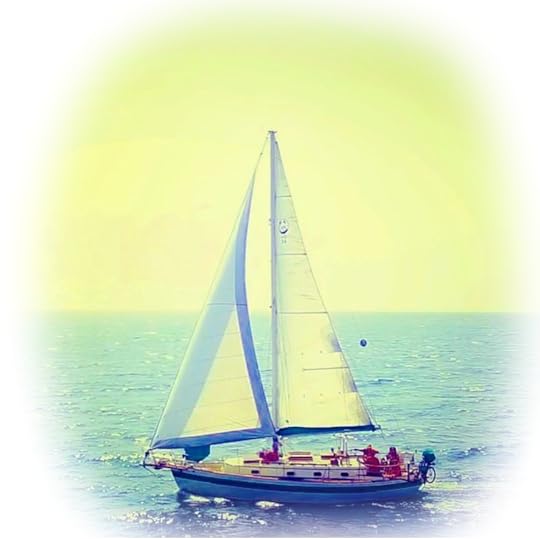
As one might have guessed, if you knew Olivia Wyatt, this will not be your ordinary “shoot.” She will not be flying to locations. She will, instead, be single-handing her 38’ sailing vessel, Juniper, around the world, retracing these annual voyages of migratory whales. As this is being written, she is rapidly closing in on her upcoming solo voyage to French Polynesia, some 2,630 miles southeast of the Hawaiian Islands. Her sailing skills are impressive and improving daily ― her passion for sailing runs deep. To be clear, this is a woman who fantasizes about sailing around places like Cape Horn, some of the most dangerous waters in the world.
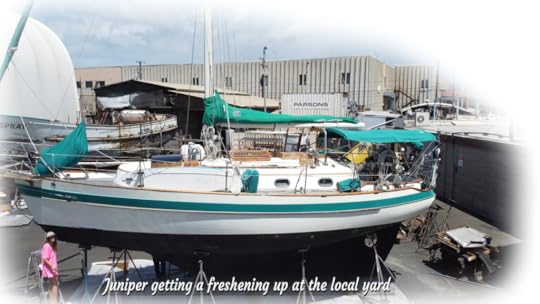
As of this writing, Olivia Wyatt is in Hawaii, on the island of Oahu. She single-handed here from San Diego in late summer, 2019, on board her rainbow-drenched Juniper. During the short time that she’s actually been here (she arrived, put her sailboat to bed, then flew to LA to produce a television series, after which she flew to Uruguay to stay on a sheep farm), she’s already sail-explored much of this island. Had there not been an inter-island ban (coronavirus) on travel, there is little doubt that she and Juniper would have already visited all of the main Hawaiian Islands in the archipelago. I’m still trying to track down the source of her dilithium-crystal-like energy.
Her film, “Sailing a Sinking Sea,” an ethnographic documentary (70 min.), captured the hearts and minds of viewers at the Singapore Film Festival in 2015, where her film won the Audience Choice Award. The film focuses on the Moken people, a nomadic seafaring community in the Andaman Sea that is now experiencing the impact of global warming on its ages-old lifestyle. In addition to her ethnographic films, she's produced numerous art films (some of which, I feel certain, would have gotten the attention of the likes of Andy Warhol, et al), and has produced a multitude of television shows.
Perhaps most importantly is Wyatt’s interest, concern, and love for planet Earth and the people who live here. This theme seemed especially central to her "Sailing a Sinking Sea" documentary; the Moken people are rapidly facing an existential crisis due to accelerating global shifts and the threat of a global warming catastrophe. One wonders if she will, during the making of her upcoming documentary, uncover an urgent message for humanity in the sounds coming from the whales whose history is far longer than ours on Planet Earth.
As you’ll see in the video below, there is a lightness to Olivia Wyatt . . . but don’t make the mistake of confusing this “lightness” with lightweight, because Olivia Wyatt is most certainly a one-woman tour de force whose work will not easily be forgotten by those who see it.
In this recent and magical collab between one of my new favorite musicians, Bonnie Prince Billy [Oldham], and Olivia O Wyatt, the viewer gets a glimpse of the simultaneous lightness and power of the Wyatt phenomenon: “This is Far From Over”
You can visit with Olivia Wyatt on her blog: Wilderness of Waves
The post A message to our little girls, women are the New Warriors (Series): We’re Sailing a Sinking Sea . . . and Why Award-Winning Filmmaker Olivia O Wyatt’s Work is so Important appeared first on R. Cameron Bryce.


May 28, 2020
Is the confusion displayed by medical science the reason for a prolonged coronavirus epidemic?
A confused science informing frightened politicians who in turn dictate global community-stunting directives
Recently, the CDC published yet another correction on their website that read: "After media reports appeared that suggested a change in CDC’s view on transmissibility, it became clear that these edits were confusing. Therefore, we have once again edited the page to provide clarity.
The primary and most important mode of transmission for COVID-19 is through close contact from person-to-person. Based on data from lab studies on COVID-19 and what we know about similar respiratory diseases, it may be possible that a person can get COVID-19 by touching a surface or object that has the virus on it and then touching their own mouth, nose, or possibly their eyes, but this isn’t thought to be the main way the virus spreads."
Keep in mind that this notice appears after more than three months of observation of this disease, spread among millions of people worldwide; continuous observation by the CDC and medical scientists around the world.
Disturbingly, even a most fundamental understanding about how the spread seemed to be a point of contention among scientists: some medical scientists, for example, were emphatic, at one point, that masks were not necessary and that people in the general public should not concern themselves with trying to acquire them because medical staff needed them worse and, after all, in the normal context of daily life wearing a mask may not be much of a deterrent to the spread of the contagion.
In an article appearing in Brittan's Guardian: "Ministers are split over whether to change government advice on wearing face masks, with Matt Hancock, the health secretary, stressing that the evidence for them was weak despite Scotland’s decision to recommend cloth coverings in some public places." (April 28, 2020)
And again, the Surgeon General of the United States, Dr. Jerome Michael Adams, tweeted his concerns about the efficacy and economy of using face masks (February 29th, 2020): "Seriously people- STOP BUYING MASKS!" They are NOT effective in preventing general public from catching #Coronavirus, but if healthcare providers can’t get them to care for sick patients, it puts them and our communities at risk!"
And then, in an article appearing on CNBC's site (March 10, 2020): "My parents are confused and worried, and I can't blame them. Every article they read and every TV segment they watch about the novel coronavirus outbreak is dominated by pictures of people in masks. Hundreds of people at a time, all in masks. But then the surgeon general says to stop buying masks, the Centers for Disease Control and Prevention says healthy people shouldn't wear masks, and even former President Barack Obama says to leave the masks to the health care professionals."
And there are, in fact, numerous articles from this above time period that suggest that masks should be an optional and lower priority choice when considering the spread of the coronavirus, despite all the the tangible and historical evidence to the contrary from the pandemics in the East, “There’s plenty of evidence to indicate that the wearing of face masks is a major help in reducing person-to-person viral transfer,” King said. “This is why it has become so much a part of the culture in South Asia.” (From a May 3rd, 2020 article in the Guardian)
Masks are now, of course, mandatory nearly everywhere. Apparently, the fog has cleared and most scientists seem to agree with this.
The mask conundrum was but one. There has been considerable confusion over something as simple as social distancing and its relationship to the spread of the virus, with some scientists recommending a distance of six feet, while others suggesting distances of up to twenty-one feet. One woman scientist suggested that the virus can be transmitted over water via air bubbles and this put surfers at risk, which then prompted politicians around the world to ban surfing. This, of course, was later pooh-poohed by some doctors/health officials as pure nonsense. From an San Diego Union Tribune article published on March 31, 2020: a UC San Diego atmospheric scientist, Kim Prather, who studies how viruses and bacteria are ejected from the ocean — pleaded with surfers on Monday to stay out of the water to minimize their chances of contracting the coronavirus.
Meanwhile, Dr. Charles Gerba, Professor of Environmental Virology at the University of Arizona stated, in an article appearing in CBS8 on May 11th, 2020, that, "We don't have a lot of data on it right now," said Gerba. Gerba believes the possibility of catching COVID-19 while swimming in the ocean is unlikely. "They tend to be more transmitted in aerosol, droplets, contaminated surfaces and not water," said Gerba.
Then there's all of the disquieting confusion in medical science about the very nature of this SARS-like covid virus itself, observed for years, by the way, via other SARS/covid epidemics in Asia, as well as the data provided to scientists around the world by Dr. Shi Zhengli, on the nature of the CoV-2 virus via her groundbreaking studies in China. Everything from the origin of the virus to its level of contagiousness, to prevention, to biological makeup, to treatment, and ultimately a cure, has been treated in an atmosphere that appears to be complete confusion among those we rely on most for real answers.
So much confusion, so little time. Conflicted and confused, scientists are informing politicians who, in turn, are scared to death over losing their political careers because of a coronavirus misstep that could potentially kill thousands of their constituents -- almost like a Keystone Cop comedy, except it isn't funny this time.
So, despite all of this confusion within the scientific community -- the same community that informs politicians, frontline doctors and nurses, and the general public -- politicians have no other choice but to point to medical science as their go-to wellhead of information. Being informed by "science", however, may not, at the end of the day, be a feather in one's political cap. Science's confused understanding of even the basics would not, in any sane decision-making environment, qualify as credible input. The confused and conflicted input by scientists has resulted, in some cases, in exacerbating the spread of this disease in some areas, extending lockdowns that have created other health risks to the individual and the community, and severely limiting global economic activity, halting supply chains and creating unemployment scenarios not seen since the Great Depression of 1933.
According to John Hopkins School of Medicine, the third leading cause of death in America is medicine itself. The medical science that informs the work of doctors and nurses, may be the single leading causative factor for the nation's third leading cause of death in this country.
We've known this for a long time, and yet we're still not prepared to demand more accountability from medical (and related) science. We might need to look at that more closely.
The post Is the confusion displayed by medical science the reason for a prolonged coronavirus epidemic? appeared first on R. Cameron Bryce.
May 16, 2020
Soul Mates
The Magical World Beyond our Prejudices and Preconceptions
The pandemic of 2020 has taught us nothing if we haven't figured out that we have a lot to learn. Peaches (the pig) and Wainani (the horse) from R. Cameron Bryce's "When Pigs and Horses Fly", may have a lesson for us. Peaches, the rescued razorback pig from the mountains of Hawaii, and Wainani, the abandoned mare left to fend for herself in the place called Kahena, formed a lifelong friendship. Some commented that they were soulmates, others just marveled at how inseparable they were.
Adventure icon, Hannah Lyndsey Brown, found herself in Kahena, after a wild adventure across America and up to Alaska's incredible Prince William sound, the only female crew member on a derelict processor ship co-owned by a Russian woman scientist and an American mechanical genius -- and rebel. It was an adventure that Hannah had never planned on. Of course, the best adventures are the ones unplanned and simply lived to their fullest.
Kahena is a secret place in the Hawaiian Islands . . . a secret place hidden in plain sight. You wouldn't find it on a map. Strange things went on at Kahena. Don't mistake the silence for serene . . . .
The post Soul Mates appeared first on R. Cameron Bryce.
June 20, 2019
Tales from the Great Pacific Garbage Patch
The Flowering Tree
The problem with my slip assignment in the harbor has been its location. Simply put, all manner of flotsam somehow finds its way here: plastics of all descriptions, lumber, tree limbs, children's toys and the occasional dead body – actually, two, so far.
In effect, this is my back yard, which I refer to as the Great Pacific Garbage Patch – no disrespect meant to the deceased, of course – after its big brother in the Pacific Ocean's counter equatorial region just above the equator. In the latter version, all manner of mostly plastic flotsam commingles to produce a miles-wide island of garbage in the middle of the Pacific ocean: a monument to man's expedience and first love, greed.
So, when the first dead body floated up next to my boat, the police were called, it was 2:30 A.M., and soon the flashing urgency of lighting on the tops of police cars, ambulances, and fire trucks – a hook and ladder truck, to be precise – was making its way to our little corner of the harbor.
I was asleep when the policeman knocked on my boat. Bleary eyed, I pulled back the sun shade. "Sorry to bother you at this time of morning, but we'd like you to help us identify someone, if you don't mind," said the policeman still shining his spotlight on my boat.
"Couldn't this have waited until morning?" I asked, rubbing my eyes.
"I'm not sure you understand. There is a dead man that has been found floating near your boat and we think that he is probably one of your neighbors."
"A dead man? You want me to identify a dead man (probably partially decomposed!) right out of a sound sleep? Look officer, I don't mean to sound uncooperative, but having to look at a dead man at this time of day would most likely traumatize me for the rest of my life. I'm afraid I can't help you. Now, if you don't mind, I'll go back to bed."
"We've found this driver's license on him. I wonder if you might look at the photo and tell me if you recognize this individual?"
"If you've found an ID on him, why are you bothering me?"
"Just another cross-check measure to positively identify the body – standard procedure, you understand."
The cop held out the license, but held on to it making sure to cover the name with his thumb.
I rubbed my eyes again and looked at it.
"Wait, I've got to get my glasses."
When I returned, the policeman hadn't budged. I looked at the picture again.
"Sorry officer, I've never seen this guy before."
"Are you sure?"
"Yep, don't recognize him," shifting to go back into the boat.
The cop stood there looking at me for a few seconds and then turned to leave, "sorry to wake you."
Probably because of the brain fog that usually shrouds my senses at that time of morning, I had absolutely no clue as to who that man was in the picture. I would later come to find out that it was indeed one of my neighbors.
The deceased turned out to be a certain Traymor Tarren, a recluse living at the end of the dock in a tiny boat covered with layer upon layer of tattered brown and blue plastic tarps. Our paths had crossed, one day, in the harbor bathroom, under the most unpleasant of circumstances.
While I was using the shower, Mr. Tarren walked in to use the toilet, a reasonable arrangement since the two areas are quite separate, with a narrow passageway connecting both. I could hear the stall door open, after which there was complete silence. Just as suddenly there was a terrible roar and a loud, angry slam, then a series of banging as if someone was punching the metal door leading into the stall, followed by a string of expletives that might have embarrassed the saltiest among us. His personal tirade rolled out into the shower area, where I listened with eye-popping amazement behind a thin vinyl shower curtain as he carried on, talking about how someone had "shit" on the seat, "disgusting, foul, slithering bastards . . . " roaring all the while at the top of his lungs.
I was pretty convinced that this one-man melee would soon find its way into the shower stall itself, with me fully involved, as I was feeling as though he was blaming me for the transgression. I waited, buck naked, with only a bar of Dove as a weapon, and thought that this could get interesting.
The boisterous display of displeasure ended when Mr. Tarren tossed a metal waste basket against the beige tiled bathroom wall. The hapless bin ricocheted from one end of the room to the other, spewing paper towels and other unidentifiable effluence from one end of the room to the other, creating a minefield for newly showered tenants who were, after all, innocent.
And then there was silence. I heard the entrance door slam. He was gone.
The story of Traymor Tarren is actually quite an interesting one, though. In his day, he had been a very famous Hollywood stuntman. Good looking, daring, and well paid, life was good. Lots of ladies to share his bed, a nice home, fast cars, and plenty of work, he was always in demand.
Then there was the accident. A motorcycle stunt that went horribly wrong. He spent over a year in and out of hospitals. The shattered vertebrae meant that he would never be able to do very much of anything strenuous for the rest of his life. Overnight, he was Traymor Tarren, nobody.
His money ran out and he could barely scrape together enough to buy the tiny boat where he would live out the rest of his years.
He drank and was on pain medications. He refused to speak to anyone.
I remember seeing him, one day, pushing a large, green bottle, upside down, into the earth around one of the beautiful flowering trees that are common to this area and are found in the center isle of the harbor grounds. The bottle had water in it, and he did this quite often to make sure that the tree had enough moisture. He could often be seen picking up fallen flowers from beneath the tree and then putting them up to his nose, while he leaned against a nearby railing gazing at the flower display.
Someone said he tripped and fell in the water, either on drugs or alcohol, while he was trying to get back onto his boat the evening he died – no one actually saw the accident. The rumors flew round for a few days – rumors about everything from murder to suicide. And then it was all forgotten.
A couple of weeks later, I found one of his green bottles still stuck in the earth around the flowering tree. I filled it with water and stuck it back in the same place. A flower dropped and landed on the bottle. I picked it up and put it to my nose and then went over to the rail and just stood for a while, admiring this tree I'd seen so many times in the past and yet had never really noticed until now.
The post Tales from the Great Pacific Garbage Patch appeared first on R. Cameron Bryce.
June 17, 2019
Patient Psychology and Psychosomatics – the Power to Harm?
The Power to Harm?
While mainstream medicine acknowledges the power of psychosomatics — mind/body interaction as it relates to disease and wellness — it seems to utilize this potential asset either very little in positive ways, or, disturbingly, in ways that definitely do not help the patient get better.
The power of 'bedside manner' to help accelerate healing, or the debilitating effects of negative signals to the patient, among others, are well-known psychosomatic concepts within medicine. In fact, so well known — yet so little understood — is this phenomenon that the discipline of psychoneuroimmunology was born so that medical science could investigate this modality more closely. The power of the mind/body connection is so compelling that it is currently being studied at both Cambridge and Harvard medical schools (see "The Power of the Placebo," a video featured on DailyMotion).
It can be said, then, that doctors and medical professionals know full well that how they communicate with the patient will affect outcome and disease remission progress. So when a patient questions a doctor about, for example, the need for a resection after successful chemo treatments and radiotherapy, and the doctor replies, "if you don't have a resection, you will most likely die . . ." completely ignoring even the consideration of the possibility of alternative methods of long-term cancer recurrence suppression that don't require surgery, one must wonder about the good doctor's agenda.
Could it be that the doctor is trying to scare up business? Or worse, is the doctor, perhaps subconsciously, using the power of psychosomatics to deliberately try to exacerbate or prolong the duration of the disease process? Obviously, the longer the patient suffers, the longer the duration of the stream of income — after all, medicine is a business, first and foremost.
One, in fact, is left to wonder about the nature of patient psychology, in general, and the way it's being used in the hands of mainstream medicine.
The post Patient Psychology and Psychosomatics – the Power to Harm? appeared first on R. Cameron Bryce.
May 31, 2019
Medicine’s Dirty Little Secret Will Kill You
Depending on who you talk to and when you talk to them, there have been identified some 120 incurable diseases. Keeping in mind that "incurable disease" is code within the medical community for we-don't-understand-how-that-disease-functions, one is always stunned at doctors' attempts -- stabs, if you will -- at trying to figure out some way to abate the 'incurable' disease. After all, how do you fix something that you don't understand?
Well, you don't actually, but under the current system you can experiment around on live, trusting patients and see what you can come up with. You'll get paid whether you succeed or not -- in fact, you'll get paid even if you kill the patient while you're tinkering. You'll get paid too if the patient dies as a result of being exposed to a whole host of incurable communicable diseases found within the hospital environment. You'll get paid even if the patient dies from any of -- or a combination of -- the dangerous prescription drugs that must, by economic necessity, be a part of the experimentation. You'll get paid for wrong assessments, miscommunication to subordinates who, as a result, will administer wrong drugs, dosages, therapies, etc., that will most certainly result in harm.
You'll sue, you say? Good luck. Suing for harm caused by medical error has got to be one the least favorite topics among trial attorneys today. Why? No money in it. The cost of litigation would be horrendous, the payout, if you even win the case, minuscule by comparison. Nine out of ten attorneys won't touch most medical error cases.
Sadly, it's not just the victim of medical error that is harmed. There is the impact on the family, especially if the victim was a caregiver or breadwinner. The emotional trauma from having been dragged through a medical harm incident is lifelong and will haunt loved ones forever. Meanwhile, doctors, hospital administrators, and CEOs of pharmaceutical companies could care less. It's only about the bottom line -- that they got paid for the patient contact.
How stupid could we be to stand by and allow any businessperson to get fully paid for worthless goods or services that actually harm innocent clients, and, at the very same time, put these same business people on a pedestal, and allow them to thrive, prosper and, most importantly, control the powers-that-be so that they can continue their practice uninterrupted?
By now, we've discovered that ignoring this issue won't make it go away. So, what actionable options are available to help turn this issue around?
Unfortunately, these days, there is nothing like the bonk on the head that litigation provides. There needs to be a serious class action legal effort against one or various of Medicine, Inc.'s players. But since it seems to be all about the money -- and not the best interests or safety of the public -- its difficult to envision how exactly this would take place. It seems that our esteemed law grads of late are more worried about lifestyle accouterments than substantive social issues.
Be that as it may, there needs to be, at very least, a revamping of federal legislation that would: 1) force doctors, hospitals and healthcare providers to archive, (with independent oversight) in a central database, all medical harm incidents, 2) force doctors to give a clear, accurate and detailed description of cause of death on a death certificate, 3) force pharmaceutical companies to provide exhaustive proof of the fully independent nature of their pre-release drug trials, 4) prevent doctors, hospitals, pharmaceutical companies, and other healthcare providers from getting paid when the patient has received nothing of value as a result of patient contact, and to provide for penalties when harm is done. Write a note to your representatives in Washington.
The era of 'politically correct' discourse has bankrupted us and it's time to get back to real. It's time to actually do something. People are needlessly dying at the hands of those they'd trusted most for remediation. Good, innocent people. Medical error is the third leading cause of death in America. Shouldn't that be enough to incite change?
R. Cameron Bryce
The post Medicine’s Dirty Little Secret Will Kill You appeared first on R. Cameron Bryce.
May 29, 2019
The Pegasus Threshold
Thinking Malware and the Future of the Internet
The discovery of Chrysaor (called Pegasus on Android operating systems), an extremely sophisticated malware virus, officially heralds the age of malware designed around the artificial intelligence (AI) paradigm. The beginning of malware that 'thinks,' AI-based malware can quietly exist on your computer or on your phone or other Internet enabled devices, undetected by anti-virus and anti-malware software. It can learn not only the patterns associated with this protection software, but also patterns associated with the user. In this mode it can gather data, install and uninstall itself when needed, foil or disable detection algorithms, and continue to become ever more savvy about the system it is infecting.
The implications are, of course, that this technology will grow by leaps and bounds because there will be great demand for it; not only by hackers, thieves and miscreants, but governments and large corporations will want their versions so that they can collect sensitive information about competitors or political rivals, or people who might not agree with them.
I should think that this kind of malware will be mainstream within five years, as its sophisticated precursors are already in use right now. And within ten years, I would guess, the web will be rife with this kind of menace, finding ever more sophisticated ways onto devices of all kinds.
With literally everything being connected to the Internet of Things (IoT), one begins to wonder about risks. Cyberspace could get interesting, and relying on the Internet for things like one's livelihood and critical needs like banking, bill paying and research, stands to get increasingly dicey. If your computer could be hacked at will, would the web still be worth its oracle-like and time saving conveniences, or its social interaction turbo-charger?
It's always interesting, too, to speculate about huge Internet-based companies whose business relies on, of course, the Internet. In fact, one might notice the quiet expansion going on among larger internet corporations into other interests beyond the web.
Who would be willing to continue using the web when highly sophisticated AI-based malware viruses become commonplace, compromising all of your personal transactions as well as putting you at risk to be the victim of a sophisticated ransomware attack, or a direct assault on your personal information?
Did I hear you say not to worry, that there would be sophisticated AI-based anti-malware software to combat these? There most definitely will be. Except the rules will have changed dramatically; the malicious target is a moving one this time, able to morph and change in nanoseconds based on its ever evolving intelligence gathering. The goal of AI design is to mimic human learning and make decisions based on ever-changing information. How will you know that your anti-malware software is actually 'seeing' the smart-virus right under its nose that, coincidentally, continues to learn more and more about the behavior of this very same software that's supposed to be protecting you?
It is hard not to see the writing on the wall. We will soon be reaching a critical threshold and will be forced to adapt, one way or another. The quite flatulent elephant in the room is that the Internet has always been a candle in the wind. It's not too difficult to envision the wind stiffening in the very near future.
The post The Pegasus Threshold appeared first on R. Cameron Bryce.
June 19, 2017
The Magical World of Cancer Charities
Donating to cancer research has gotten messy. While huge amounts of money are collected in the name of cancer research, there is little in the way of specific accountability to the donor as to what actually happens to their money after it's been donated. Not knowing what happens to one's money doesn't seem to be a deterrent, though, and every year the same donors ante up. Often, it is the family of the cancer victim that donates to cancer fund raisers, I suspect somehow believing that this act of charity will miraculously, a) bring back their lost loved one, b) accelerate finding a cure for cancer, or c) fund worthy-appearing efforts to do further research on cancer that may result in a cure. Historically, we've seen no evidence for any of the latter.
Considering that science has spent the last seventy or so years looking for a cure for any of the various forms of cancer, and that there, in all honesty, hasn’t been a single major breakthrough in actually finding a cure of any real consequence in all of that time, there is nothing to suggest that anything will happen anytime soon -- although the media arm of Medicine, inc., would love to keep your hopes up
So when you give $100 to a cancer fund, or you pay to enter and run a 5K to help raise money to find a cure for cancer or to raise awareness about the devastation that cancer causes individual patients, their families and the broader community -- how is your money actually used?
For starters, it's probably being used to pay off the infrastructure of the organization that has put together the fundraiser. Just for openers, those at the top usually get big salaries. For example, previous American Cancer Society CEO, John Seffrin, earned a total compensation package of $856,442 as head of the American Cancer Society in a single year, in addition to $77,859 as president of the ACS Cancer Action Network, the nonprofit, nonpartisan advocacy affiliate. Hardly money well spent on finding a cure for cancer.
Does anyone remember getting a follow-up accounting notice as to exactly how, and how effectively, their donation is being used to find a cure for cancer? I think not. The ACS, I suspect, is counting on the strong emotional reactions that typically overwhelm the family that has lost a loved one to cancer, or the general heightened fear, long circulating in our society, about the threat of a cancer diagnosis. The donation process seems to have evolved into a kind of confessional where one can purge one's anger, sorrow, fear and angst regarding the cancer demon by just dropping a few coins in the offering box, no questions asked, your money is penance enough! Once the donation is made, it is expected that there will be catharsis enough not to pursue the little niggly things like what the money is actually being used for.
So, then, how effectively is your cancer donation being used to the end in which you intended? The real answer will be the same one that has come from the medical research community for the past seventy years: your hard-earned donation will have bought no major breakthroughs . . . but, don't worry, there's promise on the horizon, yessiree Bob. Are we ready to ask real questions yet? I suspect not, probably because the warm-and-cuddly feel-good that has accompanied those 5K runs, charity events, and fundraisers for cancer research are payback enough for the donation -- as ethereal as they might seem in the face of reality.
The post The Magical World of Cancer Charities appeared first on R. Cameron Bryce.
June 16, 2017
Naked 5K Run for Charity?
what will it take to reverse this deadly disease?
R. Cameron Bryce, author of "Killing Tony, Excerpts from My Diary" is proposing a naked 5k run, in a city near you, to raise money to pay for the research and implementation of systems intended to prevent the third leading cause of death in this country, medical error, and to provide financial assistance to the hidden victims -- families that have lost breadwinners and caretakers to this 'disease'. When a loved one is killed or incapacitated by medical error, the family, friends, loved ones and community are often the hidden victims. When the victim is a breadwinner in the family, or a caregiver, there can be severe consequences for the surviving family, often leaving them in financial turmoil that can create cascading negative consequences that will leave a lifetime of scars.
The second leading cause of death in America is Cancer -- a disease that gets lots of charity attention. 5K runs, fund raiser events, and tons of media exposure make donating to cancer research easy. (What actually happens to your donation is a subject for another article) So why not raise funds for research and implementation of systems to prevent the third leading cause of death in this country -- and while we're at it, provide some financial assistance to those who have lost breadwinners and caretakers to medical harm.
This would most likely, although I'm not positive about this, be the first-of-its-kind naked 5K run charity event. The run would be a statement unto itself. The spectacle of 5,000 runners clad only in their Nikes would be memorable. It might prove to be the perfect counter response to the medical ignorance that is the cause of so much unnecessary suffering in this country.
Hundreds of thousands of people a year are killed by medical error, something that is slowly -- begrudgingly -- being acknowledged by members of Medicine, Inc., itself. The effect on the hidden victims -- the families, loved ones, friends and community -- is incalculable. The effect on families who lost caregivers and breadwinners to medical error can be devastating.
Why 'naked'? The 'naked' component is more symbolic than physical; it's symbolic of how Americans are left completely exposed to the consequences of medical bungling, now happening so frequently that it is beginning to frighten even doctors themselves. We are all 'naked', unprotected, unshielded and vulnerable to being injured or killed in this way -- even in the most innocent of circumstances. The third leading cause of death in America.
As an aside, unlike the donations to cancer foundations which are siphoned off to nebulous destinations that pay nearly a million dollars a year to their CEOs, those taking part in and/or donating to help out with funding this third leading cause of death will most assuredly know exactly how their money was spent.
We would like to host a naked 5K fund raiser run in your city soon. Let us know what you think.
The post Naked 5K Run for Charity? appeared first on R. Cameron Bryce.
Naked 5K Run for Charity
to benefit victim families of medical error
Naked 5K run proposed to raise funds for the families of
victims lost to the third leading cause of death in America.
R. Cameron Bryce, author of "Killing Tony, Excerpts from My Diary" is proposing a naked 5k run, in a city near you, for the hidden victims of the third leading cause of death in America, medical error. When a loved one is killed or incapacitated by medical error, the family, friends, loved ones and community are often the hidden victims. When the victim is a bread winner in the family or a caregiver, there can be severe consequences for the surviving family, often leaving them in financial turmoil that can create cascading negative consequences that will leave a lifetime of scars.
The second leading cause of death in America is Cancer and gets lots of charity attention. 5K runs, fund raiser events, and tons of media exposure make donating to cancer research easy. The problem arises when there is no specific accountability to the donor as to what actually happens to the money that is donated. Often, it is the family of the cancer victim that donates to cancer fund raisers, I suspect somehow believing that this act of charity will a) bring back their lost loved one, b) accelerate finding a cure for cancer, or c) fund worthy-appearing efforts to do further research on cancer that may result in a cure.
Unfortunately, there is never a recorded and shared accounting as to exactly how this money is really being put to use so that a cure for cancer can in fact be found. Considering now that science has spent the last seventy or so years looking for a cure for any of the various forms of cancer, and that there, in all honesty, hasn’t been a single major breakthrough in actually finding a cure of any real consequence in all of that time, there is nothing to suggest that anything will happen anytime soon -- although the media arm of Medicine, inc., would love to keep your hopes up.
So when you give $100 to a cancer fund, or you pay to enter and run a 5K to help raise money to find a cure for cancer or to raise awareness about the devastation that cancer causes individual patients, their families and the broader community -- how is your money actually used?
For starters, it's probably being used to pay off the infrastructure of the organization that has put together the fundraiser. Just for openers, those at the top usually get big salaries. For example, previous American Cancer Society CEO, John Seffrin, earned a total compensation package of $856,442 as head of the American Cancer Society in a single year, in addition to $77,859 as president of the ACS Cancer Action Network, the nonprofit, nonpartisan advocacy affiliate. Hardly money well spent on finding a cure for cancer.
Does anyone remember getting a follow-up accounting notice as to exactly how, and how effectively, their donation is being used to find a cure for cancer? I think not. The ACS, I suspect, is counting on the strong emotional reactions that typically overwhelm the family that has lost a loved one to cancer, or the general heightened fear, long circulating in our society, about the threat of a cancer diagnosis. The donation process seems to have evolved into a kind of confessional where one can purge one's anger, sorrow, fear and angst regarding the cancer demon by just dropping a few coins in the box, no questions asked, your money is penance enough! Once the donation is made, it is expected that there will be catharsis enough not to pursue the little niggley things like what the money is actually being used for.
So, then, how effectively is your cancer donation being used to the end in which you intended? The real answer will be the same one that has come from the medical research community for the past seventy years: your hard-earned donation will have bought no major breakthroughs . . . but, don't worry, there's promise on the horizon, yessiree Bob. Are we ready to ask real questions yet? I suspect not, probably because the warm-and-cuddly feel-good that has accompanied those 5K runs, charity events, and fundraisers for cancer research are payback enough for the donation -- as ethereal as they might seem.
So this brings us back to the naked 5K run charity event to raise money and awareness about the third leading cause of death in America -- third leading, right behind second leading cancer -- something generally referred to as medical error.
Hundreds of thousands of people a year are killed by medical error, something that is slowly -- begrudgingly -- being acknowledged by members of Medicine, Inc., itself. The effect on the hidden victims -- the families, loved ones, friends and community -- is incalculable. The effect on families who lost caregivers and breadwinners to medical error can be devastating. The naked 5K run for victims of medical error will attempt to raise money to be donated to those families who have found themselves in perilous financial straits due to the loss of a breadwinner or caretaker to medical injury.
Why 'naked'? The "naked" component is more symbolic than physical; it's symbolic of how Americans are left completely exposed to the consequences of medical bungling, now happening so frequently that it is beginning to frighten even doctors themselves. We are all 'naked', unprotected, unshielded and vulnerable to being injured or killed in this way -- even in the most innocent of circumstances. The third leading cause of death in America.
As an aside, those taking part in and/or donating to help these families out will most assuredly know exactly how their money was spent.
We would like to host a naked 5K fund raiser run in your city soon. We would appreciate your constructive input below.
The post Naked 5K Run for Charity appeared first on R. Cameron Bryce.