Ada Brownell's Blog, page 40
April 27, 2015
Infertility Struggles: God Never Wastes Anything
By Paula Mowery
From experience, I am a firm believer in the fact that God never wastes anything, including our struggles. How often I find myself learning lessons from the trials I have been through.
This principle was also proven to me in my bout with infertility. Now, as I was going through that battle, I couldn’t see how my experience could be used. But, God is faithful and by being open to His leading, I learned some lessons as well as being used to touch others.
Looking back on those days of bitterness and depression when I couldn’t get pregnant, I now know that I was trying to be in control. So, there is lesson number one. I am not in control. God is and that is how it should be.
Another related lesson was that my timing isn’t God’s timing. God knows the plan and path He has set before me. I so often want to jump ahead or even take a different route because I want what I want now. But, God’s way is always best even if I don’t like it.
Still another lesson was God will listen and comfort. God listened when I whined and when I argued. He listened when I mourned. His Spirit comforted me at my low points.
My infertility battle wasn’t wasted since God taught me some valuable lessons, but He also allowed me to encourage others. He led me into the paths of other women suffering through this dilemma. I was able to comfort them and relate what I had learned through my experience. I could not only sympathize but empathize.
During my years of trying to get pregnant and enduring testing, I had no Godly resource to help me through. About a year ago, God brought me together with five other authors who had gone through this same battle. We have written our stories in a new devotional from Chalfont House called A Walk in the Valley.
Our prayer is that our stories will encourage other women going through this valley. See? God knew all along that we would share our infertility paths in this way. None of our experiences were wasted but used to His glory.
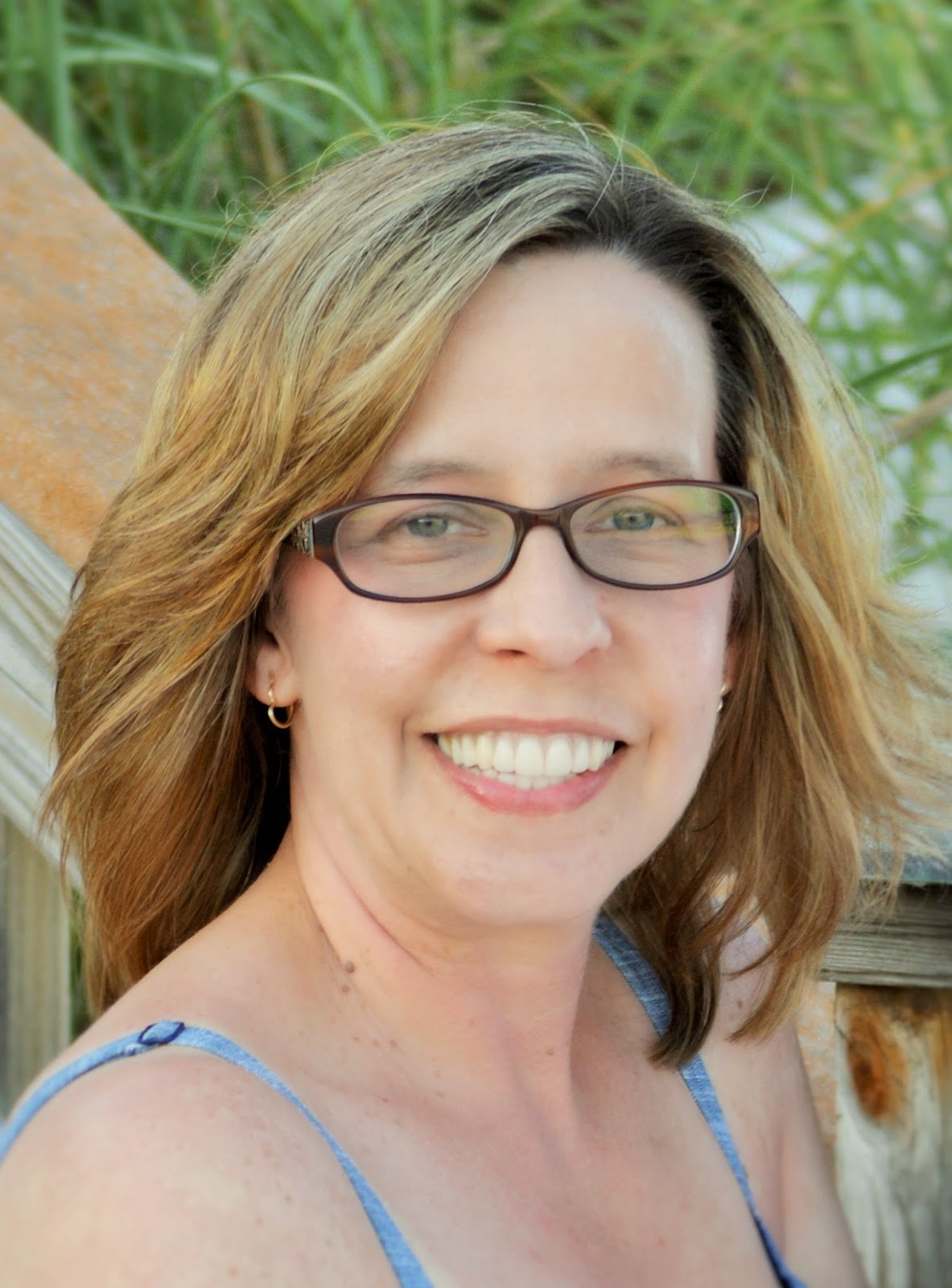
Paula is a pastor’s wife, mom to a college student, author, acquiring editor, and speaker. No matter the hat she wears, she strives to honor God’s plan even if it means going out on a limb and leaving comfort zones. Reviewers have characterized her writing as “thundering with emotion.” Her book, Be The Blessing, won the 2014 Selah Award in the novella category. Paula enjoys reading and reviewing Christian fiction, writing Christian romance and devotionals You can follow Paula at www.facebook.com/pages/Paula-Mowery/175869562589187. Learn more about Paula at her blog at www.paulamowery.blogspot.com or enjoy her monthly columns on www.christianonlinemagazine.com.


April 24, 2015
What we can learn from Spring Flowers--Plus a World War II spy triology.
By Carole Brown
Throughout January, February and March I’ve read a lot of complaints about the weather and probably made a few myself. Too, too cold. Too much snow. Too gloomy. Too cloudy. I wish the sun would shine. I wish the rain would go away . . . The snow would quit . . . The clouds would vanish.
Good news. Spring is here! Rain, yes, but an encouraging rain--it’s APRIL, after all! You know the old saying: April showers bring May flowers. And sometimes we get a few of those glories in April too.
What are a few things we can learn and embody from spring flowers? Let’s see:
Apple blossoms: Promise.

This is a good one. Read the scriptures and find (if you don’t already have one) a promise for this spring throughout summer and the rest of the year--for you. Promise yourself some new attitude, some new adventure, that new idea--the beginning of a book started. Promise yourself to be more appreciative of everyday, which may not always be good, BUT there’s ALWAYS something good in that day. Draw comfort and peace from that.
Crocus: ForesightOne definition for the word “foresight” is giving careful thought for the future. It does us good to check on our heart now and then. Not physically, but spiritually. Do we still prize our relationship with God more than anything? Do we love to spend time reading His word to us, communing with him?
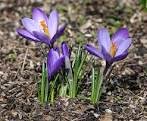
Do we also have the foresight to realize that that book won’t get written without at the least a few words a day typed? Do we advance our work by researching, plotting, or sharing with our critique groups?
Violet: Faithfulness.Stay by the stuff. In other words, be true and faithful to God, of course, but to your family and your friends. Cherish every moment. Treasure the little things as well as the big. A child brought you a dandelion? Take a picture of you, the child and the flower. It will mean the world to the child and satisfaction to you. Someone shared a smile with you? Return the smile. Your father told the same joke again? Realize that small annoyances now will be precious memories someday. Shut your eyes and relish his voice and appreciate the effort he made to bring laughter to his loved ones’ hearts.
Most of all, be faithful to YOU! Don’t take on too much. Learn to say no, but always be willing to do what you can faithfully perform. Whatever God has asked you to do, do it with all your might and ability. Rest. Relax. Be strong.
Star of Bethlehem: Hope
 I love these small but beautiful star-shaped flowers. They do indeed give off the essence of hope. Hope for the day, right now. Hope for the future, tomorrow. Hope that breeds faith that I will stay close to my God. That I will continue to work diligently toward my goals. Don’t lose hope, but hold tight to that which you have and allow yourself to cling to a hope that Spring and the flowers share with us every year.
 See what else bloomed in Carole's garden. A spy Triology!
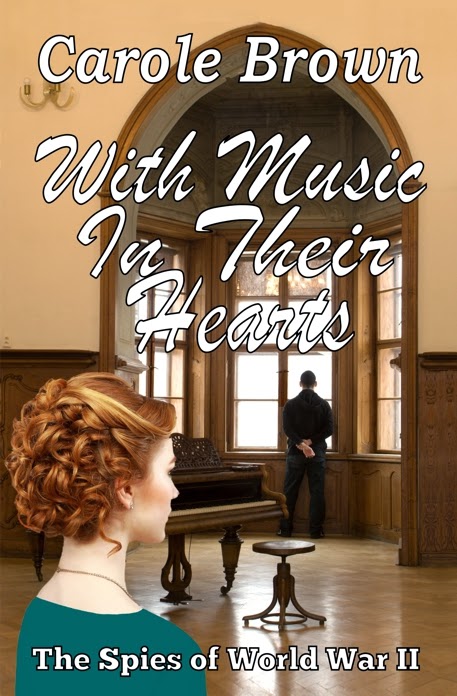
Brown not only has her award winning (RWA International Digital Award finalist, Clash of the Titles Laurel Awards finalist, Selah finalist; Genesis semi-finalist) debut novel, The Redemption of Caralynne Hayman, available for purchase now, but a companion book called West Virginia Scrapbook: From the Life of Caralynne Hayman, filled with tidbits of information about West Virginia, quotes, recipes from West Virginia and from Caralynne’s life, pictures and discussion questions for the novel.
November, 2013, the first book in her mystery series, Hog Insane, released. It’s a fun, lighthearted novel introducing the characters, Denton and Alex Davies.
Releasing November, 2014, is the first book in a new WWII romantic suspense series: With Music In Their Hearts. Three red-headed sisters. Three spies. Three stories.
Besides being a member and active participant of many writing groups, Carole Brown enjoys mentoring beginning writers. She loves to weave suspense and tough topics into her books, along with a touch of romance and whimsy, and is always on the lookout for outstanding titles and catchy ideas. She and her husband reside in SE Ohio but have ministered and counseled nationally and internationally. Together, they enjoy their grandsons, traveling, gardening, good food, the simple life, and did she mention their grandsons?
Connect with her here:Personal blog: http://sunnebnkwrtr.blogspot.com/ Facebook: https://www.facebook.com/CaroleBrown.author Twitter: https://twitter.com/browncarole212 Pinterest: http://pinterest.com/sunnywrtr/boards/ Goodreads: http://www.goodreads.com/user/show/5237997-carole-brown
Carole also is part of several other blogs: Stitches in Time: http://stitchesthrutime.blogspot.com/ Barn Door Book Loft: http://www.barndoorbookloft.net/
April 22, 2015
Earth Day: A CHRISTIAN VIEW OF THE ENVIRONMENT
 Western Colorado
By Ada Brownell
The need to care for the earth has awakened in America and now is taught from kindergarten through college. Along with that awakening comes resentment against Genesis 1:28 where God said to Adam and Eve, “Be fruitful and multiply, fill the earth and subdue it, and have dominion over the fish of the sea and over the birds of the air and over every living thing.”What is God’s and the Christian’s view?The Bible not only speaks of dominion, but also of responsibility, respect and stewardship of nature. Dominion can be interpreted to mean “loving care, such as parental authority.” Christians often take the lead when it comes to preserving human life, especially the lives of the unborn, but are not noted for being tree and mouse lovers. But most understand we endanger ourselves when we endanger the ecosphere. Albert Schweitzer, a theologian/philosopher of the last century, said reverence for life is connected with the individual’s will to live. “If I am a thinking being, I must regard other life than my own with equal reverence,” Schweitzer said.”
 My adopted grandson In Deuteronomy 15-20, we are warned not to worship nature. Making idols of any animal, bird, creature or fish is forbidden. “When you look up to the sky and see the sun, the moon and the stars—all the heavenly array—do not be enticed into bowing down to them.” The Lord condemns such worship as an “abomination.”My granddaughter on the mountain that overlook Albuquerquefoundation? Who stretched a measuring line across it? Who shut up the sea behind doors, when I made the clouds its garment and wrapped it in thick darkness? Have you ever shown the dawn its place? The earth takes shape like clay under a seal. Have you journeyed to the springs of the sea or walked in the recesses of the deep? What is the way to the abode of light? Where does darkness reside? Have you entered the storehouses of the snow, or seen the storehouses of the hail? What is the way to the place where the lightning is dispersed, or the place where the east winds are scattered? Who cuts a channel for the torrents of rain, a path for the thunderstorm, to water a land where no man lives, a desert with no one in it. Can you bring forth the constellations in their seasons? Who provides food for the raven when its young cry out to God and wander about for lack of food? “ (Selected from Job 38).
· Turning away from God affects the land. “Hear the word of the Lord, you Israelites; because the Lord has a charge to bring against you who live in the land. There is no faithfulness, no love, no acknowledgment of God in the land. Because of this the land mourns, and all who live in it waste away, the beasts of the field and the birds of the air and the fish of the sea are dying” (Hosea 4:1-3).· God blesses the crops of the obedient. “’You are under a curse—the whole nation of you—because you are robbing me. Bring the whole tithe into the storehouse that there may be food in my house. Test me in this,’” says the Lord Almighty, “and see if I will not throw open the floodgates of heaven and pour out so much blessing that you will not have room enough for it. I will prevent pests from devouring your crops, and the vines in your fields will not cast their fruit,” says the Lord Almighty.· Nations who support Israel: “Then all the nations will call you blessed for yours will be a delightful land,’ says the Lord Almighty” (Malachi 6:3-12). “For thus said the Lord of hosts, after his glory sent me to the nations who plundered you, for he who touches you touches the apple of his eye” (Zechariah 2:8).In the beginning when God inspected His work, He said, “It is good.”
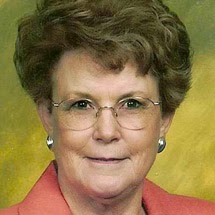 Life, indeed, is precious and good. God shows us through His Word to respect it and all of His creation. No matter how careful we are to prevent pollution, sometimes environmental contamination occurs. We can mourn an oil spill, dumping of harmful chemicals, and sometimes help with cleanup. Nevertheless, we should not worship the earth or our environment. But when we have a disaster, we can pray for those involved in cleanup and restoration; for wisdom for those working in the technical aspect of the cleanup; and for those whose lives and livelihoods are affected. Ada Brownell, a free lance writer and retired newspaper reporter, has written numerous stories on the environment and with Dennis Darrow received the 1994 Colorado Associated Press Editors and Reporters first-place environment award for a series that appeared in The Pueblo Chieftain.
“The Ethics of Reverence for Life,” Albert Schweitzer, Christendom, 1936, 225-39Deuteronomy 17:2-4
April 21, 2015
What does your laughter say about you?
WHAT DOES YOUR LAUGHTER SAY ABOUT YOU?
By Cristine Eastin
Title: Telltale LaughterA person’s laughter says a lot about them:Linda shields her mouth with her fingers. She's self-conscious about her teeth.Faye laughs through taut lips, and she rarely cuts loose with a big laugh. She's uptight.Don throws his head back and gives out a hearty guffaw. He thinks life's a hoot.Phil rarely laughs at all. Just a smile and a bemused, "Huh." He's got heavy emotional baggage and doesn't want to call attention to himself.Brad titters. He's nervous and unassertive, and his words don't seem appropriate to his laugh. His smile is a deflection for the upset he feels.And Nancy laughs so hard, tears run down her cheeks, and her face turns a shade of radish. She enjoys laughing with friends and isn't the least bit self-conscious.See what I mean? When I write my novel
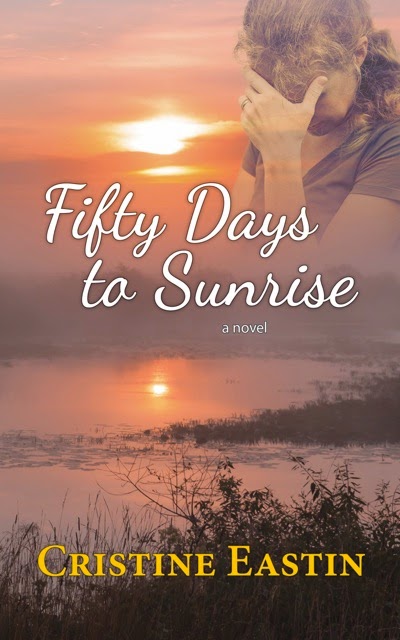
 Cristine Eastsincharacters, or when I'm working with my psychotherapy clients, laughter gives clues as to what they're about. (The truth is, I notice people everywhere. My psychotherapy meter isn't always running, but I can't switch off my brain.)We don't know what's in a person's head, but laughter language helps us guess at understanding her, helps us relate to him—laugh with them.Laughter can be a sort of personal signature. My dad's laugh was distinctive, I guess. I didn't notice because it was so familiar, but it's one of the things my husband fondly remembers and imitates about my dad.Then there was the teen girl in Barnes and Noble—I swear this is true—who had a laugh like machine gun fire. And she shot frequent volleys. Otherwise, she looked normal, so I wonder how in the world she developed a rat-a-tat-tat laugh. Fodder for a writer to put that character together.Laughter is a universal language. What will you be saying the next time you laugh? What did your friend say? What will the character you write say with her laugh?Book Description: “Fifty Days to Sunrise"
Her life is a love story, but then…What’s a woman to do when her husbanddies three thousand miles from home?Scream, cry—or run.
It’s 2003, a year and a half after her husband’s death.Fifty-three years old and alone, Lissa Maguire’s seething with grief. She has to cope, but makes a self-destructive mess of it.
Lissa’s parents ask her to spend the summer in small-town Gifford, Minnesota, helping them move to an apartment. Cleaning out the attic of her childhood home, Lissa discovers her old diaries, and her potholed road to healing begins. But when an old friend turns up, she’s confused.
Her life in shreds, Lissa desperately needs to find peace. She even wonders if God has abandoned her.
Healing a broken heart is a lot to ask–it hurts.
Author Bio
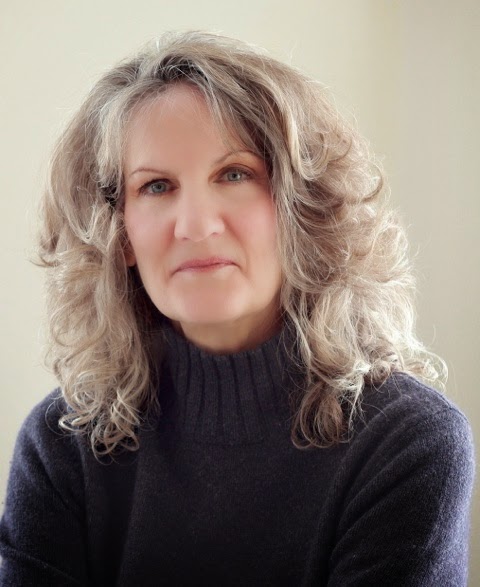
Cristine Eastin, PhD is a psychotherapist when at the office, but she’s also a wife, stepmother, and grandma.
Cris has two grown stepchildren, a son-in-law, and two grandchildren; her husband, Dave, is a psychologist. The family includes two rescue cats and an Australian shepherd.
Raised in Minnesota, Cris is a grafted in Wisconsinite with a heart of woods and water.
She keeps busy collecting hobbies. For instance, in winter she’s on the ski slopes, and in summer she might be kayaking. And in between she’d love to be visiting Scotland or England.
Cris works, lives, and writes by the motto “…because you can’t pour from an empty pitcher.”
Member of American Christian Fiction Writers.
April 18, 2015
Fictional character interviews? Also HOW TO LOVE YOUR HUSBAND and QUIET MOMENTS WITH GOD
By Donna Schlachter
“Getting to know you, getting to know all about you. . . “
When I sit down to create characters for a new project, this tune runs through my head. This is one truth writers ought to embrace: we need to know our characters better than anybody in our book does. Better than our readers will know them by the time they finish reading.
If we don’t know our characters, we’ll tend to write flat, one-dimensional people, like paper dolls who are simply wearing an outfit called “their story”, and are as interchangeable as—well, a paper doll.
Another danger in not knowing our characters is we’ll write three chapters getting to know them, wasting paper and the reader’s time as we plow our way through their backstory, their history, until we finally get to the point where our story really starts, about halfway through Chapter 4.
There are many methods to get to know your characters. Some of these require you to sit down and fill out a questionnaire that would cause most of us to lose our minds or at the very least, our excitement about our stories. While the details and minutiae of these questionnaires might work for some, many of us will struggle to answer what our character’s third grade teacher said that made him decide to become a private investigator twenty years later.
Bored with filling out forms, making up answers to questions I hadn’t even thought of, and wanting to get on with the process of writing, I came up with a faster and more direct way to get to know my characters—I interview them.
I pretend I’m a famous talk show host and my character is a guest on my show. As a famous talk show host, I know everybody in the world will want to hear what I have to say and how I can make my character squirm on live TV. So I come up with questions that will cause said squirming because I know how the story goes and what secrets my character is trying to keep.
Go ahead. Be catty. Be devious. Dig up the dirt. What would someone who reads one of those supermarket tabloids want to know about your character? And why would your character not want to tell the truth, not want to break a confidence, not want you to know everything about them? Because characters are real people, and real people rarely tell the whole truth and nothing but the truth.
Even good people hide some things, hold back some things, try to make themselves look good perhaps at the expense of another.
Here is a list of questions I typically ask to get started:How did you get the job you have?What’s your background that qualified you for that job?Tell me about ___________ (the inciting incident in the book). Tell me about ___________ (could be the love interest, the villain, the hero/heroine. Whoever is making this character’s life difficult or messy in some way)Tell me about ____________ (whatever you know your character doesn’t want to talk about. A past hurt, a secret, a rumor, an innuendo – anything that will make it look like this character isn’t telling all)Bring up a topic that’s in the news now, and tie it into this character and the plot in some way. For example, if the character is a forest ranger, and poaching by forest rangers is in the news, ask what he thinks should be done to poachers and then what should be done to poachers who are also guardians of the woodland. Watch him squirm.Ask what the character sees in his/her future.
By the time you ask and your character answers these questions, you should have a good idea of what motivates your character, what scares your character, what your character is trying to hide and why, the lie your character believes, what the internal and external conflicts are, and the growth arc of your character.
Feel free to drop by my blog and see a couple of character interviews I’ve posted there about the main characters of my historical suspense, Counterfeit Honor. Here are the links: https://historythrutheages.wordpress.com/2015/03/30/interview-with-margaret-buchanan/ and https://historythrutheages.wordpress.com/2015/03/30/interview-with-trevor-mcgonigle/
Quiet Moments Alone with God welcomes you into a journey of discovery, where you will
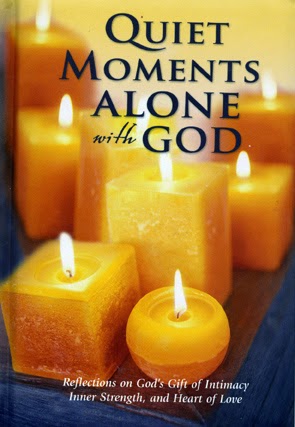 learn how to live in God's presence while you seek His plan for your life. Plan to spend some time getting to know the God Who wants you to stop, breathe, think, and act out His very best for you.
Available at Amazon.com and ChristianBooks.com.
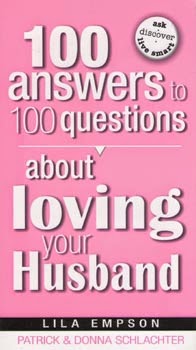
100 Answers to 100 Questions About Loving Your Husband: You've said, "I do." Now, how do you love your husband in a way that brings honor to him, to yourself, and to the God who gave you the gift of marriage? This book provides the insights you need in the areas that matter most to you.
Available at Amazon.com and ChristianBooks.com.
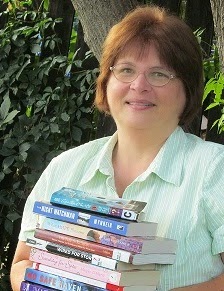
The bio is:Donna writes historical suspense and, using her alter-ego of Leeann Betts, she writes contemporary suspense. Check her out at www.HisStoryThruTheAges.com or www.LeeannBetts.com. Subscribe to her blogs at www.HiStoryThruTheAges.Wordpress.com or www.AllBettsAreOff.Wordpress.com You can follow her and Leeann on Facebook, Twitter, and Tumblr.
April 13, 2015
Who influences you?
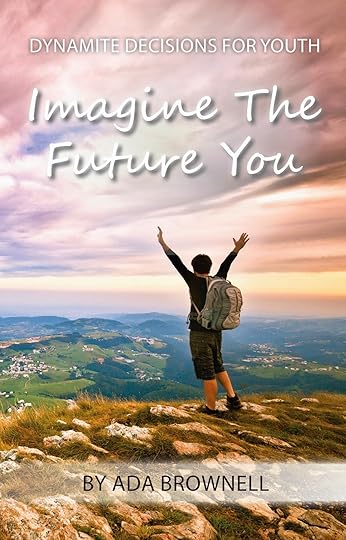
Excerpt from Imagine the Future You
Chapter Three: You can be comfortable with who you are
By Ada Brownell
Purchase the book Here
E-book only $2.99
People who are not afraid to decide themselves what they are going to believe, how they are going to act and live, how they will dress, and the kind of face they will show the world don’t follow the crowd. When you decide to take responsibility for yourself, you aren’t afraid of being different or saying no when everyone else is saying yes—or saying yes whenever everyone else is saying no.
The ones who do everything their friends do aren’t their own boss—they give over their identity. They might as well go back to being two years old—or live in a nation where there is no freedom to choose.
Even a relative or a best friend sometimes shoves us toward things we know are wrong. I think of Herodias’s daughter, a teenage dancer, who performed before King Herod at a party one night. Her name isn’t given in the scriptures, so I’ll call her Halah.
“You are so beautiful and nimble,” the rotund king declared, dribbling wine on his red velvet robe. “You please me. The music and your gracefulness set my heart to thumping. Because you bring me joy, I’ll give you anything your heart desires.”
Stunned, Halah bowed before Herod, who recently became her stepfather. “Thank you, oh King. Will you allow me to speak to Mother?”
The sleepy king nodded, and Halah rose and twirled to the exit to ask her mom, Herodias, what great thing she should request.
Shortly Halah returned to stand before His Majesty. “I want John the Baptist’s head on a platter.”
John the Baptist was a prophet. The king was stunned. Halah could see it in his face. He had listened in the past to John, the whiskered, wild-haired man who was always shouting, “Repent!” But Mom was having none of John’s religion. John condemned Herodias and Herod for their adultery, and Halah’s mother hated him. Herodias left Halah’s father, Herod’s brother, and married the king.
“Your daddy is a nobody,” Herodias said before the wedding. “The king is a powerful man! We will live in luxury, and every woman will envy us.”
John lay in the Roman prison because of Herodias’s hatred, so within an hour, Halah carried the heavy, lifeless head of the prophet on a platter. She slowly made her way to the king and her mother. Blood dripped down Halah’s skinny arms onto her dance costume. Balancing the object was difficult, and occasionally it slid from side to side on the platter, threatening to topple on the floor. (See Matthew 14:1-12).
I admit to enhancing the story to help you see the horrible thing the teenager did, but the gruesome facts are in the Bible. Matthew, Mark, and Luke don’t tell us about the girl’s reaction, but I think what she did haunted her every day until she drew her last breath. Even people with hard, sinful hearts can’t get away from the guilt of sin without Jesus.The daughter of Herodias could have said, “No! What are you thinking, Mother?” But instead, she did the deed without protest.She needed to think before she acted. We can’t allow others to lead us into sin—or sink into the pit of sin by our own sinful nature. James wrote, “Each one is tempted when, by his own evil desire, he is dragged away and enticed. Then, after desire has conceived, it gives birth to sin, and sin, when it is full grown, gives birth to death" (James 1:14-15).
With the help of God, we can snatch our future from our enemy, Satan himself. We can learn to stand firm and do what we know is right.
People who know who they are, who they want to be, and what they want their future to be like become unique people. With the help of God, we can make wise decisions, and sometimes when we live that way we are surprised when others want to be just like us.
Only a young person with a strong will is different. The Psalmist wrote, “Oh, the joys of those who do not follow the advice of the wicked, or stand around with sinners, or join in with mockers. But they delight in the law of the Lord, meditating on it day and night. They are like trees planted along the riverbank, bearing fruit each season. Their leaves never wither, and they prosper in all they do” (Psalm 1:1–3NLT).
People who are not afraid to decide themselves what they are going to believe, how they are going to act and live, how they will dress, and the kind of face they will show the world don’t follow the crowd. When you decide to take responsibility for yourself, you aren’t afraid of being different or saying no when everyone else is saying yes—or saying yes whenever everyone else is saying no.
The ones who do everything their friends do aren’t their own boss—they give over their identity. They might as well go back to being two years old—or live in a nation where there is no freedom to choose.

Even a relative or a best friend sometimes shoves us toward things we know are wrong.I think of Herodias’s daughter, a teenage dancer, who performed before King Herod at a party one night. Her name isn’t given in the scriptures, so I’ll call her Halah.
“You are so beautiful and nimble,” the rotund king declared, dribbling wine on his red velvet robe. “You please me. The music and your gracefulness set my heart to thumping. Because you bring me joy, I’ll give you anything your heart desires.”
Stunned, Halah bowed before Herod, who recently became her stepfather. “Thank you, oh King. Will you allow me to speak to Mother?”
The sleepy king nodded, and Halah rose and twirled to the exit to ask her mom, Herodias, what great thing she should request.
Shortly Halah returned to stand before His Majesty. “I want John the Baptist’s head on a platter.”
John the Baptist was a prophet. The king was stunned. Halah could see it in his face. He had listened in the past to John, the whiskered, wild-haired man who was always shouting, “Repent!” But Mom was having none of John’s religion. John condemned Herodias and Herod for their adultery, and Halah’s mother hated him. Herodias left Halah’s father, Herod’s brother, and married the king.
“Your daddy is a nobody,” Herodias said before the wedding. “The king is a powerful man! We will live in luxury, and every woman will envy us.”
John lay in the Roman prison because of Herodias’s hatred, so within an hour, Halah carried the heavy, lifeless head of the prophet on a platter. She slowly made her way to the king and her mother. Blood dripped down Halah’s skinny arms onto her dance costume. Balancing the object was difficult, and occasionally it slid from side to side on the platter, threatening to topple on the floor.
I admit to enhancing the story to help you see the horrible thing the teenager did, but the gruesome facts are in the Bible. Matthew, Mark, and Luke don’t tell us about the girl’s reaction, but I think what she did haunted her every day until she drew her last breath. Even people with hard, sinful hearts can’t get away from the guilt of sin without Jesus.
The daughter of Herodias could have said, “No! What are you thinking, Mother?” But instead, she did the deed without protest.
She needed to think before she acted. We can’t allow others to lead us into sin—or sink into the pit of sin by our own sinful nature. James wrote, “Each one is tempted when, by his own evil desire, he is dragged away and enticed. Then, after desire has conceived, it gives birth to sin, and sin, when it is full grown, gives birth to death” (James 1:24-15).
With the help of God, we can snatch our future from our enemy, Satan himself. We can learn to stand firm and do what we know is right.
People who know who they are, who they want to be, and what they want their future to be like become unique people. With the help of God, we can make wise decisions, and sometimes when we live that way we are surprised when others want to be just like us.
Only a young person with a strong will is different. The Psalmist wrote, “Oh, the joys of those who do not follow the advice of the wicked, or stand around with sinners, or join in with mockers. But they delight in the law of the Lord, meditating on it day and night. They are like trees planted along the riverbank, bearing fruit each season. Their leaves never wither, and they prosper in all they do” (Psalm 1:1–3NLT).
Copyright © Ada Brownell 2014
Summary of Imagine the Future You
IMAGINE THE FUTURE YOUA motivational Bible study by Ada BrownellIf you continue to do or not do what you practice now, what kind of future do you imagine for yourself? The decisions we make ourselves affect our future more than those made for us. We have control of our attitudes, our work ethic, our sense of wonder, our faith to believe in God and for great things. It is up to us where we end up in life and eternity.This Bible study will help you discover evidence for faith; how to look and be your best; who can help; interesting information about dating, love and marriage; choosing a career; how to deposit good things into your brain you can spend; and how to avoid hazards that jeopardize a successful life on earth and for eternity, all mingled with true stories that can make you smile.Review: How I would have loved to sit at Mrs. Brownell's knee when I was a teen. This wholesome book resounds with sage, Godly advice and could be picked up again and again as needs arise. Worthwhile for parents too. Much fodder for family discussion.
Links: http://www.amazon.com/dp/1489558284 http://www.amazon.com/-/e/B001KJ2C06
Chapter Three: You can be comfortable with who you are
By Ada Brownell
Purchase the book Here
E-book only $2.99
People who are not afraid to decide themselves what they are going to believe, how they are going to act and live, how they will dress, and the kind of face they will show the world don’t follow the crowd. When you decide to take responsibility for yourself, you aren’t afraid of being different or saying no when everyone else is saying yes—or saying yes whenever everyone else is saying no.
The ones who do everything their friends do aren’t their own boss—they give over their identity. They might as well go back to being two years old—or live in a nation where there is no freedom to choose.
Even a relative or a best friend sometimes shoves us toward things we know are wrong. I think of Herodias’s daughter, a teenage dancer, who performed before King Herod at a party one night. Her name isn’t given in the scriptures, so I’ll call her Halah.
“You are so beautiful and nimble,” the rotund king declared, dribbling wine on his red velvet robe. “You please me. The music and your gracefulness set my heart to thumping. Because you bring me joy, I’ll give you anything your heart desires.”
Stunned, Halah bowed before Herod, who recently became her stepfather. “Thank you, oh King. Will you allow me to speak to Mother?”
The sleepy king nodded, and Halah rose and twirled to the exit to ask her mom, Herodias, what great thing she should request.
Shortly Halah returned to stand before His Majesty. “I want John the Baptist’s head on a platter.”
John the Baptist was a prophet. The king was stunned. Halah could see it in his face. He had listened in the past to John, the whiskered, wild-haired man who was always shouting, “Repent!” But Mom was having none of John’s religion. John condemned Herodias and Herod for their adultery, and Halah’s mother hated him. Herodias left Halah’s father, Herod’s brother, and married the king.

“Your daddy is a nobody,” Herodias said before the wedding. “The king is a powerful man! We will live in luxury, and every woman will envy us.”
John lay in the Roman prison because of Herodias’s hatred, so within an hour, Halah carried the heavy, lifeless head of the prophet on a platter. She slowly made her way to the king and her mother. Blood dripped down Halah’s skinny arms onto her dance costume. Balancing the object was difficult, and occasionally it slid from side to side on the platter, threatening to topple on the floor. (See Matthew 14:1-12).
I admit to enhancing the story to help you see the horrible thing the teenager did, but the gruesome facts are in the Bible. Matthew, Mark, and Luke don’t tell us about the girl’s reaction, but I think what she did haunted her every day until she drew her last breath. Even people with hard, sinful hearts can’t get away from the guilt of sin without Jesus.The daughter of Herodias could have said, “No! What are you thinking, Mother?” But instead, she did the deed without protest.She needed to think before she acted. We can’t allow others to lead us into sin—or sink into the pit of sin by our own sinful nature. James wrote, “Each one is tempted when, by his own evil desire, he is dragged away and enticed. Then, after desire has conceived, it gives birth to sin, and sin, when it is full grown, gives birth to death" (James 1:14-15).
With the help of God, we can snatch our future from our enemy, Satan himself. We can learn to stand firm and do what we know is right.
People who know who they are, who they want to be, and what they want their future to be like become unique people. With the help of God, we can make wise decisions, and sometimes when we live that way we are surprised when others want to be just like us.
Only a young person with a strong will is different. The Psalmist wrote, “Oh, the joys of those who do not follow the advice of the wicked, or stand around with sinners, or join in with mockers. But they delight in the law of the Lord, meditating on it day and night. They are like trees planted along the riverbank, bearing fruit each season. Their leaves never wither, and they prosper in all they do” (Psalm 1:1–3NLT).
People who are not afraid to decide themselves what they are going to believe, how they are going to act and live, how they will dress, and the kind of face they will show the world don’t follow the crowd. When you decide to take responsibility for yourself, you aren’t afraid of being different or saying no when everyone else is saying yes—or saying yes whenever everyone else is saying no.
The ones who do everything their friends do aren’t their own boss—they give over their identity. They might as well go back to being two years old—or live in a nation where there is no freedom to choose.

Even a relative or a best friend sometimes shoves us toward things we know are wrong.I think of Herodias’s daughter, a teenage dancer, who performed before King Herod at a party one night. Her name isn’t given in the scriptures, so I’ll call her Halah.
“You are so beautiful and nimble,” the rotund king declared, dribbling wine on his red velvet robe. “You please me. The music and your gracefulness set my heart to thumping. Because you bring me joy, I’ll give you anything your heart desires.”
Stunned, Halah bowed before Herod, who recently became her stepfather. “Thank you, oh King. Will you allow me to speak to Mother?”
The sleepy king nodded, and Halah rose and twirled to the exit to ask her mom, Herodias, what great thing she should request.
Shortly Halah returned to stand before His Majesty. “I want John the Baptist’s head on a platter.”
John the Baptist was a prophet. The king was stunned. Halah could see it in his face. He had listened in the past to John, the whiskered, wild-haired man who was always shouting, “Repent!” But Mom was having none of John’s religion. John condemned Herodias and Herod for their adultery, and Halah’s mother hated him. Herodias left Halah’s father, Herod’s brother, and married the king.
“Your daddy is a nobody,” Herodias said before the wedding. “The king is a powerful man! We will live in luxury, and every woman will envy us.”
John lay in the Roman prison because of Herodias’s hatred, so within an hour, Halah carried the heavy, lifeless head of the prophet on a platter. She slowly made her way to the king and her mother. Blood dripped down Halah’s skinny arms onto her dance costume. Balancing the object was difficult, and occasionally it slid from side to side on the platter, threatening to topple on the floor.
I admit to enhancing the story to help you see the horrible thing the teenager did, but the gruesome facts are in the Bible. Matthew, Mark, and Luke don’t tell us about the girl’s reaction, but I think what she did haunted her every day until she drew her last breath. Even people with hard, sinful hearts can’t get away from the guilt of sin without Jesus.
The daughter of Herodias could have said, “No! What are you thinking, Mother?” But instead, she did the deed without protest.
She needed to think before she acted. We can’t allow others to lead us into sin—or sink into the pit of sin by our own sinful nature. James wrote, “Each one is tempted when, by his own evil desire, he is dragged away and enticed. Then, after desire has conceived, it gives birth to sin, and sin, when it is full grown, gives birth to death” (James 1:24-15).
With the help of God, we can snatch our future from our enemy, Satan himself. We can learn to stand firm and do what we know is right.
People who know who they are, who they want to be, and what they want their future to be like become unique people. With the help of God, we can make wise decisions, and sometimes when we live that way we are surprised when others want to be just like us.
Only a young person with a strong will is different. The Psalmist wrote, “Oh, the joys of those who do not follow the advice of the wicked, or stand around with sinners, or join in with mockers. But they delight in the law of the Lord, meditating on it day and night. They are like trees planted along the riverbank, bearing fruit each season. Their leaves never wither, and they prosper in all they do” (Psalm 1:1–3NLT).
Copyright © Ada Brownell 2014
Summary of Imagine the Future You
IMAGINE THE FUTURE YOUA motivational Bible study by Ada BrownellIf you continue to do or not do what you practice now, what kind of future do you imagine for yourself? The decisions we make ourselves affect our future more than those made for us. We have control of our attitudes, our work ethic, our sense of wonder, our faith to believe in God and for great things. It is up to us where we end up in life and eternity.This Bible study will help you discover evidence for faith; how to look and be your best; who can help; interesting information about dating, love and marriage; choosing a career; how to deposit good things into your brain you can spend; and how to avoid hazards that jeopardize a successful life on earth and for eternity, all mingled with true stories that can make you smile.Review: How I would have loved to sit at Mrs. Brownell's knee when I was a teen. This wholesome book resounds with sage, Godly advice and could be picked up again and again as needs arise. Worthwhile for parents too. Much fodder for family discussion.
Links: http://www.amazon.com/dp/1489558284 http://www.amazon.com/-/e/B001KJ2C06
April 11, 2015
Definition of Brain Death? But where does the soul go?
By Ada BrownellExcerpt from Swallowed by Life: Mysteries of Death, Resurrection and the EternalFREE THROUGH APRIL 12, 2015Purchase for free on Amazon Here
From Chapter FiveThe city where I spent most of my newspaper career had and probably still has a bioethics forum. The group drew up a detailed definition of brain death. The forum included medical doctors, nurses, a nun, a hospital chaplain, the district attorney, a social worker, and a psychologist.Brain death, the forum said, is the situation in which the brain has lost all its functions, including thinking and the control of body movement, sensation, and vital functions, such as control of temperature and breathing.“Older definitions of death used to depend on whether the heartbeat and breathing had stopped,” a spokesman for the forum said. “But modern medicine has made this definition questionable since there are so many times these situations can be reversed. Sometimes surgeons even stop the heart on purpose, knowing they can start it again when they are done working on it.”Colorado Organ Recovery Systems says clinical signs of brain death include:* Deep coma of known etiology (cause)* Loss of respiration (breathing)* No response to deep, painful stimuli* No spontaneous movement, which means there are no cranial (brain) reflexes, but some spinal reflexes may be present* No gag, cough, or corneal (eye) reflexes* No occulocephalic or occulovestibular reflex (which also refers to cranial nerves)* Irreversible condition* Normal body temperature* Acceptable drug levels To determine brain death, confirmatory tests are done that include a cerebral blood flow study; electroencephalogram (EEG), which measures brain waves; and evoked response testing.The EEG is vital in determining brain death. The central nervous system is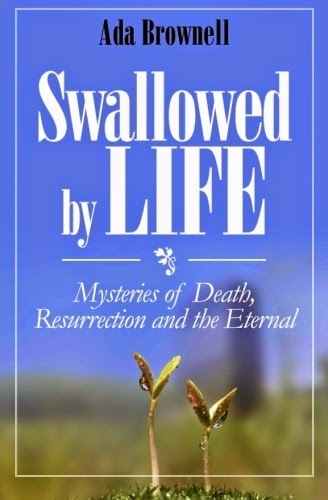 amazing as it works in our bodies, with electrical energy in nerve cells discharging in short bursts, firing and discharging information to other cells with the help of transmitter chemicals. Motor neurons send commands to muscles and glands. The EEG translates electrical energy from electrodes connected to a patient’s head into patterns a neurologist can see. Each time a nerve cell close to the electrode fires, the electrode sends an electrical impulse to the EEG machine.
In brain death, no electrical activity occurs.Body temperature also is important. Normal body temperature is essential, partly because persons with very low body temperature with other apparent signs of death have been brought back to life.For instance, Jan Egil Refsdahl, a Norwegian fish farmer, slipped on a boat’s fiberglass deck, tumbled into forty-two-degree water, and appeared to drown. But his body automatically closed the windpipe and kept water out of his lungs. His body temperature dipped to seventy-five degrees. When he was rescued, Jan was connected to a heart-lung machine, and his heart began to beat after four hours of silence.A child, eleven-year-old Alvaro Garza Jr., was clinically dead for forty-five minutes after he was immersed in frigid water in the ice-crusted Red River near Fargo, North Dakota, but he recovered.. Drugs also might skew some of the tests, so that is considered as well.The brain death certificate must have the date, time, and signature of the attending doctor.The moment of brain death appears to be the time when the soul leaves the flesh. I believe it is the moment that death is swallowed by life.As I said before, from what I understand in scripture, the soul will be with the Lord immediately and we will have some kind of spirit body, but the earthly body, laid aside and unnecessary for now while we are with God in spirit, will live again. Just as we go to sleep and know nothing for several hours, then awaken as if nothing happened, the Bible tells us when our eyes close in death—at whatever age—there will be a resurrection—an awakening—of the physical body.I’ve previously mentioned the Apostle Paul’s explanation of death in 1 Corinthians 15 where he likened the death of the body to a seed planted in the ground:Someone will say, ‘How are the dead raised up? And with what body do they come?’ Foolish one, what you sow is not made alive unless it dies. And what you sow, you do not sow that body that shall be, but mere grain—perhaps wheat or some other grain. But God gives it a body as He pleases, and to each seed its own body…So also is the resurrection of the dead. The body is sown in corruption, it is raised in incorruption. It is sown in dishonor, it is raised in glory. It is sown in weakness, it is raised in power. It is sown a natural body, it is raised a spiritual body. There is a natural body and there is a spiritual body.
There is so much our finite minds can’t comprehend about death, the eternal, and our God. But this we know, as did Job of old: “I know that my Redeemer liveth and that he shall stand at the latter day upon the earth.” He added, “Even if worms destroy this body, yet in my flesh I shall see God” (Job 19:25–26).But our flesh will be changed. Until then, we are mortals. Every human is at risk of death every moment he lives. That’s why it’s vitally important to investigate and know about eternal life. While the body decays in the ground, the eternal soul lives on. When I think of death I’m reminded of this epitaph quoted by an evangelist at our church. It reportedly appears on a grave from the 1880s in Nantucket, Massachusetts:Under the sod and under the trees Lies the body of Jonathan Pease. He is not here, there’s only the pod: Pease shelled out and went to God.
© Copyright Ada Brownell 2011
From Chapter FiveThe city where I spent most of my newspaper career had and probably still has a bioethics forum. The group drew up a detailed definition of brain death. The forum included medical doctors, nurses, a nun, a hospital chaplain, the district attorney, a social worker, and a psychologist.Brain death, the forum said, is the situation in which the brain has lost all its functions, including thinking and the control of body movement, sensation, and vital functions, such as control of temperature and breathing.“Older definitions of death used to depend on whether the heartbeat and breathing had stopped,” a spokesman for the forum said. “But modern medicine has made this definition questionable since there are so many times these situations can be reversed. Sometimes surgeons even stop the heart on purpose, knowing they can start it again when they are done working on it.”Colorado Organ Recovery Systems says clinical signs of brain death include:* Deep coma of known etiology (cause)* Loss of respiration (breathing)* No response to deep, painful stimuli* No spontaneous movement, which means there are no cranial (brain) reflexes, but some spinal reflexes may be present* No gag, cough, or corneal (eye) reflexes* No occulocephalic or occulovestibular reflex (which also refers to cranial nerves)* Irreversible condition* Normal body temperature* Acceptable drug levels To determine brain death, confirmatory tests are done that include a cerebral blood flow study; electroencephalogram (EEG), which measures brain waves; and evoked response testing.The EEG is vital in determining brain death. The central nervous system is
.jpg) amazing as it works in our bodies, with electrical energy in nerve cells discharging in short bursts, firing and discharging information to other cells with the help of transmitter chemicals. Motor neurons send commands to muscles and glands. The EEG translates electrical energy from electrodes connected to a patient’s head into patterns a neurologist can see. Each time a nerve cell close to the electrode fires, the electrode sends an electrical impulse to the EEG machine.
amazing as it works in our bodies, with electrical energy in nerve cells discharging in short bursts, firing and discharging information to other cells with the help of transmitter chemicals. Motor neurons send commands to muscles and glands. The EEG translates electrical energy from electrodes connected to a patient’s head into patterns a neurologist can see. Each time a nerve cell close to the electrode fires, the electrode sends an electrical impulse to the EEG machine.In brain death, no electrical activity occurs.Body temperature also is important. Normal body temperature is essential, partly because persons with very low body temperature with other apparent signs of death have been brought back to life.For instance, Jan Egil Refsdahl, a Norwegian fish farmer, slipped on a boat’s fiberglass deck, tumbled into forty-two-degree water, and appeared to drown. But his body automatically closed the windpipe and kept water out of his lungs. His body temperature dipped to seventy-five degrees. When he was rescued, Jan was connected to a heart-lung machine, and his heart began to beat after four hours of silence.A child, eleven-year-old Alvaro Garza Jr., was clinically dead for forty-five minutes after he was immersed in frigid water in the ice-crusted Red River near Fargo, North Dakota, but he recovered.. Drugs also might skew some of the tests, so that is considered as well.The brain death certificate must have the date, time, and signature of the attending doctor.The moment of brain death appears to be the time when the soul leaves the flesh. I believe it is the moment that death is swallowed by life.As I said before, from what I understand in scripture, the soul will be with the Lord immediately and we will have some kind of spirit body, but the earthly body, laid aside and unnecessary for now while we are with God in spirit, will live again. Just as we go to sleep and know nothing for several hours, then awaken as if nothing happened, the Bible tells us when our eyes close in death—at whatever age—there will be a resurrection—an awakening—of the physical body.I’ve previously mentioned the Apostle Paul’s explanation of death in 1 Corinthians 15 where he likened the death of the body to a seed planted in the ground:Someone will say, ‘How are the dead raised up? And with what body do they come?’ Foolish one, what you sow is not made alive unless it dies. And what you sow, you do not sow that body that shall be, but mere grain—perhaps wheat or some other grain. But God gives it a body as He pleases, and to each seed its own body…So also is the resurrection of the dead. The body is sown in corruption, it is raised in incorruption. It is sown in dishonor, it is raised in glory. It is sown in weakness, it is raised in power. It is sown a natural body, it is raised a spiritual body. There is a natural body and there is a spiritual body.
There is so much our finite minds can’t comprehend about death, the eternal, and our God. But this we know, as did Job of old: “I know that my Redeemer liveth and that he shall stand at the latter day upon the earth.” He added, “Even if worms destroy this body, yet in my flesh I shall see God” (Job 19:25–26).But our flesh will be changed. Until then, we are mortals. Every human is at risk of death every moment he lives. That’s why it’s vitally important to investigate and know about eternal life. While the body decays in the ground, the eternal soul lives on. When I think of death I’m reminded of this epitaph quoted by an evangelist at our church. It reportedly appears on a grave from the 1880s in Nantucket, Massachusetts:Under the sod and under the trees Lies the body of Jonathan Pease. He is not here, there’s only the pod: Pease shelled out and went to God.
© Copyright Ada Brownell 2011
April 10, 2015
WHAT IS THE TRUTH ABOUT THE HEREAFTER? SWALLOWED BY LIFE FREE TODAY
By Ada Brownell
Chapter One
Excerpt from Ada Brownell's book, Swallowed by Life: Mysteries of Death, Resurrection and the EternalFREE 04/10 THROUGH 04/12https://www.amazon.com/author/adabrownell
As a retired newspaper reporter, I spent a career reporting and determining truth. Although I was a Christian, when our daughter died of Burkitt's Lymphoma, an aggressive type of cancer, I wondered whether I believed what I thought I believed and I began to search for evidence on the eternal.
Truth often is elusive, even when you have witnesses, testimony, and evidence. Courts wrestle with determining truth. Societies historically tried many methods to expose a lie. In China, they used to fill a suspect’s mouth with uncooked rice and he would be judged guilty if he could not easily and quickly spit the rice from his mouth. The test was based on the idea that people who are trying to avoid telling the truth don’t create saliva. Other ancient civilizations required a suspect to grab a white-hot metal rod and carry it to a certain point.
3 Eugene B. Block, Lie Detectors and Their Use(New York: David McKay Company, Inc., 1977), page 12.Josh McDowell, Evidence that Demands a Verdict, Here’s Life Publishers, (Campus Crusade for Christ, San Bernadino, Calif., 1979), Revised Edition, page 179.Ibid , page 365.
April 8, 2015
EVIDENCE SHOWS WE'RE MORE THAN A BODY. Free book 4/9 to 4/12
By Ada BrownellExcerpt from Swallowed by Life: Mysteries of Death, Resurrection and the Eternal
Free June 9-12 https://www.amazon.com/author/adabrownell
Preface
Several million U.S. citizens suffer from terminal and chronic illnesses at any given time. Fear and grief are natural responses for the patients and their families and friends.Yet, we’re all terminal. No one will get off this earth alive in his mortal state. But evidence shows we’re more than a body.
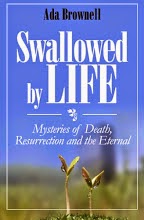 Just ask the person who lost a hundred pounds, someone with a transplanted heart pumping his blood, a patient who has had part of his brain removed, or the soldier with no legs. Study regenerative medicine and you’ll understand the experts estimate our skin completely rebuilds itself every seven days or so, and with the exception of our neurological system, almost every single cell in our body is replaced every seven to ten years.
As a former medical reporter for a daily newspaper, in this book I reveal how science shows us that death is swallowed by life every day. I also examine the words of Jesus Christ concerning eternal life, as well as testimony from witnesses about His death and Resurrection. In addition, I tell the story of a man who was clinically dead, but revived; I interviewed medical professionals and did other research about life and death.This book grew out of my search for everything that testifies of eternal life after we lost our thirty-one-year-old daughter to a deadly form of lymphoma. When she died, I needed to find out if I believed what I previously thought I did. Was I still certain that those who accept the Redeemer God sent and His sacrifice for sin will never die? Was I still sure heaven exists? This book hinges on this scripture: “While we live in these earthly bodies, we groan and sigh, but it’s not that we want to die and get rid of these bodies that clothe us. Rather, we want to put on our new bodies so that these dying bodies will be swallowed up by life” (2 Corinthians 5:4 NLT). We’re talking about victory over death here. The Apostle Paul also put it another way in his first book to the Corinthians: I declare to you, brothers, that flesh and blood cannot inherit the kingdom of God, nor does the perishable inherit the imperishable. Listen, I tell you a mystery: We will not all sleep, but we will all be changed—in a flash, in the twinkling of an eye, at the last trumpet. For the trumpet will sound, the dead will be raised imperishable, and we will be changed. For the perishable must clothe itself with the imperishable, and the mortal with immortality. When the perishable has been clothed with the imperishable, and the mortal with immortality, then the saying that is written will come true: ‘Death has been swallowed up in victory’ (1Corinthians 15:50 NIV).
Only our Creator knows how many days we have here. I often think of the patient who was in hospice twelve years before his death, able to enjoy life and family long after diagnosis of the fatal disease.We don’t abandon our faith by looking at our eternal future. If the Lord allows me to live a century, I’ll still need to be prepared for the time He calls me home.
I’ve discovered life is a powerful force, and all life is supernatural because our Heavenly Father created it. In this book I share the wonder of it all.
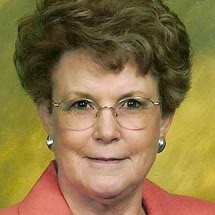
Ada Brownell bio:
Ada Brownell has been writing for Christian publications since age 15 and spent much of her life as a daily newspaper reporter. She has a B.S. degree in Mass Communications and worked most of her career at The Pueblo Chieftain in Colo., where she spent the last seven years as a medical writer where she wrote about the human genome and many other subjects that have to do with life and health, interviewing many medical experts. After moving to Springfield, MO in her retirement, she continues to free lance for Christian publications and write non-fiction and fiction books. Facebook: https://www.facebook.com/#!/AdaBrownellWritingMinistries Twitter: @adellerella Blog: http://inkfromanearthenvessel.blogspot.comStick to Your Soul Encouragemen Amazon Ada Brownell author page: http://www.amazon.com/-/e/B001KJ2C06
April 6, 2015
DO YOU FEAR THE DARK?
Light and Darkness
By Gail Kittleson
Excerpt from Catching Up With Daylight
Sometimes I wonder about the shift from night to day. What exactly defines the difference between night and morning, darkness and light? The Apostle John encourages us to claim our status as God’s children and keep out of the shadows. Lectio Divina, an ancient Benedictine form of meditation, invites us deep into the word “light.” From the first chapter of John’s Gospel, what one word draws my attention today? After several readings, I wait. The word is light. What does the writer mean by light, and what action would God have me take concerning light?
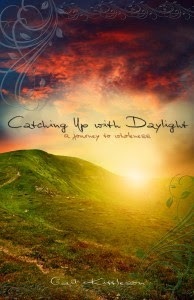 First, the context: “In Him was life, and the life was the light of the world.” (NIV) I didn’t get very far . . . four verses. That’s okay. Gone are the days of complicated, application-oriented Bible studies that tackled a whole chapter or more at a time in verse-by-verse analysis. Today I ruminate about light, and that’s enough. Jesus’ life was the light of the world. How did that light affect His world? Not always met with gratitude and approval, He knew some would attempt to snuff out the flame, and temporarily succeed. Yet that light has pervaded throughout the ages, down to this time in history. It’s the same light that beckoned us when we first heard the Good News. Joy behooves us to remember that first light.Sometimes darkness closes in on even God’s most devout followers, as it did on our Lord. Saint John of the Cross, along with countless other ancient believers, experienced this. Saint John’s sole goal . . . to love God . . . seemingly led him away from the light. We can relate to his statement: “Desolation is a file, and the endurance of great darkness is preparation for great light.”When it seems our Savior’s life-giving rays flee the scene of our everyday life, we suffer a tangible sense of loss that sneaks up subtly, silently, like a snake winding its way into a camper’s bedroll. Suddenly we find ourselves deep in shadow country, enveloped by a penetrating chill. Where has the light gone? What has happened to our relationship with God?Walking in the early mornings reveals gradations in atmospheric light. As a temperature change occurs with the sun’s disappearance at day’s end, so dawn’s light streaks from the east in a vast beam, drastically changing our perceptions. Still, the precise moment when darkness becomes light escapes an astute observer. With little ado, morning comes, and with it warmth and a new day.The atmosphere gives clues, and meteorologists work to isolate sunrise and sunset, offering precise information in their weather broadcasts. “August 27th, sunrise at 5:21, sunset at 8:36.”
 Spiritually, I’ve attempted the same sort of analysis. But sometimes life moves so fast, it becomes difficult to pinpoint the appearance of light or stall the coming of darkness.
Perhaps analysis sits less well with our spiritual journeys than with meteorologists’ goals. In certain seasons of life, recollected light may be enough, and we simply need to keep walking.
© by Gail Kittleson, WhiteFire Publishing, Nov. 2013
Meet the author!
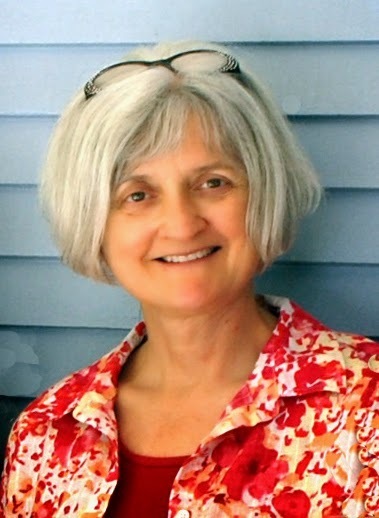
Gail Kittleson. Sometimes we learn what we've done only after we do it. I wrote my memoir
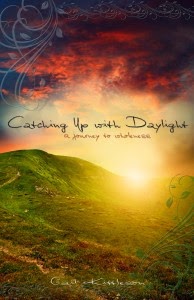
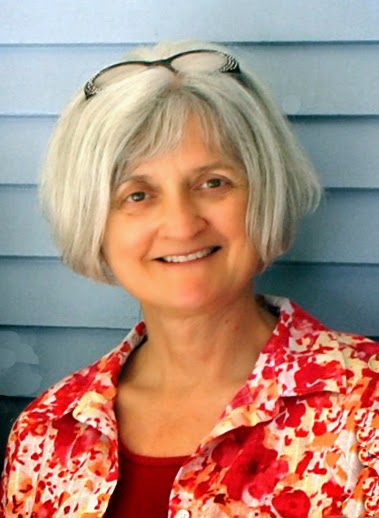
Catching Up With Daylight over a ten-year period, but learned the term "spirituality writing" only after the book was published. Figuring things out after the fact is a life theme for me, but even though it isn't the easy road, I learn a lot in the process. I live with my very patient husband in St. Ansgar, Iowa, where a small creative writing class meets in my home, and facilitate workshops on creativity/memoir writing/aging with grace. My first fiction release with Vintage Rose, titled In This Together, will be released sometime in 2015.
DARE TO BLOOM!
http://www.gailkittleson.com/
www.facebook.com/gail.kittleson
SUMMARY OF CATCHING UP WITH DAYLIGHT
Catching Up With Daylight invites readers into contemporary and historical women's lives, interweaving the author's own story, biblical insights and encouragement from the ancient mystics. Kittleson shares a simple Benedictine meditation process called Lectio Divina that revolutionized her prayer life. Why shouldn't Protestants use this tried-and-true method, too? This memoir is set in small-town Iowa after her husband's second deployment and during the renovation of a really old house. Its everyday anecdotes can be read sequentially or used as a "bathroom reader" to cheer the mundane hours of an ordinary day.
Purchase at any of these sites:
Amazon print: http://www.amazon.com/Catching-Up-Daylight-Journey-Wholeness/dp/1939023122/ref=sr_1_1_twi_1?ie=UTF8&qid=1424359652&sr=8-1&keywords=catching+up+with+daylight
Amazon digital: http://www.amazon.com/Catching-Up-Daylight-Journey-Wholeness-ebook/dp/B00EJPZHPK/ref=sr_1_1_twi_2?ie=UTF8&qid=1424359652&sr=8-1&keywords=catching+up+with+daylight
B&N print: http://www.barnesandnoble.com/w/catching-up-with-daylight-gail-kittleson/1117409147?ean=9781939023124
B&N digital: http://www.barnesandnoble.com/w/catching-up-with-daylight-gail-kittleson/1116460147?ean=2940148394945
Christian Book (print): http://www.christianbook.com/catching-with-daylight-journey-to-wholeness/gail-kittleson/9781939023124/pd/023120?event=ESRCN
By Gail Kittleson
Excerpt from Catching Up With Daylight
Sometimes I wonder about the shift from night to day. What exactly defines the difference between night and morning, darkness and light? The Apostle John encourages us to claim our status as God’s children and keep out of the shadows. Lectio Divina, an ancient Benedictine form of meditation, invites us deep into the word “light.” From the first chapter of John’s Gospel, what one word draws my attention today? After several readings, I wait. The word is light. What does the writer mean by light, and what action would God have me take concerning light?
 First, the context: “In Him was life, and the life was the light of the world.” (NIV) I didn’t get very far . . . four verses. That’s okay. Gone are the days of complicated, application-oriented Bible studies that tackled a whole chapter or more at a time in verse-by-verse analysis. Today I ruminate about light, and that’s enough. Jesus’ life was the light of the world. How did that light affect His world? Not always met with gratitude and approval, He knew some would attempt to snuff out the flame, and temporarily succeed. Yet that light has pervaded throughout the ages, down to this time in history. It’s the same light that beckoned us when we first heard the Good News. Joy behooves us to remember that first light.Sometimes darkness closes in on even God’s most devout followers, as it did on our Lord. Saint John of the Cross, along with countless other ancient believers, experienced this. Saint John’s sole goal . . . to love God . . . seemingly led him away from the light. We can relate to his statement: “Desolation is a file, and the endurance of great darkness is preparation for great light.”When it seems our Savior’s life-giving rays flee the scene of our everyday life, we suffer a tangible sense of loss that sneaks up subtly, silently, like a snake winding its way into a camper’s bedroll. Suddenly we find ourselves deep in shadow country, enveloped by a penetrating chill. Where has the light gone? What has happened to our relationship with God?Walking in the early mornings reveals gradations in atmospheric light. As a temperature change occurs with the sun’s disappearance at day’s end, so dawn’s light streaks from the east in a vast beam, drastically changing our perceptions. Still, the precise moment when darkness becomes light escapes an astute observer. With little ado, morning comes, and with it warmth and a new day.The atmosphere gives clues, and meteorologists work to isolate sunrise and sunset, offering precise information in their weather broadcasts. “August 27th, sunrise at 5:21, sunset at 8:36.”
 Spiritually, I’ve attempted the same sort of analysis. But sometimes life moves so fast, it becomes difficult to pinpoint the appearance of light or stall the coming of darkness.
Perhaps analysis sits less well with our spiritual journeys than with meteorologists’ goals. In certain seasons of life, recollected light may be enough, and we simply need to keep walking.
© by Gail Kittleson, WhiteFire Publishing, Nov. 2013
Meet the author!
Gail Kittleson. Sometimes we learn what we've done only after we do it. I wrote my memoir
Catching Up With Daylight over a ten-year period, but learned the term "spirituality writing" only after the book was published. Figuring things out after the fact is a life theme for me, but even though it isn't the easy road, I learn a lot in the process. I live with my very patient husband in St. Ansgar, Iowa, where a small creative writing class meets in my home, and facilitate workshops on creativity/memoir writing/aging with grace. My first fiction release with Vintage Rose, titled In This Together, will be released sometime in 2015.
DARE TO BLOOM!
http://www.gailkittleson.com/
www.facebook.com/gail.kittleson
SUMMARY OF CATCHING UP WITH DAYLIGHT
Catching Up With Daylight invites readers into contemporary and historical women's lives, interweaving the author's own story, biblical insights and encouragement from the ancient mystics. Kittleson shares a simple Benedictine meditation process called Lectio Divina that revolutionized her prayer life. Why shouldn't Protestants use this tried-and-true method, too? This memoir is set in small-town Iowa after her husband's second deployment and during the renovation of a really old house. Its everyday anecdotes can be read sequentially or used as a "bathroom reader" to cheer the mundane hours of an ordinary day.
Purchase at any of these sites:
Amazon print: http://www.amazon.com/Catching-Up-Daylight-Journey-Wholeness/dp/1939023122/ref=sr_1_1_twi_1?ie=UTF8&qid=1424359652&sr=8-1&keywords=catching+up+with+daylight
Amazon digital: http://www.amazon.com/Catching-Up-Daylight-Journey-Wholeness-ebook/dp/B00EJPZHPK/ref=sr_1_1_twi_2?ie=UTF8&qid=1424359652&sr=8-1&keywords=catching+up+with+daylight
B&N print: http://www.barnesandnoble.com/w/catching-up-with-daylight-gail-kittleson/1117409147?ean=9781939023124
B&N digital: http://www.barnesandnoble.com/w/catching-up-with-daylight-gail-kittleson/1116460147?ean=2940148394945
Christian Book (print): http://www.christianbook.com/catching-with-daylight-journey-to-wholeness/gail-kittleson/9781939023124/pd/023120?event=ESRCN