A.L. Knorr's Blog, page 6
August 24, 2021
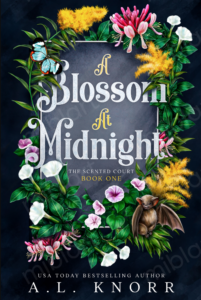
A Blossom At Midnight, An Update & An Excerpt
Darling readers,
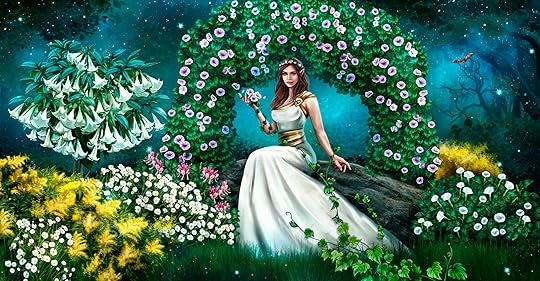
You’re the first to see the gorgeous custom artwork of Jessamine sitting amongst her botanicals. Isn’t it beautiful? Can you spot Beazle the bumblebee bat? How about Greta the glasswing butterfly? The second one is much harder to spot than the first, but don’t give up, she’s there. I promise.
A Blossom at Midnight sits currently at 110,000 words, even after editing the first half of the story to get rid of superfluous text. Yikes! And the climax is yet to be written. Will this book become a doorstop? It’s possible. A Blossom at Midnight will be available as a Kindle Unlimited title, as always, and also in both paperback form and audiobook. I’m looking into hardcover options with a dust-jacket, this would be a first for any book I’ve published. I love the feel of a heavy hardcover in my hand, and they make awesome gifts.
While old writing injuries are presenting a bit of a challenge, I am still aiming to have the manuscript off for its first round of edits by mid-September. As always, I’ll keep you posted on progress. Please enjoy the excerpt I’ve published below. If you missed the first excerpt I posted, you can read it here.
A Blossom at Midnight is not available to preorder yet. When the editing phase is mostly complete, I’ll be able to announce a date. I’m excited to kick off this series and share this story with you! Thanks for following along and for all your support.
Excerpt from Chapter 3, Laec’s Commission (unedited and subject to change) :
Laec woke up when a booted foot nudged him off the porch and into the grass. The open bottle of wine he’d been cradling like a newborn spilled down the front of his tunic and one thigh. He jerked up to an elbow, bleary-eyed and blinking, his hair in his face. His head ached and the tumble had bruised him. Indignant, he clawed his hair out of his eyes and glared up at the backlit figure. Laec meant to say her name reproachfully but what came out was an inaudible slur.
Fyfa towered over him, hands on hips. “Get up. Wash yourself. You smell like the scum at the bottom of a wine barrel. You’ve drunk my stores dry, you’ve eaten my food and passed out on my porch for too long. Quit moping around.” She bent at the waist and he glimpsed smug satisfaction in her face as she added in a low tone, “The queen wants to see you.”
Laec bit back the retort he’d been mentally laboring to form and stared stupidly. “Queen Elphame?”
Fyfa straightened. “No, the Queen of Underpants and Stockings. Of course, Queen Elphame. She’s expecting you to appear at court within the hour.” Fyfa walked away in obvious disgust. She disappeared around the side of her cottage and Laec could hear her murmuring complaints to Byrne.
Shame heated Laec’s cheeks. He got to his feet, grasping at the porch to steady himself. So, the queen had taken notice of his lifestyle. Either that or Fyfa had complained and her mother had decided to step in. As much as he wanted to, Laec couldn’t blame his friend. He could hardly stand himself these days, so why should he expect anyone else to? Fyfa and Byrne had been overly patient, expecting that any day now Laec would rouse himself from his slump and return to his usual, clear-headed and irreverent self.
Laec wasn’t normally so lazy. He didn’t normally drink during the day, or even every night like many fae did, but somehow he’d slid into a routine of indulgence that was proving difficult to break. He knew there was no justifying his precipitous fall from grace. Daily he told himself that tomorrow he would climb out of this pit. Tomorrow would arrive, and he would ask himself why he should bother? What good thing was waiting for him at the top of the pit? Banquets, picnics, horseback riding, swordplay, running errands for members of the court, hunting, gardening. It had all lost its lustre. What had seemed an enchanted life before Georjie now seemed dull and empty.
I’m depressed, thought Laec with chagrin. He stumbled into Fyfa’s cottage and staggered to her bathing room. And when I’m sober, I’m embarrassed that I’m depressed. I used to pride myself on being immune to such weakness. He winced as the truth sliced through his mind like bright morning sunlight. He guzzled water from the copper tap and splashed his face. He gazed at his reflection through bloodshot eyes. A face-washing wasn’t going to do it, not for an audience with the queen. Laec stripped and stepped under the showerhead. He lathered himself all over with one of Fyfa’s homemade bars of lavender soap, his hair too. He scrubbed and rinsed, scrubbed and rinsed. When he stepped out he felt better, but wondered if he was sober enough to walk through the castle doors in a straight line.
Toweling dry, Laec searched for clean clothes and found some folded on the chair outside the room he slept in–whenever he didn’t fall asleep on the living room floor, or sprawled on the lawn. It was the same room Georjie had once slept in. An annoying little voice whispered that that was part of his problem.
He made a mental note to thank Fyfa for doing his laundry, dressed and went into the kitchen to scavenge. There was fresh sourdough on the countertop still warm from the oven, and cold butter in the ice cupboard. Laec helped himself to two slices of bread and butter and took a peach from the bowl on the counter as well as a handful of nuts. He felt ready to handle an audience with the queen now but already resentment burned in his chest. What right did Elphame have to interfere with his wallowing?
Laec left Fyfa’s cottage, pausing on the porch. He could hear Fyfa and Byrne behind the house, laughing together, their drunken friend forgotten. His eyes drifted closed for a moment and he changed his mind about letting them know he was leaving.
I don’t enjoy being sober, thought Laec as he strolled the path leading to the rear gardens of the castle. Being sober meant realizing fully what an ass you’ve been. It meant feeling that delayed sense of humiliation about things you did or said while you were not sober, everything one should have felt while one was doing or saying the humiliating thing came roaring into one’s face like a rabid animal.
Laec’s head still ached. He was in for a reprimand and he deserved it. Still, he was surprised that the queen would bother to involve herself. Laec was a courtier but he wasn’t an aristocrat, he was the offspring of a family that the queen had once been fond of. Being centuries old, Queen Elphame knew better the stock Laec had come from than Laec did himself. Maybe she felt she had to keep Laec straight in some misplaced sense of loyalty. Maybe Fyfa had complained about Laec using her cottage as a flophouse. That was probably it.
Laec wove his way through fae playing games in the gardens, drinking daisy wine from crystal goblets, listening to lutists and floutists playing maudlin music, sitting on tree swings and whiling away the afternoon.
I’m not so different from these courtiers, Laec thought bitterly. Just because I choose to drink by myself instead of in the queen’s backyard with a bunch of popinjays and sycophants, I get reprimanded?
Laec had worked himself into a state of pure rebellion by the time he entered the queen’s reception hall. He took his usual place against the wall to wait for the queen to call on him, quietly fuming. His head was pounding and he wanted something to drink but he kept away from the sideboards, always fully stocked. Better not to smell of wine during his audience, especially when he’d scrubbed himself so hard.
Queen Elphame was usually seated on the marble bench atop the dais while she held sessions, but she was not there today. Instead, she paced restlessly. A small wiry man in spectacles paced along behind her, short legs working to keep up with the long-legged queen as she dictated. She wore a close-fitting gown of pale green. Today her hair was icy white and swept up in a mass of curls scattered with small green blossoms. The queen had different colored hair every day but she favored white above all. Many claimed she was the most beautiful fae to ever live, but Laec was immune to such beauty. He had long ago come to believe that her true appearance was most likely that of a crooked old crone with no teeth and a withered bosom. Why should he let her attractiveness affect him if it wasn’t real?
Now that he was thinking about it, that was one of the things that had made Georjie so attractive. She had magic but not guile. Even better, she had chosen love over immortality. No one else Laec knew would ever make that same choice, least of all Laec himself. If Georjie had professed her love to him and asked him to leave Stavarjak and live in the earthly realm with her–Scotland or her homeland of Canada, or anywhere else–he would have declined, in spite of his desire for her. But Georjie had—-without struggle or a moment’s hesitation—-turned her back on immortality and opted to stay with Lachlan.
It wasn’t so much the loss of Georjie’s love that had sent Laec into the downward spiral. It was the mirror that Georjie had inadvertently held up by making such a choice. Against her conviction Laec had compared himself, and hadn’t liked what he had seen. Laec certainly was not worthy of her. The fact that he’d treated her with such disdain when he first met her made this simple truth unbearable. Wine made it bearable, at least for a little while. When he was sober he replayed the things he’d said to Georjie: You’re putting both our worlds in danger with your pigheadedness. Why can’t you admit when you’re beaten?
But she hadn’t been beaten. She’d emerged the triumphant force, and when she told Laec she’d chosen Lachlan, he had hidden just how deeply he’d been cut. He’d told her: Perhaps you have made the right choice. After all it is the fragility of your human mortality that makes life precious on the other side of the veil.
Noble, brave and true words, but they didn’t make facing himself any easier.
Laec let his memories torture him until the queen’s violet eyes found him. Her gaze never left Laec as she ripped off a few more instructions to her secretary and then sent him away. Dispensing with the usual ceremony of having a guardsman call subjects in an orderly fashion, the queen beckoned him with a sharp chin gesture.
Mutinously, Laec pushed away from the wall and ascended to the throne. When he reached it, Queen Elphame was no longer there. She had disappeared through a door at the back of the dais, leaving it open behind her. Laec slipped into the private chamberwhere the queen had resumed pacing.
The room bristled with carvings in dark wood; famous battles, famous lovers, famous fae inventors and poets. A new panel had been added since the last time Laec had been in this room. He recognized Georjie’s visage and form, half carved, her form striking a heroic pose of power, one he was fairly sure she’d never struck. Curls of wooden shavings peppered the carpet beneath the panel. Carving tools lay against the wall. Another week or two and the black witch Georjie had destroyed would also appear in the wood. He struggled to pull his gaze away. No one would carve him in this room or any other. What had he ever done that deserved to be lovingly rendered in hardwood?
A semi-circular alcove with a padded bench sat beneath tall vertical windows. Outside, the glass was overladen with vines. Slender beams of sunlight filtered into the room. The queen went to this alcove but did not sit, instead she paced in slower, tighter circles. Her agitation was contagious.
He was supposed to wait for her to speak before he spoke himself, but he’d never been great at self control or following rules. He settled his forearms into a barrier over his chest and glared. “What are you going to do, cut off my other thumb?”
The queen had punished Laec in this manner for helping Georjie steal something from her stores. The fact that the thumb grew back had not lessened the sting of his chastisement. Queen Elphame—in the end—had helped Georjie herself, so why should Laec have been punished for it? The queen had never apologized or explained herself. Elphame never admitted being wrong.
At his cheek, the queen cocked an eyebrow. “Why? Have you done something else to justify losing a digit?”
“There’s no law against drinking too much.”
The queen waved a hand. “That’s not why I summoned you. Though I’m not impressed with your behavior of late, I am not your mother. If you want to spend a few decades drinking and getting fat, that’s your choice.”
Laec was surprised by how much this stung. Did the queen not care what happened to him, then? In some distant corner of his mind he was aware of his hypocrisy and grimaced. Another reason to avoid sober self-examination for as long as possible.
“I have forseen trouble for my cousin, Esha,” the queen went on, still pacing.
Laec searched his memory. “The Queen of Solana?”
She nodded, her beautiful face pinched. Frustration stiffened every movement. “As usual, my premonitions are dark and vague. I cannot see the shape of this threat. I cannot tell if it is to her directly or to her kingdom, or perhaps to some individual in her care, but it is dark and it is persistent.”
Solana was a far off kingdom. Laec’s annoyance was supplanted by confusion. “What does that have to do with me?”
“I want you to go to Solana and present yourself to the king and queen, make yourself of service. Report any important happenings or developments back to me. Be my eyes and ears. I don’t know if the threat is imminent or far off, but I would rather take precautions and I cannot see well beyond our borders.”
The queen could not demand this of Laec, she could only ask, since it meant Laec would have to leave Stavarjak’s protective circle—and what magic he had—behind.
End of Excerpt.
If you missed the previous excerpt, you can read it here.


July 7, 2021
July 6, 2021
I’m usually pretty secretive about projects while I’m in the early stages of development, but I’ve been encouraged to share more about my process, so here are the current details.
My current WIP (work in progress) is entitled A Blossom at Midnight, The Scented Court.
As of today (July 6, 2021) I am 50,000 words into book 1. This series will be categorized as young adult epic fantasy. The individual books of this series will be longer than those of previous series, so launches will be further apart. It is too early to announce a launch date for book 1 but I am aiming for later this fall and hoping to keep old writing injuries at bay by prioritizing my health above word count. That said, the project is coming along rather quickly.
This series will follow several main characters and will be written in third person to accommodate a large cast and complex plot. If you read and enjoyed my Earth Magic Rises series then you’ll love The Scented Court. As the series title suggests, flowers and their perfumes play an important role in the lives of the citizens of Solana, even moreso than in Stavarjak, which is a kingdom to the north (and which you have visited already if you’ve read Georjie’s trilogy). Not only flora is important, but fauna too.
I have always loved flowers, insects, animals and nature in general. I think many people do, and this series is giving me an opportunity to immerse myself in the world of botanicals and pollenators, as well as that of the larger mammals who roam our earth. King Agir and Queen Esha of Solana keep a group of flora fae called the Calyx as part of their royal household. These fae are famous even beyond the borders of Solana. There are only fifty positions within the retinue but when an open position comes up (as Calyx retire) children throughout the kingdom and beyond who meet certain criteria are invited to the palace for Discovery. The Royal Gardener (but Ilishec is so much more than your typical gardener) helps the young fae realize what connections they have to the earth, and the especially gifted ones may be offered a coveted place among the Calyx. A Blossom at Midnight unfolds the enchanting life and world of the Calyx through the eyes of a naive young villager named Jessamine Fontana who has a lot to learn, not only about the world she inhabits but her own past and identity.
Other important characters of The Scented Court come from the northern Kingdom of Stavarjak (a certain red-headed, irreverent fae named Laec whom you know from Earth Magic Rises, who has been lazing around Elphame’s castle since he was rejected by the blond girl from Canada, drinking too much and annoying everyone), from the southern Kingdom of Boskaya (a beautiful half-fae woman named Çifta who dares to dream that her arranged marriage will be a loving one), and from the troubled Kingdom of Rahamlar (Prince Faraçek is tired of being marginalized and wonders if he should just become the monster everyone seems to think he is), a neighbor of Solana.
While Jessamine’s naivety falls away and she finds her place among the royal household, there are those abroad whose lives are not so enchanted, those whose lives are on a collision course with hers. The Scented Court will be full of beauty, but there’s danger in this world too. Intrigue, betrayals, friendships, deceptions, family alliances and strained betrothals, political interplay between kingdoms, and personal relationships that stretch all of our main characters and demand they grow beyond what is expected of them, all of these tensions play their part. When things go wrong, what can a young flora fae who is trained to conjure fragrance and blossoms do against powerful enemies? Perhaps she needs to better understand the Gardeners oft-referenced principle: soft does not mean weak.
Please enjoy this (unedited) excerpt from the story, and keep in mind that it is subject to change.
For more excerpts, make sure you’re subscribed to my newsletter.
July 6, 2021
An Excerpt from A Blossom at Midnight
Welcome to a secret page posted just for my newsletter subscribers, fans and VIP Lounge members. I’m usually pretty secretive about projects while I’m still early in the development stage, but I’ve been encouraged to share more during the process, so below is a little more information about what I’m working on right now.
My current WIP (work in progress) is entitled A Blossom at Midnight, The Scented Court.
As of today (July 6, 2021) I am 50,000 words into book 1. This series will be categorized as young adult epic fantasy. The individual books of this series will be longer than the books of previous series I have written, so launches will be further between. It is too early to announce a launch date for book 1 but I am aiming for later this fall and hoping to keep old writing injuries at bay by prioritizing my health above word count. That said, the project is coming along rather quickly.
This series will follow several main characters and will be written in third person to accommodate for a large cast and a complex plot. If you read and enjoyed my Earth Magic Rises series then you’ll love The Scented Court. As the series title suggests, flowers and their perfumes play an important role in the lives of the citizens of Solana, even moreso than in Stavarjak, which is a kingdom to the north (which you have visited already if you’ve read Georjie’s trilogy). Not only flora is important, but fauna too.
I have always loved flowers, insects, animals and nature in general. I think many people do, and this series is giving me an opportunity to immerse myself in the world of botanicals and pollenators, as well as that of the larger mammals who roam our earth. King Agir and Queen Esha of Solana keep a group of flora fae called the Calyx as part of their royal household. These fae are famous even beyond the borders of Solana. There are only fifty positions within the retinue but when an open position comes up (as Calyx retire) children throughout the kingdom and beyond who meet certain criteria are invited to the palace for Discovery. The Royal Gardener (but Ilishec is so much more than your typical gardener) helps the young fae realize what connections they have to the earth, and the especially gifted ones may be offered a coveted place among the Calyx. A Blossom at Midnight unfolds the enchanting life and world of the Calyx through the eyes of a naive young villager named Jessamine Fontana who has a lot to learn, not only about the world she inhabits but her own past and identity.
Other important characters of The Scented Court come from the northern Kingdom of Stavarjak (a certain red-headed, irreverent fae named Laec whom you know from Earth Magic Rises, who has been lazing around Elphame’s castle since he was rejected by the blond girl from Canada, drinking too much and annoying everyone), from the southern Kingdom of Boskaya (a beautiful half-fae woman named Çifta who dares to dream that her arranged marriage will be a loving one), and from the troubled Kingdom of Rahamlar (Prince Faraçek is tired of being marginalized and wonders if he should just become the monster everyone seems to think he is), a neighbor of Solana.
While Jessamine’s naivety falls away and she finds her place among the royal household, there are those abroad whose lives are not so enchanted, those whose lives are on a collision course with hers. The Scented Court will be full of beauty, but there’s danger in this world too. Intrigue, betrayals, friendships, deceptions, family alliances and strained betrothals, political interplay between kingdoms, and personal relationships that stretch all of our main characters and demand they grow beyond what is expected of them, all of these tensions play their part. When things go wrong, what can a young flora fae who is trained to conjure fragrance and blossoms do against powerful enemies? Perhaps she needs to better understand the Gardeners oft-referenced principle; soft does not mean weak.
Please enjoy this (unedited) excerpt from the story, and keep in mind that it is subject to change.
Prologue
Davegli is a pretty village cradled by pretty lands filled with pretty crops and pretty yards. It is a place where kind-hearted and fruitful people live simple lives of safety, protected by the power and authority of the king and queen of the Kingdom of Solana.
Nested in a southfacing dip like a semiprecious stone in a shining setting, Dagevli is home to some five-hundred hardworking souls. It has a single main street which meanders through town as though furrowed by a set of tipsy oxen. Branching from this main artery are narrow winding roads and culs-de-sac flanked by thatched roof cottages. A freshwater stream burbles parallel to the high street on the right as you come from the nearby village of Oubel. Filled with small fish and paddling ducks, the stream wends eastward, behind the town’s public pavilion (a rustic but handsome structure buried by woody, flowering vines), ducks beneath several arched bridges before heading downslope to where farmers draw from its mint-choked banks to irrigate their crops.
It was early morning, so early that the sky was mostly dark and the stars were still visible. Cows lowed in the distance. There were lights in a few windows, farmers preparing breakfast and getting ready for work.
Hanna—one of Dagevli’s beloved villagers (she is skilled with healing herbs) opened the white picket gate in front of her neighbor’s cottage, shifting her basket of supplies from the crook of one elbow to another. Her bicep was burning, though she didn’t have to carry the basket far. She let herself into the single-room abode without knocking, stepping quietly on the stone floor in case Marion was still sleeping. She left the door open to freshen the air and didn’t notice the flutter of an insect as it slipped inside. Kicking off her leather boots, she crossed the room on stockinged feet and set the basket—containing canned food, a bottle of fresh milk, a dozen eggs, a small box of salt and a few other basics—on the wooden plank table.
The sound of a baby’s coo from the basinet in the corner made Hanna smile. With a glance at Marion’s sleeping form on the single mattress in the far corner, Hanna went to the cradle to look at the twins.
They were perfect. Hanna felt herself melting as she took in their tiny, softly pointed ears. These belied a fae father, though Marion had never admitted any such thing to Hanna. One thing Marion made clear when she first arrived in Dagevli only six months ago, was that she would not welcome questions. An older, pregnant widow was not something the village was accustomed to having among their population, but the villagers had been welcoming enough to their newest member, probably due to pity. Hanna was secretly thrilled for her lonely neighbor. Marion was a good woman, and a good person to live beside. In their small community, helpful neighbors were a necessity of survival.
The twins each had a cap of dark hair curling around their wee fae ears, soft as duckling down. They slept wrapped up in one another and had even been found sucking on one another’s noses. They were less than one month old and had been born on a rainy night with only the two women in attendance. Marion had been grateful for the heavy downfall to drown out the sound of her difficult labor.
A small furry shape moved on the pillow just behind the girl’s head, making Hanna start and suck in a breath. At first she thought its was a hairy spider with a body the size of a teaspoon. Her heart hammered as she considered how to get the spider away without waking the baby. But the shape uncurled a wing and she realized with a breathless jolt of amazement that it was not a spider but a bat, and it was no larger than the end of her thumb. It had shining inkdrop eyes and a furry brown snout. Fine rust-colored fur covered its wings. It blinked up at Hanna and then yawned (revealing pin-sharp, near-transparent teeth) as though it had every right in the world to be cozied up to the infant’s warm scalp.
Hanna had not yet recovered from what the presence of the bat might mean when a butterfly fluttered over the children, as if materializing from the air. It landed on the boy’s swaddling clothes, and crawled along him until it reached his head. There it stopped, flexing its wings. It was a specimen Hanna had never seen before, and not like the flamboyantly colored insects that danced all summer over the gardens of Dagevli. The panels of its wings were as transparent as glass. Through them, Hanna could make out the details of the boy’s hair. Framing each wing was a thin border of red-brown, and a dash of white decorated the tip.
Hanna’s heart galloped and she decided she had to wake Marion. This news was too lovely to wait.
Marion was a lump under her bedclothes, her breathing deep and even. With every exhalation she loosed a small whistle through her nose.
Hanna put a hand on Marion’s hip and gently shook her. “Marion, honey? Wake up, you have to see this.”
Marion’s breathing changed and her eyes slit open. She yawned. “Hello, dear. You’re here early.” She pushed herself up to sitting, her red and gray curls making a cloud around her head. She blinked blearily at the basinet. “They were so good last night. Went right back to sleep after every feeding.”
“That’s wonderful,” Hanna whispered. “And something else wonderful has happened. Come see.”
Marion followed Hanna to where the twins lay sleeping but froze in her tracks when she saw the butterfly. Her face went the color of old candle wax, and she backpedaled with a moan. “No. No, no, no.”
Hanna stared at her, confused, as Marion cast about the room as though looking for something she needed right that instant. She bent to retrieve a softcover recipe book from beneath her cooking counter and rolled it into a slender cone as she returned to the cradle with thunder in her face.
Stunned, Hanna almost moved too late. As Marion raised the rolled-up weapon overhead, Hanna dove in front of her, grabbing her wrist. “You mustn’t!”
Marion went for the insect again. Her face crumpling, tears gathering in the corners of her eyes. “I must!”
Hanna panted with effort and spoke quickly, desperately. “You cannot. Eliminating them will only bring another. Dead franions are quickly replaced, and killing them will hurt your babies.”
“They’re too young to know-” Marion sobbed.
“They’re not. Kill the franion, and you’ll hurt your own children, and to what end? Will you kill the next one that comes along? And the one after that?” Hanna spoke gently now, seeing that her friend was distraught but coming to her senses. Hanna’s hands were cold on Marion’s arms from the shock of the mother’s reaction.
“Them?” Marion lowered her rolled up book, defeated, her tear-filled gaze combing Hanna’s face. “I see only one franion.”
“If I let you near,” Hanna pulled the book from Marion’s limp fingers, and her friend let her take it, “will you promise not to hurt them?”
Marion promised.
Cautiously, Hanna stepped aside so Marion could approach the babies. She was rocked to her core by her Marion’s murderous response to what most would consider to be a gift of magnificent proportion.
“A butterfly,” Marion moaned, “and a bat.” She covered her face. “I am cursed among women.”
Hanna put an arm around Marion’s shoulders, processing her strange words. She used the time it took to guide Marion back to her bed to search out the reasons why Marion might react this way.
“Just because they’re flora fae doesn’t meant they’ll ever be Calyx,” she said softly as she helped Marion lay down. It was the only conclusion Hanna could come to, that Marion was frightened her children might one day join the royal retinue. Many would give everything they had for this opportunity, but apparently Marion did not share this view. But the chances were so slim, even for flora fae, that Marion’s concern was greatly misplaced.
Tears leaked from Marion’s eyes. She nodded, gathering comfort from the words. “You’re right, of course. Silly me. I’m so embarrassed. It was just a shock, that’s all. A shock.”
“Of course.” Hanna put a hand on Marion’s arm.
Marion lay her hand over Hanna’s and gave her a grateful squeeze. “Thank you. You’re too good to me, Hanna.” She rolled away from Hanna and faced the wall.
Hanna could still hear tears in her voice.
“Just a shock,” murmured Marion.
Baffled, Hanna straightened and looked from the sleeping babies to where their mother lay. “Marion, you must promise me you won’t hurt them. I can’t leave until you promise. Understand?”
Marion let out a long sigh. “I promise, dear Hanna.”
“What do you promise, my love?”
“I promise I won’t hurt my babies.”
“And?”
“I promise I won’t hurt the franions.”
Hanna patted her friend’s shoulder again, trying not to think about what might have happened if Marion had discovered the bat and the butterfly while Hanna had not been there. “Good girl. Now let me see what I can rustle up for breakfast.”
An Excerpt from A Blossom at Midnight
My current WIP (work in progress) is entitled A Blossom at Midnight, The Scented Court.
As of today (July 6, 2021) I am 50,000 words into book 1. This series will be categorized as young adult epic fantasy. The individual books of this series will be longer than those of previous series, so launches will be further apart. It is too early to announce a launch date for book 1 but I am aiming for later this fall and hoping to keep old writing injuries at bay by prioritizing my health above word count. That said, the project is coming along rather quickly.
This series will follow several main characters and will be written in third person to accommodate a large cast and complex plot. If you read and enjoyed my Earth Magic Rises series then you’ll love The Scented Court. As the series title suggests, flowers and their perfumes play an important role in the lives of the citizens of Solana, even moreso than in Stavarjak, which is a kingdom to the north (and which you have visited already if you’ve read Georjie’s trilogy). Not only flora is important, but fauna too.
I have always loved flowers, insects, animals and nature in general. I think many people do, and this series is giving me an opportunity to immerse myself in the world of botanicals and pollenators, as well as that of the larger mammals who roam our earth. King Agir and Queen Esha of Solana keep a group of flora fae called the Calyx as part of their royal household. These fae are famous even beyond the borders of Solana. There are only fifty positions within the retinue but when an open position comes up (as Calyx retire) children throughout the kingdom and beyond who meet certain criteria are invited to the palace for Discovery. The Royal Gardener (but Ilishec is so much more than your typical gardener) helps the young fae realize what connections they have to the earth, and the especially gifted ones may be offered a coveted place among the Calyx. A Blossom at Midnight unfolds the enchanting life and world of the Calyx through the eyes of a naive young villager named Jessamine Fontana who has a lot to learn, not only about the world she inhabits but her own past and identity.
Other important characters of The Scented Court come from the northern Kingdom of Stavarjak (a certain red-headed, irreverent fae named Laec whom you know from Earth Magic Rises, who has been lazing around Elphame’s castle since he was rejected by the blond girl from Canada, drinking too much and annoying everyone), from the southern Kingdom of Boskaya (a beautiful half-fae woman named Çifta who dares to dream that her arranged marriage will be a loving one), and from the troubled Kingdom of Rahamlar (Prince Faraçek is tired of being marginalized and wonders if he should just become the monster everyone seems to think he is), a neighbor of Solana.
While Jessamine’s naivety falls away and she finds her place among the royal household, there are those abroad whose lives are not so enchanted, those whose lives are on a collision course with hers. The Scented Court will be full of beauty, but there’s danger in this world too. Intrigue, betrayals, friendships, deceptions, family alliances and strained betrothals, political interplay between kingdoms, and personal relationships that stretch all of our main characters and demand they grow beyond what is expected of them, all of these tensions play their part. When things go wrong, what can a young flora fae who is trained to conjure fragrance and blossoms do against powerful enemies? Perhaps she needs to better understand the Gardeners oft-referenced principle: soft does not mean weak.
Please enjoy this (unedited) excerpt (The Prologue) from the story, and keep in mind that it is subject to change.
For more excerpts, make sure you’re subscribed to my newsletter.
 Prologue
Davegli is a pretty village cradled by pretty lands filled with pretty crops and pretty yards. It is a place where kind-hearted and fruitful people live simple lives of safety, protected by the power and authority of the king and queen of the Kingdom of Solana.
Nested in a southfacing dip like a semiprecious stone in a shining setting, Dagevli is home to some five-hundred hardworking souls. It has a single main street which meanders through town as though furrowed by a set of tipsy oxen. Branching from this main artery are narrow winding roads and culs-de-sac flanked by thatched roof cottages. A freshwater stream burbles parallel to the high street on the right as you come from the nearby village of Oubel. Filled with small fish and paddling ducks, the stream wends eastward, behind the town’s public pavilion (a rustic but handsome structure buried by woody, flowering vines), ducks beneath several arched bridges before heading downslope to where farmers draw from its mint-choked banks to irrigate their crops.
It was early morning, so early that the sky was mostly dark and the stars were still visible. Cows lowed in the distance. There were lights in a few windows, farmers preparing breakfast and getting ready for work.
Hanna—one of Dagevli’s beloved villagers (she is skilled with healing herbs) opened the white picket gate in front of her neighbor’s cottage, shifting her basket of supplies from the crook of one elbow to another. Her bicep was burning, though she didn’t have to carry the basket far. She let herself into the single-room abode without knocking, stepping quietly on the stone floor in case Marion was still sleeping. She left the door open to freshen the air and didn’t notice the flutter of an insect as it slipped inside. Kicking off her leather boots, she crossed the room on stockinged feet and set the basket—containing canned food, a bottle of fresh milk, a dozen eggs, a small box of salt and a few other basics—on the wooden plank table.
The sound of a baby’s coo from the bassinet in the corner made Hanna smile. With a glance at Marion’s sleeping form on the single mattress in the far corner, Hanna went to the cradle to look at the twins.
They were perfect. Hanna felt herself melting as she took in their tiny, softly pointed ears. These belied a fae father, though Marion had never admitted any such thing to Hanna. One thing Marion made clear when she first arrived in Dagevli only six months ago, was that she would not welcome questions. An older, pregnant widow was not something the village was accustomed to having among their population, but the villagers had been welcoming enough to their newest member, probably due to pity. Hanna was secretly thrilled for her lonely neighbor. Marion was a good woman, and a good person to live beside. In their small community, helpful neighbors were a necessity of survival.
The twins each had a cap of dark hair curling around their wee fae ears, soft as duckling down. They slept wrapped up in one another and had often been found sucking on one another’s noses. They were less than one month old and had been born on a rainy night with only the two women in attendance. Marion had been grateful for the heavy downfall to drown out the sound of her difficult labor.
A small furry shape moved on the pillow just behind the girl’s head, making Hanna start and suck in a breath. At first she thought its was a hairy spider with a body the size of a teaspoon. Her heart hammered as she considered how to get the spider away without waking the baby. But the shape uncurled a wing and she realized with a breathless jolt of amazement that it was not a spider but a bat, and it was no larger than the end of her thumb. It had shining inkdrop eyes and a furry brown snout. Fine rust-colored fur covered its wings. It blinked up at Hanna and then yawned (revealing pin-sharp, near-transparent teeth) as though it had every right in the world to be cozied up to the infant’s warm scalp.
Hanna had not yet recovered from what the presence of the bat might mean when a butterfly fluttered over the children, as if materializing from the air. It landed on the boy’s swaddling clothes, and crawled along him until it reached his head. There it stopped, flexing its wings. It was a specimen Hanna had never seen before, and not like the flamboyantly colored insects that danced all summer over the gardens of Dagevli. The panels of its wings were as transparent as glass. Through them, Hanna could make out the details of the boy’s hair. Framing each wing was a thin border of red-brown, and a dash of white decorated the tip.
Hanna’s heart galloped and she decided she had to wake Marion. This news was too lovely to wait.
Marion was a lump under her bedclothes, her breathing deep and even. With every exhalation she loosed a small whistle through her nose.
Hanna put a hand on Marion’s hip and gently shook her. “Marion, honey? Wake up, you have to see this.”
Marion’s breathing changed and her eyes slit open. She yawned. “Hello, dear. You’re here early.” She pushed herself up to sitting, her red and gray curls making a cloud around her head. She blinked blearily at the bassinet. “They were so good last night. Went right back to sleep after every feeding.”
“That’s wonderful,” Hanna whispered. “And something else wonderful has happened. Come see.”
Marion followed Hanna to where the twins lay sleeping but froze in her tracks when she saw the butterfly. Her face went the color of old candle wax, and she backpedaled with a moan. “No. No, no, no.”
Hanna stared at her, confused, as Marion cast about the room as though looking for something she needed right that instant. She bent to retrieve a softcover recipe book from beneath her cooking counter and rolled it into a slender cone as she returned to the cradle with thunder in her face.
Stunned, Hanna almost moved too late. As Marion raised the rolled-up weapon overhead, Hanna dove in front of her, grabbing her wrist. “You mustn’t!”
Marion went for the insect again. Her face crumpled, tears gathered in the corners of her eyes. “I must!”
Hanna panted with effort and spoke quickly, desperately. “You cannot. Eliminating them will only bring another. Dead franions are quickly replaced, and killing them will hurt your babies.”
“They’re too young to know-” Marion sobbed.
“They’re not. Kill the franion, and you’ll hurt your own children, and to what end? Will you kill the next one that comes along? And the one after that?” Hanna spoke gently now, seeing that her friend was distraught but coming to her senses. Hanna’s hands were cold on Marion’s arms from the shock of the mother’s reaction.
“Them?” Marion lowered her rolled up book, defeated, her tear-filled gaze combing Hanna’s face. “I see only one franion.”
“If I let you near,” Hanna pulled the book from Marion’s limp fingers, and her friend let her take it, “will you promise not to hurt them?”
Marion promised.
Cautiously, Hanna stepped aside so Marion could approach the babies. She was rocked to her core by Marion’s murderous response to what most would consider to be a gift of magnificent proportion.
“A butterfly,” Marion moaned, “and a bat.” She covered her face. “I am cursed among women.”
Hanna put an arm around Marion’s shoulders, processing her strange words. She used the time it took to guide Marion back to her bed to search out the reasons why Marion might react this way.
“Just because they’re flora fae doesn’t meant they’ll ever be Calyx,” she said softly as she helped Marion lay down. It was the only conclusion Hanna could come to, that Marion was frightened her children might one day join the royal retinue. Many would give everything they had for this opportunity, but apparently Marion did not share this view. But the chances were so slim, even for flora fae, that Marion’s concern was greatly misplaced.
Tears leaked from Marion’s eyes. She nodded, gathering comfort from the words. “You’re right, of course. Silly me. I’m so embarrassed. It was just a shock, that’s all. A shock. Forgive me, Hanna.”
“Of course.” Hanna put a hand on Marion’s arm.
Marion lay her hand over Hanna’s and gave her a grateful squeeze. “Thank you. You’re too good to me.” She rolled away and faced the wall.
Hanna could still hear tears in her voice.
“Just a shock,” murmured Marion, sounding sleepy.
Baffled, Hanna straightened and looked from the babies to where their mother lay. “Marion, you must promise me you won’t hurt them. I can’t leave until you promise. Understand?”
Marion let out a long sigh. “I promise, dear Hanna.”
“What do you promise, my love?”
“I promise I won’t hurt my babies.”
“And?”
“I promise I won’t hurt the franions.”
Hanna patted her friend’s shoulder again, trying not to think about what might have happened if Marion had discovered the bat and the butterfly while Hanna had not been there. “Good girl. Now let me see what I can rustle up for breakfast.”
December 7, 2019
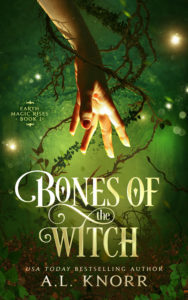
A Sneak Peek at Bones of the Witch, Earth Magic Rises, Book 1
(Missed Chapter 1? Read it here)
 The sound of men’s laughter roused me from unconsciousness. I’d been dreaming I was still in Poland and thought maybe I’d wake to find myself in one of the Novak’s luxurious beds. My eyes drifted open and I saw a striped single bed and a mid-century dresser with the top drawer slid open. Blinking and disoriented, I sat up. Only the sight of my luggage, open and rifled through, brought back my memory. I was in the highlands and one of the voices outside the window was Jasher’s.
My stomach gave a grumble as though chastising me for not getting up earlier. Grabbing my phone, I looked at the screen and gaped in disbelief. It was past noon! The soft light coming in the window was deceptive; it was so dim it seemed like early morning.
Peeking out the window revealed smudges of green through warped glass. I opened the window farther and caught a glimpse of rolling treed hills and an expanse of blue-grey on the horizon––the North Sea. The clouds were thick and the color of gunmetal. I was surprised it wasn’t raining already. The air smelled thick with ozone, rich earth and…yes, roses, unbelievably. I took a big inhale, sighing with pleasure. Scotland might be cold, but it certainly smelled lovely. It struck me as odd since it was now early March. What roses bloomed this early in the year, and this far north?
Scrambling for the shower, I hurriedly washed and dressed, throwing my long hair up in a topknot. Pulling on a pair of jeans and a plain cashmere sweater, I grabbed my running shoes and a rain slicker before finding my way to the stairwell Jasher had led me up the night before. Just before I got to the top of the stairs, I remembered that I wanted to find Jasher’s letter, and skidded to a halt. Returning to my room, I dug in my luggage for where I kept paperwork. Retrieving a thin pile of documents, I rifled through until I found it.
“Aha!” I cried victoriously. Skimming the letter, I looked for the paragraph where Jasher invited me to come stay at Blackmouth. I read it over a second, and a third time, my stomach plummeting.
How could it not be there? I had read it; I would stake my life on it. I never would have come to Scotland without being invited. Feeling poleaxed, I sat on the floor with my back against the side of my bed, staring at the letter in my lap.
I didn’t know how long I sat there like that, but when my butt began to hurt from sitting on the stone floor, I got up and tucked the letter back into my luggage. Totally bemused.,I had to admit that I had misread the letter, but everything in me rebelled against it because I knew what I knew: I’d been invited. Either something very weird was going on, or I was going mad. Refusing to think too hard on that, I tucked the letter away and pushed it out of my mind. Letting my luggage drop closed, I left my room for the second time that morning, this time with a little humility in my step.
Women’s voices in conversation drifted up the stairs. I slowed my pace and swallowed, wondering if Jasher had told the castle staff that I was here yet. Following the sounds of chatter, I came upon a ground-level kitchen where two women bustled about and two children sat at a long wooden table. The kitchen looked like something from a movie set if the film hadn’t yet decided which time period it was to be set in.
A big iron soup vat sat over a deep stone fireplace. Copper cooking pots, pans, and utensils hung from the mantel. Dried herbs dangled from the thick beam overhead, making the room smell like rosemary and oregano. A mid-century gas stove with six burners sat opposite the fireplace, beside a squat fridge without any straight edges.
“Morning!” the more petite of the two women said as she retrieved a loaf of bread from a metal breadbox on the counter. “Sleep well?”
“Yes, thank you,” I took the last couple of steps down to the flagstone floor. “I’m Georjie. Did Jasher…”
“That he did, lass, and you’re welcome.” The taller woman had a riot of frizzy red hair and a flushed but beaming face. She wore a gray poncho and reams of scarves. “You’ll be hungry, no doubt?”
“Slept away the entire morning, you did,” chimed in the one in the frilly apron with large gray eyes and soft cheeks.
I blushed. “I’m sorry, I guess I was tired from the journey.”
The taller one flapped a hand. “Don’t mind her, Ainslie’s up at five every morning whether she’s working or not. She’s only jealous.”
“It’s true,” admitted Ainslie as she set a sandwich with trimmed crust in front of a red-headed girl. “When you get older, sleeping in like a teenager is a thing of ages past. Have a seat beside Maisie, here.”
I crossed the kitchen and made to sit beside Maisie, but she was seated at one long bench. Getting my ridiculously long legs gracefully over a bench with a narrow gap to the bottom of the table is near impossible.
“Och, she’s a tall one.” Ainslie cackled. “Take the chair, Georjie.”
The girl’s wide brown eyes followed me as I went around the table.
I smiled self-consciously at the little girl. “Nice to meet you, Maisie.”
I turned to the boy. He too had inherited the same red hair as his sister, but looked like the older one. I opened my mouth to ask his name when he stretched a hand across the table.
“Lorne.” He was as serious as death. “I understand you’re a Sutherland?” He grasped my hand firmly and gave it one pump.
I laughed at his somber expression and mature way of talking, but he didn’t laugh in return, so I bit my cheek. “That’s right.”
“We’re Sutherlands, too. On Da’s side,” Lorne went on. “We’re probably related.” His brow pinched together as though the idea was a little disconcerting.
I didn’t feel the need to go into the fact that I was planning to change my name to Sheehan––my mother’s maiden name––and just hadn’t gotten around to it yet. I didn’t think I’d get support for rejecting the last name we shared from this lot.
“I’m Bonnie,” declared the red-headed woman. “The mother with a capital ‘M.’” She ruffled Lorne’s hair. “And you’ll both be late for your afternoon classes if you don’t eat up.”
Ainslie set a sandwich in front of me and I thanked her and took a bite. I took a cup from a stack in the middle of the table and poured myself some water, wishing for coffee but too shy to ask. I already felt like an imposition.
“Coffee?” Bonnie asked.
I gave her a grateful smile and said around my bite of sandwich. “Thank you, I’d love one.”
She retrieved a stove-top espresso maker from a cupboard above the sink and I had to smile. It was identical to the one Targa had used in the trailer she and her mom lived in before it got destroyed in a storm.
Ainslie set a large roasting pan on the table and began to peel potatoes with the smooth, fast movements of someone who had been doing it since childhood. “So, you came in from Edinburgh?”
I nodded. “Last night. Again, I have to apologize for surprising you like this.”
“Don’t worry your head about it,” Bonnie said as she snagged a coffee mug from where they hung on little hooks under the cupboard. “Any Sutherland is welcome here and we’ve plenty of room. Jasher says you’re doing your last year of high school by correspondence?”
I nodded again, my mouth full of sandwich. Both Lorne and Maisie watched my every move, Lorne with the studiousness of a scientist and Maisie with her mouth hanging ajar. I winked at her and was rewarded when the corners of her mouth twitched.
“Have you always done school remotely?” Bonnie asked.
I shook my head, swallowing. “No, just this year. All my friends are abroad too, and I needed a break from my hometown.”
“Can I do school remotely?” Lorne asked in his serious way, tilting his head back to look at his mother.
“Lorne, honey. You’re eight.”
“When I’m older, of course.”
“Tell you what.” Bonnie kissed his cheek and went to rescue the espresso maker from boiling over. “Let’s have this conversation in another eight years.”
Lorne frowned. “I’m more mature than other kids.” He appeared to be making a calculation in his head, one eye squinted closed. “Let’s call it six years?”
I took another bite of my sandwich to hide my smile. I caught Ainslie laughing into her sleeve, potato peelings falling from her knife.
“We’ll see.” Bonnie poured espresso into my cup and told me to help myself if I wanted milk and sugar.
As I finished my sandwich, the kids were ushered from the kitchen, leaving me and Ainslie alone.
“She didn’t say so directly,” Ainslie said, keeping her eyes on the potato shedding its coat under her nimble grip, “but Bonnie Sinclair-Sutherland is the lady of the house.”
I swallowed my last bite of sandwich and pulled my coffee closer. “Yes, Jasher told me a little about Bonnie and Gavin.”
“Aye. Gavin, the laird, he’ll be out back with the men, including your Jasher.” Ainslie’s eyes flicked to mine and I caught the question in her gaze. I realized that this petite and energetic housemaid likely made it her business to know every little thing that went on in the castle. I didn’t miss the implication she’d made.
“Jasher and I aren’t together,” I offered.
“Ah.” Ainslie relaxed and went back to her potato. “How long do you think you’ll be staying in Blackmouth?”
It was a casual question, but the subtext felt thicker than honey on a cold day.
“I’m not sure,” I replied, slowly. “When does my welcome run out?”
“You’ll have to ask the lady,” Ainslie said, “but Blackmouth is closed to tourists until May, so…if you’re looking to make a little extra money, I could make use of a pair of hands from time to time.”
I let out a sigh of relief. So that’s what she was after. “Sure, I’d be happy to help when I’m not doing school work. I’m no pro at housework.” At home we had a cleaning service, and my meal-making skills stopped at spaghetti. “But I’m a quick study.”
I didn’t need money, but I had sprung my presence on them without warning. It wouldn’t feel right to turn down Ainslie’s request right off the hop.
She dazzled me with a smile. “Wonderful.”
I sipped my coffee but as the silence stretched out, I began to wonder whether she meant right now. Should I offer to help her peel potatoes? What I really wanted to do was go find Jasher and see the castle in the daylight. Maybe he’d have time to show me around. I got to my feet to signal my readiness to leave. Taking my empty plate over to the sink, I grabbed Maisie’s and Lorne’s plates as well. I didn’t miss Ainslie’s look of approval.
“Who was playing music last night?” I asked as I tossed uneaten bits of sandwich into the trash bin and began to wash the dishes.
Ainslie stopped peeling and looked up. Her spine straightened and her bosom swelled. “Music?” She tilted her head. “You heard music?”
“Yeah, I could hear drums in my room. Distantly.”
Her look said that if anyone had been playing music late last night in the castle and she didn’t know about it, there’d be hell to pay.
“Maybe the neighbors?” I guessed.
“The nearest neighbors are a quarter-mile down the hill. If they were playing music loud enough for you to hear it, they would have had a visit from the local bobby. Are you sure you weren’t dreaming?”
I hadn’t been; I’d been walking the halls, but I didn’t want to get her riled. “Maybe.”
The creases in her forehead relaxed.
“Where might I find Jasher?” I asked as I put the last dish into the drying rack.
“He’ll be out back with Gavin most like,” Ainslie replied, eyes returning to her growing pile of potatoes. “Go through the center path of the garden maze, follow it down the hill and into the trees. After that, things get a little prickly. Just follow the sounds of men making grand plans. Here.” She set down her knife and went to the counter where she grabbed a fat aluminum Thermos and held it out. “Gavin likes a spot of tea in the midafternoon.”
I took the Thermos and told her I’d deliver it.
“You tell those boys supper is at seven sharp. They have a tendency to get carried away and be late for meals.” She pointed at me with the tip of her knife. “I don’t slave all day over a working man’s meal only to have it go cold afore he even sits down.”
“Yes, ma’am.” I saluted her. “I’ll pass on the message.” I went to the back door and found my jacket and boots.
Maybe the laird would be able to tell me who was playing drums here last night, since the housekeeper could not.
October 8, 2019
A Honeymoon in Sicily and More Fall 2019 News!
 It’s been a while since I’ve done an update newsletter so this is pretty overdue. 2018 was an exciting year, but 2019 is proving to be even more of a rollercoaster!
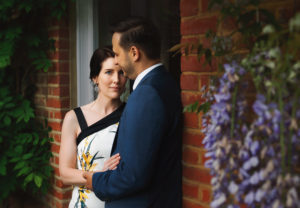
Deniz and I were married in May in a quiet, intimate ceremony attended only by our immediate family. On our wedding day, we both woke up with a hint of the flu! You know you’re marrying the right person when you’re both ill on your wedding day and it still turns out to be the best day ever.
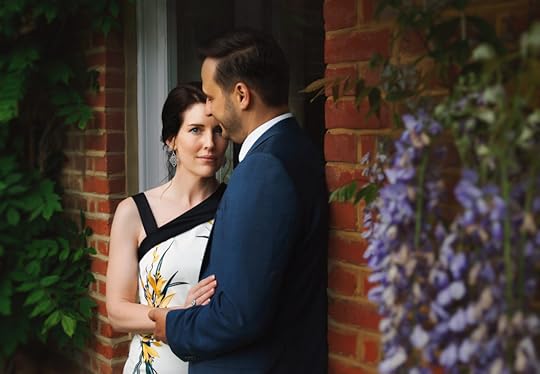
Because of immigration laws (I’m Canadian, Deniz is a Brit) we had less than a month to pull off our wedding, but we were both thrilled with the outcome. Even with the short notice our siblings and both sets of parents were able to make it. We took everyone to a local country villa called The Grove and treated them to dinner and a relaxing night in the quiet English countryside. The wisteria was blossoming, and if you’ve ever smelled it, you’ll understand why its one of my favourite plants.
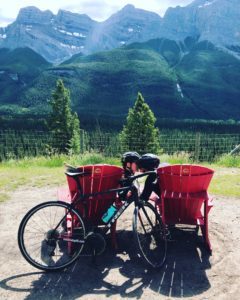 Cycling the Legacy Trail between Canmore & Banff.
We spent a lot of our spring and summer in Canada due to wanting to spend time with family, enjoy the Canadian Rockies over the short but glorious summer, and also in no small part due to the demands of the immigration process. Deniz headed back to London for work (he owns a pub called The Pearl & Feather) while I stayed with my folks to await my visa. By the time I received it, it had been three weeks since I’d seen Deniz and I was missing him terribly. I was on a plane as soon as possible and back in London by the beginning of August.
 Along the coastline of Zingaro
In September we enjoyed a 9 day honeymoon in Sicily. We flew into Catania and rented a car. The southern corner of Sicily boasts beautiful beaches as well as several Baroque towns, all protected as UNESCO world heritage sites. These towns are absolutely jaw dropping. We visited Ragusa, Noto, Modica, and Taormina. Taormina is known as the ‘jewel of the Mediterranean’, and while I’d agree its beautiful, it was far too touristy for our taste.
Ragusa is like visiting a movie set. It sits high on the clifftops and is kept as clean and manicured as a Disney park. Modica was rough but still beautiful and felt authentic and lived in. We didn’t feel like tourists there, just part of a bustling Sicilian town. Noto is quite brutish looking until you get to the very centre and then its like finding money in your pocket. The town centre is stunning and we had the best Sicilian food there!
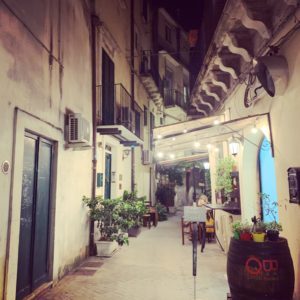 A quaint street in Modica
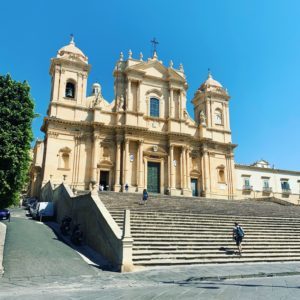 In the heart of Noto
For our last 5 days, we journeyed all the way across the island to the borders of a park called Zingaro. Our villa was less than a minute’s walk to the sea, and not far from an adorable little seaside town called Scopello. Here we snorkelled, enjoyed Sicilian pasta (they are famous for a pasta called busiate made with sardines, pine nuts, olive oil, and sometimes raisins), drank wine, and rented a boat to enjoy the coastline. We also took a day trip to a medieval town called Erice where it was terribly windy and a bit spooky, but gorgeous and unique. It’s tight cobbled walkways and old medieval buildings would make a great setting for a book or film! And if you’re thinking that I used the trip as an opportunity to do research for an upcoming series, you’d be absolutely right!
What’s next on the travel agenda? None other than Spain! More about that next time.
Moving on the publishing/authoring aspect of my life…good grief, what a whirlwind!
 My last solo launch was Salt & the Sisters which became a bestseller instantly and closed out The Siren’s Curse trilogy. What a great feeling to read over the reviews you left! It was bittersweet to finish with Targa and Mira and set them aside (for now) to focus on the next trilogy, which will have Georjayna from Born of Earth at its centre. Right now, all things fae are hot and trendy, so its a great time to get into this story.
If you love my Wise mythology, fairies, fae, and witches (that’s right, my first witchy character), then read or reread Born of Earth to get the most enjoyment out of this upcoming work. It promises to keep you on the edge of your seat, and yes its chock full of earthy magic, just what you readers who identify the most with fairies and Wise have been asking for. Unlike other launches where I publish a book as soon as its ready, with this trilogy I’ll be waiting until the first 2 books are ready to go and the 3rd already underway before rapid releasing them…starting in late November if all goes smoothly. Stay tuned for a title and cover reveal before the end of October!
I also released a co-authored project with a brilliant writer named Aaron D. Schneider who came on board to help me  conceptualize and write Born of Metal. I love how this story turned out and it too hit the bestseller lists during its first two weeks. The audiobook for Born of Metal has now been recorded and is in its final stages of prep. It was fun to pick out talent with a British accent for Ibby’s London-bred character and Tara-Louise Kaye has done a great job with the narration. The audiobook for Salt & Stone starts production next week, so there’s a lot of new releases slated for the end of 2019 and beginning of 2020.
Speaking of audiobooks, its a market that is growing in leaps and bounds! To help my audio stories get off to the best start possible, and to reward my VIPs, I started an Audiobook Review Team on Facebook where members can request promotional codes to redeem for my books for free! I’m still accepting new members but when we reach 500, we may close it down so it doesn’t get too big and unwieldy. I hope you join us there!
If you don’t have Facebook, don’t worry, you can join the email list to be notified as audiobook codes become available. Just email my VA Adriel Wiggins at admin@adrielwiggins.com
That’s all for this update, thanks so much for reading, not just my update but my books as well! I couldn’t do this without you.
Abby
A Honeymoon in Sicily and More Fall 2019 News!
It’s been a while since I’ve done an update newsletter so this is pretty overdue. 2018 was an exciting year, but 2019 is proving to be even more of a rollercoaster!
Deniz and I were married in May in a quiet, intimate ceremony attended only by our immediate family. On our wedding day, we both woke up with a hint of the flu! You know you’re marrying the right person when you’re both ill on your wedding day and it still turns out to be the best day ever.
Because of immigration laws (I’m Canadian, Deniz is a Brit) we had less than a month to pull off our wedding, but we were both thrilled with the outcome. Even with the short notice our siblings and both sets of parents were able to make it. We took everyone to a local country villa called The Grove and treated them to dinner and a relaxing night in the quiet English countryside. The wisteria was blossoming, and if you’ve ever smelled it, you’ll understand why its one of my favourite plants.
We spent a lot of our spring and summer in Canada due to wanting to spend time with family, enjoy the Canadian Rockies over the short but glorious summer, and also in no small part due to the demands of the immigration process. Deniz headed back to London for work (he owns a pub called The Pearl & Feather) while I stayed with my folks to await my visa. By the time I received it, it had been three weeks since I’d seen Deniz and I was missing him terribly. I was on a plane as soon as possible and back in London by the beginning of August.
Cycling the Legacy Trail between Canmore & Banff.Along the coastline of ZingaroIn September we enjoyed a 9 day honeymoon in Sicily. We flew into Catania and rented a car. The southern corner of Sicily boasts beautiful beaches as well as several Baroque towns, all protected as UNESCO world heritage sites. These towns are absolutely jaw dropping. We visited Ragusa, Noto, Modica, and Taormina. Taormina is known as the ‘jewel of the Mediterranean’, and while I’d agree its beautiful, it was far too touristy for our taste.
Ragusa is like visiting a movie set. It sits high on the clifftops and is kept as clean and manicured as a Disney park. Modica was rough but still beautiful and felt authentic and lived in. We didn’t feel like tourists there, just part of a bustling Sicilian town. Noto is quite brutish looking until you get to the very centre and then its like finding money in your pocket. The town centre is stunning and we had the best Sicilian food there!
A quaint street in ModicaIn the heart of NotoFor our last 5 days, we journeyed all the way across the island to the borders of a park called Zingaro. Our villa was less than a minute’s walk to the sea, and not far from an adorable little seaside town called Scopello. Here we snorkelled, enjoyed Sicilian pasta (they are famous for a pasta called busiate made with sardines, pine nuts, olive oil, and sometimes raisins), drank wine, and rented a boat to enjoy the coastline. We also took a day trip to a medieval town called Erice where it was terribly windy and a bit spooky, but gorgeous and unique. It’s tight cobbled walkways and old medieval buildings would make a great setting for a book or film! And if you’re thinking that I used the trip as an opportunity to do research for an upcoming series, you’d be absolutely right!
What’s next on the travel agenda? None other than Spain! More about that next time.
Moving on the publishing/authoring aspect of my life…good grief, what a whirlwind!
My last solo launch was Salt & the Sisters which became a bestseller instantly and closed out The Siren’s Curse trilogy. What a great feeling to read over the reviews you left! It was bittersweet to finish with Targa and Mira and set them aside (for now) to focus on the next trilogy, which will have Georjayna from Born of Earth at its centre. Right now, all things fae are hot and trendy, so its a great time to get into this story.
If you love my Wise mythology, fairies, fae, and witches (that’s right, my first witchy character), then read or reread Born of Earth to get the most enjoyment out of this upcoming work. It promises to keep you on the edge of your seat, and yes its chock full of earthy magic, just what you readers who identify the most with fairies and Wise have been asking for. Unlike other launches where I publish a book as soon as its ready, with this trilogy I’ll be waiting until the first 2 books are ready to go and the 3rd already underway before rapid releasing them…starting in late November if all goes smoothly. Stay tuned for a title and cover reveal before the end of October!
I also released a co-authored project with a brilliant writer named Aaron D. Schneider who came on board to help me conceptualize and write Born of Metal. I love how this story turned out and it too hit the bestseller lists during its first two weeks. The audiobook for Born of Metal has now been recorded and is in its final stages of prep. It was fun to pick out talent with a British accent for Ibby’s London-bred character and Tara-Louise Kaye has done a great job with the narration. The audiobook for Salt & Stone starts production next week, so there’s a lot of new releases slated for the end of 2019 and beginning of 2020.
Speaking of audiobooks, its a market that is growing in leaps and bounds! To help my audio stories get off to the best start possible, and to reward my VIPs, I started an Audiobook Review Team on Facebook where members can request promotional codes to redeem for my books for free! I’m still accepting new members but when we reach 500, we may close it down so it doesn’t get too big and unwieldy. I hope you join us there!
If you don’t have Facebook, don’t worry, you can join the email list to be notified as audiobook codes become available. Just email my VA Adriel Wiggins at admin@adrielwiggins.com
That’s all for this update, thanks so much for reading, not just my update but my books as well! I couldn’t do this without you.
Abby
August 23, 2019
Born of Metal, Prologue & Chapter One Sneak Peek (unedited)
Prologue
He didn’t like the desert.
A true Brit, Professor James Lowe would take murky English summer and foggy London night over the brain-cooking heat of the desert. In jolly ol’ England the sun was polite enough to step behind a curtain of clouds now and then, even in the humid summer. Not here. Here the sun was utterly merciless and uncomfortably close. Hot, yet dry. It was odd, the sensation of being slowly mummified alive. He wondered if his body had forgotten how to sweat.
He passed under the shadow of an immense sandstone idol, cleaning his spectacles for the hundredth time. The sun stabbed down through a wide fissure of the chamber ceiling, casting the stonework in sharp relief.
“Perhaps the sun wasn’t so abominable when people were still offering sacrifices to it.” He squinted up at the stone figure staring blankly down at him with an ibis’s sad eyes. The grunts and thuds of the excavation team echoed from the shrine.
“That fellow is Thoth, not Horus or Ra.” Lowe’s colleague, Prof Harold Weston was perpetually cheery in spite of the torturous desert conditions. “He was not a sky or sun god, but a god of knowledge and craftsmanship.”
Lowe stifled an irritated retort.
“Naturally,” Lowe was thankful his sunburn hid the blush rising in his cheeks. He wasn’t embarrassed by his seeming ignorance, or at least not much. Keeping up the facade was necessary to allay suspicion. Lowe was not an Egyptologist like Weston, but knew full well who the idol depicted, because he’d been secretly searching for the Sons of the Bronze Scroll for many years. It wouldn’t do for Weston to know his little secret, though it would have been delightful to knock the grotesquely optimistic grin off the man’s broad, tanned face.
“It appears your team found this after the soldiers.” Lowe dragged his gaze over the spent rifle casings and cigarettes stubs littering the floor.
“Yes, quite,” the archeologist chuckled as he continued down the hallway, scattering a few brass shells into the dark recesses beyond the sun’s light. “Seems the lads cracked the whole thing like an egg with a mortar blast and then used it as redoubt when the enemy counterattacked. Bloody awful show by the sound of it, but when the smoke cleared they were quick enough to let us in.”
Lowe had wondered at the dark stains he’d spied here and there. He hadn’t asked but made an assumption. Turned out he was right.
They were near the rear of the chamber and the split in the roof had narrowed to a final spike of sunlight. Weston and Lowe produced torches, and––with a pair of dull clicks––the space was bathed in orange light. Two large blocks of basalt jutted from the back wall, a narrow space left between them. In that gap, something glittered. Lowe forgot about the sun, the sand, and even Weston’s annoying good humor.
The two men shared a silent moment of mutual thrill, and then––like two schoolboys–– nearly raced to the gap. The light of their torches made glimmering shapes dance and twinkle. The gap was just large enough for a man to squeeze through sideways into the small chamber beyond.
Lowe began to squeeze through then checked himself, looking back at Weston. Hanging halfway out the rocky crevice he said, “I expect you’ve already been through?”
The archeologist shook his head. “Afraid not, ol’ boy.” Weston smiled sheepishly and patted his considerable belly. “I was afraid of damaging the site. I studied what I could from here.”
“And?” Lowe grunted as he wriggled deeper.
“It’s not ancient Egyptian or anything of that sort, and that places it firmly outside of my realm of expertise.” Weston shrugged. “I contacted some mutual friends, and––learning you were in Alexandria––thought what a capital opportunity. A scholar of multiple Near Eastern peoples and artifacts.”
Lowe felt a little guilty then for what little value he’d placed on Weston. At the very least the man was humble enough to know when to get help, and that was more than many learned men could manage.
“I can’t thank you enough,” Lowe muttered abashedly, “but, you should be the first…”
Lowe’s voice tapered off as Weston’s head wagged good-naturedly. “Not at all.” He waved his free hand before patting his round stomach with another chuckle. “Go on ahead. My reputation would be in tatters if I got stuck.”
Lowe didn’t need further prompting.
It was an awfully tight fit, as it turned out. More than once he felt a flutter of near-panic. He was far thinner than Weston but still lost more than one button in the journey. With a final gasp, he was through.
The room was pitch black except where the light of the torch fell, and for a long moment he just stood with that light pooling around his feet.
“Steady,” Lowe muttered quietly, bracing himself.
Years of searching hung on this moment.
Weston’s voice drifted in from the outer chamber as a hoarse whisper. The flash of his torch wove in and out of view.
“Are you through?”
Lowe let out a low breath before calling over his shoulder. “I’m through, and no worse for wear.”
“What do you see?”
The weight of the question settled on him like a lead blanket as he raised the beam of his torch. Inch by inch, the light revealed an immense bas relief worked in bronze, silver, and gold. Part diorama, part historical record, its lines and symmetries were distinctly Sumerian. The entire relief was framed in an amalgam of cuneiform and heiroglyph he’d never seen before.
Centering the entire edifice was a simple abstract recreation of an engraved scroll. Lowe’s fingers ran across the smooth contours of the raise lines, depressing a section here and there. There was a deep thump and a soft rumbling sound.
“Lowe!” Weston’s voice was shrill. “What do you see?”
The bas relief began to shift and rearrange. A smile spread across his face. As the the stone moved aside to reveal a small pocket, Lowe’s hand slipped inside and retrieved a small item wrapped in tattered cloth. Unwrapping it carefully revealed 4 thick rings welded together side by side to form a gauntlet.
“The answer,” he whispered. “The answer to all the riddles.”
Chapter One
I checked the status icon next to Uncle Irshad’s smiling face. Grey; inactive.
I gave a long sputtering sigh and sank back into what passed for my loveseat, fingers tightening around a cup of cooling tea.
“No news is good news.” But I hated the patronizing words as soon as I said them.
For Uncle Irshad Bashir––like so many others in Sudan––no news could just as easily mean something truly terrible. Militias, famine, and plague, had taken more than one could imagine from so many people there in the homeland of my parents. Though Uncle Iry was always smiling during our chats, even he couldn’t pretend that things weren’t bad. After all, it was why my parents left.
The older I got the more I marvelled at my parent’s bravery. Leaving Sudan and everything they knew in the hope of a better life for themselves and their unborn child (that’d be yours truly) took a megaton of faith and guts.
Glaring at the icon, I narrowed my eyes and loosed a telepathic request that he come online. The grey disc sat there in mute rebellion. I gave up in disgust and checked the time. Twenty past one in the morning. I groaned.
Tomorrow is going to be the utter pits.
I should’ve gone to bed hours ago but I wouldn’t sleep well unless I knew Uncle Iry was alright. I didn’t dare hope he’d gotten hired, but maybe that was because I was trying not to think about work. My gaze wandered across my tiny flat. My work jacket hung on a peg beside my bed. My smiling face grinned from the ID badge clipped to the lapel.
Bashir, Ibukun
Collections
British Museum
A better life for you, Ibby, my mother had said one night. A better life, where you can grow up without fear of bad men with guns.
“You never met, Adrian Shelton, ‘um,” I muttered, using the Arabic for mom. “There are times I’d rather face bad men with guns.”
My gaze roved past the grey icon before settling on the pinched window whose view revealed only the wall of the neighbouring building.
I wasn’t serious, of course, but my supervisor was not to be trifled with. Adrian Shelton was a demanding and critical man. He seemed to take a peculiar satisfaction in scrutinizing everything I did. I had little option but to adopt the old stiff upper lip. I didn’t only need the pitiful pay-check, the internship was the best shot I had in getting a real job once I graduated university. My whole future hung on making Dr. Shelton happy. I wasn’t convinced the man even knew how to be happy.
More important even than my future was my uncle’s life, which depended on my success. Every day he remained in Sudan was another day his life was at risk. Putting an end to that risk meant we needed money. Money I could earn if I finally got a good paying job, ideally (if I could dare to dream) with the Museum of Natural History.
I swallowed another sad sigh and got up with my now cold cup of tea. Hopping over a pile of folded laundry on my way to the countertop (which equalled the whole of my kitchenette) I turned on the electric kettle and stared at the red light as the contraption began to rumble and hiss.
Like tires on wet streets. Like that night.
I wrapped my arms around my chest reflexively as the thought rocked me. Nearly nine months had passed since a lorry had taken a wet street corner too fast, sending both my parents to an early grave. They’d gone out to celebrate my mother getting a job as a nurse, the very occupation she’d had for years in Sudan before coming to London. It had taken her nearly two decades.
My father had known my mother wanted to tell me the news herself, but when I’d called he couldn’t help himself. He’d blurted, “She got it, Ibby! She got the job!” He’d apologized to my mother immediately afterward and handed the phone to her, but she was too happy to let his outburst spoil things. My father was like my uncle, ready smiles and easy laughs, a man who wore his big heart on his sleeve. Mother was softer, quieter, yet somehow stronger for it. “Yes, Ibby,” she said in her low, smooth voice. “I’m a nurse again.”
It was one of the last things my mother ever said to me. That and their plans to bring my Uncle Iry to the UK, with money from the new job.
Now I was Uncle Iry’s best hope. His only hope.
Still hugging myself, I glanced at the laptop screen. My tired gaze skipped over the status icon.
Everything snapped into focus when it flashed.
Green: active.
The kettle forgotten, I vaulted over the laundry, dodged a cast off pair of shoes and lunged for the laptop. Jamming the headset into place with one hand, I frantically worked the mouse with the other. Uncle Iry had to pay for each minute he was online at a small internet cafe, so every second was precious.
The status bar showed a connection and my feet did a little dance of joy.
A window popped up and a dark, bare scalp and forehead lurked beneath a view of ceiling with peeling plaster and glaring fluorescent lights.
“Ibby? Are you there?” My uncle’s deep voice came through the headset, only a little distortion crackling over his accented words.
“Try pointing the camera down, a’am,” I suggested. My uncle had asked we always talk in English so he could practice, but I couldn’t help slipping a little Arabic in here and there.
The view in the chat window shifted, pixelating, then resolved into Irshad’s handsome face, complete with a well-kept beard and our family’s bronze eyes. As the screen sharpened, he wore a frown of concentration. I frowned at how hollow his cheeks looked and the deepening lines around his mouth and eyes. The age lines vanished when he smiled that immense grin. My heart ached. He reminded me of my father so much.
Every day costs him a little more.
“What’s a good girl like you doing up at a time like dis?” He sounded grave, but he didn’t put his smile away.
“I couldn’t sleep,” I lied, trying not to rub at my burning eyes. “I hoped you’d make an appearance. It’s been almost a week, a’am-mi.”
My uncle’s expression contrite, he nodded. “I’m sorry, Ibby, I should have got in touch, earlier. Things have been…difficult.”
I clenched my fist and ground my knuckles into my thigh in shame for guilting him. Uncle Iry––along with living in one of the most unsettled regions in Sudan––had to walk many miles for internet. He only had time in the late evenings because he was either looking for or doing what work he could find. Though he didn’t say it, he was exhausted.
“No, I’m sorry, it’s just-” I bit my lip, fighting to find words and trying to keep the tears at bay. The last thing my uncle needed was to spend his precious few minutes watching me weep. He’d endured enough of that when my parents first passed.
“But, I have good news Ibby! Very good news!”
Uncle Iry coming to the rescue even from thousands of miles away.
I forced my voice to steady. “Don’t keep me in suspense, don’t you know it’s late?”
He chuckled, his smile returning in force.
“A company is expanding and needs construction workers. Their foreman was looking for men with welding experience, so I have work for the next few months, possibly longer!”
This wasn’t good news, it was great news. Once upon a time my uncle and father had worked as automotive mechanics in a garage in Nyala. When my father expressed a hope to take his freshly pregnant bride to the UK, my uncle had used what little savings he’d had to make it happen. Shortly thereafter, the violence and the swelling tide of displaced peoples had driven him from Nyala, back to their home village in the scrublands. It took years for the brothers to reconnect after the chaos, and both of them had hardly been able to scrape together enough to live on. For years now, Uncle Iry has squeaked by, taking whatever work he could. A job like this, skilled and with potential for extended work, was very rare.
But something caught my attention, and a tremor of suspicion sparked in my belly.
“A’am, you said company, but what company? What are you building?”
Uncle Iry’s smile weakened a little and he wagged a finger across the screen. “Now, Ibby, remember, English only.”
Stalling. The twist in my stomach tightened into a knot. “A’am-mi…”
The smile shifted into an embarrassed grin that might have won me over if I hadn’t known what was coming next.
“Greater Nile Petrol. We are expanding some of the oil rigs.”
The knot became a weight that took out the bottom of my stomach. “Oh, Iry, no.” I sank into the loveseat.
“Ibby, this is still good news. It will be safe, I promise.”
Iry was an honest man but in this moment, he was lying. Not only were GNP notorious for their callous working conditions, but they were a favorite target for whatever band of armed thugs was roaming the area. He couldn’t promise me he’d be safe because in all of Sudan, oil rigs could be one of the most dangerous places he could be.
There was no stopping the tears welling in my eyes this time.
“I know it is scary, Ibby, but if I’m kept on I’m that much closer to rejoining my family.”
He meant me. The brutality of life in Sudan had taken everything from us.
I tried to shove away the thoughts, the guilt, the wishes, but they came in like a flood. It was beyond unfair. It was utterly cruel, and I was powerless. Nothing I could say, nothing I could do was going to keep him from those oil rigs, because nothing mattered as much to either of us as being together.
Crying wasn’t going to help. Uncle Iry needed me to be strong, no matter what. I brushed away my tears and smoothed out my voice. “And you’ll be that much closer to a complimentary tour of the Natural History Museum given by yours truly, where I’ll soon be working.”
The last words caught in my throat but I forced them out, a bright promise I’d do anything to keep.
Uncle Iry’s brilliant smile was worth it. “I can’t wait for that day, Ibby.”
March 12, 2019
A Teaser: Salt & the Sovereign, The Siren’s Curse, Book 2

Deep in the ocean, a rivalry rages. Can one siren’s song turn the tides of hatred?
After witnessing senseless murder, Bel vows to end her mother’s tyrannical reign. But as a young mermaid, she has no choice but to spend multiple mating cycles on dry land before she can qualify for the crown. As she strives to capture a man’s heart, the underwater realm flows with the blood of the queen’s enemies…
Every moment wrapped in the strong arms of her human mate, Bel risks the madness of the siren’s curse. And if she doesn’t return to the sea soon, she’ll lose her memories and her chance to cure the centuries-old feud. If fixing the deadly conflict is even possible…
Can Bel claim the throne before her mind and the kingdom fall to ruin?
I hope you enjoy this sneak peek of Salt & the Sovereign. I’ve recorded an audio-reading, read by yours truly, but I’m not a professional so please forgive any mistakes.
Snippet from Salt & the Sovereign
https://www.alknorrbooks.com/wp-content/uploads/2019/03/StSovereign-Snippet-from-Chapter-1.m4a
Everyone called my mother Polly. It was a name for sweet young girls, kind old ladies with knitting nestled on their laps, or clever feathered pets from tropical countries. I remember thinking from a very young age how much the name did not suit the imposing character and visage of Polly Grant.
At six feet tall and with eyes so dark they appeared black, my mother was difficult to miss in a crowd. When she spoke, her words came out with an authority that convinced all those within hearing range she was a woman not be tested. She wore her long dark hair in a high circular braid, like a crown, which only added to the air of austere royalty about her.
Standing on the platform at King’s Cross station in London, she did not hold my hand, but instead rested her own heavy one on my shoulder. The suffocating weight and the heat of it made me feel like I was being slowly crushed into the concrete. I wanted to push her hand off and take a deep breath but I dared not. Polly was swift to quell rebellious behavior.
A short elderly man in a black bowler stood a few feet away and to the right of me. Holding a newspaper in his hands, his face was not visible behind the pages, just grey tufts of hair curling out from under the brim of his hat. I stared at him, waiting for him to move the newspaper so I could see what he looked like. Waiting for trains was boring.
I was five. Looking up at my mother was like looking up at a giant. She was gazing off to the left, still as stone, her dark eyes trained on the tracks in the direction our train would arrive from. Her hand seemed to grow heavier by the moment.
Sending my right foot out to the side, I slowly moved away from my mother, just enough to begin to slide out from under her oppressive grasp.
“Do not wander, Bel,” she said quietly, not looking down at me. But she dropped her hand, and that was all I wanted. I took a deep inhale, relieved.
“No, Mama.” Reaching into the pocket of my wool coat, I pulled out a piece of crinkled paper. “Just putting this wrapper in the bin.” She cast me a brief glance but didn’t reply, and returned to her sentinel stance. I had learned to keep little bits of trash in my pocket for just this reason––small planned escapes of the kind only children reveled in.
Stepping back and turning, I scanned the station for a garbage receptacle. There were only a few passengers on the platform, since it was just after lunch on a week day. I spotted the bin and made my way over, walking slowly and quietly, because only unruly and disobedient children ran and screamed on train platforms and on roads and in the parks.
Savoring my bit of freedom, I took my time, tossed the wrapper and watched it fall. When I returned to the platform, I made sure Polly could see where I was, but I didn’t return to her side right away. I stood to the side a little, watching the old man reading the paper.
Some sixth sense told him he was being watched. His gaze finally dropped to the little girl in the blue woolen coat––me. I was impressed with his thick white moustache. The moustache was curled up at the ends, like a small set of horns. We made eye contact. His moustache lifted and his pink cheeks rounded. The corners of his eyes crinkled.
I smiled too, drawn to his sparkling eyes and kind expression. The full grown human male was captivating to me, since I’d interacted with so few of them. Not very many people looked at me the way he was looking at me––like he really saw me. Polly drew all attention to herself, and I didn’t mind. Sometimes I felt like a small insect flying low to the ground, busy and invisible.
The old man glanced at my mother and back at me. “You must have gotten your eyes from your father,” he said. “So blue. Like the sky, or a tropical sea.”
I didn’t know what to say to this. My father was not a part of my life and I had no memories of him. I knew other children had fathers of course, but Polly (as she liked to remind me) was enough parent to fulfill the role of both. I had never questioned the source of my eye color before that moment. The idea of getting some feature of mine from my father had never occurred to me. It was true, my eyes were very different from my mother’s. We had the same dark hair, the same white skin, and we were both slender, but her eyes were dark and round, while mine were bright and tilted up a little at the outer corners. That my eyes were different from my mother’s had never before been pointed out to me, and it was a moment that changed something. It was a moment of growing up, of questioning, of realization. One’s features were inherited, not given randomly as if by magic, but bequeathed.
“Where are you going?” the kind man asked, and I liked his voice. It was gentle and soft, and he asked me this question as though he knew that if he said it too loudly it would alert Polly and our interaction would be over.
“To the seaside,” I said, just as quietly. “Where are you going?”
“Bel,” my mother said sharply, looking over. She snapped her gloved fingers and pointed at the ground beside her.
Slowly, a little sheepishly, I walked over to my place and my eyes shuttered as the weight of her hand descended on my shoulder once again. The stranger watched this, his eyes on my face. Somehow he knew better than to answer my question. But he watched us until my mother’s gaze turned away from him again, returning to the tracks. A whistle sounded in the distance.
I watched as the old man released one hand from the newspaper, reached into his jacket pocket and pull out a slip of paper. He held it between two fingers so I could see his train ticket. The letters spelled ‘Cornwall’ on the billet. He winked and his moustache lifted again. Me too, he mouthed.
I never saw the man again, but he’d given me something to ponder.
Some time later, as the train chugged its way across the rolling green moorlands, I was given a sandwich from Polly’s bag. After I had eaten it, she took the kerchief it had been wrapped in, scattered the crumbs on the floor of the carriage and put it back in her bag. She’d eaten as well and seemed relaxed, even relieved. It was as good a moment as I was going to get.
“Mama, why do we have different eyes?”
“Because you were born that way,” she replied quickly.
I went back to staring out at the passing green, disappointed. But this was the best I was likely to get from Polly. It was not important for children to know why, that privilege was reserved for adults only. And I supposed, that one day when I got older, I would understand a lot more, too.
We arrived in Brighton to grey skies and drizzle. Stepping down from the train I took as deep a breath of the sea air as I could hold in my little lungs. The salty humid air of the coast thrilled me to my very core. Though I knew better than to ask what we were doing here, I knew it had something to do with the ocean, and something to do with a recent event in my life that Polly referred to as my salt-birth.
Only a few weeks earlier, Polly had taken me to a place outside of London called Allhallows. It was an overnight trip, like the ones before it, and always to the same empty beach. I knew what to expect. Mama and I were to go swimming in the ocean together, under the cover of darkness, and away from the gas lamps of civilization. During these swims, Polly would lie in the shallow water of the beach, watching me play. I delighted in the way the water felt on my skin and the sand felt beneath my feet and between my toes. She simply watched me, calmly, patiently, and without explanation.
At Allhallows, I expected the same sort of delightful evening swim. These little outings had become my favorite thing, and though Polly never told me when she’d planned one for us, they’d become frequent. I learned that there was never a night swim that far away.
But something different happened at Allhallows––I transformed.
Though the transformation felt right and even good, I was frightened by what was happening to me. Polly had never shown me her true nature, so I didn’t understand my own. But when she saw the way the muscle and bones of my legs were knitting together, the way the skin was changing to scales, she slid over in the water.
“Just relax, Bel,” she whispered. “You’re becoming what you were born to be.”
Grab Your Copy of Salt & the Sovereign here.
January 18, 2019
Excerpt From Salt & the Sovereign, The Siren’s Curse, Book 2
My current Work In Progress is the second book in The Siren’s Curse series, which is an extension of The Elemental Origins Series. Salt & the Sovereign explores one of the big twists dropped on readers at the conclusion of Salt & Stone, which I shall not divulge here so I don’t accidentally spoil anything for readers who haven’t yet read Salt & Stone or the other elemental stories.
Enjoy this (unedited) very first sneak peek and excerpt! To give a little context, this excerpt is taken from a point in the story where Sybellen has become trapped inside a shallow wreck. At the time of becoming trapped, she was in a state where her human logic was depressed and her animal instincts heightened.
This title is set right now to release in April, but I’m keeping a good pace and hope to release it sooner. To be the first to learn about new releases, either join my newsletter, or my VIP Reader Lounge on Facebook (don’t forget to answer the 3 questions because those who don’t, do not get access). Enjoy!
Excerpt:
To this day, I could not tell you how much time passed as I swam back and forth, slept, and lived in the hold of that old wreck. But I’ll never forget the day I was discovered by humans who’d come into my territory (for by that time, I thought of the tiny space which had become my home as ‘my territory’). Looking back––and once I’d been freed and returned to myself again––this territorialism I shifted into may have helped me understand Apollyona’s determination to keep the Atlanteans from sharing our resources, for if any creature––human or otherwise––had made an attempt to fish near my wreck, I was overcome by a fierce desire to protect my livelihood.
I did not process this in any logical way, for I had become very much like the other creatures of the ocean who survive on pure instinct.
I heard them before I saw them.
Men’s voices. My ears told me they were relaxed––laughter and levity in their tones. I retreated to the darkest shadow of the wreck and became still, the sharp stones and coral of the reef pressing into my back. Seaweed cradled me, swaying gently to cover me. I became still, only listening and breathing, my gills moving minimally as I drew water through them.
When the voices drew close and the splashing sound of feet wading through the rocky shallows told me they were drawing nearer to my hiding place, my heartbeat accelerated. The pace of my breathing increased and my hands tightened into fists, the now long and sharp nails of my fingers cutting into my palms. I could see nothing but shadows moving across the cracks in the hull. I was afraid, afraid but also curious, and these two battled inside me, for I wanted to get a look at my enemy, determine whether they were larger and stronger than me.
Staying in the darkest shadows, I inched my way along the hull to peek from a crack, my head breaking the surface. Through the soggy wooden slats, fuzzy with years of algae growth, I saw a pair of ankles. The voices had grown conversational. They were curious about the wreck––my wreck.
One of them dropped something into one of the larger cracks on the other end of the broken old ship. Silver flashed in the sun, passing through a small shoal of fish. Some part of my brain recognized the hook shaped metal. They were after my food.
Darting forward, my desire to stay hidden completely forgotten, I grasped the line and yanked. The shoal of fish darted in every direction and there was a cry of surprise from above as a rough wooden rod was pulled from its owner’s hands. The fishing rod flew toward the wreck, became wedged in the crack and snapped in two as I pulled the rest of the fishing kit into the water with a snarl.
Splashing sounds approached as the man who’d cried out called to his friends in excited tones. Three heads blocked out the sun at various points in the hull. There was silence as they squinted in at me, then hushed and excited chatter.
Nothing about their language was familiar to me, and their features and faces were barely visible with the morning sun at their backs.
I retreated to the seaweed-riddled shadows again, my fear returning.
One of the men left, leaving the other two to look in at me at intervals. As the sun moved across the sky more faces appeared, followed by more excited talking, but the energy seemed to change with the addition of a man who blocked out much more of the light than the others by means of a very large head.
There was a lot of movement then, splashing footsteps around the shallowest parts, the coming and going of shadows and voices, the sounds of work being done.
I hissed, startled when they dumped a bucket of water between the planks and it splashed overhead. It was the first of many. Confused and frightened, I pressed against the furthest depths of the hull as the splashes became frequent and steady. Bucket after bucket was deposited into the wreck without ceasing. Voices came and went and sometimes the men laughed, other times they were quiet, but the coming and going of feet on the coral and splashing steps through the shallows did not cease as the shadows continued to grow sharp, the sun now directly overhead.
Then the water began to change. Slowly, the texture, taste and tone of the water I was breathing was being transformed.
My fear began to dissipate, and I wondered what they were doing. Curiosity drew me from the depths to taste and smell the water.
Sweet water, tasting of cold stones and minerals had begun to permeate the briny seawater. A current moved through my wreck, driven by the repeated pouring of water into the top, which brushed over my skin and tail, and slowly pressed the saltwater out through the cracks in the wreck’s frame.
The intrusion of sweet water continued for the rest of the day and all night. Many men came and went, the voices changed as they took turns at this chore, talking amongst themselves until dark, and then working quietly and slowly, stepping carefully with bare feet among the sharp shallows.
I became conscious of my own thoughts and a dawning wonder began to overtake me. Coupled with the wonder was a panic that I’d been seen by humans in my siren form. But as time and freshwater wore away the animal instinct, pushing it to the back of my brain, I recognized that there was nothing to be done about being discovered, and these men were actually rescuing me. Further to this deduction, I realized with no small amount of exasperation that I had had the power to free myself from the wreck the entire time I’d been trapped, and had only been lacking the human’s intelligence required to conceive of a plan and execute it.
Another startlingly logical question struck my mind. How did these men know that sweet water would save me? They had to be aware of the existence of mermaids already. Could it be that our world was not as secret as we thought it was?
Drifting in that empty and ruined hull, as more and more human thoughts and emotions forming in my psyche, a whispered name came from all around, pressing in on me like a blanket.
Bel.
Startled, my head jerked up and my ears perked. Had I imagined it? My name passed by my ears again like a warm current.
Bel.
“Yes?” It took me a moment to realize the ocean was speaking to me. No, not speaking to me. Naming me.
Sybellen.
My siren name settled over my shoulders like a cloak, familiar and special and mine. I became so excited I began to swim in loops and figure-eights, tight ones, which I realize now probably made it appear to my rescuers as though I was having a sudden panic attack. Grinning from ear to ear and full of grateful joy that I had finally acquired my siren name, the desire to share it with someone, anyone, overcame me.
I broke the surface and said my name aloud, it bounced off the hull and echoed around me, and for the first time since I had become trapped in that wreck, my human lungs filled with oxygen. In an aching and violent reaction, I began to cough. The tickling in my throat and the pain as my lungs expanded seized control of my body.
Alarmed, the men reacted by moving quickly.
A great cracking noise startled me back underwater. The coughing ceased and the pain in my chest eased as I breathed through my gills again, but by then the oxygen in my lungs had returned me to a near fully human mind.
I watched with curiosity as one of the men pried lose several planks from the hull, making a hole large enough for me to pass through. The crack and groan of soggy wood and rusty nails giving way filled my hollow. Fear was nonsensical. These men were freeing me, and even if they had some malignant ulterior motive for doing so, I did not need to be frightened of them. I could make them do whatever I wished with my siren voice.
The man with the abnormally large head peered into the hole hole and then reached in a hand. “No one will hurt you,” he said, with an accent I had never heard before. He smiled and his eyes crinkled, transforming his face into something beautiful. Early morning sun passed behind his hat, giving his whole countenance a corona of warm yellow light.
My heart rang like a bell and the vibration ran along my spine and to the very ends of my fingertips and tail.
My face broke the surface and I looked up into the eyes of the man who owned the voice. I realized his abnormally large head only looked so because of the hat he wore. None of the other men wore hats. Somehow, this man was set apart from them.
“You’re free.” He continued to smile and beckon to me. My heart felt as though it had tripled in size and become soft and juicy, like ripe summer fruit. “No one will hurt you. I’ve forbidden it.”
“Sybellen,” I croaked from a raw throat.
His brows drew together momentarily. “I beg your pardon?”
“My name is Sybellen.”
He didn’t say anything for a time, and I didn’t know if it was because he was startled that I’d spoken, or startled that I’d introduced myself.
He gave a sudden and delighted chuckle. “You speak English! My great-uncle was right.”
I didn’t process this phrase, which was so oddly out of place, because my eyes were taking in his features hungrily. The attraction I felt to him was steadily warming my body, right through my soul. His proportions, symmetry, frame, features, kind expression––his every detail screamed at me that he was perfect for fathering my next siren child.
I reached up a hand, and even though help was the last thing I needed, I allowed him to pull me from the wreck. As I passed out of the water, I shed my mermaid’s tail and crawled from the wreck with long, pale woman’s legs. Naked as the day I was born, and about as slimy. I got to my feet.
Only then did I see the crowd of men who had gathered to watch.
The man in the hat spoke to one of them in a foreign tongue. The fellow produced a lump of dingy white cloth, which was taken and then handed to me.
Standing there in the shallows with the sharp stones cutting into the soles of my newly formed feet, I stared at the cloth stupidly.
“It’s all we have on short notice,” the man in the hat said, shifting from one leg to the other to move between me and the staring crowd.
I looked into his face, quizzically.
“Here, let me help you.” His voice was so gentle, and it made my insides vibrate in a way nothing else had (at least that I could remember at the time).
He shook out the cloth and looped it over my head. It was a shirt to cover my naked body, and reminded me that humans were ashamed to be naked. I put my arms through the billowy sleeves and the shirt––smelling of sweat and beer––fell to just above my knees. The gaping collar fell over one shoulder, and the man in the hat laced up the thong at the chest to tighten it. His fingers brushed my skin and nearly set it to flaming.
My recent state of affairs––trapped in the wreck, salt-flush, living on instinct alone––was not really something I felt the need to process any further. All of my concentration was now centred around this man, and I had already begun to think of him as mine.