Ellwyn Autumn's Blog, page 24
October 17, 2018
Interview With Author William Howard
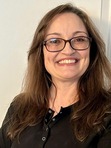
 Photo courtesy of: WIlliam Howard
William Howard and I have known each other for a few years. We belong to the same writer's group and sometimes we share a table at author events. William is a warm and caring person with a wonderful imagination. He pays special attention to his readers and is eager to speak with them about his fantasy novel or any fantastical story.
He loves words, world building, and creating colorful characters.
Now that I've introduced you to William, lets' get to know him a little better.
 Pin Me Please!
Hello, William, welcome to Lemon Drop Literary.Thank you for having me.
What inspired you to be a writer?I had a few good school friends when I was growing up in Northeast Philadelphia but there were many times I played alone in my room. My sister and I were latch-key children so my parents preferred that we remain close to home.
When I came home from school, I finished my homework quickly since my elementary school career occurred in the 70s long before the era of lengthy homework assignments.
After completing my work, I would play with my action figures, read, and watch television until my parents came home.
During these hours of play; something I believe is a luxury that has sadly become unavailable to the current generation, I would make up stories for my mixed cast of Star Trek, Battlestar Galactica, and Star Wars action figures.
When I entered my early teens, I wrote some of these stories down as fan fiction. In addition, I discovered that my fertile imagination, which my father referred to as my excessive daydreaming, produced original stories about werewolves, robots, Martians, and superheroes.
Is writing your full-time profession?Sadly, I am still in the process of, hopefully, becoming an overnight success which someone has told me takes a great number of years.
I received a glimmer of hope when my sister spoke to Susan Stoker about my writing. When my sister informed Ms. Stoker that I was a writer, she told my sister I was on the right track, not to give up my day job, and to take advantage of every opportunity to write in my spare time.
For now, I work as a Special Educator in a preschool classroom for the special needs agency, Northeast Growth and Development.
 Photo courtesy of: William Howard
How long have you been writing?I've been making up stories since I was 8 years old.
My mother gave me her manual typewriter when I was 13; after my father purchased an electric typewriter for the household. On this old typewriter, I started a few novels I came close to finishing.
It wasn’t until I joined the Neshaminy Writers Group in 2015 that I found the determination and persistence to finish my first novel.
 Photo courtesy of: William Howard
How many books have you written?I have written a single novel, The Eye of Hermes, and hope to write additional novels within that same literary universe.
Which genre do you write for?
Fantasy
What do you find most challenging about writing for this genre?
Making the characters believable and sympathetic amid fantastical events occurring around them.
What are you working on now?
I am working on a novel entitled Marigold, which takes place in the not-too-distant future. It‘s about an android named, Marigold, who has been sheltered her entire life. She wakes one day to find that her creator has disappeared, and that someone has accused her of a murder she didn’t commit.
 Photo courtesy of: William Howard
What has been your most rewarding experience since publishing your work?Having a small slice of celebrity as a published novelist; especially when people ask me, “did you write this book?” or “are you the author?”
However, connecting with other published authors, as well as aspiring authors, and learning about their literary journey has been even more rewarding.
What advice would you give to authors just starting out?
Keep writing every day. Even if you only write a page or two, a paragraph, or a single sentence. It will bring you that much closer to having a finished story.
Also, always care a notebook with you or use the note section on your phone because you never know when inspiration will strike.
Is there anything else you'd like your readers to know about you?
If you meet me in person, I might inadvertently give you detailed information about my literary universe. I’ve noticed that when this occurs I suddenly see a confused look, come over a readers’ face. If this occurs, my advice is to provide the complement, “that sounds extremely interesting,” and purchase one of my novels so you can find out more fully what I was talking about.
What message are you sharing in your books?Tolerance. There are people in this world who don’t look like you, don’t think like you, and may live their lives in a way completely different from you, but that doesn’t change the fact that they are as human and imperfect as anyone of us.
I hope through my literary work people might stop to think, that given how brief our time on Earth is, it is more beneficial to celebrate the commonalities among others rather than searching out reasons to hate complete strangers.
 Photo courtesy of: William Howard
Who are your favorite authors?I am a huge fan of Frank Herbert, William S. Burroughs, Douglas Adams, Ray Bradbury, Isaac Asimov, Diana Gabaldon and Terry Pratchett.
What are your favorite movies, TV shows?
I gave up on TV because all the stuff I like never gets renewed. Still heartbroken over Timeless not getting renewed for a 3rd season.
But if I was locked in a windowless room and had a remote control surgically implanted in my hand — you see how my mind works — then I’d probably watch The Walking Dead, Timeless, Maniac, Lost in Space(1967 and 2018), the X-Files, Star Trek and Dr. Who.
When you aren't writing where can we find you?
Thinking about what I will write next, but at my day job working with preschoolers with special needs.
What inspires you?
Random acts of humanity and kindness. Thinking about how we are such a small part of the universe, but also that it is a miracle we are here at all.
Do you have a new release coming out soon?
Hopefully, my new novel, Marigold: the Chlorophyll Chronicles, will becoming out in early 2019.
Do you have a website/Facebook page, etc?
Yes. My Facebook fan page is The Eye of Hermes: A Minerva Novel by William Howard, http://www.amazon.com/author/howardwilliam, http://montag34.wix.com/websitehttp://www.facebook.com/theeyeofhermesnovelhttp://montag34.wix.com/website www.amazon.com/author/howardwilliam www.barnesandnoble.com/theeyeofhermes
Where can we find your books?
Barnes and Noble.com, Amazon.com. Andorra Bookstore in New Hope, PA and Classic Books and Gifts in Trenton, NJ. If you ever get down to Savannah, GA, there are copies of my novel at the historic E. Shaver bookstore on Bull street.
Thank you, William, for spending time with us and sharing your story.
We wish you continued success and lots of luck in the future.
 Photo courtesy of: William Howard


October 8, 2018
Five Reasons To Read To Your Child
 Photo courtesy of: 2081671; courtesy of Pixabay
https://pixabay.com/en/child-fun-family-love-play-baby-3046494/
Learning to read is a skill every child must master to advance in school and in life. Over the years, many parents have asked me when they should begin reading to their child. My answer is always the same, at once.
I read to my children before they were born. I was a tad overzealous, but it helped me prepare for the traditional bedtime story.
After my kids were born, I read them simple board books and pointed to the pictures while identifying the objects on the page. I also shared family photos to support facial recognition, and the names associated with them.
Pin Me Please!As they grew, I made environmental print books from old cereal boxes, Dunkin' Donuts cartons and Burger King bags. Environmental print is the writing we see in our daily lives; examples include street signs and logos for products and stores.
Most children can "read" the STOP sign and the McDonald's or Wal-Mart logos. When your child does this applaud their efforts and nurture their growing skills by "reading" more environmental print together.
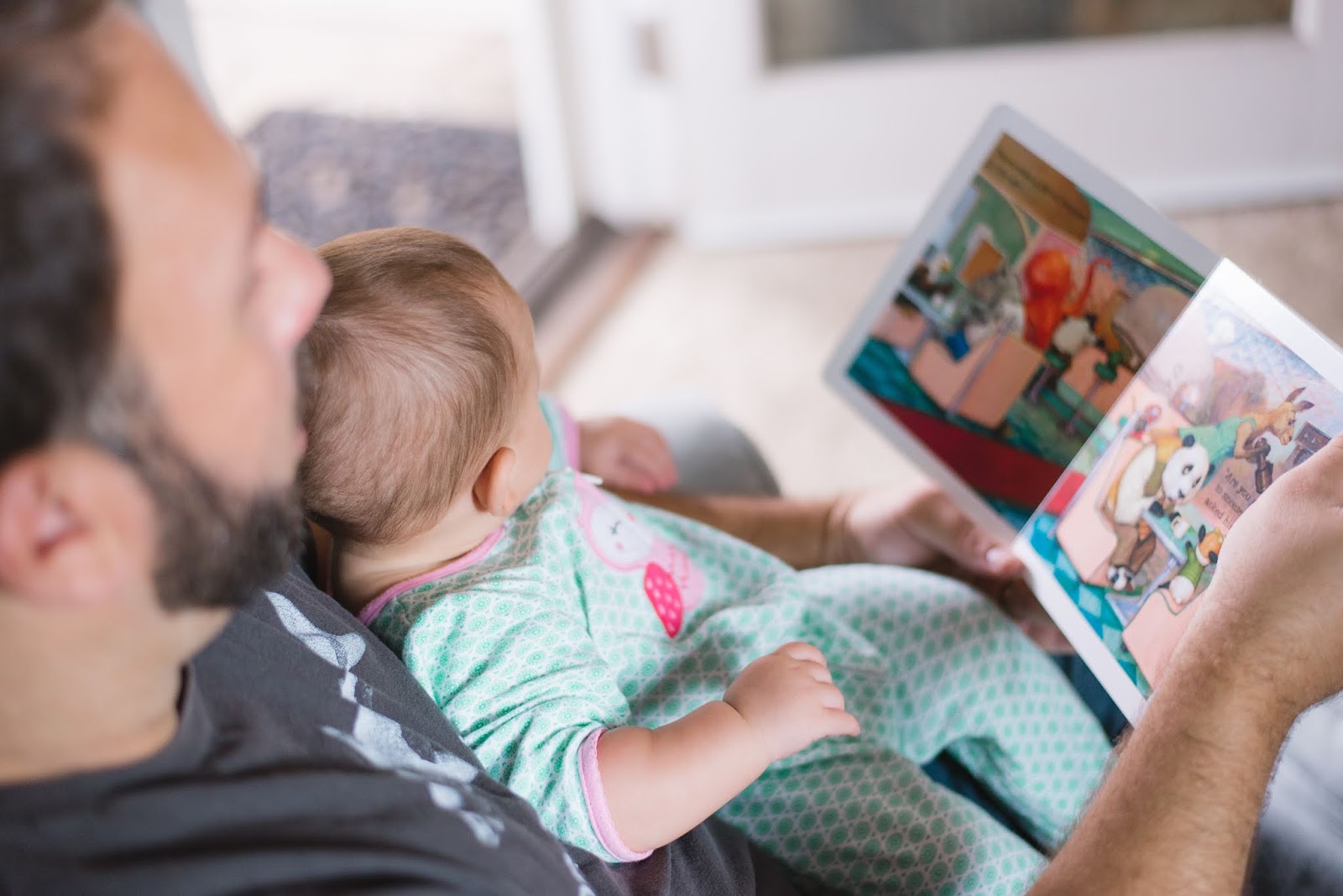 Photo courtesy of: Picsea; courtesy of: Unsplash
https://unsplash.com/photos/EQlTyDZRx7U
So, why should you read to your child?
1. It builds vocabulary.A well-rounded vocabulary is a precursor for reading achievement. Children with a wide vocabulary better comprehend stories read to them. This sets the stage for future independent reading.
The average two-year-old is expected to learn 50 words, compare that with a three-year-old who should know 200 words a year later, and you begin to understand why vocabulary development is so crucial. An excellent way to expand your child‘s vocabulary is to read, sing, and play.
2. It teaches fluency. Fluency is the skill of reading a text smoothly, accurately, and with a meaningful expression. When children listen to stories, they internalize the reader‘s inflection.
These vocal nuances teach children the expressions good readers need: like when to pause at a comma, when to stop at a period, and how to modulate their voices for question marks and exclamation points.
3. It develops a lifelong love of reading. Reading provides a safe atmosphere to discuss the topic of a book. During these conversations, parents can ask their children questions or engage in meaningful dialogue.
This interaction will strengthen a child's communication and comprehension skills. Ultimately, these positive moments will create pleasant memories and foster a confident attitude toward reading that will last.
4. It fosters writing development.Good readers make good writers. A youngster who listens to stories gains a strong awareness of the concepts of print.
Concepts of print are an elementary set of skills that beginning readers require and may include the following characteristics: distinguishing text from illustrations, demonstrating left-to-right directionality upon viewing a text, or identifying individual letters within a word.
Children who have these skills understand that print conveys a message that has meaning. They also comprehend the ideas of letter recognition and letter sounds. In tandem, these qualities help children learn to write.
5. It creates positive relationships.Reading is a wonderful way to bring people together. When children learn correct reading behaviors, they can listen to and enjoy stories in school.
After a large group read-aloud, my students flocked to the library and engaged in spirited conversations about the characters in the books I had read to them. Many classroom friendships began this way.
The joy and creativity that reading brought to my children and my students was a wonderful thing to witness. All it took was a little time, a little laughter, and lots and lots of books.
Books for young readers: Little Bear and His Chair by Claressa Swenson The Legend of Dust Bunnies by Michelle Eastman Smelly Cat: A Dog-Gone Picture Book A bout Adoption by Maria Ashworth Butters Comes Home by Claudette Melanson
The Butt Book by Artie Bennett Kamyla Chung and the Creepy-Crawlies by Ellwyn Autumn Gwendolyn and the Seeds of Destiny by Roy Sakelson
 Photo courtesy of: jutheanh; courtesy of: Pixabay
https://pixabay.com/en/boy-reading-book-glasses-books-921807/
What books do you read to your children?
October 7, 2018

October 6, 2018
Interview With Author J.P. Sterling
 Photo courtesy of: Patrick Fore; courtesy of: Unsplashhttps://unsplash.com/photos/0gkw_9fy0eQ?utm_source=unsplash&utm_medium=referral&utm_content=creditCopyText
J.P. Sterling and I took time this week to discuss her busy life and writing accomplishments. A resident of North Dakota, J.P. is a wife and the devoted mother of two children. One of her children's sensitivities inspired her to research and write a story about an exceptional little boy named Peter.
J.P. enjoys reading classic novels, eating dark chocolate, and drinking coffee.
Now that you’ve been introduced to J.P., let’s get to know a little more about her.
Please Pin Me!What inspired you to be a writer?Like most writers, it’s always been there. I was a huge day dreamer in school and always thinking of stories.
Is writing your full-time profession?Right now it is. I was an Integrative Nutritionist and a college teacher for years. I chose to stay home with my babies, so I write for therapy. For a little income, I do some freelance writing for nutrition blogs and doctors.
How long have you been writing?Since I learned to write.
Which genres do you write?I have a hard time classifying my stories. The books I have now are in-between young adult/literary fiction novels.
How many books have you written?I have two published, but I have notebooks and computers full of unfinished stories.
 Photo courtesy of: J.P. Sterling
What inspired you to write Ruby in the Water and Lily in the Stone?I always wanted to be a writer. I asked God to make me a writer, and the story came to me like a movie in my head. It wouldn’t stop playing until I wrote it down.
Is, Peter Arnold, the main character in your books based on a real-life person?You are the first person to ask me that. Great question. In a way, my son who is highly sensitive to many things in his environment inspired Peter. Many people saw these sensitivities as a hindrance and something I needed to change or “fix”.
Maybe it’s the poet in me, but I beneath these “hinderances” I saw talent. So, I wrote a story about a boy who turns his challenges into special gifts and talents.
 Photo courtesy of: J.P. Sterling
Will there be a third installment to the series? I strive to reinvent the wheel with my writing. I have two books plotted but my critique partners recommended not including them in the series because it changes the main character. So, I may do a spin off of those.
But I can see more of Peter’s story unfolding later. I let the stories play out in my head for a while so hopefully someday I can add that third one to expand on Peter’s journey. Right now, I’m at peace with where that series ended.
What has been your most rewarding experience since publishing your work?Hands-down meeting the great people. I never imagined how cool it would be to hear from readers who loved my story.
Educators and moms email me thanking me for writing it. It is unreal. I have met other great writers who offered great advice, and they are just awesome people. Writing has the best community.
What advice would you give to authors just starting out?Don’t get fixed on one idea and one path. There are lots of ways of doing things.
Is there anything else you'd like your readers to know about you?Just how much I appreciate them and love hearing from them.
What do you find most challenging about writing for your genre?Right now it’s getting discovered by readers. There are many great writers in my genre and so many books to choose from.
Do you have any hobbies?I usually mom it up all day. I home school my son by classical method and I am so in love with that. Classical education is a writer’s dream. I also have a baby.
As I mentioned before, I am a nutritionist, so I obsess about cooking real food. I spend way too much time researching supplements and natural health products.
What are your favorite books, movies, TV shows?I have little time for TV. Although I love me some PBS Masterpiece shows. I think the story telling is unlike any other I have ever seen.
Books – Many of my favorites are classics like Jane Eyre. Right now, I am loving Nancy Tillman books. I received one as a baby gift, and I enjoyed her simple writing and gorgeous pictures.
I know it’s meant for kids, but I leave it on the living room ottoman as art. The more I hang out with my kids at home the more childlike my heart has become so maybe that’s why I find it endearing.
What are you working on now?Officially I took a year off since I had a baby, but my brain never really stops. I’ve been thinking of middle grade books to plot, and a dozen other things.
Do you have a website/Facebook page? https://www.facebook.com/profile.php?id=100012533437339 HYPERLINK "https://www.facebook.com/profile.php?id=100012533437339 &ref=bookmarks"& HYPERLINK "https://www.facebook.com/profile.php?id=100012533437339&ref=bookmarks"ref=bookmarkshttp://www.jpsterlingauthor.com/
Speaking of the people, I want to credit a couple of the vendors I have worked with. I collaborated with Rachel Brandt, the AMAZING actress/voice-over artist who brought Ruby to life in an audio book. Her style is so original and clean, I cried when I heard many scenes. You can find that wherever audio books are sold.And THANK YOU, Ellwyn for sharing your platform!!!!!!!!!
You are very welcome, J.P. Thank you for spending time with us and sharing your story. We wish you lots of luck and continued success in the future!
Interview With Author Scott Washburn
 Photo courtesy of: Scott Washburn
When Scott Washburn agreed to do an interview with me, I was delighted and flattered. He is truly one of the finest authors I have ever met. His writing is dynamic, precise, and engaging.
His world building and character development flow with remarkable consistency that takes the reader on harrowing journeys replete with heroes, villains, and breathtaking descriptions.
I am so glad I've gotten to know him and been able to read his work (before it’s published). That’s one advantage of being in the same writer’s group with him.
If you meet Scott and he gives you advice, do what I do, sit up straight and pay close attention.
Now that you've been introduced to Scott, let's get to know a little more about this accomplished author.
Pin Me Please!Hello, Scott, and welcome to Lemon Drop Literary. Thank you for agreeing to do this interview.
Thank you for having me.
What inspired you to be a writer?Well, that’s a story in and of itself. I’m not one of these folks who say they’ve been writing since they were a child or that they always wanted to do it. I didn’t start to seriously write until 1999—when I was 44 years old.
But the fact was that I had been preparing to write for a long time before that—even though I didn’t realize it. I grew up in a house full of books. My parents and my older brothers were avid readers and there were books everywhere.
My mother read to me before I learned to read and once I’d learned, I read everything I could lay my hands on—which happened to mostly be science fiction, fantasy, and history books. I loved to read. I did a third grade book report on Robert Heinlein’s “Starship Troopers”.
Then, in college I stumbled across the game Dungeons & Dragons. It was brand new back then, and I quickly took on the role of a dungeon master—the person who runs the game and makes up the plot for the adventure.
This taught me the art of storytelling—again, without my realizing it. But after college I did not play D&D much anymore and my skills mostly languished. I wrote some short pieces; I was an avid wargamer and sometimes I would write accounts of some of the games I had played, often adding fictional embellishments; more unintended training.
The final step toward becoming a writer was when I entered graduate school, working on a master’s degree in military history. I had to write some lengthy papers for that and my advisor, Dr. Russell Weigley, was one of America’s top military historians and also a very good writer.
He insisted that my papers not only be well-researched, but well-written. I learned a lot from him. I got my MA and then went for my Ph.D. Why not? I worked for Temple University and the tuition was free.
But then something totally unexpected happened.
 Photo courtesy of: Scott Washburn
I got interested in an SF book series and found a group of fans on this brand-new Internet thing which had recently popped up. It was a great group of people (many of whom are still close friends). We discussed the books and did fan sorts of things (designing spaceships and such).
And since it was an ongoing book series, we speculated endlessly about what would happen in the next book. At the time, the heroine had been left in a terrible fix at the end of the last book and we were all dying to know what would happen next.
I had made up a sort of list of Things Which Need to Happen in the next book. But when the book finally came out, there were a number of things which had not been checked off my list. The story itself was fine, but in my opinion it had ended about three chapters too soon and left a LOT of loose ends.
So I stewed on this for a couple of weeks and then did something, which for me, was totally remarkable. I wrote the missing chapters. It was fan fiction, of course, a concept I was only vaguely aware of at that time.
A few weeks work and I had written 30,000 words, something I normally would have considered an enormous chore. I should add that were it not for the invention of personal computers and good word-processing software (something still relatively new at that point in time) I never would have even attempted it.
 Photo courtesy of: Scott Washnurn
Unlike many writers I have talked to, I never carry a note pad around with me. I have never written anything of consequence by hand—and I doubt I ever will. And typewriters? Forget it!
So, I had written my chapters and discovered two amazing things. First, I had really enjoyed it. At the time I was eye-deep in the Ph.D. program. I had just finished a very long and very challenging research paper and was experiencing serious burn-out. But this! I was writing stuff that I didn’t have to research (beyond having read the stories in the series). No footnotes, no bibliography. I could just make stuff up! What a concept!
The second thing I discovered was that I was pretty good at it. I shared what I had written with the other Internet fans and they all loved it. Or so they said. Honestly, it did seem pretty good.
Even reading it now, almost twenty years later it was not a bad piece of work. I had never thought I had any talent for writing. Perhaps I was wrong. Only one way to find out: write some more.
 Photo courtesy of: Scott Washburn
A quick word on fan fiction. Fan fic is a great way for a new writer to get some practice. It allows them to start in an established universe with established characters which allows them to concentrate on a plot without having to do a lot of world-building or character development.
Technically, of course, it is illegal as it does violate copyright. In practice, very few authors openly object to it. They just ignore it. If the fan fic writers are sensible, no one gets hurt and many benefit from it.
So I started writing more fan fiction. I had had an idea for a novel kicking around in my head for many years. It was nothing I ever intended to write, but I had hoped that somebody else would. When I realized that it would fit perfectly into a fan fiction story set in this other writer’s universe, I was off to the races.
I wrote an entire novel and then a second one. I went from using the original author’s characters to creating my own. By the time I had finished the second one, I was doing a large amount of world-building as well. Writing the fan fiction gave me all the tools I needed to do my own original stories. Oh, and it was also the end of my Ph.D. ambitions. I wanted to write far more than I wanted that Ph.D.
My fans (I had quite a few by then) told me I wrote well enough to get original stories published. So I started writing original novels. The rest is, as the saying goes, history.
Getting those novels actually published is another story and far too much for this overly long answer. Ellwyn, you will have to do another interview to get that out of me!
I'd love to!
Is writing your full-time profession?No, my full-time job is as an architectural designer (which is basically an architect who never got around to taking the tests and getting his professional license). I work at Temple University. But retirement is only a few years away and perhaps then I will become a full-time writer.
How long have you been writing?As I said, since 1999, so nineteen years.
How many books have you written?Including my fan fiction, I have fourteen finished novels. Six of them are currently in print with a publisher and two more have been self-published. I also have a number of short stories and novellas, four of them currently in print.
 Photo courtesy of: Scott Washburn
Which genres do you write for?Primarily science fiction, but a few fantasy stories as well. I suppose my Great Martian War series could be labeled as Alternate History as well as Science Fiction. What do you find most challenging about writing for these genres? That would have to be the world-building. With science fiction and fantasy I often have to create fictional societies and even whole worlds from the ground up. Science fiction also often calls for new technologies and fantasy requires systems of magic and perhaps gods and religions, too.
My Great Martian War series, on the other hand, is set in real locations and in historical times populated with people who really existed. That calls for a great deal of research to get all the details right. This is all challenging, but also a great deal of fun. My background in history helps a lot there.
 Photo courtesy of: Scott Washburn
What are you working on now?I’m working on the fourth book in my Great Martian War series. The first three books were all set in America, but this one is set in the Middle East. So a whole new set of characters and locations to research!
What has been your most rewarding experience since publishing your work?Oh, there have been a number of things. Seeing my books on the shelves of bookstores has been really exhilarating. Reading the positive reviews on Amazon and knowing that my works have entertained and even touched and inspired other people is great.
And realizing that I needed to start acting like an author and doing writerly things like attending conventions and joining writers groups—and doing interviews like this--has also been a great deal of fun.
What advice would you give to authors just starting out?First and foremost: finish things! Don’t just start books, finish them. Anyone can start a story, but it is much, much harder to finish one.
And don’t spend ten years trying to make it perfect. Get it done, start sending it out to agents and publishers, and start writing something else. And if you want to get your work published, get lucky. The sad truth is that these days getting published is as much a matter of luck as anything else. But I got lucky, maybe you will, too.
 Photo courtesy of: Scott Washburn
Is there anything else you'd like your readers to know about you?Before I was a writer I was a historical reenactor, and before I was a reenactor, I was a wargamer (you know, one of those crazy guys who plays with toy soldiers). I’ve never been in the military, but I’ve always been fascinated with the military and military history. Those things show through in almost everything I write.
What message are you sharing in your books?I’m not much for messages. I write good stories. There might be some messages, there, I suppose, but I rarely put them there deliberately.
What are your favorite books?My favorite writer is Lois McMaster Bujold. She’s the best writer most people have never heard of. She writes SF and fantasy and she’s won more Hugo Awards (SF&F’s equivalent of the Oscar) than anyone, ever. Her stuff is fantastic.
She focuses on characters and creates amazing ones. She taught me the vital lesson that good stories are about people. Not things or places. If the reader does not care about the people in your story, they are not going to care about the rest of it, either.
What are your favorite movies, TV shows?TV? Well, I love the Star Trek series, especially, Next Generation. Documentaries, like Cosmos and the Ken Burns Civil War series are great.
Movies? Well, there are too many of those to list. Classics like Casablanca and Forbidden Planet, many of the old war movies, and of course the first Star Wars movies, and my special favorite SF movie, Avatar.
When you aren't writing where can we find you?In my den. Surfing the Net, playing computer games, or painting more of my toy soldiers. Until recently you could have also found me at Civil War reenactments leading my battalion in mock battles. But I stepped down from my colonel’s position a few years ago and don’t do it all that much anymore. I miss it sometimes, but life moves on.
What inspires you?Courageous people. Explorers, scientists, soldiers, activists, artists, and yes, writers.
Do you have a website/Facebook page?Yes. These days, who doesn’t? www.scottwashburn.com
Where can we find your books?Some you can find in book stores. You can find all of them listed on Amazon.
https://www.amazon.com/kindledbs/entity/author/B01BJYXPOS_encoding=UTF8 & node=283155&offset=0&pageSize=12&sort=author-pages-popularity-rank&page=1#formatSelectorHeader
Thank you, Scott, for spending time with us and sharing your story.
We wish you lots of luck and continued success in the future!
 Photo courtesy of: Scott Washburn
October 3, 2018
Interview With Author Janet Stafford
 Picture courtesy of: Janet Stafford
Janet Stafford and I met several years ago at a bookstore in Peddler's Village, a quaint shopping mall in New Hope, PA.
I found Janet to be approachable and friendly; soft-spoken but a great conversationalist who measures her words before she speaks; a social trait that confirms why writing comes easily to her.
I’m confident that as you read this interview, you will recognize what an articulate and engaging person she is.
Now that you've been introduced to Janet, let's get to know a little more about her.
Pin Me Please!Hello, Janet, welcome to Lemon Drop Literary. Thank you for agreeing to do this interview.Thank you for having me.
What inspired you to be a writer?That’s a good question. My parents read to me when I was young, and I loved to hear stories. Once I could read, I devoured books. I was telling stories to other people before I could write.
When I became adept at writing, I realized I could put my stories on paper. So, it was no particular book or person that inspired me, but rather my parents instilling a love of stories in me, my imagination taking flight, and the realization I had the power to write my stories down.
Is writing your full-time profession?No. I have a vocation as a part-time assistant minister at a United Methodist Church. I’ve been working in educational, youth, and family ministries for close to 30 years.
That said, I’d like to write full-time, since I see it as a calling, as well. Maybe that dream will come true after I “retire” from ministry.
How long have you been writing?Since I was about 8 or 9 years old! So that means I’ve been at it 57 or 58 years. It’s really part of who I am.
 Picture courtesy of: Janet Stafford
Which genres do you write?I primarily write historical fiction. I started with one book, based on a paper I did in graduate school. The book was called Saint Maggie.
When I talked to book clubs and groups, I kept getting this question, “What happens next?” So I ended up writing a series, aptly named the Saint Maggie Series.
I also have written a contemporary romance called Heart Soul & Rock ‘n’ Roll, which was great fun and gave me a break from the 19thcentury.
Since I feel I’m due for another break, I want to try my hand at a Young Adult fantasy. I plan to work on it in Spring 2019. I will set it on an island in Maine. My family used to visit a relative who summered on Bailey Island, ME, and I think that would be an amazing setting for a fantasy story.
What do you find most challenging writing for these genres?Let me address the historical fiction genre, since it has a rather unique challenge: to make a story credible, the history has to be correct.
For example, I set my novels in the 1860s, so I can’t have people using contemporary words and phrasing. I need to give the characters’ dialogue the feel of nineteenth-century language. I also research everything from the big events of the era to details like recipes and how to do the laundry.
 Photo courtesy of: Janet Stafford
The most unnerving novel for me was Walk by Faith, which is set in Gettysburg. Everything about the battle had been researched in detail. It terrified me that I’d get something wrong and I’d get called out by a Gettysburg nerd (no insult intended here, “nerd” is a compliment).
Integrating historical data into a story is also challenging. An author can’t simply list facts and dates. The historical details need to be interesting and well-integrated into the story.
Finally, I think some people shy away from historical fiction because they don’t “like history.” But they don’t know that history really comprises people’s stories. That’s the “story” part of “history.”
(The word “history” comes from the Middle English word histore which, according to dictionary.com, means “one who knows or sees.” I think that gives history a bit of a mystical spin, don’t you?)
Anyway, it is a challenge to appeal to people who think they’ll be bored by anything even vaguely historical.
What message are you sharing in your books?I aim to share several messages: hope, love, forgiveness, and perseverance in my books. We seem to need these things these days.
How many books have you written?Hmm… five full-length novels, two novellas, and two short stories. I’m exhausted just writing this down.
What inspires you to write?For the Saint Maggie series, it is discovering issues that roughly parallel contemporary issues. This is not as difficult as it sounds. I’ve come to believe many of the issues undergirding the Civil War were never resolved completely.
I’ve heard it said history does not repeat itself as much as it echoes. What I hope is for readers to hear the echoes of the past that still reverberate today.
 Photo courtesy of: Janet StaffordFor Heart Soul & Rock ’n’ Roll, the inspiration oddly enough was feeling really burned out from ministry and asking myself the question, “If you could have your dream of a best-seller or optioning a book for a film, would you quit working at the church?” The question led to my creating an assistant minister named Lins. She used to have a college rock band and, when she turns 40, she wants to “rock out one more time before I die,” as she puts it.
 I also love rock and had her meet a guy with a messy life who fronts a bar band. They fall in love, but there are complications. (Aren’t there always? It’s a romance.) I was pleased when a reviewer said the novel is about changing your life without changing your core self. I hadn’t thought of the story that way, but the observation makes complete sense.
Can you tell us a little about your St. Maggie Series?Sure! The series follows Maggie Blaine Smith and her unconventional (for the 1860s) family.
When we meet her in the first book, Maggie is a widow struggling to keep her boarding house afloat. She has two teenage daughters, Lydia (the logical, focused one) and Frankie (the outspoken, impulsive one).
Her boarders, who often have trouble scraping up their rent, are not exactly “respectable.” That group comprises an old Irishman of no fixed employment, a failed writer in his late 50s, a struggling young lawyer, and the undertaker’s apprentice.
Maggie’s cook and closest friend, Emily Johnson, and Emily’s carpenter husband Nate live in the house, too. This wouldn’t normally be an issue, but with an outspoken teen, her borders, and the Johnson's in the boarding house, the town looks down its nose at Maggie, especially since her establishment is located right on the town square.
Add to the mix Eli Smith, a free-thinking, former Quaker who publishes the penny-weekly newspaper situated in Maggie’s outbuilding. Eli is sweet on Maggie and they soon get married in the first book.
The central characters are Maggie, Eli, and her daughters, with the Johnson's and Maggie’s boarders serving as secondary characters. However, throughout the series, other people come in and out of Maggie’s sphere of influence.
As I mentioned, I based the first book on a graduate school research project about “scandal in ministry". The story I found involved a handsome young minister–a charismatic, handsome, gifted preacher–who lived in Warren County, NJ and got himself in a peck of trouble when he ended up in a shotgun wedding.
Sadly, marital bliss was nowhere to be found in the marriage, and the minister did something that shocked the entire town and resulted in a trial. After writing the paper, I kept wondering how I could turn such an intriguing and tragic story into fiction? I finally did it in 2011.

In the books that follow, we find Maggie and family in Gettysburg during the battle in the second book and her daughters choosing compassion over law in the third book.

In the fourth both Maggie’s husband Eli struggles with nightmares brought on by his experiences in the war even as he investigates abuses occurring at the local insane asylum.

The Enlistment is a novella that focuses on daughter Frankie. She becomes upset because her beau Patrick has gone off to join the army. So, she cuts off her hair, puts on men’s clothing, and goes off to join him with some results she does not expect.

Finally, I have two Christmas short stories. “The Christmas Eve Visitor” finds the family worried about the three youngest children who are quite ill – only to have a strange peddler turn up at their door who seems to know just what they need.

And “The Dundee Cake” is a Saint Maggie prequel that echoes O. Henry’s “The Gift of the Magi.” Young widow Maggie Blaine struggles to keep her boarding house going and still celebrate Christmas, when she learns that her new cook and her husband have suffered a disaster.
How has your religious faith influenced your work?My faith shapes my work a great deal although I try not to hit people over the head with it. Just the same, the values of hope, love, forgiveness, faith, and compassion are present.
Maggie is the most religious character (Emily Johnson runs a close second). Maggie is a Methodist, who can be rather pious, especially in the first book. That said, her piety is consistent with many women of her time. However, I balance Maggie with Eli, who has questions and doubts and is rather edgy, but he also is on a spiritual journey–perhaps against his will!
I strive to make my characters human by giving them a sense of humor, fits of temper, frustration, and passion. This helps because they usually find themselves combating hatred, bigotry, and violence with love, compassion, and mercy.
The other important thing I try to avoid are pat answers and easy conclusions. I do not want to send a “do this and you’ll be happy and safe 24/7” message. Because, frankly, in my belief system, just because you have faith in Christ, doesn’t mean life is going to be hunky dory and safe. Actually, it might just be the opposite.
What has been your most rewarding experience since publishing your work?I think the most rewarding experience happened when I visited a book club in Belvidere, NJ. Now, Belvidere is where the trial was held for the real wayward minister on whom I based the fictional minister in Saint Maggie.
Of course, the group all knew the story of the trial. I happily talked about how I changed some aspects of the story and invented a boarding house for the minister to live in rather than having him rent a room in a home, which felt too claustrophobic.
Then things started getting weird. One person said, “We have a Water Street here, and I think that might have been where the black population of the town lived.
Several of the other book club members concurred.
Then someone else said. “I heard the old newspaper office had an Underground Railroad Station in the basement.” (In the novel there is a hiding place for self-emancipators in a tunnel between the boarding house and Eli’s Gazette.)
More murmurs of agreement swept around the table.
I was fascinated, and a little flattered (because I thought they were giving me a bit too much credit for my research). But I knew it was a crazy coincidence.
But then they started talking about which house on the square might have been Maggie’s. At that point I was thinking, “Wait! People, Maggie’s fictional! The boarding house isn’t real!”
But it was really a rewarding experience. It meant the readers had loved my story enough to pay attention to details and try to correlate them with the real-life town.
What advice would you give to authors just starting out?Write, read, be persistent. You won’t earn a lot of money unless you are incredibly lucky and/or incredibly talented. But write anyway, for the love of story-telling.
Is there anything else you'd like your readers to know about you?I love rock ‘n’ roll. That includes hard rock and metal. No joke.
When you're not writing, where can we find you?At the church because my hours can be irregular!
The other place you can find me is hanging out with the love of my life and occasional collaborator, Dan. We usually head over to Peddler’s Village once a week or every other week.
In the world of social media, someone invited me to be a moderator and help the administrators on a Facebook page for Jack Black and Tenacious D. Long story. Too long and weird for here. But it’s fun to be there and different from anything else I do. (Ya think?)
What are your favorite books, movies, and TV shows?EM Kaplan’s Josie Tucker Un-Culinary, Un-Cozy Mystery series.Jan Karon’s Mitford series (about an Episcopal priest living in the North Carolina mountains).Anne Perry’s Inspector Pitt mysteries.I also love Mark Twain.
What are you working on now?I’m in the middle of The Good Community, a full-length novel in which Maggie and Emily start a school for the black children in town, whose school on Water Street is in terrible shape.
But when the new school becomes integrated, some people in town take offense, including the powerful industrialist who has taken up residence there and sits on the school board. I’m not sure how it will come in for a landing yet, but we’re in the air.
Do you have any new releases coming out?

Yes! I just released The Great Central Fair. It’s a romance about Maggie’s daughters and their beaus, and the decisions the two couples make during a visit to the Sanitary Fair in Philadelphia in June 1864.
A Sanitary Fair, by the way, was a fair to raise funds for the Sanitary Commission, a non-governmental group that saw to the health and comfort of Union solders. They held the fairs all over the Union and raised a great deal of money.
Do you have a website/Facebook page?That and more…Website: www.squeakingpips.com Facebook: www.facebook.com/squeakingpips/ Instagram: squeaking_pips_pressTwitter: @JanetRStafford
Where can we find your books?Squeaking Pips Press, Inc. (my micro-publishing company) www.squeakingpips.com/store Online at Lulu.com, Amazon, Kindle, Barnes & Noble, and other online distributors.My books are also in the Lahaska Bookshop, Peddler’s Village, Lahaska, Pa.You might even find them in other libraries and bookstores. You’ll have to check!
Thank you, Janet for spending time with us and sharing your story. We wish you lots of luck and continued success in the future!
 Photo courtesy of: Janet Stafford
October 2, 2018
Interview With Teacher Bridget Tait
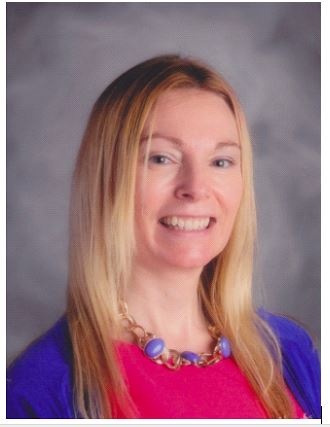 Photo courtesy of: Bridget Tait
I met, Ms. Bridget Tait, a few weeks ago at the, School Is In, Let The Reading Begin event, in Philadelphia. I found Ms. Tait easy to talk to and knowledgeable about the literacy support so many students require.
As we spoke, it became clear she felt passionate about her work and eager to spread the word about the challenges students and teachers face in urban school settings.
I hope you find her insight as meaningful as I do.
Pin Me Please!Hello, Bridget, and welcome to Lemon Drop Literary. Thank you for agreeing to do this interview.Thank you for having me.
Why did you become a teacher?Because my education afforded me many opportunities. I was a foreign language major in college. As a language major, I could apply for scholarships studying abroad.
After completing my undergrad, I lived in Germany and worked as an assistant English teacher. During this time, they awarded me a full scholarship to the University of Salzburg, Austria, where I majored in German.
This time overseas impacted my life and broadened my perspective as a global citizen. This is why I am an English as a Second Language (ESOL) teacher today. I want my own students to become whatever they desire. Through education, I believe my students will reach their aspirations. What grade do you teach?I teach ESOL at a Kindergarten to sixth-grade school in the School District of Philadelphia. What do you find most rewarding about teaching?Teaching ESOL allows me to meet students from all over the world. These students are motivated and have a great desire to learn English. What do you find most challenging about teaching? The funding inner-city schools receive. It is not equitable. Students in inner-city schools need more support, but their schools receive less money than their suburban counterparts.
This spartan budget has a direct impact on the quality of instruction. As a result, city teachers use their own money to buy supplies for their classrooms.
How has the lack of funding in public schools affected you and your students?A great deal. The district‘s infrastructure is falling apart. Students often learn in antiquated school buildings with leaking roofs, mold, lead paint, asbestos, and rodents.
Daily exposure to these toxins can lead to serious health problems. It‘s difficult to learn or teach under these conditions.
Public schools lack books, modern curriculum materials, and furniture. For example, a third grade Social Studies textbook lists Barack Obama as a senator in Illinois.
Public schools don‘t have libraries and broken furniture is not repaired or replaced. Teachers and students can‘t work and learn in this atmosphere.
They overcrowd public school classrooms due to staff numbers and school spacing. They should reduce class size in city schools. Students in city public schools deserve the same quality education as their suburban peers.
If you could ask politicians to do one thing to help students in our country, what would it be? Why?As mentioned above, inner-city students deserve the same quality education their suburban peers receive. Due to unequal school funding, this is not the case.
I urge politicians to lobby for fair school funding. Their zip code should not dictate a student’s quality of education. A fair education is an innate right and should not be considered a privilege.
Do you have any advice for teachers just starting their careers?Teachers must be flexible. They have heavy workloads, multitudinous responsibilities, and work under strenuous conditions.
Could you tell us a little about Language to Literacy?
Language to Literacy LLC, provides reading consultations and specialized reading interventions in Orton-Gillingham and the Wilson Reading System.
These multi-sensory approaches to literacy, remediation, and alternative learning services focus on students with learning differences, (preschoolers through adolescents) including those with language processing difficulties, students with dyslexia, and English Language Learners (ELLs).
Language to Literacy services students on a one-on-one and/or small group basis at local schools, in after school tutoring programs, and virtually in the Greater Philadelphia area.
Where can parents and educators find out more about you?
Parents and educators can find out more about Language to Literacy at www.languagetolit.com. We are on facebook at @language2literacyphila, twitter @lang2literacy and Instagram language2literacy.
Thank you, Bridget, for spending time with us and sharing your
experiences with The School District of Philadelphia.
We wish you and your students lots of luck and continued success!
 Photo courtesy of: Bridget Tait