Shep Hyken's Blog, page 238
September 27, 2013
Guest Blog: How to Coach Your Staff to Problem Solve on Their Own
This week on our Friends on Friday guest blog post, Kelly Gregorio talks about how important it is to train your employees. I like her belief that if your employees cannot problem solve on their own, then it is impossible for them to serve your customers well. – Shep Hyken
As the leader of your team, chances are you hold customer service to the highest ideal; and why not? Exceptional customer service is in direct correlation to positive brand recognition, great word of mouth and loyalty among customers.
However, regardless of how well you serve customers, training employees to provide exceptional customer service is an investment that really counts. After all, hourly employees are the people that interact with your customers on a daily, face-to-face basis. Unfortunately the need to polish certain skills (in this case, problem solving) is commonly overlooked.
If your employees cannot problem solve on their own, then it is impossible for them to serve your customers well. Just imagine the frustration customers get every time your staff has to pause and call on you for direction and authority. Just imagine the distaste a customer feels when the employee they are dealing with can’t fix their issues, and instead directs them to go up the painstakingly long chain of command.
You want to present your employees as brand ambassadors; and brand ambassadors have the ability to problem solve, make decisions and change the customer experience for the better. Despite your best intentions, you may be employing a staff that can’t empower themselves enough to function without you. Here’s how to show them the light…
Emphasize the Need to Relax
One of the reasons your staff may be hesitant to make their own moves is that they are unsure of the repercussions. This may take some effort on your part to evaluate your responses to their failures and tailor negativity (yelling, anger, frustration, etc.). If you want your staff to make their own moves, you will have to instill a confidence within them knowing that they can come to you and comfortably own-up to any mistakes.
Once they know where they stand with you, it will be worthwhile to teach them how to deal with themselves. Chances are your staff is reaching out to you because when issues arise they become stressed, worried and anxious. Emphasize the importance of gaining composure with an activity like taking a minute to him/herself and practicing some deep, slow breathing. Once they have their emotions in check, the problem-solving process can begin.
Adopt an Ownership Attitude
There is one idea that you should reiterate to your staff if you want them to problem solve independently: pretend I don’t exist. If your staff owned your company, they would certainly work in the best interest of the business. Encourage them to think this way when you are both off and on-site, a better, more attentive customer experience will result.
Lead a conversation with your staff that refreshes and reminds them how to effectively problem solve.
Step One: Assess the issue and brainstorm possible solutions while quickly weighing the possible positive and negative outcomes of each.
Step Two: Carry out the best possible solution with the interest of the business and its customers in mind.
Step Three: Follow-up and evaluate the results. This step is especially important; staff members need to ensure that the customer is happy and any problems have been alleviated before they walk out your doors.
Coach Them to Spot Solutions
Just because your staff is problem solving on their own, does not mean you should disappear from the equation. For example, your input in Step Three could be a great service to your team. By evaluating the results together, you can determine what does and does not work while creating a proactive game plan for next time.
Additionally, your imagination can serve your employees too. When working together create fictitious problems and talk the three step process out together. The more what-if activities you can do with your staff, the more comfortable and confident they will become with the process.
Send Them Off With an Ego Boost
Once you’ve pointed out the need for change and provided your team with the necessary tools, send them off with an ego boost. Emphasize that the reason you’ve taken the time to teach them this is because you see their potential as an independent worker. Also, be sure to pass on any praise that customers express as a way to reinforce effective problem solving and how it results in great customer service.
Especially during adjustment periods, team members can turn your encouragement into a forward, positive push. With the right tactics in place you can strengthen your staff’s ability to problem solve, and get back to the real purpose of your job: managing their work (not doing it for them).
What other problem solving skills should managers teach their team?
About the author: Kelly Gregorio writes about leadership trends and tips while working at Advantage Capital Funds, a provider of merchant cash advances. You can read her daily business blog here.
The post Guest Blog: How to Coach Your Staff to Problem Solve on Their Own appeared first on Shep Hyken.


September 25, 2013
Customer Experience Lesson from Superstar Athlete
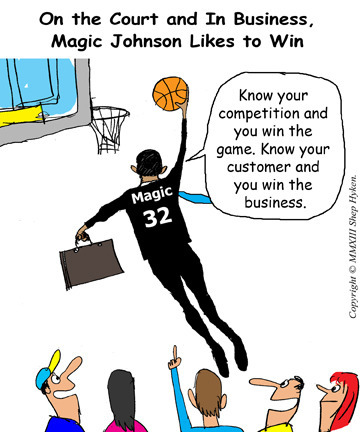 Earvin “Magic” Johnson, recognized as one of the greatest basketball players to ever play the game, is also as successful, if not even more so, in business. On the basketball court he understood his competition and how to beat them. In business he understands his customers and how to bring them value. He is best known for taking typical suburban businesses and bringing them into urban America.
Recently I had the pleasure of sitting in on a question and answer session with this sports and business legend. One of the questions asked was about his biggest success and biggest failures were. Amazingly, these ventures succeeded and failed for the same reasons, the understanding – or lack of understanding – of what the customers wanted. And, no matter how nice you are, or how nice the merchandise, you can’t very well deliver an amazing customer experience if you don’t understand your customers.
Let’s start with the failure. Magic told us that it was associated with the Magic 32 retail store that sold Magic Johnson merchandise and other high-end sporting goods. While it started off strong, in the end, the store was a failure. After the “magic” wore off, sales slumped, and in just under a year the business folded. He couldn’t understand why, until someone told him, “You are trying to sell us the stuff you like. Not what we like.” In short, Magic didn’t understand what his customer wanted.
Magic quickly learned that the success of any business, as he would prove in future ventures, was about understanding the customer.
That’s what brings us to Magic’s proudest business success story, which was his Starbucks adventure. He grinned from ear to ear as he told this story. He recognized the popularity of Starbucks, and noticed they didn’t have locations in urban neighborhoods. He also understood the buying power of minorities, so, he made a phone call to Starbucks CEO Howard Schultz and told him, and I quote, “Howard, black people like to drink coffee, too.” That call turned into a 125 unit chain of urban Starbucks that was wildly successful. But, before success could be claimed, changes had to be made. In the neighborhoods these Starbucks coffee houses were going into, the customers weren’t used to some of the food items. He swapped out certain food items for ones that his customers wanted. He also changed the background music. And, there is the business lesson. In short, Magic understood what his customers wanted.
How well do you know your customers? What unpopular items or services, if any, are you trying to sell to your customers? What do your customers want that you currently aren’t selling? It’s all about understanding your customers, which is one of the key ingredients to delivering your highest level customer experience.
Shep Hyken is a customer service expert, professional speaker and New York Times bestselling business author. For information contact (314)692-2200 or www.hyken.com. For information on The Customer Focus™ customer service training programs go to http://www.thecustomerfocus.com. Follow on Twitter: @Hyken
(Copyright ©MMXIII, Shep Hyken)
The post Customer Experience Lesson from Superstar Athlete appeared first on Shep Hyken.
September 23, 2013
5 Top Customer Service Articles For the Week of September 23, 2013
Each week I read a number of customer service articles from various online resources. Here are my top five picks from last week. I have added my comment about each article and would like to hear what you think too.
New Generation of Business: Connecting Employee Loyalty with Customer Loyalty by Colin Shaw
(LinkedIn) Successful companies have loyal employees. They also have loyal customers. But the question for researchers and consultants for the past two decades is how these two groups are related, if at all.
My Comment: There is a definite connection between companies who provide the best customer service and companies that are considered the best place to work. Lots of articles and surveys list the same companies on both lists. The secret is how the employee feels about his/her company and, as a result, how they treat the customer. The part of the article that especially resonated with me is three traits of “employee ambassadors” that state that the employees are committed to the company, the company’s value proposition and to the customer. That is a winning combination!
Know Your Customer Experience Elephant by Peter Malamas
(Foresee) During my travels, I notice a lot of common themes around the data being used and how company leaders from a wide range of organizations and across every industry use it to make business decisions.
My Comment: Love the elephant metaphor here. It is so true. Customer data can be overwhelming at times. The original Wikipedia definition of Big Data is an amount of data that is overwhelming. The key is not about having a lot of data, but knowing what data is relevant. The best leaders don’t just know how to interpret data. They know which data is important to interpret.
Consistently Good Customer Service Has Knowledge at Its Core by Tricia Morris
(Parature) No matter how many paths each customer takes or crosses in their multichannel service journey, knowledge, used both internally and externally, can create a solid foundation for a consistently good customer experience. Here are three ways best-in-class service providers are putting knowledge to good use in improving the customer experience.
My Comment: How much do you know about your customer? Do you know if he/she contacted you before? How they contacted you before? Did they just email a question and ten minutes later, because they didn’t get the response they wanted, followed up with a phone call? Can your company track that type of information? That type of knowledge gives you power – a power that better equips you to take care of the customer. Isn’t that what customers want? And, isn’t that what we want to do for our customers?
How to Hire Employees Who Deliver Great Customer Service by Jay Forte
(Human Capitalist) Today’s 24/7 customer contact requires that organizations do a better job of hiring and retaining teams of employees who are both good at what the job requires — making on-the-spot judgments — and are interested in doing it. If not, customers know it — instantly.
My Comment: Creating a team of customer-focused people starts with the hiring process. It’s tough to get the right people with the right personalities. Everyone asks questions in an interview, but are they the right questions? The concept of “talent based” questions is a great start to finding the right people for your company.
10 Ways Technology Can Enable Customer Loyalty (INFOGRAPHIC) by Jason King
(Huffington Post) In an evermore-connected world, it is not just more important to give customers an incredible experience with your brand; it is increasingly easier and more fun for you.
My Comment: I love a good list and this one focuses on ten ways that technology can help create customer loyalty. As great as technology is, it is always important to consider the human touch in any technological situation. Most of the time, there needs to be a human back-up for support, emergencies, unique situations and more. So maybe an addition to the list is the technology that will get you to a human being – in the fastest, most direct and easiest way.
Professional speaker and New York Times bestselling business author. For information contact (314) 692-2200 or www.hyken.com. For information on The Customer Focus™ customer service training programs go to http://www.thecustomerfocus.com. Follow on Twitter: @Hyken
(Copyright ©MMXIII, Shep Hyken)
The post 5 Top Customer Service Articles For the Week of September 23, 2013 appeared first on Shep Hyken.
September 20, 2013
Guest Blog: Rethinking Customer Loyalty
This week on our Friends on Friday guest blog post, my colleague Jeffrey Scott talks about earning your customers loyalty. He looks at loyalty from the external and internal perspective which is required to gain loyalty. – Shep Hyken
Customer loyalty drives retention and referrals. It is a topic important to every CEO concerned with profitability. A contractor recently asked me how to force his customers to become more loyal to him. My response was, “It is not possible. You can’t force your clients to be loyal, just like you can’t force your friends to be loyal.”
Gimmicks do not work. My wife will have us fly on any airline that gives us the most frequent flyer miles. These programs have taught us to look for a deal, it has not engendered any loyalty beyond the almighty dollar.
However, there are things you can do to “earn” your customer’s loyalty. Let’s look at this from two perspectives, your clients and your employees:
Clients’ perspective
Treat clients like best friends: When a problem arises, drop your busy work and take care of them right away just like you would a friend. In fact, don’t wait for your clients to call you with issues or problems. Reach out to them and make sure everything is ok and ask if there is anything you can do for them.
Manzer’s Landscape Design (in NY) keeps their clients close by calling them monthly to stay in touch with their needs and feedback.
Look out for their money: Be proactive in your warranty efforts, reaching out to them before the warranty expires—they will love you for that. Moreover, honor warranty even when it is just outside the time limit. They will appreciate your loyalty.
Treat their property as if it were your own property. What would you do if you owned their property? Walk their property and make a list of actions you would undertake, to protect the landscape.
Don’t always go for the nickel and dime sale. Do a few things for free, and let them know about it! This will show your loyalty to them.
Make them look good: Make donations in their name. Buds-n-Blades (in WA) has a program to show their thanks every holiday season; it makes everyone look good and feel good!
Don’t mess with their favorite faces: Give your clients the same account manager and the same crew leaders to deal with on their property.
All things being equal, people like doing business with people they know, like and trust. This concept works for small $200,000 landscape companies as well as for the landscape firms that are $10million plus.
Show your staff you mean it: In a team meeting discuss how your company can express loyalty to your clients. The act of having this discussion will inspire your staff and get them focused on ‘”the good of the client.” Have your bookkeeper and office people in on this discussion—loyalty needs to come from all corners of the company.
Think about your most loyal friends and vendors: what do they do for you that makes you feel special? Ask your employees this same question, get them thinking. Then ask, “what can you do to build loyalty with our clients?”
Employee’s perspective
How do you ensure your staff are showing loyalty to your customers? (You can probably guess where this is going….) You first have to show loyalty to your staff.
Loyalty is something you pay forward
Communicate to your staff like family: Let them know how the company is doing, what the company is doing, and what the future holds. Let them know how they are doing, and what they can do to improve their value and position in the company. Spend time to get to know them personally; show that you care–they will do the same for your customers.
According to the Harvard Business Review:
- Helping your employees develop their careers and expertise creates loyalty and an alignment of company-employee values.
- Designing work with ‘autonomy and variety’ develops loyalty within your employee base.
- Also, studies have shown that when someone leaves a company they are often leaving due to a troubled relationship with their immediate supervisor. The opposite is also true. A positive relationship with their immediate supervisors will promote loyalty with employees and promote a healthy, positive work environment.
Guaranteeing customer loyalty: Loyalty is not just about the warm and fuzzy’s, it can (and must) also be systematized, as you grow larger. Over the past decades I have developed what I call, “Jeffrey’s 6 Steps to Guarantee Customer Loyalty & Retention.” To receive a free outline of these steps, email me at Jeff@JeffreyScott.biz
About the author:
Jeffrey Scott, MBA, a leading landscape business expert, grew his landscape company into a very successful $10 million enterprise, and he’s now devoted to helping others achieve profound success. He facilitates The Leader’s Edge peer group for landscape business owners who want to transform and grow their business. His members achieved 27% profit increases in their first year. To learn more visit www.GetTheLeadersEdge.com.
The post Guest Blog: Rethinking Customer Loyalty appeared first on Shep Hyken.
September 18, 2013
Digital Customer Service: Opportunity to Connect with Customer
 Delivering an Amazing Customer Experience
I’ve always felt that no matter how capable technology is on delivering an amazing customer experience, there is no substitute for the in-person experience. That could be changing, faster than most of us think.
I walked into Total Hockey, a store that sells hockey equipment. The conversation started out like this:
“Hello, Shep. Welcome back. Hope you are enjoying that new stick you bought last month and scoring lots of goals. The last time you were here you were looking at some new skates. Are you still interested? We have them in your size. Either way, you might also be interested in these new skates we just got in.”
This is my regular salesperson. He always remembers what I bought, knows what I’m interested in, and always gives me a great customer service experience.
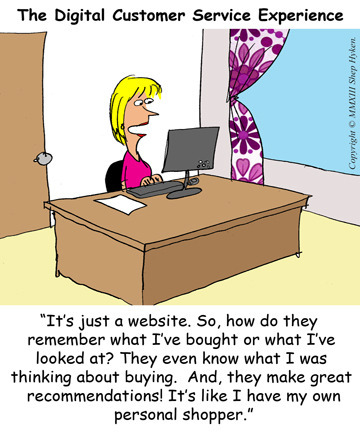
I just logged into Amazon.com. The message read, “Hello Shep. Welcome back.” The website had a picture of the book I looked at the last time I visited the website. And, it recommended similar books to those that I’ve purchased in the past.
Practically the same experience – kind of. In both cases, it was a completely customized, personalized and unique (to me) experience. The next time I go back into the Total Hockey store, my salesperson will show me the new items that I might like. The same thing will happen when I go back to Amazon.com.
By the way, there are many other websites and online retailers who deliver a similar experience. I use Amazon.com as an example simply because they may be the most recognized online retailer, and probably the best at what they do.
My point is that the customized experience, be it in person or digital, is your opportunity to connect with the customer as an individual. Companies are able to track a customer’s information through prior purchases, buying patterns and even products and services the customer has simply shown interest in. The digital experience is starting to mirror the in-person experience.
Keep in mind that people do business with people. And a website is designed by people for people. In the digital world of the recent past, the only thing that got in the way of a personal customer experience was the website. Not anymore.
Yet still, the in-person experience offers more opportunities to connect and deliver better customer service with the customer. There are personalized thank you notes, phone calls, and conversations about interests other than business. The opportunity to create a better customer service experience may still be in-person, but it’s hard not to notice how fast the digital experience is catching up.
Shep Hyken is a customer service expert, professional speaker and New York Times bestselling business author. For information contact (314)692-2200 or www.hyken.com. For information on The Customer Focus™ customer service training programs go to http://www.thecustomerfocus.com. Follow on Twitter: @Hyken
(Copyright ©MMXIII, Shep Hyken)
The post Digital Customer Service: Opportunity to Connect with Customer appeared first on Shep Hyken.
September 16, 2013
5 Top Customer Service Articles For the Week of September 16, 2013
Each week I read a number of customer service articles from various online resources. Here are my top five picks from last week. I have added my comment about each article and would like to hear what you think too.
The Customer Experience Opportunity That Nearly Everyone Overlooks by Justin Morelli
(Catalyst) Your website is a potential gold mine for applying your customer data to improve the customer experience, increase relevance and increase online conversions. Here are some data points you could already be collecting, and a few thought starters on what to do with it.
My Comment: While this is a little technical for me, I get the point. The digital experience is an opportunity to create a customized personalized experience. With the right software, we can capture all kinds of great information that will allow us to customize the customer’s experience when they land on our website. I don’t know if there is anyone better at this than Amazon. When I log into their website, they remind me of what I’ve looked at the last time, make recommendations and more. I’ve always said that people do business with people. And, if it is a website with this philosophy it still applies as the website was built by people to be used by people.
How to Empower Your Customer Service Reps, Richard Branson Style by Customer Service Investigator
(Software Advice) Virgin prides itself on one thing: exceptional customer service. In fact, it has been named “Top Domestic Airline” in the Travel + Leisure World’s Best Awards readers’ survey every year since its launch in 2007.
My Comment: Any time I get to peek behind the curtain of Richard Branson’s Virgin Airlines, there is always something to learn. This article has eight great tactics and strategies that prove why Virgin is a great company and Richard Branson is a customer service rock star.
8 Ways To Use Social Media For Customer Service by John Cheney
(Business 2 Community) The Social Media Age is Now. The Future is Upon Us. And the Customer Experience is better than ever before! Or at least it should be.
My Comment: Using social media for customer service doesn’t just mean responding to complaints. There are many ways – and many channels – to help you deliver a better customer service experience.
The effects of a good and bad customer experience [INFOGRAPHIC] by Nicola Brookes
(New Voice Media) Today’s customer is changing the world of customer service. They’re using more channels of communication, will switch businesses following an inadequate experience, and even take their revenge online.
My Comment: This Infographic compares how customers respond to good and bad service. While the numbers focus on the average business, maybe not yours specifically, the concepts from these numbers do apply. More than ever, we must provide a good customer service experience.
How to Succeed in Customer Service in 140 Characters or Less by Gingiss Dan
(Social Media Today) Why do brands miss such great opportunities to interact with their customers? Surely these same brands would respond to a customer phone call, e-mail, or even snail mail. With so many companies talking about the importance of customer experience and customer-centered design, it is shocking that ignoring customers in a public setting has become so commonplace.
My Comment: This article is a great reminder to all of us to respond to our customer’s social media posts. The author points out that that slow or even no response may have been acceptable two years ago. Well, not anymore!
Professional speaker and New York Times bestselling business author. For information contact (314) 692-2200 or www.hyken.com. For information on The Customer Focus™ customer service training programs go to http://www.thecustomerfocus.com. Follow on Twitter: @Hyken
(Copyright ©MMXIII, Shep Hyken)
The post 5 Top Customer Service Articles For the Week of September 16, 2013 appeared first on Shep Hyken.
September 13, 2013
Guest Blog: Lessons From the Mouse (Mickey, That Is)
This week on our Friends on Friday guest blog post, my friend and colleague Dennis Snow shares three lessons he learned while working at one of my favorite companies, Disney. The lessons Dennis shares came from his 20 years at Disney, and yet they are timeless and can be implemented today.
What can you learn from a mouse? When that mouse has been delighting and entertaining hundreds of millions of people for decades – it turns out there’s plenty to learn. I had the opportunity to “work for the mouse” at Walt Disney World for twenty years and during that time I learned invaluable lessons about service excellence and the creation of “walk through fire” customer loyalty. Now, as a customer service speaker and consultant, I’ve learned that these same principles can be practiced by any organization or individual. In these challenging economic times, most organizations are looking for strategies that will differentiate them from the competition. This article describes three low cost (or no cost) “lessons from the mouse” that can be immediately implemented.
1. Pay Attention to the Details – “Everything Speaks”
Every detail of the service environment communicates something about your organization’s brand. Everything the customer sees, hears, smells, tastes, or touches impacts their experience. Anything out of alignment with the brand causes a disconnect in the mind of the customer. That’s why Disney World is so fanatical about keeping the place clean. A clean park is consistent with the Disney brand.
Imagine the impact of noticing dead or dying plants while seated in the waiting area of a hospital emergency room. Such details don’t inspire much confidence in a patient who may be in a medical crisis. Customers may not consciously notice every detail, but subconsciously clues about the quality of your organization are being communicated. What are the details in your organization saying?
2. Never Let “Backstage” Come “Onstage”
An organization’s “onstage” environment is where customer interactions take place. “Backstage” is where operating processes occur that are necessary to the business, but would detract from the brand if observed by a customer. As a Disney “cast member,” I often saw Cinderella smoking a cigarette in the break room. But as a Disney World guest, would you want your two-year-old daughter to witness such a disturbing scene? All of a sudden, that college fund becomes money for prolonged therapy.
You don’t want anything to detract from the image you have worked hard to create for your customers. Open stockroom doors, overflowing trash cans, abandoned room service trays at a fancy hotel … all examples of allowing customers to see the “backstage” of the organization. And, the errors are not always physical. Employee complaints about management or other customers must be kept backstage as well. If overheard by a customer, your organization’s brand is diminished. In your organization, what “backstage” elements should customers never experience?
3. “What Time is the Three O’clock Parade” Is Not a Stupid Question
Walt Disney World guests ask some funny questions. Every Disney cast member has been asked, “What time is the three o’clock parade?” In my first Disney job at the 20,000 Leagues Under the Sea Attraction, dressed in my Captain Nemo costume, many guests would ask, “Do you work here?” Such questions may seem ridiculous, but we were taught to understand the “real question.” Guests asking about the three o’clock parade really want to know what time it arrives at particular spot along the route. Guests who asked if I (dressed as Captain Nemo) “work here,” really just wanted to know if I could help them. Disney cast members understand that many guests are simply out of their comfort zones.
In any service situation, be it a computer repair shop, a doctor’s office, or an amusement park, visitors may be nervous or overwhelmed. Who, for example, hasn’t found themselves intimidated by an unthinking employee who uses unfamiliar industry jargon as though we should know what he or she knows? Taking the time to see the situation “through the lens of the customer” is a hallmark of service excellence.
Conclusion
In today’s competitive business environment, differentiating your service is the key to attracting and retaining customers, while driving bottom line results. More than ever customers are focused on value – what you can do that other organizations cannot or will not do. The three “lessons” described in this article might seem simple, or even obvious. But few organizations actually practice them. Those that do, however, place themselves in a league above the competition.
About the Author
Dennis Snow is a business author, speaker, and consultant who helps organizations develop world-class customer service. He is the author of two books, “Lessons From the Mouse: A Guide for Applying Disney World’s Secrets of Success to Your Organization, Your Career, and Your Life“ (DC Press), and “Unleashing Excellence: The Complete Guide to Ultimate Customer Service.” (Wiley). Dennis can be reached at www.snowassociates.com, or at 407.294.1855.
The post Guest Blog: Lessons From the Mouse (Mickey, That Is) appeared first on Shep Hyken.
September 11, 2013
Customer Service Goal: We Don’t Want You to Come Back
 Ask the Right Questions
How about this for a customer service goal: We don’t want the customer to come back!
Have you ever had an experience where the company makes you feel like they don’t want you to come back? It may have been the bad service or an employee’s lousy attitude that made you feel that way. That’s probably not their goal, but it is the result.
Many of the customer service tools, tactics and strategies I cover in my books, articles, speeches and videos are about getting the customer to come back again and again. But there are times that you might have the goal of not wanting the customer to come back. Actually, a better way of putting it would be that there are times that you don’t want the customer to need to come back.
If the customer calls with a service issue or complaint, you want to resolve it in such a way that the customer is happy and doesn’t need to call back for the same issue. This is frequently called first-call resolution, and is the goal of many customer service support centers. There are some companies I’ve worked with that take this concept a step further. They not only want to resolve the customer’s initial problem, but they will ask questions and probe to see if there are potential problems the customer might have in the future; the goal being they don’t want the customer to call back.
Sometimes it’s not about a complaint. For example, you might be painting a room in your home and visit your local Ace Hardware to buy a can of paint. The sales associate will ask questions to ensure you have everything you need for the project: brushes, rollers, drop cloths, masking tape, primer and more. The goal is that you won’t have to come back because you forgot to purchase that one item you might need to complete your project. When the associate asks the right questions and gets you everything you need, you are thankful and appreciative. And while you won’t come back for that project, you will surely consider coming back for future projects.
So, you really do want your customers to come back – just not because they need to continue resolving the same problem or because they forgot to buy something they needed. Ask the right questions. Ask extra questions. Be it one-call resolution or one-stop shopping, do what is necessary so the customer won’t come back… until they want to, not because they need to.
Shep Hyken is a customer service expert, professional speaker and New York Times bestselling business author. For information contact (314)692-2200 or www.hyken.com. For information on The Customer Focus™ customer service training programs go to http://www.thecustomerfocus.com. Follow on Twitter: @Hyken
(Copyright ©MMXIII, Shep Hyken)
The post Customer Service Goal: We Don’t Want You to Come Back appeared first on Shep Hyken.
September 9, 2013
5 Top Customer Service Articles For the Week of September 9, 2013
Each week I read a number of customer service articles from various online resources. Here are my top five picks from last week. I have added my comment about each article and would like to hear what you think too.
7 Ways Customer Service Impacts Retention Rates by Adriana Dunn
(Happy Customer) Here are 7 essential ways customer service impacts retention rates.
My Comment: Here are a bunch of statistics that will confirm just how important customer service is to your organization. While the numbers may not match up to your company or industry, the concepts do. They are a call to action. You can’t afford not to deliver a stellar customer service experience.
If You Don’t Take Care Of Your Customers, Someone Else Will [Infographic] by SlickText.com
My Comment: This infographic is filled with information and numbers to reinforce the idea that if you don’t take care of your customers the way they should be taken care of, your competition will. I was especially intrigued by the difference between how a small business and large business compare in missing, meeting and exceeding customer expectations. Looks like the small guys win. The big business that can create a small business feel may have a customer service advantage.
Live & Breathe Your GE Vision by elevateguestexperience
(Elevate Guest Experience) Does your team actively practice and embody your company’s vision and values? Or are both of these foundations of every successful organization buried deep within a long-since-forgotten orientation package?
My Comment: GE (General Electric) had a tagline: We bring good things to life. Well, there is a new GE and it’s called the Guest Experience. And done, well this experience will bring good things to the customer. Two points that stand out in this article. The first is making a transition from customer experience to guest experience. (It’s more than semantics. It’s a different way to think of your customers.) The second point is the concept of everyone from the CEO to the front line and everyone in between needs to be customer/guest focused.
Customers Remember Experiences, Not Your Brand Logo by Martin Zwilling
(Forbes) Most businesses spend big money testing their brand logo, catchy marketing phrases, and demographics, but spend little time training and validating that their employees can and do deliver memorable experiences to their customers. The result, according to a recent Gallup survey, with 70 percent of U.S. workers not fully engaged, is unhappy workers and poor brand experiences.
My Comment: The customer experience defines your brand. And that means the customer defines your brand. Great article with eight tips on how to get employees engaged in delivering an experience that the customer remembers – and defines your brand the way you want it to be defined.
7 Lessons About Customer Service … From the Sage Listens Tour by Shawn Hessinger
(Small Business Trends) Here are 7 lessons about customer service that you too can use to deepen bonds with customers.
My Comment: I love a list, especially when it has to do with improving customer service. And what I like about this list, specifically, is that it is based on the experience that a large company had when it reached out to its customers; in person – face-to-face! The seven ideas in this article will help any company deliver better customer service.
Professional speaker and New York Times bestselling business author. For information contact (314) 692-2200 or www.hyken.com. For information on The Customer Focus™ customer service training programs go to http://www.thecustomerfocus.com. Follow on Twitter: @Hyken
(Copyright ©MMXIII, Shep Hyken)
The post 5 Top Customer Service Articles For the Week of September 9, 2013 appeared first on Shep Hyken.
September 6, 2013
Guest Blog: Customer Service is the New Marketing
This post by Jeff Korhan addresses current issues in customer service today. I especially like how Jeff talks about how important it is to partner with our customers to create better customer experiences. Also check out his new book: Built in Social. – Shep Hyken
Is your business still hiding from social media – or using it to leverage the voice of the connected consumer?
Social Media Presents New Responsibilities
Customer service for most businesses used to be answering the telephone. These days it’s not so much the phone ringing during business hours as it is comments on your Facebook page or Twitter account, both of which are open around the clock.
Is your business answering?
The social networks provide a direct line to every business, and to the delight of consumers, there is no waiting and few limitations or filters. This is why many businesses fear these public conversations, which are actually opportunities in disguise. Use them to leverage the passion of your most vocal customers.
For decades customer service has been controlled by the business, but that control has clearly shifted in favor of the customer. Of course, their expectation as a result is that businesses be available and responsive to their comments or queries.
More than just responding, why not consider developing a strategy to have meaningful conversations? For the most part, earlier customer service methods were designed to make the problem and the customer go away, hopefully amicably. A better approach is learning how to extend the conversation.
Zappos is just one example of a business that does this well, thereby earning a stellar reputation for customer service. Their service representatives will take as much time with a caller as necessary, with the record service call being in excess of 10 hours!
How about your business? Is your customer service program designed for favorably resolving situations, or for also extending the relationship with each and every caller, Facebook fan, and Twitter follower?
Customers are Now Partners
Customers have always known how to get the attention of businesses. The old method was complaining. Remember the days of filling out a “complaint resolution” form, all the while knowing you would be lucky to get a response? It’s difficult to believe that was once a standard and accepted business practice.
Now consumers have learned they can more readily get what they want by being complimentary. This shift is a function of the collective voice of consumers being louder and stronger than that of any business. This is why companies like Ford Motor are focused on using social media to simply get people talking favorably about their brand. That’s their social marketing strategy, and it’s built on the premise that in a social economy what the business has to say is not nearly as powerful as that of the connected community.
To be more specific, according to its CMO Jim Farley, Ford literally takes the approach of giving up control of its brand to the customer. Social media has democratized media to effectively redistribute power that was once localized within corporations and institutions. So, letting go is a means for leveraging the influence of those that now share that power.
This trend is transforming customer service into a new form of marketing by engaging customers as collaborators. In addition to helping create better solutions to common service problems, they can help the business reach new buyers by sharing with their social media communities.
Treating customers as equal partners in a business relationship is a viable strategy for generating more favorable commentary about your business brand. In an increasingly transparent business environment, is there a more powerful form of marketing?
What we are really talking about here is reexamining the business process and designing it around the connected customer. This means the lines between sales, marketing, and customer service will inevitably become fuzzy, because they all contribute to creating more favorable customer experiences that get talked about.
How about you?
Let’s have a conversation in the comments below.
Jeff Korhan, MBA, is a small business marketing expert and the author of Built-In Social: Essential Social Marketing Practices for Every Small Business. He helps mainstream businesses translate their traditional growth practices to a digital world. He can be contacted at JeffKorhan.com.
The post Guest Blog: Customer Service is the New Marketing appeared first on Shep Hyken.