
Gerry Adams's Blog, page 18
March 21, 2022
Irish Neutrality is not for sale; Great to Get Out; Time for Presidential voting rights; Lá Fhéile Pádraig Faoi Mhaise Daoibhse.
Irish Neutrality is not for sale
The Russian invasion of Ukraine continues to dominate the news agenda. Lines of tanks and armoured vehicles inexorably move toward Kyiv and other Ukrainian cities. Images of hospitals and family homes bombed and destroyed; of refugees, particularly children, the elderly and disabled, forcibly fleeing has led to a massive outpouring of solidarity. People want to help. Some provide food and clothing for shipping to Ukraine. Others offer to provide shelter for those refugees who make it to our shores. All very worthwhile and commendable.
However, some in the political and media establishment in the South have cynically seized on the current crisis to argue for an end to Irish neutrality. Some media commentators have worked themselves up into a militaristic frenzy. They want the Irish government to sign up to a European Army and NATO.
Many of these are the same people who support the continued use of Shannon by US war planes.
Leo Varadkar spoke recently of the need to “think about deeper involvement in European Defence.” Neale Richmond a Fine Gael TD wants Irish missiles to be sent to Ukraine. Micheál Martin told the BBC on Sunday that; “We will have to reflect on this military neutrality position more generally.” The Taoiseach claims that changing neutrality is simply a matter of a change in government policy. The fact is that any formal participation in a European common defence structure would require a referendum.
Of course, if the Irish government was serious about confronting the militarism and imperial ambitions of Putin and his oligarchy friends it would move urgently to close down the financial arrangements that have allowed billions in Russian money to be moved through the financial institutions in Dublin. For the last two years Sinn Féin TD Mairead Farrell has pursued this issue in the Dáil. Research two years ago revealed that over a 12 year period up to 2017 an estimated €118 billion passed through the IFSC (International Financial Services Centre). The Irish government has waffled and evaded and refused to engage on this issue. It prefers instead to opt for a debate on neutrality which would see the Irish state pay out huge sums on armaments and be prepared to send Irish women and men to fight in international wars.
Despite the hyperbole around neutrality, and against the backdrop of the Russian invasion and the catastrophic humanitarian crisis it has created, the most recent opinion poll conducted by the Amárach polling group showed that 76% of Irish people continue to support Irish neutrality. It is for this reason that many countries, who see the Irish state as non-aligned, voted for the Irish government to have a seat on the UN Security Council. The commitment to humanitarian missions and the role of Irish soldiers in countless UN endorsed peace keeping missions is a diplomatic strength not a weakness. And it is in this context that an Irish government has an important role.
While others shout for war we must be promoting the imperative of negotiation and of dialogue. There can be no military victory in the war in the Ukraine. Even if Russian forces succeed in completely occupying Ukraine that will simply mean the war taking on a different style. The people of Ukraine have demonstrated a fierce and courageous determination to defend their homeland and to uphold their right to self-determination and independence.
The only viable solution to the war in Ukraine is diplomatic. This will emerge through dialogue and negotiation. That should be the focus of the Irish Government.
Every opinion poll ever published has endorsed neutrality as the preferred policy position of the Irish people. Instead of abandoning Neutrality we should be adopting a policy of positive neutrality, and enshrine it in the Irish Constitution. The Irish state should not be part of any military alliances.
Micheál Martin’s willingness to consider holding a Citizens’ Assembly on neutrality is in stark contrast to his refusal to consider a Citizens’ Assembly on the issue of Unity. It would appear that sending Irish men and women off to fight wars in other places is more important than ending the schism on the island of Ireland caused by partition and finding a peaceful future with our unionist neighbours.
No doubt this column will return to this issue.
Great to Get Out.
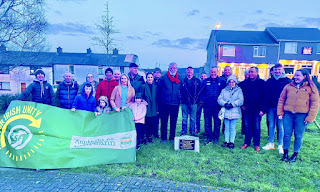
Crossmaglen
Now that the pandemic restrictions are eased it is great to get out and about again. Of course the pandemic hasn’t gone away so it is still important to take common sense precautions. This last week or so I have been galloping around book gigs in West Tyrone, South Armagh and County Down. The events are good fun. Relaxed discussions about books and writing. A few selected readings from Black Mountain and a chance to meet new friends and to catch up on old ones.
I have also planted a few Crann Na Saoirse. In Crossmaglen, Sion Mills, Kilcoo and Hilltown. It is a great time to enjoy the countryside. Spring is coming. The quare stretch in the evening is a joy to behold. Daffodils, snowdrops and other bright hopeful flowers are popping their heads above the soil. Whin bushes are in full bloom. Hawthorn is starting to blossom. In a month’s time the hedges and trees will be green and vibrant. So get out and about my friends. Fresh air is still free. Enjoy it and all the beautiful places we live in.
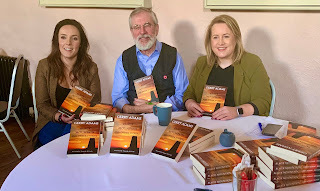
Downpatrick
Time for Presidential voting rights
As readers will know citizens outside the southern state, including those in the North are denied the right to vote in elections to select the President of Ireland. This is despite support for this right by the current government. It is in the programme for government. It is also supported by a Constitutional Convention.
In June 2019 as Teachta Dála for Louth I cautiously welcomed a decision by the then Irish government to hold a referendum on Presidential Voting Rights. The Referendum was scheduled for October of that year. This was not the first time a date had been set for this referendum.
In 2013, the Constitutional Convention agreed that Irish citizens in the North and the diaspora should have the right to vote in presidential elections. In November 2015 the Joint Oireachtas Committee on European Affairs recommended extending the voting rights. In October 2018 An Taoiseach Leo Varadkar announced that a referendum would be held in May 2019. None of this happened.
Seanadóir Niall O Donnghaile has pursued government Ministers on this issue since his election to the Seanad six years ago. The last time Niall raised it as a Commencement Matter in the Seanad was with the then Minister of State with responsibility for the diaspora in November 2020. Back then the country was in the grip of the pandemic and it wasn’t possible or practicable to hold a referendum due to the health restrictions.
Two weeks ago Niall raised the Presidential referendum with the Minister of State, Frank Feighan, who has over the years expressed his support for the referendum also.
During the debate in the Seanad Niall remarked that over the St. Patrick’s Day period many ministers and politicians will be travelling overseas to join in the celebrations. At least 33 in person visits will take place to venues in the USA, Canada, the EU and elsewhere and where no such visits occur the local Embassies will facilitate celebrations. This is a measure of the size of the Irish diaspora scattered across the globe. A key issue of concern for the diaspora is the right to vote in presidential elections.
Niall also reminded the Minister that Leo Varadkar, when Taoiseach, promised citizens in the North in December 2017 that “no Irish government will ever again leave northern nationalists behind”.
Niall called on the government to honour the commitment it has made to the diaspora and to extend full citizenship rights to the people of the North and hold a referendum in this ‘crucial and opportune timeframe’.
He recalled the extensive preparatory work that has already been done: a commitment from the Constitutional Convention; the legislation had been published but fell during the previous Oireachtas; it was then reissued, republished and returned to the Order Paper.
One of the most basic rights and entitlements of any citizen is the right to vote.
The President is not the president of a land mass, as he recently said eloquently – he is President of the Irish people. It is only right that all Irish people have the entitlement to vote whether it is the global diaspora family or our fellow citizens just up the road in the six counties. It is time for the government to outline a timeframe and to implement this non-contentious commitment.
Lá Fhéile Pádraig Faoi Mhaise Daoibhse.
I was delighted to be in Downpatrick this week. A fine historical town forever connected with Saint Patrick. I was shot around this time in 1984. My Uncle Paddy died on St Patricks Day after visiting me in the hospital. He loved being Irish and always drowned his shamrock on our national day. So I always raise a glass to him on the 17th. Enjoy Saint Patrick’s Day here in Ireland or wherever you live in the world. We have a lot to celebrate. Beannachtaí daoibhse.


March 14, 2022
Palestinians deserve our support also: Springhill/Westrock Massacre – 50 years ago: Write On!: Seachtain na Gaeilge
Palestinians deserve our support also
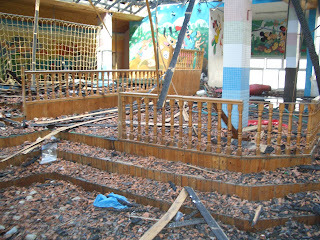
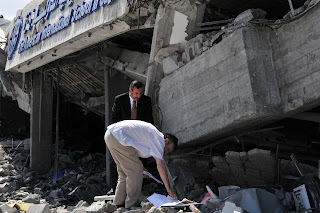
There are two photographs in this week’s column. One is of a school. Totally destroyed. Levelled. Classrooms reduced to rubble. The work of students scattered across the ground. The other is of a hospital. Mickey and Minnie Mouse and other favourite Disney characters look down over floors strewn with the flotsam of war. Life saving equipment destroyed. Walls and floors shattered by shrapnel. Both buildings were the target of rockets indiscriminately fired at civilian targets.
Had these images been taken in Ukraine and resulted from attacks by Russian war planes or rockets the international media would have plastered them over their front pages. Politicians in the EU, Britain, the USA, and elsewhere, including Irish government Ministers, would have been falling over each other to express their outrage and condemnation.
What the Russians are doing in Ukraine is totally and absolutely wrong and deserves being highlighted, exposed and opposed. But there is a need also to be consistent.
The photographs I refer to above were taken in Gaza in 2009 when I and some comrades visited the region for four days. In the intervening years the situation for Palestinians living in the besieged Gaza Strip, in East Jerusalem and the west Bank has further deteriorated. A year ago Human Rights Watch published a damning report on the policies and actions of the Israeli State against the Palestinian people accusing it of committing the crime of apartheid and of crimes against humanity.
At the beginning of February Amnesty International published a 280 page report that also concluded that Israel’s treatment of the Palestinian people constitutes apartheid.
Last week video and photographs emerged of an 11 year old Palestinian child being attacked by Israeli soldiers in East Jerusalem. The terrified wee girl suffered a fractured jaw. This is not an isolated incident. According to the UN Office for the Coordination of Humanitarian Affairs (OCHA) 2021 witnessed the killing of 76 Palestinian children by Israeli forces using tank fired shells, live ammunition and missiles from warplanes, helicopters and drones. At the same time Palestinian families are being evicted from their homes - that are then occupied by Israeli settlers - and others have to watch as their homes are destroyed by Israeli bulldozers.
Where is the international outrage at these actions? Are Palestinian children or adults any less deserving of our humanity than those Ukrainian citizens fighting desperately in defence of their homeland? Of course not.
Sanctions against Russia are a necessary response to its invasion of Ukraine. But many of those who support such sanctions rail against sanctions against Israel. This includes the Irish government.
When reminded that seven years ago the Oireachtas voted to recognise the State of Palestine the Minister for Foreign Affairs Simon Coveney says it can only happen as part of the peace process. A peace process that doesn’t exist and that Israel has successfully undermined.
This is hypocrisy, especially from an Irish government that is currently on the UN Security Council and could provide real humanitarian leadership at this dangerous time.
Governments that support the right of the people of Ukraine to self-determination should also support the right of the people of Palestine to self-determination. Those who urge tough sanctions against Russia should also urge tough sanctions against Israel.
Write On!
Last Thursday was World Book Day. This year is the 25th anniversary of the event. This reminded me of the volume of publications produced by former republican prisoners. There is my own modest contribution and Danny Morrison’s offerings including his current timely book about the false narrative from the Dublin establishment about the good old IRA.
Jazz Jim McCann has given us a special insight into life on the blanket. Eoghan Mac Cormaic has just published PLUID, his personal take í nGaeilge of life in the H Blocks, 1976-81. Big Laurny, Laurence McKeown, has published his prison memoir. Pat Magee has given us a compelling account of his experiences. Gerry Kelly has a new book of poetry to add to earlier works. They join Síle Darragh’s ‘John Lennon Is Dead’ and Tom Hartley’s fine tomes on Belfast history, including Presbyterian history.
Rosaleen Walsh is another fine writer and a good poet. Ella O Dwyer is exemplary. So is Tony Doherty from Derry. Jake Mac Sachais adds to the Gaeilge literature on the Irish penal experience. There are others too like Chrissie McAuley, and Lily Fitzsimmons who have produced their own stories and there are also compilations of women’s writing like In The Footsteps of Anne. Richard McAuley and I are publishing a new book on The Armagh Women in the next few months.
Jim Mc Veigh only this week launched his new novel Stolen Faith. I am minded to single out the late Brian Campbell for special mention. He and Laurny and others pioneered prison writings. There are others too. Playwrights, songwriters. Like Brendan McFarlane. The problem is that once you start to name names you are likely to leave someone out. One or two deserve to be left out because of the untruthful twistedness of their ruminations.
And of course the finest of our prison writers is Bobby Sands. As I write this I am very mindful that this time 41 years ago Bobby was on hunger strike and writing his prison diary on scraps of paper to be smuggled out. Bobby’s poetry, prose, political polemic and other writings in Irish and English are now part of the tradition.
So we republican authors have added a lot to the understanding of the struggle and in particular the prison struggle. Little wonder the British Government says it plans to commission an official history. They are too late.
Springhill/Westrock Massacre – 50 years ago
On 9 July the people of Springhill and Westrock will mark 50 years from the massacre by British troops that left 5 local people dead. Three of those shot by British snipers were children. John Dougal was aged 16. Margaret Gargan was aged 13. David McCafferty was aged 15. Fr. Noel Fitzpatrick was based at Corpus Christi Church, in Springhill and Paddy Butler was killed by the same bullet that struck Fr. Fitzpatrick as the two tried to pull victims to safety.
Like the Ballymurphy Massacre that had occurred 11 months earlier in August 1971 the British Army claimed that those killed were shot during a gun-battle with the IRA. They also claimed to have killed six gunmen.
At the weekend the families met with local representatives, including Aisling Reilly MLA, to organise for the 50th anniversary; to hear a legal update from their lawyer Pádraig Ó’Muirigh; and to prepare for the inquest which the families hope will take place next year. Currently no date has been set for the preliminary hearing that will determine the date for the inquest but the hope is that this will be known in the next month.
The Springhill and Westrock families have never given up on getting justice and the truth of what happened on Sunday 9 July 1972. They are to be commended for their tenacity and courage in the face of British state efforts to thwart their efforts and cover-up the actions of their soldiers.
Seachtain na Gaeilge
Seachtain na Gaeilge is the biggest celebration of Irish language and culture in the world. The festival used to run for one week but became so popular it was extended. It now runs annually from 1 March to 17 March – St. Patrick’s Day.
Two years ago before Covid there were over 30,000 events held in Ireland and across the world with an estimated three quarters of a million people participating.
Seachtain na Gaeilge embraces language, music, dance and sport, and increasingly events on social media. Writers too have brought a focus to the language.
Is í Seachtain na Gaeilge an ceiliúradh is mó den Ghaeilge agus Cultúr na hÉireann ar domhan. Bhí an oiread sin ráchairt uirthi gur síneodh amach chuig coicís í. Bíonn sí ar siúl ó 1 Márta go dtí 17 Márta - Lá Fhéile Pádraig, achan bhliain.
Bhí 30,000 imeacht ann ar fud na hÉireann agus an domhain roimh Covid agus measadh gur ghlac trí cheathrú milliún duine páirt iontu.
Tá an teangaidh, ceol, damhsa agus spóirt mar chuid de Sheachtain na Gaeilge, agus níos mó imeachtaí ná riamh ar na meáin shóisialta anois. Tá aird dírithe ag scríbhneoirí ar an teangaidh anois.
So, if you have the opportunity there are lots going on in Seachtain na Gaeilge. Why not come along and enjoy the craic and company.
March 8, 2022
Russia get out of Ukraine; Vote is a four letter word - Use it; Pensions and Irish Unity
The big story of the moment is the Russian invasion of Ukraine. Like many of you I have been watching the round the clock news reports emerging from what is now a war zone. The television images and photographs are distressing. Burning buildings, the skeletal shell of others already destroyed. Russian tanks and armed soldiers. And terrified citizens and families, many with young children, desperate to escape. There have been images also of ordinary citizens determined to resist and fight the invader. Of people hunkered down in the street making petrol bombs.
The film footage of an elderly woman confronting a Russian soldier reminded me of many similar instances in our own experience, not least the ‘march of mothers’, many pushing prams, who swept aside British soldiers’ as they brought food to the besieged community in the Falls who were under British military curfew in July 1970. These images are a shocking visual record of the violent abuse by one state of its smaller neighbour. The response of the citizens of Ukraine and the televised images of petrol bombs being prepared or street signs being removed is reminiscent of exactly the same popular actions here during the Battle of the Bogside or in Ballymurphy or many other communities.
For many republicans the language of outrage from some sections of the Irish and international media and of the political establishments ring hollow when set against their silence or collusion in the invasions of Iraq and Afghanistan or the plight of the Palestinian people struggling against the apartheid Israeli state. Or the struggle here in the north.
So I am quite cynical about the rhetoric and the intentions of some of the international leaders. Nevertheless this cannot be allowed to distract from the unacceptability of the Russian government invading and violating the territorial integrity of Ukraine and the right of the people of that country to exercise their fundamental right to national self-determination and independence.
The Irish government is a member of the UN Security Council, as well as of the European Union. It must use these important positions to argue for an end to the invasion, an immediate withdrawal of Russian forces from Ukraine and the intensification of dialogue to find a peaceful way forward.
Vote is a four letter word – Use it!
The Assembly election is just 9 weeks away. It won’t be long going in. Most parties have completed the process of picking candidates. Many of these are already out on the doorstep setting out their policies, offering leaflets and trying to win first preference votes or at least a preference somewhere on the list.
In PR elections every vote and every preference on a vote can play a crucial role in shaping the political landscape after 5 May. I would like voters to give their preferences to the Sinn Fein candidates. That will surprise no one. But I would urge all electors, especially our young people, to use their franchise, regardless of who they vote for. The ability to vote in an election is a precious and fundamental right. For women, for young people, for sections of society it is a right that has often been denied by those in power who wish to remain in power.
Different methods have been applied and spurious rationales offered to deny the vote to citizens. Sometimes it is gender discrimination. Women fought long and hard for the vote. On other occasions it is racism. And in others, like our own place following partition, it was sectarian. Whether it was here or in the United States, or in South Africa election processes were rigged to deny sections of people the vote. Changing this meant organising and marching. The right to vote campaigners endured batons and water cannons and beatings and worse to win the franchise.
Love it or hate it the Good Friday Agreement created inclusive political institutions that have the ability to make positive change in peoples’ lives. Making change was never going to be easy or happen overnight. But progress has been made and we have the opportunity to make more. In recent weeks and months there has a succession of crucial decisions taken in the Assembly that provide examples of this.
These decisions have been about helping citizens – by providing financial and other supports for the most disadvantaged in our society.
These outcomes are tangible evidence that the Assembly can make a real difference in peoples’ lives.
The Communities Minister Deirdre Hargey has frozen rents for Housing Executive tenants to help fight the cost of living crisis and she introduced new regulations that bin the bedroom tax. Two weeks ago Minister Hargey announced £11.7 million Housing Association Grant towards a new £22 million social housing scheme in West Tyrone and an Energy Payment Support Scheme which will see a one-off payment of £200 to over a quarter of a million people to hep toward heating their homes.
Daithi’s Law - the Organ Donation Bill, introduced by Minister Swann, passed its final stage in the Assembly. A Bill was passed providing workers to paid leave following the death of a child, stillbirth, or miscarriage.
Fermanagh MLA Jemma Dolan’s Bill to Ban Zero Hour Contracts and give certainty to workers over what hours they work and what their wages will be at the end of the week or month, has passed to the next stage in the Assembly.
And Finance Minister Conor Murphy has delivered £40 million for hospitality businesses. He has also delivered an additional £18 million of funding to support children with special educational needs. In January the Assembly passed the Integrated Education Bill to its next stage in the Assembly. This is about facilitating those families who wish to send their children to an integrated school to have that choice and that the schools will get proper support.
Justice Minister Naomi Long has moved the Justice (Sexual Offences and Trafficking Victims) Bill to its next stage in the Assembly. And her legislation targeting stalking passed its Final Stage creating a specific offence that will carry a maximum sentence of 10 years in prison. And finally the victims of historical institutional abuse will finally receive their apology on March 11th.
A lot of these measures happened because Sinn Féin, the Alliance Party, the Greens. PBB and the UUP voted together. Small signs of progress. Slow. Yes but still progress. That’s how change is made sometimes until a tipping point is created. So there is a lot to be hopeful about. But remember the future is too important to be left solely to politicans. You want change? Then be the change you want. And vote!
Pensions and Irish UnityOpinion polls have indicated that there is a section of public opinion in the North that is increasingly open to the idea of a united Ireland.
These potential persuadables are now looking at other possibilities. Some are nationalist voters who are not yet convinced of the merits of unity. Many are young voters. Others are former unionist voters fed up with the negativity of the unionist parties and perplexed by the Brexit crisis. And then there is range of people who think Boris Johnson is a clown and the Tory Party couldn’t care less about the North.
So, there are people now looking at the different issues of contention that might influence their vote in any unity referendum. For some it’s the question of the subvention. Is unity affordable? Sinn Fein’s ‘Economic Benefits of a United Ireland’ published two years ago comprehensively proved that the subvention is not the £10 billion often misquoted. The conclusion was that this issue was not only manageable but that a united Ireland economy would perform better, create more jobs and enhance peoples’ standard of living.
Economists like David McWilliams and Prof John Doyle have also drawn the same conclusions. Most recently the future of pensions was raised by columnist Newton Emerson in the Irish Times “No, the UK will not pay a united Ireland’s pension.” (February 10th).
Professor Mike Tomlinson in his recent Andersonstown News column rebutted this claim pointing out that the pension is based on “an individual’s record of national insurance contributions”.
As a consequence many people who worked in Britain for years get their pension here in Ireland. I have a friend who has lived in New York for almost 50 years. He gets his monthly pension. There are almost half a million people who live outside the British system who receive the state pension. The ‘Economic Benefits of a United Ireland’ also tackled this issue.
The same argument about pensions was used in the run in to the referendum in Scotland. It was suggested that the pension was not safe and that a future British government might refuse to honour its obligations on this. However, in 2014 the British government accepted that the pension rights of Scottish workers have been accumulated by citizens over the years. Liability for the payment of those pensions rested with Westminster.
Inevitably it will be an issue for any negotiation but the legal principle is accepted. Workers have paid their national insurance contributions and there is a strong legal and moral argument for pensions from pension funds already accumulated to continue to be paid by London. Whatever concerns anyone might have about Irish Unity pension security should not be one of them.
February 21, 2022
Standing up to Bullies: Register to Vote – let’s make change together: A beautiful woman with a beautiful soul
Standing up to Bullies.
Some politicians rarely, if ever see the irony in the words they use. Take Boris Johnson. He is currently using the dispute between the Ukraine and Russia to distract attention from the Downing Street Party-gate scandal. As more and more voices within his own party are questioning his leadership credentials Johnson is busy presenting himself as a leader on the world stage standing up for the rights of others. And so we get: “We won’t accept a world in which a powerful neighbour can bully or attack their neighbours … all people have the right to live safely and choose who governs them.”
In a short period in which two Police Ombudsman reports exposed the extent and depth of British state collusion with loyalist death squads and the families of human rights lawyer Pat Finucane and Sinn Féin Councillor John Davey marked the anniversaries of their murder through collusion, Johnson’s remarks carry a strong whiff of hypocrisy. British policy toward Ireland is the very definition of a “powerful neighbour” that bullies and attacks its neighbour.
Johnson is an English nationalist. He leads a party and a government that proudly defends Britain’s imperial past, including the invasion and occupation of countless small nations and the murder and subjugation of millions of people.
This is the same state which used bogus claims of ‘weapons of mass destruction’ to invade Iraq and which is currently selling billions in weapons and bombs to Saudi Arabia. The result of these arms sales has been described by the UN and others as significantly contributing the worst international humanitarian crisis in decades. Most recently the British government rejected an Amnesty International report that accused the Israeli government of running an apartheid state and oppressing the Palestinian people. What are these actions except those of a bully and neighbour supporting other bullies to attack their neighbours?
But being a bully is about more than having a contemptible and aggressive foreign policy. The British government’s shambolic Brexit policy is also causing enormous hardship to its own people. Its Covid policy has seen billions of pounds siphoned off through corruption to friends and associates. And it is predicted that by the summer almost five million people – including two million children - will be suffering serious food insecurity.
For these citizens that means smaller meals or skipping meals entirely; being hungry but not eating because they can’t afford food or get access to food; or not eating for a full day because they can’t afford to. For many it’s about heating or eating. Isn’t this also being a bully?
This is the political establishment that unionist leaders have consistently allied themselves too and who’s economic, social and foreign policies they support. Even as Johnson stabs them in the back and the chest over Brexit, even as he is exposed as a serial liar, and breaks his commitments to them again and again, the DUP still support him. Three weeks ago a smiling Jeffrey Donaldson left Downing Street – another deal done. The next week the double jobbing scam to allow him to stand for the Assembly election while remaining an MP was scrapped by Johnson. Will unionism ever wake up to the reality that no British government is concerned for them? It is all about their self-interest.
Hopefully some unionists see this. Hopefully they are seeing beyond the short sightedness of the DUP and others.
This is a time of transition but it is a dangerous time also. Challenging those who think it’s alright to bully and bluster and treat others as inferior is always dangerous. But as we all know the only way to defeat a bully is to stand up to him. So let’s continue to do that. Together. When Mr Johnson is only a bad memory we will still be here. He is the past. We are the future.
Register to Vote – let’s make change together
The Assembly election is now firmly scheduled for 5 May – a date republicans mark each year as the anniversary of the death on hunger strike of Bobby Sands.
The importance of this election cannot be overstated. The DUP and UUP refuse to state whether they will accept a Sinn Féin First Minister. 100 years after partition and almost a quarter of a century since the Good Friday Agreement, unionist leaders continue to treat nationalists as second class citizens. Whether it is in their opposition to Irish Language legislation or to a Sinn Féin First Minister, unionist leaders still believe they can deny nationalists our basic human rights. This is not acceptable.
Those days are over, gone, done with. The sectarian bullying of the past has to be consigned to the past. However hard some elements try to stir up sectarian tensions, attacking academics or lawyers or other professionals on the sole basis that they are Catholic, they will not succeed. The day of inequality and second class citizenship is finished.
The Assembly election provides a once in a generation opportunity to transform and fundamentally change the direction of travel. Constitutional change is now at the top of the political agenda. A United Ireland is on the horizon and is achievable if we collectively apply ourselves. It is important that this opportunity is grasped. You too can be a change maker. But only if you are registered to vote.
I appeal especially to young people who are either not registered or are not inclined to vote. You can make a real difference. You have until 14 April to Register to Vote. https://www.eoni.org.uk/Register-To-Vote/
 A beautiful woman with a beautiful soul
Last week we buried our friend and comrade Annmarie McCarthy nee McWilliams. She died in hospital on 7 February after a short illness. On Friday morning Annmarie was brought to the republican memorial garden in Ballymurphy where local republicans paid their final respects to a woman Aisling O’Reilly aptly described as “a beautiful woman with a beautiful soul.” In a wonderful gesture of solidarity and comradeship the honour guard of women comrades surrounded the coffin and held hands as a minutes silence was held.
Annmarie was born on the Shore Road in North Belfast in November 1955. She was the only girl among 10 brothers. At the age of 11 she and her family moved to a new house in the Westrock estate in west Belfast.
Her lifelong friend and comrade Marie Gavaghan, who was in Armagh also gave the oration. She said:
“Annmarie began her republican activism in the Cumann na gCailíní, before joining the Cumann na mBan and then the IRA. She went through the prison system. Never faltering. Never wavering. An undauntable and unbreakable spirit. She was interned for 19 months in Armagh Jail and on her release returned to active service. She had a steely determination despite the beatings she took from the British Army.”
Her 16 year old brother Jason was shot and killed in disputed circumstances by the British Army in August 1977. Her husband Tony McCarthy was shot and killed in March 1987. Annmarie was left a single mother with four boys.
Despite these tragedies in her life Annmarie continued to work on behalf of the political prisoners and for their families. She was in Green Cross and most recently she worked in a voluntary capacity in An Fhuiseog – the Green Cross shop on the Falls Road.
I had the honour and great privilege of knowing Annmarie for almost 50 years. Throughout her life she remained a determined republican activist.
She was also a loving mother, a grandmother and great-grandmother, and a dedicated friend and comrade. She was a kind woman. I want to extend from Colette and myself our deepest condolences on their loss to her loving partner Bobby, her sons Tony, Callan, Thomas and Criostoir, her grandchildren and her brothers Fra, Pat, Martin, Peter, Joseph and Tambo.
February 14, 2022
Ormeau Road collusion exposed: Women leading the way: Growing Older
Ormeau Road collusion exposed
Collusion between British intelligence, the RUC, UDR, British Army and Loyalist paramilitary organisations is a fact of life here. This is indisputable. A succession of reports have confirmed the extent to which loyalist death squads operated under the patronage of the British state.
This week the Police Ombudsman produced another report. It examines 11 killings in the South Belfast area, five of which occurred on Wednesday 5 February 1992. That morning two UDA killers walked into Graham’s bookies on the Ormeau Road and opened fire. They killed five people on the Ormeau Road and wounded nine others.
Claims of collusion between the UDA and British security agencies were dismissed at that time by many in the political establishment and most of the media. 30 years later and within days of the anniversary of that atrocity, the families were handed a Police Ombudsman’s report that confirmed collusion. It also confirmed that one of the weapons involved was part of the consignment from the apartheid South African regime brought into the North by British intelligence and its agents within the UDA/UVF and Ulster Resistance.
Collusion worked hand in hand with a British strategy which sought to demonise republicans and the wider nationalist community. Every effort was made by the British and Irish governments and our political opponents to marginalise and censor Sinn Féin. The five who were killed in the Ormeau Road Bookies were the victims of this strategy. So too where the three people killed in the Falls Road Sinn Féin office the day before.
Last Friday we held a short ceremony outside the office to remember Paddy Loughran, Pat McBride and Michael O’Dwyer. They were shot dead when RUC officer Allan Moore walked into the office claiming to be a journalist. Within moments he had killed Paddy and Pat who worked in the building and Michael – a young man in the office with his two year old son to discuss a constituency issue – and wounded two others. Allan Moore went on to take his own life.
24 members of Sinn Féin and family members were killed during the conflict. Many others were wounded. Hundreds of nationalists were killed. Thankfully the war is now over. Though some are continuing it by other means.
We can make no sense of any of this except in the context of British government involvement in Ireland and the malign influence and shameful methods it has used and continues to use to maintain the union. The resignation of Paul Givan, the attitude of the DUP and the behaviour of Boris Johnson and his government are all part of all of this. The end of British rule in Ireland cannot come soon enough. The Good Friday Agreement has an agreed process to do this, if that’s what the people want.
I look forward to the end of London rule here and to the liberation of the unionist and loyalist people along with the rest of us. Then without the backing of English politicians they will join everyone else to forge a new future based on equality. Speed the day
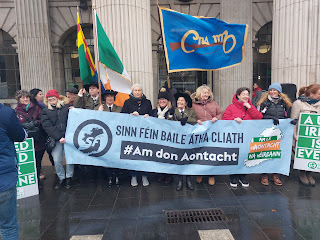
 Women leading the way
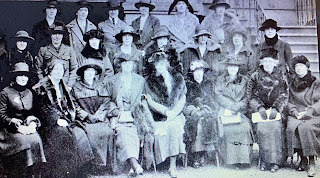
The Proclamation of the Republic addresses itself to ‘Irishmen and Irishwomen.’ This is recognition that there must be equality between women and men in the new Ireland.
When the details of the Treaty became public Dr Kathleen Lynn, who was a member of the Irish Citizen Army and chief medical officer during the Rising, recorded in her diary, ‘Peace terms, but what a peace! Not what Connolly, and Malin and countless others died for”.
The Second Dáil voted on 7 January 1922 by 64–57 to endorse the Treaty negotiated just weeks earlier.
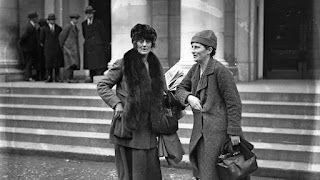 Five days later the Executive of the Cumann na mBan met in Dublin. Countess Markievicz chaired the meeting. The resolution opposing the Treaty was blunt and definitive. It said: ‘That this Executive Committee of the Cumann na mBan reaffirms their allegiance to the Republic of Ireland, and therefore cannot support the articles of agreement signed in London on the 6th December, 1921.' The motion was passed by the Executive by 24 votes to 2
One month later on the 5 February - 100 years ago last Saturday – almost 500 women gathered in the Mansion House for a convention of the Cumann na mBan. It was the first of the national organisations to debate the Treaty. When the vote was taken 419 members voted against the Treaty and 63 voted in favour. The six women members of the Second Dáil all voted against the Treaty. They were Countess Markievicz, Kathleeen Clarke, Margaret Pearse, Mary MacSwiney, Kate O’Callaghan and Dr. Ada English.
Kate O’Callaghan’s husband Michael – a former Mayor of Limerick - had been murdered by the Auxiliaries. In her address to the convention she said: ‘The women of An Dáil are women of character, and they will vote for principle, not for expediency.’ Mary MacSwiney, whose brother Terence died on hunger strike, warned that should the Treaty be accepted she would become the Free State’s ‘first rebel.’
Countess Markievicz said: ‘I am pledged as a rebel, an unconvertible rebel, because I am pledged to the one thing – a free and independent Republic.’
Republican women took the lead in opposing the Treaty. Sinéad McCoole in her book – No Ordinary Women – publishes the names of 552 women who were imprisoned by the Provisional Government and then the Free State government in Kilmainham Gaol, Mountjoy Jail and the North Dublin Union. The Free State government banned the Cumann na mBan in January 1923.
In the decades that followed the Cumann na mBan continued to play a crucial role in the struggle to end partition.
Growing Older
I have a sore back. I hurt it decades ago playing handball against a chap twenty years younger than me. It soon got better but every so often it comes back to trouble me, especially if I neglect to stretch and bend in the manner prescribed by the physio. It has been niggling at me for the last five or six weeks.
‘It takes longer to heal as you get older’ your man told me.
He thinks he is an authority on everything. But in this case he is right. So I wince my way gingerly through my daily routine. I noticed some time ago that some of my close friends have morphed into old men. I can see it in the way they walk. Their geriatric gait. The cautious way they traverse slippery or wet surfaces. Or cross roads. Or journey up inclines. Like oul lads. That’s the way my bad back has me.
Maybe that’s the way others see me. As an oul lad. That is certainly your man’s view.
I find that a bit disconcerting. I can still climb the cemetery wall. And clamber up Errigal if I take my time. Or the Hatchet Field. I can still póc a sliotar as well as much younger hurlers. But I can’t run too fast for too long. Or too far. I like a wee nap after my dinner. And I get stiff sitting in the car on long journeys. Or sitting anywhere - now that I think of it. And my back is really sore.
‘Three score and ten’ your man told me. ‘that’s what the good Lord gives us. Three score and ten. You’re already three years over that. You haven’t much time left’.
‘Don't talk stupid’ I rebuked him. ‘Once the good weather comes in and my back gets better I’ll be as good as new!’
‘Your days are numbered’ he retorted. ‘You’ll never be as good as new aris. You’re more recycled material than new ……..’
Only it would hurt me more than him I could have punched him. Especially when he told me that I am in the last phase of my life. I’ve never thought of it like that. I don't mind growing older. It’s natural. If you've the right attitude growing older doesn't mean growing old. That’s my philosophy in any case. That’s what I told your man.
‘I might be in the Departure Lounge’ I said to him ‘But my flight is delayed’.
‘Such a yarn’ Your man said ‘you oul lads are all the same. Delusional. The graveyard will never be full ‘til you’re in it’.
That’s how we left it. He really knows how to hurt me. It’s very annoying. He should have more respect for his elders.
February 7, 2022
Reflections on Bloody Sunday: Julian Assange: Free Leonard Peltier
Reflections on Bloody Sunday.
Somehow human beings, including this columnist, put more stead in twenty year anniversaries than in nineteen year ones. So in the case of Bloody Sunday 50 years seems more important than forty nine. Why this is so is worthy of some research beyond at this point my capacity. But fifty years it is since that fateful day.
In less than 30 minutes it was all over. The shooting began at 4.10pm. When it ended 13 men and boys were dead. Another was to die weeks later. Another 14, including one woman had been shot and grievously wounded. On our television screens we could see the deadly consequences. The still bodies in their pools of blood. One moment alive. The next dead. Lines of men were filmed being frog marched by British soldiers and forced against walls. A community in shock. Bloody Sunday marked a watershed moment in our history.
For many Bloody Sunday also marked a personal turning point in our lives. I know that many of my friends, my peer group, reflected on our memories of that day as we recalled where we were. It was a moment when many became convinced that a state that could plan, carry out and defend the public execution of citizens had no legitimacy. Many didn’t know about Britain’s recent colonial past. Its use of counter-insurgency techniques. The application of state violence, including mass murder and torture to advance its objectives in Kenya, in Aden, in Oman and other places. The employment of collusion and of counter-gangs to kill political enemies and civilians. All of that was to become known later.
But for the avoidance of doubt it should now be clear to everyone that killing people on Bloody Sunday was the intention, the plan and the reason for the deployment of the Paras in Derry, just as it was in Ballymurphy months earlier.
On 30 January 1972 and in the days that followed it was about the victims and their families. It was about demonstrating - by attendance at the funerals or other protests - including the civil rights march in Newry the following Sunday - that we would not be intimidated off our streets.
For many it became a difficult emotional balance between shock and anger and a desire for revenge. It was a reminder of the injustice of the British state’s involvement in Ireland and of the failure of politics. And as the British state’s propaganda machine went into overdrive to defend the Paras, and British and Unionist politicians accused the victims of being gunmen and bombs, the anger and frustration grew.
Seamus Heaney caught the mood:
My heart besieged by anger, my mind a gap of danger.
I walked among their old haunts.
The home ground where they bled;
And in the dirt lay justice like an acorn in the winter
Till its oak would sprout in Derry
where the thirteen men lay dead.
(The Road to Derry)
It took almost 40 years to clear their names. The families and other campaigners deserve great credit for their dignity, persistence and generosity. Their commemoration of the 50th anniversary was a fitting remembrance of Bloody Sunday.
In June 2010 Martin McGuinness and I walked with thousands more from Free Derry Corner to Guild Hall square, the original destination of the civil rights march in January 1972.
In the Guild Hall Square the crowds cheered loudly as it became increasingly clear that the Saville Report was going to exonerate the victims. Tony Doherty whose father was killed by the Paras put it well when they eventually emerged to speak to a packed Square. He said:
‘The victims of Bloody Sunday have been vindicated. The Parachute Regiment has been disgraced. Widgery’s great lie has been laid bare. The truth has been brought home at last. It can now be proclaimed to the world that the dead and the wounded of Bloody Sunday, civil rights marchers, were innocent one and all ….. The Parachute Regiment are the front line assassins for Britain’s political and military elite. The report of the Saville Tribunal confirms this……..’
Twelve years later most people do know. Sadly there are still some who seek to deny it. British politicians in the main but unionist politicians also and sadly some in the Irish state.
The British government still wishes to avoid its responsibility. That’s the rationale behind its legacy and amnesty proposals. It’s refusal to honour its commitment to hold an inquiry into the killing of human rights lawyer Pat Finucane.
How could the British establishment expect its spies and spooks and solders to kill at their command if they were unable to guarantee them immunity from prosecution?
When he apologized for the actions of the Paras the then British Prime Minister David Cameron said: “Bloody Sunday is not the defining story of the service the British Army gave in Northern Ireland from 1969-2007.”
He was wrong. I said so at the time. Bloody Sunday is the defining story of British actions in Ireland. There were many others. On the New Lodge. In Tyrone. In Springhill. In Fermanagh. On the Shankill. In Ardoyne. In Armagh. In Dublin, Dundalk and Monaghan.
The UDA and UFV and others killed as many as they did because the British state gave them the green light. They armed the loyalist death squads and provided information on victims. The Glenanne Gang and the Dublin Monaghan bombs were the work of the British state. The more than two hundred civilians and Sinn Féin members and family members killed with weapons supplied by apartheid South Africa and British intelligence in 1987 were the work of the British state.
This week the people of the Ormeau Road will mark 30 years from the day when UDA killers armed with British supplied weapons murdered five of their neighours in the attack on Graham’s bookies.
These families do not want an Amnesty. Not a statute of limitations. They want those responsible held to account. They deserve our support.
Finally, my condolences to the family and friends of Terry Laverty who died last week. Terry’s brother John was shot dead by the Paras during the Ballymurphy Massacre. Terry was himself arrested at that time and imprisoned on the trumped up charge of rioting. He never gave up. He campaigned tirelessly. Ar dheis Dé go raibh a anam dílis.
Julian Assange
Britain’s counter-insurgency guru General Frank Kitson explained it well when he wrote over 50 years ago: “the press properly handled is one of the government’s strongest weapons.”
Direct control of reporting by the media through the imposition of censorship or indirect control through political alliances with those who own the media, is not a new phenomena. The Irish people have long experience of British government manipulation of media coverage about events here. The killing of 14 men on Bloody Sunday in January 1972 and before that the Ballymurphy Massacre and the manner in which the British establishment managed the media afterwards are two examples of this. British political leaders and military commanders rushed to defend the Paras and criminalise the dead and wounded. That they failed took 40 years of hard work and trauma by victim’s families and the people of Derry and Ballymurphy.
A further example of a desire to control the media is playing out in London this week. Lawyers acting for Julian Assange, the founder of Wikileaks are petitioning the British Supreme Court in a bid to stop his extradition to the USA. In 2019 the Trump administration indicted Assange for allegedly breaking the US Espionage Act. This is based on his publication ten years ago of tens of thousands of documents provided by Chelsea Manning that covered diplomatic gossip, politically partisan briefings, and documents that ran the risk of exposing those living in oppressive regimes. However, these documents also included evidence of the use of torture and the killing of civilians.
A wide ranging group of civil liberties and press freedom groups, including Amnesty International, Human Rights Watch, and Reporters Without Borders have called for the end of the prosecution of Assange.
This is in tune with a ruling US Supreme Court in 1971 which agreed that the New York Times and Washington Post could publish papers relating to the American prosecution of the war in Vietnam ( the Pentagon Papers). The Court decided that: “The press was protected [by the Founders] so that it could bare the secrets of government and inform the people. Only a free and unrestrained press can effectively expose deception in government. And paramount among the responsibilities of a free press is the duty to prevent any part of the government from deceiving the people and sending them off to distant lands to die of foreign fevers and foreign shot and shell.”
Assange has spent over seven years trapped in the Ecuadorian Embassy in London. He was forcibly removed in April 2019 and imprisoned in Belmarsh prison in London where he has been held for the last three years in solitary confinement.
Assange’s continued incarceration and persecution affects him personally but it also stands as a threat against all journalists, editors and publishers who pursue investigative journalism and defend free speech. Julian Assange should be released.
Leonard Peltier should be freed
Leonard Peltier has Covid. The Native American rights activist has spent almost 45 years in prison and was already suffering ill-health. His family and supporters are deeply concerned at this serious risk to his life and have renewed their appeal for the US President Joe Biden to exercise clemency. I support their call for Leonard to be freed.
January 30, 2022
Thunder before the Storm in Belfast: Save Moore Street - Buy a raffle ticket for an original 1914 Mauser rifle
As we mark the 50th anniversary of Bloody Sunday I remember when native Americans joined us to forge solidarity links and travelled to Derry to participate in the Bloody Sunday events of 1985.
Thunder before the Storm in Belfast
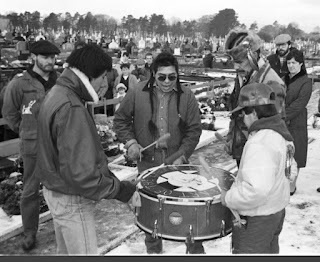
The drum beat and the chant echoed across the emptiness of Milltown Cemetery. Despite our heavy coats the January cold leeched through to the bone. Margaret and Alfie Doherty, the parents of hunger striker Kieran Doherty; Jim Daly, whose wife Miriam – a member of the National Smash H-Block Armagh Committee - was assassinated by the UDA in 1981; and myself, Alex Maskey and others were at the Belfast Republican plot. So was Maura, sister of H Block hunger striker Joe McDonnell.
It was 1985 and we were accompanying a delegation of Native American Indians from the American Indian Movement (AIM). They were in Ireland to ‘see the situation – political and cultural …’ The delegation laid a wreath at the graves of our Patriot Dead and chanted the national anthem of AIM to the beat of their drum.
Their purpose in travelling to Ireland was to forge solidarity links and to make the connection between two struggles for freedom. Among the AIM delegation was Clyde Bellacourt (Thunder before the Storm – Nee-gon-we-way-we-dun). He was a co-founder of AIM in 1968. It was established to highlight police violence and discrimination in housing, education and employment against Native Americans. ‘Like the Irish people we have had to fight against cultural genocide’ said Clyde.
The day after our visit to Milltown the delegation travelled to Derry where they took part in the Bloody Sunday commemoration and laid a wreath at the monument for the 14 people killed by the British Parachute Regiment. The delegation held a spiritual service at the Bloody Sunday monument where they sang and played their drum in remembrance of the civil rights dead. Clyde explained that they had come ‘to pay respects to people who had given their lives for peace, equality and liberty in their homeland, the aspirations for which American Indians were struggling in their homeland.’
The delegation also took time to visit republican POWs in Armagh Women’s prison and in Long Kesh.
Clyde and his friends – Mel Youngbear, John Brown, Conrad Hisgun, Yvonne Swan, Amos Owns and Floyd Westerman (Red Crow) – were in Ireland representing the Dakota, Lakota and Anishinaab nations.
In his memoir Clyde wrote of the experience of his people: ‘Indian people had no legal rights centres, job training centres, community clinics, Native American studies programs or Indian child welfare statutes … We were prohibited from practicing our spirituality. It was illegal to be in our country. The Movement changed all that."
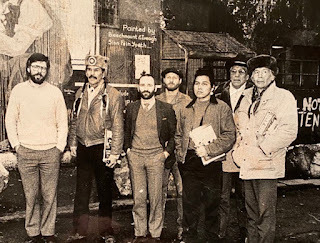
GerryA Clyde Bellcourt Alex Maskey Pat Kelly John Brown Amos Owens and Floyd Westerman
I was reminded of all this when the news broke that Clyde had died at his home in Minneapolis. He was 85. In a column several weeks ago I appealed to the US President to release Leonard Peltier on compassionate grounds. Leonard was a friend and a contemporary of Clyde. They were both involved in the occupation of Wounded Knee, to highlight the plight of the native people. Two FBI officers were killed during that incident and Leonard was convicted in 1977 of their murder, a charge he has consistently denied. He has been in prison for almost 45 years.
In 2006 Leonard spoke of the similarity and empathy between the Irish and Indian struggles. In words that Clyde would have endorsed he said: ‘When Bobby Sands died on May 5, 1981, millions of people from around the world joined their voices together to condemn the British government that allowed him to perish. I joined my voice to theirs. I fasted in solidarity with the Hunger Strikers for forty days during that dreadful year. Fasting is something that I have done many times, when I was a free man, while participating in our sacred Sun Dance. The sufferings of our relations in Ireland are pains that we as Indian people know all too well. Our suffering, our fasting and our struggling links us together with a common bond. That is why I say to you, there in Ireland, you are my relatives. As your relative, let me join my thoughts, tears, and prayers with yours as you commemorate your fallen, especially those who died on Hunger Strike in 1981. My family and your families, my pain and your pains, my peoples struggle and the struggles of your people are all connected. We truly are all related.’
Bobby Sands knew this. In his amazing poem The Rhythm of Time he remembers
‘It died in blood on Buffalo Plains,
And starved by moons of rain,
It’s heart was buried in Wounded Knee,
But it will come to rise again.’
Clyde Bellacourt also understood this affinity that grows between people who suffer oppression and struggle for justice and for their rights. He was a champion of his people. He had the courage and determination to take a stand against a system that was shaped to degrade and diminish their humanity. All of us who met Clyde were deeply impressed by his commitment to his activism.
In the 90s he helped organise marches against the use of Indian mascot names by US sports teams. Native peoples and many others long regarded these names as racial slurs. Two years ago, against the backdrop of widespread protests and civil unrest over the killing by the police of African Americans, the Washington Redskins announced that the ‘Redskins’ was to be dropped. Speaking at the time Clyde said: ‘Black lives matter and Indian lives matter.’ Sadly he won’t be here for the culmination of one part of his story when the Washington team announce their new brand name next Wednesday.
To Clyde’s wife Peggy and his daughters Susan and Tanya, his sons Little Crow and Wolf and his many grandchildren and great grandchildren I extend the condolences of Irish republicans.
Save Moore Street - Buy a raffle ticket for an original 1914 Mauser rifle
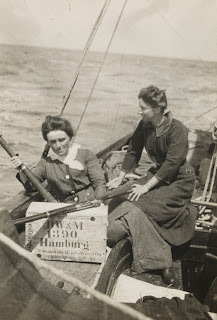
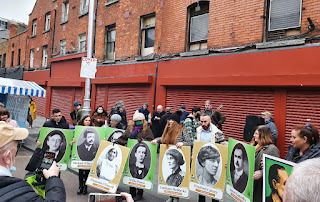
Last Saturday hundreds of people took part in a Save Moore Street rally in Dublin. The rally was called at short notice by the Moore Street Preservation Trust in response to the decision by Dublin City planners to green light the redevelopment plans by the UK based developer Hammerson for Moore Street and its environs.
For those who don’t know the Moore Street 1916 battlefield site it stretches from Tom Clarke’s shop on Parnell Street; to the GPO; to Moore Lane and Moore Street where the GPO Garrison retreated; to the spot where ‘The O'Rahilly’ died; and to 16 Moore Street where five of the seven signatories of the Proclamation - Seán MacDiarmada, Pádraig Pearse, Joseph Plunkett, James Connolly and Tom Clarke - held their final meeting. It is described by the National Museum of Ireland as: ‘The most important historic site in modern Irish history.’
Successive Irish governments have failed to protect and preserve Moore St and its 1916 history. On the contrary Micheál Martin and others have publicly endorsed the developer’s proposals which would see most of the 1916 historical quarter destroyed by the developer’s bulldozers.
James Connolly Heron, the great grandson of James Connolly, on behalf of The Moore Street Preservation Trust and the Relatives of the Signatories to the Proclamation, described the decision by the planners as “another significant blow to the unique heritage and irreplaceable architecture of Dublin.”
The Moore Street Preservation Trust has `brought forward its own plan for the development of the Battlefield site, ‘in keeping with …
 The Trust is committed to appealing the decision and to promoting its alternative plan for the positive development of the battlefield site.
On Monday to help fund its campaign the Moore Street Preservation Trust launched an Easter Raffle to raise funds. The prize is an original Mauser Rifle smuggled into Ireland in the Howth gun-running operation in 1914. The Mauser Rifle has been kindly donated by Pat O’Hagan, an eminent collector of historical artefacts between 1901-1923.
The artefact is an antique firearm manufactured before 1898. It is for display and ornamental purposes only. It is a condition of the sale that the winner of the raffle agrees that this historical artefact stays within the island of Ireland and that it will not be sold, loaned or rented to any person, organisation or private enterprise not resident within the island of Ireland.
A raffle ticket can be purchased at:
http://arasuichonghaile.com/moorestreet
or can be accessed through the Moore Street Preservation Trust website at:
https://www.facebook.com/MooreStreetTrust/
So, support the Save the Moore Street campaign. Help to preserve this iconic and hugely important 1916 historical site. Buy a raffle ticket and you could soon own an original 1914 Howth Mauser Rifle.
January 24, 2022
Condolences are not enough: The Women of Ireland Are Fed Up by Emma Sheerin: Dogs can think. Part 2K. Part 2

Condolences are not enough
I want to extend my deepest condolences to the family and friends of Ashling Murphy. The spontaneous public outpouring of grief at her murder underlines the frustration and anger that exists at the habitual reports of violence against women.
Condolences are not enough. Men, and I include myself in this, need to take responsibility for ensuring that every woman has the right to be safe and that there is zero tolerance of male violence against women. Our friend and Sinn Féin MLA Emma Sheerin says this better than I ever could.
The Women of Ireland Are Fed Up by Emma Sheerin.
From our grandmothers, educated in Latin and the catechism, but not about menstruation; locked up whether they fell prey to a neighbour or ‘chose to commit a mortal sin’, as if either were crimes, as if they deserved a life in an institution.
Those lucky enough to be ‘good girls’ – what was their reward? A life locked to the kitchen sink. Caring for parents or child after child. A miscarriage? A stillbirth? No consecrated burial. ‘Don’t mourn your baby’ the priest said, but life begins at conception.
The swinging sixties. Mini skirts and the pill. The pulpit still ruled.
‘She got herself in trouble.’ Those who escaped the convents; the scrubbing brushes and the loss of their healthy, happy, baby, got whispers and judgement. Some fled. Boats to England. Secrets held forever.
‘He gave her a hammering’ the neighbours would remark. Nobody’s business, ‘he’s a nice fella’. ‘Why does she stay with him?’ a more enlightened friend might say, someone not horrified by divorce, ignorant of financial realities. ‘Why does he hit her?’ they forget to ask?
The eighties, the nineties. Our mothers. ‘What are women complaining about? They can vote and work and drive!’ ‘Badly hahaha’. Feminism was their joke. Now we had it all. ‘Abandon’ your children to work outside the home or ‘slob’ at home rearing them on someone else’s money.
Now women had all the rights that men always had.
Except of course they were paid less. And their reproductive plans would affect their careers, and if they dared to have sex they’d be talked about.
And they still had to do the ironing and the cooking and the hoovering.
And still they kept being murdered, raped and beaten. And still they kept being expected to change their behaviours.
‘She was drunk. Wore tight clothes. Was out along.’
‘What did she expect?’
‘Rape’ written as ‘sex with an underage.’ ‘Victim’ was ‘intoxicated teenager ..’
The 21st century. Now we had sex education in school and a rudimentary understanding of periods. (Every 28 days, mild cramps, a tampon might give you TSS) What’s PCOS?
Rape alarms in goodie bags. No lessons on what a healthy relationship consists of, no mention of consent.
The dawn of social media. Brilliant. Now the guy in the corner of the office with the witty banter can abuse us from behind an anonymous profile.
Politician made a decision? Look at what’s she’s wearing! She’s ugly or she’s fat or she’s too skinny, actually.
Journalist offers an opinion? Insult her about her teeth or her hair; has she had her lips/boobs done?
Every heinous crime against one of us is followed with some advice. Don’t walk alone at night. Carry a pepper spray. Get a spiking detection kit and use it.
She went out for a run. Exercising. It’s good for us. It was in a public place, in broad daylight. She did as she was told. It didn’t matter. Because it never matters. Because the victims are never to blame. It’s not our responsibility to make sure we’re not attacked.
Of course, it’s not all men. But it is all women. We are all fed up.
The best legacy we can make for Ashling Murphy is to change the culture that allows these crimes.
I hope the outpourings of grief across the country bring some comfort to her loved ones.
May she be at peace.
DOGS CAN THINK. Part 2
Your man was adamant.
‘Dogs can’t think’ he repeated for the umpteenth time. ‘Give me one scientific source that proves dogs can think?’
‘Wee Harry the Dog Whisperer’ I told him. ‘Wee Harry the Dog Whisperer has a large volume of evidence gathered up which proves that dogs can think.’
Your man grinned at me. ‘Wee Harry the Dog Whisperer!’ He exclaimed. ‘ Who in the name of God is Wee Harry the Dog Whisperer?’
‘Wee Harry the Dog Whisperer is the oldest grandson of wee Harry, God rest him. You remember wee Harry, God rest him?’
‘Of course I remember wee Harry. Didn't I carry him in Long Kesh? So his oldest grandson is a dog expert! A Dog Whisperer!’
‘Indeed he is. He trains dogs. Very successfully. He tells me a dogs brain is smaller than a human brain. But it is capable of rationally working things out. A dog has the same capacity for remembering words as a two year old child. Dogs also have a very acute sense of smell. They recognise and remember people, other dogs, other animals, birds. They know their own humans. They become emotionally attached to their human family, protective too. They can get depressed if neglected or undervalued.’
‘Wee Harry the Dog Whisperer says all this?’ Your Man grinned at me. ‘Do you think I came up the Lagan in a bubble? That’s not proof!’
‘Is it not? Well then how many dogs do you know?’
‘I know your Fionn.’ He replied ‘ And your Fiadh. Bran O Reilly. Rex Smith. And Spottie McAuley.’ He paused for a minute. ‘And JJ Magee’s wee mutt, I cant remember his name. JJ has great trouble with him. He keeps going away and doesn't come back for weeks. And I used to know Brian Keenan’s dog. He was on the run one time for biting a Brit. The dog, not Brian….
‘Okay’ I interrupted him ‘ I remember Brian’s dog being on the run. A perfect example of a thinking dog. Or of a dog thinking. So he was accused of biting a Brit. And he took himself off. Went on the gallop. Avoided Brit and RUC patrols. How did he know to do that?’
‘Brian probably told him’ Your Man replied.
‘ But if, as you say, dogs cant think how could he understand?’ I interjected patiently.
Your Man was uncharacteristically silent.
‘He knew he was in trouble. Or at risk. He knew the Brits were dangerous. He figured all this out for himself. Sure you must have seen the way a dog behaves if it thinks its in trouble. If it digs up the garden. Or shits where it shouldn't. Or steals a bit of grub from the kitchen. Or if it bites a Brit.
Your Man nodded his head in agreement.
‘So’ I concluded ‘ Dogs are non verbal. They cant tell us what they think. But think they do. Its clear from their body language. They don't think the way we do and they don't write or read or stuff like that but they can be taught to do lots of other things. Our wee Anna has trained our Fiadh to do all kinds of fancy tricks. My Uncle Paddy’s dog used to go to the shop and oul Stinker O Toole, the shop keeper, would have a bap and the paper in a bag for him to bring home. Every morning he did that. So dogs can be taught. Most of them are eager to learn. They love games. And Wee Harry the Dog Whisperer is a genius at getting dogs to behave themselves. But sometimes that also means teaching their humans to behave themselves as well.’
Your Man grudgingly conceded ‘Okay’ he said ‘ So dogs can be taught. I accept that. But I still don't believe dogs actually think. I mean a dog couldn't do a crossword puzzle … Dogs couldn't do algebra.’
‘Lots of people cant do crossword puzzles’ I told him. ‘And what good is algebra to anyone. I did algebra for years in school and Ive never used it since. In fact I couldn't tell you one thing nowadays about algebra. So dogs is right about algebra. In fact dogs could teach us lots of things’.
‘Like what?’ Your Man asked.
‘Like loyalty. Or Letting people know you’re glad to see them. Like the benefits of exercise. Or sleeping when you get the chance. Or living in the moment. Or a good scratch.’
Your Man smiled.
‘Or the uselessness of algebra’ he said.
‘Yup’ I agreed ‘dogs is smarter than you think.’
January 21, 2022
Sectarianism must be ended! CAN DOGS THINK?
Sectarianism must be ended!
The narrow vote in the Dáil 100 years ago last week in favour of the Treaty imposed the partitionist institutions demanded by the British under threat of ‘war – and war within three days’. The vote led directly to the calamitous Civil War in the South, years of violence in the North and a fractured society.Nationalists in the North were abandoned by the Southern political establishment. The recent comments by Joe Brolly and Bernadette McAliskey which have given expression to this have been sharply criticised by apologists for that establishment. The evidence of a century of lived experience by northern nationalists has been brushed aside as irrelevant.The sectarian apartheid state in the six counties did not emerge by happenstance in 1921. Sectarianism – the deliberate playing off of northern unionists against nationalists as a means of maintaining unionist/British hegemony – was central to the communal, industrial, and political divisions that dominated life in Ireland’s north eastern counties in the nineteenth century. The unionist business class and landed aristocracy, along with the British Tory party were in the vanguard of enforcing this.Citizens across Ireland were and are denied our national rights. Those living in the northern state following partition saw their rights further trampled upon and denied. Whether it was the right to vote; to a home; to a job; to the use of their language and culture or to the expression of their political aspirations, all of this was banned. A succession of reports produced in the 1960s, 1970s and 80s revealed the all-pervasive nature of sectarianism and the extent to which inequality and discrimination lay heavy on the nationalist community. Unionists dominated all of the professions. Catholics were two a half times more likely to be unemployed or to be working in unskilled employment.
In the years since then, and especially following the successful MacBride Principles Campaign on fair employment in the USA and the impact of the Good Friday Agreement, the pattern has begun to shift. In 2017 a labour force survey report concluded that ‘employment rates among Catholics and Protestants in Northern Ireland are now level, with both communities evenly matched in most types of jobs…’ The report also said that; ‘18% of Protestants were in professional jobs, and 19% of Catholics.’
However it appears that for some the progress in eroding inequity in employment and building democratic rights into a system that didn’t have them is a bad thing. Last week the British politician Kate Hoey wrote a foreword for a unionist paper which attacks the Protocol. In it she warned that, ‘There are very justified concerns that many professional vocations have become dominated by those of a nationalist persuasion, and this positioning of activists is then used to exert influence on those in power.’
Her view was echoed in the report by its author Jamie Bryson who said that it ‘was clear that the greening of the professional class had provided nationalism with a weapon they could powerfully deploy against anyone who stood in the way of their agenda. That couldn’t be allowed to continue.’
His answer to this was for unionists to get into the professions and the institutions and ‘weaponise the mechanisms and procedures of the institutions (for so long as they remain in existence) to benefit unionism. There can be no goodwill or balance, unionism must ruthlessly and relentlessly exploit the institutions for the benefit of unionism. ‘
If a politician in Ireland or Britain said that there were too many Jewish people, or too many black people or too many Asian or Indian people within the media or active as lawyers or working as professionals and that this was a result of the deliberate ‘positioning of activists’ to exert influence, there would be justifiable outrage. There would be accusations of racism and anti-Semitism and demands for it to be investigated as a hate crime.
Instead, Jeffrey Donaldson chose to welcome Hoey’s comments. At the same time Donaldson echoed the threat a few days earlier by the DUP First Minister Paul Givan that their party will collapse the political institutions if the British government don’t scrap the Protocol agreement they made with the EU. To this Donaldson then added the warning that he will pull down the institutions if Westminster legislates for the Irish language as agreed in the New Deal, New Approach agreement two years ago.
This is the 21st century version of playing the orange card. It’s about trying to maximise the DUP vote in an Assembly election which threatens its political dominance. It is about heightening the fears of the unionist electorate around some fictional insidious conspiracy by nationalists. It is about some unionists believing they have the right to work in careers and in professions they freely choose while being able to express their political opinions openly and democratically. But nationalists cannot have these same rights. We are to remain lesser human beings. Lesser citizens. We should be seen – maybe. But not heard. We can have opinions but must keep them to ourselves.Sectarianism and institutional political and religious discrimination was not acceptable in the 19th century; it was not acceptable when partition was imposed on the Irish people in 1921 and it cannot be acceptable today in the Ireland of the 21st century.How do we end sectarianism? By putting a clear legal definition of sectarianism as a hate crime within anti-sectarianism legislation. And by making sure that there legally enforceable sanctions. Sectarianism in all its manifestations must be challenged and we need to embed an anti-sectarian ethos, culture and commitment into the heart of politics and public life.Notwithstanding the efforts by some to hold back progress the reality is that there will be a new Ireland. It cannot be the old Ireland. That means there has to be an acceptance of equality, respect and parity of esteem and a recognition of the birth-right of all the people of Ireland to identify themselves and be respected as Irish or British, or both, as they may so choose.Sectarianism is a legacy of our colonial past. We have the opportunity to confine it to the dustbin of history.
CAN DOGS THINK?
‘Can dogs think? Is that what you asked me?’ Your man snapped at me in exasperation. ‘What kind of stupid question is that to ask anyone? Are you winding me up again?’
‘No’ I replied evenly ‘It’s a serious question. I have my own view which I’m going to write about but I thought I would get a second opinion.’
‘Let me guess,’ he said sneeringly, ‘you are going to write that dogs can think? You’re gonna make an eejit of yourself….. Again,’ he added knowingly.
I said nothing.
‘So …..’ he continued after a short pause…. ‘do you think dogs can think?’
‘How come,’ I smiled at him, ‘how come you always answer a question with a question?’
‘What do you mean?’ he retorted.
‘There you go again,’ I told him. ‘I rest my case’ I concluded.
We sat together uneasily for a minute. In silence. Eventually I broke.
‘Let’s start again’ I said ‘Do you think dogs can think?’
‘No’ he snarled. ‘I don’t think bloody dogs can bloody well think. Dogs is dumb animal. Animals don’t think. That’s a human ability’.
‘That’s not what I asked you’.
He glared at me.
‘Okay Einstein, what did you ask me?’
‘I asked if dogs can think. I didn’t ask if dogs do think. As you rightly say human beings can think. But do they? Do I? I admit I don’t think as often as I should. Neither do you. In fact you usually don’t think at all. You just say the first thing that comes out of your mouth. But you CAN think if you think about it. So there is a difference between being able to think and actually thinking. If dogs can think I’m fairly sure they will be like humans. Not all of them will do it all the time. But let me tell you dogs can think.’
‘You are trying to tell me that dogs can think?, ‘your man asked me again.
‘In my opinion they can. And like some of us some of them do. I’ve had a dog since I was five……
‘Not the same one…., ‘ your man interjected with a provocative laugh.
I ignored him.
‘In my opinion dogs can think. Now it might be very basic thinking in comparison to humans but it’s thinking nonetheless. Like sheepdogs for example. Look what they can do. I knew a man who could send his sheepdog up the hill on his own to bring back the sheep on his own so obviously he was able to figure that out. And there are numerous other examples. Like our Fionn. Our Fionn figured out how to open our gate…….
‘That is not proof that they can think.’ Your man was not convinced. ‘That’s learned behaviour’.
‘Maybe’ I agreed ‘But if you can’t think you couldn’t learn anything. To learn you have to have some intelligence. Some dogs are very intelligent……..’
‘You’re nuts’ he said.
MORE NEXT WEEK.
January 10, 2022
Desmond Tutu: Tom���s a Singer
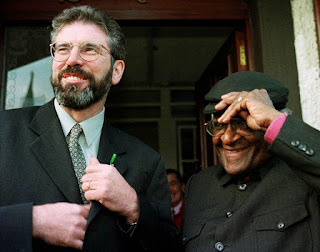
Desmond Tutu
I had the honour and pleasure of meeting Desmond Tutu over the years. He was a friend of Ireland and a supporter of the Irish peace process. He was a remarkable, compassionate and inspirational human being. He never compromised on his belief in the essential goodness of people or on the imperative of dialogue as the means of resolving differences.
In Irish there is a saying: ���Is ar sc��th a ch��ile a mhaireann na daoine��� which translates as: ���We all live in each other���s shadow.��� Few people understood the essence of this connectivity between people better than Archbishop Tutu. It was a fundamental part of his religious faith and of his humanity. He worked for a better South Africa and for a better world. As an internationalist he welcomed the solidarity of others for the people of South Africa in their struggle against apartheid.
In 1984 as he travelled to Oslo to receive his Nobel Peace Prize Archbishop Tutu stopped briefly in London where he met Karen Gearon and Mary Manning, two of the Dunnes Stores strikers who were refusing to handle South African products. He applauded their solidarity. The efforts of the Dunnes Stores��� workers and others eventually forced the Irish government to ban South African goods.
Seven years later, in April 1991, Desmond Tutu was back in Ireland to meet with Anglican Church leaders and to take part in the annual Louisburg ���famine��� walk in Mayo. During his visit Archbishop Tutu commented on efforts at that time to establish a talks process in the North. Drawing from his South African experience Desmond Tutu advised: ���Let your negotiations be as inclusive as possible. Don���t let any feel they���ve been excluded. Let them be represented by those they regard as their authentic spokespersons, otherwise talks, as we have discovered at home, become an exercise in futility.���
The British and Irish governments and most of the Church leaders ignored his advice and the talks process collapsed. It was another six years before inclusive all-party negotiations commenced in September 1997.
As an internationalist the Archbishop was equally vocal in his opposition to the apartheid policies of the Israeli state and its ill-treatment of the Palestinian people. This aspect of his public work was also largely opposed by many in the political establishments and in the media. They failed to support him on these issues while he was campaigning on them. Yet after his death they praised him for his courage and vision.
The Boycott, Divestment and Sanctions (BDS) movement for Palestinian rights was established in 2005. Archbishop Tutu was among the first to endorse its strategy and efforts. In March 2014 Archbishop Tutu reflected on the role that boycotts and divestment played in encouraging world governments to end their support for the White apartheid regime; ���The same issues of inequality and injustice today motivate the divestment movement trying to end Israel's decades-long occupation of Palestinian territory and the unfair and prejudicial treatment of the Palestinian people by the Israeli government ruling over them.���
Desmond Tutu���s internationalism, compassion and humanity also saw him speak out against other forms of injustice and inequality and the threat posed by climate change. Only two months ago he took part in a United Nations campaign against homophobia and transphobia.
The death of Archbishop Tutu has silenced a voice of reason for a kinder, more caring, just and empathetic society. His courage through decades of struggle and his determined support for human rights and especially for the people of Palestine is a challenge to the international community.
I extend my condolences to the people of South Africa, to President Cyril Ramaphosa, and to Archbishop Tutu���s family.
Tom���s a Singer
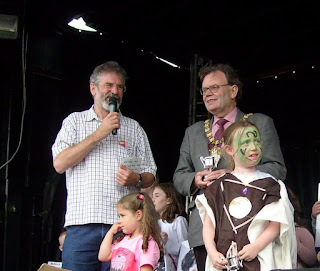
Our old pal Tom Hartley is a fine singer. He and I have been known to duet together. Back in the day in C Wing in Belfast Prison on the Crumlin Road, his dulcet tones echoed around the landings like a bird in flight while my rich baritone kept close harmony. Our sonorous grace notes soared and dipped in perfect tune. Even now decades later, men locked in the loneliness of their cells at that time, and recalling nowadays how they were transfixed by the magical quality of our voices, will shed a tear at this musical memory. I even remember Prison Officers being moved by these moments. Tom always said he couldn���t abide mediocrity.
And that certainly is the case as far as his singing was concerned. The Creggan White Hare bounded freely along the prison landings. To be followed by the poignant tale of Sliabh Gallion Braes. For a few liberating minutes we were all free from the melancholy of the Crum and transported by the strength and melodiousness of song into another place. That���s where the Blues come from. From the slave plantations and prisons. From the chain gangs. Or in our case the latrines in C Wing.
Tom���s musical roots go deep. A pioneer - though not of the abstemious kind - of music sessions and a traveler to fleadhs when the best seisuns were on the Monday or Tuesday after the visitors had gone home. Tom is steeped in ceol. That was the sixties. Away back in 1969 and behind the barricades I recall he and I and some friends sharing the new recording of O Riada Sa Gaiety. We were in Tom McGoldrick���s mother���s parlour and we were all enthralled by this new confident presentation of traditional music. Here was our music outted from the backrooms and kitchens and halting sites or the corners of fair grounds or entrances to GAA pitches.
Two recent RTE programmes brought all this back to me. Cosc - Seven Drunken Nights the story of how the Dubliners got on to Top of The Pops and The Flourishing, which is a wonderful televisual journey back into those days of our folk revival. Seven Drunken Nights was an English language version of Peig��n agus Peadar recorded by traditional singer Seosamh �� h��anaigh years earlier and given by him to Ronnie Drew in O���Donoghue���s pub one night. When The Dubliners released Seven Drunken Nights as a single it battled its way into the English charts in 1967 along with The Beatles, The Rolling Stones, Jimi Hendrix and the Kinks.
Back in Dublin RTE banned them from the airwaves. Because their song is about an unfaithful wife. Too sexually explicit for the ���national���- mar dhea - broadcaster. When news of this broke the song went immediately to Number One in the Irish charts. The people approved.
Seosamh �� h��anaigh wistfully remarked that his Peig��n agus Peadar was never banned. It continued to be heard on the airwaves. Apparently without offending anyone.
The Flourishing reflects on the emergence of our music from the ���underground��� into the foreground and mainstream in the sixties and seventies. It is a terrific documentary.
It reminded me that traditional music was sustained by families steeped in the tradition, including the Traveller Community who deserve great credit for keeping our song and music alive. Comhaltas Ceolt��iri ��ireann also deserve great credit. And the people of the Gaeltacht communities. So too our exiled children in America. Following the shameful disappointment of the post revolutionary period and the awfulness and savagery of the civil war and the enforcement of partition the mass exodus of Irish people included musicians from all parts of our island, many with their own styles and local sets. Some of the more prominent of them recorded these tunes.
Others recorded nationalistic or republican songs. They included The Clancy Brothers and Tommy Makem. Slowly these recordings travelled back home. The 50th Anniversary of the 1916 Rising saw them increase in popularity and the emergence of ballad seasons and ballad groups.
The traditional music revival took a huge leap forward with Se��n �� Riada��� s musical soundtrack for Mise ��ire, George Morrison���s film about the 1916 Rising. O Riada was a musical visionary freed from the neo colonial cultural amnesia of his time. He was proud of our culture and had the vision and talent to reboot it and bring it to audiences who embraced it also with pride. They included young musicians who stayed true to the tradition while fusing it with their own genius. Pipers, box players, fiddlers, fluters, harpers, tin whistlers. Even the humble bodhr��n came into its own. And singers in Irish and English. And se��n n��s dancers.
Our pal Tom was useless at dancing. He still is. Ted is our Michael Flatley. Agus mise fh��in.
Not everyone appreciated our singing. Once in Grosvenor Road RUC Barracks the RUC took grave exception to our rendition of The Oul Triangle. I suppose hearing it twenty seven times without pause can be trying. They threw us out.
���We wanted you to sing��� said the Duty Sergeant. ���But not like that. Get out of here and give our heads peace.���
Tom stood in front of him. Legs apart. Shoulders back. Chest out. He smiled angelically, put his hand up to his ear. He closed his eyes, cocked his head back and turned his face upwards. He beckoned me to join him. As I did he put his other hand on my shoulder. We let our voices ring out.
���A hungry feeling came o���er me stealing. The mice lay squealing in my prison cell ������
���Get out,��� the RUC man screamed at us.
So we did.
Our pal Tom used to make bodhr��ns. He played them also. I have one of his original drums. He used goatskins. They stunk to the heavens when he was drying them out. Incidentally he got some of the tricks of bodhr��n making from an old man in Sandy Row who also made Lambeg drums. Music unites us all.
So there you have it. Let the music keep your spirits high.
Gerry Adams's Blog
- Gerry Adams's profile
- 29 followers

