
Renee Giarrusso's Blog, page 3
May 15, 2025
68. From Burnout To Brilliance – It Starts With You, The Leader
Over the last 12 months, I’ve been navigating one of the biggest personal challenge of my life—cancer treatment. While it’s tested me physically and emotionally, it’s also reinforced the importance of purpose, energy, and connection. I’ve continued working throughout, not because I had to, but because I deeply believe in what I do and the impact it has. That experience inspired this solo episode of the Limitless Leaders Podcast, where I explore how we can move from burnout to brilliance—especially in a fast-changing, high-pressure world.
Burnout is more than just feeling tired. It’s a depletion of energy—physically, mentally, emotionally, socially, and spiritually. And it’s more common than ever. In this episode, I unpack five practical strategies that I’ve used (and shared with clients) to restore energy, build self-awareness, and lead with greater intention.
Whether you’re leading a team, running your own business, or simply trying to keep up with life, these insights will help you reconnect to what matters and recharge in a sustainable way.
You can watch the podcast here, click the image below, or listen on your favourite platforms.
Key Takeaways:Here are the 5 key strategies I shared:
1. Normalise Mental Health Conversations
As leaders, it’s up to us to notice when someone isn’t quite themselves. High emotional intelligence means checking in with curiosity—asking “What do you need?” instead of “Are you okay?” These moments of genuine connection create trust and psychological safety.
2. Practice Sustainable Habits
It took me 19 years in business to realise—we never finish everything in one day. I’ve learned to design boundaries, build in recovery time, and encourage deep work. It’s not about doing more, but doing what matters with energy and clarity.
3. Adopt a Gift Mindset
Challenges come with lessons—if we’re willing to see them. I live by this philosophy and encourage teams to do the same. Sharing the gifts from our challenges not only helps us grow, but also creates a survival guide for others.
4. Reconnect with Your Energy Score
Rate your energy—physically, mentally, emotionally, spiritually, and socially—from 1 to 5. Where are you at? When was it last a 5? What were you doing then, and how can you bring more of that back? Self-awareness is the foundation of sustainable success.
5. Redefine What Support and Success Look Like
Saying no is sometimes the most supportive thing we can do for ourselves. I now limit my weeknight events to two, so I can show up where I’m needed with full presence. This boundary protects my energy and helps me lead with clarity and purpose.
Enjoy This Podcast?
Leadership in changing times can be difficult, but you can adopt certain traits to get your team through it. You can also join mentorship programs to gain the skills you need.
Please post a review and share it! If you learned something by tuning into this podcast, do not hesitate to write a review and share it with your friends! The world needs more people with the drive and leadership qualities to make the world a better place. We need strong leadership skills and a learner’s attitude today more than ever.
 To listen to the podcast, select your favourite link below.
Apple: https://www.reneegiarrusso.com/PodcastOnApple
Spotify: https://www.reneegiarrusso.com/PodcastOnSpotify
Android: https://www.reneegiarrusso.com/PodcastOnAndroid
YouTube: https://www.youtube.com/@ReneeGiarrusso-RGDynamics
Have any questions? You can contact me through these platforms:
Company website
Instagram
Facebook
LinkedIn
To leading the future,



May 4, 2025
The AI Advantage: How Smart Leaders Are Reinvesting Time in Human Connection
There’s no denying it; AI is transforming the workplace.
From automating administrative tasks to streamlining data analysis and handling basic customer queries, it’s giving leaders something far more valuable than information: time.
AI has its place, and as a thought leader, IP creator and writer I will never use to generate my content, but I am seeing the value it adds doing the mundane tasks that enables me to do the great things opposed to the good things.
Working with leaders and teams for over 2 decades the challenge of being time poor is one of the constant pressures’ leaders face and a challenge that involves self-management to rectify.
Only last week I was working with a CEO around increasing his productivity and connection with his team. During the session I asked him “What AI are you using and how much time is it saving you? He agreed that he was saving time, up to 5 hours per week and when I asked him what he was doing in that time, he replied “Catching up on emails, focusing on sales and the usual, putting out fires.”
It natural to fill time in a reactive way but what are the best leaders doing with that time?
They’re not simply ticking more off their to-do lists. They’re choosing to reinvest it where it matters most, is the human touch. Because while AI can increase efficiency, it can’t replace empathy, presence, or the deep connection that inspires and engages teams.
We need to bring back the human touch and direct our energy, heart, connection and frequency to people not computers.Many workplaces are experiencing a disconnection crisis that AI is contributing to.
What I am seeing across the multiple industries we work in is the following:
Soft skills are fading: With AI doing the “talking,” empathy, influence, and conflict resolution are taking a back seat.Shallow communication: Zoom calls, Slack messages, and emails have replaced deeper, in-person dialogue. Efficiency is up, but trust and collaboration are down.Information overload: With data coming at us from all angles, it’s harder to focus, stay engaged, and think critically.Fewer human interactions: Automated workflows and chatbots are replacing conversation, making people feel like cogs in a machine.Emotional disconnect: AI lacks emotional intelligence and without intentional efforts, so can our teams.Creativity and critical thinking on the decline: AI’s instant solutions may reduce innovation, as teams defer to machines instead of exploring their own ideas.Burnout and fatigue: Constant digital noise leads to stress, mental fatigue, and a sense of overwhelm.Loss of presence: Leaders struggle to truly listen amid distractions, impacting psychological safety.Culture erosion: Remote and AI-driven communication weakens the sense of belonging and team identity.Over-reliance on AI for decisions: Critical thinking suffers when people stop questioning and start deferring.But here’s the good news: forward-thinking leaders are recognising these risks and using the time AI saves to bring back the human touch.
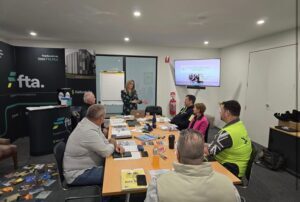
I believe AI has created the space to bring back what fast-paced business and digital overload have pushed to the side and that is genuine human connection.
We are doing a lot of work with our clients on this, so I’ll share some ways Limitless Leaders are making this shift and maximising the time AI gives us back.
7 Ways to Bring Back the Human TouchBe Present, Not Just Available
Being available on Slack or email isn’t the same as being truly present. Take time for face-to-face or voice-to-voice conversations and minimise distractions. Set boundaries with your technology to create intentional, human moments. Whether it’s a five-minute phone call or a longer check-in, being fully there makes people feel seen and heard.
Master Verbal Communication
Verbal communication is where connection lives, in tone, energy, and responsiveness but written communication is often prioritised in modern workplaces. Leaders who invest in sharpening their verbal skills are better able to influence, inspire, and connect.
Ask Better Questions
AI can provide answers, but I believe leaders need to ask the questions that matter. Practice curiosity. Ask questions that go beyond performance metrics, like: What’s feeling heavy for you right now? What’s one thing you wish we talked about more as a team? What do you need help with? What lights you up? These can open space for honesty and connection.
Create Human-Centred Rituals
We all know that AI can streamline processes, but it can’t create belonging. Leaders can establish rituals that build team culture: eating together, weekly gratitude rounds, open mic sessions for new ideas, or monthly ‘Win Wednesday check-ins. Sharing our lesson we can adopt a Gift Mindset and share best practice as well as challenges. These don’t just foster connection they create psychological safety and a culture of care.
Lead with Emotional Intelligence
Efficiency doesn’t equal empathy. Leaders are choosing to re-centre their attention on people not just performance. That means recognising when a teammate is struggling, validating emotions, and cultivating environments where people feel safe to speak up.
Building your EQ takes time, but it starts with one key habit: be curious, not just responsive. Ask, “What else is going on here? “and then listen. Ramping up EQ in a world of AI is non-negotiable.
Be Present and Focused
Notifications, multitasking, and AI tools can make leaders feel like they’re always on but rarely present. But the best leaders are learning to pause. Give yourself permission to pause and just be. Reclaiming space to think, reflect, and engage fully.
Try blocking 15–20 minutes each day to be offline but available. Implement time for walking meetings, impromptu chats, or simply thinking deeply about challenges without screens.
Rebuild Culture Through Connection Rituals
Workplace culture can’t be outsourced to AI. Culture is about the people and is built through shared moments, rituals, values in action, and human storytelling. Limitless leaders are reintroducing simple, high-impact rituals such as weekly gratitude rounds, storytelling sessions, team wins celebrations.
These are only micro-moments, but they build impact resulting in stronger relationships, shared meaning, and a more connected workplace.
AI has the power to streamline, support, and scale but I believe it can’t replace what makes teams thrive: empathy, presence, trust, and connection.
Limitless leaders aren’t choosing between AI and humanity.
They’re using AI to make space for more humanity.
They’re asking: “What do I want to do with the time I’ve reclaimed?” And the answer, increasingly, is connect more deeply, lead more meaningfully, and communicate more powerfully.
Let’s bring the human touch back, one conversation, one moment, one decision at a time.
I’d love to hear your thoughts on this.
Lead to be limitless,
April 16, 2025
Looking For a Speaker Who Brings Energy, Authenticity, and Real-world Experience To The Stage?
If you're planning your next conference, leadership offsite, or team event—and you want someone who truly walks their talk—I'd love to support you.
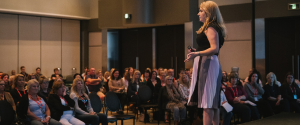
I’ve spent over two decades helping thousands of leaders and teams unlock their potential through the power of communication, mindset, and leadership. I bring this to life through thought-provoking interactive keynotes that are high-energy, deeply relatable, and most importantly, actionable. Every keynote is crafted with your audience in mind. No fluff, just powerful insights and real-world tools your people can use straight away.
I’m an international award-winning author, leadership coach, professional trainer and speaker—and I’m also someone who knows what it means to lead through challenge.
In April 2024, I was diagnosed with breast cancer. This week, I complete my 12-month journey of over 70 treatments—chemo, surgery, radiation, and ongoing targeted therapy. Through it all, I chose to keep showing up. I continued running RG Dynamics, stayed in service to my clients, and found strength I didn’t know I had.
Now, I’m sharing that story with audiences through my keynote “Working Through Adversity”—a raw, real, and inspiring session on mindset, resilience, and what it takes to keep moving forward when life throws you a curveball. The strategies I share aren’t just about surviving—they’re about thriving, no matter what you're facing at work or in life.
Here’s what people say:
“Renée Giarrusso is an exceptional leader, communicator, and speaker who brings passion, empathy, and optimism to everything she does. Recently recognised as a WorldCC Inspiring Woman for 2025, she uplifts everyone around her. Whether through her inspirational keynotes, leadership coaching, or the genuine care she brings to every conversation, she creates lasting impact and meaningful connections.” — Sharon Morris, Group APAC Head, WorldCC
We’re now taking speaker bookings for June – let’s bring energy and impact to your next event. If you’re ready to make your next event unforgettable, you can:
 Download my Speaker Kit and Showreel here.
 Book a discovery call via Mira at: admin@reneegiarrusso.com
 Or watch me in action here.
Let’s create something meaningful together.
Lead to be limitless,
March 27, 2025
67. Success Curiosity – What Is It For You? with Andy Reid
Join me in this Limitless Leaders Podcast episode featuring a conversation with Andy Reid, a renowned auctioneer, high-performance coach, author, and speaker. As the Director of Apollo Auctions Victoria, he manages a full-service auctioneering company serving more than 130 real estate agencies in Victoria.
Andy's purpose is to make success more accessible by making knowledge and information more relatable and real. His first book ‘Success Curious' is written in a way that takes success off the pedestal and into reality for those that feel like success isn't for them.
You can watch the podcast here, click the image below, or listen on your favourite platforms.
Key Takeaways:
For Andy, success isn't for the few. It appears to be constantly seen as something that the few possess because of how ‘hard' it is to achieve success. But for him, if we have enough good reasons, then success isn't difficult at all for anyone.
In order to be taken seriously, you need to take yourself seriously.Own who you are, and be content with who you are not.Believing in your own credibility can be a reoccurring challenge. Your concern can be of your own making.Listening to too many opinions when you're on the rise can be detrimental.Instead of constantly chasing the next big idea, recognize your unique role. Translate big ideas into something the world can understand and embrace.Challenges, especially in mental health, can be a catalyst for self-reflection, growth, and a deeper understanding of life.Following your gut and saying yes to the right opportunities can shape your journey and personal growth.Taking full accountability for your actions is empowering and brings a sense of freedom.Contact Andy Reid:
Enjoy This Podcast?
Leadership in changing times can be difficult, but you can adopt certain traits to get your team through it. You can also join mentorship programs to gain the skills you need.
Please post a review and share it! If you learned something by tuning into this podcast, do not hesitate to write a review and share it with your friends! The world needs more people with the drive and leadership qualities to make the world a better place. We need strong leadership skills and a learner’s attitude today more than ever.
 To listen to the podcast, select your favourite link below.
Apple: https://www.reneegiarrusso.com/PodcastOnApple
Spotify: https://www.reneegiarrusso.com/PodcastOnSpotify
Android: https://www.reneegiarrusso.com/PodcastOnAndroid
YouTube: https://www.youtube.com/@ReneeGiarrusso-RGDynamics
Have any questions? You can contact me through these platforms:
Company website
Instagram
Facebook
LinkedIn
To leading the future,
Limitless Leadership: Do You Have Empathetic Boundaries Set Up?
Empathy is a vital emotional skill to build on but at the same time, as with any behaviour, we can do this in overdrive.
In any workplace, empathy is a non-negotiable leadership skill.
Leaders and executives who demonstrate empathy create stronger teams, foster trust, and drive engagement.
This year, I am noticing people already feeling like they are running the fatigue marathon with many being challenged by what I call compassion or empathy fatigue.
There is a fine line between being empathetic and becoming emotionally drained.
Empathy fatigue—a state of emotional exhaustion from constantly absorbing others’ stress—can leave leaders feeling overwhelmed, depleted, and ineffective.
To lead sustainably, executives must practice empathetic boundaries—the art of balancing care for others with self-preservation. By setting these boundaries, leaders can remain compassionate without sacrificing their own well-being.
Why Empathy Matters in LeadershipEmpathy is the ability to understand and share the feelings of others. It builds psychological safety, strengthens relationships, and enhances workplace culture. Research shows that empathetic leadership increases employee satisfaction, retention, and overall performance.
However, when we overextend ourselves emotionally, we risk burnout. We may feel personally responsible for solving every team issue or constantly absorb others’ stress. Over time, this leads to decision fatigue, reduced effectiveness, and even disengagement from work.
The key is to lead with empathy while maintaining boundaries—ensuring that you support your team without depleting your own energy.

Learn when to say “No”
Being an empathetic leader doesn’t mean saying “yes” to every request. Setting boundaries requires knowing when to decline the things and people that drain your time or emotional energy. A key insight here is to separate the person from the event or situation, you are saying no to the conversation not the person.
When declining, ensure you use empathetic language to maintain trust. Instead of a blunt “no,” try: “I’d love to help, but I don’t have the bandwidth right now and cannot give you my full attention. Let’s look at other options together.” This approach respects both your limits and the other person’s needs.
Know what is and isn’t yours to carry
Empathy doesn’t mean taking on everyone’s problems. As a leader, your role is to provide support and guidance, not to fix every challenge your team faces. When someone shares a struggle, listen actively but remind yourself: “I can support them, but I don’t have to carry their emotional load.”
When employees bring personal or work-related concerns, acknowledge their feelings and ask, “How can I support you?” rather than assuming responsibility for finding a solution.
Master your emotional awareness
Empathetic leaders tune into their team’s emotions, but that doesn’t mean they must take them on. It is important to be able to differentiate between empathy and emotional entanglement.
A good example is when someone shares stress or frustration, practice what I call detached empathy—acknowledge their experience, but remain emotionally separate. A simple mental reminder is a reframe where you say to yourself “Their emotions are not mine to carry”.
Set expectations around communication
How you value your time and set boundaries around your availability will determine how others value your time. Those who don’t set communication boundaries risk being available 24/7, leading to exhaustion. While openness is essential, so is protecting your time and energy. Remember you cannot pour from an empty cup.
Take some time to define communication norms. For example, let your team know you’re available for urgent matters but encourage them to problem-solve first before escalating issues or to seek out someone else who may help (peer coaching). Use tools like scheduled office hours or structured 1:1s to ensure meaningful conversations without constant interruptions.
Make self-care a priority and show others the way
If you’re constantly giving without recharging, you’ll have little energy left for yourself or your team. Self-care isn’t selfish—it’s essential for sustained leadership.
Set up non-negotiable self-care routines, whether it’s a walk each morning, blocking out lunch breaks away from your desk or unplugging after work. When we lead by example and show we are embracing self-care behaviours this encourages our team to do the same, fostering a culture of balance and wellbeing.
Use empathy to foster strong leadership
Empathy is a superpower, and I believe, one of the most powerful emotional skills a leader can demonstrate. On the flip side, as I’ve expanded on above, we need to use empathy, with boundaries, or it can result in a source of burnout. By practicing empathetic boundaries, executives can lead with compassion while maintaining their own energy and effectiveness.
True leadership isn’t about absorbing all problems—it’s about empowering others while taking care of yourself.
When leaders strike this balance, we can be Limitless in what we do and who we are. We can create workplaces where people feel valued, supported, motivated, and resilient—without anyone, including the leader, burning out.
What is the cost to you, other and your leadership not setting up empathetic boundaries?
Take some time now to set up your boundaries to remain the best you can be!
As always, I’d love to hear your thoughts.
Lead limitlessly,
March 13, 2025
Emotional Intelligence – The Key to Leadership and Culture in the AI Era
Soft skills, or human skills, define how we engage with others and include leadership, communication, critical thinking, and problem-solving, to name a few.
Many other cognitive and socio-emotional skills come into play, and these skills often provide the foundation for high emotional intelligence (EQ).
EQ is defined as someone’s ability to recognise, understand, and manage their own emotions while also recognising, understanding, and influencing the emotions of others.
“Emotional-social intelligence is a cross-section of interrelated emotional and social competencies, skills, and facilitators that determine how effectively we understand and express ourselves, understand others and relate with them, and cope with daily demands.”
I see many organisations that are good at optimising technical and practical skills but leave out a focus on Emotional Intelligence (EQ). EQ is a key “soft skill” that needs to be deepened and developed and is the new psychology of leadership.
Technical know-how is no longer enough!
Pre-pandemic, 87% of employees lacked cognitive, interpersonal, and leadership soft skills required for the future. The post-pandemic workplace and the new world of hybrid work and AI require us to accelerate our EQ and soft skills as we engage both digitally and face-to-face.
Late last year, I was coaching an executive client; let’s call him Adam.
Adam was struggling with the disconnection between individuals in his team. His nine direct reports were working from home three days a week, which seemed to work well until it wasn’t.
He noticed that many of his team members were not interacting with each other. When he brought the team together, all conversations and input were topical. Everyone seemed demotivated and a bit flat.
He told me that the right systems were in place, they had good procedures to follow, regular meetings were locked in, and everyone had clear KPIs and accountability. However, I noticed that Adam’s insights were solely focused on technical elements and not so much on people skills, connections, and relationships.
Adam is technically brilliant at what he does but often lacks awareness of what makes others tick and how to access that for good. This results in him failing to manage and address what’s happening with those around him. We worked through some key aspects of EQ, including how he could engage 1:1 with each person, understand where they are at and why, and then look at ways to manage this as a team.
Like anyone leading in the workplace, we need to review and renew our ways of working on an ongoing basis. Adam agreed that he needed to understand others' motivations and strengths and build rapport by learning more about them as people.
He also felt he could bring in more empathy, optimism, and relationship-building.
EQ comprises many competencies that we all need to deepen and develop ongoing.
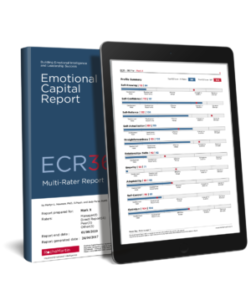
For over 18 years, RG Dynamics has educated thousands of leaders and teams in EQ and has now brought in the world-class RocheMartin EQ tool, which we use in our 1:1 coaching programs and EQ workshops.
The below includes an overview of the 10 competencies of the tool:Inner Focus: Self-knowing, Self-control, Self-confidence, and Self-relianceOuter Focus: Adaptability, Optimism, Self-actualisationOther Focus: Empathy, Relationship skills, and Straightforwardness
When I see emotionally fit organisations, I witness them nurturing strong, inspiring leaders and building connected rock-solid teams. They understand their and others' strengths and weaknesses and leverage this to impact group dynamics. Highly emotionally fit teams help every team member reach their full potential, empower others to recognise their strengths and become more self-aware, and instill a passion for learning that drives continual improvement.
When organisations are emotionally fit, it is easier to define and embed company beliefs. A vibrant company culture will nurture strong employee relationships, increase staff retention rates, and attract and retain top talent.
Emotional Intelligence is the thread that needs to be woven through the tapestry of every organisation.
Key Benefits of EQ:Leadership DevelopmentResearch consistently shows that leaders with high EQ build stronger relationships, understand colleagues’ motivations, and handle difficult conversations with positive outcomes.
Cultural TransformationLeaders shape culture, but many organisations face the challenge of embedding values into actionable behaviours that define their company’s way of doing business.
Diversity & InclusionFor a team to function well, psychological safety is essential. Creating an environment where individuals feel valued and committed to understanding each other fosters collaboration and trust.
Wellness & WellbeingWell-being is now crucial in leadership. Emotional intelligence supports emotional regulation and helps build a workplace culture that prioritises employee care and protection.
Recruitment & SelectionStudies show that selecting candidates based on EQ rather than just technical skills leads to superior performance and stronger team dynamics.
Empowering Sales TeamsIn today’s market, the emotional experience of a customer is more important than the product or price. High EQ in sales teams fosters authentic connections and long-term client relationships.
EQ plays a large role in the new world of AI.
As artificial intelligence continues to shape industries, the need for emotional intelligence has never been more critical.
While AI can process vast amounts of data and automate tasks, it cannot replicate the nuances of human interaction.
Emotional intelligence equips leaders and teams to navigate the complexities of a hybrid workplace and interact effectively with AI systems. Understanding and managing emotions in digital environments, particularly when remote communication replaces face-to-face interactions, is essential.
Leaders must be able to foster connections, read emotional cues through digital platforms, and offer empathy in ways that machines cannot. EQ becomes the key differentiator in humanising interactions, making it an invaluable asset in the world of AI.
Creating an emotionally fit organisation is non-negotiable. We need to deepen human connection with hybrid work in play, markets changing, new products and services, AI, and so much more.
How are you developing Emotional Intelligence in your leaders, teams, and overall business culture?
Lead to be limitless
February 28, 2025
The Awareness Advantage: Mastering Thoughts, Feelings, and Feedback for Leadership Growth
Great leaders operate with multifaceted awareness—balancing their thoughts, emotions, and external feedback.
We cannot lead ourselves or others if self-awareness is missing. For example, we cannot demonstrate empathy if we aren’t self-aware first.
Self-awareness has 3 main components; our thoughts and feedback form the outside world that create our feelings and what we do or do not action.
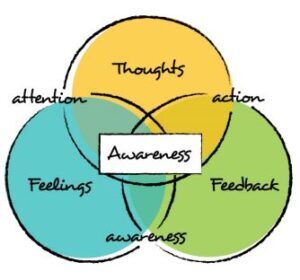
Let’s explore these components and how they shape leadership effectiveness.
The Power of ThoughtOur thoughts dictate our actions, influencing how we interpret challenges and opportunities.
Brain science highlights the concept of neuroplasticity—our ability to rewire thinking patterns. Similarly, in Buddhism, the idea of planting karmic seeds suggests that our recurring thoughts shape our future reality.
Consider this: You assume a colleague is avoiding you, and soon, you start focusing on their perceived shortcomings. In reality, their behaviour could stem from stress, shyness, or even their own assumption that you’re avoiding them. Our inner voice narrates our experiences, and unchecked, it can lead to:
Awfulising – assuming the worst, creating a negative spiralFiltering – focusing only on the negatives in a situationPersonalising – blaming yourself unnecessarily for challengesAs Robin Sharma puts it: “The thoughts you think today will determine the results you see tomorrow.”
The negative inner dialogue we all do at times, I call the DJ in our head.
It sounds like us but remember it’s our monkey mind in overdrive.
Don’t give the DJ in your head any airtime.

 Name your inner critic – A client of mine called her self-doubt ‘Needy Ned.’ Naming it gave her control and even made her laugh, shifting her mindset. Talk to yourself like a friend – Be as kind and supportive to yourself as you would to a colleague. Flip your beliefs – Instead of “I’ll never get through this,” ask, “What’s the opportunity in this challenge?” Reframe key words – Replace “I’m nervous” with “I’m excited” to shift your energy and focus.
Self-awareness doesn’t eliminate mistakes; it allows you to learn from them.
Understanding FeelingsStrong leaders don’t just think critically—they also recognise and manage their emotions. Thoughts and feelings are interconnected but distinct:
Thoughts are the internal narratives we create.Feelings are emotional responses triggered by those thoughts.For example, if you say, “I feel overwhelmed,” you may mean:
Thought: “I think I’m drowning in responsibilities.”Feeling: “I feel out of control.”By separating thought from feeling, you gain clarity and make decisions based on logic rather than pure emotion.
Leveraging FeedbackExternal feedback enhances self-awareness, helping leaders understand both strengths and blind spots. Organisations that foster a culture of feedback—peer-to-peer and management-led—see improved leadership agility and team performance.
Leaders process feedback differently:
Internally motivated individuals take feedback into account but ultimately rely on their own judgment.Externally motivated individuals view feedback as directive and adjust accordingly.Many senior leaders tend to be internally focused, relying on intuition rather than external input. While experience is valuable, a reluctance to seek feedback can lead to missed opportunities and blind spots.
We need feedback from the outside world in conjunction with our own thoughts to create and foster deep self-awareness.
To make feedback effective: Tailor it to the recipient’s preferences—some prefer frequent feedback, while others need time to process. Deliver it in the right setting—some individuals thrive on public recognition, while others respond better to private discussions.
Journaling is a powerful method for refining self-awareness. Reflecting on these three areas can provide clarity:
Thoughts: What happened? What did I tell myself? What beliefs shaped my reaction? Feelings: How did I respond emotionally? Did I react or respond thoughtfully? Feedback: What external cues did I receive? How did others react? What insights can I gain?
Final Thoughts
Great leaders and executives continuously refine their thoughts, feelings, and openness to feedback to navigate challenges with clarity and confidence.
Cultivating this awareness isn’t just about self-improvement—it’s a strategic advantage in leadership and decision-making.
As always, I’d love to hear your thoughts.
Lead to be limitless.
January 30, 2025
Everyday Evolutions – Kick-Start Your Team in 2025 with Purpose
Can you believe we are in February!
With last year long gone in the rear-view mirror and 2025 stretching ahead, now is the perfect time to reflect, refocus, and set your intentions for the year to come.
Last year, for many, was filled with growth, opportunities, and lessons learned—valuable insights we can use to propel ourselves forward in 2025.
At the start of a new year, it's natural for people to feel ready to make the changes they've been putting off. A fresh year often feels like a clean slate, inspiring action.
But here’s the thing: why wait for a new year to evolve or do things differently?Instead of setting New Year’s Resolutions, I believe in Everyday Evolutions—a mindset of continual growth and reflection. Reassessing where we are, setting new goals, and making changes is something we can do at any time. Regular reviews throughout the year help us stay aligned, energised, and on track.
That said, February is a fantastic time to pause and reflect.
Asking yourself (and your team) a few simple yet thought-provoking questions can set the tone for a re-energised and intentional start to the year.
Here are six impactful questions to help you kick-start your 2025 with purpose: What am I doing that I enjoy, and how can I do more of it? What could I change or do differently to achieve my goals and be where I want to be? What or who do I need to say “no” to? (Consider creating a “no” list to align your actions with your values and boundaries.) What do I stand for? What don’t I stand for? What lessons or gifts from 2024 can I bring into my work and life this year? What is my BIG word for 2025? (Choose a word that reflects your values, goals, and aspirations for the year. Examples could include Balance, Focus, Collaboration, Well-being, Simplicity, Growth, or Empowerment.)
“Action springs not from thought but from a readiness for responsibility.”
– Dietrich Bonhoeffer
Answering these questions is just the first step. The real magic happens when you commit to action. Use your responses to create small, consistent habits and rituals that foster sustainable change. It’s not about chasing quick wins but building lasting transformations.
Sustainable changes, not just obtainable ones, are what truly make a difference.
Once you've reflected, consider sharing your answers with a trusted peer or incorporating this as a team exercise. Discussing your goals and insights with others encourages accountability and can spark fresh ideas for collaboration and growth.
At RG Dynamics, we are excited to partner with you to make 2025 a year of continued success and limitless possibilities.
Together, let’s make this year exceptional.
Lead to be limitless.
January 12, 2025
Accelerate Growth – Transformational Programs for Leaders and Teams in 2025
It feels like time has flown since the Christmas break, and many of our clients are already mapping out their development strategies for leaders and teams.
How are you accelerating your leaders and teams this year?
For over 19 years, RG Dynamics has trained and coached thousands of leaders and executives across 24+ industries through our tailored, transformational programs. Our programs focus on cohorts of leaders (from emerging to senior) and teams within organisations seeking growth and an immersive experience where the learning sticks and is brought to life back on the job.
Having worked across diverse industries, we’ve encountered common challenges and opportunities, allowing us to bring a rich knowledge and experience to your organisation. We are renowned for our passion for learning, thought-provoking content, and the energy and commitment we bring to every program we deliver.
When I founded RG Dynamics in 2006, my sole purpose was to help create exceptional workplaces where people thrive, feel purposeful, and contribute by doing what lights them up.
Why development must be a journey, not a one-off event.
Development should be an ongoing journey, not just a “sugar hit” that motivates participants, only to lose momentum when they return to their roles.
“Learning is an active process. We learn by doing.
Only knowledge that is used sticks in your mind.”
– Dale Carnegie
At RG Dynamics, we’ve delivered over 4,000 programs. Every engagement begins with understanding your needs and organisational objectives aligned with your capabilities. We validate these through a pre-program diagnostic to solidify focus areas, content, and delivery modes.
Winning three prestigious leadership awards in 2024, the constant feedback was that our tailored process made our clients feel like we were part of their business, delivering original bespoke solutions that create change and motivate high performance and a culture of connection.

Programs for 2025
As you plan for the year ahead, here are some of our signature programs. Each is tailored to meet your organisation’s unique objectives and priorities:
For LeadersTake cohorts of leaders on a tailored journey with topics aligned to your objectives:
Limitless Leaders Acceleration ProgramEmotional Intelligence ProgramPresenting with Impact ProgramFor Teams
Workshops followed by group coaching to embed learning:
Limitless TeamsMapping Motivation for Team SuccessCommunicating with ImpactCook & Connect 1-Day Team Building RetreatFor Organisations & CulturePrograms designed for teams or town halls, covering essential skills like the “12 Soft Skills of a Gift Mindset” and other topics critical to organisational success:
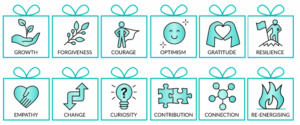 The Gift Mindset Culture ProgramSkill Pills1:1 Executive Coaching & Mentoring
Personalised coaching programs to empower leaders and executives.
Leadership & Executive CoachingJoin Our Public Programs in MelbourneLooking to grow and connect outside your organisation?
We’re excited to offer three public programs in Melbourne in 2025!
Each program is limited to 15 participants, with early bird offers available.
Limitless Leadership MasterclassLead-Self ~ Lead-Team ~ Lead-Business
February 14th 2025, 8.30 am – 4.00 pm
We can’t rely on the way we have led in the past. The world has changed, and we need to change with it. Shift from the overwhelm of a management mindset to a clearer and more focused leadership mindset.
What Lights YOU up Workshop!Identify and leverage your true energisers.
March 13th 2025, 8.30 am – 4.00 pm
To effectively connect and communicate, we need to understand what lights each other up and create the space to appreciate and leverage our differences.
Learn what lights you up.
Ramp up EQ in a World of AI WorkshopBoost human skills and connection.
April 10th 2025, 8.30 am – 4.00 pm
Emotional Intelligence (EQ) is often overlooked and is a key “soft skill” that needs to be deepened and developed.
More than ever, we need to invest time to make ourselves future-fit.
All our programs are fully tailored to align with your organisational needs and complement your existing internal frameworks.
If you’re curious about exploring how we can support your leaders and teams, let’s have a conversation.
Book a FREE discovery call with me here.
Here’s to 2025—a year of learning, growth, and transformation!
Lead to be limitless.
January 9, 2025
66. How Nature Can Be The Solution To Our Wellbeing with Dr. Jenny Brockis
What keeps us truly healthy? In this episode of the Limitless Leaders Podcast, I interview Dr. Jenny Brockis, a best-selling author, board-certified lifestyle medicine practitioner, and workplace wellbeing consultant. Dr. Brockis shares her personal journey from burnout to a reinvigorated passion for medicine, fueled by her discovery of lifestyle medicine.
Learn about the six pillars of health, the importance of nature in our lives, and practical steps to create a happier, healthier lifestyle—both at work and at home.
If you’re a leader, business owner, or someone striving to balance personal health and professional success, this episode is packed with wisdom and practical strategies to help you thrive.
You can watch the podcast here, click the image below, or listen on your favourite platforms.
Key Takeaways:
Dr. Brockis is deeply committed to helping others achieve better health and wellbeing. By embracing Lifestyle Medicine, she now leads by example, embodying the principles she passionately advocates.
Discover what lifestyle medicine is and why it’s a game-changer for your health and wellbeing.Learn how burnout transformed Dr. Jenny’s journey, inspiring a fresh perspective on health and balance.Uncover the science-backed benefits of nature—how it reduces stress, boosts mental health, and improves your overall quality of life.Get easy, actionable tips you can start using today to elevate your well-being and feel your best.Spending time outside offers “soft fascination,” calming our brain and body through the complexity of natural sights and sounds.Businesses can improve employee well-being by integrating natural elements into workspaces, such as plants, colors, or images.Lifestyle choices play a critical role in preventing, managing, and even reversing many chronic illnesses.Contact Dr. Jenny Brockis:
Dr. Jenny Brockis on Instagram
Enjoy This Podcast?
Leadership in changing times can be difficult, but you can adopt certain traits to get your team through it. You can also join mentorship programs to gain the skills you need.
Please post a review and share it! If you learned something by tuning into this podcast, do not hesitate to write a review and share it with your friends! The world needs more people with the drive and leadership qualities to make the world a better place. We need strong leadership skills and a learner’s attitude today more than ever.
To listen to the podcast, select your favourite link below.
Apple: https://www.reneegiarrusso.com/PodcastOnApple
Spotify: https://www.reneegiarrusso.com/PodcastOnSpotify
Android: https://www.reneegiarrusso.com/PodcastOnAndroid
YouTube: https://www.youtube.com/@ReneeGiarrusso-RGDynamics
Have any questions? You can contact me through these platforms:
Company website
Instagram
Facebook
LinkedIn
To leading the future,


