
Renee Giarrusso's Blog, page 12
June 13, 2022
Ready to step outside your organisation and learn, connect and grow with other leaders?
Since the commencement of 2022, we have had the pleasure of bringing together leaders from diverse industries to learn, connect and collaborate as we connect and grow with other leaders.
We have created an amazing program to facilitate this, called the Limitless Leaders 90-Day Connection.
This program was born out of a need to create a dynamic space where leaders could connect outside their organisation whilst further developing the key enablers to accelerate their leadership, communication and mindset.
The 90-day Connection is a dynamic learning experience that will take your leadership and performance to the next level.
It is a rolling 3-month program created to bring like and unlike minded leaders from organisations and businesses together. This program is for leaders who want the space to step away from their industry to learn, grow and connect with others from diverse industries in real-time, within openly facilitated regular forums in a learn-and-do environment.
At each 90-day immersion, we focus on a different theme based on what YOU need right now.
The previous 2 programs focused on Leading Self and Leading People, and kicking off in August; we will focus on the key enablers and tools to Lead and Develop High Performing Teams.
90 Day Connection Delivery modeThe mix of delivery modes in this program (masterclass, group mentoring, mastermind and coaching) is the same for each 90-day program and focus on immersing attendees in the content and the experience. It provides the space to apply newly found practices back in the workplace.
Learning in a variety of ways opens contribution and the ability to practice, take the time to self-reflect and plan and share experiences in real time. It also makes for a fun and immersive experience!
True commitment, effective communication and deep Connection are key in any leadership role, team and workplace culture. Limitless Leaders lead limitless teams creating a forever evolving limitless culture.
Lead and Develop High Performing TeamsBeing part of 2 of the Limitless Leaders 90-day programs has been an amazing experience. These sessions are very engaging and interactive, combined with Renee's passionate and enthusiastic drive. I am benefiting by the training and coaching and feel privileged to be part of this program that RG Dynamics is providing. The guidance and tools delivered in the workshops, coaching and mastermind sessions are really helping me grow personally and professionally. If you are looking to elevate your leadership, mindset and communication and grow and connect with others outside of your industry I’d highly recommend this program. ~ Priya Srikanth – Regional Manager Workskil Australia
For our next immersion, the key program themes include:
Limitless team ladder and positionStages of team developmentThe 11 keys to Connection of self and othersDynamics of team buildingThe team building toolboxInteractive activities to embed2 Sides IN 2 Minutes game (1 copy per person)Challenging the status quoUsing curiosity to collaborateMastermind on team challengesLeading a hybrid teamDeveloping high performanceFraming expectationsSituational coaching styles and planStrength analysis of teamAction plan to implement90-day Program – What You GetAccess to all 4 immersions1 x full-day face-to-face live workshop1 x Master Mentoring session (virtual)1 x Mastermind session (virtual)30 minute 1:1 check in with Renée during the programAll materials and resourcesA forum to learn, grow and shareMorning and afternoon tea and lunch2 Sides IN 2 Minutes-The game to boost communicationCopy of Renee’s two award-winning books, Limitless Leadership and Gift Mindset®Access to the “Supercharge Working Remotely” online program (Valued at $389)Group Mentoring and Group Mastermind session and 1:1 coaching session will follow this workshop during September and October.Find out moreSuppose you are a leader or business owner with a growth mindset who wants to step away from their industry to contribute, connect and collaborate with others from diverse industries in real-time, within openly facilitated regular forums in a learn-and-do environment. In that case, you can find out more about how you can be involved in this career changing program, visit the 90-day Connection Program or reach out to us to book a discovery call with Renée.


May 22, 2022
36: Fostering an Attitude of Gratitude in and out of the Workplace
Welcome to another episode of Limitless Leaders Podcast.
We're almost halfway through 2022, and what a year it's been. After some health challenges two weeks ago where I ended up getting rushed to emergency with severe abdominal pains, with a four-hour waiting emergency and then overnight in emergency because there were no beds. While I'm continuing to get my health back in order, it’s prompted me to want to talk about gratitude today.
So today, I wanted to just share what I'm seeing out there as we have teams, reconnecting back in the office, we've still got a lot of companies having what I'm calling the back to Office resistance, and adapting to these new ways, you know, people that have got partners that have started working during COVID. And now they can't be in the office as much as they used to.
GRATITUDE AND RECOGNITION ARE INTERLINKED:[02.09] Today, I'm going to call it gratitude, and I'm going to call it out for what it is.
Gratitude and recognition are obviously interlinked. And what I love about gratitude is it forces us to reinforce the positives in our lives. We can be grateful for people – we can be grateful for situations we can be grateful for so many different things. THE DIFFERENCE BETWEEN BEING THANKFUL AND GRATEFUL:[02.43] I got asked the other day, what is the difference between being thankful and grateful.
I write about this in my international award-winning book, if mindset under the gift of gratitude, being thankful, I think it's a bit more internal, you know, where you feel thankful? Research is suggesting that gratitude is not simply a cultural construct, but it's actually rooted in our evolutionary history. When we're grateful, we actually focus on what we do have, not what we don't.[03:22]
So if I go back to the hospital scenario, I could have been I did for a while. I'm a realist, and I was in a lot of pain. I pay private health care, and I'm out in a corridor overnight feeling like this, that I watched the frontline workers in action and the amazing job they did, and I went, you know what, I'm actually grateful that they're here. They're a stone's throw away from me if something gets worse. And I'm grateful that I'm in the best place I can be right now. And it really helped me to surrender that mindset. And I guess be in the moment and be ready to heal. BEING GRATEFUL IN THE WORKPLACE:[03:58]
Gratitude is the untapped currency for retention.[04:25]
You know, you can throw more money at people, you can try and find them different roles, you can beg them to stay. But I think it's coming back to what I'm calling the soft skills of the future – things around optimism, things around curiosity, things around connection and gratitude, all of those things that I believe make up limitless leaders, teams and organizations. THREE KEY BUCKETS TO GRATITUDE:[05:02]
So, the first is the obvious one, through our actions. So this could be saying thank you to someone, it could be sending someone a bunch of flowers or sending them a book or sending them a beautiful text saying I appreciate you. We also can be grateful through our feelings. So that's when we feel grateful for something or someone, it's a bit like thankful. And we can also have what we call a grateful mindset. I'm one of those people. And a grateful mindset means that we're open to see the positive experiences in challenges, which is what the gift mindset is all about. BARRIERS ARE THE ENEMY TO GRATITUDE:[06:58]
One I see a lot is gray gratitude is what I call it. It's not black, it's not white, it's wishy washy. .[07:24]
Another barrier is self-reflective time. So, making the time if you're running a business, or if you're in a team or leading your team suggests making a time, or even kicking off some of your meetings with who will what are you grateful for, gets people to be forward thinking and not focus on the negatives, which is a really good one.[07:49]
You know, I think now is the time to look at what's what people are missing and ensure that's part of your everyday conversation with your team or if you're in a team. THE HEALTH BENEFITS OF SHOWING/EXPERIENCING GRATITUDE:[08:17]
There's definitely a relationship between expressing gratitude and increased productivity and job satisfaction. When people feel appreciated. There's this connection, there's motivation. There's what I call commitment, not just compliance, not just turning up or clocking on, but actually going with a committed energy and conviction to do a good job. TIPS ON HOW TO EXPRESS GRATITUDE:So, I want to give you this a few tips. And these are actually extracted out of my book gift mindset, which is available now on Audible, Amazon, and all good bookstores, which is quite exciting.
[11:43]
First one is compliment. colleagues on the fly, don't always wait for a formal invitation to go, what are you grateful for? Let colleagues know what they mean to you. So, as you're listening to this, my challenge for you after listening to this podcast, is reach out to somebody that you're grateful for. Be thankful for the growth opportunities that challenges give us.[13:49]
Be grateful for learning something new, and share this with others.[14:10]
Invest in moments to be thankful for. So, what I mean by this is, take the time to express and live the gift of gratitude. So, I used to journal and journaling is a great thing to do. And, I think about three things I'm grateful for before I get out of the bed. TIPS FOR EXPRESSING GRATITUDE IN TEAMS:[14:56]
I want to give you some things for teams so individually or as a team kickoff, you catch up with who or what are you grateful for? And go around and everyone gets 20 seconds. And. you could actually say, who are what are you grateful for in this meeting on this catch up? Or who were you? What are you grateful for?[15:34]
Another one I want to give you is a three to one ratio. So, for every negative, that's brought up, come up with three positives.[16:23]
Some companies I'm working with over the years have introduced Win Wednesdays, that's a really good one. So, everyone shares a win big or small, how they got to that. And you can bring gratitude into that conversation as well.[16:38]
And last, but not least, you know, I want everyone that's listening to this, to acknowledge the silver lining, or what I call the gift of all situations and what it's taught you. IN SUMMARY:You know, I think, now is the time to amplify practices in the workplace to really elevate gratitude, create forums, bring it into conversations. You don't have to call it gratitude. You know, I last year, during one of the lockdowns, we were running the gratitude Cafe, and it was just a Zoom Room drop in. And we were talking about things we're grateful for in ourselves, our family, our teams, our friends in the world. And the conversation was electrifying, the stuff that came out of that.
I really believe the conduit to strong and connected relationships, and a collaborative culture that people want to be part of stems down to, you know, a lot of different things. But I think gratitude can get small wins. It can help, you know, build morale and motivation, especially at times like now.
ADDITIONAL RESOURCES AND PROGRAMS: The Gift Mindset Culture Program Limitless Leaders 90-Day Connection Program
May 15, 2022
Curiosity is a Superpower- 5 Tips to Boost Creativity and Collaboration
Curiosity is a superpower, and when we lead with it, we open the space for a curious mindset in our teams. This leads to questioning and exploring things as a team, and the by-product of this is improved creativity, connection and collaboration.
The challenges that come with remote and hybrid work can be overwhelming. In this stop-start life, we need to adapt, and I believe in leading an organisation and creating a culture open to change; creativity and curiosity are key. The future of leadership requires us now, more than ever, to adapt, innovate and collaborate, and I reckon curiosity deserves some attention.
Curiosity is the motivating desire for more information. It’s the engine that drives learning, innovation and achievement. This helps us grow and can help us explore challenging situations and changes with a growth mindset.

Dr Daniel Berlyne was a pioneer in curiosity research in the ’60s. His experimental and exploratory psychology work has served as the foundational research for many scientists who have followed. He stated that curiosity is innate to our being, not unlike food and water.
He also concluded that three key sources instigate it:
novelty – that which is new or unknown to us
ambiguity – that which is confusing to us
complexity – partially known to us and where we seek to learn more
All these sources of curiosity surround us – it’s up to us to raise our emotional intelligence, be aware of these, and decide what to do next.
5 Tips to curiosity Open your mindOpening your mind takes discipline, and the more open you are, the more likely you will be to receive new information and ideas that can help you continue to be curious.
Avoid closing yourself or others off. Stretch out of your safe zone – anything outside your comfort zone is growth. Be open to asking questions and stay present when listening. I ask myself, “What can I learn from this person?” – this opens up my mind to receive and not discount the ideas or opinions of others.
Ask questionsAsking questions about yourself, others, and situations can help you become a more effective communicator and build stronger relationships and leadership capabilities.
Asking questions with intention is a great way to understand, seek information and explore your curiosity. Creating a forum in your team catch-ups to question things such as; ways of working, projects, products and services can open the door to new ways of thinking and growing.
Asking open questions is key. One tip for asking open questions is to add “tell me about” to the start of your questions – this will turn them into an open question.
When we ask curious, open questions, we need to be open to not knowing the answer and not assume or judge. Our intention should be to focus on learning and understanding more.
Only ask one question at a time and base your next question on the response you receive.
Flipping statements into questionsWhen we think about something, we articulate it in our minds as either a statement or a question. For example, flipping a statement such as “What that team did was great” to “I wonder how that team achieved that?” will change your energy and provoke questioning and conversations. It changes a one-dimensional thought into a two-dimensional question. Take the time to observe the statements you think or write, such as in an email, and flip your statements into questions.
Listen and be presentResearch has found that only 2% of leaders have ever received any training on listening, and most people struggle to listen and not just ‘hear’.
We aren’t wired to listen as human beings, although it is one of the first things we learn in our mother’s womb. We think at more than 400 words a minute and speak at 150, so it’s no wonder our minds wander when we should be listening.
To be truly curious, we need to listen to:
ourselves both logically and intuitivelythe responses of others, without bias or judgementsituations that present themselvesthoughts, feedback and feelings through all our senses Be interestedReframe ‘boring’ situations and people we are fearful of as ‘interesting’. A simple reframe can change your energy, attitude and ability to be curious. We can learn much from others if we have an open mind and question things.
When the stakes are high and the pressure is on, it can be difficult for us to pause before acting, take a step back and reflect on why we are doing what we are doing.
Sometimes questioning our actions on the bigger things can be hampered by our inaction to question the smaller things.
Take the time to build your curiosity muscle and create the space to make it part of your team and organisational culture.
Curiosity is a superpower of Limitless Leaders and teams.
I’d love to hear what you do to instil curiosity?
Curiosity is one of the 12 skills we can deepen and develop through a Gift Mindset Culture. The Gift Mindset® Culture Program runs as a series of interactive sessions to explore and expand on the Gift Mindset concept and deep dive into each of the 12 key skills imperative to the future of work.
Are you ready to create a more collaborative and connective culture? Book a discovery conversation with Renée here or visit the Gift Mindset® Culture Program for more details
May 3, 2022
Gratitude – The untapped currency for workplace retention
Gratitude, praise, and recognition are interlinked and can come in many forms. From positive feedback, a pat on the back, a thank you note, a verbal thank you or a token of appreciation such as a lunch or coffee.
Over the last 2 years, with the pandemic in play, literally patting a co-worker on the back to say thank you was impossible, something we took for granted in the past.
With many people working in insolation and now re-entering the office in staggered droves, we have the opportunity to bring in the practice of gratitude in real time.
When people feel appreciated, there are many benefits, and research shows that people with strong relationships at work are 61% less likely to want to switch jobs.
Gratitude is free and, I believe, should be given genuinely without an agenda.
Research suggests that gratitude is not simply a cultural construct but is rooted in our evolutionary history, DNA, and child development. We can be grateful for many things in our lives, such as specific people and situations, although most benefits come from others – hence gratitude is known as ‘other-oriented’. It can mean different things to different people, depending on the context. Is gratitude an emotion? A behaviour or virtue?
The experience of gratitude in the workplace encourages us to appreciate who and what is good, which compels us to pay this goodness forward.
Three main conduits to gratitude include: through our actions, such as sending a gift or saying thank you through our feelings, where we feel grateful for something or someone by adopting a grateful mindset, where we can see a positive experience within a challengeGratitude is like the social glue that can fortify our relationships in the workplace. It serves as a backbone to the culture we want to create, one of connection and collaboration. Where I see organisations practise gratitude regularly by creating activities and forums to share, I observe people who are more generous, kind and want to build strong relationships.
We need to ‘feel into’ gratitude – something often missed in today’s busy world. The pace at which we live and workplaces fostering a ‘performance culture’ can stifle the Gift of Gratitude.
Many clients face what I call a “back to office resistance.” People who were bursting at the seams to come out of isolation and be back with their team are now missing the flexibility of working from home, dodging the commute time and some openly saying they miss a better quality of life.
Now is the time to look at what people are missing and ensure this is part of the every day in your team and organisation. This could include things like; physical team catch-ups, walking meetings, corridor talks, cross-divisional interaction and the practice of regular authentic feedback and gratitude.
Finding out how your people like to express and receive gratitude works is key. If you are a leader who wants to encourage your employees to go beyond the contractual obligation of their roles, expressing gratitude should be part of your leadership. Gratefully acknowledging the thoughts and efforts of your people shows them that they matter, which can also build a vital culture around gratitude.
In any role, we should practise gratitude – this is the best way to ingrain it in your organisational culture. Gratitude can lower stress and reduce absenteeism. Research led by Lea Waters at the University of Melbourne found a positive relationship between expressing gratitude and increased productivity and job satisfaction.
Benefits of gratitudeThere are many benefits of gratitude. Robert Emmons, the world’s leading scientific expert on gratitude, studied more than 1000 people from ages eight to 80 and found that people who practise gratitude consistently report a host of benefits:
Physical:
Stronger immune systems and lower blood pressureExercise more and take better care of their health Sleep longer and feel more refreshed upon wakingPsychological:
Higher levels of positive emotions More alert, awake and joyfulMore optimism and happinessSocial:
More helpful, generous, and compassionate More forgiving and outgoingFeel less lonely and isolatedThe social benefits are especially significant here because gratitude is a social emotion, after all. I see it as a relationship-strengthening emotion because it requires us to see how we’ve been supported and affirmed by other people and lets us repay the favour.
Being grateful is triggered by a situation, event, or person and both are linked. I believe gratitude is usually directed outwardly, while thankfulness is generated within us.
It only takes a moment to be grateful.
Ideas to unwrap the Gift of Gratitude:
Compliment work colleagues on the fly; don’t always wait until the time is right.Let a colleague know what they mean to you.Be thankful for the growth opportunity challenges bring.Be grateful for learning something new and share this with others.Invest in moments to be thankful for – this will ensure you create a consistent loop of building, expressing, and living the Gift of Gratitude.Individually or as a team, kick-off team catch-ups with the question, “who and what are you grateful for?”For every negative that comes up in conversations or your thoughts, come up with three positives; this is called the 3:1 ratio.Introduce “Win Wednesdays”, where each team member shares a win, big or small and who and what helped them achieve this.Acknowledge the silver lining or the Gift in all situations and what it has taught you.Now is the time to act with the Great Resignation in play, or what I call the Great Rejuvenation. Now is the time to amplify practices in the workplace that may have been taken for granted, the simple act of gratitude and appreciation. The conduit to strong and connected relationships and a collaborative culture people want to be a part of.
For more on the Gift of Gratitude, download a copy of the Gift of Gratitude infographic—one of 12 Gifts of the Gift Mindset®.
April 19, 2022
35: How to be a Limitless Leader In Times of Uncertainty with Edward Okuoga from Workskil
How to be a Limitless Leader In Times of Uncertainty with Edward Okuoga from Workskil
The COVID-19 pandemic has transformed the way we work. Face-to-face interactions in the workplace have given way to virtual communication and hybrid work. As leaders, we have to rethink how we approach our processes in times of uncertainty. Effective, strong leadership means being able to adapt and pivot in the face of change.
In this episode, Edward Okuoga from Workskil joins us to discuss a leader's must-have qualities in changing times. He also shares his experience of joining the Limitless Leaders 90-day Connection program. Lastly, Edward gives advice to other leaders who might be struggling to usher their team through work transitions.
If your business is about to enter a time of uncertainty and is in need of strong leadership, this episode is for you.
Here are three reasons why you should listen to the full episode: Discover the five key traits a leader should have during times of transition, such as a pandemic. Find out more about the possible strategies you can utilise for effective, strong leadership. Uncover what you can learn at mentoring programs. Resources:Sign up for Limitless Leaders 90-day Connection program and Renee’s other events Connect with Workskil Australia on LinkedIn and their website Check out Renee’s recent read: Into the Magic Shop: A Neurosurgeon's Quest to Discover the Mysteries of the Brain and the Secrets of the Heart Episode Highlights:[2:31] Edward's Take on the Meaning of Leadership
For Edward, strong leadership starts with the self. It means knowing your limits. You must assess your strengths and weaknesses so that you can empower others. A leader should be well-rounded to get people where they need to be.[3:49 ] The Impact of COVID-19 in Workplaces
The pandemic has transformed businesses and organisations, including Workskil Australia, where Edward is the state manager. Workskil Australia was able to adapt and adjust because of the organisation's open mindset and growth. They quickly changed to a virtual workplace once the pandemic hit. They encountered issues from transitioning to virtual work, but proactive teamwork pushed through these issues.[5:06] Strong Leadership in Remote Work
Innovation is crucial. You must find ways to engage your teams in a virtual or hybrid setting. Being a leader is two-fold. There are systems you need to put in place to ensure the conduct of business, but you also have to support your teams to adjust to these systems. Edward quotes Marcus Aurelius, “Life's happiness depends on the quality of your thoughts.” Renee adds that you should choose what you think and create boundaries and habits from your thoughts. Empathy is essential to strong leadership. Workskil Australia accommodated individual staff needs, which helped form the mindset of their teams for virtual work.[10:18] Five Key Traits of a Leader
Every leader needs to have awareness of oneself and others. This helps you manage and support your team. A leader should engage in reflection. Understanding the “why” and “what” you’re doing makes it easier for you to guide others to get where they need to be. Since there’s a lot of changes happening in our world, a leader needs to have consistency and stability. Being optimistic is also critical. There’s so much negativity surrounding us, so optimism will power you and your team through. Strong leadership requires hope. It means reframing your mind to think about what’s possible as a collective.[8:32] Joining Mentoring Programs
Edward participated in the Limitless Leaders 90-day Connection program. You can get insights from different leaders from various industries in mentoring programs. These insights can open your eyes to different views and strategies you can use to better yourself as a leader.[21:38] Edward’s “Aha!” Moments From the Program
He had a realisation about the fear of responsibility that a leader has on his shoulders. He also learned the importance of optimising leadership. Edward later read more about these topics, so he can reflect on how he can incorporate this into his leadership approach.[24:18] Key Takeaways
Edward implemented coaching sessions into practice. It is sharing information you have and passing it on to someone else for improvement. In these coaching sessions, you can put out the idea you have and it can be expounded on from the feedback of your team. Coaching provides an avenue where feedback flows both ways. It’s better to have ongoing feedback rather than having only performance reviews after the matter.[33:19] Advice to Other Leaders
Strong leadership requires an open mind and a learner’s mindset. We do not know everything in life, so we have to learn from others. In mentoring programs, you can gain knowledge by listening to those from other industries. Mentoring programs can also help you understand the “why” in what you’re doing. Most people gravitate towards an organisation based on how well its values tie in with their personal ones.[37:44] Fast Talk Questions
Gratitude is Edward’s favourite word. If he were in another profession, he would probably be a general practitioner. Edward says you should never say never when it comes to career pivots. His advice to his younger self is to follow your passion, and nothing is impossible if you put your heart into it. Quotes:[8:26] Edward: ‘Change is inevitable, but it takes an organisation putting some pillars in place to support everyone.’
[11:26] Edward: ‘Once the people we work with understand the “why”, then as a leader, it makes it easier for you to be able to guide them to where we need to go.’
[15:21] Edward: ‘Every single day, I'm grateful for something. I find that that plays a part in how I lead, and how I work with my colleagues or other partnerships that we collaborate with.’
[19:30] Edward: ‘Create more future leaders and having an environment that can match that — being able to give people that space in room to grow. Those are some of the things I found really important in participating in the program.’
[27:53] Edward:’It ‘s also important for leaders to get feedback as well. I find during coaching sessions, the feedback goes, flows both ways.’
About Edward:Edward Okuoga is a state manager at Workskil Australia. Workskil Australia is a not-for-profit employment services agency. They help job seekers find social and economic independence through work, and businesses find hard working, reliable staff. They deliver programs with a focus on disability, youth, community and Indigenous service.
You can reach Edward through LinkedIn.
Enjoy This Podcast?Leadership in changing times can be difficult, but you can adopt certain traits to get your team through it. You can also join mentorship programs to gain the skill you need.
Post a review and share it! If you learned something by tuning into this podcast, do not hesitate to write a review and share it with your friends! The world needs more people with the drive and leadership qualities to make the world a better place. We need strong leadership skills and a learner’s attitude today more than ever.
For more updates and episodes, visit and subscribe on the Limitless Leaders podcast page!
Have any questions? You can contact me through these platforms:
To leading the future,
Renée
March 17, 2022
34: Self Leadership: The Key To Being a Limitless Leader™
Self Leadership: The Key To Being a Limitless Leader
The pandemic has since caused a significant shift in the workforce. Employees have resigned from their old jobs, seeking workplaces with better conditions and team dynamics. Amid this awakening, it’s vital for leaders to ensure that their team members are still satisfied in the organisation and are receiving the high-level or leadership they deserve.
In this episode, David Frizzell joins us to talk about self leadership and its importance in our growth as Limitless Leaders. He shares how having a healthy balance of a professional and working life improves the way we treat others. Ultimately, he discusses the value of forming and maintaining deep and meaningful connections in the workplace.
If you want to know more about self leadership and how it can help you grow as a leader, this episode is for you!
Here are three reasons why you should listen to the full episode if you want to become a Limitless Leader:
Resources
Connect with David: Website | LinkedIn Check out The Leader Who Had No Title by Robin Sharma Limitless Leaders – 90-day Connection – a three-month program designed to gather leaders and business owners to connect, collaborate and share ideas.Episode Highlights
[0:18] David’s Background
David is the founder and host of Team Guru, a company that offers services, information, podcasts, and blogs about leadership. He worked as an educator for more than 10 years before starting in the private sector. Teaching in the classroom helped David develop many skills; one of the most important skills he has acquired from being a teacher is communication.[5:08] The Power of Communication
Communication is an integral part of effective leadership. The shift to a virtual environment has emphasised the importance of communication skills. People who are good at communication in general are also good communicators online. Effective communication involves shaping your message to get the response you need.[09:56] Leadership Starts With The Self
Before you can lead individuals and organisations, you must be able to lead yourself first. Renée shares the concept of Three Dimensional Leadership: Leading the Self, Leading and Influencing Decisions, and Leading Others. It must be applied in this order. People who want to improve as leaders tend to skip the first part, because it’s easier to to think about how you will lead others. Self leadership is challenging to most because you have to do all the work.[14:09] Living Life By Rules
David sets his own personal rules and does his best not to break them. Setting and following his rules gives him a sense of discipline and fulfilment. You have to have clear goals. If you are not achieving your goals, you are not doing a good job of leading yourself. It’s crucial to build habits around your rules and protect the time to accomplish them.[18:53] Lead By Example
You can instill the value of self leadership in others by setting a good example of it. How can you expect people to follow you if you’re not even leading yourself? Just like when building a house, with self leadership, you need to make sure that your foundation is solid.[22:30] When David Learned The Importance Of Presence
David shares the story of an experience that helped him progress forward. As a deputy principal in a primary school, David had so much on his plate that connecting with other teachers was his least priority. A teacher in the school always visited and reached out to him, despite him dismissing her efforts to do so. David regretted how he treated that teacher, but it taught him an important lesson — make time to be present.[25:17] Deep and Meaningful Connections
Nowadays, people have been forming superficial connections with others. Conversations have become more impulsive than intentional. In the virtual space, team members have become more and more disengaged during meetings because they don’t have deep connections with their colleagues. As leaders, it’s important to be open to your team members and be available when they need you — even virtually. Maintaining meaningful connections with other people allows you to give them the space to express themselves.[32:12] The Great Rejuvenation
The pandemic situation has exposed companies’ unfair treatments to employees, leading to a number of resignations. David refers to this phenomenon as the spring after a long winter. Better opportunities have opened up to workers who yearn for better working conditions. Also because of COVID-19, people realised the importance of having a healthy balance between the professional and personal life. This balance is crucial in leadership. The changes in the past couple of years have caused an awakening in many workers about pursuing what you really desire.[38:04] David’s Leadership Inspiration
David mentions that he admires political philosopher Michael Sandel as a leader. He is impressed by his deep level of thinking and understanding of things. Engaging with thinkers like Sandel helps you see things at a micro-level and put them into perspective. David admires thinkers who are cognitively brilliant and have the amazing ability to communicate their ideas.[41:16] Limitless Leadership
A limitless leader has no final destination. They learn and unlearn; they think and rethink. Continuous development is essential in leadership. How can you help others grow if you, yourself is not growing? David mentions the four domains of life: physical, intellectual, spiritual, social — and how he ensures to allot time for the development of each domain. Limitless leadership involves maintaining a healthy balance and continuous growth among the four domains.[44:29] David’s Mantra
Achieve your goals by being clear with what you want and relentlessly pursuing it. You will face obstacles along the way, but remember: the reward is bigger than the difficulty of the challenge.[47:11] Trivial Facts About David
David’s favourite word is quintessential, because it sounds cool and has a great meaning. He loves the background sound of the murmur of a large crowd. If he would have one last meal, David would choose steak and apples. Another profession that he is interested in is being a radio presenter.
5 Powerful Quotes
[6:26] “In every environment that we've been in, communication was important. Before COVID, it's important. Now, as we get used to the new normal it will be important forever. I think the virtual environment has simply emphasized the importance for that.”
[17:59] “If you will remember, again, one thing from this, it is that leading yourself is important. A really good way to do that is to live your life by rules. Don't ever break those rules; set them up so that they directly pointed towards the goals, the things you want to achieve in life, and be absolutely relentless.”
[25:03] “I think connecting at a very deep level these days is rare. I think a lot of people are over connected, if that makes sense. Yes, making [connections] with a lot of people at a topical level, not at what I call an essence level, very superficial level.”
[37:16] “So I look at that as last year, the year before — messy in the middle and beautiful at the end. If you look for the things that can serve you and help you to be in service to others, which to me is what leadership is all about.”
[46:00] “I'm stuck between two choices. I take the hard option, because it is almost always the better outcome. There are times where that's not quite right. But that most of the time, if I'm really stuck, I just say, ‘Well, what's the hardest? What's the harder one? What's the one that's going to take more from me, demand more of me?’ Because invariably, that has the better outcome.”
About The Guest
David Frizzell is the founder and host of Team Guru Podcast, a show that delivers quality content on the theories and principles of leadership. He is also the Organisational Change and Comms Team of the Department of Housing and Public Works in Queensland, Australia.
With Team Guru, he offers services and mentorships to those who want to improve themselves in the leadership arena. As a former educator, he is passionate in helping others discover their strengths to become limitless leaders.
Enjoy This Podcast?
Effective leadership starts with leading the self.
If you enjoyed today's episode of Limitless Leadership Podcast, then hit subscribe now!
Post a review and share it! If you learned something by tuning into this podcast, do not hesitate to write a review and share it with your friends! The world needs more people with the drive and leadership qualities to make the world a better place.
For more updates and episodes, visit and subscribe on the Limitless Leaders podcast page!
Have any questions? You can contact me through these platforms:
To leading the future,
Renée
March 13, 2022
Are you living your legacy, now?
Why wait until you’re gone to make a difference, impact others or have your voice heard?
Most people are recognised as amazing once they are gone; why not live the difference you make now?
As a leader, a business owner or in any role, what you contribute now can last the test of time.
Maybe it’s an idea; maybe it’s your contribution to someone or something; perhaps it’s the qualities you exude that others may be inspired by and emulate?
Whatever it is for you, I reckon it’s worth taking the time to think about.
Back in the 1940s in Catania, Italy, my grandfather (Nonno) was a talented high-end shoemaker (I blame him for my obsession with shoes), and he owned a shoe store and tannery.
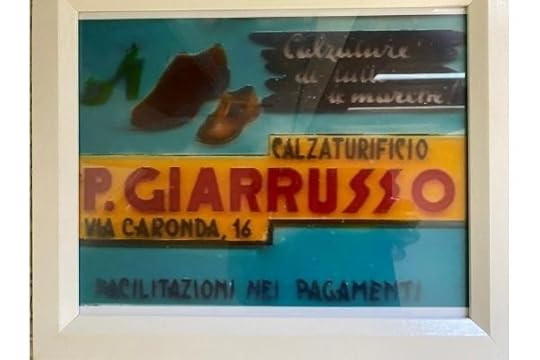
Last year my cousin found the image you see above in an archived box full of family treasures. It is a photo from cinema advertising my grandfather did for his shoemaking business before the Second World War when he and his family, including my 2-year old Dad, had to leave for Australia.
I was blown away to see this image and what he created back in the ’40s, right down to the colours, which included my “teal” branding. This was not a colour often used in marketing in the ’40s.
Nonno’s shoe shop is now a bookstore, which fascinates me being a lover of books and shoes. His work was recognised and admired when he was alive. His ambition, creativity, and entrepreneurial mindset have cascaded down to many in my family, including me, who are now fuelled by the legacy he lived and left behind.
Tips for living your legacy NOW:
Be curious and explore your passionsobservation, provocation and exploration are keyMentor and coach othersShare your skills, lessons, and experienceAdopt the Gift MindsetShare the lessons you have gleaned through challenges and successesShare your storiesTap into stories of your life, family and experiences, a great way to ensure these aren’t lostIdentify and support causes and people that are important to youReflect on this regularly in and out of the workplaceAs always, I would love to hear what has resonated for you in this post.
Lead to be Limitless…
eSpeakersSeal(32459, "8d24", 'virtual', "md", "1");
 Find out where you sit on the Leadership Ladder. Your responses are anonymous, and the results summarised to help us better understand where our market sits so that we can continue to provide insights, tools and solutions to assist you in moving up to be LIMITLESS, co-creative and stand out.
Renée is a mentor, coach, expert facilitator and keynote speaker; She is the author of ‘Gift Mindset®’, ‘Limitless Leadership’, and co-author of ‘Leaders of Influence’.
PS: Want to skyrocket your success from working anywhere? We’ve launched our online program, and you can read more about that here.
Have you received your copy of Renée’s latest book, Gift Mindset®? It is available on Amazon, Booktopia and in all good book stores.
If this article resonates with you somehow, I’d love to hear your thoughts – get in touch.
Being in service to my clients is why I do what I do, and your feedback, insight, and suggestions are always embraced.
Follow Renée on Facebook, Instagram, IGTV or Twitter, or subscribe to her blog or new podcast here.
February 17, 2022
33: 5 Things I wish I had implemented sooner to become a Limitless Leader
In Australia, we’re now working in a full hybrid working environment. A number of my clients have people in the office and a few from home, others with a staggered roster, and I know some companies who have employees who are all walking from home.
So, quite a mixture of what workplaces are experiencing – and while there has been a somewhat shaky start to the year, I do feel there is a little more normality coming and people beginning to accept this new working world we live in.
I’ve been frequently interviewed on tv and podcasts and have been sharing key insights that I wish I had implemented more when I was in a pure leadership role – to become a Limitless Leader.
So, on today’s podcast I’m going to share these with you as they tie in to a lot of the problems and challenges that a lot of our clients and leadership teams are having of late.
Here are three reasons why you should listen to the full episode:
Learn the 5 things I wish I had implemented sooner to become a Limitless Leader. Reframing your understanding of delegation when it comes to becoming a Limitless Leader. Why sharing your vulnerabilities and asking for help is key to becoming a Limitless Leader, and more. ADDITIONAL RESOURCES:www.ReneeGiarusso.com/programs Limitless Leaders 90-Day Program www.GiftMindset.com EPISODE HIGHLIGHTS:
[0.41] In Australia, we’re now working in a full hybrid working environment.
[1.17] Here are the insights I wish I had implemented more when I was in a pure leadership role, which are relevant to the problems and challenges that a lot of leadership teams are experiencing.
INSIGHT 1: DELEGATE MORE OF THE TASKS I LIKED DOING
[2.03] Too often we hold on to the things that we like to do at work.
[2.23] If we can let go of something, we like something that we're good at, even temporarily, and give that to someone else, we're going to be empowering and growing them.
[3.07] So, delegate what you like doing, not saying throw everything to everything you love at work to someone else, it could be a particular part of your role, it could be running a brainstorming meeting, it could be going to an association event, let someone else go and share that with the team.
INSIGHT 2: BE AWARE OF TIME VAMPIRES
[3.09] What I mean by that is the situations and the people that can drain our energy and drain our time. I think especially if you're an early leader, or you've taken on a new leadership role.
[3.35] It's easy to want to please everybody. But that's at the expense of your headspace, your energy and your time
[3.42] So, do a little bit of a tally on what situations and what particular people sort of drain your time and how you can leverage those relationships and situations better to serve you
INSIGHT 3: ASK FOR HELP
[4.01] I still find this challenging because in what I doing work and in life. And I think my purpose is, is to help grow others and be there for others. So I sometimes forget to ask for help.
[4.19] The more we ask for help, the more we're actually giving other people a chance to share their skills or share their expertise, or feel good about helping us. So ask for help.
[4.34] I know a client I was with only this morning is literally running on a treadmill almost on the edge of burnout. I said to him who could help you. And the word ‘help’ just didn't fit in with his vocabulary. I said, who could you get support from? So it's a bit the same as having a good support network. Go to who could give you some help, that if you're in a leadership position, create a bit of a master plan.
INSIGHT 4: CREATE A COACH CENTRIC CULTURE – ASK DON’T TELL
[5.15] Early on in a lot of leadership roles, I was telling more than coaching. A lot of us do that. And it's pretty self-explanatory. It feels easier, a lot of the time to just give people the answer.
[5.29] But the issue with that is, they're going to come to you for everything. So give people the answer if they're really stuck. I think it's really about just saying to people, who else could you speak to about this? What have you thought about? What would you do if this was your business?
[6.12] So just some really good questions, get other people to think for themselves, pause, and then input or respond if necessary.
INSIGHT 5: SHARE YOUR VULNERABILITIES
[6.27] Those of you that are following me and look at a lot of the contributions I make across my work. I wish now when I look back, I'd had more of what I call a gift mindset.
[6.40] So try not to be the perfect leader and make sure everything's okay. That actually sharing frustrations, getting people more involved. Even sharing some personal things.
[6.52] I lost my dad very early on in my couple literally the week, I started my first real job. And I didn't tell anyone for weeks, I look back now and go, Well, why didn't I do that I was young, maybe a bit naive, maybe just felt a bit indulgent sharing. But I think failing to share our mistakes and challenges and successes with our team and those around us is actually selfish.
INSIGHT 6: TAKE THE TIME TO UNDERSTAND WHAT LIGHTS YOU UP
[8.08] In my heart of hearts, I know to be true. Don't just do what you're good at, do what you're good at that you enjoy.
[8.09] Even when I look back was a certain role I had, that was great from a brand profile. And it was a promotion. But it wasn't a role that really fitted my skills or fitted my motivation or energy and the culture of that role wasn't me.
[8.31] I didn't know that at the time. And I did the job well, that I look back now. And I go, did I love it. I didn't, I didn't.
Quotes:[2.03] Too often we hold on to the things that we like to do at work. If we can let go of something, we like something that we're good at, even temporarily, and give that to someone else, we're going to be empowering and growing them.
[7.17] What other are calling The Great Resignation – I'm calling The Great Rejuvination – people want to be appreciated. They want to be heard. And this is a great way to really connect people to you and to each other by just sharing, hey, what was the biggest challenge this week? What happened? How did you work through it? And how can you use those learnings moving forward?
Enjoy This Podcast?
Post a review and share it! If you learned something by tuning into this podcast, do not hesitate to write a review and share it with your friends! The world needs more people with the drive and leadership qualities to make the world a better place.
For more updates and episodes, visit and subscribe on the Limitless Leaders podcast page!
Have any questions? You can contact me through these platforms:
To leading the future,
Renée
January 30, 2022
What are you saying NO to in 2022?
I think it’s pretty exciting that we have the choice to make this year whatever we want it to be.
Some things are not in our control, but the good news is we all have the choice to choose and influence how this year looks both personally and professionally. Like writing a new chapter in a book, you choose the settings, the themes and the characters. The choices are all yours.
As we head into March, it is a great opportunity to set goals, review and renew our habits and create new boundaries.
We need to set boundaries and know what we stand for and don’t. Brené Brown says, “Boundaries are simply what’s ok and what’s not ok”. Nothing complicated, but we often make it so.
A challenge many leaders and executives we work with is saying NO to certain people and situations. I am as guilty as charged as I love being in service to others and love to be involved in everything. This can have a downside to your energy, focus, headspace and time.
This is where the “NO LIST” comes in.
I created a concept a few years ago when everyone was banging on about saying YES to everything. I’m pretty sure it was when Jim Carey’s movie “Yes Man” hit the big screen. I’m a huge fan of giving everything a go, probably too much at times, but not to the detriment of your focus, energy and time. I saw a flaw in this and decided to create and share a “NO LIST DIARY” with my clients, which has been extremely well received and embedded in many organisations. It forces us to create boundaries by being consciously aware of who and what we are saying no to.
The concept is easy and an activity you implement monthly or quarterly, both individually and as a team in your personal and professional life.
A helpful tip in saying no to something or someone is to remember you are saying ‘no’ to the event, not the person – this will make the process easier and remove the guilt.
Articulate this verbally “Tiana; I’d love to be part of that meeting; I love working with you, but as you know, we both don’t need to be there, and I can start on our other project. I’m saying no to the meeting, not you.”

Create your “No List”:
Think about who and what you need to say no to?
ProfessionallyIndividually: Journal this
As a team: Flipchart/Whiteboard this
An example could be that person delegating work to you at the expense of you not achieving your own KPI’sWhat situations/events will you say no to?
This could be unnecessary meetings, lunches, workload, certain tasks, projects, etc.PersonallyWho will you say no to?
An example could be saying no to a friend who has asked you out for dinner, and you feel guilty saying no. Simply articulate it’s not them, and you need some time to rest up.What situations/events will you say no to?
This could be saying no to having to organise a family or social gathering, especially if you are always the one doing this.
The word NO is easy to say but not always simple; learning to say ‘no’ without guilt can be empowering and enable you to spend the right time on the right things and people. We need to serve ourselves in order to better contribute to and serve others in and out of the workplace.
Trying to be everything to everyone is not sustainable long term. Remember you are saying ‘no’ to the event, not the person – this will make the process easier.
Who and what are you saying NO to in 2022 to set clear boundaries and direction for your best year yet?
We would love to hear your thoughts on how this works for you.
Lead to be limitless…
eSpeakersSeal(32459, "8d24", 'virtual', "md", "1");
Find out where you sit on the Leadership Ladder. Your responses are anonymous, and the results summarised to help us better understand where our market sits so that we can continue to provide insights, tools and solutions to assist you in moving up to be LIMITLESS, co-creative and stand out.
Renée is a mentor, coach, expert facilitator and keynote speaker; She is the author of ‘Gift Mindset®’, ‘Limitless Leadership’, and co-author of ‘Leaders of Influence’.
PS: Want to skyrocket your success from working anywhere? We’ve launched our online program, and you can read more about that here.
Have you received your copy of Renée’s latest book, Gift Mindset®? It is available on Amazon, Booktopia and in all good book stores.
If this article resonates with you somehow, I’d love to hear your thoughts – get in touch.
Being in service to my clients is why I do what I do, and your feedback, insight, and suggestions are always embraced.
Follow Renée on Facebook, Instagram, IGTV or Twitter, or subscribe to her blog or new podcast here.
January 26, 2022
5 Questions to kick off 2022 with intention
Last year was a big year and one I’m sure all of us will never forget. We’ve been pulled up and down, left and right with so much uncertainty, it’s become the next normal of the way we live and work.
January is a great time to stop and reflect on a few thought-provoking questions that will help you kick start the new year with intention and set both you and your team up, ready and re-energised for 2022.
There are a million questions we could ask ourselves; however, I’ve found these 5 questions are simple, impactive and help you get out of your own head. I’ve been using these during mentoring and coaching programs to regularly check-in, and help leaders and their teams recalibrate.
Make the space to reflect and respond on the 5 questions below:What are you most proud of this year?What is one goal that must be achieved by the end of the year?What is one change you need to make by the end of 2020?What is one relationship you feel you need to forge, strengthen or grow?What is one habit you need to let go of, and what is one new habit you need to create?When you have answered these questions, it’s a great idea to share them with a peer or run this as a team exercise. Like anything, knowing is one thing, but the action is where the magic is. Make sure you commit and take ownership of whatever you decide to do.
Action springs not from thought, but from a readiness for responsibility.
― Dietrich Bonhoeffer
Accountability has many parts. A bit like ingredients in a recipe, only when combined with true ownership can the cake rise and be a success. In any role, especially as a leader, it all starts with self-accountability, and I reckon these questions need to be answered, owned and ideally actioned.
Accountability and ownership are two different things. When fused together, I call it ‘Ownerbility’. It’s the ability to take full responsibility and ownership. Accountability is external and is usually the means to an end. Accountability is something that is assigned to you or something you have been asked to do. When this happens, whoever assigned the accountability is still the owner of it—a reason delegation has to be thoroughly considered.
Some of the guiding principles of accountability include: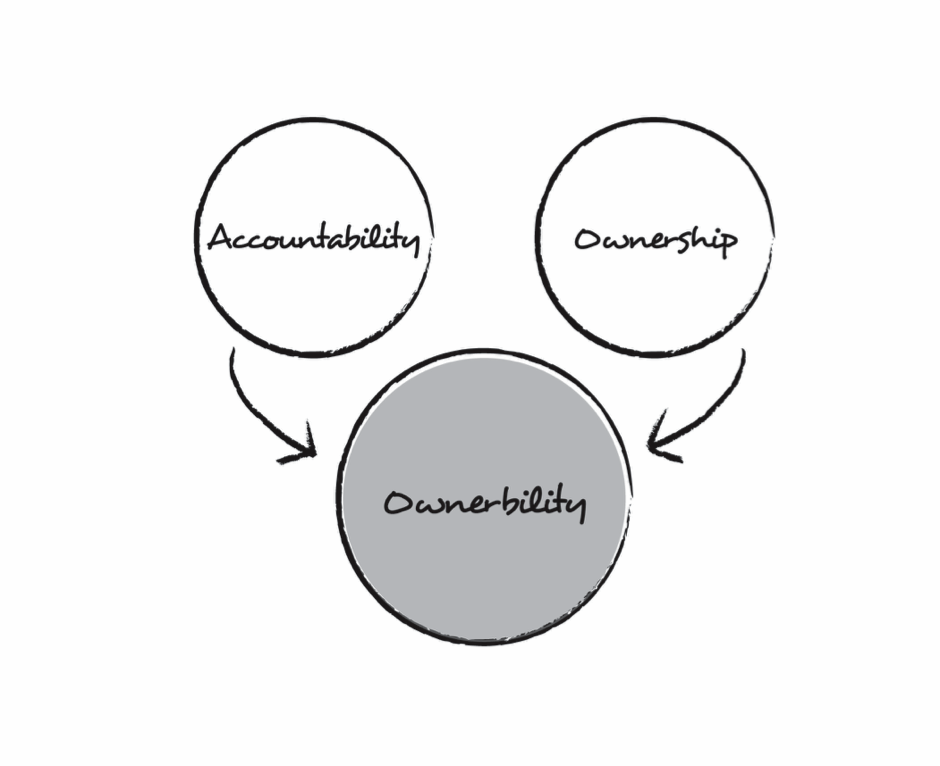 How we make a commitment to each otherHow we measure and monitor progressHow we respond when things don't go as plannedHow much ownership we actually take to get things done
Ownership is more around possessing or the state of being an owner―taking ownership of something. Ownership cannot be taught, but, as a leader, you can portray ownership that will cascade, and in essence, become part of your team’s culture. When compared to accountability, ownership is not given to you or assigned to you; it is, in most cases, taken. When your manager gives you something, he or she cannot assign ownership. In the same way, you cannot assign ownership to those in your team.
The guiding principles of ownership include:How we are going to make something happenThe success measures that can be put in placeEnsure full internal commitment and attachment to completingEmbrace a feeling of care and responsibility.Accountability and ownership are intertwined and ensuring both are ignited, will provide clarity, focus and results. Answering these questions is one dimensional unless you take ownership and action your plan, nothing will change.
Take some time to reflect and reset, you deserve it!
As always, I’d love to hear your feedback and ideas for future articles.
Lead to be Limitless…
eSpeakersSeal(32459, "8d24", 'virtual', "md", "1");
Find out where you sit on the Leadership Ladder. Your responses are anonymous, and the results summarised to help us better understand where our market sits so that we can continue to provide insights, tools and solutions to assist you in moving up to be LIMITLESS, co-creative and stand out.
Renée is a mentor, coach, expert facilitator and keynote speaker; She is the author of ‘Gift Mindset®‘, ‘Limitless Leadership’, and co-author of ‘Leaders of Influence’.
PS: Want to skyrocket your success from working anywhere? We've launched our online program, and you can read more about that here.
Have you received your copy of Renée’s latest book, Gift Mindset®? It is available on Amazon, Booktopia and in all good book stores.
If this article resonates with you somehow, I’d love to hear your thoughts – get in touch.
Being in service to my clients is why I do what I do, and your feedback, insight, and suggestions are always embraced.
Follow Renée on Facebook, Instagram, IGTV or Twitter, or subscribe to her blog or new podcast here.


