
Rohan Monteiro's Blog
November 6, 2025
The Role of Writers in Society
I truly believe our role as authors , artists and content creators in this digital age is to push the boundaries of what is and isn't culturally acceptable. To shape narratives and promote new ideas because that's the only way a society can grow.
Whether you are a stand up comedian using satire or a debut author with the social media footprint of a gnat, your role is to stand up and question. To be the voice of dissent. Not for the sake of dissent, but because what you truly believe in, matters.
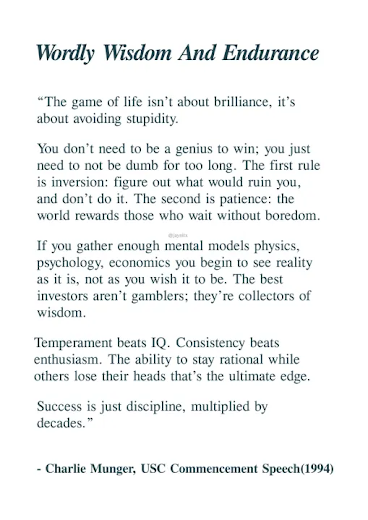
I have posted the below comic page a few different times. In large part, it is because of how those words resonate with me. I hope you feel the same way.


November 4, 2025
October 23, 2025
Find your Tetris
Original answer I encountered on Quora can be found here
In the movie Pixels, there is a scene where Tetris blocks suddenly fall from the sky, arrange themselves on buildings in the real world and thus destroy them.

Remember this image, for it’ll be your guide towards razor-sharp focus.
Vladimir Pokhilko wanted to stay at a friend’s house in Tokyo for a week. There was only one problem: They had a brand new Game Boy. And Tetris.
At night, geometric shapes fell in the darkness as I lay on loaned tatami floor space. Days, I sat on a lavender suede sofa and played Tetris furiously. During rare jaunts from the house, I visually fit cars and trees and people together. Dubiously hunting a job and a house, I was still there two months later, still jobless, still playing.
What Vladimir Pokhilko learned in those two months changed how we view video games forever. Being a clinical psychologist, he became obsessed with the idea that Tetris must have an impact on our neural system.
Some kind of…Tetris effect.
One year later, at the University of California, Irvine, Richard Haier scanned the brains of Tetris players. He found the game initially raises cerebral glucose metabolic rates (GMR), the amount of sugar your brain uses to perform.
But the more you play, the more efficient your brain becomes. After a few weeks, your GMR stays steady, while your performance increases seven-fold.
Tetris trains your brain to stop using inefficient gray matter, perhaps a key cognitive strategy for learning.
This initial finding lead to a waterfall of research on the subject:
In 1994, Okagaki & French showed video games may improve spatial skills, such as mental rotation, spatial perception and spatial visualization.
In 2000, Stickgold et al. saw even amnesia patients dream about Tetris after playing, indicating it comes with its own form of memory, likely related to procedural memory.
In 2009, Oxford University researchers found Tetris reduces post-traumatic stress disorder when played soon after the traumatic event.
Also in 2009, Stickgold did a follow-up study showing Tetris increased grey matter in the brain, which boosts your brain’s efficiency and memory capacity.
But what makes the Tetris effect special, compared to other findings from cognitive research?
The Tetris effect is one of very few biological phenomena that makes its benefits obvious to those it affects.
How?
When you play the game for a few hours straight, your GMR skyrockets and you feel like you’re on a high. It’s the biological connection to a well-known phenomenon in psychology: flow.
After you spend a certain amount of time in this state of optimal performance, your Tetris training spills over into the real world - just like in the scene from Pixels.
You might dream of Tetris, see Tetris blocks on your living room floor or even hallucinate about boxes and items organizing themselves properly on grocery store shelves or in the trunk of your car.
But how can you use all this to improve your focus?
Here’s the real beauty of the Tetris effect: Tetris is just a metaphor.
It’s not limited to video games. Whatever activity triggers flow for you you can use to boost your brain’s efficiency.
The Tetris effect is a biochemical, reductionistic metaphor, if you will, for curiosity, invention, the creative urge. To fit shapes together is to organize, to build, to make deals, to fix, to understand, to fold sheets. All of our mental activities are analogous, each as potentially addictive as the next.
For most of us, what we do at work each day isn’t exactly exciting. But what you do in your free time is up to you. If you choose well, you can become a lot better at everything you do, not just work.
How do you become laser-focused?
Find your Tetris.
It may not be a video game and it may not be what others think is fun. But if it spreads through your entire life and makes you see the world as a space full of opportunity, it’s your shot at winning so much more than just the game.
Sources
[1] Pixels (2015)
[2] Pixels - See the World Event This Friday!
[3] This Is Your Brain on Tetris
[4] Tetris effect - Wikipedia
[5] Replaying the Game: Hypnagogic Images in Normals and Amnesiacs
[6] Can Playing the Computer Game “Tetris” Reduce the Build-Up of Flashbacks for Trauma? A Proposal from Cognitive Science
[7] MRI assessment of cortical thickness and functional activity changes in adolescent girls following three months of practice on a visual-spatial task
[8] Rewire Your Brain for Positivity and Happiness Using the Tetris Effect
[9] Flow Summary - Four Minute Books
October 20, 2025
Quit
Every time I read a non-fiction book that I like, I make a few notes. Sentences, the occasional turn of phrase, bits that resonated with me.
I decided to start publishing some of them here so that the zero followers I have could also appreciate them.
The following excerpt is taken from 'Quit -the Power of Knowing when to walk away by Anne Duke.
We view grit and quit as opposing forces. After all, you either persevere or you abandon course. You can’t do both at the same time, and in the battle between the two, quitting has clearly lost.
While grit is a virtue, quitting is a vice.
The advice of legendarily successful people is often boiled down to the same message: Stick to things and you will succeed.
By definition, anybody who has succeeded at something has stuck with it. That’s a statement of fact, always true in hindsight. But that doesn’t mean that the inverse is true, that if you stick to something, you will succeed at it.
Prospectively, it’s neither true nor good advice. In fact, sometimes it’s downright destructive.
If you are a bad singer, it doesn’t matter how long you stick with it. You’re not going to be Adele. If you are fifty years old and set your sights on becoming an Olympic gymnast, no amount of grit or effort will make it possible for you to succeed. Thinking otherwise is as absurd as reading one of those articles about the habits of billionaires, finding out that they wake up before 4 a.m., and figuring that if you get up before 4 a.m. you will become a billionaire.
We ought not confuse hindsight with foresight, which is what these aphorisms do.
People stick to things all the time that they don’t succeed at, sometimes based on the belief that if they stick with it long enough, that will lead to success. Sometimes they stick with it because winners never quit. Either way, a lot of people are banging their heads against the wall, unhappy because they think there is something wrong with them rather than something wrong with the advice.
Success does not lie in sticking to things. It lies in picking the right thing to stick to and quitting the rest.
When the world tells you to quit, it is, of course, possible you might see something the world doesn’t see, causing you to rightly persist even when others would abandon the cause. But when the world is screaming at the top of its lungs to quit and you refuse to listen, grit can become folly.Too often, we refuse to listen.
This may be, in part, because quitting has a nearly universal negative connotation. If someone calls you a quitter, would you ever consider it a compliment? The answer is obvious.
Imagine that you’re trying to train a monkey to juggle flaming torches while standing on a pedestal in a public park. If you can achieve such an impressive spectacle, you’ve got a moneymaking act on your hands.
Teller recognizes that there are two pieces to becoming successful at this endeavor: training the monkey and building the pedestal. One piece of the puzzle presents a possibly intractable obstacle in the way of success. And the other is building the pedestal. People have been building pedestals since ancient Greece and probably before. Over two-plus millennia, pedestals have been thoroughly figured out. You can buy one at a furniture store or a hardware store, or turn a milk crate upside down.
The bottleneck, the hard thing, is training a monkey to juggle flaming torches.
The point of this mental model is to remind you that there is no point building the pedestal if you can’t train the monkey.
In other words, you ought to tackle the hardest part of the problem first.
Essentially, when you enter into an endeavor, you want to imagine what you could find out that would tell you it’s no longer worth pursuing. Ask yourself, “What are the signs that, if I see them in the future, will cause me to exit the road I’m on?
That list offers you a set of kill criteria, literally criteria for killing a project or changing your mind or cutting your losses. It’s one of the best tools for helping you figure out when to quit closer to on time.
Kill criteria could consist of information you learn that tells you the monkey isn’t trainable or that you’re not sufficiently likely to reach your goal, or signs that luck has gone against you.
Kill criteria work well for investing in the market. Setting a stop-loss or a take-gain are examples of kill criteria, but you could also set criteria more broadly, asking yourself in advance what the signals in the market might be that would cause you to change your investment strategy.
The good news about kill criteria is that you haven’t missed your chance to set them once you have already started an endeavor. At any point, no matter whether it comes to someone you are dating or a house you already own or an investment you are in or a college you are attending, you can think about some time frame in the future, imagine you are unhappy with your situation, and identify the benchmarks you will have missed or the signals you will be seeing that will tell you that you ought to walk away. You may not have set a stop-loss or take-gain when you bought a stock but you can set one now.
After all, the present is always in advance of something.
States and Dates
The best quitting criteria combine two things: a state and a date. A state is just what it sounds like, an objective, measurable condition you or your project is in, a benchmark that you have hit or missed. A date is the when.
Kill criteria, generally, include both states and dates, in the form of “If I am (or am not) in a particular state at a particular date or at a particular time, then I have to quit.” Or “If I haven’t done X by Y (time), I’ll quit.” Or “If I haven’t achieved X by the time I’ve spent Y (amount in money, effort, time, or other resources), I should quit.”
If you like what you've read, please consider buying the book.
Paper - Paging through History
Everytime I read a non-fiction book that I like, I make a few notes. I decided to start publishing them here so that the zero followers I have could also appreciate them.
The following excerpt is taken from 'Paper -Paging through History by Mark Kurlansky'.
Studying the history of paper exposes a number of historical misconceptions, the most important of which is this technological fallacy: the idea that technology changes society. It is exactly the reverse. Society develops technology to address the changes that are taking place within it. To use a simple example, in China in 250 BCE, Meng Tian invented a paintbrush made from camel hair. His invention did not suddenly inspire the Chinese people to start writing and painting, or to develop calligraphy. Rather, Chinese society had already established a system of writing but had a growing urge for more written documents and more elaborate calligraphy. Their previous tool—a stick dipped in ink—could not meet the rising demand. Meng Tian found a device that made both writing and calligraphy faster and of a far higher quality.
Chroniclers of the role of paper in history are given to extravagant pronouncements: Architecture would not have been possible without paper. Without paper, there would have been no Renaissance. If there had been no paper, the Industrial Revolution would not have been possible.
None of these statements is true. These developments came about because society had come to a point where they were needed. This is true of all technology, but in the case of paper, it is particularly clear.
The Europeans initially had no use for paper until more than a thousand years after the Chinese invented it. It was not that they had only just discovered the existence of paper, however. The Arabs had been trying to sell it to them for years. But it was not until they began learning the Arab ways of mathematics and science, and started expanding literacy, that parchment made from animal hides—their previous writing material—became too slow and expensive to make in the face of their fast-growing needs.
There are other important lessons to be learned from the history of technology—and other commonly held fallacies. One is that new technology eliminates old. This rarely happens. Papyrus survived for centuries in the Mediterranean world after paper was introduced. Parchment remains in use. The invention of gas and electric heaters has not meant the end of fireplaces. Printing did not end penmanship, television did not kill radio, movies did not kill theatre, and home videos did not kill movie theaters, although all these things were falsely predicted. Electronic calculators have not even ended the use of the abacus, and more than a century after Thomas Edison was awarded a patent for a commercially successful lightbulb in 1879, there are still four hundred candle manufacturers in the United States alone, employing some 7,000 workers with annual sales of more than $2 billion.
New technology, rather than eliminating older technology, increases choices. Computers will no doubt change the role of paper, but it is extremely unlikely that paper will be eliminated.
The history of technology also shows that Luddites always lose. The original Luddites were artisanal workers in eighteenth- and early nineteenth-century Britain who protested the loss of their skilled jobs to machines operated by low-wage, unskilled workers. Originally, the movement was active in a wide range of fields, including printing, but by the first decade of the nineteenth century, it was largely focused on the textile industry. It is uncertain why its proponents were called Luddites, but there was a mythical anti-machine rebel of the eighteenth century named Lud who, like Robin Hood, was said to live in Sherwood Forest. The Luddites opposed such technology as power looms, and they attacked mills, smashed machinery, and fought against the British .
it is futile to denounce technology itself. Rather, you have to try to change the operation of the society for which the technology was created. For every new technology, there are detractors, those who see the new invention as destroying all that is good in the old. This happened when the written word started to replace the oral word, when paper began replacing parchment, when printing started to take work away from scribes—and it is still happening today, with electronics threatening paper. In all these cases, the arguments against the new technology were similar: the functioning of the human brain was imperiled, we would lose the power of our memories, human contact would be diminished, and the warmth of human engagement would be lost.
These early outcries against technology went largely unheeded, much the same way warnings about computers are going unheeded today. It is true that the greater the aids to memory, the less we depend on our brain. But that does not mean that our minds are being destroyed. Illiterate people have better memories than literate people. But few would see that as an argument in favor of illiteracy. The introduction of the written word demonstrated that such aids, though they make us more dependent, also make us more powerful.
You cannot warn about what a new technology will do to a society because that society has already made the shift. That was Marx’s point about the Luddites. Technology is only a facilitator. Society changes, and that change creates new needs. That is why the technology is brought in. The only way to stop the technology would be to reverse the changes in the society. Printing did not create the Protestant Reformation; the ideas and the will to spread them is what created printing presses.
October 12, 2025
Board Gaming
Went to a board gaming event at the Asian Civilization Museum - It was a really fun evening and I ended up meeting a group of board gamers here in Singapore.
I also played 4 games - 3 of which I had never played before -
It was only the next day that wifey pointed out something I didn't notice at all - I didn't play any games exclusively with my daughter.
Girl z is 8 and Boy Z is 10 - I tend to play games with him more often because he instinctively picks up and understands more complex games.
Except, she still needs my attention.
And I need to get better at recognizing it.
Boy Z is cautious, careful, diligent, loves to read. Girl Z is a happy skipping lark who likes shiny objects. Boy Z takes time to open up. Girl Z will chat happily with everyone under the sun. This isn't a gender difference—it's a personality difference. Nature wanted to maximize the chances of at least one of them surviving, so it made their personalities as far away from each other as possible.
So how do I parent this endless well of joy and laughter — a boundless current of thoughts so lively that even a troupe of chattering monkeys couldn’t keep up?
The answer is surprisingly simple. And yet it took me this long to see it.
I grew up with this mental model in my head of what I want my kids to learn and know - multiple languages, a martial art, a musical instrument, a sport etc. It didn't matter what those individual activities were as long as they tried it out. I was /still am horrible at dancing and figured if they learn, they will be 'cool'. I was decent at chess and so I hoped they would learn that as well. I figured the world is 70% water so they should at least know how to swim. Though I also know non swimmers are actually less likely to drown because they stay far from the water in the first place.
My point is, everything that I expect from them are my expectations
Let me narrow it down to one specific example - Reading. I read 60-100 books a year. It's the most amazing thing in the world for me to be alone in a room with a pile of books to read.
Little z hates reading. As hard as that is for me to wrap my head around, that's who she is. Not a version of her that needs fixing. Not a work in progress. Just her.
I've been pushing them to want what I want them to want. That doesn't work.
It's not very different from the trope of the Indian parent urging their kids to become engineers or doctors.
Also, she can really really dig her heels in when she feels she is being made to do something she doesn't want to do. Like a feral cat on steroids. This is definitely a gene from wifey.
The real lesson isn't about adapting to different personality types—it's simpler than that. It's about showing up for my kids as they actually are, not as I imagined them. Girl Z doesn't need me to convince her to love books or learning in the way I do. She needs me to notice when she's in the room. To pick a game with her. To see her.
That's what I'm going to do differently.
March 11, 2025
An Article by the Asian Review
https://asian-reviews.com/2025/03/11/...
Fiction mirrors the truths, emotions, and complexities of the world we inhabit.” Rohan Monteiro By dhanukadickwella on 11 Mar 2025 • ( Leave a comment )
Q: Not everyone writes, nor can everyone write. Tell us what inspired you to pick up a pen and start writing, along with a brief introduction of yourself.
A: It was 2014. I had just learned I was going to be a dad. I was at that point a research consultant in Singapore in a job and role that wasn’t going anywhere. I felt I needed to do something with my life that my kid (s) would look up to. Something that felt more meaningful instead of sitting in an office all day. That’s when I decided to write a book.
My name is Rohan Monteiro, and my first non-fiction novel, ‘Keep Calm and Go Crazy’, was published in 2015 by HarperCollins. My most recent book was released last year by Westland Publishing. Shadows Rising is set in the present times and deals with characters from South Asian mythology. It is the first in a seven-book series. Book 2 will be released in 2025
Q: As one correctly said, every writer has their own reasons for writing—whom they write for and why. How has the feedback from your readership been?
A: Feedback on Shadows Rising has been overwhelmingly positive, with forty 5-star reviews. I did have one solitary one-star review by a reader who was disappointed I was “subverting the mythology”, but unfortunately, you can’t please everyone.
What I’m also glad about is how several authors have praised the series. I’m a huge fan of Mike Carey (author of Lucifer), and he wrote to me saying he enjoyed it. Ditto with Sam Sykes, Manu Pillai, Sidin Vadukut, and Ashok Banker, among several others.
Q: Our readers would be interested in learning more about your work. Could you elaborate on the story behind this book?
A: Shadows Rising is the story of a yaksha (a semi-immortal being) named Akran who is living incognito in Mumbai. Banished from the heavenly court a long time ago for a crime he was falsely accused of, Akran just wants to be left alone. Unfortunately, a kidnapping reluctantly brings him out of his shell, and he begins investigating. The plot revolves around Akran and his friends, other beings from Indian mythology, working together to
Rescue the kidnapped victims and save the world.
Q: The writing process is unique to each writer. After all, it is dynamic. What is your writing process?
A: I read this great comment on Reddit recently that all Charles Dickens had to do in his time was either write or go to watch public executions. Unfortunately, today, we have a great many other distractions, Netflix, Prime, and Disney being only a few of them. What I prefer doing is disconnecting from the digital world completely while I’m writing. This means that for eight months in the year, I’m off television or social media. That helps me focus. During that period, I ended up writing anywhere between 1000-2000 words a day on weekdays. Sometimes I end up doing this in an hour; other times it takes 2-3 hours. It is a commitment, but over time, it gets easier.
Q” Writer’s block is often discussed. Has it ever affected you? If so, when and how did you deal with it?
A: I tend to read a lot of books in the genre that I write in, i.e. fantasy. In an average year, I read between sixty to ninety books. That is often a great stimulator in coming up with ideas.
Q: “Fiction is the reality of the fiction we live.” What is your take on that statement?
A: Fiction mirrors the truths, emotions, and complexities of the world we inhabit. Our lives are shaped by the stories we tell ourselves and others, whether through culture, history, or personal experiences.
In my particular case, I like tapping into stories from mythology and cultural lore and weaving them into a modern-day narrative. They resonate because they tap into classic fears, desires, and conflicts, even with gods, demons, and other supernatural elements.
Q: Three decades ago, one could sit and read fiction without much concern for facts. Today, readers are obsessed with accuracy due to their information-driven mindsets, often making it difficult for them to fully enjoy a piece of fiction. In your opinion, how has this overwhelming access to information impacted readers’ literary appreciation?
A: I think it’s great. I feel like readers will appreciate a piece of writing more if they better understand the layers that an author includes in his work. Sometimes, a particular paragraph may resonate precisely because you know exactly what the writer is alluding to.
What it forces us, as writers, to do is also ensure that we engage with readers not just at a story level but also through cultural nuance. A stray reference to a song that’s currently popular, an eatery that’s well known, or a recent activity that’s in the news is something a reader can read and say, “Aha! I know what he is talking about. Maybe it’s not a current event but a reference to something historical or even a timeless myth. Maybe it’s a different perspective on something from another point of view. All of these serve to enrich and enhance the reader’s experience. It also makes rereads more interesting because you might end up spotting easter eggs that were missed the first time around.
Q: What are your thoughts on the digitalization of books and its impact on readers, literature, and overall human well-being, which literature ultimately aims to enhance?
A: I’m actually in the minority here, for I love digital books. I realized in my teens that I was never going to be able to afford as many books as I could read in a year unless I switched to e-books. Once I began working, I could afford them, but I quickly ran out of space. With overflowing cupboards of books, including comics, I finally decided to make a permanent switch to ebooks. I still have at least two hundred books at home I’ll need to give away at some point, but as of now, the only books I actively buy are ones that I cannot find a digital copy of.
Q: Would you mind giving us a hint about your future work?
A: I wrote two books last year. The first is about a series of murders in UP. The story is a thriller/horror that taps into local folklore involving Vetalas and ghouls.
The second is a noir thriller detective story in Bangalore. All of my writing takes place in the same shared universe, so there are cameos and easter eggs that people who are familiar with my work will be able to spot.
Q: Any parting words?
A: I love engaging with readers. Find me on Instagram, and I’ll be happy to chat about writing/answer questions.
By Dhanuka Dickwella
February 3, 2025
August 25, 2024
I Spent $1300 on Amazon Ads— Here’s what I learned
Writing, requires the wearing of many hats. Its tempting to focus on honing your craft and leaving everything else to the professionals. It was one of those lessons hammered into us during our MBA days — outsource everything that isn’t a core competence and focus on what you are good at.
The real world challenge, however is that we still need to find semi-competent sources to outsource the other processes to. Bear in mind, these are still essential processes, they are just not ones where we have an edge and so we tend to rely on those who claim they are good at their jobs.
For ‘Shadows Rising’ I chose one particular agency. In retrospect, I should have done a little more research before selecting them. But on the surface, they seemed good enough and I figured what’s the worst that could happen?
Turns out, quite a bit.
I worked with them for social media posts and Amazon Ads. I have no real complaints about the social media post aspects — there were challenges but nothing that couldn’t be resolved. It was an iterative process but ultimately the outputs (particularly the static ones) were exactly as promised. It was a good experience working with that team and I would happily do so again.
This wasn’t the case with the Amazon Ads.
To start off, the agency had a management fee of 25K INR (USD 300 )per month, with a minimum spend of 3 months. That should by itself have been a red flag. See, debut authors especially in trad publishing don’t make much in earnings — 8% is the industry standard. So on a book that is sold for say INR 300 ($3.5) you can expect to earn INR 16 (0.28 cents) Which means you would need to sell 1560 books just to cover the management fee per month. Self published books can of course make a lot more money but when it comes to trad publishing, their production costs tend to be pretty high — built in to their model is the assumption that only 1 out of every 10 new authors will actually earn back their advance. (this is a worldwide phenomenon, not just confined to India)
This 75K INR is also not counting the actual money that gets spent on ads. The logic, as it was explained was that we pump in money in the beginning and once the books start selling, the Amazon algorithm recognizes the book as something that’s doing well and starts pushing the book to more users on its own.
So, why did this not raise a red flag? For one thing I wasn't sure how it worked. I understand the logic behind ads to drive sales , particularly if the challenge is to drive awareness — the underlying assumption here being that ‘reasonable’ sales will take place. Can reasonable be defined? The agency wouldn’t guarantee anything — though ideally what might have been more convincing is either a one month trial or an escalating management fee. Insisting on three months in advance with zero guarantees on performance? I should have suspected something right away.
So..Month 1. I put in 15K INR and said..let’s see how it works. Was happy to sink the entire advance received into Amazon ads if this made a difference. The agency said they were unable to share the details of their plan because that’s a trade secret ie what keywords they would use, what specific bids etc. Naively, I agreed, thinking they knew what they were doing.
At the end of the first month, a total of 4 books were sold.
The explanation given was that competition in the category is fierce and people are spending lakhs — 15k INR wasn’t going to cut it. Fair enough, but then maybe this should have been communicated earlier? I can’t spend lakhs every month and I had asked for what budgets would work and had only been told to put as much as I can.
A meeting with the founder yielded no tangible wayforward except to put in a minimum of 25k INR to see results. Fair enough.
I put in another 25K INR for month 2 and requested some indication of what they are doing — I don’t really care about the proprietary secrets of an Amazon ads strategy that isn’t doing the job, but I would at least want to know that I’m not throwing good money after bad.
They sent me a generic plan generated by ChatGpt!
Here are actual quotes from the plan..
Creating a comprehensive strategy for Amazon Ads can greatly enhance your book’s visibility and reach. Here’s a breakdown of the strategy you outlined:
By incorporating these elements into your Amazon Ads strategy, you can effectively target relevant audiences, increase visibility for your book titles, and drive conversions. Regular monitoring and optimization will be crucial for ongoing success in maximizing the impact of your advertising efforts.
I should probably mention at this stage that I have some exposure to AI and LLM’s (large Language models) since 2018. I can recognize machine generated language pretty easily. Anybody can, for at this stage of AI progress, there are specific patterns in the phrasing. This kind of ham fisted copy and paste is just incompetence at this point.
In Month 2, we had sold a total of 6 books.
Lets recap.
10 books sold in total ie INR 300 *10 = Rs 3000 worth of sales (Rs 160 of which comes to me)
A total of 75K INR (paid in advance) + 40K spent on ads = INR 1.15 Lakhs (USD 1375)
What can we learn from this shit show?
a) Maybe the person on that end is competent, but I have my doubts based on the plan they sent across which is as generic as it comes. He’s literally defined a bunch of different amazon ad types and tried to pass it off as an ad strategy.
Auto ads -Monitoring and analyzing the performance of your ads regularly.
- Adjusting targeting parameters, ad copy, and bidding strategies to maximize ROI.
Staying up-to-date with Amazon’s advertising features and best practices to adapt your strategy accordingly.It’s no secret at this stage that whatever they are doing isn’t working. The logical, damage control option would be to perhaps demonstrate some transparency in the failed ad strategy so we know what’s gone wrong. At the very least I would expect something that says
“This is what worked for the 10 books that got sold.”
“These keywords did well.”
“These keywords failed.”
“There were more clickthroughs for this genre..”
Instead i get this…
(We are)adjusting targeting parameters, ad copy, and bidding strategies to maximize ROI.
Staying up-to-date with Amazon’s advertising features and best practices to adapt your strategy accordingly.A first year management student can write the above — it’s basically fluff which tells you nothing new.
b) Maybe the book is terrible — That’s a genuine possibility and I’ve been mentally prepared for that. Every author I know gears themselves up for the possibility that their work might be likeable only to them and their moms. I have to say based on interactions with readers online, people who’ve read it have said very positive things about it. So, maybe its not about the book itself.
c)Maybe Amazon ads is not the right medium. I think this is also inaccurate, given that different authors have been successful on this platform. The key difference? They used other agencies to run the ads or they did it themselves.
I still have a month to go and maybe these numbers will change drastically. If they do, then I will update this article with the new numbers. If not, well, then lesson learnt and next time, I’ll look for other options.
A couple of people have suggested that I name the agency in question so others can learn from the experience. I’m not planning to do that. I share the blame for hiring them in the first place . That money could have made a world of a difference to marketing if used properly. I should have thought it through.
If you want to know what the fuss is all about, check out the book here. Do read the reviews coz they are incredible.
August 6, 2024
Fantasy Land and people are dicks!!
When I was a kid, something happened that I still remember.
Maybe kid is the wrong word — I was in 9th grade, so not exactly small and cuddly but not really an adult either. Was just learning how to deal with the idea that the world is full of all sorts of people. Some could be nice, some could be massive dicks.
Case in point, we were at Fantasy Land — an amusement park in Mumbai. My first visit there -I was very excited.
There were 5 of us — 2 older aunts and me and my two male cousins
My two older cousins did not like the idea of babysitting me — they were a year and 2 years older and decided they would ditch me.
And so, at one random ride, they decided to run off in two opposite directions, leaving me alone to find my way to the two older aunts.
Like I said, i was maybe 13 or 14? - not exactly helpless, but not in that great a state of mind either. My dad was pretty overprotective back then - I hadn't ever travelled by bus or train by myself, I absolutely sucked at directions and I really didn't know what to do next.
But more than that, I remember feeling rejected. I wanted the approval of my older cousins, and here they were, running away and being massive dicks.
I am not built for anger. I knew even then that if I met them again, I would not be angry with them — maybe I should have been, but I was less about “Why the fuck would you do this to me and more about “how can i get people to like me?”
Time and time again I saw this pattern play out — There were kids in school that disliked me ; a kid in college who felt the same ; Thankfully, they were all in the minority — a stray example here and there. But instead of focusing on all the ones who liked me, I fretted about the ones who didn't.
All it did in those frustrating teenage years was reinforce the feeling that maybe the fault lay in me.
Maybe I did lack social skills and was awkward and annoying, of course, so it was possibly justifiable behavior on their part.
Or maybe I was being hyper-sensitive and everyone just had their own drama to deal with and I was reading too much into all of this.
Except, of course this wasn't really true. As I stated before, some kids were just massive dicks! That's what I would tell the younger version of me if I had a chance to reassure him today.
It took a while for my personality to crystallize. Among the people I met along the way were those who just didn’t care how many feathers they ruffled as they went about doing what they thought was right.
As well as those who expected that the world should be grateful for the privilege of knowing them.
And somewhere along the way, that started to rub off. I began to move from
“ How can I get you to like me?” to
“It’s your fucking loss if you don’t.”
(Not saying that the latter is a healthier attitude than the former, but it worked for me)
It wasn’t an external facade I was putting up to heal bruised feelings — It was a genuine metamorphosis from someone who yearned to be liked, into someone who will gladly stay at home with a mountain of books instead of doing shots from someone's belly button at a bar.
A mountain may also have contributed to that thinking ( made of mud and stone, not of books) but it's a story for another day.
It took me time to find my groove. People who know me from back then have commented on how different I seem between then and now. Maybe I was always going to turn into a grumpy anti-social person when I was older. But I suspect the catalyst for this was my life adventures in Dubai. You may want to read more about that here
I forgot about this incident completely until one day at a pool party my 8yo came to me crying. “The other children don’t` want to play with me”, he said.
That moment gave me a flashback of this memory — me standing there as my cousins ran away, ditching me. In that moment, I knew exactly how he felt -Hurt. Rejected. Alone.
But how could I fix it?
Should I have distracted him? Made him forget about them ? Probably not for eventually he would remember and it would impact his confidence and self esteem.
Left him alone to figure it out? Couldn't do that either — he had asked for my help and I wanted to give it to him.
Talked about how wonderful he was and how they were fools to reject him and to not care about it? No, because it seems shallow and made up when it comes from his parents who always think the world of him.
I settled on trying to dissect what went wrong -Maybe he did something the other kids didn't like?? Maybe he was too aggressive while playing? Whatever it was, it could help the next time around. Maybe it might have helped me when I was younger if someone told me why I couldn't seem to fit in.
It wouldn't help with the here and now.
Eventually, I asked wifey. She walked up to the remaining kids and spoke to them to figure out what was wrong. It seemed like a misunderstanding. A couple of the girls wanted to play something else, a couple of the boys wanted to do what the girls were doing and suddenly my kid was the only one who wasn't part of the game. He wasn't being excluded — they just didn't tell him explicitly to join the new game. And with him displaying all the insecurities I had as a kid, he wouldn’t join unless someone actually invited him.
We facilitated his return to the group, and they all played happily after for another couple of hours.
I'm left with a feeling I can't quite name. Not quite satisfaction, not quite regret. It's the strange weight of watching someone you love navigate the same emotional landscape you once did, knowing you can light the path but not walk it for them.
The truth I wish someone had told me back then—the one I tried to give my son that day—is this: rejection is often not about you at all. More often than not, it's a misunderstanding, a miscommunication, a wavelength that not everyone is aligned on. Sometimes it's unintentional. Sometimes its malice.
The hardest part isn't figuring out which one it is. It's learning that even when it is about you—when you did something wrong or said something awkward—that still doesn't make you fundamentally unworthy of connection.
The antidote to rejection isn't thicker skin or indifference (though I thought it was for a long time).
It's clarity. It's asking the hard question instead of just feeling the hurt. It's having someone—a parent, a friend, anyone—willing to walk over and say, "Let me find out what's really happening here."
I still can't protect him from every sting, every misunderstanding, every kid who might be a little shit who deserves to be smacked But maybe I can teach him to do what I eventually learned to do myself: stop assuming the worst about himself, and start asking better questions about what's actually going on.
And if all else fails …by accepting that some people will just be massive dicks!!


