
Anna Geiger's Blog, page 5
January 12, 2025
Equipping students to make strong inferences – with Dr. Amy Elleman
 TRT Podcast #198: Equipping students to make strong inferences – with Dr. Amy Elleman
Comprehension is complex – and helping students improve comprehension is no straightforward task! Thankfully, Dr. Amy Elleman shows us how to teach the subskills that will enable our students to make strong inferences and become better comprehenders in the process.
Listen to the episode hereFull episode transcript Resources Dr. Elleman mentionedKintsch’s construction-integration modelthe RAND reading modelCoh-MetrixWhat Works ClearinghouseNewselatextproject.orgthe LEXILE text complexity toolLearn more from Dr. EllemanEvidence-based Practices for Reading Comprehension interview with The Windward InstituteThe Power of Persistence presentation with the Center for Educational MediaDr. Elleman’s bio at Middle Tennessee State UniversityDr. Elleman’s curriculum vitae
YOU’LL LOVE THIS PRACTICAL BOOK!

Looking for an easy-to-read guide to help you reach all readers? If you teach kindergarten through third grade, this is the book for you.
Get practical ideas and lesson plan templates that you can implement tomorrow!
GET YOUR COPY TODAY!
The post Equipping students to make strong inferences – with Dr. Amy Elleman appeared first on The Measured Mom.


January 5, 2025
How to use think alouds to improve students’ reading comprehension – with Dr. Molly Ness
 TRT Podcast #197: How to use think alouds to improve students’ reading comprehension – with Dr. Molly Ness
Dr. Molly Ness joins us to examine the power of think alouds. We discuss how to prepare for effective think alouds and how to use them to boost student comprehension.
Listen to the episode hereFull episode transcript
Books by MollyThink Big with Think Alouds: A Three-Step Planning Process That Develops Strategic ReadersMaking Words Stick with Katie Pace Miles (releasing June 2025)Read Alouds for All Learners: A Comprehensive Plan for Every Subject, Every Day, Grades PreK���8Every Minute Matters: 40+ Activities for Literacy-Rich Classroom TransitionsThe Question is the Answer: Supporting Student-Generated Queries in Elementary ClassroomsLessons to Learn: Voices from the Front Lines of Teach for AmericaResources from MollyThink aloud videosThink aloud sentence startersMolly’s websiteOther interviews with MollyLeveraging Read-Alouds to Build Language on the De Facto Leaders podcastThe Impact of Read-Alouds on Vocabulary, Comprehension, and Reading Skills on Amira LearningHow to Get Kids Reading at Home with Melissa & Lori Love LiteracyMake the Most of Your Read Alouds with SoR-What I Should Have Learned in CollegeYOU’LL LOVE THIS PRACTICAL BOOK!
Looking for an easy-to-read guide to help you reach all readers? If you teach kindergarten through third grade, this is the book for you.
Get practical ideas and lesson plan templates that you can implement tomorrow!
GET YOUR COPY TODAY!
The post How to use think alouds to improve students’ reading comprehension – with Dr. Molly Ness appeared first on The Measured Mom.
December 15, 2024
The nuts and bolts of building oral language in the classroom – with Jocelyn Seamer
 TRT Podcast #196:��The nuts and bolts of building oral language in the classroom – with��Jocelyn Seamer
Don’t have time to build oral language skills?��Jocelyn��Seamer shows you how to build them into what you’re already doing and offers specific oral language routines to incorporate. This episode is for you, no matter what grade you teach!
Listen to the episode hereFull episode transcript
Learn more from JocelynJocelyn’s
Questioning Matrix
Jocelyn’s book:
Reading Success in the Early Primary Years
Jocelyn’s podcast:
The Structured Literacy Podcast
Jocelyn’s website:
Jocelyn Seamer Education
YOU’LL LOVE THIS PRACTICAL BOOK!
Looking for an easy-to-read guide to help you reach all readers? If you teach kindergarten through third grade, this is the book for you.
Get practical ideas and lesson plan templates that you can implement tomorrow!
GET YOUR COPY TODAY!
The post The nuts and bolts of building oral language in the classroom – with Jocelyn Seamer appeared first on The Measured Mom.
December 1, 2024
How to train future reading teachers – with Dr. Carrie Pfeifer
 TRT Podcast #195: How to train future reading teachers – with Dr. Carrie Pfeifer
Dr. Carrie Pfeifer shares how her structured literacy clinic and redesigned coursework prepare future reading teachers. Students get hands-on tutoring experience while mastering evidence-based teaching methods. It’s a win for everyone!
Listen to the episode hereFull episode transcript
Resources
Contact Dr. Pfeifer
Bethany’s structured literacy clinic
(document by Dr. Pfeifer)
More about the structured literacy clinic
YOU’LL LOVE THIS PRACTICAL BOOK!
Looking for an easy-to-read guide to help you reach all readers? If you teach kindergarten through third grade, this is the book for you.
Get practical ideas and lesson plan templates that you can implement tomorrow!
GET YOUR COPY TODAY!
The post How to train future reading teachers – with Dr. Carrie Pfeifer appeared first on The Measured Mom.
November 17, 2024
Going deep beneath the surface of words – with Sue Hegland
 TRT Podcast #194: Going deep beneath the surface of words – with Sue Hegland
One of my favorite education books is Beneath the Surface of Words, by Sue Hegland – it’s a truly mind-blowing book that opened my eyes to the sense behind English spelling. Even though I’ve always been a strong speller, this book led to understandings that make me a better teacher of spelling. In this episode I sat down with Sue Hegland to dive deep beneath the surface of words.
Listen to the episode hereFull episode transcript
Recommended ResourcesSue’s book: Beneath the Surface of WordsSue’s website:
Learning About Spelling
Sue’s list of recommended resources
(books and websites)Presentation:
The Science of the Writing System and Its Importance for Effective Structured Literacy Teaching
(for PaTTAN)Presentation:
Morphological Awareness and Written Language
(for IDA NorCal)Presentation:
Morphology: Important from the Beginning
(for IDA)Presentation:
Making Sense of “Irregular” Words
(for IDA UMB)YOU’LL LOVE THIS PRACTICAL BOOK!
Looking for an easy-to-read guide to help you reach all readers? If you teach kindergarten through third grade, this is the book for you.
Get practical ideas and lesson plan templates that you can implement tomorrow!
GET YOUR COPY TODAY!
The post Going deep beneath the surface of words – with Sue Hegland appeared first on The Measured Mom.
November 10, 2024
Specific ways to teach morphology in the lower grades – with Fiona Hamilton
 TRT Podcast #193: Specific ways to teach morphology in the lower grades – with Fiona Hamilton
If you’re looking for specific ways to teach morphology in the primary grades – starting in kindergarten – THIS is the episode for you. Fiona Hamilton breaks it all down for us, even giving us the exact words to say. This episode is a must-listen for any lower grades teacher who’s ready to get started with morphology instruction!
Listen to the episode hereFull episode transcript
Resources from Fiona HamiltonWebsite:
WordTorque
Workshops:
Self-paced online workshops
(I have taken them and recommend them! Fascinating!)
Engage with the Page
The hfw Project
YOU’LL LOVE THIS PRACTICAL BOOK!
Looking for an easy-to-read guide to help you reach all readers? If you teach kindergarten through third grade, this is the book for you.
Get practical ideas and lesson plan templates that you can implement tomorrow!
GET YOUR COPY TODAY!
The post Specific ways to teach morphology in the lower grades – with Fiona Hamilton appeared first on The Measured Mom.
October 27, 2024
An introduction to Morphology – with Michelle Sullivan
 TRT Podcast #191: An introduction to morphology – with Michelle Sullivan
This episode begins an exciting series about morphology! Michelle Sullivan, of The Colorful Classroom, defines basic morphology terms and gives practical ways to begin morphology instruction across the grades.
Listen to the episode hereFull episode transcript
Recommended books about morphology
Teaching How the Written Word Works,
by Peter Bowers
Beneath the Surface of Word
s, by Sue Scibetta Hegland
Backpocket Words
, by Gail Portnuff VenableConnect with Michelle
The Colorful Classroom website
The Colorful Classroom on Instagram
Free guide:
Phonics & Morphology Terms
YOU’LL LOVE THIS PRACTICAL BOOK!
Looking for an easy-to-read guide to help you reach all readers? If you teach kindergarten through third grade, this is the book for you.
Get practical ideas and lesson plan templates that you can implement tomorrow!
GET YOUR COPY TODAY!
The post An introduction to Morphology – with Michelle Sullivan appeared first on The Measured Mom.
October 24, 2024
Structured Word Inquiry – with Dr. Pete Bowers
 TRT Podcast #192: Structured Word Inquiry – with Dr. Pete Bowers
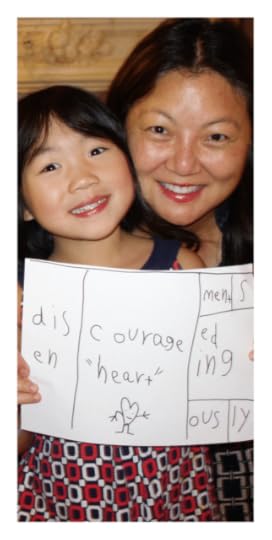
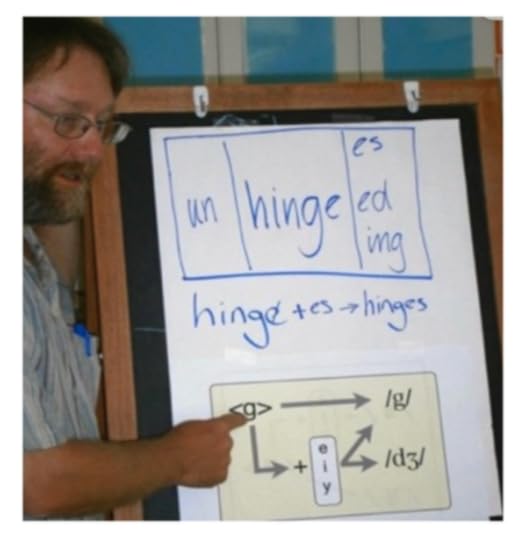
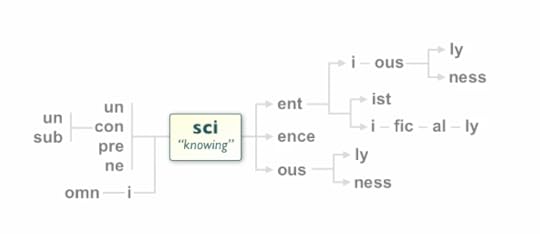
Dr. Pete Bowers explains “structured word inquiry,” an exciting type of instruction that engages learners of all ages in making sense of our (surprise!) logical spelling system. In this episode, Dr. Bowers shares the research behind morphology, explains why words typically called “irregular” are usually not, and advocates for morphology instruction even with our youngest readers.
Listen to the episode hereFull episode transcriptComing soon!
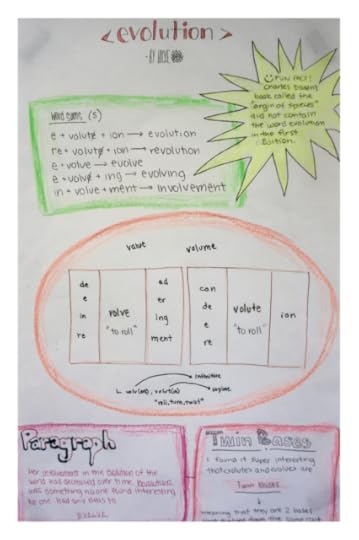
Images courtesy of Dr. Bowers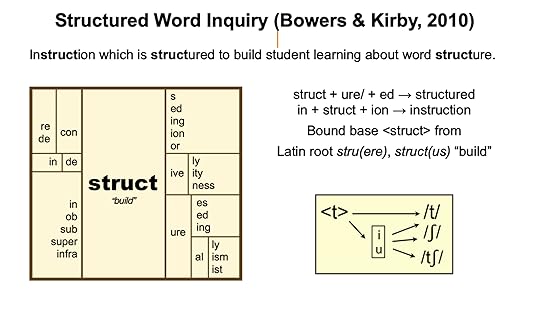
 Resources mentioned in this episode (in order of mention)Article: Bowers, P.N. & Kirby, J.R. (2010) Effects of Morphological instruction on Vocabulary Acquisition, Reading and Writing: An Interdisciplinary Journal, 23, 515–537.Website:
Real Spelling Toolbox
Article: Devonshire, V., Morris, P., & Fluck, M. (2013). Spelling and reading development: The effect of teaching children multiple levels of representation in their orthography. Learning and Instruction, 25, 85-94.Article: Ng, M. M., Bowers, P. N., & Bowers, J. S. (2022). A promising new tool for literacy instruction: The morphological matrix. Plos one, 17(1), e0262260.Article: Goodwin, A. P., & Ahn, S. (2013). A meta-analysis of morphological interventions in English: Effects on literacy outcomes for school-age children. Scientific Studies of reading, 17(4), 257-285.Article: Goodwin, A. P., & Ahn, S. (2010). A meta-analysis of morphological interventions: Effects on literacy achievement of children with literacy difficulties. Annals of dyslexia, 60(2), 183-208.Article: Galuschka, K., Görgen, R., Kalmar, J., Haberstroh, S., Schmalz, X., & Schulte-Körne, G. (2020). Effectiveness of spelling interventions for learners with dyslexia: A meta-analysis and systematic review. Educational Psychologist, 55(1), 1-20.Article: Chomsky, C. (1970). Reading, writing, and phonology. Harvard Educational Review, 40 (2), 287–309.Article re: Active View of Reading: Duke, N. K., & Cartwright, K. B. (2021). The science of reading progresses: Communicating advances beyond the simple view of reading. Reading Research Quarterly, 56, S25-S44.Article re: Morphological Pathways Framework: Levesque, K. C., Breadmore, H. L., & Deacon, S. H. (2021). How morphology impacts reading and spelling: Advancing the role of morphology in models of literacy development. Journal of Research in Reading, 44(1), 10-26.Article: Share, D. L. (2023). Blueprint for a universal theory of learning to read: The Combinatorial Model. Society for the Scientific Study of Reading Conference.
Resources mentioned in this episode (in order of mention)Article: Bowers, P.N. & Kirby, J.R. (2010) Effects of Morphological instruction on Vocabulary Acquisition, Reading and Writing: An Interdisciplinary Journal, 23, 515–537.Website:
Real Spelling Toolbox
Article: Devonshire, V., Morris, P., & Fluck, M. (2013). Spelling and reading development: The effect of teaching children multiple levels of representation in their orthography. Learning and Instruction, 25, 85-94.Article: Ng, M. M., Bowers, P. N., & Bowers, J. S. (2022). A promising new tool for literacy instruction: The morphological matrix. Plos one, 17(1), e0262260.Article: Goodwin, A. P., & Ahn, S. (2013). A meta-analysis of morphological interventions in English: Effects on literacy outcomes for school-age children. Scientific Studies of reading, 17(4), 257-285.Article: Goodwin, A. P., & Ahn, S. (2010). A meta-analysis of morphological interventions: Effects on literacy achievement of children with literacy difficulties. Annals of dyslexia, 60(2), 183-208.Article: Galuschka, K., Görgen, R., Kalmar, J., Haberstroh, S., Schmalz, X., & Schulte-Körne, G. (2020). Effectiveness of spelling interventions for learners with dyslexia: A meta-analysis and systematic review. Educational Psychologist, 55(1), 1-20.Article: Chomsky, C. (1970). Reading, writing, and phonology. Harvard Educational Review, 40 (2), 287–309.Article re: Active View of Reading: Duke, N. K., & Cartwright, K. B. (2021). The science of reading progresses: Communicating advances beyond the simple view of reading. Reading Research Quarterly, 56, S25-S44.Article re: Morphological Pathways Framework: Levesque, K. C., Breadmore, H. L., & Deacon, S. H. (2021). How morphology impacts reading and spelling: Advancing the role of morphology in models of literacy development. Journal of Research in Reading, 44(1), 10-26.Article: Share, D. L. (2023). Blueprint for a universal theory of learning to read: The Combinatorial Model. Society for the Scientific Study of Reading Conference.ChicagoArticle: Share, D. L. (2021). Is the science of reading just the science of reading English?. Reading Research Quarterly, 56, S391-S402.Video: Pete Bowers teaching “does”Chapter in a book: Perfetti, C. A., & Hart, L. (2002). The lexical quality hypothesis. Precursors of functional literacy, 11, 67-86.Book: The American Way of Spelling, by Richard L. VenezkyPete Bowers’ book: Teaching How the Written Word Works Facebook group: Learning How Words Work with Structured Word Inquiry ( SWI ) Facebook page: SWIRV: Structured Word Inquiry Research VanguardBook: Beneath the Surface of Words , by Sue Scibetta HeglandWebsite: Word Works Kingston Web page: High Frequency Word Project Website: Rebecca Loveless’ Illuminate Words Website: Fiona Hamilton’s Word Torque Book: Reader, Come Home , by Maryanne WolfeArticle: de Jong, T., Lazonder, A. W., Chinn, C. A., Fischer, F., Gobert, J., Hmelo-Silver, C. E., … & Zacharia, Z. C. (2023). Let’s talk evidence–The case for combining inquiry-based and direct instruction. Educational Research Review, 39, 100536.Other helpful resourcesVideo: Spelling-Out Orthography in SWI to build graphemic and morphological knowledge Video: Make Spelling Joyful through Scientific Inquiry: Pete Bower’s TEDxYouth talk
Have you seen my book?
Looking for an easy-to-read guide to help you reach all readers? If you teach kindergarten through third grade, this is the book for you.
Get practical ideas and lesson plan templates that you can implement tomorrow!
GET YOUR COPY TODAY!
The post Structured Word Inquiry – with Dr. Pete Bowers appeared first on The Measured Mom.
October 21, 2024
How to use morphology to improve students’ spelling
I don’t know about you, but the word morphology was completely new to me five years ago. And, frankly, it sounded boring and weird. I wasn’t interested.
Fast forward a few years, and I’ve learned that morphology is absolutely key for making sense of English spelling. In fact, we can start teaching it to kindergartners! Morphology knowledge grows with our students, and even morphology experts will tell you they have more to learn.
 So … what is morphology?
Morphology is the study of morphemes, the smallest meaningful units of words. Lyn Stone calls them the smallest possible structural unit.
Types of morphemesAs you can see in the chart below, morphemes fit into two broad categories: base elements and affixes.
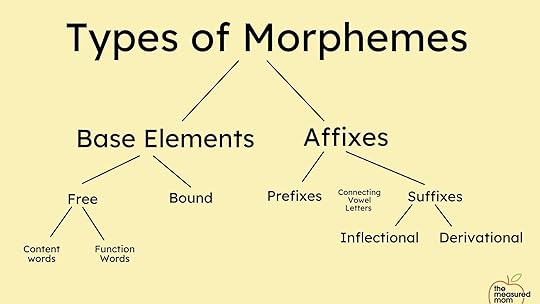 Base elements
A base element is a free base when it can exist all on its own as a word. For example, the word cake is a base element and a word all on its own.
The base element is the unit that forms the foundation for the word’s spelling and meaning.
Free basesThe same thing goes for words like horse, car, and milk.
Free bases don’t have to be a single syllable. The words elephant, banana, rabbit, and tiger are all free bases even though they are more than one syllable. (The fancy word for words that are more than one syllable but still a single morpheme is polysyllabic monomorph. Impress your friends!  )
)
The above examples are content words, but free bases can also be function words, such as in, to, or was.
(Side note: In my book I referred to free bases as root words and bound bases as roots. I’ve also seen people refer to free bases as base words. It can get very confusing! To avoid all that confusion, I’ve now adopted the generic term “base element” used by Sue Scibetta Hegland in her wonderful book, Beneath the Surface of Words. These base elements can be either free or bound.)
Bound basesA base element is a bound base when it must be connected to one or more affixes to make a word. For example, in the word refer, we have the prefix re- and the bound base fer (which has the connotation of carry).
(Side note: I remember being taught that if what follows the “prefix” isn’t a complete word all on its own (in other words, a free base), it’s not actually a prefix. Wrong!! Were you taught this too?! Let me know in the comments!)
AffixesAffixes can be added to both free bases and bound bases.
PrefixesA prefix is before the base element. It usually alters the meaning of the base element. For example, the prefix un- changes the meaning of the word happy when it is added: unhappy.
SuffixesSuffixes follow the base element. They can be inflectional suffixes, which do not change the word’s part of speech. Inflectional suffixes include -s, -es, -ing, -ed, -er, and -est.
Derivational suffixes are the fancier ones. They change the meaning of a word and may also change its part of speech. For example, the suffix -ful changes the noun, beauty, into an adjective: beautiful.
Did you know that the derivational suffix -tion isn’t a suffix at all? The suffix is actually -ion. The is always part of the bound base, as in the word construction (con + struct + ion). Mind-blowing!
The following chart shows how base elements and affixes combine to form words.
 So what’s the point?
The reason it’s important to understand morphology and teach it to our students is because morphology, not phonology, has the greatest impact on English spelling.
Take the word does. Why isn’t it spelled duz? Simple! English spelling is not simply speech written down. English spelling also communicates meaning.
Look at the morphemes.
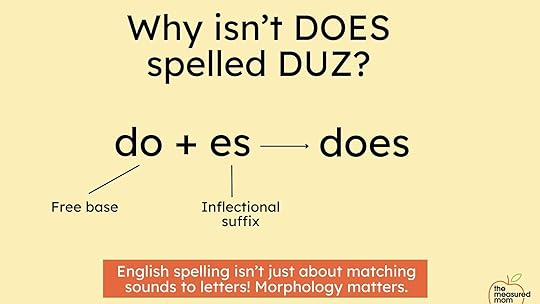
When you realize that pronunciation can change over time, but the spelling of the morpheme is consistent, English spelling makes so much more sense!
Consider the following words: natural, nation, and nativity. The letter has three different pronunciations in those words: /ch/, /sh/, and /t/. And yet, each word includes the base element , which has the connotation of born. (Yes, the e is dropped in each word before adding the suffix. I’ll get to that).
These spellings are not weird or irregular. They illustrate the important principle that pronunciation can differ, but the spelling of the morpheme remains consistent.
Are you starting to see how a knowledge of morphemes can help our students with their spelling?
How to get started with morphologyI prefer to start morphology instruction by teaching students how to add to make nouns plural. We can show students that the signals the plural form, but that its pronunciation can change based on the word.
cat + s -> cats
dog + s -> dogs
Did you notice that is pronounced /s/ in the first word, but /z/ in the second word?
When you teach the -ed ending, show your students that the spelling is consistent, but its pronunciation changes depending on the word.
What sound does represent in each of these words?
jumped
filled
landed
Once we teach our students that the ending is needed to show past tense, we can help them understand why jumped is not spelled jumpt.
Because … spelling represents more than sound! Say it with me now: The spelling of the morpheme is consistent, even when pronunciation changes.
Next steps for morphology instructionA logical next step in your morphology instruction is to help students understand spelling changes and why they might occur (or not occur) when adding a prefix or suffix.
mis + spell -> misspell
hop + ed -> hopped
hope + ed -> hoped
cry + ed -> cried
The following chart explains the key spelling rules for adding prefixes and vowel suffixes (suffixes that begin with a vowel).
 How to continue with morphology instruction
Once your students understand prefixes, suffixes, and how to attach them to words, they are ready to use word matrices. (Another option is to have them discover the above rules while using a word matrix. You can learn more about that in Pete Bowers’ excellent book, Teaching How the Written Word Works.)
Word matricesA word matrix includes affixes and a base element arranged in columns. Students can use the word matrix to create word sums. A word sum shows how one or more affixes combine with the base element to form a word.
Here is a simple word matrix using three free base, help.
[image error]Using this word matrix, you can help students form word sums like these:
un + help + ful -> unhelpful
help + er + s -> helpers
help + less -> helpless
Here is a more challenging word matrix using a bound base:
[image error]Using this word matrix, you can help students form word sums like these:
con + sist + ent -> consistent
ir + re + sist + ible -> irresistible
re + sist -> resist
(Did you notice? The sound of in is /s/ in the first word and /z/ in the second two words. But … even though pronunciation changed, the spelling of the morpheme
I have a growing collection of free word matrices that you can use to get started. Find them here.
And that’s just the beginning!
There’s so much more to morphology, but I hope that this post has helped you see that morphology can explain many English spellings. When you teach morphology to your students, spelling becomes less of a mystery. When they understand why words are spelled a particular way, their spelling will improve. Hurray!
Recommended resources Teaching How the Written Word Works , by Pete Bowers Beneath the Surface of Words , by Sue Scibbeta HeglandThe post How to use morphology to improve students’ spelling appeared first on The Measured Mom.
October 20, 2024
What is the science of learning? – with Dr. Nathaniel Swain
 TRT Podcast #190: What is the science of learning? – with Dr. Nathaniel Swain
The science of reading tells us what to teach; the science of learning tells us how. Dr. Nathaniel Swain, author of the new book, Harnessing the Science of Learning, debunks common myths about how students learn and helps teachers understand how to improve their craft so all students learn.
Listen to the episode hereFull episode transcript
Get the book!Harnessing the Science of Learning, by Dr. Nathaniel Swain
Helpful resources Inverting the Legacies of Balanced Literacy ��(a webinar with Dr. Swain) Write to Learn materials and resources from Dr. Swain The SOLAR Lab My previous podcast with Dr. Swain, What We Got Wrong (and Right) with Balanced LiteracyYOU’LL LOVE THIS PRACTICAL BOOK!
Looking for an easy-to-read guide to help you reach all readers? If you teach kindergarten through third grade, this is the book for you.
Get practical ideas and lesson plan templates that you can implement tomorrow!
GET YOUR COPY TODAY!
The post What is the science of learning? – with Dr. Nathaniel Swain appeared first on The Measured Mom.
Anna Geiger's Blog

- Anna Geiger's profile
- 1 follower

