Lori Robinson's Blog, page 10
December 16, 2016
Magic in Bosque del Apache Wildlife Refuge [video]
The holiday ritual in the Bosque del Apache Wildlife Refuge, here in New Mexico, is a spectacular gathering of sandhill cranes and snow geese. They appear en masse this time of year, ambassadors for wild things and wild places. Their numbers, about 10,000 of each species, is a reminder of what we have lost and what is at stake.
The birds fly in from Canada and the Northern plains of America. They will spend the cold months of November-March here in the Bosque eating grains, grubbing for insects and causing awe for the thousands of visitors that come to see them. They will stay until the weather changes in February.
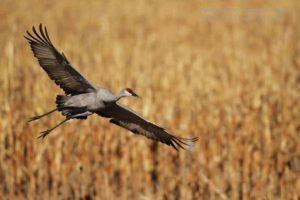
The first time I ever heard a sandhill crane’s rattling call I was walking along a snowy road in the Teton National Park. The sound was strange, and very ancient. I strained my neck following a group of three cranes – thin slate gray silhouettes of six foot wing spans – against the winter clouds. Their calls faded out but imprinted upon me a wish for more.
Today my wish was granted, and surpassed.
Within two days of posting these videos on Face Book they had been viewed 2,200 times with comments like: breathtaking, gave me goose bumps, beautiful.
Experiencing these birds in the Bosque Del Apache Wildlife Refuge was the best holiday gift I could have imagined and I want to share it with you.
Enjoy the two short videos and then share the magic.
Photos by Tim Mayo
Videos by Suzy Godsey
The post Magic in Bosque del Apache Wildlife Refuge [video] appeared first on Saving Wild.


November 30, 2016
Jane Goodall: An Insiders View
Working for Jane Goodall was 27 year-old Jacob Petersen’s dream job for as long as he can remember. And four years ago that dream became reality. As Dr. Goodall’s liaison, office of the founder, Jacob handles all the logistics for Jane’s lecture tours in the USA and travels with her several months each year during her spring and fall tours.
I talked to Jacob about what it’s like to work for the most famous animal advocate in the world. How did he get the job, what is Jane Goodall really like, and what has he learned from his famous boss?

Read on for his answers.
Q: How did you get this job?
That is the question I most often get asked when I’m on the road with Jane. I, like many other people, grew up loving, and wanting to be, Jane Goodall. I wanted to go to Africa and study animals. But after taking Biology and Math I realized I didn’t want to do field work.
Since the time I was in high school I would check the Jane Goodall Institute’s (JGI) website to see if there were any job openings. It was discouraging because the vacancies were usually high-level positions requiring degrees and work experience that I didn’t have.
Four years ago I was working in Los Angels and saw a post about the job I now have. I applied.
I was so nervous about interviewing with Jane (I had never even seen or met her in person) so I was relieved when a planned Skype interview with her got cancelled due to her schedule. But I got the job anyway. I had 2 weeks to move from LA to Washington D.C.
And then immediately I went on my first lecture tour with Jane. It was the busiest and craziest tour we have had in the four years I’ve been here. We were in a new place about every three days, and Jane did 15+ lectures during that two-month stint.
Q: What was it like to finally meet Jane Goodall in person after all those years?
I met her for the first time during a lecture she was doing in Ohio. I was with other staff members from the organization in her hotel room. I was sitting across from her and I was super nervous. We ate desert and hung out talking and I realized that this hero of mine who I had on a pedestal all my life is also a normal person.
Q: What are the most important things you have learned from Dr. Jane?
I have met a lot of celebrities (from working with Jane) and have never met anyone as amazing as her.
I have learned so much from being around her.
She is incredibly patient and detailed in all aspects of her life. She doesn’t rush through things, and she is a great observer of all that is going on around her.
Jane Goodall is a person who walks her talk.
She believes even small choices can have a huge impact, so she is doing everything she can to use and waste the least amount possible.
She is very aware that she flies a lot (300 days a year on average) and so she tries to constantly counteract that carbon footprint. On the road she is conscious about what she packs (the weight of it), and keeps her wardrobe basic, versatile and timeless.
She is a vegetarian.
In her hotel rooms she turns off the AC, uses only one trash can, reuses the toiletries, puts extra pillows and linens in the closet and leaves notes for the maids so they know when something doesn’t need to be cleaned.
I love that even though she is so famous and people recognize her wherever we go, she is still humble and approachable. In airports she will stop and talk to strangers and many times my colleague and I have to say, ‘we are going to miss our flight, we have to go’.
She is loving and caring. She has a lot of friends, family, and employees who mean so much to her. Despite having the busiest schedule of anyone I know, she will reach out to write an email to ask: How is your dog, How are you?
She is totally focused on her cause.
Q: How is this employer/employee relationship different?
Working for the founder is a very personal relationship. She is my boss yes, but she is also a mentor, a friend, and a grandmother figure. She has met my dog Theodore, my partner, and my family. She is part of my life beyond the standard workday.

Q: Thank you Jacob. It truly does sound like you have found your dream job working for your childhood hero, Jane Goodall.
Jacob and I would love to hear your thoughts in the comments below.
Lots of Love,
Lori
The post Jane Goodall: An Insiders View appeared first on Saving Wild.
November 27, 2016
Make Your Giving Count, #GivingTuesday
Most charitable giving is done between now and the end of the year. In fact, November 29th is the global day for giving- #GivingTuesday.
That’s why I’m posting this – my top choices for wildlife donations. I want to make it easy for you to give.
Some of the best work in wildlife conservation is done by small organizations. Many are understaffed, overworked and short on funds. They are also hard to donate to. They often aren’t set up for international donations, and sometimes don’t even have non-profit status.
But there is a way to donate to them.
The easiest way to get funds to those smaller organizations is by giving your donations to Saving Wild. I will match all donations personally. Then I will do what it takes to get the money to those smaller organizations, the places it is needed most.
For an example of the unsung heroes and small organizations I am talking about check out this story I did for Africa Geographic magazine highlighting ten of my favorites.
Then, donate to SavingWild here:

If you have a bigger heart than bank account, and you shop on Amazon, here is another, easy way to help. Use Saving Wild’s Amazon link (copy it to your desk top or bookmark it) every time you shop on Amazon.

A small % of the proceeds will go to Saving Wild to donate to the smaller organizations. Every dime counts for these unsung organizations. That’s another reason I love them.
If, instead, you like giving to the larger organizations that are doing great work and are easy to donate to, here are seven (working in the USA and around the world) of my favorites.
National Audubon Society (Birds)
Audubon’s mission is to conserve and restore natural ecosystems, focusing on birds, other wildlife, and their habitats for the benefit of humanity and the earth’s biological diversity.
Wild Aid (Illegal Wildlife Trade)
Wild Aid is the only organization focused on reducing the demand for wildlife parts and products, with the strong and simple message: when the buying stops, the killing can too. Their mission is to end illegal wildlife trade.
Land Trust Alliance (Wild Places)
The Alliance brings its more than 1,100 member land trusts together — and increases each one’s success by advocating for the policies and incentives that it takes to save millions of acres every year.
Panthera (Cats)
Dedicated to conserving the world’s 36 species of wild cats, Panthera partners with local and international scientific institutions, communities, non-governmental organizations and government agencies to conserve endangered wild cats, including tigers, lions, jaguars, and snow leopards around the world.
The Great Apes Survival Partnership (Apes)
GRASP is an innovative and ambitious partnership comprised of great ape range states faced with an immediate challenge: to lift the threat of imminent extinction faced by gorillas, chimpanzees, bonobos and orangutans across their ranges in Equatorial Africa and Southeast Asia.
6. International Fund for Animal Welfare (all encompassing)
Founded in1969 and now with projects in more than 40 countries including China this organization seems to have no boundaries for it’s mission to save individual animals, animal populations and habitats all over the world.
7. Defenders of Wildlife (imperiled species in USA)
Defenders’ approach is direct and straightforward – they “protect and restore imperiled species throughout North America by transforming policies and institutions and promoting innovative solutions” –making a lasting difference for wildlife and its habitats.
Make your giving count!
Lori
The post Make Your Giving Count, #GivingTuesday appeared first on Saving Wild.
November 18, 2016
8 Inspirational Gifts for Nature Lovers
Here are eight of my favorite inspirational gifts for people on your list who love animals, nature, wildlife and wild places.
For Wildlife Conservationists
Inspirational Book: Saving Wild
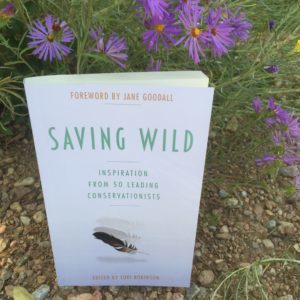
Fifty of the world’s leading conservationists – amazing men and women all over the world – who have devoted their lives to saving some of the most endangered species and the most threatened areas on earth, answer the question: How do you stay inspired? And this book, Saving Wild, is the result.
Holiday Special: Donate $200 to Saving Wild and get a copy of Saving Wild.
For your free gift Donate to Saving Wild at bottom of this page.
For Writers
Inspirational Book: Writing Wild
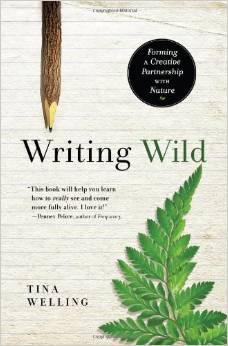
The pages in my copy of Writing Wild are dog-eared, highlighted, and trimmed with skinny post-its. In my interview with author Tina Welling she says, “when we align our creative practices with natural principles, we find joy; healing both ourselves and the earth. I highly recommend Writing Wild for writers, artists and anyone longing for a deeper connection to nature and wild-ness.
For Animal Lovers
Inspirational Products from Your True Nature
 Your True Nature promotes connection, protection and education of nature’s beauty through frameable bookmarks, posters, postcards and journals featuring inspirational sayings as advice from nature. Dolphins advising us to have a playful spirit and glide through our day with ease, Giraffes advising us to stand tall and reach for new heights, I can not get enough of these wonderful gifts.
Holiday Special: Donate $50 to Saving Wild and get an Advice from a Rainforest bookmark. 
For your free gift Donate to Saving Wild at the bottom of this page.
For Weekend Hikers
I can not tell you how many people have asked me where I got my pack which holds one water bottle, my cell phone and my keys. It is perfect and light and wraps around my waist for a carefree feeling on any day hike.
For Backyard Birders
Book: What the Robin Knows
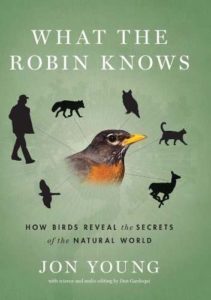
For anyone who feeds and or watches birds this is a great gift. The author emphasizes finding our own ‘sit spot’ – a place in nature we return to over and over in order to get to know our surroundings more intimately. After reading this book I am now more aware of how often the birds are ‘talking’ to each other and I am able to tell when there is danger (a cat or hawk) approaching just by listening and paying better attention to the bird’s messages.
For People Who Spend a lot of Time Outside
Gift Idea: Tilley Hats
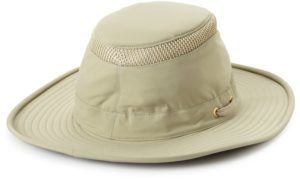
There are many styles and colors of Tilley hats and all of them great. Tilley’s feature built in sunblock, and guarantees! They’re made of organic cotton, and they even float. I could go on and on, but why don’t you go to the link and see for yourself.
Just for Fun
Inspirational Gift: Adult Coloring Books

I am addicted to coloring. I have books for coloring animals, flowers, frogs and mandalas. This book has some of each (not the frogs though). It is a great way to relax. Give this inspirational gift with a set of colored pencils and then get one for yourself.
Fun gift for men: Colorful socks with a difference

The socks are eco-friendly, they are made from bamboo, and proceeds from each sale goes to the Diane Fossey Fund for their gorilla conservation work in Africa.
Donate to Saving Wild here:
Note: Donations are processed through our non-profit umbrella, The Key Biscayne Foundation, and are fully tax deductible.
Great news!
Buy any of these inspirational gifts (or anything at all) using the links provides and a small % of the cost of your purchase will go to protecting wildlife all over the world. It costs you nothing extra.
The post 8 Inspirational Gifts for Nature Lovers appeared first on Saving Wild.
November 13, 2016
Extraordinary Opportunity
Thrust. The word means to be suddenly pushed into a specified direction.
Imagine being physically pushed. In response many of us may think we have only three options: we fall down (give up), we move in the opposite direction (give in), or we push back against the force.
But there is another way.
What about using the momentum of the push to our advantage? How? We can view this as an opportunity, a chance to use the resulting extra energy (anger, compassion, determination) to move us to a new position.
For days I’ve been on a grueling soul searching journey – does anyone care about saving wildlife and wild places, am I making a difference, does anything even matter?
This internal inspection has led me to a place (Thank You Universe) of more strength and conviction then ever before. I have arrived at one unfaltering question: How can I, now more than ever, do the best work possible to protect wildlife and wild places?
My answer: Get more laser focused with what works, up the ante of what I am already doing, and turn up the volume of my message.
How specifically am I doing this?
Below are some of the ways. I hope they will help you think about what you want to do with this extraordinary opportunity that we have been thrust into.
–Commit on a deeper level than ever before.
Make a commitment to yourself and others to spend more time and energy expressing your values and passions.
–Get clearer about your message.
Focus more on what works rather then waste energy on something that isn’t really hitting it out of the park in effectiveness.
–Expand your voice.
If you comment on social media, start writing more in-depth comments. If you write about issues, start talking about them more. If you talk about your passions, start attending legislative meetings to express your beliefs.
–Expand your reach.
If you are on social media, then start a blog or website. If you already have a blog, then write a book. If you have a book, set your sites on radio, or television. See how it works?
–Connect more fully and more often to your tribe.
Search out more people and groups that share your passion. Once you find them, be a fully present participant.
Did Ghandi say, “This is too overwhelming”, did John Muir say, “this is impossible”, does Jane Goodall ever say, “I give up”?
No.
And neither should you.
We are all Ghandi, Goodall and Muir. We are all capable of extraordinary things. We just have to commit and act.
Thrust yourself foreword amazing one.
**Featured Photo: Storm Approaching Trout Lake @ LeAnn Yeates
The post Extraordinary Opportunity appeared first on Saving Wild.
November 8, 2016
Beyond Words by Carl Safina
In his newest book, Beyond Words, Carl Safina says, “Science usually asks ‘it’ questions about animals. Where does it live, what does it eat, what does it do when danger threatens. But, always forbidden is the one question that might open the door: Who?”
Beyond Words is Safina’s quest to explore ‘Who are you?’ The NY Times Bestseller focuses on three species: elephant, wolf and whale.
Why these three?
“Many animals have intricate social lives that make them a ‘who’ not an ‘it.’ There are a few examples of these kinds of creatures where individuals have been known long enough by researchers. I chose the flagship herbivore, carnivore, and marine creature, highly social species for whom a lot is known and whose relationship with humans is rocky as well. Apes and ravens were on the short list. Though there are three focal species, there are actually dozens of species mentioned in the book,” explains Safina.
While Jane Goodall’s discovery of tool use by chimpanzees forced humans to redefine what it means to be human, Safina highlights emotions, cooperation, understanding, and humor in animals forcing us again to re-evaluate the separation we assume between humans and animals.
A wild elephant communicating with a whale, dolphins sensing death, playing tricks on trainers, and calling each other by name, killer whales who find us entertaining, and who rescue dogs, wolves playing a game of pretend or dying on their own terms; there are many such stories in Beyond Words.
As Safina shows us “Living diversity is astonishing, but as you peel layers of difference, you encounter similarities more stunning.” And, it seems that non-humans understand this concept better than we do. “Their displays of compassion, forgiveness, and contact are especially humbling after all they have suffered at the hands of us humans.”
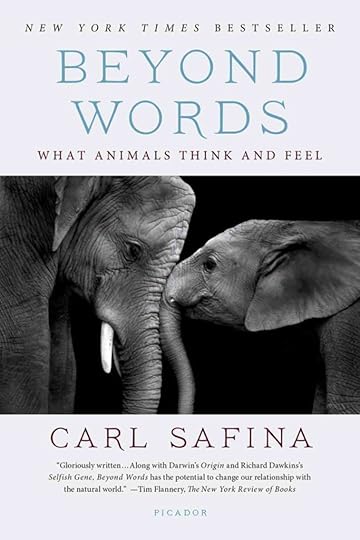
BUY IT NOW:
Interview by Lori Robinson with Carl Safina about Beyond Words
Lori: It sounds like you had many wonderful experiences with all three species while researching and writing this book. What was your most profound experience and how did it change you and your perception of animals?
Safina: Elephants. They are so wonderful and peaceful and so easy to watch for hours. I could not imagine being without them ever again. But seeing them poached, and the orphans…it broke my heart. The wolves were also extremely interesting and deeply moving. The orcas are almost too incredible for words, but a lot of their life happens out of sight.
Lori: Are you optimistic about the future of elephants, wolves and whales?
Safina: Optimistic? Generally, yes. But elephants face gigantic problems from poaching and just too many people crowding them out. Wolves face ingrained lethal hatred. The whales are having problems with toxics and food shortages where I mainly studied them but they are doing much better elsewhere.
Lori: What needs to happen for humans to stop the current rate of extinction we are causing?
Safina: Human population growth must stop. Then it must decline. If you look at countries where it’s declining, it’s where women have gained full citizenship in the last 50 years. Where women can go to school, vote, and own businesses and property, they start saving the world without even thinking about it. It solves the biggest problem in the world and the biggest injustice within humankind.
Lori: Is there one message you would like readers to take away from reading Beyond Words?
Safina: All life is family.
***
In Beyond Words Safina writes, “We are so similar under the skin. Four limbs, the same bones, the same organs, the same origins, and lots of shared history. And between first breath and final gasp, we endeavor toward a common quest: to live, to raise our young, to find space enough for our lives, to survive the confronting dangers, to do what it takes, to the best of our abilities, to live out the mystery and opportunity of finding ourselves somehow in existence.
***
Safina tells me he is proud that Beyond Words “landed the message I wanted it to land.” Many people have told Safina the book gives them permission to believe what they’ve always felt about other animals. “It is helping a lot of people see other animals more for who they really are, who we are here with on Earth.”
Beyond Words is a wonderful gift for anyone who cares about animals. I have added it to the other books on ‘my favorite books’ list for wildlife enthusiasts.
Remember every time you use Saving Wild’s Amazon link to buy Beyond Words (or any products) from Amazon a percentage of your purchase will automatically go to the top NGO’s saving wildlife across the globe.
The post Beyond Words by Carl Safina appeared first on Saving Wild.
October 27, 2016
Saving Wildlife Really Can Be This Easy!
This is an easy, extremely effective, and much appreciated action for saving wildlife around the world.
And it won’t cost you a cent!
IT’S THIS SIMPLE:
Use the SavingWild Amazon Link (this is different than the smile program) every time you shop on Amazon and a small percentage of the cost of your purchases will go to SavingWild.com to be distributed to our favorite NGO’s saving wildlife around the world.
THE BEST PART:
1) There are no added costs to you.
2) You will still be using YOUR personal Amazon page that you always shop from.
3) Once you save the link to your book marks or desktop there is nothing extra you need to do. Just use SavingWild’s Link to Amazon and Amazon will know you want to give back to SavingWild.
4) I will not be able to see what you have purchased and won’t even know who is using this method. Your shopping is completely confidential.
5) Each year I personally match the amount of money received from the Amazon program and then the funds go to the best organizations working to save wildlife all over the world.
6) You can feel great knowing that you contributed to those donations through your shopping. This year SavingWild is on track to give away $3,000.
HERE’S HOW:
Try it now to see for yourself how easy it is: use our Link and THEN SAVE THE LINK WHERE YOU CAN EASILY FIND IT EACH TIME YOU SHOP ON AMAZON.
That’s it. Make your shopping count for something wonderful!
Please share this with anyone you know who shops on Amazon and is interested in Saving Wildlife.
Thanks so much,
with Love and appreciation to all of you for all you do towards saving wildlife.
Lori
The post Saving Wildlife Really Can Be This Easy! appeared first on Saving Wild.