Linda Shenton Matchett's Blog, page 63
January 20, 2020
Traveling Tuesday: North Carolina During WWII
Traveling Tuesday: North Carolina During WWII
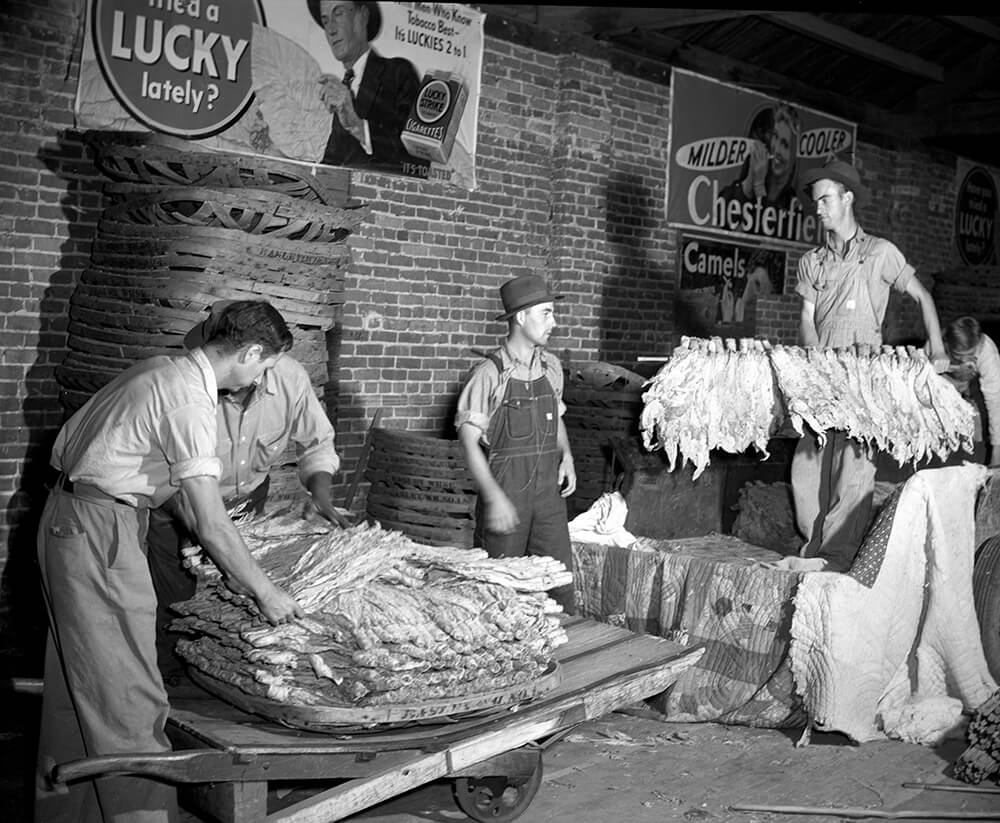 Last week we traveled to South Carolina to learn about its contribution to the WWII effort. Today, we’re going to head north and visit its neighbor, North Carolina, a state that ranges from its sandy coast line to rugged mountains in the west.
Established as a royal colony in 1729, North Carolina was named for King Charles I, and is one of the original thirteen colonies. The state is bordered by the Atlantic Ocean, South Carolina, Georgia, Virginia, and Tennessee. A rich history includes nearly a dozen people groups of Native Americans, exploration by Spain, pirates, a coup d’état, and sit-ins.
North Carolina was mostly rural at the beginning of the war and had been hit hard by the Great Depression. Only one out of four farms has electricity, and almost none had indoor plumbing. Then war descends on the U.S.
 Fort Bragg, an old field-artillery training grounded headed for decommissioning instead becomes home to more than 100,000 soldiers (including all five Army airborne divisions). Camp Lejeune opens along the coastal land outside Jacksonville and trains more than 40,000 Marines. At Montford Point, the Marines enlist the first of 20,000 African-Americans and by 1942 North Carolina is the location of over one hundred military installations. Of the 362,500 men and women who served in the armed forces, 9,000 never come home.
Manufacturing plants pop up all over the state. South of Wilmington at North Carolina Shipping, Liberty ships slide down the slipways into the Cape Fear River at the rate of one per week. Dayton Rubber Company, Chatham Manufacturing, Alcoa, Fairchild Aircraft, Carolina Aluminum, Ecusta Paper, and Consolidated Vultee Aircraft all join the war effort to provide essential materiel.
To power the growing defense industry, the Tennessee Valley Authority constructs Fontana Dam on the Tennessee River. The dam is 480 feet high, the tallest east of the Rockies, and generates 304 megawatts of electricity per day (the equivalent to the energy produced by ten automobile engines).Between April and July, 1942, the war got up close and personal when German submarines were sunk in the coastal waters off Cape Hatteras and Cape Lookout.
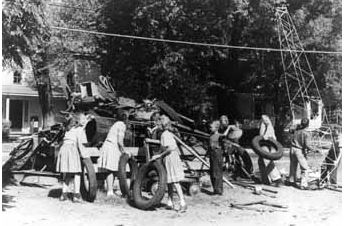
With the rest of the country, North Carolina purchase war bonds, donated their scrap, and fed their family with Victory gardens and rationed food items. They “made do and mended,” adhered to blackout regulations, spotted planes, and volunteered for one of the many organizations that supported the war. In the end, North Carolinians could be proud of their efforts.
________________________
 It’s been six months since Ruth Brown followed clues to England and discovered the identity of her sister’s killer. War continues to rage as Ruth reports on food shortages, the black market, evacuation of London’s children, and the bravery of the British people.
When a bombing raid destroys her home and unearths a twenty-year-old skeleton in the cellar, her reporter’s senses tingle in anticipation of solving another mystery. Unfortunately, the by-the-book detective inspector assigned to the case is not interested in her theories. As Ruth investigates the case on her own, she butts heads with the handsome policeman.
Will she get to the bottom of the story before the killer strikes again?
Purchase Link: https://amzn.to/366EdN9


January 15, 2020
Talkshow Thursday: Welcome Sandra Ardoin
Talkshow Thursday: Welcome Sandra Ardoin
 Linda: Thanks for joining me today. Congratulations on your latest release, Unwrapping Hope (Widows Might novella). Where did you get the inspiration for the story and its characters?
Sandra: I’m honored to be on your blog, Linda. Thanks for having me.
In all honesty, I wanted to write a Christmas novella for release in 2019. As I pondered the story, it became more than that. It turned into a prequel novella for what will be my Widow’s Might series. Unwrapping Hope begins a little before Thanksgiving and goes up to Christmas. It has a holiday backdrop, however, I don’t consider it thoroughly Christmas. Besides being set in 1896 (as opposed to a contemporary setting), I wouldn’t call it a Hallmark story, though **spoiler** , it does have a happy ending.
 Linda: Thanks for joining me today. Congratulations on your latest release, Unwrapping Hope (Widows Might novella). Where did you get the inspiration for the story and its characters?
Sandra: I’m honored to be on your blog, Linda. Thanks for having me.
In all honesty, I wanted to write a Christmas novella for release in 2019. As I pondered the story, it became more than that. It turned into a prequel novella for what will be my Widow’s Might series. Unwrapping Hope begins a little before Thanksgiving and goes up to Christmas. It has a holiday backdrop, however, I don’t consider it thoroughly Christmas. Besides being set in 1896 (as opposed to a contemporary setting), I wouldn’t call it a Hallmark story, though **spoiler** , it does have a happy ending.
January 14, 2020
Release Day! Under Ground
Release Day! Under Ground
Under Ground is the second adventure in the Ruth Brown mystery series. Here's a bit about the book:
It’s been six months since Ruth Brown followed clues to England and discovered the identity of her sister’s killer. War continues to rage as Ruth reports on food shortages, the black market, evacuation of London’s children, and the bravery of the British people.
When a bombing raid destroys her home and unearths a twenty-year-old skeleton in the cellar, her reporter’s senses tingle in anticipation of solving another mystery. Unfortunately, the by-the-book detective inspector assigned to the case is not interested in her theories. As Ruth investigates the case on her own, she butts heads with the handsome policeman.
Will she get to the bottom of the story before the killer strikes again?
Purchase Link: https://amzn.to/2t9TOhy
Under Cover (book three in the series) is now available for pre-order and will release on February 15.
Pick up your copies today!
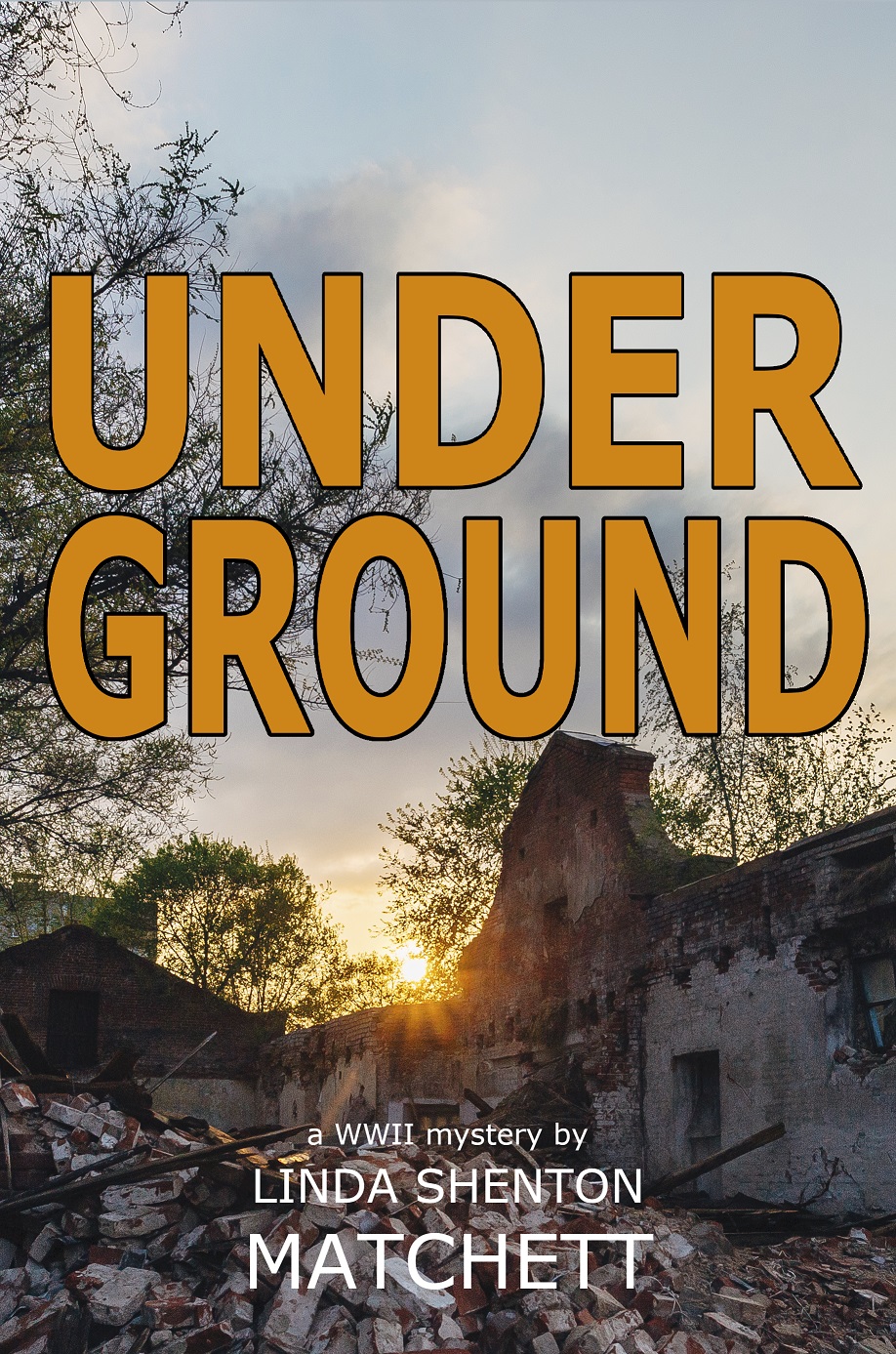
Under Ground is the second adventure in the Ruth Brown mystery series. Here's a bit about the book:
It’s been six months since Ruth Brown followed clues to England and discovered the identity of her sister’s killer. War continues to rage as Ruth reports on food shortages, the black market, evacuation of London’s children, and the bravery of the British people.
When a bombing raid destroys her home and unearths a twenty-year-old skeleton in the cellar, her reporter’s senses tingle in anticipation of solving another mystery. Unfortunately, the by-the-book detective inspector assigned to the case is not interested in her theories. As Ruth investigates the case on her own, she butts heads with the handsome policeman.
Will she get to the bottom of the story before the killer strikes again?
Purchase Link: https://amzn.to/2t9TOhy
Under Cover (book three in the series) is now available for pre-order and will release on February 15.
Pick up your copies today!
January 13, 2020
Traveling Tuesday: England During WWII
Traveling Tuesday: England During WWII
 Do twenty-one miles seem like a lot to you? Perhaps if you’re walking, then yes. In a car, not so much. How about one hundred and fifty miles. Now, that’s a fair distance no matter what mode of transportation you’re using. Unless your opponent in a war is at the end of those miles.
 The English Channel is twenty-one miles wide at its narrowest point and one hundred fifty miles at its widest. In May, 1940 during the Battle of France, Germany captured Boulogne and Calais creating difficulties for a retreat of the British Expeditionary Forces. Fortunately, thanks to hundreds of boats, hard fighting by the troops, and German indecision, the port of Dunkirk was kept open allowing 338,000 Allied troops to be evacuated. When Germany began the occupation in France a month later, the threat of invasion became a constant fear of the British people. Street and directional signs were removed as an impediment to invading forces.
 That summer, rationing began in earnest as did blackout regulations, plane spotting, and women rushing to the workforce to help produce planes, tanks, and munitions. With September came the Blitz as well as flying bombs and rockets. Germany conducted multiple air raids across the country every night. The raids went on for months…well into May 1941. Identity tags were issued to the population in the event they would be unrecognizable if killed. Barrage balloons were put into place and shelters were created in the Underground system. Citizens also built personal shelters on their properties.
 By early 1942, the Americans arrived to shore up the British defenses and take the offensive getting to Italy, France, and Germany. Troops were met with mixed reactions. Many people were relieved. Others wanted nothing to do with the men who were “overpaid, oversexed, and over here.”
 The war ground on until May 8, 1945 when Victory in Europe was declared with surrender of Germany. By the end, England’s citizens were exhausted and malnourished, but proud that they survived. The troops were months getting home, some of them not demobbed until 1947, and rationing would continue for some items until 1952.___________________________________
It’s been six months since Ruth Brown followed clues to England and discovered the identity of her sister’s killer. War continues to rage as Ruth reports on food shortages, the black market, evacuation of London’s children, and the bravery of the British people.When a bombing raid destroys her home and unearths a twenty-year-old skeleton in the cellar, her reporter’s senses tingle in anticipation of solving another mystery. Unfortunately, the by-the-book detective inspector assigned to the case is not interested in her theories. As Ruth investigates the case on her own, she butts heads with the handsome policeman.
Will she get to the bottom of the story before the killer strikes again?
Pre-Order/Purchase Link: https://amzn.to/2t9TOhy
January 12, 2020
Mystery Monday: Under Ground The Story Behind the Story
Mystery Monday: Under GroundThe Story Behind the Story
 A common adage says that truth is stranger than fiction. That axiom is why some of my books have been inspired by news reports. As time passes, the world loses hundreds of people from the “Greatest Generation.” As a result, their children and grandchildren are finding numerous treasures and associated stories when they go through their loved one’s personal effects. One such incident became the kernel of an idea for Under Ground, the second installment of the Ruth Brown mystery series.
 About ten years ago, there was a newspaper headline about a family who tried to sell a painting they’d inherited after their grandfather passed away only to discover the piece had been stolen during WWII. Stunned, the descendants immediately returned the piece to its rightful owners. Intrigued, I began to research artwork stolen during the war. There were numerous reports about Nazis and German soldiers who had commandeered sculptures, oil paintings, water colors, and other masterpieces.
 As I dug deeper, I began to unearth articles about looting that occurred throughout the war, especially during the chaotic last days of the conflict…looting that was perpetrated by soldiers from the Allied troops. Many of the items were shipped home, through the postal system.
Were the military clerks complicit in the activities? What did the soldier’s family think when priceless artifacts showed up in the mail? Did the soldiers think they could get away with the thievery? Apparently, a large percentage of them did.
 With dozens of articles in my hands about artifacts coming to light decades after the war, I knew I had my story. I added a twenty-year old skeleton just for good measure.
Under Ground releases tomorrow, but you can pre-order your copy today. Don’t miss the next exciting adventure for WWII war correspondent/amateur sleuth Ruth Brown.
______________________________
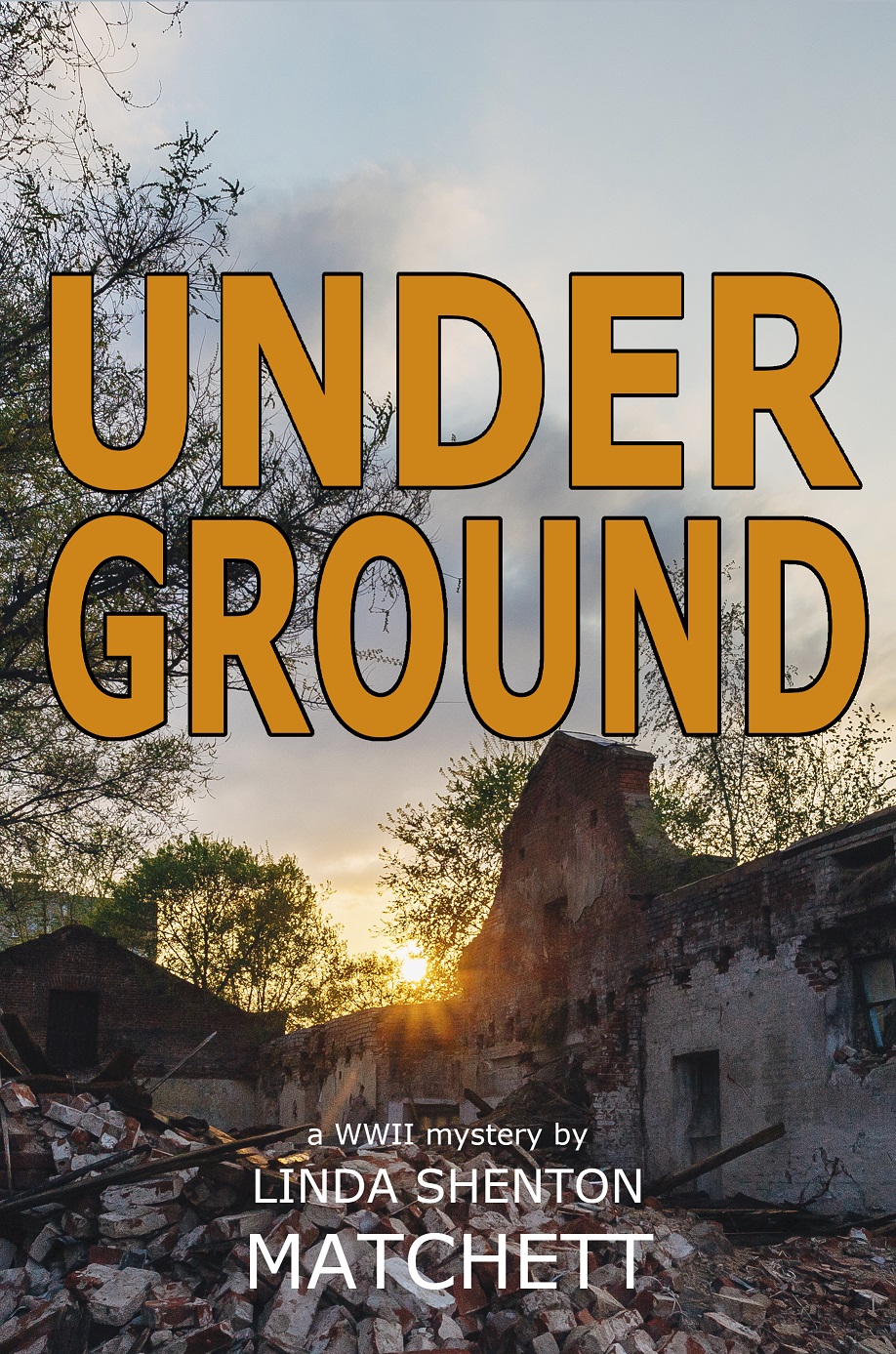 It’s been six months since Ruth Brown followed clues to England and discovered the identity of her sister’s killer. War continues to rage as Ruth reports on food shortages, the black market, evacuation of London’s children, and the bravery of the British people.
When a bombing raid destroys her home and unearths a twenty-year-old skeleton in the cellar, her reporter’s senses tingle in anticipation of solving another mystery. Unfortunately, the by-the-book detective inspector assigned to the case is not interested in her theories. As Ruth investigates the case on her own, she butts heads with the handsome policeman.
Will she get to the bottom of the story before the killer strikes again?
Pre-order/Purchase Link: https://amzn.to/2t9TOhy
January 8, 2020
Talkshow Thursday: Welcome back, Linore Burkard
Talkshow Thursday: Welcome back, Linore Burkard
 Linda: Welcome back and thanks for joining me today. My readers love historical fiction, so they will be very excited to hear about your latest release, Forever, Lately: A Regency Time Travel Romance. It sounds intriguing. What was your inspiration for the story?
Linore: The idea of a novelist traveling between Regency England and the current U.S. was with me a long time. I wrote dozens of scenes over the years of how it would go. Even after my agent failed to sell the proposal back around 2012 or so, I couldn’t let go of the story. I battled with several ideas, changed it and rewrote much of it. In the end it became a crossover book, clean but not “Christian,” and it turned out that’s exactly what it needed to be. When I was struggling to keep it distinctively Christian, the story was floundering. When I let go of how I felt I “should” write it, and just wrote the story as it came to me, it grew much stronger and focused. And a lot of fun, incidentally!
 LM: How do you come up with your characters? Are they based on any real people in your life?
Linore: I never intentionally write anyone into a story, but I think all writers are inevitably influenced by their experience of people. In some stories, I think about what type of person I need to fulfill a role, and so character creation starts there. Other times, I may be writing a character and realize their traits aren’t adding to the plot. So I’ll decide what trait they need to make the story stronger, and give it to them. If I need to go back to chapter one and rewrite that character, I’ll do it. I believe it’s all about story.
LM: Research is an important part of writing, but since time travel wasn’t an option, how did you research Forever, Lately?
 Linore: I began researching the era back when I decided to write a Christian Regency romance. At the time, there were no authentic Regencies for Christian readers and I wrote my book specifically to fill that gap. The first book took tons of research and that was before the internet. (I became very familiar with the resources of my local library.) After that book and two sequels, I took time off to write books in other eras and a series of contemporary suspense novels. But my love of the Regency has never faded. It’s great fun to be back in it.
LM: You write YA and adult fiction. How do you decide which genre to work in for a particular theme or topic?
 Linore: There was never a question in my mind about whether to write the Pulse Effex Series any other way than for young adults. The three main characters are all sixteen years old—so it made sense to write it from their viewpoint, first person. The conflict of the series is about surviving without technology when the grid goes down after an electromagnetic pulse, and there’s no segment of the population that would be more devastated, emotionally, than teens who have grown up with today’s gadgets. The story I wanted to write was from their viewpoint; I wanted to capture the strong emotions and situations they’d encounter, so it wasn’t really a decision I had to make. It just worked that way.
 LM: If money were no object, where is your idea of the ultimate vacation?
Linore: A few months to explore Jane Austen’s England, and literary London and the National Gallery, followed by a long cruise.
LM: Quickies:
Favorite childhood book: I have so many! One was Old Yeller. Another, Little House on the Prairie. I started writing after reading My Side of the Mountain.
Drink of choice: Coffee, tea, or soft drink. Morning coffee, and after that, tea. No soft drinks.
Would you rather walk, bicycle, or drive a car: I love to drive. I especially love to drive fast on a lonely road.
LM: What is your next project?
Linore: I’m in the middle of book two of another Regency series, The Brides of Mayfair. The first in the series should be out by early spring if not sooner.
LM: Where can folks find you on the web?
Linore: My homebase is currently being redone by a wonderful web designer. In the meantime, I’m on FB and Twitter and Pinterest, but to keep up with new releases and book sales, readers should join my mailing list. One subscriber wins a free book every month. They can join at the website: http://LRBurkard.com.
About Forever, Lately:
 1816, England: Julian St. John needs a wife. An oath to a deceased guardian must be kept. Miss Clarissa Andrews, a vexatious beauty, has dangled after him all season bu this has not intention of choosing such a she-devil.
Maine, Present Day: Author Claire Channing is desperate to write a bestseller to save her failing career. She moves into her grandmother's abandoned cottage to write the book, but a local resort baron wants to raze the place. Without the deed, the clock is ticking on how long she can stay. She thinks she's writing St. John's story. But when she discovers an old prayer shawl and finds herself in his Regency world, she falls in love with him, a man she thought she invented! Miss Andrews, however is also real-and she'd rather see Julian dead than in another woman's arms!
Claire must beat the clock to prevent a deadly tragedy, but can love beat the limits of time itself?
Purchase Link: https://amzn.to/2QoNviW
January 7, 2020
Wartime Wednesday: Daredevil Adeline Gray
Wartime Wednesday: Daredevil Adeline Gray
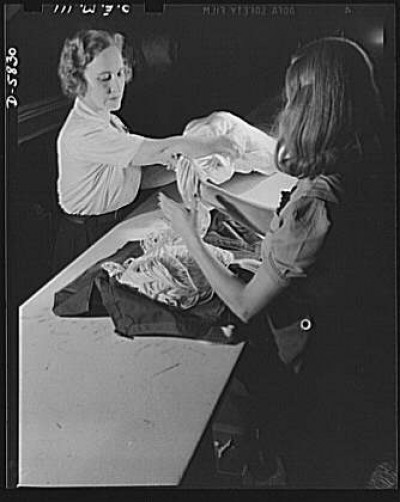 Prior to the outbreak of World War II, parachutes were made of silk. When Japan became an enemy of the U.S. after the attack at Pearl Harbor, trade relations were cut off, and the military needed to find another fabric that would be as effective. Enter nylon.
Invented in 1935 by Wallace Hume Carothers at DuPont’s research facility, nylon was first used for toothbrushes bristles in 1938. Women’s stockings were exhibited at the 1939 World’s Fair in New York and weren’t sold commercially until 1940. However, the product was met by distrust and fear by the general public because a newspaper article claimed that one of the chemicals used in nylon’s production was extracted from corpses. A lengthy advertising campaign finally squelched the rumors by 1942.
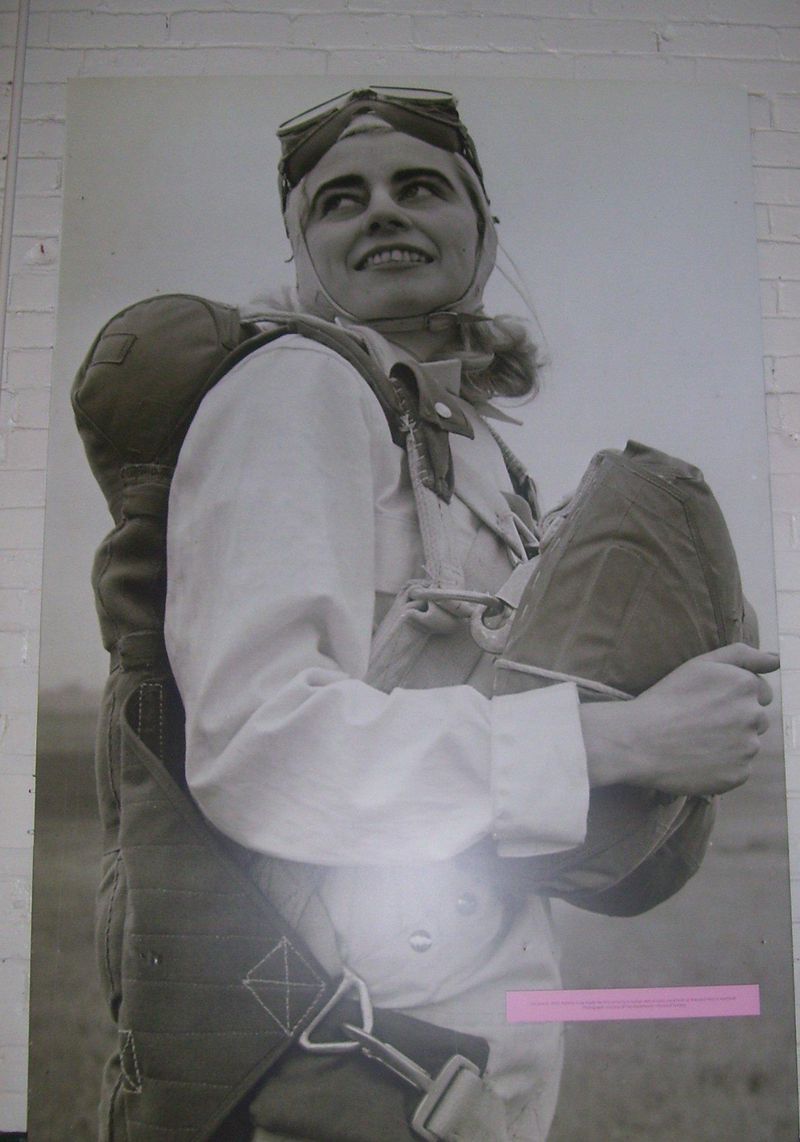 The government was tentatively optimistic about producing nylon parachutes and contracted with Pioneer Parachute in Manchester, Connecticut to have a prototype manufactured. As with any new piece of equipment, tests had to be conducted to determine viability. By June 1942 it was time to make the first jump with the nylon parachute. Who would be selected?
Twenty-four-year-old Adeline Gray had been working as a parachute rigger with the company for five years. Prior to her employment at Pioneer, she had been a sky diver who made her reputation as a female dare devil jumper. Born in 1917 and raised in Oxford, Connecticut, she was infatuated from a young age with the idea of parachuting. Stories are told about her jumping from the loft of a barn into bales of hay, holding an umbrella to slow her fall. After high school she learned how to pack and repair chutes, and made her first jump from a height of 2,000 feet at the New Haven Municipal Airport.
 With thirty-three jumps under her belt, and as the only female licensed parachute jumper in the state, Adeline made an excellent candidate. More than fifty senior military officers lined up at Brainerd Field in Hartford to watch her jump. The leap and landing were a success, moving the manufacture of chutes from silk to synthetics.
The New York Times marveled at her confidence: “As calmly as if she were going out on the porch to bring in the daily paper…[she] stepped out of an airplane.” Adeline’s new-found nationwide fame opened other doors, and she found herself featured as a heroine in True Comics. _____________________________
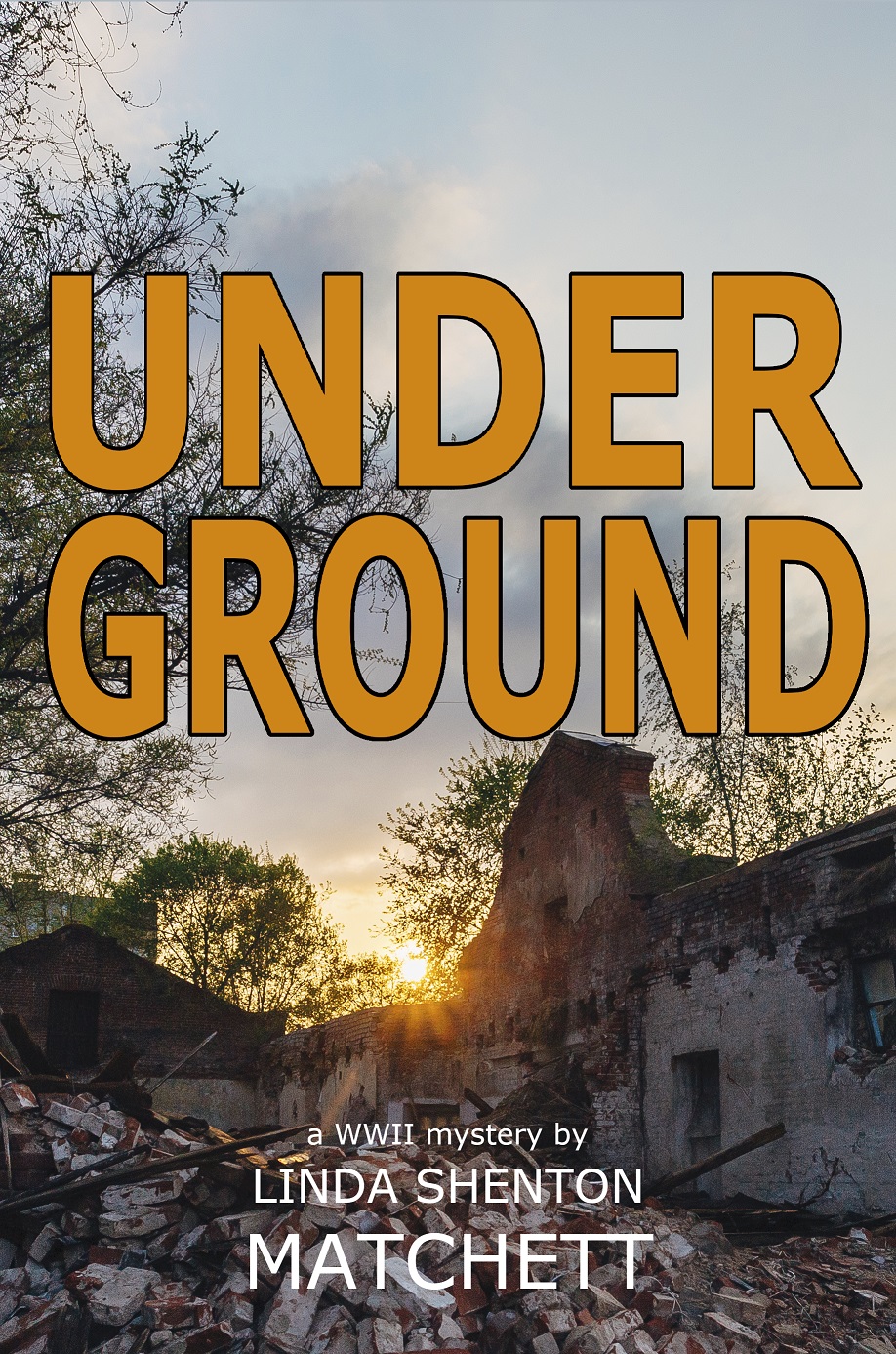 It’s been six months since Ruth Brown followed clues to England and discovered the identity of her sister’s killer. War continues to rage as Ruth reports on food shortages, the black market, evacuation of London’s children, and the bravery of the British people.
When a bombing raid destroys her home and unearths a twenty-year-old skeleton in the cellar, her reporter’s senses tingle in anticipation of solving another mystery. Unfortunately, the by-the-book detective inspector assigned to the case is not interested in her theories. As Ruth investigates the case on her own, she butts heads with the handsome policeman.
Will she get to the bottom of the story before he arrests her for interference?
AVAILABLE FOR PRE-ORDER (Book 2, Ruth Brown mystery series)
Purchase Link: https://amzn.to/35oUFbo
January 6, 2020
Traveling Tuesday: South Carolina During WWII
Traveling Tuesday: South Carolina During WWII
 Bordered by North Carolina, the Atlantic Ocean, and Georgia across the Savannah River, South Carolina was the eighth state to ratify the U.S. Constitution in 1788. Less than one hundred years later, the state would be the first state to vote in favor of secession.
As with all states during the 1930s, South Carolina was caught in the throes of the Great Depression. However, prior to the U.S. entry into World War II, federal money began to flow through the construction and expansion of military and naval installations such as Camp Croft in Spartanburg, Fort Jackson in Columbia, and the Charleston Navy Yard.
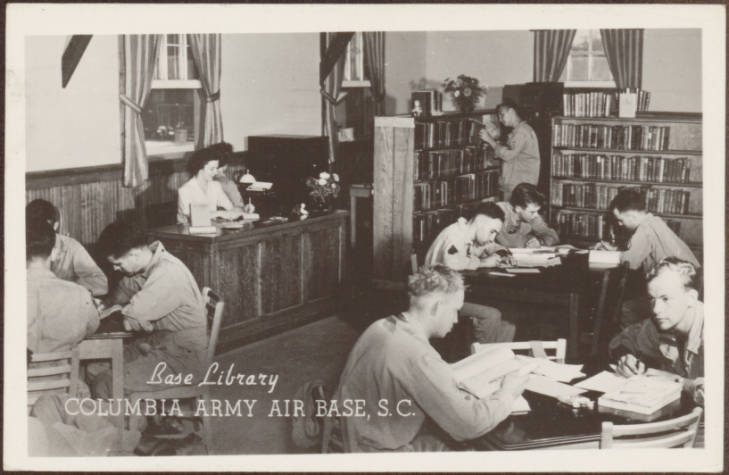 After the war began, South Carolina’s agricultural sector more than doubled as farmers tried to keep up with wartime demands for cotton and produce. Labor shortages and low wages created challenges for the farmers who ultimately used German POWs as well as members of the Women’s Land Army.
The textile industry also saw a boom as manufacturers geared up to meet wartime needs, such as cotton consumption that increased over sixty percent. Before 1940, heavy industries such as aircraft and ammunition plants did not exist, so manufacturing had to be built. Kline Iron and Steel went into Columbia, and Carolina Industries of Sumter produced ship components that were delivered to Charleston for assembly.
 An estimated 900,000 men received their military training in South Carolina, and over 180,000 South Carolinians (including 2,500 women) joined the armed forces. An interesting aside is that forty-one percent of those examined statewide were rejected for service, making the recruit rejection rate in South Carolina the second highest in the nation. Eight hundred posts were “manned” by over 12,500 aircraft spotters, while over a quarter of a million of the state’s residents supported the war effort through volunteerism. South Carolinians joined the rest of the U.S. in rationing from tires and gasoline to vegetables and seafood. By 1943, more than 330,000 Victory gardens dotted the landscape.
The state struggled as segregation laws came under pressure. A huge influx of non-South Carolinians brought different ideas and social customs which led to temporary changes, especially on the military bases. In 1944, the federal district court order the state to provide equal salaries to black and white teacher, and although segregation would remain firmly in place in the early post war period, seeds of change were planted leading to even more court decisions. _____________________________
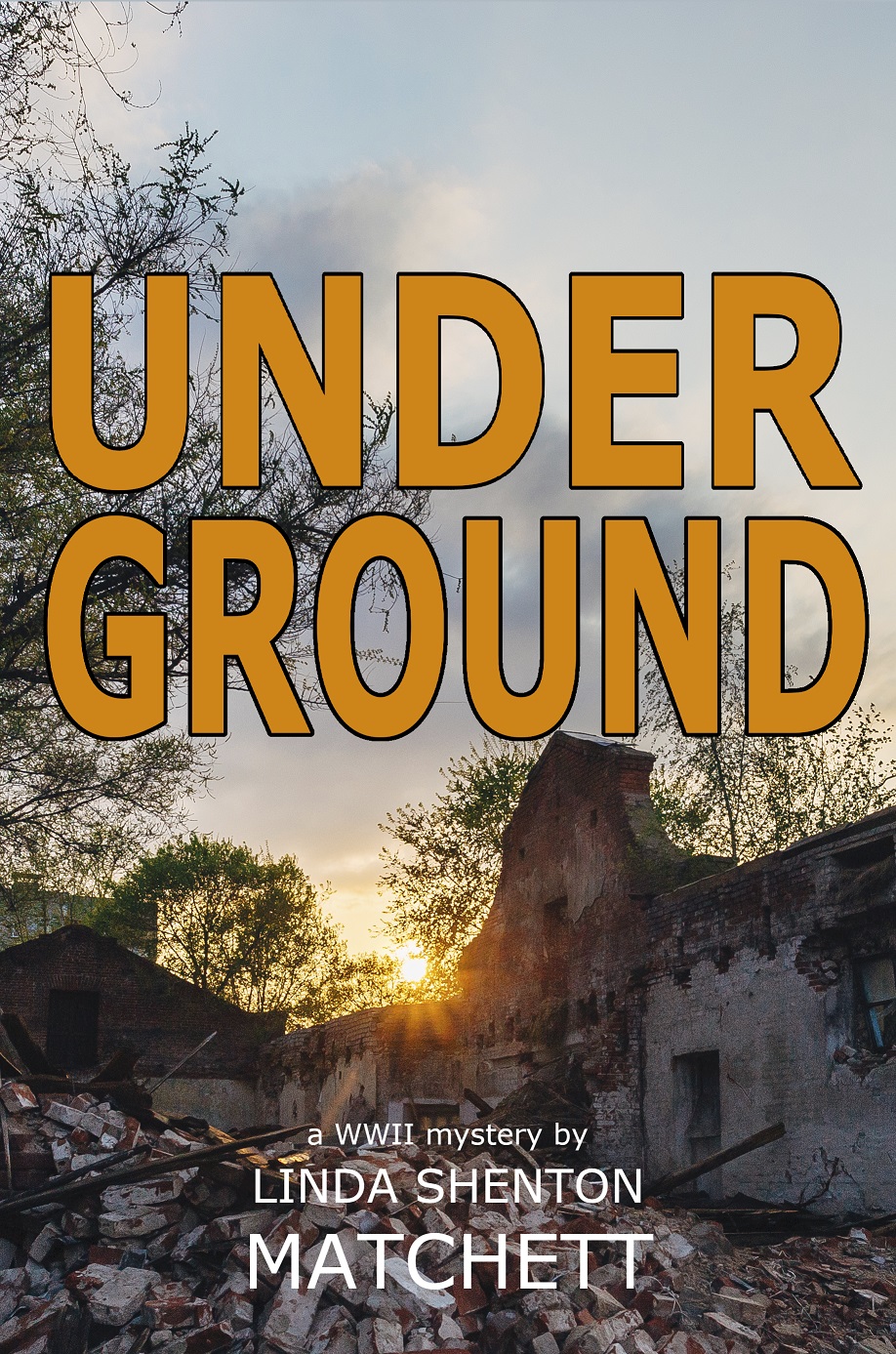 It’s been six months since Ruth Brown followed clues to England and discovered the identity of her sister’s killer. War continues to rage as Ruth reports on food shortages, the black market, evacuation of London’s children, and the bravery of the British people.
When a bombing raid destroys her home and unearths a twenty-year-old skeleton in the cellar, her reporter’s senses tingle in anticipation of solving another mystery. Unfortunately, the by-the-book detective inspector assigned to the case is not interested in her theories. As Ruth investigates the case on her own, she butts heads with the handsome policeman.
Will she get to the bottom of the story before he arrests her for interference?
AVAILABLE FOR PRE-ORDER (Book 2, Ruth Brown mystery series)
Purchase Link: https://amzn.to/35oUFbo
January 1, 2020
Talkshow Thursday: Welcome back, Donna Schlacter
Talkshow Thursday: Welcome back, Donna Schlacter
 Linda: Thanks for joining me today. Congratulations on your upcoming release, Double Jeopardy. It sounds intriguing. Where did you find your inspiration for this story?
Donna: It’s amazing how inspiring this simple question from an editor can be: why aren’t you publishing with me?
Seriously, that’s what happened. Said publisher wanted a story with a cowboy on the cover. Or at least the potential for a cowboy on the cover.
LM: Research is important for any book, but especially so with regard to historic novels. Mining and ranching are part of Double Jeopardy. How did you go about researching these two topics, and was there an especially interesting fact you wanted to include in the story?
Donna: I visited the area, went to a mining museum, read some articles and books, watched a documentary or two, and did some online research. While Colorado is well-known for its gold rush, the silver rush came earlier but didn’t last long. I love to write about lesser-known facts, so settled on silver mining. One thing I learned was they used mules in silver mines, too, so I included a pair in the story.
LM: Your historical novels don’t center around one particular era. When you write, how do you go about choosing which time period to use, and do you have a favorite?
Donna: I usually look for that little nugget (no pun intended) of history or unsolved mystery, and set the story there.
 LM: In addition to writing, you also have a speaking ministry, and offer critiquing, editing, and proofreading services. How do you juggle these activities with your personal time?
Donna: Personal time? LOL. Seriously, I’m a To-Do List fiend, so everything gets scheduled on my calendar. When I’m writing, I put an appointment for my butt in my chair and my fingers on the keys to write however many chapters I need to stay on goal. Same with other projects. Speaking in February? Outline in December. Write it in January. Practice it in February. Outline and PowerPoint to organizers whenever they want them. Just so.
LM: You’ve published numerous books. What advice do you have for fledgling writers?
Donna: Never be afraid to tell your story. It’s important because it is your story, and you’re the only one who can tell it.
LM: What is your next project?
Donna: A covered wagons collection. And then coming up with a new cozy mystery series for my alter ego.
 LM: Where can folks find you on the web?
Donna: I’d love if you’d join me at my Double JeopardyFacebook event on January 7th: https://www.facebook.com/events/2220456174726867/
And, if you’re in the Denver, Colorado area, join me at the Launch Party on January 7th at Bear Valley Church, 10001 W Jewell Ave, Lakewood, CO, 7-9 pm. There will be fun, light refreshments, games, prizes, and books to buy. I’ll be the one dressed up as Zeke Graumann’s mother.
Website: www.HiStoryThruTheAges.wordpress.com
www.HiStoryThruTheAges.com: Receive a free ebook simply for signing up for our free newsletter!
Facebook: www.Facebook.com/DonnaschlachterAuthorTwitter: www.Twitter.com/DonnaSchlachterBooks: Amazon: http://amzn.to/2ci5Xqq and Smashwords: http://bit.ly/2gZATjmWhat Can Be Online University: online courses on the craft of writingEtsy online shop of original artwork, book folding art, and gift items
December 30, 2019
Traveling Tuesday: A Southern New Year
Traveling Tuesday: A Southern New Year

I married into a southern family (roots that hearken from Florida, Tennessee, Mississippi, Texas, and Alabama), and part of my “orientation” included what meal to serve on New Year’s Day to bring the family good luck in the coming year. Without fail, my mother-in-law served black-eyed-peas, ham, collard greens, and cornbread. I’m not a big fan of the greens, so my husband and I now substitute spinach.
 Peas and beans symbolize coins or wealth. Black-eyed peas are the most commonly used bean, but lentils or other beans are acceptable. Be sure to season them with pork, ham, or sausage.Greens resemble money, especially folding money. Dishes are made using green leafy vegetables to ensure good fortune for the coming year. South favorites include collard, mustard, or turnip greens, cabbage or sauerkraut, kale, and chard.Pork is considered a sign of prosperity in some cultures because pigs root forward. (versus lobster that moves backward and is considered bad luck)Cornbread is supposed to symbolize gold because corn kernels represent coins. Combined with the peas and greens, it is said you’ll triple your luck by eating all three together.Other traditional New Year’s Day foods include:
 Hoppin’ John: a low country dish consisting of spicy black-eyed peas, rice, and fatback or ham hock. It is thought to represent one big pot of money.
Hog Jowl: represents wealth, but also ensures good health (considering the fat content, would doctors agree with this claim?)
Southern Caviar: A great appetizer, this black-eyed pea salsa combines the peas with corn, onions, tomatoes, and green chilies. Serve with golden corn chips for extra luck.
What traditions (food or otherwise) do you practice for New Year’s eve or day?
____________________________________
Releasing January 15, 2020
Under Ground (Book 2 of the Ruth Brown mystery series):
 It’s been six months since Ruth Brown followed clues to England and discovered the identity of her sister’s killer. War continues to rage as Ruth reports on food shortages, the black market, evacuation of London’s children, and the bravery of the British people.
When a bombing raid destroys her home and unearths a twenty-year-old skeleton in the cellar, her reporter’s senses tingle in anticipation of solving another mystery. Unfortunately, the by-the-book detective inspector assigned to the case is not interested in her theories. As Ruth investigates the case on her own, she butts heads with the handsome policeman.
Will she get to the bottom of the story before he arrests her for interference?