Linda Shenton Matchett's Blog, page 62
February 13, 2020
Forensic Friday: The Hard-Boiled School of Detective Fiction
Forensic Friday: The Hard-Boiled School of Detective Fiction
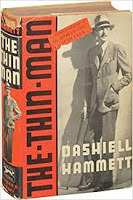 With the release of Under Cover, this week, I'm taking a look at the various styles of crime fiction. On Monday, I talked about The Golden Age of Detective Fiction. Another genre that arose around the same time, but remained popular well into the 1950s is the Hard-Boiled School of Detective Fiction, published in “pulp magazines,” so called because of the cheap wood pulp paper that was used. These inexpensive magazines were successors to the penny dreadfuls (early 19th century) and dime novels (late 19th century/early 20th century).
The typical protagonist in these novels are private investigators who witnessed the violence of organized crime during Prohibition and its aftermath, as well as corruption in the legal system that was nearly as deadly. The result was a cynical, antihero in the likes of Sam Spade, Lew Archer, Mike Hammer, and Philip Marlowe. Author Carroll John Daly is credited with creating the style that Dashiell Hammett and Raymond Chandler perfected.
Tough, single-minded, and loners, the PIs in these stores have a code of honor and justice that may not be strictly legal, but it is moral. They may be threatened or beaten, but they refuse to give up a case or betray a client. They are fast talking smart-alecks who use lots of slang, and show little respect for police officers. His attire of choice is a trench coat, fedora, and spectator shoes. And he won’t be caught without his pistol.
 The story is nearly always told in first person, and the formula includes a client who’s in trouble, frequently a “dame” who doesn’t give the PI the whole story. She can’t get help from the police, so he takes the case. After digging around, interviewing lots of people, he’s typically been betrayed at least once and more murder have occurred.
Numerous hard-boiled detective stories were made into movies: The Thin Man series, Philo Vance series, The Maltese Falcon, etc. What is your favorite?___________________
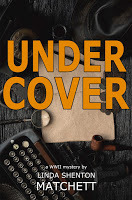 In the year since arriving in London, journalist Ruth Brown has put a face on the war for her readers at home in the U.S. Thus far, juggling her career and her relationship with Detective Inspector Trevor Gelson hasn't proven too challenging. The war gets personal for Ruth when her friend Amelia is murdered, and Trevor is assigned to the case.
Life gets even more unsettling when clues indicate her best friend, Varis, is passing secrets to the enemy. Convinced Varis is innocent, Ruth must find the real traitor as the clock ticks down toward Operation Husky-the Allied invasion of Sicily. Circumstantial evidence leads Trevor to suspect her of having a part in Amelia's death, and Ruth must choose between her heart and her duty.
Purchase Link: https://amzn.to/37dA36J
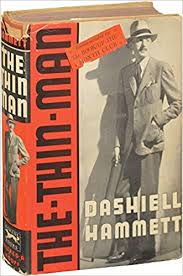 With the release of Under Cover, this week, I'm taking a look at the various styles of crime fiction. On Monday, I talked about The Golden Age of Detective Fiction. Another genre that arose around the same time, but remained popular well into the 1950s is the Hard-Boiled School of Detective Fiction, published in “pulp magazines,” so called because of the cheap wood pulp paper that was used. These inexpensive magazines were successors to the penny dreadfuls (early 19th century) and dime novels (late 19th century/early 20th century).
The typical protagonist in these novels are private investigators who witnessed the violence of organized crime during Prohibition and its aftermath, as well as corruption in the legal system that was nearly as deadly. The result was a
 cynical, antihero in the likes of Sam Spade, Lew Archer, Mike Hammer, and Philip Marlowe. Author Carroll John Daly is credited with creating the style that Dashiell Hammett and Raymond Chandler perfected.
Tough, single-minded, and loners, the PIs in these stores have a code of honor and justice that may not be strictly legal, but it is moral. They may be threatened or beaten, but they refuse to give up a case or betray a client. They are fast talking smart-alecks who use lots of slang, and show little respect for police officers. His attire of choice is a trench coat, fedora, and spectator shoes. And he won’t be caught without his pistol.
 The story is nearly always told in first person, and the formula includes a client who’s in trouble, frequently a “dame” who doesn’t give the PI the whole story. She can’t get help from the police, so he takes the case. After digging around, interviewing lots of people, he’s typically been betrayed at least once and more murder have occurred.
Numerous hard-boiled detective stories were made into movies: The Thin Man series, Philo Vance series, The Maltese Falcon, etc. What is your favorite?___________________
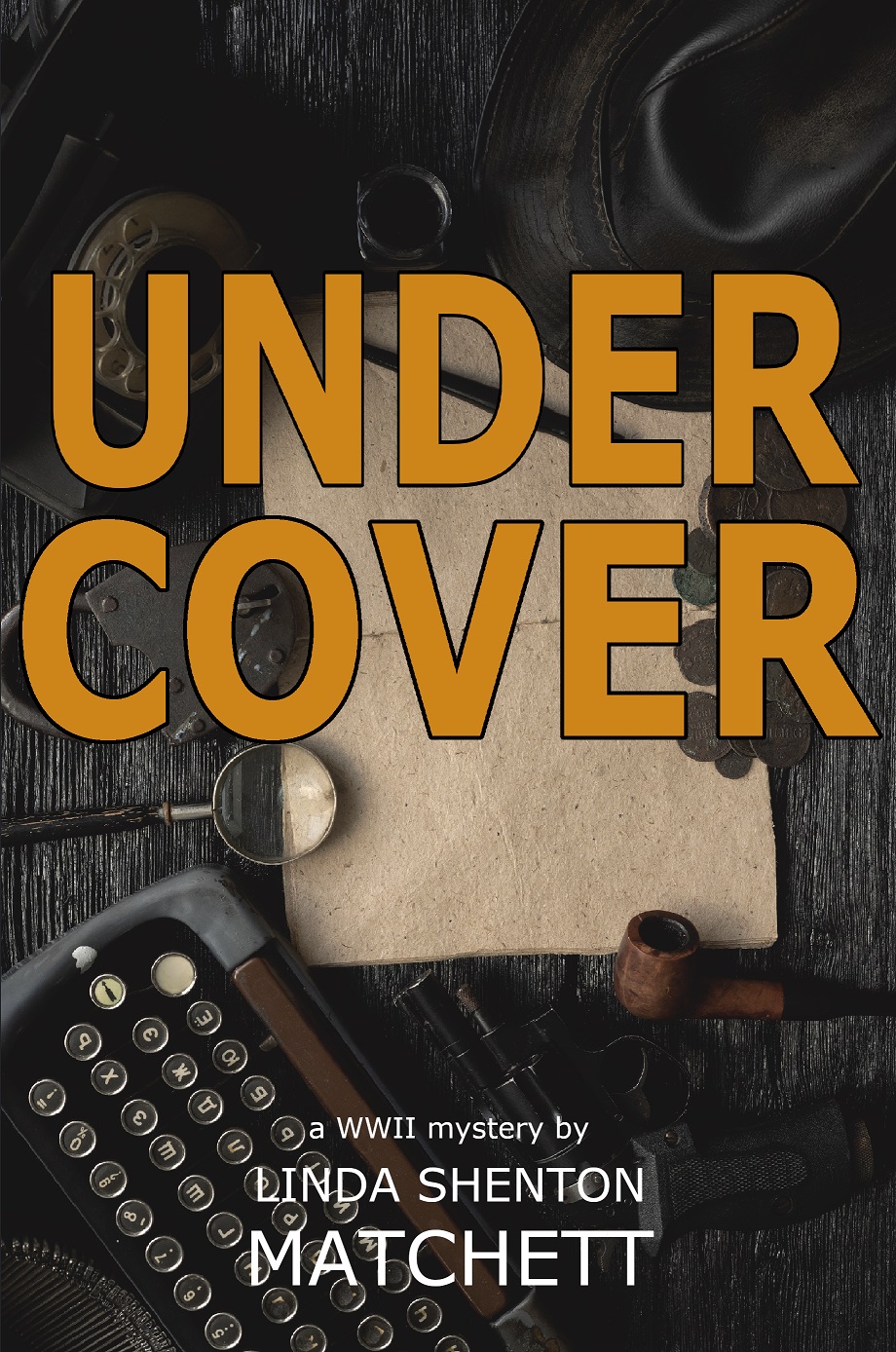 In the year since arriving in London, journalist Ruth Brown has put a face on the war for her readers at home in the U.S. Thus far, juggling her career and her relationship with Detective Inspector Trevor Gelson hasn't proven too challenging. The war gets personal for Ruth when her friend Amelia is murdered, and Trevor is assigned to the case.
Life gets even more unsettling when clues indicate her best friend, Varis, is passing secrets to the enemy. Convinced Varis is innocent, Ruth must find the real traitor as the clock ticks down toward Operation Husky-the Allied invasion of Sicily. Circumstantial evidence leads Trevor to suspect her of having a part in Amelia's death, and Ruth must choose between her heart and her duty.
Purchase Link: https://amzn.to/37dA36J


February 12, 2020
Talkshow Thursday: Judy Ducharme
Talkshow Thursday: Judy Ducharme
 Linda: Welcome to my blog and congratulations on your latest release, Blood Moon Redemption. It sounds intriguing. What was your inspiration for the story?
Judy: I listened to a tremendous amount of information and teaching about the blood moons and how they related to the end-times. It was all in the non-fiction genre. I wanted to weave a story to entice people to learn and then study it for themselves. I knew so many would never just read the non-fiction books about it. My husband then gave me the suggestions for two very key factors of the book and really encouraged me to get writing. While writing so much of the book, I felt I was watching it on a screen and just trying to write fast enough to keep up – I know the Lord assisted me at every juncture.
LM: You’ve written fiction and non-fiction (devotionals). How do you approach the genres differently to research and write the books? The same?
Judy: With non-fiction I must really keep track of every single source. On my first devotional, The Cheesehead Devotional Kickoff Edition, I took tons of notes and researched and double-checked my details even if it was a game I attended, but I didn’t write down the pages and dates of all the sources. I had to go back and find it all. For the Hall of Fame Edition, I made sure I documented better. I used very similar methods for fiction – books, online, newspapers, personal experiences – and I kept those close at hand so I could verify if questioned. So, my research is similar whether fiction or non-fiction and often extensive.
LM: What do you do to prepare yourself for writing? For example do you listen to music or set up in a specific place?
Judy: I’m a pantster – writing by the seat of my pants. I tend to write when I feel inspired or have deadlines
 Linda: Welcome to my blog and congratulations on your latest release, Blood Moon Redemption. It sounds intriguing. What was your inspiration for the story?
Judy: I listened to a tremendous amount of information and teaching about the blood moons and how they related to the end-times. It was all in the non-fiction genre. I wanted to weave a story to entice people to learn and then study it for themselves. I knew so many would never just read the non-fiction books about it. My husband then gave me the suggestions for two very key factors of the book and really encouraged me to get writing. While writing so much of the book, I felt I was watching it on a screen and just trying to write fast enough to keep up – I know the Lord assisted me at every juncture.
LM: You’ve written fiction and non-fiction (devotionals). How do you approach the genres differently to research and write the books? The same?
Judy: With non-fiction I must really keep track of every single source. On my first devotional, The Cheesehead Devotional Kickoff Edition, I took tons of notes and researched and double-checked my details even if it was a game I attended, but I didn’t write down the pages and dates of all the sources. I had to go back and find it all. For the Hall of Fame Edition, I made sure I documented better. I used very similar methods for fiction – books, online, newspapers, personal experiences – and I kept those close at hand so I could verify if questioned. So, my research is similar whether fiction or non-fiction and often extensive.
LM: What do you do to prepare yourself for writing? For example do you listen to music or set up in a specific place?
Judy: I’m a pantster – writing by the seat of my pants. I tend to write when I feel inspired or have deadlines
February 11, 2020
Wartime Wednesday: Book Publishing During WWII
Wartime Wednesday: Book Publishing During WWII
 Saturday’s release of Under Cover, the third book in my Ruth Brown mystery series, I’m focusing on mystery fiction in the U.S. and Britain. The two decades prior to WWII were considered the Golden Age of Detective Fiction, and up until the 1950s the Hard-Boiled School of Detective Fiction was also popular. But what happened to books during the war.
 In England, the publishing industry nearly became extinct. Like almost everything else in the country, paper was rationed beginning in 1940. When France fell in June of that year, the UK lost access to the raw materials used to make paper, so publishing houses were limited to 65% of their 1939 usage. By the following year, that amount dropped to 35%. After all the government needed the paper. Ration booklets, signs, pamphlets, armed forces training manuals, memorandums, and orders. By the end of the war, the government used twice as much paper as the commercial industry.
The U.S. was in the same position.
 Yet both countries recognized the importance of reading, especially for the troops. Initially, the United States collected hundreds of thousands of books through their Victory Book Campaign, but issues of size, weight, and unsuitable titles made the program unfeasible. In 1943, the nonprofit Council on Books in Wartime was formed and came up with idea for paperback books designed to fit into soldiers’ pockets. Named Armed Service Editions, over 1300 titles were printed.
 Penguin Books, co-founded in 1935 by Sir Allen Lane with his brothers Richard and John played an integral part in the war effort. Not only did they publish important wartime manuals, they supplied books for the Armed Services and the British POWs through the Red Cross through the Forces Book Club. The company printed six hundred titles and began nineteen new series over the course of the war. As part of the Book Production War Economy Agreement, Penguin eliminated dust jackets, trimmed margins, and replaced sewn bindings with metal staples.
Despite the challenges, these two Allied nations ensured their people continued to have the opportunity to read.
What is your favorite book?
_______________________
In the year since arriving in London, journalist Ruth Brown has put a face on the war for her readers at home in the U.S. Thus far, juggling her career and her relationship with Detective Inspector Trevor Gelson hasn't proven too challenging. The war gets personal for Ruth when her friend Amelia is murdered, and Trevor is assigned to the case.Life gets even more unsettling when clues indicate her best friend, Varis, is passing secrets to the enemy. Convinced Varis is innocent, Ruth must find the real traitor as the clock ticks down toward Operation Husky-the Allied invasion of Sicily. Circumstantial evidence leads Trevor to suspect her of having a part in Amelia's death, and Ruth must choose between her heart and her duty.
Purchase Link: https://amzn.to/37dA36J
February 9, 2020
Mystery Monday: The Golden Age of Detective Fiction
Mystery Monday: The Golden Age of Detective Fiction
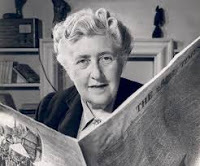 Agatha Christie, Margery Allingham, Dorothy Sayers, Freeman Wills Croft, Ellery Queen, John Dickson Carr, and John Rhodes. Some of the names you recognize, many you don’t, but they are all part of a cadre of writers who published mystery fiction during the time period known as the Golden Age of Detective Fiction.
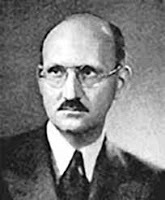 Most scholars agree the Golden Age occurred between the early 1920s and 1939, with noted crime fiction historian Julian Symons indicating that Philip Van Doren Stern’s article “The Case of the Corpse in the Blind Alley, published in 1941, “could serve as an obituary for the Golden Age.”
Classic tropes of the Golden Age fiction include dying message clues, locked rooms, red herrings, closed circles of suspects, least likely culprits, and upper-class inhabitants in a secluded English house.
Ronald Knox, a Catholic priest who also wrote mystery fiction, created what has been referred to as the Ten Commandments of Detective Fiction:The criminal must be mentioned in the early part of the story, but must not be anyone whose thoughts the reader has been allowed to know.All supernatural or preternatural agencies are ruled out as a matter of course.Not more than one secret room or passage is allowable.No hitherto undiscovered poisons may be used, nor any appliance which will need a long scientific explanation at the end.No Chinaman must figure into the story (This is a reference to common use of heavily stereotyped Asian characters in detective fiction of the time.)No accident must ever help the detective, nor must he ever have an unaccountable intuition which proves to be right.The detective himself must not commit the crime.The detective is bound to declare any clues which he may discover.The “sidekick” must not conceal from the reader any thoughts which pass through his mind: his intelligence must be slightly, but very slightly, below that of the average reader.Twin brothers, and doubles generally, must not appear unless we have been duly prepared for them.
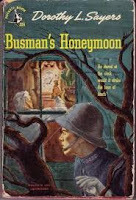 Most of Golden Age writers have faded into obscurity with their books falling out of print, but thanks to several projects by publishers and authors around the globe, these novels are making a comeback and available in digital format. “Cozy” mysteries are said to be greatly influenced by the Golden Age, but in sheer sales numbers, modern detective fiction has never approached the popularity of the Golden Age writing.
What is your favorite Golden Age novel?
_____________________________
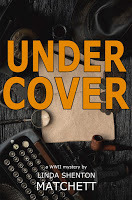 In the year since arriving in London, journalist Ruth Brown has put a face on the war for her readers at home in the U.S. Thus far, juggling her career and her relationship with Detective Inspector Trevor Gelson hasn't proven too challenging. The war gets personal for Ruth when her friend Amelia is murdered, and Trevor is assigned to the case.
Life gets even more unsettling when clues indicate her best friend, Varis, is passing secrets to the enemy. Convinced Varis is innocent, Ruth must find the real traitor as the clock ticks down toward Operation Husky-the Allied invasion of Sicily. Circumstantial evidence leads Trevor to suspect her of having a part in Amelia's death, and Ruth must choose between her heart and her duty.
Purchase Link: https://amzn.to/37dA36J
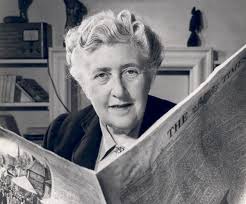 Agatha Christie, Margery Allingham, Dorothy Sayers, Freeman Wills Croft, Ellery Queen, John Dickson Carr, and John Rhodes. Some of the names you recognize, many you don’t, but they are all part of a cadre of writers who published mystery fiction during the time period known as the Golden Age of Detective Fiction.
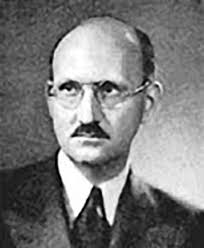 Most scholars agree the Golden Age occurred between the early 1920s and 1939, with noted crime fiction historian Julian Symons indicating that Philip Van Doren Stern’s article “The Case of the Corpse in the Blind Alley, published in 1941, “could serve as an obituary for the Golden Age.”
Classic tropes of the Golden Age fiction include dying message clues, locked rooms, red herrings, closed circles of suspects, least likely culprits, and upper-class inhabitants in a secluded English house.
Ronald Knox, a Catholic priest who also wrote mystery fiction, created what has been referred to as the Ten Commandments of Detective Fiction:The criminal must be mentioned in the early part of the story, but must not be anyone whose thoughts the reader has been allowed to know.All supernatural or preternatural agencies are ruled out as a matter of course.Not more than one secret room or passage is allowable.No hitherto undiscovered poisons may be used, nor any appliance which will need a long scientific explanation at the end.No Chinaman must figure into the story (This is a reference to common use of heavily stereotyped Asian characters in detective fiction of the time.)No accident must ever help the detective, nor must he ever have an unaccountable intuition which proves to be right.The detective himself must not commit the crime.The detective is bound to declare any clues which he may discover.The “sidekick” must not conceal from the reader any thoughts which pass through his mind: his intelligence must be slightly, but very slightly, below that of the average reader.Twin brothers, and doubles generally, must not appear unless we have been duly prepared for them.
 Most of Golden Age writers have faded into obscurity with their books falling out of print, but thanks to several projects by publishers and authors around the globe, these novels are making a comeback and available in digital format. “Cozy” mysteries are said to be greatly influenced by the Golden Age, but in sheer sales numbers, modern detective fiction has never approached the popularity of the Golden Age writing.
What is your favorite Golden Age novel?
_____________________________
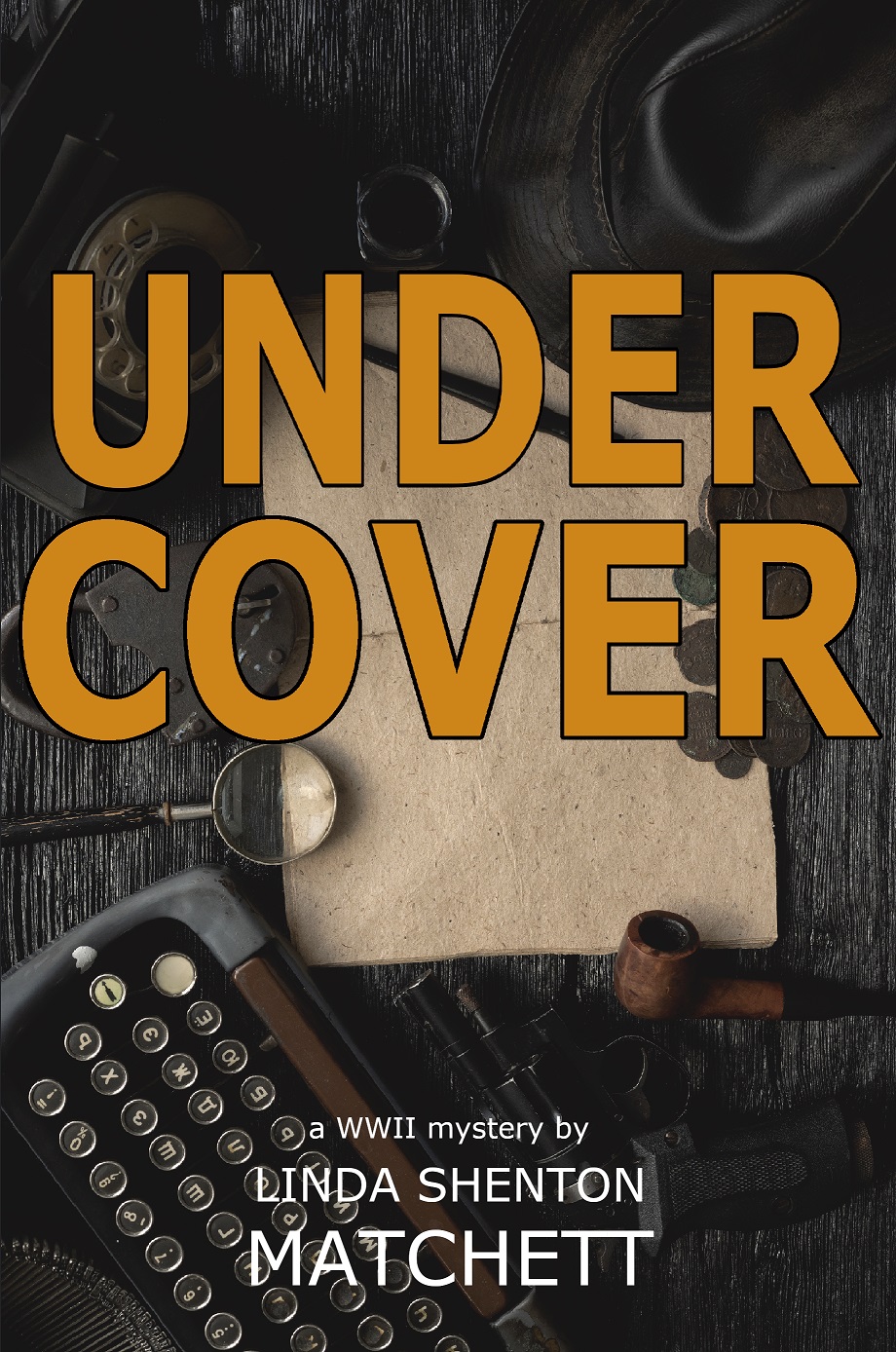 In the year since arriving in London, journalist Ruth Brown has put a face on the war for her readers at home in the U.S. Thus far, juggling her career and her relationship with Detective Inspector Trevor Gelson hasn't proven too challenging. The war gets personal for Ruth when her friend Amelia is murdered, and Trevor is assigned to the case.
Life gets even more unsettling when clues indicate her best friend, Varis, is passing secrets to the enemy. Convinced Varis is innocent, Ruth must find the real traitor as the clock ticks down toward Operation Husky-the Allied invasion of Sicily. Circumstantial evidence leads Trevor to suspect her of having a part in Amelia's death, and Ruth must choose between her heart and her duty.
Purchase Link: https://amzn.to/37dA36J
February 5, 2020
Talkshow Thursday: Welcome Kathy Howard
Talkshow Thursday: Welcome Kathy Howard
 Linda: Thanks for joining me today. Congratulations on the recent release of Clear Confusion. What was your inspiration for the plot?Kathy: Hey, Linda! Thanks so much for having me. I’m excited to be here. Inspiration for the plot? To be honest, I didn’t really have an inspiration for the actual plot. Pine trees and hunters surround me at home. I liked the idea of a story unfolding with those elements at the center. So I guess you could say this story was setting-inspired. ;)LM: Your story is romantic suspense. What draws you to that genre? Kathy: I usually write inspirational romance. I’m probably a romantic at heart so I enjoy the creativity of that side of it. The inspirational part is heartfelt and can be emotional to put into words at times. Clear Confusion is my first attempt at romantic suspense. I love that the suspense part throws a little twist into the romantic “formula” of writing. It was truly fun to write. LM: Research is a large part of any book. How did you go about researching Clear Confusion and did you discover any extra special tidbits of information that you just knew had to be included in the story?
 Kathy: I talked to law enforcement and others, as most probably do. That helped with the criminal terminology. But I also talked to a local veterinary clinic. I was looking for a specific drug for pets that their owners might use and abuse themselves. In the end, with the present opioid crisis our country is going through, I decided to go that direction instead.LM: Do you do anything specific to prepare yourself for writing? Do you have to be in a specific place or are you able to write anywhere?Kathy: I’m a big fan of movies and books, anything with a story. So, I tend to watch and read until the juices flow. ;) As for where to write – in my parked car where God’s creation can inspire me or in a recliner with complete silence seem to work best.LM: What is one thing you wish you knew how to do?Kathy: Cook! I constantly burn toast and struggle to remember how long to boil an egg. Bless my poor family! LOL!LM: Here are some quickies:Favorite actress: Audrey HepburnFavorite food: Chocolate chip cookies & Chick-fil-a chicken sandwich (no pickle) ;)Favorite childhood book: The Monster at the End of This Book LM: What is your next project? Kathy: A while ago, I started a story about two friends and their faith-growing journey. It is based around Jeremiah 29:11. However, I’ve decided to put it on hold for a bit. My two daughters are in high school and I want to enjoy every minute I have left with them before the fly the coop. LM: Where can folks find you on the web?Kathy: Twitter: @kathymhoward1Facebook: www.facebook.com/kathymhoward1Blog: http://www.kathymhoward.weebly.com______________________About Clear Confusion
 What am I going to do, God? Who am I?Charlotte Hallaway needs to come to terms with her father's death. He had been her only family, and she wasn't handling her grief well. It was just supposed to be a few weeks of peace and quiet to process it all, but then she saw them-a drug deal and a murder within seconds of each other.And they saw her.Now running for her life, Charlotte boards a bus to escape her pursuers and wakes up the next morning in the woods of Jennings, Georgia, without a memory of how she got there or of who she is. All she knows is an underlying fear she can't seem to shake.What two hunters find her battered and scared, can she put aside the clear confusion she's experiencing to trust them? She wants to trust them, especially Nicholas, but fear is holding her back. Trust is incredibly hard when one is so clearly confused. Could it be he and his friend are n to who they claim to be?Who are they really...and who is she?Purchase Link: https://amzn.to/37P4elC
 Linda: Thanks for joining me today. Congratulations on the recent release of Clear Confusion. What was your inspiration for the plot?Kathy: Hey, Linda! Thanks so much for having me. I’m excited to be here. Inspiration for the plot? To be honest, I didn’t really have an inspiration for the actual plot. Pine trees and hunters surround me at home. I liked the idea of a story unfolding with those elements at the center. So I guess you could say this story was setting-inspired. ;)LM: Your story is romantic suspense. What draws you to that genre? Kathy: I usually write inspirational romance. I’m probably a romantic at heart so I enjoy the creativity of that side of it. The inspirational part is heartfelt and can be emotional to put into words at times. Clear Confusion is my first attempt at romantic suspense. I love that the suspense part throws a little twist into the romantic “formula” of writing. It was truly fun to write. LM: Research is a large part of any book. How did you go about researching Clear Confusion and did you discover any extra special tidbits of information that you just knew had to be included in the story?
 Kathy: I talked to law enforcement and others, as most probably do. That helped with the criminal terminology. But I also talked to a local veterinary clinic. I was looking for a specific drug for pets that their owners might use and abuse themselves. In the end, with the present opioid crisis our country is going through, I decided to go that direction instead.LM: Do you do anything specific to prepare yourself for writing? Do you have to be in a specific place or are you able to write anywhere?Kathy: I’m a big fan of movies and books, anything with a story. So, I tend to watch and read until the juices flow. ;) As for where to write – in my parked car where God’s creation can inspire me or in a recliner with complete silence seem to work best.LM: What is one thing you wish you knew how to do?Kathy: Cook! I constantly burn toast and struggle to remember how long to boil an egg. Bless my poor family! LOL!LM: Here are some quickies:Favorite actress: Audrey HepburnFavorite food: Chocolate chip cookies & Chick-fil-a chicken sandwich (no pickle) ;)Favorite childhood book: The Monster at the End of This Book LM: What is your next project? Kathy: A while ago, I started a story about two friends and their faith-growing journey. It is based around Jeremiah 29:11. However, I’ve decided to put it on hold for a bit. My two daughters are in high school and I want to enjoy every minute I have left with them before the fly the coop. LM: Where can folks find you on the web?Kathy: Twitter: @kathymhoward1Facebook: www.facebook.com/kathymhoward1Blog: http://www.kathymhoward.weebly.com______________________About Clear Confusion
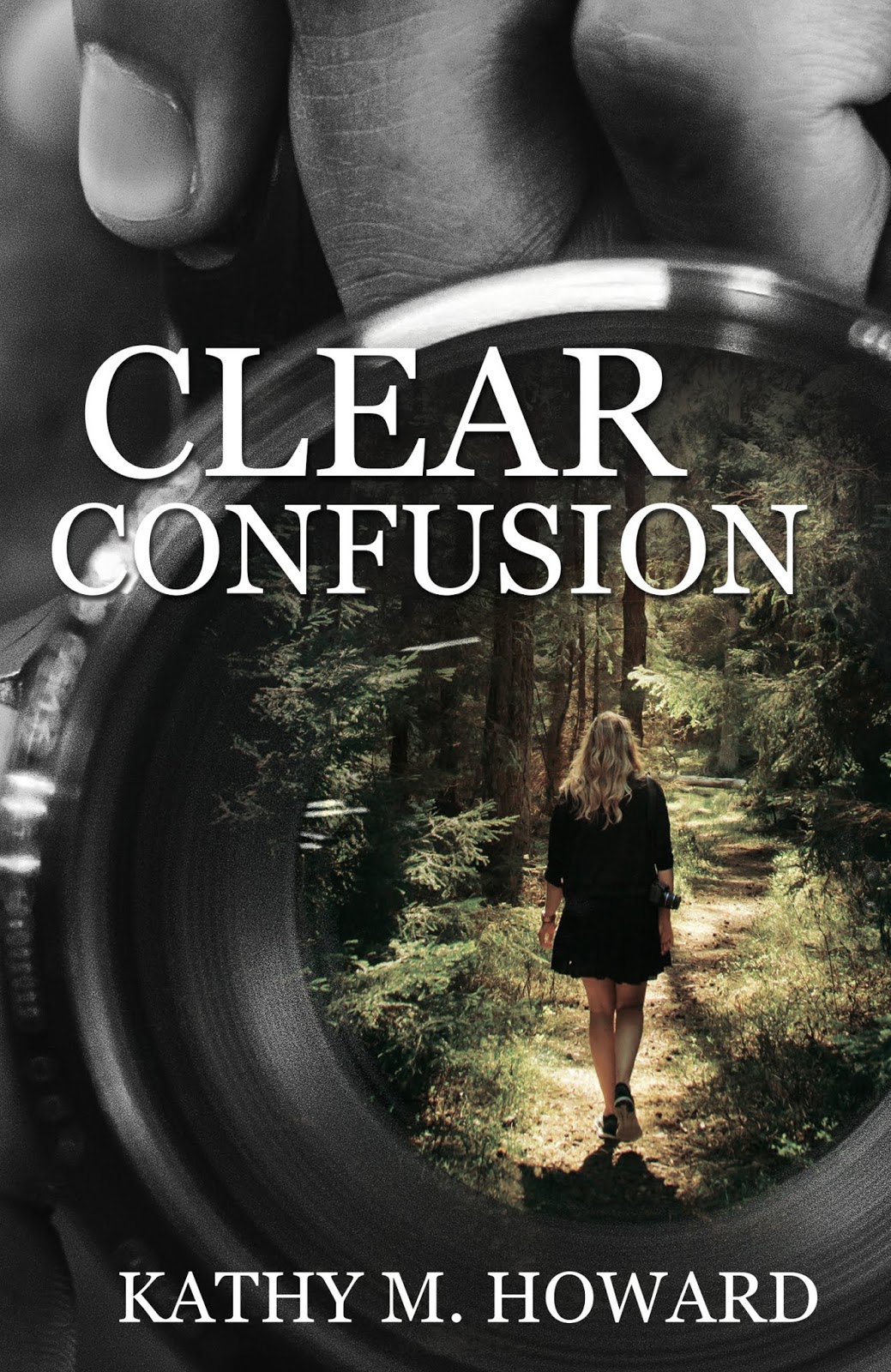 What am I going to do, God? Who am I?Charlotte Hallaway needs to come to terms with her father's death. He had been her only family, and she wasn't handling her grief well. It was just supposed to be a few weeks of peace and quiet to process it all, but then she saw them-a drug deal and a murder within seconds of each other.And they saw her.Now running for her life, Charlotte boards a bus to escape her pursuers and wakes up the next morning in the woods of Jennings, Georgia, without a memory of how she got there or of who she is. All she knows is an underlying fear she can't seem to shake.What two hunters find her battered and scared, can she put aside the clear confusion she's experiencing to trust them? She wants to trust them, especially Nicholas, but fear is holding her back. Trust is incredibly hard when one is so clearly confused. Could it be he and his friend are n to who they claim to be?Who are they really...and who is she?Purchase Link: https://amzn.to/37P4elC
February 3, 2020
Traveling Tuesday: Hawaii after Pearl Harbor
Traveling Tuesday: Hawaii’s Home Front After Pearl Harbor
 The December 7, 1941 attack on Pearl Harbor forced the United States into war with Japan. The following day, Germany declared war on the U.S., and the country became embroiled in WWII. Within hours of the attack, the Territorial Governor stripped himself of his administrative powers, and Hawaii (still a territory at that time) was put under martial law.
Under military law, the normal judicial process is suspended, therefore courts, witnesses, and juries are unnecessary. Instead, a military tribunal handles all violations and metes out punishment as it sees fit. With more than a third of the residents being of Japanese descent, the government was in a quandary about what to do with them. Interning the individuals, as was being done on the mainland, was impractical for numerous reasons, therefore it was hoped that martial law would take care of the situation.
 All residents over the age of six were fingerprinted and issued identification papers that were to be carried all times and produced upon demand. Curfews and blackouts (including electricity shutoff after sundown) were implemented, the media and mail were censored, and food, gasoline, and other items were rationed. Business hours were assigned and alcohol was prohibited. Traffic was monitored and special garbage collection was administered.
 Civilians were banned from photographing coastal locations, but they were also used to dig holes for bomb shelters and place barbed wire around beaches, water pumping stations, electrical installations, and government buildings. Gas masks were issued and regular drills were held to prepare for gas attacks or air raids.
 Waikiki’s beachfront hotels were closed to the public and taken over for the exclusive use of the military (whose five branches all had a presence on the islands). Seven POW and internment camps were located on Oahu, the big island, Maui, and Kauai.
Hawaii was forever changed as a result of WWII, and many scholars feel the statehood that followed fourteen years later had a direct correlation to the war.______________________
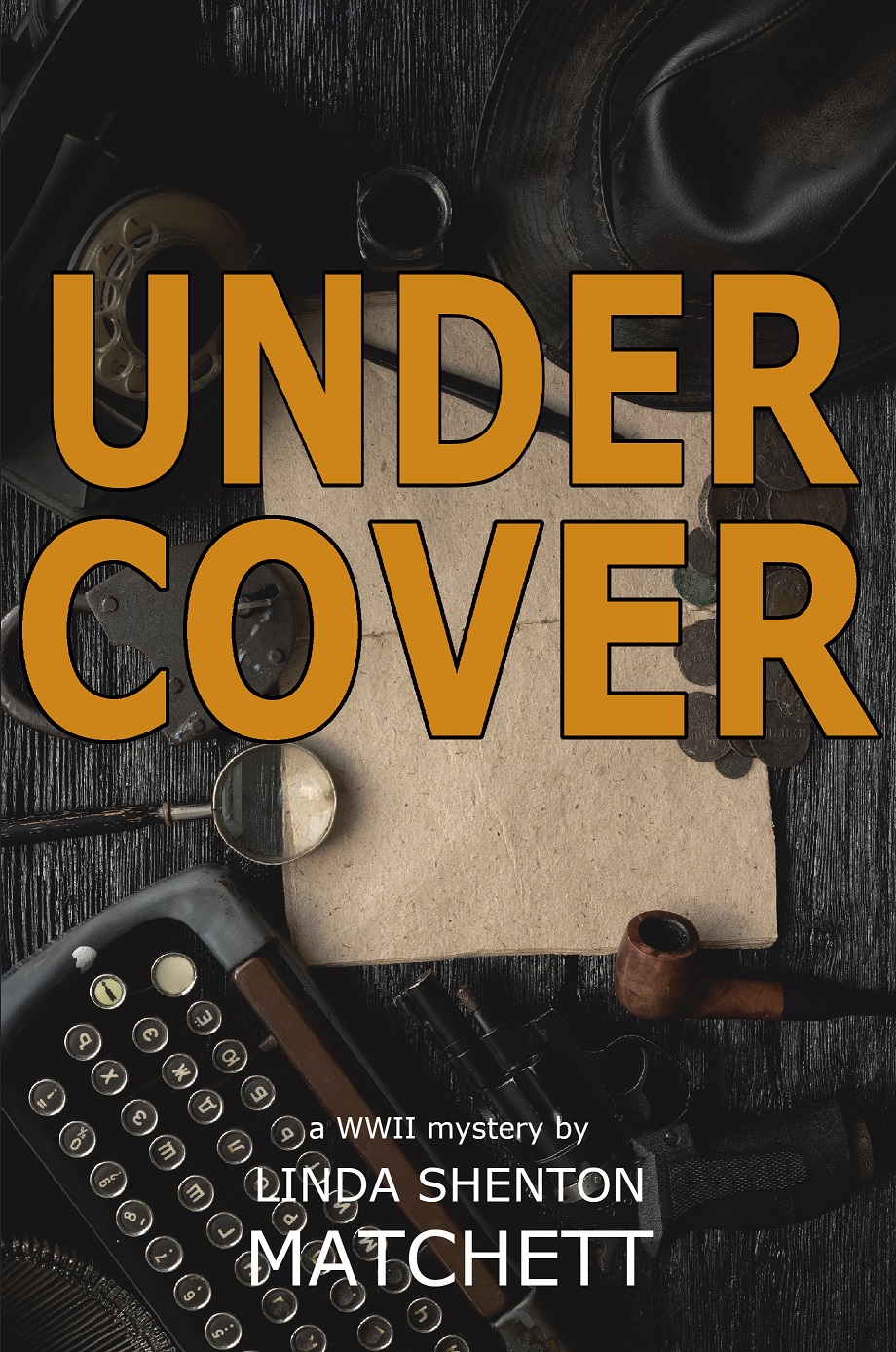 Under Cover (Ruth Brown mystery series, book 3) In the year since arriving in London, journalist Ruth Brown has put a face on the war for her readers at home in the U.S. Thus far, juggling her career and her relationship with Detective Inspector Trevor Gelson hasn't proven too challenging. The war gets personal for Ruth when her friend Amelia is murdered, and Trevor is assigned to the case.
 Life gets even more unsettling when clues indicate her best friend, Varis, is passing secrets to the enemy. Convinced Varis is innocent, Ruth must find the real traitor as the clock ticks down toward Operation Husky-the Allied invasion of Sicily. Circumstantial evidence leads Trevor to suspect her of having a part in Amelia's death, and Ruth must choose between her heart and her duty.
Available for pre-order: https://amzn.to/31ju3I6
January 29, 2020
Talkshow Thursday: Welcome Back Jodie Wolfe!
Talkshow Thursday: Welcome Back Jodie Wolfe!
 Linda: Congratulations on your upcoming release, Taming Julia. The premise is intriguing…not your typical mail-order bride scenario. What was the inspiration for this story?
Jodie: Thank you, Linda, and I appreciate you having me here today.
I've always been fascinated with the whole mail-order bride idea. I can't imagine what it would be like to take a chance on love by leaving everything you knew in order to start a new life. I mulled on that for a while before I had the idea of what would happen if a pastor advertised for a certain type of bride he needed to keep his job, and he ended up with something totally different. Due to circumstances with his church, and marrying by proxy, he has to come to terms with his decision and what he'll do about it.
LM: What did you do to research the book, and did you have any special tidbits you knew you had to include in the story?
Jodie: Way back when I was writing this story, I did a bit of research on the whole mail-order bride part of history. I also had my husband's aunt and uncle help me with the research for the part of the story that takes place in Texas. A couple years ago I had the opportunity to visit the area I wrote about. It was really exciting to see it first-hand.
LM: Your books are set in the mid to late 1800s. What about that era draws you?
 Jodie: I fell in love with the era as a child reading and watching Little House on the Prairie books. While some would say it was a simpler time of life, they also worked extremely hard.
LM: If Taming Julia was going to be made into a movie, who would you like to play the lead characters?
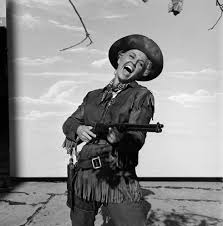
Jodie: Oh my. I'm never good at that. Let's see, how about a brown-haired Doris Day to play Jules and Chris Evans to play Drew.
LM: What is one thing you really wish you could learn how to do?
Jodie: I used to be able to do so, but I've forgotten how to crochet. I'd like to learn again.
LM: Some quickies:
Favorite Meal: Steak, sweet potato, and salad.Favorite Season: Most definitely winter.Favorite Childhood book: Little House on the Prairie series.Jodie:
LM: What advice do you have for fledgling writers?
Jodie: Don't give up. Trust God to bring about publication in His timing. Taming Julia took over 8 years to get in print, but it's been worth the wait.
Linda: Where can folks find you on the web?
Jodie: Website: https://www.jodiewolfe.comFacebook: https://www.facebook.com/Jodie-Wolfe-553400191384913Twitter: https://twitter.com/JodieAWolfePinterest: https://www.pinterest.com/JodieAWolfeGoodreads: https://www.goodreads.com/author/show/15220520.Jodie_WolfeAmazon Author Page: https://www.amazon.com/Jodie-Wolfe/e/B01EAWOHXO/ref=dp_byline_cont_ebooks_1
About Taming Julia:
 In 1875, Kansas bachelor Drew Montgomery’s sole desire is to serve God, but his congregation’s ultimatum that he marry or leave, forces him to advertise for wife by proxy.
Jules Walker strides into Drew’s life wearing breeches and toting a gun and saddle-more cowboy than bride. After years on the trail, she’s not exactly wife material, but she longs for home and family, and will do anything to ensure Drew never discovers what she really is.
Purchase Link: https://amzn.to/3aJxYlV
January 26, 2020
Mystery Monday: Leslie Ford
 With all of my research into the Golden Age of Detective Fiction, I'm always surprised when I unearth yet another writer I've not heard of. Leslie Ford is the pseudonym for Zenith Jones Brown who also wrote under Brenda Conrad and David Frome. In the forty years she was active, she published over sixty novels. Her series characters were Lieutenant Joseph Kelly, Grace Latham, and Colonel John Primrose, Mr. Pinkerton, and Sergeant Buck.
Zenith was born in California in 1898 and grew up in Tacoma, Washington. Her parents were both from Maryland - her father from Chestertown, and her mother from the famous Calvert family. After graduating from the the University of Washington, she worked as an assistant to the editor and circulation manager for Dial magazine, a journal published intermittently between 1840 and 1929. Little is known about her husband Ford K. Brown, but at some point they moved to London where Zenith used her first nom de plume David Frome.
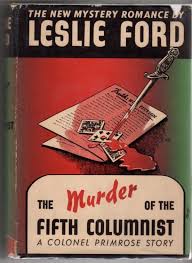 By 1931, the couple was back in the U.S. and living in Annapolis, Maryland as a result of her husband taking a professorship at St. John's College. Shortly, thereafter Zenith started writing mysteries under the name Leslie Ford. Many of her books ran as serials in The Saturday Evening Post, and she had quite a few short stories published in anthologies.
During WWII, she became certified as a war correspondent for the U.S. Air Force in England and the Pacific. In addition to her reporting, she wrote novels featuring nurses as the protagonists under the name Brenda Conrad.
According to an article in the Baltimore Sun, Ms. Brown was a fast writer, racking up as many as 12,000 words in one day. Fast paced, the books contained tangled plots and evocative descriptions of the locales such as Baltimore, Charleston, Georgetown, and Savannah.
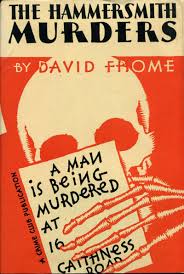 She once state that "mystery fiction is written to entertain, not to instruct. I don't regard it as "literature" or of lasting value." In a 1946 interview Ms. Brown commented that "I believe in getting the murder over quickly and proceeding to the emotional complications." Prior to beginning a story, she would visit the location as well as speak to the local police.
Another prolific author whose books have faded into obscurity. Well worth a read, check with your local library to see if they're lucky enough to carry one or two of her novels.
___________________________
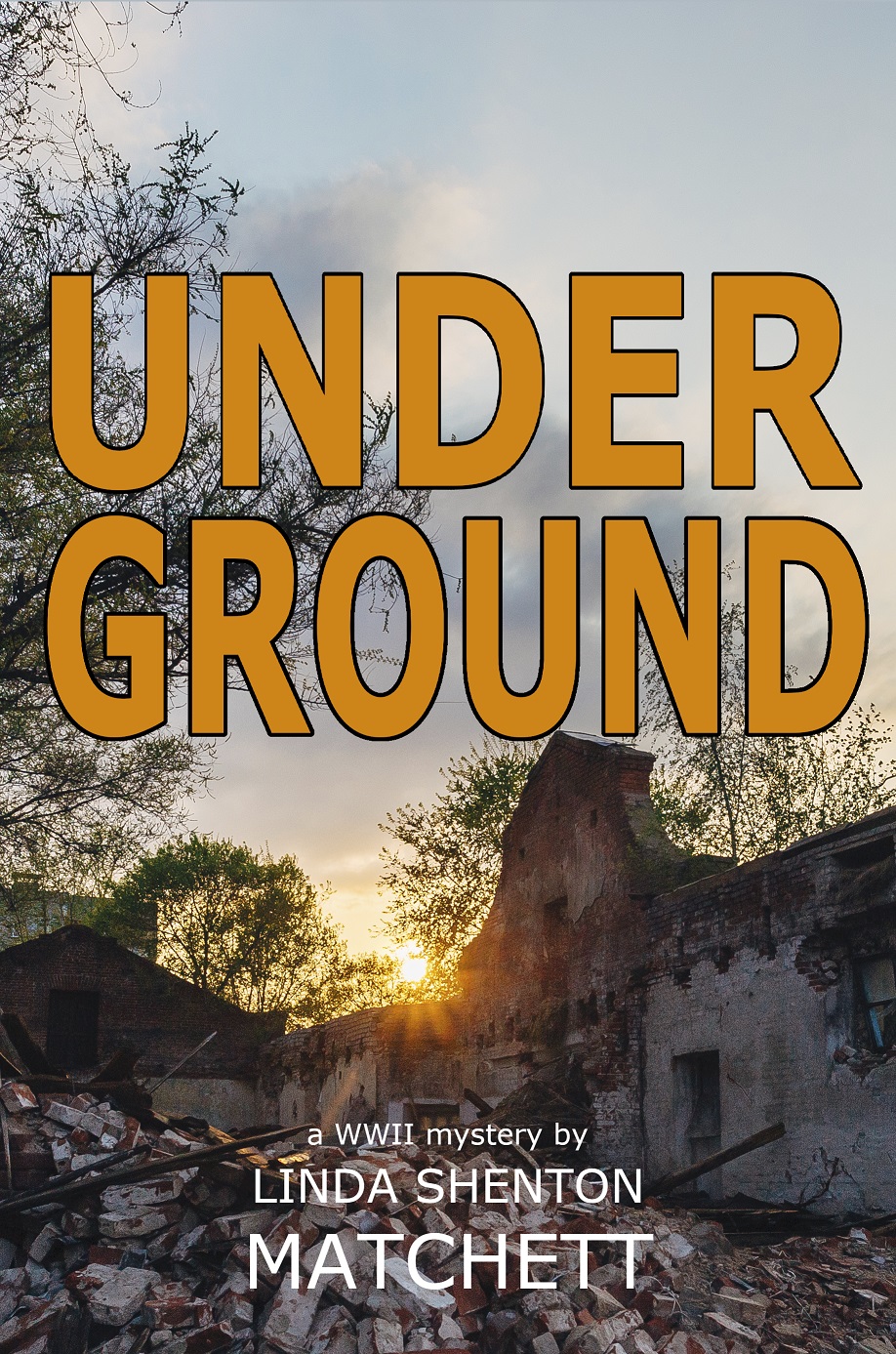 It’s been six months since Ruth Brown followed clues to England and discovered the identity of her sister’s killer. War continues to rage as Ruth reports on food shortages, the black market, evacuation of London’s children, and the bravery of the British people.
When a bombing raid destroys her home and unearths a twenty-year-old skeleton in the cellar, her reporter’s senses tingle in anticipation of solving another mystery. Unfortunately, the by-the-book detective inspector assigned to the case is not interested in her theories. As Ruth investigates the case on her own, she butts heads with the handsome policeman.
Will she get to the bottom of the story before the killer strikes again?
Purchase Link: https://amzn.to/38Haxbi
January 22, 2020
Talkshow Thursday: Ruth Brown of Under Ground
Talkshow Thursday: An Interview with Ruth Brown of Under Ground
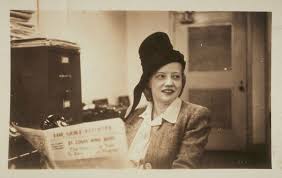 Ruth Brown is a small-town reporter who becomes an amateur sleuth as a result of her sister’s murder in Under Fire. When clues point to England, she becomes one of the few certified female war correspondents sent overseas to cover the war. The adventure continues in Under Groundwhen she stumbles on a twenty-year-old skeleton under her house. Let’s see what she has to say:
LM: Tell us a bit about yourself and how you started your journalistic career.
Ruth: Thanks for having me. I’m front a tiny village in New Hampshire, very near Lake Winnipesaukee in the central part of the state. I have an older brother Chip who is serving in the Army, and my sister worked in the defense industry. I’ve always scribbled down stories and in high school I became editor of the student newspaper. During college, I submitted stories to Mr. Isaacs who runs the paper, and he hired me after I graduated. I covered mostly social events until getting my big break in covering the union negotiations at Coltrain Industries.
LM: What is it like to be a war correspondent?
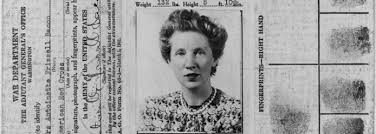 Ruth: It’s quite an honor. Of the 2,000 reporters who received certification, there are only 127 women who made the cut. Certification acts as kind of a contract between the journalists and the military. We have to follow their rules and submit our stories for censorship, and in exchange they shelter, feed, and transport us and transmit our articles back home. I’m stationed in London which feels a bit like a combat zone with all the bombings.
LM: Most military leaders haven’t allowed the female correspondents allowed into combat zones. How does that make you feel?
Ruth: For me, I’m okay with that. There is enough to cover right here in London. But for gals like Martha Gellhorn, Dickie Chapelle, and Margaret Bourke-White, it’s not enough, so they find ways around the rules and manage to get themselves to the front. There are other women who have traveled with troops into the Asian and African theaters too.
LM: Maybe you’re content in London because of a certain detective inspector?
Ruth: (blushing): Maybe, but that’s all I’m going to say about that.
LM: What is life like in England?
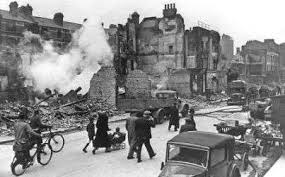 Ruth: The British people are stalwart. They insist on trying to force normalcy in their lives, so that Hitler’s attempts at terrorizing them are unsuccessful. Women keep the households running as well as holding down jobs. Until the Americans began sending food and supplies, Britain was struggling to feed her citizens. Because the country is an island, a large percentage of their produce used to be imported. They had to become self-sufficient which was challenging in the face of having to manufacture war materiel and frankly, to just stay alive. I’m impressed with these folks in so many ways.
LM: What are some things that surprised you or gave you pause for thought?
 Ruth: When I arrived, most of the street and directional signs had been removed or painted over for fear of invasion by Germany. The British didn’t want them to be able to find places if they did manage to get onto the island. Also, the planning and effort that has gone into saving national treasures such as artwork. I can’t say a lot about it, but most of the artwork has gone into hiding and storage in unusual places.
LM: What else would you like readers to know?
Ruth: I’m proud to be serving in this small way by keeping the people at home in America informed, and I know the experience has changed me. I will never be the same again.________________________
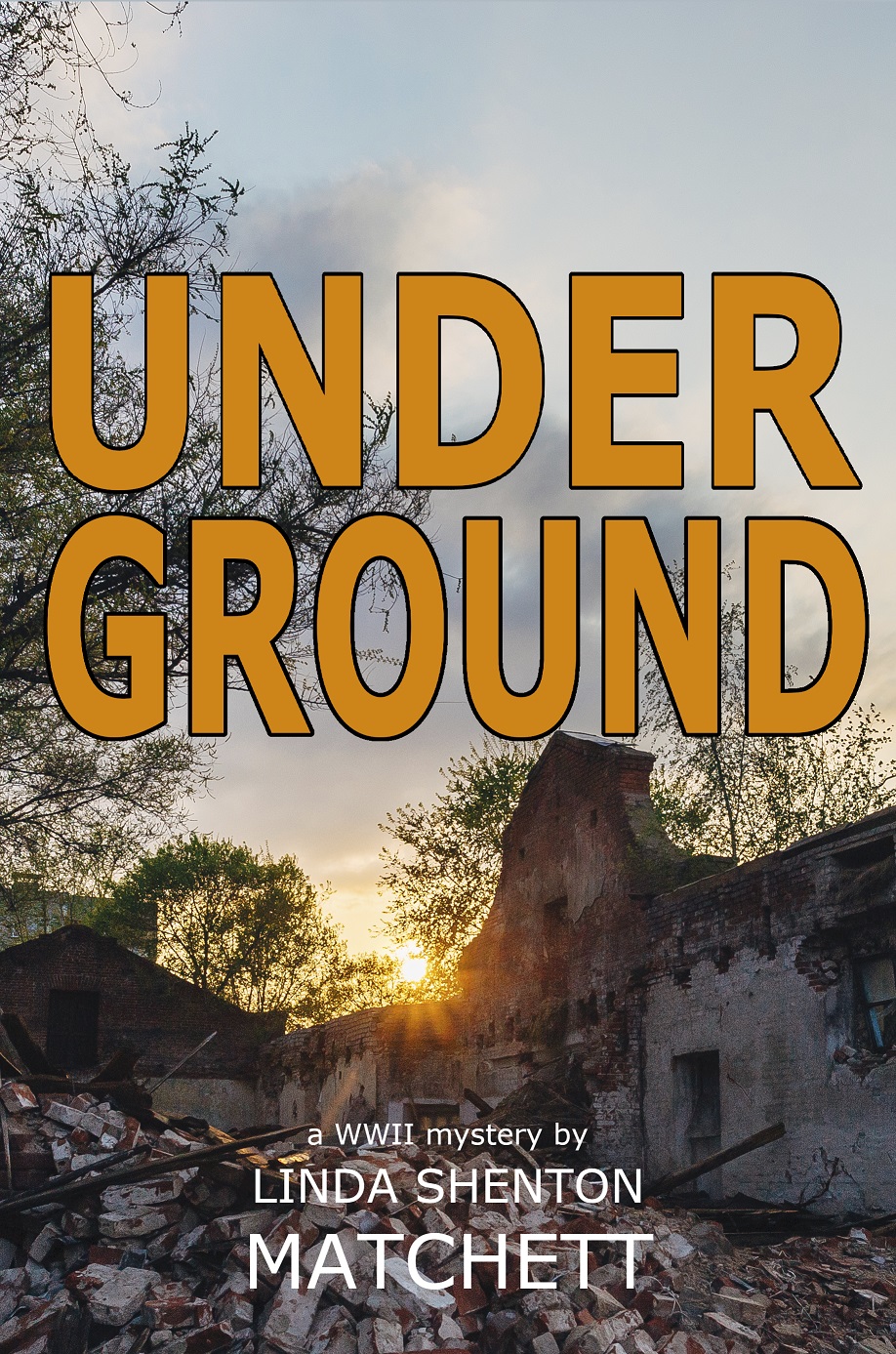 It’s been six months since Ruth Brown followed clues to England and discovered the identity of her sister’s killer. War continues to rage as Ruth reports on food shortages, the black market, evacuation of London’s children, and the bravery of the British people.
When a bombing raid destroys her home and unearths a twenty-year-old skeleton in the cellar, her reporter’s senses tingle in anticipation of solving another mystery. Unfortunately, the by-the-book detective inspector assigned to the case is not interested in her theories. As Ruth investigates the case on her own, she butts heads with the handsome policeman.
Will she get to the bottom of the story before the killer strikes again?
Purchase Link: https://amzn.to/366EdN9
January 21, 2020
Wartime Wednesday: WWII Slang
Wartime Wednesday: WWII Slang
 Every generation has its slang, and the 1940s were no exception. Here’s a collection of some of the words and expressions you might have heard hanging around the home front or armed forces during World War II. A few you still hear today.
All out: Full of vigor, determination, or enthusiasm.
All Wet: Bad, terrible. “That idea is all wet.”
Armored Cow: Canned milk.
Army Banjo: A shovel
Baptized by Fire: To have been under enemy fire for the first time; to have received one’s first wounds.
Bellyache: To complain
Beat Your Gums: To engage in useless or pointless chit-chat.
Cheaters: Eyeglasses.
Cool as a Cucumber: Alert and self-aware, self-possessed, calm.
Ear Beater: A person who doesn’t let you get a word in edgewise.
File 13: The trash bin
Glad Rags: A person’s best clothes
Jake: Fine, good. “Everything’s jake.”
Jane: A woman
Jane-crazy: Overly fond of women.
Mousetrap: Submarine
Mud Eater: An infantryman
Ninety-Day Wonder: An officer who holds a commission by having attended a three-month course direct from civilian life.
O.A.O.” One and only. “You’re my one and only guy.”
Sugar Report: A letter from a girl.
What is your favorite slang expression?
________________________
It’s been six months since Ruth Brown followed clues to England and discovered the identity of her sister’s killer. War continues to rage as Ruth reports on food shortages, the black market, evacuation of London’s children, and the bravery of the British people.When a bombing raid destroys her home and unearths a twenty-year-old skeleton in the cellar, her reporter’s senses tingle in anticipation of solving another mystery. Unfortunately, the by-the-book detective inspector assigned to the case is not interested in her theories. As Ruth investigates the case on her own, she butts heads with the handsome policeman.
Will she get to the bottom of the story before the killer strikes again?
Purchase Link: https://amzn.to/366EdN9