
C.A.A. Savastano's Blog, page 4
March 23, 2023
How The Stories Of These Soviet Cold War Defectors Reveal The Intelligence Abyss

Among the most desired agents related to the ceaseless game of global historical intelligence is a defector. Every related organization from the Soviet Komitet Gosudarstevnnoi Bezopasnasti (KGB) to the American Central Intelligence Agency (CIA) sought foreign traitors who could provide damaging information concerning enemy agents, operations, and clandestine services. A defector can emerge for numerous reasons, some have opposed their government’s practices, others desire more plentiful foreign resources after living in relatively meager conditions, and rarer cases are those seeking to become important historical figures by using the intelligence field to gain power and influence. However, a defector’s usage is limited to their prior access, knowledge, and with the passage of time classified information becomes less valuable as security measures are undertaken to prevent further damage. Defection is treason and cuts off those who undertake it from their family, homeland, and the society in which to which they were accustomed. Intelligence groups utilizing a defector often provide them with some temporary financial arrangements (a stipend or employment), housing relocation, and other potential benefits. Nevertheless, rarely do such arrangements last forever, unlike the desire for retribution many betrayed groups harbor toward defectors.
During the Cold War multiple foreign defectors attempted to increase their importance to gain influence and assure consistent resources from the governments providing them asylum. No matter the country to which they fled, establishing their “bonafides” was critical to providing defectors with credibility and ongoing support. Some would inflate their rank or importance within the former official roles and even made impossible assurances regarding their value that facts did not verify. Yet the nature of intelligence work calls upon many to create a protective social facade and adapt to survive using deception even with their new sponsors. Nevertheless, dishonesty with these recent sponsors might lead to mistrust and even small mistakes can sour prospective legitimacy. Some questionable information has even led to some being labeled false defectors, imprisoned, and left to face conditions not unlike they would have in the land they fled.
However, facts or suspicions can render a potential defector into another type of operative that infiltrates a covert group after earlier recruitment by a rival agency, a mole. These destructive agents represent perhaps the most horrifying possibility for any intelligence group and the discovery of a mole creates a paranoid fear which has in the past cast a long specter over related clandestine history. From the earliest days of Victorian spies to the confidential groups of the last century, the security of any intelligence group is paramount to its success. If a group’s most well kept secrets are violated a destructive cascading effect of betrayals may cripple and in some cases, destroy such groups. Even the suggestion that such a penetration agent exists might halt dozens of quality projects and sideline related operatives before they have an opportunity to render assets or information. To strike a balance of acquiring useful defectors, undertaking quality operations, and maintaining internal security preventing infiltration by moles is the hallmark of successful intelligence. Few covert agencies proved forever able to do so even though the assessment of defectors and discovery of moles dominated the work of many Cold War intelligence professionals. Perhaps the most contended portion of the last century of American intelligence began during the 1950s.
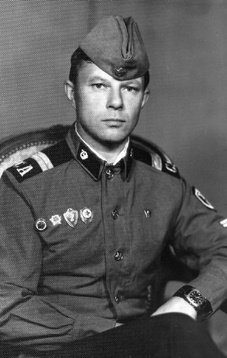
GRU Officer Pyotr SEMYONOVICH Popov
Glavnoye Razvedyvatelnoye Upravlenie (GRU) lieutenant colonel Pyotr Semyonovich Popov was a Soviet military intelligence officer and often considered the first important Russian military defector handled by the CIA. Born in 1926 within Soviet Russia, Popov was eventually recruited and trained to serve in the GRU. He was a defector in place, or a defector that remains in their home country and reports intelligence to a new organization from areas beyond its control. According to the CIA, Popov first approached US diplomats at the beginning of 1953 because he was angered by the treatment of peasants under the Soviet regime and decided to offer his services to the Agency. One CIA officer handling Popov’s case that officials state developed a strong relationship with the defector was George Kisevalter, a notable Agency officer that handled multiple important defectors. Popov revealed the Soviet military command structure, the organization of the GRU, and multiple Soviet deep cover intelligence agents within Europe known as “illegals”.i Multiple differing reports attribute his exposure was a result of a Soviet illegal Popov formerly handled discovering an FBI tail, possibly MI6 double agent George Blake, one account claims that a botched CIA letter contact feasibly led to his unmasking by Russian intelligence, and others contended a mole existed within the Agency. A likely apocryphal tale of Popov’s death being taped as he was thrust into a live furnace before witnesses to dissuade future defectors still lingers in some accounts. Despite the several claims as to the manner of his discovery, Popov was dead by 1960.ii
A different notable defector of the early Cold War era was Peter Sergeyevich Deriabin, a KGB officer that defected within the capital of Austria amidst 1954. He was born in Russia during 1914 in the Imperial Russian village of Lokot that lay within the province of Altai Kray. After growing up in both Imperial and Communist Russia he subsequently would be trained in counterintelligence and eventually during the 1940s he served in multiple state sponsored clandestine groups. Deriabin, a decorated Red Army veteran and former bodyguard of dictator Joseph Stalin, reportedly later provided a wealth of intelligence to US officials from his time serving for periods as an officer in the notorious Russian intelligence groups the People’s Commissariat for Internal Affairs (NKVD) and the KGB.iii He provided an intelligence boon to the CIA from acquired undisclosed knowledge in the role of lead counterintelligence officer for the Vienna Rezidentura within the Soviet embassy. A Rezidentura was the Soviet KGB equivalent of a CIA Station and located within a Soviet Embassy that provided a base of intelligence operations for regional areas. His contributions allowed the apprehension of multiple Soviet agents within the confines of England by the Directorate of Military Intelligence’s Fifth Section (MI5) that undertook internal national security. Deriabin further presented the identity of a Soviet double agent that was serving inside Military Intelligence Section Six (MI6 aka SIS), the foreign intelligence counterpart to MI5.
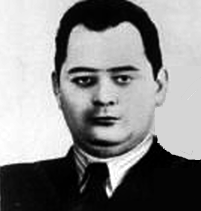
NKVD & KGB Defector Peter Deriabin
He would later be called multiple times for testimony regarding his service and defection before congressional committees where he detailed that “murder” was a tool often used by Soviet intelligence. Even with the successful intelligence data and reasonable testimony offered by Deriabin, he would reemerge years later to offer less credible ideas like multiple other future defectors.iv He would claim that Lee Harvey Oswald, the alleged assassin of President John F. Kennedy, was used by the KGB to provoke US officials and safeguard the rule of Soviet Prime Minister Nikita Khrushchev. Unfortunately for Deriabin no evidence bolstered his claims, they were merely conjecture and possibly an attempt to reinvigorate his importance during a crisis while being employed by the CIA.v Deriabin was later employed by the Agency and deemed of great important to its Cold War efforts, he died at the age of 71 during 1992.
Defector Nikolai Khokhlov was a trained assassin for the Naródnyy Komissariát Vnútrennikh Del (NKVD) or The People's Commissariat for Internal Affairs. According to multiple sources he was trained before the age of twenty to undertake assassination missions against targets inside the Soviet Union and Nazi Germany. He reportedly used his skills of deception to gather intelligence for Russian spymaster Pavel Sudoplatov, the same man who engineered the assassination of Leon Trotsky in Mexico during 1940. Khokhlov subsequently was credited with undertaking several wartime liquidation missions targeting Russian subversives and foreign émigrés that spoke out against the Stalin regime. However, following the war he asserted that he tried to avoid “dirty missions” because they were not in service of protecting Russia. Eventually the NKVD was divided into multiple services that included the MVD and NKGB.
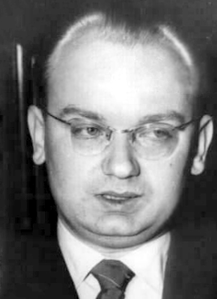
NKVD & MVD Assassin NikoLai Khokhlov
During the 1950s Khokhlov was assigned continuing missions for the “terror and diversion” section of the Ministerstvo Vnutrennikh Del (MVD) or Ministry of Internal Affairs that included his final mission to assassinate Russian political dissident Georgi Okolovich. The mission was set to occur in West Germany amid 1954 and became Khokhlov's defection opportunity when he informed Okolovich he was dispatched to kill him by Soviet officials. Nikolai planned to quietly join the resistance and hoped to secure his family before Soviet officials could react, but despite Khokhlov's wishes, Western officials desired a public defection to render maximum damage in the press. He would plead for the lives of his family, but the Soviets quickly arrested his wife and sentenced her to five years of hard labor. After being advised to divorce his wife to save her from assumed culpability in his defection or perhaps remove leverage against him, Khokhlov abandoned his family.
He would reveal to the CIA operational methods and past undertakings of the NKVD that included clandestine devices and methods of untraceable assassination.vi. In 1957, he nearly died after drinking a cup of coffee laced with an unknown type of thallium during a lecture tour in Frankfurt that likely was a failed KGB attempt to eliminate the defector. By 1963, he was teaching psychology at a state university in California and had remarried to undertake a new life in the United States.vii However, like several defectors Khokhlov possessed some ideas not entirely supported by evidence. Among these was his later study of parapsychology, psychic events, experimental hypnosis, and several techniques of prior interest to the CIA that were largely unreliable but provided attractive hypothetical possibilities.viii He survived until the age of 84 living in California and passed during late 2007.
The same year Peter Deriabin and Nikolai Khokhlov defected a public media scandal emerged regarding the KGB on the continent of Australia. The “Petrov Affair” as it came to be known involved a Russian couple employed at the Canberra Soviet embassy. Third Embassy Secretary and Consul Vladimir Petrov and his clerk wife Evdokia both revealed to the Australian Security Intelligence Organization (ASIO) they were KGB operatives. Mr. Petrov was a follower of the notorious KGB head Lavrentiy Beria and following Stalin’s death and Beria’s execution by new Soviet leadership he decided to defect. However, Vladimir had set up his defection with Australian intelligence without alerting his wife and she was imprisoned at the Soviet embassy in the wake of his betrayal. The story gained media traction when two KGB agents tried to forcibly return Evdokia to the Soviet Union and were thwarted by the ASIO.ix x During the aftermath of the couple’s defection they would reveal significant intelligence to Western officials that aided in locating two members of the Cambridge Five, a longstanding Soviet spy ring within multiple British intelligence services, that fled to Moscow. The Petrov’s further allowed the ASIO to locate several KGB agents within the Australian government and local trade unions.
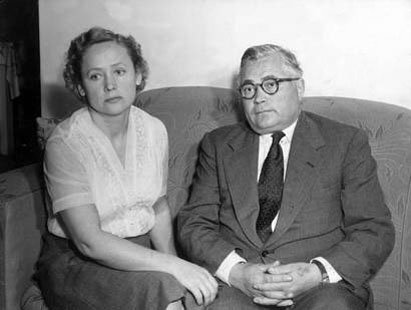
KGB Defectors Vladimir and EVDOKIA PEtrov
Yet similar to other defectors Vladimir Petrov would cause later public issues for his sponsors in the ASIO when he embarked on a drunken escapade within Australia. Petrov had convinced Australian intelligence to relocate him and his wife because the KGB’s 13th Department, the group responsible for assassinations, likely sought to murder him for his betrayal. Following the desired relocation to a safe house in an eastern Australian suburb the Russian couple had a major fight and Vladimir stormed out. After managing to slip by two ASIO handlers, Petrov went to a local bar and witnesses relayed to officials he became excessively drunk. He later wandered into a local upstairs apartment from which music was emanating and Petrov according to some accounts mistakenly believed a party was ongoing. However, the drunken man had wandered into the home of a local military sergeant and following his refusal to leave Petrov entered a struggle with the homeowner and eventually two of his neighbors. The men restrained Petrov and the police arrived to find “a portly man, agitated, wearing just his underpants and shirt.”
A leading ASIO official reportedly jumped into action once the event went public and decried the Petrovs as being insane to the Australian Prime Minister. Vladimir’s inebriated episode caused to the ASIO to threaten him and his wife by stating all sponsorship would be cut off if he could not retain control of his public behavior. This led to the Petrov being moved to a new safe house without further incident.xi However, the claims within the “Petrov papers” eventually caused a split within the Australian Labor party the same year they defected. Due to related accusations that political staffers for the Labor party’s leader H.V. Evatt were Soviet sources, the party later split and it generated theories the defection was planned for political designs.xii These episodes subsequently damaged the credibility of the Petrovs and disrupted future usage because the information Petrov had provided similar to all defector’s eventually was deemed of little further use. Yet the damage was done.
Just reviewing this handful of defectors and the possibility of a mole leading to the doom of at least one of them, we can observe the long-term benefits and dangers they present. Pyotr Popov offered useful intelligence and his betrayal spurred related ideas of a mole within American intelligence but he was gone just years after his defection. Peter Deriabin too presented beneficial operation material but later he would submit unreliable ideas which created theories of Soviet involvement in the death of an American President still offered by some officials today. Nikolai Khokhlov revealed the secret assassination techniques of Soviet officials and like former defectors rendered useful intelligence. Additionally, he attempted to legitimize highly questionable mental techniques and sought to reinvigorate his use for intelligence operations based on prior disproven ideas. The Petrovs in similar manner would offer some clandestine material that benefited their Australian sponsors but simultaneously their claims helped disrupt the government they had petitioned for refuge. Each defector had proven of some use to the government’s they entreated for aid, yet multiple had rendered similar damage as well. Perhaps the most enduring part of these varying stories in the minds of related officials was distinguishing who were false defectors and the insinuation of some officials that mole was yet to be discovered.
Sincerely,
C.A.A. Savastano
References:
i. A Look Back...CIA Asset Pyotr Popov Arrested, 2011, News and Information, Featured Story Archive, Central Intelligence Agency, cia.gov
ii. David Wise, October 2014, A Private Tour of the CIA’s Incredible Museum, Smithsonian Magazine, smithsonianmag.com
iii. United States Senate Internal Subcommittee, Executive Session transcript of Petr S. Deriabin and David Martin, March 26, 1965, pp. 3-8
iv. Ibid. P. 9
v. Central Intelligence Agency, Cleveland C. Cram, May 1992, A Review of Counterintelligence Literature 1975-1992, maryferrell.org, National Archives and Records Administration Number: 104-10431-10126
vi. A Picture in time: Evdokia Petrov in the hands of Soviet ‘couriers’ at Sydney airport, April 19, 2022, The Guardian, theguardian.com
vii. Harry Blutstien, February 28, 2018, Drunk and Disorderly: Vladimir Petrov’s Queensland Escape, The Wilson Center, wilsoncenter.org
viii. Ross Wynne Jones, July 21, 2007, I LED KGB HIT SQUAD, The Mirror, mirror.co.uk
ix. CIA, February 28, 1964, Soviet Use of Assassination and Kidnapping and Soviet Press Reaction to Assassination of President Kennedy, Russ Holmes Work File, p.10, NARA ID:104-10423-10223
x. Andy Wright, January 13, 2017, The Russian Spy Who Convinced America to Take ESP Seriously, Atlas Obscura, atlasobscura.com
xi. CIA, November 27, 1963, Oswald 201 File, Volume 58, Memo Re Peter Deryabin Comments on JFK Assassination, p. 3, National Archives and Records Administration Number: 1993.06.125.12.45.29.608800
xii. Robert Manne, July 27, 2002, Petrov Affair, National Museum of Australia, nma.gov.au
Find the Wall Street Window version here and other related articles by C.A.A. Savastano


March 17, 2023
Primary Evidence Collections Update


Offered for your inspection are three new cryptonyms (Project KLANVIL, KLAMBROSIA-29, and QK) and new personnel files regarding notable Central Intelligence Agency members. The Consolidated CIA Files collection includes new and less redacted files with further biographic information regarding William Broe, Viola June Cobb, Ross Lester Crozier, George A. Fill, Daniel Flores, William K. Harvey, Balmes “Barney” Hidalgo, Jacques G. Richardson, and Robert P. Wheeler.
February 22, 2023
Intelligence, Inconsistent Allies, and Illegality
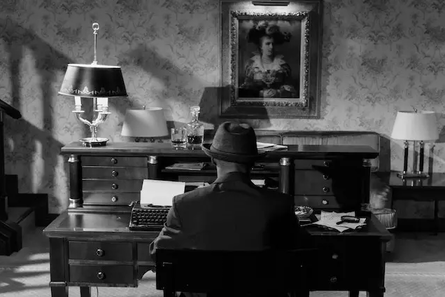
“Deep CIA History: The Consideration of Artichoke Methods To Achieve “Narco-Hynosis” In The “Kelly Case” is the latest article by C.A.A. Savastano. It offers a view into some of the earliest attempts of the Central Intelligence Agency to neutralize a former asset with illegal incarceration and drugs. Related official files present the lengths Agency officers would contemplate to stop a rogue agent they considered a danger to continued Eastern European intelligence operations prior to similar more well known later programs.
February 2, 2023
Miller Center Fellow Promotes JFK Assassination Myths

A featured Wall Street Window article by C.A.A. Savastano offers evidence and some of the several flaws within official and academic claims regarding the latest release of Kennedy assassination documents.
November 20, 2022
JFK Lancer 2022 Conference Presentation

Information provided by author Carmine Savastano with respect to his speech “Infamous yet unproven suspects and a viable but largely unknown one” as discussed at the JFK Lancer 2022 Conference. Included below are several links to related research and information relevant to his evidentiary inspection of three public figures in the Kennedy Assassination case.
QJWIN-1: Jose Marie Andre Mankel
Article: Who was QJWIN-1?
Evidence: QJWIN-1 Mary Ferrell Foundation Cryptonym Listing
WIROGUE-1: David Tzitzichvili
Articles: Who was WIROGUE-1?
Who was WIROGUE-1? part II
Evidence: AEASPIC Mary Ferrell Foundation Cryptonym Listing
WIROGUE-1 Mary Ferrell Foundation Cryptonym Listing
John Henry Hill
Article:
The Man About Town
November 18, 2022
C.A.A. Savastano returns to The Ochelli Effect

Join authors Mike Swanson and Carmine Savastano as they discuss this year’s ongoing 2022 JFK Lancer Conference, Savastano’s presentation, and items of interest regarding the case. In the second hour Chuck and historian Larry Hancock chat about his upcoming Lancer presentation and the subjects related to the case as well.
July 17, 2022
The Disgust Reflex
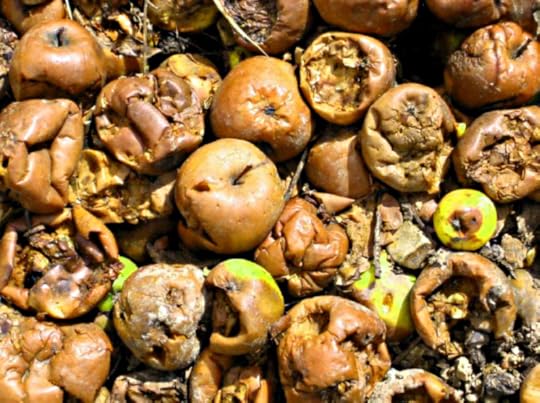
Defensive Physical and Emotional reactions Are Naturally Triggered By Disgust Reflexes When Faced with Most Rotten Organic Materials
Disgust is a primal human emotion that can reflexively trigger when facing real and imagined dangers that according to studies requires less than a second based on the circumstances of an encounter. Regarding humans, the disgust mechanism uses facial expressions and social circumstances to make snap judgments in situations based on often highly superficial traits to rapidly process social and physical cues.i Disgust reactions are based upon a variety of circumstances which emerge from social encounters with other humans that extend to variances as minute as regional eating habits. Food plays a central role in several gatherings and social environments in which human interact and some disgust related behaviors are tied to the consumption and abstention of specific foods based on preference, religion, and socially developed aversion.
Researchers studying the disgust mechanism were able to illicit responses in participants using food products that were accompanied by a negative written assessment that highlights one of several methods demonstrated how emotions can be influenced. “We conducted a regression analysis to predict the number of beef chips eaten in the first behavioral task (see Table 2). The full model was statistically significant and explained 12% of the variance in the amount consumed. In this task, we made use of the fact that researchers have previously found a negative correlation between people’s food-related disgust and their consumption of meat and fish (Eickmeier et al., 2017). Participants’ food disgust sensitivity emerged as a significant predictor for the amount of meat participants ate. With increasing food disgust sensitivity, the amount consumed decreased.” However, a similar inspection which used food that participants found unpalatable offered reduced disgust reactions to the food if the person fasted before the later testing, hunger seemingly can overcome some disgust reactions.
“From an evolutionary point of view, disgust protects from transmission of infectious disease and suboptimal reproduction. It impacts our hygienic, sexual, and contact behavior.”ii Reproduction presents “the highest infectious risk of any social behavior” due to intimate situations presenting a chance for infections via “bodily fluids”, skin contact, and the opportunity for possible infecting diseases. One review of these behaviors noted that monogamous relationship strategies in part are undertaken based upon disgust sensitivity and “increasing pathogen costs that accompany each new sexual partner.” Such encounters often rest upon sensitivity levels which are based on a host of factors that includes personal hygiene to maximize chances of reproductive success. Despite significant potential dangers for proper socialization, people must develop a range of disgust reactions and moderate the strongest when dealing with “intimates” to promote survival and mental health, without such moderation the natural range of disgust can shift and promote “dysfunctional barriers” that can emerge prevent normal social interactions.
Disgust sensitivity usually serves as a protective and cognitive strategy when undertaken by most and further explains behaviors such the normal distance people observe when interacting socially with others in public. The vast majority of humans strike a balance of personal disgust preferences to include social interactions with familiar people that are naturally considered less threatening in comparison to strangers. This natural mistrust of strangers was demonstrated in one study that found personal aversion to strangers extends to even smells and being exposed to disgusting substances in which the sources are unfamiliar to an observer. Our disgust reaction to unknown “stimuli from strangers” can prove so exceedingly strong it elicits heart rate changes and increased “avoidance behavior”.iii

Mealworms are one of Hundreds of Thousands of Types of Insects that eat Rotting Materials which can Trigger disgust in Humans
The regulation of hygiene is a common triggering mechanism for disgust reactions in most people and “the source effect” extends to even to people that are just unfamiliar. “Some specific phobias and obsessive compulsive disorders are classical disgust-related disorders with a generally increased sensitivity to disgust.” These would include phobias of specific animals or substances that can transmit disease or be considered taboo or disgusting by various humans and notably “obsessive washing is related to enhanced fear of contamination, which results...in the avoidance of situations with the potential risk of contamination.” While disgust plays a role in protective measures it can become a psychological burden if left unchecked by reasonable behavior and social limitations.
Other similar reactions are formed when dealing with environmental dangers and toxic substances triggering a natural revulsion in the majority of tested subjects. “It has been shown that people who are very sensitive towards disgust and contamination are less often affected by infections...Disgust serves as a behavioral immune system is not sensitive to pathogens...Instead, disgust is directed against cues that signal that infection risk might be present whether due to its morphology” and the study further reveals that smells and visual cues reveal the expectation for potential infection. Humans exhibit stark physical defensive reactions within facial reactions as they experience disgust and once a possible source of revulsion is identified several reactions occur as part of “anti-pathogen adaptions”.iv
According to the Royal Society these adaptions are heavily influenced by parental disgust reactions which can influence the development of similar feelings in their children after five years of age. Additionally, familiarity with family members was found to reduce disgust reactions and dealing with offspring or related substances that normally were considered disgusting produced little revulsion in parents. Investigating researchers learned that disgust reactions can emerge from inherited reactions, environment, and socialization while noting that family levels of disgust were similar but parental sensitivity levels alone could not assure outcomes. The same review further states there is little evidence to support that disgust just emerges from neuroticism, parental influences, or is calibrated to the presence of infectious diseases. There likely is a host of factors that in concert produce specific disgust reflexes in humans which together influence avoidance behavior and form anti-pathogen strategies to maximize the assurance of survival. Yet the reaction when founded upon incorrect or pathological motivations can seemingly be a source of needless conflict that potentially might endanger those with overly sensitive disgust reflexes.
Sincerely,
C.A.A. Savastano
References:
i. Pierre Krolak-Salmon, Marie-Anna Henaff, Jean Isnard, Catherine Tallon-Baudry, Marc Guenot, Alain Vighetto, Oliver Bertrand, Francois Mauguiere, An attention modulated response to disgust in human ventral antererior insula, February 14, 2003, Annals of Neurobiology, doi.org/10.1002/ana.10502
ii. Maria Lenk, Gerhard Ritschel, Marion Abele, Peggy Roever, Julia Schellong, Peter Joraschky, Kerstin Weidner, Ilona Croy, The source effect as a natural function of disgust in interpersonal context and its impairment in mental disorders. Scientific Reports 9, Article 4239, March 12, 2019, https://doi.org/10.1038/s41598-019-40...
iii. Ibid.
iv. Joshua M. Tyber. Cagla Cinar, Annika K Karinen, and Paola Perone, Why do people vary in disgust, June 4, 2018, The Royal Society, https://doi.org/10.1098/rstb.2017.0204
March 25, 2021
A Brief History of North American Slavery III

The KIng of France Louis The Sixteenth and Emporer Napoleon Bonaparte that both supported the imperial slave complex
Part III: France and the Imperial Slave Complex
Centuries of Native American tribal bondage and imperial European slavery had been ongoing within North America when further nations of Europe beyond the earliest undertook large scale trade of human beings. No matter how reprehensible any practice might be, the act of profiting at the cost of other people has seemingly forever lurked within humanity’s instinctual depths. Its practice according to some reports predates the existence of written language and slavery has been like a poison coursing through the veins of humanity for millennia. Eventually there was another slave trade competitor beyond the Portuguese, Spanish, and English in the North American colonial period that sought greater power by any means necessary, imperial France.
With the exception of a single imported child slave named Oliver Le Jeune in French held Canada during 1629 it was not reportedly in that country until the start “of the 1670s when the French began to receive captives from their Aboriginal partners as tokens of friendship during commercial and diplomatic exchanges. The Illinois were notorious for the raids which they led against nations to the southeast and from which they brought back captives.” This would feature the undeniability of slavery in a tribal form predated the arrival of the Europeans and was a longstanding existing custom of the original North American societies. Similar to the Native North American societies and English practices within its colonies, the French were a part of a larger imperial European slave complex that extended across the world.
We can observe that native tribes had engaged in subjugation as a means of controlling captives and this system was rendered more widespread and became a more destructive and permanent form of human bondage. Following the arrival of the early 1700s “the practice of buying and selling these captives like merchandise was established.” In just thirty short years the French had morphed the already existing tribal bondage into a series of laws that converted any captive to salable property. One likely motivating factor in this process was religion, many French like the English and Spanish believed that anyone unbaptized in the Christian faith was a heathen and thus not protected by “civilized” law. The origins of these native slaves ranged from people in tribes that include the Fox, Apache, Labrador, Chickasaw, Pawnee, and Sioux but the Louisiana Territory held by France in southern North America and its Caribbean holdings prevented the widespread use of native tribes due to location and where planters “preferred African slaves, who they judged more apt to work in their indigo and tobacco fields.” We can in this cold and inhuman calculation see that not due to any lesser status but the ability of Africans to survive in hotter temperatures better than Native slaves or European indentured servants was the concern. This illegal domination generated and protected imperial profits and was perhaps the greatest motivator for using slavery.

French Held CArribean Slaves in Antigua work A Sugar Cane Field
“Trade in human beings for work in plantations and mines in the Caribbean also occurred within the region itself, with trade routes linking Brazil, the Gulf of Mexico seaboard and the coasts of North America and the Caribbean islands. They were the scene of constant trafficking from the sixteenth to the nineteenth centuries, which can barely be quantified but should not be overlooked. For three centuries, Guadeloupe and Martinique took in slaves from other mainland and island colonies in the Caribbean region in which trafficking was conducted via the human trade hubs of Saint Thomas, Saint Martin and Saint Barthélemy.”i

SlAves are orders To restrain A man By thier Owner and beat Another Human for Defying HIm in The West Indies
The French would expand their slaving to include Africans in time and construct forts in Western Africa to protect the imperial financial interests. According to Canadian historical officials the slave trade from Africa began in Louisiana during 1719. “Effectively, it lasted about 12 years, from 1719 to 1731, when the King of France resumed authority over Louisiana after having temporarily ceded it to franchise holders and investors.” However, this cessation of most slavery only extended to most continental areas and not islands of the French Antilles which held most French slaves in captivity to work plantations. This change did not occur due to benevolence and instead emerged because the islands of Antilles were more profitable to French slave traders.ii Additionally, hundreds of black slaves were abducted from English ships or sent from the Antilles long after King Louis the XV of France resumed his financial dominion.
“For more than two centuries, French settlements in Africa and the Americas relied on enslaved laborers to produce colonial commodities and perform domestic service. Between the 1620s and the 1840s, more than one million Africans-and thousands of Amerindians-lived as slaves in France’s American colonies…Although concentrated in the Caribbean, enslaved people lived in all of France’s Atlantic colonies under widely varying conditions…French settlement played a significant role in the larger history of slavery in the Atlantic world.” The Low County Digital History Initiative at the College of Charleston offers that system of slavery may have varied and changed in time based on “Spanish, Portuguese, and to a lesser extent French settlers from along the Mediterranean Sea often had greater exposure to sub-Saharan Africans through maritime trade systems established before the” transatlantic “slave trade. Historian Frank Tannenbaum argued that this prior exposure translated to greater openness towards manumission (where individual slaveholders could choose to free their slaves), multicultural exchange, sexual relationships, and even intermarriage between Europeans and Africans. In contrast, norther European settler and traders, such as the English and Dutch, had less prior exposure to sub-Saharan Africans, or to Mediterranean slavery systems. Their laws for establishing chattel slavery primarily formed in the context of the New World, with a heightened economic incentive to secure slavery for plantation agriculture through rigid racial hierarchies.”iii Yet while the French might have embraced more benevolent stances than other nations, in some areas though could be just as bad and worse.

Haitian Revolution Heroes And The Lousiana Purchase
According to historian Brett Rushforth just before a notable slave revolution in the Caribbean the island of Saint-Domingue held roughly “500,000 enslaved people…another 150,000 labored in Martinique and Guadeloupe”.iv “Slavery was a part of all the societies in the French Americas, but while it was of relatively marginal importance in Canada it was the central economic structure in the Caribbean colonies. The French colonies there – and particularly the last to be formed, that of Saint-Domingue – expanded with startling speed during the eighteenth century, prospering and generating enormous wealth for France.”v In just these three islands France held more African slaves than the entirety of slaves held at one time by most nations in North America. It would require the largely unexpected and violent historical turn of the French Revolution to shatter the imperial desires for slavery. “During the revolutionary years starting in 1789, however, a series of dramatic transformations took place in the French Caribbean colonies, leading to the abolition of slavery by the French National Convention in 1794, and ultimately the defeat of French armies in Saint-Domingue and the creation of Haiti.”
One notable revolution against the imperial slavery of France was the Haitian Revolution that during 1791 was the only instance of successful national slave rebellion in world history.vi According to one study of the related imperial French crimes, “slavery, resistance, and emancipation in French settlements played a significant role in the larger history of slavery in the Atlantic world.” It would require countless failed slave revolts, ceaseless imperial brutality, and the acts of multiple Enlightenment philosophers, religious dissidents, and secular advocates over two centuries to create enough force to abolish slavery in France, but even when slavery ended within its continental borders during the 1840s it persisted in some places overseas within the French Antilles. In fact, the greatest majority of its slaves were located outside the North American continent itself.

“The majority of enslaved Africans went to Brazil, followed by the Caribbean” which largely did not rest within English hands but was controlled by the Portuguese, Spanish, French, and Dutch. Even the Danish would engage in sending hundreds of thousands of slaves to the Americas without possessing any notable land holdings in the New World because slavery was a very profitable business for the imperial powers. Slavery allowed the creation of profit by subjugation without any requirement of skill or talent and relied on the power of oppression endowed by religion and brutal force to succeed. While as many have stated millions of African slaves were taken by imperial powers to the New World, they do not often mention the number of African slaves that came to the United States was roughly just over three hundred thousand people or four to six percent of the entire slave population in the Americas. Canada had even fewer slaves with some estimates reporting under five thousand slaves held within the entirety of its territory. Yet even the repression of one person is contrary to the many principles of the Enlightenment and later nearly universal ethics opposing legalized enslavement by the imperial monarchies.
Sincerely,
C.A.A. Savastano
i. SCHMIDT, N. (n.d.), Slavery and its Abolition, French colonies, Research and Transmission of Knowledge, The Slave Route Project, UNESCO, unesco.org
ii New France, Population, Slavery, Virtual Museum of New France, Canadian Museum of History, historymuseum.ca
iii. African Passages, Low County Adaptations, (n.d.), Low County Digital History Initiative, College of Charleston, ldhi.library.cofe.edu
iv. RUSHFORTH, B. (2012). Bonds of Alliance: Indigenous and Atlantic Slaveries in New France. Chapel Hill: University of North Carolina Press, jstor.org
v. DUBOIS, L. (2011). Slavery in the French Caribbean, 1635-1804, Cambridge University Press, Cambridge.org
vi. Manisha Sinha, August 23, 2016, The U.N. Is Commemorating Haiti’s Role in Ending the Slave Trade. Here’s Why, Time Magazine, time.com
Related Articles
A Brief History of North American Slavery Part I (Portugal and Spain circa 1444)
A Brief History of North American Slavery Part II (England circa 1640s)
March 17, 2021
Human Truth Bomb w/ C.A.A. Savastano
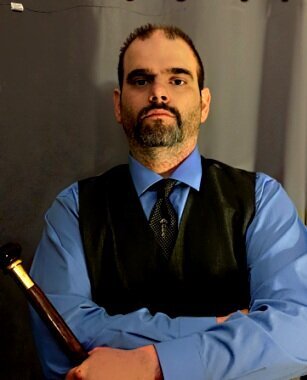
Join Rob Clark and C.A.A. Savastano to discuss years of attacks targeting Savastano from the depths of ignorance and heralded by the ROKC (poorly sourced researchers that possibly are catspaws of intelligence and proven frauds) who occluded the JFK case for decades because of hubris and blindness, and a cast of twisted people that targeted unfortunate people living and dead as wasted fifty-six years of the public’s time, such as Judyth Baker, perhaps the worst of them all. Luckily, Rob Clark, Mike Swanson, and C.A.A. Savastano were able to reclaim much of the truth and discuss it here.
Human Truth Bomb: My Survival of Ceaseless Attacks by Officials and some in the Public
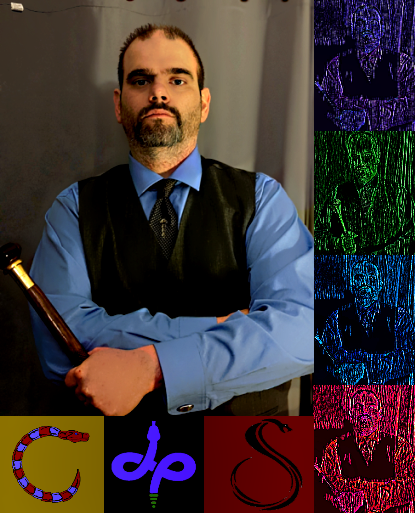
Join Rob Clark and C.A.A. Savastano to discuss years of crime targeting Savastano from the depths of ignorance and heralded by the ROKC (poorly sourced researchers that are catspaws of intelligence and proven frauds), CAPA members James DiEugenio and Lisa Pease who occluded the JFK case for decades because of hubris and blindness, and cast of thousands of twisted, evil, and broken creatures in human form that targeted unfortunate people living and dead as wasted fifty-six years of the public’s time, such as Judyth Baker, perhaps the worst of them all. Luckily, Rob Clark, Mike Swanson, and C.A.A. Savastano were able to reclaim much of the truth and discuss it here. We hope will join us for this episode and future ones as they become available.


