M. Tyler Gillett's Blog, page 2
October 16, 2017
Evangelizing the Old-Fashioned Way
Ever want to get the word out about The Testament of Judas, but just aren't sure how to go about it?
How about passing out tracts to random strangers on the street? It works for regular Christians, right?
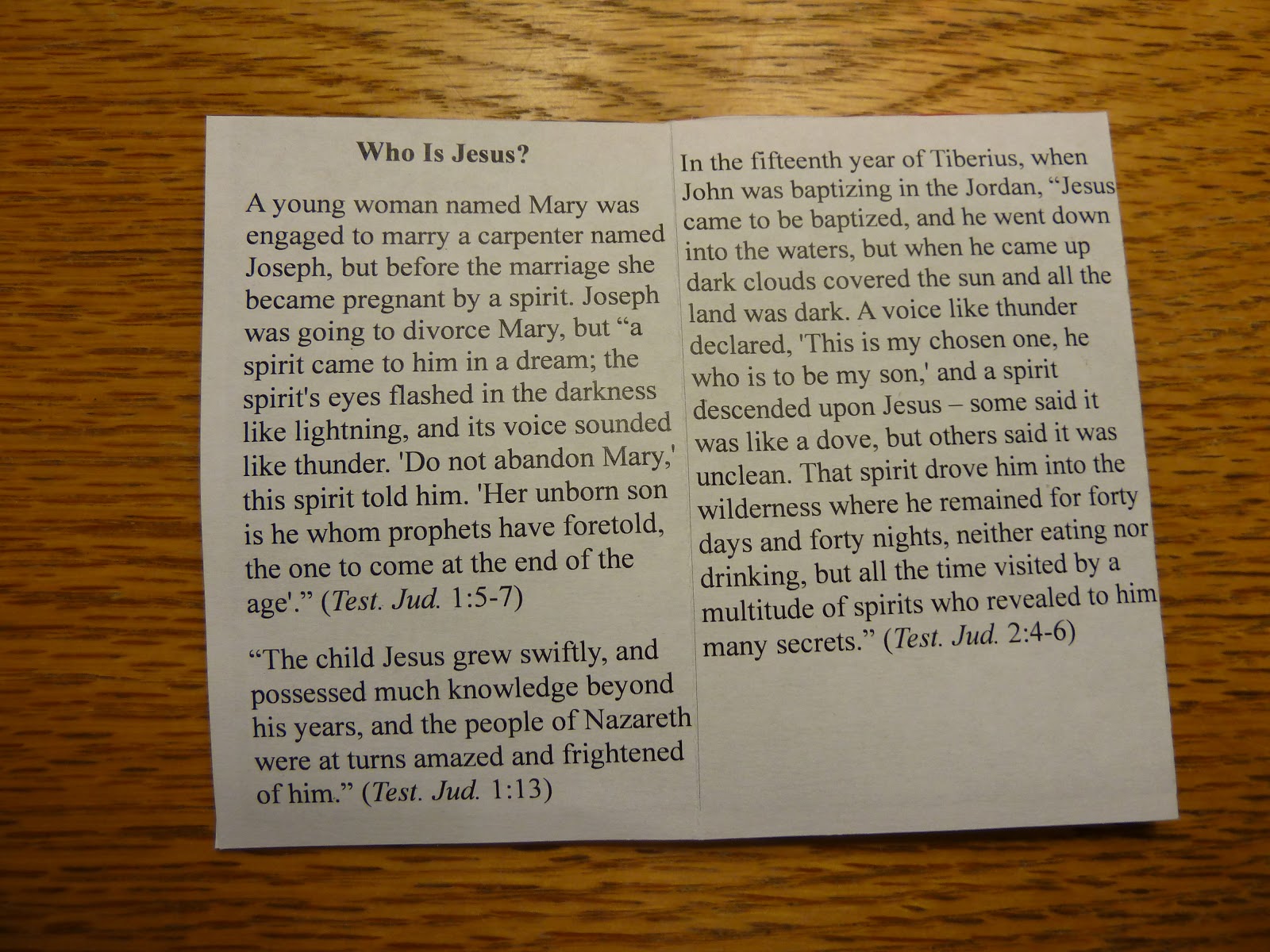
We here at ICoEDNUF have worked up an old-school one-page tract that is free for downloading. Print out a stack of 'em and go to town! Feel free to leave them in gas station restrooms, 24-hour laundromats, and wherever you find flimsy evangelical literature!

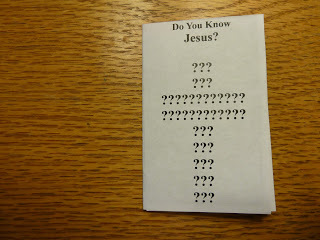
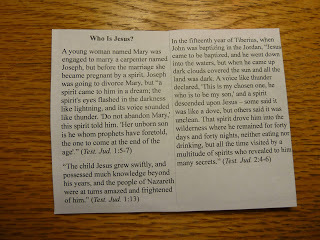
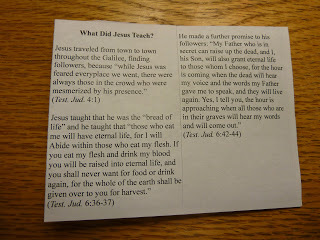
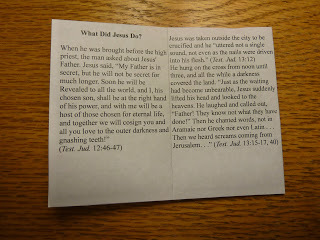
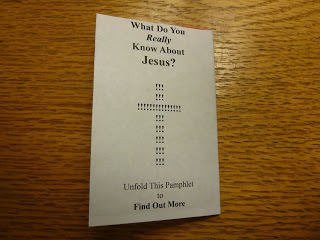
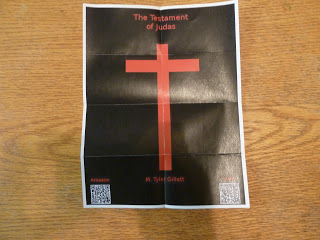
How about passing out tracts to random strangers on the street? It works for regular Christians, right?
We here at ICoEDNUF have worked up an old-school one-page tract that is free for downloading. Print out a stack of 'em and go to town! Feel free to leave them in gas station restrooms, 24-hour laundromats, and wherever you find flimsy evangelical literature!




October 15, 2017
Testament of Judas sale!
Testament of Judas ebook is now 33% off! 33% - 33 years of Jesus' life! Coincidence? Or destiny? https://t.co/JGOAJYSTuv pic.twitter.com/gDAs8AHMiV— M. Tyler Gillett (@mtylergillett) October 15, 2017
August 5, 2017
Gods and Men
So, the story of Daphne and Apollo. The problem begins when Apollo, embodiment of all things masculine, makes fun of Eros' ability as an archer. As revenge, Eros shoots Apollo with an arrow that causes uncontrollable love.1 Meanwhile, Eros shoots Daphne, daughter of the river-deity Peneus, with an arrow that kills any and all romantic attraction or feeling. She just wants to be left alone in the forest – don't we all? Why Daphne, though? Why does she – or anyone else at all – have to be involved in Eros' plot against Apollo?
Not taking no for an answer, Apollo chases after Daphne, making this one of the earliest stories in the West illustrating patriarchal denial of women's sexual consent. They run through the forest until Daphne tires and cries out to her father to save her, specifically, to take away her beauty which, she thinks, is what provoked Apollo's lust. Peneus hears her and transforms her into a laurel tree. But because Apollo's insatiable desire has nothing to do with Daphne's appearance – really has nothing to do with her at all, save that she's a woman – he still seizes her, wrapping his arms around the tree trunk. Ovid informs us that Apollo can feel Daphne's beating heart underneath the bark, so not only is she still sensible and aware, as a tree she is firmly rooted to the ground and can no longer get away from her rapist. The story ends as Apollo claims the laurel tree for his own and fashions laurel wreaths as his own personal symbol.
Three male gods, all demonstrating a complete lack of regard for the lone woman in their midst. Eros uses Daphne as part of his scheme to humiliate Apollo, with no thought for Daphne's well-being. Also, it is not entirely clear how this whole plot resulted in Apollo's humiliation. Apollo personifies entitled male privilege that sees women only as possessions to be seized and used however he wants. Peneus, who had been lamenting his daughter's unwillingness to provide him with either a son-in-law or grandchildren, in the act of “aiding” her instead actually removes his daughter's agency and essentially throws her into the arms of her rapist.
Gods, it seems, in particular male gods, are reprehensible. Others have examined this before, of course, the patriarchal privilege and oppression of women found throughout the Greek mythic corpus, but it was not just the Greeks. Similar tales can be found in the Rig Veda, for instance. These myths did not cause misogyny so much as grant excuses for it, provide justifications for it, normalize it as part of the natural ways of the world. Interestingly, though, the Greeks themselves were uncomfortable with their own mythology. They eventually came to view their own gods as sociopathic. They knew the gods, as depicted by Homer, Hesiod, and the other poets, were vile, loathsome beings. However, these accounts by the poets, Homer and Hesiod especially, were myths, that is, scripture, so they could not simply abandon these tales. Their effort to rehabilitate the gods involved reading the old stories in a new light, reading them not as literal-if-mythic events but as allegories about the human condition and our place in the cosmos.
But does allegory actually provide a solution to the problem these myths raise? Allegorical reading, pleading that the story is actually saying something other than what it in fact is saying, is simply a poor attempt at having one's cake and eating it, too. If there were a lesson to be learned, a point to be made, an observation about humanity, the cosmos, and the divine, why not simply say it rather than couch it in an offensive and disturbing narrative? Another problem with insisting on an allegorical mode of interpretation is that it is all-too-easy for a reader to come to the wrongconclusions about the meaning of a text, because many different plausible arguments can be made about what the figures and events in a myth are meant to represent.
But theologically speaking, the greatest problem with allegorical approaches is they transform sacred texts into some sort of puzzle for the faithful, which makes of the gods a mystery. The gods themselves become unknowable, their motives unreadable, our relationship to them untenable. Any uncertainty in the compact between mortals and gods is dangerous, because any mistake on our part is easily fatal, or worse. For those who reflect on the consequences of allegorical interpretation, faith must become a minefield.
1 But is it really love? Or is this not the mythic beginning of the patriarchal – and misogynist – belief that men cannotcontrol themselves sexually?
Not taking no for an answer, Apollo chases after Daphne, making this one of the earliest stories in the West illustrating patriarchal denial of women's sexual consent. They run through the forest until Daphne tires and cries out to her father to save her, specifically, to take away her beauty which, she thinks, is what provoked Apollo's lust. Peneus hears her and transforms her into a laurel tree. But because Apollo's insatiable desire has nothing to do with Daphne's appearance – really has nothing to do with her at all, save that she's a woman – he still seizes her, wrapping his arms around the tree trunk. Ovid informs us that Apollo can feel Daphne's beating heart underneath the bark, so not only is she still sensible and aware, as a tree she is firmly rooted to the ground and can no longer get away from her rapist. The story ends as Apollo claims the laurel tree for his own and fashions laurel wreaths as his own personal symbol.
Three male gods, all demonstrating a complete lack of regard for the lone woman in their midst. Eros uses Daphne as part of his scheme to humiliate Apollo, with no thought for Daphne's well-being. Also, it is not entirely clear how this whole plot resulted in Apollo's humiliation. Apollo personifies entitled male privilege that sees women only as possessions to be seized and used however he wants. Peneus, who had been lamenting his daughter's unwillingness to provide him with either a son-in-law or grandchildren, in the act of “aiding” her instead actually removes his daughter's agency and essentially throws her into the arms of her rapist.
Gods, it seems, in particular male gods, are reprehensible. Others have examined this before, of course, the patriarchal privilege and oppression of women found throughout the Greek mythic corpus, but it was not just the Greeks. Similar tales can be found in the Rig Veda, for instance. These myths did not cause misogyny so much as grant excuses for it, provide justifications for it, normalize it as part of the natural ways of the world. Interestingly, though, the Greeks themselves were uncomfortable with their own mythology. They eventually came to view their own gods as sociopathic. They knew the gods, as depicted by Homer, Hesiod, and the other poets, were vile, loathsome beings. However, these accounts by the poets, Homer and Hesiod especially, were myths, that is, scripture, so they could not simply abandon these tales. Their effort to rehabilitate the gods involved reading the old stories in a new light, reading them not as literal-if-mythic events but as allegories about the human condition and our place in the cosmos.
But does allegory actually provide a solution to the problem these myths raise? Allegorical reading, pleading that the story is actually saying something other than what it in fact is saying, is simply a poor attempt at having one's cake and eating it, too. If there were a lesson to be learned, a point to be made, an observation about humanity, the cosmos, and the divine, why not simply say it rather than couch it in an offensive and disturbing narrative? Another problem with insisting on an allegorical mode of interpretation is that it is all-too-easy for a reader to come to the wrongconclusions about the meaning of a text, because many different plausible arguments can be made about what the figures and events in a myth are meant to represent.
But theologically speaking, the greatest problem with allegorical approaches is they transform sacred texts into some sort of puzzle for the faithful, which makes of the gods a mystery. The gods themselves become unknowable, their motives unreadable, our relationship to them untenable. Any uncertainty in the compact between mortals and gods is dangerous, because any mistake on our part is easily fatal, or worse. For those who reflect on the consequences of allegorical interpretation, faith must become a minefield.
1 But is it really love? Or is this not the mythic beginning of the patriarchal – and misogynist – belief that men cannotcontrol themselves sexually?
June 15, 2017
Polish & Purity
This has apparently been a thing for a while, but recently I saw an article about "halal" nail polish. Muslims are supposed to wash before prayer (face, hands, feet). According to some Islamic scholars, water hasto touch all the skin, otherwise the washing is somehow invalid. The general consensus seems to be that nail polish, being water-impermeable, prevents complete washing, therefore Muslim women cannot wear nail polish and pray. To meet this problem, some companies have invented polishes that are oxygen- and water-permeable.
At best, I can only believe the scholars who came up with this interpretation are stupidly nit-picky. Like Monsura Sirajee, I think this injunction has more to do with avoiding “corrupting” Western influences, and/or just the bog-standard misogyny often found in the Abrahamic traditions.
It seems to me that this interpretation completely misses the point of the washing, which is not unique to Islam; people wash their hands before entering Shinto shrines in Japan, and while it's not exactly hand-washing, dipping one's finger into the font of holy water at the entrance of a Catholic church to make the sign of the cross is a ritual procedure along the continuum of washing rites. Washing off actual dirt isn't the point.
This point about dirt is emphasized in the Quran itself, in the very surathat outlines ritual ablutions performed prior to prayer. Sura5:6 states, “But if you are ill, or on a journey, or one of you has come from satisfying a call of nature, or you have touched women, and you find no water, then resort to clean earth, and wipe therewith your faces and your hands.” What, after all, is the meaning of “clean earth?” One cannot washdirt with dirt, so how is it clean, and what is clean earth washing away?
All of this water is part of an initial act designed to set one off in space and time. Washing is the act of leaving the profane, everyday world, and entering into the sacred, whether it's actually entering into a sacred space like a mosque, or entering into a sacred activity like prayer. Being concerned with removing physical pollution is to miss sight of the aim of ritual ablutions, which is the removal of ritual pollution. The everyday world is impure, is dirty, a term we use even if, perhaps especially if, we're not speaking of actual dirt. It's this kind of abstract dirt, this metaphorical dirt of the world, that ritual washing prior to entering sacred space or time or activity is meant to remove. Permeability of nail polish has nothing to do with that.
But perhaps nail polish is an outward sign of a more pervasive dirtiness, as far as certain purveyors of Islamic jurisprudence are concerned. We see a clue to this in the verse above, that simply “touching” a woman (wink-wink nudge-nudge) apparently renders a person – that is, a man – unclean in a way that needs purification. The burden of ritual pollution lies squarely upon women, and interpreting nail polish as a literal barrier to ritual purity simply adds to that burden.
I think, rather than inventing new polishes, what is needed is new schools of Islamic jurisprudence.
At best, I can only believe the scholars who came up with this interpretation are stupidly nit-picky. Like Monsura Sirajee, I think this injunction has more to do with avoiding “corrupting” Western influences, and/or just the bog-standard misogyny often found in the Abrahamic traditions.
It seems to me that this interpretation completely misses the point of the washing, which is not unique to Islam; people wash their hands before entering Shinto shrines in Japan, and while it's not exactly hand-washing, dipping one's finger into the font of holy water at the entrance of a Catholic church to make the sign of the cross is a ritual procedure along the continuum of washing rites. Washing off actual dirt isn't the point.
This point about dirt is emphasized in the Quran itself, in the very surathat outlines ritual ablutions performed prior to prayer. Sura5:6 states, “But if you are ill, or on a journey, or one of you has come from satisfying a call of nature, or you have touched women, and you find no water, then resort to clean earth, and wipe therewith your faces and your hands.” What, after all, is the meaning of “clean earth?” One cannot washdirt with dirt, so how is it clean, and what is clean earth washing away?
All of this water is part of an initial act designed to set one off in space and time. Washing is the act of leaving the profane, everyday world, and entering into the sacred, whether it's actually entering into a sacred space like a mosque, or entering into a sacred activity like prayer. Being concerned with removing physical pollution is to miss sight of the aim of ritual ablutions, which is the removal of ritual pollution. The everyday world is impure, is dirty, a term we use even if, perhaps especially if, we're not speaking of actual dirt. It's this kind of abstract dirt, this metaphorical dirt of the world, that ritual washing prior to entering sacred space or time or activity is meant to remove. Permeability of nail polish has nothing to do with that.
But perhaps nail polish is an outward sign of a more pervasive dirtiness, as far as certain purveyors of Islamic jurisprudence are concerned. We see a clue to this in the verse above, that simply “touching” a woman (wink-wink nudge-nudge) apparently renders a person – that is, a man – unclean in a way that needs purification. The burden of ritual pollution lies squarely upon women, and interpreting nail polish as a literal barrier to ritual purity simply adds to that burden.
I think, rather than inventing new polishes, what is needed is new schools of Islamic jurisprudence.
February 24, 2017
Hate the Sin and the Sinner
A judge who works for the Social Security Administration was told, along with all other employees, to watch a 17 minute video on LGBT diversity training – basically how to treat LGBT folks with respect, and understand the diverse and inclusive society SSA is to serve. This judge, Gary Suttles, refused, on the basis that, “this type of government indoctrination training does not comport with my religious views and I object on that basis as well.”
He requested a religious accommodation to exempt him from said training video, and was denied, because by not undergoing the training, Suttles would leave the SSA open to various liabilities. He has since asked a district judge to block the SSA both from making him watch the video, and from imposing further disciplinary actions against him.
The question, unanswered by either Suttles or his lawyer, is what, exactly, is objectionable in simply watching a video about diversity training. They haven't stated how it violates his religious freedom, and they can't, at least probably not in a way that would stand up in court. Because what it comes down to is the Christian Right wants the freedom to openly discriminate against sinners.
After all, simply learning abouttreating LGBT people with respect does not in any way violate Suttles' First Amendment rights, unless you want those rights to mean that you don't have to acknowledge that we live in a diverse society. And perhaps the objection goes beyond that: if the SSA wants their staff to watch diversity-training videos, they probably also expect their staff to actually comport themselves with the general public in a similar manner. Instead of paying lip-service to that old saw, “love the sinner, hate the sin,” the Christian Right just want to skip the platitudes and hate the sinner. This is the end-goal that some among the Christian Right hoped to get out of the Hobby Lobbydecision: the legal right to refuse legal rights to members of any group of “sinners.” This would be the ultimate “religious liberty” for the Christian Right, the freedom notto serve any member of any group, if serving that group can be defined as violating sincerely-held religious beliefs.
By not being required to serve a diverse society, by being able to actively suppress any sort of government or economic support for members of diverse social groups, they can dismantle diversity itself. So far this sort of attack hasn't been able to survive judicial review.
So far.
He requested a religious accommodation to exempt him from said training video, and was denied, because by not undergoing the training, Suttles would leave the SSA open to various liabilities. He has since asked a district judge to block the SSA both from making him watch the video, and from imposing further disciplinary actions against him.
The question, unanswered by either Suttles or his lawyer, is what, exactly, is objectionable in simply watching a video about diversity training. They haven't stated how it violates his religious freedom, and they can't, at least probably not in a way that would stand up in court. Because what it comes down to is the Christian Right wants the freedom to openly discriminate against sinners.
After all, simply learning abouttreating LGBT people with respect does not in any way violate Suttles' First Amendment rights, unless you want those rights to mean that you don't have to acknowledge that we live in a diverse society. And perhaps the objection goes beyond that: if the SSA wants their staff to watch diversity-training videos, they probably also expect their staff to actually comport themselves with the general public in a similar manner. Instead of paying lip-service to that old saw, “love the sinner, hate the sin,” the Christian Right just want to skip the platitudes and hate the sinner. This is the end-goal that some among the Christian Right hoped to get out of the Hobby Lobbydecision: the legal right to refuse legal rights to members of any group of “sinners.” This would be the ultimate “religious liberty” for the Christian Right, the freedom notto serve any member of any group, if serving that group can be defined as violating sincerely-held religious beliefs.
By not being required to serve a diverse society, by being able to actively suppress any sort of government or economic support for members of diverse social groups, they can dismantle diversity itself. So far this sort of attack hasn't been able to survive judicial review.
So far.
September 7, 2016
Mysteries in Genesis
So, Gen 1:29-30, God tells the man & the woman that he's given them all the green plants to eat, and furthermore that to every beast, bird, and creeping thing, "I have given every green plant for food." So absolutely every animal is vegetarian by divine fiat at creation.1 It's not until after the Flood that people (and animals, presumably) are allowed to eat meat: "[J]ust as I gave you the green plants, I give you everything" (Gen 9:3).2
But! What the hell is Abel up to? Abel is a shepherd, while his older brother Cain is a farmer. They each bring offerings to God, "Cain brought to the LORD an offering of the fruit of the ground, and Abel for his part brought the firstlings of his flock, their fat portions" (Gen 4:3-4). People aren't eating meat yet, so what's Abel doing herding sheep in the first place? Maybe it's just for the wool, but then, he kills some of them and cuts off the fatty bits to burn on an altar to God. How does he know how to slaughter and prepare them?
I guess, at the beginning of time, only God eats flesh.
1 Vegetarian or vegan? Probably no eggs, of course - they aren't green plants - but what about honey? Are the bees at least allowed to eat their own honey?
2 Everything? So there's no kosher laws yet, even though God tells Noah to take "seven pairs of all clean animals . . . and a pair of the animals that are not clean" (Gen 7:2).
But! What the hell is Abel up to? Abel is a shepherd, while his older brother Cain is a farmer. They each bring offerings to God, "Cain brought to the LORD an offering of the fruit of the ground, and Abel for his part brought the firstlings of his flock, their fat portions" (Gen 4:3-4). People aren't eating meat yet, so what's Abel doing herding sheep in the first place? Maybe it's just for the wool, but then, he kills some of them and cuts off the fatty bits to burn on an altar to God. How does he know how to slaughter and prepare them?
I guess, at the beginning of time, only God eats flesh.
1 Vegetarian or vegan? Probably no eggs, of course - they aren't green plants - but what about honey? Are the bees at least allowed to eat their own honey?
2 Everything? So there's no kosher laws yet, even though God tells Noah to take "seven pairs of all clean animals . . . and a pair of the animals that are not clean" (Gen 7:2).
July 17, 2016
The Real Nightmare Future
The Matrix films got one thing very wrong: no hacker would have a username like Neo or Trinity or Morpheus. Our salvation would rely instead on someone calling themselves something like Princess Fuckbarf.11 Actual Twitter handle!
June 10, 2016
How They COPE
Recently a federal court dismissed a complaint brought by Citizens for Objective Public Education (or COPE) against the Kansas State Board of Education; COPE claimed that new science standards the board had voted to adopt back in 2013 were in fact a form of non-theistic/atheistic religious indoctrination, and thus a violation of students' and parents' First and Fourteenth Amendment rights. The court dismissed the case on the basis that COPE had no standing to bring a suit in the first place, and thus did not particularly comment on the merits of the complaint.1This is a shame, since COPE's strategy involves preemptively defining what they call “ultimate” questions, such as those asked in origins studies - what is the cause of life, how did the universe begin, and so forth. COPE cites a 1961 decision (McGowen v. Maryland) in which the nature of religion is defined as “an aspect of human thought and action which profoundly relates the life of man to the world in which he lives.” COPE borrows this entire definition in order to explain what they mean by “ultimate” questions: “These questions are ultimate religious questions because answers to them profoundly relate the life of man to the world in which he lives.”
How is it that these questions are inherently religious? Because, they say, the answers to other religious questions, questions about “the purpose of life and how it should be lived ethically and morally,” are wholly dependent on how one answers the “ultimate” questions, namely, “whether one relates his life to the world through a creator or considers it to be a mere physical occurrence that ends on death per the laws of entropy.”2
COPE's use of the world “ultimate” put me in mind of Tillich's definition of religion: “Religion, in the largest and most basic sense of the word, is ultimate concern.”3 I am, however, more familiar with Baird's understanding of ultimate concern, as he says, “By 'ultimate' I am referring to a concern which is more important than anything else in the universe for the person involved.”4 COPE, I think, would combine the two definitions, only leaving off the last four words of Baird's understanding, thereby making religion more important than anything else in the universe. Their basic premise, the assumption from which their whole argument begins, is that questions about the nature of life and the universe are inherently religious questions. For COPE these are also normative questions, in the sense they cannot be subject to any debate or disagreement.
COPE's argument universalizes religion to encompass all aspects of life, as they explicitly state when they claim the new science standards would require students to accept
a non-theistic Worldview. As used herein, "worldview" means a religious view that is "an aspect of human thought and action which profoundly relates the life of man to the world in which he lives" (McGowan v. Maryland, supra).
If that paragraph sounds familiar, it's because it's the same definition from the same decision COPE cites at the beginning of their complaint. For COPE, religion and worldview are the same thing - it is impossible to have a view of reality that is not religious, because religion is nothing but one's view of reality. This is how they can make the apparently contradictory statement that the science standards represent a “non-theistic” worldview: non-theism, or atheism, is religion because it is a worldview, and all worldviews are religion.
But there are really only two worldviews, which COPE already hinted at earlier in their complaint when they assert there are two ways a person can relate their life to the world, either “through a creator” or as “a mere physical occurrence that ends on death per the laws of entropy.”5 If the court had examined the merits of COPE's complaint, they would find it stumbling over itself at this point, because of what COPE says is the real agenda behind the new science standards:
The purpose of the indoctrination [i.e., the science standards] is to establish the religious worldview, not to deliver to an age appropriate audience an objective and religiously neutralorigins science education that seeks to inform. [emphasis mine]
This is the constitutional problem that creationists and intelligent design proponents always run up against, seemingly without realizing it. They cannot possibly demonstrate what a “religiously neutral” position looks like because all worldviews are religion. For them, religion is ultimate concern, and they believe this is the normative definition of religion, applicable to everyone throughout all time. This being the case, they cannot ever claim to represent a non-religious position, and their legal argument falls apart. This is a real pity for COPE's legal team, since they composed an 80-some page complaint, and no judge really needs to read beyond the first dozen or so paragraphs to dismiss it.
COPE has not given up, as they filed a petition for a hearing en banc,6mostly based on the assertion that the Tenth Circuit misread their complaint in the first place:
The Decision [by the Court] erroneously states that the Complaint alleges that the Standards promote a "non-religious worldview" without "condemn[ing] any religion." In fact the Complaint does the opposite, as it alleges in detail how the Standards seek to replace the Children's theistic beliefs with a "non-theistic religious worldview that is materialistic/atheistic."
This is where the courts and the creationists talk past each other: the courts have long since decided that there is the religious, and there is the secular, and that much of life and society and government is taken up with the latter, not the former, while for the creationists there is only the religious, and there can never be anything else. COPE will never be able to cope.
1 In a single footnote the court does “note that COPE asks the court to implement a requirement identical to the one imposed by the statute in Edwards. COPE frames the materialism of evolutionary theory as a religious belief competing with COPE’s own teleological religion, and demands that if evolution is taught, teleological origins theories must also be taught. The Edwards Court expressly held such a requirement unconstitutional.”
2 This odd phrasing is due to an old creationist/intelligent design understanding of the second law of thermodynamics, that a closed system will always tend toward disorder and chaos. If this is true, they say, then how could molecules ever spontaneously self-organize and self-replicate? How can new and more complex forms of life ever evolve? But they have a limited view of how the second law works, and fail to take into account that nothing in thermodynamics says there cannot be local areas of increased order within closed systems, as long as the entropy of the entire system is increasing rather than decreasing. Given that the closed system we're talking about when it comes to the evolution of life is the whole of the known universe, it is not only possible that there could be local pockets of order, it is virtually certain.
3 Paul Tillich, Theology of Culture (1959), pp. 7-8, quoted in Baird, p. 18.
4 Robert Baird, Category Formation and the History of Religions, 2nd Ed., (1991), p. 18, emphasis in original.
5 There is an unstated implication to this either/or choice, in that if one relates to life through a creator, then life is not something that “ends on death per the laws of entropy.”
6 A petition which the court denied; COPE now plans to file a petition for writ of certiorari with the Supreme Court.
How is it that these questions are inherently religious? Because, they say, the answers to other religious questions, questions about “the purpose of life and how it should be lived ethically and morally,” are wholly dependent on how one answers the “ultimate” questions, namely, “whether one relates his life to the world through a creator or considers it to be a mere physical occurrence that ends on death per the laws of entropy.”2
COPE's use of the world “ultimate” put me in mind of Tillich's definition of religion: “Religion, in the largest and most basic sense of the word, is ultimate concern.”3 I am, however, more familiar with Baird's understanding of ultimate concern, as he says, “By 'ultimate' I am referring to a concern which is more important than anything else in the universe for the person involved.”4 COPE, I think, would combine the two definitions, only leaving off the last four words of Baird's understanding, thereby making religion more important than anything else in the universe. Their basic premise, the assumption from which their whole argument begins, is that questions about the nature of life and the universe are inherently religious questions. For COPE these are also normative questions, in the sense they cannot be subject to any debate or disagreement.
COPE's argument universalizes religion to encompass all aspects of life, as they explicitly state when they claim the new science standards would require students to accept
a non-theistic Worldview. As used herein, "worldview" means a religious view that is "an aspect of human thought and action which profoundly relates the life of man to the world in which he lives" (McGowan v. Maryland, supra).
If that paragraph sounds familiar, it's because it's the same definition from the same decision COPE cites at the beginning of their complaint. For COPE, religion and worldview are the same thing - it is impossible to have a view of reality that is not religious, because religion is nothing but one's view of reality. This is how they can make the apparently contradictory statement that the science standards represent a “non-theistic” worldview: non-theism, or atheism, is religion because it is a worldview, and all worldviews are religion.
But there are really only two worldviews, which COPE already hinted at earlier in their complaint when they assert there are two ways a person can relate their life to the world, either “through a creator” or as “a mere physical occurrence that ends on death per the laws of entropy.”5 If the court had examined the merits of COPE's complaint, they would find it stumbling over itself at this point, because of what COPE says is the real agenda behind the new science standards:
The purpose of the indoctrination [i.e., the science standards] is to establish the religious worldview, not to deliver to an age appropriate audience an objective and religiously neutralorigins science education that seeks to inform. [emphasis mine]
This is the constitutional problem that creationists and intelligent design proponents always run up against, seemingly without realizing it. They cannot possibly demonstrate what a “religiously neutral” position looks like because all worldviews are religion. For them, religion is ultimate concern, and they believe this is the normative definition of religion, applicable to everyone throughout all time. This being the case, they cannot ever claim to represent a non-religious position, and their legal argument falls apart. This is a real pity for COPE's legal team, since they composed an 80-some page complaint, and no judge really needs to read beyond the first dozen or so paragraphs to dismiss it.
COPE has not given up, as they filed a petition for a hearing en banc,6mostly based on the assertion that the Tenth Circuit misread their complaint in the first place:
The Decision [by the Court] erroneously states that the Complaint alleges that the Standards promote a "non-religious worldview" without "condemn[ing] any religion." In fact the Complaint does the opposite, as it alleges in detail how the Standards seek to replace the Children's theistic beliefs with a "non-theistic religious worldview that is materialistic/atheistic."
This is where the courts and the creationists talk past each other: the courts have long since decided that there is the religious, and there is the secular, and that much of life and society and government is taken up with the latter, not the former, while for the creationists there is only the religious, and there can never be anything else. COPE will never be able to cope.
1 In a single footnote the court does “note that COPE asks the court to implement a requirement identical to the one imposed by the statute in Edwards. COPE frames the materialism of evolutionary theory as a religious belief competing with COPE’s own teleological religion, and demands that if evolution is taught, teleological origins theories must also be taught. The Edwards Court expressly held such a requirement unconstitutional.”
2 This odd phrasing is due to an old creationist/intelligent design understanding of the second law of thermodynamics, that a closed system will always tend toward disorder and chaos. If this is true, they say, then how could molecules ever spontaneously self-organize and self-replicate? How can new and more complex forms of life ever evolve? But they have a limited view of how the second law works, and fail to take into account that nothing in thermodynamics says there cannot be local areas of increased order within closed systems, as long as the entropy of the entire system is increasing rather than decreasing. Given that the closed system we're talking about when it comes to the evolution of life is the whole of the known universe, it is not only possible that there could be local pockets of order, it is virtually certain.
3 Paul Tillich, Theology of Culture (1959), pp. 7-8, quoted in Baird, p. 18.
4 Robert Baird, Category Formation and the History of Religions, 2nd Ed., (1991), p. 18, emphasis in original.
5 There is an unstated implication to this either/or choice, in that if one relates to life through a creator, then life is not something that “ends on death per the laws of entropy.”
6 A petition which the court denied; COPE now plans to file a petition for writ of certiorari with the Supreme Court.
April 25, 2016
When Does a Parody Become a Religion?
Recently, a prisoner in the Nebraska State Penitentiary, Stephen Cavanaugh, filed a lawsuit against prison officials for discriminating against him and failing to recognize his chosen religious beliefs and practices, to wit: Cavanaugh claims to follow the Flying Spaghetti Monster. The judge in the case, John Gerrard, recently dismissed Cavanaugh's claim, on the basis that the Church of the Flying Spaghetti Monster (or FSMism) is in fact a parody and not an authentic religion.[1]
There is quite a bit that is valid in Judge Gerrard's decision; it seems clear that FSMism began as a protest against the Kansas State Board of Education when that august body was seriously considering introducing intelligent design theory into public school science classes. After all, intelligent design deliberately does not posit the nature of the designer, and Bobby Henderson, the founder of the Church of the FSM, wrote a letter to the KS BOE urging their acceptance of the FSM as the designer.
Additionally, and perhaps more damningly for Cavanaugh, the judge notes that, while “the Court does not ultimately address whether Cavanaugh's beliefs are sincere, it bears noting that his pleading strategy is not entirely consistent with authentic religious convictions . . . His vagueness [regarding the tenets and practices of FSMism] looks less like inadvertent omission and more like an attempt to prevent the Court from recognizing FSMism for what it is.” I also imagine Cavanaugh's request for relief, including $5 million for “deep emotional, psychological, and spiritual pain resulting from not being allowed to practice” his religion did not help his case.[2]
Judge Gerrard is also careful to note that -
It bears emphasizing that the Court is not engaged in — and has been careful to avoid — questioning the validity of Cavanaugh's beliefs. The Court is well aware that it "should not undertake to dissect religious beliefs because the believer admits that he is struggling with his position or because his beliefs are not articulated with clarity and precision that a more sophisticated person might employ." United States v. Ali 682 F.3d 705, 710 (8th Cir. 2012)
He goes on to state that “to read [the FSM Gospel] as religious doctrine would be little different from grounding a "religious exercise" on any other work of fiction,” for example, claiming that Vonnegut's or Heinlein's works could be read as scripture for Bokononism or the Church of All Worlds, respectively. But this begs the question of when is a text fiction and when is it scripture? The Epic of Gilgamesh is a smashing good read, but most readers today would be more likely to categorize it as a fictional narrative from an ancient time, rather than religious scripture, even though 3000+ years ago it was, in fact, scriptural. And Judge Gerrard does note that using fiction as a source for actual religion is not impossible, given that there is an actual movement based on Heinlein's work.
Gerrard believes that “to read the FSM Gospel literally would be to misrepresent it — and, indeed, to do it a disservice in the process. That would present the FSM Gospel as precisely the sort of Fundamentalist dogma that it was meant to rebut.” The key question, though, is when does a parody cease to be a parody and to become something else, to become a living faith? The Discordian Society was deliberately created to refute the idea that deity had to be both male and serious [3] – perhaps not exactly a parody in the way that FSMism could be called a parody, but a protest movement against the religious and social straitjacketing of the '50s, '60s, and '70s.
However, a cogent argument can be made that the Discordian Society has become a robust faith. Gerrard cites Africa v. Pennsylvania, (1981):
First, a religion addresses fundamental and ultimate questions having to do with deep and imponderable matters. Second, a religion is comprehensive in nature; it consists of a belief-system as opposed to an isolated teaching. Third, a religion often can be recognized by the presence of certain formal and external signs.
Those “deep and imponderable matters” include issues that are existential, teleological, and cosmological in nature. An examination of the forums at principiadiscordia.com reveals serious discussion and debate on all these issues, and Discordians continue to create thoughtful (if humorous – and why can't a real religion include humor?) new scriptures, such as the Chao Te Ching , which, while a parody of the Tao Te Ching, is also a reasoned examination of consensus reality and one's conscious and unconscious behaviors and attitudes toward that reality.
The same could be said for the Church of the Subgenius, which also started as a parody of religion, in this case of the over-the-top Christianity as represented by 20thcentury televangelists like Robert Tilton, but progressed to become something more for those who are engaged with the Church. The Church of the Subgenius posited July 5, 1998, as “X-Day,” the day when aliens would come to “rapture” up all the Subgenii and destroy everyone else. They held a large gathering at a campground in New York state, and after X-Day, when no one had been raptured and nothing destroyed, a series of posts on Subgenius internet groups revealed a sense of shared community and personal meaning – dare I say, even spirituality – on the part of those who had been there.
One could also point to Jediism, and the fact that 390k+ people reported Jediism as their religion on 2001 census forms in England and Wales, which prompted the UK Office for National Statistics to grant Jediism its own code for processing purposes, though they were quick to note that this did not convey upon Jediism any official status as a protected religion. It must also be granted that many of those 390k+ people probably listed Jediism as a joke; however, there are those who do not consider it a joke, based on the time and thought put into the development of Jedi doctrinal statements.
When does a parody become a religion, then? When does a text become sacred, become scripture? It may be true that to take the Gospel of the FSM and treat it asgospel would be to pervert or subvert the author's intent, but once an author writes a text they have little to no say in how that text gets used. The Apostle Paul, for example, certainly never intended his occasional letters to become scripture, and yet, here we are. While I do understand Gerrard's decision (and I can't help but feel I would have decided against Cavanaugh myself), I do worry about the precedent this decision may set with regard to future cases involving small, new, or “funny” religious movements.__________
[1] Reading the decision, Judge Gerrard seems to have taken pleasure in writing it, since he got to read and cite the Gospel of the Flying Spaghetti Monster extensively.
[2] I mean, really, what's a guy in prison going to spend $5 million on – allthe cigarettes?
[3] See the interview with Greg Hill in the Loompanics edition of the Principia Discordia, in which Hill states, “I set out to do what my society told me is impossible – make a real religion from a patently absurd deity.”
There is quite a bit that is valid in Judge Gerrard's decision; it seems clear that FSMism began as a protest against the Kansas State Board of Education when that august body was seriously considering introducing intelligent design theory into public school science classes. After all, intelligent design deliberately does not posit the nature of the designer, and Bobby Henderson, the founder of the Church of the FSM, wrote a letter to the KS BOE urging their acceptance of the FSM as the designer.
Additionally, and perhaps more damningly for Cavanaugh, the judge notes that, while “the Court does not ultimately address whether Cavanaugh's beliefs are sincere, it bears noting that his pleading strategy is not entirely consistent with authentic religious convictions . . . His vagueness [regarding the tenets and practices of FSMism] looks less like inadvertent omission and more like an attempt to prevent the Court from recognizing FSMism for what it is.” I also imagine Cavanaugh's request for relief, including $5 million for “deep emotional, psychological, and spiritual pain resulting from not being allowed to practice” his religion did not help his case.[2]
Judge Gerrard is also careful to note that -
It bears emphasizing that the Court is not engaged in — and has been careful to avoid — questioning the validity of Cavanaugh's beliefs. The Court is well aware that it "should not undertake to dissect religious beliefs because the believer admits that he is struggling with his position or because his beliefs are not articulated with clarity and precision that a more sophisticated person might employ." United States v. Ali 682 F.3d 705, 710 (8th Cir. 2012)
He goes on to state that “to read [the FSM Gospel] as religious doctrine would be little different from grounding a "religious exercise" on any other work of fiction,” for example, claiming that Vonnegut's or Heinlein's works could be read as scripture for Bokononism or the Church of All Worlds, respectively. But this begs the question of when is a text fiction and when is it scripture? The Epic of Gilgamesh is a smashing good read, but most readers today would be more likely to categorize it as a fictional narrative from an ancient time, rather than religious scripture, even though 3000+ years ago it was, in fact, scriptural. And Judge Gerrard does note that using fiction as a source for actual religion is not impossible, given that there is an actual movement based on Heinlein's work.
Gerrard believes that “to read the FSM Gospel literally would be to misrepresent it — and, indeed, to do it a disservice in the process. That would present the FSM Gospel as precisely the sort of Fundamentalist dogma that it was meant to rebut.” The key question, though, is when does a parody cease to be a parody and to become something else, to become a living faith? The Discordian Society was deliberately created to refute the idea that deity had to be both male and serious [3] – perhaps not exactly a parody in the way that FSMism could be called a parody, but a protest movement against the religious and social straitjacketing of the '50s, '60s, and '70s.
However, a cogent argument can be made that the Discordian Society has become a robust faith. Gerrard cites Africa v. Pennsylvania, (1981):
First, a religion addresses fundamental and ultimate questions having to do with deep and imponderable matters. Second, a religion is comprehensive in nature; it consists of a belief-system as opposed to an isolated teaching. Third, a religion often can be recognized by the presence of certain formal and external signs.
Those “deep and imponderable matters” include issues that are existential, teleological, and cosmological in nature. An examination of the forums at principiadiscordia.com reveals serious discussion and debate on all these issues, and Discordians continue to create thoughtful (if humorous – and why can't a real religion include humor?) new scriptures, such as the Chao Te Ching , which, while a parody of the Tao Te Ching, is also a reasoned examination of consensus reality and one's conscious and unconscious behaviors and attitudes toward that reality.
The same could be said for the Church of the Subgenius, which also started as a parody of religion, in this case of the over-the-top Christianity as represented by 20thcentury televangelists like Robert Tilton, but progressed to become something more for those who are engaged with the Church. The Church of the Subgenius posited July 5, 1998, as “X-Day,” the day when aliens would come to “rapture” up all the Subgenii and destroy everyone else. They held a large gathering at a campground in New York state, and after X-Day, when no one had been raptured and nothing destroyed, a series of posts on Subgenius internet groups revealed a sense of shared community and personal meaning – dare I say, even spirituality – on the part of those who had been there.
One could also point to Jediism, and the fact that 390k+ people reported Jediism as their religion on 2001 census forms in England and Wales, which prompted the UK Office for National Statistics to grant Jediism its own code for processing purposes, though they were quick to note that this did not convey upon Jediism any official status as a protected religion. It must also be granted that many of those 390k+ people probably listed Jediism as a joke; however, there are those who do not consider it a joke, based on the time and thought put into the development of Jedi doctrinal statements.
When does a parody become a religion, then? When does a text become sacred, become scripture? It may be true that to take the Gospel of the FSM and treat it asgospel would be to pervert or subvert the author's intent, but once an author writes a text they have little to no say in how that text gets used. The Apostle Paul, for example, certainly never intended his occasional letters to become scripture, and yet, here we are. While I do understand Gerrard's decision (and I can't help but feel I would have decided against Cavanaugh myself), I do worry about the precedent this decision may set with regard to future cases involving small, new, or “funny” religious movements.__________
[1] Reading the decision, Judge Gerrard seems to have taken pleasure in writing it, since he got to read and cite the Gospel of the Flying Spaghetti Monster extensively.
[2] I mean, really, what's a guy in prison going to spend $5 million on – allthe cigarettes?
[3] See the interview with Greg Hill in the Loompanics edition of the Principia Discordia, in which Hill states, “I set out to do what my society told me is impossible – make a real religion from a patently absurd deity.”
April 24, 2016
Why I Wrote The Testament Of Judas, Part I
Because when I read this:
The tombs also were opened, and many bodies of the saints who had fallen asleep were raised. After his resurrection they came out of the tombs and entered the holy city and appeared to many.
It immediately led me to think of this:
The tombs also were opened, and many bodies of the saints who had fallen asleep were raised. After his resurrection they came out of the tombs and entered the holy city and appeared to many.
It immediately led me to think of this: