Linda Brooks Davis's Blog, page 28
March 3, 2016
The Oil of Tears
 She washed His feet with her tears.
When one of the Pharisees invited Jesus to have dinner with him, he went to the Pharisee’s house and reclined at the table. A woman in that town who lived a sinful life learned that Jesus was eating at the Pharisee’s house, so she came there with an alabaster jar of perfume [perfumed oil]. As she stood behind him at his feet weeping, she began to wet his feet with her tears. Then she wiped them with her hair, kissed them and poured perfume on them.
When the Pharisee who had invited him saw this, he said to himself, “If this man were a prophet, he would know who is touching him and what kind of woman she is—that she is a sinner.”
Jesus answered him, “Simon, I have something to tell you.”
“Tell me, teacher,” he said.
“Two people owed money to a certain moneylender. One owed him five hundred denarii,[c] and the other fifty. 42 Neither of them had the money to pay him back, so he forgave the debts of both. Now which of them will love him more?”
Simon replied, “I suppose the one who had the bigger debt forgiven.”
“You have judged correctly,” Jesus said.
Then he turned toward the woman and said to Simon, “Do you see this woman? I came into your house. You did not give me any water for my feet, but she wet my feet with her tears and wiped them with her hair. You did not give me a kiss, but this woman, from the time I entered, has not stopped kissing my feet. You did not put oil on my head, but she has poured perfume on my feet. Therefore, I tell you, her many sins have been forgiven—as her great love has shown. But whoever has been forgiven little loves little.”
Then Jesus said to her, “Your sins are forgiven.”
Luke 7:36-48 (NIV)
My favorite passage of Scripture is Luke 7:36-48. (Tweet That!)
I’m that woman. I’m that in need of Jesus. I’m that grateful.
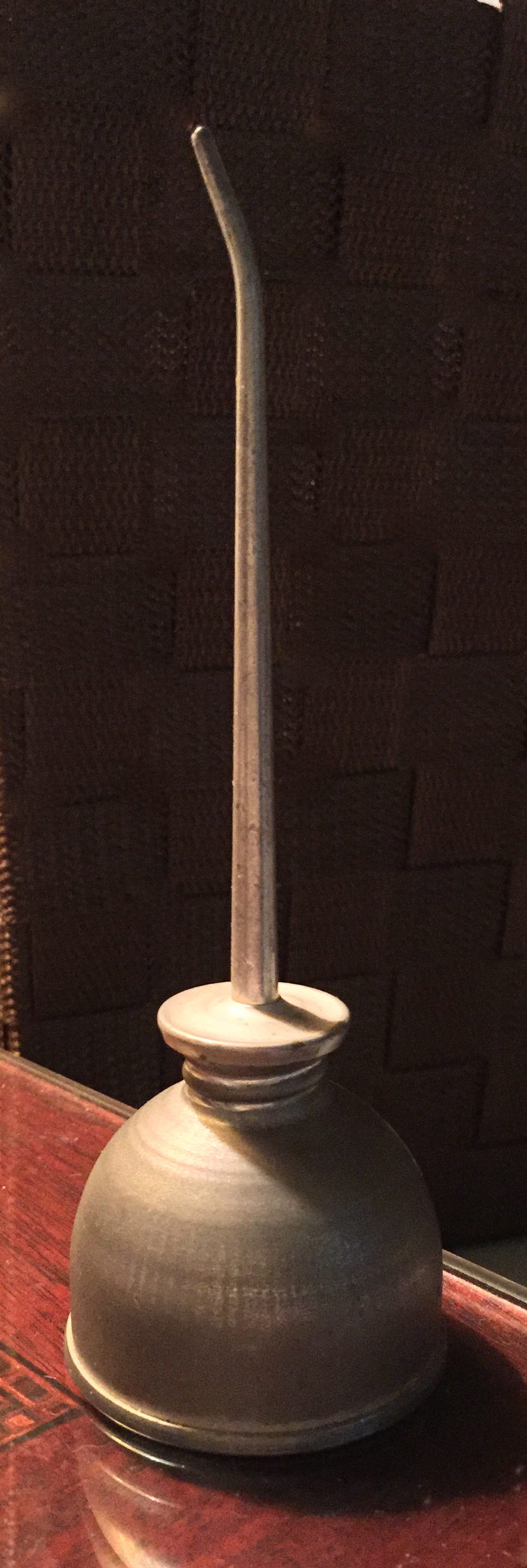 Mother’s little oil tin.
When my brothers and I were growing up and something broke or stopped working, we could always count on one response from our mother: “All it needs is a dab of oil.” (Tweet That!)
We’d groan and continue tinkering with whatever was broken, determined not to give credence to her comment. How silly to think a dab of oil would fix anything.
Looking back I couldn’t count the times Mother was exactly right. There was the bicycle chain. The frozen doorknob. The castoff pair of pliers. And, most memorable of all, the 16mm movie projector that stopped mid-movie.
Daddy tried to get it going. Brothers added their two bits.
“All it needs is a dab of oil,” Mother insisted.
We all groaned while the men tried their hands at the frozen parts–again.
Meanwhile, Mother found her trusty little can of oil and returned. “Try this.”
Our responses? Tsks. Rolled eyes. Hands raised in surrender.
Mother dipped the tip of the can into the projector’s innards. Squeezed. And stepped back. “Try it again.”
A collective sigh and groan. But a push of a button later …
The film advanced. The projector projected. Lo and behold … there on the screen … the movie continued.
Mother slipped from the room, muttering, “Told you all you needed was a dab of oil.”
Decades later I often think of that little can of oil. I think of it when I’m reading Luke 7 also. (Tweet That!)
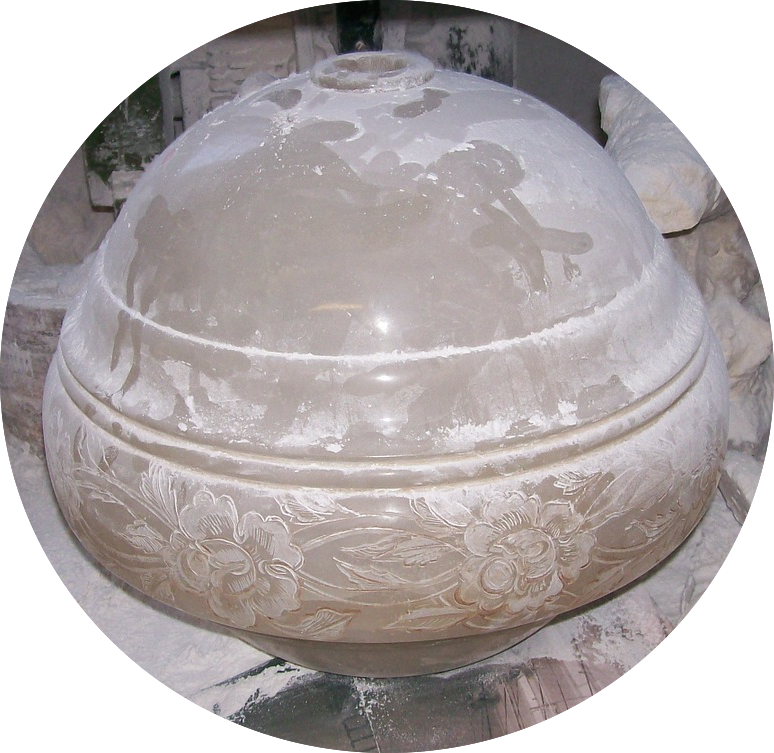 The sinful woman was broken. She couldn’t go on. So she crumbled at Jesus’ feet. She pulled out her version of Mother’s little oil tin–an alabaster jar of perfume and anointed His feet with the costly oil.
Something tells me the sweetest aroma came from her tears. And even now He feels them on His feet. (Tweet That!)
According to the Savior, her story of gratitude for the burden of sin Jesus lifted would be told for years to come.
And so it is.
Lord Jesus, we bow at Your feet broken by sin but
put back together by Your righteousness.
Thank you. Thank you. Thank you.
The post The Oil of Tears appeared first on Linda Brooks Davis.


February 24, 2016
A Widow’s Last Mite
Jesus’ parable about a widow’s last mite in Mark 12 was the text for a Bible lesson I taught to 4-year-olds around this time last year. I wrote a blog post about it a few months later. Tonight is the same lesson, so I thought a repeat of the blog might be in order:
~~~
But a poor widow came and put in two very small copper coins, worth only a few cents.
Calling his disciples to him, Jesus said, “Truly I tell you, this poor widow has put more into the treasury than all the others. They all gave out of their wealth; but she, out of her poverty, put in everything—all she had to live on.”
Mark 12:42-44
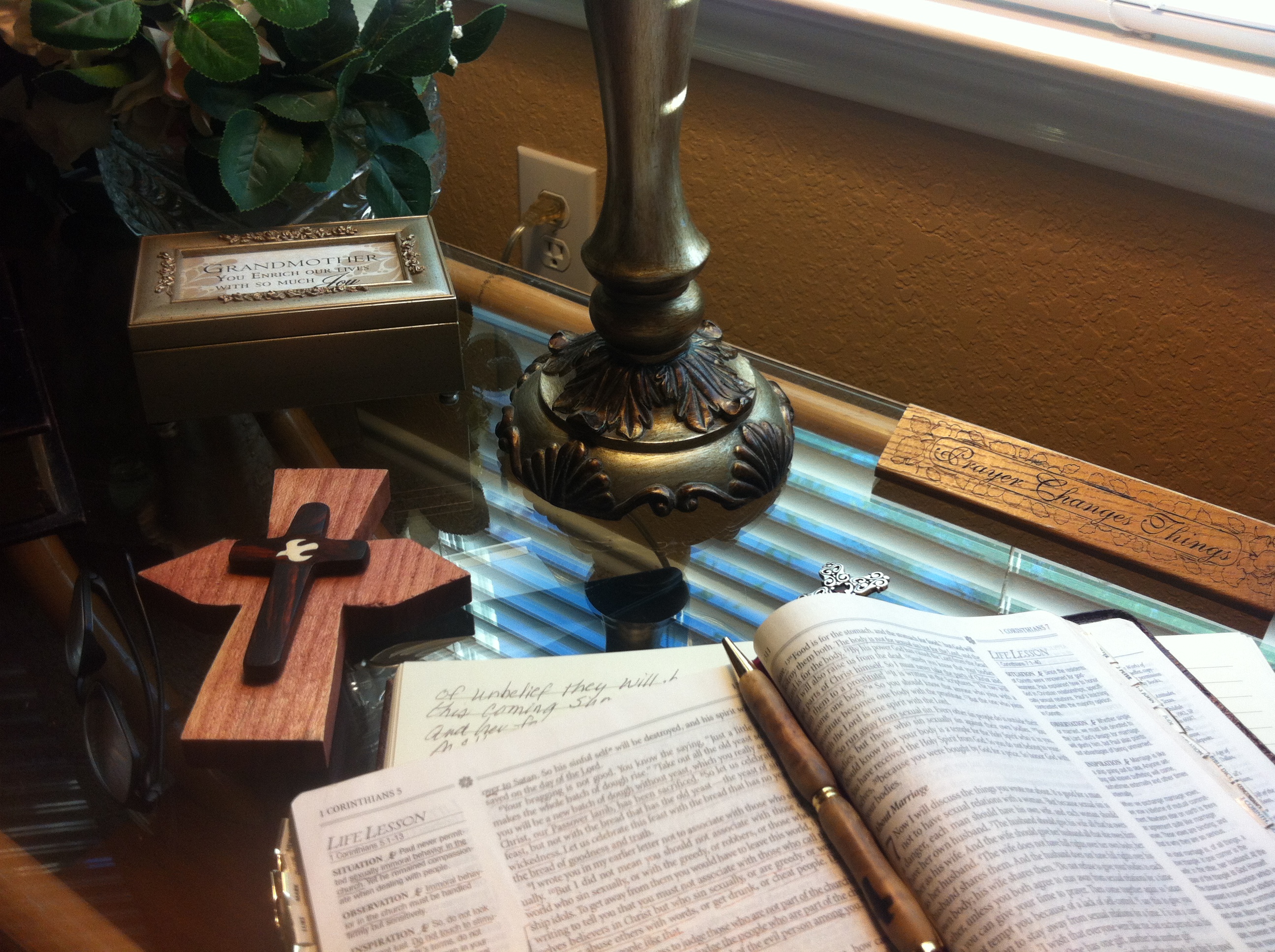 I intended the Bible lesson on faithful stewardship to be for four-year-olds at Oak Hills Church. But this seven-decades-old teacher learned a thing or two, as my mother would have said.
In Mark 12:41-44 Jesus tells the story of a poor widow giving her last two pennies. In the vernacular of my growing-up days, the woman gave her last red cent.
In search of supplies for creating money bags for my students, I browsed through drawers of old sewing materials, some from my 55-year sewing past and some from my mother’s that extended 75 years back.
I found a pattern not for the money bags … but for stewardship. (Tweet That!)
 Mother was certain about her faith, certain about her principles, and certain about what she taught her children.
Much like Betsy in The Calling of Ella McFarland, Mother believed negligence in caring for hard-earned possessions ranked somewhere close to the unforgivable sin. She took care of what she had and kept on hand everything that could be used again. Trash was trash, but still-usable items were not. Mother didn’t buy new if old would do as well. (Tweet That!)
Mother’s philosophy returned as I rifled through a drawer she would label a mess but I call easy going. Amid a jumbled array of recent purchases–vinyl zippers, hem tapes, piping, seam binding, needles, and buttons–still in their wrappers, I found her old button tin, originally a container for Singer parts, that sported dents and rust and wear.
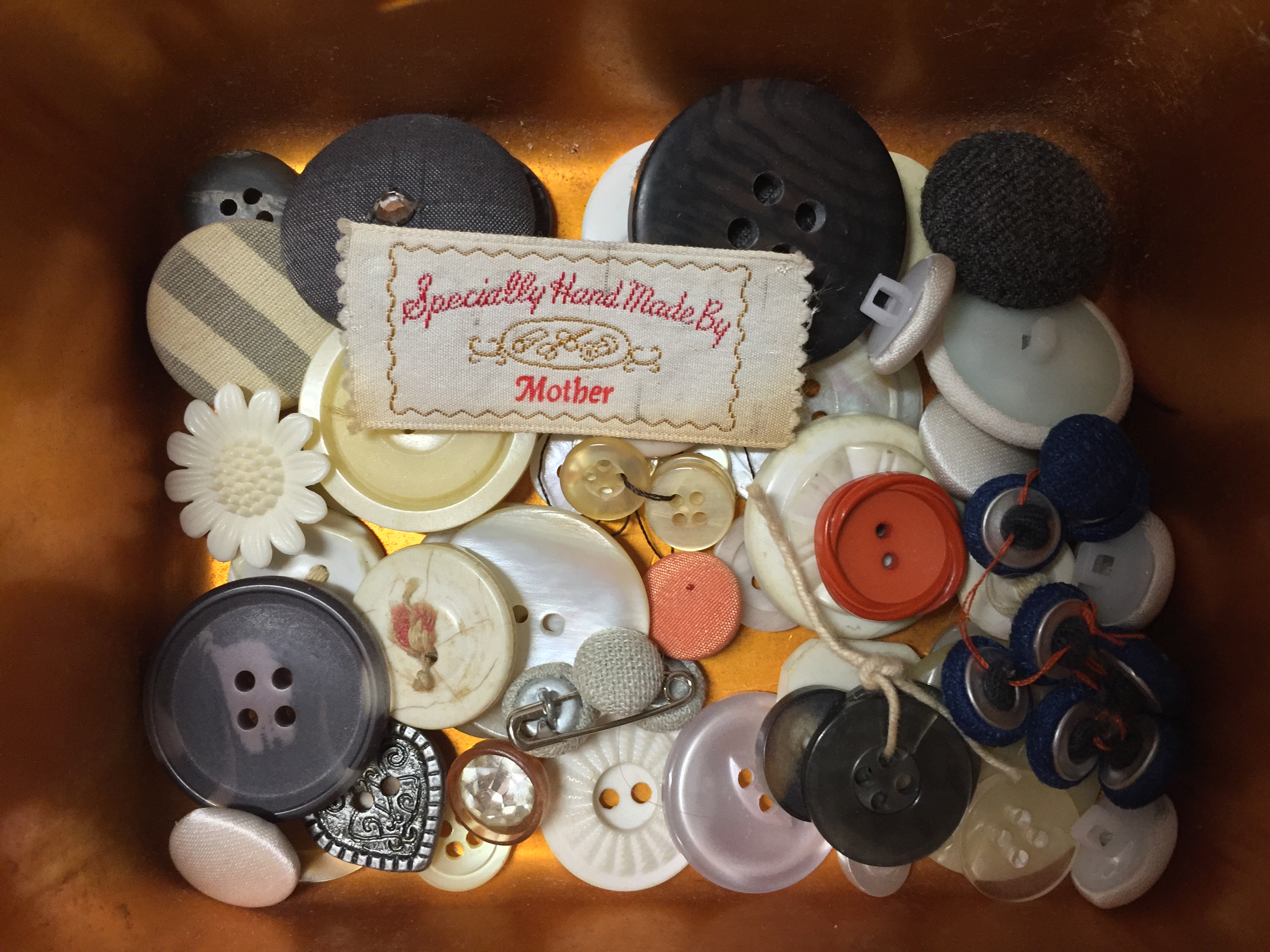 Could old, re-usable buttons amount to a poor widow’s last mite?
Inside the tin were buttons from the 1930s, 1940s, 1950s, 1960s, and 1970s. All showed signs of wear. She had removed them from clothing that had served its purpose. So into the tin went usable buttons. I also found a faded and dented fruit cake tin Mother had saved from some Christmas past. Inside were metal zippers she had clipped from garments bound for the rag basket.
Alongside Mother’s repurposed tins, sat a handy-dandy, snap-together, see-through, color-coded odds-and-ends contraption that I purchased on a whim. Inside my fancy container? Never-been-used, still-attached-to-the-cards, bright and shiny buttons galore. But not a single used button. Nor did I find in my drawer of disarray a single used zipper. I had tossed them out with perfectly usable clothing. I had never opened the new zippers, nor had I given more than a fleeting thought to the hard-earned funds with which I bought them.
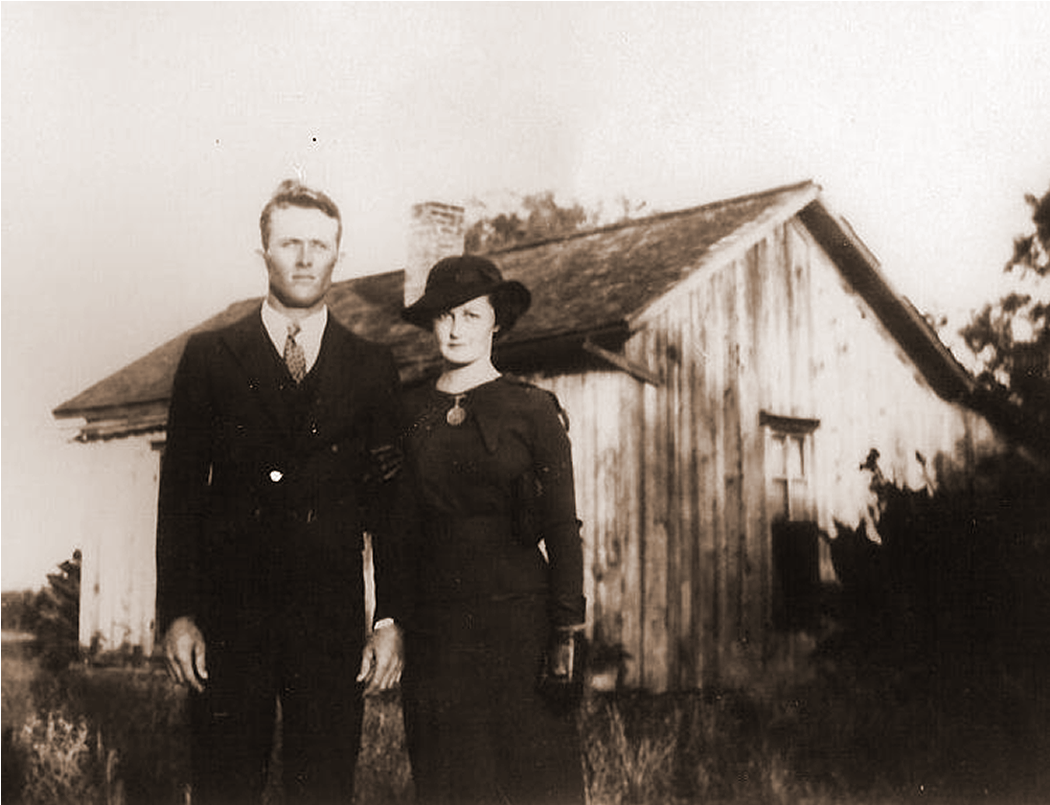 Preparing to give a widow’s last mite began in the Great Depression.
  Ella was prepared to give a widow’s last mite.
Although a widow for many years, Mother didn’t learn stewardship skills in her widowhood. She learned them in a cotton field in South Texas where her mother knew every handful of raw cotton meant another spoonful in her children’s mouths. She learned them during the Great Depression when she and her mother lived in a corner of a barn they called home. Mother refined her skills as the wife of a farm hand who earned $5 a week but lived on $2.50 until the money he borrowed to buy their wedding clothing was paid back. In years to come, Mother never reached for her last red cent, but she came close a few times. Had she not learned stewardship alongside her mother, she would have found herself faced with the same dilemma as the widow in the Gospel of Mark.
I’m neither a widow nor destitute. I give from my abundance. I have never been called to give my last mite, but as I gathered supplies for the Bible lesson, I wondered what I would do if I were. Would I, like that faithful widow of old, give my last red cent? (Tweet That?) Was the jumbled array in my sewing drawer a call to better stewardship?
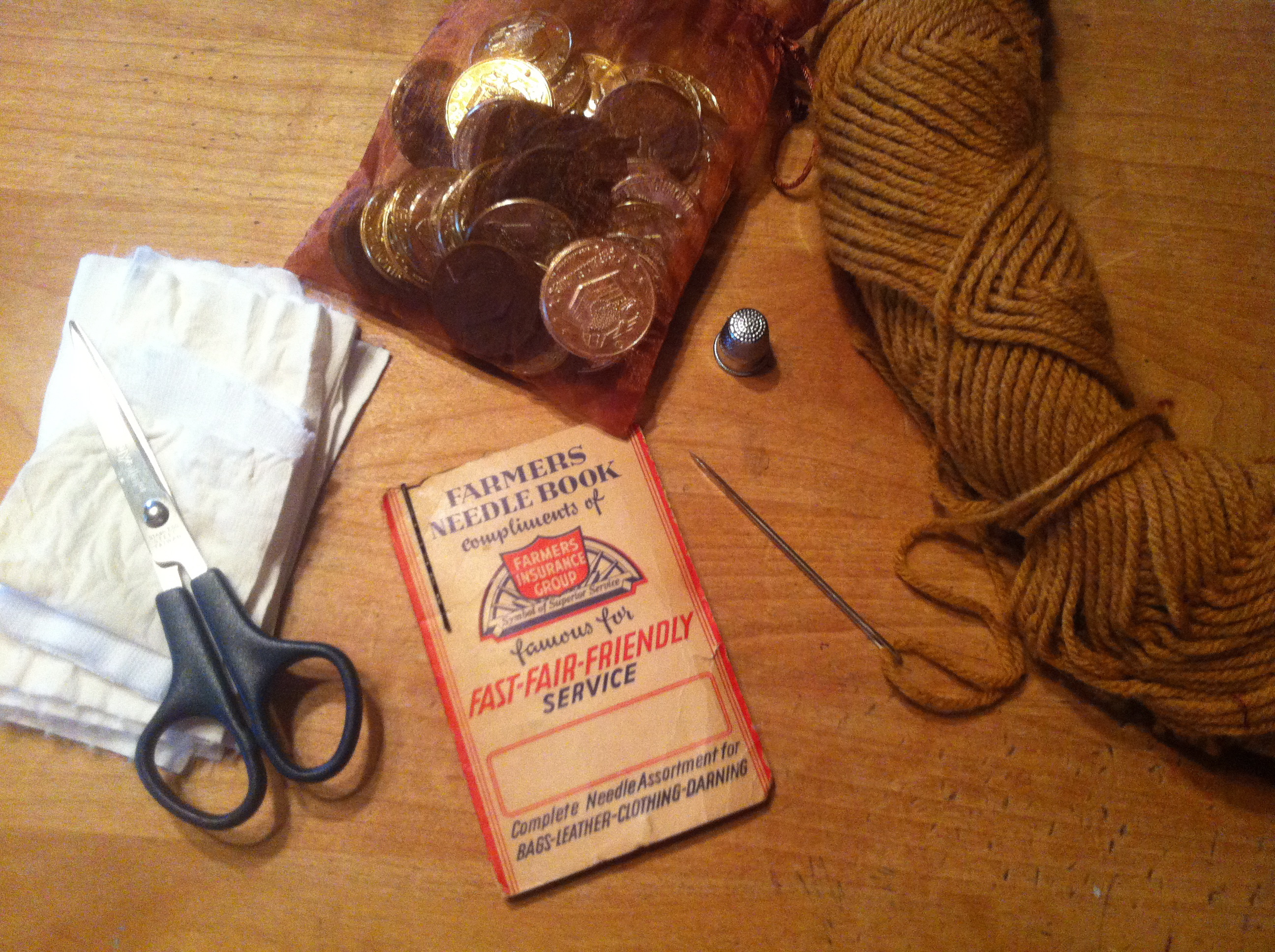 A Lesson on a Widow’s Last Mite
I completed preparations for the Bible class for four-year-olds with my spirit lifted. There on my kitchen table I had set out materials fit for the worthy steward who reared me: a skein of yarn from twenty years back; playtime coins from five years ago; a decade-old jewelry gift bag; scraps of fabric of indeterminate age; a four-decades-old thimble; and a 1940s packet of heavy-duty needles that came in handy when Mother patched canvas cotton sacks.
Those four-year-olds took home more than plastic coins. They carried with them a bit of long-ago when times were simpler but harder and harder but more faith filled and, tucked into the recesses of their little drawstring bags, the prayer of their teacher:
May they never know a time when they are down to their last red cent, Lord. But should that time come, I pray they hold their pennies in hands outstretched and open wide. For Jesus’ sake.
The post A Widow’s Last Mite appeared first on Linda Brooks Davis.
February 17, 2016
Wells You Did Not Dig
When the Lord your God brings you into the land he swore to your fathers, to Abraham, Isaac and Jacob, to give you—a land with large, flourishing cities you did not build, houses filled with all kinds of good things you did not provide, wells you did not dig, and vineyards and olive groves you did not plant—then when you eat and are satisfied, be careful that you do not forget the Lord, who brought you out of Egypt, out of the land of slavery.
Deuteronomy 6:10-12 NIV
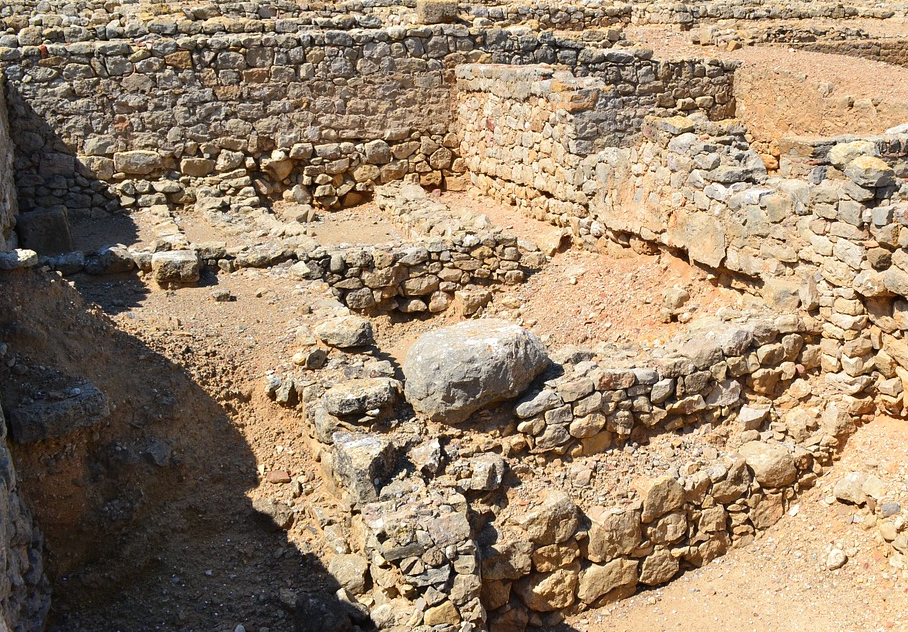 When the Hebrew children entered the Promised Land, they took cities they did not build and wells they did not dig.
 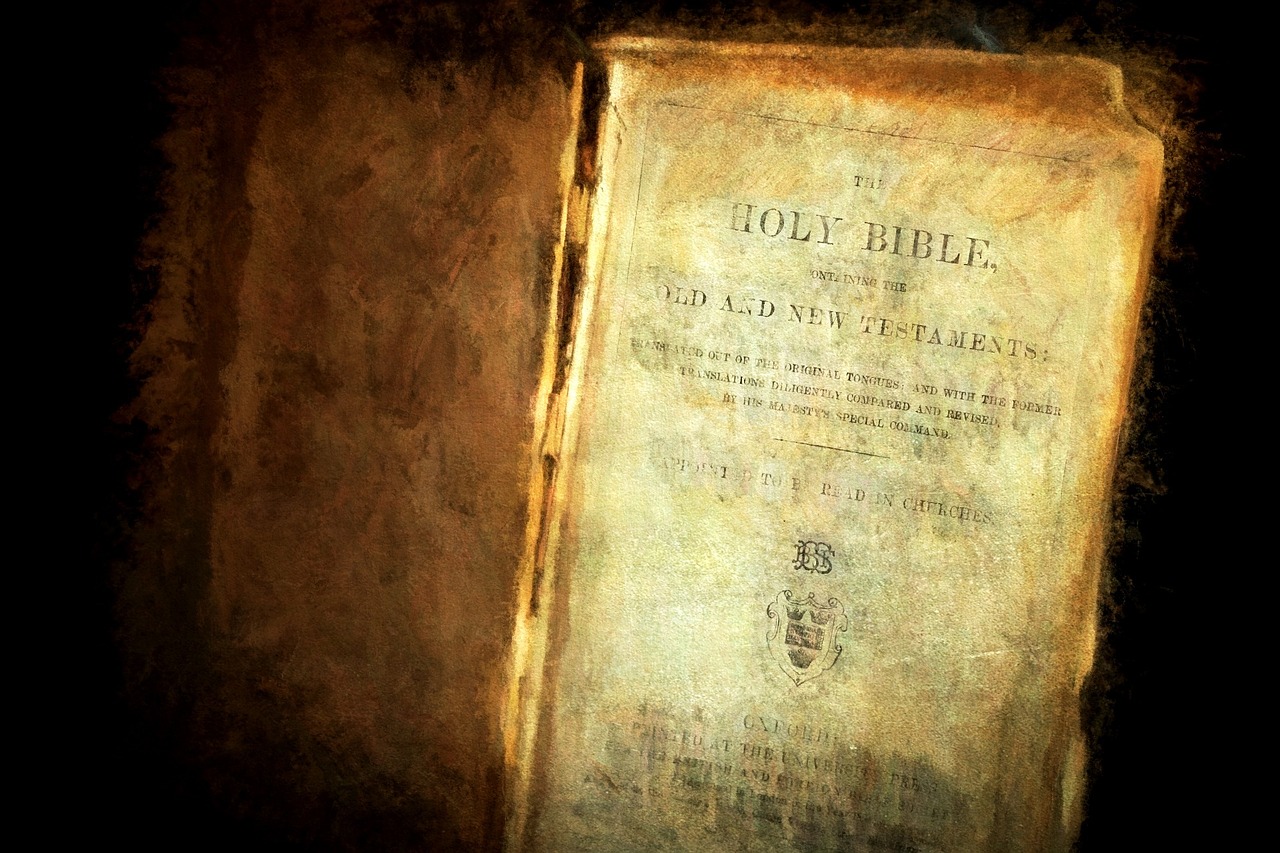 The Pilgrims did not forget the God of the Bible and His promises to provide through a land they did not build and wells they did not dig.
Like the Hebrew children of old, our nation’s forefathers arrived on the shores of this great land knowing not what they would find nor what the future held but in Whose Hand their future rested. I imagine among the Pilgrims’ devotions was the 6th Chapter of the Book of Deuteronomy which contains the great Shema, recited by Hebrew children of God for millennia, as well as The Greatest Commandment for followers of Christ:
Hear, O Israel: The Lord our God, the Lord is one. Love the Lord your God with all your heart and with all your soul and with all your strength.
Deuteronomy 6:4,5
Faith like our forefathers’ was required for the dire circumstances that overtook them: starvation, exposure, illness, and death. Yet survivors who held their persistent faith in firm grasps birthed legacies for their offspring who in due time created a government based on a Constitution rooted in God’s natural law of personal freedom.
That kind of legacy has been handed down in my family.
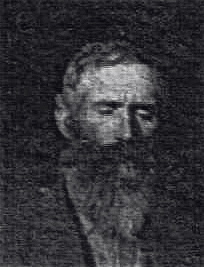 Great-Grandpa George Hancock left his descendants wells they did not dig.
I never knew my great-grandfather, George Eben Hancock, but I knew well his daughter, my grandmother Ona Mae Hancock Brooks. He left his mark on Grandmother. He was the song leader at the Liberty Missionary Baptist Church near Memphis, Texas, and she sang alto in the strongest voice and with the truest tone I ever heard. He defended the Gospel like a guard dog, and Grandmother did the same. From 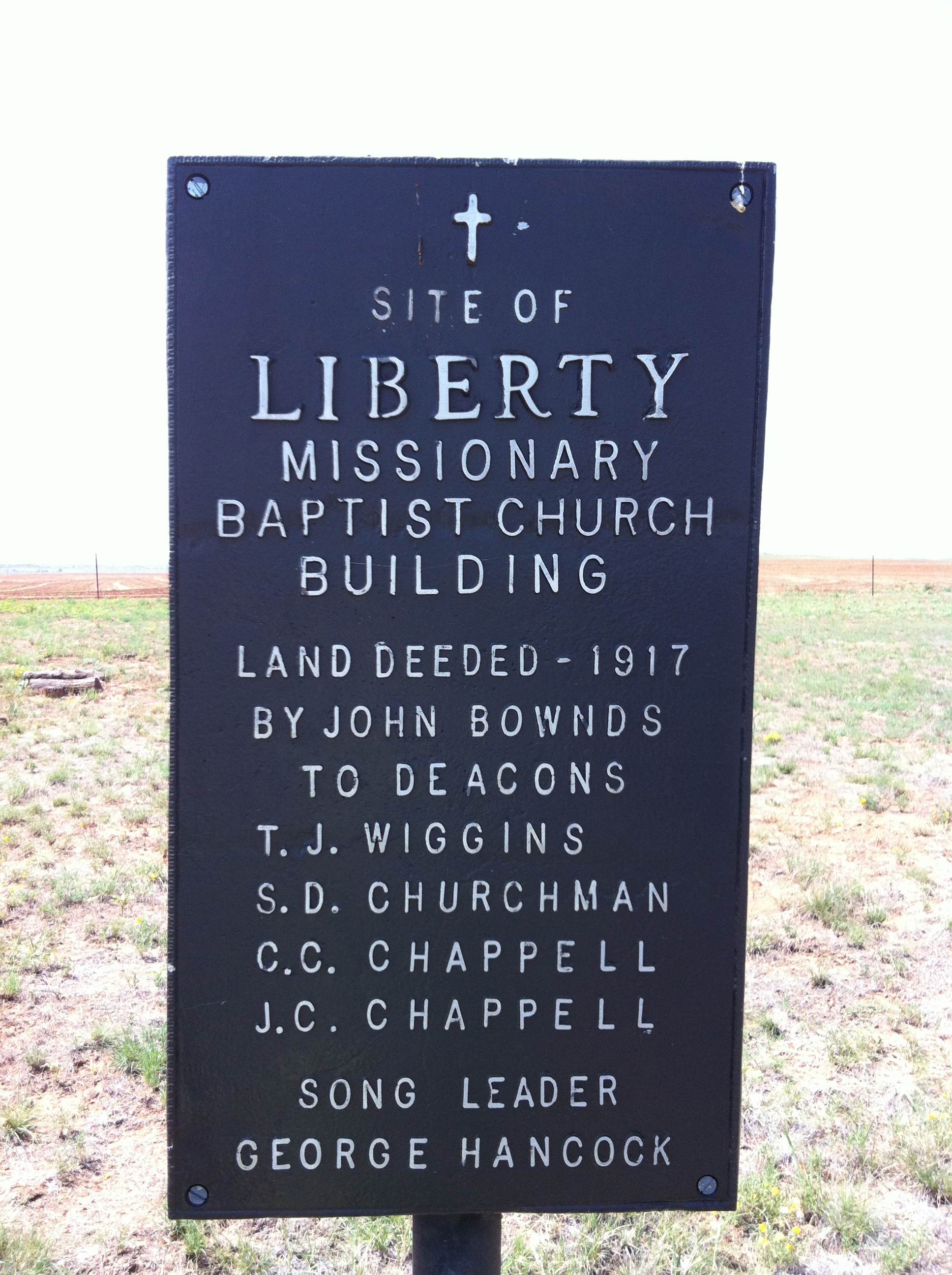 him she learned to make-do with what she had, to put hearty, home-grown fare on the table, to bake bread, and to make stubborn soil produce three meals a day for her siblings.
Grandmother watched her father make a life as a single parent on a farm where the sun baked and the wind chapped and the soil demanded a will of iron. (Tweet That!)
Great-Grandpa’s wife, my great-grandmother Ida Leora McFarland Hancock, suffered from a form of mental illness described at the time as “intermittent mania.” Probably bipolar disorder, a condition that could be treated today but in 1900 it resulted in commitment to a mental asylum. In Great-Grandma Ida’s case, the commitment lasted 48 years.
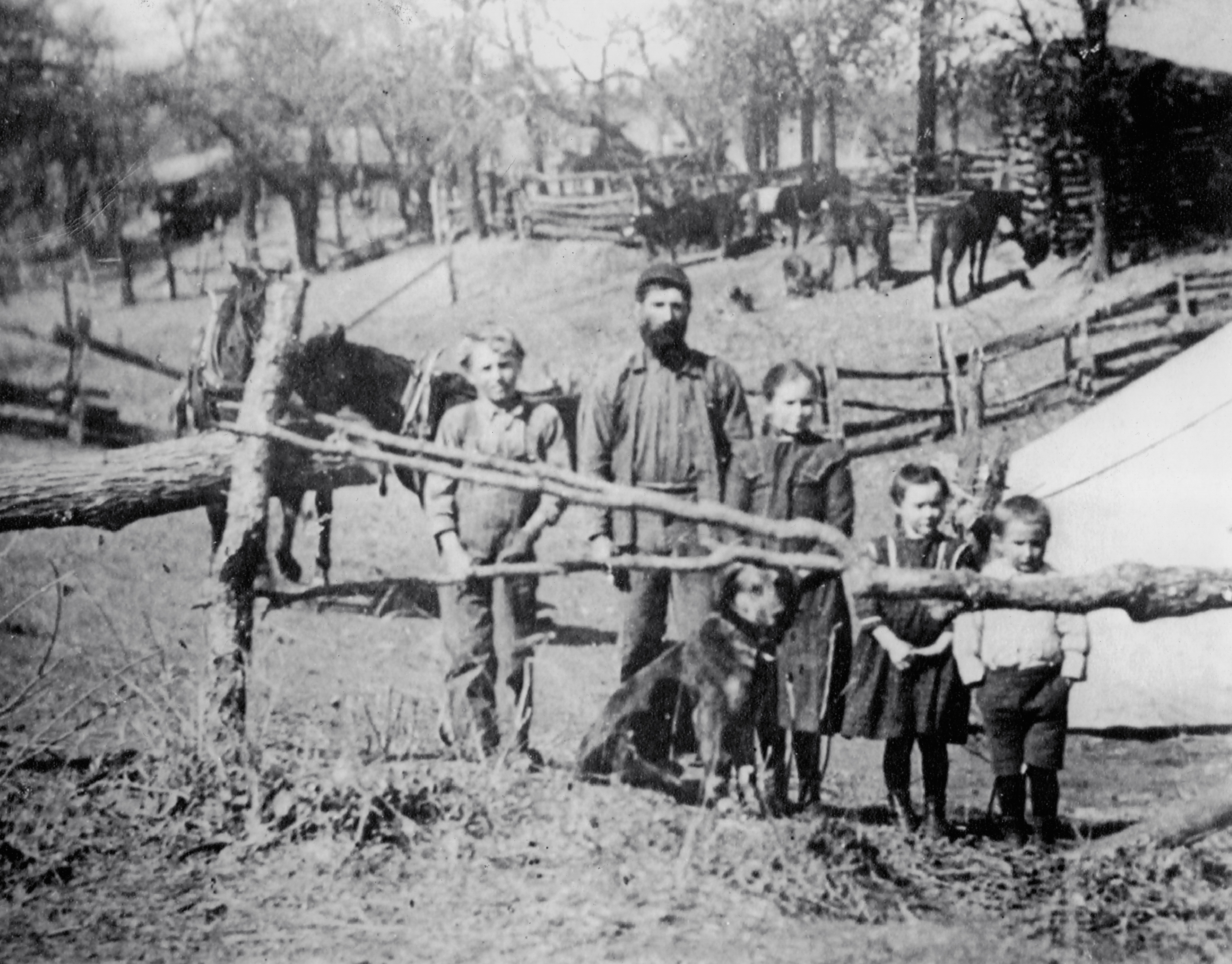 Great-Grandpa George left a legacy of faithfulness to his family, a well from which they could forever draw.
Ida’s daughter Ona was 11 years old when her mother went away and never returned. As the eldest of four children, Grandmother took on the household duties and helped her father rear her three siblings. She grew up as a strong woman overnight. (Tweet That!)
 When he arrived on the High Plains of Texas, Great-Grandpa George knew he must not forget God, so he dug a well of faithfulness.
To be near his wife in the asylum in Kaufman County, Texas, Great-Grandpa George moved with his children from Oklahoma to a farm in Wise County, Texas. But when Great-Grandma Ida’s condition remained untenable, Great-Grandpa George struck out from Wise County to make a new life 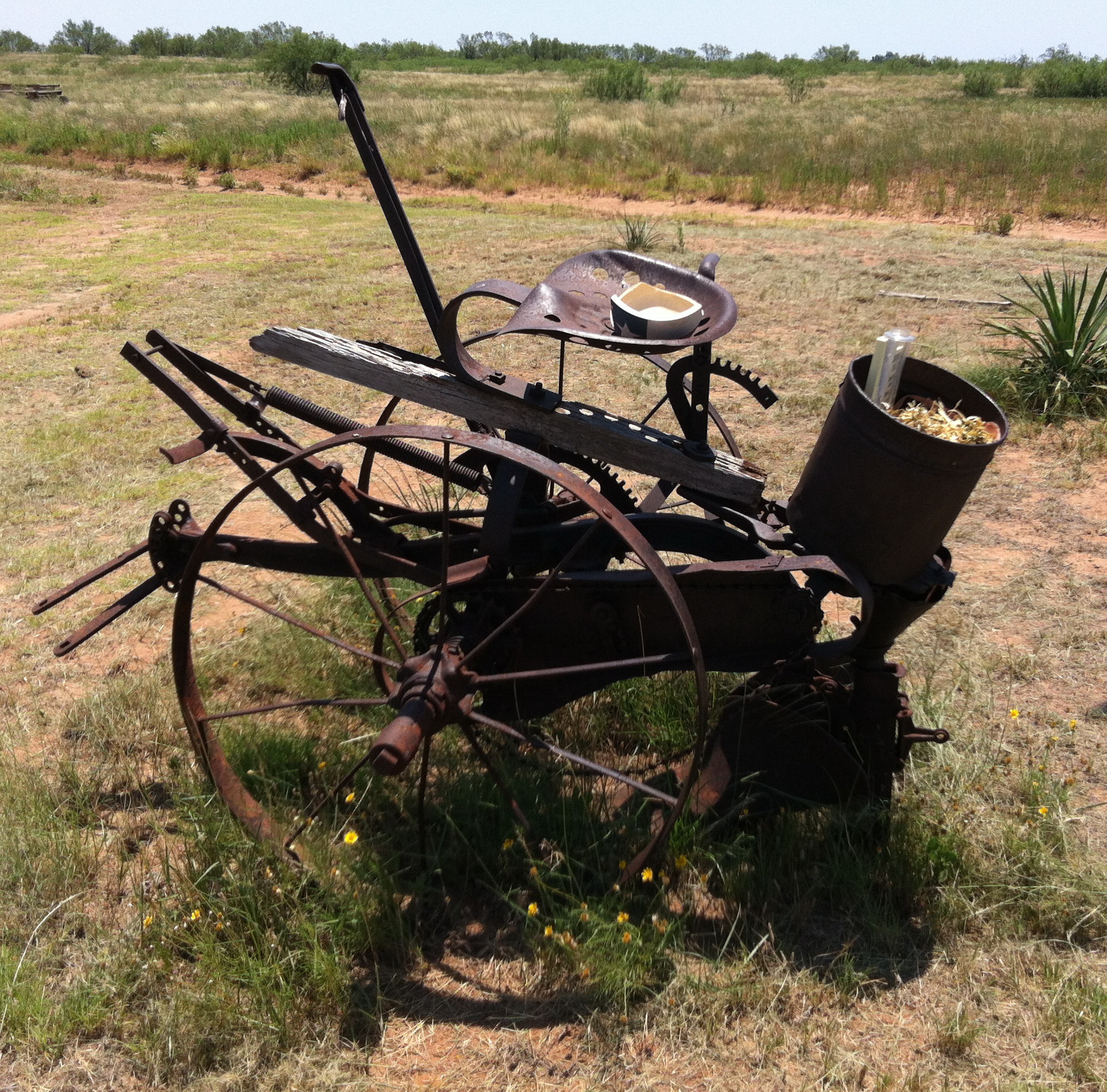 for his four children. He settled in Hall County on the High Plains of Texas where the air was dry, the temperatures scalding, and the soil composed of stubborn sand. (Tweet That!)
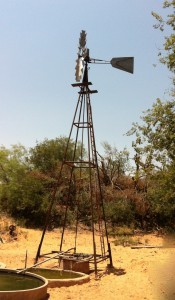 Great-Grandpa George’s descendants still draw from a well they did not dig.
First order of business: water. Near the Prairie Dog Town Fork of the Red River, he located the spot and began to dig.
Great-Grandpa’s well flows today, well over 100 years after he dug it in the hot, sandy soil of the Texas Panhandle. His descendants still farm the land and, like the Hebrew children of old, draw water from a well their forebearer dug.
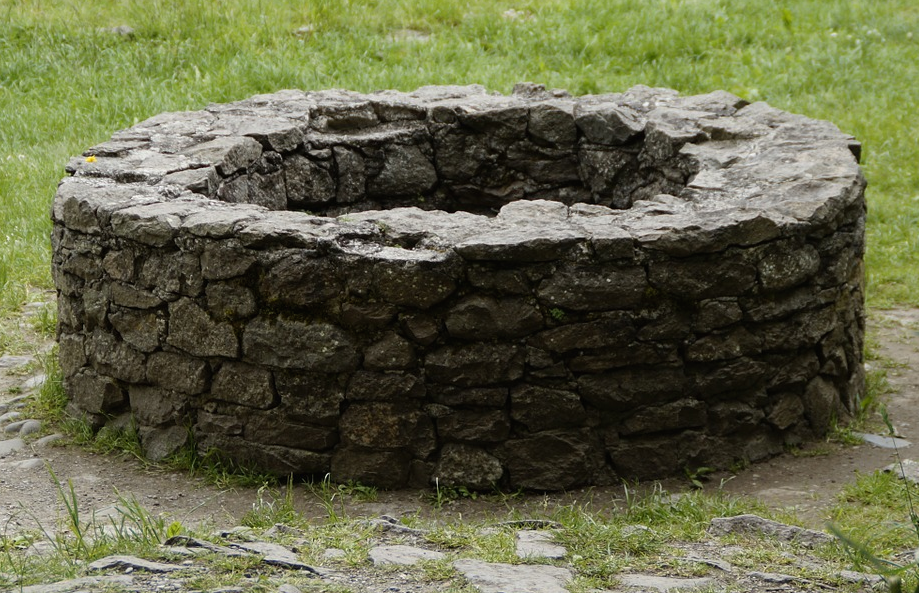 May we each leave a legacy of faith as a well from which our descendants may draw.
As George Hancock’s descendant, I’m most grateful for the well of faithfulness he dug. He did not forget the Lord as he guided four children to adulthood with no his wife beside him. I’m proud his name is carved into the church plaque as the song leader. His legacy lives on in great-grandsons who have followed in his footsteps.
Dear Lord, only You are good. We can only strive to be like You. We long to leave legacies that live well beyond our years, but we can’t do it without You. Don’t let us forget You who has brought us out of the curse of sin, and bless us with wells of faith we can leave our children and grandchildren. For Jesus’ sake …
The post Wells You Did Not Dig appeared first on Linda Brooks Davis.
February 10, 2016
The Light of the Silvery Moon
And now these three remain: faith, hope and love.
But the greatest of these is love.
I Corinthians 13:13 NIV
 The old song “By the Light of the Silvery Moon” hadn’t been written in 1905 when THE CALLING OF ELLA MCFARLAND begins. It appeared as sheet music in 1909, and Ada Jones recorded it for Edison cylinder in 1910.
But the subject of the lyrics has been around for a very long time, a phenomenon as old as life itself, yet one that forever has stumped sages and philosophers: love.
Who can explain love? Kings, wise men, and bards have tried. (Tweet That!)
Who is this that appears like the dawn,
fair as the moon, bright as the sun,
majestic as the stars in procession?
Song of Songs 6:10
There are three things that are too amazing for me,
four that I do not understand:
the way of an eagle in the sky,
the way of a snake on a rock,
the way of a ship on the high seas,
and the way of a man with a young woman.
Proverbs 30:18-19
Love is a smoke raised with the fume of sighs;
Being purged, a fire sparkling in lovers’ eyes;
Being vex’d a sea nourish’d with lovers’ tears:
What is it else? a madness most discreet,
A choking gall and a preserving sweet.
William Shakespeare, Romeo and Juliet
 Lovers kiss atop the Eiffel Tower bathed in the light of the silvery moon.
Lovers around the world express their love in myriad ways and locales. (Tweet That!) A couple in London strolls along the Thames holding hands. A pair in Venice snuggles in a gondola. Others pick cherry blossoms in Tokyo. And still others hike the mountain to Christ the Redeemer monument in Rio de Janeiro.
For two millennia a single day of each year has been set aside for love alone. Valentine’s Day. (Tweet That!) Pope Gelasius 1st recast Lupercalia, the page fertility festival, as a Christian feast day around 496, declaring February 14 to be St. Valentine’s Day. (Tweet That!) Couples have been feasting on love on that day ever since.
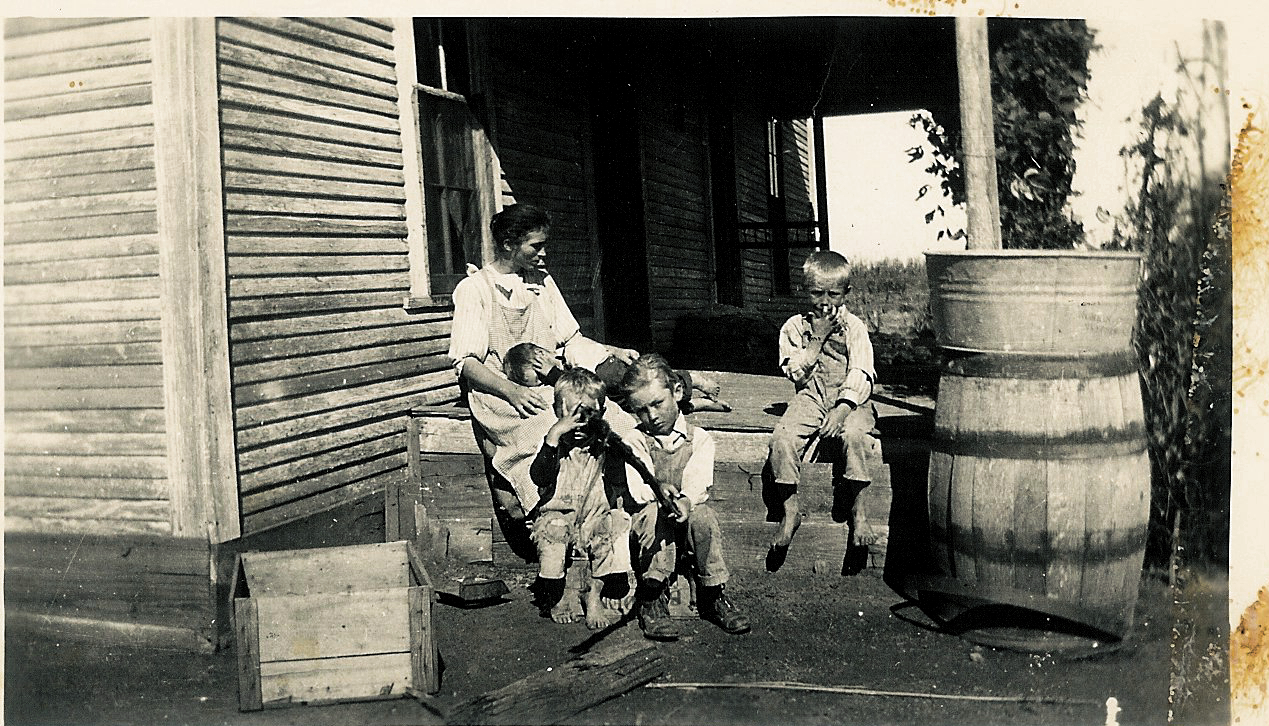 In 1920, a dirt-poor farmer’s wife in the Panhandle of Texas longs to extend Valentine love to her boys, even if she must use discarded scraps of paper, broken Crayons, and a ribbon off an old dress.
Expressions of Valentine love vary in the extreme. If like my father you were the six-year-old son of a dirt-poor farmer in the Panhandle of Texas in 1920–or his mother–you would have used whatever you could find to make a valentine for someone you loved. 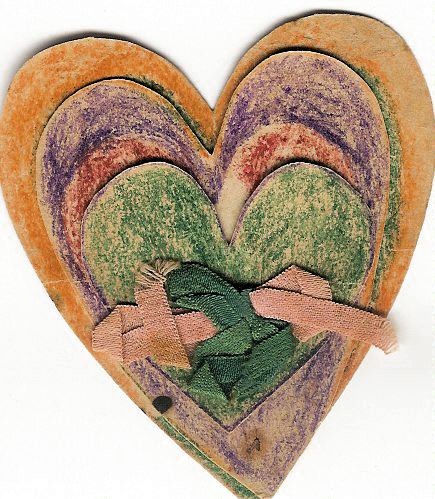
Holidays have come and gone over time. Feast days and memorials have risen and declined in importance. But the day that celebrates Love remains. (Tweet That!)
One element lovers have experienced in common from the beginning of time is the moon.
 Many couples spoon by the light of a silvery moon.
  Rather than loving by the light of a silvery moon, some couples embrace beneath its golden glow.
Sometimes silvery; other times golden, the moon oversees declarations of affection and the pain of break-ups. It spies a bashful tuck of a chin; a halting, tentative first kiss; and a bold embrace by an unrequited admirer.
God put the moon in its place and set Adam and Eve, the first lovers, beneath it. (Tweet That!) He designed the moon not to produce its own light but to reflect the light of the sun. And the moon’s silvery glow has reached down and caressed countless couples in love ever since. (Tweet That!)
But human beings’ tendency to worship the created rather than the creator has distorted the moon’s beauty for some. (Tweet That!) The Lord warned His people that this tendency would lead them to destruction:
And when you look up to the sky and see the sun, the moon and the stars—all the heavenly array—do not be enticed into bowing down to them and worshiping things the Lord your God has apportioned to all the nations under heaven.
Deuteronomy 4:19
 The light of a silvery moon sometimes takes the shape of a heart.
February 14, 2016 can be a day of God’s Love or one distorted by The Fall. It can be a day in which the light of the sun is worshipped over the Light of the Only Begotten Son. Or one in which His Light brings all things into perfect focus. Valentine’s Day can be a night when, beneath the moon’s silvery glow, lovers thank God for the love they share (Tweet That!) or one in which they bow to worship the created over the creator, the universe over the Trinity, the finite over the infinite.
 Love is all we need. God is Love. So God is all we need–by the light of a silvery moon … and in the darkest places on earth.
No wonder Valentine’s Day has survived a couple thousand years. At its heart is God. (Tweet That!) This Valentine’s Day may we choose Him who is Love. His love never fails. (Tweet That!)
Lord, all we truly need is love, and You are love. Help us seize the opportunity afforded us in Valentine’s Day to express the love we feel in our hearts–the very essence of You. Grant that when we celebrate love by the light of a silvery moon … or a single candle … or a noonday sun, we will remember Who is Love and Whom we need above all else. For Jesus’ sake. Amen.
The post The Light of the Silvery Moon appeared first on Linda Brooks Davis.
February 3, 2016
Author Chat: Catherine Leggitt
Whether you turn to the right or to the left, your ears will hear a voice behind you, saying, “This is the way; walk in it.”
Isaiah 30:21
Reader Friends,
The paths of the Lord lead straight to Him. His directions are perfect. Problem is, we don’t always take directions well, do we? Often we carve out our own way. We take detours over rocks and potholes, around sharp curves, and through dark tunnels where danger lurks. We want to follow His roadmap … but it isn’t always clear-cut … or is it?
Thankfully, the Lord has promised to take the crooked paths we submit to Him and make them straight: In all your ways submit to him, and he will make your paths straight. Proverbs 3:6
 Our chat today is with Catherine Leggitt, an author who’s learned a lesson or two about God’s directions, not the least of which is the subject of her recent novel, The Road to Terminus.
Gather ’round, friends, for an intriguing author chat. And thank you for joining our circle.
~~~
Hi, Catherine.
I’m so glad you could join our chat today.
 ~First, tell us about your latest novel, The Road to Terminus. (We’d like to know where the idea came from and a bit about the main characters.)
In a nutshell, here’s what the book is about: The paths of three strangers collide on a desperate road trip along Route 66. (Tweet That!) One is running away, one is racing the clock, and the child who binds their destiny merely hopes to survive.
One night in 2012 I dreamed about three strangers—a child, an older woman, and a fugitive—traveling in a car. When I awoke, I grabbed a pen and scribbled that idea down. Next morning I commenced pondering plot possibilities.
A close family member was grappling with addiction during that time. His struggle seemed unending and his battle for sanity had taken a toll on the rest of the family. Driving to an appointment one day, my husband Bob and I discussed the question of how many times a person must hit bottom before coming to that final place of surrender where change is the only option left. About then we spotted a sign for Terminous, California. Terminus means “the end of the road.” Suddenly, my emerging story had a name— The Road to Terminus . You might describe the plot as Pilgrim’s Progress meets The Perils of Pauline . (Tweet That!)
Childhood road trips in my mother’s green-and-yellow Pontiac station wagon created a fascination with historic Route 66. Why not a road trip along The Mother Road? Sort of a metaphor for the journey to sobriety and peace with God and Man. My husband unearthed a 1955 State Farm Road Atlas, which he purchased at an antique store some years earlier. The maps indicated the exact placement of old Route 66. Setting the story in 1955 eliminated the problem of modern law enforcement technology. With a fugitive to consider, I needed to decrease the likelihood of rapid capture.
Then one weekend we visited my brother-in-law in the Mohave Desert. “Coincidentally” a Route 66 classic car show was being held in Victorville. As I snapped pictures of awesome pre-1955 autos, I got the notion that Stryker (the child) and George (the fugitive) might connect around their mutual love of cars. Bob’s passion for classic cars too proved quite helpful with the automotive details of the novel. In the motion picture version of my book, I picture Robert Downey Jr. playing George. Not sure who would play Mabel (the older woman). Maybe Angela Lansbury, but she may be a tad too old. (Well, a girl can dream!)
~A few years ago you wrote a cozy mystery series entitled Payne & Misery, which will be reissued by Mountainview Books soon. They sound intriguing. Please tell us a little bit about them.
The three cozies are collectively called The Christine Sterling Mysteries, featuring Christine Sterling as the amateur sleuth. (Okay, she may also be my alter ego.) Christine and her husband retired to the small northern California community of Grass Valley just like we did. In each book, Christine stumbles upon a murder. (That part never happened to me! Thankfully!) With way too much time on her hands, Christine proceeds to investigate—in a bumbling, non-official capacity that always gets her in over her not-yet-gray head.
~According to your website, www.catherineleggitt.com, you’re not only a writer but an inspirational speaker. Tell us about your last speaking engagement.  Recently it was my privilege to speak at a women’s brunch in Acampo, CA. The attendees included a wide age range. The chosen theme centered on coffee, titled “Perfectly Blended.” Decorations created out of brown and white coffee filters, containers of coffee, coffee cups and posters festooned tables and walls. (Thank you, Pinterest!) My presentation, “The Perfectly Blended Life,” included the evolution of The Road to Terminus. After publication, God revealed that my own “addiction” to food held me in bondage in the same way my dear loved one was imprisoned by drugs. (Tweet That!) Last January, God led me to a
  new way of eating and living, which produced the release of about eighty pounds and vastly improved my health. Along with the physical blessings, I acquired a deeper relationship with God and mental serenity. I am free at last!
~One of your recent blog entries describes your recent “adventure” in the airport parking lot. Your transparency provides a way for readers to connect. Talk about transparency in your writing and speaking engagements.
The only type of writing or speaking that interests me includes life lessons and principles God is teaching me. I use story as the vehicle for creating interest. My heart’s desire is that everything I say or write would reflect God’s glory and give Him honor for what He has done. (Tweet That!) The best examples I know come from what He is teaching me. If I am to be honest, I must speak of these things. I know no other way to connect with readers or audiences.
~Certain parts of the country recently have been blanketed in snow. In other parts, air conditioners have run non-stop. Describe the weather in northern California today.
Rain was forecast today and some fell in the night. Now the sun is out again. Earlier this week the sun made it comfortable outdoors—probably in the 70’s. Compared to other parts of the country in winter, this area has moderate weather–although we do get four beautiful seasons–which I can’t say for where I grew up in southern California.
~What part do you sing in the church choir? Have you always loved to sing?
Presently I am a member of the alto section. Besides the church choir, I sing with a group of ten creatively called, “The Ensemble.” I’ve been singing at church since I was a child. In college, I received a music scholarship, which I used for private lessons and to sing with a choral group.
~What’s your favorite meal to eat? And to prepare?
Growing up on a farm, I discovered Mexican food from the family of workers who lived on our property. It remains by far my favorite food. LOVE chili rellenos! Melted cheese, yum!! Along with plenty of homemade tortillas. Of course, I no longer eat those things. So, I’d have to say these days my favorite meal to prepare is seafood (salmon, shrimp, or ahi tuna), brown rice, and vegetables (any kind).
~What can we anticipate from Catherine Leggitt in the near future?
I have a couple of ideas percolating. I plotted a fourth Christine Sterling Mystery—one where Christine must finally curb her meddling and snoopiness. I’ve also written a stand-alone book called Dying to Be Noticed, which awaits publication. I plan to revisit that novel soon and perhaps rework the beginning.
~Thank you so much for joining us today, Catherine. Where may readers find you and your books?
It’s been my joy and pleasure, Linda. Great questions! Thanks for inviting me. Readers can connect with me at my website, www.catherineleggitt.com.
Purchase links:
Amazon: http://amzn.to/1NOJ04V
Barnes & Noble: http://bit.ly/1PezVnZ
Kobe Books: www.kobebooks.com
Deeper Shopping: www.deepershopping.com
Author Biography:
Catherine Leggitt is an author and inspirational speaker. A native Californian born in the Bay Area, she raised two daughters, taught school, and cared for her aging parents in southern California before retiring to the north end of the state. Proud grandmother of six brilliant children, Catherine studies the Bible, reads about a book a week, serves as a leader in Bible Study Fellowship, and sings in the church choir. These days Catherine also crafts suspenseful and convoluted plots—exploring God’s mysteries through fiction.
Catherine’s first series, The Christine Sterling Mysteries, includes Payne & Misery, The Dunn Deal, and Parrish the Thought. Her debut novel won 2nd place at the Orange County Christian Writers Conference in May, 2010 and was published by Ellechor Publishing in 2011. Subsequently Ellechor published The Dunn Deal and Parrish the Thought in 2012. Mountainview Books released The Road to Terminus September 14, 2015. They plan to reissue The Christine Sterling Mysteries in 2016. Another standalone book, Dying to Be Noticed awaits publication.
The post Author Chat: Catherine Leggitt appeared first on Linda Brooks Davis.
January 27, 2016
Calling Ella: Layers of Grace
Out of his fullness we have all received
grace in place of grace already given.
John 1:16

Not that many years ago, my granddaughter Ella figured if one hair bow was good, layers of bows were bound to be fantastic. She took her cues from rainbows; the more colors, the better. (Tweet that!) And why limit herself to one pattern or design? Wear them all and quadruple the effect.
While I was writing The Calling of Ella McFarland, the concept of God’s providing His grace layer upon layer reminded me of Ella’s hair bows. How amazing that Ella’s Easter egg hunt attire would serve to illustrate one of God’s enduring truths.
As a teen and young adult, I would have told you I understood God’s saving grace. I had experienced it: I heard the Gospel. Believed it. Repented. Confessed the name of Jesus. And was baptized. My sins were washed away, and I was ushered into His body, the church, where forgiveness of future sins was available. All I had to do was ask.
And ask I did … constantly.
But secretly I wondered What if I die before I ask? What’s the state of my soul between one amen and the next? (Tweet that!)
Somewhere along the line, I had missed out on the answers to these important questions.
The result? Insecurity. Guilt. Shame. Fear. And the hovering presence of a judgmental spirit.
It took being cast into the throes of a divorce I neither wanted, asked for, nor thought I could live through to come completely undone. Self-sufficiency could claim no part of circumstances beyond my control. (Tweet that!)
So I wandered. In a desert. Lost. Thirsty. Alone.
I sinned. A lot. Willingly. Purposefully. Even gleefully.
I avoided prayer. Ask for forgiveness? What was the point?
 What better place for God to show Himself than the heart of a daughter who no longer asked for forgiveness? (Tweet that!) Turned out, He wasn’t finished with me yet.
Without my realizing it, He maneuvered circumstances so that discontent would grow in my heart. Heaviness of spirit would force my chin to my chest. And the twisting turmoil in my middle would birth a niggling longing for relief.
Someone mentioned a church in San Antonio. Someone else, books by Max Lucado. No Wonder They Call Him the Savior and God Came Near brought tears to my eyes that couldn’t be staunched.
He loves me even when I’m dirty? He washes me when I haven’t asked? (Tweet that!)
Bit by relief-seeking bit, the knots in my middle relaxed. I began to pray again. My prayers moved from desperate pleas for forgiveness to gratitude and praise for forgiveness already given. (Tweet that!)
 Decades later, day by day the Lord adds one grace to another like a decadent dessert, one luscious layer upon another. Sweetness. Richness. Surprise. And delight.
It seems Ella had it right after all. One simple bow is good, but it isn’t nearly enough to illustrate God’s grace. Layers of grace–moment by moment, breath by breath–go far beyond a rainbow. They reach the pot of gold. (Tweet that!)
Precious Lord, we bow before You in sheer gratitude for the richness of Your grace. You’ve lavished it upon us. You’ve add so many layers upon layers we’ve lost count. We’re unable to take it all in. We can only bask in the sweetness. And thank You. For Jesus’ sake ~
The post Calling Ella: Layers of Grace appeared first on Linda Brooks Davis.
January 20, 2016
Calling Ella: Grinding out the Best
Test me, Lord, and try me, examine my heart and my mind …
Psalm 26:2 (Tweet That!)

I love coffee. But coffee is nothing but beans without grinding.
 While I know the flavor of a good cup of coffee, I know next to nothing about the grinding methods that produce it. So as I considered delving into the subject of coffee making, curiosity took me to the internet where I learned the fineness of the grind, along with other factors, strongly affect the brew.
 The finer the coffee is ground, the richer the potential of the final product. But the finer the grind, the less time it should be exposed to the heated water. Too fine a grind for a longer brewing time produces a bitter, harsh taste. But too coarse a grind combined with a short brewing time results in weak, tasteless coffee.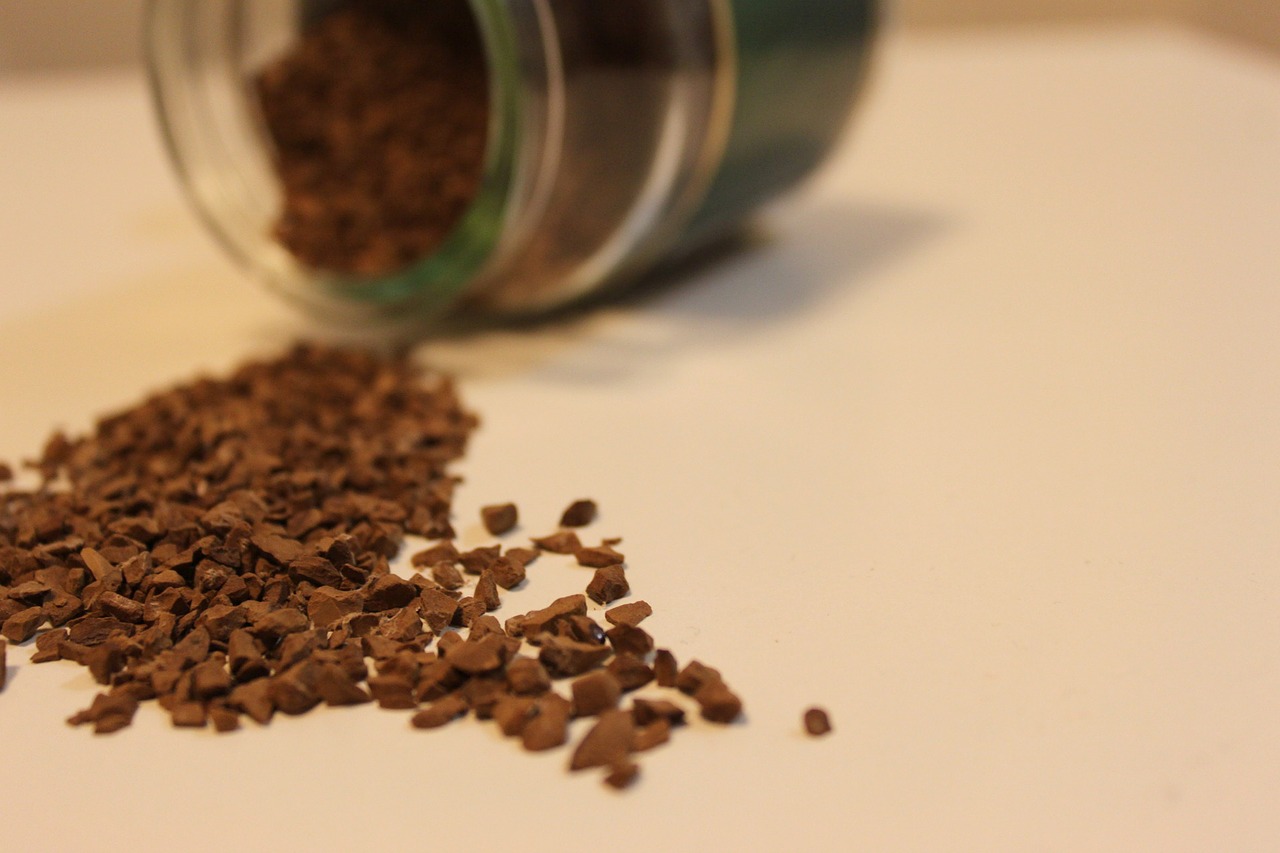
Well-regulated balance is key to flavorful coffee. (Tweet that!)
Burr mills use revolving abrasive elements that crush or tear the  beans with little frictional heat. That’s a good thing. The coffee beans release oils that, when infused with hot water, make the taste richer and smoother.
Blade or propeller grinders cut coffee beans. But the grounds often aren’t uniform, and “coffee dust” can clog coffeemaker sieves.
Another method is pounding. Arabic and Turkish coffees require that the grounds be almost powdery in fineness, finer than can be achieved by most burr mills. Pounding the beans with a mortar and pestle pulverizes the coffee finely enough.
And then there’s roller grinding in which the beans are ground between pairs of corrugated rollers. This produces an even grind size distribution and heats the ground coffee less than other methods.
 All of which brings to mind Ella McFarland, heroine of my debut novel The Calling of Ella McFarland. At times she’s pressed between abrasive materials like her sister Viola and lifelong friend Frank or future mother-in-law Josephine. Other times, she’s pounded by the cruelty of gossip or a dream gone bad. Blades like abusive Walter threaten to slice her to bits, and circumstances grind her to powder in a tragic, hard place or two.
As I was writing The Calling of Ella McFarland, I wondered at times if Ella would emerge from a given circumstance bitter or sweet, harsh or smooth, tasty or tasteless. As the author, the circumstances of her life developed creatively as my imagination swirled.
Not so, real life.
Life outside the binding of a book can chafe a woman until she bleeds.
It can crush a man’s confidence. Slice completely through good intentions. And pulverize his spirit.
It can produce harshness and bitter words. Or a broken heart and withdrawal from the world.
Cynicism. Or naivete.
Brashness. Or timidity.
 In The Calling of Ella McFarland, Ella is engaged in struggles that test her faith. Does faith’s aroma survive? Does it dissipate? Or does it thrive, full-bodied and alluring?
Ella is thrust into trials that threaten to destroy her spirit and erase every dream she ever imagined. Does she emerge dreamless, weak and tasteless? Or stronger, more flavorsome?
 Much like a decanter of coffee beans, useless until they’re ground, David, the psalmist, begged the Lord to test him … try him … examine his heart and mind. (Tweet That!) At times God crushed him; other times, He pressed him between rollers or sliced him down to size. The agony of grief pulverized David’s heart and spirit, but like a stream of water heated to perfection, diffusing the flavor of a finely ground batch of coffee beans, delicately timed, the Lord led David to green pastures and still waters where He restored his soul. (Tweet that!)
Millennia after King David the Psalmist, we catch a whiff of the aroma, a taste of the flavor of a man who has been tested and emerged so in tune with His Shepherd that his words are like honey — or fine coffee — on our tongues. (Tweet that!)
Dear Lord, bend an ear to us, will You? We’re fearful at times; overly confident at others. Some days we hurt; others, we exult with joy. We’re blood and flesh and bone; we break. Knowing You made us, we come to you as little more than powder in Your hands, begging You to mold us through trials and prove us in the midst of confusion. Have Your way with us, for we are Yours. For Jesus’ sake. Amen
The post Calling Ella: Grinding out the Best appeared first on Linda Brooks Davis.
November 29, 2015
Doin' the Happy Dance
My recent happy dance commenced when my husband came inside holding a UPS delivery and wearing a smile.
THE CALLING OF ELLA MCFARLAND had arrived!
I cleared a space on the kitchen counter. He set down the box and took out his pocketknife.
"Wait! Let me get a picture!"
"Of the box?" Barely veiled incredulity on his part.
"Of course." Duh.
And then the opening ... and the drum roll!
"Stop! I need another picture!"
"What?" Unveiled incredulity this time.
"Don't you know it's a process?" Duh.
He scratched his head and complied.
Then my "Oh ... how beautiful ... I'm going to cry."
He humphed. Flipped pages. Umm-ed. And nodded.
"Take another picture."
"Of ...?" He eyed my bedhead and p.j.s.
"Just my hands. Holding a book."
Relief showing, he followed instructions and then, "I'm going to the shop."
Which was my cue to spread out the books and start snapping photos. Forget breakfast.
Meanwhile, I'm doin' my happy dance. And thanking God.
P.S. I can't count the hours my sweet husband devoted to preparing meals, doing dishes, washing and drying clothes, shopping, running errands, protecting my space, listening, enduring my occasional wails, encouraging, praying, and even shedding tears over some lines as I wrote Ella's story. Like Aaron and Hur on the mountaintop supporting Moses' hands (Exodus 17:8-14), Al held me up when I grew weary.
You turned my wailing into dancing ... Psalm 30:11
The Calling of Ella McFarland
November 22, 2015
Giving Thanks
I'm embroiled in this experience at present. My first novel, The Calling of Ella McFarland, is due to be released by Mountainview Books on December 1. I expect to hold an actual book in my hands very soon and have yet to link together the words and phrases that will express my gratitude.
What emotions will the sensation of holding that first book engender?
Words I chose with care will fill the pages between the covers. For readers' sakes. For the sake of the memory of my mother and grandmother whose identities are woven into the characters Ella and her mother Betsy. And for Jesus' sake, which is the closing line of every prayer I've prayed over this story.
The seeds for the story were planted decades ago when I sat on my grandmother's lap for tales about life in Indian Territory prior to Oklahoma statehood. Mother watered those early seedlings with intrigue and love for that state of her birth.
As I grew up the daughter of a South Texas farmer in the '40s, '50s, and '60s, I learned what connected me to my family roots that were buried in rural soil was the constancy of Jesus Christ who heals, enlivens, and sustains.
For generations He has brought the sweet aroma of the Rose of Sharon to the gruesome stench of death and heartbreak. He has taken the dreadful sultriness of a summer hail storm, destined to wipe out a cotton crop and a year's earnings with it, and replaced it with the gentle breeze of Hope, the Anchor for the Soul. And He has transformed the gut-wrenching sight of a loved one, maimed and becoming more so each day, into a vision of a new body in a new heaven.
I thank Jerry B. Jenkins and his team of judges for choosing this story as the first place winner in the 2014 Operation First Novel contest. The award has made possible the revealing of Ella McFarland who was born as I imagined what shape my gentle, quiet, shy grandmother's world might have taken if the kaleidoscope of her life had twisted a hair's breadth in either direction.
On Thanksgiving this year I will give thanks for Jesus, my family, friends, a home that shelters me, food in abundance, and more conveniences than are good for me. But this year I'll add a Thank You for a once-in-a-lifetime blessing of a debut novel. Surreal.
My words of gratitude won't feel sufficient, but they'll be the best I can muster.
Thankfully, the Lord can read my heart.