
David Suzuki's Blog, page 43
February 29, 2016
How to double the power of your Aeroplan Miles

I know you too prefer to get mountain views thanks to manpower and not airplanes. (Credit: Lindsay Coulter)
Most "environmentalists" have a fear of flying.
It's not the turbulence. It's the carbon emissions.
If you try to fly less, buy less, walk more, make every day Meatless Monday, believe in paying it forward AND you're an Aeroplan member, here's a special invitation:
From Monday, February 29 till Sunday, March 6, Aeroplan will match your donated Aeroplan Miles -- up to 500,000 Miles -- to the David Suzuki Foundation. You can help power our work! (Flying less means you've collected fewer miles, but even 2,000 turns quickly into 4,000!)
How do we use Aeroplan Miles?
Last spring, two David Suzuki Foundation staff visited the Tla-o-qui-aht First Nation in British Columbia to take part in a summit on the establishment of tribal parks -- conservation areas envisioned, declared and managed by local Indigenous communities. We're working with several Indigenous communities to support tribal parks in Canada. And we got where they are thanks to donated Aeroplan Miles.
Your donated Aeroplan Miles help lower our travel expenses and administrative costs. We reduce our air travel as much as possible, and always use high-quality carbon offsets. But when we use your donated miles for flights, Aeroplan offsets 100 per cent of those carbon emissions. So where it's essential to carrying out our work, your caring gift of Aeroplan Miles really help.
Donate your miles for good today!
Still curious about our Aeroplan partnership and how we minimize and offset staff travel? Visit our FAQ.
Sincerely,
Lindsay Coulter, a fellow Queen of Green
Hey! Want more DSF? Join David Suzuki on Facebook


February 26, 2016
How to make toothpaste

Make your own toothpaste and avoid plastic microbeads, SLS, and triclosan. (Credit: Lindsay Coulter)
What does acting like we are nature (because we are) and acknowledging that our choices affect the planet look like?
It looks like making your own toothpaste -- a significant choice! Because in taking this small, personal step you will also:
Avoid plastic microbeads which may contain toxic substances such as phthalates and bisphenol-A (BPA) that latch on, can leach into water AND are being eaten by fish and birds.
Avoid triclosan (an anti-bacterial agent) which may interfere with hormone function, contribute to antibiotic-resistant bacteria AND harm fish and other wildlife.
Avoid sodium laureth sulfate (SLS or SLES), which makes the bubbles in many store-bought toothpastes but also can be contaminated with 1,4-dioxane, which may cause cancer.
Avoid the next cosmetic scandal -- like microbeads or cancer-causing baby powder.
Save money (dirty-dozen-free toothpaste is usually about $7 a tube).
Queen of Green toothpaste recipe
Time needed: five minutes
Shelf life: approximately six months
45 ml (3 Tbsp) coconut oil
45 ml (3 Tbsp) baking soda
5 drops essential oil (optional) e.g., peppermint
2.5 ml (½ tsp) xylitol, stevia or bentonite clay (optional)
Add all ingredients to an air-tight container and mix to form a paste. You may want to melt the coconut oil first for easier mixing. Make this recipe your own by altering ingredient ratios and optional additives to get your desired consistency, flavour and results. (You can also make mouthwash.)
Note: Xylitol is a sweetener but also promotes the growth of tooth-protecting, non-acidic bacteria. Bentonite clay is helpful because it's alkaline and can assist with remineralization.
Don't care to DIY? Shop smarter by avoiding the Dirty Dozen in ALL personal care products!
What should you do with microbead products?
To see if a product contains microbeads, check the ingredient list for polyethylene (PE) or polypropylene (PP), polyethylene terephthalate (PET), polymethyl methacrylate (PMMA) or nylon. For disposal:
1. Return it to the store;
2. Mail it back to the manufacturer;
3. Donate the product to science; or
4. Filter the microbeads out and send the product to the landfill.
Do you have a secret ingredient that you add to your favourite homemade toothpaste?
Sincerely,
Lindsay Coulter, a fellow Queen of Green
Hey! Want more DSF? Join David Suzuki on Facebook

February 25, 2016
Love bees -- especially the wild ones!
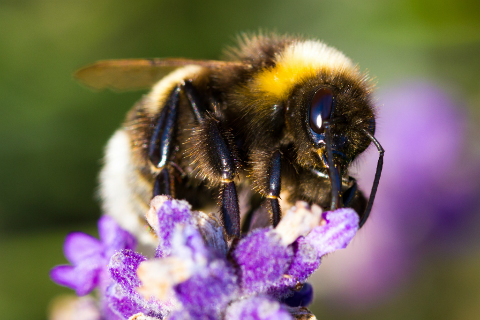
(Credit: Mikael F via Flickr)
Many environmental campaigns over the past 50 years have aimed at getting people to care for imperilled species in wild, far-off places. The focus in Canada has often been on large, photogenic, culturally important animals, with bonus points for campaigns that include alliteration, bumper sticker-friendly slogans and plush toys. This has been a sensible and often successful strategy.
Over the past few years smaller, charismatic critters closer to home have buzzed into the spotlight: bees. About a decade ago, beekeepers in Europe and North America started noticing serious declines in honeybee populations. Bees have lost much of their natural habitat to urbanization and industrial agriculture and face increased stress from climate change-related drought and severe winters. These threats, coupled with the global spread of diseases and pests and a dramatic increase in the use of agricultural pesticides like neonicotinoids, have resulted in unprecedented losses for beekeepers. (Because bees and other insects provide ecological services like pollination, it makes no sense to declare war against all just to eliminate or control the few nuisances.)
The honeybee decline has been big news partly because they make delicious honey, but more importantly because they're pollinators. About three-quarters of flowering plants and more than a third of food crops worldwide depend on pollinators -- from bees and butterflies to hummingbirds and bats. As a result, governments across the globe are developing strategies to protect them, including Ontario with its recently proposed Pollinator Health Action Plan.
Public attention in Canada has largely focused on domesticated European honeybees, but research indicates the honeybee crisis is part of a wider problem affecting hundreds of lesser-known but crucially important wild bee species.
Of about 800 wild bee species in Canada, more than 90 per cent have a "solitary" lifestyle rather than living in large, social colonies. Two-thirds of these are ground-nesters, including bumblebees, mining and digger bees that make nests in soil and under leaves and rocks. The rest are cavity-nesters like mason and carpenter bees that burrow in hollow stems, twigs and logs.
Although honeybees get the headlines and most of the credit for pollinating flowers and crops, studies show that wild bees can be two or three times better at pollination, and some, like mason bees, can be up to 80 times more effective.
The good news is that the honeybee crisis has galvanized interest in all pollinators, inspiring thousands of groups and citizens worldwide to establish new spaces for them, from wild bee hotels and rooftop honeybee hives to pollinator gardens in parks and schoolyards.
As our communities grow, pollinator habitat is fragmented into increasingly disconnected patches that disrupt natural pathways, making the potential of connected networks of habitat within cities especially fascinating. Oslo's Bumblebee Highway, Seattle's Pollinator Pathway and Hamilton's Pollinator Paradise are all great local initiatives.
Establishing an urban pollinator corridor is also at the heart of the David Suzuki Foundation's Homegrown National Park Project, which since 2013 has created more than 50 pollinator-friendly patches along the path of a creek now buried beneath Toronto -- from small guerrilla plantings to a network of flower-filled canoe planters in schools, cafés, churches, parks and yards.
This spring, the Foundation will launch the Great Canadian Butterflyway Project, to inspire bee-friendly urban innovations and neighbourhood-scale pollinator corridors across the country. Through videos, tips and other resources, the project will profile projects nationwide that are bringing nature home, one pollinator-friendly planting at a time.
You can become part of the growing movement to protect pollinators. Head to the library (or check out davidsuzuki.org/pollinators) to research the amazing diversity of wild bees and other pollinators in your community. While you're there, learn what flowers and shrubs best support those species, and what might work in your yard or on your balcony. Then check out what local groups are up to.
Want to show wild bees some love? Create a sanctuary in your yard or garden by leaving a sunny patch of bare soil for ground-nesters. Add some pithy stems, sticks and wood debris for cavity-nesters. And be sure not to disturb the nests over winter.
Will the buzz generated by media stories and pun-filled campaigns save the bees? Only time will tell. In the meantime, we can all help by making bees welcome in our yards and neighbourhoods.
Hey! Want more DSF? Join David Suzuki on Facebook

February 24, 2016
It's time for Canada to lead the fight against climate change

Please sign to send your message to Prime Minister Trudeau and Environment and Climate Change Minister McKenna.
Hey! Want more DSF? Join David Suzuki on Facebook

February 23, 2016
David Suzuki Foundation makes waves in ocean conservation
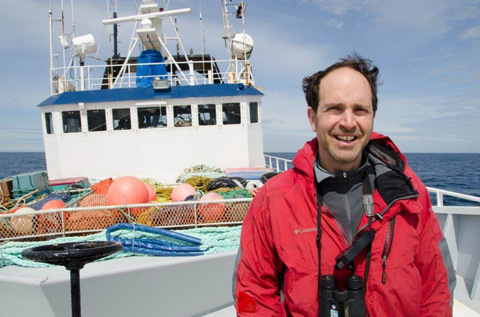
Collaboration to reform fishing practices recognized with prestigious award
The Vancouver Aquarium has recognized the David Suzuki Foundation's work to reform the B.C. trawl industry and make conservation gains with its Murray A. Newman Award for Significant Achievement in Aquatic Conservation. Canada's Pacific Groundfish Trawl Habitat Agreement was lauded at the Aquarium's 21st annual Coastal Ocean Awards as a global precedent negotiated between fishers and environmental groups, led by the David Suzuki Foundation, to address the impacts of bottom trawling on sensitive seafloor habitats by reforming fishing practices.
In 2007, when the Foundation published senior research scientist Scott Wallace's "Dragging our Assets: Toward an Ecosystem Approach to Bottom Trawling in Canada", the relationship between us and B.C.'s bottom trawl fleet was chilly, at best. By 2012 the former adversaries were putting differences behind them and working together for major conservation improvements to habitat. They also received support for the approach from Fisheries and Oceans Canada. The trawl agreement has been recognized as the first in the world to set up a quota system to limit habitat damage, especially to highly impacted corals and sponges. In four years of fishing, there has been high compliance in following the ecosystem-based boundaries and coral and sponge catch has been greatly reduced.
Experts at meetings in Europe, Asia and North America have hailed the agreement for its innovative approach. It has also been presented to the U.S. National Oceanic and Atmospheric Administration and recognized by the scientific journal Marine Policy as the first agreement of its kind.
The Coastal Ocean Awards celebrate B.C.'s leaders in marine science, conservation, art, technology, volunteerism, communication and philanthropy. Recognition from the Vancouver Aquarium emphasizes that protecting habitat is good for the ocean and for the future of our fisheries. The success story is far from over, with more improvements continuing in trawl-related habitat protection, thanks largely to the work of Foundation scientist Scott Wallace. Now, what was once one of Canada's most criticized fisheries is being transformed into one of its most highly regulated success stories.
Hey! Want more DSF? Join David Suzuki on Facebook

February 22, 2016
World eyes Canada's human rights performance
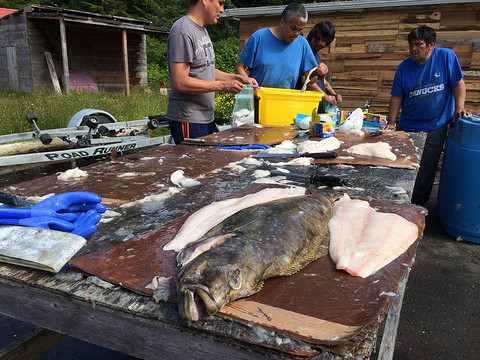
(Credit: Janice Williams)
The United Nations in Geneva is a daunting place filled with diplomats, protocols and grand hallways that open onto meeting rooms with microphones, earpieces and translators. But there's comfort in knowing that most people here are trying to make the world more peaceful and equitable.
I'm participating in a review of Canada's human rights obligations under the UN treaty on economic, social and cultural rights. I told committee members that Canada has some work to do to make sure our environmental regulations protect our right to a healthy environment. If Canada wants to be recognized as a human rights leader, I argued, it must legally recognize a healthy environment as a necessity of life.
We are the air we breathe, the food we eat and the water we drink, but cultural practices around food and the appreciation of nature are also fundamental to our humanness. Canada signed the International Covenant on Economic, Social and Cultural Rights forty years ago. By not protecting our environment, we're falling short of meeting those obligations.
I encourage you to read the Foundation's submission to the UN committee.
Meetings continue in Geneva this week. The world's eyes are on Canada. I'm hopeful that committee members will agree that Canada must do more to protect our environment.
Here are my words to them:
I would like to acknowledge that this committee has adopted many concluding observations recognizing the connection between the environment and human rights
Canada, over the past decade, has weakened environmental protections fundamental to the realization of economic, social and cultural rights, in breach of its obligations under this Covenant.
This past summer, I travelled with the David Suzuki Foundation across the vast Pacific coast of Canada, visiting a dozen communities in the traditional territories of 12 indigenous First Nations.
We were welcomed into homes, auditoriums and longhouses, with feasts that embodied the intersection of nature, food and culture.
We recorded over 1,500 profoundly moving interviews from a diverse group of indigenous and non-indigenous people, expressing fear that their way of life is threatened, and that industrial projects with catastrophic impacts on the environment and livelihoods are being approved with little or no consultation.
They worried for themselves, their children, grandchildren, and all people. Youth questioned in this context whether it is responsible to have children at all.
And what are they worried about? Imagine the loss of an underwater world with 26 thousand kilometres of winding shoreline, home to trillions of plankton, billions of fish, millions of seabirds, and thousands of whales among forests of kelp and eelgrass.
This globally significant ecosystem is not just a backdrop; it's the architecture, the food store, the economic lifeblood, and the essence of the people who live along its shores, providing the air they breathe and the food they eat.
Climate change, ocean acidification, and industrial pressures make this a critical moment. And because Canada has the longest coastline of any nation, it holds deep responsibilities to its citizens and the world.
We urge Canada, first, to join over one hundred nations in constitutionally recognizing the right to a healthy environment.
Second, to take immediate steps to restore and enhance robust environmental protection.
Third, to fully respect indigenous rights to title and consultation.
Fourth, to act urgently to protect ocean ecosystems from degradation and climate change.
Finally, the disproportionate impacts on indigenous and vulnerable people, the threats to the rights to food, culture, and health, are best described in the words of coastal people found in our written submission.
I leave you with a quote from one of them.
"When we think of human rights, we think of equality, freedom, democracy. But what good are any of those if we don't have clean air, soil and water? It has to start with nature."
Thank you.
Hey! Want more DSF? Join David Suzuki on Facebook

Homegrown keeps growing

When the Homegrown National Park Project launched in 2013, we aimed to build a butterfly corridor through Canada's largest city and transform Toronto into a pollinator-friendly National Park. We recruited and trained two-dozen keen residents, connected them with local people and groups, and turned them loose to start bringing nature home to their neighbourhoods -- one fun, small step at a time.
After three years, we couldn't be more proud of what our dedicated volunteer Homegrown Park Rangers accomplished!
They established a vibrant patchwork of dozens of butterfly-friendly gardens, guerrilla plantings and canoe planters (yes, canoes!) throughout the city's downtown west end and, with the support of the Toronto Foundation, expanded to neighbourhoods across the Greater Toronto Area in 2015.
They hosted and participated in over 150 events, festivals and street parties, including hugely popular movie screenings, community pizza nights, overnight campouts and the magical, musical Homegrown Park Crawl.
In 2016, we're going to bring the joys and lessons learned from three years of the Homegrown National Park Project to neighbourhoods across the country through the Great Canadian Butterflyway Project! Stay tuned for more information. Until then, find out more about how the Homegrown National Park Project is bringing nature home at davidsuzuki.org/homegrown
Hey! Want more DSF? Join David Suzuki on Facebook

February 19, 2016
Volunteers in action: Meet Megan

Looking for adventure and an opportunity to enrich her understanding of an environmental organization, Megan Nobrega moved across the country to Vancouver in the summer of 2013 to help with the David Suzuki Foundation's Right to a Healthy Environment campaign.
At summer's end, she took herself back to university in Ontario and then volunteered in the Foundation's Toronto office the following summer. She compiled information on Blue Dot tour venues and contact information for government officials, and helped out at Homegrown National Park Project events such as the Toronto Urban Roots Festival and the outdoor screening of Project Wild Thing.
Megan's passion to give back to others first flourished when she was a director for the youth-led Oakville Teenagers in Action for four years. She also maintained a competitive tennis position for 15 years!
Spending time on the shore near the crash of the waves or camping away from the clutter of our fast-paced society is where she escapes the stress of a busy schedule and noise of a city. These are just a few reasons Megan enjoys and wants to protect Canada's landscapes.
With a double major in government and economics, Megan is just getting started. Follow in her footsteps and get involved protecting nature in your community!
Hey! Want more DSF? Join David Suzuki on Facebook

February 18, 2016
Energy storage gives renewables a jump-start
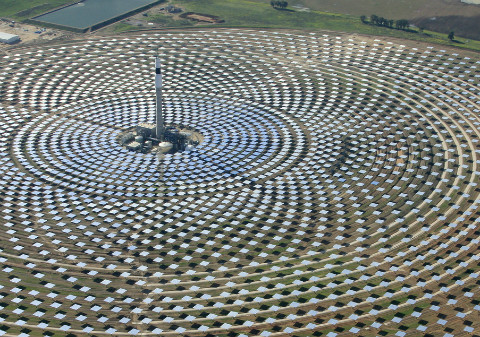
Gemasolar solar thermal power plant in Spain uses molten salt to store energy. (Credit: Image Library via Flickr)
Remote Australian communities often use diesel generators for power. They're expensive to run and emit pollution and greenhouse gases. Even people who don't rely entirely on generators use Australia's power grid, which is mostly fuelled by polluting, climate-altering coal. Now, one company is showing that supplying Australia's energy needn't be expensive or polluting.
AllGrid Energy produces 10 kilowatt-hour solar-power batteries that take advantage of Australia's abundant sunlight and growing demand for solar panels. Their lead-acid gel battery is less expensive than Tesla's lithium Powerwall, also available in Australia. Many AllGrid systems are sold in indigenous communities, providing affordable energy independence.
It's an example of the rapid pace of renewable energy development -- one that clears a hurdle previously confronting many clean-energy technologies: their variable nature. One advantage of fossil fuels is that they're both source and storage for energy; renewables such as wind and solar are only sources.
Many argue that because solar and wind energy only work when sun shines or winds blow, and output varies according to cloud cover, wind speed and other factors, they can't replace large "baseload" sources like coal, oil, gas and nuclear. But batteries and other energy storage methods, along with power-grid improvements, make renewables competitive with fossil fuels and nuclear power -- and often better in terms of reliability, efficiency and affordability.
With storage and grid technologies advancing daily, renewable energy could easily and relatively quickly replace most fossil fuel-generated electricity. In Canada, Ontario's Independent Electricity System Operator contracted five companies to test a number of storage systems, including batteries, hydrogen storage, kinetic flywheels and thermal systems that store heat in special bricks. Ontario is aiming to get about 50 per cent of its installed generating capacity from renewable sources by 2025.
The main renewable-energy storage methods are thermal, compressed air, hydrogen, pumped hydroelectric, flywheels and batteries. Some are better for large scale and some for small scale. As electric cars become more popular, their batteries could be connected to grids to supply and balance power, which could offset costs for owners. Harvard University researchers have been working on a flow battery that uses abundant, inexpensive organic compounds called quinones rather than expensive metals.
Renewable energy with storage has a number of advantages over fossil fuels. It can discharge power to the grid to meet demand more quickly and efficiently, and it's less prone to disruption, because power sources are distributed over a large area, so if one part is knocked out by a storm, for example, other parts keep the system running. Many fossil fuel and nuclear power systems require a lot of water for cooling and so can be affected by drought, and nuclear power systems are expensive and take a long time to build. Clean-energy technology also creates more jobs than fossil fuel development.
Because renewables don't pollute or create greenhouse gas emissions, they also help lower costs for health care and the ever-increasing impacts of climate change. Although every energy source comes with consequences, the damage and risks from mining, processing, transporting and using coal, oil, bitumen and uranium, and from fracking and other extraction methods, are far greater than for clean energy. And fossil fuels will eventually run out, becoming increasingly expensive, difficult to obtain, and ridden with conflict as scarcity grows.
Rapid storage-technology development will place renewable sources at the forefront of the global energy mix in coming years. Many renewables are already being deployed even without storage. A recent report showed the U.S. could reduce CO2 emissions from its electricity sector by 80 per cent relative to 1990 levels within 15 years "with current technologies and without electrical storage."
The study, by scientists from the National Oceanic and Atmospheric Administration and University of Colorado Boulder and published in Nature Climate Change, concluded that grid improvements, including a new high-voltage direct-current transmission grid, could deliver low-cost clean energy throughout the country to match supply and demand.
Still, storage offers many advantages. With the urgent need to cut greenhouse gas emissions, governments need to provide incentives for rapid renewable energy development and deployment. Considering how quickly computer technology and other human inventions have advanced, it's easy to see that barriers to a clean-energy shift are more political and psychological than technological.
Hey! Want more DSF? Join David Suzuki on Facebook

February 17, 2016
2015 oil and gas investigative report
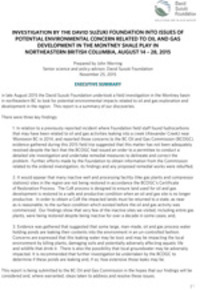
In late August 2015 the David Suzuki Foundation undertook a field investigation in the Montney basin in northeastern BC to look for potential environmental impacts related to oil and gas exploration and development in the region. This report is a summary of our discoveries.
Read our letter to the British Columbia Oil and Gas Commission.
Hey! Want more DSF? Join David Suzuki on Facebook

David Suzuki's Blog

- David Suzuki's profile
- 247 followers

