Brett Ann Stanciu's Blog, page 16
June 16, 2024
Dad and Father’s Day.
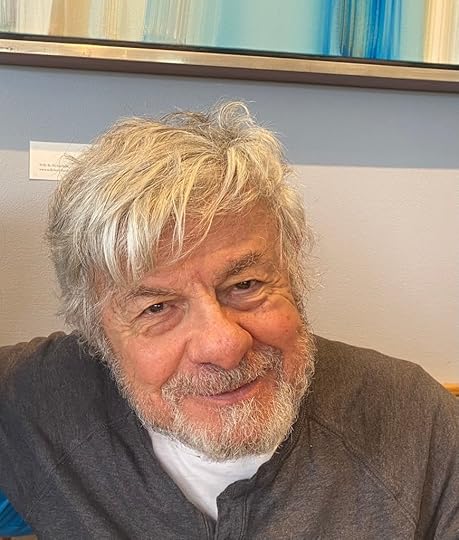
When I was a kid, in moments of stress or elevated high jinks, my dad’s sense of humor rose. He was prone to things like putting grapes up his nose while my mother wasn’t looking to make us kids laugh. This was the camping trip to the Grand Canyon, when the clutch went on our old Jeep, and my dad was fixing it whatever he might have had at hand — a pliers and a fishing hook , maybe two rocks rubbed together in prayer, for all I know.
That same trip, someone was on the lam who had once also been a Navy Seal. We hiked into the canyon, passing sharp shooters at the rim. Don’t look, my mother said. Sometimes I wonder, Whatever happened to him? Did he have kids?
My parents never hesitated to get out our atlas, the essential road tripping gear. Looking at the map with my youngest recently, I chanced on Medicine Bow, Wyoming. We camped beside a man who lived in his canvas tent. While we were hiking, a lightening storm blew up, and my father hustled us down. As a kid, our sometimes peripatetic life was status quo, all kinds of living mixed in. I could list a 100 things without stopping that my dad taught us, all darn useful — like read Plato and follow water when you’re lost in the wilderness — but the one I keep returning to these days, now that I’m along in my life, is his utter persistence. A parent now myself, I think of him in the Grand Canyon with three young kids and a skeptical wife, with hardly any money and a broken-down Jeep. He patched it together. We kept on with that journey, thousands of miles, all those nights in the desert under the stars. At the wheel, he drove that Jeep for many more years.


June 13, 2024
Old cheese, new peonies.
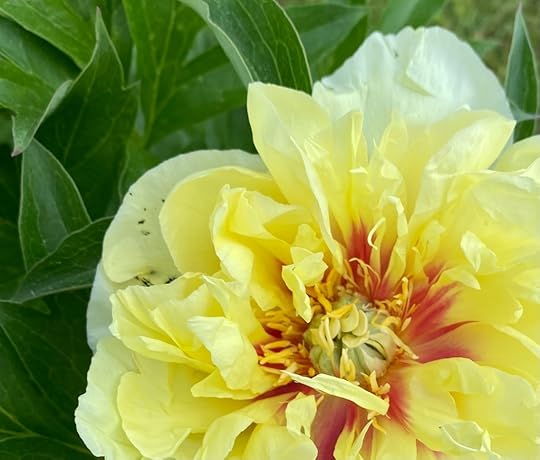
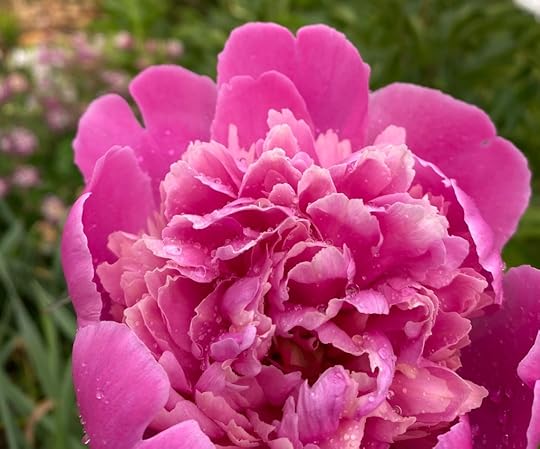
The girls come find me where I’m swimming, the water brackish, strewn with pollen. A blackbird keeps me company. The girls have snagged out-of-date cheese that’s perfectly fine and a tomato that’s sweetly ripe. At home, I dice last year’s garlic. I insist the girls admire the Bartzilla peony that’s blooming now, two blossoms and more fat buds of blossoms. The Bartzilla was a gift a number of autumns ago. My youngest planted the hairy root with me, skeptical. Now, for these few days, this peony’s a marvel.
All day, I’ve been thinking of this Mary Oliver poem. Well worth a share.
Peonies by Mary Oliver
This morning the green fists of the peonies are getting ready
to break my heart
as the sun rises,
as the sun strokes them with his old, buttery fingers
and they open —
pools of lace,
white and pink —
and all day the black ants climb over them,
boring their deep and mysterious holes
into the curls,
craving the sweet sap,
taking it away
to their dark, underground cities —
and all day
under the shifty wind,
as in a dance to the great wedding,
the flowers bend their bright bodies,
and tip their fragrance to the air,
and rise,
their red stems holding
all that dampness and recklessness
gladly and lightly,
and there it is again —
beauty the brave, the exemplary,
blazing open.
Do you love this world?
Do you cherish your humble and silky life?
Do you adore the green grass, with its terror beneath?
Do you also hurry, half-dressed and barefoot, into the garden,
and softly,
and exclaiming of their dearness,
fill your arms with the white and pink flowers,
with their honeyed heaviness, their lush trembling,
their eagerness
to be wild and perfect for a moment, before they are
nothing, forever?
June 10, 2024
Bone Marrow.
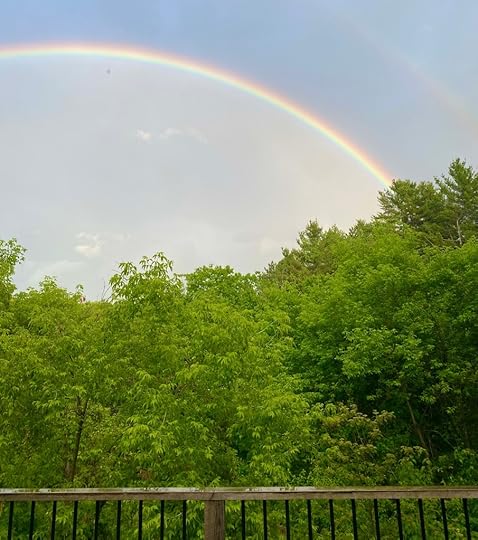
The co-op cashier confides to me as she rings up my tomato and a loaf of bread that she loves this weather — brilliant sun interspersed with downpours. “Must be the Irish in me.”
The past few weeks have been a kind of July bonus: great growth in early June. My apple trees brushed out. I’ve placed an old desk and weathered chair on my covered porch. Recently, carrying out my laptop, I saw the desk sprinkled with gold pollen as if magic had swept through in the night. What luck, I thought, sat down and sneezed, worked.
I am of the wary bent, not to crow, don’t reveal a royal flush, a full house, for god’s sake don’t invite in bad fortune. At the little farmstand around Woodbury Lake, I park and walk behind the dilapidated barn towards the greenhouses, in search of a few more flowers for my garden, to fatten out the echinacea the groundhogs ate last year. In the tiny house, a dog barks. The farmer steps out and calls to me, my former library patron. He sings, “I’m saying it! I’m loving this.”
His words, not mine. Mine are this: in this northern realm, take in the sun and the green, store these gems in your marrow.
June 7, 2024
Don’t confuse hunger with greed.
At breakfast, I mention to my daughter that June 6, today, is D-Day. I’ll write what perhaps she would not want me to write: that she’s standing at the counter making avocado toast and drinking yesterday’s cold coffee. She pours sriracha over the cut avocado. She’s 19, and, lord, a sheer miracle of youth, this gorgeous young woman.
I say, The soldiers were your age. Younger.
We stand staring at each other in our small kitchen of June sunlight. On our table lies a pile of unopened mail, our tabby cat Acer grooming his whiskers, car keys and lip balm, a hunting knife that could extract a man’s heart.
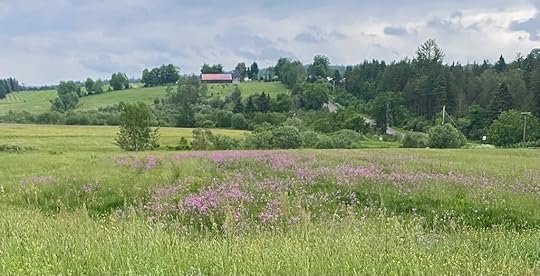
In the evening, I’m at the local arts center to see Nora Jacobson‘s documentary about poet Ruth Stone. The evening is still light when I drive home. I take the long way and pull over beside a field to admire the ragged robin, its pink spreading where the dandelions have gone to seed and green. In my Subaru, it’s me and that box of my mother’s ashes. I once knew a woman who kept her stepfather’s ashes for three years in a Datsun. Impossible, I thought. Now, I think, Sure, possible.
A day of such historical might, such profound sorrow. Yet, our own domestic dramas, the kitchen table stories: how real and meaningful these are, too. As a woman, as a writer, I’ve been thinking for weeks about Ruth Stone’s admonition: “Don’t confuse hunger with greed;/And don’t wait until you are dead.” In my garden, I grab a branch of lilac – the goregous white double blossoms, withering with rot – and breathe in the sweet fragrance.
There is only the wearing away,
The changing of means.
From Ruth Stone’s “Speculation”
June 5, 2024
Pay it forward: a debt.
In the local coffeeshop, a stranger kicks up a conversation, and we bat around our mutual appreciation for this early summer – the blossoms profuse. He buys his order and adds my coffee, too. Pay it forward, he says, and vanishes into the morning.
I take my coffee to the courtyard down the street, empty at this time of day. Ahead of me, after this bench work stint, the day sprawls. I move from eddy to eddy.
In the late morning, a friend I haven’t seen in a few years calls. I’m now in a dim basement room. As we talk, our conversation dips into the past. I feel as if I’m lifting silty strands of stories, stringing them through my hands, searching for clues to tie pieces together.
All day long, I ponder our conversation, how the actions of one person ripple through friends and acquaintances, shift through strangers’ lives, how I’ve always been interested in this since I was a teenager, holed up in my parents’ hammock, reading John Steinbeck’s East of Eden. Later in the day, still stuck on this, I stack firewood, listening to news about the Trump trial. In the hot June sunlight, the freshly cut wood is redolent with sap. An earthworm wriggles. The neighbor boys bike into my driveway, circle around through the grass, ever curious about whatever mundane thing I’m doing. Overhead, those turkey vultures circle their late afternoon sweep, ever hungry. Little snapshot of my terrain.
I believe that there is one story in the world, and only one. . . . Humans are caught—in their lives, in their thoughts, in their hungers and ambitions, in their avarice and cruelty, and in their kindness and generosity too—in a net of good and evil. . . . There is no other story.
— John Steinbeck
June 2, 2024
Playing cards, considering remains.
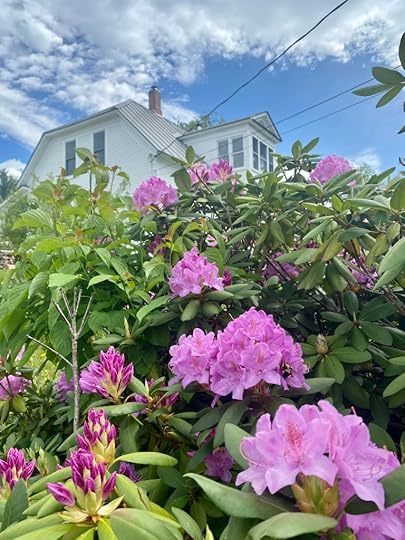
In the darkness, I slide the barn door shut. The world is redolent with cut grass, the wet earth where I watered grape vines. Embers flicker in the fire pit; low laughter moves through the night. June, oh loveliest June, endless varieties of leaf and blossom.
On a hike, we meet a stranger from Maine, and we swap stories about climate change and marriage. He sees my brother’s dog has no water, and shares what he’s carried for his dog. The afternoon gleams with storybook colors of emerald, cobalt, gold. We drive to the lake, to the general store, to a brewery where we sit outside. My brother drinks beer. My daughter and I sip lemon sodas from stemmed glasses, so sweetly yellow I imagine my hand cups sunlight.
I have my mother’s ashes in my possession. Our conversation bends back again and again to her ashes and her life, and the very different relationship that each of us had with her. Lacking a religious framework, I’m treading in open water. My mother, in fact, might have been fiercely opposed to the chain of circumstances that landed me keeper of her remains, or not. I am her second daughter, her match in stubbornness.
All day long, this tender beginning to June, we do the things we love to do. We drink coffee and eat buttered toast, play cards. The sunlight crosses over my house. The day is both chilly and hot. The days spin on, rich with the illusion that there is no finality. Mercy, I think, shutting the barn door to keep the raccoons from the recycling. Another day, the nightsongs of frogs serenading.
May 31, 2024
Unfathomable fortune.
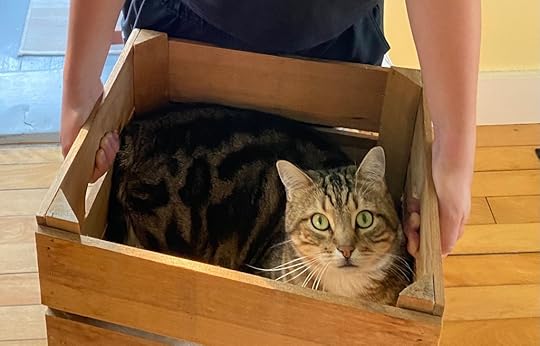
In the late afternoon, I listen to public radio and move firewood from the outside stacks into the barn, where it will dry again all summer until the autumn nights when I gather my kindling and birchbark. On Monday, the wood delivery guy will come again, with a load of green wood to dry all summer in the open air. Lord, I think as I stack, let the sun shine this summer.
When my daughter appears, I pull off my leather gloves, and we sit on the steps, talking about the Trump verdict. A hummingbird darts between us, onyx and ruby. Later, I’m driving north in the narrow Black River valley to hear GennaRose Nethercott read in the gorgeous old East Craftsbury church. In the parking lot, I join a few friends, talking talking about the verdict, another of these moments with a historic tinge. Crows peck in the farm field behind the church freshly harrowed up. The end-of-May evening is rich with a mixture of cow manure and lilac. Vermont loveliness.
19 years ago, my youngest was born. She fit perfectly in my arm, snuggled from my elbow to fingertips. I kept thinking, How is this possible?
A few days after she was born, the season’s first nubs of corn emerged through farm fields. To bring this child into the world, I had been cut and sewn by strangers. Here we were, our tiny family, a few days later, passing these fields on our way home from the hospital, me marveling at the season already passing from spring into summer, this six-pound baby miraculously given to us. 19 years later, when I return home in the dusky evening, we drink tea and eat almonds, talking talking, this great big world crammed full with so many things…. Enough said. For this day, our immense unfathomable luck.
May 28, 2024
In the edge…
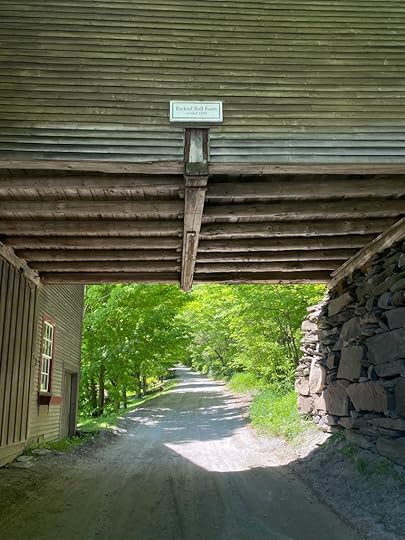
Midafternoon as a storm threatens in, I’m at a stretch of lakeshore where I’ve never swum, and I push in. I’m on the prowl for an eagle, which I never find, and the day has grown muggier than I imagined.
What a month of May this has been. My mother’s death ripples through the amazing forsythia and lilac season, through writing and the steady complexity of work I do for the local Selectboard. At a nearby farm, I buy hothouse basil and tomato starts. A woman I know slightly strikes up a conversation. In the past, our lives ran on weirdly similar tracks, involving divorce, sudden visits from the FBI, the miasma of disorientation. Now, we swap mother stories beneath an enormous lilac. I breathe in the blossoms’ scent.
A few years back, I volunteered in my youngest’s elementary school classroom to assist with a nature program that the kids loved. Naturalist and artist, the teacher kept using the phrase “in the edge.” She pointed out that life thrives at the crossing borders of field and forest, of riverbank, the edges of a homogenous world.
I’m in the edge these days. May’s heat notwithstanding, the water is bitterly cold. I swim out with my lousy swimming skills, my garden’s dirt washing away, the storm clouds hammering together over the glassine water, some of the day yet to come. On the shoreline again, sharp stones gouge my soles.
May 25, 2024
Garden, fence, lilacs, vultures.
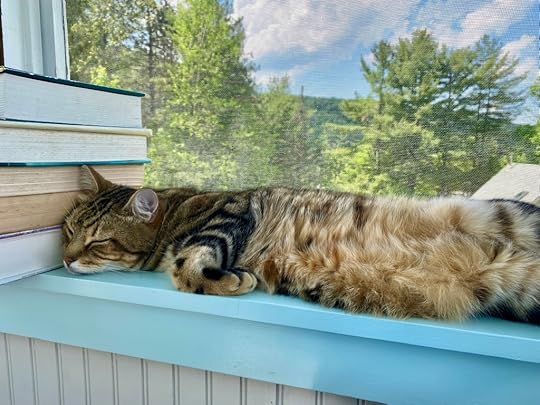
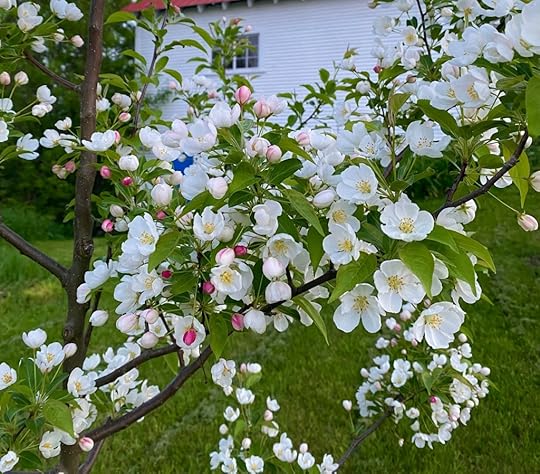
Last spring, a late frost ate the lilacs, death-knelled a young apple tree. Not so, this year. All morning, I work on the back porch, the pollen sifting over my keyboard and laptop screen, the scent of lilacs surrounding our house. May is the brand-new season of pea shoots and asparagus, of peony buds and bleeding hearts.
In the late afternoon, my daughter finds me in garden and salvages the fence from bedstraw and witchgrass. Our garden abuts a town cemetery, fenced by metal and lilacs. On this holiday weekend, the cemetery is busy. As we work, talking, we spy folks wandering through, some tending graves, others gathering handfuls of lilacs or wandering about some other business.
I’m at the early summer gardening place of great good cheer: so much is possible this year. My daughter — a grownup now, but a young grownup — works easily and happily. We’ll share dinner soon, feed our two tabbies, and my daughter will disappear with friends and her swimming suit. I’ll walk into the cemetery and, lured by the scent of lilacs, keep on for a bit. The turkey vultures, maybe a few dozen, will circle low over my head. Then eventually I’ll head down to the village, and the birds and I will part ways.
In these early summer days, I think about my mother all the time. I live in a house that she visited only once. I live a life she did not understand at all. And yet, as I scissor bouquets of lilacs to bring to a friend, as I stand barefoot in my garden deciding to sow sunflowers here, plant basil there, I know these are things my mother loved keenly: the lushness of blossoms, the vim to create a garden.
May 22, 2024
Some news…
… in a year unlike any other year in my life (youngest off to college with the first year’s bill figured out, grating loneliness and joyous solitude, so much writing and small publications, a radiant writing residency, new friendships, and my mother’s death — say this again, my mother’s death) Regal House Publishing, an Indie press in Raleigh, picked up my second novel, Call It Madness, pub date summer 2026.
Chapter One
I didn’t know what made my parents drive from Bellingham to faraway Vermont the summer I turned four. I had never met my great-grandfather Opa until that afternoon my mother rolled our station wagon down Breadseed Lane. Earlier that day, a stranger had helped my parents change a flat tire on the New York turnpike, but the spare was a misfit. For hours, our car had been thumping while I stared through the backseat windows at the trees and fields passing by, pondering the puzzle of that strange word breadseed. Could seeds blossom into loaves? We hadn’t stopped for lunch, and I was hungry. Was this Opa character cooking us dinner? Turned out, he was not.