Carole Marsh's Blog, page 3
February 22, 2013
1,000 Miles to See a Museum
It's not every day I drive 1,000 miles to see a museum, but Crystal Bridges in Bentonville (yeah, Walmart's hometown), Arkansas, is more than worth it.
How? Well, Alice Walton, heiress to father Sam's fortune, said she never had much access to art museums as a child, even though she loved to draw. She later collected art and had a small museum near the original Walmart 5&10, still on the square here. 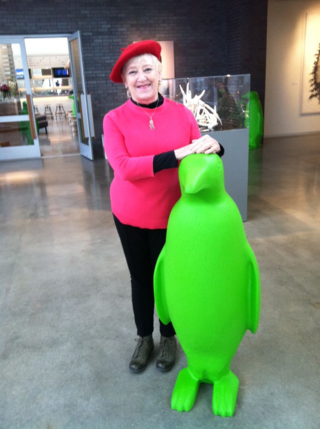
One day she had the idea to build a real museum to house a world class collection of American art. Crystal Bridges is a forest glen walk from Bentonville. The museum is situated over Crystal Springs, the source of the museum's name. Perhaps it seems unlikely that an assemblage of walls and galleries of some of the most famous, fabulous, and valuable American art and American artists would find their way to Bentonville. But they have; oh, my, how they have.
From 1600-era drawings to early Colonial-era portraits...to the masters of American landscapes...to Depression-era...to impressionists...to 20th century pop art icons, and in-between, it's all here.
Gallery after lovely gallery in this marvelous architectural wonder spread far and wide over the water take you on a journey through the best of American art. I am afraid to mention even a single artist or painting for fear I would leave out your favorite "Wow! Really?!" one.
So I won't. Some bring you to tears, to see them here, in Arkansas, and appreciative audiences in awe. Others make you gasp; surely THAT painting was once in the [insert famous museum name here]?; oh, yes, it may have been. But now, it's at Crystal Bridges. It's worth a thousand mile drive, or a family vacation detour, or a plane flight to get here. I hear lots of folks from NYC, Chicago, and around the world have made the trek here. The collection surely is worth billions, but that's irrelevant. The museum and the art are priceless. Speaking of priceless, it doesn't even cost anything to get in to see the collection. That Alice Walton, she's a piece of work—art work. Art work for all, right here in Arkansas.
If you want to plan a trip: Come through Little Rock and visit the Clinton Presidential Center and Heifer International; visit Pea Ridge Military Park of Civil War era famed; and stay at 21c, a unique boutique museum hotel. Also visit Thornecrown Chapel, an award-winning architectural wonder in the woods. They also have some good food in these parts, friendly hospitality, and rolling hills beautiful in spring, fall, summer, and even in winter, when we had a lovely snowfall. Gotta go: there are 12 four-foot tall lime green penguins in the 21c hotel that seem to be following me around, just some of the roving artwork that makes our art tour so serendipity-delicious and delightful!


February 15, 2013
I'm So Confused?
In the Sunday, February 10, New York Times, David L. Kirp reported on the success of the Union City, New Jersey school system with improving itself to a "first rate" education for students. Mr. Kirp is a professor of public policy at the University of California, as well as an author of a new book with a long title on the rebirth of a great American school system and a strategy for any school to achieve the same.
Here's why I'm so confused. To achieve their miraculous transformation, apparently, Union City schools did the following:
• provided 3- and 4-year-olds with early education
• helped kids with "do things" lessons, like make a recipe, for example
• used "teachable moments" such as asking kids to describe an ingredient, to describe it (bland, for example, or fiesty)
• helped students imagine "what if?" they put foods in a processor...and then experimented with that
• focused on letter sounds, for example, in words such as Pimento, PePPer
• tried to teach the kids the way they would their own children at home
• used real objects, such as bread, to demonstrate concepts such as short, long, broken
• did pie charts to record polls over, say, the best-tasting food they tried
• helped the kids to think things through, to wonder, and to ask questions
• talked about their own community, school, etc.
• discussed character, the right things to do, and not to do
• wrote in journals
• read and discussed the meaning of what they read
There's more, but this list is an example of what the teachers, students, and school did.
It seemed to work.
It seemed to work very, very well.
When I was in school, ALL of the above (and more, just as Union City "did more") was called by this innovative term: SCHOOL. This was school. We read, we wrote, we did, we discussed and debated, we scooted easily from one subject to the next, eagerly, enthusiastically, and teachers were not nonplussed by our incessant segues into one related educational arena then another. It was...it was...it was educational. It was learning. It was school. It was...no big deal.
We had tests, we passed tests, but it was never about teaching to the tests. It was never called Common Core or anything else (that I was aware of)...it was just...school.
Today, as an educational author, I am told that I have to write for "Common Core." I have to focus on primary resources, on asking questions, on discussions and debate, on "reading for information" (as opposed to what, exactly?), to incorporate writing "prompts," and to shoot for "higher-order thinking."
I'm so confused. I have been writing for children for 40 years. I have written fiction, nonfiction (or I guess that's what it's still called?), curriculum, and I know that kids read my books, "did stuff" that I suggested in them (whether that was writing a poem or making a craft), and explored the who, what, when, where, how, why, and why not behind whatever the subject was, whether the Wright Brothers, the American Revolution, or, well, or anything else.
I have praise for Union City. I have no real objection to Common Core. I just don't understand "what happened" that created such a disconnect between my school of the past (when we also had Latin, recess, and discipline), and my teachers (I loved them all: great, not so great, cranky, fun, funny, and especially, the weird ones), and tests were just tests. We had loads of homework, and in high school, many of us also had after school jobs. We also had plenty of time for exercise/sports, and fun. Fortunately, as a future writer, I even had time to—don't faint!—daydream, but perhaps that was because I did not have mandatory practice of "a paid sport" six days a week.
I have praise for Maria Montessori, who thought she invented the kind of school I went to, or rather, that style of teaching. Perhaps she did. But I also have admiration for Pat Conroy, who did the same thing on an island right next to where I now live, long ago, when he was a young teacher, and Ron Clark, who today, dances on desks as he raps and turns low-level students into—TADA!—great students and international travelers.
I'm so confused. Do I continue to write as engagingly, honestly, unbiasedly, dramatically, and educationally, as I always have? Do I continue to add QUESTIONS in my writing, so kids can think for themselves and not just say what they think they should say, or that their parents might believe, or their teachers find politically correct? Do I continue to encourage kids to write from their head and their heart, even if it means they end up writing really compellingly, if not so grammatically? Do I keep sticking challenging words in books, because, really, it's so disrespectful to write down to kids? Do I add enrichment, fascinating, indeed, flabbergasting facts, even humor? Do I write to engage, enchant, and educate, and make it as much fun for me (and the teachers!) as for the kids I'm writing for?
 Do I call it all Common Core? (Or Common Bore, if I have to change my ways, which is what I'm seeing in so many new new "gotta be CC" texts.) Honestly, are schools really sure they are ready for kids to discuss and debate? What if they know more than the textbook? (Read "Lies My Teacher Told Me.") What if they—GASP!—disagree, perhaps even passionately? And are, uh, right?
Are we really ready for kids to actually learn to think critically? You know, because if they do, they might just drop out of school and study online, or get a job as a sous chef, where they can actually do something, feel it, taste it, try it, fail at it, love it, share it, declare it, embrace it, invent it, and just generally get up to their elbows in flour and milk primary sources, until—EUREKA!—whether it's cooking, or physics, or writing, or accounting, they not only have learned, they have achieved the Holy Grail—they have learned how to learn on their own steam.
I've been a student all my life; I love to learn, and I don't give a fig for anything "Common."
I just don't think kids do either. I believe the next educational reform, when and if it comes, will be called STUDENTS DEMAND. Students of all ages will just expect and demand the best, the fastest, the truest, the timeliest, the multi-engagingest, the "let me do it-est," the "move over and let me learn my way" way. They won't call it anything, of course, but they will think critically, and they will be in a hurry. They will have no time, or interest, in anything but that.
These are the kids I wrote for, write for now, and intend to continue to write for—I am on a mission, and it has little to do with labels, no matter how alliterative. I think many teachers feel the same way. Most of them know why they got into teaching and know how, if they were allowed. We may all be renegades, but, hey, it goes with the territory of Wild About Learning. Hmmm, kids might could chow down on a educational reform by that name?
Truly, there's a revolution underway. Today, in adherence to Common Core, I add instructions for kids to take their BYOT and research this, photo that, etc. And I wonder...When will they figure out that they could stay home in their pj's and teach themselves via online classes, and rip-roarin' chat room debates, and actual field trips to the real place, and Skype interviews with a real author or CEO, or, well most anything else? That's what I would have done. But I didn't need to. And I hope, really hope, that they don't need to. But want to? I can picture the day.
I think it's time for me to get back to writing. After all, I am no longer confused.
February 6, 2013
Coolectibles?
Even though I have a large personal library, and an even bigger editorial library, I have never thought of myself as an actual collector of books. I have spent a small personal fortune on books Bob and I love to read, and that I felt as a writer, I needed, and that I felt Gallopade needed for its New Product Development/editorial library...not to mention business books, books for gifts, etc.
HOWEVER, I have just read a great book on book collecting and book collectors (professional and amateur), called "A Gentle Madness." I really enjoyed this hefty book, learned a lot, and, oh, dear, saw that I might indeed have the gentle madness gene. The first clue that I might be a book collector came when we began our sell-two-houses, move-to-one adventure. Since I gave away, donated, or sold a lot of books, you might think that would indicate that I'm anything but a book collector. But once I got settled and tried to find out what to do with the books I had brought with me, they certainly instantly distilled into surprising "collection within a collection" (as it is called) categories:
Books on color; books on books and book collecting/collectors; book on Paris, not France, just Paris, and more. I recall intentionally buying two identical books a few years ago of an amazing fold-out book of a pen and ink sketch of one side of Manhattan on one side, and the other side of the island on the other side. I put one of the books up on my wall, yes, all spread out; the other I saved in its original slipcase and told Bob, "This might be a collectible one day." After the World Trade Centers fell on September 11, 2001, I noticed that the book's art did indeed show the towers. I told Bob, "This book is a collectible now."
I just loved the book and it being valuable for any other reason than that meant little to me.
But it was that word intentional that was a giveaway. I realized during my move that I intentionally liquidated books that meant nothing to me, and saved those that I could not physically or emotionally part with. I intentionally bought a hand-done Western book, signed by the living artist who had done an original piece of art in each book. I intentionally bought a book on a subject I'd prefer not to mention here (uh, it relates to pirates), because it WAS already a collectible. I do collect certain books on pirates, so this was just a great find. I intentionally just bought a $30 "collectible" copy of a book that I could have gotten new for $16, or used for $7; so, what is going on here?
I brought NO bookcases with me on purpose. (Bob has the only bookcases, lovely ones), for his Western book collection. So my apparent book "collections" are going in special baskets, boxes, and on shelves around the house. I can see that I do NOT care about quantity...having moved boxes of books all my life, I can say that I HATE moving books! They are heavy and you can only move a few at the time. (A library changing locations once "fire-brigaded" the little book suckers down the street, person to person, rather than pack, load, unload, unpack...) (A famous chef I read about in my book collecting book donated some of his collection to a university—uh, eighteen 18-wheeler loads of books, manuscripts, recipes, notes, and more!) No, no, no, I do not want LOTS of books.
I want a few books. A few books on a few subjects. I want them to mean something really special to me. I want to read them all but to death and mark them up with notes and stars, comments, critiques, questions, book title, character name, and other ideas. Will this reduce the value of the books? I don't really care. (If you want to know, "marginalia" often makes a collectible book more valuable. Of course, maybe you have to be able to actually read the marginalia? With my handwriting, that will not be the case.)
I just bought a book, against my will, against my budget, against all odds, and ends, and other things, except for one thing: I succumbed to the...gentle madness. From what I have read, this madness is not gentle at all. The book I read includes more mystery, mayhem, theft, murder, subterfuge, intrigue, insanity, suicide, and more, than any James Bond movie, uh, I mean book; really!
So what road am I intentionally beginning to tiptoe down? Should I? Dare I? And the most important question—how many decorative baskets, boxes, and spare shelves do I have? (And, what is my American Express limit??) I move on with fear and trembling.
If you think I'm just joking, I have planned a trip to the University of Florida to see a lifetime library collection of kids' books, at least 100,000 of them, worth well more than a million dollars. (In book collecting success land, a million is chump change, thus the mystery, mayhem, murder, etc.) From there we travel on to St. Petersburg where one of the nation's supposedly "best" Antiquarian Book Fairs is being held. It could matter???...that that curious pirate-subject unnamed collectible book I once bought...was from a bookstore in St. Petersburg.
I think I remember where it is. I think I have a little money leftover after the trip costs. And I just found one very adorable black straw basket.
I've been a mystery book writer for 30 years. I don't want to collect my own books; let some other sucker, uh, collector, do that. I just need a little madness in my life, gentle or not, a little intrigue, a soupcon of subterfuge, and whatever else may something wicked this way come. My grandkids may thank me one day?
Carole
Postscript: Once a friend of a friend got a letter from a lawyer that he had received an inheritance of "kids' books" from an aunt he barely knew. He was informed he could collect the books at the lawyer's office. The man postponed this dreaded and "who cares?" (as he put it) duty for a long time. On a business trip, he was close to the lawyer's office and so went by and collected his cartons of "dumb kids' books." It turned out that they were a complete collection of First Edition, never opened, needless to say pristine condition...Nancy Drew mysteries.
Cool?

January 31, 2013
Here's a Challenge!
I'm still hung up on the movie "Beasts of the Southern Wild." Seen it?
If not, please do. You're probably seen the adorable and exceedingly talented young girl who stars in the movie. You may have heard that she (having acted in the film at age six) was nominated for an Academy Award. But that is all beside the point. When I saw the movie, I was blown away by a variety of things, just my opinion, and I share a few here:
•This will be a classic that just gains more fame as years go by.
•The slim play by a 22-year-old the movie's based on is a perfect example, to me, of letting your creative voice out, and let it stand, something I hope we can help children learn.
•The movie offers endless opportunities for discussions of all types.
And so, next month, it's my turn to host my book club, and that means I get to pick the book. I intend to pick the play (Juicy and Delicious, available on amazon.com) and let our readers enjoy a short book they may or may not like, but will only take them 20 minutes to read. I also get to lead the discussion, so these will be some of my questions:
1. I found love, joy, grace, and redemption as major themes in the play/movie. What words come to mind for you?
2. Are kids who have to live in survival mode/or major life struggle more apt to handle life than kids who are coddled, or insulated from most challenging situations? (I'm thinking of this self-esteem for doing ordinary stuff business, for one thing.)
3. If it "takes a village" to raise a child, how did the few main characters in this play/movie contribute to helping the character Hushpuppy become more able to survive, even thrive?
4. What symbolism did you find, especially in the movie? (Hint: I thought it was fabulous to find so much symbolism in a movie and I would love to "teach" this movie to high school students!)
5. I've heard all kinds of arguments on how realistic this movie is, meaning what's real and what's Hushpuppy's imagination. How much do you believe such things can happen?
6. Did anyone else notice that this movie did not take a typical stance in plot? In most movies the plot is almost predictable.
Clearly I'm a big fan and will be biased in my answers; whether I'm right or wrong is irrelevant. Why am I so keen on this movie (and thus the original short short play)? Because, frankly, if I were Eudora Welty, Truman Capote, Faulkner, Flannery O'Connor, and others from our good, old Southern Big Literary Talent Past (and let's not leave out Tennessee Williams), I'd be hootin' and hollerin' from the grave, raving about this film.
It's so Southern, which means it's so universal, so brutal, charming, and true. There has been nothing like it, and isn't that refreshing? Plus the entire way the film came about, with limited budget, untrained actors (some of them), and more—just makes this amazing to me. Plus, when, since you've read your favorite classic short story, have you memorized lines - lines of few words - but so memorable you will never forget them?
The challenge is see the movie, read the play, come to the book club. Those above are just a few of the questions. Plus, there's bound to be wine and chocolate, and oh, wow, I'd love to hear what Pat Conroy thinks!
I've met these beasts, this child, this dad, this teacher, those aurocks, and survived. I have skin in this movie. As a writer, I'd have been so proud to have written this. I can't wait to see what this playwright and this filmmaker do next.
Lastly, if you have seen the movie, I just have one last thing to say: "RRRRRRRAAAAAAAAIIIIIIIIIIIIIIIIIIIIIIIIIIIIIIIIIIIIIIIIIIIIIIIIIIIIIIIIIIIIIIIII!!!!!!!!!!!!!!!!!!!!" (or however you want to spell a good-old-fashioned scream.)
January 23, 2013
Say what huh?
I'm confused. I thought communication was about speaking as accurately as possible, not possible if you refuse to use the precise word, or, refuse to use words at all?
1. So Lance Armstrong spent three hours apologizing for using performance enhancing drugs, but never used the word "steroids" I hear. How word wimpy is that?
2. Jodi Foster made a big speech at the Golden Globes and seemed -?- to be saying she was gay? but she must have just been happy because she never used that word, nor any synonym for it. Is that coming out, or staying in?
3. Supreme Court Justice Clarence Thomas "accidentally" -?- said 4 whole words in court the other day. Apparently, for seven years, he has not said anything, including not asking a single question of a lawyer presenting before the court. How effective is that?
My vote goes to that little girl's name that I can't spell or say who starred in the fabulous "BEASTS OF THE SOUTHERN WILD."
Now, I know the writer wrote the words, but at least she said them and they were accurate and worth saying, and essential.
When she says, "You gotta steal underpants." Or, "I gotta take care of my own." Or, "YAAAAAIIIIIIIIIIIIIAAAAAAAAAAAA!" I hear her loud and clear, true and precise, charming and profound.
Others should try this. Maybe Justice Thomas has the right idea: wimpy worders should just keep their mouths shut?
January 16, 2013
That Stinkin' Lincoln!
Can we just go ahead and make Steven Spielberg the U.S. National History Curriculum Head Guy?
Who makes history more fascinating than he does? If you have not seen the film, LINCOLN, go see it; nominated for gobs of Academy Awards. Take a kid who needs a good dose of history (there are bad words and scenes of violence and body parts...some kids will love that!) and insight into democracy and how it really worked!
Honestly, just for a breath-holding minute there, I feared the Thirteenth Amendment wasn't going to pass!!!!!! I despise the parts of "teach to the test" and Common Core (and anything else) that makes history boring. This is a riveting movie, great acting, fabulous makeup, set design, and costumes. You feel like you are there!
Why should kids give a fig about thinking critically, debating, looking at old, dusty original resources, or anything else, unless we set the scene with TRUTH and DRAMA? That sinkin' Lincoln...he was just too cool for school, so brilliant, courageous, and good, that I really even decided he was handsome!
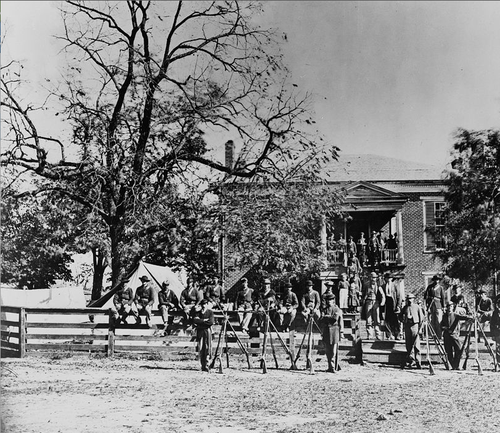
As an aside, I once was at Appomattox Courthouse on a foggy, chill morning.
There was no one there but me. I felt as if Lee and Grant and the rest would ride in on ghostly horseback at any moment. The wind murmured history in my ear. I got a cold chill.I felt the sense of the place and what had happened there. Take a kid to walk the steps of history,and not just the pretty places. No, not just the pretty places at all.
January 14, 2013
Advice Column
Hey, not from me—I get in trouble all the time when I try to give advice! But I've heard some good ones lately, so sharing, but, hey, don't kill the messenger!
•If you really want to get anything done—PRIORITIZE RUTHLESSLY!
I like that; it's one thing to prioritize, and another to do it "ruthlessly." I plan to try it this year, and if it does not work, I will blame Ruth.
•Don't waste precious time doing unnecessary texts, cell phone calls, photo sharing, googling, etc. The Wall St. Journal estimates people spend 1/3 of their productive time doing these things. Also, that if you do incessantly, it interrupts your brain patterns and makes it harder to focus or refocus, much less to get anything of quality done. I agree 100%. On a scale of 1-10, I am probably just a 2 at this, but they also included checking emails, which takes way too much of my precious creative time.
•This is my advice: Combine RUTHLESS prioritizing with MUCH MUCH LESS email checking, texting, etc.
That means I'm going to ignore all of it till I get my main priority done each day. Then, and only then, can I do the other stuff, like text Christina, email Cassidy a photo, etc. It only makes good sense.
January 4, 2013
Happy New Year, Everyone!
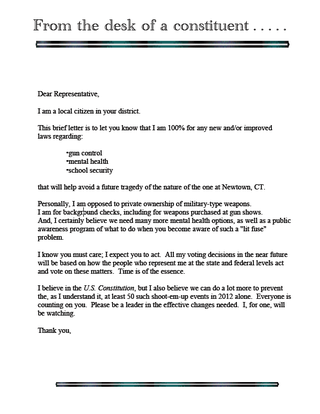
change that would help avoid a future tragedy like the many we had last year—especially the one at the school in Newtown, CT.
I don't want to be a busybody or a buttinsky, but, hey, this is important. I do think it will take Moms, Dads, Grammies, Papas, and others to "speak up" to get any effective change.
Below is a very generic letter, so that it can be used by anyone at any time, and for any person. Help yourself to copy it if you wish and adapt it as you may; my own letters will, of course, have my name at the bottom. You can add your own. Representative addresses are available online and, generally, in the front of your telephone directory. Do a kid a "civics lesson" favor, and let them help you prepare and send these letters. Print the PDF here.
Have a blessed 2013!
Carole
Print the PDF here.
December 19, 2012
A Brief Holiday Wish
As Christmas and the new year close in, our hearts are with the loved ones of the schoolchildren lost last
week. Heaven has more angels this week, but there are families out there enduring a pain that all of us hope never to experience.
Please hug your children for me, and enjoy every minute you have with them.
Warm and peaceful wishes this holiday season, from me to you.