
Ikram Hawramani's Blog, page 28
June 23, 2019
The Uniqueness of Western Civilization by Ricardo Duchesne
 Get it on Amazon
There are times when you read a book that completely change your understanding of the world, answering questions you have had for most of your life, and even better, answering questions you did not know you had. This is such a book. Duchesne unites economic analysis, anthropology, history and philosophy in order to make a compelling argument for why Western civilization is truly unique and unlike any other civilization.
Since writing this book, Duchesne has been influenced by white nationalist writers into seeking genetic answers for the uniqueness of the West. But the current book is free from genetic explanations. Duchesne also has a very negative view of Muslims, considering them unassimilable and inherently opposed to Western civilization. But that shouldn’t stop us from benefiting from his work. One of the most hateful fashions in the media and academia today is discarding a person’s valuable work because of their beliefs and motives.
Duchesne’s greatest contribution is his theory that the uniqueness of the West comes from the fact that the ancient Indo-Europeans who took over Europe had a very special feature: their elite was made up of individually sovereign aristocrats. While all societies throughout the world have had aristocratic elites, what was unique about the West was the fact that its aristocrats were individualized and free. This is extremely unusual and as far as I know it was something that never existed anywhere else.
The ancient Middle East never enjoyed the existence of individually sovereign aristocrats. The elite under the pharaohs had no right to compete with each other for renown and prestige because all renown and prestige belonged solely to the pharaoh. The same was true in ancient Mesopotamia and Persia. The king was the only person who had the right to claim personal worth and glory.
But among the Europeans, the Greeks, Romans and the Indo-European barbarians around them, the entire arrangement of society revolved around the competition of its sovereign aristocrats for personal prestige and glory. They had no toleration for kings who reduced the aristocracy to mere minions and slaves as happened throughout the world. They demanded equality and free competition.
Thus in the Greek epic the Iliad, the warrior aristocracy is made up of free individuals who recognized no master above them. Achilles, Ajax and Odysseus were all sovereign individuals. The Mesopotamian Epic of Gilgamesh, on the other hand, is an illustration of the situation outside the European realm. There is only one hero, who is, naturally, a despotic king. There is no room in this epic for other heroes since these societies were organized around the recognition of a single individual in the entire state who could claim personal prestige and glory.
The theory of the presence of a sovereign aristocracy in the West and its absence elsewhere also explains why the Indo-Europeans of Persia and India failed to create civilizations equal to those of Europe. The Indo-Europeans who took over Persia and India quickly embraced the Oriental despotic form of rule that has always existed in these areas. The sovereign aristocracy disappeared to be replaced by all-powerful rulers. The reason for this change appears to be different natural environments. The European climate could support individual farmers who could sustain themselves without any need for complex irrigation systems that required centralization. In the East, however, civilizations were extremely dependent on irrigation systems that made farmers desperately dependent on their chiefs and kings. The king could easily cause the farmers to starve by refusing to provide them with the irrigation systems they were so desperately dependent on.
The Westernization of the World
If we take the ideas in Uniqueness seriously and ignore Duchesne’s recent writings about the genetic uniqueness of Europeans, the conclusion is that the great accomplishments of the West are a matter of culture. The door is open for any culture in the world to embrace the Western system, leading to a similar flowering of creativity and accomplishment. The key is individualism. The culture must recognize the equal dignity, mastery and right to prestige of all citizens, rather than recognizing only one despotic ruler who monopolizes mastery and prestige.
Thus any culture that embraces the Western ideal of the equality of citizens before the law will create a system that will lead to a similar restless drive among citizens for accomplishment. According to the social scientists Santos, Varnum and Grossmann, there has been a significant increase in individualism throughout the world. The world is increasingly adopting the Western ideal of sovereign individuality.
I was surprised to discover that one of the most popular Arabic songs on YouTube (with 154 million views) is a song that preaches strict individualism, titled “Be You”.
The Israeli social scientists Licht, Goldschmid and Schwartz have discovered that there is a very strong correlation between individualism and the rule of law, non-corruption and democratic accountability. As individualism increases throughout the world, we can expect more and more functional democracies to come into existence.
The “Wickedness” of the West
According to the currently fashionable ideology at the sociology departments of Western universities, the West is uniquely evil. It doesn’t matter that the Chinese colonized the lands of ethnic minorities and sometimes massacred them; it is the Western colonization of other lands that is unforgivable. It doesn’t matter that the native Americans slaughtered and enslaved each other, or that the Aztecs practiced mass human sacrifice; it is the intrusion of the West into this utterly evil and inhuman social system that is unforgivable. It doesn’t matter that Africans used to enslave each other by the millions; it is the fact of Westerners buying these slaves that is unforgivable. It doesn’t matter that India has an utterly racist and dehumanizing cast system or that Israel is an apartheid state; it is the racial inequalities in the West that is unforgivable.
The action of the Europeans on the world scene over the past few centuries were clearly motivated by much greed for wealth and power. But a person who does have an ax to grind against Westerners will see them and their actions as no worse than those of the rest of the peoples of the world. And not just that, but such a person will also appreciate the uniquely positive and humane contributions that the West has made to make the lot of non-Westerners better. It was the British who spent vast amounts of wealth, and large numbers of the lives of their own, to police the seas in the 19th century to put an end to the slave trade. Yes, the British engaged in it before, like almost all other peoples. But it was they, and not the Chinese, Indians, Muslims or Africans who developed an anti-slavery ideology that ensured that slavery would be abolished throughout the world. But to those who are moved by hate against the West, this is irrelevant. The West is evil, and the facts do not matter.
China as the West’s Equal
There is a concerted academic effort aimed at showing that China was equal to the West until the 1800’s when the West discovered the use of coal and gained access to the colonized Americas. The point is to show that Western civilization has nothing to be proud of in being responsible for the intellectual and industrial revolutions that made it the supreme world power by the 19th century. The West simply enjoyed “windfalls” in its easy access to coal and in its access to colonial markets.
We are supposed to believe that the West was stuck in the same position as China in the 19th century, with the population quickly approaching its ecological limits. This truly was the case in China, where a lack of innovation coupled with maximized land use meant that the population could no longer expand beyond its 350 million citizens. It was already producing food at the maximum rate it could, and the only solution for keeping their population under control was widespread female infanticide (something that is supposed to be morally neutral since it wasn’t Westerners doing it).
Britain is supposed to have enjoyed a “windfall” in its acquisition of the Americas, but the historian Kenneth Pomerantz shows no interest in China’s bloody colonization of vast swathes of non-Chinese lands to the west over the centuries. In his distorted worldview “colonization” is something that only Europeans do. Pomerantz also shows no interest in the “windfall” that China enjoyed in possessing lands capable of growing rice; a crop that produces two harvests per year. He also shows no interest in the fact that China greatly benefited from the use of potatoes–a “windfall” crop acquired from the Americas.
The first part of Duchesne’s book is dedicated to refuting the current academic narrative of a China that was a counterpart to the West until the 19th century. He shows that the West was improving its technology and capacity to support its population at a rate that enabled it to continue to support growing populations. This was something China was incapable of due to its lack of innovation.
“Eurocentrics” like Duchesne have been characterized as believing that the West achieved its supremacy without any debts to other cultures. But Duchesne clearly opposes such a view:
By 1200, Europe had recovered much of the scientific and philosophical accomplishment produced within the rest of the world. Persian, Byzantine, Chinese, Indian, African, and Islamic cultures were essential ingredients in Europe’s ascendancy. Affirming the uniqueness of Western civilization in no way implies the idea that Europe can be viewed as a self-contained civilization. A major secret of European creativeness was precisely its multicultural inheritance and its wider geographical linkages with the peoples of the world.
Humans as Passive Animals
One of Duchesne’s major efforts is to refute the popular academic conception of humans as passive actors in world history, controlled by circumstances and environments that made them what they are. Duchesne argues that Westerners were active agents who sought wealth and prestige, not passive agents who couldn’t help doing what they did due to economic circumstances.
The view of humans as passive animals stuck in their circumstances is often associated with Marx, although I believe that we can detect the same strains of thought in many other highly influential 19th and 20th century intellectual movements, almost all of them led by Jewish thinkers.
Marx: Humans are passive animals controlled by economic class conflict.Freud: Humans are passive animals controlled by sexuality-based conflict within families.The Frankfurt School (Horkheimer, Adorno and Marcuse): Humans are passive animals controlled by social pathologies peculiar to the Western-Christian mentality.Betty Friedan aka Bettye Naomi Goldstein: Humans are passive animals controlled by sex-based class conflict (Marxism translated into feminism).Louis Brandeis and Ronald Dworkin: Humans are passive animals who do not know what is good for them; the elite must gain control of the legal system to force upon them what is good for them.Leo Strauss: Humans (meaning ordinary Christians) are passive animals to be controlled by an atheistic philosophical elite behind the scenes.Jacques Derrida: Humans are passive animals controlled by dominant discourses that maintain power structures.Immanuel Wallerstein and Andre Gunder Frank: Humans are passive animals controlled by dominant “world systems”.Jared Diamond: Humans are passive animals controlled by environmental forces.
The only major non-Jewish intellectual who espoused similar ideas is Michel Foucault.
What unites all of these thinkers is their elitism. This elite can see where others are blind. They stand above the masses. They are outsiders who can see how the game works while the average Westerner is stuck inside the game not even realizing it is a game.
Another thing that unites them is their hatred and disgust for gentile, Western, Christian society.
It should go without saying that this view of humans as passive animals in need of being led by the elite is wholly alien to Western aristocratic egalitarianism, or its modern equivalent: Western individualism. All of the Jewish-led movements above are characterized by their authoritarianism. Freud, for example, maintained a very close inner circle of psychoanalysts (almost all of whom were Jewish, which led a rabbi to calling psychoanalysis a Jewish religious cult). Disagreement with Freud’s ideas was strictly forbidden. He was the messiah from whom all truth came.
These radical intellectual movements are all opposed to the Western ideal of free, democratic debate. In the Western mind, scientists and scholars are all equal, involved in the same search for truth. But these radical intellectual movements have no interest in truth; truth is what comes out of the mouth of the leader. Thus all of these radical intellectual movements can be thought of as an importation of Oriental despotism (only the leader has the right to a free intellect) into the Western intellectual atmosphere.
The harms of these intellectual movements cannot be understated. The Jewish Marxist evolutionist Stephen J. Gould, for example, ushered in 30 years of persecution against evolutionary scientists who studied the influence of genes on human behavior. The science journalist Robert Wright writes:
I argued, basically, that Gould is a fraud. He has convinced the public that he is not merely a great writer, but a great theorist of evolution. Yet, among top-flight evolutionary biologists, Gould is considered a pest–not just a lightweight, but an actively muddled man who has warped the public’s understanding of Darwinism.
Despite his low scientific standing and his recognition by serious scholars as a fraud, Gould’s influence continues, supported by a circle of disciples who continue embellish his name and treat his words as the unquestionable words of a messiah. The influence of people like Gould means that to this day the most scientifically-supported field of psychology (psychometrics, i.e. the study of intelligence or IQ) continues to be looked at as unscientific.
All of the above radical movements (the most important today being the mix of cultural Marxism and postmodernism that rules in academia) are pests on intellectual development and scholarship and will ultimately be squashed by the constant, restless, innocent search for truth that continues to characterize many Westerners, and today, non-Westerners. I have high hopes in the increase of Muslim participation in intellectual fields. Muslims who follow Islamic morality will reject the relativization of truth and will continue the Western tradition of the innocent search for truth.
The Islamic Doctorate
 Get it on Amazon.
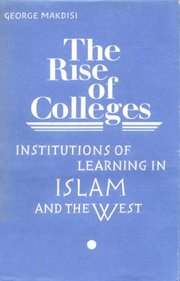
One minor criticism I have is Duchesne’s lack of knowledge of George Makdisi’s work. Thus Duchesne thinks that the crucial development of doctorates and the “the license to teach” (professorship) were uniquely Western, when Makdisi’s work strongly suggests that these were borrowed from Islam (as I discuss here). Islam did have a doctorate (the taʿliqa) that granted the person professorship. Islam also invented the idea of academic freedom. What Islam failed to do was extend this concept to other fields of inquiry. The doctorate and professorship were strictly limited to Islamic law. This was borrowed by the West, but crucially, the West extended it to all fields of inquiry.
The West learned a great deal from Islam. But its culture of aristocratic egalitarianism meant that Westerners were far more motivated to take these ideas further in competition with each other.
History and Philosophy
Duchesne dedicates a great deal of writing to discussing Hegel’s views on the development of human consciousness out of the conflict between individuals. Duchesne believes that Hegel’s views on history actually only apply to Europeans rather than all humans. Hegel believed that human self-consciousness developed out of a “struggle to the death” with other humans. Hegel believed that a struggle to the death between two humans would end up in one of them enslaving the other. This is an unsatisfactory end because the master cannot accomplish true self-consciousness unless another master recognizes him. Therefore the true development of history requires the presence of multiple masters recognizing each other.
Duchesne rejects common interpretations of Hegel to suggest that this struggle is not just an abstract concept, but a description of the reality of the struggle to the death between barbarian European aristocrats, who accomplished self-consciousness through struggling with each other for prestige. Europeans accomplished self-consciousness before all other peoples because only they had a culture of sovereign aristocrats rather than omnipotent, despotic lords.
Duchesne says that there is an “unbroken link” between the earliest European Indo-Europeans who came out of the Pontic steppe north of the Black Sea, the ancient Greeks, the Romans, the various Germanic and Scandinavian barbarians, and the culture of medieval Europe to the present day. The process of the struggle to the death between aristocrats led to the development of the concept of equal citizens before the law. Only Europeans could have developed such a concept because only they had a social system defined by the existence of multiple, equal masters, rather than a system defined by the existence of a single master (a Pharaoh, a Persian “king of kings” or a Chinese emperor).
The End of Western Uniqueness
As I mentioned earlier, if we accept the theory that the West’s uniqueness comes from its recognition of the dignity and rights of the individual, then the spread of these ideas throughout the world means that the entire world is now part of the same Western system. Gone are the days when only Westerners competed with each other for individual prestige through innovation.
The Westernization of Islamic Studies
A very interesting aspect of the spread of Western aristocratic egalitarianism is the way Muslim intellectuals and scholars today have started to challenge the scholarly tradition of Oriental despotism that characterized Islamic studies in the past. What we have today are thousands of intellectuals and scholars throughout the world who are bravely challenging long-held beliefs in their individualist search for truth. They have, for example, defended women’s right to divorce and the right of Muslims to leave Islam without being molested, not by discarding Islamic teachings out of a desire to live up to Western standards, but by recognizing that Islam actually supports these views.
In the case of Christianity, the individualist search for truth meant that it suffered persistent attacks on its foundations as philologists in the 19th and 20th centuries subjected its texts and beliefs to rigorous scholarly study and debate. The view of many Westerners unfamiliar with Islam is that Islam too will have its foundations weakened as its study becomes more scientific. But the reality as I see it is quite the opposite. If Islam is really “true”, then it will survive the process intact.
And that is what I see all around me. Having benefited from the latest Western studies of Islam, my view of Islam’s validity has only strengthened. Those who look forward to the secularization of the world may take comfort in the history of the weakening of Christianity, believing that Islam will go through a similar process. But my view is that those hopes will never materialize. Western students of Islamic studies such as Jonathan Brown and Umar Wymann-Landgraf, who have subjected the Islamic scriptures (in their case the Hadith literature) to rigorous Western-style analysis have actually ended up converting to Islam.
 Joram van Klaveren
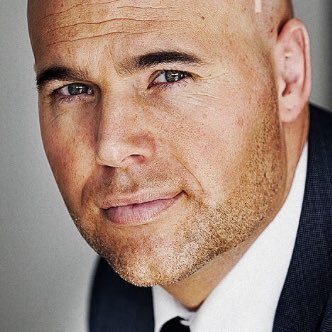
We are also seeing a possible trend of anti-Islam activists converting. Joram van Klaveren, a close ally of anti-Islam politician Geert Wilders, in the middle of writing an anti-Islam book, ended up converting. What other religion in the world has such a power? Another far-right convert is Arthur Wagner. Yet another is Arnoud van Doorn.
Why are these lovers and defenders of Western civilization converting to Islam if Islam is inherently opposed to Western values?
It is my view that these activists, feeling embattled by the constant attacks on Western values, and recognizing that Christianity offers no hope, realized the Islam is actually the best hope for the survival of their civilization.


Is dawah obligatory on every Muslim?
Salaam. Is dawah obligatory for every Muslim?
It depends on what is meant by dawah. If what is meant is spreading brochures and pamphlets and intruding into people’s lives to talk to them about Islam (as Jehovah’s Witnesses do for Christianity), then that is not obligatory. What is obligatory is being a good example and calling those who are closest to you to be better. This shouldn’t be done in a harassing way, but as a genuine effort to make them better people and show them what is better. For more on this please see this previous answer.
June 19, 2019
How to learn Quranic Arabic
Assalamualaikum. Do you have any advice for someone who wants to learn Arabic in the Qur’an? I already know how to read the Arabic, but since I want to understand deeply about Qur’an maybe you have learning methods which you can suggest. Jazakallah brother
Alaikumassalam wa rahmatullah,
You may be interested in my book Learning Quranic Arabic for Complete Beginners. The contents can be accessed for free at my site here.
Learning Arabic properly requires thousands of hours of effort. It doesn’t really matter what book you select or what learning method you choose as long as you continue to read new books and benefit from free online courses such as on YouTube.
The way I learned Arabic was from watching Arabic-dubbed anime cartoons as a child (here is an example). You can also watch Arabic TV series that use standard Arabic, such as the Omar series.
Once you have some understanding of the language, you can move on to reading Arabic-language books, such as novels. Amazon.com actually sells a lot of Arabic books, including the Harry Potter books in Arabic. You can check them out here. Once you have a good knowledge of standard Arabic, reading and understanding the Quran deeply become possible.
I believe that the most important thing in language learning is consistent effort to try to read the language, and reading books in the language is the best way to do that. I learned English from reading hundreds of novels.
June 16, 2019
On political correctness
What do you think of 'Political Correctness'?
I consider it an extremely harmful thing. Political correctness simply means that an unelected elite decide for the rest of society which truths they are allowed to speak and which truths they are not allowed to speak. In the United States this basically means that those who own the major media outlets and publishing houses decide what is allowed to be discussed in public.
An extreme example of harm of political correctness is recent attempts to make discussions of the harms of being overweight and obese politically incorrect. Thus doctors who speak about the science on the dangers of obesity are attacked for discriminating against obese people.
Another example is the fact that discussing the powerful influence of Israel on US politics is politically incorrect. This makes it impossible for intellectuals to discuss the fact that having a foreign country have so much power over one’s own country may not be in the best interests of the home country.
In my view it is a betrayal of God to hide any important truth for political reasons, so I have little respect for those who consider political correctness to be more important than truth. I am a supporter of free speech and believe that an important duty of Muslim intellectuals is for them to be speakers of truth. Recently a scientist was attacked for studying the possibility that the practice of cousin marriage among Muslims in Britain may be responsible for the high incidence of birth defects among certain Muslim-majority ethnicities. I have only contempt for people who attack scientists for studying such politically sensitive issues. If it is true that cousin marriage among Muslims in Britain is leading to increased birth defects, the first step toward a solution is for this to be openly discussed. But the ignorant, narrow-minded media elite of Britain, rather than discussing the actual facts involved, attacked the scientist’s motive for studying the subject. Even if the scientist hated Muslims (and there is no evidence that he did), if what he said is true, then it must be discussed and taken seriously.
On nail polish and ablution
As-salamuʿalaykum, I recently i have come across Dr. Shabir Ally's thoughts on the nail polish dilemma on YouTube (https://www.youtube.com/watch?v=aOpxO...). I'm inclined towards his reasoning for it but would like to know your take on his opinion too if possible.
Alaikumassalam wa rahmatullah,
I watched the video but unfortunately he did not say anything new on the issue. I believe that nail polish is at best in a gray area, which means that it should be avoided as part of piety.
He mentioned that oil can be used on the skin, which can be barrier to water. But the human skin naturally produces oil and absorbs it, so it is not directly comparable to nail polish. As for kohl, unlike nail polish it does not create an impermeable barrier to water because as far as I know the skin pores continue to remain open after using it, although I am not sure about the exact science of how it interacts with the skin. The comparison with kohl is interesting and hopefully if the exact science of its interaction with the skin can be determined, a similar substance may be possible to create to use as nail polish, although it will likely not create the “polish” that ordinary nail polish creates.
I believe that the possibility of people being turned away from Islam because of the prohibition on nail polish is not significant enough to warrant permitting it.
Another solution would be the development of nail polish stickers that are easy to remove before ablution, although they would be a hassle to use.
June 13, 2019
Converting to Islam against parents’ wishes
I want to take my shahada infront of an imam but my parents do not support me. I tried going to church and I felt like I died inside and I cried for days before going to church( I know it sounds dramatic but my heart only belongs to Allah). My parents are also open to the idea of me marrying a Muslim boy but … I dont want to wait or specifically look for that just to convert. Would it be wrong if I converted without their support ?
You can take your shahada right now and that would be official. There is no need to do it with an imam although that is of course a nice experience.
Welcome to Islam and feel free to ask any questions you may have.
As for converting without their support; it is obligatory in Islam to go against your parents’ wishes if they try to interfere with your faith. The Quran says:
We have advised the human being to be good to his parents. But if they urge you to associate with Me something you have no knowledge of, do not obey them. To Me is your return; and I will inform you of what you used to do. (The Quran, verse 29:8)
You shouldn’t wait for their approval to convert. If you are convinced that Islam is the true religion, then it can be argued that it is actually sinful if you avoid the Islamic duties when you know in your heart that you should be doing them.
There are many organizations that support converts, such as the Muslim Convert Network. Reach out to them and inshaAllah you will get many benefits.
You may also be interested in The New Muslim’s Field Guide, although I haven’t read it, it has many positive reviews.
Best wishes.
The permissibility of wiping off wudu water
Salam alaikum. Is it permissible to wipe off our wudu, as in drying the water off our skin with a towel, after taking a wudu before prayer?
Alaikumassalam wa rahmatullah,
According to Imām al-Nawawī, all scholars agree that it is permitted. But there is disagreement on whether it is makrūh (“disliked”) thing to dry off the wudu water or whether it is mubāḥ (“permitted and neutral in value, netiher good nor bad”). The fatwa I cite below says that it is sunna to not dry off the water (since the Prophet PBUH never did that), but that doing so has no harm.
References:
Fatwa from the Qatari Fatwa Authority (Arabic PDF)
June 12, 2019
Intellectuals and Society by Thomas Sowell
 Get it on Amazon
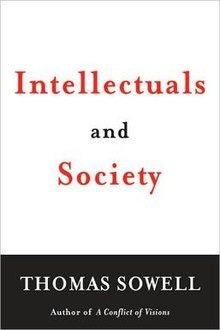
This book is a withering criticism of the class of society that Thomas Sowell calls the “intellectuals” (journalists and columnists, public intellectuals, writers, sociologists).
Sowell’s thesis is that intellectuals try to persuade the public to support policies that may do greater harm than good while enjoying complete immunity from the bad consequences of their recommendations. For example in the 1920’s and 1930’s intellectuals widely called for disarmament, making it very difficult for British politicians to order the military to arm itself in response to Nazi Germany’s growing military power. The intellectuals in charge of Britain’s media had created an atmosphere where politicians would have risked their jobs if they had done what they know to be right, since the public had been indoctrinated by the intellectuals to fight rearmament. In this way the intellectuals were responsible for making Britain almost lose World War II to Germany, and yet no intellectual faced any consequences for recommending such a self-defeating policy.
Thomas Sowell is an economist and in this role considers the intellectuals pests in issues of economic policy. They recommend vast changes in economic policy without having the competence to understand the consequences, and without suffering any repercussions when their policy recommendations do great harm to major sections of society.
Intellectuals throughout the 20th century have called for gun control laws, thinking that this would make society safer. They ignore the fact that Switzerland, where gun ownership is extremely high, suffers far less crime than the United States. And when intellectuals in Britain managed to pass strong control laws, this actually lead to a vast increase in crime. Intellectuals also strongly supported weaker punishments of criminals in Britain, which according to Sowell is partly responsible for Britain’s crime crisis. And when conservatives in the United States managed to create strong anti-crime policies in the 1990’s, which lead to a sharp decline in crime, the intellectuals only expressed bewilderment at this “unexplainable” phenomenon when to Sowell the explanation is extremely obvious: keeping more criminals in prison means fewer criminals out there committing crime.
This book should be required reading for all Muslim intellectuals living in the West. It is a great help in creating a critical attitude toward nice-sounding popular doctrines promoted by Western intellectuals.
Sowell belongs to the neoconservative Hoover Institution. He shares the anti-Muslim bias of neoconservatives; almost all mentions of Muslims in his books are negative (while having worked extremely hard to defend the image and rights of Jews while always ignoring the possibility that Jewish behavior may have had something to do with anti-Semitism). In this book he does not disappoint:
The intelligentsia in some European nations have gone further—being apologetic to Muslims at home and abroad, and having acquiesced in the setting up of de facto Muslim enclaves with their own rules and standards within Europe, as well as overlooking their violations of the national laws in the European countries in which Muslim immigrants have settled.
The Hoover Institution is active in promoting the image of Muslims as the West’s new Jews as the Jews were seen in the past: separate, alien, unpatriotic, living in enclaves, and having large numbers of anti-Western radicals among them.
However, Sowell’s anti-Muslim bias should be no obstacle to Muslims to benefit from his expertise and his very important work in promoting a more rational intellectual atmosphere and in defending Western civilization from, ironically, largely Jewish attempts to undermine its pride and patriotism. See The Uniqueness of Western Civilization by Ricardo Duchesne, published by the highly respected academic publisher Brill, for the extreme over-representation of Jews among intellectuals that have worked hard over the past 100 years to promote the idea that Western civilization is inherently evil and immoral (although the Duchesne himself rarely if ever makes mention of the Jewishness of these intellectuals).
Can I consider Allah as my friend?
Can I consider Allah as my friend?
In the Quran God calls Himself the mawlā of the believers (8:40 and elsewhere), which is usually translated as “protector”. But it actually also means “friend”, “companion”, “supporter”, “master”, “chief”. So it contains all of these meanings.
However, in modern usage “friend” implies that the person is equal in status to you, which naturally does not apply to God. So God can be a friend in that He is our companion in life, that He supports us and cares for us. But He is not just a friend, He is also a master and a mentor, so focusing only in His being a friend leads to a biased understanding.
Forex and stock trading in Islam
Is trading forex and the stock market permitted in Islam?
Selling one type of currency for another and making a profit by this is permitted in Islam. However, what is known as “forex” can contain many practices that are prohibited in Islam, such as interest or futures contracts. So there cannot be a general statement on the permissibility or not of forex until that specific company’s practices are studied.
As for stock trading, this too is permitted technically as long as there is no interest or futures is involved, and as long as the stock being traded does not make its profit largely by a practice that is forbidden in Islam, such as bank stocks that make most of their money through interest. But investing in a stock such as Microsoft that makes some money through interest but that makes most of its money through permissible means is permitted, however, the amount of profit it makes through interest must be deducted and donated from the value of the stock annually.
Also note that any money invested in currency or stock trading is annually zakatable. So if a person has a million dollars invested in currency or stock trading (or real estate trading), they are required to pay 2.5% of this money annually for zakat whether they make a profit or loss. The principle is that all speculatively invested wealth is zakatable.
References:
Fatwa from the Qatari Fatwa Authority (Arabic PDF)Fatwa from the Jordanian Fatwa Authority (Arabic PDF)


