
Kimberly Nicholas's Blog, page 6
March 19, 2021
Subscribers-only conversation on May 2
Hi friends!
This extraordinary Friday post* is to let you, my lovely We Can Fixer, know that:
My new book, UNDER THE SKY WE MAKE, launches next Tuesday, March 23!
I’d love to discuss the book with you, & with my friends Dr. Lucy Kalanithi and Colty Tipton-Johnson who you’ll meet in the book, in a subscribers-only event on Sunday, May 2!
To join the conversation:Pre-order UNDER THE SKY WE MAKE (book, audiobook, and/or e-book) by March 23. (Here’s why pre-orders are so important to help authors!)
You can find it at your favorite local bookstore, or online here:
Then, RSVP here to join our private chat on May 2!
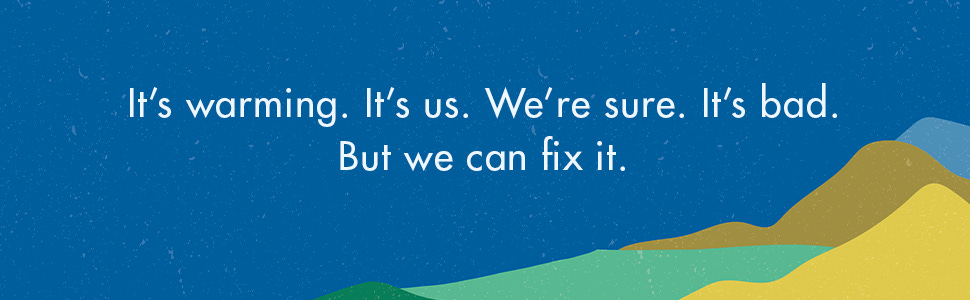 a.image2.image-link.image2-300-970 { padding-bottom: 30.927835051546392%; padding-bottom: min(30.927835051546392%, 300px); width: 100%; height: 0; } a.image2.image-link.image2-300-970 img { max-width: 970px; max-height: 300px; } Under the Sky We Make = We Can Fix It, in book form
My inspiration for this newsletter, and my approach for facing the climate crisis with facts, feelings, and action, comes from the last four years I’ve spent working on UNDER THE SKY WE MAKE.
So if you like this newsletter, I hope the book will resonate with you.
Climate bestiesAn essential wellspring of inspiration in my life and the book is my friends, whose stories are woven throughout.
In our conversation on May 2, I’ll get to introduce you to some of my favorite people, who you’ll meet in the book.
Lucy taught me a lot about purpose, grief, and community, including from facing the death of her husband and my friend Paul (Pubby) Kalanithi, who wrote When Breath Becomes Air. Lucy talks about their experience in her gorgeous TEDMED talk below.
I draw from some of the conversations I had with Pubby as he was dying in my chapters on facing climate grief and making meaning in a warming world.
 a.image2.image-link.image2-386-667 { padding-bottom: 57.87106446776612%; padding-bottom: min(57.87106446776612%, 386px); width: 100%; height: 0; } a.image2.image-link.image2-386-667 img { max-width: 667px; max-height: 386px; } Watch Lucy’s TEDMED talk, “What makes life worth living in the face of death?”
After decades of friendship including more nights than I can count dancing until sunrise, Colty and I shared a series of climate counseling sessions that begin and end the book. We talked about how to go from feeling freaked out and overwhelmed, to building a framework for navigating the climate crisis in his daily life as a citizen, community member, and parent. Plus shared a lot of inappropriate jokes along the way.
I can’t wait for you to meet them on May 2nd!
What people are sayingA lot of people I admire are saying really nice things about UNDER THE SKY WE MAKE. Here are some of their words in pretty boxes! If you’re hungry for more praise about the book (hi Mom!), you can see more over at my website.
 a.image2.image-link.image2-300-300 { padding-bottom: 100%; padding-bottom: min(100%, 300px); width: 100%; height: 0; } a.image2.image-link.image2-300-300 img { max-width: 300px; max-height: 300px; }
  a.image2.image-link.image2-300-300 { padding-bottom: 100%; padding-bottom: min(100%, 300px); width: 100%; height: 0; } a.image2.image-link.image2-300-300 img { max-width: 300px; max-height: 300px; }
  a.image2.image-link.image2-300-300 { padding-bottom: 100%; padding-bottom: min(100%, 300px); width: 100%; height: 0; } a.image2.image-link.image2-300-300 img { max-width: 300px; max-height: 300px; } Listen for yourself
 Check out a 5-minute listen to the audiobook, which I got to narrate!
(The audiobook was directed by the wonderful Lorelei King, who plays Julia Roberts’ publicist in Notting Hill, a film I finally saw for the first time thanks to We Can Fix It reader Klara’s insistence.)
*Your monthly dose of evidence-based, actionable insights on the climate crisis is coming next week, on the last Thursday of the month, as always. Hope you don’t mind an extra update when I write a new book, which is currently happening at the rate of once per 43 years. :)


February 25, 2021
12 ways to delay climate action
Welcome back to We Can Fix It, your personal monthly guide from your favorite climate scientist (that’s me, Kim Nicholas!) for fixing the climate crisis with facts, feelings, and action.
Since our launch last month, the We Can Fix It community has grown nearly 10x! Welcome new readers, I’m glad you’re here!
If you need to get up to speed, here’s what this newsletter is all about.
Otherwise, let’s dive right in!
Facts: 12 arguments for delaying climate actionThankfully, denying the reality of human-caused climate warming is going out of style.
There’s a long, ugly, tragically successful history of climate misinformation campaigns. For example, Harvard researchers Geoffrey Supran and Naomi Oreskes show how Exxon misled the public to cast false doubt that human-caused warming is real, serious, and solvable.
But, good news! It’s a small, and shrinking, group that dismisses the reality of the current warming, its human cause, and the risks it poses. Just 7% of Americans belong to this group, according to the latest survey for Yale’s “Global Warming’s Six Americas” project. (Boy, are they loud, though! Not to mention, over-represented in Congress.)
The new frontier in foot-dragging is “climate delay”: arguments that “accept the existence of climate change, but justify inaction or inadequate efforts.”
That’s the conclusion of an international team of researchers, including many of my favorite #ClimateTwitter peeps, in a study of 12 “discourses of climate delay”. (Spoiler alert: my fave is Doomism, brilliantly illustrated by this IPA-swilling hipster. )
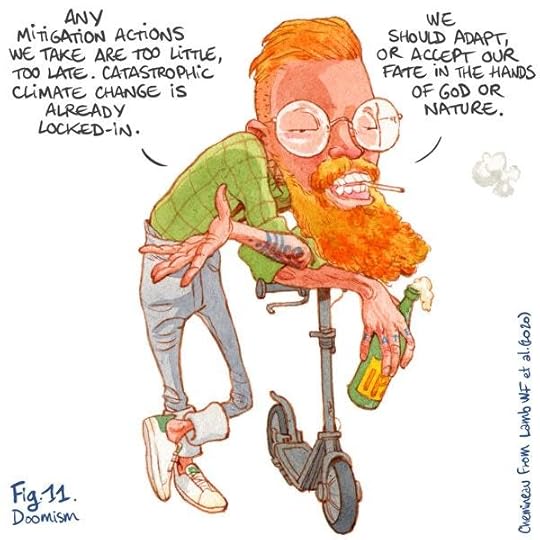 a.image2.image-link.image2-600-600 { padding-bottom: 100%; padding-bottom: min(100%, 600px); width: 100%; height: 0; } a.image2.image-link.image2-600-600 img { max-width: 600px; max-height: 600px; } Illustration source: Léonard Chemineau
In the analysis, William Lamb and colleagues identify four basic flavors of climate delay:
1. Redirect responsibility.
For example:
focus only on fossil fuel consumption to let producers off the hook;
or imply that others must act before we do, creating a Catch-22 of inaction.
2. Push superficial, non-transformative solutions.
Flavors include:
unrealistic techno-optimism;
framing fossil fuels as part of the solution;
focus on gradual progress so far, or ambitious goals, without referencing the scale of what’s actually needed;
or focus only on “carrots” like expanding high-speed rail, without acknowledging that “sticks” to restrict and reduce unsustainable systems are needed too.
These arguments tend to reinforce and benefit the status quo, and existing power holders.
3. Emphasize the downsides of action (while ignoring or discounting the benefits of action, and the harms it avoids).
These arguments may claim:
the most vulnerable and marginalized will be hurt by climate action;
human well-being or poverty reduction relies on fossil fuels;
or it’s too difficult to build public support for ambitious action.
4. Give up.
Instead of acknowledging the challenges in organizing large-scale socio-economic transformations, and looking for ways to overcome them, these arguments:
claim “change is impossible” (reinforcing the status quo)
or “we’re doomed” (so any and all action, other than building bunkers or downing bourbon, is futile).
(Okay, I didn’t mention one of the 12, bonus points if you find it!)
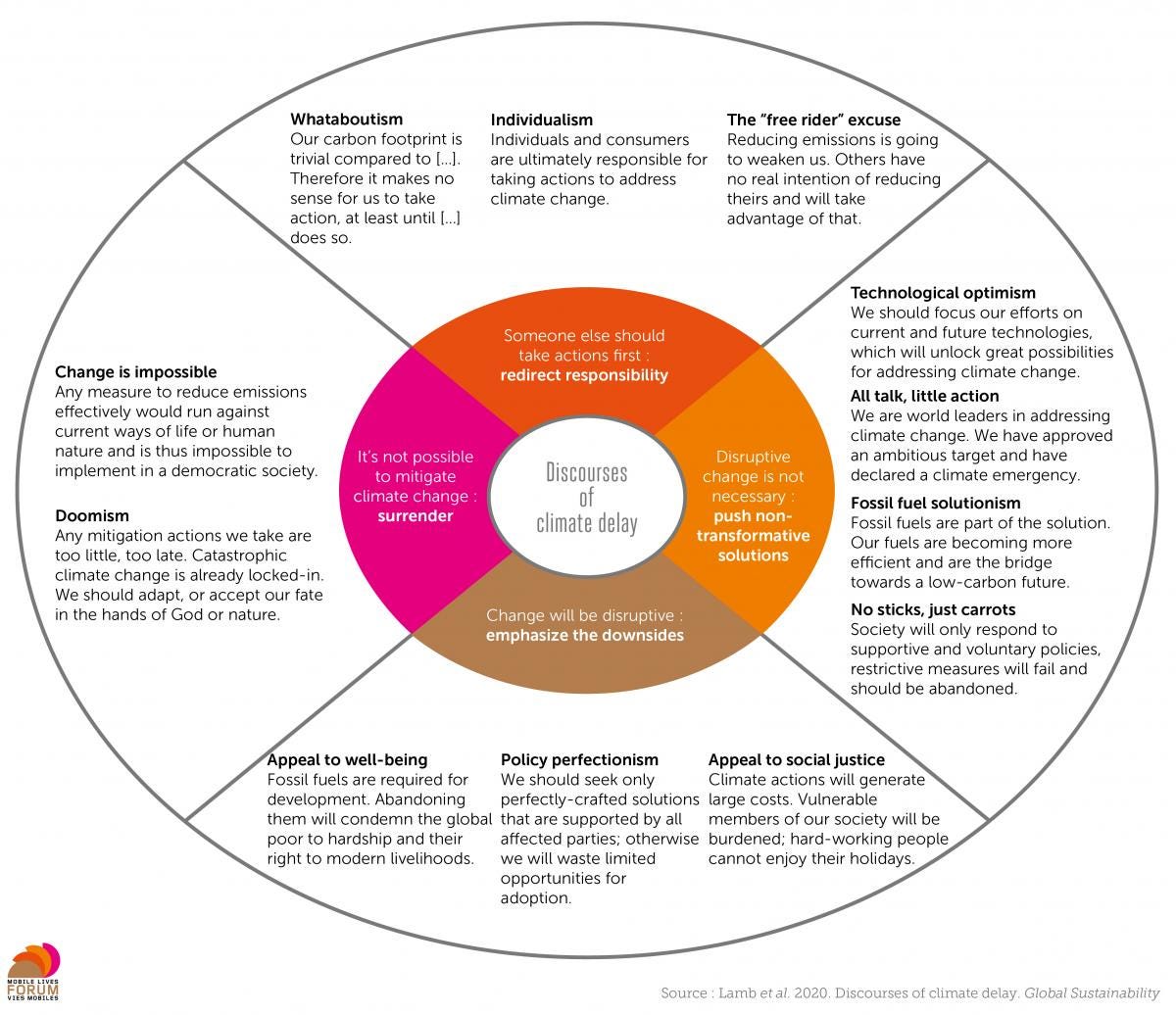 a.image2.image-link.image2-1036-1200 { padding-bottom: 86.33333333333333%; padding-bottom: min(86.33333333333333%, 1036px); width: 100%; height: 0; } a.image2.image-link.image2-1036-1200 img { max-width: 1200px; max-height: 1036px; } Source: Research summary by Giulio Mattioli
The authors note that many of these arguments raise important issues, “often contain partial truths, and may be put forward in good faith.” However, they point out the risk that these arguments are used by interest groups resisting the need to leave fossil fuels in the ground.
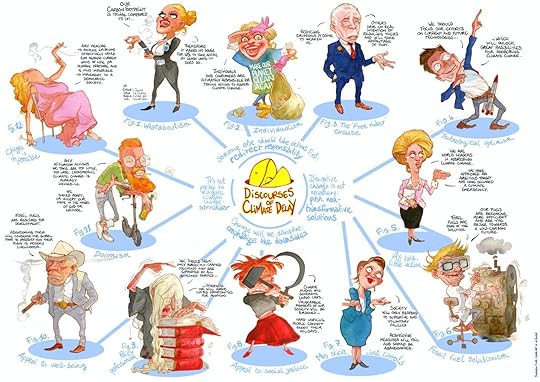 a.image2.image-link.image2-1029-1456 { padding-bottom: 70.67307692307693%; padding-bottom: min(70.67307692307693%, 1029px); width: 100%; height: 0; } a.image2.image-link.image2-1029-1456 img { max-width: 1456px; max-height: 1029px; } Source: Léonard Chemineau
What flavors of delay do you find in the next climate story you read?
Feelings: When Will It Be Too Hot to Have a Birthday Party Outside?One of my biggest struggles in communicating about climate change is trying to make clear what’s at stake. The difference between a planet that’s 1.5°, 2°, or 3°C+ warmer are profound, but it can be hard to convey viscerally.
“See how global warming has changed the world since your childhood” by Tim Leslie, Joshua Byrd, and Nathan Hoad from ABC news in Australia is one of the best pieces of science communication that I’ve seen. Please read it.
The interactive, illustrated story asks you to enter your birthday, then shows you how the climate in Australia has already changed since you were a kid.
Leslie and colleagues write:
“Think back to when you were six. By this point you’ve seen a few summers, probably run through a few sprinklers, burnt your feet on hot pavement — six-year-old you knows what hot feels like.
Well, not compared to a six-year-old today, you don’t. They’ve lived through four of the five hottest years in Australia; you were 36 years old before you experienced the warming they lived through in the first year of their life.”
Here’s what mine looks like, with the climate of my childhood at the top, and that of a six-year-old today at the bottom:
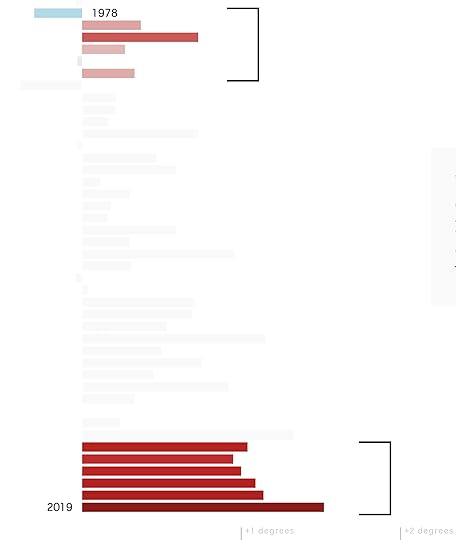 a.image2.image-link.image2-561-474 { padding-bottom: 118.29521829521829%; padding-bottom: min(118.29521829521829%, 560.7193347193347px); width: 100%; height: 0; } a.image2.image-link.image2-561-474 img { max-width: 474px; max-height: 560.7193347193347px; } Source: Tim Leslie, Joshua Byrd, and Nathan Hoad, ABC News
It was a gut punch to realize that for a six-year-old today in Australia, “their life has been dominated by drought.”
They go on to show how climate change means extreme events, like extremely hot days and the risk of wildfires, become more common. As they write,
“This is the reality of climate change — all the ingredients that are required for natural disasters start to collide with increasing regularity.”
Turning to future projections, they compare a world where we limit warming to 1.5°C, with a continued high emissions scenario where warming approaches 4°C by 2100.
In a high-emissions world where we fail to keep fossil fuels in the ground, when a child born today turns 50, “they’ll probably be celebrating indoors” as almost three quarters of the world population faces at least 20 days a year of deadly heat and humidity.
On the other hand, if we get halfway to zero emissions by 2030, and succeed in limiting warming to 1.5°C, that child “may still have the opportunity to visit a living Great Barrier Reef,” extreme heat will be far more manageable, and the temperature will be stabilizing.
We all have to push hard to get to zero emissions fast. But how? I’m so glad you asked! Lights, camera, …
Action! What does collective action actually look like?We Can Fix It reader Barry in Canada wrote me that he feels stuck about how to motivate collective action at various levels of government.
I hear you, Barry!!
Right now, government policies and pledges are “blatantly inadequate” to achieve the Paris Agreement climate goals, in the words of the UN Emissions Gap Report. Only two countries, Morocco and The Gambia, are judged 1.5°C-compatible by Climate Action Tracker; a handful more are judged 2°C compatible, of which the only large emitter is India.
The top four ways to help get bold climate policies in place, drawing from the excellent SOS: What You Can Do To Reduce Climate Change by Seth Wynes:
1. VoteEvery election is a climate election, and every leader needs a serious plan to go fossil-free fast.
Vote out the ones beholden to climate destruction.
Elect those who have pledged not to take fossil fuel money, and with good climate voting scores from organizations like LCV in the US or the Climate Action Network in Europe.
And please, for lots of reasons including the climate, elect more women; a 2019 study showed more women in parliament resulted in lower national carbon emissions via stronger climate policies.
2. Get active in a political party or climate organizationElections only come up a few times a decade, though, and climate action can’t wait. That’s why getting active in political and civil society organizations is essential, to pressure the politicians in office to adopt ambitious climate policies now. Social movements also build community, capacity, relationships, and trust.
Check out local chapters of climate movements like 350.org or Fridays for Future worldwide, or Sunrise Movement in the US, to find one you like.
For more groups to check out: Climate Action Network is an umbrella organization with more than 150 member organizations in over 130 countries.
Don’t forget to look for homegrown initiatives nearby.
You can also start a conversation with your neighbors about how you can meet a local need.
3. Create media attentionA free and independent press plays so many important roles, including shaping public opinion. A US study found more media coverage directly increased public concern for climate change.
For example, you can write op-eds, or work with groups organizing media-worthy actions (see recommended reading below).
4. Contact your repFinally, directly contacting your elected representatives is a highly effective political strategy. But it’s under-used. Research by Rebecca Willis found that UK politicians understood the need for climate action, but felt very little pressure from their constituents to make it happen. So get in touch!
Real letters are more effective than emails.
Phone calls to your rep’s local district office, focused on your personal story related to the issue, are even more effective than writing.
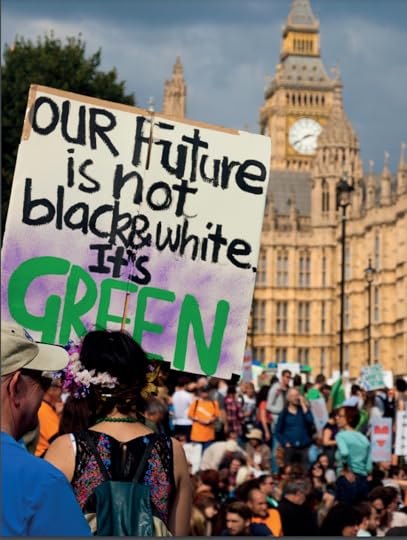 a.image2.image-link.image2-335-252 { padding-bottom: 132.75726630007853%; padding-bottom: min(132.75726630007853%, 334.54831107619793px); width: 100%; height: 0; } a.image2.image-link.image2-335-252 img { max-width: 252px; max-height: 334.54831107619793px; } Source: Rebecca Willis, Green Alliance, “Building the Political Mandate for Climate Action.”
 What does collective climate action look like for you? What are your next steps? Reply or comment below!
Parting Thoughts & TidbitsTalking about Wine with TeenagersI was interviewed by three high school students about my research on wine and climate change, high-impact climate actions, and my new book, UNDER THE SKY WE MAKE (T minus 26 days to launch AAAH!). About halfway through I come to the awkward realization that I seemed to be exalting alcohol consumption to teenagers. Oops. Listen here:
Here’s €26 billion the EU could be spending betterMy talk last week, “Billions in misspent EU agricultural subsidies could support climate, biodiversity, and equality,” was covered by former Reuters journalist Thin Lei Win in her excellent Substack newsletter on food and climate, Thin Ink.
Recently Enjoyed: a.image2.image-link.image2-213-142 { padding-bottom: 150%; padding-bottom: min(150%, 213px); width: 100%; height: 0; } a.image2.image-link.image2-213-142 img { max-width: 142px; max-height: 213px; }
 Read: Youth to Power: Your Voice and How To Use It, by Jamie Margolin. This is an excellent guide for everyone (youth or otherwise) on the practical work of collective climate action. The founder of Zero Hour offers solid advice on everything from writing op-eds to organizing protests and lobbying politicians.
 a.image2.image-link.image2-119-178 { padding-bottom: 66.5%; padding-bottom: min(66.5%, 118.37px); width: 100%; height: 0; } a.image2.image-link.image2-119-178 img { max-width: 178px; max-height: 118.37px; }
 Eat: I found a source for dried chiles in Sweden, and may have ordered them… all (thanks Atticus for the pro tip!). I was super stoked to make this delicious yellow mole with grilled fennel and portobellos from Rick Bayless last weekend.
Watch: Path to 100% Clean Electricity by 2035 webinar. This was a great 1-hour overview on the science (Michael Mann says it’s not too late for 1.5°C!), policy (Leah Stokes says regulations requiring clean energy are popular and effective!), and politics (Jamie DeMarco says there’s a critical window right now until August to get 100% clean energy mandates into US law!).
Drink: Simon and I opened a special bottle of 2008 Château de Chamirey Mercurey for my birthday, and it was delightful. I can’t wait until we can drink wine with friends again.
Thanks for reading <3I’d love to hear what you thought!
You can reply to this email to send any feedback directly to me.
You can leave a comment below to share with the community. (Have no fear, We Can Fix It is a rare internet glen with a thoughtful & engaging comment culture.)
Did you like this newsletter?
Yay!
Please share it with a friend (or five!) who’d enjoy it too.
You can also make me happy by clicking the little heart icon at the top/bottom of the post. Thanks!
If someone forwarded you this newsletter, you can sign yourself up and get your very own edition next month!
 a.image2.image-link.image2-485-1456 { padding-bottom: 33.31043956043956%; padding-bottom: min(33.31043956043956%, 485px); width: 100%; height: 0; } a.image2.image-link.image2-485-1456 img { max-width: 1456px; max-height: 485px; }
January 28, 2021
Climate fact-check: Binge-watch all you want, but skip the Uber
Welcome to the first edition of We Can Fix It, your personal monthly guide from your favorite climate scientist for facing the climate crisis with facts, feelings, and action. I’m glad you’re here!
As a reminder, here’s the game plan for this newsletter.
OK, we’ve got a climate to fix, let’s get down to business!
Fact check: Netflix is fine for the climate; Uber, not so much.Recent analyses correct two popular misconceptions, namely that:
(1) streaming content online is a climate villain (nope!) and
(2) Uber is somehow going to save the world (sorry, no).
The first analysis finds that the total climate impact, or carbon footprint, of streaming online content has been widely overstated.
International Energy Agency analyst George Kamiya writes in CarbonBrief that most energy use depends on the viewing device. Big TVs use more energy than smaller screens or devices. And energy use = climate pollution, until we transition to 100% clean energy.
But streaming Netflix actually has a tiny carbon footprint, independent of device. On average, streaming 30 minutes is equivalent to the climate pollution from driving a conventional car for a few seconds, the length of a football field.
 a.image2.image-link.image2-455-652 { padding-bottom: 69.70684039087948%; padding-bottom: min(69.70684039087948%, 454.4885993485342px); width: 100%; height: 0; } a.image2.image-link.image2-455-652 img { max-width: 652px; max-height: 454.4885993485342px; } Source: Carbon Brief. Red annotation = Kim Nicholas.
Let’s say you wanted to watch a 2-hour film, and were choosing between streaming it at home, or driving 3 miles (5km) to a theater and back. You could watch the movie over 50 times at home for the carbon cost of the drive alone. (Note, I do not recommend watching any movie 50 times! Well, maybe my totally-not-guilty annual holiday pleasure Love Actually, but not 50 times consecutively!)
Fast-growing digital services don’t get a free climate pass; every sector needs to stop producing climate pollution.
But for you as a consumer, the bottom line is, it’s WAY less climate polluting to meet or entertain yourself online than driving or flying to do so. That means you should spend way more climate effort focused on your driving habits than your streaming ones. Speaking of which…
People buy more cars after ride-hailing services Uber and Lyft come to their city.That’s the conclusion of a team of researchers in a study published in the peer-reviewed journal iScience earlier this month.
J Michalek, a coauthor of the study, wrote on Twitter that they analyzed the effect of Uber and Lyft on car use in 224 cities in the US. The authors were able to attribute the changes observed to Uber and Lyft, rather than other factors, because the companies entered the studied cities at different times.
cell.com/iscience/fullt… @CostaSamaras @inesliaz @alehenao10 @CMUVEG @CMU_EPP #VEGFindings ","username":"JJMichalek","name":"J Michalek","date":"Wed Jan 06 15:45:32 +0000 2021","photos":[{"img_url":"https://pbs.substack.com/media/ErD0rZ... J Michalek @JJMichalekHot off the press: Q: What changes when Uber and Lyft enter US cities? A: Depends on the type of city. Thread: 1/8cell.com/iscience/fullt… @CostaSamaras @inesliaz @alehenao10 @CMUVEG @CMU_EPP #VEGFindings
January 6th 2021
33 Retweets54 LikesThese data alone can’t establish the reason why Uber/Lyft caused an increase in cars. Still, Michalek speculates people who own cars keep them, plus take additional trips by car with Uber/Lyft, whose drivers buy more cars.
The study also found that Uber and Lyft displace transit, that is, people shift away from subways and buses to cars.
More cars = bad climate news, because transport (mostly cars) is the largest source of climate pollution in the US, and a large and growing share in Europe. Nearly all cars still run on climate-destroying fossil fuels.
To avoid catastrophic climate change, we have to make all cars fossil-free. But technical improvements alone, like switching from fossil to electric cars, won’t be enough.
In car-dependent countries, as climate-crushworthy transport researcher Costa Samaras says, we need to “move more and drive less.”
On that note: I’m looking for best practices from cities around the world that have successfully reduced car use. This is part of my research project to radically, collaboratively reduce climate pollution in the municipality of Lund, where I live. Here are some inspiring suggestions I received so far.
If you know of any cities centering people not cars, please hit reply and tell me about them. Thanks!
Feelings: Love, Grief, and the Last Two Northern White Rhinos On EarthIt took me a really long time to realize that climate and ecological grief is a thing. But at this point, people and places I love have already been harmed by climate change and impoverished by biodiversity loss. I’ve found that acknowledging these losses is essential, both to honor what I value, and to fight for what’s left.
An important part of facing grief is to look it in the eye, not to turn away or to become numbed by statistics.
It’s one thing to read the 2019 global biodiversity assessment warning one million species are now threatened with extinction. (That’s about one in eight of the creatures we share the planet with. Yikes.)
It’s quite another thing to feel a personal connection with one of these threatened creatures. Feeling this connection is vital, though, because we are motivated to act to protect and care for what we love.
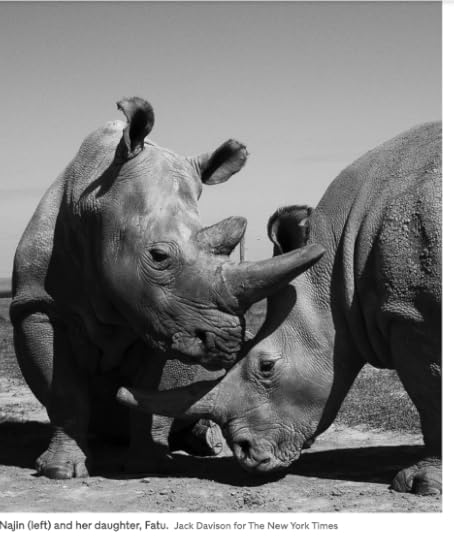
Sam Anderson’s incredible essay, “The Last Two Northern White Rhinos On Earth,” personalizes extinction through the story of Najin and Fatu, mother and daughter rhinos now peacefully living out their days in a wildlife conservancy in Kenya.
Over a week-long visit, Anderson connects deeply with “the girls.” He’s allowed to stand close enough “to see that their ears were fringed with a rim of hairs that seemed as delicate as eyelashes.” He was awed by the mass of the second-largest land mammal. A whole carrot “looked like a little orange toothpick” clamped in its big boxy rhino mouth.
He paints a picture of two specific individuals, who are well cared for and protected and loved. They don’t know they’re doomed as they enjoy the creaturely pleasures of a sunrise, a good back scratch, and cuddling with a loved one.
Like all creatures, the rhino does not exist in isolation; it is part of the web of life. Anderson writes, “A rhino is not just a part of the world — it is a world.” Their dung feeds insects who feed birds who feed predators.
Najin and Fatu are not just ambassadors for the abstract concept of a species, but individuals living singular lives. They are lives in the process of being snuffed out, by both the “acute violence of hunting…. [and] the chronic violence of habitat loss.” Anderson writes he “could not get enough of watching them sleep,” because, “Every time the girls closed their eyes, all the northern white rhino consciousness left on planet Earth temporarily blinked out.”
To get a feeling for the lives at stake in the biodiversity crisis, listen to the gorgeous audio version of the full story, narrated by Edoardo Ballerini. Bring Kleenex.
 a.image2.image-link.image2-557-468 { padding-bottom: 119.01709401709401%; padding-bottom: min(119.01709401709401%, 557px); width: 100%; height: 0; } a.image2.image-link.image2-557-468 img { max-width: 468px; max-height: 557px; } Source: https://www.nytimes.com/2021/01/06/ma... Spring is Coming. Grow Something Delicious
Land use, primarily agriculture, causes almost a quarter of all climate pollution, and is the biggest driver of the biodiversity crisis.
In a 2017 study, Seth Wynes and I showed eating a plant-based diet is the most effective action to reduce your food’s climate impact. It’s also the biggest step to save water, land, and biodiversity.
There’s no better way to incorporate more delicious plants on your table than to grow what you can yourself. Always but especially over the last year, it is a pleasure to be out in the sunshine with your hands in the dirt, listening to birds singing and insects buzzing and watching things grow.
As spring shoos away the short, dark, and dreary days in Sweden, it’s time for my husband Simon and I to start planning our veggie garden.
Last year, we put a lot of work into our allotment garden, which was super satisfying. With design help from a landscape architecture student, and labor and craft help from a gardener, we removed the cement patio tiles foolishly taking up the sunniest corner of the garden. We built three big raised beds: one from the reclaimed cement tiles, and two cheap and simple stacked wooden pallet planters. For weed suppression, we lined the paths with two layers of cardboard donated from a local store, topped with wood chips. We filled the beds with horse manure (a gladly-given gift from a local riding arena) and compost. Then we planted seeds and seedlings, and the magic started.
Every time we came to the garden we’d make a round to exclaim over what was different this time. We’d find new cucumbers hiding amidst the far-too-small trellis we’d given it, not believing such a tiny seedling would ever command so much vertical real estate. (We’re still enjoying the pickles Simon made from his mom’s tried-and-true recipe.)
Even with a late start on planting, it was astounding what delicious bounty we harvested over the year. First were the radishes, followed by fresh green peas, chard, and carrots. Fall brought onions, potatoes, beets, and startlingly massive pumpkins, a second crop of spicy mizuna, and so many variations on cabbage (kale, Brussels sprouts, broccoli…).
What do you want to grow this year? Let me know, and take some inspiration below.
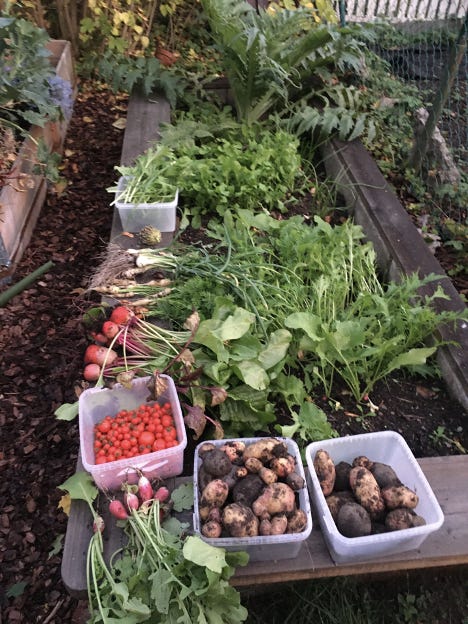 a.image2.image-link.image2-446-334 { padding-bottom: 133.33333333333331%; padding-bottom: min(133.33333333333331%, 445.3333333333333px); width: 100%; height: 0; } a.image2.image-link.image2-446-334 img { max-width: 334px; max-height: 445.3333333333333px; } Allotment garden harvest last October. Photo: Kim NicholasAction Menu:
 If you have a garden (or can upgrade your lawn to an edible landscape):
Order seed catalogs and plan your garden. (We’ll order from this heritage seed association in Sweden. In the US, try heirloom seeds from Seed Savers Exchange.)
Plant things you enjoy eating, try a few new ones, add some flowers to make yourself and the pollinators happy.
For gardening inspiration, read Animal, Vegetable, Miracle by Barbara Kingsolver.
If you don’t have a garden, or access to a neighbor’s, look for ways to:
Join or start a community, school, or allotment garden.
Grow herbs or tomatoes in the windowsill or on a balcony.
Check out guerrilla gardening to convert unloved city corners to thriving gardens (here’s a lovely one in a former parking space in Copenhagen).
Harvest local food (my former student Kyle Clark made this list of initiatives to plant, harvest, and map urban fruit and nut trees).
Support farmers who take care of the land, starting in your foodshed:
Look for “community supported agriculture” + your town to find a local, sustainable farmer to support. (We’ll renew our veggie box subscription with my former student Kerstin).
Support farming and food cooperatives. (We get organic grains, greens, and more through our local food cooperative, and locally produced specialty items delivered by bike from the Mylla collaborative).
Happy growing and eating!
Parting Thoughts & Tidbits “What does it feel like to be a climate scientist at the end of 2020?”Listen to my conversation with my good friend Denise Young (hi Denise, We Can Fix It Subscriber #6! ❤️ ) on her New Climate Capitalism podcast about my terrifying experience of the California wildfires, my increasing ventures beyond the ivory tower, and my complicated relationship with climate hope.
Good Climate News:The US is back in the Paris Agreement, the world’s framework for stopping climate heating. I got to witness the adoption of the Paris Agreement in December 2015 from the front row of observers. I’m a big fan.
Recently Enjoyed:Read: All We Can Save: Truth, Courage, and Solutions for the Climate Crisis, edited by Ayana Elizabeth Johnson and Katharine Wilkinson. A diverse and much-needed collection of essays and poems highlighting the contribution of women leading climate action. I’ve posted my highlights on Goodreads.
Eat: The best falafel I’ve ever had was Simon making Kenji’s recipe from Serious Eats.
Drink: Golden milk (super cozy blend of oat milk with coconut oil, turmeric and black pepper).
Move: Ice skating on the local pond (my first time beyond a rink!!) was wobbly-ankle’d magic. Skates borrowed for free from our awesome sports equipment library.
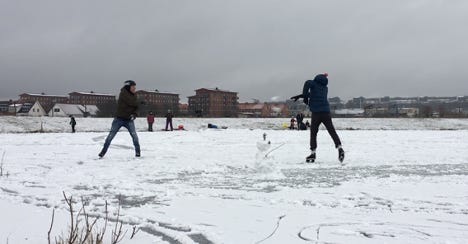 a.image2.image-link.image2-244-468 { padding-bottom: 52.13675213675214%; padding-bottom: min(52.13675213675214%, 244px); width: 100%; height: 0; } a.image2.image-link.image2-244-468 img { max-width: 468px; max-height: 244px; } Resting my ankles to document a friendly snowball fight on the local pond. Photo: Kim Nicholas.See you in February!
Thanks for reading! I’d love to hear what you thought. Reply to this message with any feedback, or leave a comment below. (Have no fear, We Can Fix It is going to be that rare internet glen with a thoughtful and engaging comment culture.)
If you liked this newsletter, please share with a friend who’d enjoy it too. Thanks!
If someone forwarded you this newsletter, you can sign yourself up and get your very own edition next month!
 a.image2.image-link.image2-485-1456 { padding-bottom: 33.31043956043956%; padding-bottom: min(33.31043956043956%, 485px); width: 100%; height: 0; } a.image2.image-link.image2-485-1456 img { max-width: 1456px; max-height: 485px; }
January 27, 2021
Welcome to We Can Fix It!
Are you feeling scared, overwhelmed, and/or alone in the climate crisis? Then this monthly newsletter written by your friendly neighborhood climate scientist (that’s me!) is for you.
Every month, in a lively 8-minute read, you’ll get a friendly, expert update straight to your inbox. I’ll curate the best of the latest research, culture, and inspiration to produce a literary treat containing the three ingredients we need to fix the climate crisis:
Facts: myth-busting, independent fact-checking, highlighting what the latest studies mean for you, separating greenwash from real action.
Feelings: this isn’t what I was taught in grad school, but I’ve figured out that the way to go from feeling freaked out to empowered is by embracing all the feels about the planetary mess we’re in. It’s also how we can find our personal climate calling, support each other in community, and find joy along the way. Yay!
Action: evidence-based advice on what YOU can do that really makes a difference (and what you can stop worrying about), from your own daily life all the way up to how you can affect systems of culture, politics, money, and power.
We’re building a community of people who are inspired and empowered to help fix climate change, by doing things you enjoy, as part of the busy life you already lead. Join us!
Who am I?Hej! I’m Kim Nicholas. I’m glad you’re here!
I’m on a mission to help stabilize the climate in time to avoid catastrophic climate change, while making life on Earth better for people and nature.
I could really use your help, which is why I started this newsletter. :)
For my day job, I’m an Associate Professor of Sustainability Science at Lund University in Sweden. I’ve published more than 50 peer-reviewed studies on climate and sustainability. I earned my PhD in Environment and Resources from Stanford University in 2009.
In a parallel universe without climate change to worry about, I’d probably be a winegrower in my hometown of Sonoma, California.
I’m also the author of a new book, UNDER THE SKY WE MAKE (out March 23, 2021). This book is my manifesto about how we got into this mess, and how we’ll get through and out of it together. Plus some stories about wine, complicated family legacies, and finding low-carbon love on Tinder. I’d be truly tickled if you wanted to pre-order it.
If you’d like, you can read more about my work here, my media appearances here, or follow me on Twitter.
Thanks for being here!


