C. Litka's Blog, page 57
January 30, 2019
Another New Cover
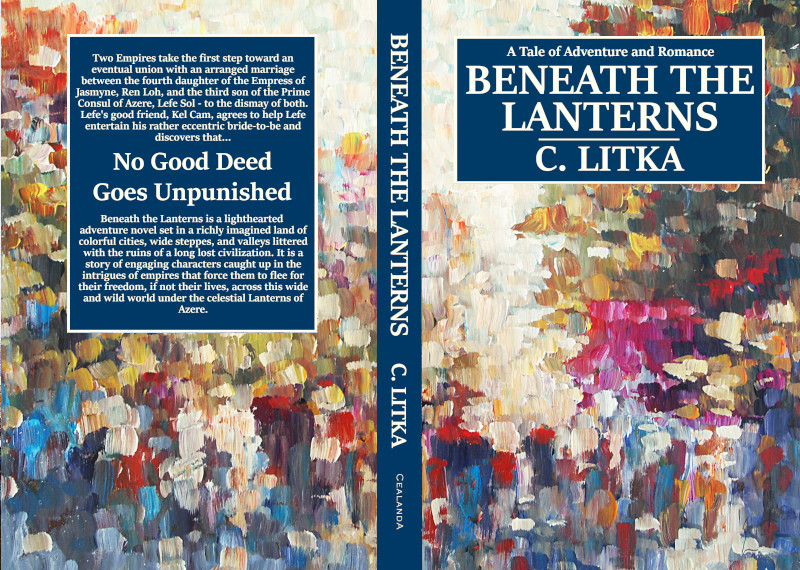
Yep, I'm at it again. I'll be changing the cover of both the print and ebook for Beneath the Lanterns to this art. There are several reasons for this change. One is that I want the ebook and print book to share the same cover art. I didn't like my original cover art which is still have that on the print edition. Not, mind you, that I sell any books, but it shows up in the listings. I do, however, like the art for the ebook version. I can't say that it sell any books, but it doesn't seem to not sell them either. However, the original art work is smaller, and I didn't think it would scale up to 9x6" at 300 dpi very clearly. So what I did was essentially repaint the same scene, the street alongside the lake, the "Reed Bank" in a similar, but slightly more current "Use your imagination" style abstract landscapes on a larger scale. I think this turned out as well as can be expected. I'm going with colorful, if "artsy" covers.
Below are the two complete original paintings I used. On top the new one, below, the one I used for the ebook version
.
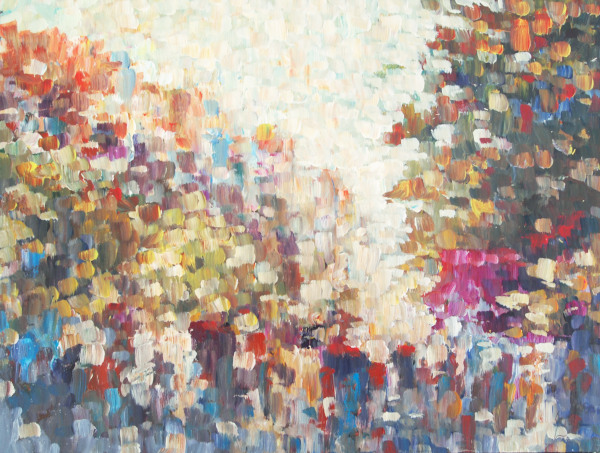 18x24" 45x60cm acrylic on hardboard
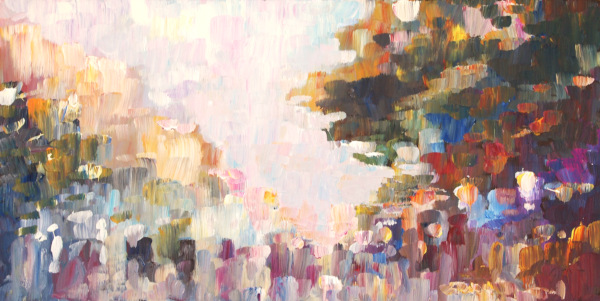 12x24" 30x60cm acrylic on hardboard

January 25, 2019
My 2019 Novel (Plan A): The Inlopar Stars
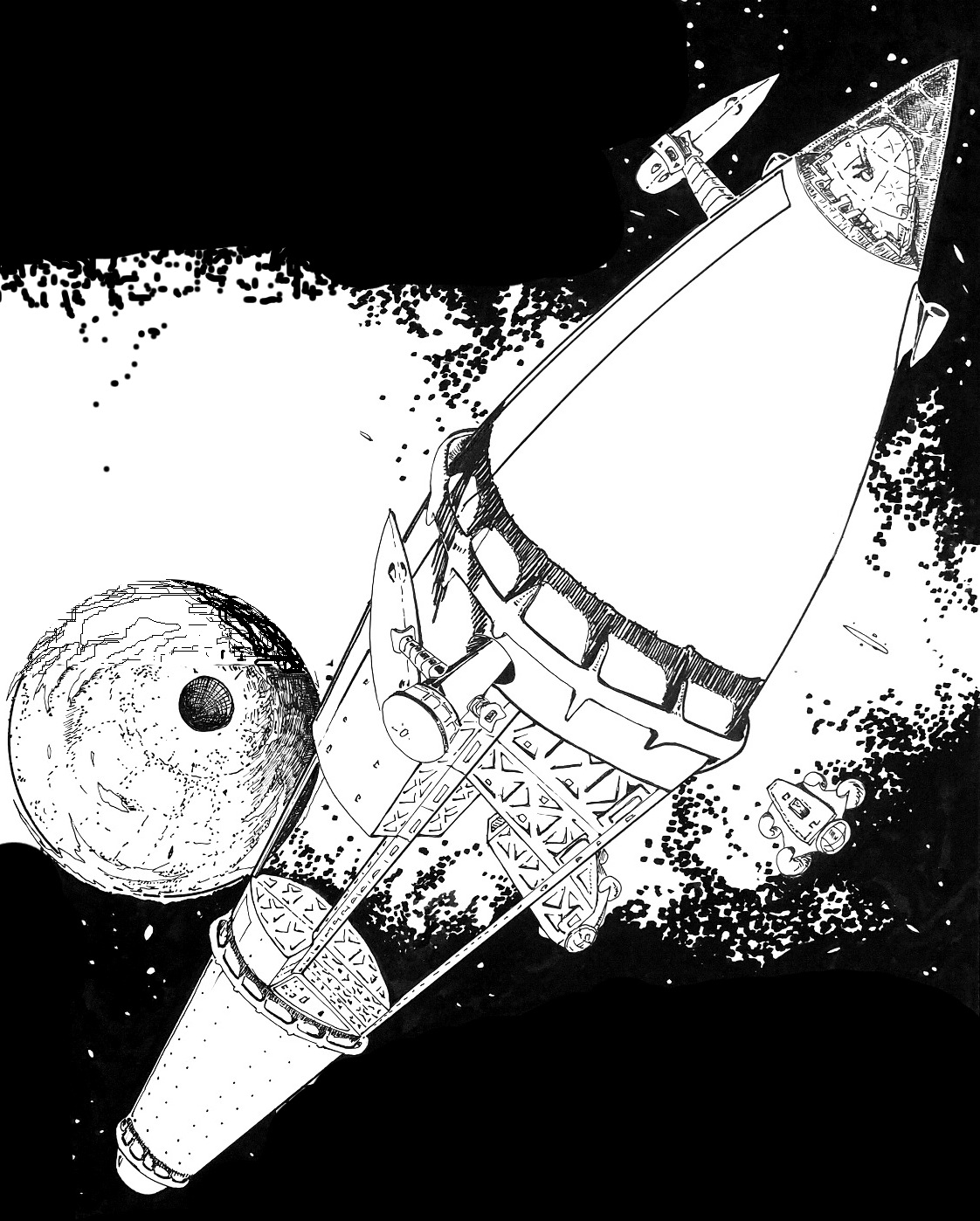
I had planned a return to the space opera motif for my 2019 novel, this time using good, old fashioned FTL star ships. I had it set in the Aeroday and Inlopar star clusters that I had imagined for stories many years ago. I also wanted to make the story a mystery story, just to try my hand at that type of story. I envisioned a sort of Raymond Chandler style mystery set on some seedy planets in the Inlopar fringe stars. However, as you may have gathered from my use of the past tense, the project didn’t end well. It ended at 7,000 words.
It started out promising. I had a pretty solid plot and was confident that all the unresolved details could have been hammered out as I went along. What tripped me up was time and space. Too much time and too much space. But before I get into that, let me briefly outline the story I had in hand.
The narrator of the Inlopar Stars was a sentient machine star ship captain. It had many years of experience in the fringe stars of the Inlopar Cluster. Our narrator was hired by another sentient machine, an insurance claims adjudicator from the Aeroday worlds to be a guide and assistant investigator once they reached the fringe worlds. The adjudicator was investigating insurance claims arising out of the disappearance of a very expensive yacht in these remote stars and under very questionable circumstances. The adjudicator had two human investigators in tow as aides.
The yacht in question was owned by one of the wealthiest families of a planet. The family businesses had been mismanaged for many years and the family was rumored to be on the brink of collapse. The current head of the family took this very expensive yacht filled with very rare objects de’art for a cruise to these remote stars, apparently on a whim. It went missing. The insurance company had quantum entangled indicators in their office tied to sensors aboard the ship that told them that the ship did not suffer a catastrophic field failure in FTL flight, and was still more or less intact. The yacht had FTL boats to carry off the passengers and crew to safety if it suffered less than catastrophic damage. None appeared. This being the case, the family claimed that it was either hijacked, taken by pirates, or suffered some other sort of non-destructive tragedy, and wanted the insurance companies to pay up. The insurance companies, suspecting fraud, given all the iffy circumstances, declined to pay.
The insurance case came to a head when a multi-million credit sculpture showed up for auction that was listed on the invoice of the missing yacht. It was purchased for a small amount at a pawnshop on a planet within the Inlopar fringe stars. Proof, the family claimed, that the ship had been hijacked or taken by pirates. However, when examined, the statue proved to be not the original, but a very well executed copy of the original piece. The insurance companies were insuring the original, and well, if it indeed came from the yacht, that would suggest that things were even more fishy than they had originally suspected. The adjudicator, sets out with his aides and our narrator follow the trail of this stature into the Inlowpar fringe in to discover what exactly happened to the missing yacht.
The story foundered not because I couldn’t figure out what happened, but because it involved too much time and space.
I feel very strongly that if one is going to set a story in the vastness of space, it should reflect that vastness. If the planets are a few hours away from each other, via worm-holes or whatever, they why bother with space travel at all? Especially if the planets become one feature planets, like the Star Wars’ desert, ice, and city planets. One might just as well set the story on an alien planet and move to different locales via cars, planes, or subway trains.
So for my space story, The combined Aeroday and Inlowpar star clusters needed to be at least as large as the earth was, several hundred years ago – back when it took months to travel to the far side of it, and information traveled only as fast as the ships or caravans. This, however, meant that yacht had to have disappeared several years before the events of the story for the case to reach this point. This made for a very “cold” case to follow and that made it hard for me to have the investigators to stir up much “hot” action to drive the story. Adding to this problem was that word of their investigation would travel through the star systems just about as fast they did. In a Philip Marlowe story, everything happens within a couple of days. The bad guys can learn of his involvement and can react within hours. A telephone call to Bay City could result in Marlowe getting sapped and ending up a prisoner in a shady rehab clinic. While I could have some sort of action like this happen on a planet, the trouble was that with the crime being so old, and the somewhat lawless nature of the planets involved, the bad guys would have no reason to react at all. The more I thought about it, the more it seemed that the story would end up just having our investigators going from planet to planet, finding and talking to people who knew a piece of the puzzle until the case was solved. Now, this is a fairly accurate description of many mystery stories, but in those, the readers can follow along with the detective, and detect with her or him since they know the rules of the genre. In the imaginary world of SF these rules are not known, so the reader would be simply along for the ride, mere observers. Which, in the end, I thought would make for a fairly boring story – for me to write, as well as for the reader.
So it is now on to “Plan B” for my 2019 novel. More on that in future post.
The one lesson I took away from this experience was that it is hard, at least for me, to make a new and interesting space ship story, especially after having already written a 330,000 word space ship story. FTL ships are basically magic, so I suppose you could have it travel through some sort of magical space where things can happen to it, but for the most part the space ship in a story is just a device to move the story from one planet to another. And that being the case, I’ve rather come around to the idea of just setting stories on a single imaginary world where many things can happen to make journey through it as interesting as possible.
November 23, 2018
Imaginary World Romances
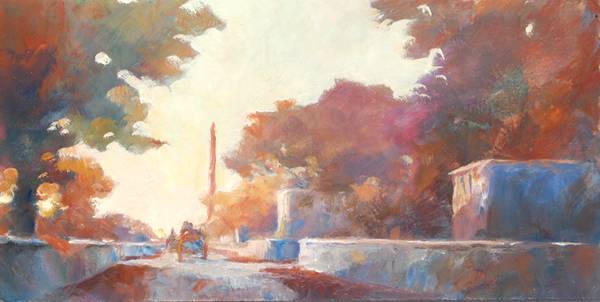 The Road to Helium
I write romances. Not contemporary romances, but a more old fashioned sort of romance. The romance at the heart of my stories is:
“A quality or feeling of mystery, excitement, and remoteness from everyday life” – Google Dictionary Definition
“A prose narrative treating imaginary characters involved in events remote in time or place and usually heroic, adventurous, or mysterious” – https://www.merriam-webster.com/dictionary/romance
“A work of fiction depicting a setting and events remote from everyday life, especially one of a kind popular in the 16thand 17thcenturies” – https://en.oxforddictionaries.com/definition/romance
“A novel or other prose narrative depicting heroic or marvelous deed, pageantry, romantic exploits, etc, usually in a historical or imaginary setting.” – https://www.dictionary.com/browse/romance
“In the strictest academic terms, a romance is a narrative genre in literature that involves a mysterious, adventurous, or spiritual story line where the focus is on a quest that involves bravery and strong values, not always a love interest.” – https://literaryterms.net/romance/
As I wrote in my last post, though I have long considered myself a science fiction writer, both my science fiction stories, and my writing style, havelong been out of fashion in science fiction. I’ve come to realize thatcalling them science fiction or fantasy in 2018 is a stretch. The closest they come to science fiction is the now mostly obsolete “planetary romances” of Barsoom, Pellucidar, and the like. And the truth is that I’ve come to see that I my tastes have never had much in common with the mainstream science fiction.
What my storiesreally are, are romances.In my stories the “remoteness from everyday life” comes not from the history or exotic locales of earth, but from future, and imaginary worlds. While this slotsthem into thescience fiction or fantasy genre, these imaginary worlds serve merely as a stage and a backdrop to the story. Science fiction is, at its heart, focused on ideas, concepts, speculations on the future, and these days,war. War seems to be the central conflictof so many stories these days. None of these are thingswhich I care to write about. Warsdominate fantasy as well, and in addition they often tellepic stories that canspan generations. Again, neither of these characteristics are ones that I care to use in my narratives. So, in the end, I just don’t see myself writing under thebanners of science fiction or fantasy anymore.
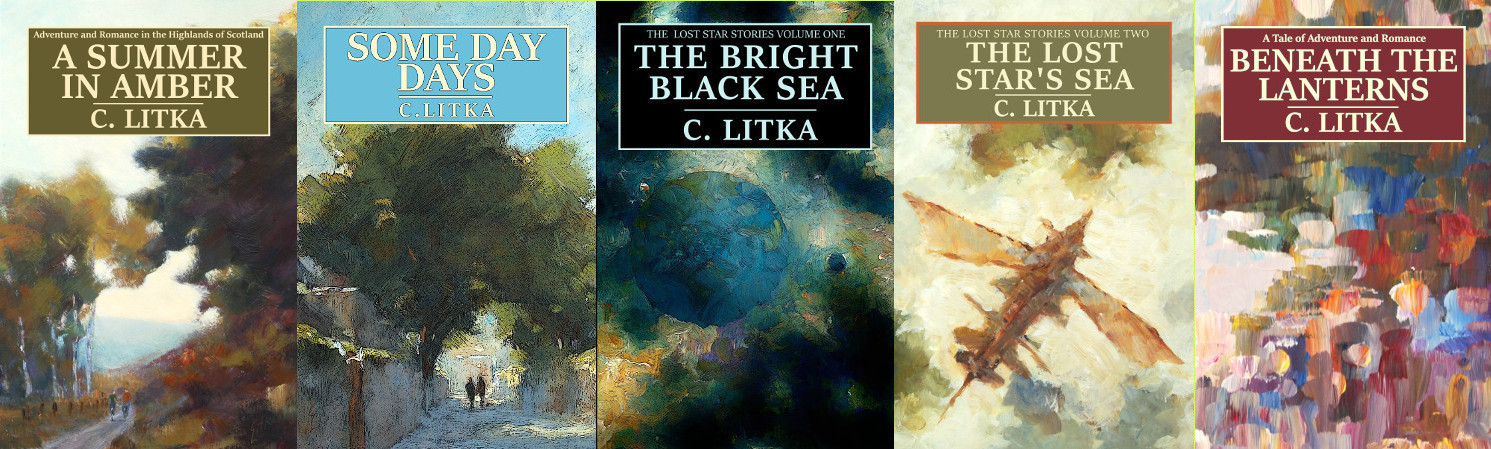
The problem, of course, is that I can’t write under the banner of “romance” either, since that term has a very different meaning these days. Indeed, the one book that I marketas a “romance”, Some Day Days, I’ve discovered isnot a romance by definition, sinceit does not have a HEA – “happily ever after” –ending. Who knew?So what’s a fellow to do?
I haven’t figured that out yet. I suppose it doesn’tmatter. It is merely a matter of marketing rather than writing,and I suppose marketing my storiesas science fiction, one of the more popular genre, means that they will find more readers than in some other genre, whatever that would be. No, the point is that I now consider myself a writer of classical romances set in imaginary worlds. Perhaps banner I’m marching under is "Imaginary World Romances" or less confusingly, “Imaginary World Adventures.” (I just made those banners up, but what the heck?)
November 18, 2018
Not Science Fiction
I’ve recently come to accept that I’m not really a card carrying fan of science fiction, nor a true science fiction writer. This realization has evolved as I’ve read more about science fiction and its history and it came to a head recently after reading Astounding: John W Campbell, Isaac Asimov, Robert A Heinlein, L Robert Hubbard, and the Golden age of Science Fiction by Alec Nevala-Lee.
However, to begin at the beginning, for the last year or so I have been a regular reader of these web sites:
https://www.barnesandnoble.com/blog/sci-fi-fantasy/https://www.tor.com/#contenthttps://www.sffworld.comhttp://rrhorton.blogspot.com/https://auxiliarymemory.com/
These web sites feature articles and reviews about new science fiction, and discussions about what science fiction is. From their blurbs and reviews I’ve found few, if any, new books to spark my interest. This may be as it should be. Science fiction should constantly evolve with the times. It has, but I haven't. Of course there are readers my age who still enjoy new science fiction; people who have evolved with it. But it seems that I’ve been drifting away from it for more than 40 years.
They also run series that revisit books from my prime science fiction years in the 1960’s. Often, when I read these reviews, I'm left wondering what it was that I loved about them. And, with a few exceptions, when I try rereading books from that era – I still have all of them – I can’t see past their deficiencies to recapture the magic. I no longer have the necessary youthful imagination. It seems that I’ve grown up.
One key thing I have learned is that I missed the heart of science fiction. I never read sf magazines and passed on short story collections. Short stories are simply not my cup of tea. I like stories about people, not visions, concepts, or gadgets wrapped in a veneer of a story. Plus, even if a short story features characters, the length is too short to do them justice. Still, it is said that the short story is science fiction's true medium with ideas and concepts its defining feature, neither of which I care about.
So, all in all, it seems that a surprising amount of science fiction never has appeal to me. Indeed, while writing this blog post I looked up three “100 best science fiction books” lists. I knew I read only a handful of short stories, but how about novels? On two of the lists I read 16 of the 100 and on one, just 6. Clearly I have not been doing my homework.
And finally, we come back around to Astounding, et al. This book tells the story of the pulp magazine Astounding under the editorship of John W Campbell, and his three most important writers, by telling each of their life stories. It shows them to have been very strange and flawed men. Writers may often be strange, but what is so sad about these men, for me, was their delusions of greatness. They were just pulp writers churning out stories mostly for teenage boys. But they saw themselves as something far grander; visionary giants who were leading the world into a bright future with their grand visions and the strange theories. It makes for an interesting, but rather sad, story. I'd be embarrassed to call the Campbell's Astounding era the “Golden Age” of science fiction.
So, all in all, I think that in my old age, I will retire my lifelong goal of writing science fiction. I will continue to write the type of stories I like. I suppose, like it or not, they will still be considered science fiction, if only because all of them will continue to be set in imaginary worlds. I won’t kick about it, but in my heart, I’m not writing science fiction anymore. I’m writing old fashioned adventure romances that are set in imaginary locales only because that allows me to do whatever I like with them, without having to fit them into real history and real locales. They will be set in imaginary places that I know all about and are all mine.
.
November 6, 2018
A New EBook Cover for Beneath the Lanterns
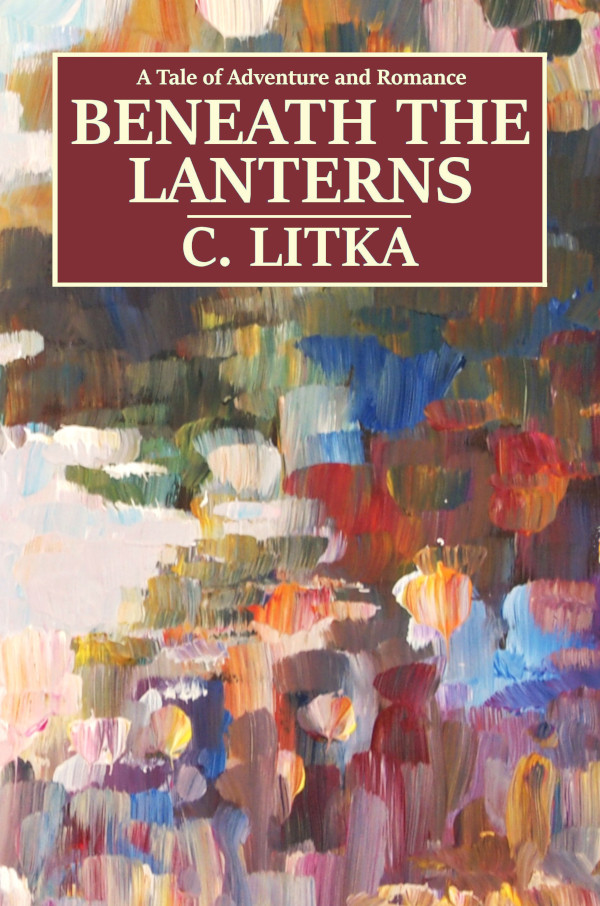
As I've mentioned in several previous blog posts, I had had a great deal of trouble coming up with a cover for Beneath the Lanterns. I'm not an illustrator, and really can't picture things or people in my mind.So even knowing the story inside out -- it was very hard to come up with a scene from the story that I could envision and could paint in my impressionistic style. In the end, I settled for a scene from the book, I was never all that happy with it. And so...
I've been painting regularly for 35 years now. In the beginning I painted with watercolors with a fair amount of detail. I mostly painted imaginary scenes. By the time I switched to a thicker paint; oils and then acrylics, I lacked the patience to learn how to use them to paint with any details. Instead I opted to paint in the impressionist style, a style, however, that I really like. Fast forward 16 years, and these days I have an even shorter attention span, and have run out of new imaginary places to paint, so it has been hard to paint.
This week I tried something different. Imagining a scene and painting it with nothing specific in it, just implying the scene. My first effort was a rainy evening street scene of sorts "Rain"
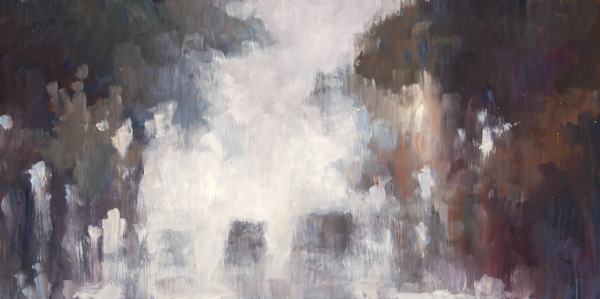
I liked how it came out, and well, the bulk of it took about the length of three or four Angus and Julia Stone songs to paint -- within my attention span. I then got the idea that I might try the same technique using a lot more colors and to kill two birds with one stone, try a scene from Beneath the Lanterns, in this case the Reed Bank -- a street in the story lined by townhouses on one side and eating houses, tea houses and drinking houses lining the shore of a lake on the other. So today I did "The Reed Bank", a detail of which I used for the new cover. I pictured the Reed Bank on the last day of the Bright Days, with the Yellow Lantern setting behind us and the street filled with carriages and rickshaws -- but of course, the idea is not to actually paint them, just imply them. (Or anything else you might imagine.)
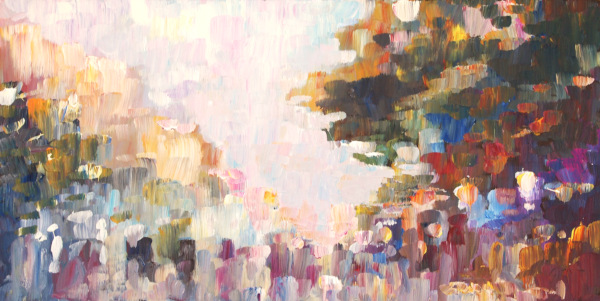
So the cover new cover of the ebook version of Beneath the Lanterns is actually of nothing at all. It is, however in a long tradition of science fiction book covers. If you are old enough to remember buying paperback SF books in the 60's & 70's, you'll remember all those books with some sort of abstract, "science-fiction-ie" style of art -- with lots of weird shapes that were supposed to be, well, who knows what? Usually it meant a book I wouldn't like. But anyway, my new cover is in that tradition, except that it is more colorful than most of those.
November 1, 2018
3 1/2 Years in Self-Publishing: A Report
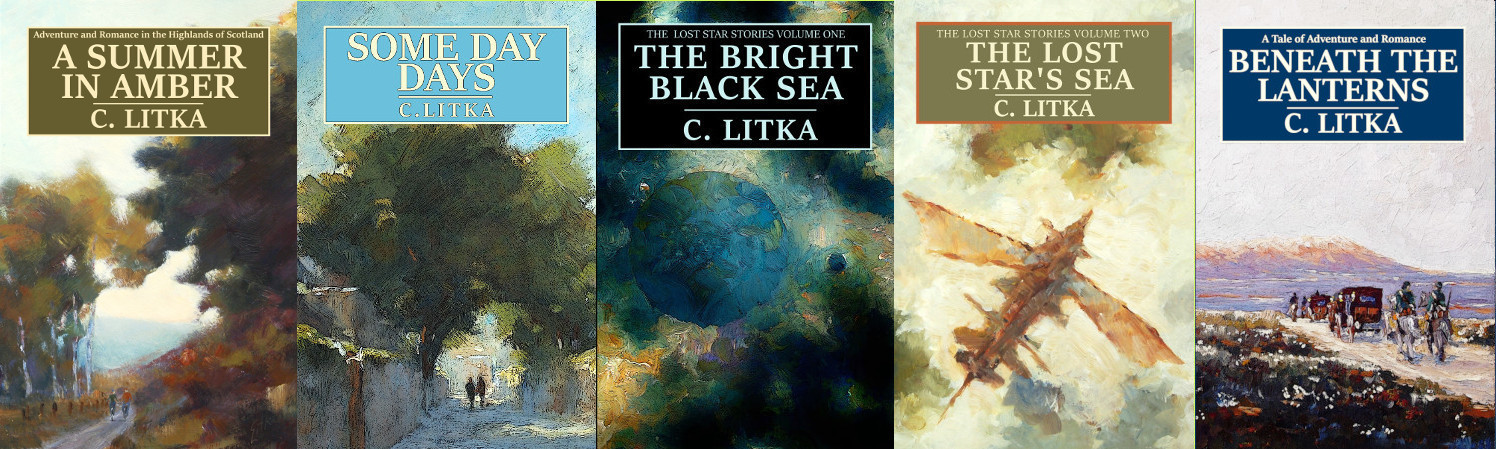
Since 23 Oct 2018 marked my 3 1/2 year anniversary as a self-published writer of adventure/travel/romance novels set in imaginary places, it’s time to publish my semi-annual report on my past six months in the self-publishing business.
Let’s start with the numbers. Please note; the vast majority of “sales” are free downloads. These numbers are from Amazon, Smashwords, Apple, B & N, and Kobo. There are other sites, like Obooko, where my books are available but do not report downloads to me. For the first six months of the year I had listed my books on Kobo directly, since that would allow me to see how many were downloaded in that store, unlike when I was selling them on Kobo via Smashwords. I found that sales were nothing to shake a stick at, so I moved them back to Smashwords distribution. In September I was able to list my books in the Google Play Store, so going forward I will be including numbers from Google.
A Summer in Amber (23 April 2015)Download/sales: as of:May 1 2018: 4,915Nov 1 2018: 6,000Six month sales: 1,085
Some Day Days (9 July 2015)Download/sales as of:May 1 2018: 2,050Nov 1 2018: 2,758Six month sales: 708
The Bright Black Sea (17 September 2015)Download/sales as of:May 1 2018: 7,836Nov 1 2018: 9,012Six month sales:1,176
Castaways of the Lost Star (4 Aug 2016 – withdrawn: 13 July 2017)Download/sales total: 2,176
The Lost Star’s Sea (13 July 2017)Download/sales as of:May 1 2018: 2,078Nov 1 2018: 3,265Six month sales: 1,187
Beneath the Lanterns (13 Sept 2018)Download/sales as of:Nov 1 2018: 5651 ½ month sales: 565
Total download/sales as of 1 May 2018: 19,055Total download/sales as of 1 Nov 2018: 23,776Total download/sales six month sales*: 4,721
Average number of C. Litka titles download per day: 25.8
*The May-Nov download/sales numbers include a one day sale on Amazon of 1950 copies, spread almost equally between my then four books. I can not explain this strange jump in one day sales, and treat it with some skepticism. I did, however, call it to the attention of Amazon, and they assured me that it represented true sales, so I have included it in my numbers.
Beneath the Lanterns
I released my 2018 novel, Beneath the Lanterns on 13 September 2018. It is the first non-sequel book I have released since I released my first three books in 2015. My goal for this year’s book was to expand my readership by writing something of a fantasy novel. However, beyond the story being set in an imaginary land, it had little other fantasy trapping. There is no magic, there are no dragons, elves, and vampires in it. So, like most of my books, it lands in the cracks between different genres, spanning fantasy, science fiction, and plain adventure.
As you can see from the figures above, Beneath the Lanternshas been downloaded 565 times in the last month an a half. This compares to 582 for Some Day Days, 1331 for The Black Bright Sea, 867 for Castaways of the Lost Star, and 1071 for The Lost Star’s Sea. I wasn’t keeping records at first, so I don’t have the corresponding figures for A Summer in Amber. No doubt there are a number of reasons for this slightly softer launch, including not being a sequel to my most popular book. However there may be industry-wide reasons as well. One is likely the growth of Amazon’s Kindle Unlimited program of free, unlimited books to read for a single monthly subscription fee – which can be as low as free. Since this program caters to the most active readers, the types of books that these avid readers read now dominate Amazon’s best seller charts, since borrowed books count as sales. The second reason is that advertising is now driving readership, giving the biggest indie publishers, with a large, guaranteed readership the ability to outspend, out-advertise, and outsell the newer, slower, or less business savvy writer. Just as the textile mills put the weavers in their front rooms out of business, the well financed, entrepreneurial focused indie publishing business is displacing the writer-focused self-published author. And that is the way of the world. As an amateur author, money doesn't matter, so I can sleep well at night.
With the publication of Beneath the Lanterns, I now have a little over one million words in print, the equivalent of twenty 50K word pulp-sized novels. While I have published these million words in the last 3 ½ years, they were produced over the course of a decade since I had most of my first three novels finished by the time I published A Summer in Amber. My current, one book a year pace, is not from a result of lack of speed – Beneath the Lanterns,at 126K words, was written in five months – it is a lack of story ideas that I feel are worth writing. I have to live with a story in my head for a year, so I want to be able to enjoy imagining and re-imagining the story and characters over and over again in my imagination as I build the story and find the words to tell it.
I am hard at work on my 2019 novel, and since I have both a beginning and an end in hand, I am confident that it will see the light of day. Stay tuned.
September 27, 2018
September Wrap-up
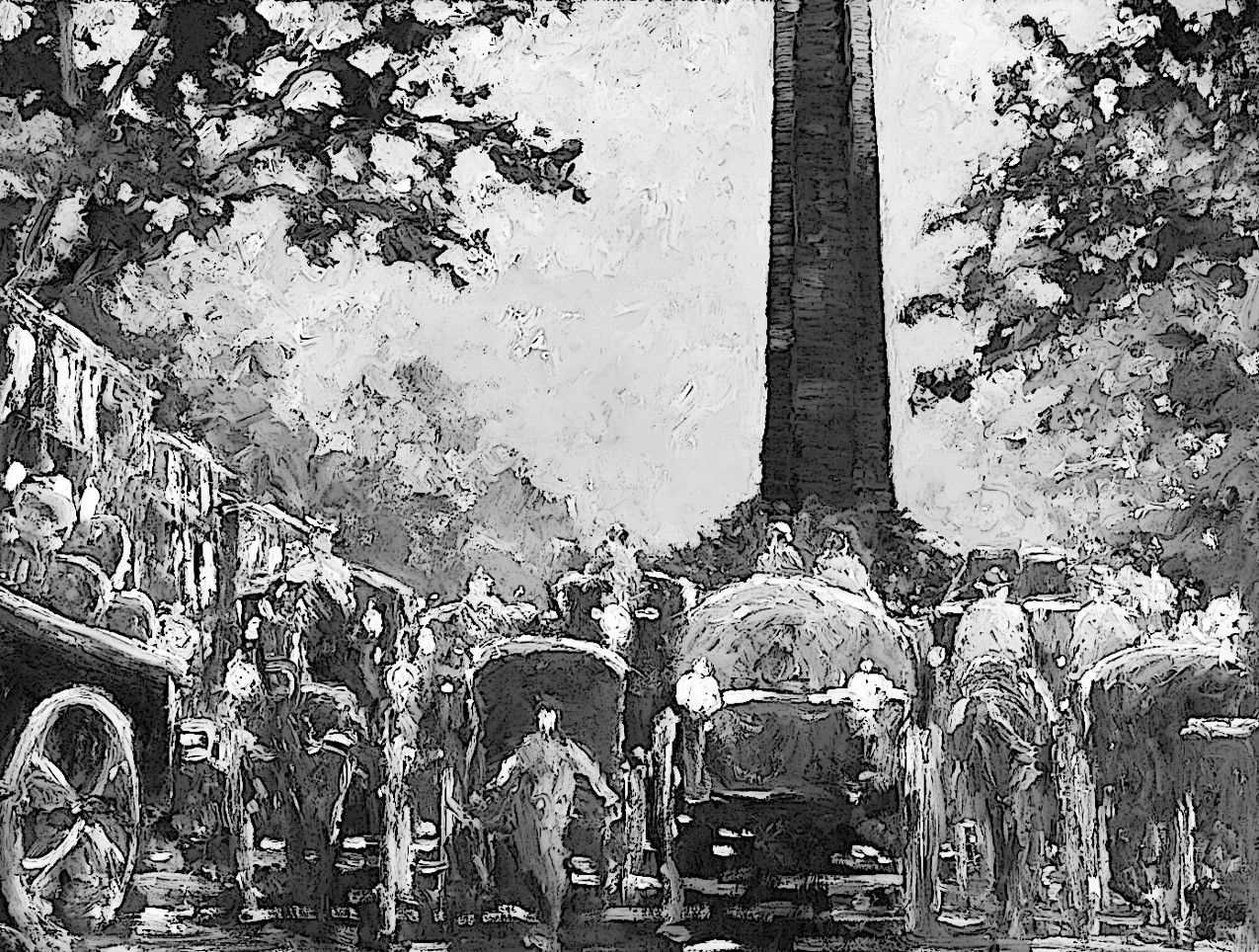 An illustration from Beneath the Lanterns (not used) From Chapter 15, Lanterna
September has been a busy month for me. The first half was spent getting both the ebook and the paperback editions of Beneath the Lanterns ready for release. That included building the print version, which involved designing both a front and back cover, writing a back cover blurb, designing the art and blurb for inside the cover, title page and map page. Inside, the page size and margins had to be set up and the text converted to be justified right and left. I also changed it to a new type-face for print (Goudy Old Style), and putting in things like page numbers and page breaks between chapters that are not used in the ebook versions. And then one has to go through and make sure that things like my scene numbers within a chapter do not end up in the last line of a page – which would look silly. Finally, I had to decide what I wanted to do with the fact that the story ended within a line of the bottom of the page. I would have preferred it to end in the middle of a page so that the white space of the rest of the page would make it clear that the end had been reached. However, I could not find a satisfactory way of extending the chapter into the next page, so I left it as it fell. (And CreateSpace didn’t include one extra blank page, so the story runs right to the back cover. But then, I like to keep my endings open, as life continues on for my characters, even if we no long travel with them, so perhaps that is best. And, well, seeing that I might sell one or two copies at most, I’m not losing any sleep over it.
In the middle of the month, after seeing the print proof copy, I decided to re-do the cover for both the paperback and ebook version. I paint my own covers, and then, sometimes, add thin black outlines in the painting on the computer to give it sort of a wood cut look. In the first version, I overdid the black lines a little, and had to tone it back down. I’m still not crazy about the cover, but it is as good as that one is going to get.
I also uploaded new versions of Some Day Days, The Bright Black Sea, and The Lost Star’s Sea to fix some of the remaining typos. I think there still is a silly one in Some Day Days that I saw when doing the Google version. It has “ever” instead of “every” in the little blurb about reporting typo. I should fix that… tomorrow…
Some time ago I had applied to have my books in the Google Play bookstore, and two weeks ago I received an email invite from them to add my books to their store. I could upload either PDFs versions, and/or epub versions. I have, in the past, relied on Smashwords and Amazon to convert my word document into their ebook versions, and had not been impressed with how my own epub versions turned out using an old version of Calibre, so I was rather leery of uploading my own epubs. I had PDF versions from the paperback book, so I started with them. It took a few days for them to approve my account and a few days to master their system, but eventually I had the PDFs up. I then decided to tackle the epub versions. I first tried uploading the LibreOffice documents to Google Drive, opening them up in Google Docs, and then download them as epubs. I figured working within Google should produce acceptable epub versions. With those in hand, I then uploaded them to Google Play Books. The only problem was that it seems that The Bright Black Sea and The Lost Star's Sea were too large to open in Google Docs, so I could not convert them using Google Docs and ended up installing the latest version of Calibre and after doing a little research, I produced acceptable epub versions -- at least they passed Google's inspection. They are all live now, and we'll see what, if anything, business results from being on Google.
This past week I contacted the folks at Speculative Fiction Showcase ( http://indiespecfic.blogspot.com/) about featuring my new book. They were kind enough to oblige and featured Beneath the Lanterns on 27 Sept 2018 on their website. I would like to thank them for including my book on their website. The site features new releases on most days, and on every Friday, an extensive list of links to the speculative fiction stories of the week. A great place to find new books and interesting reads.
I hope to start writing my 2019 novel in earnest in October. I have re-written the first page half a dozen times, as the story and time line shifts in this early phase, keep changing. However, with all the above distractions out of the way, I hope to start nailing the story down. I had challenged myself to write a mystery next, and this will be something of a mystery, though not of the a who-done-it type. I’m thinking something more along the lines of a Raymond Chandler type of story with pirates instead of gangsters. And after a couple of years, I think it is time to return to space – this time with starships! ...Assuming all goes well...
September 26, 2018
C. Litka Books - Now on Google Play and Google Books
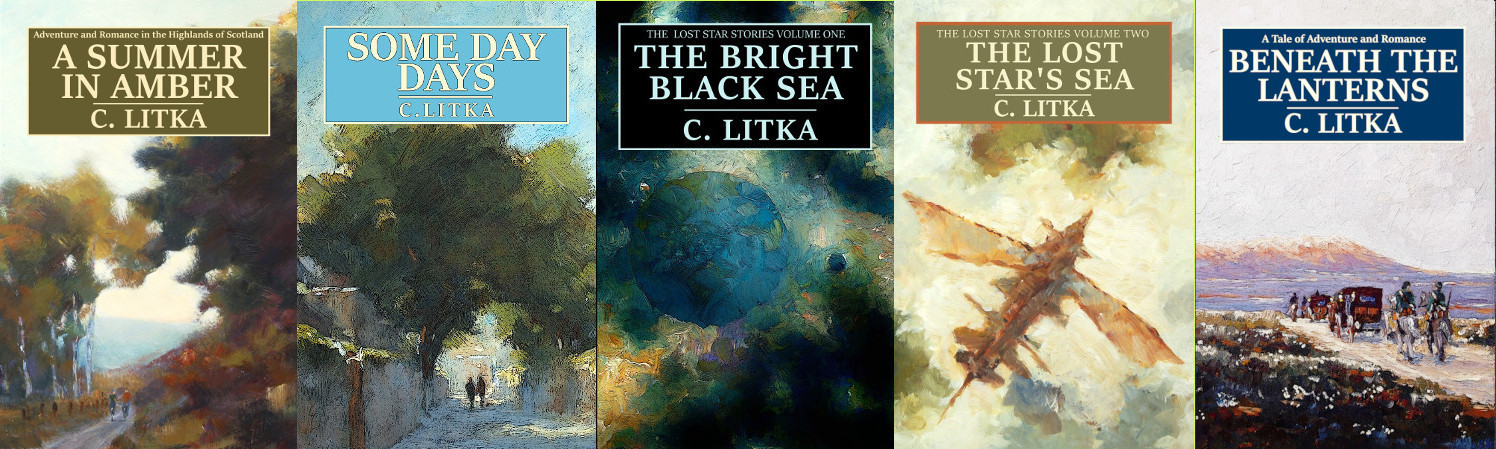
All five of my novels are now available for free on Google Play and Google Books in both epub and pdf versions. The pdf versions, best suited for reading on a computer, are the paperback versions of the books and they include the various maps and charts for the books, which I do not include in the epub versions because I am never sure how they will appear in the various ereading devices.
You can find them here:
https://play.google.com/store/search?q=C.%20Litka&c=books&hl=en
September 25, 2018
Free Worldwide on Amazon
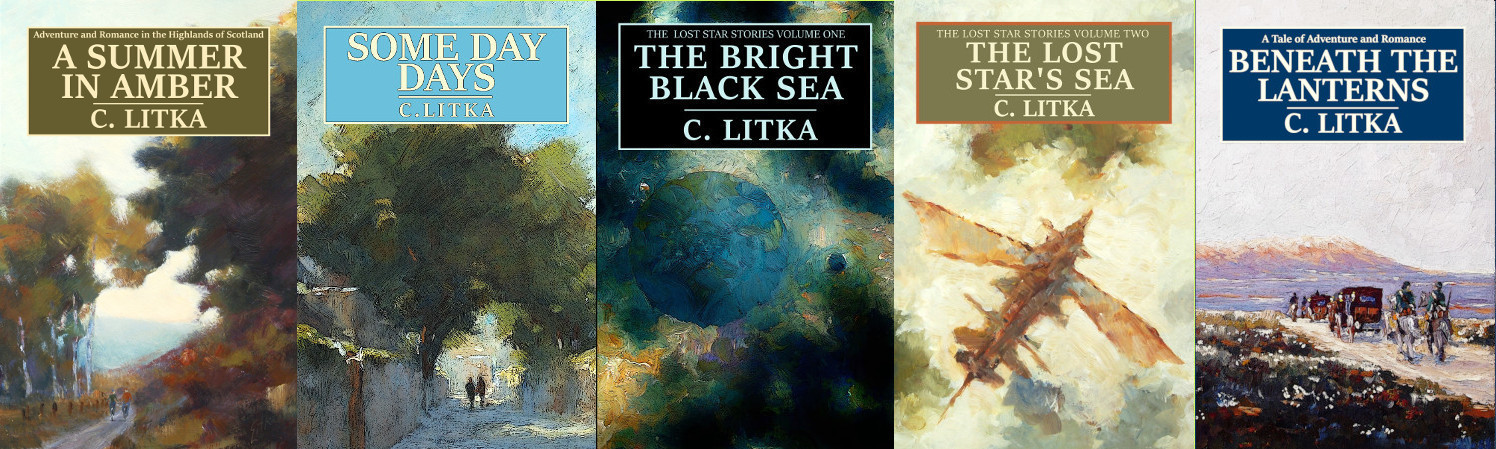
I am happy to report that Beneath the Lanterns is now FREE in all the Amazon stores, at this time, which is great news. A Summer in Amber and The Lost Star's Sea are also FREE in the UK Amazon store, but I don't think anywhere else.
I recently up loaded a new version of Some Day Days that corrected three dozen or so typos in the first half of the book, thanks to Nicole B. She says the second half will show up sooner or later. Hopefully sooner rather than later, but beggars can't be choosers.
September 20, 2018
Beneath the Lanterns is now FREE on Amazon.com
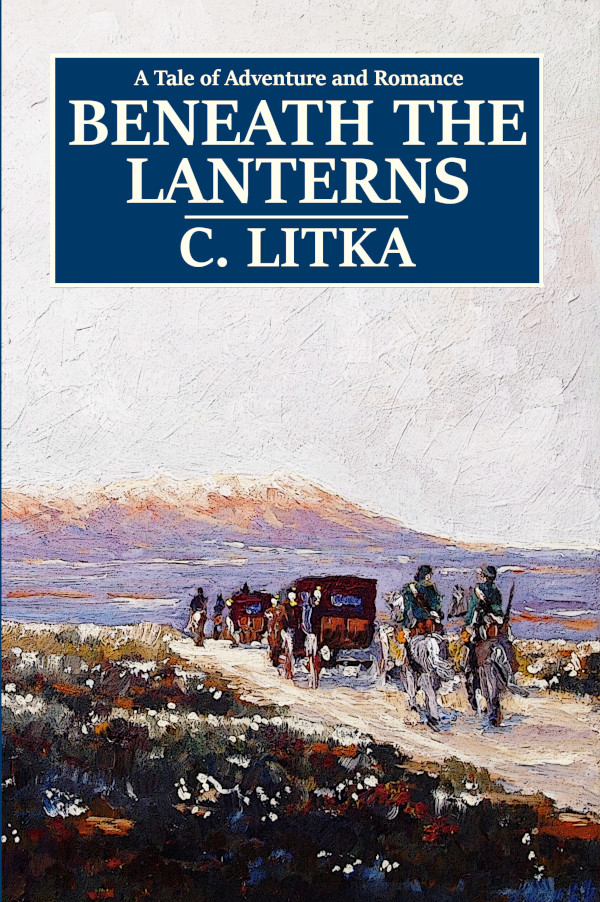
The headline says it all. Amazon.com (the US store) is now matching the free price of their competitors. Thank you very much Amazon. Unfortunately, they are not matching that price in their non-US stores, so that non-US kindle customers will either have to pay the lowest price I can list it on Amazon for, $.99 or side load the free mobi version from Smashwords.