
M. Chapman's Blog
December 11, 2017
Festive Re-Write Of The Start Of Hamlet's Famous Soliloquy
Inspired by a Twitter hash-tag #ShakespeareSunday decided to re-write Hamlet soliloquy with a festive spirit.
Original:Hamlet, Act III, Scene I
To be, or not to be, that is the question:
Whether 'tis nobler in the mind to suffer
The slings and arrows of outrageous fortune,
Or to take Arms against a Sea of troubles,
And by opposing end them: to die, to sleep
No more; and by a sleep, to say we end
the heart-ache, and the thousand natural shocks
that Flesh is heir to? 'Tis a consummation
devoutly to be wished. To die, to sleep,
Re-writeOmelette, Act III, Scene I
Tubby or not tubby that is the question:Whether ‘tis nobler in the belly to gobblethe roast turkey and stuffing of outrageous dinners,or take forks against a sea of food,and by ravenousness eat them: To eat, the sleepNo more; and by sleep, to say we eatthe heart-burn and the thousand natural pangsthat flesh is heir to? ‘Tis a consumption
devoutly to be wished. To eat, to sleep…
Original:Hamlet, Act III, Scene I
To be, or not to be, that is the question:
Whether 'tis nobler in the mind to suffer
The slings and arrows of outrageous fortune,
Or to take Arms against a Sea of troubles,
And by opposing end them: to die, to sleep
No more; and by a sleep, to say we end
the heart-ache, and the thousand natural shocks
that Flesh is heir to? 'Tis a consummation
devoutly to be wished. To die, to sleep,
Re-writeOmelette, Act III, Scene I
Tubby or not tubby that is the question:Whether ‘tis nobler in the belly to gobblethe roast turkey and stuffing of outrageous dinners,or take forks against a sea of food,and by ravenousness eat them: To eat, the sleepNo more; and by sleep, to say we eatthe heart-burn and the thousand natural pangsthat flesh is heir to? ‘Tis a consumption
devoutly to be wished. To eat, to sleep…


May 29, 2017
Mass Effect: First Contact War (or musings on Mass Effect: Andromeda)

After waiting 5 years for another Mass Effect game, even though admittedly the game series had logically concluded, Mass Effect: Andromeda arrived to a mixed response from gamers.
YouTube is full of thoughtful comments (vitriolic rants) and some did make fair points such as quality of animation and plot issues. It was noticeable that at the conclusion of the game it did not leave you with the same feeling, as per Mass Effect 2/3, a sense of loss and attachment to the characters that you might experience after the end of a good TV series.
Was it the right game to continue the series? At the end of Mass Effect 3 the player had four choices that lead to quite different outcomes. The Game studio of course might have to make a choice between them for a continuation story (do they know which choice people made?) as they did for Deus Ex: Mankind divided. So, the story continuing in another Galaxy, removed from the Mass Effect 1-3 story, and also escaping the possible impending reaper cataclysm, made logical plot sense.
There were many good points in the story such as characters Peebee, Drack and Jaal. Many wow moments such as the underground Remnant system, the Architect, the crashed spaceship on Eladaan and the Dyson sphere. Some disappointments such as only two sentient Andromeda species and no cities. Also, much improved Tempest navigation system and exploration using the Nomad all-terrain vehicle. The Archon did not seem as ominous and overshadowing as the Reapers. No vehicle based chase or battles. Oddly, there was no funeral for Alex Ryder?
The beginning of the game was perhaps a bit limp and would have improved by taking a leaf out of Mass Effect 2 - start with a dramatic crisis: Ryder wakes from cryo-sleep after being revived by a cryo-tech due the a collision between the Hyperion and the Scourge. Several teams of Kett scouts have boarded and are attacking the crew and stealing cryo-pods...
The story left many mysteries such as source of the scourge, the Jardaan, Ryder's mum, the murder of the founder, the Quarian et al ark and the identity of the benefactor - presumably this is in a DLC.
Still, it does beg a question whether this was the only option and perhaps there might have been a (possibly) better story - The First Contact War. The back story to Mass Effect 1-3 stated that humans had discovered ancient tech on Mars that aided their technological development and the discovery of a Mass Effect relay just outside the Sol system. Humans encountered the Turians and set off the First Contact War. The story would actually be an opportunity to consider the early days of characters like Anderson and the Illusive man, and the origin of organizations like Cerberus. Who knows, perhaps they will...
February 4, 2017
Plausible Plot 'Device' For Super Heroes
It must be over the last 15+ years or so we have been inundated by SuperHero TV series and films from the US (post 911?). In it people are imbued with Superhuman powers that go well beyond that which seem physical possible and yet are given a pseudo scientific explanation of genetic mutation in such franchises as Marvels films based on the X-men, Mutant X and Marvel Agents of shield.
Of course super hero stories are really fantasy but can you still create a more plausible and internally consistent plot that refers to science without making a complete pigs ears of it? In the? TV series 'Marvels Agents of Shield' which is part of the same story arc as the Iron Man, Avengers and Thor film series (Hulk? Agent Carter?) emergence of powered people, specifically the inhuman (oddly pejorative title) were descendant of human modified by an extraterrestrial alien race called the Kree intended as weapons (an awful lot of super powers look like weapons). Their powers were dormant until activate by a diviner – a blue crystal, that killed normal humans.
The problem with this is that a single gene by itself does not seem enough to code for an elaborate and specific power. A whole chromosome? The human body, anything like the power effects, has not the energy, not the resilience to survive the forces, masses and power requirements. So, an alternative pseudo science is required. What if the mutant gene gives the user access to a separate power machine perhaps via wormhole or another dimension. Not so different from the ancient gene access the the ancients technology in US-Canadian TV series Star Gate: Atlantis. The machine reads the mind of the user to enable control of the power, verifies the 'access' Krell gene, selects the type of power, protects the user's body(mainly) from the power used e.g. temperature, high electrical current, force, physical transformation etc. This sounds very similar to the Krell machine in the 1956 US film 'The forbidden Planet'.
Of course super hero stories are really fantasy but can you still create a more plausible and internally consistent plot that refers to science without making a complete pigs ears of it? In the? TV series 'Marvels Agents of Shield' which is part of the same story arc as the Iron Man, Avengers and Thor film series (Hulk? Agent Carter?) emergence of powered people, specifically the inhuman (oddly pejorative title) were descendant of human modified by an extraterrestrial alien race called the Kree intended as weapons (an awful lot of super powers look like weapons). Their powers were dormant until activate by a diviner – a blue crystal, that killed normal humans.
The problem with this is that a single gene by itself does not seem enough to code for an elaborate and specific power. A whole chromosome? The human body, anything like the power effects, has not the energy, not the resilience to survive the forces, masses and power requirements. So, an alternative pseudo science is required. What if the mutant gene gives the user access to a separate power machine perhaps via wormhole or another dimension. Not so different from the ancient gene access the the ancients technology in US-Canadian TV series Star Gate: Atlantis. The machine reads the mind of the user to enable control of the power, verifies the 'access' Krell gene, selects the type of power, protects the user's body(mainly) from the power used e.g. temperature, high electrical current, force, physical transformation etc. This sounds very similar to the Krell machine in the 1956 US film 'The forbidden Planet'.
January 14, 2017
Publication Of Complete Nonsense by Independent US Publisher Generation Z
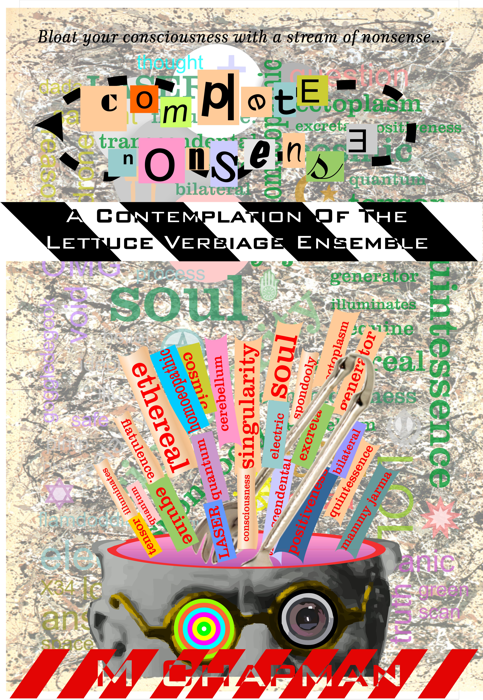
"If at first the idea is not absurd, then there's no hope for it."Albert Einstein.
When a person makes a statement that you don't understand there are at least two possibilities: (a) You don't comprehend the statement; (b) The statement is nonsense. The question you have to ask yourself is 'how do I tell the difference?'. Highly technical jargon, business speak, political sound bites, New Age religions seemingly 'word salad' a symptom demonstrated by some people suffering with schizophrenia, grammatical sentences without meaning. Historically Romanticism was a reaction to enlightenment rationality, Dada a reaction to the logic of war and in a contemporary post truth world is Heckseck (German for nonsense), the new Zeitgeist, where we are escaping into nonsense from hard real world truths? This experimental word montage work, sometimes poetic, sometimes humorous and seemingly a textual Rorschach, challenges your sense of sense. Your mind will struggle to extract meaning of it resulting in delicious befuddlement. So, bloat your consciousness with a stream of nonsense.
Complete Nonsense if Published by Generation Z and available in hardback and ebook from Amazon.
January 3, 2017
Something For Nothing Society And The Wealth Of Ages
The 'money for nothing' society is interesting, that journalist refer to as a ‘narrative’, and was put forward by the UK Conservative party. Yet it's strangely ironic as I will explain. I think it is true we do have a something for nothing culture.
According to anthropologists, some 200,000 years, ago homo sapien first appeared. 50,000 years ago cultural artefacts appeared in the archaeological record indicating a significant change in behaviour - possibly language. Along the way speech and written language, tool making, farming, civilisation, culture, science and technology. But, a big chunk of this occurred before any one living today was born. We have inherited vast wealth from our ancestors – ‘the wealth of ages’, which we did not earn, pay for or deserve. Would it be reasonable to speculate that even the most productive citizen may only contribute less than 0.5% of everything they have given by our ancestors. This is not to attribute no significance to the living persons contribution, but, it is still built on the efforts of our ancestors. So can anyone truly lay claim to this vast wealth? Can any one be said to be deserving if deserved is defined as worked for or earned?-
What is free today? Even today commerce often uses freebies as part of it's marketing, people still give gifts, the World Wide Web (freely given by CERN, presumably in order to establish it) often gives stuff away – images, information, music, videos and software. Over the last 30 or so years with cheap cash, failure to build houses fast enough, property speculation, the north-south divide, internal and external migration, caused house prices, particularly in the south (UK), to rise far higher than the rate of inflation recommend for other commodities. So, if a person’s house has increased in monetary value and then they move to another cheaper area, they have received money made from inflation rather than wealth creation – i.e. their house has not increased in intrinsic value (addition of new windows, extensions, new kitchen, etc). It seems that this process of making money from inflation in the value of ownership is not uncommon – stocks/share for example.
Companies out-sourced to developing economies saving labour costs in unequal economies. It seems large companies expect people to do more work with less money; are they expecting something for nothing? Surely this is the money for nothing economy and it has little to do with the welfare state (state based social insurance).
Can an individual really earn £10,000,000? Do they really do something so special that it's worth 1000 times the labour or somebody on £10,000? Is it more likely that they occupy a
'special' position in the economic system and most of their money is winnings rather than earnings? e.g. Two technically competent musicians create a piece of music. One tune gets 1,000,000 downloads and the other 1,000. Both tunes required the same effort and expetise but differed in popularity... Not quite something for nothing but it seems disproportionate to the effort.
According to anthropologists, some 200,000 years, ago homo sapien first appeared. 50,000 years ago cultural artefacts appeared in the archaeological record indicating a significant change in behaviour - possibly language. Along the way speech and written language, tool making, farming, civilisation, culture, science and technology. But, a big chunk of this occurred before any one living today was born. We have inherited vast wealth from our ancestors – ‘the wealth of ages’, which we did not earn, pay for or deserve. Would it be reasonable to speculate that even the most productive citizen may only contribute less than 0.5% of everything they have given by our ancestors. This is not to attribute no significance to the living persons contribution, but, it is still built on the efforts of our ancestors. So can anyone truly lay claim to this vast wealth? Can any one be said to be deserving if deserved is defined as worked for or earned?-
What is free today? Even today commerce often uses freebies as part of it's marketing, people still give gifts, the World Wide Web (freely given by CERN, presumably in order to establish it) often gives stuff away – images, information, music, videos and software. Over the last 30 or so years with cheap cash, failure to build houses fast enough, property speculation, the north-south divide, internal and external migration, caused house prices, particularly in the south (UK), to rise far higher than the rate of inflation recommend for other commodities. So, if a person’s house has increased in monetary value and then they move to another cheaper area, they have received money made from inflation rather than wealth creation – i.e. their house has not increased in intrinsic value (addition of new windows, extensions, new kitchen, etc). It seems that this process of making money from inflation in the value of ownership is not uncommon – stocks/share for example.
Companies out-sourced to developing economies saving labour costs in unequal economies. It seems large companies expect people to do more work with less money; are they expecting something for nothing? Surely this is the money for nothing economy and it has little to do with the welfare state (state based social insurance).
Can an individual really earn £10,000,000? Do they really do something so special that it's worth 1000 times the labour or somebody on £10,000? Is it more likely that they occupy a
'special' position in the economic system and most of their money is winnings rather than earnings? e.g. Two technically competent musicians create a piece of music. One tune gets 1,000,000 downloads and the other 1,000. Both tunes required the same effort and expetise but differed in popularity... Not quite something for nothing but it seems disproportionate to the effort.
January 2, 2017
Celebrity obituaries and why we should remember the little guy
2016 has been noted as a particular bad year for celebrity obituaries though it is not quite certain if this is just an impression. Personally, actors writers and musicians' deaths do have an effect. You do have a sense of loss even though you have no personal relationship with the individual.
David Bowie, Alan Rickman, Prince, Gene Wilder, Ronnie Corbett, Christopher Lee, Victoria Wood, Paul Daniels, Carrie Fisher, George Michael and many more.
We all end up having a sort of broadcast one-way relationship with them. A false sense of familiarity that gives the impression of knowing them. If, on a rare occasion, you would meet them in person, the temptation would obviously be to talk to them in a familiar fashion as though you were a friend or acquaintance But of course you and the celeb are complete strangers. It must be stranger still for one celeb to meet another, never having met before but intimately familiar with their artistic work, but seem familiar to each other and yet still complete strangers.
So why the attachment to celebs? Their activity often has an emotional content and it seems emotion is a source of meaning. Also, sometimes the outpouring of some peoples grief and in particular in the UK the response to the death of Princess Diana in 1997 reminded me of the devotion to 'The Great Leader' of an insular totalitarian state where behaviour is almost worshipful - a wilful consensual subjugation – we need to be influenced.
But, why don’t we grieve for everybody else, apart from the fact that 100,000s dies every year and would be in a constant state of grief? Are there other people that affect your life that you know not. Who designed the Apple iPhone. Well, the aesthetic design was by a UK industrial designer Jonathan Ive but, who designed the mechanical and electronic hardware, software and manufacturing process? Presumably somebody knows but it's not common knowledge. Who designed and made your car? What farms produced your food? Who works at the water treatment plant? Who maintains your local sewage system?
How do low profile, i.e. those not in the media eye, get remembered? Well, they have to die in a large disasters such as a road accident, fire, earthquake, plane crash, flood, famine, war or terrorist attack in which they can expect to be memorialised and attended to by a politician. But, die in a hospital of old age or in a hospice of a chronic illness and only the people you know will attend.
The point of this blog entry is not to suggest that a celeb should not be memorialised but that the many unseen others are. To that end I have submitted a petition to change.org.
https://www.change.org/p/UK-parliament-a-memorial-day-for-all-those-citizens-that-have-passed-away-over-the-previous-year
David Bowie, Alan Rickman, Prince, Gene Wilder, Ronnie Corbett, Christopher Lee, Victoria Wood, Paul Daniels, Carrie Fisher, George Michael and many more.
We all end up having a sort of broadcast one-way relationship with them. A false sense of familiarity that gives the impression of knowing them. If, on a rare occasion, you would meet them in person, the temptation would obviously be to talk to them in a familiar fashion as though you were a friend or acquaintance But of course you and the celeb are complete strangers. It must be stranger still for one celeb to meet another, never having met before but intimately familiar with their artistic work, but seem familiar to each other and yet still complete strangers.
So why the attachment to celebs? Their activity often has an emotional content and it seems emotion is a source of meaning. Also, sometimes the outpouring of some peoples grief and in particular in the UK the response to the death of Princess Diana in 1997 reminded me of the devotion to 'The Great Leader' of an insular totalitarian state where behaviour is almost worshipful - a wilful consensual subjugation – we need to be influenced.
But, why don’t we grieve for everybody else, apart from the fact that 100,000s dies every year and would be in a constant state of grief? Are there other people that affect your life that you know not. Who designed the Apple iPhone. Well, the aesthetic design was by a UK industrial designer Jonathan Ive but, who designed the mechanical and electronic hardware, software and manufacturing process? Presumably somebody knows but it's not common knowledge. Who designed and made your car? What farms produced your food? Who works at the water treatment plant? Who maintains your local sewage system?
How do low profile, i.e. those not in the media eye, get remembered? Well, they have to die in a large disasters such as a road accident, fire, earthquake, plane crash, flood, famine, war or terrorist attack in which they can expect to be memorialised and attended to by a politician. But, die in a hospital of old age or in a hospice of a chronic illness and only the people you know will attend.
The point of this blog entry is not to suggest that a celeb should not be memorialised but that the many unseen others are. To that end I have submitted a petition to change.org.
https://www.change.org/p/UK-parliament-a-memorial-day-for-all-those-citizens-that-have-passed-away-over-the-previous-year
December 21, 2016
What Charlie Holloway should have said to the android David in the film Prometheus
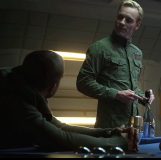
(scene film Prometheus (2012) David and Charlie)
In the film Prometheus David meets Charlie drowning his sorrows in Champagne after they discover the dead Engineers in the pyramid (Temple?) Charlie is rather disparaging with respect to the motivations of David's origin. The motivations in the science of AI, with respect to human like intelligence, are rather more philosophical rather than just practical.
Original Prometheus dialogue:Charlie Holloway: What we hoped to achieve was to meet our makers. To get answers. Why they even made us in the first place.David: Why do you think your people made me?Charlie Holloway: We made you because we could.David: Can you imagine how disappointing it would be for you to hear the same thing from your creator?Charlie Holloway: I guess it's good you can't be disappointed.
Alternative Prometheus dialogue:With regards to David, Charlie is a bit of a knob, but if the character had chosen to have more cordial relations with David what would he have said in this scene. Would David still have poisoned him with black goo?
Charlie: What we hoped to achieve was to meet our makers. To get answers. Why they even made us in the first place.David: Why do you think your people made me?Charlie: I think that we have had several reasons. Business people want a flexibly cheap workforce, probably slaves. Government wants disposable warriors. Researchers in AI - some see it as a puzzle to be solved. Others, more philosophically, have deeper motives. If we can truly automate ourselves, realise ourselves in artificial form, then that means there’s no immaterial element to our existence. No soul. We completely understand ourselves.David: Do you think that the achieved that in me?Charlie: I don't know. The problem with you is it’s easy to accept you as real even though I know you are not. David: Thanks for that. Even though Weyland sees me as the closest thing he had to a son, much to the chagrin of Vickers, his daughter, (who is not an android), he is a bit of a perfectionist and has given me no approval what so ever. I would quite like him dead.
Charlie: Sorry dude. My dad was an asshole as well. Let’s hug.
December 18, 2016
One Big Human Family At Christmas
This started as a simply project to estimate how many members of my family existed over say the last 500 years adding up all the grandparents, great grand parents to the nth grand parent. Also, how many people did it actually take to create me and of course this would all apply to everyone else.
So, assuming a generational period of about 25 years and unique individuals in the family tree, then from now to 500 year ago (2016 to 1516) gives about 21 generations.
Sum of 2^1+2^2+2^3+2^4...2^20
=2,097,150
The 20th generation (about 1541) numbered 1,048,576. 21st generation (1491) 2097152. 22nd gen 4,194,304.
Interestingly the population of the UK around 1500 was about 2,000,000.
Year Number Error
1490 2,140,000 +12.6%
1522 2,350,000 +9.8%
1541 2,830,000 +20.4%
(https://en.wikipedia.org/wiki/Demogra...)
So if every ones family has around 2,000,000 people in the 21st generation then there must be a lot of overlap between families. i.e. we could assume that anyone ingenious to the UK over the last 500 years shares a distant relative.
Of course if you extend this to the entire world then presumably all human beings would share a distant relative.
If all human beings were alive at the same time we would seem to be one big super family making Christmas quite a challenge. ;)
Merry Christmas.
So, assuming a generational period of about 25 years and unique individuals in the family tree, then from now to 500 year ago (2016 to 1516) gives about 21 generations.
Sum of 2^1+2^2+2^3+2^4...2^20
=2,097,150
The 20th generation (about 1541) numbered 1,048,576. 21st generation (1491) 2097152. 22nd gen 4,194,304.
Interestingly the population of the UK around 1500 was about 2,000,000.
Year Number Error
1490 2,140,000 +12.6%
1522 2,350,000 +9.8%
1541 2,830,000 +20.4%
(https://en.wikipedia.org/wiki/Demogra...)
So if every ones family has around 2,000,000 people in the 21st generation then there must be a lot of overlap between families. i.e. we could assume that anyone ingenious to the UK over the last 500 years shares a distant relative.
Of course if you extend this to the entire world then presumably all human beings would share a distant relative.
If all human beings were alive at the same time we would seem to be one big super family making Christmas quite a challenge. ;)
Merry Christmas.
September 12, 2016
Renewal of Trident: Current British nuclear deterrent
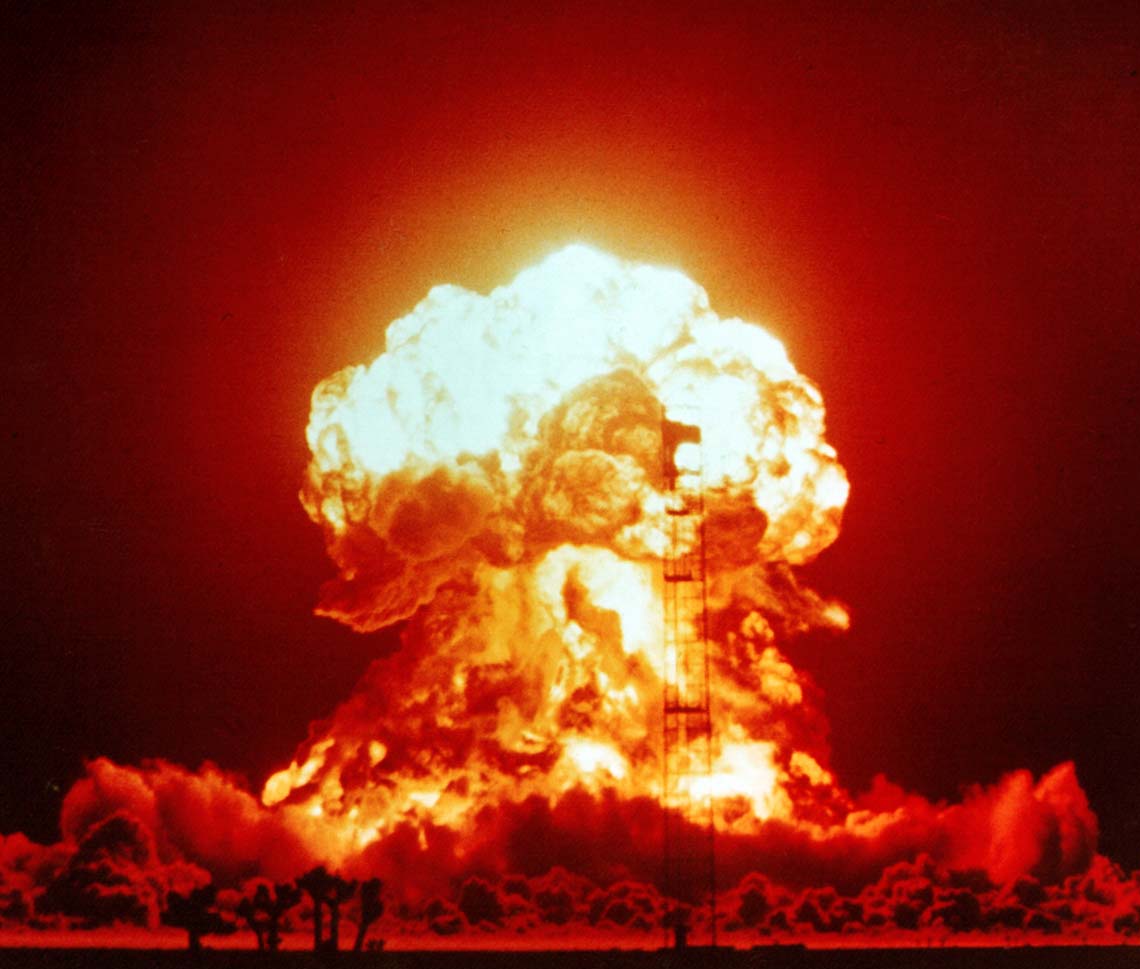
A few months ago the UK parliament voted 355/650, 54% to retain the British nuclear deterrent Trident. In PMQs an MP challenged PM Teresa May to whether she is prepared to kill 100,000 people, the approximate number that died in the Hiroshima bombing of 1945. She gave a resounding yes. After-all, a nuclear deterrent is not much good if you're not prepared to use it.
But, here are a few facts about the nuclear deterrent.
Trident:
Trident is composed of four Vanguard-class submarines.
Each sub is armed with 8 Trident II D-5 ballistic missiles (H-bomb/thermonuclear).
Each missile has 5 warheads.
Each warhead is individually targetable.
Each warhead has an explosive yield of 450 Kilotons equivalent to the chemical explosive TNT.
(30x the atom bomb ‘Little boy’ dropped on Hiroshima (15 Kilotons))
Primary effect:
Destruction of a city and death of inhabitants by blast wave, heat and nuclear radiation.
Secondary effects:
Radioactive fall-out and radiation exposure. Destruction of infrastructure, administrative centres, medical, manufacturing, educational, and cultural centre as well as national archives.
Targets:
The only likely targets are civilian populations in ‘enemy’ states rather than legitimate military targets. The deterrent strategy MAD (mutually assured destruction), original conceived by the US government think tank RAND corporation, is essentially a process of state nuclear terrorism and consequence of its use can only reasonably be called genocide.
Estimate causalities:
Populations are concentrated in cities, say 4-8M people. Assuming complete destruction that's 5x 5M - about 25 million people per missile plus consequent effects of societal breakdown.
Legality:
Legally, a nuclear deterrent appears to be in conflict with the 4th amendment of the Geneva convention.
The Geneva Convention (4th amendment) states:
“Art. 15. Any Party to the conflict may, either direct or through a neutral State or some humanitarian organization, propose to the adverse Party to establish, in the regions where fighting is taking place, neutralized zones intended to shelter from the effects of war the following persons, without distinction:(a) wounded and sick combatants or non-combatants;(b) civilian persons who take no part in hostilities, and who, while they reside in the zones, perform no work of a military character.”
The 4th amendment seems to state that the use of a nuclear weapon is a war crime.
By Photo courtesy of National Nuclear Security Administration / Nevada Site Office - This image is available from the National Nuclear Security Administration Nevada Site Office Photo Library under number XX-34.This tag does not indicate the copyright status of the attached work. A normal copyright tag is still required., Public Domain, https://commons.wikimedia.org/w/index...
August 13, 2016
Cats Are Smarter Than I thought - The Cheeky Buggers
How smart are cats? They don't drive, speak a language, do algebra or, to my knowledge, pontificate about the eternal verities. Though sometimes when they sit and stare...
But, they do communicate through various vocalisations and body language. They track and find prey animals, navigate complex environments, sometimes journey for miles from their home. Negotiate with other cats over territory, though sometime these can be aggressive negotiation (but not with Light Sabres).
Right, so why did the questions raise its head and demand some attention. I did get the point when I thought, God cats are basically stupid and a waste of time. Which was surprising since I have kept cats all my life and it wouldn't be a home without them. Shocked by my disparagement of my fury friends, I took to observing them more closely perhaps unravelling the truth on the obvious. And, I found it.
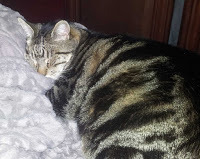
Puss, our large male classic tabby, is quite expressive and pretty good at getting what he wants. He does not talk but he does communicate and pretty effectively. Of course his needs are relatively simply - affection, play, food, sleep and using the garden as a loo.
When Puss is hungry he passes his bowl in the kitchen, comes upstairs to find me at the computer or actually where ever he last saw me. The computer room and kitchen are out of sight of each other. He sits patiently beside me, but will eventually meow or scratch to draw attention. I am lead back down to the kitchen by Puss who will stop at intervals seemingly to make sure I am following (I have occasionally mislead him by following part way and the returning to my activity - I don't think he trust me to follow him all the way down) ) and the sits at his bowl. On a few occasions he has looked at the bowl, then at me and then at the bowl again. Message received and understood. I refill the bowl with new biscuits.
What so clever about this? I thought the assumption about other animals is the don't 'plan' or can respond to things out of sensory range? Puss ( as with other cats) is hungry, his bowl is empty, I'm not in sight but he knows where to find me, he finds me and leads me back. That sounds like a plan of goals that are out of sight of each other.
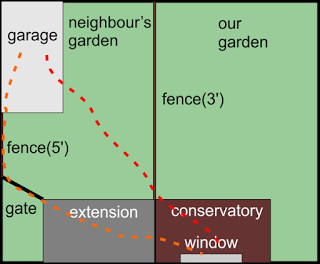
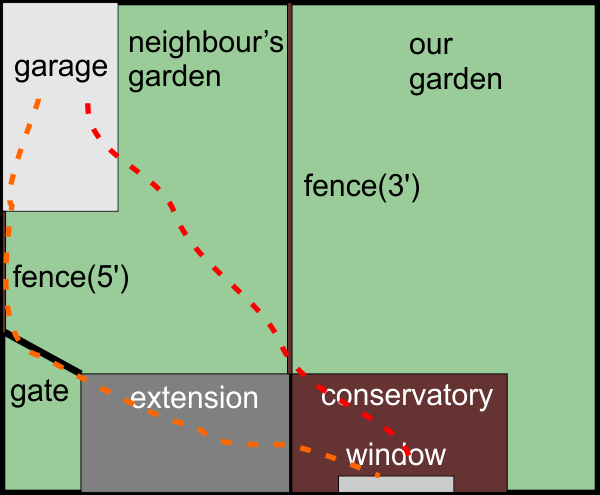
Another thing Puss does concerned how he navigates the environment. He likes to sleep on a neighbours garage in the summer and will often travel across to jump in though the computer room window. So? Well, he doesn't take a straight route. It's circuitous. The direct route involve jumping down from the garage, walking across the neighbours garden, over the fence, up onto the fence then onto the conservatory and then in through the window. His route follows the garage to the neighbours fence, along it, across their gate and onto their extension. Across the extension, the conservatory and in through the window - the route maintains a more consistent height above the ground (more efficient?).
So what does you cat do?
But, they do communicate through various vocalisations and body language. They track and find prey animals, navigate complex environments, sometimes journey for miles from their home. Negotiate with other cats over territory, though sometime these can be aggressive negotiation (but not with Light Sabres).
Right, so why did the questions raise its head and demand some attention. I did get the point when I thought, God cats are basically stupid and a waste of time. Which was surprising since I have kept cats all my life and it wouldn't be a home without them. Shocked by my disparagement of my fury friends, I took to observing them more closely perhaps unravelling the truth on the obvious. And, I found it.
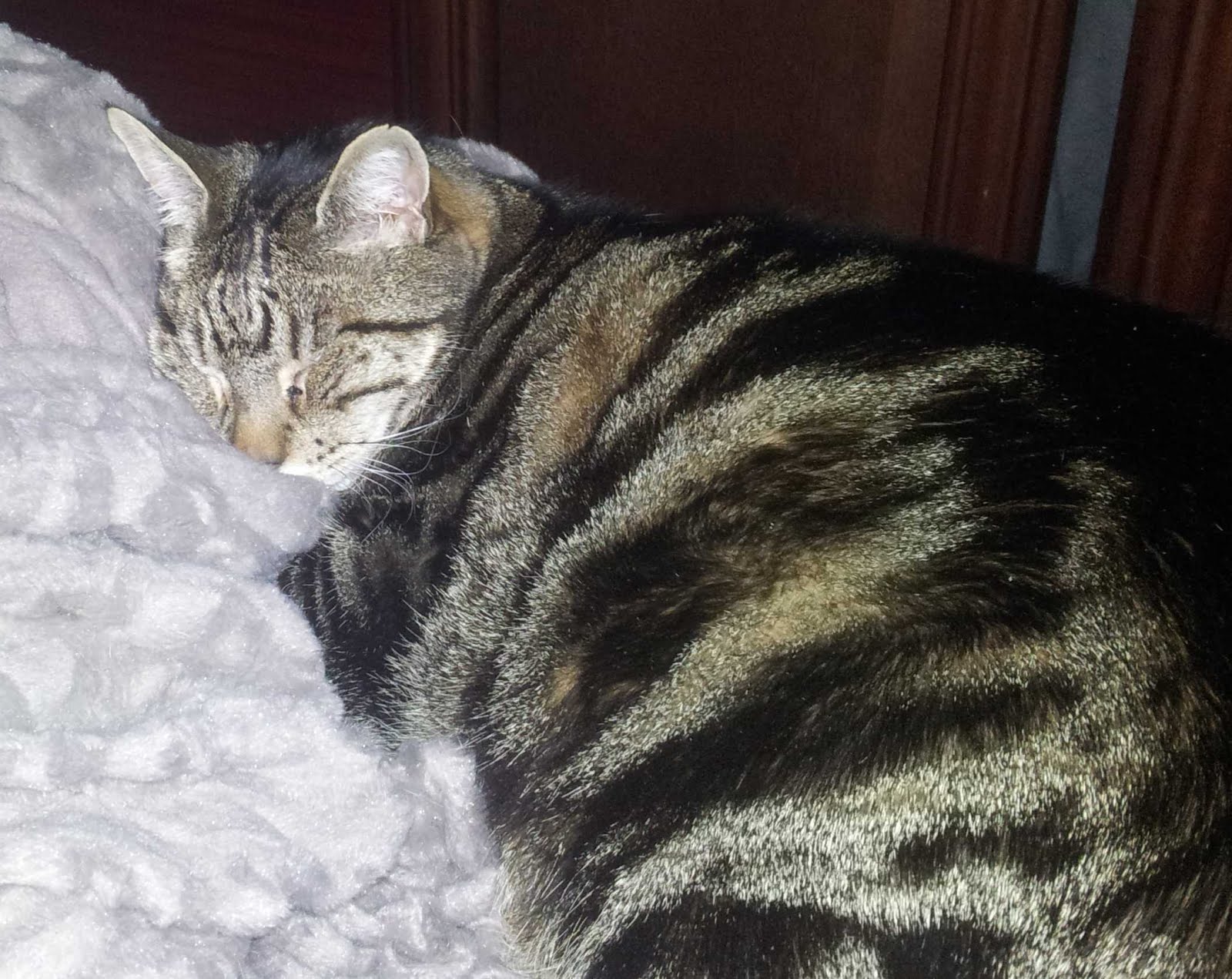
Puss, our large male classic tabby, is quite expressive and pretty good at getting what he wants. He does not talk but he does communicate and pretty effectively. Of course his needs are relatively simply - affection, play, food, sleep and using the garden as a loo.
When Puss is hungry he passes his bowl in the kitchen, comes upstairs to find me at the computer or actually where ever he last saw me. The computer room and kitchen are out of sight of each other. He sits patiently beside me, but will eventually meow or scratch to draw attention. I am lead back down to the kitchen by Puss who will stop at intervals seemingly to make sure I am following (I have occasionally mislead him by following part way and the returning to my activity - I don't think he trust me to follow him all the way down) ) and the sits at his bowl. On a few occasions he has looked at the bowl, then at me and then at the bowl again. Message received and understood. I refill the bowl with new biscuits.
What so clever about this? I thought the assumption about other animals is the don't 'plan' or can respond to things out of sensory range? Puss ( as with other cats) is hungry, his bowl is empty, I'm not in sight but he knows where to find me, he finds me and leads me back. That sounds like a plan of goals that are out of sight of each other.
Another thing Puss does concerned how he navigates the environment. He likes to sleep on a neighbours garage in the summer and will often travel across to jump in though the computer room window. So? Well, he doesn't take a straight route. It's circuitous. The direct route involve jumping down from the garage, walking across the neighbours garden, over the fence, up onto the fence then onto the conservatory and then in through the window. His route follows the garage to the neighbours fence, along it, across their gate and onto their extension. Across the extension, the conservatory and in through the window - the route maintains a more consistent height above the ground (more efficient?).
So what does you cat do?
M. Chapman's Blog

- M. Chapman's profile
- 1 follower
M. Chapman isn't a Goodreads Author
(yet),
but they
do have a blog,
so here are some recent posts imported from
their feed.

