Ken Preston's Blog, page 19
February 14, 2014
I have a Black Dog, and his name is Depression.
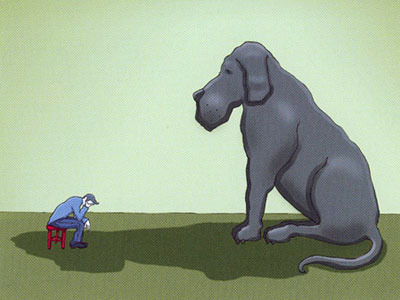 In a foul mood, down in the dumps, dejected, gloomy, desolate, a blue funk, despondent, feeling low…
There are many words to describe a state of unhappiness, but only the term, The Black Dog, captures depression’s particular combination of attributes.
My own Black Dog is a very loyal companion. He’s been a part of my life now for going on thirty-two years or more. Sometimes he sits in the background, and I hardly notice him. Other times he is a constant presence by my side, suffocating me with his love.
For many years I thought I had finally managed to cage him for good. Oh, he was still there, and I could still hear his growls and his barks, but it was fine.
He was safely locked away in his cage.
He couldn’t hurt me anymore.
The problem was, sometimes I gave in to all those barks and growls, and I fed him.
Rule Number One: Never feed the Black Dog.
But it’s difficult not to. He can be so damn insistent.
Towards the end of 2012, I started feeding the Black Dog on a regular basis. I didn’t mean to. I wasn’t even aware I was doing it.
Not until it was too late, anyway.
Wednesday, June 12th 2013, sometime around mid-morning, and the Black Dog erupted out of his prison. He’d been rattling the bars for a few months by now. And with all that food I’d been giving him, he’d simply outgrown his cage.
I had what I can only describe as a mini-meltdown. It mainly involved bursting into tears in front of my work colleagues, and then fighting the urge to go and find a dark corner to hide in.
I was in no condition to do any work, so I went home, and booked an appointment to see the GP. By the following morning I had a prescription for Sertraline, an anti-depressant, I was booked in for counselling, and I had been signed off work for two weeks.
Great, I thought, we can get this sorted.
Fat chance.
The Black Dog was out, and he had no intention of going anywhere soon. He’d missed me.
Oh, and all that time I’d been feeding him in his cage? Yes, he’d grown BIG.
Although I did not know it at that point, I was not to return to work for almost six months.
The summer of 2013, the Black Dog spent a great deal of time in my company. He liked to whisper in my ear, tell me that I was no good, I was a complete waste of space. My family and friends? Well, they’d be better off without me, to be honest.
I took to repeating those statements, muttering out loud to myself, “You’re a fucking waste of space, you’re just a complete fucking idiot,” and other, equally enlightening platitudes.
I lost all enjoyment of life. Spending time with my wonderful family became a terrible chore. I did my best to put on an act for the boys, especially, but the mask slipped sometimes, and the best thing I could do then was go and hide in the bedroom.
I lost the ability to think clearly. The simplest decisions became agonizing, potentially life changing problems, for which I had no answers.
I couldn’t write anymore, and for a while I couldn’t even summon up the energy to pick up a novel, and read.
My anxiety levels shot up. I had a constant churning in my stomach, worrying over…well, nothing actually. I just worried.
I found it increasingly difficult to spend time with friends, even close ones. Anytime my wife and I got together with friends, I just sat mute, unable to think of a single contribution worth making to the conversation going on around me.
Sometimes I would find myself wondering which building in Stourbridge was the tallest, and had the easiest access to its roof. After all, if I was going to leap off it, I wanted to be sure that it was high enough to do the job of ending my life properly.
How terrible it would be to wake up in hospital, realising that not only had I made a complete fuck up of my life, but I couldn’t even kill myself.
What stopped me from pursuing these thoughts to their logical conclusion?
My family.
Despite the lies the Black Dog liked to whisper into my ear, I knew my wife and my two boys needed me. That if I listened to the Black Dog, and acted upon his insidious falsehoods, their lives would be changed forever.
But it was difficult to ignore him, especially in the middle of the night when I was the only one awake, had been for hours, with no chance of drifting off to sleep in sight.
Even on holiday, lying on a beach in Brittany, the sun’s warmth on my face, I found it difficult to escape the Black Dog. He liked to lie beside me, snoozing. His presence alone a constant reminder that I was an idiot, a complete and utter fuck up.
I mean, come on, was there really any point in me prolonging my miserable existence on planet earth?
The summer of 2013. Not the best summer of my life.
In my next post I’ll talk through some of the steps I took to pull myself out of the valley I was in, and the help that I had doing so.
The Black Dog is not back in his cage, yet, but I have learnt how to keep him at a distance. And, strangely enough, I have learnt how to value his presence in my life, too.
If you recognise any of these thought patterns or feelings in yourself, please, please go and get help. See your GP, or talk to a trusted friend or family member.
The Black Dog doesn’t need to be your constant companion, either.
By the way, the inspiration for this post, and the illustration at the top, come from this brilliant book by Matthew Johnstone -
The link takes you to Amazon.
And, to be completely transparent, although the links to my own books on this blog are affiliate linked to Amazon, the link to Matthew Johnstone’s book is not, and I receive NO money if you purchase his book after finding it through that link above.


February 12, 2014
Joe Coffin
He’s not happy.
Arriving Summer 2014

May 4, 2013
Jeff Bridges Photography
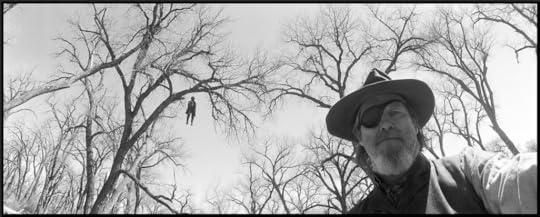
Jeff Bridges, also known as ‘The Dude’ is not only, in my opinion, one of the greatest North American character actors of his generation, but also an accomplished photographer.
He uses a Widelux camera, for panoramic images. Here is what Jeff Bridges has to say about the camera, and why he uses it:
The Wide-Lux is a fickle mistress; its viewfinder isn’t accurate, and there’s no manual focus, so it has an arbitrariness to it, a capricious quality. I like that. It’s something I aspire to in all my work — a lack of preciousness that makes things more human and honest, a willingness to receive what’s there in the moment, and to let go of the result. Getting out of the way seems to be one of the main tasks for me as an artist.
To see more photographs, click here to visit Jeff Bridges’ website.
April 10, 2013
A big pile of books on my living room floor
 There’s a standing joke amongst my family, that I simply cannot walk past a bookshop without going in for a browse. Once in there, nine times out of ten, I can’t walk out of the bookshop without having bought a book.
It’s true. I love books. Sometimes I wonder if it is a compulsion, this need to buy books. I like looking at them, lining my bookshelves at home, and sometimes I pull them off the shelves to rearrange them so that they look nice, or to categorize them by author, or genre. Or even publisher.
So, over the years, I’ve collected a fair few books. I’ve also borrowed a quite a number of books from the library and, since buying a Kindle, I’ve amassed a ton of ebooks as well.
I’ve read most of them, too. Some of them I have read more than once, and there are a few that I have started, but abandoned. Of the ones that I have not got round to finishing, I usually keep them, meaning to give them another go at some point. It has to be a pretty shocking book for me to abandon and then dispose of, never intending to give it one more chance to captivate me. By now you may well be thinking, so what’s that big pile of books on the floor for, in that photograph?
Well, I’ll tell you. Those are the books that I have bought over the last few years, and not got round to reading yet. I bought them with every intention of reading them, but somehow they got missed amongst all the other books I wanted to read. There is probably a similar sized pile of books on my Kindle waiting to be read, too.
So, one day, just the other week, I pulled all those books off my various bookshelves, piled them up on the floor, and said to myself, “I’m not going to buy another book until I have read all of those books lying in that pile there.”
I average about a novel a week, (it used to be more, but I’m a little busier these days). So, maybe a year to get through those books, and then onto the Kindle, and maybe another year to get through those.
And I started off with good intentions. The first book I picked up was Sunset and Sawdust by Joe R Lansdale. Wow, what a fantastic story. If you haven’t read Sunset and Sawdust, I suggest you go and buy a copy right this minute, and read it immediately. I loved it.
Encouraged by this, I picked Prayers for Rain, by Dennis Lehane, next. Great, another good book, highly enjoyable, highly recommended.
Unfortunately, by this point, I had broken my promise. I had bought another book. Well, actually, I’d bought more than one. Three novels and two graphic novels.
Hmm, two books down, but another five bought. So that was three more on the pile than I originally started with. Not doing too good here, am I?
Still, it was a promise I knew in my heart of hearts I was never going to keep. I mean, a year (or two) without buying a book? Not possible for me, I’m afraid.
But at least I’m making some progress. If I can just keep my book buying to less than one a week, then that big pile of books will keep on getting smaller.
I hope.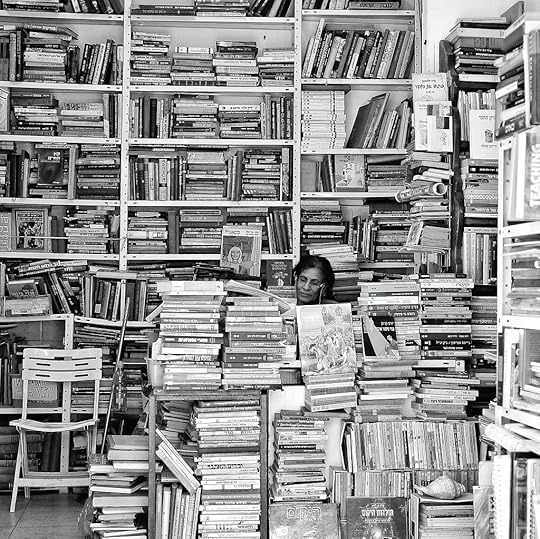
April 4, 2013
My Publishing Success with My Weekly Pocket Novels
 Wait, hold on a minute there!
What am I trying to say here?
Can it be true?
Ken Preston, author of cowboy/zombie mashup Population:DEAD! and the supernatural pirate novel The Devil and Edward Teach has written a My Weekly Pocket Novel?
Seriously?
Well, yes, I have actually. And I’m rather proud of it, too.
In fact, when it came right down to it, writing a romantic thriller for My Weekly, held similar challenges and pleasures to writing anything else I have written over the years.
But there is one big similarity between my Pocket Novel, Twenty Seconds to Freefall, and much of my previous work. I do love writing a strong female character.
If you read the reviews on Amazon you will see that Denver McCade steals the show from the supposed lead, male character of Caxton Tempest, in Caxton Tempest at the End of the World. Then there is Dallas Hogan who fights off a horde of zombies in order to exact a terrible revenge on her abusive father in Population:DEAD!
In fact, I sometimes think those two are sisters, or cousins maybe.
Next up, is Abigail Rose, the English rose from The Devil and Edward Teach, who starts the novel as a rebellious young girl, and finishes it a battle scarred woman, along the way meeting Blackbeard and the Devil himself.
And, of course, there is the mysterious Karen, from Drive Fast! She Said, who has a pastime so dangerous it may well kill her and those who ride with her.
So yes, I like writing feisty female lead characters, and Katrina Maslow is one of my feistiest yet. In fact, at the exciting, climactic events of Twenty Seconds to Freefall, Katrina does something so bonkers, so unbelievably brave and thrilling, that… well, you’ll have to read the book and find out for yourself.
Twenty Seconds to Freefall is out on June 20th, available in WH Smiths, major supermarkets, and newsagents everywhere, for two weeks only, at the bargain price of £1.99
March 20, 2013
James Herbert
I read the The Rats when I was about thirteen or fourteen.
I was on holiday with my parents, somewhere along the South English coast. We were in the local fishing town and, for some reason, my parents had popped into a shop. Maybe it was WH Smiths, I can’t remember, but I do remember they sold books.
Like most people who write, whenever I see shelves of books for sale, I am drawn to them like a filings to a magnet. This is how I am now, and this is exactly how I was thirty-some years ago. Two books immediately caught my eye. I don’t know what possessed my parents to allow me to buy them, but they did, and so started my teenage obsession with James Herbert.
I quickly devoured The Rats in a couple of days, and then moved onto The Crabs (In the tradition of The Rats, the front cover screamed). Unlike James Herbert, Guy N Smith made me cry, so horrific were his descriptions of dismemberment by giant, mutated crabs. Thinking about it, we were by the sea, which maybe added an extra element of terror to the story.
But despite this, it seemed to me that The Crabs was lacking something, and, although I went on to read the sequel (Moon of the Crabs, or some such nonsense) I never read any more Guy N Smith books after that.
But James Herbert? I could hardly wait to get my hands on his next one. In true lad fashion I had to read them in the order he had written them, so next up was The Fog.
Herbert ramped up the kinky sex and sadomasochism in this book. The scene in the school gym, with the headmaster stripped naked and tied to the wall bars, whilst an aggrieved pupil approaches him with a pair of garden shears, is forever seared into my brain.
 After that I read The Survivor, probably for me one of his creepiest books, and then Fluke.
Wow. Fluke was a complete revelation. A fantasy drama, with much in the way of comedy, about a man reincarnated as a dog. Had James Herbert given up on writing horror? No, it seemed he was simply stretching his writing muscles. I don’t know about sales figures, how well Fluke did, compared to his earlier books, but as far as I know, he never wrote outside of the horror genre again.
A shame. I enjoyed Fluke.
By now I had read everything the English Master of Horror had written. I was heavily into Stephen King by this point, having scared myself witless with The Shining in particular, but still, I needed another fix of my favourite horror writer.
And he delivered, with The Spear. Again, there are moments in that book I will never forget. I’ve never been able to look at hairdryers in the same way since.
 I read a few more after that, but the end was in sight. As it turned out, James Herbert was a teenage obsession, and once I moved away from home, and hit my twenties, I quickly grew tired of reading his dark, warped stories of horror and mutilation.
Thought I’d left him behind forever.
But today, reading the sad news that he has passed away, I have a strangely insistent itch to revisit one of those books. Maybe The Rats, or Fluke. Or maybe The Survivor.
And maybe when I’ve finished reading it, I’ll sit in bed with the light on just a bit longer than normal.
And I’ll try not to think about garden shears and hairdryers.
James Herbert 8 April 1943 – 20 March 2013
March 15, 2013
The Screaming Mimi
Written in 1949, The Screaming Mimi is probably Fredric Brown’s most popular book. It is  certainly one of my favourites. I first discovered it in my early twenties, back in the days when I used to browse the bookshelves in real bookshops, rather than virtual ones. Remember those times? It was also around about that time I also discovered Raymond Chandler, and his tough, cynical, knight in shining armour, Philip Marlow.
Brown’s protagonist, William Sweeney, a reporter for the Chicago Blade shares much with Marlow. He is a tough guy, mixes with some pretty disreputable characters, has a soft spot for the ladies, and is quick with a sarcastic comeback.
The Screaming Mimi is set in the 1940s, during an oppressively hot Chicago summer, as a knife wielding serial killer, dubbed The Ripper by the newspapers, is terrorising the city..
Coming down from one hell of an acloholic bender one night, Sweeney is drawn by a crowd to a hotel doorway. On the other side of the glass door a beautiful blonde woman is lying face down on the floor, a large dog (It must be a dog, here in Chicago; if you’d seen it out in the woods you’d have taken it for a wolf) crouching over her. The police arrive, intending to shoot the dog, but then the woman slowly climbs to her feet, a knife wound visible in her abdomen. The astonishing scene that follows next sets Sweeney on his path to sobriety, and a date with a killer.
The blonde woman, Sweeney later learns, is stripper Yolanda Lang, and The Ripper’s intended fourth victim. The dog is called Devil, and performs as part of her act. Yolanda only received a shallow stab wound to her stomach, the ferocious, loyal dog having protected her from further harm.
The book’s opening hook is irresistible, and the language remains a constant throughout the story.
 You can never tell what a drunken Irishman will do. You can make a flying guess, you can make a lot of flying guesses.
You can list them in their order of probability. The likely ones are easy: He might go after another drink, start a fight, make a speech, take a train…You can work down the list of possibilities; he might buy some green paint, chop down a maple tree, do a fan dance, sing “God Save The King”, steal an oboe…You can work on down to things that get less and less likely, and eventually you might hit the rock bottom of improbability: he might make a
resolution and stick to it.
I know that’s incredible, but it happened. A guy named Sweeney did it once, in Chicago. He made a resolution and he had to wade through blood and black coffee to keep it, but he kept it.
Sweeney’s resolution, after seeing the beautiful Yolanda Lang, is to spend a night with her. He quickly determines the best way to do this would be to catch her attacker.
Sweeney soon makes a connection between the killer and a ten inch high statuette sold to him by his first victim in a gift shop. The statuette is called The Screaming Mimi. This is not only a play on the phrase to have the screaming meamies, but here also a mnemonic for the clerk working at the company that produced the statuette, its catalogue number being SM 1.
Here is Sweeney’s first encounter with The Screaming Mimi – He saw what Reynarde had meant. Definitely there was a virginal quality about the slim nude figure, but that you saw afterward. “Fear, horror, loathing,” Reynarde had said, and all that was there, not only in the face, but in the twisted rigidity of the body. The mouth was wide open in a soundless scream. The arms were thrust out, palms forward, to hold off some approaching horror.
Sweeney buys the statuette, believing the serial killer to have kept the other copy sold to him by his first victim.
To reveal more of the plot would ruin it. The narrative is propelled along at a fast clip, mainly by the smart, wisecracking dialogue –
“Stella Gaylord was a B-girl on West Madison Street. The Lee girl was a private secretary.”
“How private? The kind that has to watch her periods as well as her commas?”
– and the swift exchanges between the characters, many of whom mistrust each other.
Sweeney took another sip of his drink. “You know, Doc, I hate you so damn much I’m
beginning to like you.”
“Thank you,” said Greene. “I feel the same about you.”
Throughout much of the story, Sweeney is suffering from a hellish hangover. He has to work hard to keep on top of his game, especially when he discovers his straight edged razor has been stolen from his apartment. Does the killer know Sweeney is on to him? And can Sweeney discover his identity before he kills again?
The Screaming Mimi is a product of its time, the characters’ dialogues littered with casual racist remarks, homophobia and misogynism.
When looking at the statuette’s contorted, fearful figure,, a bartender remarks to Sweeney, “No dame is that afraid of being raped or something.”
Is this a reflection of the author’s own beliefs, or more a reflection of the time and culture the novel’s characters live in? Whichever, it certainly adds authenticity to the narrative and atmosphere.
 Sweeney finally achieves what he set out to do, and finds The Ripper, but there’s a twist, propelling Sweeney back to the bottle, where we found him in the first place.
I’ll leave you with one more excerpt, where Sweeney and Captain Bline, in charge of The Ripper investigation, with one of his cops, have gone to see Yolanda Lang’s act in a scuzzy, downtown night club.
Still half-crouched, the dog took a stiff-legged step toward the
woman. He snarled again and
crouched to spring.
There was a sudden, quick movement across the table from him that pulled Sweeney’s eyes from the tense drama on the stage. And at the same instant that Sweeney saw the movement, Bline’s big hand reached across the table and grabbed Guerney’s arm.
There was a gun in Guerney’s hand.
Bline whispered hoarsely, “You Goddamn fool, it’s part of the act. He’s trained to do that; he’s not going to hurt her.”
Guerney whispered back. “Just in case. In case he does jump her. I could get him before he
got her throat.”
“Put back that gun, you Goddamn sap, or I’ll break you.”
The gun went slowly back into the shoulder holster, but Sweeney saw, out of the corner of his
eye, that Guerney’s hand stayed on the butt of his gun.
Bline said, “Don’t get trigger-happy. The dog jumps her; it’s part of t
he act, Goddamn it.”
 Guerney’s hand came out from under his coat, but stayed near his lapel. Sweeney’s eyes jerked back to the stage as a sudden intake of breath from the audience backgrounded a yip from a woman at a table near the stage, a yip like a suddenly stopped scream.
The dog was leaping.
The novel was also made into a film of the same name, and inspired Dario Argento’s giallo classic, The Bird with the Crystal Plumage.
February 8, 2013
Lego Police Station ATTACK!
My two boys, aged 9 and 6, had an inset day in January, and I was going to be looking after them. We decided we were going to make a Lego movie. In the weekend leading up to our day at home, we storyboarded it, painted a backdrop, and gathered all our Lego props.
The photography took us rather more than the single day we had set aside, but we got it finished. I do hope you enjoy it, as we are rather proud of it.