
Jimmy Akin's Blog, page 9
November 4, 2011


November 2, 2011
POLL: Does God Support Obama's Jobs Bill?
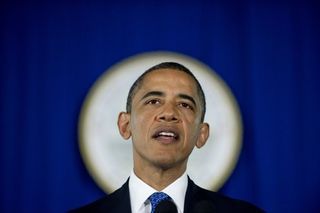 In an article headlined Obama: God backs jobs plan, AFP is reporting:
The president rebuked the House of Representatives for passing a bill reaffirming the US motto "In God We Trust" rather than getting to work on his stalled $447 billion jobs program.
"That's not putting people back to work. I trust in God, but God wants to see us help ourselves by putting people back to work," the president said.
Hmmm. Think he went to far in that?
Obama's spokesman Jay Carney denied that Obama had perhaps gone too far by dragging the Almighty into a fierce political spat.
Well, okay then.
"I believe that the phrase from the Bible is 'the Lord helps those who help themselves,'" Carney said.
Um, no. It's actually not from the Bible.


November 1, 2011
How Magisterial Was Last Week's Vatican Finance Document?
 As we saw previously, many commentators—including George Weigel, Fr. John Zuhlsdorf, and Mark Brumley—were quick to point out that the "note" released by the Pontifical Council for Justice and Peace on world finance should not be understood as a magisterial act which the faithful were bound to accept with religious submission of intellect and will. At least not as a whole (it did, however, contain quotations from prior documents of a magisterial nature).
From what the average person could tell from the way the document was reported by some in the mainstream media, though, the document was fully back by the teaching authority of the pope himself.
Other than the fact that the press usually gets this kind of thing wrong and thoughtful commentators like those mentioned above are much more reliable, how can the ordinary person tell which is right? How can we determine what represents the authoritative teaching of the Church and what does not?
A full treatment of the overall subject goes beyond what can be done in a blog post. (Indeed, entire books and graduate level courses are devoted to the subject.) But here are a few pointers that may help.

October 31, 2011
Cousin Jimmy's Triple-Meat, Triple-Cheese Ultimate Low-Carb Lasagna
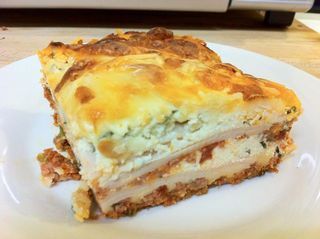
The meats are ground beef, sausage, and turkey; the cheeses are ricotta, mozzarella, and parmesan; and if you'll look close, you'll see that the noodles are sliced turkey breast, which is what makes this low carb!
[image error]
October 30, 2011
*British* Pigs in a Blanket

Naturally low carb; here made with 'Lil Smokies and turkey bacon--not because turkey bacon is healthier but just because it's got a lot of meat and I had it on hand.
These are a standard part of Christmas dinner in England.

October 29, 2011
PODCAST 018 Medjugorje Special
Click Play to listen . . .
or you can . . .

CLICK HERE!
. . . or subscribe another way (one of many ways!) at jimmyakinpodcast.com.
SHOW NOTES:
JIMMY AKIN PODCAST EPISODE 018 (10/29/11)
* VINCE FROM ST. CHARLES, IL, ASKS ABOUT MEDJUGORJE.
1978 CDF Norms:
http://d-rium.blogspot.com/p/normae-s-congregationis.html
Diocese of Mostar statements:
http://www.cbismo.com/index.php?menuID=98
Međugorje: Secrets, Messages, Vocations, Prayers, Confessions, Commissions
http://www.cbismo.com/index.php?mod=vijest&vijest=101
2006 Homily:
http://www.cbismo.com/index.php?mod=vijest&vijest=71
Background on the "Herzegovinian Affair":
http://medjugorjedocuments.blogspot.com/2010/11/1975-decree-romanis-pontificibus.html
2006 News Report:
http://www.catholicnews.com/data/stories/cns/0604177.htm
2009 Homily:
http://www.cbismo.com/index.php?mod=vijest&vijest=366
2010 Summary of developments:
http://www.ncregister.com/blog/new_medjugorje_commission/
2010 Commission Announcement:
http://www.catholicnewsagency.com/news/holy_see_confirms_formation_of_medjugorje_commission/
English translation of interview with Archbishop Amato regarding the Norms:
http://catholiclight.stblogs.org/archives/2010/03/medjugorje-comm.html
WHAT'S YOUR QUESTION?
WHAT ARE YOU GOING TO ASK?
Call me at 512-222-3389!
jimmyakinpodcast@gmail.com
www.jimmyakinpodcast.com
Today's Music: Ave Maria (JewelBeat.Com)
Copyright © 2011 by Jimmy Akin

The Weekly Benedict (Oct. 29, 2011)
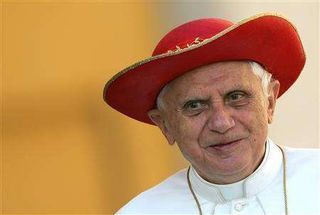 Here are this week's items for The Weekly Benedict:
MESSAGE: Message on the occasion of World Food Day 2011 (October 17, 2011)
HOMILY: 23 October 2011: Canonization of the Blesseds: Guido Maria Conforti, Luigi Guanella, Bonifacia Rodríguez De Castro
ANGELUS: Angelus, 23 October 2011
AUDIENCE: 26 October 2011, Prayer in preparation of the Meeting in Assisi
VOYAGE DOCUMENT: Farewell address by the Holy Father (Saint Francis Square, 27 October 2011) (NOTE: The first paragraph of this is left in Italian, in an apparent mistake)
SPEECH: To the delegations taking part in the meeting for peace in Assisi (October 28, 2011)

October 26, 2011
Are Levites Needed to Validate Scripture?
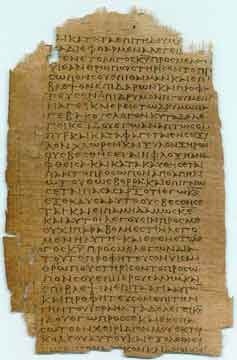 A reader writes:
My father came to me about the Septuagint and how it is not proper. I know the history of it but he stated something I never heard. He said that the Levites were not there when it was put together and that null and voids it automatically since God had prescribed them as keepers of scripture. I can't find anything on this. Can you help?
I'm not sure what your father is thinking of. It may be Malachi 2:7, which says:
For the lips of a priest should guard knowledge, and men should seek instruction from his mouth, for he is the messenger of the LORD of hosts.
This is a reference to the general teaching function of the priests under the Old Covenant. It expresses what they should do--be good teachers of God's word--but not what they always did. In fact, Malachi's oracle from God then goes on to berate the priests of his day for not teaching properly.
If this is the passage your father is thinking of, it doesn't do the work he seems to think it does. It's a general statement about the teaching responsibilities of Old Testament priests and does not say that they are needed to validate particular Bible translations, like the Septuagint (which, for those who may not know, is a Greek translation of the Old Testament Scriptures that was very popular in the ancient world, particularly among Jews who lived outside of the Holy Land and who spoke Greek).
Also, who says that there weren't Levites involved when the Septuagint was put together? According to the traditional account of its origin, the Torah portion of it was translated by a group of seventy (or seventy-two) Jewish elders (which is why it's called the Septuagint, from the word for "seventy") who may well have included Levites.
And then there was Josephus, the Jewish historian who was himself a priest, who quoted from the Septuagint, implying some form of approval of it, at least personally.
Or your father may be thinking of a different verse, or he may not have any particular verse in mind and may simply be operating on the premise that because God gave the Levites a special religious role in Israel, and since the Scriptures are religious documents, the Levites must give their consent for a Scripture translation to be valid.
If Levites were needed to validate Scripture translations (and note that Malachi speaks not of Levites but of priests, who were just one extended family within the tribe of Levi) then all of us English-speakers are in trouble because, as far as I know, no English translations have been validated by Levites, so all of our Bibles must be "null and void."
I suspect, though, that your father isn't primarily concerned about a particular translation of Scripture (although he might be). Rather, I suspect that he's concerned about the canon that a particular Scripture tradition represents, and here we have a substantive disagreement between Protestant Christians and the rest of the Christian world, for the historically ancient branches of Christianity all recognize (with a few exceptions here and there) the canonicity of certain books that were commonly found in editions of the Septuagint but that are not found in the modern Protestant Old Testament.
The trouble is, what particular groups of non-Christian Jewish people thought regarding which books are canonical cannot be the definitive criterion of what belongs in the Christian Bible.
Why?
Well, for one thing, non-Christian Jews did not accept the canonicity of any of the New Testament books. Neither non-Christian Levites nor non-Christian Jewish priests accepted these. In fact, they rejected and condemned them. So if one is a Christian, one must be prepared to look to the Christian community for the final determination of what belongs in its Bible.
And the early Christians were quite clear in affirming the canonicity of the books found in the Septuagint but not in modern Protestant Bibles.
You can read more about that in my book The Fathers Know Best: Your Essential Guide to Early Christian Teaching.
Just how early did the Christian community accept the use of the Septuagint?
This early: It's the standard version of the Old Testament that the New Testament authors quote from. The vast majority of the time that the inspired authors of the New Testament quote from the Old Testament, it's the Septuagint they're quoting from.
And they do so without issuing any warnings about which books of the Septuagint can be used. In fact, they allude to some of these books (e.g., Hebrews 11:35 is a direct allusion to 2 Maccabees 7; you won't find anywhere in the Protestant Old Testament where people are tortured and refuse release in order to obtain a better resurrection, but that's exactly what you find in 2 Maccabees 7).
So, although I'm not sure exactly what your father's claim is, I hope this provides useful information for dialogue between viewpoints.

Just 2 Days Left! (I Can Still Save You $100 Or More!)
 Here's the deal: Catholic Answers is currently planning it cruise for May 11-21 of next year.
It's going to go all kinds of interesting places: Italy, Spain, Portugal, etc. There will be a pre-event in Rome, and the trip itself will feature a visit to Fatima.
Now the money part: If you register for the cruise by October 28, I can save you $100 per person. (So if you take two people, I can save you $200; three people, $300; etc.)
Just put the super-secret code "Jimmy" in the "Special Request and Notes" section of your online application.
This exciting, faith-building experience would be a nice Christmas gift for you and your spouse, others in your family, or just yourself!
But remember, there's a time limit on this one, so register by October 28th so I can get you the discount!
More info here: www.CatholicAnswersCruise.com

October 25, 2011
Just How "Major" Was Monday's Finance Document?
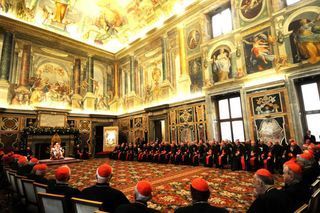 There was a lot of buzz leading up to the the note on world financial matters released by the Holy See on Monday.
One of the first references I saw to it was in a story with a headline something like "Major Vatican Document to Be Released Monday." I clicked on the story and saw that the document in question was to be released by the Pontifical Council for Justice and Peace. My eyebrows immediately went up, and I began pondering the sense in which the term "major" was being used.
I suspect that the person who wrote the headline was using the term in its ordinary sense, which would signify a document of great importance relative to others issued by the Holy See, on some kind of absolute or general scale. You know, the way a papal encyclical is a major document.
But I suspect that the person who wrote the headline was under a misimpression, because the document was not major in this way.
"Major" is a relative term, and while it might be accurate to say that the document was "major" by the lights of the PCJP, it was not major in the overall Vatican sweep of things. The mere fact that it's being issued by the PCJP tells you that much.
That's no slight to the PCJP. It is a dicastery (department) of the Holy See, with its own proper work and role. It's just not a venue the pope uses to issue major documents, when "major" is read in terms of the Vatican as a whole.
Because of the controversial nature of the document, it attracted a great deal of comment in the press, with some loving and some loathing it. Others loved certain aspects of the document and loathed others. And there was a great deal of discussion regarding what kind of authority the document has.

Jimmy Akin's Blog

- Jimmy Akin's profile
- 166 followers

