Jamie Parsley's Blog, page 87
June 30, 2013


June 23, 2013
5 Pentecost
 June 23, 2013
Galatians 3.23-29;Luke 8.26-39
+ I think most of you see me as a pretty rational priest. I hope you do, anyway. I hope no one thinks I’m too flakey or “out there” about some things. Though, you know what? I probably am about some things. Honestly, though, I think my problem sometimes is that I’m almost too rational at times. I have no problem questioning anything. As many of you know firsthand. As a priest, very early on in my career, I was called in to do a house blessing. Nothing too out there, right? Well, I wish…
The reason I was asked to do the house blessing was because the family who lived in that particular house felt their house was haunted. More specifically, the people thought their house was “possessed.” Several family members in the house experienced very strange phenomena: disembodied voices, slamming doors, the sound of footsteps. And, most disturbing of all, crucifixes kept getting smashed.
I didn’t know what to think about such things. Nowhere, in my training to be a priest up to that point, prepared me for such things. But, being rational, I was skeptical. Yes, these people were normal people. I knew them. And I knew they wouldn’t make stories like this up. But still…possessions? Hauntings?
Still, of course, I couldn’t necessarily turn these people down. I knew them and I knew them to pretty rational as well.
So, I went to Bishop John Thornton. Bishop, Thorton, the former Bishop of the Episcopal Diocese of Idaho, was serving at this time as the sabbatical Dean of Gethsemane Cathedral while the current Deans were on sabbatical. I got to know Bishop Thornton very well during this time and we developed a close personal relationship. I knew I could go to him about anything without any judgment. So, I went to him about this situation.
I said, “Bishop, these people want me to cast out whatever it is they think is in their house.”
“What’s the problem?” the Bishop asked.
“Well,” I said, “I don’t know if I even believe in ghosts, or demons.”
The Bishop leaned back in his chair, and with a twinkle in his eyes, he said, “Who cares what you believe?”
Wow! OK. Not the answer I was expecting.
He then smiled and said, “Jamie, these people need you to be their priest. Be their priest. This not about what you believe or disbelieve. This about what they think is happening to them. Your job is go help them. If they believe it’s ghosts, then when you’re in that house, doing the blessing, believe in ghosts. If they believe it’s demons, then while you’re there, believe in demons. If they need you to be an exorcist, be their exorcist. And then, once you’re back in your car afterward, you can go back to believing or not believing whatever you want.”
I can say, in all honesty, that is was the best pastoral advice I have ever received. I have been able to use that advice in many, many situations throughout my priestly career.
As for the blessing, I went to the house, I did the blessing and guess what happening? Nothing happened. Nothing happened while I was there (though I do have to admit, it got weird and a bit spooky at times), and afterward, the family said that whatever had been happening, stopped after the blessing.
I can’t say I am any closer to believing in actual supernatural demons. But, the fact remains, whether we believe in actual demons or nor not, whether we believe in possession or not, what we all must believe in is the presence of evil in this world.
Whether that evil is natural or supernatural, the fact is, there is evil. Even good rational people know that!
And those of us who are followers of Jesus have promised that we must turn away from evil again and again, in whatever way we encounter it. Whenever we are confronted with evil, we must resist it.
In our Baptismal service, these questions are asked of the person being baptized (or their sponsors):
“Do you renounce Satan and all the spiritual forces of wickedness that rebel against God?”
And…
“Do you renounce the evil powers of this world which corrupt and destroy the creatures of God?”
And, as our Baptismal Covenant asks us asks us:
“Do you persevere in resisting evil, and whenever you fall into sin, repent and return to the Lord?”
Evil is something we must stand up against however we encounter it. Whether we encounter it as a spiritual force, or whether we encounter it in other forms, such as racism, sexism or homophobia, or even by contributing to various forms of violence, we, as followers of Jesus, must stand up against evil and say no to it. In a sense, what we are being asked to do is what Jesus did in this morning’s Gospel. We are being compelled, again and again, to cast out the evil in our midst, to send it away from us. This is not easy thing to do. It is not easy to look long and hard at the evil that exists in the world, and in our very midst. And it is definitely not easy to look long and hard at the evil we may harbor within ourselves.
But, even in those moments, when evil is not something outside ourselves but something within us, we know that ultimately, it too can be defeated. It too can be cast away. It too can be sent reeling from us.
The story of Jesus is clear: good always defeats evil ultimately. Again and again.
Jesus, as we heard in Paul’s Letter to the Galatians today, breaks down the boundaries evil in its various forms sets up. In Jesus, there are no distinctions. In Jesus, all those things that divide us and allow the seeds of evil to flower are done away with—those issue of sex, and social status and nationality and race are essentially erased. And we, as followers of Jesus, so prone at times to get nitpicky and self-righteous and hypocritical and divide ourselves into camps of us versus them, are told in no uncertain terms that those boundaries, in Jesus, cannot exist among us. Those boundaries, those distinctions, only lead to more evil. To less love.
But even then, even when evil does seem to win out, there’s no real need to despair. Even in those moments when evil seems to triumph, we know that those moments of triumph are always, always short-lived. Good will always defeat evil ultimately.
Yes, we find the premise of good versus evil in every popular movie and book we encounter. This is the essence of conflict that we find in all popular culture. Good versus evil—and good always wins.
But, for us, as followers of Jesus, this is not fiction. That is not a fairy tale or wishful thinking. It is the basis on which our faith lies. When confronted with those spiritual forces of wickedness that rebel against God, we must renounce them and move on.
And what are those spiritual forces of wickedness in our lives? What are those forces that divide us and cause conflict among us? What are the legion of demons we find in our midst? Those spiritual forces of wickedness are those forces that destroy that basic tenant of love of God and love of each other. Those spiritual forces of wickedness drive us apart from each other and divide us.
They harden our hearts and kill love within us. When that happens in us, when we allow that happen, we cannot be followers of Jesus anymore. When that happens our faith in God and our love for each other dies and we are left barren and empty.
We become like the demoniac in today’s Gospel. We become tormented by God and all the forces of goodness. We wander about in the tombs and the wastelands of our lives. And we find ourselves living in fear—fear of the unknown, fear of that dark abyss of hopelessness that lies before us.
But when we turn from evil, we are able to carry out what Jesus commands of the demoniac. We are able to return from those moments to our homes and to proclaim the goodness that God does for us. That’s what good does. That’s what God’s goodness does to us. That is what turning away from evil—in whatever form we experience evil—does for us.
So, let us do just that. Let us proclaim all that Jesus has done for us. Let us choose good and resist evil. Let us love—and love fully and completely, without barriers. Let us cast off whatever dark forces there are that kills love within us. And let us sit at the feet of Jesus, “clothed in and in our right mind,” freed of fear and hatred and violence and filled instead with joy and hope and love.
June 21, 2013
Phil Stafne
The Funeral Mass for
 Philip Stafne(April 26, 1943-May 21, 2013)
Gethsemane Episcopal Cathedral, Fargo
June 21, 2013
Revelation 21:2-7; John 14:1-6.
+ One month ago today, after hearing of Phil’s passing, I called his sister Marianne. As she and I talked, I found myself doing something I try not to do—being a priest and all. I found myself breaking down and getting a bit teary as we talked about Phil. As I did so, I apologized to Marianne.
I said, “Marianne, I am so sorry for being so unprofessional.”
Marianne, in her typical way, sort of laughed at me and said, “oh don’t worry, Jamie. I’m sure Phil saw you unprofessional many times. Probably over cocktails.”
Sadly, that is true. Phil did see me unprofessional on more than one occasion. Over more than one cocktail. But what was so wonderful about Phil was that, even in those moments, there was never any judgment on his part. There was never a feeling that his sense of friendship and caring ever changed. And I think many of us this afternoon felt that from Phil as well in our own lives.
Phil was a very important and major presence in many of our lives. Just speaking for myself I can say Phil was a very important person in my life of a long time Back, many years ago, when I was discerning my calling to be a priest, Phil was one of the first people I told. And he not only encouraged me. He spearheaded the discernment committee that helped me articulate that calling. Through all those years—those good years and through some of the not-so-good years—Phil remained a very solid and comforting source of support for me.
And I am sure many of us this morning also knew Phil to be that kind of person in our own lives. A person who was an active friend. A person who was proactive in his friendship with us. A person of strength, of integrity and of impeccable class.
He carried himself with a dignity I still find amazing when I think about it. And that dignity was with him even in his last days, when he was so ill.
He was also a man of deep faith. That faith was motivating factor in so much of what he did and who he was as a person. For Phil, however, his faith was not something one simply professed with one’s mouth. To live out one’s faith, for Phil, one simply didn’t go to church on Sundays. Or preach from street corners. One lived one’s faith. Phil lived his faith. He was devoted. He was devoted to his God, he was devoted to his service of others, he was devoted to his family and to his friends, and he was devoted to his church.
And he served. He served his God, he served his Church—this congregation of Gethsemane Cathedral—and this Diocese of North Dakota—and he served his family and his friends in any way he could. And he did so consistently without complaint. He did do without blinking an eye. He did so with strength and purpose.
In our Gospel reading for today, we find Jesus saying, “Do not let your hearts be troubled.” I don’t think in all the years I knew Phil did I ever see his heart troubled. For him, his faith sustained him, no matter what happened. When he was diagnosed with cancer, Phil was steadfast. His heart was not troubled. And I know for a fact, his faith was strong and remained strong to the end.
It is a great lesson for all of us. And we find, on this day, that Phil, by his example, is still leading the way for us. Today, yes, we are sad. We are sad over the fact that Phil is not here with us as he once was.
But, with faith like the faith Phil had, we know that these tears we shed today are temporary. Whatever sadness we feel today will not be the final word in our relationship with Phil. With a faith like his faith, we know that the God we hope in and believe in and worship is a God of life. This God of life promises us, who are faithful like Phil was faithful, a life that cannot be taken from us again. A life that will overcome death and sadness and all these temporary sad emotions.
Yes, I am saddened by the fact that Phil is not here with us, being that solid and comforting source of strength for us. But Phil would be quick to tell us that although he might not be here doing that, he would direct us to that source of his own strength and integrity—his faith. His God.
And what we can take away from having known Phil, was his example. He gave each of us an incredible example of how to live one’s life and one’s faith with strength and class and dignity. And when any of us do that in our own lives, we will know that Phil is still with us, still being an example to us, still being a brother, uncle and dear and devoted friend to each of us.
I will miss Phil. I will miss his presence, his kindness, his friendship and his sense of caring. But I rejoice today as well. I rejoice in the fact that I believe Phil is has achieved the goal of that place of which we catch a glimpse of in our reading from Revelation. That place in which “Death will be no more…” Where “mourning and crying and pain will be no more…” Because God will “wipe every tear from [our] eyes.”
It a glorious place. It is a place Phil longed for and hoped in and believed in. And I have no problem seeing him, this afternoon, in that place of glory.
As some of you know, Phil was a direct descendent of the great American poet Anne Bradstreet. Anne Bradstreet’s maiden was Dudley—that’s where the family connection comes from. Mistress Bradstreet, as she was known in her day, was a prolific and major poet in the colonial era of America(she died in 1672) and her poems are still widely read and widely admired. And she was not just any poet. Anne Bradstreet was the first American writer in English, and the first American female poet to have her works published. Phil proudly claimed Anne Bradstreet as his ancestor. I remember the day he told me about his being a descent of her’s and his surprise and delight that I actually knew who she was.
I’m going to close today with a portion of a poem by Anne Bradstreet. The poem, appropriately, is called “As weary pilgrim, now at rest” In many ways, it echoes the words we heard this afternoon in our reading the Book of Revelation. It’s a beautiful poem and it’s one that I know Phil himself appreciated:
“As weary pilgrim, now at rest” by Anne Bradstreet
Oh how I long to be at rest
and soare on high among the blest.
This body shall in silence sleep
Mine eyes no more shall ever weep
No fainting fits shall me assaile
nor grinding paines my body fraile
Wth cares and fears ne'r cumbred be
Nor losses know, nor sorrowes see
What tho my flesh shall there consume
it is the bed Christ did perfume
And when a few yeares shall be gone
this mortall shall be cloth'd vpon
A Corrupt Carcasse downe it lyes
a glorious body it shall rise
In weaknes and dishonour sowne
in power 'tis rais'd by Christ alone
Then soule and body shall vnite
and of their maker haue the sight
Such lasting ioyes shall there behold
as eare ne'r heard nor tongue e'er told
Lord make me ready for that day
then Come deare bridgrome Come away.
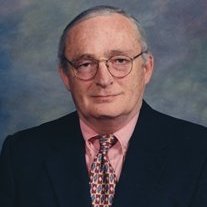 Philip Stafne(April 26, 1943-May 21, 2013)
Gethsemane Episcopal Cathedral, Fargo
June 21, 2013
Revelation 21:2-7; John 14:1-6.
+ One month ago today, after hearing of Phil’s passing, I called his sister Marianne. As she and I talked, I found myself doing something I try not to do—being a priest and all. I found myself breaking down and getting a bit teary as we talked about Phil. As I did so, I apologized to Marianne.
I said, “Marianne, I am so sorry for being so unprofessional.”
Marianne, in her typical way, sort of laughed at me and said, “oh don’t worry, Jamie. I’m sure Phil saw you unprofessional many times. Probably over cocktails.”
Sadly, that is true. Phil did see me unprofessional on more than one occasion. Over more than one cocktail. But what was so wonderful about Phil was that, even in those moments, there was never any judgment on his part. There was never a feeling that his sense of friendship and caring ever changed. And I think many of us this afternoon felt that from Phil as well in our own lives.
Phil was a very important and major presence in many of our lives. Just speaking for myself I can say Phil was a very important person in my life of a long time Back, many years ago, when I was discerning my calling to be a priest, Phil was one of the first people I told. And he not only encouraged me. He spearheaded the discernment committee that helped me articulate that calling. Through all those years—those good years and through some of the not-so-good years—Phil remained a very solid and comforting source of support for me.
And I am sure many of us this morning also knew Phil to be that kind of person in our own lives. A person who was an active friend. A person who was proactive in his friendship with us. A person of strength, of integrity and of impeccable class.
He carried himself with a dignity I still find amazing when I think about it. And that dignity was with him even in his last days, when he was so ill.
He was also a man of deep faith. That faith was motivating factor in so much of what he did and who he was as a person. For Phil, however, his faith was not something one simply professed with one’s mouth. To live out one’s faith, for Phil, one simply didn’t go to church on Sundays. Or preach from street corners. One lived one’s faith. Phil lived his faith. He was devoted. He was devoted to his God, he was devoted to his service of others, he was devoted to his family and to his friends, and he was devoted to his church.
And he served. He served his God, he served his Church—this congregation of Gethsemane Cathedral—and this Diocese of North Dakota—and he served his family and his friends in any way he could. And he did so consistently without complaint. He did do without blinking an eye. He did so with strength and purpose.
In our Gospel reading for today, we find Jesus saying, “Do not let your hearts be troubled.” I don’t think in all the years I knew Phil did I ever see his heart troubled. For him, his faith sustained him, no matter what happened. When he was diagnosed with cancer, Phil was steadfast. His heart was not troubled. And I know for a fact, his faith was strong and remained strong to the end.
It is a great lesson for all of us. And we find, on this day, that Phil, by his example, is still leading the way for us. Today, yes, we are sad. We are sad over the fact that Phil is not here with us as he once was.
But, with faith like the faith Phil had, we know that these tears we shed today are temporary. Whatever sadness we feel today will not be the final word in our relationship with Phil. With a faith like his faith, we know that the God we hope in and believe in and worship is a God of life. This God of life promises us, who are faithful like Phil was faithful, a life that cannot be taken from us again. A life that will overcome death and sadness and all these temporary sad emotions.
Yes, I am saddened by the fact that Phil is not here with us, being that solid and comforting source of strength for us. But Phil would be quick to tell us that although he might not be here doing that, he would direct us to that source of his own strength and integrity—his faith. His God.
And what we can take away from having known Phil, was his example. He gave each of us an incredible example of how to live one’s life and one’s faith with strength and class and dignity. And when any of us do that in our own lives, we will know that Phil is still with us, still being an example to us, still being a brother, uncle and dear and devoted friend to each of us.
I will miss Phil. I will miss his presence, his kindness, his friendship and his sense of caring. But I rejoice today as well. I rejoice in the fact that I believe Phil is has achieved the goal of that place of which we catch a glimpse of in our reading from Revelation. That place in which “Death will be no more…” Where “mourning and crying and pain will be no more…” Because God will “wipe every tear from [our] eyes.”
It a glorious place. It is a place Phil longed for and hoped in and believed in. And I have no problem seeing him, this afternoon, in that place of glory.
As some of you know, Phil was a direct descendent of the great American poet Anne Bradstreet. Anne Bradstreet’s maiden was Dudley—that’s where the family connection comes from. Mistress Bradstreet, as she was known in her day, was a prolific and major poet in the colonial era of America(she died in 1672) and her poems are still widely read and widely admired. And she was not just any poet. Anne Bradstreet was the first American writer in English, and the first American female poet to have her works published. Phil proudly claimed Anne Bradstreet as his ancestor. I remember the day he told me about his being a descent of her’s and his surprise and delight that I actually knew who she was.
I’m going to close today with a portion of a poem by Anne Bradstreet. The poem, appropriately, is called “As weary pilgrim, now at rest” In many ways, it echoes the words we heard this afternoon in our reading the Book of Revelation. It’s a beautiful poem and it’s one that I know Phil himself appreciated:
“As weary pilgrim, now at rest” by Anne Bradstreet
Oh how I long to be at rest
and soare on high among the blest.
This body shall in silence sleep
Mine eyes no more shall ever weep
No fainting fits shall me assaile
nor grinding paines my body fraile
Wth cares and fears ne'r cumbred be
Nor losses know, nor sorrowes see
What tho my flesh shall there consume
it is the bed Christ did perfume
And when a few yeares shall be gone
this mortall shall be cloth'd vpon
A Corrupt Carcasse downe it lyes
a glorious body it shall rise
In weaknes and dishonour sowne
in power 'tis rais'd by Christ alone
Then soule and body shall vnite
and of their maker haue the sight
Such lasting ioyes shall there behold
as eare ne'r heard nor tongue e'er told
Lord make me ready for that day
then Come deare bridgrome Come away.
June 16, 2013
4 Pentecost
 June 16, 2010
Luke 7.36-8.3
+ This past Tuesday, as many of you know, I celebrated the 9thanniversary of my ordination of the Priesthood. As many of you almost may know, I am meticulous record keeper. And so, in nine of years of priesthood, I have counted that I have celebrated Mass 927 times. I have presided over about 150 funerals (45 of which were while I was here at St. Stephen’s), and have presided over almost 100 weddings in those nine years.
And I have heard about 45 confessions, at least according to sacramental confessions. That, of course, does not include the confessions I have heard on airplanes, on car rides, in the hospital, in restaurants, in bars (let me tell you, I have heard many confessions in bars), and elsewhere. Confessions? You might wonder. We’re Episcopalians. We don’t have confessions.
Au contraire!We do have confessions.
One part of the Book of Common Prayer most of us probably have never even ventured to look at is found on page 447. The service for “The Reconciliation of a Penitent” is a service very few of us here this morning has probably taken advantage of.
But it is an important service and it is one that certainly deserves our attention, even if we have no desire to take advantage of that service. Confession in the Episcopal Church is often described in this way:
“All can, some should, no one must.”
And it’s nice to take a look at it at a time other than Lent, when we are almost overwhelmed with talk of sin and forgiveness. The service of Reconciliation is service in which a person seeking to ask forgiveness of whatever shortcomings they have goes to a priest (and in the Episcopal Church only a priest can grant absolution) and having prayerfully and thoughtfully shared these sins, received words of comfort and counsel and then is given absolution by the priest. It really is just like Confession is in the Roman Catholic Church, though for us we don’t go into a little cubicle and whisper our sins through a screen to a priest. Mmmm. Maybe that should be something we introduce here at St. Stephen’s. Uh…no thank you….
So, on those occasions when we describe the Episcopal Church as “Catholic lite,” and we get the inevitable question of whether or not we have “Confession,” we can say yes, we do, but then quickly add that it’s not a requirement.
I think few of us want to take advantage of this service, but, occasionally, we sometimes do find the need.
And, as I said, it is not a requirement for any of us, though it is a very vital and, at times, helpful service
Not a lot of people know that I take advantage of it on a fairly regular basis.
I go every few months to an Episcopal priest I know who is my confessor.
Although I usually go dragging my heels a bit, I feel good once I have done it.
I come away from Confession feeling better.
There really is something very positive and good about being open and honest about one’s shortcomings, about sharing those shortcomings with someone else, about getting some practical and helpful council and advice and then hearing from that person that I am forgiven for the wrongs I have done.
When I was in seminary I read two books on confession. One was a book for priests who would serve as confessors. It was the classic text for Anglicans entitled A Manual for Confessors by “the Honorable Canon of Birmingham” Francis George Belton, originally published in 1916.
The other was more modern and much more helpful for all people (not just priests) seeking the Sacrament of Reconciliation.
The book is called Reconciliation: Preparing for Confession in the Episcopal Church, by Martin L. Smith, a priest and former member of the Episcopal order of the Society of St. John the Evangelist.
Both of these books discuss in detail what we find summarized on page 446 in our Prayer Book:
“The ministry of reconciliation, which has been committed by Christ to his Church, is exercised through the care each Christian has for others, through the common prayer of Christians assembled for public worship, and through the priesthood of Christ and his ministers declaring absolution.”
So, as we’ve just heard, we realize that Confession is not something the Church and bunch of male priests invented. It was something commended to us by Jesus, who knew full well how important it was for us to confess and to hear the words of forgiveness.
As a priest, one of most important responsibilities has been to be a confessor.
On that night that I was ordained, as part of the ordination service, the Bishop declared to me that among my responsibilities as a priest was “to declare God’s forgiveness to penitent sinners…”
Now, that may sound like some “special” power we priests have. But, more than anything, what a priest does when she r he declare God’s forgiveness is just that:
We declare God’s forgiveness. Nothing magical. We just state a fact. But, it IS important. It is important to hear. It is important to hear that we are forgiven. It is important to hear, when we fall short in any way in our lives, to hear those words, “You’re forgiven.”
Hearing those words, I can say, is a truly powerful experience. There is a sense of a weight being lifted. There is a sense that something which was bound up has been loosened and released.
To hear those words of pardon and forgiveness are important to us because we sometimes do need to hear that we are forgiven. Without those words of forgiveness, we continue on in our self-pitying and our self-loathing. Those words of pardon and absolution restore us. They help us rise above the wrongs we have done so we can live fully and completely.
When we hear Jesus say to that penitent woman in today’s Gospel, “Your sins are forgiven…Your faith has saved you. Go in peace,” we can almost feel a weight being lifted from her. Whatever shortcomings that woman brought with her into that place, we know are gone from her as she leaves. This is the power of confession.
At the end of “Form Two” of Confession in the Prayer Book, the service is concluded when the priest, echoing this very Gospel reading, says,
“Now there is rejoicing in heaven; for you were lost, and are found; you were dead, and are now alive in Christ Jesus our Lord. Go in peace. The Lord has put away all your sins.”
To which the penitent replies, “Thanks be to God.”
Those are words that cause us to continue on, despite the things we have done. The forgiveness of our sins transforms us and changes us. It frees us from whatever might hold us down. So, let us together strive, when we have done wrong, to seek those words of forgiveness.
Some of us might actually wish to seek out the Sacrament of Reconciliation as found in the Book of Common Prayer. I encourage you to do so. It is good to have a regular confessor—to take time to confess your faults and failings to some one. It is good psychologically and it is good spiritually. Certainly, as your priest, I am always available for this service, but any priest will do.
Any priest can grant absolution. But you do not have to be a priest to remind people of God’s forgiveness and love. All of us can carry those words of forgiveness from Jesus close to our hearts when we do fail and we do fall short in our relationships, and when others wrong us.
Let us humble ourselves, but let’s not despair in those moments. Let us come before Jesus and seek that forgiveness that lifts us up from our tears. Let us unloose from within us whatever is holding us captive so that we may be truly free to love God and love others with no regrets, no recriminations, no undue guilt.
Jesus’ words to each of us are “go in peace.” That peace we find in this forgiveness is truly a liberating peace. It is a peace that destroys not only what others do to us, but we do to ourselves and to others, which sometimes can be much worse. That peace we find in reconciliation truly does liberate.
So, let us take the peace offered to us by Jesus and go forth in that peace. And doing so, let us rejoice in the freedom that peace gives us. Amen.
June 9, 2013
May 26, 2013
Trinity
May 26, 2013
John 16.12-15
+ This past week you would think, at least according to my many priest friends on Facebook, that this Sunday was some kind of apocalypse. No one, it seems, wants to tackle the Trinity. You know what I have to say to them? Boo hoo!
I think it’s a bit funny, myself. I don’t mind trying to tackle this incredible mystery. But, I’m also not too afraid of preaching a bit of minor heresy here. After all, you’re all pretty forgiving of such as a little heresy, right? But, here it is.
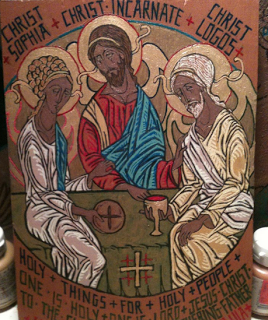
There’s no getting around it. The Trinity. God as Three-in-One—God as Father or Parent or Creator, God as Son or Redeemer and God as Spirit or Sanctifier. It is difficult to wrap our minds around this concept and mystery of God.
The questions we priests regularly get is: how can God be three and yet one? How can we, in all honesty, say that we believe in one God when we worship God as three? Aren’t we simply talking about three gods? Well, we would be if we were Mormons. But, we’re not Mormons.
Whole Church councils have debated the issue of the Trinity throughout history. The Church actually has split at times over its interpretation of what exactly this Trinity is.
Certainly, I struggled with this concept for years. It was only when I was studying for the priesthood, in a systematic theology class I took, that I came across a book that broke down all the barriers for me.
The book, by a nun of the Dominican Order, Mary Ann Fatula, was called The Triune God of Christian Faith. Now that title alone would turn most of us off. Certainly when I saw it on the syllabus, I rolled my eyes and thought to myself: Great, this is gonna be fun. But despite its title, this book was amazing.
Fatula was wonderful in how she took this very difficult concept of the Trinity and made it accessible, at least for me. Some of the points Fatula makes are downright beautiful and poetic in attempting to understand what the Trinity is: She begins with the belief that our very beings are “etched with the signs of Trinitarian origin.”
In a sense, we have proof of the Trinity’s existence in our very bodies and minds. Our psyche, for example, is Trinitarian, made up of three distinct aspects. It’s still one psyche, but it makes its self known in three different ways: memory, knowledge and love. It, in a sense, reflects the relationship the “persons” of the Trinity have with each other.
Another way she attempts to understand the Trinity is that of the relationship of the Lover, of the Beloved and of the Love that unites them. The Lover, our course, is God the Creator, the Parent. The Beloved is Christ. The love that unites them is the Spirit.
She stresses that although they are the same, they are still distinct and different in what they do. The Son (Christ) and the Spirit, she explains, are exactly what the Father (Parent) is, without being who the Parent is.
I’ll repeat that: The Son (Christ) and the Spirit, she explains, are exactly what the Father (Parent) is, without being who the Parent is.
Let’s look at it from another perspective: The Trinity starts with the Incarnation—our belief that Jesus is God made flesh—God made one of us—fully God, fully human.
“Because of Jesus,” Fatula says, “heaven will be joined to earth in our very bodies.”
In other words, because Jesus was both a part of heaven and a part of earth, in Jesus, we find a perfect balance. Heaven and earth have come together. The Holy Spirit, released at the death of Jesus on the cross, (this is what we commemorated last Sunday on Pentecost Sunday) is now poured out upon us. Before his death, Fatula says, the Spirit was confined by the “opaque boundaries of Jesus’ human existence.” His pre-resurrection body could only “’contain’ rather than convey the Spirit.” At his death, the dam broke, in a sense. The Spirit poured forth into our lives as a lasting presence of God among us.
This Spirit, according to Fatula, is the Father and the Son’s embrace of us, “their kiss, their joy and their delight lavished upon the earth.” By the Spirit, we come to know both God as our loving Parent and God as our redeemer—we are encircled and drawn close to God.
So, what are talking about here is not three gods, as some people seem to think. What we are talking about it one tri-personalGod—a God who cannot be limited in any way, but a God who is able to come to us and be revealed to us in a variety of ways.
Now we’re getting a real idea of what the Trinity is. I do not think I preached any heresy in what I just shared. But if I did, God’ll forgive me.
All of this is, hopefully, very helpful. It helps us to make sense of this sometimes confusing and difficult belief. But ultimately what we have here are symbols and analogies of what the Trinity is. They are ways of taking something incomprehensible and making them, in some small way, tangible. We can go on and on about theology and philosophy and all manner of thoughts about God, but ultimately what matters is not how we think about God.
As Sandra Schneiders has said, “God is NOT two men and a bird” (referencing the popular images of God the Father, Jesus and the dove of the Holy Spirit).
What is important is how we believe in God. Or more important than that, how do these views of God help deepen our relationship with God and with each other? How do they bring us closer to God? Because, let’s face it, that is our primary responsibility: our relationship with God. How can all this talk about God—how can this thinking about God—then deepen our relationship with God?
Our goal is not to understand God: we will never understand God. Our goal is to knowGod. Our goal is to love God. Our goal is to try to experience God as God wishes to be experienced by us.
I can say that I, in my own life, have experienced God in that tri-personal way many times. I have known God as a loving and caring parent, especially when I think about those times when I have felt marginalized by people, when I have felt ostracized and turned away by people. I have also known God very profoundly in Jesus—the God who has come to us as one of us—the God who took on the same flesh we wear—who suffered as we suffer and who died as we all will die. And I have known the healing and renewal of the Spirit of God of my life. As we all have, at various moments in our lives.
So, no matter what the theologians argue about, no matter what those supposedly learned teachers proclaim, ultimately, our understanding of the Trinity needs to be based on our own experience to some extent. The Trinity does not have to be a frustrated aspect of our church and our faith. It should widen and expand our faith life and our understanding and experience of God and, in turn, of each other.
So, today, as we ponder God as Trinity—as we consider how God has worked in our lives in a tri-personal way— and who God is in our life, remember how amazing God is in the ways God is revealed to us. God can not be limited or quantified or reduced. God can only be experienced and adored and pondered. And, of course, loved.

John 16.12-15
+ This past week you would think, at least according to my many priest friends on Facebook, that this Sunday was some kind of apocalypse. No one, it seems, wants to tackle the Trinity. You know what I have to say to them? Boo hoo!
I think it’s a bit funny, myself. I don’t mind trying to tackle this incredible mystery. But, I’m also not too afraid of preaching a bit of minor heresy here. After all, you’re all pretty forgiving of such as a little heresy, right? But, here it is.
There’s no getting around it. The Trinity. God as Three-in-One—God as Father or Parent or Creator, God as Son or Redeemer and God as Spirit or Sanctifier. It is difficult to wrap our minds around this concept and mystery of God.
The questions we priests regularly get is: how can God be three and yet one? How can we, in all honesty, say that we believe in one God when we worship God as three? Aren’t we simply talking about three gods? Well, we would be if we were Mormons. But, we’re not Mormons.
Whole Church councils have debated the issue of the Trinity throughout history. The Church actually has split at times over its interpretation of what exactly this Trinity is.
Certainly, I struggled with this concept for years. It was only when I was studying for the priesthood, in a systematic theology class I took, that I came across a book that broke down all the barriers for me.
The book, by a nun of the Dominican Order, Mary Ann Fatula, was called The Triune God of Christian Faith. Now that title alone would turn most of us off. Certainly when I saw it on the syllabus, I rolled my eyes and thought to myself: Great, this is gonna be fun. But despite its title, this book was amazing.
Fatula was wonderful in how she took this very difficult concept of the Trinity and made it accessible, at least for me. Some of the points Fatula makes are downright beautiful and poetic in attempting to understand what the Trinity is: She begins with the belief that our very beings are “etched with the signs of Trinitarian origin.”
In a sense, we have proof of the Trinity’s existence in our very bodies and minds. Our psyche, for example, is Trinitarian, made up of three distinct aspects. It’s still one psyche, but it makes its self known in three different ways: memory, knowledge and love. It, in a sense, reflects the relationship the “persons” of the Trinity have with each other.
Another way she attempts to understand the Trinity is that of the relationship of the Lover, of the Beloved and of the Love that unites them. The Lover, our course, is God the Creator, the Parent. The Beloved is Christ. The love that unites them is the Spirit.
She stresses that although they are the same, they are still distinct and different in what they do. The Son (Christ) and the Spirit, she explains, are exactly what the Father (Parent) is, without being who the Parent is.
I’ll repeat that: The Son (Christ) and the Spirit, she explains, are exactly what the Father (Parent) is, without being who the Parent is.
Let’s look at it from another perspective: The Trinity starts with the Incarnation—our belief that Jesus is God made flesh—God made one of us—fully God, fully human.
“Because of Jesus,” Fatula says, “heaven will be joined to earth in our very bodies.”
In other words, because Jesus was both a part of heaven and a part of earth, in Jesus, we find a perfect balance. Heaven and earth have come together. The Holy Spirit, released at the death of Jesus on the cross, (this is what we commemorated last Sunday on Pentecost Sunday) is now poured out upon us. Before his death, Fatula says, the Spirit was confined by the “opaque boundaries of Jesus’ human existence.” His pre-resurrection body could only “’contain’ rather than convey the Spirit.” At his death, the dam broke, in a sense. The Spirit poured forth into our lives as a lasting presence of God among us.
This Spirit, according to Fatula, is the Father and the Son’s embrace of us, “their kiss, their joy and their delight lavished upon the earth.” By the Spirit, we come to know both God as our loving Parent and God as our redeemer—we are encircled and drawn close to God.
So, what are talking about here is not three gods, as some people seem to think. What we are talking about it one tri-personalGod—a God who cannot be limited in any way, but a God who is able to come to us and be revealed to us in a variety of ways.
Now we’re getting a real idea of what the Trinity is. I do not think I preached any heresy in what I just shared. But if I did, God’ll forgive me.
All of this is, hopefully, very helpful. It helps us to make sense of this sometimes confusing and difficult belief. But ultimately what we have here are symbols and analogies of what the Trinity is. They are ways of taking something incomprehensible and making them, in some small way, tangible. We can go on and on about theology and philosophy and all manner of thoughts about God, but ultimately what matters is not how we think about God.
As Sandra Schneiders has said, “God is NOT two men and a bird” (referencing the popular images of God the Father, Jesus and the dove of the Holy Spirit).
What is important is how we believe in God. Or more important than that, how do these views of God help deepen our relationship with God and with each other? How do they bring us closer to God? Because, let’s face it, that is our primary responsibility: our relationship with God. How can all this talk about God—how can this thinking about God—then deepen our relationship with God?
Our goal is not to understand God: we will never understand God. Our goal is to knowGod. Our goal is to love God. Our goal is to try to experience God as God wishes to be experienced by us.
I can say that I, in my own life, have experienced God in that tri-personal way many times. I have known God as a loving and caring parent, especially when I think about those times when I have felt marginalized by people, when I have felt ostracized and turned away by people. I have also known God very profoundly in Jesus—the God who has come to us as one of us—the God who took on the same flesh we wear—who suffered as we suffer and who died as we all will die. And I have known the healing and renewal of the Spirit of God of my life. As we all have, at various moments in our lives.
So, no matter what the theologians argue about, no matter what those supposedly learned teachers proclaim, ultimately, our understanding of the Trinity needs to be based on our own experience to some extent. The Trinity does not have to be a frustrated aspect of our church and our faith. It should widen and expand our faith life and our understanding and experience of God and, in turn, of each other.
So, today, as we ponder God as Trinity—as we consider how God has worked in our lives in a tri-personal way— and who God is in our life, remember how amazing God is in the ways God is revealed to us. God can not be limited or quantified or reduced. God can only be experienced and adored and pondered. And, of course, loved.
May 19, 2013
May 12, 2013
7 Easter
The Sunday after the Ascension
May 12, 2013
+ So, does anyone know what happened last Thursday? But it was kind of a big day for us as Christians. The problem is, this big day for us happened on Thursday. So, of course, it probably passed most of us by without much notice. Anyone want to guess what happened on Thursday? The Feast of the Ascension is happened this past Thursday.
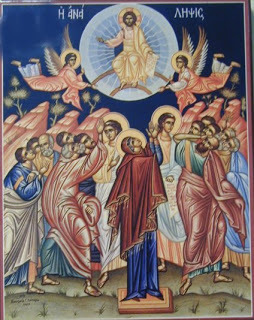
So, why is the Ascension so important to us? I guess, we should first of all ask: what is the Ascension? The Ascension of course is that day in which Jesus was taken up into heaven. Yes, he was resurrected. He spent time, after the resurrection, walking about. And then, he was taken up. That is the Ascension.
Some of us might look at the Ascension as a kind of anticlimactic event. The Resurrection has already occurred on Easter morning. That of course is the big event. The Ascension comes as it does after Jesus has appeared to his disciples and has proved to them that he wasn’t simply a ghost, but was actually resurrected in his body (remember a couple of weeks ago in our Gospel reading how Thomas put his fingers into Jesus’ wounds).
In comparison to Easter, the Ascension is a quiet event. The resurrected Jesus simply leads his followers out to Bethany and, then, quietly, he is taken up into heaven. There are no angelic trumpets. There are no choirs of angels welcoming him into heaven. There is no thunder or lightning. He simply goes.
So, why is the Ascension important to us? It’s important because this is where ourwork begins. This is when our work as followers of Jesus begins. We, at this point, become the Presence of Jesus now in the world. This is where we are now compelled to go out now and actually do the work Jesus has left for us to do.
But what I like about the feast is more than just going out to do Jesus’ work. I like this feast but it’s so fantastic. I mean, Jesus actually goes up—he goes away from us. He goes off into some other place. Now for those of us who have some sort of scientific knowledge, those of us who are rational, thinking people, this image is a hard one to wrap our minds around. Jesus is taken up. He was “borne up.”
It is at this point that I find myself approaching this word—up—from two different perspectives. As a priest—I see this word as important. God has raised Jesus up from the dead, and God has brought Jesus back up to heaven. God is seen here on a higher level. In bringing Christ up, we recognize God and Jesus as one—on the same level.
But I also approach this word Up from the perspective of a poet. For a poet, words are everything. Every little word is important and must be carefully chosen and carefully examined.
So, as poet and writer, I see this word “up” as important in a whole other way. Remember what we were taught as kids; heaven is up and hell is down. So, of course, Jesus went up, right? For those early believers, who believed in the three-tiered world—heaven above, the earth in the middle and hell below—Jesus must in fact go up.
By the Middle Ages the Church truly took this literally to heart. It was a custom in some churches at that time actually cut holes in the roof of the church. As the Gospel was read a figure of the resurrected Christ was raised on a pulley through the opening. Now remember, the Gospel would’ve been read in Latin. Most of the people probably wouldn’t have understood it. So, here was a visual representation of Jesus going up. As time went on, they got even more sophisticated. They also cut a hole in the floor so that as the figure of Christ went up through the roof the figure of the devil went down through the floor.
But that was then. In their world up meant up and down meant down.
We certainly know better now, don’t we? Up doesn’t mean the same for us as it did for them. We know that the world isn’t flat but round and so up and down are different for us.
I once heard a pastor speaking critically about the ascension, if you can believe it. He said, that if Jesus actually went up in the air and flew off toward some actual physical heaven, then now, some 2,000 years later, he would still be out there somewhere, in outer space, still flying along. The problem with that thinking is that this liberal minister was being just as literal minded as those people in the middle ages who truly believed that Jesus went up.
To some extent, what that minister was talking about was that Jesus didn’t so much as go up—άΰέ --but rather that Jesus went out. The Greek word Luke would’ve used for this, if that’s what he meant, would have been έκ or “out of”. Jesus then isn’t offin space somewhere flying toward some far-off galaxy called heaven, nor do I think that the Ascension cancels out or defies all the laws of natural science.
What both the fundamentalist Christians and the literal-minded minister missed is the ability to look at what Luke was writing about with a poet’s eye. For those who witnessed it, it must’ve been an amazing and overwhelming experience. Already they saw this person they knew and loved and followed brutally murdered. Then, suddenly, there he was, raised from the dead, and was in fact standing before them, wounds and all. Finally, he was gone. He went up out of their sight.
But let’s look at it from Jesus’ perspective.
Last Wednesday, at our Wednesday night Mass on the eve of the Feast of the Ascension, I shared a poem, “Ascension”, by Denise Levertov, one of my all time favorite poets. In this poem, she looks at the Ascension from his very perspective. In the poem, she imagines Christ relinquishing the earth and stretching himself toward heaven (in her words) “through downpress of dust.” She compares it to
“a shoot that pushes its way, delicate and tough, through soil to sunlight, as if it’s a kind of work,
and not some weightless body floating like a balloon.”
Jesus then, rooted as he is to the earth, to creation, moves upward then not through outer space like some astronaut but rather up through creation—through the fertile soil of created time and space—into the light and life of God. Nowit really means something, doesn’t it? Here’s something we can grasp and make sense of and still not sacrifice what we know rationally.
But there’s also one other part of this way of thinking that we sometimes neglect. If we are truly looking at this from the perspective of Jesus, what do you think he was feeling as he moved toward God?
Joy.
Happiness.
When we are happy—when we are joyful—we use the word soaroften. Our hearts soar with happiness. When we are full of joy and happiness we imagine ourselves floating upward. We talk about being on Cloud Nine. We talk about our feet barely touching the floor. In a sense, when we are happy or in love or any of those other wonderful things, we, in a sense, ascend.
Conversely, when we are depressed we plunge. We fall. We go down. So this word “up” is important. Jesus, in his joy, went up toward God. His followers, in their joy, felt him go up.
St. Augustine said of the Ascension, “let our hearts ascend with [Christ].”
For those followers, their hearts truly did ascend with Christ. So, it is accurate language. The ascension is important too in dealing with one other reality. Like those first followers, we must face the fact that Jesus is no longer physically with us.
The story of the ascension is that, somehow we must carry on without Jesus physically in our midst. He took his leave. He left us physically. Now I don’t mean that he doesn’t come to us physically. Certainly Christ is present in the physical elements of the bread and wine that we are about to celebrate at this altar. Certainly Jesus is present with us, as well. We—Jesus’ followers—are, as I said earlier, the physical Body of Christ in the world.
What I am talking about is that the Jesus those first disciples knew—the one who walked with them and talked with them and fed with them and laughed with them, was not with them anymore. He had gone up.
But next week, an event will happen that will show us that Jesus remains with us in an even more extraordinary way. On that day—Pentecost Sunday—his Spirit will descend upon us and remain with us always.
But we’re getting ahead of ourselves. For now, we must simply face the fact that it all does fall into place. Jesus will not leave us barren and afraid. He loves us too much for that. God will never leave us alone. Although no longer with us physically—we cannot put our fingers in his actual wounds—Jesus is still present among us in his Spirit, in the bread and wine, in each other.
So, today, and this week, as we remember and rejoice in the Ascension, let our hearts ascend with Jesus. Let them soar upward in joy at the fact that Jesus is still with us. Let us be filled with joy that his spirit dwells within us and can never be taken from us. And this joy in us ride up. It rise up in us and sing through us to those around us we are called to serve. Amen.

May 12, 2013
+ So, does anyone know what happened last Thursday? But it was kind of a big day for us as Christians. The problem is, this big day for us happened on Thursday. So, of course, it probably passed most of us by without much notice. Anyone want to guess what happened on Thursday? The Feast of the Ascension is happened this past Thursday.
So, why is the Ascension so important to us? I guess, we should first of all ask: what is the Ascension? The Ascension of course is that day in which Jesus was taken up into heaven. Yes, he was resurrected. He spent time, after the resurrection, walking about. And then, he was taken up. That is the Ascension.
Some of us might look at the Ascension as a kind of anticlimactic event. The Resurrection has already occurred on Easter morning. That of course is the big event. The Ascension comes as it does after Jesus has appeared to his disciples and has proved to them that he wasn’t simply a ghost, but was actually resurrected in his body (remember a couple of weeks ago in our Gospel reading how Thomas put his fingers into Jesus’ wounds).
In comparison to Easter, the Ascension is a quiet event. The resurrected Jesus simply leads his followers out to Bethany and, then, quietly, he is taken up into heaven. There are no angelic trumpets. There are no choirs of angels welcoming him into heaven. There is no thunder or lightning. He simply goes.
So, why is the Ascension important to us? It’s important because this is where ourwork begins. This is when our work as followers of Jesus begins. We, at this point, become the Presence of Jesus now in the world. This is where we are now compelled to go out now and actually do the work Jesus has left for us to do.
But what I like about the feast is more than just going out to do Jesus’ work. I like this feast but it’s so fantastic. I mean, Jesus actually goes up—he goes away from us. He goes off into some other place. Now for those of us who have some sort of scientific knowledge, those of us who are rational, thinking people, this image is a hard one to wrap our minds around. Jesus is taken up. He was “borne up.”
It is at this point that I find myself approaching this word—up—from two different perspectives. As a priest—I see this word as important. God has raised Jesus up from the dead, and God has brought Jesus back up to heaven. God is seen here on a higher level. In bringing Christ up, we recognize God and Jesus as one—on the same level.
But I also approach this word Up from the perspective of a poet. For a poet, words are everything. Every little word is important and must be carefully chosen and carefully examined.
So, as poet and writer, I see this word “up” as important in a whole other way. Remember what we were taught as kids; heaven is up and hell is down. So, of course, Jesus went up, right? For those early believers, who believed in the three-tiered world—heaven above, the earth in the middle and hell below—Jesus must in fact go up.
By the Middle Ages the Church truly took this literally to heart. It was a custom in some churches at that time actually cut holes in the roof of the church. As the Gospel was read a figure of the resurrected Christ was raised on a pulley through the opening. Now remember, the Gospel would’ve been read in Latin. Most of the people probably wouldn’t have understood it. So, here was a visual representation of Jesus going up. As time went on, they got even more sophisticated. They also cut a hole in the floor so that as the figure of Christ went up through the roof the figure of the devil went down through the floor.
But that was then. In their world up meant up and down meant down.
We certainly know better now, don’t we? Up doesn’t mean the same for us as it did for them. We know that the world isn’t flat but round and so up and down are different for us.
I once heard a pastor speaking critically about the ascension, if you can believe it. He said, that if Jesus actually went up in the air and flew off toward some actual physical heaven, then now, some 2,000 years later, he would still be out there somewhere, in outer space, still flying along. The problem with that thinking is that this liberal minister was being just as literal minded as those people in the middle ages who truly believed that Jesus went up.
To some extent, what that minister was talking about was that Jesus didn’t so much as go up—άΰέ --but rather that Jesus went out. The Greek word Luke would’ve used for this, if that’s what he meant, would have been έκ or “out of”. Jesus then isn’t offin space somewhere flying toward some far-off galaxy called heaven, nor do I think that the Ascension cancels out or defies all the laws of natural science.
What both the fundamentalist Christians and the literal-minded minister missed is the ability to look at what Luke was writing about with a poet’s eye. For those who witnessed it, it must’ve been an amazing and overwhelming experience. Already they saw this person they knew and loved and followed brutally murdered. Then, suddenly, there he was, raised from the dead, and was in fact standing before them, wounds and all. Finally, he was gone. He went up out of their sight.
But let’s look at it from Jesus’ perspective.
Last Wednesday, at our Wednesday night Mass on the eve of the Feast of the Ascension, I shared a poem, “Ascension”, by Denise Levertov, one of my all time favorite poets. In this poem, she looks at the Ascension from his very perspective. In the poem, she imagines Christ relinquishing the earth and stretching himself toward heaven (in her words) “through downpress of dust.” She compares it to
“a shoot that pushes its way, delicate and tough, through soil to sunlight, as if it’s a kind of work,
and not some weightless body floating like a balloon.”
Jesus then, rooted as he is to the earth, to creation, moves upward then not through outer space like some astronaut but rather up through creation—through the fertile soil of created time and space—into the light and life of God. Nowit really means something, doesn’t it? Here’s something we can grasp and make sense of and still not sacrifice what we know rationally.
But there’s also one other part of this way of thinking that we sometimes neglect. If we are truly looking at this from the perspective of Jesus, what do you think he was feeling as he moved toward God?
Joy.
Happiness.
When we are happy—when we are joyful—we use the word soaroften. Our hearts soar with happiness. When we are full of joy and happiness we imagine ourselves floating upward. We talk about being on Cloud Nine. We talk about our feet barely touching the floor. In a sense, when we are happy or in love or any of those other wonderful things, we, in a sense, ascend.
Conversely, when we are depressed we plunge. We fall. We go down. So this word “up” is important. Jesus, in his joy, went up toward God. His followers, in their joy, felt him go up.
St. Augustine said of the Ascension, “let our hearts ascend with [Christ].”
For those followers, their hearts truly did ascend with Christ. So, it is accurate language. The ascension is important too in dealing with one other reality. Like those first followers, we must face the fact that Jesus is no longer physically with us.
The story of the ascension is that, somehow we must carry on without Jesus physically in our midst. He took his leave. He left us physically. Now I don’t mean that he doesn’t come to us physically. Certainly Christ is present in the physical elements of the bread and wine that we are about to celebrate at this altar. Certainly Jesus is present with us, as well. We—Jesus’ followers—are, as I said earlier, the physical Body of Christ in the world.
What I am talking about is that the Jesus those first disciples knew—the one who walked with them and talked with them and fed with them and laughed with them, was not with them anymore. He had gone up.
But next week, an event will happen that will show us that Jesus remains with us in an even more extraordinary way. On that day—Pentecost Sunday—his Spirit will descend upon us and remain with us always.
But we’re getting ahead of ourselves. For now, we must simply face the fact that it all does fall into place. Jesus will not leave us barren and afraid. He loves us too much for that. God will never leave us alone. Although no longer with us physically—we cannot put our fingers in his actual wounds—Jesus is still present among us in his Spirit, in the bread and wine, in each other.
So, today, and this week, as we remember and rejoice in the Ascension, let our hearts ascend with Jesus. Let them soar upward in joy at the fact that Jesus is still with us. Let us be filled with joy that his spirit dwells within us and can never be taken from us. And this joy in us ride up. It rise up in us and sing through us to those around us we are called to serve. Amen.
My Midcentury Modern obsession is now puplic knowledge!
Published in today;s issue of of the Fargo Forum
It’s a Mod haus!: Midcentury modern furniture makes comeback with new generation
By:
FARGO – “My first reaction when I heard about it, I thought, ‘Oh, thank God.’ ”
The Rev. Jamie Parsley is celebrating the good news, but not just the kind from the good book.
Parsley is one of the devoted converts excited about the late-April opening of Mid-Mod Madhaus, a store devoted to midcentury modern furniture.
The style, marked by clean lines, exposed wood and metal and molded fiberglass, has seen a resurgence in recent years, thanks in part to the success of the stylish TV drama set in the 1960s, “Mad Men.”
After a 30-year run, the look fell out of favor in the late ’60s, but the forms never fell too far from grace among the design-savvy. Coupled with the solid craftsmanship that went into the pieces, the works have proved to be durable and thus handed down or available for resale to a younger generation.
“Most of this is real wood, real construction and priced below Target,” says Andrea Baumgardner, who works in the secondhand store with her husband, owner Brett Bernath. “It’s neat if you have something in your home that means something to you. And you can’t buy that at Ikea.”
The couple’s interest in the genre started in earnest when they found a Broyhill Brasilia dining room set at an estate sale. The line was designed in the early ’60s as a nod to Oscar Niemeyer’s architecture in the Brazilian capital, particularly his use of long curves.
As they developed a taste for the styles, they developed an appetite and bought more and more, to the point now where Bernath has storage units packed with goods he moves into the store as other pieces sell.
The store, at 115 Roberts St., Fargo, holds a range of items, from a beautiful Danish modern walnut desk to different dining room sets, like a Lucite tulip-shaped table and matching formed chairs, in the windows facing Roberts Street.
Pieces are arranged to give the feeling of a mixed and matched living room. Around the corner in the back of the store, the walls are lined with colorful, formed chairs, with shelves of fans perched above. Across the way, another wall is decorated with old clocks above a kitchenette.
“It’s either, ‘Whoa, my grandma had all of this stuff,’ and I want to punch them in the mouth, or ‘This is such a trip back in time,’ and I want to punch them in the mouth,’ ” Bernath says when asked what kinds of reactions he gets.
While he thought the chairs would be hot sellers (“The living room is where you make a statement in your house”), he says old schoolroom maps and metal laboratory cabinets with glass doors generate more interest.
“I could’ve sold five sets of that this week,” Bernath says pointing to such a cabinet. Two business days later, it and many other pieces in the store were gone, replaced with different items from storage.
To help explain the significance of a piece (especially the higher ticket items like the Brasilia hutch for $600), Bernath and Baumgardner post informational placards by works, like a birch Heywood-Wakefield dining set or the iconic Shelby Williams Gazelle chair.
“It was the first time designers tried to bring good design to middle America,” Baumgardner says of the impact of midcentury-modern.
The work still resonates with collectors born well after the works were manufactured.
“The clean simple lines and the quality of the furniture built in the ’50s and ’60s seem timeless,” says Andrew Rosenburg as he purchases a table-top metal fan, a popular item at Mid-Mod.
Already a return customer, Rosenburg pulls out his phone to show Bernath where he put a Heywood-Wakefield dining room set he previously purchased.
Rosenburg isn’t the only returning customer.
Kilee Kadrie Weiler and her husband, Dan, selected a three-piece bedroom set. The next time they came in to make a payment, they picked up a small, slatted table.
“I like that it is functional and simple but not cold. Clean lines but still have a warm, comfortable feeling,” Kadrie Weiler says, explaining her fondness for the style.
“We were looking at Dan’s overstuffed couch and saying, ‘We really don’t want something huge any more. We want something a little more sleek and well-designed,’ ” she says. “For us, it’s simple and keeping things functional but not the sterile feeling that much of the modern furniture has.”
Finding just the right pieces has been a long process for Parsley. The priest in charge at St. Stephen’s Episcopal Church in north Fargo lives in a 1959 house and has been working to outfit it accordingly.
“It’s been very exciting for me to bring everything back to that time and that style,” he says.
Parsley had always been interested in furniture, but got hooked on Mid-mod after discovering the magazine Atomic Ranch.
“It just kind of snowballed after that for me,” he says of his affinity for the style. “I’m just obsessed with it.”
In particular he’s drawn to the straight lines and exposed wood of Danish modern and has purchased a Heywood-Wakefield coffee table and side table.
Always on the lookout for lamps, chairs and tables, he scoured antique stores to the point where workers recognized him and knew what he was looking for. He also visited estate sales and sheepishly admits to keeping an eye out for curbside treasures during cleanup week.
That changed when he heard Mid-Mod was opening.
“What’s great about this is I can go in there, and I know he’s probably going to have it. And if he doesn’t, he knows where to get it,” he says. “I don’t want to go in there too much because I’m probably going to go into debt, probably. I don’t want to go too crazy.”
It’s a Mod haus!: Midcentury modern furniture makes comeback with new generation
By:
FARGO – “My first reaction when I heard about it, I thought, ‘Oh, thank God.’ ”
The Rev. Jamie Parsley is celebrating the good news, but not just the kind from the good book.
Parsley is one of the devoted converts excited about the late-April opening of Mid-Mod Madhaus, a store devoted to midcentury modern furniture.
The style, marked by clean lines, exposed wood and metal and molded fiberglass, has seen a resurgence in recent years, thanks in part to the success of the stylish TV drama set in the 1960s, “Mad Men.”
After a 30-year run, the look fell out of favor in the late ’60s, but the forms never fell too far from grace among the design-savvy. Coupled with the solid craftsmanship that went into the pieces, the works have proved to be durable and thus handed down or available for resale to a younger generation.
“Most of this is real wood, real construction and priced below Target,” says Andrea Baumgardner, who works in the secondhand store with her husband, owner Brett Bernath. “It’s neat if you have something in your home that means something to you. And you can’t buy that at Ikea.”
The couple’s interest in the genre started in earnest when they found a Broyhill Brasilia dining room set at an estate sale. The line was designed in the early ’60s as a nod to Oscar Niemeyer’s architecture in the Brazilian capital, particularly his use of long curves.
As they developed a taste for the styles, they developed an appetite and bought more and more, to the point now where Bernath has storage units packed with goods he moves into the store as other pieces sell.
The store, at 115 Roberts St., Fargo, holds a range of items, from a beautiful Danish modern walnut desk to different dining room sets, like a Lucite tulip-shaped table and matching formed chairs, in the windows facing Roberts Street.
Pieces are arranged to give the feeling of a mixed and matched living room. Around the corner in the back of the store, the walls are lined with colorful, formed chairs, with shelves of fans perched above. Across the way, another wall is decorated with old clocks above a kitchenette.
“It’s either, ‘Whoa, my grandma had all of this stuff,’ and I want to punch them in the mouth, or ‘This is such a trip back in time,’ and I want to punch them in the mouth,’ ” Bernath says when asked what kinds of reactions he gets.
While he thought the chairs would be hot sellers (“The living room is where you make a statement in your house”), he says old schoolroom maps and metal laboratory cabinets with glass doors generate more interest.
“I could’ve sold five sets of that this week,” Bernath says pointing to such a cabinet. Two business days later, it and many other pieces in the store were gone, replaced with different items from storage.
To help explain the significance of a piece (especially the higher ticket items like the Brasilia hutch for $600), Bernath and Baumgardner post informational placards by works, like a birch Heywood-Wakefield dining set or the iconic Shelby Williams Gazelle chair.
“It was the first time designers tried to bring good design to middle America,” Baumgardner says of the impact of midcentury-modern.
The work still resonates with collectors born well after the works were manufactured.
“The clean simple lines and the quality of the furniture built in the ’50s and ’60s seem timeless,” says Andrew Rosenburg as he purchases a table-top metal fan, a popular item at Mid-Mod.
Already a return customer, Rosenburg pulls out his phone to show Bernath where he put a Heywood-Wakefield dining room set he previously purchased.
Rosenburg isn’t the only returning customer.
Kilee Kadrie Weiler and her husband, Dan, selected a three-piece bedroom set. The next time they came in to make a payment, they picked up a small, slatted table.
“I like that it is functional and simple but not cold. Clean lines but still have a warm, comfortable feeling,” Kadrie Weiler says, explaining her fondness for the style.
“We were looking at Dan’s overstuffed couch and saying, ‘We really don’t want something huge any more. We want something a little more sleek and well-designed,’ ” she says. “For us, it’s simple and keeping things functional but not the sterile feeling that much of the modern furniture has.”
Finding just the right pieces has been a long process for Parsley. The priest in charge at St. Stephen’s Episcopal Church in north Fargo lives in a 1959 house and has been working to outfit it accordingly.
“It’s been very exciting for me to bring everything back to that time and that style,” he says.
Parsley had always been interested in furniture, but got hooked on Mid-mod after discovering the magazine Atomic Ranch.
“It just kind of snowballed after that for me,” he says of his affinity for the style. “I’m just obsessed with it.”
In particular he’s drawn to the straight lines and exposed wood of Danish modern and has purchased a Heywood-Wakefield coffee table and side table.
Always on the lookout for lamps, chairs and tables, he scoured antique stores to the point where workers recognized him and knew what he was looking for. He also visited estate sales and sheepishly admits to keeping an eye out for curbside treasures during cleanup week.
That changed when he heard Mid-Mod was opening.
“What’s great about this is I can go in there, and I know he’s probably going to have it. And if he doesn’t, he knows where to get it,” he says. “I don’t want to go in there too much because I’m probably going to go into debt, probably. I don’t want to go too crazy.”
May 9, 2013
The funeral for Jack Schwer
Jack Schwer

(August 29, 1925 – May 5, 2013)Hanson Runsvold Funeral Home
May 9, 2013
+ A few days ago, when I first heard that Jack had died, Janet and I were discussing this service. Janet told me that Jack had asked that, for this service, we use the Burial Office from the 1928 version of the Book of Common Prayer. I am always happy to do this service. I love it. I think the language and the beauty of this service says so much. Probably more than any sermon can.This, of course, was THE Prayer Book for Episcopalians from 1928 to 1979.
This was the Prayer Book Jack cherished and held dear. And in this Book, he found meaning and he found God.
We, this afternoon, have varied a bit from the strict Prayer Book Burial Service. Back in “the day,” this service was about as short and basic as a service could get. I once read a biography of the poet Edward Arlington Robinson. When Robinson died in April 1935, his funeral was held at St. George’s Protestant Episcopal Church on East Sixteenth Street in New York City. The service was 15 minutes long. There was no music. And there was no eulogy. In fact, there was never a eulogy at an Episcopal Burial Service before 1979. One could attend a funeral service in an Episcopal Church in those days and never hear the deceased person’s name mentioned once in the whole service.
Today, we have strayed a bit from that rule. We do actually hear Jack’s name in this service. We are praying for him by name today. And you are getting this homily. But for the most, this is the service that Jack would’ve wanted for himself.
When Janet and I were planning this service on Tuesday morning, I mentioned that we Episcopalians can be somewhat reticent regarding our faith. We know what we believe. But we’re not always comfortable talking about it or articulating it. I mentioned at that time that we Episcopalians have a saying. If you ever want to know what Episcopalians believe, it’s as simple as this: we believe what we pray. In other words, our faith is contained right here in the Book of Common Prayer.Now, for somebody like Jack, he would have been uncomfortable talking about his faith. But he was faithful. He was a life-long, loyal Episcopalian. And this service that we are praying this afternoon contains everything he, no doubt, would have believed in his life.
In this service we begin with those wonderful words that have begun every Anglican and Episcopal funeral service since at least 1600s.
“ I am the resurrection and the life, saith the Lord;
he that believeth in me, though he were dead, yet shall he live;
and whosoever liveth and believeth in me shall never die.”
Those are not light words. Those are words that speak loud and clear to us. And they make clear to us, who believe, that death is not something to fear.
We believe in a God who is resurrection and who is life. And those of us who believe, though we might die, live, and live forever. Jack believed those words. And today, though is gone from us, he lives today. And we can take comfort in that.
As I said earlier, I am happy that Jack chose this service for himself. This service is important and meaningful. In this service, we truly find the veil between this world and the world in which Jack now lives lifted for a moment. We find angels in our midst. And we find ourselves worshipping God along with that “company of heaven”—that company of which Jack is now a part.
You can see now why Episcopalians take their liturgy very seriously. And you can understand now why this Episcopal service was so important to Jack.
For us Christians, this service is a reflection of the hope and longing we have for a life that continues on after our bodies have died. We might not find specific answers to our questions of what awaits us. What awaits us, according to this liturgy, according to the Book of Common Prayer, is very much a mystery. But it is a certain mystery—it is a place that truly exists beyond our deepest longing and hopes. And it is a place in which we continue to grow.
In this service we will pray that Jack “may go from strength to strength, in the life of perfect service, in [God’s] heavenly kingdom.” It is wonderful to think that where Jack is right and where each of us will be one day, we will continue to grow, that we go from strength to strength, that our journey continues there, in some wonderful and beautiful way.
So, on this day in which we remember and commemorate Jack’s life, we do so with a knowledge that what he very quietly hoped in and longed for, he has gained. And we can also hope, as he did, to be a part of that company of heaven one day. Jack knew this faith in his own life and we too can cling to it in a time like this.
So this morning and in the days to come, let us all take consolation in that faith—that, with Christ, Jack is now complete and whole at this moment. Today, he has, in the words of the Prayer Book he cherished so deeply, “run with patience the race that [was] set before [him]” and he has received “the crown of glory with fadeth not away.” And let us be glad that one day we too will rest after running the race that is set before us. And let us rejoice that the crown of glory awaits us in that place of unending joy.
Amen.