Jamie Parsley's Blog, page 82
January 5, 2014


January 2, 2014
Vegan Diary: 4 weeks
 Today I have been vegan four weeks. It has been an incredible ride so far. No allergies (for the first time in my entire life). I have never slept this well ever. I feel better than I have in a long time.
 And yesterday was five weeks without Diet Coke. It now all seems like some distant dream. I am no longer even remotely tempted. And I have had to word hard on breaking myself of simply ordering it at a restaurant (after so many years of doing so, it’s just natural).
The veganism has definitely been the best things I could’ve ever done for myself. My weight is own. Not as much as I’d like it to be. But, I realized that because I have been having such fun these last four weeks exploring a whole, brand-new variety of foods, that probably explains the lack of more weight loss. Now that veganism is starting to lose its initial luster and I am settling into it all, I will return to my old schedule of eating.
Having said that, however, I can say that although the scale has been slow, the noticeable loss has been unique. After looking in the mirror and seeing the loss, I expect the scale to reflect that same loss. Not necessarily so.
Also more trial and error: I realize that much of the so-called “vegan food” is really heavy in carbs and fat. I have found myself going more natural in the foods I eat, and, now that I have passed the four week mark, I will cut back a bit on what I eat once again.
Once I discovered almond milk, the whole dairy issue was gone for me. I realized as long as I have almond milk, coconut milk, etc., I never need dairy milk again.
I have been trying to visit all my own restaurant haunts to see if I can find something vegan. The good news is that most of them are very accommodating. The wait staff almost always says they will double-check to see if anything I ordered contains dairy. Some even sympathized with me. I did get a strange look from the wait staff at Old Chicago the first time I ordered cheese less pizza, but the ensuing conversation we had was worth it all. (She did tell me the cook was worried he was going to burn the pizza—he had never made one before—but it was good and I made sure to send him my personal appreciation for doing it).
It’s certainly been a great experience so far!
Vgean Diary: 4 weeks
Today I have been vegan four weeks. It has been an incredible ride so far. No allergies (for the first time in my entire life). I have never slept this well ever. I feel better than I have in a long time. And yesterday was five weeks without Diet Coke. It now all seems like some distant dream. I am no longer even remotely tempted. And I have had to word hard on breaking myself of simply ordering it at a restaurant (after so many years of doing so, it’s just natural).
The veganism has definitely been the best things I could’ve ever done for myself. My weight is own. Not as much as I’d like it to be. But, I realized that because I have been having such fun these last four weeks exploring a whole, brand-new variety of foods, that probably explains the lack of more weight loss. Now that veganism is starting to lose its initial luster and I am settling into it all, I will return to my old schedule of eating.
Having said that, however, I can say that although the scale has been slow, the noticeable loss has been unique. After looking in the mirror and seeing the loss, I expect the scale to reflect that same loss. Not necessarily so.
Also more trial and error: I realize that much of the so-called “vegan food” is really heavy in carbs and fat. I have found myself going more natural in the foods I eat, and, now that I have passed the four week mark, I will cut back a bit on what I eat once again.
Once I discovered almond milk, the whole dairy issue was gone for me. I realized as long as I have almond milk, coconut milk, etc., I never need dairy milk again.
I have been trying to visit all my own restaurant haunts to see if I can find something vegan. The good news is that most of them are very accommodating. The wait staff almost always says they will double-check to see if anything I ordered contains dairy. Some even sympathized with me. I did get a strange look from the wait staff at Old Chicago the first time I ordered cheese less pizza, but the ensuing conversation we had was worth it all. (She did tell me the cook was worried he was going to burn the pizza—he had never made one before—but it was good and I made sure to send him my personal appreciation for doing it).
It’s certainly been a great experience so far!
December 29, 2013
1 Christmas
 December 29, 2013
John 1.1-18
+ So.. for those of you who know me, have noticed it? Have been a bit grouchy lately? I think I have been. I don’t know why. Maybe it’s the Diet Coke I gave up a month ago. Or the veganism. Nah, it isn’t that. That’s been a very good thing in my life.
Or maybe…yeah, I think it’s…Christmas. I’m not a big fan of Christmas. Others seem to start getting excited when the Christmas trees go up at Halloween. Or the Christmas music starts being piped through the stores in October. Not me. Sparkling lights and songs about snowmen and all the rest do little for me.
It’s not that I hate the season. I just feel a sort of robotic sense of nothingness about it all. I know. I’m just more of an Easter person, I guess.
But, to be fair, I LOVE what our Church season of Christmas is all about. I love the Nativity. I love preaching about the Incarnation, about God-made-flesh. So, I’m not quite the heretical priest you might think I am.
And so, I find myself during this season clinging to little bits and pieces to keep myself afloat until Christmas passes and we are into January.
Today’s Gospel is one of those lifesavers for me. I love this Gospel reading because it is so different than many of the Gospel readings we get. Most of them are straight-forward narratives. We get the story of Jesus doing this or that, or preaching this or that kind of sermon. But today, in our Gospel reading, we get a poem. Or at least, a portion of a poem. It is a beautiful poem really explaining the Word and what the Word is and does.
In Greek, the word for “Word” is “Logos.” Another way to translate the word “logos” is to say “essence.” It is the very essence of what it conveys. In that sense, the “Word” of God brings us the very essence of God. In the Logos of God, we find God.
But…what is John trying to tell us in his poem? John is talking about Jesus, of course. In this passage, he is making clear to us that Jesus is the Logos—the Word of God, the very essence of God. When we hear his words, we are not just hearing the words of some brilliant prophet or some very wise sage. We are, in fact, hearing the words of God—words that contain the knowledge and essence of that God. What came from his mouth, in a sense, came from the mouth of God on high.
It’s kind of heady stuff we’re dealing with here. This concept of the Word—or Logos—of God is really the heart of all Christian theology. In a sense, it conveys perfectly what we are celebrating in this Christmas season.
The God we experience at Christmas isn’t simply sitting on some throne in some far-off heavenly realm. God is not sitting back and letting creation work itself out. What this passage shows us, more than anything, is that God is busy. God is at work in our lives—in the world around us. God is moving. God is doing something. More than anything what this scripture is telling us is that God is reaching out to us. And not just one or two times in our history. God has always been reaching out to us.
From the first day of humankind to this moment—from the beginning—God is reaching out to us. God is calling out to us. God is talking with us and communicating with us. And we experience this most clearly in the person of Jesus, who has come to us as this simple baby.
This baby, who will grow up to speak to us in human words, is the very Word of God.
This baby is the Wisdom and Essence of God. This Word of God that we hear is Jesus and Jesus, as we learn in this passage, has always existed. Even before Jesus came to us as this baby, Jesus always was. And Jesus always will be. God, in Christ, is moving toward us, even in moments when it seems like God is distance and non-existent.
Here, in this Christmas season, in this Child we celebrate and worship, God’s presence is renewed. God comes forward and becomes present among us in a way we could never possibly imagine.
There is wonderful antiphon that we can find in the Monastic Breviary used by the Order of the Holy Cross, an order of Episcopal monks. The antiphon used for the Benedictus at Matins or Morning Prayer on Christmas morning is this wonderful verse of poetry:
“While all things were in quiet silence, and that night was in the midst of her swift course, your almighty Word, O Lord, leaped down out of your royal throne.”
There is something so wonderfully powerful about imagine of the Word “leaping” out of heaven and descending among us. There is no apprehension in that act of leaping. There is no holding back. Rather there is almost an impatience on God’s part to be one with us. God comes to us in our Gospel reading today not cloaked behind pillars of fire or thunderstorms or wind, as we found God in the Hebrew Bible.
Instead, God appears before us, as one of us. God’s word, God’s wisdom, God’s Essence leaped down to us and became flesh just as we are flesh. God’s voice is no longer a booming voice from the sky, demanding sacrifices as find in the Old Testament.
God instead speaks to us as one of us. And this voice that speaks this Word of God is a familiar one. We cannot only understand it, but we can embrace it and make it a part of our lives. It continues on in what Jesus still says to us today. It continues on in the Spirit of Jesus that dwells within us and that speaks in us in our lives.
The Word is among us. It has leaped down to us, here where we are, on this cold Sunday morning after Christmas. This Word is spoken every time we carry out what Jesus calls us to do. The Word leaps out of us when we reach out to those in need. Whenever we are motivated by the misery around us—when we pray for those who need our prayers, when we reach out to those who need us in any small way we can—that is the Word speaking and leaping forward. And more than that—that is the Word at work in the world.
So let the Word—that Knowledge and Essence of God—be in us and speak through us. Let us all be open to that wonderful reality in our lives. Let our voices be the voice of the Word and Wisdom of God. Let our lives be loud and proud proclamation of that Word in the world around us. God’s almighty Word has leaped down to us. On this First Sunday after Christmas, let us truly rejoice.
December 28, 2013
The Memorial Mass for Nancy Thorndal
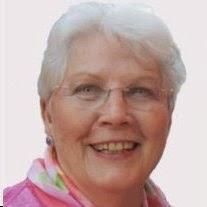 Nancy Thorndal
(March 3, 1930 – December 22, 2013)Gethsemane Cathedral, FargoDecember 28, 2013John 10: 11-16 + I cannot begin to express the honor I feel at being able to preach at this celebration of the life of Nancy Thorndal. And, let’s face it, it has been an extraordinary life. It has been a wonderful, exciting, exuberant life. I had the wonderful privilege, as many of here this afternoon had, of saying Nancy Thorndal was a very dear, dear friend. And I am also honored to say she, I am pretty sure, thought the same way of me.
But, my relationship with her was even more than that. I first got to know Nancy when she and Herb very tentatively began attending Gethsemane Cathedral back in about 2000. Back then I was in training to be a priest and was working here at the Cathedral. Later, when Herb was in and out of the hospital, I was doing what was called Clinical Pastoral Education, essentially serving as a student chaplain in the hospital and was able to spend quite a bit of time with Herb and Nancy and the children. Actually we became very close during that time. So close in fact that I began joking with her.
I would say to her “Nancy, I want to be your tenth child.”
Nancy, gave me one of those wonderful, all-encompassing embraces she was so known for, and exclaimed, “I couldn’t ask for anything more. What’s one more kid?”
Considering the fact that we figured out the other day that she would’ve been 39 years old when I was born, it could’ve been a reality.
After that I always said, “I’m the 10th Thorndal child. You know, the one who became a priest.”
Actually, I think some people who didn’t know the joke, kinda believed that. Which made Nancy so happy.
However, having that close of friendship with her doesn’t make preaching at and being a part of this service any easier, let me tell you. Nor was it easy to say goodbye to her just after she left us on Sunday at noon.
As she was dying last week, I went up to see her a couple of times and, although she couldn’t talk, she was definitely communicating with me and, even in the state she was in, I could tell how overjoyed she was to see me. One of things we discussed during those last few times together was the wonderful reality that she was so completely surrounded by love in that moment. And she was. She was surrounded by the love of her children and the love of her many, many friends.
And as I talked with her, I said, “Nancy, you are so lucky. You are going from this place, surrounded by love, to a place of even more love.” To which she squeezed my hand and expressed her agreement with her eyes.
And that love is what we are celebrating today. We are celebrating the love we had for her, that she had for us and the love in which she is now so fully enfolded.
Now, I need to be careful about this. I can just hear Nancy saying (and I wish I could do a better impression of her voice): “Now, don’t make a fuss over me!” Well, dear Nancy in Heaven, I’m sorry but, we are going to make a fuss over you today. You deserve to have a bit of a fuss made over you today. And weneed to make a bit of a fuss over you.
This love that we celebrate and for which we give thanks today is something that deserves to be celebrated. And as hard as this day is—and it is a hard day—we also know that it is a day of joy as well.
In our Gospel for today, we have that wonderful passage of Jesus as the Good Shepherd. I know for a fact that this image of the Good Shepherd truly encompasses Nancy’s image of the Jesus that came to her last Sunday around noon. Jesus, the Good Shepherd. Jesus, the one who loves her and who surrounded her in his love that day and is, at this moment, surrounding her—and all of us—in that love. For Nancy, all the pains, all the sorrows of this life, all the tears of this life, are behind her. She is, in this moment, in place of light and joy and beauty.
One of the great privileges a priest often has is that moment in which they are called in and asked to give the last rites to a person. For me, as a priest, as the 10th Thorndal child, as someone who truly loved Nancy, it was a real privilege. It was privilege to anoint her and to absolve her of any sins she may have committed. But the real privilege came in knowing that she was, at that moment, entering the land of joy and light.
Later in this service, Bishop Michael will stand at her ashes and will lead us in the Commendation. In it, we will say,
Give rest, O Christ, to your servant with your saints,where sorrow and pain are no more,
neither sighing, but life everlasting.
That is the place in which Nancy now dwells—a place of life everlasting where there is no more sorrow, where there is no more pain. It is a place in which she now lives. And it is place in which we too will one day live. And I have no doubt that when I get there and you get there, there will be Nancy. And I can just imagine her, so full of life, those eyes blazing with life, coming to us and embracing us and welcoming us to that place.
I will miss Nancy. I will miss our friendship. I will miss that joy she had every time she saw someone she loved and cared for. I will miss being on the receiving end of that love. But I am thankful to God that I got to know her and to be a priest to her and to be her friend and to be her tenth child.
So, let all of us be thankful today for Nancy Thorndal. Let us be thankful for this woman whom God has been gracious to let us know and to love. Let us be thankful for her example to us. And let us be grateful for all she has given us in our own lives.
Into paradise may the angels lead you, Nancy. At your coming may the martyrs receive you, and bring you into the holy city Jerusalem. Amen.
Nancy Thorndal
Nancy Thorndal(March 3, 1930 – December 22, 2013)Gethsemane Cathedral, FargoDecember 28, 2013John 10: 11-16 + I cannot begin to express the honor I feel at being able to preach at this celebration of the life of Nancy Thorndal. And, let’s face it, it has been an extraordinary life. It has been a wonderful, exciting, exuberant life. I had the wonderful privilege, as many of here this afternoon had, of saying Nancy Thorndal was a very dear, dear friend. And I am also honored to say she, I am pretty sure, thought the same way of me.
But, my relationship with her was even more than that. I first got to know Nancy when she and Herb very tentatively began attending Gethsemane Cathedral back in about 2000. Back then I was in training to be a priest and was working here at the Cathedral. Later, when Herb was in and out of the hospital, I was doing what was called Clinical Pastoral Education, essentially serving as a student chaplain in the hospital and was able to spend quite a bit of time with Herb and Nancy and the children. Actually we became very close during that time. So close in fact that I began joking with her.
I would say to her “Nancy, I want to be your tenth child.”
Nancy, gave me one of those wonderful, all-encompassing embraces she was so known for, and exclaimed, “I couldn’t ask for anything more. What’s one more kid?”
Considering the fact that we figured out the other day that she would’ve been 39 years old when I was born, it could’ve been a reality.
After that I always said, “I’m the 10th Thorndal child. You know, the one who became a priest.”
Actually, I think some people who didn’t know the joke, kinda believed that. Which made Nancy so happy.
However, having that close of friendship with her doesn’t make preaching at and being a part of this service any easier, let me tell you. Nor was it easy to say goodbye to her just after she left us on Sunday at noon.
As she was dying last week, I went up to see her a couple of times and, although she couldn’t talk, she was definitely communicating with me and, even in the state she was in, I could tell how overjoyed she was to see me. One of things we discussed during those last few times together was the wonderful reality that she was so completely surrounded by love in that moment. And she was. She was surrounded by the love of her children and the love of her many, many friends.
And as I talked with her, I said, “Nancy, you are so lucky. You are going from this place, surrounded by love, to a place of even more love.” To which she squeezed my hand and expressed her agreement with her eyes.
And that love is what we are celebrating today. We are celebrating the love we had for her, that she had for us and the love in which she is now so fully enfolded.
Now, I need to be careful about this. I can just hear Nancy saying (and I wish I could do a better impression of her voice): “Now, don’t make a fuss over me!” Well, dear Nancy in Heaven, I’m sorry but, we are going to make a fuss over you today. You deserve to have a bit of a fuss made over you today. And weneed to make a bit of a fuss over you.
This love that we celebrate and for which we give thanks today is something that deserves to be celebrated. And as hard as this day is—and it is a hard day—we also know that it is a day of joy as well.
In our Gospel for today, we have that wonderful passage of Jesus as the Good Shepherd. I know for a fact that this image of the Good Shepherd truly encompasses Nancy’s image of the Jesus that came to her last Sunday around noon. Jesus, the Good Shepherd. Jesus, the one who loves her and who surrounded her in his love that day and is, at this moment, surrounding her—and all of us—in that love. For Nancy, all the pains, all the sorrows of this life, all the tears of this life, are behind her. She is, in this moment, in place of light and joy and beauty.
One of the great privileges a priest often has is that moment in which they are called in and asked to give the last rites to a person. For me, as a priest, as the 10th Thorndal child, as someone who truly loved Nancy, it was a real privilege. It was privilege to anoint her and to absolve her of any sins she may have committed. But the real privilege came in knowing that she was, at that moment, entering the land of joy and light.
Later in this service, Bishop Michael will stand at her ashes and will lead us in the Commendation. In it, we will say,
Give rest, O Christ, to your servant with your saints,where sorrow and pain are no more,
neither sighing, but life everlasting.
That is the place in which Nancy now dwells—a place of life everlasting where there is no more sorrow, where there is no more pain. It is a place in which she now lives. And it is place in which we too will one day live. And I have no doubt that when I get there and you get there, there will be Nancy. And I can just imagine her, so full of life, those eyes blazing with life, coming to us and embracing us and welcoming us to that place.
I will miss Nancy. I will miss our friendship. I will miss that joy she had every time she saw someone she loved and cared for. I will miss being on the receiving end of that love. But I am thankful to God that I got to know her and to be a priest to her and to be her friend and to be her tenth child.
So, let all of us be thankful today for Nancy Thorndal. Let us be thankful for this woman whom God has been gracious to let us know and to love. Let us be thankful for her example to us. And let us be grateful for all she has given us in our own lives.
Into paradise may the angels lead you, Nancy. At your coming may the martyrs receive you, and bring you into the holy city Jerusalem. Amen.
December 24, 2013
December 23, 2013
10 Things You can't do at Christmas and Follow Jesus
 I came across this wonderful post by Presbyterian Pastor Mark Sandlin, which I think is so apt now as we are heading into the Christmas season:
 Ah, Christmas! The most wonderful time of the year. A time to gather with family and friends, and, with a smile on our faces, pretend we aren't quietly measuring who received the best present and which relative really, really needs to stop drinking. A time to hang tinsel and baubles from the tree, and time to hangup our hopes of losing that last 10 pounds this year. Such a joyous season!
The real point here is that Christmas is what we make of it. For Christians, however, there are some very specific things you can't do if you want to actually honor and follow the person we celebrate this season. So, I give you my “10 Things You Can't Do AT CHRSTMAS While Following Jesus.” As with my other “10 Things” lists (which are linked at the end of this post), this is not intended to be a complete list, but it is a pretty good start.
10) Celebrate Consumeristmas.
For many folks, Christmas starts standing in line on Thanksgiving Day. 'Tis the season for mass consumerism. Regardless of where you think it began, Christmas has slowly drifted into the bog of consumer madness. Like frogs in a pot of slowly boiling water, we never saw it coming. For Christians, this is particularly problematic because the guy we are celebrating this time of year told us that collecting stuff here on Earth is not the way to follow him.9) Forget Those Without Food.Jesus once said that when we feed the hungry we are feeding him. Anyone want to guess what it means when we ignore the hungry? How about ignoring the hungry as we scrape the leftover Christmas ham from our plates into the trash? Maybe we need to change the name of the season to Gluttonousmas? Too many presents, too much food – too little consideration for those in need.
8) Forget Those Without Shelter.No room at the inn. One of the key moments in the story Christians celebrate is the moment when Jesus was almost born in the streets of Bethlehem. Our need to clean up the Christmas story assumes that the innkeeper told them to use the manger but the Bible says no such thing. There was no room at the inn, leaving Mary to place her newborn child in a smelly feeding trough. For that night they were without shelter. Throughout his life Jesus would spend his ministry with no place to lay his head. This time of year we celebrate a homeless man. Do our actions, do the places we place our money, honor that?
7) Forget About Immigrants.We three kings from orient are. Beside sounding like Yoda wrote a Christmas carol, there are a number of things messed up about that line. We don't actually know how many there were. They were magi, not kings. We also do not know where they were really from other than “from the East.” What we do know is they were foreigners and their revelation of the real king's plans to kill all newborn boys to put an end to Jesus turned Jesus' family into immigrants in Egypt. Our Christmas story is replete with images of people journeying to new lands. Christmas should cause Christians to recommit to embracing immigrants.
6) Miss The Message About Resisting Abusive Power.Mary and Joseph and their family had to flee their homeland because King Herod strong-handedly used his power to squash out what he saw as a threat to his power. I can guarantee you two things; One, in the house where Jesus grew up, the narrative of why they had to flee to Egypt and of the senseless deaths imposed on other families by the powerful was a story that was told time and time again. Two, the focus on abuse of power in Jesus' teaching and his constant willingness to confront it was no accident. Christmas should cause Christians to recommit to confronting those who abuse power.
5) Forget Those Without Presents.If you have two coats give one away. In announcing the coming of Jesus, John the Baptist told us what God was asking of us. Coats were just an example – a place holder if you will. If you have two Christmas presents give one away.
4) Insist Your Religious Celebration Rule Them All.This time of year far too many Christians remind me of Gollum and his Precious. (A LoTR shout out in a Christian Christmas post! C'mon Peter Jackson, give me some promo love!) One holiday to rule them all: “We nee-eeds it. They stole it from us!” Never mind that Jesus was Jewish or that there is a list of other celebrations that occur this time of year, there's a certain cultural privilege in the air that seems so very un-Christian to me. You can just about bet that the folks calling out for the dominance of Christmas would be singing a new song if Judaism were the dominant religious culture and this time of year radio stations across the land played Chanukah songs. Well,metaphorically they would be singing a new song – maybe a few even literally.
3) Get Mad About “Happy Holidays.”On a related note, you know what “holiday” is short for, right? Holy day. Do you really have a problem with people calling Christmas a holy day?
2) Think That It Is Actually Jesus' Birthday .Um. So... dang, this is hard and I'm really sorry to be the one telling you. Um, let's see. Remember how when you were growing up the Sunday school teacher told you it was Jesus' birthday? Yeah. Well, um... they lied. Yeah. Sorry about that. We don't actually know when Jesus was born. It was probably in the spring or summer because “the shepherds watched their flocks by night” – something which definitely didn't happen in the winter.
1) Confuse The Religious Observance With the Secular Holiday.
It may be that December the 25th was picked as the date to celebrate Jesus' birth to compete with or even to adopt the followers of the pagan celebration of Saturnalia, which included decorating with evergreens, gift giving and parties. (Hmmm, why does that seems so familiar?) I bring this up to make a simple point; A lot of our “War on Christmas” problems would rightfully go away if we simply acknowledged that there are two celebrations of Christmas each year. One is religious and one is not. Most of this article actually points to the issues that happen when we conflate them. So, let's stop doing it.
December 22, 2013
4 Advent
 December 22, 2013
Isaiah 7.10-16; Romans 1.1-7; Matthew 1.18-25
+ 26 years ago years ago today my dear grandmother, Phoebe Olson, died. Now none of you knew her. But she is someone I have referenced before in sermons.She was a very devoutly Lutheran, firm, no nonsense person. And her mother, Mary McFadden Nelson, who died 72 years ago on December 31st was a not very devout Scots-Irish Congregationalist, who was, as far as I knew, a very kind, though long-suffering woman who died of Parkinson’s Disease in the State Hospital in Jamestown just three weeks after the bombing of Pearl Harbor.
My grandmother and great-grandmother might not be that interesting to you. But I know someone’s great-grandmother who might be interesting to you. Well, to most of you. I don’t think she would be too interesting to our own Thom Marubbio.
Yes, I am talking Jesus’ great-grandmother. What? You didn’t know Jesus had a great-grandmother? Of course Jesus had a great-grandmother. And a grandmother too.
This from a story from a couple of years ago:
 A historian has identified the great-grandmother of Jesus.
According to Florentine medieval manuscripts analyzed by a historian, the great-grandmother of Jesus was a woman named St. Ismeria. St. Ismeria likely served as a role model for older women during the 14th and 15th centuries. The legend of St. Ismeria sheds light on both the Biblical Virgin Mary's family and also on religious and cultural values of 14th-century Florence….
"According to the legend, Ismeria is the daughter of Nabon of the people of Judea, and of the tribe of King David," wrote the historian who found the legend.
She married "Santo Liseo," who is described as "a patriarch of the people of God." The legend continues that the couple had a daughter named Anne who married Joachim [who, of course, are the paretns of the Blessed Virgin Mary—yes, we actually commemorate them in our Episcopal book of saints, Holy Women, Holy Men]. After 12 years, Liseo died. Relatives then left Ismeria penniless.
I enjoy stories like St. Ismeria, mother of St. Anne, mother of the Blessed Virgin Mary. Yes, I know it’s a fiction. Yes, I know there is no scriptural basis for any of it. But, I enjoy it nonetheless.
I love the story of St. Ismeria and the story of Sts. Anne and Joachim because it’s in our nature as questioning, creative human beings to try to fill in and make sense of this person Jesus and how he has come to us. It’s part of what it means to be human. And being human is what the Incarnation is all about.
This coming week, like almost no other time in the Church Year, we are forced to take a good, hard long look at what is it we believe regarding this event of the Incarnation—this even in which God—GOD—stops becoming some distant, strange force in our lives, and becomes one of us. God, coming among us in the form of Jesus, in the form of this child, born to the Virgin Mary, suddenly breaks every single barrier we ever thought we had to God. No longer are there barriers. No longer is there is a distance. No longer is there a veil separating us from God.
In Jesus, we find that meeting place between us as humans and God. God has reached out to us and has touched us not with a finger of fire, not with the divine hand of judgments, but rather with tender, loving touch of a Child.
This is what Incarnation is all about.
And because it is, because this event changes everything, because we and our very humanity, our very physical bodies, are redeemed by this event, we want to glorify in it. We want to make sense of it. We want to tell stories—sometimes even fictional stories—about how long-ranging and lasting this event is.
Because Jesus is like us in his humanity, we want relate to him. We want to say, yes, he had a mother like ours. And naturally we expand from there. Yes, he had a grandmother (whether her name was Anne or not). Yes, he then had a great-grandmother.
Of course, some of us might think of these things as frivolous. But, for those us who do find meaning in our own lives when we study things like genealogy, we realize is not frivolous. When we study things like genealogy, we doing more than just studying history and the differing, sometimes very complicated genealogical threads. When we study genealogy, what we are studying is ourselves. We are studying who are we and what we are and where we have been. The blood that flowed in the veins of great-grandparents and grandparents and parents, is the same blood that flows in our veins. There is a lineage there.
Our scripture this morning are filled with references to God working through the lineage of David. In our reading from Isaiah today, we find God speaking through the prophet announcing that, through the lineage of David, Immanuel will come.
Paul today talks of how God worked through the lineage of David to bring about this revelation of God’s self in human form. Paul says he is “set apart for the gospel of God, which he promised beforehand through his prophets from David according to the flesh…”
And in our Gospel reading, the angel calls Joseph, “son of David” and that through this lineage, through this virgin, we have Emmanuel. We have “God with us.”
So when we celebrate Mary, when we celebrate Mary’s mother (whoever that might be) and Mary’s mother’s mother, we are celebrating Jesus.
Today, remembering and praying for my grandmother, I realize that she is a part of me. I am celebrating a part of myself in her and her in me.
When we think about Jesus’ lineage, we are attempting to say to ourselves, Yes, this makes Jesus even more like us. We consider Jesus relatives, the same way we consider those prophets throughout the centuries before Jesus came who foretold Jesus. All of them, point forward for to Jesus. All of them point to that point when God and humanity meets. And when we consider these forbearers of Jesus, we realize that this wasn’t some last-minute movement of God’s part. We realize that God was on the move, priming us and preparing us over centuries for this event. God was paving the way for Jesus to come to us as one of us.
That is what the story of Ismeria and Anne and Joachim and the Blessed Virgin Mary and St. Josephare all about. That is also what the Hebrew Bible is about for us Christians. And that, too is, what this season of Advent is about as well.
This coming week, we will celebrate an event that is unlike any other event. It is the even in which God finally break through the barriers and, in doing, destroy those very barriers. This week we celebrate that cataclysmic event in which heaven and earth are finally merged, in which the veil is torn aside, in which all that we are and all that we long for finally come together. Nothing will ever be the same as it was before. And thank God!
It is an event that transformed us and changed in ways we might not even fully realize or appreciate even at this point. Christmas is almost here. I don’t think any of us would doubt that. We see the trees, the lights, the Santas and the reindeer.
But the real Christmas—that life-altering event in which God took on flesh like our flesh, when God allowed blood like our blood to flow in veins, when a heart like our hearts beat with love and care, is here, about the dawn into our lives. Truly this is Emmanuel. This is “God with us.”
God is with us.
The star that was promised to us, that was prepared for us through generations and generations, through the countless lives of those who went before it, has appeared into the darkest night of our existence is now shining brightly, burning the clouds of doubt and despair away.
December 18, 2013
Vegan Diary: Week #2--the common cold
Yesterday morning I had the beginning of a cold. Although an on-coming cold is usually something to dread (especially this close to a busy Christmastide), how my body reacted has been very interesting. In the past, whenever I came down with a cold or flu, I would know what was happening because I always had a sore throat with it, along with nasal congestion and lots of mucus. The sore throat in particular always knocked me for a loop. I was pretty much incapacitated with a sore throat.
Not so this time. Although there was no doubt this was a cold, there was no sore throat, no runny nose, no congestion. Just a hoarse voice, fatigue (which has been the norm for the last few weeks), and a general sense of just not feel great. I simply loaded myself up with Vitamin C and some Zicam, and before I knew it…it was gone. No cold. This was definitely a first in my life.
Another added plus to the vegan diet has been my ability to sleep. I have never slept as well as I have lately. I used to be a major night owl. My “used to” I mean three weeks ago I was a night owl. Now, about 10:30 or so, I am wiped out and more than ready for bed. In the past, I never really slept all the fitfully. Now, I sleep like a log all night long, straight through until morning. It’s been wonderful.
 Drawbacks have been other people’s reactions. It certainly is seen as exotic and unconventional in my world. Although I try to share my thoughts that many saints throughout history (including Teresa of Avila, Martin de Porres and Seraphim of Sarov) and some great Anglican priests (such as Father James Frye, mentor to the novelist James Agee, priest-poet Arthur Shearly Cripps and even my dear hero George Herbert at moments in his life) were all vegetarians (and many of them certainly vegan), my latest venture into veganism is seen as particularly strange, especially with parishioners who do not understand when I refrain from such post-Mass coffee hour staples as cake, cookies or the inevitable cheese plate.
 When I explain that I am not doing it just for my health, but for ethical reasons that are based squarely in my Christian understanding of not killing anything, my words are more often than not met with blank stares.
Ultimately it is my life, my health and my ethics. And so, I will continue on.