Jamie Parsley's Blog, page 81
March 2, 2014


February 9, 2014
February 5, 2014
Vegan Diary: One year Vegetarian
 Tomorrow, I will have been a vegetarian for one whole year. One year without cheating. One year without meat of any kind.
 I have also been vegan for two months as of today.
Plus, I haven’t Diet Coke also two months ago last week.
I don’t say that in some self-righteous way. For the most, people who aren’t vegetarian or vegan or who drink diet soda on a regular basis are not impressed by it. I say it only because I am happy I’ve done it. It was a personal challenge and I achieved it. And I feel a certain sense of personal pride in doing so.
So, how has it been? To be blunt: it’s been incredible. I have learned much this time around as a vegetarian. Twenty years ago, I went vegetarian for the first time for five years. I didn’t cheat once in those five years, but I also didn’t do it right. I ate lots of junk. I ate lots of cheese and dairy. I didn’t eat healthy. And, in the end, I gave it up as easily I as would throw away an old shirt.
This time around, I haven’t always eaten healthy, but I have done much better. My health has not been this good in a very long time. And I can really see and feel the results. Not because I am trying to or desperately want to. They simply are happening for me, and I am grateful.
One thing has surprised me: I still get scolded by people. I have to admit that at 44 years old,
 an ordained priest, a published writer, a person with lots of life-experience under my belt, someone who has been indepenet for a very long time, being scolded at this time in my life is sobering. And I honestly don’t know how to react to it.
 So, when someone tells me, out of the blue: “This vegan diet is not healthy for you,” I stiffen and bite my tongue. And I try not to respond by simply noticing the meat they fork onto their plates and the gravy with which they smother their mashed potatoes.
My resentment comes from the fact that I am amazed nobody scolded me when my diet was unhealthy, when I was eating fast food from McDonald’s or ice cream from Cold Stone Creamery or pizzas from Pizza Hut. When I was diagnosed with cancer twelve years ago and my weight ballooned, did anyone scold me for my eating habits then. Then, when I should have been scolded for what I was eating.
All I can say in return is: I haven’t felt deprived or lacking once in what I eat. It has been strangely natural for me. And once I got into the habit of ignoring the scolding and bolder in asking servers to make a dish of pasta with marinara instead of creamy sauce, or order a sandwich without cheese or mayo, it was actually pretty easy.
Still, I’ve learned not be a jerk about vegetarianism/veganism. Taking a note from Moby, I’ve learned to be almost apologetic about it when people scold me or even when they ask me over to their homes or out to eat. Waving the vegan flag or whipping out photos of suffering animals on factory farms or slaughterhouses certainly does not win people over to the cause (which isn’tmy intention in the first place). In fact, that vegan flag-waving and disturbing photos only drives people further and further away.
I do what I can, where I can, because it makes a difference in my life. It makes a difference in my ethics, in my diet and in my health. And I understand now how being vegetarian/vegan really is more than just an issue of food. It is more than just a diet. It is a lifestyle. It is a way living one’s life and it is a way of seeing the world around me differently.
I can also say there is something weirdly spiritual about this way of eating. It does seem to fit so well into my faith life. As I Christian and as priest, I feel a certain moral obligation about animals and the suffering they endure for human consumption. There is a disconnect in our collective intention blindness toward the suffering of other living being. And there is something good and holy in compassionate living.
I am thankful for this year as a vegetarian. I am thankful for these past two vegan months. It has been very good. The proof is in the vegan pudding. I am feeling great—better than I have in a long time.
What more can I ask?
One year Vegetarian
Tomorrow, I will have been a vegetarian for one whole year. One year without cheating. One year without meat of any kind. I have also been vegan for two months as of today.
Plus, I haven’t Diet Coke also two months ago last week.
I don’t say that in some self-righteous way. For the most, people who aren’t vegetarian or vegan or who drink diet soda on a regular basis are not impressed by it. I say it only because I am happy I’ve done it. It was a personal challenge and I achieved it. And I feel a certain sense of personal pride in doing so.
So, how has it been? To be blunt: it’s been incredible. I have learned much this time around as a vegetarian. Twenty years ago, I went vegetarian for the first time for five years. I didn’t cheat once in those five years, but I also didn’t do it right. I ate lots of junk. I ate lots of cheese and dairy. I didn’t eat healthy. And, in the end, I gave it up as easily I as would throw away an old shirt.
This time around, I haven’t always eaten healthy, but I have done much better. My health has not been this good in a very long time. And I can really see and feel the results. Not because I am trying to or desperately want to. They simply are happening for me, and I am grateful.
One thing has surprised me: I still get scolded by people. I have to admit that at 44 years old,
an ordained priest, a published writer, a person with lots of life-experience under my belt, someone who has been indepenet for a very long time, being scolded at this time in my life is sobering. And I honestly don’t know how to react to it. So, when someone tells me, out of the blue: “This vegan diet is not healthy for you,” I stiffen and bite my tongue. And I try not to respond by simply noticing the meat they fork onto their plates and the gravy with which they smother their mashed potatoes.
My resentment comes from the fact that I am amazed nobody scolded me when my diet was unhealthy, when I was eating fast food from McDonald’s or ice cream from Cold Stone Creamery or pizzas from Pizza Hut. When I was diagnosed with cancer twelve years ago and my weight ballooned, did anyone scold me for my eating habits then. Then, when I should have been scolded for what I was eating.
All I can say in return is: I haven’t felt deprived or lacking once in what I eat. It has been strangely natural for me. And once I got into the habit of ignoring the scolding and bolder in asking servers to make a dish of pasta with marinara instead of creamy sauce, or order a sandwich without cheese or mayo, it was actually pretty easy.
Still, I’ve learned not be a jerk about vegetarianism/veganism. Taking a note from Moby, I’ve learned to be almost apologetic about it when people scold me or even when they ask me over to their homes or out to eat. Waving the vegan flag or whipping out photos of suffering animals on factory farms or slaughterhouses certainly does not win people over to the cause (which isn’tmy intention in the first place). In fact, that vegan flag-waving and disturbing photos only drives people further and further away.
I do what I can, where I can, because it makes a difference in my life. It makes a difference in my ethics, in my diet and in my health. And I understand now how being vegetarian/vegan really is more than just an issue of food. It is more than just a diet. It is a lifestyle. It is a way living one’s life and it is a way of seeing the world around me differently.
I can also say there is something weirdly spiritual about this way of eating. It does seem to fit so well into my faith life. As I Christian and as priest, I feel a certain moral obligation about animals and the suffering they endure for human consumption. There is a disconnect in our collective intention blindness toward the suffering of other living being. And there is something good and holy in compassionate living.
I am thankful for this year as a vegetarian. I am thankful for these past two vegan months. It has been very good. The proof is in the vegan pudding. I am feeling great—better than I have in a long time.
What more can I ask?
February 4, 2014
Maple Sheyenne February 2014
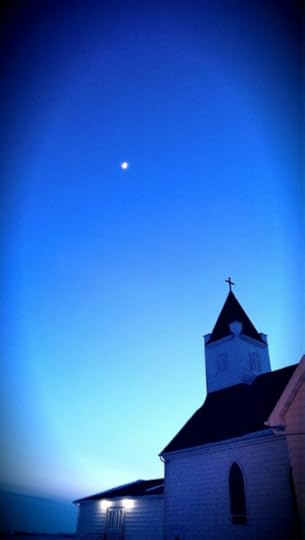
This evening, while driving out to Maple Sheyenne Cemetery where my father's ashes are buried, I took this photo, which turned out pretty good, if I say so myself:

February 2, 2014
Presentation of Our Lord
February 4, 2014
Luke 2. 22-40
+ So, let’s see if you can remember this. What happened 40 days ago today? Yes, Christmas happened 40 days ago today. I know it’s hard to even think of that, now in early February. It feels so long ago already.
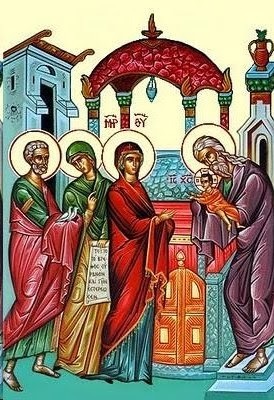
But, yes 40 days ago we commemorated the birth of Jesus. Which is why, today, we are commemorating the Presentation of Jesus. Which simply means that, in Jewish tradition, the first born son was to be presented to the Temple on the 40th day after his birth. And on that day, the child was to literally be redeemed.
Reminiscent of the story of Abraham and his first son Isaac, an animal sacrifice would’ve made in the place of the life of the son, which in the case of Jesus’ family who were poor, would have been two doves.
Now why, you might ask? Why 40 days? Well, until about the Thirteenth century, it was often believed that the soul did not even enter a boy child until the 40th day. (The soul entered a girl child on the 80thday) So essentially, on the 40th day, the boy child becomes human. The child now has an identity—a name. And the child is now God’s own possession.
This day is also called Candlemas, and today, of course, we at St. Stephen’s, in keeping with a tradition going back to the very beginning of the Church, will bless candles on this day. In the early Church, all the candles that would be used in the Church Year and in individual people’s lives would be blessed on this day. The candles blessed on this day for personal use were actually considered spiritually powerful. They were often lit during thunderstorms or when one was sick or they would be placed in the hands of one who was dying. It was also believed that the weather on this day decided what the rest of winter would be like. In fact there was also a wonderful little tune used in rural England that went:
If Candlemas-day be fair and brightWinter will have another fightIf Candlemas-day brings cloud and rain,Winter won’t come again.
What does that sound like? Yes, Ground Hogs Day. In fact, Ground Hogs Day, which originated in Germany, was a Protestant invention to counteract what they perceived to be this Catholic feast.
Now all of that is wonderful and, I think, is interesting in helping understand this feast day and in its importance in the life of the Church and the world. But the real message of this day is of course the fact, in presenting Jesus in Temple, the Law in Jesus was being fulfilled.
This morning, in this feast, we find the old and the new meeting. That is what this feast we celebrate today is really all about . The Feast of the Presentation is all about the Old and the New meeting. In fact, in the Eastern Orthodox Church, this feast is called the Meeting of Christ with Simeon. In our Gospel reading for today, we find Simeon representing the Old Law. He is the symbol of the Old Testament—the old Law. We have Simeon. He is nearing the end of his life. He knows he is in his last days. But he also knows something new is coming. Something new and wonderful and incredible is about dawn.
The rites done at the temple by the priest would’ve been the Levitical rites that fulfilled the Law. The priest oversaw the rites of purification. Mary herself would certainly be going through the purification rites all mothers had to go through on this fortieth day. Simeon, it seems, was present at the dedication service of the new child to God, which, of course, would have included both his naming and his circumcision. All of this fulfils the Old Law.
Then, of course, there is a figure who we always seem to overlook in the scripture. The Prophet Anna. I like Anna for some reason. She seems to be the bridge here. She comes forward out of the background and begins praising God and speaking of the greatness of this Child. What she proclaims is the New. What she praises God for is Jesus—born under the most unusual of circumstances.
In case we forgot what happened 40 days ago, he was conceived and born of a virgin, with angels in attendance, with a bright shining star in the sky and mysterious strangers coming from the East. In Jesus, we have the Law fulfilled. Eventually, in this baby that comes before Simeon, the old Law would find its fulfillment. The Law is fulfilled in this baby, who will grow up, to proclaim God’s kingdom in a way no else has before or since. This baby will also grow up to die on the Cross. No longer do we need those animals sacrifices. We don’t need two little doves to die for us. His death did away with all those sacrifices. Now, this all sounds wonderful.
But no doubt we start asking this important question: why do we even need the Old Testament? If Jesus came to fulfill it, it seems pointless. But what we need to remember is that this New Law does not overcome or cancel out the old Law. It only solidifies it. It makes it more real. The Old Law will simply change because now there will be no more need of animal sacrifices and atonement offerings.
In Jesus—the ultimate Lamb of God—those offerings are done. They were needed then. They are not needed now. But they foreshadowed what was to come. The Old Law helps us make sense who Jesus is. We have one offering—that offering of Jesus on the Cross—and through it we are all purified. But even more so than that. This Feast of the Presentation is about us as well.
We too are being presented today. We too are presented before God—as redeemed and reborn people. We too are being brought before God in love. From this day forward we know that we are loved and cherished by God. We know that we are all essentially loved children of God, because Jesus, the first born, led the way for us.
The Old Law hasn’t been done away for us. Rather, Old Law has been fulfilled and made whole by the New . We see that there is a sort of reverse eclipsing taking place. The Old Law is still there. But the New has overtaken it and outshines it.
And today is about Jesus being presented to us. Presented to us in those who need us. Presented to us in those who are poor, or in need, or marginalized.
See, it really is a wonderful day we celebrate today. The Feast of the Presentation speaks loudly to us on many levels. But most profoundly it speaks to us of God’s incredible love for us. So, this morning, on this Candlemas, let us be a light shining it the darkness.
Let that light in us be the light of the Christ Child who was presented in the Temple. We, like Jesus being presented to Simeon, are also being presented before God today and always.
So let us, like the prophet Anna, rejoice. Let us, like her, speak to all who are looking for redemption. And with Simeon, let us sing:
“Now you may dismiss your servant in peace, according to your word;
For my eyes have now seen your salvation which you have prepared in the presence of all peoples.
Amen.

Luke 2. 22-40
+ So, let’s see if you can remember this. What happened 40 days ago today? Yes, Christmas happened 40 days ago today. I know it’s hard to even think of that, now in early February. It feels so long ago already.
But, yes 40 days ago we commemorated the birth of Jesus. Which is why, today, we are commemorating the Presentation of Jesus. Which simply means that, in Jewish tradition, the first born son was to be presented to the Temple on the 40th day after his birth. And on that day, the child was to literally be redeemed.
Reminiscent of the story of Abraham and his first son Isaac, an animal sacrifice would’ve made in the place of the life of the son, which in the case of Jesus’ family who were poor, would have been two doves.
Now why, you might ask? Why 40 days? Well, until about the Thirteenth century, it was often believed that the soul did not even enter a boy child until the 40th day. (The soul entered a girl child on the 80thday) So essentially, on the 40th day, the boy child becomes human. The child now has an identity—a name. And the child is now God’s own possession.
This day is also called Candlemas, and today, of course, we at St. Stephen’s, in keeping with a tradition going back to the very beginning of the Church, will bless candles on this day. In the early Church, all the candles that would be used in the Church Year and in individual people’s lives would be blessed on this day. The candles blessed on this day for personal use were actually considered spiritually powerful. They were often lit during thunderstorms or when one was sick or they would be placed in the hands of one who was dying. It was also believed that the weather on this day decided what the rest of winter would be like. In fact there was also a wonderful little tune used in rural England that went:
If Candlemas-day be fair and brightWinter will have another fightIf Candlemas-day brings cloud and rain,Winter won’t come again.
What does that sound like? Yes, Ground Hogs Day. In fact, Ground Hogs Day, which originated in Germany, was a Protestant invention to counteract what they perceived to be this Catholic feast.
Now all of that is wonderful and, I think, is interesting in helping understand this feast day and in its importance in the life of the Church and the world. But the real message of this day is of course the fact, in presenting Jesus in Temple, the Law in Jesus was being fulfilled.
This morning, in this feast, we find the old and the new meeting. That is what this feast we celebrate today is really all about . The Feast of the Presentation is all about the Old and the New meeting. In fact, in the Eastern Orthodox Church, this feast is called the Meeting of Christ with Simeon. In our Gospel reading for today, we find Simeon representing the Old Law. He is the symbol of the Old Testament—the old Law. We have Simeon. He is nearing the end of his life. He knows he is in his last days. But he also knows something new is coming. Something new and wonderful and incredible is about dawn.
The rites done at the temple by the priest would’ve been the Levitical rites that fulfilled the Law. The priest oversaw the rites of purification. Mary herself would certainly be going through the purification rites all mothers had to go through on this fortieth day. Simeon, it seems, was present at the dedication service of the new child to God, which, of course, would have included both his naming and his circumcision. All of this fulfils the Old Law.
Then, of course, there is a figure who we always seem to overlook in the scripture. The Prophet Anna. I like Anna for some reason. She seems to be the bridge here. She comes forward out of the background and begins praising God and speaking of the greatness of this Child. What she proclaims is the New. What she praises God for is Jesus—born under the most unusual of circumstances.
In case we forgot what happened 40 days ago, he was conceived and born of a virgin, with angels in attendance, with a bright shining star in the sky and mysterious strangers coming from the East. In Jesus, we have the Law fulfilled. Eventually, in this baby that comes before Simeon, the old Law would find its fulfillment. The Law is fulfilled in this baby, who will grow up, to proclaim God’s kingdom in a way no else has before or since. This baby will also grow up to die on the Cross. No longer do we need those animals sacrifices. We don’t need two little doves to die for us. His death did away with all those sacrifices. Now, this all sounds wonderful.
But no doubt we start asking this important question: why do we even need the Old Testament? If Jesus came to fulfill it, it seems pointless. But what we need to remember is that this New Law does not overcome or cancel out the old Law. It only solidifies it. It makes it more real. The Old Law will simply change because now there will be no more need of animal sacrifices and atonement offerings.
In Jesus—the ultimate Lamb of God—those offerings are done. They were needed then. They are not needed now. But they foreshadowed what was to come. The Old Law helps us make sense who Jesus is. We have one offering—that offering of Jesus on the Cross—and through it we are all purified. But even more so than that. This Feast of the Presentation is about us as well.
We too are being presented today. We too are presented before God—as redeemed and reborn people. We too are being brought before God in love. From this day forward we know that we are loved and cherished by God. We know that we are all essentially loved children of God, because Jesus, the first born, led the way for us.
The Old Law hasn’t been done away for us. Rather, Old Law has been fulfilled and made whole by the New . We see that there is a sort of reverse eclipsing taking place. The Old Law is still there. But the New has overtaken it and outshines it.
And today is about Jesus being presented to us. Presented to us in those who need us. Presented to us in those who are poor, or in need, or marginalized.
See, it really is a wonderful day we celebrate today. The Feast of the Presentation speaks loudly to us on many levels. But most profoundly it speaks to us of God’s incredible love for us. So, this morning, on this Candlemas, let us be a light shining it the darkness.
Let that light in us be the light of the Christ Child who was presented in the Temple. We, like Jesus being presented to Simeon, are also being presented before God today and always.
So let us, like the prophet Anna, rejoice. Let us, like her, speak to all who are looking for redemption. And with Simeon, let us sing:
“Now you may dismiss your servant in peace, according to your word;
For my eyes have now seen your salvation which you have prepared in the presence of all peoples.
Amen.
January 28, 2014
Having a martini with you

Having a martini with you
is even more fun than going to such exotic places as St. Malo, Inverness, Gdansk or Milnor
or being sick to my stomach on Broadway in Fargo
partly because in your perfectly 1950s dress you look like a better happier St. Gianna Molla
partly because we like each other, partly because you love wine and I love Bananas Foster
martinis
partly because of the music that plays in my world and your world
partly because of the secrecy we share about the people we love and wish for
it is hard to believe when we’re together that our bartender notices not you but me,
who promises to lick even the last drop of that delicious liqueur from the shaker he so expertly handles like the hands a lover has for the one he loves
and still, despite that, we share there a solemnness as unpleasant as the talk of a pretentious composer of popular music
in the warm Fargo 9 o’clock light in which we are drifting back and fort
between our talk like the sun which is escaping us in this dusk we ignore
and the mirror beside us reflects not our faces but the clothes we wear and the pain
we bring to this table with its inlaid crescent moon
bronze as the skin of those we long for and love with a love so intense it brings tears to our
eyes
and in this instant we wonder
why
why in the world anyone ever ignore us or not love us or refuse to see in us
the beauty we see in each other
I look
and you look and we would rather look at all those people we know and love who
stare back at us like portraits in a gallery with all their pains drawn on their faces except possibly the ones we long for and love most who stare back us at like
the elongated turqoise wonder of the frescoes at Decani or the incessant haloes honesty of
Keelan McMorrow
and it’s not this at all but rather, as Frank O’Hara said, at the Frick
which we thank the heaven we hope in together
and which some day will welcome us with a beauty we can only glimpse at
now in this hidden corner of an out –of-the-way bar far from those
we can’t escape
we sit here straddling 40
the same age Frank O’Hara was when he stepped out in front of that dune buggy
on Fire Island in that summer before we were born
and the life that lies behind us
and the life that lies before us
is laid out so clearly we can’t quite recognize either
and yet still we know that’s all there
all planned out for us
all written out for us as the prophecies of some wild-eyed
visionary who gazed into the void and saw
in that clarity
the heaven toward which we are headed
but we haven’t gone to that heaven yet
to that place our dear friend Ron has gone to too early for our comfort
and the fact that we move through this dusk so beautifully more or less takes care of
the scared music we hear in our that spark of life within us
just as intense and Baroque as Mikolaj Zielenski’s Beata es virgo or
at a rehearsal of a singer whom we envy and love in our own way
and what good does the liturgies and music of the church do us or them
when they never got the right person to sing their hymns
we don’t sing hymns
we sings songs of love lost or resurrected or ascended
like that One we know loved and lost and was resurrected and was ascended
oh let’s face it
we’re the pure ones
we have thought long and hard about all of this
we have been tossed to the whim of love for too often in our lives
and it seems that we have been cheated
because others have had this experience and are content in their daily lives
snuggling and hugging each other and whispering sweet-nothings to each other
in nights that never end but go on blissfully like heaven
while we are here drinking and crying
but it’s not lost on me
oh no
which is why I am sitting here in this dusk telling you about it
(after the poem “Having a Coke with You” by Frank O'Hara)
for Michelle Gelinske
From the chapbook Having a Martini with You by Jamie Parsley, copyright 2011, published by Enso Press, Fargo.
January 26, 2014
January 19, 2014
2 Epiphany
 January 19, 2014
John 1.29-42
+ I realized something the other day. I have a reputation. I have being someone who, when I start something, I am committed to it. For better…or, sigh, for worse.
If you don’t want something done, don’t ask me to do it. And if I’m committed to something, I am committed.
Well, to prove that point, if to no one else but myself and God, in a few weeks, on February 6 to be specific, I will be observing a one-year anniversary. It’s not one that’s probably important to anyone else, but to me. On February 6th, I will be observing my one year anniversary of being a vegetarian. If you can believe it.
I was, for the better the better of last year what is known as a lacto-ovo vegetarian,
 meaning I didn’t meat, but I did eat milk and eggs.
 There was a problem with that, however. Ever since I was about 21 years old, I knew I was lactose-intolerant. A situation I ignored for the better part of these twenty years. Ignored to my own detriment. Well, going lacto-ovo vegetarian only put everything into perspective for me.
So, I’ve actually even taken it all a step further. Six weeks ago, I went vegan. Vegan meaning, I am not just not eating meat. It means, no dairy, no eggs either.
Or to put in the words of the character Todd from one of my guilty pleasures, the film Scott Pilgrim Versus the World:
“I partake of neither the meat, nor the breast milk nor the ovum of any creature with a face.”
Despite my dairy intolerance, I can tell you, being vegetarian was fairly easy. Being vegan—well, not so easy. In fact it was daunting. It was just so…hardcore. It was like joining the Marines or the Trappists or something.
But it’s been very good for me. My health has blossomed in ways I never even expected. And the longer I’ve been on it, the easier it’s been. Well, except for the fact that people I used to dine with have stopped asking me over for meals. And I get lots of weird looks for restaurant servers when I order things like cheese-less pizza.
Of course, along with being vegan, one realizes that there is a health issue on side of it, and there is a moral issue on the other. One of the best side effects is my new appreciation of animals. Now that I’m not eating them or things that come from them, I’ve just been more aware of them and appreciative of them and I enjoy them more than ever have.
And for someone reason, this past week, as I was meditating on our Gospel reading for today, the whole image of Jesus as the Lamb of God really hit home to me in a new way.
In today’s Gospel reading we find John the Baptist calling out not once but twice, identifying Jesus as the Lamb of God. Now, I know, you’re thinking: “Geeze Louise! Now that he’s gone vegan, he’s getting all soft on us. Now we’re getting a sermon about sweet little lambs.” Ahhh, not so. Sweet and gentle is not what John saw when he observed Jesus at the Lamb of God.
For John, what he observed when he looked at Jesus and saw the Lamb of God walking past, was truly a thing that would make most vegans cringe: he saw that sacrifice that was seen in the Temple in Jerusalem. There, the lamb was sacrificed—and quite violently sacrificed—as a sin offering for the people. And before John, prophet that he was, walked One who was one day going to be the sacrifice as well. He saw before him not Jesus the man, but the Lamb, broken and bleeding.
In our images of the Lamb of God, we don’t have just a fluffy little lamb. In our images of the Lamb, if you look at them closely, we see the Lamb pierced. We see blood pouring from the side of the Lamb. We see a sacrificed Lamb.
In our Sunday Mass, we have been singing the Agnes Dei—the Lamb of God—after I have broken the bread. I am so happy that we do. This “fraction anthem” as we call it, carries such meaning.
In it we sing, essentially,
Lamb of God, who takes away the sins of the world, Have mercy,
Lamb of God, who takes away the sins of the world, have mercy on us.
Lamb of God, who takes away the sins of the world, grant us peace.
Then you see me hold up the chalice and that broken bread and you hear me say,
“This is the Lamb of God. This is the One who takes away the sins of the world. Happy are we who are called to this supper.”
I cannot tell you how many times I have stood at this altar during that anthem and looked down at the broken bread on that paten and looked into that cup and had a moment of spiritual clarity. So many times I have looked at the broken bread and the cup and thought, this is Jesus. This is the Lamb of God.
For me, that moment of spiritual clarity is very much like the moment John recognizes Jesus as the Lamb. For me, it might as well be the Baptist’s voice in my ear, announcing to me that this is the One. And it should be for all of us.
But more than just some mystical experience is this concept of the Lamb being broken. Why do we break the bread at the Eucharist? Why do I, when I hold up that broken bread with the chalice, and say, “This is the Lamb. This is the One who takes away the sins of the world…”?
Yes, we do it to symbolize the broken body of the Lamb. The Lamb was broken. The Lamb was sacrificed. And it is importance to recognize that.
But it symbolizes something even more practical. We break bread, so we can share it. We break this bread and then break it and then break it again until it becomes small pieces that we must share with one another. And not just here. It also means we take what we have eaten here—this Lamb, this Jesus—and we share him with others, through our love, through our actions of love, through our acceptance of all people in love.
This Lamb that we know and recognize also is broken so we can share him with others. It is not enough that we simply recognize the Lamb. We must recognize the Lamb, broken for us, so that we can share the Lamb with others. And that is the purpose of our lives as Christians.
Yes, we gather here and are Christians. But we are also gathered here so we can go out and share this Lamb that has been revealed to us. And in sharing the Lamb, others too can share the Lamb.
So, let us listen to the voice of the Baptist proclaiming in our ears, “Behold the Lamb of God!”
Let us hear that voice when I hold up the Bread and the Chalice. Let us hear that voice as we come forward to share that bread and drink from that chalice.
But let us continue to hear that voice too when we leave here. Let us hear that voice proclaiming the Lamb of God as we share Christ with others, in all that we do as Christians, in the differences we make in this world around, in all the good we do and say in our lives. When we do heed that voice, we will find ourselves, as we heard in the beautiful collect from this morning, “illuminated by [God’s] Word and Sacraments” and being illuminated, we will “shine with the radiance of Christ’s glory, that he may be known, worshipped and obeyed to the ends of the earth.”
January 12, 2014
1 Epiphany
 Baptism of Our Lord
January 12, 2014
Matthew 3.13-17
+ I’m only speaking for myself here. It might be different for you. But 2014, for me, is a very important year. Why, you might ask? Well, on June 11, I will be celebrating the 10t anniversary of my ordination to the priesthood.
10 years as Priest. It’s a big deal. Not a lot of priests make it ten years. It’s a hard job, after all. But I very grateful I am going to be celebrating my 10th anniversary.
These past ten years have certainly been interesting…. And I have been busy. As many of you know, I am bit obsessed numbers, at times. I keep track of numbers. I like keeping track of numbers.
Well, on Ash Wednesday, if all goes as scheduled, I will be celebrating my 1,000th Mass as a priest. This Mass is actually my 989thMass.
1,000 masses in ten years! You wonder why I look forward to my vacations each year!
I have also officiated at 55 weddings. And I have done just over 50 baptisms in that times.
After Mass, Baptisms especially have been my joy as a priest. Ok. I know some of you are already sensing where this is going. It’s gonna be another of one of those Fr. Jamie Baptism sermons.
Yes, I have to say, it is. After all, we’re celebrating the Baptism of Jesus today! And so of course we’re going to talk about baptism. And ministry Because this is what it’s all about for us as Christians.
All ministry—the ministry we all do together—stems from that transformational event of our Baptism. In fact, to be baptized means, essentially, to be called to ministry. It means to proclaim the God we have found in Jesus by the very lives we live and by the joy we carry within us at being a people in relationship with that God. When we look at our spiritual lives and our ministries in the “big picture,” we cannot do so without seeing that big picture circling and being centered on the singular event of our baptism.
For those of you who have visited the rectory you have no doubt seen my own baptismal certificate on my wall. It is there with my ordination certificates.
It is there to remind me and to help me commemorate that incredible event in my life 44 years ago—this event that changed me and formed me.
And we all should do that in our lives.
We all should find our dusty baptismal certificates and write down the dates of baptisms and celebrate that event in our lives. After all, everything we do as Christians should come from the joy and amazing beauty of that simple event. As you all know, as you have heard me preach from here many, many times, probably to the point you start rolling your eyes, Baptism is not a sweet little christening event for us as Christians.
It is not a quaint little service of dedication we do. For us Episcopalians, it the radical event in our lives as Christians. It is the event from which everything we do and believe flows. And when we look at the actual service of Baptism in the Book of Common Prayer, the words of that service drive home to us how important that event is.
For example, after the Baptism, when the priest traces a cross on the newly baptized person’s forehead, she or he says, “You are sealed by the Holy Spirit in Baptism and marked as Christ’s own for ever.”
You have heard me preach on those words before. And trust me, I will preach them again and again. I will because they are probably the most important words we are ever going to hear in our lives. That is not just some nice little sentiment. Those words convey that something transformational and amazing has happened in the life of that person. This is essential to our belief of what happens at baptism.
In baptism, we are marked as Christ’s own. For ever. It is a bond that can never be broken. We can try to break it as we please. We can struggle under that bond. We can squirm and resist it. We can try to escape it. But the simple fact is this: we can’t.
For ever is for ever.
On this Sunday on which we commemorate Jesus’ own baptism—on this Sunday in which we remember the fact that Jesus led the way through those waters of baptism and showed us a glimpse of all that happens in this singular event, we should remember and think about what happened at own baptisms. Yes, we might not actually remember the actual event. But the great thing about baptism is that, our own individual baptismal event was, for the most part, just like everyone else’s.
In those waters, we were all made equal. In those waters, the same water washed all of us—no matter who are. In those waters, there are no class distinction, no hatred, or discrimination or homophobia or sexism or war or violence. In those waters, we are all equal to one another and we are all equally loved.
In a few moments, we will stand and process to the font and renew the vows we made at baptism. When we are done, I will sprinkle you with water. The sprinkling of water, like all our signs and actions that we do in this church, is not some strange practice a few of us High Church-minded people do. That water that comes to us this morning is a stark reminder of those waters we were washed in at Baptism—those waters that made us who we are Christians, those waters in which we all stand on equal ground, with no distinctions between us.
Here at St. Stephen’s, all of our ministry—every time we seek to serve Christ and further the Kingdom of God in our midst—is a continuing of the celebration of baptism. Sometimes we lose sight of that. Sometimes we forget what it is that motivates us and charges us to do that wonderful work. Here at St. Stephen’s, we have wonderful reminders to us of how important and life-changing this baptismal event was and continues to be in our Christian lives.
For example, the baptismal font in the narthex—the place we actually baptize—is always uncovered and always filled with fresh, blessed water. This is not some quaint, Anglo-Catholic tradition that spiky Fr. Jamie introduced here. This is a very valid and real practice, and a vital reminder to all of us how that event of our baptism changed and transformed us.
It is good for us to take that water and bless ourselves. It is good for us to be occasionally sprinkled with water as a reminder of that event in our lives. It is good to feel that cold water on our fingers and on our foreheads and on our faces as a reminder of the waters that washed us initially. And, as you have heard me say many, many times, it is good to remember the date of our baptism and to celebrate that day, just as we would a birthday or a wedding anniversary.
Today, on this first Sunday in Epiphany, we start out on the right note. We start out celebrating. We start our commemorating the baptism of Jesus in the river Jordan. And by doing so, we commemorate our own baptism as well.
In our collect today, we prayed to God to “Grant that all who are baptized into [Jesus’] Name maybe keep the covenant that they have made, and boldly confess him as Lord and Saviour.”
That should be our prayer as well today and always. We pray that we may keep this Baptismal covenant in which we seek to follow Jesus and serve all people equally and fully in his name, no matter who they are. And we pray that we may boldly confess Jesus as Lord and Savior, by all that we do as Christians in seeking out and helping others in love and compassion.
May we always celebrate that wonderful baptismal event in our lives. And may we each strive to live out that baptism in our ministry of love and service of God and of one another. Amen.