Bill Willingham's Blog, page 9
December 8, 2012
CBR’s Top Ten Vertigo Titles of All Time

Written by: Alan Kistler, CBR Guest Contributor
With the departure of Vertigo’s Executive Editor Karen Berger and the cancellation of the imprint’s longest-running title “Hellblazer,” one thing is clear: we’ve come to the end of an undeniably important and influential era of modern comics.
Upon overseeing the creation of DC Comics’ celebrated imprint in 1993, Berger remained in her position, constantly striving to bring more sophisticated, adult and graphic stories to an audience that isn’t necessarily interested in reading comics involving capes and costumes. As Berger herself once said, her hope was that Vertigo’s titles would “do something different in comics and help the medium grow up.” As we look back on her legacy, illustrated by the critical acclaim, mainstream recognition and enduring popularity of so many of the comics published under her watch, it’s clear she achieved her goal.
After long — and sometimes heated — debate, members of the CBR editorial staff have settled on the following list of titles that we feel best represent Vertigo based on critical acclaim, commercial success and the series’ overall impact on the industry. Cutting the list off at 10 was certainly not easy, especially when discussing an imprint that’s published as many amazing books as Vertigo has, but we believe our list accurately represents the broad swath of Vertigo’s accomplishments over its 20 year history. We invite you to share your own list of Vertigo’s Top Ten in our forums.
10. Swamp Thing
 For years, the Swamp Thing character fit into the classic “man made into a monster” theme found in many superhero stories. A laboratory bombing caused Dr. Alec Holland to be engulfed in flames and his own experimental bio-restorative serum. Leaping to nearby water, he emerged as the Swamp Thing, a plant creature who longed to regain his humanity. But when writer Alan Moore took over the title in the mid-80s, things quickly changed.
“Saga of the Swamp Thing” (later retitled “Swamp Thing”) became a very different comic, exploring realms of magic, philosophy and existentialism. After learning his memories were essentially a lie, the hero had to re-establish where he fit in the world and whether or not he was even unique. Stories took a very dark turn, getting the book a “mature readers” warning. It became a place for DC readers who wanted a story of good and evil that didn’t also focus on superheroes (although Swamp Thing still crossed over with many mainstream heroes for years). There were also controversial censorship concerns, such as one issue being held back when it showed a time traveling Swamp Thing being the one to offer a cup of water to Jesus Christ on the cross.
Moore’s long run on Swamp Thing was DC’s first serious step towards mature reader comics, a movement that eventually begat the Vertigo imprint. It also led to the long-running spin-off series, “Hellblazer,” which eventually grew to be considered the imprint’s flagship title. Years after Moore left the series, “Swamp Thing” became one of the inaugural Vertigo titles with the release of issue #129 in 1993. Swamp Thing still made occasional connections with the mainstream DC Universe, such as when he attended Hal Jordan’s funeral or when he fought Batman villain Killer Croc, but for the most part the creature and his adventures stood separate from the DC Universe until his surprising appearance in DC’s 2011 event series, “Brightest Day.” The current “Swamp Thing” series, written by Scott Snyder, is firmly entrenched in the mainstream DC reality, though it certainly retains much of the Vertigo “flavor” associated with the character’s past stories.
9. Animal Man/Doom Patrol
 In 1988, roughly two years after DC’s “Crisis on Infinite Earths” reset the publisher’s continuity, Grant Morrison wrote an “Animal Man” mini that quickly evolved into an ongoing series. In it, the previously straightforward, C-list hero Buddy Baker was taken into strange, abstract realms and conflicts. The fact that Animal Man and his fellow inhabitants of the DC Universe were fictional was embraced, with Buddy breaking the fourth wall to speak directly to his readers, strange aliens commenting on continuity contradictions and characters remembering — and temporarily returning from — pre-Crisis stories. After Morrison’s final issue, which saw the writer have a face to face talk with Buddy, things didn’t return to normal for the titular hero as Peter Milligan, Jamie Delano and others shepherded the series and character into the Vertigo stable. The current “Animal Man” series, written by Jeff Lemire, is based in the DCU, but much like “Swamp Thing,” it maintains many of the previous incarnation’s Vertigo sensibilities.
A year after launching “Animal Man,” Morrison expanded his DC of DC’s second-string team books, “Doom Patrol.” After years of the team being portrayed as typical superheroes, Morrison brought it back to its roots as a group of misfits who investigated bizarre foes and off-kilter threats. New heroes included Rebis, a hermaphrodite amalgamation of the previous Negative Man Larry Trainor and his physician Eleanor Poole, and a living street named Danny. The team’s classic foe, the Brotherhood of Evil, was replaced by the Brotherhood of Dada, antagonists who opposed reason and order, with a teammate whose ability to manifest “every power you hadn’t thought of” was pure Morrison. Other menaces included the reality-bending Scissormen and a scientist who sought to better humanity through chaos and destruction. These stories drew the attention and appreciation what would eventually become the Vertigo audience. While “Doom Patrol” was one of the flagship titles of the imprint’s launch, the changeover took effect with issue #64, exactly one issue after Grant Morrison left as writer. Recognizing the importance of the groundwork laid by the writer, the collected editions of Morrison’s runs on both “Doom Patrol” and “Animal Man” carry the Vertigo label.
8. 100 Bullets
 Publishing 100 issues in just under ten years, the fourth-longest running Vertigo series in the imprint’s history was brought to life by writer Brian Azzarello and artist Eduardo Risso. Readers had little clue what they were getting into when the book debuted in 1999, but the title’s premise was inarguably intriguing: People who have been unjustly suffered are approached by a mysterious man named Graves who brings them proof of who wronged them, a handgun and one hundred bullets which are are flagged in such a way that their presence at a crime scene will halt any criminal investigation. Stories of personal justice and lethal revenge follow, with varying degrees of success. But are these simply random victims Graves provides the weapons and ammunition to, or is there a larger game being played?
With gritty realism, intense emotion, conspiracy twists and memorable dialogue, the series, which never featured any chapter written or drawn by anyone but its co-creators, won several Eisner and Harvey Awards. There have been talks of a live-action adaptation and a few attempts at a video game, though nothing has seen fruition. Years after its final issue hit comic shops, people are still talking about the book. If you pick up the trades, take a moment to notice how each collection’s title is a reference to its numerical order.
7. Transmetropolitan
 What if Hunter S. Thompson lived several centuries in the future, where ubiquitous nanite technology has resulted in increased human decadence and apathy to a truly hedonistic level? This is the world of “Transmetropolitan,” created by writer Warren Ellis and artist Darick Robertson. Initially debuting under DC’s failed Helix imprint, a sci-fi companion to Vertigo that lasted from 1986 to 1988, the series followed Spider Jerusalem, a gonzo journalist constantly frustrated that his column “I Hate It Here” seemed to only increase his fame rather than cause people to be empowered by the truth and change the world. Armed with cigarettes and an illegal bowel disruptor gun, Spider (and later his assistant and bodyguard) challenged politics, religious leaders, corporations and people who don’t realize that the next generation is becoming more ignorant and morally bankrupt than the last.
Appealing to those who may not necessarily be sci-fi or even comic book fans, “Transmetropolitan” is a mix of commentary and satire that remains relevant today. Spider can be hilarious in a very non-P.C. way, and he can be absolutely heartbreaking the next moment. After all, the reason he fights so hard to bring the truth to people is because under all of his bluster and hyperbole, he does think there’s something worth fighting for, no matter how much the odds are stacked against him.
6. Hellblazer
 After debuting and serving as a recurring character in the pages of Alan Moore’s “Swamp Thing,” British con-artist and sorcerer John Constantine graduated to his own series in 1988. Immediately moving away from the rest of the DC Universe with stories under a “mature readers” label, the comic was one of 1993′s Vertigo launch title, where it remained for the remainder of its run.
Since its inception, the series has been guided by numerous acclaimed creators, including Neil Gaiman, James Delano, Brian Azzarello, Grant Morrison, Warren Ellis, Denise Mina, Garth Ennis, Steve Dillon, Mike Carey, Richard Corben, Peter Milligan, Simon Bisley and more. Stories have featured parallel universes, vengeful demons, childhood trauma, drinking beer with the Lord of Hell, prison stories and the constant moral ambiguity of its lead character who will sometimes save the world and fight evil but almost invariably betrays his friends and lovers in the process. It reaches its conclusion with issue #300 while a separate, younger incarnation of John Constantine graduates from member of Justice League Dark to his own DCU-based ongoing.
5. The Invisibles
 Exploding onto the comics scene in 1994, Grant Morrison’s sprawling masterpiece explored the nature of humanity and people who push the seeming limitations of society, progress and imagination. Liverpool native Dane McGowan a smart-mouthed teen who balks at authority, finds himself recruited by a cell of the Invisible College, a group of apparent anarchists who are trying to help humanity and prepare for the great change that is coming in 2012. Taking the name “Jack Frost,” Dane joins the Invisibles, a group comprised of King Mob (Morrison’s comic book alter ego), Lord Fanny, Boy and Ragged Robin on time travel adventures, magical encounters and battles with vicious, inhuman killers, not to mention a meeting with the ghost of John Lennon.
Intended to count down to the year 2000, delays meant the series’ last issue (which took place at the end of 2012) was not released until April of that year. During its publication, the title ran into censorship issues and threats of cancellation, inspiring other works and writers, including speculation that it may have inspired the Wachowski brothers’ Keanu Reeves sci-fi thriller “The Matrix” which Morrison himself has referred to as “plagiarism.” That the series has remained in print in various paperback collections and a single hardcover edition released in mid-2012, “The Invisibles” continues to be discovered by new fans years after the final issue’s release.
4. Y: The Last Man
 Yorick is an escape artist with a monkey named Ampersand and a plan to propose to his girlfriend. Then, every single male mammal except him and his simian companion simultaneously dies. Immediately, the world changes as no one can agree on what happens next. Is this an act of God, or a chemical attack from an unnamed country? Is this the end of the human race or a victory for the planet? For Yorick, there are really only two questions: where is his girlfriend and how can he get to her without getting killed along the way?
While the series by writer Brian K. Vaughan and Pia Guerra found acclaim among critics and fans alike — over its 60 issue run, the series won five Eisner awards for its exploration of the ideas of society, feminism, technology, empowerment, destiny and faith — its true importance to the Vertigo line may lie in the timing of its debut. When “Y: The Last Man” #1 launched in 2002, most of Vertigo’s flagship series had either ended or were coming to a close. Vaughan and Guerra breathed new life into the imprint, guaranteeing a new generation of creators a place to explore high-concept stories. If Alan Moore’s “Swamp Thing” is viewed as the seed that grew into Vertigo, “Y: The Last Man” marked a the birth of a second generation for the imprint, demonstrating its longevity and viability beyond the lives of its launch titles.
Over the course of “Y’s” run, Vaughn never presented readers with easy solutions to the questions he posed. Answers don’t come easy for anyone, and Vaughn’s story relied partly on what the reader brought to it. Even the title makes you wonder: Does “Y” refer to Yorick (which makes our duo “Y and &”), to the Y chromosome, or is it meant to ask “why” our hero is the last man? Maybe it means all of them, simultaneously.
3. Fables
 Before “Grimm” and “Once Upon a Time” graced the airwaves, writer Bill Willingham brought familiar fairy tales into the modern world in the pages of the multiple-Eisner winner “Fables.” When the mysterious Adversary attacked their homelands, Snow White, King Cole, Prince Charming and thousands of other Fables escaped into our plane of existence, the mundane, or “Mundy,” world. Secretly walking among us, hundreds of fairy tale refugees set up new lives in an area of New York City they call “Fabletown.” What began as a series of stories that modernized familiar characters developed into a multi-faceted saga of war, loss and the many characters and agendas that inhabit it.
For over a decade, Willingham has developed and nurtured the world of “Fables” through spin-off series and one-shots featuring character like Jack (known for killing giants, climbing beanstalks and jumping over candlesticks) and Cinderella (Fabletown’s chief secret agent and, at times, ambassador). Willingham also ventured into the world of prose fiction with “Peter and Max,” a story about Peter Piper, his wife Bo Peep and Peter’s brother Max. For many people who never read a comic book before, this series has been a great introduction to the medium.
2. Preacher
 Following their run on “Hellblazer,” writer Garth Ennis and artist Steve Dillon exploded in popularity with their creator-owned saga, “Preacher,” a series following the adventures of one Jesse Custer, a southern preacher who found himself suddenly bonded to Genesis, a hybrid demon/angel force. As a result of this bonding, Jesse found himself with the power of the Word, giving him the ability to command anyone (and anything) to do exactly what he demanded. Joined by his gun-toting ex-girlfriend Tulip and a vampire named Cassidy, Jesse went on a quest to find God, who had apparently abandoned Heaven. Along the way, they dealt with a terrorist religious cult, vampire worshippers, gangsters, angels, demons and the literal Saint of Killers. Ennis and Dillon provided a lot of dark comedy to go along with the deeper tehems the series presented, including a man dedicated to writing obscenities into a desert, a pair of “sex detectives” and an awkward situation with cannibals.
“Preacher” was a modern-day western, a love letter to celebrities, political figures and various aspects of the United States presented simultaneously as a dark-humored satire of pop culture and a hard-edged commentary on religion and government. Whether they agreed with “Preacher’s” views or not, readers discovered an epic saga involving truly twisted villains and heroes who simply couldn’t bring themselves to give up.
1. Sandman
 Before he wrote for television series like “Doctor Who,” or penned award-winning novels like “American Gods,” “Coraline” and “Stardust,” Neil Gaiman soared to fame at Vertigo. After making several pitches to DC Comics, Gaiman was tasked with re-imagining Sandman, transforming the once brightly-costumed World War II creation into a character decidedly different from previous incarnations. Gaiman took the name literally, and the first issue of “The Sandman” introduced Morpheus AKA Dream, lord of the Dreaming and living avatar of stories.
Initially, Gaiman’s stories utilized many elements from the DC Universe. The first two storyarcs included appearances from known DC heroes and villains, and Morpheus’s cast was comprised mainly of previously existing characters. Dream’s servants Cain and Abel were the hosts of DC’s 1950-60s anthology titles “House of Secrets” and “House of Mystery,” two structures that Gaiman revealed actually existed in the Dreaming. Dream’s brother Destiny had previously appeared in an adventure with Superman, and Morpheus’s raven Matthew was eventually revealed to be the spirit of one of Swamp Thing’s dead allies.
But you didn’t need to know any of this to enjoy the series. Gaiman weaved these elements into his tapestry so naturally, it seemed as if they were all his own creations and had always belonged in his world of living nightmares and pumpkin-headed laborers. “The Sandman” was not merely about Morpheus or his family the Endless (the human personifications of the most powerful forces of the universe), it was about us. Over the course of seven years, Gaiman explored the nature of history, storytelling, sexuality, desires, sanity, family, love and loss. Rather than being an all-knowing, all-seeing god, Morpheus was flawed and often quite petty in the ways he treated people, yet he also brought incredible optimism and insight into the human condition.
Thousands of people who had never read a comic book in their lives became familiar with the world of “The Sandman.” The series’ collections and spin-off graphic novels landed on The New York Times bestseller list, and one issue, a story incorporating William Shakespeare’s “A Midsummer Night’s Dream, won the World Fantasy Award for Short Fiction, leading to the rules being altered so that comics were no longer eligible for nomination. “The Sandman” proved how diverse the comic book audience could be, counting among its loyal fanbase not only males in their teens and twenties, but readers of all ages and genders.
It also led to many spin-offs, including the long-running “Lucifer” and a variety of miniseries and one-shots starring Dream’s siblings Death, Delirium and Destiny. Gaiman himself has written two “Sandman” volumes since the series ended, and is set to release a 25th anniversary hardcover story that acts as a direct prequel to “The Sandman” #1.
The series ran from 1989 to 1996, first as a DC Comics mature readers title, then helping launch the Vertigo imprint with issue #447. Gaiman’s deal with DC stipulated that the title series not continue under another writer’s pen when he departed, and with the release of issue #75, the series ceased publication. This level of creator control was unheard of at the time, but Gaiman’s deal paved the way for future creator-driven series including “Preacher,” “The Invisibles” and “Y: The Last Man.” Gaiman’s work on the series is so respected, other writers make a point to talk with him before using certain characters from his run in their DC titles. More than any other series, Neil Gaiman’s “The Sandman” illustrated what Vertigo has to offer and remains to this day the standard all other Vertigo titles are measured against.
Source: CBR


December 4, 2012
Barnes & Noble Presents: Bill Willingham’s Picks
Barnes & Noble just posted up a list of some of Bill’s favourite comic books. The list is copied below, but make sure to hop on over to the official web site by clicking here and take a look.
————————————————————

Bill Willingham has been writing, and sometimes drawing, comics for more than twenty years. He’s
created many critically acclaimed comic book series, including Proposition Player, Shadowpact, Jack of Fables, and the Eisner Award-winning Vertigo series, Fables. Additionally, his work has been nominated for a number of other awards including the Harvey and Ignatz comic industry awards as well as the Hugo and International Horror Guild awards. He lives somewhere near a good poker room.
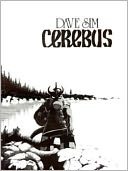 Cerebus the Aardvark, Book 1
Cerebus is masterful, funny, heartbreaking, and wonderful and infuriating at times. What’s it about? Well, it’s about an aardvark that accidentally becomes Pope. It’s about the nature of men and of women, feminism, barbarism, sexual politics, religion and a goofy look at the state of the comics industry during the time of its twenty-plus year run. One should also note that the best fight scene ever to appear in comics (or perhaps any other storytelling medium) occurs here, a little more than halfway through the series.
Buy Now
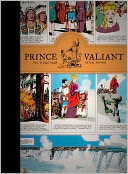 Prince Valiant
The story takes place in Arthurian England that is sort of an amalgam of different times, from the early fifth century, to the High Middle Ages. It follows the life and adventures of the title character from childhood to the heroic ascendancy of his own first-born son, Arn. Edward, the Duke of Windsor, called Prince Valiant the “greatest contribution to English literature in the past hundred years.” Though not sure I’d go that far, it’s definitely my second all time favorite comic work, and once again, a sprawling epic that is simply gorgeous and wonderful.
Buy Now
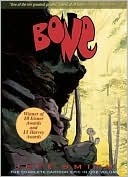 Bone
BoneBone is about a funny little creature who looks not quite but sort of like a truncated bone, who happens to be named Bone, and his two cousins – companions named Phony Bone and Smiley Bone. Bone and his two cousins are exiled from their own community – Boneville (natch’) – and wind up in a strange and magical valley, full of lovely lost princesses, fierce dragons, and monstrous rat creatures. The fun and adventure begins there and never lets up. Bone is that always enjoyable perfect mix of humor and overarching drama that is so hard to pull off well, but can’t be beat when it is.
Buy Now
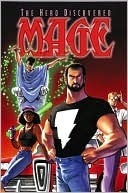 Mage, Volume 1
Originally released as monthly comic books, it was designed and executed to be a single story from the get-go, which is more common now, but was a rare thing indeed at the time this first came out. It concerns the adventures of Kevin Matchstick, a modern day man of an American city, who is in fact the reincarnation of King Arthur- returned, as promised in the old legends, when the world needs him most. The title character is Mirth, the Merlin-like wizard who recognizes the young hero and starts him on his path of adventure and self-discovery.
Buy Now
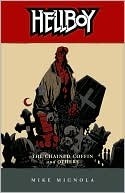 Hellboy, Volume 3
There are many Hellboy collections, but I chose this one only because a couple of the stories contained within are among my personal favorites. The title character is a demon from Hell, summoned to earth by evil Nazi sorcerers, to usher in the Apocalypse, but through the timely intervention of an American commando squad, is taken from the bad guys and raised in a good home to be a hero of good character. This is a story of the debate between nature over nurture in determining fate, but that’s subtext. The main focus of the stories is rollicking action and adventure. Hellboy fights a lot of monsters and that’s the joy of this series.
Buy Now
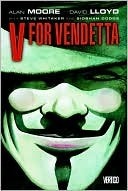 V for Vendetta (Graphic Novel)
Even though Watchmen most often gets the credit for being the greatest graphic novel ever produced, this one, also written by Alan Moore is much better. Where Watchmen is burdened by considerable story and structural flaws, Vendetta holds together flawlessly and wonderfully. It posits a near future Great Britain which has fallen into fascism, and a lone masked hero/criminal, known only as V, dedicated to overthrowing the corrupt regime. It’s exciting and thoughtful and should be read.
Buy Now
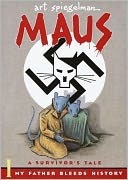 Maus I
This is probably the first graphic novel that really, dramatically settled the argument that comics are/are not just for kids. Maus tells the unvarnished story of the Holocaust, grim and unflinching, even though it employs the (oft-questioned) device of using animals in place of the historical people. It was the first comic to win the Pulitzer Prize, which speaks of its quality.
Buy Now
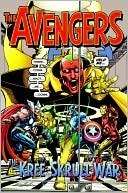 The Avengers
Like many of the other books listed above, it’s a graphic novel by virtue of the fact that the individual comic books that first told the story were later collected into a single volume. This one makes the list because it was my first experience of comics as more than a “single issue thing.” It’s a sprawling epic, spoiled by a change in art quality about two-thirds through and a deus ex machina ending, but since huge epics were a new thing to comics at the time, I can forgive it for faltering, and still love it for what it tried to be.
Buy Now
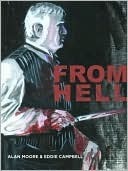 From Hell
Where every other book and movie structures itself as a mystery for the reader/watcher to discover who Jack the Ripper really was, this graphic novel reveals it to the reader early on. It’s not a mystery about who is Jack, but a speculation on why Jack needed to exist and what sort of fellow might become him. It’s also a stinging indictment of the Queen and the British royalty. I’m amused that the film based on this book restored the “who is he?” aspect of the legend, as if that were a crutch no Jack the Ripper story could survive. That’s why, as per usual, the book is better. Much better.
Buy Now
Source: Barnes & Noble
Barnes & Noble Presents: Bill Willingham’s Pick
Barnes & Noble just posted up a list of some of Bill’s favourite comic books. The list is copied below, but make sure to hop on over to the official web site by clicking here and take a look.
————————————————————
Bill Willingham has been writing, and sometimes drawing, comics for more than twenty years. He’s
created many critically acclaimed comic book series, including Proposition Player, Shadowpact, Jack of Fables, and the Eisner Award-winning Vertigo series, Fables. Additionally, his work has been nominated for a number of other awards including the Harvey and Ignatz comic industry awards as well as the Hugo and International Horror Guild awards. He lives somewhere near a good poker room.
Cerebus the Aardvark, Book 1Cerebus is masterful, funny, heartbreaking, and wonderful and infuriating at times. What’s it about? Well, it’s about an aardvark that accidentally becomes Pope. It’s about the nature of men and of women, feminism, barbarism, sexual politics, religion and a goofy look at the state of the comics industry during the time of its twenty-plus year run. One should also note that the best fight scene ever to appear in comics (or perhaps any other storytelling medium) occurs here, a little more than halfway through the series.
Buy Now
Prince ValiantThe story takes place in Arthurian England that is sort of an amalgam of different times, from the early fifth century, to the High Middle Ages. It follows the life and adventures of the title character from childhood to the heroic ascendancy of his own first-born son, Arn. Edward, the Duke of Windsor, called Prince Valiant the “greatest contribution to English literature in the past hundred years.” Though not sure I’d go that far, it’s definitely my second all time favorite comic work, and once again, a sprawling epic that is simply gorgeous and wonderful.
Buy Now
BoneBone is about a funny little creature who looks not quite but sort of like a truncated bone, who happens to be named Bone, and his two cousins – companions named Phony Bone and Smiley Bone. Bone and his two cousins are exiled from their own community – Boneville (natch’) – and wind up in a strange and magical valley, full of lovely lost princesses, fierce dragons, and monstrous rat creatures. The fun and adventure begins there and never lets up. Bone is that always enjoyable perfect mix of humor and overarching drama that is so hard to pull off well, but can’t be beat when it is.
Buy Now
Mage, Volume 1Originally released as monthly comic books, it was designed and executed to be a single story from the get-go, which is more common now, but was a rare thing indeed at the time this first came out. It concerns the adventures of Kevin Matchstick, a modern day man of an American city, who is in fact the reincarnation of King Arthur- returned, as promised in the old legends, when the world needs him most. The title character is Mirth, the Merlin-like wizard who recognizes the young hero and starts him on his path of adventure and self-discovery.
Buy Now
Hellboy, Volume 3There are many Hellboy collections, but I chose this one only because a couple of the stories contained within are among my personal favorites. The title character is a demon from Hell, summoned to earth by evil Nazi sorcerers, to usher in the Apocalypse, but through the timely intervention of an American commando squad, is taken from the bad guys and raised in a good home to be a hero of good character. This is a story of the debate between nature over nurture in determining fate, but that’s subtext. The main focus of the stories is rollicking action and adventure. Hellboy fights a lot of monsters and that’s the joy of this series.
Buy Now
V for Vendetta (Graphic Novel)Even though Watchmen most often gets the credit for being the greatest graphic novel ever produced, this one, also written by Alan Moore is much better. Where Watchmen is burdened by considerable story and structural flaws, Vendetta holds together flawlessly and wonderfully. It posits a near future Great Britain which has fallen into fascism, and a lone masked hero/criminal, known only as V, dedicated to overthrowing the corrupt regime. It’s exciting and thoughtful and should be read.
Buy Now
Maus IThis is probably the first graphic novel that really, dramatically settled the argument that comics are/are not just for kids. Maus tells the unvarnished story of the Holocaust, grim and unflinching, even though it employs the (oft-questioned) device of using animals in place of the historical people. It was the first comic to win the Pulitzer Prize, which speaks of its quality.
Buy Now
The AvengersLike many of the other books listed above, it’s a graphic novel by virtue of the fact that the individual comic books that first told the story were later collected into a single volume. This one makes the list because it was my first experience of comics as more than a “single issue thing.” It’s a sprawling epic, spoiled by a change in art quality about two-thirds through and a deus ex machina ending, but since huge epics were a new thing to comics at the time, I can forgive it for faltering, and still love it for what it tried to be.
Buy Now
From HellWhere every other book and movie structures itself as a mystery for the reader/watcher to discover who Jack the Ripper really was, this graphic novel reveals it to the reader early on. It’s not a mystery about who is Jack, but a speculation on why Jack needed to exist and what sort of fellow might become him. It’s also a stinging indictment of the Queen and the British royalty. I’m amused that the film based on this book restored the “who is he?” aspect of the legend, as if that were a crutch no Jack the Ripper story could survive. That’s why, as per usual, the book is better. Much better.
Buy Now
Source: Barnes & Noble
November 26, 2012
TdotComics Interviews Bill
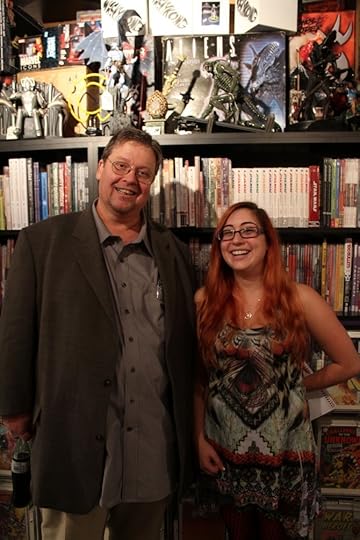
A couple weeks ago Bill Willingham was in town for the World Fantasy Con in Richmond Hill, and the Silver Snail got him to come in for a signing. Thanks to some previous Twitter conversations between Bill and I, and his lovely assistant and super cool chick Stephanie Cooke, I was able to get an interview! I’ve stated before that Sin City got me into comics; but Fables was the comic that anchored me into the comics fandom. This was a wonderful opportunity to chat with one of the most modest legends in the industry, and a very inspiring fellow.
We didn’t have the opportunity to chat much before the interview, so I forgot to mention that I like to keep my interviews spoiler-free. There is a slight SPOILER ALERT for Cinderella: Fables Are Forever from 5:20 in the video, which ends at 6:17; it’s a minor spoiler that sets up the story for the book. I figured better warn you just in case.
For those who have yet to pick up an issue of Fables, I highly recommend it!
Source: TdotComics
Photo Blog Of Italy (Thus Far)
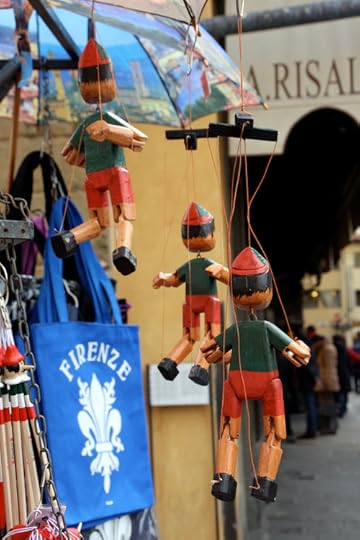
If you’ve been following Bill on Twitter, you’ll know that he’s currently finishing up a couple projects on a writing retreat in Italy. I’ve tagged along with him to photograph a number of the places that he wasn’t able to visit while he was busy working. Of course, some of these photos were places that Bill tagged along to, but that’s mildly irrelevant. The point of the matter is that here are some of the photos from our Italy trip. They were originally posted over on my Tumblr page (hellocookie.tumblr.com), a place where you can continue to follow along with the trip.
Also, some of these pictures have captions and some of them don’t, so hopefully you can just enjoy them for what they are. Hit the Read More below to check out the pictures.






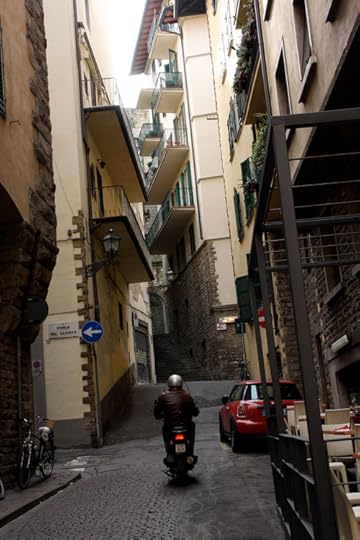
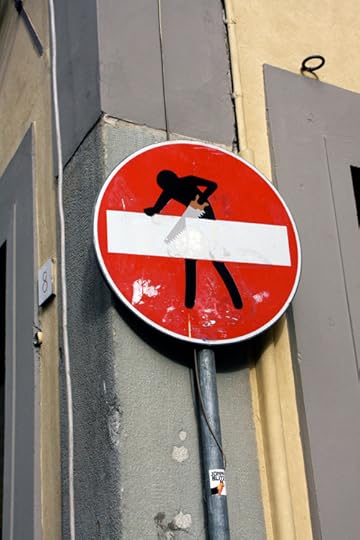





I have no idea what these pot things are. POTS ON STILTS! …I think they’re part of some crazy art exhibit in the middle of nowhere… I think…
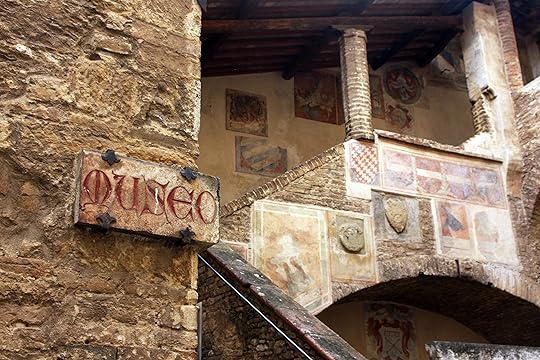 This is one of the many museums in San Gimignano. I’m pretty sure it had something to do with the tallest tower in the town, but it was closed so I won’t know unless I decide to go back and find out. Or Google it. Whatever.
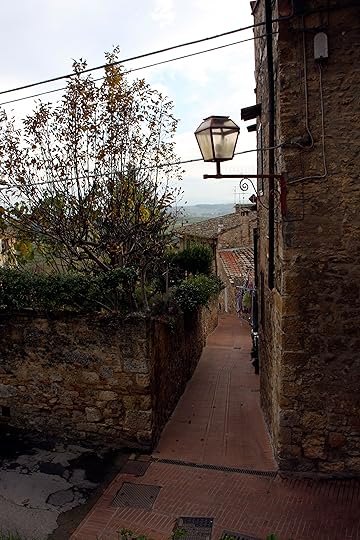
Behold! An alley!

And what kind of blogger would I be if I didn’t include at least one photo of an olive tree while in Italy?

ASSASSIN CREED HQ aka Monteriggioni.

A particularly charming side street in ASSASSIN CITY HQ (again… aka Monteriggioni).

FIGHT! FIGHT! FIGHT! Ok… Not really. I like cats. And it would totally kick this three-legged dog’s ass.

EEEEE! Awesome lizard!

A majestic mountain close to Volterra.

An equally majestic eagle outside of Volterra. I realize it’s not really in focus, but I just needed people to know that I wasn’t lying about spotting majestic eagles. Let’s say majestic some more… MAJESTIC! MAJESTIC! MAJESTIC! Ok… I’m done for now.

A tunnel full of graffiti in Volterra

A street with a cool and thin wall in Volterra.

An amazing Roman Theatre that I stumbled across in Volterra.

An alley on a REALLY steep hill in Siena.

This photo didn’t turn out very well but I loved this guy playing an accordion with his teeny tiny dog.

ALL THE BIKES

I don’t know why I like this photo, but I do, so yeah. It was taken in Siena.

A couple storefronts and such in Siena.

This is the inside of the Siena Duomo.

Another angle inside the Siena Duomo.

The tower, dome thing inside Siena Duomo.

I have no idea what this is. It was in the Siena Duomo. Maybe I should’ve read the sign.

Just so you guys understand… these are the kind of staircases I’ve been climbing to get to the top of towers. They can be very perilous.
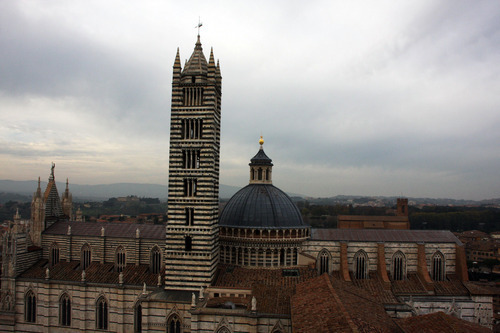
This is the Siena Duomo from the top of the museum panoramic thing.

I can’t remember the official name of this square and tower, but this is where they have the big Siena horse race in the square.
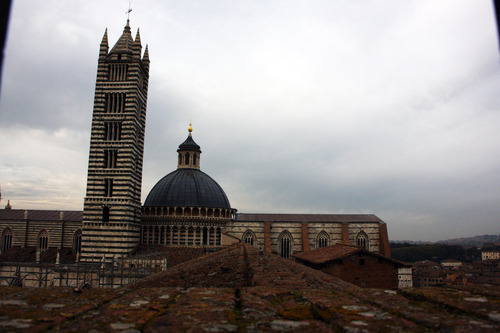
More Siena Duomo.

FOOTBALL!

And last but not least, a tunnel on the highway.

This doesn’t really have anything to do with Italy other than this dog was in Italy and WOW, look at that amazing Italian stone wall…

Ha. I love this photo. This dog doesn’t even realize he was the most amusing thing ever. He didn’t want to leave this area and just started basically being a rock dog and refusing to move. This was the start of it.

Some random presents that were just in the middle of the street.
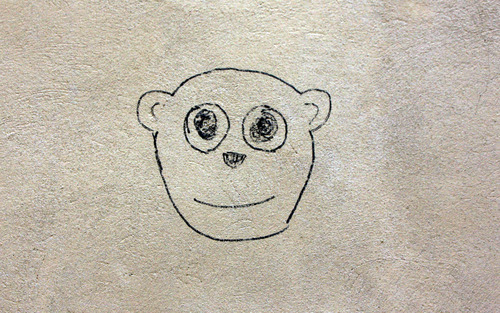
GRAFFITI BEAR IS AWESOME (“Bear right, lion left!”)

So. Many. Baked. Goods.
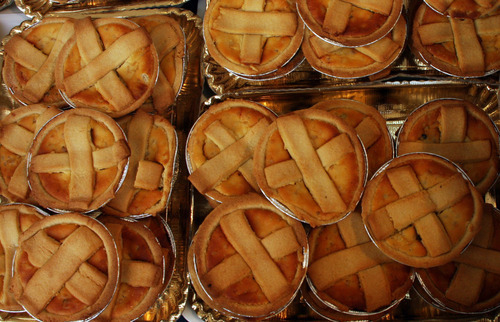
PIE.

ALL THE SPICES!
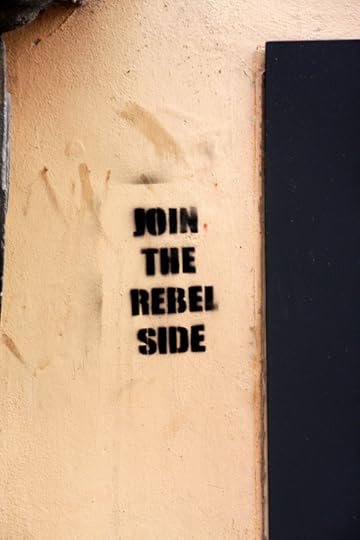
Well, this is self explanatory.

I dug how this photo came out considering it was on a whim. Mirror in the middle of the street!

I love tunnels like this.

This actually might be one of my favourite photos I’ve taken… not to toot my own horn. But yeah. This is in Pisa.

Lovebirds in Pisa.

This guy was just reading here quietly.
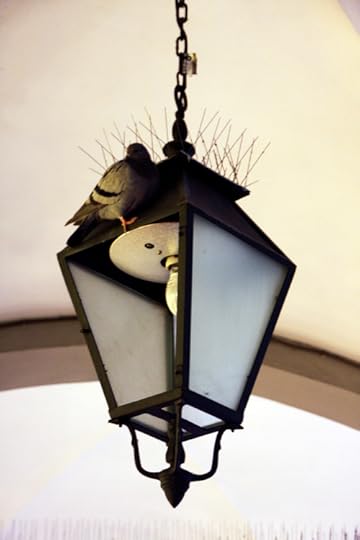
“What? You don’t want me here?! Well, you know what? I’ll show YOU! Your spikes can’t keep persista-pigeon away!”
I also don’t know why I like this photo either, but I do.

OH EM GEE! It’s the Leaning Tower Of Pisa. FYI: it’s actually LEANING! Like, for real!
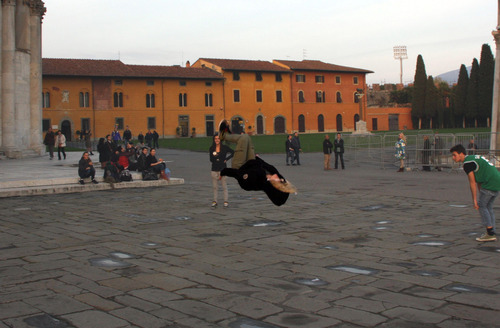
Some breakdancers that were just hanging out in front of the Leaning Tower Of Pisa. When they first started dancing, I thought there was about the be a flashmob and I freaked out.
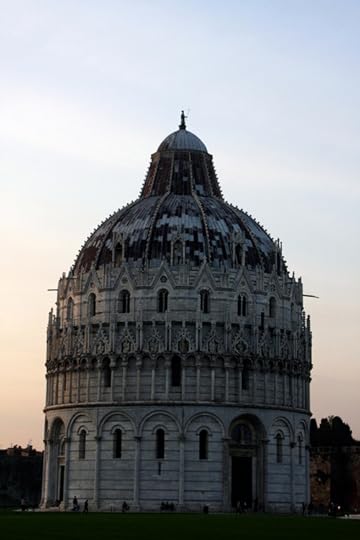
SO MANY DUOMOs!

The sunset today was seriously incredible. I’m very proud of this photo.

Also, this one as well. Love the lights on the water.

“Master, the crazy lady is trying to take a picture of me. Can I have a treat?”

SO MAJESTIC.

OH SHIT. I’m being artsy.

Pisa Market… Cheese MAN! He glared at me for taking photos later. I’M OVER IT.

Lavender lady. Her stall smelled like HEAVEN.
October 9, 2012
Raging Bullets
Bill’s most recent podcast appearance was on Raging Bullets, a DC fan podcast. They’ve just put up a link to where you can listen to them talk with Bill about the latest arc in Fables, Cubs in Toyland (Issues #114-121). They also discuss the upcoming convention, Fabletown and Beyond, just in case you don’t already know about it by now.
Make sure to go visit the site and take a listen. You can listen to the podcast by clicking the link below or visit the web site by clicking here.
October 2, 2012
Update: NYCC Signings and Panels

As you likely know, Bill will be at NYCC this year. Not too long ago, we announced that he would be doing several signings and panels. The convention is only a few short weeks away and if you want to get something signed, you can find him at his table (Z1) and also at these events:
THURSDAY OCTOBER 11
7-8PM – Signing at DC Entertainment Booth
FRIDAY OCTOBER 12
1:30-2:30PM – Vertigo: A View From The Cutting Edge Of Comics in Room 1A23
2:15-3:30PM – Writing to be Drawn in Room 1A07
5-6PM – Signing at DC Entertainment Booth
SATURDAY OCTOBER 13
2-3PM – Signing at DC Entertainment Booth
4-5PM – Fables 10th Anniversary Panel – Room 1A23
6:30-7:30PM – First Comics Anniversary Party – Room 1A01
SUNDAY OCTOBER 15
10:30-11:30AM – Signing at DC Entertainment Booth
Just a quick note, while Bill will have a different set of rules set up for signings at the DC booth, for regular signings at his table (located in section Z1) he will sign a maximum of 10 things at once. You can come back as many times as you would like, but after 10 items, you must go to the back of the line and allow other con-goers a chance to get their stuff signed first.
Here’s a handy-dandy illustration of where Bill will be located in Artists Alley (in the North Pavilion):

Store Signing at Toronto’s Silver Snail
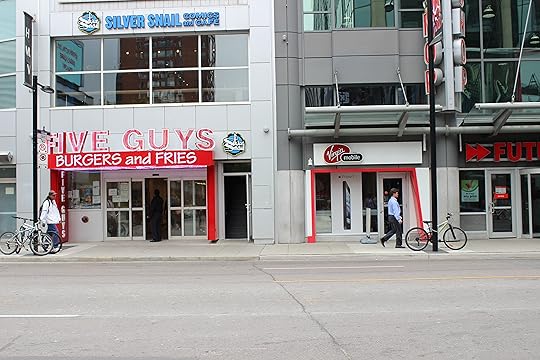
 On Halloween, Bill will be in Toronto for World Fantasy Con. Since he couldn’t come to Toronto without visiting a store, Bill is stopping by the exceptionally well known comic shop, Silver Snail.
Bring all your Bill Willingham goodies to the store to have him sign and/or personalize a few of your favourite things.
Bill will be signing (again, on October 31) at the new Silver Snail Toronto location at 329 Yonge St from 12pm-7pm.
Depending on the size of the line, there will be a few signing restrictions made, so just keep that in mind when picking out what you want to bring to the store.
October 1, 2012
Bill Discusses “Cubs in Toyland” with CBR’s Jeffrey Renaud
Jeffrey Renaud, staff writer over at CBR, just posted up a piece on Fables and the latest arc in the series, “Cubs in Toyland”. It’s a really great piece and Renaud asks all kinds of fantastic questions, so make sure you check it out. The first half is posted here and to read the rest (including the bit with the interview), make sure to visit CBR by clicking here.
——————————–
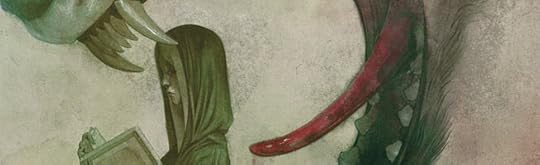
Winner of 14 Eisner Awards, “Fables” by Bill Willingham and Mark Buckingham is one of the most highly-decorated comics in the history of the industry. And yet, after 121 issues, the story of Bigby Wolf, Snow White and the rest of the residents of Fabletown somehow keeps getting better.
In “Fables” #121, in stores now, Willingham and Buckingham closed an epic eight-issue arc titled, “Cubs in Toyland,” one of the most powerful and moving stories told since the series debuted in 2002. Primarily featuring Therese and Dare — two of Bigby and Snow’s cubs — the arc fulfilled key parts of the “Fables” prophecy originally revealed as a one-page story at the 2009 Comic-Con International in San Diego.
As the story began, Therese received a Christmas gift from an unknown admirer, a red plastic boat, which takes her on a deep and disturbing journey through Toyland where she eventually becomes Queen. As the young girl became a young woman and was forced to do unthinkable things at the behest of her subjects, her brother Darien made the ultimate sacrifice for her salvation.
Willingham spoke to CBR News about the choice he and Buckingham made for the Cubs and shared insight into where the Vertigo-published “Fables” is heading over the next year, revealed the title of the next major arc and outlined how the upcoming graphic novel, “Werewolves of the Heartland” will tie into the ongoing series. He also confirmed that he has no plans to end the series anytime soon, citing the 300-issue run Dave Sim and Gerhard completed on “Cerebus” as the benchmark he’s aiming for.
September 28, 2012
Bill on We Talk Comics Podcast
Last night, Bill joined the We Talk Comics crew for a little discussion. This is a repost of their article about the interview. To just read it over on their site (and you should go forth and check it out), just click here.
WTC Special – Bill Willingham Interview
Brett Monro | September 28, 2012 | No comments
In this special episode of We Talk Comics, Fables Creator and writer, Bill Willingham sits down for a conversation with our resident Fables-lover, Brett.
Topics include Fabletown and Beyond, the new mythic fiction convention, hosted by Bill, taking place in Rochester, Minnesota on March 22-24, 2013. Visit fablescon.com for more information.
Fables is covered as well, discussing such elements as Fables longevity, storylines, other writers, and artists involved and well.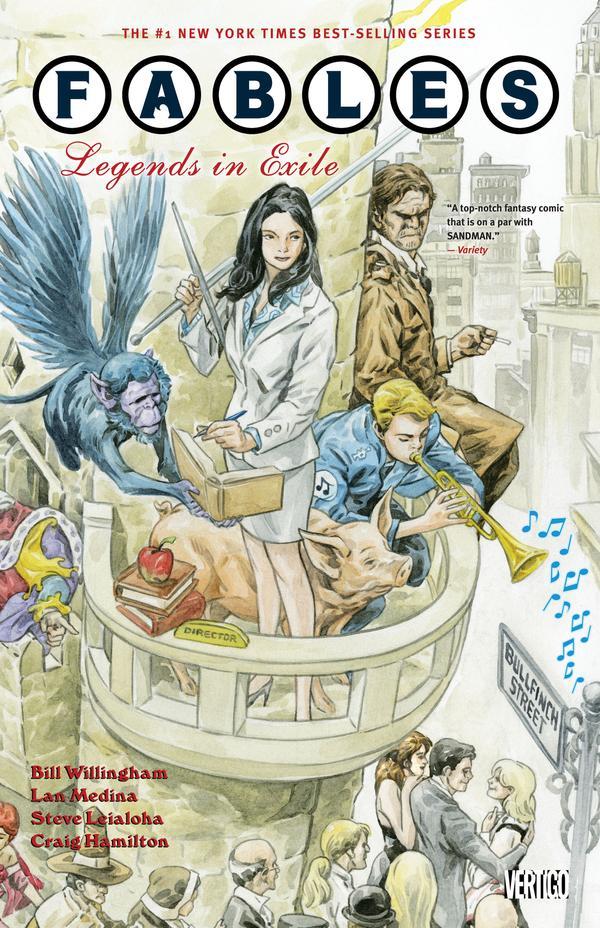
Creator-owned work is covered, including some of Bill’s earlier books such as Coventry and Ironwood, as well as what part of Fables is his intellectual property.
Digital comics and the internet are a big topic, including a discussion about comic reviewers, their ability and their place.
Bill tells us what we should be reading, how his tastes change over the years, and he also talks about his upcoming sketch day in support of the Hero Initiative.
A great conversation with a great creator, if you like comics, you’ll love this interview.
And please as always check out We Talk Comics sponsor COMICOSITY more comic related goodness at The Comic Podcast Network and spread the word with the social media share buttons
WTC Special – Bill Willingham Interview (Right Click To Download)