
M.C. Frank's Blog, page 418
October 15, 2017


Things to Keep Out of Your Healthy Relationships!
(Alternately: how to identify problematic YA romances.)Written by yours truly, contributions from @jltillary, @theinkrepository, @time-to-write-and-suffer, and @sakrebleu.
Non-consensual physical intimacy, especially in situations where it’s portrayed as being done for the benefit of the victim or situations where the victim forgives the forced intimacy because they decide they like it after it’s already been forced on them. Examples:
Forcing a partner to accept physical comfort when they don’t want it.
Kissing a partner in the middle of an argument.
Framing consent as unnecessary simply because one person is attracted to the other.
Stalking the other person, even for their own safety.
Forcing the other person into some form of physical intimacy because they “liked it last time.”
Implying that it’s normal for a certain physically intimate act to hurt and/or their partner should grin and bear it.
Skipping over their partner’s preferred forms of intimacy in favor of what they want to do with/to their partner.When in doubt: Consent should be explicitly given!!
Non-consensual communication. Examples:
Physically stopping a partner from leaving in order to continue talking with them.
Bringing up a topic the other person has made clear they don’t wish to discuss yet.
Forcing the other person into conversations with people they previously showed they did not wish to talk with.
Manipulating the conversation so that the other person shares a secret, especially one that doesn’t affect their partner.Emotional manipulation. Examples:
Telling the other person to do something (i.e. ‘go away’) as a test, where the person is at fault if they follow through and do as their partner asked.
Blaming the other person for things beyond their control, especially “I wouldn’t be like this if not for you/your interests/your goals.”
Claiming they’ll die (or kill themselves) if the other person leaves.
Not wanting the other person to have friends of the same gender as their partner (i.e. a man not wanting his girlfriend to have any male friends).
“If you really loved me you would do x, y, and z.”
Demanding to be the most important part of their partner’s life, above and beyond their partner’s other responsibilities.
Cheating on their partner as a form of punishment.
Acting as though physical intimacy (or any other sort of intimacy) isn’t important, but then blaming the other person for not supplying it.
Acting distant or cruel until the other person does what they want, or because the other person didn’t do what they wanted.Demeaning actions and words, especially in instances where they blame the actions and words on internalized sexism, racism, etc as a shield, in instances outside of high-stress arguments, and whenever the character isn’t sincerely sorry for what they did or makes no point to change. Examples:
Stating the other person’s interests or hobbies are inferior or a waste of time.
Telling them they were look better if they did x, y and z.
Demanding they stop doing something or start doing something else based on their gender, race, etc.
Placing the other person in a subordinate role without their partner’s explicit consent.
Not sharing certain pieces of information because they believe they know what’s best for their partner and don’t need the other person’s consent to act upon it.
Bonus: Glorification of a partner simply for not demeaning the other person, (i.e. for acting like an average, decent human being,) especially when the partner in question boasts how amazing they are for loving their “curvy”/non-white/bisexual/not-like-other-girls/etc partner.
Please add more, if you feel so inclined!
October 14, 2017
daily-writing-tips:
Most Important Writing Tip
Rules do not exist. Take every tip with a grain of...
Most Important Writing TipRules do not exist. Take every tip with a grain of salt because writing is not science or math; writing is art. Art is whatever you make it.
boothewriter:
hey hey hey here’s a little memo for writers
“strong female character”
don’t mean...
hey hey hey here’s a little memo for writers
“strong female character”
don’t mean she’s cold, a loner, and has major flaws (or literally, can bench press a tiger)
i mean she could be
but here’s a concept
what they mean by “strong female character”, and it’s unwarped term of today, is a multi-dimensional woman, who has both strengths and weaknesses, and most of all is human (unless y’all writing bout aliens, you get the gist i hope)
by all means make her a damsel in distress, but make her an interesting one
give me a woman who’s cold and hides that she has ptsd from all of her killings
give me a stay at home mom that doesn’t just garden and bullet journal, but is an activist in an organization for anti-bullying at schools
this has been a Boo
the-moon-dust-writings:
Otp Questions - Angsty
Who dies and has to watch their partner be miserable...
Otp Questions - Angsty
Who dies and has to watch their partner be miserable without them?
Who fights their way through crowds of people to get to their partner, only to learn that they are dead?
Who is chained up and gagged as they watch their partner who is getting tortured?
Who walks in on their partner’s parents beating their partner?
Who has is planning to leave this world for good and who walks in on them to stop them?
Who finds their partner brutally beat on the floor im their house?
Who thinks their partner got killed by their partner’s best friend, so they kill them, only to find out later that their partner is alive?
Who watches their partner die as they are powerless to do anything about it?
Who screams for their partner in the chaos but when their partner gets to them, they are gone?
Who sleeps in hospital room with their partner who is in a coma?
Who blames themselves for their partner’s death?
Who wants to seek revenge on the people who killed their partner?
Who is dying and who is blubbering and saying that “They aren’t going to die” as the is talking about all the good times they had?
Books + sleeping in late
.
What are you reading this weekend?...
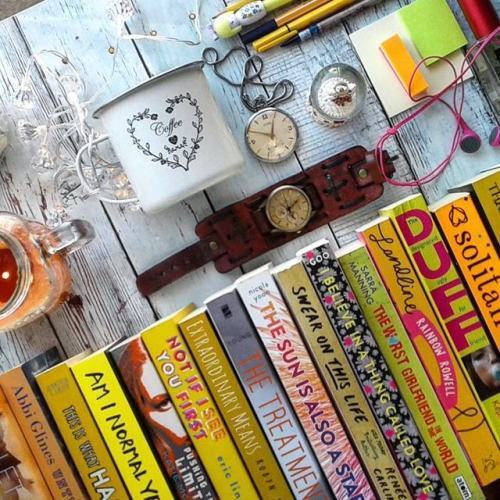
Books + sleeping in late
.
What are you reading this weekend? You saw what I’m reading in my story… WHY? What am I doing with my life?
Reader + daffodil aesthetic
.
.
I am so so so over the moon...
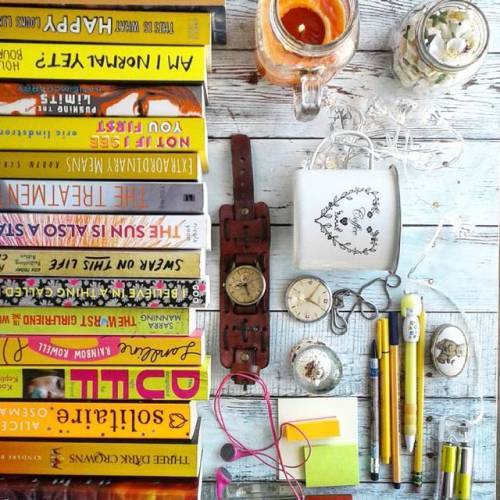
Reader + daffodil aesthetic
.
.
I am so so so over the moon about something that happened today. It’s nothing short of a miracle
“Don’t let me drown” - rescuing characters in literature

What are your thoughts on characters being rescued in literature? Sure, the physical rescue scene can be pretty emotion-provoking, if done right, but is that all there is to it? Do you remember a particular rescue scene in a film or a book that made you think beyond the beauty of the moment? One of mine is, “He saved me in every way a person can be saved.” That’s one of my favorite quotes. Does anyone know where it’s from?
Hint
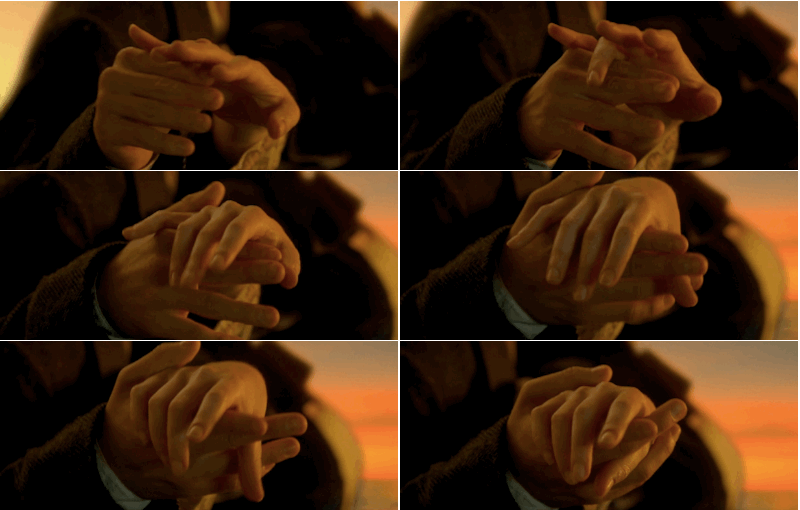
I’ve been fascinated with rescue themes in fiction my whole life, and I’ve had so much fun exploring them in literally hundreds of books, since I was a teen. There are a few categories, with examples only from classic literature, where I saw them first (many many modern books have done these themes more than justice):
Man saving woman (best examples: Pride and Prejudice, Daniel Deronda, most of Shakespeare’s plays.)
Woman saving man (best examples: Jane Eyre, Beauty and the Beast themed stories, anything by Thomas Hardy.)
Man saving man (best examples: Two Years Vacation by Jules Verne, Great Expectations, A Little Life (most recently), too many to count in modern fiction really.)
Woman saving woman (best examples: Anne of Green Gables, Sense and Sensibility, most of Oscar Wilde and D.H. Lawrence.)
Man/woman saving everyone (best examples: Robin Hood, The Chronicles of Narnia, Lord of the Rings a.s.o…)
The thrill of reading the physical act of the rescue, the adrenaline rush of the heroics, the suspense, the relief… All that flood of emotion, the thought that someone CARES enough to save someone else… That’s what’s amazing, in my opinion. That’s why some of us (readers and writers included) are addicted to the rescue theme.
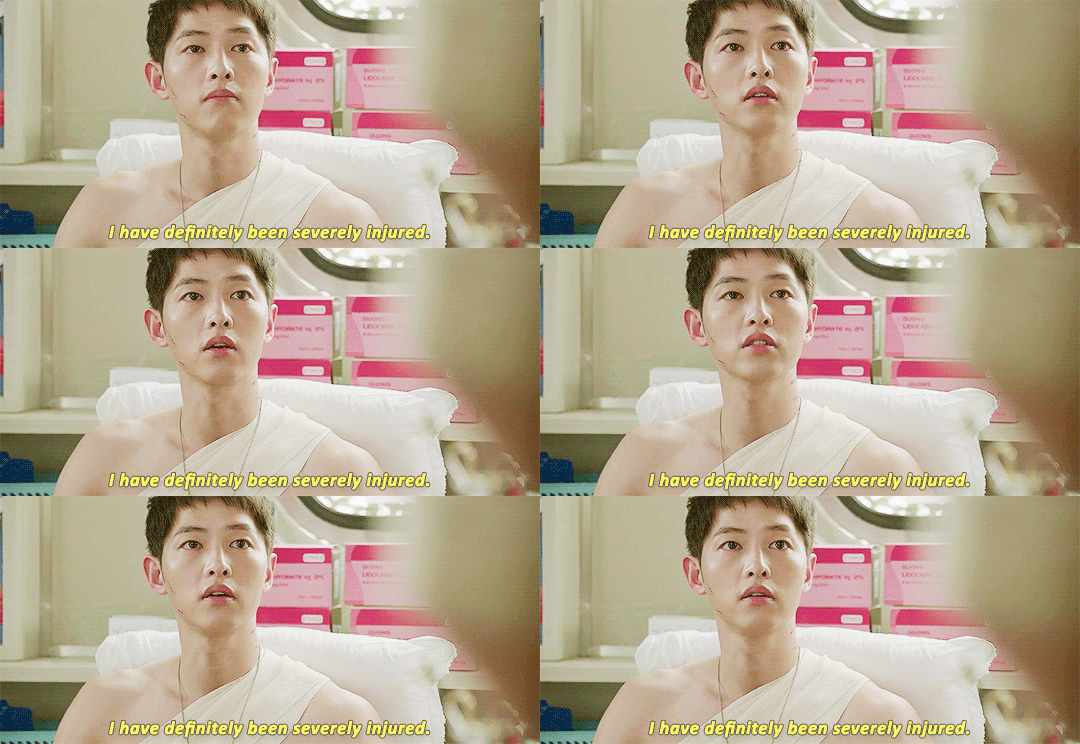
Setting aside the cliches, the overused tropes (see K drama - but still, we LOVE it, amirite?) and all of the potentially dangerous/misleading messages of a damsel-in-distress situation or just the idea that someone needs to be rescued, deep down inside we all know that it’s true. We all need to be saved. From a bad day, from a tough situation, from a deep issue. From ourselves, sometimes, even if it’s just for five minutes, when we’re freaking out over something. Of course, in real life, more often than not, it’s not going to happen.
No one is coming to rescue us. We just pick up our pieces and carry on as best as we can.
And there’s a fierce beauty in that inner strength, the independence of rescuing ourselves.
But at the same time, we are rescued. That person who gave us their seat, that guy who smiled as he was serving our latte, that kind person on the internet who reblogged our post and said they liked what we said(wink). Our mom, our sister, our friend. Our boyfriend/girlfriend, our neighbour. People who take care of us, who care about us, who bring a smile to our face when it seems impossible to laugh.
We might take these little rescues for granted, but they are beyond priceless.
We wouldn’t have made it this far without them. We might feel the need for something more, for more support, for more love, for more rescue, but the truth is, whoever has made it past their first week of life, has been cared for. So that’s you and me. And we should be grateful for that. I know I am.
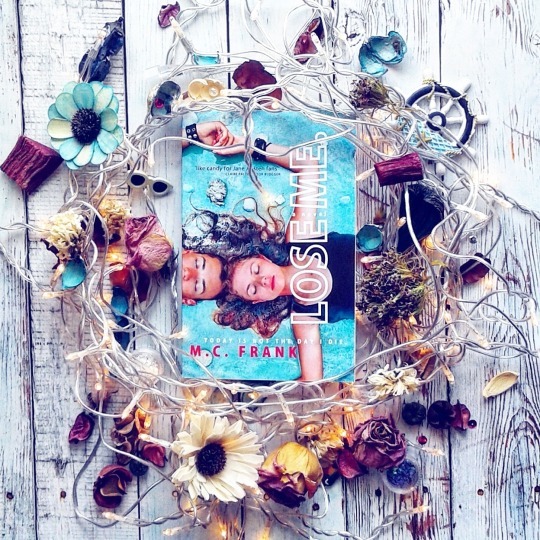
Lose Me, my latest book, is a story about a stunt girl, Ari, and a British actor, Wes (aka Mr Darcy). In the first 3 chapters, a traumatic event happens: Ari nearly drowns, and Wes, much to his dismay, is the only one who sees her, and thus has to (reluctantly) save her. Now, apart from this being a fun way for me to bring the sea into the story as a secondary character, to get Wes out of his comfort zone (and for them to meet, although technically they had already met before), I never gave much thought to what this rescue scene did for my story in the bigger picture.
It was only after rereading the darned book for 100 times, and getting a TON of feedback from my betas, that I realized: there was so much more to it than the dramatic charge of the moment.
It was the moment that the strongest character (Ari, a stunt girl, who can do anything from ride fast motorcycles to high diving to fake car crashes) becomes vulnerable. And in that, this is the starting point of her story, not to mention her character’s arch. From that moment on, she just continues getting sucked in further and further into the abyss.
“Am I still drowning, even if I was pulled from the water?” - Ari in Lose Me.
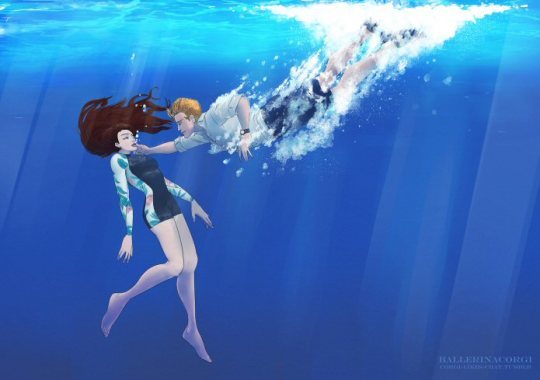
Because, without the characters’ weaknesses, what would all the stories be about? And of course, a weakness automatically means that you need help. Now, in some stories the characters get help and get better. In some others they don’t. And in some very very special stories, the characters end up receiving help from a person even weaker than they are, the most unlikely character to rescue them.
The person who you’d think most liable to drown, becomes the hero. That’s what’s known as character development. Aka, a good story.
I am not going to pretend I know what I’m doing as an author here, but I do know good writing when I read it (I’ve been a reader for a longer time than I’ve been a writer). And the truth is, I’ve never read a good book, or followed a really really good story as a film, cartoon, series, or whatever, that didn’t include some kind of rescuing on a major scale.
I think, in their essence, that’s what all our stories are, in the end: the need to reach something higher than what we have. And the people/places along our journey that help us reach that. In my book (see what I did there? Pun, anyone? No?) that’s called rescuing.
Art by the amazing and talented @corgi-likes-chat (commissions open)
You can read the rescue scene of Lose Me. along with the first 3 chapters at my website, mcfrankauthor.com
October 13, 2017
No Vain Loss is coming December 5th! Preorder it for .99...
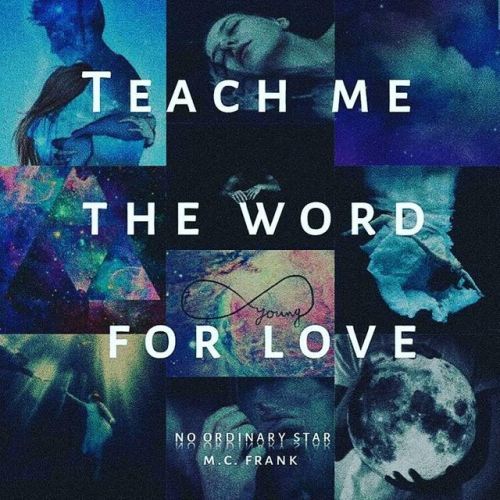
No Vain Loss is coming December 5th! Preorder it for .99 here:
amzn.to/2gNO7zi
to win one of 5 gorgeous signed paperback copies! Don’t miss out.


