Michael Kroth's Blog, page 5
February 16, 2023
Haiku Narratives with Amy, Davin, and Michael - February, 2023
Curator's Note
We started around four years ago, and since then Davin Carr-Chellman, Amy Hoppock, and I have been writing and sharing haiku's monthly with each other. It has been an enriching and enjoyable way to develop our individual haiku writing practices.
It goes like this
Each person shares a haiku they have written with each other. Usually, as you'll see below, we put them on cards or bookmarks which we can keep ourselves, and often make more to share with others. We either mail these to each other (how nice to get a haiku, hand-addressed, in the mail!) or send them electronically. We each then write a narrative response to each other's haiku, including our own, and then we get together to share our responses. The poet reads their own haiku, the others read their responses to it, and then the author reads their own narrative about it. In that way, we independently think about each haiku and then learn from each other.
It is a lot of fun!
We enjoy doing this so much we thought you might enjoy being a part of the conversation as well, so we started recording them in May, 2020, and had been exchanging and discussing our haikus each month for nearly a year before that. If you watch the clip here, you will see our discussions are very informal and that we laugh a lot.
This is our thirty-first recording
(You can watch them all
here
. I'll stop counting once we hit 36 or something like that)
, and we hope to continu
e. Please let us know what you think, and share this with anyone you think might benefit.
This Month's Haiku Narrative Video Recording
Check It Out:
This is a recording (our thirty-first) of our monthly haiku reading and narratives.
February, 2023 Haikus
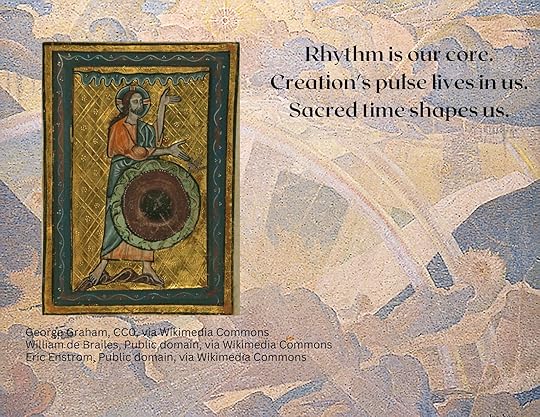
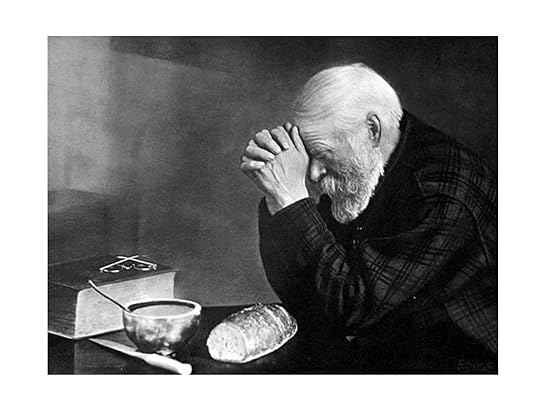
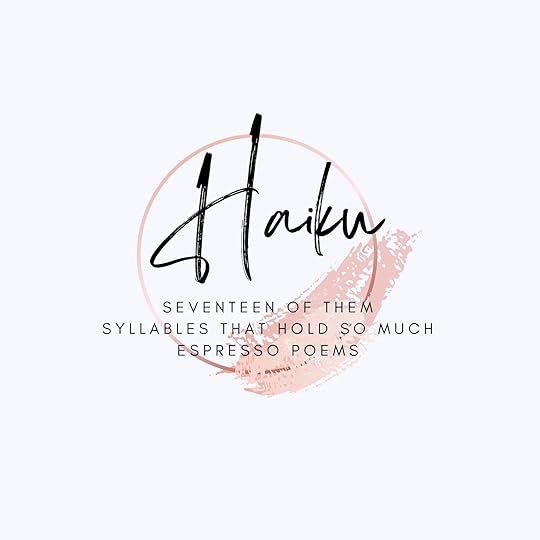
Davin's Haiku
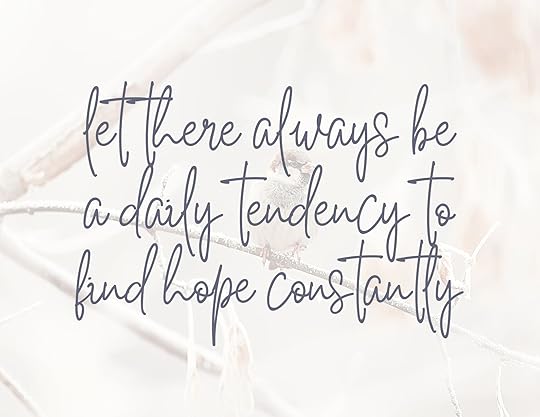
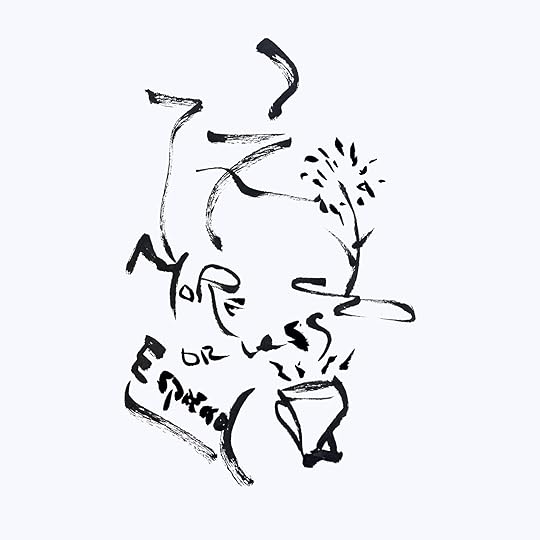
Amy's Haiku
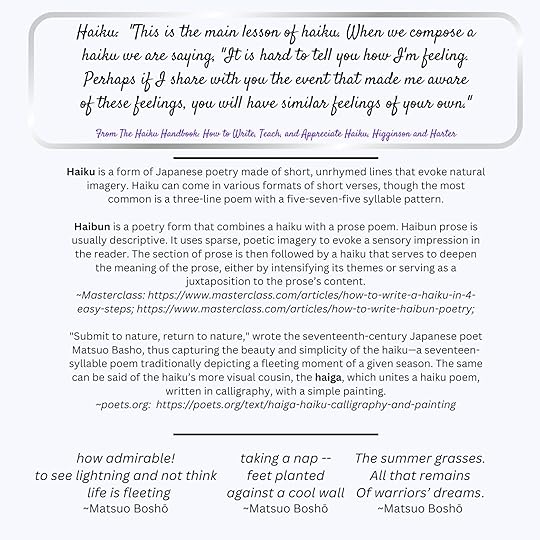
Michael's Haiku
Check These Opportunities Out Too!
Our Book!
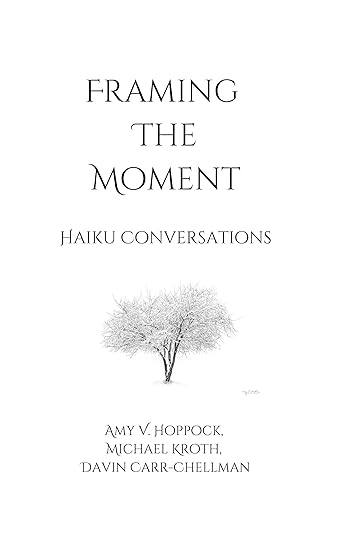
We are very excited about our book,
Framing the Moment: Haiku Conversations
. Here is a short description and video describing how and why we created the book, and how to order one or more.
About Us


February 5, 2023
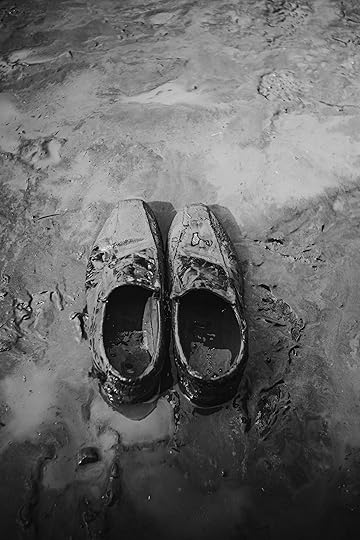
Sloughing
~Gunilla Norris,
The Light of Evening: Meditations on Growing in Old
Age, p. 28

Mick Herron’s book,
Slow Horses
, begins, “Let us be clear about this much at least: Slough House is not in Slough [a town just outside of London], nor is it a house.” Slough House, rather, is an organizational unit where British MI5 (the United Kingdom’s Secret Service) agents are exiled after they fumble an important assignment. These un-well-regarded agents are known as “slow horses”, and Slough House is a place where the excitement and importance of national security duties have been replaced with humdrummery. Boring work. Inconsequential tasks. Mental abuse from their boss, Jackson Lamb, (played in the TV series by the brilliant Gary Oldman).
As these fictional (and, who knows, perhaps non-fictional) situations seem to evolve, this unlikely group of (well, I’ll just say it) losers, become involved in high-stakes predicaments that threaten the mothership, Great Britain herself. And there, these organizational refugees, who are often talented people who happened to have had misfortune hit them in the middle of their promising careers, do the James Bond thing and find a way to save the world as we know it. They aren’t losers after all (none of us are, actually, y’know) but despite a bit of bad luck or a poor decision or whatnot found themselves carrying the burden of banishment to Slough House.
Slow Horses
is the first book in Herron’s
Slough House
series of, so far, eight novels and more novellas. It’s been made, as alluded to above, into a television series, which is where my wife Lana, and I discovered it. We have relished it. In addition to Oldham, there are familiar actors like Jonathan Pryce and Kristin Scott Thomas, and a host of interesting characters. We’ve seen the two seasons of the show which are available, and the series has been renewed for two additional seasons. So far. I’m betting this series will continue for as long as Oldman agrees to be in it.
Slough House, I think, is a takeoff on the word slough which, according to Merriam-Webster, means “a place of deep mud or mire,” and swamp or backwater. Synonyms include bog, gulch, and bottomland. But perhaps the author was referring to the other definitions of slough which is “to shed or cast off,” “to cast off one’s skin,” to separate dead from living tissue, and to “crumble slowly and fall away.” The noun means the cast-off skin of a snake or something shed or cast off. It can mean getting rid of something unwanted, like a bad secret agent reputation or like discarding a losing card in the game of bridge.
Snakes shed their skins two to four times a year though sometimes as often as once a month. Over time, instead of shedding individual skin cells, like we do, they outgrow their skin, and that is when they “slough it off” in one piece. Humans, on the other hand, lose 200 million skin cells every hour. Over a 24-hour day, we lose around five thousand million skin cells. That’s right. 5,000,000,000 of those dead, little, epidermal flakes.
But that’s not all. Throughout our
entire
bodies we replace around 330 billion cells
every day
. We have about 30 trillion human cells, all told. Some of our cells last quite a long time - your muscle cells might last 30-70 years, and some in the brain, heart, and eyes last a lifetime. Still, inside your body cells are changing out fast. In fact, “In 80 to 100 days, 30 trillion will have replenished—the equivalent of a new you” (Fischetti & Christiansen, 2021).
We do this without having to even think about it. Our bodies are evolutionary marvels.
The equivalent of a new me in just a few months.
Wouldn’t that just be da bomb?
People dream of becoming 'the new me'; advertisements claim their products can do it for you.
But it’s not a new me, really, is it? Parts of my body are more durable. And somehow my creaky joints don’t feel all that rejuvenated. And I still have all sorts of other baggage that needs sloughing.
Much of our body runs itself, from shedding billions of cells to the beat of our hearts and breathing. We do have considerable ability to influence it though, don’t we? We can slow our heart rate and breathing or speed them up. We can extend our lives by taking care of ourselves or shorten them through abuse or neglect. We may not be able to live without pain, but we can avoid or mitigate what could cause us to have pain to some extent. We can’t control our cell production/elimination cycle, but we do have considerable ability to influence all sorts of bodily functions for better or worse.
The same is true of the quality of our emotional, cognitive, and spiritual lives, and even our own identity. Much is out of our hands, but much is within our influence and, gradually, the choices we make daily will have a significant long-term effect on our quality of life. The way we live our lives is not the same as this continuous, without thinking, physical sloughing process, but it is analogous.
We can’t slough our skin like a snake does, just like the characters assigned to Slough House can’t shed their reputations in one fell “save the world as we know it” heroic deed. (It seems the same characters are still in Slough House in the second season, after a considerable triumph in the first). We can't change the depth of us immediately, but we can slowly, intentionally, create a modified, more healthy us.
If we care to do that. If you are pretty happy with yourself and your trajectory right now, this is probably all blather. Skip out of here and head over to the guitar. Or the trail. Or to whatever brings you joy.
But...if there are a few things that would/could make a big difference in your life, consider this. James Clear, in his terrific book,
Atomic Habits: Tiny Changes, Remarkable Results: An Easy And Proven Way To Build Good Habits And Break Bad Ones
, said, “If you want to predict where you’ll end up in life, all you have to do is follow the curve of tiny gains or tiny losses, and see how your daily choices will compound ten or twenty years down the line” (p. 18). Which tells us that the sooner we start and the longer we continue, the more significant the results will be.
It takes time and persistence and will, but....
"You can do this hard thing,"
as the marvelous
Carrie Newcomer
sings.
That goes for writing, exercising, learning a language, becoming more productive, contemplative practice, and becoming better in our relationships with others.
The habits of a deep and meaningful life compound over time, just like saving money.
This compounding effect is such an excellent opportunity for young people, who have oodles of time to shape their lives, but it can also make a huge difference for those of us in later life. We may not have forty or fifty years to build an important habit and to reap its rewards, but if we start now we can make a meaningfully positive difference in our lives and in the lives of those around us.
Of course, if good habits can grow over time, so can bad habits. Charles Duhigg, in
The Power of Habit: Why We Do What We Do In Life And Business,
said,
“…habits emerge without our permission. Studies indicate that families don’t intend to eat fast food on a regular basis. What happens is that a once a month pattern slowly becomes once a week, and then twice a week—as the cues and rewards create a habit—until the kids are consuming an unhealthy amount of hamburgers and fries” (p. 26). This Duhigg, said is “the habit loop” (p. 26).
In this sense, then, have considerable ability to decide and to create our own destiny through the habits, routines, practices, and disciplines we choose; or we turn our future over to chance, and the either good or bad we find ourselves in that results. We are, after all, at this very moment the product of the environment, what we were born with, and the choices we have made.
We may not be able to slough our whole skin, but we might be surprised how much we might be able to do with ourselves if we put enough skin in the game.
Sources/Resources
(11-29-16), New insights into skin cells could explain why our skin doesn't leak,
Science Daily,
https://www.sciencedaily.com/releases/2016/11/161129114910.htm
. (Retrieved 2-3-23)
Clear, J. (2018).
Atomic habits: tiny changes, remarkable results: an easy & proven way to build good habits & break bad ones.
Avery, an imprint of Penguin Random House.
Duhigg, C. (2014). Power of habit: why we do what we do in life and business.
Random House Trade Paperbacks.
Fischetti, M, and Christiansen, J., (4-1-21). Our Bodies Replace Billions of Cells Every Day,
Scientific American
,
https://www.scientificamerican.com/article/our-bodies-replace-billions-of-cells-every-day/
(Retrieved 2-3-23)
Merriam-Webster, Slough,
https://www.merriam-webster.com/dictionary/slough
, (retrieved 2-5-23)
Herron, M. (2010).
Slow horses
(1st US ed.). Soho Constable.
Pacey, Paddy (10-33-22). Snakes Shedding Their Skins (or Moulting or Sloughing),
Whole Earth
,
https://wholeeartheducation.com/snakes-shedding-skin/
(Retrieved 2-3-23)
---------------------------------------
Carrie Newcomer: https://www.carrienewcomer.com/
“Maybe there are people who can achieve incredible success overnight. I don’t know any of them, and I’m certainly not one of them.”
~James Clear, Atomic Habits, p. 7
January 19, 2023
Haiku Narratives with Amy, Davin, and Michael - January, 2023
Curator's Note
We started around four years ago, and since then Davin Carr-Chellman, Amy Hoppock, and I have been writing and sharing haiku's monthly with each other. It has been an enriching and enjoyable way to develop our individual haiku writing practices.
It goes like this
Each person shares a haiku they have written with each other. Usually, as you'll see below, we put them on cards or bookmarks which we can keep ourselves, and often make more to share with others. We either mail these to each other (how nice to get a haiku, hand-addressed, in the mail!) or send them electronically. We each then write a narrative response to each other's haiku, including our own, and then we get together to share our responses. The poet reads their own haiku, the others read their responses to it, and then the author reads their own narrative about it. In that way, we independently think about each haiku and then learn from each other.
It is a lot of fun!
We enjoy doing this so much we thought you might enjoy being a part of the conversation as well, so we started recording them in May, 2020, and had been exchanging and discussing our haikus each month for nearly a year before that. If you watch the clip here, you will see our discussions are very informal and that we laugh a lot.
This is our thirtieth recording
(You can watch them all
here
. I'll stop counting once we hit 36 or something like that)
, and we hope to continu
e. Please let us know what you think, and share this with anyone you think might benefit.
This Month's Haiku Narrative Video Recording
Check It Out:
This is a recording (our thirtieth) of our monthly haiku reading and narratives.
January, 2023 Haikus
Davin's Haiku
Amy's Haiku
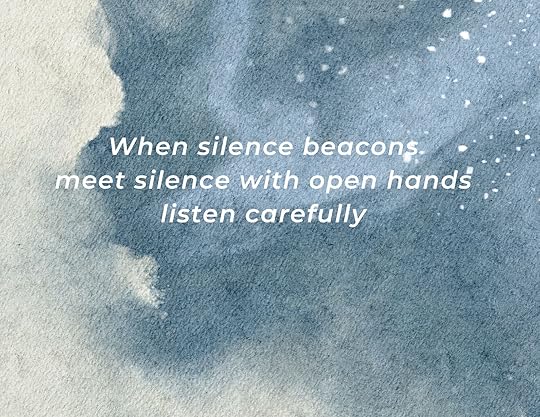
Michael's Haiku


Check These Opportunities Out Too!
Our Book!
We are very excited about our book,
Framing the Moment: Haiku Conversations
. Here is a short description and video describing how and why we created the book, and how to order one or more.
January 7, 2023
Continuing Resolutions, Not Just New Year's Resolutions
“Changes that seem small and unimportant at first will compound into remarkable results if you’re willing to stick with them for years.”
~James Clear,
Atomic Habits
, p. 7
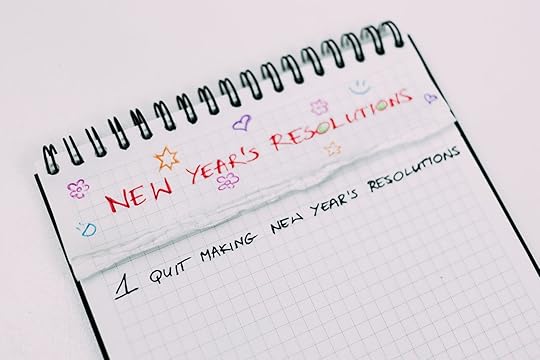
In early January of every year, advice about creating and committing to New Year’s resolutions bombard all of us. From TV shows to podcasts to newsletters to articles, the importance of reflecting upon, setting, and maintaining these goals overwhelms just about every other topic. The inevitable setting of these resolutions, the energetic and committed effort to honor them and then the subsequent, for so many of us, discarding of them a month, week, or even a day later becomes an annual ritual.
We get into a cycle of setting these resolutions each year and then not meeting them, setting them and then not meeting them again, and on and on. The inevitability of this process of intending and forsaking becomes an expectation and most of us have a chuckle about it, recognizing that we are likely going to be back to our normal ways-of-being come February. But it’s not really something to laugh about, because those failures reinforce that lack of fortitude.
For those who set these commitments and then meet them, it’s a character-building exercise. Doing what one sets out to do builds willpower which, when added to other commitment-completions, builds integrity (we did what we said we would do) and self-confidence (I CAN do this or that, I HAVE before, and I WILL to this). James K.A. Smith, speaking of character development, puts it this way: “Virtues, quite simply, are good moral habits. (Bad moral habits, as you might guess, are called “vices.” Good moral habits are like internal dispositions to the good—they are character traits that become woven into who you are so that you are the kind of person who is inclined to be compassionate, forgiving, and so forth.”
But that’s hard to do. Even with some great resources to help us these days, like James Clear’s
Atomic Habits
and Charles Duhigg’s
The Power of Habit
, changing habits or adding and keeping new commitments is a challenge.
I’d like to make the case for establishing “continuing resolutions” instead of worrying so much about “New Year’s resolutions”.
In the U.S. Congress, continuing resolutions are stopgap funding measures, with expiration dates, to keep government from shutting down until agreements can be made. One could argue – I do – that using these continuing resolutions as a matter of course develops a legislative habit of punting the ball down the field rather than making tough decisions. It represents a lack of fortitude rather than resolve, but that’s a whole other discussion.
But I digress – these congressional continuing resolutions are NOT the kind of continuing resolutions I’m advocating for here.
Continuing, personal resolutions can make an intentional, long-term, positive difference in our lives.
Instead of situating one time of year – the new year – as a focal point for goal setting, continuing personal resolutions are the ongoing commitments we make to ourselves that last far longer than a month or even a year. They build self-determination over time. They give us more control over our lives. They give us the power to transform ourselves in ways large and small. They compound over years, as James Clear says and, as Gunilla Norris notes, these tasks don’t have to be gigantic. “It is amazing,” she says, “how very small endeavors can bring us and others delight. Doing BIG things is not likely, but doing small things with great love is possible. Here’s a favorite quote of mind from Helen Keller:
I long to accomplish a great and noble task, but it is my chief duty to accomplish small tasks as if they were great and noble
.” (italics are from Gunilla Norris)
Continuing resolutions are ongoing commitments to what my colleagues Davin Carr-Chellman, Carol Rogers-Shaw, and I have called, “meta-practices.” These are “undertaken over time… [and] are those disciplines and practices which develop the qualities of profound learning and living. They have no end-point, require regular activity, and may involve a range of exercises to build rich, generative learning.” (We discuss meta-learning and meta-learning in our article,
Formation as an organizing framework for the processes of lifelong learning
.) We might choose just a few of these (contemplative practice or a daily exercise routine, as examples), but they will build over time and act as powerful support for other habits. Duhigg calls "keystone habits" those which help us to "reprogram the other routines" in our lives.
In contrast to the purpose of a congressional continuing resolution, personal continuing resolutions are firm decisions. They are tied to long-term, perhaps lifelong practices, which might be spiritual disciplines, healthy lifestyle, development of the mind, or relationship-building. They don’t punt the ball down the field, they are habits, routines, and disciplines which occur often, perhaps daily, often "now."
Some synonyms for the word “resolute” are steadfast, determined, decided, persevering, dogged, and undaunted. Antonyms for “resolute” are vacillating, cautious, weak-minded, and hesitant (also, the birds – hen-hearted, chicken-hearted, pigeon-livered). To have “resolve” is to intend, persist, and conclude. A resolution in both the sense of New Year’s resolutions and what I am calling here continuing personal resolutions, is to commit to something, with determination. And committing to something requires going as much as one can from vague to precise. From unaccountable to observable and even measurable because there are so, so many real concerns along with bling and glitter vying for our attention. “In a world of distraction,” Ryan Holiday said, “focusing is a superpower.”
“In a world of distraction, focusing is a superpower.”
~Ryan Holiday,
Discipline is destiny: the power of self-control
, p. 123
In summary, both New Year’s Resolutions and Continuing Personal Resolutions are helpful. They serve to focus us on what we perceive to be real personal improvement opportunities. Both can make a significant and long term, positive difference in our lives. New Year’s Resolutions however, for many, turn out to be empty promises, made on a whim or even after considerable reflection, that are quickly dropped or which never really “take hold” of us. Continuing resolutions, taken on for long periods of time, perhaps a lifetime, build upon themselves and can actually change who we are and how we live and our quality of life.
“It is amazing how very small endeavors can bring us and others delight. Doing BIG things is not likely, but doing small things with great love is possible. Here’s a favorite quote of mind from Helen Keller: I long to accomplish a great and noble task, but it is my chief duty to accomplish small tasks as if they were great and noble.”
~Gunilla Norris,
The Light of Evening: Meditations on Growing in Old Age
, p. 38
Sources/Resources
Clear, J. (2018).
Atomic habits: tiny changes, remarkable results: an easy & proven way to build good habits & break bad ones
. Avery, an imprint of Penguin Random House.
Duhigg, C. (2014).
Power of habit: why we do what we do in life and business
(Random House Trade Paperback Edition ed.). Random House Trade Paperbacks.
Norris, G. (2022).
The light of evening: meditations on growing in old age.
Twenty-Third Publications.
Holiday, R. (2022).
Discipline is destiny: the power of self-control.
Portfolio/Penguin.
Kroth, M., Carr‐Chellman, D. J., & Rogers‐Shaw, C. (2022). Formation as an organizing framework for the processes of lifelong learning.
New Horizons in Adult Education and Human Resource Development
, 34(1), 26-36.
Smith, J. K. A. (2016). You are what you love: the spiritual power of habit. Brazos Press, a division of Baker Publishing Group.
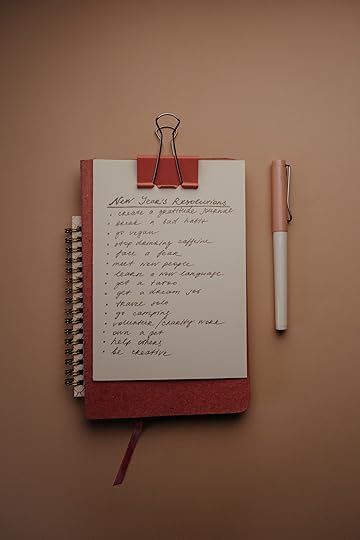
“Virtues, quite simply, are good moral habits. (Bad moral habits, as you might guess, are called “vices.”} Good moral habits are like internal dispositions to the good—they are character traits that become woven into who you are so that you are the kind of person who is inclined to be compassionate, forgiving, and so forth.”
~James K.A. Smith
, You Are What You Love: The Spiritual Power of Habit
, p. 16.
December 31, 2022
How about resolving to develop your inner life this year?
“Men (sic) to-day are so overwhelmingly occupied with objective tasks; they are so busy with the field of outer action, that it is a particularly opportune time to speak of the interior world where the issues of life are settled and the tissues of destiny are woven.”
Rufus Jones,
The Inner Life,
1917
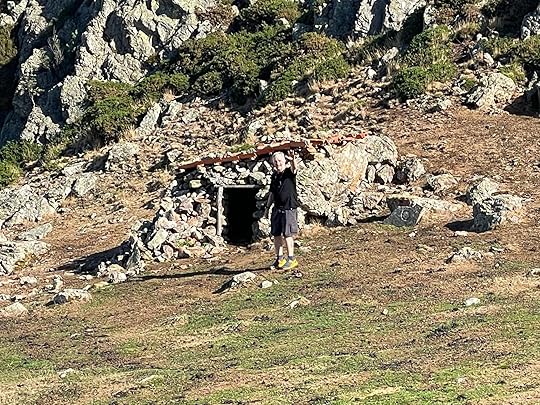
On the Camino de Santiago, September 1, 2022
Photo Credit: Shane Kroth
How about resolving to develop some aspect of your inner life this year?
I remember distinctly the afternoon I was having a couple of beers with two close friends. This was a few years ago. We were sitting outside 10 Barrels here in Boise. I’d been around these two fellas, both great guys, often over time, and between the two of them we had traveled together, written together, biked together, had many mutual friends, had created many stories together, spent hours over beer and coffee and – well, we were and are friends. They were shocked when I told them that I was deeply depressed and anxious and had been for a long time. The key words here are, “for a long time” because they told me that they’d had no idea.
Apparently, I had been good at hiding it. You know how it’s done; you’ve done it. Acting like there’s not a care in the world while inside you are in turmoil. Putting on the mask. (That’s called, BTW, ‘emotional labor’.) It’s exhausting, right?
"How's it goin'?"
"Great!" (
If you only knew...
)
There are a lot of ways I could go with this essay from here, one of them being that your friends and others can’t help you if you don’t let them in on what is going on with you. No matter how much they care about you and would want to help you, if you won’t share your troubles with them, they just can’t.
Another way would be to talk about my path to what I believe now to be a pretty robust and hearty mental health today. It always needs buttressing and growth and contemplation, but I’m buoyed by friends, family, religion, work, and so many other parts and pieces of life that I am grateful for and which enrich each day. The older I become, the more abundant I feel my life becomes along the way.
Still another way, which this essay is about, is to start to explore this “inner life”, as Rufus Jones and others call it. Jones, in his 1917 book,
The Inner Life
, said “Men (sic) to-day are so overwhelmingly occupied with objective tasks; they are so busy with the field of outer action, that it is a particularly opportune time to speak of the interior world where the issues of life are settled and the tissues of destiny are woven” (p. ix).
Over a hundred years later, it seems still an opportune time to pay attention to this “interior world".
The Habits
Reading Stephen Covey’s
The Seven Habits of Highly Effective People: Powerful Lessons in Personal Change
was transformational for me. It has sold over 40 million copies since it was first published in 1989 and continues to be a best-selling book, decades after I read it for the first time. What Covey did so well was an earlier version of what Malcomb Gladwell does so well. He took challenging topics, often based on research or ideas which had been around a long time, and made them easier to understand and remember through stories and examples and simple visual figures, and showed how we could apply them to our day-to-day lives.
I became a certified
Seven Habits
trainer for our company (and other Covey-certified courses as well), and teaching those courses not only was a joy but also deepened my knowledge and my life.
These days, after Covey’s stunning success, it isn’t hard to find others who have written about the “Six Principles of This,” the “Five Rules of That,” or the “Twenty-one Essential Practices for This or That.”
Still, the original
Seven Habits
is timeless. The habits Covey shares are easy to understand, but like most habits, they aren’t easy fixes. They’ll take a lifetime of attention and yet never be fully mastered. Covey himself wrote, “I personally struggle with much of what I have shared in this book. But the struggle is worthwhile and fulfilling. It gives meaning to my life and enables me to love, to serve, and to try again” (p. 319). The confession I made to my buddies that day at 10 Barrels came years after I’d read and led The
Seven Habits
courses.
I had backslud.
Big Time.
It's a lifetime pursuit, this.
Foundational to
The Seven Habits
is the idea of working on ourselves from the “inside-out”. As Covey writes, “’Inside-out’ means to start first with self; even more fundamentally, to start with the most inside part of self—with your paradigms, your character, and your motives” (pp. 42-43).
This beginning point comes from recognizing that true and lasting personal transformation starts with oneself, and by then building and maintaining healthy, generative disciplines, practices, habits, and routines to intentionally change our own lives – not just in what we
do
, but in who w
e are
– over time. Elementally, this means developing a deep, meaningful inner life.
Developing the Inner Life
Covey was not the first, of course, to talk about developing the innermost parts of ourselves. Rufus Jones, for example, speaking in
The Inner Life
, said “The deepest issues turn, not upon the choice of ‘things,’ but upon the choice of the kind of self that is to be, and the most decisive dramas are those that are enacted in the inner world before our private theater” (p. 5). Jones thought the outer and inner life were both important parts of religious life (he was a prominent Quaker of his time), but that people are “overwhelmingly occupied with the field of outer action” (p. ix).
Both the inner life AND the outer life are important and iteratively influence each other. Lots of us just don’t spend as much time working inside ourselves as we do outside themselves. We seek attention and ascension and mentions, with cardinal values intentions
in absentia
.
In the best case, working on the outside means focusing on one’s long-term physical health, building material assets, family life, and career and life markers of value. A worser case, giving primacy to the outside of ourselves, would be living a life primarily around immediate rewards – food, drink, entertainment, pleasure, celebrity, adulation – at the expense of longer-term prosperity. In other words, giving in to immediate gratification most of the time at the cost of building riches of the most important kinds - long term health, wealth, relationships - via delayed gratification. The worst case, well, it would be the worstest, wouldn’t it?
The inner life might be considered as levels of centeredness. Noncentered people, Fr. Richard Rohr says, are difficult to live with. They have to defend “their reputation, their needs, their nation, their security, their religion, even their ball team.” You might be one of these people if you are, he says, “hurt or offended a lot. You can hardly hurt saints,” he says, “because they are living at the center and do not need to protect the circumference of feelings or needs” (pp. 25-26).
Rohr, a Catholic priest, breaks with contemporary views of the polarity between conservative and progressive, writing that “centered people are profoundly conservative, knowing that they stand on the shoulders of their ancestors and the Perennial Tradition. Yet true contemplatives are paradoxically risk-takers and reformists, precisely because they have no private agendas, jobs, or securities to maintain” (Rohr,
Everything Belongs
, p. 24). Is it crazy to think that a person can be both conservative and progressive?
I don’t think it’s crazy at all.
That’s one way I would describe myself and hope the description is at least fairly accurate.
In fact, I think it’s who we all really are the deeper we go. Labels do not capture the fullness of who we are.
One aspect of the inner life is the depth of our knowledge and our ability and effort to think and learn and reflect. Another aspect of the inner life is our moral being, our character, and our values. Still another aspect of our inner being is our heart, and the depth of our love and care for ourselves, others, and all creation. Being deep-hearted with others starts from within, from that great gratitude and love we nurture and feel, to selfless generosity overflowing from us to others.
At our deepest levels, when we move deep into the well which feeds our center – call it God or spirit or just the spark of life or the sources of who-we-are – we are much, much more than simply a Democrat, a Republican, a Russian, an American, a Catholic, a Protestant, a Buddhist, a youth, an elder, an employee, or any other label we or others might use. Religion, at its best, is a vehicle for developing the spiritual life. It certainly has been and continues to be for me. Politics, at its best, serves to deepen discourse and to develop substantive courses of action for governments and societies, and to inform our individual perspectives about our role in the body politic and as citizens of our nations and the world.
At deeper levels, we bridge and integrate those humanly constructed labels, those artificial constraints. That is because the inner life is bottomless – there is always a deeper place to go. There is always something we do not know or have never ever heard of or considered. There is always a more profound sense of awe we have not yet experienced. There is always mystery we have not yet, nor in our lifetimes ever will, fully fathom.
At the center of the center, even mind, heart, knowledge, and identity are subsumed by the awareness of being totally present. Some would say at the deepest level – or perhaps in the most present moment - all of these qualities just drop away. Depth psychologist David Benner says that “the search for meaning is really a search for presence, because grand systems of truth or meaning can never satisfy the basic human longing for life to be meaningful. Without presence, nothing is meaningful. But in the luminous glow of presence, all of life becomes saturated with significance” (p. xiii).
What is this relationship between the deepening of our inner life and experiencing complete physical, emotional, mental, and spiritual presence in the moment? Total presence does not depend on thought, knowledge, or even deep feelings at all; and the deepest, most meaningful wisdom might never result in the epiphanal, total presence of a moment. I do think, however, that one can lead to the other iteratively, recursively. I’ll need to think more about that and I’m curious to learn more about this relationship.
All of this is getting too deep for me for now. To paraphrase Will Parker (“Kansas City”, in the musical
Oklahoma)
, I’ve gone about as fur as I can go.
How about an Inner Life Resolution?
The inner life is where our deepest struggles, hopes, awareness, virtues, and understandings occur. It is where both our beliefs and our uncertainties lie. It is where our quest for truth and meaning and being continues or comes to a stop sign. The outer life – how we act and react and take in the world - is the manifestation of our inner life. The inner life - how we develop, or don't develop, our spiritual, moral, emotional, thoughtful qualities - is the source of how we undertake the journey of our outer life. The longer I felt I had to shield my inner self from the world – to hold that mask tight – the harder it was for me. I had to let as much of it as possible go, to share my vulnerabilities, to be able to work on them.
How meaningful might an inner life resolution this year be for you, your family and friends and relationships, the world, and beyond?
Sources/Resources
Benner, D. G. (2014).
Presence and encounter: the sacramental possibilities of everyday life
. Brazos Press.
Covey, S. R. (1990).
The seven habits of highly effective people: restoring the character ethic
(1st Fireside ed.). Fireside Book.
Jones, R. M. (2013).
The Inner LIfe
. HardPress Publishing. (1917, Originally published by The McMillan Company)
Rohr, R. (1999).
Everything belongs: the gift of contemplative prayer.
Crossroad Pub. Co.
December 17, 2022
Waking Down
“I have experienced, and you must have as well, that there is more to waking up than opening one’s physical eyes. It may not be at first light. It may be in the dark when all is quiet. Waking up in a more than physical way is about being present and aware in the here and now, whether we are wearing pajamas or dressed to the hilt.”
~Gunilla Norris,
Waking Up, in The Light of the Evening: Meditations on Growing In Old Age
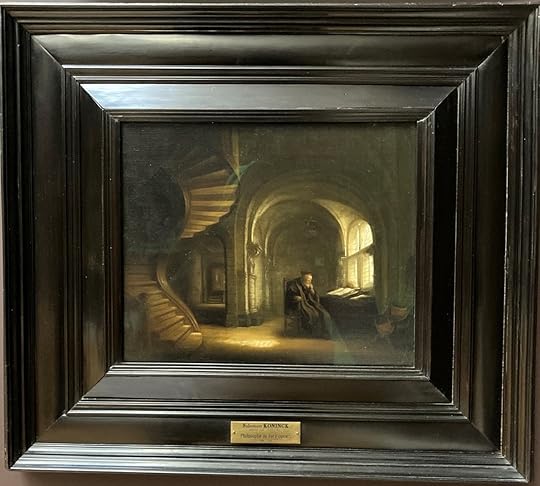
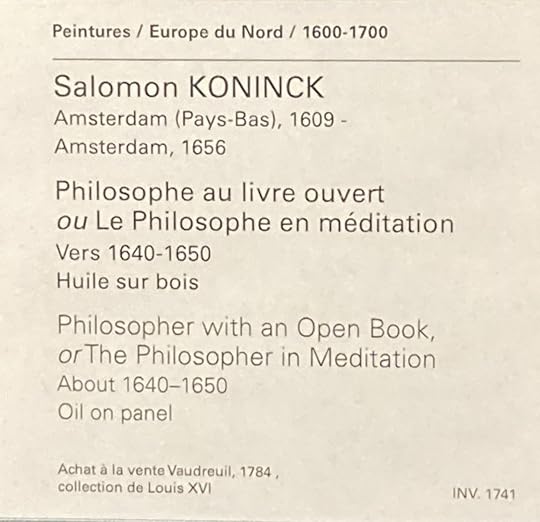
The Philosopher with an Open Book or, The Philosopher in Meditation
by
Salomon Koninck
Photo Credit:
Michael Kroth, The Louvre, Paris, France, September 8, 2022
Every book I have read by Gunilla Norris touches me. Her short essays within richly describe the meaning of what we would consider to be ordinary, daily events. Her observations of simple events, while elegantly and accessibly stated, capture the depth of our human experience. Her essay,
Waking Up
, is an example.
Waking up, she wrote, is to be present, aware, and in the here and now. “To be alive this very second in whatever capacity is a miracle we often ignore,” she said, and for those of us who are older, “It is urgent to awaken in every sense of the word”. She referenced Rabbi Abraham Heschel’s,
“Just to be is a blessing. Just to live is holy”
.
She reinforces this idea by saying, “I believe that when we awaken this way, we awaken into reverence and the recognition that everything around us is holy in some way. With awakened eyes, even an ordinary day can be entered with renewed presence.”
It is tempting, when writing about her essays, to use quotations from every paragraph. They are all gems. To make this point, I have only to share the last two sentences in
Waking Up
. “A day can be tasked, touched and felt, heard, seen, and smelled. To awaken this way is to sense and reverence with all our faculties the wonder of simply being.”
Speaking of slender while at the same time deeply meaningful writing, once I tried to memorize all 49 of the Gathas in Thich Nhat Hanh’s (Thầy, to his followers) book,
Present Moment, Wonderful Moment: Mindfulness Verses for Daily Living
. “Gathas,” he said, “are short verses which we can recite during our daily activities to help us dwell in mindfulness.” In his book, he shares Verses for Starting the day, such as T
aking the First Step of the Day
and
Brushing Your Teeth
; Verses for Meditation, such as
Lighting a Candl
e and
Following Your Breath
; Verses for Eating Mindfully, such as
Serving Food
and
Washing the Dishes
; and Verses for Other Daily Activities, such as
Walking Meditation
and
Watering the Garden
. Each is worth memorizing, marbling it over time into who we are, and practicing its guidance through the day.
I didn’t get that far.
I wrote all 49 of these in my journal, and each week I would try to memorize one of them. These are very short, usually just three or four sentences. I learned several Gathas before something pulled my peripatetic attention away.
Too bad, these are all worth practicing.
Thầy's first Gatha is titled
Waking Up
.
Waking up this morning, I smile.
Twenty-four brand new hours are before me.
I vow to live fully in each moment
And to look at all things with eyes of compassion.
Isn’t this a marvelous way to start each day? This Gatha, like Gunilla Norris’ discussion of waking up, points to presence, which is to fully experience this moment, this hour, this day. This moment. Abundantly. Whole-heartedly. Whole-body-edly. Whole-mindedly. Whole-soul-edly. Attentively and Intentfully. Comprehensively. This moment.
Which is why I wonder if the idea of waking
down
describes, complementarily, this desirable experience of presence. Waking is a natural part of our daily sleeping-waking cycle. Each morning it involves physically getting up, out of bed, and getting along with the day. Open to new adventures. Ready for planned and unplanned activities. Up, up, and away.
Waking down suggests deepening, becoming more awake to depth in understanding and aware of the great unknown. Waking down is ritual, tradition, wisdom, discipline – not set, as in cement, but as a living, thickening, saturating, immersing, resonating practice of vigilance. Our continuing vigil for depth.
Unlike the physical act of waking up, waking down is just a metaphor. It’s a way of considering becoming more aware of and comfortable with down. Down with depth. To paraphrase Thầy:
Waking down this morning, I breathe deeply.
The fullness of time is within me and surrounds me
I vow to descend more utterly into the Great Mystery of this experience
And to look at everything I encounter as an invitation for deepening.
(Laughing) Something like that.
Robust simplicity. Waking up while waking down.
It's just a bunch of words which really mean breathe in, breathe out. Experience presence, and deeply. Up, down, and vastly centered.
Sources/Resources
Nhất, H. n. (1990).
Present moment, wonderful moment: mindfulness verses for daily living.
Parallax Press.
Norris, G. (2022).
The light of evening: meditations on growing in old age.
Twenty-Third Publications.
Check out books by Gunilla Norris
here
.
December 15, 2022
Haiku Narratives with Amy, Davin, and Michael - December 2022
Curator's Note:
We started around three and a half years ago, and since then Davin Carr-Chellman, Amy Hoppock, and I have been writing and sharing haiku's monthly with each other. It has been an enriching and enjoyable way to develop our individual haiku writing practices.
It goes like this:
Each person shares a haiku they have written with each other. Usually, as you'll see below, we put them on cards or bookmarks which we can keep ourselves, and often make more to share with others. We either mail these to each other (how nice to get a haiku, hand-addressed, in the mail!) or send them electronically. We each then write a narrative response to each other's haiku, including our own, and then we get together to share our responses. The poet reads their own haiku, the others read their responses to it, and then the author reads their own narrative about it. In that way, we independently think about each haiku and then learn from each other.
It is a lot of fun!
We enjoy doing this so much we thought you might enjoy being a part of the conversation as well, so we started recording them in May, 2020, and had been exchanging and discussing our haikus each month for nearly a year before that. If you watch the clip here, you will see our discussions are very informal and that we laugh a lot.
This is our twenty-ninth recording
(You can watch them all
here
. I'll stop counting once we hit 36 or something like that)
, and we hope to continu
e. Please let us know what you think, and share this with anyone you think might benefit.
This Month's Haiku Narrative Video Recording
Check It Out:
This is a recording (our twenty-ninth) of our monthly haiku reading and narratives.
December, 2022 Haikus
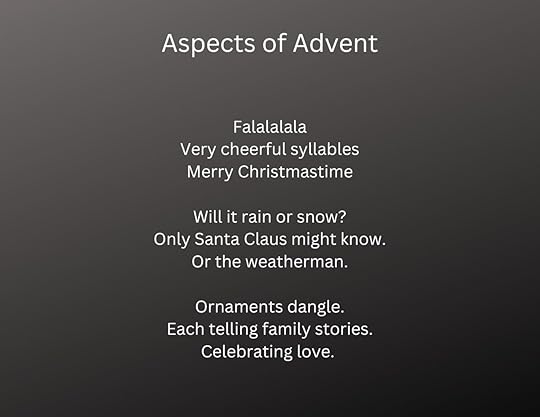
Davin's Haiku
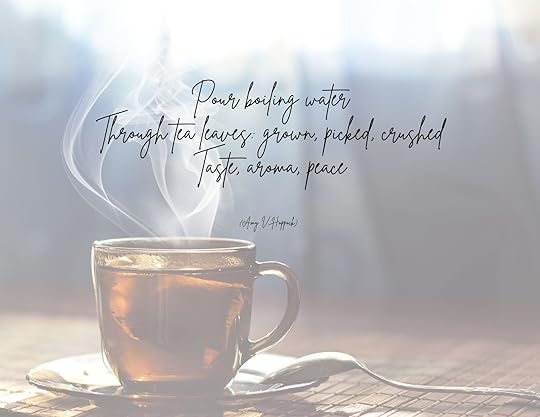
Amy's Haiku
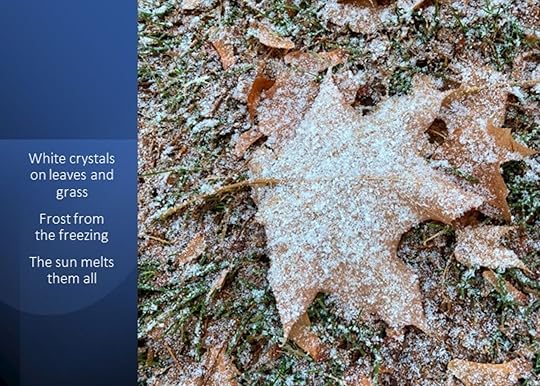
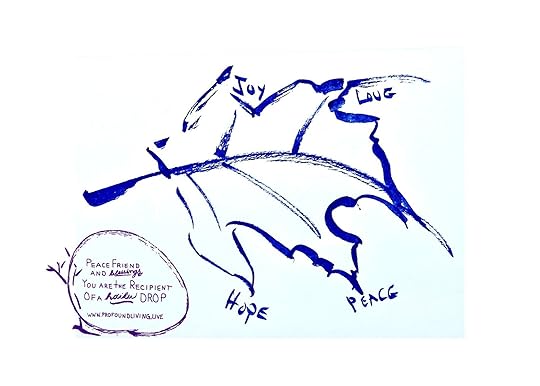
Michael's Haiku
Check These Opportunities Out Too!
Our Book!
We are very excited about our book,
Framing the Moment: Haiku Conversations
. Here is a short description and video describing how and why we created the book, and how to order one or more.
December 5, 2022
Milky Way
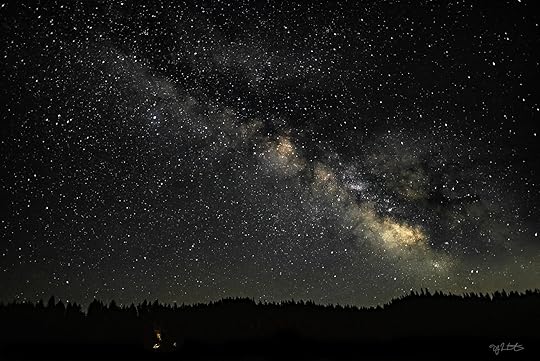
Photo Credit:
Vincent J. Fortunato
[
Note:
There are many ways to photograph the night sky. This is a single 10-sec image taken with a Nikon D750 and 20mm lens set at ISO 1600 and f/1.8.]
Introduction
Vincent J. Fortunato
Each year, friends of ours hold a camping gathering (which they call
Highland Hijinks
) on property they own in High Valley, Idaho. The property is gorgeous and provides fantastic views of the night sky. This year, my friend Dan Mackey and I unpacked our telescopes and spent a few hours searching the night sky for planets and deep sky objects, such as nebulas and galaxies, to observe. Of course I had my camera with me. This photo captured a nice juxtaposition of both the Milky Way and the campfire where friends were gathered for the evening; and, to me, demonstrated clearly the interconnectedness between life on this planet and the vastness of the universe that we perceive.
The following sentence from a book by David Hinton called
China Root: Taoism, Ch'an and Original Zen
) encapsulates the essence of what we are from the perspective of Ch’an (Zen):
“We are in our original nature the Cosmos aware of itself.
However, on a lighter, relevant, and irreverent note, I thought I would provide the following Youtube link to a scene from Monty Python’s
The Meaning of Life
.
The Galaxy Song
Whenever life gets you down, Mrs. Brown,
And things seem hard or tough,
And people are stupid, obnoxious or daft,
And you feel that you've had quite eno-o-o-o-o-ough,
Just remember that you're standing on a planet that's evolving
And revolving at 900 miles an hour.
It's orbiting at 19 miles a second, so it's reckoned,
The sun that is the source of all our power.
Now the sun, and you and me, and all the stars that we can see,
Are moving at a million miles a day,
In the outer spiral arm, at 40, 000 miles an hour,
Of a galaxy we call the Milky Way.
Our galaxy itself contains a hundred billion stars;
It's a hundred thousand light-years side to side;
It bulges in the middle sixteen thousand light-years thick,
But out by us it's just three thousand light-years wide.
We're thirty thousand light-years from Galactic Central Point,
We go 'round every two hundred million years;
And our galaxy itself is one of millions of billions
In this amazing and expanding universe.
Our universe itself keeps on expanding and expanding,
In all of the directions it can whiz;
As fast as it can go, at the speed of light, you know,
Twelve million miles a minute and that's the fastest speed there is.
So remember, when you're feeling very small and insecure,
How amazingly unlikely is your birth;
And pray that there's intelligent life somewhere out in space,
'Cause there's bugger all down here on Earth!
Source:
LyricFind
Songwriters: Eric Idle / John Du Prez
Galaxy Song lyrics © Universal Music Publishing Group
November 24, 2022
Autumn Leaves by the Boise River in Eagle, ID
Curator's Note:
Photos by my friend, Vincent J. Fortunato, are always stunningly beautiful. Sometimes his lens captures the magnificence of the evening sky and sometimes the delicacy of a flower, but always he finds something that immediately engages our full attention and makes us more grateful for all that surrounds us. I thought this image, taken in early November, would capture the natural beauty we can see every day throughout the year if we keep our eyes open and pay attention. On this Thanksgiving Day we have so much to be thankful for, like these autumn leaves or the snow sitting outside our doors just now.
COMMENTARY
Vincent J. Fortunato
For the past year or so, I have been videotaping my bicycle rides on the Boise River Greenbelt with the goal of editing several videos (set to music) showing seasonal changes along the Greenbelt. The process of switching from editing photographs taken with a DSLR (using Lightroom and Photoshop) to learning how to edit video (using iMovie to start) taken with a GoPro video camera has taken me out of my comfort zone.
Imagine my surprise when I learned that I can grab a single frame from a video clip and create a jpg photo. Like a child in a candy store, I look forward to reviewing previously taken video footage with an eye towards finding those great photos ‘hiding’ among the video files.
This photograph is one such video frame captured by the GoPro while out riding. In the future, I hope to share other such frames taken while riding as well as short (and edited) movies of those rides.

Autumn Leaves by the Boise River in Eagle, ID (11/2/22)
Photo Credit: Vincent J. Fortunato
Haiku
Brilliant yellow leaves
Feel the breath of winter, and
Herald the end of autumn.
~Vincent J. Fortunato
November 23, 2022
Grace and Gratitude

“Workplace grace is a gift given unconditionally and voluntarily by an unobligated giver, the giver being human or divine, in a work context.”
~David O’Connell,
Grace in the Workplace: A Process Model of Its Impact
Journal of Management, Spirituality, and Religion
.
“Someday, and that day may never come, I will call upon you to do a service for me.
But until that day, accept this justice as a gift on my daughter's wedding day.”
~Don Corleone, in
The Godfather
.
For most of my life – most years, months, days, moments – I’ve been Michael-centric. I’ve spent far too much of my time thinking about, being concerned about, well, me. My needs, my wants, my concerns. How I felt about it, how I thought about it, how I was worried about it, how I cared about it, how I gained by it, how I lost by it. Others – my parents, my spouse, my friends, my co-workers – should be thinking about me, I just assumed, and helping me and being there for me when I needed them. For which I was grateful but took for granted most times.
Heck, that's still way too true today, and now I know better.
When my grandmother, Grandma Hazel, died, she left each of her four grandchildren $5,000.00. She had been living for years in a small apartment in Albuquerque close to my parents. After my grandfather, Grandpa Milton, died she had had to sell the family farm, located just outside the small Kansas town of Winfield. Going from running a farm in rural Kansas with my grandfather to living in a small apartment in Albuquerque, NM must have been quite a transition. Must have been quite a stripping of much that had been meaningful to her. Yet, she still had her beloved family.
I visited her sporadically. I was glad when I did, but I had other things, big things, important things, Michael-things, to do. I didn’t have nearly as much time for my aging grandmother as I actually had.
When she died, with just the possessions in her apartment to her name, she left me $5,000.00. And my sister, and my brother, and my sister. $5,000 each. It may not sound like much decades later, but for her it was a widow's mite.
David O’Connell, in his excellent study about grace in the workplace, defined workplace grace as, “…a gift given unconditionally and voluntarily by an unobligated giver, the giver being human or divine, in a work context.” Setting aside the divine and the workplace for this discussion, we might consider grace to be a gift given to us by another in the same way. My grandmother had no obligation to give me $5,000. I received it after she died, so there was zero opportunity to pay it – in any form – back. If memory serves (often it doesn’t), I didn’t even know it was coming so I could thank her in advance, visit her a bit more, think to drop some flowers off now and again. Another way to look at is that I missed the opportunity to make her pure gift of love into a transaction. I’ll drop by, thanks in advance for the $5,000.
She gave it to us without any expectation of any return. I view it as a gift of pure grace.
Grace is a non-transactional gift. It need not be repaid. Unlike most favors, we are not expected, often we couldn't even if we wanted, to return gifts of grace. There is no
quid pro quo.
Unlike Don Corleone, in
The Godfather,
when agreeing to punish two young men who had assaulted the daughter of
Amerigo Bonasera, told him, “Someday, and that day may never come, I will call upon you to do a service for me. But until that day, accept this justice as a gift on my daughter's wedding day.”
You owe me a service, Mr. Undertaker. You are in my debt.
Later in the movie he called in that debt.
With the gift of grace there is no “You owe me.” No obligation. No debt. No reciprocity. Anonymous giving, when the receiver has no idea from whom the gift has come, can be that kind of gift (even though in reality we do receive that warm feeling, knowing that someone, perhaps, feels just a little bit more cared for and loved).
More, gratitude and grace are related. And this brings us back to the unearned gifts that we receive from God constantly, including the very gift of our lives.
"Gratitude," Reverend Tish Harrison Warren wrote, "gives birth to joy because gratitude teaches us to receive life as a gift in the moment we’re in. It teaches us that our very existence is a gift.”
And then the part I like the most - we have the ability to become more grateful, generous, and joyful people through our own efforts.
“Gratitude — like ingratitude — can be cultivated," Warren said, and then she tells us how. Through daily practice, saturated in the unearned gifts we experience every moment of every day.
"Thankfulness is a daily practice that becomes a habit that becomes a disposition" she said. "To begin to develop this disposition, we have to intentionally notice our interdependence, and how much we receive from others. Everyone alive is here because someone sacrificed for us, birthed us, fed us, and cared for us. None of us are self-made. In order to exercise the muscle of gratitude, we must live each day acknowledging how much we owe to others," she said.
And then Reverend Warren brings it home. "In my book, “Prayer in the Night,” [she wrote], “To choose joy is to see all existence as a gift, which is why the practice of joy is inseparable from the practice of gratitude."
Hey, I can do that.
Practice
grateful living. and become a more grateful person over time.
Practice
humility, generosity, and become a more humble, more generous person over time. Knowing we can't ever be as grace-full as we'd like, as we've seen our grandparents be, we can move more and more in that direction as the days, years, months, and decades go by.
We are more attuned than usual to the importance of being grateful and giving thanks on Thanksgiving Day and during the Christmas and entire holiday season, but we are given gifts, human and divine, throughout the year which we cannot directly repay, and for which we should be thankful each day of the year. At our best we will also find ways to be grace-givers. Perhaps we'll give gifts too which cannot be repaid to us.
Maybe we have a grandmother's gift to give, which will live on, even after we have passed on.
Sources
O'Connell, D. (2022). Grace in the Workplace: A Process Model of its Impact. Journal of Management,
Spirituality & Religion
, 19(4), 364-389
Warren, Tish Harrison (11/20/2022). Gratitude means noticing our interdependence,
New York Times
Maybe we have a grandmother's gift to give, which will live on, even after we have passed on.