Michael Kroth's Blog, page 4
November 22, 2023
Haiku Narratives with Amy, Davin, and Michael - November 2023
Curator's Note
We started around four years ago, and since then Davin Carr-Chellman, Amy Hoppock, and I have been writing and sharing haiku's monthly with each other. It has been an enriching and enjoyable way to develop our individual haiku writing practices.
It goes like this
Each person shares a haiku they have written with each other. Usually, as you'll see below, we put them on cards or bookmarks which we can keep ourselves, and often make more to share with others. We either mail these to each other (how nice to get a haiku, hand-addressed, in the mail!) or send them electronically. We each then write a narrative response to each other's haiku, including our own, and then we get together to share our responses. The poet reads their own haiku, the others read their responses to it, and then the author reads their own narrative about it. In that way, we independently think about each haiku and then learn from each other.
Our first meeting to share haikus in this way was in September, 2019.
How about that!
It is a lot of fun!
We enjoy doing this so much we thought you might enjoy being a part of the conversation as well, so we started recording them in May, 2020, and had been exchanging and discussing our haikus each month for nearly a year before that. If you watch the clip here, you will see our discussions are very informal and that we laugh a lot.
This is our thirty-seventh recording
(You can watch them all
here
. I'll stop counting once we hit 40 or something like that)
, and we hope to continu
e. Please let us know what you think, and share this with anyone you think might benefit.
This Month's Haiku Narrative Video Recording
Check It Out:
This is a recording (our thirty-seventh) of our monthly haiku reading and narratives.
You can see them all here:
Haiku Narratives with Amy, Davin, an
d Michael
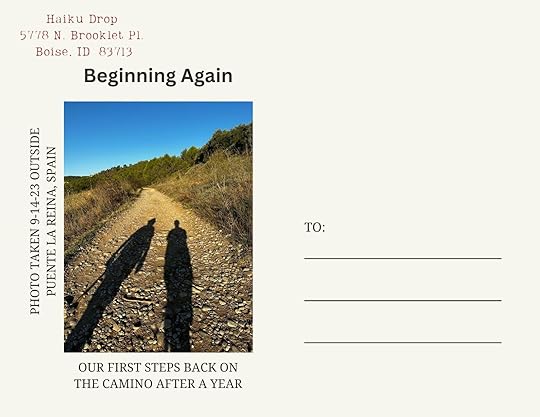
November, 2023 Haikus
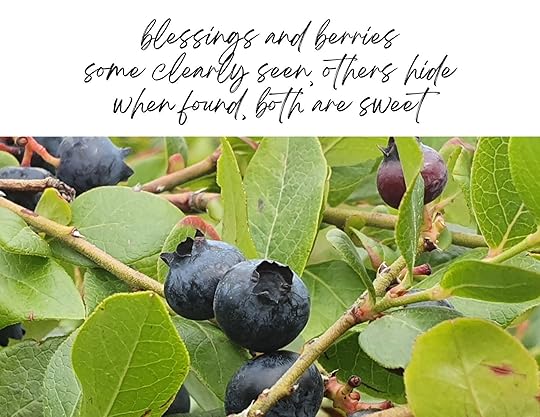
Amy's Haiku
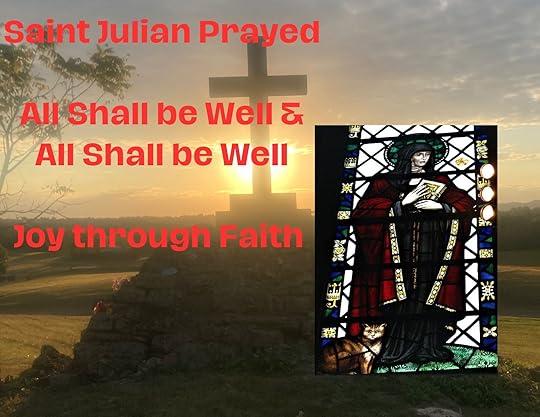
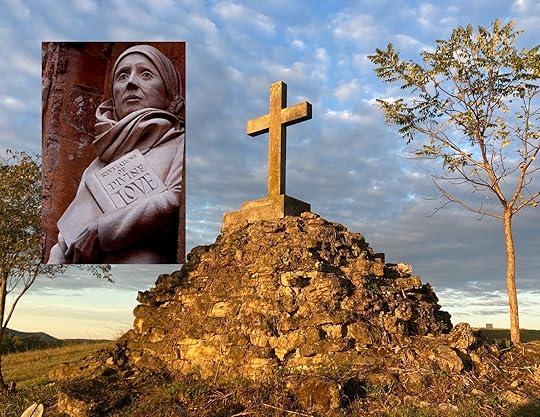
Davin's Haiku
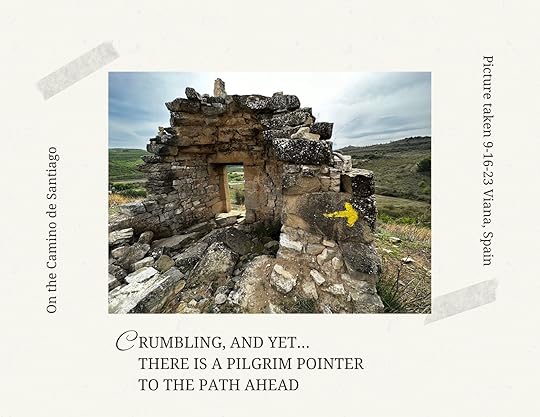
Michael's Haiku
Check These Opportunities Out Too!
Our Book!
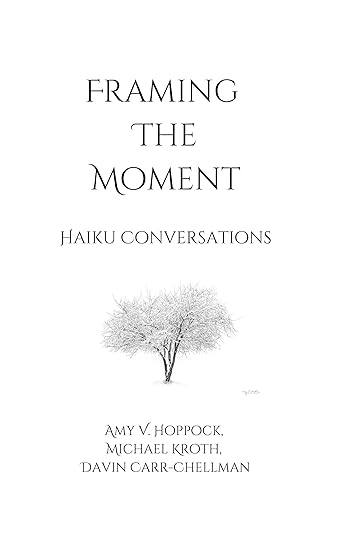
We are very excited about our book,
Framing the Moment: Haiku Conversations
. Here is a short description and video describing how and why we created the book, and how to order one or more.
About Us


November 17, 2023
Extracting the Stones of Madness
You will think of additional stones of madness in our world. The question is,
how can we extract them?

Shane and I at the Museo Del Prado, Madrid, Spain. September 21, 2023. They don't let you take pictures inside, so this will have to be it for our visit there.
This year my son, Shane, and I walked from September 13 to September 19
th
, starting at Puente Reina (Queens’s Bridge), Spain and finishing eighty miles later at Santo Domingo. It was another extraordinary pilgrimage experience. Walking the Camino with Shane these past two years has been one of the great experiences of my lifetime. This was the second year of what will probably turn out to be six years of walking a segment together on the Camino, heading toward our final destination at Santiago de Compostela, a.k.a. The Way of St. James.
One of the side benefits from this year’s walk was visiting the world-class Prado museum in Madrid, Spain.
When in Paris last year, we tracked down the iconic Shakespeare and Company bookstore (well, what would you expect us to do?), and visited the Louvre Museum, my first time. I was like a kid at Toys ‘R Us. In Madrid
este año
,we discovered the James Joyce Irish Pub, spending a lovely afternoon/evening chatting it up with the owner, Matt Loughney, who hailed from the wee Emerald Isle himself.
Delightful!
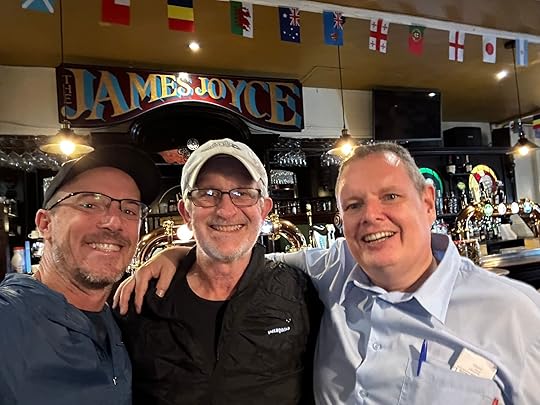
Shane, me, and Matt (the owner) at the James Joyce Pub in Madrid, Spain. September 21, 2023
The highlight for me in Madrid was spending time in the Museo del Prado, one of the finest museums in the world. I regularly marvel at how my interest in art has gone from zero to sixty in just the last decade. The Prado (officially the Museo Nacional del Prado) has the finest collections of Goya, Velázquez, and El Greco in the world, as well as works by other artists I have come to love, such as Raphael, Rubens, and Rembrandt.
Check out The Extraction of the Stone of Madness at the Prado here:
The Extraction of the Stone of Madness
I fell in love with Bosch (the painter this time, not
one of our favorite private detectives
). Bosch, that is Hiëronymus Bosch, had several pieces showing, including a very famous one I was already familiar with,
The Garden of Earthly Delights
. Another, which I had never heard of, but which immediately drew me in, was
The Extraction of the Stone of Madness
. The painting shows a “doctor” pulling a flower out of a patient’s head. Apparently, this is a take on the view in earlier times that madness is a stone stuck in a person’s brain. Pulling out that stone would, it was thought, remove one’s madness. Wauters (2015), described the painting, saying:
A vast, undulating landscape is the backdrop for a quack-physician wearing an inverted funnel on his head and performing a burlesque sham operation. Under the watchful eyes of a priest and a woman balancing a closed book on her head he cuts into the crown of a tied-down, lumpish-looking man. The picture is completed by a calligraphic distich which seems to be recited by the patient: “Master, cut the stone out quickly / My name is Lubbert Das."
“In early-modern culture,” Wauters writes, “this grotesque treatment is in fact a known
metaphor mocking human foolishness and gullibility” (p. 9).
I knew nothing about any of this before coming upon this painting at the museum. But immediately, I began to wonder if our society has had a stone, or more likely, stones of madness implanted in its collective brain. If so, what would it take to remove them, I speculated.
Our Societal Stones of Madness
I can think of several stones of madness which seem deeply embedded in our world. One stone is symbolized by kicking the ball down the field. Every year that the world waits to go all in on reversing the causes of global warming, for example, the odds against human survival become less and less. One day we will run out of field.
That is a stone of madness.
Every time our world steps even an inch closer to nuclear annihilation, the odds of human survival become less and less. One day someone won’t step back, one day someone’s trigger finger will slip.
That is a stone of madness.
Whenever a democracy like the United States retreats from civility, integrity, compromise, the rule of law, and deep respect for the tenets of a democracy, such as the peaceful transition of power, our precious democracy with all its freedoms, fought for and dearly won, comes closer to authoritarianism.
That is a stone of madness.
Whenever threats of violence, taunts, name calling, and dehumanization of others (such as calling citizens of our country “vermin”) occur without universal condemnation, without total repudiation, then we move in the direction of fascism and away our democratic values.
That is a stone of madness.
You will think of additional stones of madness in our world. The question is, how can we extract them?
Extracting Our Collective Stones of Madness
Dallas Willard, in his classic book about spiritual formation,
Renovation of the Heart: Putting on the Character of Christ
, says “In today’s world, famine, war, and epidemic are almost totally the outcome of human choices, which are expressions of the human spirit” (p. 13). “Our life, and how we find the world now and in the future,“ Willard says, “ is, almost totally, a simple result of what we have become in the depths of our being—in our spirit, will, or heart” (p. 13). These disastrous conditions haven’t just happened to us, he is saying, “they are the outcome of our choices.”
That should be sobering.
Willard, a Christian author and thought leader, believes that “. . . the greatest need you and I have – the greatest need of collective humanity – is renovation of our heart. That spiritual place within us from which outlook, choices, and actions come that has been formed by a world away from God. Now,” he says, “it must be transformed” (p. 14).
I wholeheartedly agree.
However….
There are various directions transformations occur. Some lead to good outcomes (I am a healthier person), some lead to bad outcomes (I am less healthy). What would be the foundations for transformation most likely to extract these stones of madness?
I propose that the starting place is going back to our spiritual roots. For me, that means going back to the commandments Jesus gave to his disciples in Matthew 22: 37-40.
Jesus said unto him,
Thou shalt love the Lord thy God with all thy heart, and with all thy soul, and with all thy mind.
This is the first and great commandment.
And the second is like unto it, Thou shalt love thy neighbour as thyself.
On these two commandments hang all the law and the prophets. (KJV)
These two profound imperatives – love of God and love of neighbor – require actions and practices that enable and move people to have the capability and then the motivation to love and to be a loving person as a way of life. I don’t know anyone who has perfected these, so the quest for becoming more loving is lifelong. It is not enough to say, “I am a Christian,” unless one is working to become more Christlike each day.
Bernard McGinn, writing about Saint Teresa of Avila, described her “place in the history of one of the central themes in the history of Christian mysticism, that is how to relate the demands of contemplation and action, or love of God and love of neighbor” (p. 121). Teresa, author of one of the greatest books in all Christian history,
The Interior Castle
, was not only deeply contemplative, she was also an effective reformer. She was – and continues to be through her ongoing presence (after all, I’m referring to her here, centuries after her death) – an exemplary stone-extractor.
Incredibly, stones of madness remain in our society. I guess to a certain extent they can never be completely removed, just bits and pieces and chunks. They are, to a certain extent fused with our imperfectness.
If we don’t remove a few of them pretty darn soon, however, our heads will burst, right along with our hearts. And then, no mason will be able to reconstruct the shambles of the rock slide we have wrought.
Sources/Resources
Museo del Prado:
https://www.museodelprado.es/en
More about the Museo del Prado:
https://www.britannica.com/topic/Prado-Museum
The Extraction of the Stone of Madness (Bosch):
https://www.museodelprado.es/en/the-collection/art-work/the-extraction-of-the-stone-of-madness/313db7a0-f9bf-49ad-a242-67e95b14c5a2
The Garden of Earthly Delights (Bosch):
https://www.museodelprado.es/coleccion/obra-de-arte/triptico-del-jardin-de-las-delicias/02388242-6d6a-4e9e-a992-e1311eab3609
The Louvre Museum, Paris, France:
https://www.louvre.fr/en
Shakespeare and Company bookstore, Paris, France:
https://www.shakespeareandcompany.com/
Wauters, W. (2015). Extracting the Stone of Madness in Perspective. The Cultural and Historical Development of an Enigmatic Visual Motif from Hieronymus Bosch: a Critical
status quaestionis
. Jaarboek Koninklijk Museum voor Schone Kunsten Antwerpen, 2016(2018), 9-36.
Willard, D. (2021). Renovation of the Heart: Putting on the Character of Christ. NavPress. New Paragraph
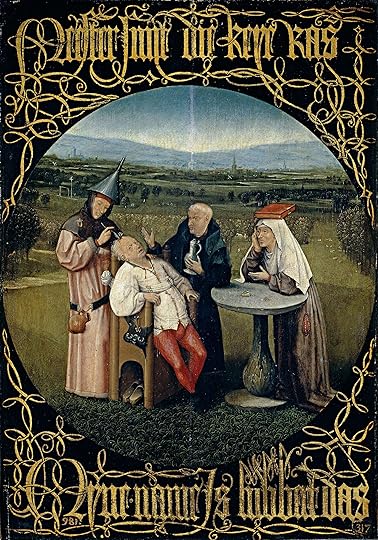
"The author died in 1516, so this work is in the
public domain
in its country of origin and other countries and areas where the
copyright term
is the author's life plus 100 years or fewer.
This work is in the
public domain
in the
United States
because it was
published
(or registered with the
U.S. Copyright Office
) before January 1, 1928.
This file has been identified as being free of known restrictions under copyright law, including all related and neighboring rights.
"
(https://commons.wikimedia.org/wiki/Fi...)
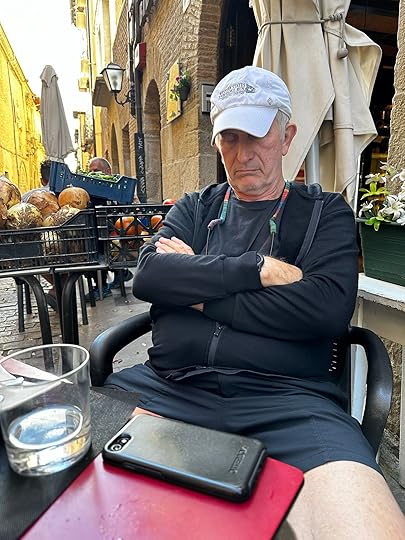
Sometimes I got tired along the way....
This photo was taken by Shane (the scoundrel) on September 13, 2023 in or around Puente La Reina, Spain.
November 7, 2023
The Fundamental Option In Later Life: Choosing the Kind of Person We Want to Be
~Joseph H. Lackner, SM,
Virtues for Mission
, p. 38
I can’t tell you the exact day or even month when I made the decision to change the person I had become to something different. Looking back, it wasn’t “a” decision, it wasn’t even a conscious decision, but around the time I turned sixty-one I began heading down a different path than the toxic one I had been on. Over time, over the last decade or so, I’ve moved away from being unhealthily anxious, depressed, and wandering aimlessly; and moved toward becoming a healthier person in just about every aspect of life. There were events along the way that were out of my control or influence that moved me in a more positive direction, including I believe divine inspiration (perhaps a holy nudge - or shove...), but much has been the result of what has now become a conscious choice, to live my life in an ever more generative way, a way that leads toward flourishing. I still have a long way, a never-ending way, to go. And will, until the day I die.
My path these days is strewn with flowers and sage, crowding out the few weeds here and there; the sky is a pleasant blue, with white clouds and a glorious sun as far as I can see, interspersed with with dark-grey brush strokes of trouble hither and yon; and the destination in sight, in the distance, the winding ups and downs of the trail still to come, still unseen.*
All this started in my seventh decade.
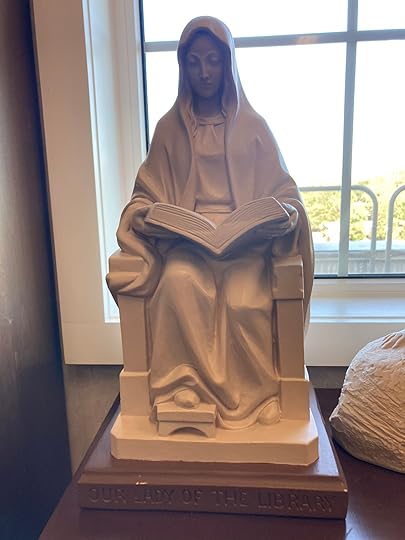
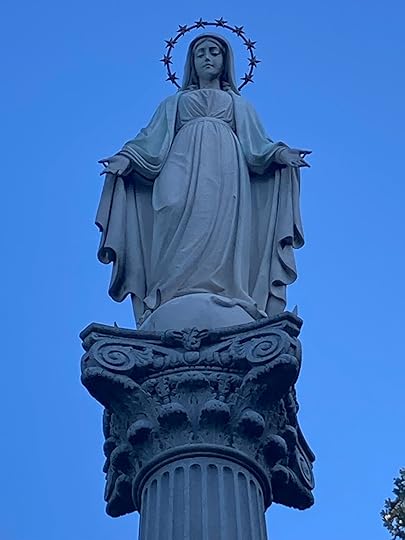
As one who adores libraries, I loved this statue of "Our Lady of the Library,"
spotted during our tour of the University of Dayton.
I had never heard of the term, "fundamental option,” until my friend and colleague, Davin Carr-Chellman, sent me a copy of
Virtues for Mission
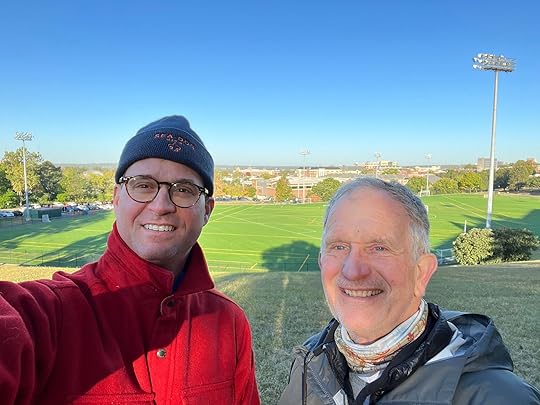
, by Joseph H. Lackner, SM (Society of Mary). Davin is a professor and the department chair of the Department of Educational Administration at the University of Dayton (UD). UD is a Marianist, that is to say it was founded by and is led by the Society of Mary, Roman Catholic University. I knew nothing about Marianism before Davin went to work there and it’s been fun and rewarding to learn a bit about it. In October, he even gave me a tour of their beautiful and inspiring campus.
Although I’m finding there has been much history and discussion about the idea of the fundamental option, here I’m just considering the simple definition Lackner provided (Karl Rahner and other deep thinkers who have written about this are going to take quite a long time for me to understand.) For now, the simple idea that we can make a "fundamental decision about what kind of person we want to be," is enough for me. That presents a powerful opportunity.
It is no secret that every one of us is getting older each day (each nano-moment, actually). We will all die. Some will die earlier than expected, others later. Some will live a more joyous life than their circumstances might suggest, others may live a more miserable life than their circumstances might suggest. Importantly, within our lifespan, we have the capacity to choose a great deal about how we will live our life. We have the opportunity, each day, to become more and more the “kind of person we intend to be,” as Lackner says when describing “the fundamental option.”
We have the ability to be generous or miserly, to proceed healthily or deleteriously, to live resolutely or negligently, and so forth in every area of our personal choice. Over time, these actions become who we are – we become a more generous, healthy, resolute person or more a miserly, sickly, wishy-washy person. These behaviors become how people describe us and eventually who we understand ourselves to be.
I am not naive about what we can and cannot do later in life, and how hard it can be to change the way we've lived our lives for decades. To be sure, there are many matters which are outside our control or even influence, but it is a mistake to think that we cannot make changes large or small to those choices, that direction, and the kind of person we intend to be in our later years.
When we hit sixty, seventy, eighty, or ninety we can decide to be more forgiving or more vengeful, more bitter or more grateful, to make the effort to make others feel loved or….not.
Sure, early in life we have the most options – we can save for retirement, or not; we can smoke cigarettes for years, or not; we can build relationships or a family, or not. Choices in later life are more constrained, more limited, and are subject to earlier events, what we inherited (and not just money but things like genes) and decisions we have already made.
Just as we make a choice, intentionally or unintentionally, about the kind of person we wish to be at a young age, we can also, I believe, reinforce what we are are already doing or re-choose at later stages of life.
And, to a greater extent than we might think, we can make a fundamental decision about how we will live through the final stages of life.
We are not helpless people, and our choices, both individual and societal, lead to predictable outcomes, as Dallas Willard, writing about spiritual formation, reminds us. “In today’s world, famine, war, and epidemic are almost totally the outcome of human choices, which are expressions of the human spirit,” he said,
Renovation of the Heart: Putting on the Character of Christ
.
While we don’t have total and often have little control of outcomes, we do have the ability to increase or decrease the odds that something will occur. If I do not take care of my health, the odds are that I will become unhealthy. If I take dance classes, the odds are - even at the age now of seventy-one - that I will become a better dancer, and surely healthier overall. The same is true for society. If we pollute the sky, the odds are that we’ll have a polluted sky. If we support tyranny, the odds are that our nation(s) will become more tyrannical.
There are some, like Sam Harris, who don’t believe we have free will. “Free will is an illusion,” he says, “Our wills are simply not of our own making. Thoughts and intentions emerge from background causes of which we are unaware and over which we exert no conscious control. We do not have the freedom we think we have.”
Do we have free will, or don’t we? I’ve read Sam Harris’ book,
Free Will,
and though he makes a persuasive case that we lack free will, to me his is a technical argument with little application to most of us in real life. Sure, everything that went before us will influence our decisions, perhaps even as Harris claims makes our choices inevitable, but even if that happened to be true,
so what?
For me, this no-free-will viewpoint just lets everyone off the hook. Everyone has an excuse for not taking responsibility for their lives and their impact on others. Explain how we make decisions all you want, but in real, day-to-day life, we can choose how we will respond.
Which brings us to the fundamental option. That is, deciding the “kind of person we intend to be [and] how we have chose to live our life” (Lackner, p. 38).
I don’t care what age you are, what kind of person do you want to be in this next stage of life?
Make it so.
** OK, OK. This scene is painted more idyllically than realistically - there are more than enough little weeds and even some noxious ones, and a few storms along the way, some with torrential rain. But you get the idea. It's wonderful to be alive, eh?
Sources/Resources
Harris, S. (2012).
Free will
(1st Free Press trade pbk. ed.). Free Press.
Lackner, J. H. (2003).
Virtues for Mission
. The North American Center for Marianist Studies.
Willard, D. (2021).
Renovation of the Heart: Putting on the Character of Christ
. NavPress.
The University of Dayton
The University of Dayton:
About UD,
https://udayton.edu/about/index.php
;
The Marianists,
https://udayton.edu/rector/mission_identity_roots/index.php
;
https://udayton.edu/about/mission-and-identity.php
,
Catholic, Marianist Tradition,
https://udayton.edu/about/catholic-marianist.php
The University of Dayton,
https://en.wikipedia.org/wiki/University_of_Dayton
For more about The Fundamental Option
Bonjean Sr, R. D. (1983). Fundamental option in the theology of Karl Rahner and its relationship to moral development. Marquette University.
Coffey, D. (1997). Rahner’s Theology of Fundamental Option.
Philosophy and Theology
, 10(1), 255-284.
Miller, F. L. (1977). The Fundamental Option in the Thought of St Augustine.
The Downside Review
, 95(321), 271-283.
Petrusek, M. (2017). Making the Fundamental Option Fully Free: How Human Capabilities Help Clarify Rahner’s Conception of Justice.
Philosophy and Theology
, 29(2), 433-460.
October 29, 2023
Haiku Narratives with Amy, Davin, and Michael - October 2023
Curator's Note
We started around four years ago, and since then Davin Carr-Chellman, Amy Hoppock, and I have been writing and sharing haiku's monthly with each other. It has been an enriching and enjoyable way to develop our individual haiku writing practices.
It goes like this
Each person shares a haiku they have written with each other. Usually, as you'll see below, we put them on cards or bookmarks which we can keep ourselves, and often make more to share with others. We either mail these to each other (how nice to get a haiku, hand-addressed, in the mail!) or send them electronically. We each then write a narrative response to each other's haiku, including our own, and then we get together to share our responses. The poet reads their own haiku, the others read their responses to it, and then the author reads their own narrative about it. In that way, we independently think about each haiku and then learn from each other.
Our first meeting to share haikus in this way was in September, 2019.
How about that!
It is a lot of fun!
We enjoy doing this so much we thought you might enjoy being a part of the conversation as well, so we started recording them in May, 2020, and had been exchanging and discussing our haikus each month for nearly a year before that. If you watch the clip here, you will see our discussions are very informal and that we laugh a lot.
This is our thirty-sixth recording
(You can watch them all
here
. I'll stop counting once we hit 40 or something like that)
, and we hope to continu
e. Please let us know what you think, and share this with anyone you think might benefit.
This Month's Haiku Narrative Video Recording
Check It Out:
This is a recording (our thirty-sixth) of our monthly haiku reading and narratives.
You can see them all here:
Haiku Narratives with Amy, Davin, an
d Michael
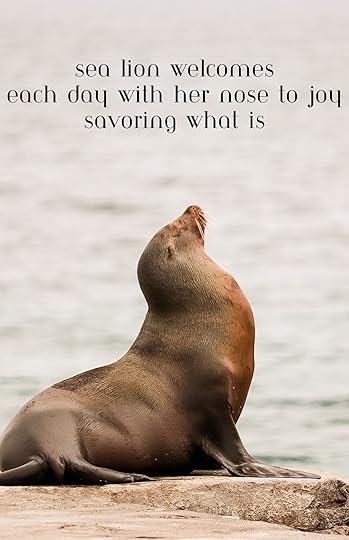
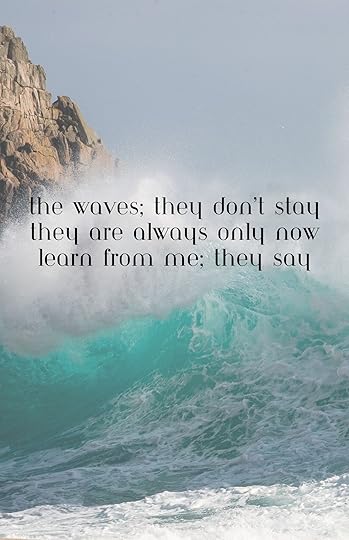
October, 2023 Haikus
Amy's Haiku
Davin's Haiku
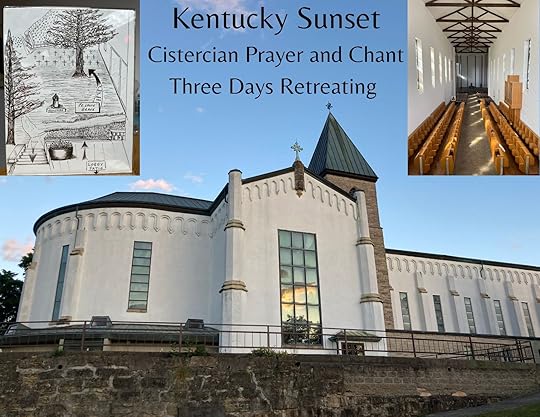
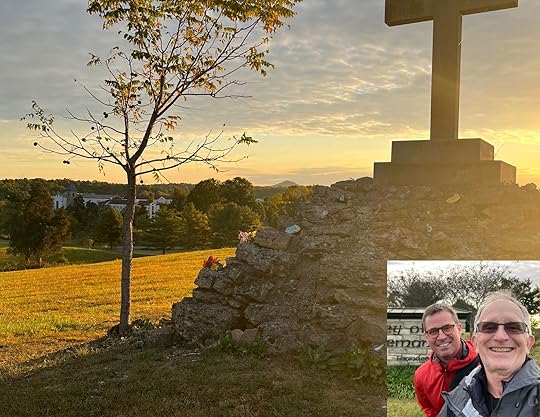
Michael's Haiku
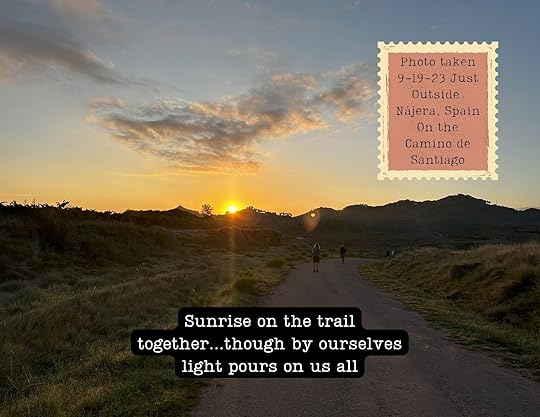
Check These Opportunities Out Too!
Our Book!
We are very excited about our book,
Framing the Moment: Haiku Conversations
. Here is a short description and video describing how and why we created the book, and how to order one or more.
About Us
August 31, 2023
Haiku Narratives with Amy, Davin, and Michael - August 2023
Curator's Note
We started around four years ago, and since then Davin Carr-Chellman, Amy Hoppock, and I have been writing and sharing haiku's monthly with each other. It has been an enriching and enjoyable way to develop our individual haiku writing practices.
It goes like this
Each person shares a haiku they have written with each other. Usually, as you'll see below, we put them on cards or bookmarks which we can keep ourselves, and often make more to share with others. We either mail these to each other (how nice to get a haiku, hand-addressed, in the mail!) or send them electronically. We each then write a narrative response to each other's haiku, including our own, and then we get together to share our responses. The poet reads their own haiku, the others read their responses to it, and then the author reads their own narrative about it. In that way, we independently think about each haiku and then learn from each other.
Our first meeting to share haikus in this way was in September, 2019.
How about that!
It is a lot of fun!
We enjoy doing this so much we thought you might enjoy being a part of the conversation as well, so we started recording them in May, 2020, and had been exchanging and discussing our haikus each month for nearly a year before that. If you watch the clip here, you will see our discussions are very informal and that we laugh a lot.
This is our thirty-Fifth recording
(You can watch them all
here
. I'll stop counting once we hit 36 or something like that)
, and we hope to continu
e. Please let us know what you think, and share this with anyone you think might benefit.
This Month's Haiku Narrative Video Recording
Check It Out:
This is a recording (our thirty-fifth) of our monthly haiku reading and narratives.
You can see them all here:
Haiku Narratives with Amy, Davin, an
d Michael
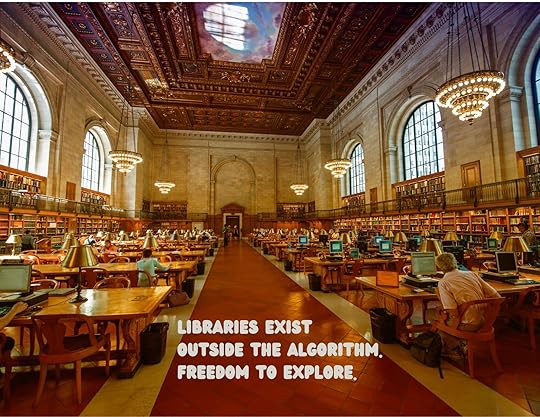
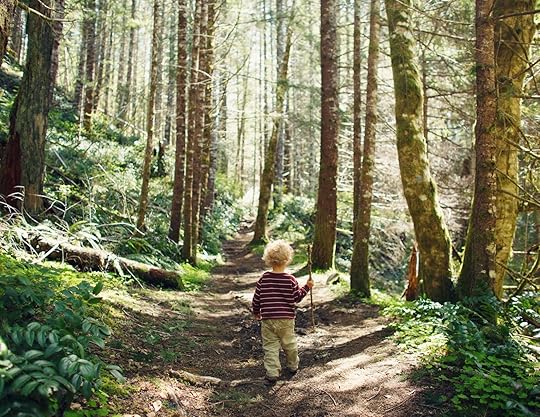
August, 2023 Haikus
Amy's Haiku
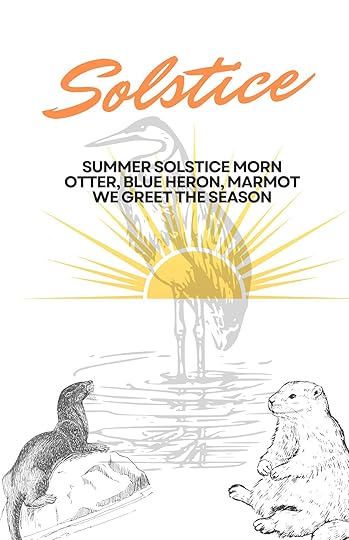
Davin's Haiku
Michael's Haiku
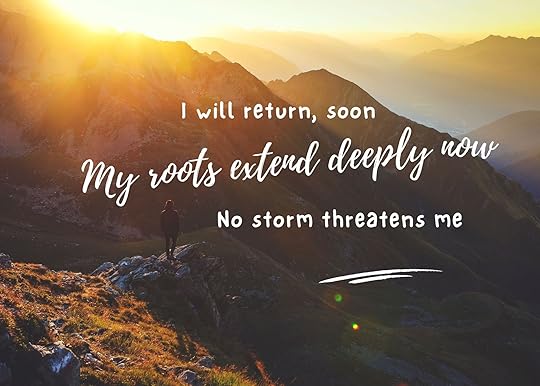
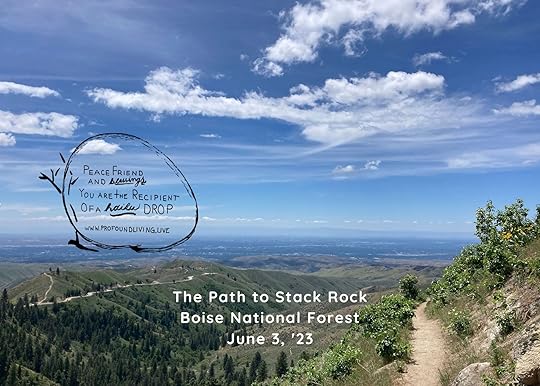
Check These Opportunities Out Too!
Our Book!
We are very excited about our book,
Framing the Moment: Haiku Conversations
. Here is a short description and video describing how and why we created the book, and how to order one or more.
About Us
July 5, 2023
And So It Begins
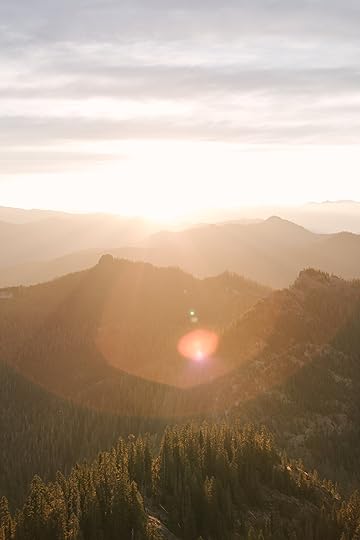
July 5, 2023
My professional sabbatical journey starts officially in August, is starting practically now, and started in general at the start of the spring semester, as students and colleagues joined me in a little Spiritual Formation after Sixty lit review group. I'll have until the end of the year to explore the topic of spiritual formation after sixty as a scholarly research topic for this work sabbatical. I have the rest of my life to explore it personally.
My own spiritual formation-after-sixty project really began in the last months of age sixty, just ten years ago. It has been a rich decade. It has been transformational. Before sixty I had no interest in matters spiritual, for the last decade that's what I've come to be most interested in. How much further I can go, how much deeper and more meaningfully, is one thread I'll be following these next months. How my life was turned around is another, how it might intentionally proceed is another, and how – drawing from sources beyond my own personal story – others in later life might take their lives into deeper, more meaningful, richer-in-all-the-most-important-ways places is still another.
This morning, after hearing neighborhood Fourth of July celebrations last night louder than I can remember hearing before, I woke at 5:15 a.m., pushed the coffee-maker button and weighed myself.
189.
189 is a good marker. A good starting place to key off of for the next half of the year. Which will include a 75-mile week walking on the Camino de Santiago with my son Shane in September.
Spiritual health is not the only part of my life that I’ll be attending to these next weeks and months.
Then I addressed a haiku card and walked to the mailbox. The moon was (is?) still shining, the night was fading. The air the cool crisp of a hot summer-day-to-come.
And blessed silence.
I stopped for a moment just to experience it. Then I dropped the card in the box and walked inside to write this, the start of my project journal. Thoughts for what scholars might conclude, were I a bit more disciplined, as the start of an autoethnography.
Today I travel to the
Monastery of the Ascension
in Jerome, Idaho for a short personal retreat which will be another kind of marker to start this sabbatical.
Over the last days of June I took myself off of all social media, in particular Facebook, unsubscribed from most of my regular sources of news political, and other online, extraneous-to-this-sabbatical-topic, distractions.
Wordle
is an exception.
I did not make myself completely bereft of simple pleasures of the mind, eh?
For though I know I have some discipline, focusing on a particular topic is not one that comes naturally – I am interested in too much. I have an endlessly curious mind, it seems. So, just as the most important choice I must make when trying to eat healthily is what is available for my consumption (i.e. not buying bags of chocolates to bring home) the same limitations apply when it comes to what I have available to read. If I want to make good decisions about what I put in my mouth or in my head I have to give myself only healthy options. If it is around, I’m likely to eat it or to eat it up.
I’ll be writing essays about matters of spiritual formation – mine, others, ideas and concepts – over the next months as I explore myself and what others have to say about it. My particular attention will be on later life, not only because I am in later life and want to learn ways to continue my own development, but also because spiritual formation – spiritual development, one’s openness of deeper meaning and depth of experience, one's experience with the divine, transcendence – is one of the few areas where elders can grow even to the very last breath, as other parts of their lives inevitably decline.
I wanna know more about that.
My problem now, as I said before, is there is too much I want to read and experience and discuss. My retreat starts later today, and we’ll see if we can become a bit more mindful about how I spend my time and attention going forward.
Say a little prayer for me, eh?
May 31, 2023
My Monk In The World Essay
The Abbey of the Arts
, and absolutely favorite authors,
Christine Valters Paintner.
What an honor!
The topic is
walking as a keystone, contemplative practice
.
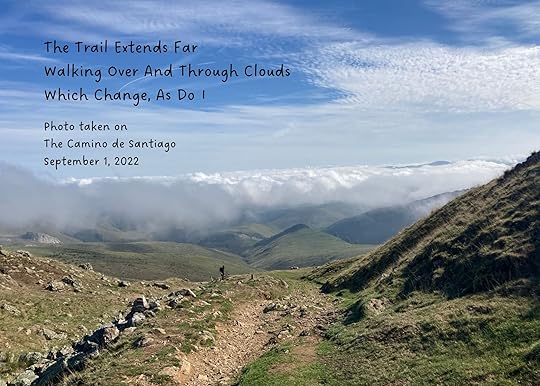
Photo by Michael Kroth, used in the essay.
Read Monk In The World Guest Post here
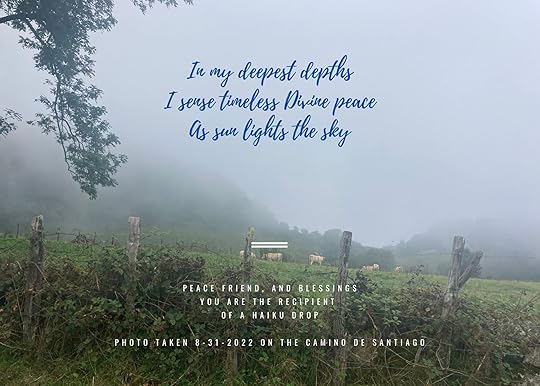
Photo by Michael Kroth, used in the essay
This was my second Monk in the World guest essay. You can read my first, "Haiku Drop",
here
Photo by Michael Kroth, used in the essay
May 25, 2023
Haiku Narratives with Amy, Davin, and Michael - May, 2023
Curator's Note
We started around four years ago, and since then Davin Carr-Chellman, Amy Hoppock, and I have been writing and sharing haiku's monthly with each other. It has been an enriching and enjoyable way to develop our individual haiku writing practices.
It goes like this
Each person shares a haiku they have written with each other. Usually, as you'll see below, we put them on cards or bookmarks which we can keep ourselves, and often make more to share with others. We either mail these to each other (how nice to get a haiku, hand-addressed, in the mail!) or send them electronically. We each then write a narrative response to each other's haiku, including our own, and then we get together to share our responses. The poet reads their own haiku, the others read their responses to it, and then the author reads their own narrative about it. In that way, we independently think about each haiku and then learn from each other.
Our first meeting to share haikus in this way was in September, 2019.
How about that!
It is a lot of fun!
We enjoy doing this so much we thought you might enjoy being a part of the conversation as well, so we started recording them in May, 2020, and had been exchanging and discussing our haikus each month for nearly a year before that. If you watch the clip here, you will see our discussions are very informal and that we laugh a lot.
This is our thirty-FOURTH recording
(You can watch them all
here
. I'll stop counting once we hit 36 or something like that)
, and we hope to continu
e. Please let us know what you think, and share this with anyone you think might benefit.
This Month's Haiku Narrative Video Recording
Check It Out:
This is a recording (our thirty-fourth) of our monthly haiku reading and narratives.
You can see them all here:
Haiku Narratives with Amy, Davin, an
d Michael
May, 2023 Haikus
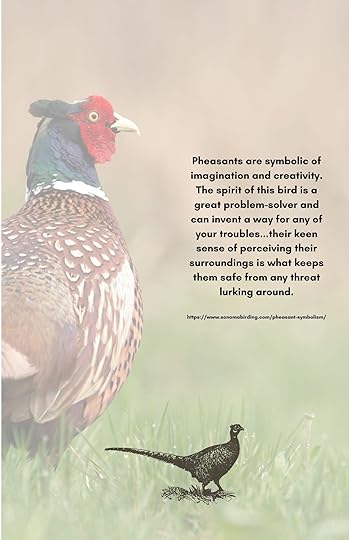
Amy's Haiku
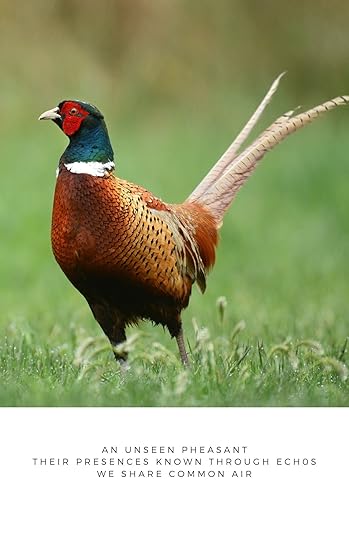
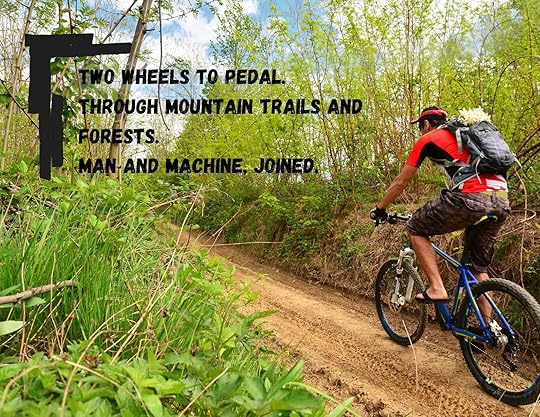
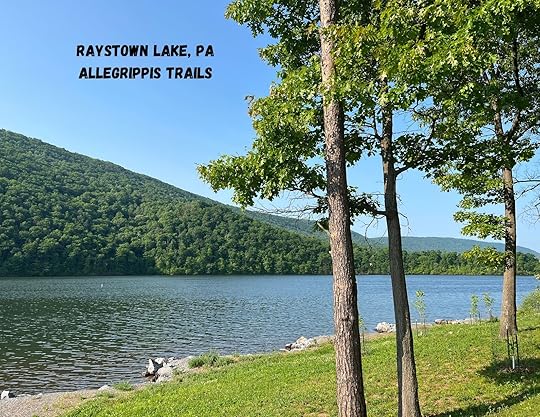
Davin's Haiku
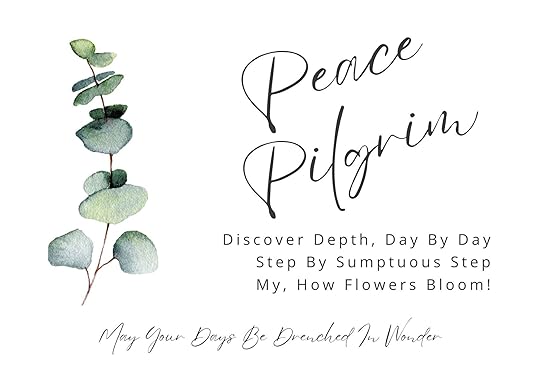
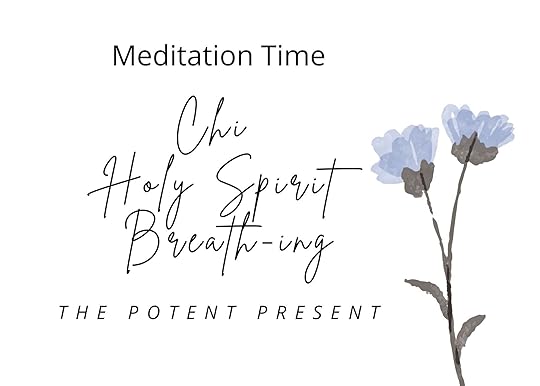
Michael's Haiku
Check These Opportunities Out Too!
Our Book!
We are very excited about our book,
Framing the Moment: Haiku Conversations
. Here is a short description and video describing how and why we created the book, and how to order one or more.
About Us
May 1, 2023
Haiku Narratives with Amy, Davin, and Michael - April, 2023
April, 2023 Haiku Narratives
Curator's Note
We started around four years ago, and since then Davin Carr-Chellman, Amy Hoppock, and I have been writing and sharing haiku's monthly with each other. It has been an enriching and enjoyable way to develop our individual haiku writing practices.
It goes like this
Each person shares a haiku they have written with each other. Usually, as you'll see below, we put them on cards or bookmarks which we can keep ourselves, and often make more to share with others. We either mail these to each other (how nice to get a haiku, hand-addressed, in the mail!) or send them electronically. We each then write a narrative response to each other's haiku, including our own, and then we get together to share our responses. The poet reads their own haiku, the others read their responses to it, and then the author reads their own narrative about it. In that way, we independently think about each haiku and then learn from each other.
Our first meeting to share haikus in this way was in September, 2019.
How about that!
It is a lot of fun!
We enjoy doing this so much we thought you might enjoy being a part of the conversation as well, so we started recording them in May, 2020, and had been exchanging and discussing our haikus each month for nearly a year before that. If you watch the clip here, you will see our discussions are very informal and that we laugh a lot.
This is our thirty-third recording
(You can watch them all
here
. I'll stop counting once we hit 36 or something like that)
, and we hope to continu
e. Please let us know what you think, and share this with anyone you think might benefit.
This Month's Haiku Narrative Video Recording
Check It Out:
This is a recording (our thirty-third) of our monthly haiku reading and narratives.
You can see them all here:
Haiku Narratives with Amy, Davin, and Michael
April, 2023 Haikus
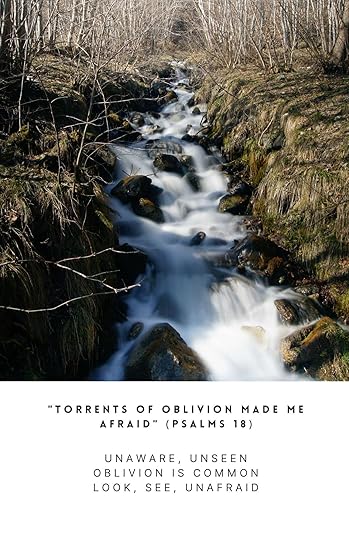
Amy's Haiku
Davin's Haiku

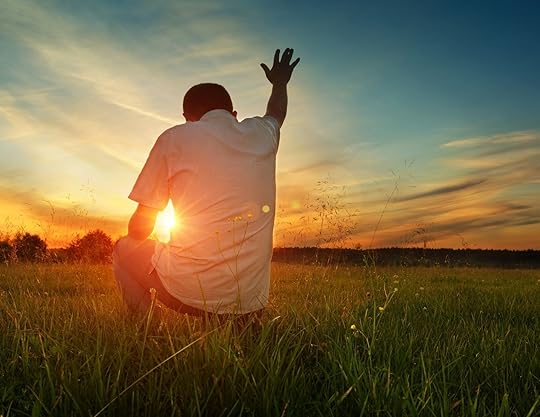
Michael's Haiku
Check These Opportunities Out Too!
Our Book!
We are very excited about our book,
Framing the Moment: Haiku Conversations
. Here is a short description and video describing how and why we created the book, and how to order one or more.
About Us
March 23, 2023
Haiku Narratives with Amy, Davin, and Michael - March, 2023
Curator's Note
We started around four years ago, and since then Davin Carr-Chellman, Amy Hoppock, and I have been writing and sharing haiku's monthly with each other. It has been an enriching and enjoyable way to develop our individual haiku writing practices.
It goes like this
Each person shares a haiku they have written with each other. Usually, as you'll see below, we put them on cards or bookmarks which we can keep ourselves, and often make more to share with others. We either mail these to each other (how nice to get a haiku, hand-addressed, in the mail!) or send them electronically. We each then write a narrative response to each other's haiku, including our own, and then we get together to share our responses. The poet reads their own haiku, the others read their responses to it, and then the author reads their own narrative about it. In that way, we independently think about each haiku and then learn from each other.
It is a lot of fun!
We enjoy doing this so much we thought you might enjoy being a part of the conversation as well, so we started recording them in May, 2020, and had been exchanging and discussing our haikus each month for nearly a year before that. If you watch the clip here, you will see our discussions are very informal and that we laugh a lot.
This is our thirty-Second recording
(You can watch them all
here
. I'll stop counting once we hit 36 or something like that)
, and we hope to continu
e. Please let us know what you think, and share this with anyone you think might benefit.
This Month's Haiku Narrative Video Recording
Check It Out:
This is a recording (our thirty-second) of our monthly haiku reading and narratives.
March, 2023 Haikus
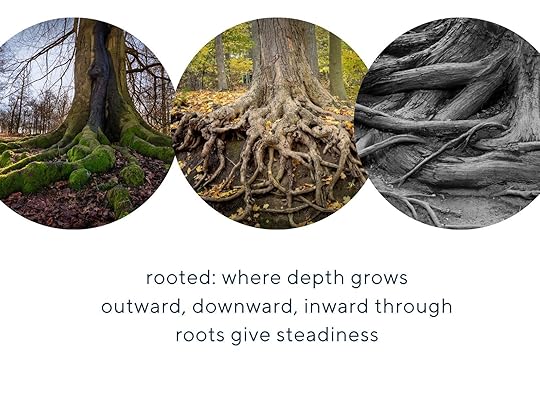
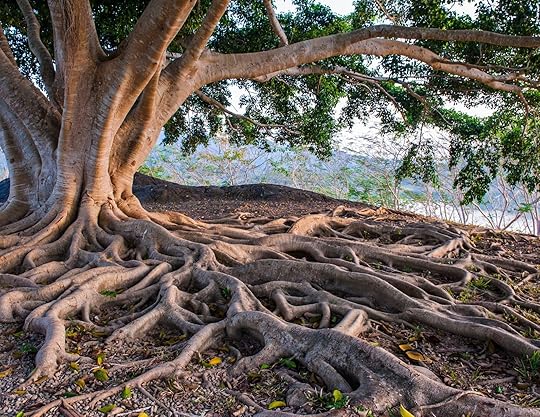
Amy's Haiku
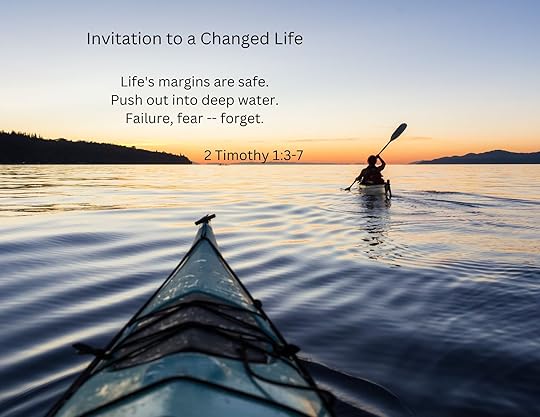
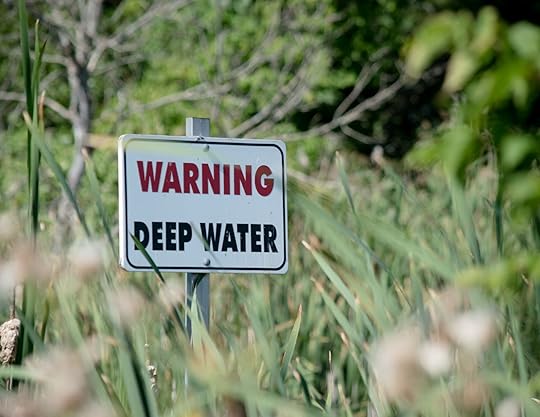
Davin's Haiku
Michael's Haiku
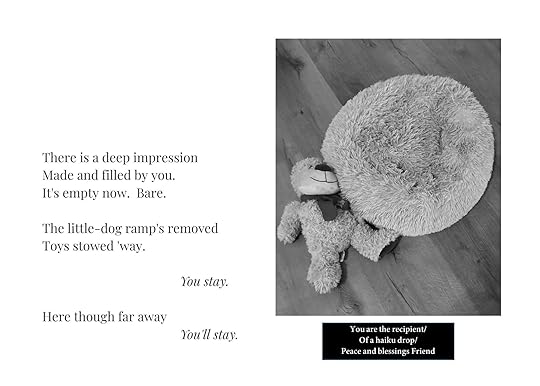
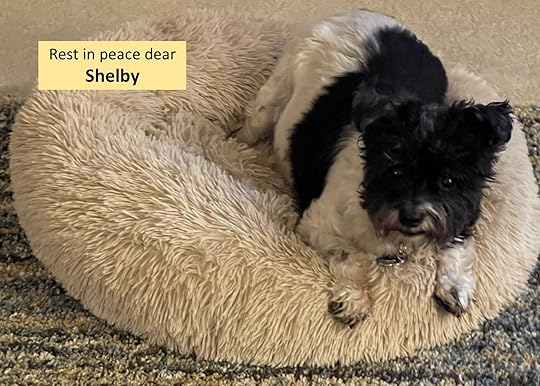
Check These Opportunities Out Too!
Our Book!
We are very excited about our book,
Framing the Moment: Haiku Conversations
. Here is a short description and video describing how and why we created the book, and how to order one or more.
About Us