David L. Lindsey's Blog, page 2
October 10, 2024
Fate Can Do This to Any of Us …You Never Know
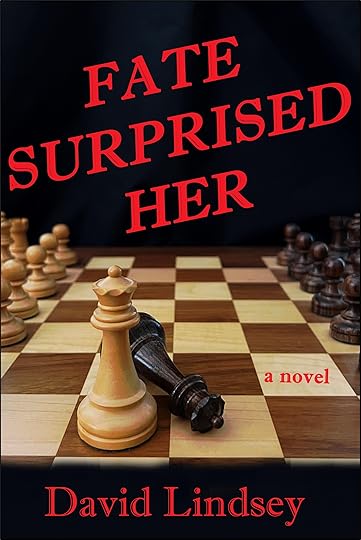
After being absent from the publishing business for quite a few years, I’ve recently published a new, Fate Surprised Her. It is available only as an eBook for now. Although it’s been available on my website for a couple of months, I’ve neglected to say anything about it here until now. So, here it is! You can click over to my NOVELS page and read about it there, and buy it! If you do, I hope you’ll like it. And if you do — I hope you’ll write a review and/or let me know what you think of it. Here are two reviews that have already appeared on Amazon.
Kindle Customer 5.0 out of 5 stars
Reviewed on August 13, 2024
Suspens e in a new Lindsey series?
Suspense, Austin-centric locales, international current affairs, sympathetic and interesting main characters, whiplash ending (don’t cheat yourself). Can’t wait for the next one…
Jerry Hudson 5.0 out of 5 stars
Reviewed on September 27, 2024
Classic Lindsey Tale
I could not put this novel down . It is classic David Lindsey that I remember from his last novel that I read many years ago. I’m glad David Lindsey is back.
The post Fate Can Do This to Any of Us …You Never Know appeared first on David Lindsey.


October 5, 2024
Who Does Congress Really Work For?
After the elections in November I’ll back off the politics, but for now I can’t resist. Here’s an article from Politico Magazine back in May. “The 401 (k) industry owns Congress.” It still makes my ears smoke. Read it. You need to know what this very savvy investigative journalist reveals, because it’s right in front of our faces…sort of. We trust our legislators? Maybe. But if we do we ought to make sure we’re very well informed.
The post Who Does Congress Really Work For? appeared first on David Lindsey.
October 1, 2024
The Power of Authoritarianism … Two Sides of the Same Coin
Here are two quotations I’ve used before a few years ago. But they are exceptionally important at the moment in our history. Not only in this country, but globally.
 “. . . in obedience to figures they see as ‘authoritative,’ people will do ‘to others’ what they would otherwise do to nobody.”
Seven Theories of Human Nature,
Leslie Stevenson
“The world is a dangerous place to live, not because of the people who are evil, but because of the people who won’t do anything about it.”
Albert Einstein
The post The Power of Authoritarianism … Two Sides of the Same Coin appeared first on David Lindsey.
September 24, 2024
The Responsibilities That Come With Our Knowledge
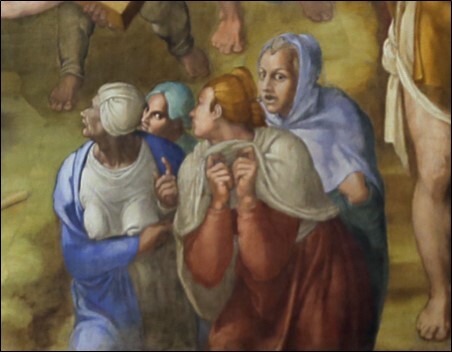 Detail from The Crucifixion of St. Peter, by Michelangelo, from the cover of Forbidden Knowledge
Twenty-eight years ago, in October 1996, I bought a book so full of knowledge and food for thought that since then I have returned to it again and again and keep it on the bookshelf behind me as I sit at my desk. I’ve written in it’s margins, marked up its pages with underlining, check-marks, and asterisks in both pen and pencil. And it has led me to buy and read many other books exploring the same subjects.
Forbidden Knowledge, by Roger Shattuck, at that time a Professor of Modern Foreign Languages at Boston University, is as pertinent today as it was when I bought it. And as it will always be because it has to do with human nature, a boundless subject.
And Shattuck’s book seems particularly meaningful to me today. Once again we are on the brink of a new age of unleashed human curiosity, and the attendant risks that come with it. Not the least of which is the potential for unintended consequences. But now, unlike in other eras of human history, our curiosity is travelling at an accelerated velocity that humanity has never known before, because it was never possible until now.
So, when something new comes along that will impact everyone on earth (yes, I’m talking about something like AI), then we scarcely have time to grasp the enormity of its potential impact before it’s to late to control it. In an article I read recently by Yuval Noah Harari, he cautioned that we should all think twice before unleashing a power we cannot control, as in Johann Wolfgang von Goethe’s story of the sorcerer’s apprentice. (And Walt’s Disney’s version with Mickey Mouse.)
Shattuck’s book Forbidden Knowledge helped me think in new ways about the conundrum of the risks and benefits of human curiosity.
Like all tools we have access to, curiosity and imagination can be used either to build things up or to tear things down.
It’s up to us to decide how we want to use them.
The post The Responsibilities That Come With Our Knowledge appeared first on David Lindsey.
September 22, 2024
The Rules of Grammar . . . Or Not
“i” before “e” except after “c” . . .
EXCEPT . . .
. . . when your foreign neighbor Keith receives eight counterfeit beige sleighs from feisty caffeinated weightlifters. Weird.
The post The Rules of Grammar . . . Or Not appeared first on David Lindsey.
September 21, 2024
While We’re All Focused on the Middle East
The following snippets are from Back to the Cold War: Russia uses Mexico as a Hub for Spying on the U.S. in today’s NBC News.
“Russia has added dozens of personnel to its embassy staff in Mexico City in the past few years, even though Moscow has only limited trade ties with the country.”
Russia’s actions in Mexico reflect a more aggressive posture by its intelligence services across multiple fronts, as the Kremlin seeks to silence critics abroad, undermine support for Ukraine and weaken Western democracies . . . .”
“I would point out that the largest portion of GRU members in the world is in Mexico right now. Those are Russian intelligence personnel, and they keep an eye very closely on their opportunities to have influence on U.S. opportunities and access,”
“Even though Mexico has built up extensive trade ties with the United States over decades . . . (it) has maintained friendly relations with Russia and Cuba.”
“U.S. officials also are concerned about Russia’s effort to manipulate the information landscape in Mexico . . . to sow social divisions . . . (to) expand its state-funded media outlet RT. . . .”
The post While We’re All Focused on the Middle East appeared first on David Lindsey.
September 16, 2024
How the Authors Guild Is Fighting Censorship in Texas
 I’ve been an Authors Guild member for 33 years. The following is a communication from todays Guild mailing.
The Authors Guild and a coalition of bookstores, booksellers, authors, and publishers filed a lawsuit on July 25, 2023, challenging Texas House Bill 900, the ironically-titled “Reader Act.” The law violates the First and Fourteenth Amendments of the U.S. Constitution by regulating speech in a vague and overbroad manner and acting as a prior restraint of speech. It requires booksellers to rate books for any sexual content if they are to be sold to school libraries, without any clear guidelines on what that means. The law potentially requires the removal of classics like Romeo and Juliet, Of Mice and Men, and Lonesome Dove. The proposed system is highly impractical for booksellers who simply do not have the resources to review and rate every book they sell, and would especially harm small bookstores. The law would cause self-censorship and harm authors nationwide with the stigma attached when their books are publicly rated for sexual content.
The law’s effects could affect book sales across the country as educational publishers typically cannot afford to produce different versions of books for different markets. Publishers would likely not publish books at all for fear they might fall afoul of the Texas law, and authors of childrens, young adult, and classic literature could lose sales to the school market across the country. Moreover, labeling a book as having sexual content in Texas could trigger challenges in other jurisdictions.
Wherever you live, we urge all members to get involved in this fight. Please join our virtual event on September 25 to learn how you can help defend the freedom to read in Texas.
https://www.texastribune.org/2022/09/19/texas-book-bans/
https://www.dallasobserver.com/news/list-of-texas-banned-books-shows-state-has-most-in-us-17480532
The post How the Authors Guild Is Fighting Censorship in Texas appeared first on David Lindsey.
September 14, 2024
Aspects of Free Speech
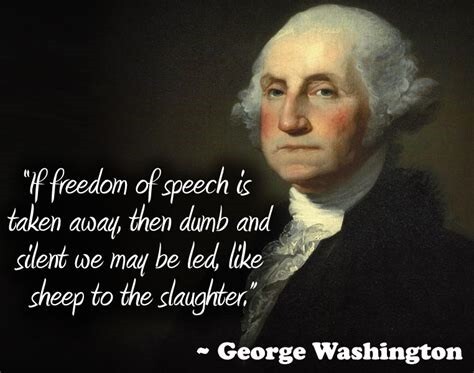 Many books have been written — and will continue to be written — about the complexities of free speech. In the US, the issue was never simple, even from the beginning as the nation’s constitution was being written. But as time has passed through decades and centuries, as global cultures have expanded and interacted with increasing regularity, education spread from the elites of our founding fathers to Everyman, the “freedom” of speech has grown ever more complicated.
And the arrival of the Digital Era with all of its accelerations — of communication and knowledge and possibilities and challenges — has only exacerbated those complexities. Digitally amplified speech has reached a previously unimagined volume. And it is ubiquitous. And instantaneous. And the rush to use it has almost obliterated the thoughtfulness that ought to precede it.
And how have these new tools and their potentialities been handled by humanity? As one might imagine, with the very best and the very worst of intentions. And when it comes to “free speech” how do we ferret out the intentions behind what is said? We know that free speech is for the good of everyone all the time.” , what freedom of speech is allowing? There is no perfect formula for this, and each individual must is responsible for their own efforts to avoid being duped by those who want to deceive us. But always, foremost: question everything. Do not accept anything at face value.
I’ll write more about other aspects of free speech in future posts, but for the moment lets consider just one basic question (and it’s opposite) about the “free speech” that we take for granted every day.
Qui bono? Latin for “who benefits” Who benefits when speech is “free”? Who profits from what is being said? In the quote from Washington above it seems that it is absolutely necessary for the survival of democracy.
But then ask the opposite: who is harmed when speech is free? Those who listen and believe when a crazed seditionist rants against an existing democratic state, fostering rebellion. Women and children who are trafficked by the deceptions of organized criminals. Tweeners who explore “life” online, and are exposed too early to things that are far beyond their ability to understand. Teenagers whose natural curiosity leads them to seek out “forbidden” contact on a variety of subjects on the Internet. Those who believe lies masquerading as “the solemn truth”. The victims of scams. The victims of predators.
So, then, should speech be subject to curbs, guidelines, and regulations? If so, who creates those guardrails? Qui bono?
The point is, all free speech is not equal in value. Washington’s statement in the illustration at the beginning of this article is certainly true. It’s just not the whole truth. The truth is more complex. Far more complex.
So how should we think of free speech today? Its complicated.
The post Aspects of Free Speech appeared first on David Lindsey.
September 10, 2024
A New Beginning

For those who don’t write fiction — or any kind of professional writing — the work itself hardly seems to be “work” at all. One sits and thinks, then writes some ideas. How hard could it be?
Of course, as a novelist I would beg to differ with that viewpoint. How hard could it be? Well, actually, almost impossible. Nothing co-operates. Everything gets in the way — life in all its distractions on a continuum from basic and wonderful, to horrible and outré. And then, of course, there’s the worst thing of all: failure of imagination. Though this latter issue isn’t limited to the writing profession, it happens in every facet of our lives. Most notably, it seems in today’s media-stormed world, it happens in the realm of politics. But that’s in another country, metaphorically speaking.
It’s been a little over two and a half years since I’ve posted something in this Journal. The world has been too much with me late and soon, as William Wordsworth so eloquently phrased it in his sonnet. He was referencing the busy-ness of the first Industrial Revolution. My Lord, I think his mind might have exploded if he could have foreseen what was lying ahead in the Digital Revolution.
But things have not stood still for me. I have a new novel, “Fate Surprised Her”, available on this website and other platforms as an eBook original, and another novel is coming in a few months, also to be an eBook original. I’ve also obtained the reversion rights to all of my quintet of Stuart Haydon novels, and they also are now available on this website and elsewhere as eBooks.
More about all of that later.
I’ll now resume fairly regular entries here in this Writer’s Miscellany, and I hope you’ll rediscover me and let me hear from you.
The post A New Beginning appeared first on David Lindsey.
December 21, 2021
A Snapshot of American Discontent
Every morning I read five or six newspapers/websites. In papers like The Washington Post and The New York Times I’m curious about the articles that have generated the most comments from the readership. They often provide a snapshot of American discontent. I read the articles, then go to the “comments” section. I preselect the “Reader’s Picks” because I think this gives me a glimpse of the general tenor of the readership who agree with another reader who cares enough about the article to take the time to express themselves about it. Sometimes those comments coincide with the editorial board members who also pick their favorite comments.
On December 15, 2021 the weekly New York Times columnist Thomas B. Edsall wrote a story titled How to Tell When Your Country Is Past the Point of No Return. I found the article pretty thought-provoking, so I was curious about the readers comments. Below are the ones that the most readers, including the Times editorial board, agreed with most. The sentiments expressed in the comments says a lot about what issues a good portion of Americans find disturbing, and why.
James Landi commented December 15 Camden Maine Times Pick An excellent public education system is the absolute necessary cornerstone for a strong foundation of democracy. So sad to say, but we have a government reflecting this structural weakness. I began my teaching career over fifty years ago, and by the early 80s, when Reagan’s blue ribbon national education assessment committee presented “A Nation At Risk,” I, having been a school man by then for over 15 years, needed no convincing. ●Our children are distracted, ●our teachers worn down, and ●our education system is underfunded, underappreciated, and, for decades, good teachers have been fighting a losing battle for kids’ attention. Now we have a new crop of elected officials who are happily engaged in destroying the very foundations of our constitution democracy— the result of ●self-serving, ●power grasping, ●ignorant, ●arrogant “lawmakers” who are representing ●several generations of Americans who don’t have the intellectual power to know the difference. 34 Replies, 1884 Recommended
GI Doc commented December 15 Nashville Times Pick A pandemic did not mobilize sufficient political will to restructure our absurd healthcare system, Sandy Hook did not mobilize sufficient political will to address ●our absurd gun fetish, and–so far– a violent coup to subvert a free and fair election has not mobilized sufficient political will to strengthen the absurd and obvious weak points in our democracy. Point of no return? More like point of no escape. In those examples above, and many others, take a moment to reflect upon ●which faction of our wide political spectrum is responsible for this toxic inertia. ●Clearly one step in the right direction would be to get money out of politics, but in the meantime, I ask these businesses with their heft of lobbying powers that have traditionally sided with said faction–is it good for business to have a country in such precarious disarray? What does the constant fear of political violence do for consumer confidence? Please don’t be penny-wise and pound-foolish. 48 Replies, 1881 Recommend
David commented December 15 Canada, Times Pick, So, how many countries have adopted a system like the U.S., not any I can think of. ●Two parties unable to compromise on anything. A country ●where small populations have the same power are much larger ones. The ●ability to change the voting game depending on who is in power. ●Money, money money flowing through the system. ●A system where some get elected and then have to spend most of their time trying to get re-elected rather than serving the people. Get real …no one has a perfect system but yours is unraveling fast…change is the answer…are there any leaders among you to pick up the torch? 52 Replies, 1482 Recommend
Uncle Jetski commented December 15 Moorestown, NJ, In Bush v Gore, we stood down out of respect for the institution of the Supreme Court. In 2016, we stood down out of respect for the Electoral College. We will not stand down again. 33 Replies, 1428 Recommend
Tom J. commented December 15 Berwyn,Times Pick, My point of no return was the period between the onset of COVID through the Jan. 6 attack on the capitol. I can’t forgive without some olive branch from the other side and there has been none. Perhaps others are kinder and more forgiving than me, good for you. I’m done with them. 18 Replies, 1215 Recommend
Rick commented December 15 Cedar Hill, TX Times Pick, The elephant in the room is big money. Both parties are own and controlled by it and until that problem is corrected nothing will change, it is that simple. Seems no one wants to address the hard problem. You don’t vote, you don’t get. 21 Replies, 1161 Recommend
Michael commented December 15 Hatteras Island, Times Pick, Not sure how anything can or will change except to continue our current trajectory. The internet has unveiled what we are. A nation of ●violence, ● lies, ●superficiality, ●propaganda, and ●a fixation on all things money. There is no ‘fix’. We’re operating on autopilot. 16 Replies, 1079 Recommend
Ethan Allen commented December 15 Vermont, The academic analyses quoted here all discuss the theoretical steps and indicators that a tipping point is being reached, in language that suggests the authors are unaware that all the things they describe have not already happened. But they have indeed already happened, which to a sentient reader implies that we have already reached – and likely gone far beyond – this point of no return. The time to write these calls to urgent action was twenty years ago, when Republicans first began to openly disassemble America’s democracy. Their project to make minority rule permanent has been going on at least twice that long, but they have been brazenly acting in the open for at least two decades, when the critical alarm should have been sounded. I’m sorry but all these pleas for the population to take note of incremental damage to our democracy and way of life ring very hollow when the clock is already at one minute to midnight. 13 Replies, 1054 Recommend

The post A Snapshot of American Discontent appeared first on David Lindsey.