James Farner's Blog, page 3
June 10, 2015
Interviewing Indies 2 – Sharon Loveday
It’s been a while since I’ve done an interviewing indies segment. If you haven’t seen the one I did for A.D. Faylinn, go and take a look, before coming back here. This time we’re going to be looking at the book Maz and Me.
This is the story of thirty-year-old Tony Goodbody and his relationship with an older woman Maz. Whilst the relationship is key to the book, author Sharon Loveday hones in on many aspects of his life. It’s as much romance as it is coming-of-age, adventure, and comedy.
 Before we start the interview, I thought I’d release a little titbit she sent me about why she chose such a plain cover to work with.
Sharon said, “It was at a French friend’s suggestion as he said ‘you English have book covers that make it look like choosing sweets from a sweet shop.’ I then looked at many old French books, like Bonjour Tristesse, and found they had plain covers.”
What brought on the idea for Maz and Me?
I was in my early fifties and nearing the end of a Creative Writing and Literature Degree, when I visited Paris to see friends and the seven of us found ourselves stuck in a lift for hours while the janitor of the twelve-storey building was at the evening match of the French/English international rugby final. We had all just left a French restaurant and taken in rather a lot of excellent cuisine and wine. It was a frightening experience being in that lift with little air, and only one empty plastic coke bottle between us for any toilet requirements. Luckily, after our escape, it inspired the idea for the novel. I also decided to set the first few chapters in Paris as it’s a city I love and I do believe it’s easier to ‘write what you know’. Incidentally, the book now has a subtitle ‘Maz and Me: The Young Man Who Took Cannabis to Paris’.
This appears to be your debut novel, as far as I can see. Are you someone who’s always desired to become an author?
My father is an award-winning author and poet (John Loveday), so writing was always talked about at home and I just seemed to gravitate towards wanting to write. I left it rather late in life to study for the degree but somehow achieving that gave me the confidence to try the novel. I thought, ‘let’s try to put all this hard work to good purpose’. I have always enjoyed reading too, there is hardly ever a day when I don’t have a book to hand.
How many of the characters are based off of real people?
I spent a lot of time developing each character from a mixture of people I’d met in the past. As the book is essentially a comedy, I dragged from memory comic phrases friends had used which had caused me to laugh during my lifetime. I then applied these to certain of the characters, especially the main character, Tony Goodbody and his friend ‘Cheddar’. It also seemed necessary to develop a character who would act a foil to Tony Goodbody’s bad behaviour so along came the idea of ‘Jolly John the ex. Copper’ (who is anything but Jolly). When I left college in 1972 I worked in the C.I.D. Department of the local police station, as a mini-skirted 18-year-old secretary, so there was plenty of material to draw from to form this character!
Also, part of my formative childhood was spent living in a school for boys with behavioural problems where my father taught. These boys were often pranksters and, I think, as a little girl living with them, it had a great influence. Many of my short stories (unpublished so far) have incorporated memories of the time we spent living at that school. So, my characters are created from a mix of people I’ve known and been influenced by. I have to say, that characters from films and books have certain influence on the type of character you want to create too. For instance, I love Holden Caulfield from “The Catcher in the Rye”, Benjamin Braddock, Dustin Hoffman’s character in “The Graduate” and say, Will McKenzie, Simon Bird’s character in The Inbetweeners.
Why do you believe Tony gravitates towards Maz so much? I have to admit originally I thought this was going to be a straightforward love story between Maz and Tony with the inevitable happily ever after. Spoiler alert – there are far more twists and turns.
Tony is an intelligent character, aged thirty, who struggles to find the depth of conversation and understanding he craves from his contemporaries. He therefore gravitates towards Maz who is quite a lot older, tolerant, and is the mother of two of his friends. He wants to share experiences, have meaningful discussions, plus he has had erotic thoughts about her since he was fifteen.
There are lots of different facets to Maz and Me. Was it always the intention to balance it between adventure, comedy, romance, and maybe even a little bit of coming-of-age?
Thank you, James, for picking-up on the different facets, it is something I hoped, more than anything, that readers would enjoy. First of all, I have to say, it was a challenge to write in the voice of a young male. There were several things I wanted to achieve in this book:
A mild erotic thread as we watch the developing relationship between Tony and the older woman, Maz.
Humour, through the voice of a young male character as he shares his experiences with us.
To let the reader see Tony actually learn something from his escapades. This is particularly noticeable when he visits the Hay-on-Wye Literary festival and is compelled to have a debate with ‘Jolly John the ex. Copper’. Throughout Tony’s journey in this book, although he misbehaves and has some strange opinions, we see him battle with himself as he tries to combat some of his worst traits.
I wanted to create it as a slightly philosophical look at life and hope the reader would be left with a light feeling. Luckily, some readers have told me they felt ‘warm’ and ‘happy’ during, and after, reading it.
Did you always have a specific ending in mind? As someone who also writes books about ‘life’ I know it can be tempting to continue a story for the rest of a character’s life.
I did have a specific ending in mind. I just wanted to show a young man’s journey to some maturity, where he is not rebelling against convention to the degree that he had been, although leaving an element or two of his character which perhaps need further exploration.
Do you intend on writing a sequel to Maz and Me? If not, are you working on anything now?
I hadn’t intended on writing a sequel but many people have asked me to write one, so I have started…Tony age forty!
If you want to check out Maz and Me, it’s available from Amazon right now. You can also find Sharon on Twitter.
Until next time…
James Farner


June 3, 2015
Writing Difficulties on the Road
I’ll be honest, it’s been difficult to manage. Travelling is something you don’t have to do every hour of the day, but sometimes with all the socialising you lose a lot of time. Right now I’ve managed to catch some spare time on the bus to Hamburg.
Don’t get me wrong, I love the meeting new people thing, but sometimes it can really impact your writing output.
Losing Productivity
I admit I’ve lost quite a bit of productivity since I started travelling. I’m way behind on my targets, in terms of writing new books. That’s simply because I don’t have the spare hours any longer.
I’ve managed to discipline myself to set that time aside, but I’ve gone down to about 1500-2000 words a day, which is about half of what I normally write.
This is where writing so many books in advance has paid off big time. It means I’m in no danger of missing any release dates.
Juggling Writing and Editing

This is what it feels like sometimes
The issue is writing and editing at the same time. I have to make changes to some of my books whilst writing other books. There’s nothing I can do about this because I’m not keeping to a strict schedule of write and edit a book every month.
It means some days I get no writing done at all because I’ve had to go away and edit. Some days I can’t write a novel because I’ve got a short story I need to complete next.
Trying to manage this time, as well as everything to do with travelling is a real challenge.
Luckily, it hasn’t impacted my release schedule or the quality of my work thus far. I will be interested to see what my editor thinks when I send her my first book written entirely abroad.
In the meantime, you can check out news of my travels on www.travelfarner.com
Until next time…
James Farner
May 25, 2015
James Farner and Travelling on the Road
You likely won’t notice anything, but 1984 (Made in Yorkshire Book 7) was actually released from an apartment in Paris. Right now I’m in Brussels in Belgium, and in a few days I’ll be in Amsterdam in the Netherlands.
Why am I doing this?
Well I haven’t left my city in three years. I’ve lived an isolated life, and that has constrained me somewhat. I don’t know what it’s like to truly experience what say Richard Warren, Jessica Deakins, and Peter Warren have experienced. My characters are more advanced than myself, and that’s a problem.
I want to experience some of those highs and lows for real. I want to know what it’s truly like on the outside, and so I decided to go for it.
I’ve never done anything like this before and I’ve never been truly alone and far far away from what I know, but now I am. In another country it’s difficult to simply return home on a whim. It takes real effort to do that.
So what does this mean for me?
At the moment, I intend to simply continue my work as I am now. The War Years series will start on June 18th and I’m looking forward to seeing what will come my way. I’m eager to try working abroad outside of my writing at some point too, just to see what happens.
But don’t worry. I’m not going to be spamming you with my travel stories anytime soon. I’ve created a separate website www.travelfarner.com/ for that. It’s the same theme as this website, except it concentrates more on my travel stories.
You can easily access my new site from the James Farner the Traveller Page too!
Until next time…
James Farner
May 15, 2015
1984 – Richard’s Story Comes to an End
With Richard back living in Yorkshire, and Peter always close by, it’s no surprise that he finds himself stuck in the mud again.
As readers of 1981 (Made in Yorkshire Book 6) will know, Richard has a family now. And trying to form bonds with his young son is at the forefront of his mind.
With enemies from the past closing in around him again, he has more to lose than at any other point in his life.
The End?
Richard’s story is coming to an end with this book, but that doesn’t mean the Made in Yorkshire universe is disappearing into some deep abyss. I’ve always had plans to continue the stories and to expand on what I’ve created.
When you read book seven you’ll see a sneak peek for my next series due out June 18th. Made in Yorkshire The War Years takes place over the duration of the First World War from the perspective of fourteen-year-old Daniel Keeton.
You’ll see ancestors of some old families return for this next series, which will introduce you to the roots of many of your favourite characters. I hope you stick around for this next part of my authoring career.
On a side note, I will still be producing a few more short stories revolving around Richard. These will be added to the anthology as always, so if you haven’t yet signed up for the newsletter, what are you waiting for?
One Day Later
To tell you the truth, I fully intend on revisiting Richard’s family in the modern era one day. It won’t necessarily take place from the perspective of Richard, but I hope to update you on how his family are doing as we get closer to the present day.
When will this happen?
I have no idea. In time, we will see what happens.
Until next time…
James Farner
May 12, 2015
One Reason Why I Don’t Write and Release
When I began writing this particular series at the beginning of 2014, I made a conscious decision to complete every novel before I thought about releasing them to the general public. At this point, I didn’t know how many novels I would write. It was probably after the fifth novel I took the decision to end it at book seven.
This is probably quite an odd habit. I know for a fact most authors complete a book, release it, and then begin the process all over again. I write every book and release them one by one.
You may also wonder why I don’t release them faster than one per month. I’ll answer that now. That’s simply to give me more time to write my next books. At any one time, I may be five books ahead of an impending release date. I compromise that and it’ll catch up on me.
I released Made in Yorkshire books one and two (1964 and 1969) at the same time at the start of December. When I released these two books, I was already half way through the Made in Yorkshire series. I won’t say they were all edited and ready to go, but I’d completed the first drafts.
Anyway, I’ve given you enough context. Why don’t I write and release?
I thought about that this month. It happened when I discovered my editor had a serious health problem and she had to go in for surgery. Now as morbid as it sounds, she could have well died. Any form of surgery carries risks. She may have died. She may have had to spend a prolonged time in hospital. She may have experienced complications at a later date.
I don’t know.
And because I don’t know and I can’t plan for these unforeseen circumstances I feel better planning far in advance.
If my schedule is delayed for whatever reason and I’m writing and releasing, I may have to disappoint all my readers by apologising and saying I can’t get that book out on-time. That irritates people to no end. I know that because it would infuriate me. When I’m promised something I demand that promise is kept.
On the other hand, if I’m six months away from that book’s release date, I can adjust and bring someone else in on a temporary basis.
This is something I considered when I began to write. But these latest developments have really driven home why I did this in the first place.
Until next time…
James Farner
May 5, 2015
A Difference in Writing Style – What I Read Changes What I Write
Irrational? Yes.
My style will always change because that’s called personal growth. It feels odd to look back on work I produced years ago. Back then it was nothing short of amateur, and that’s taking into account the fact I didn’t use editors. Thankfully, none of this work ever saw the bright lights of the general public.
A Single Book
All it takes is a single book to change the way I write. I can see it because my thought process is different. It’s like I’m absorbing the skill and nuances of whatever author I’m reading at the time.
It reminds me of a console game named Mortal Kombat Deception. Now this game is well over ten years old now. I played it for hours on the old Playstation 2. In the game you follow the life of a young martial artist named Shujinko. Every time he trains with a fighter he absorbs all their skills and he can become them. He adopts their moves as naturally as a child learning to crawl along the ground.
And that’s how I feel. Every time I read a book I can feel myself changing. 1964 (Made in Yorkshire Book 1) is a million times different to 1984 (Made in Yorkshire Book 7), for example.
A Diet of Novels
I once had this crazy idea of only reading specific books to stop this from happening. This was the case as recently as late 2013, and for a time I found it worked. The problem is I felt as if my style was stagnating because of it. I was purposely avoiding different authors in case it ruined things.
It wasn’t until later I began to accept this was a good thing and the style change was here to stay.
I suppose it really depends on what you want from me. Some people gravitate towards a writer’s style. If that’s the case, I’m sorry. But I think most people care about the story and the characters more. Most of you aren’t particularly bothered if they witness a change in me over time, and I believe that’s the case with most authors.
So What am I Reading Now?
The latest book to alter my ways is a book called Papillon by Henri Charrière. The book charts the author’s true story of his desire to escape from the penal colony of French Guiana in the early 20th century.
His style is brutal and violent. It gets right to the point and doesn’t dance around any of the key issues. And that’s impacted my way of doing things. I’m relying less on flowery language and more on shoving the plot forward.
I just hope it leads to progression, rather than regression.
Until next time…
James Farner
April 29, 2015
Interviewing Indies 1 – A. D. Faylinn
I tend to read quite a few indie works. So, I thought we all need exposure and it’d be good to pay things forward, as well as turn you good people onto some interesting reads. This is going to be a little series on the blog that I’ll do every so often, depending on what I’m reading.
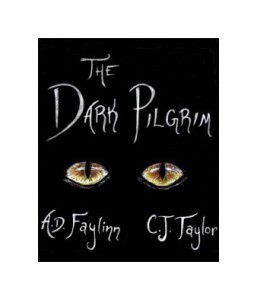
For the first entry, I spoke to author A. D. Faylinn. She is one half of the writing duo that wrote The Dark Pilgrim in the Flight of the Lionheart series. Together with C. J. Taylor, she completed this first installment in her young adult fantasy series.
1. You wrote the Dark Pilgrim with your co-author C.J. Taylor. How did you meet her and what was it like writing with someone else?

A. D. Faylinn
I met C.J. Taylor when we were in the 7th grade. We instantly bonded over our love of horses, movies, and books. We began writing The Dark Pilgrim as freshman in high school. She and I would spend most of our Saturdays or Sundays writing together for 8-10 hours. During the week we worked on chapters individually. We had to balance our time spent writing with our other obligations like school, sports, and jobs.
As for writing with someone else, we used to sit side by side and plan our outlines and we’d write chapters together with one of us grabbing the keyboard from the other when inspiration struck or another calling out sentences or dialogue as the other typed. It was a very unique process to be sure. I definitely don’t think I could co-write with anyone else. Another way we’d write was to discuss chapters and each write our own version then decide whose we liked better. This process often resulted in merging chapters, or choosing one version of the chapter over the other. If you can name a way one might write a chapter with two authors, we have probably done it. Some chapters are written entirely by myself or Taylor with one of us contributing a sentence or two. It is a crazy process, but somehow it works for us. Often, one of us writes until we get stuck, then we send it to our partner who gets inspired and takes the reins. I love having someone to ignite my creativity and imagination, forcing me to broaden my mind, not to mention tell me when my writing is terrible.
2. How much experience of writing novels did you have before embarking on this project?
Neither of us had any experience whatsoever. You should see the early drafts. Sometimes when Taylor and I skype, we re-read chapters from those old days to each other and laugh until we cry.
3. There’s clearly quite a lot of inspiration taken from the Tolkien style of fantasy. Was this something you were always inspired by, or did it just sort of happen as you wrote in your specific style?
It just sort of happened. Taylor has never read anything by Tolkien, and I hadn’t until after the first draft of The Dark Pilgrim had been written. We both just love the fantasy genre and have read extensively in it. I am absolutely an avid Tolkien fan now, don’t you worry. I feel that I am inspired in some way by everything I read, in the fantasy genre or not, and use what I have learned in my own writing. I think reading is one of an author’s most powerful tools.
4. Your universe of Andumon has a lot of different place names, unconventional names, cultures, and people, which forced you to add a glossary at the back of the book. Was it always your intention to create such a rich universe or did you get to the end of the book and realise “Wow, I might have to explain some of this.”?
Yes, and no. We had a lot planned out when we drafted our first map of Andumon. But just as characters take on a life of their own, Andumon also grew into something more vast than we had initially anticipated. It is sad because there are many days I wish I could jump on a plane and fly to various cities in Andumon and experience the culture of those regions. Taylor and I have discussed how there could be numerous novels written separate from Gilaon’s story that take place in Andumon. That concept is something I am definitely toying with.
5. Which part of the Dark Pilgrim book did you find most difficult to get just right?
Ah, yes, I thought you might ask that. When the company is in the Fordrin and Gilaon learns…things… I don’t want to reveal anything for those who haven’t read it yet. But definitely the Black Gryphon chapter was really tough for us and has changed so many times. Revealing what needed to be brought to light without it being an information overload was a battle. That section underwent many rounds of revision until we were satisfied with where it was.
6. What did you base the whole landmass of Andumon off of?
We didn’t base it off of anything in particular. It just kind of shaped itself. Sometimes I feel that the land of Andumon itself is a character in our book.
7. In hindsight, is there any aspect of the book or plot where you wish you could have gone in a different direction?
Yes, we have such strong female characters that aren’t well represented in the earlier chapters. We don’t want readers turned away by the overpowering (in Taylor’s words) bro-town happening at the opening of the book.
8. How many books do you think this saga could take up, or do you intend on following a Tolkien style of structure, where you could have lots of accompanying books beyond the main plot?
We have it divided into a series of 5 books. We know where each one is beginning and ending and have a rough idea of what will take place in between. That being said, the number is flexible due to the characters’ development and plot twists we hadn’t originally planned for.
And I answered the question about books accompanying the Flight of the Lionheart series earlier, but several characters, Mirenor especially, could easily have her own series.
9. We quickly see the main travelling party of Gilaon, Kenair, and Senbi come together, yet so far we’ve probably seen Gilaon develop the most. Do you have clear ideas in mind as to how you want to see the rest of the main characters progress, in both mind and body?
Kenair is very much surprising us while we write book 2. I am very excited to see how he develops. He had a much more innocent view of the world as a child compared to Gilaon’s upbringing, so he is coming to grips with the harsh reality a little slower.
Senbi is by far my favorite character. He has made me laugh, cry, become angry, and I still love him. Get ready for what he has to offer in subsequent books.
10. When will we see Flight of the Lion Heart Book 2?
We are halfway through the draft for book 2. Between myself being a full-time mom to a busy toddler and Taylor pursuing her PhD at Yale University, we try to write a little each night and hold skype meetings once weekly. We both wish we could sit and write full time, but unfortunately that isn’t where we are at currently. We would love to get a draft of book 2 to editors by the fall and release it mid-2016, but you’ll have to stay tuned for that!
Stick with A. D. Faylinn on her website and on social media:
www.flightofthelionheart.com
Flight of the Lionheart on Facebook
@adfaylinn
April 22, 2015
Is the Romantic Writer a Thing of the Past?
Can the romantic writer still exist in this modern world?
From the Past…
Look to the past and you can easily find lots of quotes about writing. Check Twitter or Facebook and you’ll see lots of these inspirational images coming up, under the #amwriting tag, for example.

One of those inspirational quotes I was talking about
One thing I’ve noticed is a lot of these quotes come from writers in the distant past. Compare the travels of Jack Kerouac to the average best-selling author today. One hitchhiked across America and the other checked their Amazon rankings, whilst conversing with their cover designer.
A generalisation, I know, but a lot of the romantic side of writing seems to have gone out of fashion today. I really only see it amongst people who have either just started or who talk about writing yet don’t actually do any of it.
What is it?
Much of it can boil down to that pair of rose-coloured spectacles people like to wear. Nostalgia is powerful and it can highlight the past as something infinitely better than what we have now. As we know, that’s not necessarily true.
If we move aside the foliage, we can see that much of this romantic idea of the writer hasn’t really changed. The writers of before had to go through the same processes as we do now. They needed to get their books into the public eye and they needed to make a living
But that Doesn’t Make it the Same…
One of the big problems I think we have today is that the Internet has meant we don’t need to experience life to write about it. I’m as guilty of this as the next person. I can zip to anywhere in the world and research any subject without leaving my computer chair. The writers of before didn’t have this luxury. They had to go and do things.
So some of the romanticism has gone out of writing, but it’s simply because we don’t have to experience like our ancestors did. You can write a perfectly enjoyable book whilst living under a rock (even though that might be painful).
The question of how much life experience you need is a pretty prevalent one. It’s why I decided to write this blog, actually. I came across a blog on life experience by Steph Bowe by chance. That’s also a lesson on the importance of reading!
This lack of life experience on my part is something I want to fix in my life, however, and it’s something I might be altering sooner than a lot of people might think.
Until next time…
James Farner
April 14, 2015
The Darker Side of London – 1981 Book 6 Out Now
When London gangster Scotty Weston decides he has served his purpose, Richard finds himself cast into the streets of London.
How Low Can You Go?
For the first time, Richard must come to terms with the fact he has nowhere to go. He isn’t on speaking terms with his brother and his family want nothing to do with him. The money has run out and Thatcherism has weighed down heavily on the country, leaving unemployment rife and homeless numbers rising.
Discover how Richard copes with this terrifying new existence in 1981 (Made in Yorkshire Book 6). You can find it on Amazon, iTunes, and Kobo, to name just a few stores. Click on the previous link to go to the book’s dedicated page.
The End is Nigh
Yes, the penultimate Made in Yorkshire story represents a new low for Richard. Yet it also represents a crucial part in his life. He hasn’t always lived a good life and for the first time he has to pay for his actions. Through a path of suffering and hardship, we come to the final part of Richard’s story, 1984 (Made in Yorkshire Book 7).
People who know anything about this period in British history are well aware 1984 was the year of the big miner’s strike, where thousands of working miners went to war against Margaret Thatcher’s Conservative government. We have seen nothing like it since, and are unlikely to see anything like it again.
Find out on May 18th just how Richard Warren fits into all this. Or sign up for my newsletter and get the latest on this series and what I have to come straight after from June, as well as get the chance to read my anthology of short stories Made in Yorkshire – Between the Years.
April 7, 2015
Why I Still Rarely Read eBooks
It may surprise you to learn I rarely read eBooks. That’s right, despite the fact I sell practically all of my books in the eBook form, I don’t really read them. I do actually own a Kindle and I do sometimes flick through a few pages, but if you look at where I read most of my words you’ll find them within a classic paperback.
I once thought this was quite a strange thing. That’s what people tell me. But then I asked a few of my author friends what they thought. As it turns out, they feel the same way. Every single one of them owns some form of eReader, writes mainly for said eReader, yet sparingly reads from the aforementioned eReader.
So why do people like me still shun this revolution in reading?
In short, eBooks are more convenient to read than physical books in every way. No longer do you have to cram your favourite paperback into a bag and hope the bookmark stays in the right place. You can slip a tablet into a case and enjoy your day.
And despite all these advances they fail on one front. They’re not real books.
An eReader is nothing more than a really small laptop that you can only read books from. It’s a piece of technological genius. It’s still not a real book. That’s the crux of the matter. I can place a book on a virtual bookshelf, but I can’t put it on my real bookshelf. I can’t feel the pages beneath my fingers and I can’t smell that new book smell. Yes, I know you all love that smell, don’t tell me you haven’t noticed it!
A while back people predicted the Kindle would spell the doom of print books. Declining print book sales spelled the end of everything. So what happened? Sales actually went up year-on-year. There’s no sign of eBooks taking over from print books.
I for one am happy for that. I don’t want to see traditional reading fall by the wayside. I don’t want to disengage from staring at a screen all day to staring at another screen all evening. Reading is my break. It’s my chance to feel something new.
Reading from a screen will never give me or you that same experience. That, my friends, is why I will never prioritise eBooks above print books.
Until next time…
James Farner