
Cindy Vallar's Blog, page 13
March 21, 2023
The Dangers of Loving a Rogue by Jeri Black
 The Dangers of Loving a Rogue by Jeri Black
My rating: 4 of 5 stars
Betrothed since birth, Celia Breckenridge wants to experience adventure before settling down to become a wife and mother. A trip to Bermuda to provide companionship and comfort to a dying aunt allows her to fulfill this dream. Of course, getting one’s wish doesn’t always work out exactly as one expects – a lesson Celia soon learns when she departs Bermuda after her aunt’s death but before the ship her father arranges arrives.
While traversing the streets of La Rochelle, France, Jackson Beaumont happens upon a stabbing victim. The dying man is an old friend, who not only identifies his murderer but also bequeaths to Jackson the treasure map that the fiend sought. Jackson and his crew quickly depart with the intention of unearthing the Spanish emeralds.
Halfway across the ocean, they happen upon a pirate ship and her prey, as well as a lovely captive tied to a mast. The pirate turns out to be his friend’s murderer and Jackson has every intention of making his nemesis pay. He also rescues Celia, after she manages to shoot one of her captors in the foot. As traumatic as her capture and rescue are – and she’s not completely certain she hasn’t traded one sticky situation for another – Celia pleads to be taken home to England. The best Jackson can do is to drop her and the captured pirates off in Charles Town, South Carolina.
Both their plans are thwarted when the sheriff informs them that the pair must remain in town. Otherwise, Jackson will not be able to claim the ship he captured for his own and, without Celia’s testimony, the pirates will not be prosecuted. Further complicating their separate desires are an impending hurricane (actually two) and the growing attraction between them.
There are several shortcomings to this story. Too many characters have names starting with “B,” which may cause some confusion over who is who. It’s also not always easy to know who is speaking, such as when Jackson and his nemesis engage in conversation, or when his nemesis refers to Jackson as “mon amie,” which means a female friend rather than a male one. Readers are misled into believing that the impending danger, while Celia is aboard the merchant ship bound for home, stems from an approaching storm when she retires for the evening. When she is later awakened by pounding feet, she immediately jumps to the conclusion that the ship is under attack even though there have been no salvos of gunfire. Since the story takes place in 1752, readers familiar with pirate history may be puzzled by South Carolina’s tolerance of pirates, but Black admits to using poetic license for the sake of her story in her author’s note.
Even so, The Dangers of Loving a Rogue is a fast-paced historical romance. Black’s portrayal of the pirates is realistic and accurate, while that of the storms and their devastation are easily imagined and provide the perfect set-up for piratical revenge. One of the best lines comes from Celia after she is taken from the pirate ship onto Jackson’s: “’Twas rather like a chicken being welcomed to the stewpot.”(47) Readers who like swashbuckling adventure spiced with love will enjoy this story.
(This review originally appeared at Pirates and Privateers: http://www.cindyvallar.com/adult-roma...)
View all my reviews


Shipwrecks in 100 Objects by Simon Wills
 Shipwrecks in 100 Objects: Stories of Survival, Tragedy, Innovation and Courage by Simon Wills
My rating: 4 of 5 stars
A rosary from the wreckage of the Mary Rose, which Henry VIII witnessed sink. “The Shipwreck,” William Falconer’s poem based on his experience aboard the Ramillies as a midshipman. A letter placed within a bottle from an officer who thought he and his family were about to die. The life jacket that saved one man’s life when his comrades, who wore none, died. The anchor of a ship that sank in 1878 but has been seen several times since then.
These are a few of the items showcased in this book about shipwrecks. They do not represent the 100 worst shipwrecks in history nor vessels other than British. Instead, the author seeks to touch our heartstrings, to make us care about the lives lost, the living, and the aftermaths of such tragic occurrences. To guide him in achieving this goal, Wills asked himself two questions: “is there a notable personal story to tell” and did the shipwreck contribute “something to the overall narrative of ancestors’ experiences at sea across centuries”? (13)
While tragedy abounds within these stories, there is also hope. Mention “shipwreck” and our thoughts immediately turn to the men, women, and children on the vessels at the time of the sinking. Or perhaps to their loved ones who bear the grief and adjust to severe changes in their circumstances because of the losses suffered. But there are also those determined to survive or to help, such as Grace Darling, who helped her father, the lighthouse keeper, rescue stranded victims.
Wills, perhaps better than another author, is the best person to write these stories. His family has gone to sea since the time of Queen Elizabeth I and some experienced the wrecking of their ships firsthand. As a result, Wills’s abiding respect for the sea and empathy for victims, survivors, and rescuers are evident in each tale.
The selected objects include artifacts, medals, images, writings, charts, memorials, music, and buildings. Some are as intangible as storm clouds or sea monsters. Of particular interest to readers interested in maritime piracy are William Dampier’s giant clam, a Jolly Roger (representing pirates, like Samuel Bellamy who died in a shipwreck or Edward Teach who wrecked his flagship), and a first edition of Robinson Crusoe, the lone survivor of a fictional shipwreck who survived on an island for twenty-eight years before being rescued.
Wills arranges the entries in chronological order, beginning with 1539 and ending in 2012 when two Titanic museums opened 100 years after that ship sank. Both an index and a table of contents that identifies and dates each object allows for easy access to individual shipwrecks.
This book is an eclectic collection of objects that introduces us to shipwrecks we probably may not know about but should. Wills hopes these intriguing stories spur us to learn more about the vessels and the tales they have to reveal.
(This review was originally posted at Pirates and Privateers at http://www.cindyvallar.com/adultpirat...)
View all my reviews
February 19, 2023
Angela Ahn's Double O Stephen and the Ghostly Realm
 Double O Stephen and the Ghostly Realm by Angela Ahn
My rating: 5 of 5 stars
What do you expect with a last name like Oh-O’Driscoll? Ridiculous, right? And it opens Stephen up to all kinds of nicknames – which he hates. Natural for someone who’s just twelve years old and half Korean half Irish. He lives with his mom, who’s more into education than fun and blames everything on his dad, especially Stephen’s fascination with pirates. The only person he trusts is Brandon, his best, and only, friend. And they share a secret. They are PIVENTURATES.
A piventurate, you ask? It’s not even in the dictionary! (Not for want of their trying.) Stephen creates the word because he is not into the stealing and violence side of piracy, which is what dictionaries focus on. What he craves is adventure and sailing. After all, isn’t a pirate “a courageous explorer and a bold adventurer who loves the sea?” (5)
And what an adventure lies in store for Stephen! It begins with a pirate ship seen from his window. Then, while practicing swordsmanship during recess, Brandon is injured and Stephen gets suspended from school. Mom is not happy! She has no intention of allowing him to waste time during his suspension, so they go to a museum. Except the expected exhibit has closed. A new one on local history is now open. The first display showcases a nineteenth-century sea captain named William J. Sapperton. Sapperton may or may not have been a pirate. Stephen is thrilled, Mom not so much, especially once he touches an artifact and sets in motion a cascade of events that takes him to The Midway – a place where living people do not belong – where he meets Sapperton’s ghost. Of course, when you go where you should not be, trouble ensues. Trouble like pirates (living and dead), ghosts, broken promises, kidnapping, and discovering family secrets.
Told from a first-person perspective, this is not your typical pirate story, but it most certainly is entertaining and daunting. Stephen is willing to take chances to help others, even when Mom wishes otherwise. (Risk may be involved, but the violence is minimal and more implied than real.) The characters come to life (even the ghostly ones). Aside from the pirates, this is also a story of not fitting in, of following your dreams, of taking responsibility and making what goes wrong right, and being who you are. It’s also about learning about family, which in Stephen’s case involves discovering Korean lore and beliefs. Written for children ages nine to twelve, Double O Stephen and the Ghostly Realm is an awesome pirate – or should I say piventurate – tale for anyone (even an adult) who dreams of being a pirate or just wants to be true to oneself.
This review originally appeared in the March 2023 issue of Pirates and Privateers at http://www.cindyvallar.com/Ahn.html
View all my reviews
Nicky Nielsen's The Pirate Captain Ned Low
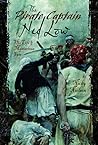 The Pirate Captain Ned Low by Nicky Nielsen
My rating: 5 of 5 stars
Edward Low, alias Ned Low. Not the best known of pirate captains, but one of the most brutal. His hunting grounds stretched from the Bay of Honduras to Newfoundland to the African coast. Despite all the mayhem he caused, he was never captured, never stood in the dock, never paid for his crimes. He simply vanished. This is his story.
Edward Low was baptized in 1688 into a family familiar with crime. He grew up on London streets, where he also acquired his education. At some point, he relocated to Boston, Massachusetts where he married Elizabeth Marble in 1714 and became a ship rigger. He lived a normal, family life until the loss of one of two children and, later, his wife. Prone to quarrel and drink, unable to keep a job, he left Boston in 1721. By year’s end, he had mutinied, committed murder, and turned pirate. His crew eventually described him as a “maniac.” Writers tended to use words like “savage” and “psychopath.” Not surprising given how he tortured and slew his victims, including Nathan Skiffe, a well-liked whaling captain who treated his men fairly.
Anyone who studies pirates soon discovers that there are lots of gaps in the historical record. Certainly, this is true in some degree with Low, but there are also far more facts and accounts of his piracy and life than are found for better-known pirates. Nielsen delves into these original sources to show who the real Ned Low was, as well as to discuss how he has been portrayed in them. Among the consulted renderings are eyewitness accounts from victims (especially Philip Ashton and his cousin, Nicholas Merritt), newspaper articles, and Captain Johnson’s A General History of the Pyrates. (The last is a somewhat controversial document that does include some fallacies. One intriguing example cited concerns the death of a French cook. Johnson says Low burned the man alive, whereas Ashton doesn’t even mention the cook.)
The book consists of nine chapters that cover Low’s life and his encounters with other pirates, such as George Lowther, John Massey, Charles Harris, and Francis Spriggs. The epilogue discusses the role maritime historian Edward Rowe Snow played in lore associated with Low. The one appendix lists the pirates captured by HMS Greyhound, along with their ages and places of birth, as well as which ones were eventually executed for their crimes. There is a section of black-and-white illustrations, a bibliography, and an index.
Throughout the narrative Nielsen poses numerous questions and then explains what may have actually occurred based on empirical evidence, his research, and educated analysis. He also provides necessary background information to orient readers. The Pirate Captain Ned Low is an absorbing, fact-based biography that sheds light on some of the murkier waters – what the author describes as “hazardous shoals of speculation, hearsay and outright lies.” (xii) It is a significant addition to any collection dealing with pirate history, especially that of the eighteenth century.
(Readers should note that with Low’s reputation for cruelty, this book contains a lot of violence and Nielsen pulls no punches in presenting this facet of this pirate.)
This review originally appeared in the March 2023 issue of Pirates and Privateers at http://www.cindyvallar.com/Nielsen.html
View all my reviews
John Amrhein, Jr.'s The Hidden Galleon
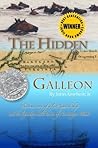 Hidden Galleon: The True Story of a Lost Spanish Ship and the Legendary Wild Horses of Assateague Island by John Amrhein Jr.
My rating: 4 of 5 stars
A sunken Spanish ship. Legendary ponies. A barrier island off the Virginia coast. These are ingredients that inspired Marguerite Henry to craft what became a well-known children’s story, Misty of Chincoteague.
Oftentimes, legends have their basis in fact. As centuries pass, divining what is truth and what is fiction becomes difficult. Research plays a key role in this endeavor, as this narrative clearly demonstrates. In this case, the journey begins at the National Archives in Washington, DC. Amrhein discovers a letter, written by a Spaniard, to Maryland’s governor in 1750. The information leads Amrhein to believe it will be easy to find what remains of the sunken vessel. (Yes, that incident actually occurred.) It also leaves him with an unanswered question: If finding the wreck is so simple, why has no one done so? As he soon learns, his supposition is anything but easy. The journey will span years and involve a court-martial, a con man, a ship that never sets sail, fraud, uncooperative governments, and legal battles.
The true beginning of this voyage is neither the ponies nor the hunt for a hidden shipwreck. It starts in August 1750 in Havana, Cuba, where Don Daniel Huony is the captain of La Galga de Andalucia, a worn-out warship built nearly two decades earlier. She can carry 632 tons worth of cargo and measures 120 feet from stem to stern, but numerous tweaks and modifications have left her less seaworthy than in her early days. After taking on cargo and passengers, including English prisoners taken captive by Spanish privateers, La Galga escorts five merchants on their journey to Spain. It is late in the year to be voyaging, but delays have left Huony little choice. They encounter a hurricane soon after their departure, which scatters the fleet. La Galga successfully navigates the seething water and wind until Assateague Island, where she strikes an impediment that damages her hull. Unable to stem the water flowing into the ship, Huony orders those aboard to abandon ship; all but five make it to shore.
Amrhein uncomplicates a series of convoluted episodes from recent and distant history to provide readers with a comprehensive and straightforward account that fascinates and astonishes. To further enhance the reading experience, he provides endnotes, a bibliography, an index, illustrations, diagrams, charts, and two sections of color plates. For those who enjoy mysteries and tales of searching for shipwrecks, The Hidden Galleon masterfully achieves both.
This review originally appeared inPirates and Privateers (March 2023) at http://www.cindyvallar.com/adultpirat...
View all my reviews
Julian Stockwin's Quarterdeck (a review)
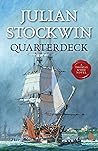 Quarterdeck by Julian Stockwin
My rating: 5 of 5 stars
Following the Battle of Camperdown (October 1797), Thomas Kydd is promoted to lieutenant and assigned to HMS Tenacious, a 64-gun ship-of-the-line. He and his friend, Nicholas Renzi (who now holds the same rank), head to Kydd’s home while the ship undergoes repairs. During this leave, Thomas realizes that if he’s to succeed as a king’s officer, he needs to acquire the traits of a gentleman. An assignment that falls to Nicholas, who believes the request reasonable but nigh unto impossible. Still, with dogged determination, Thomas perseveres and benefits when his sister helps add further polish to his social graces.
When Kydd finally meets his new commander, all his hard work and practice cannot erase the fact that he is a tarpaulin officer (one who begins his career as a seaman who lives on the lower deck). Captain Houghton wants only gentleman officers, men he can rely on to represent the ship and the country appropriately. Therefore, Thomas is being reassigned . . . until urgent orders arrive that prevent that. Consequently, he becomes Tenacious’s fifth lieutenant, the most junior and the one responsible for the signal flags.
Assigned to the North American station, Tenacious leads a convoy of merchant ships west to Halifax. Not even out of sight of England, French privateers cut out slower vessels and it is Kydd who alerts the captain to this intrusion. As the voyage progresses, Thomas feels more and more like an outsider, someone who doesn’t belong among the other officers in the wardroom. It doesn’t help that Nicholas easily fits in and has found someone new with whom to have philosophical discussions. Before long, Thomas feels as if he’s caught between a world in which he doesn’t belong and one to which he can never return.
A misstep in reading the signal flags doesn’t help the situation; it merely serves to intensify the isolation and loneliness that he feels. Yet, what he doesn’t understand is that while he may lack all the social graces that the other officers have, he has knowledge and experience they lack because he has “come aft by the hawse.” This expertise comes in handy when he commands a ship’s boat amidst an ice field blanketed by fog from which the French emerge and fierce hand-to-hand combat ensues.
Thomas’s attitude begins to change during a dinner conversation on the admiral’s ship. Instead of worrying about his social station, he concentrates on becoming as informed as possible about global affairs and how events in one place affect events elsewhere in the world. Then someone from his past emerges who threatens his ability to lead men. Only his knowledge of life on the lower deck allows Thomas to effectively deal with the situation. An encounter with a French frigate with unexpected armament requires his knowledge of navigation and working in a shipyard to protect Achilles and those who serve on her.
Quarterdeck is an excellent account of what it is like to be a fish out of water in a world totally foreign to all that you know. It also shows the intricacies of what is required to be a lieutenant. Along the way, Kydd encounters three people who will influence his life in unexpected ways. One is a relative he has never met. The second is an American who wants the new United States Navy to be as successful as the Royal Navy. The third is a woman whose presence at a royal ball is “either inspired deviltry or the purest ignorance!” (312)
While readers may be unaware of the fact that one aspect of writing is to show how a character matures and changes between the beginning and end of a story, Stockwin does a superb job demonstrating this character arc in Quarterdeck. This allows us to experience the full gamut of emotions that Kydd does, while at the same time, we readily identify with each because in one way or another we’ve felt the same way.
This review originally appeared at Pirates and Privateers (March 2023) at http://www.cindyvallar.com/Stockwin.h...
View all my reviews
Julian Stockwin's Mutiny (a review)
 Mutiny by Julian Stockwin
My rating: 5 of 5 stars
Thomas Kydd, now a master’s mate, returns in this fourth book that takes place in 1797. His promotion means he and his friend have separated. While Nicholas Renzi is aboard a 74-gun ship-of-the-line, Thomas serves on Achilles (64) where he makes a new friend, who doesn’t always approve of what Thomas does. He finds his mood turning morose from being separated from Nicholas. This changes somewhat after two encounters. One involves a married woman, and the other a drunken, but veteran, sailor with a low opinion of the Royal Navy.
The fortuitous arrival of Nicholas’s vessel reunites the two friends and, when the opportunity presents itself to forego the mindless routine of being anchored at Gibraltar, they volunteer for a special mission to Venice. Being circumspect is a necessary part of their assignment, which proves both a blessing and a hindrance. It is carnivale, a time when everyone wears masks, which makes it difficult to tell friend from foe. Renzi is acquainted with the city and speaks Italian, but the visit stirs up memories that drive a wedge between him and Thomas, as well as the others accompanying them. An additional complication is a clandestine pact between Austria and France that impacts Venice and endangers their lives and their freedom.
When Kydd finally returns to Achilles, he finds an unhappy ship. Some crew replacements are men given little choice in joining the navy. With orders to return to England, the ship sails for home. Thomas senses the brewing tempest, and news of the fleet’s mutiny at Spithead merely adds to his growing unease. The captain’s attempt to forestall the men from joining that ill-fated revolt backfires when the ships anchored at Nore also rise up against the Admiralty. Conflicted, Thomas wavers between being an officer now and a seaman before, until a new love interest, a dishonest gentleman, and a charismatic mutineer push him closer and closer to a fateful decision.
This volume in the Thomas Kydd novels focuses more on the mental and behavioral aspects of sea life, particularly as they affect Thomas and Nicholas. Each portrayal differs based on each man’s character traits and past experiences, with striking differences and similarities that strain their friendship almost to the breaking point. Rather than concentrate on the better-known mutiny at Spithead, Stockwin portrays the subsequent insurrection at Nore. The seamen’s discontent is justified, but the Admiralty’s response differs between the two anchorages. This is convincingly shown via scene shifts between London and Nore, as well as the almost palpable tug-of-war waging within Kydd. Equally well-rendered are the confusion and precariousness of carnivale, and the tragic death that leads to Thomas’s first true encounter with love. Commodore Horatio Nelson and Kydd’s first fleet action are artfully entwined with the major story threads. Mutiny provides readers with the feel of being swept into a maelstrom where the only way to endure is to hold on tight and hope to survive.
This review first appeared at Pirates and Privateers (March 2023) at http://www.cindyvallar.com/Stockwin.h...
View all my reviews
James D. Nealon's Confederacy of Fenians (a review)
 Confederacy Of Fenians by James D. Nealon
My rating: 3 of 5 stars
The South’s victory at Gettysburg in 1863, brings a new ally to their side when the British invade from Canada. General John Fox Burgoyne is determined to restore family honor and stop the United States’ expansion and economic dominance. President Jefferson Davis sees the invasion as key to maintaining the Southern cause’s viability, but General Lee won’t abide taking orders from Burgoyne. Upon Lee’s resignation, Longstreet assumes command, but his strength is defense, rather than high-risk tactics.
The invasion provides George McClellan with choices, either of which will allow him to fulfill his destiny: accept command of the Union Army again, or run for president in the next election. Can he do both? He and the army head north to engage the British, leaving only a small force behind to defend Washington.
For John Patrick Lane, Britain’s entry into the war sparks a revolutionary idea. His fellow Irishmen in the Union army are soldiers gaining invaluable experience for when they return to Ireland to throw off the English yoke after the war. What if there is a way to gain freedom without firing a shot? What if the Fenian Irish abandon the Union and fight for the South? First, he must convince Burgoyne and gain the queen’s pledge of Home Rule for Ireland. Such a move goes against everything Viola fights so hard for, freedom for all Blacks. John is a stranger to her, but they form an uneasy alliance as she feeds the British army, gathers information for the Union, and helps runaway slaves.
Actions always have consequences, and sometimes these are unintended as this story deftly shows. The epilogue stretches believability in one regard: Would Viola truly stay apart from her children for nearly a year to stay with John? In spite of this weakness, the characters are well-defined and vividly drawn, and the stakes are high in this riveting tale of what-ifs based on credible possible outcomes of the Civil War.
This review originally appeared in Historical Novels Review (Issue 102, November 2022) at https://historicalnovelsociety.org/re...
View all my reviews
Jean Drault's The Avengers of the King (a review)
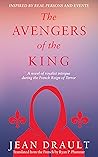 The Avengers of the King by Jean Drault
My rating: 3 of 5 stars
On their way to rescue Louis XVI in 1793, Pierre Lézardière accompanies another man to the rendezvous, but Cécile Renault realizes that he’s not a royalist. He is Sénar, a police officer of the revolution. She must warn their leader, a man of two faces. To some he is Citizen Manaud. To others, Baron Jean de Batz. Monsieur Baron believes there are other traitors in their midst; their plan goes awry and the king is guillotined. Now, they concentrate on freeing the queen and her loved ones before they meet a similar fate.
Sénar follows the royalist leader and is astounded to find that he lives inside the notorious penitentiary, La Force. Yet when the warden opens the prisoner’s cell, another man is locked inside. Sénar is determined to solve this mystery, for it will permit him to pursue the woman he loves. There is also another rival for her affections – Robespierre, a powerful revolutionary whose name is synonymous with France’s Reign of Terror. Alas, she loves a third man.
Originally published in 1911 in French, this novel is rife with duplicities, blackmail, manipulation, romance, vengeance, and sacrifice. Many characters were true participants in the French Revolution, and Drault stays true to history while interweaving facts with plausible fiction. Familiarity with the French Revolution is a plus, but not required. The translation flows well, although the older writing style contains offensive language and frequent asides to readers. Keeping track of who’s who can be difficult since many characters have aliases. Perhaps not everyone’s cup of tea, but Drault intricately interconnects threads and deftly unifies them by story’s end in expected and unexpected ways that rouse the reader’s curiosity.
This review originally appeared in Historical Novels Review (Issue 102, November 2022) at https://historicalnovelsociety.org/re...
View all my reviews
Annabelle McCormack's Windswept
 Windswept by Annabelle McCormack
My rating: 5 of 5 stars
A wounded ally working undercover; a coded message; a traitor in their midst. Intrigue and sleuthing are not what Lady Virginia Whitman signed up for when she happens upon a stranger in May 1917. Against social and parental expectations, she forgoes her title and works as a nurse at a British field hospital near the front in Palestine. Her compassion to help others often conflicts with regulations. She renders aid to the injured man, which involves her in a covert operation where the stakes are harsh. She must find a lieutenant she doesn’t know and hasn’t a clue where to find. Although warned to trust no one, she seeks help from her brother who works for Cairo Intelligence.
Three men arrive in response to her summons. Charming, but intolerable, Major Noah Benson knows her secrets and treats her more like an enemy than a friend. Captain Stephen Fisher, an arrogant manipulator, has been infatuated with her since childhood. And her brother, whom she trusts implicitly. They question her incessantly, but refuse to answer her questions or put her in contact with the lieutenant. The more they misdirect, the more committed she becomes to learning the truth despite the danger. When a confrontation comes, murder ensues, and she flees into the desert and is captured by the Ottomans. One man is bold enough to follow, but is he the traitor or her savior?
McCormack spins an intricate, serpentine thriller set against the backdrop of World War I. Historic details and stakes are skillfully woven into the story, while her description breathes life into the gritty reality of desert living. Her characters are multidimensional, the interrelationships are complicated, and the consequences are lofty. Secrets, lies, and betrayals heighten the suspense. Like wind sweeping across the desert, Windswept ensnares readers in a vortex of subterfuge and romance.
This review originally appeared in Historical Novels Review (Issue 103, February 2023) at https://historicalnovelsociety.org/re...
View all my reviews


