
Cindy Vallar's Blog, page 40
December 19, 2016
Hornblower's Historical Shipmates
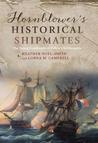 Hornblower's Historical Shipmates: The Young Gentlemen of Pellew's Indefatigable by Heather Noel-Smith
My rating: 5 of 5 stars
Whether first read in C. S. Forester’s novels, heard on radio, or depicted in film, Horatio Hornblower is a larger-than-life character who has captured our imaginations and taken us back to wooden ships and stirring sea battles. His is a fictional portrayal, but Captain Sir Edward Pellew, his commanding officer, and HMS Indefatigable actually existed. In Hornblower’s Historical Shipmates researchers Noel-Smith and Campbell introduce us to seventeen real young gentlemen who served under Pellew, and examine how his patronage impacted their lives and careers. They also compare and contrast these junior officers with their fictional counterpart, as well as reassess the reputation and legacy of their daring and audacious commander.
During Pellew’s many years in the Royal Navy and his various commands, many young officers served under him – far too many to include in this study. To narrow down this daunting number, the authors chose to focus on those men who were aboard Indefatigable on 13 January 1797. That night off the coast of Brittany, they encountered the French warship Droits de l’Homme and, together with their consort HMS Amazon, they fought a daring battle for twelve hours in the midst of a deadly storm.
The Honorable George Cadogan, Jeremiah Coghlan, William Kempthorne, Nicholas Lechmere Pateshall, Henry Hart, Thomas Groube, Alex McVicar, John McKerlie, John Thomson, John Gaze, George Chace, James Bray, William Warden, Philip Frowd, Richard Delves Broughton, and Robert Carthew Reynolds are the seventeen men profiled within these pages. They served as Volunteers, Midshipmen, or Mates; most climbed the ranks to become senior officers and a few served as warrant officers. Some had no sea experience before joining the Royal Navy; others served aboard merchantmen or on East India Company ships. Coghlan was one of the latter, to whom Pellew offered a berth after witnessing his help in rescuing 600 from a shipwreck.
Pateshall’s early experiences most closely mirror those of Horatio Hornblower, and his many letters to family and friends provided the authors with valuable insights into this microcosm aboard the elite of the fleet and being an Indefatigable. This correspondence is just one of the many primary sources the authors consulted in public and private archives in the United Kingdom, United States, and France to bring these gentlemen to life.
At twenty-eight, McVicar was the oldest to join Pellew’s frigate. McKerlie lost an arm during one battle, but served as gunner, boatswain, and schoolmaster during his career. Kempthorne, whose family lived near Pellew’s, was dismissed from the navy, but through his patron’s assistance was reinstated. Thomson, whose father also served aboard Indefatigable, married into Pellew’s family and his years of service took him to ports around the world. Gaze spent most of his career serving under Pellew.
While all seventeen benefited from Pellew’s patronage, they came from diverse backgrounds. One was an earl’s son; another was a runaway from Ireland. Several eventually became admirals, and one was a naval hero in his lifetime. Three faced courts martial. Four had their lives cut short before the wars with France ended.
On the night of the encounter with the French ship of the line, these young men ranged in age from thirteen to twenty-eight. Their experiences and training played key roles in shaping their lives and careers, and the friendships remained strong throughout their lives. Their close relationship with Pellew and their heartfelt condolence letters contradict biographer’s C. Northcote Parkinson’s claim that few loved their patron.
Following the book’s ten chapters are an appendix that reproduces correspondence concerning Pellew’s appointment to HMS Impetueux, a bibliography, and an index. Footnotes appear on the relevant pages within the chapters, rather than being relegated to the end of the book. This makes it easier to note sources and read pertinent information to further explain points in the main narrative. Black-and-white portraits and photographs are also included where they are most relevant to the topics being discussed.
Hornblower’s Historical Shipmates is an in-depth analysis of seventeen of the young men who served under Pellew. The authors ably demonstrate how, through his patronage and guidance, they gained invaluable and wide-ranging experience that served them well throughout their lives. Inclusion of biographical information and historical assessments on Pellew, Indefatigable, and Droits de l’Homme allow readers to gain a broader understanding and deeper appreciation of these gentlemen, the wooden world in which they worked, and the commanding officer who shaped and befriended them. This compelling book is an invaluable addition to any collection with a focus on the Royal Navy and naval history.
View all my reviews


The Treasure of Barracuda
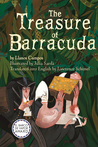 The Treasure of Barracuda by Llanos Campos
My rating: 5 of 5 stars
A long time ago, back when pirates sailed on wooden ships in the Caribbean Sea, an eleven-year-old lad with freckles has a most particular, and dangerous, adventure. Sparks invites you to join him on his journey, but warns that you must listen well. Every word is true; he never tells a lie! In his world mistakes can get you hurt, or worse, and you don’t get second chances. Along the way he imparts sage advice – such as never sit in a tavern with your back to the door – from lessons he’s learned in the three years he’s been a member of the Southern Cross.
With only a rusty hook for a left hand and a face badly scarred, Captain Barracuda is feared far and wide by other pirates. He’s clever, shows no mercy, and brags about having zero friends. He spends most of his time alone, or in conference with Nuño, the man he trusts the most among the crew, and the man who “adopted Sparks after he was abandoned at the age of eight. Sparks, however, has many friends among the fifty-three pirates: Two Molars, One-Eyed Boasnovas, John the Whale, Erik the Belgian, Malik the Malian, and Russian Kitty.
For six years Barracuda has searched for treasure buried by the oldest pirate to sail the South Seas – Phineas Krane. Many other pirates have hunted for this treasure, but only Barracuda is clever enough to find it. And he should since he even spent time in jail to gather clues from a man everyone else thought was crazy. When the Southern Cross arrives at the island of Kopra, Barracuda leads them to the exact spot where his men must dig. But the treasure within the chest isn’t gold, silver, and gems. Oh no, it’s “a blasted book!”
Barracuda is so angry he shuts himself in his cabin and doesn’t emerge until they return to Maracaibo. Once the ship docks, he fires the entire crew. Sparks and his mates are dumbfounded and not quite certain what to do. Then Barracuda advertises for a new crew and prospective candidates are to come to the Southern Cross on Saturday. Imagine his surprise when the weekend arrives and the only men on the dock are Sparks, Nuño, One-Eyed Boasnovas, John the Whale, and all the other pirates who used to sail with the captain. Since he needs a crew and they need work, what else can he do but take them all back?. And the last to board – sneaking onto the Southern Cross – is Two Molars with a package.
One night, they catch Two Molars hiding under the pantry steps reading a book by candlelight. Eyes widen when he confesses that it’s Phineas Krane’s book and that he just had to read it because he saw his name in it. Well, soon everyone wants to hear the story, so Two Molars must read aloud. But he’s not the best reader and it takes time for him to figure out strange words. Then Sparks has a brilliant idea – he wants to learn to read. Before long so does everyone else. There are just two problems: Two Molars isn’t the best teacher and there’s only one book, but fifty-two pirates.
Anyone who’s ever attempted to read knows just how confusing a task it can be, what with words that are spelled the same but are pronounced differently. Before long, Two Molars becomes so frustrated he quits. But the pirates aren’t deterred. Sometimes it just takes time before what you’re taught snaps into place. And sometimes what you think isn’t treasure is actually a grand treasure . . . one that just might lead to even greater booty . . . if you’re willing to take a chance and brave dangerous places and come face-to-face with scurvy, untrustworthy people! Especially when you know you’re not the only one looking for Phineas Krane’s treasure.
The Treasure of Barracuda may be written for pirate apprentices, but I loved this book. I laughed, frowned, and held my breath as Sparks guided me through his adventure. It won the 2014 Barco de Vapor Award for Children’s Literature in Spain and is one of the best books I’ve read this year; adult pirates will enjoy it as much as younger ones. For those unfamiliar with pirate and nautical language, Barracuda’s Glossary will help you understand the world of pirates and sailing ships. Schimel’s translation of the original Spanish is seamless. Campos hooks you from the first page, and the innovative language and roller coaster action keeps you reading. Sardà’s colorful artwork is expressive and brings Sparks, Barracuda, and the other Southern Crosses to life. What’s even better is the promise of more adventures to come with Sparks and his mates.
View all my reviews


