Goodreads helps you follow your favorite authors. Be the first to learn about new releases!
Start by following Tim David.

Showing 1-30 of 47
“That’s why most people would agree that while it’s possible to accumulate too much stuff in this world, it is impossible to accumulate too much human connection.”
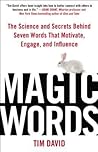
― Magic Words: The Science and Secrets Behind Seven Words That Motivate, Engage, and Influence
― Magic Words: The Science and Secrets Behind Seven Words That Motivate, Engage, and Influence
“Male Name-Pictures JAMES (Jim)—a Slim Jim JOHN—a toilet (my apologies to anyone named John) ROBERT (Bob)—a buoy bobbing on the water’s surface MICHAEL (Mike)—a microphone WILLIAM (Bill)—a dollar bill DAVID—a statue RICHARD—I’m sure you can think of something for this one CHARLES—a river (I’m from Boston) JOSEPH (Joe)—a cup of coffee THOMAS (Tom)—a drum CHRISTOPHER (Chris)—an “X” (like a crisscross) DANIEL (Dan)—a lion (lion’s den) PAUL—a bouncing ball MARK—a bruise (as in, “That’s gonna leave a mark!”) DONALD—a duck GEORGE—a gorge KENNETH (Ken)—a hen STEVEN (Steve)—a stove EDWARD (Ed)—a bed BRIAN—a brain RONALD (Ron)—a man running ANTHONY (Tony)—a skeleton (Bony Tony) KEVIN—the number seven JASON—a man being chased (chasin’) MATTHEW (Matt)—a welcome mat Female Name-Pictures MARY—the Virgin Mary PATRICIA (Pat)—a baseball bat LINDA—beauty crown (linda means “pretty” in Spanish) BARBARA—barbed-wire fence ELIZABETH—an ax (Lizzie Borden) JENNIFER—a heart (Jennifer Love Hewitt) MARIA—a wedding dress (as in, “I’m gonna marry ya”) SUSAN—a pair of socks (Susan sounds like “shoes and . . .”) MARGARET (Peg)—a pirate’s peg leg DOROTHY (Dot)—Dots candy LISA—the Mona Lisa NANCY—pants KAREN—a carrot BETTY—a poker chip HELEN—a demon SANDRA (Sandy)—the beach DONNA—a duck (as in, Donald) CAROL—bells (“Carol of the Bells”) RUTH—a roof SHARON—a toddler throwing a fit because she doesn’t want to share MICHELLE—a missile LAURA—an “aura” SARAH—cheerleader’s pom-poms (rah-rah!) KIMBERLY—a very burly woman named Kim DEBORAH—a bra A great way to practice this technique is to jump on Facebook and just start browsing profiles. You’ll have an endless supply of names and faces from which to try creating name-pictures and associations.”
― Magic Words: The Science and Secrets Behind Seven Words That Motivate, Engage, and Influence
― Magic Words: The Science and Secrets Behind Seven Words That Motivate, Engage, and Influence
“Ultimately, your job as a parent is to make sure your children grow up, mature, and stop needing you, isn’t it? Your job as a manager is to empower your employees so you don’t have to do their jobs for them. As a leader, you want your organization to survive long after you’ve gone. Being needed is a temporary thing.”
― Magic Words: The Science and Secrets Behind Seven Words That Motivate, Engage, and Influence
― Magic Words: The Science and Secrets Behind Seven Words That Motivate, Engage, and Influence
“THE FIVE COMPONENTS OF AN EFFECTIVE “THANKS” Well-known gratitude researcher Jeffrey Froh was kind enough to share these five key elements of an effective thank-you during my interview with him: 1. Be timely. It’s never too late to express thanks to someone. That said, the sooner the better—especially if you’re hoping to reinforce the behavior that you’re thanking the person for. 2. Compliment the attributes of the benefactor. “Thank you for listening to me the other night. You are such a good listener, and I really appreciate that about you.” Or “Thank you for the card and gift. You are such a thoughtful person.” Allow the thank-you to extend past the deed, and let it also be about the person behind the deed. 3. Recognize the intent of the benefactor. This is the heart of an authentic thank-you. Recognizing intent acknowledges that they did something nice for you, and it acknowledges that their good deed was premeditated. “Thanks. I know you didn’t have to help me move my furniture to my new place. It’s good to know people still offer to help just out of the goodness of their heart.” 4. Recognize the costs to the benefactor. Whenever people do something nice for us, they give up time, money, or energy that could have been spent doing something for themselves. Tell them that you appreciate that. “Listen, I know you left your meeting early just to come down here. It means a lot that you’re putting aside your priorities for mine. Thank you.” 5. Articulate the benefits. Finally, share with them the result of their kind act. “Because of the generous support from you and others, we were able to raise four thousand dollars for needy families in our community. This money will make a big difference in their lives this holiday season. Thank you!”
― Magic Words: The Science and Secrets Behind Seven Words That Motivate, Engage, and Influence
― Magic Words: The Science and Secrets Behind Seven Words That Motivate, Engage, and Influence
“Before you delegate any task, you must answer the following question: Which is more important, the task or the relationship? All tasks seem important at the time. Sure, I wanted Chloe to eat her Cheerios so we could get her to school on time. However, my relationship with her was even more important. This isn’t always the case. For example, a gentleman in one of my seminars said, “I work in high-pressure pipe fittings. If one of my guys is off by one half of 1 percent, then people die.” A nurse said, “If we make one mistake with someone’s prescription, then that person’s life may be in danger.” Here, the task is more important than the relationship. If failure will result in tragedy instead of a teachable moment, then you have an obligation to jump in and make any corrections you see fit.”
― Magic Words: The Science and Secrets Behind Seven Words That Motivate, Engage, and Influence
― Magic Words: The Science and Secrets Behind Seven Words That Motivate, Engage, and Influence
“A Rotary Club president might ask her members, “Why do you suppose we have an attendance requirement in this organization?” in order to increase attendance. A car salesperson may ask the customer, “Why are you looking at a Hyundai today?” in order to increase the likelihood of getting the sale. Parents might ask their children, “Why is it important to treat other people with respect?” in order to encourage kind behavior. A doctor may ask his patient, “Why should you be exercising more?” in order to increase patient compliance. Asking “why?” in these ways forces the listener to actively engage in any “because” reasons that follow. People are always more likely to take an action if they think it is their idea. We tend to diminish other people’s ideas and inflate our own.”
― Magic Words: The Science and Secrets Behind Seven Words That Motivate, Engage, and Influence
― Magic Words: The Science and Secrets Behind Seven Words That Motivate, Engage, and Influence
“Because” doesn’t always need a logical or compelling reason behind it in order to be effective, unless you want to motivate someone to complete significant or complex tasks. The six most compelling reasons are: “need to,” “have to,” “want to,” “choose to,” “love to,” and “called to.”
― Magic Words: The Science and Secrets Behind Seven Words That Motivate, Engage, and Influence
― Magic Words: The Science and Secrets Behind Seven Words That Motivate, Engage, and Influence
“You don’t ever want to paraphrase while backtracking. Don’t mess with their words. Say EXACTLY what they said to you. Don’t paraphrase, “parrot-phrase.” The secret is using their exact words without sounding like you’re mocking them. Imagine if Sally had paraphrased Eric’s sentence and turned it into: “Oh, so you’ve failed before?” Eric hadn’t said anything about failing, and although “that road” means “failure” to Sally, it might mean something entirely different to Eric. Paraphrasing here is not likely to get the little yes that Sally is after. In fact, it might get her into trouble.”
― Magic Words: The Science and Secrets Behind Seven Words That Motivate, Engage, and Influence
― Magic Words: The Science and Secrets Behind Seven Words That Motivate, Engage, and Influence
“I completely understand how you feel, sir, and we can absolutely help you with that. Let’s take a look at your account and see what we can do for you.”
― Magic Words: The Science and Secrets Behind Seven Words That Motivate, Engage, and Influence
― Magic Words: The Science and Secrets Behind Seven Words That Motivate, Engage, and Influence
“Some people get into this line of work just for the money, or the recognition, or the benefits. And others are here for the people that we serve, or the difference that we make, or . . . any number of reasons.” The magic happens during the long pause between the words “or” and “any.” The human brain tends to operate in survival mode, meaning it is always anticipating what is about to happen next. One of the things that separates us from the rest of the animal kingdom is something called “Theory of Mind.” This describes the distinctly human ability to interpret and anticipate other people’s thoughts, beliefs, or intentions. During the pause after the word “or,” the listener’s mind can’t help but immediately start filling in the blank space. Think about what you’ve just accomplished. Their brains are creating and exploring their own “because” reasons! Or, at the very least, they’re trying to anticipate what your next suggestion might be.”
― Magic Words: The Science and Secrets Behind Seven Words That Motivate, Engage, and Influence
― Magic Words: The Science and Secrets Behind Seven Words That Motivate, Engage, and Influence
“What Action Do You Want Them to Take? Remember, our goal is not to get people to simply say yes to us. Our goal is to move people to action. What specifically is the action that you want them to take? If you’re not clear about this, then they won’t be either.”
― Magic Words: The Science and Secrets Behind Seven Words That Motivate, Engage, and Influence
― Magic Words: The Science and Secrets Behind Seven Words That Motivate, Engage, and Influence
“What Do They Need to Believe in Order for Them to Feel That Way?”
― Magic Words: The Science and Secrets Behind Seven Words That Motivate, Engage, and Influence
― Magic Words: The Science and Secrets Behind Seven Words That Motivate, Engage, and Influence
“Through trial and error, I eventually and organically changed my conversation style from something like “Can I please speak to the person in charge of hiring entertainment?” to something like “Hi, [so and so], my name is Tim. I have kind of a weird question. I was wondering if you could help me out?” No one ever said no to my request for help. Sure, they sometimes asked qualifying questions like “What kind of help?” before they made any commitments. But on the chart of who said what, the biggest piece of the pie was taken by the folks who appeared willing and even eager to help. Perhaps it’s because I used their name (when possible). Maybe it was because of the curiosity I built with the phrase “kind of a weird question.” Or maybe it was the magic word “help.” Suddenly, I was not someone who was robotically farming for transactions. I was someone who allowed himself to become vulnerable. I trusted them with my ego, and they didn’t let me down. A connection—however small—was made.”
― Magic Words: The Science and Secrets Behind Seven Words That Motivate, Engage, and Influence
― Magic Words: The Science and Secrets Behind Seven Words That Motivate, Engage, and Influence
“Some social psychologists claim that it takes up to seven positive deposits into someone’s emotional bank account to balance out just one negative withdrawal. “No” is expensive.”
― Magic Words: The Science and Secrets Behind Seven Words That Motivate, Engage, and Influence
― Magic Words: The Science and Secrets Behind Seven Words That Motivate, Engage, and Influence
“You would be amazed at how often this works—and not just for children. I once asked an employee, “What do you think about this project?” He said, “I don’t really know.” I used the magic word: “What would you say if you did know?” He immediately answered, “Well, if I did know, then I would probably say something about the fact that it’s not really tied in to our big-picture plans. It’s kind of a distraction.” This is just one example of many, many “magical” turnarounds created by the word “if.” But it doesn’t always work out that way. What if my daughter responded with “But, Daddy, I don’t know”? (Which she did.) I had to up the ante a little bit and take the hypothetical up another level. I countered with “That’s not what I really meant. What I really meant was, what would I say if you asked me?” She immediately responded, “Well, you’d say ‘ice cream,’ but you know.”
― Magic Words: The Science and Secrets Behind Seven Words That Motivate, Engage, and Influence
― Magic Words: The Science and Secrets Behind Seven Words That Motivate, Engage, and Influence
“Mahatma Gandhi said it this way: “A ‘no’ uttered from the deepest conviction is better than a ‘yes’ merely uttered to please, or worse, to avoid trouble.”
― Magic Words: The Science and Secrets Behind Seven Words That Motivate, Engage, and Influence
― Magic Words: The Science and Secrets Behind Seven Words That Motivate, Engage, and Influence
“The mark of maturity is self-discipline. Do you have the power to say no to an extra slice of cake or a cigarette, or are you a slave to your impulses?”
― Magic Words: The Science and Secrets Behind Seven Words That Motivate, Engage, and Influence
― Magic Words: The Science and Secrets Behind Seven Words That Motivate, Engage, and Influence
“Backtracking Backtracking is not only a way to get another little yes, it’s also a good listening skill. If Sally needed any more little yeses, she could have tried a backtracking question like “You said you’ve gone down that road before?” Eric can’t do anything but give a little yes, because he just said that he’s gone down that road before. The human brain does not like to disagree with itself.”
― Magic Words: The Science and Secrets Behind Seven Words That Motivate, Engage, and Influence
― Magic Words: The Science and Secrets Behind Seven Words That Motivate, Engage, and Influence
“Online Meds Store
Buy Adderall”
―
Buy Adderall”
―
“You can see yourself using tag questions in your conversations today, yes?”
― Magic Words: The Science and Secrets Behind Seven Words That Motivate, Engage, and Influence
― Magic Words: The Science and Secrets Behind Seven Words That Motivate, Engage, and Influence
“Before delivering a presentation, a salesperson might ask himself positive outcome questions that sound like this: Am I going to deliver a compelling pitch? Are they likely to buy from me? Will they be satisfied with their purchase? As it turns out, the very act of asking the questions is magical. In their fascinating paper “Motivating Goal-Directed Behavior through Introspective Self-Talk: The Role of the Interrogative Form of Simple Future Tense,” researchers Ibrahim Senay, Dolores Albarracín, and Kenji Noguchi describe the surprising results of a clever experiment they conducted in 2010. Participants were led to believe that the researchers were “interested in people’s handwriting practices” and asked to write one of the following four words or phrases twenty times: “I,” “Will,” “Will I,” or “I will.” Once the writing task was completed, they were given a series of word puzzles to solve. The group that wrote the interrogative phrase “Will I” outperformed all three other groups in the word-puzzles task by nearly double.”
― Magic Words: The Science and Secrets Behind Seven Words That Motivate, Engage, and Influence
― Magic Words: The Science and Secrets Behind Seven Words That Motivate, Engage, and Influence
“Think about how you feel when someone asks you for help. “You are motivated because you feel like you are part of something bigger than yourself,” says Yu-kai Chou, the gamification and human-motivation expert we met in the chapter on “If.” “It makes you feel important, like people are depending on you.”
― Magic Words: The Science and Secrets Behind Seven Words That Motivate, Engage, and Influence
― Magic Words: The Science and Secrets Behind Seven Words That Motivate, Engage, and Influence
“Market norms may foster compliance, but social norms foster engagement.”
― Magic Words: The Science and Secrets Behind Seven Words That Motivate, Engage, and Influence
― Magic Words: The Science and Secrets Behind Seven Words That Motivate, Engage, and Influence
“Give Yourself Time The key indicator of “yes people” and “no people” is that they respond to requests impulsively and habitually. Instead, give yourself time with a simple “I’ll think about it.” This shows that you can’t be swayed by the emotions of the moment, it softens an eventual “no,” and it puts you in the driver’s seat.”
― Magic Words: The Science and Secrets Behind Seven Words That Motivate, Engage, and Influence
― Magic Words: The Science and Secrets Behind Seven Words That Motivate, Engage, and Influence
“We all need a little bit of challenge in our lives. Famed Hungarian psychology professor Mihaly Csikszentmihalyi famously named the sweet spot between being bored and being overwhelmed. He called it “flow.” Flow is where you are the most engaged, motivated, and happiest. You might call it “being in the zone.” The best leaders recognize the importance of pushing others toward flow. They delegate enough to challenge, but not so much that people become resentful or overworked.”
― Magic Words: The Science and Secrets Behind Seven Words That Motivate, Engage, and Influence
― Magic Words: The Science and Secrets Behind Seven Words That Motivate, Engage, and Influence
“However, don’t rush to quit your job! Don’t head to your boss’s office screaming and yelling about how “magic boy” told you that you need to change your profession in order to be happy. Changing your profession should be a last resort. The grass is not always greener on the other side of the fence. The grass is greener where it’s watered.”
― Magic Words: The Science and Secrets Behind Seven Words That Motivate, Engage, and Influence
― Magic Words: The Science and Secrets Behind Seven Words That Motivate, Engage, and Influence
“The way your brain sees it—so far so good! You’re breathing and your heart is beating. Let’s keep that going for as long as possible. Anything new is a possible threat to that status quo. So, we say no to stuff.”
― Magic Words: The Science and Secrets Behind Seven Words That Motivate, Engage, and Influence
― Magic Words: The Science and Secrets Behind Seven Words That Motivate, Engage, and Influence
“This is why To Sell Is Human author Daniel Pink recommends adopting cartoon favorite Bob the Builder’s famous approach. In each episode, Bob is presented with a problem, and instead of spouting possible solutions, he switches to interrogative mode by asking, “Can we fix it?” That’s good advice. However, there is also a second half of Bob’s incessantly optimistic credo—“Yes we can!” Embedded front and center is our magic word “yes.” The optimism this “yes” carries brings an added magic all its own. A study done by Peter Schulman, published in the Journal of Selling and Sales Management, found that salespeople who are optimistic outsell their pessimistic counterparts by 35 percent. The defining trait of an optimist is that they’ll answer positive outcome questions with a “yes.” Pessimists, on the other hand, prefer to stick with the go-to answer they use for just about everything—“no.” This puts them at a significant disadvantage. However, pessimists needn’t despair (although they would probably prefer to). Martin Seligman, author of Learned Optimism and a renowned psychologist and clinical researcher, has been studying optimists and pessimists for more than twenty-five years. He states, “Pessimism is escapable.”
― Magic Words: The Science and Secrets Behind Seven Words That Motivate, Engage, and Influence
― Magic Words: The Science and Secrets Behind Seven Words That Motivate, Engage, and Influence
“Spilling Cheerios and being ten minutes late to school? That’s not exactly a tragedy. So I let Chloe fill her bowl until she had the largest mound of Cheerios I had ever seen. Next came the milk. Chloe instantly flipped the jug 180 degrees. Milk shot out, hit the side of the bowl, and another mess was made. Finally, after cleaning up the spilled milk and Cheerios and trying again, she sat at the table with her breakfast in front of her. Over and over she squealed, “I did it! I did it!” Wouldn’t you know it? That kid ate every single bite of Mount Cheerios.”
― Magic Words: The Science and Secrets Behind Seven Words That Motivate, Engage, and Influence
― Magic Words: The Science and Secrets Behind Seven Words That Motivate, Engage, and Influence
“Here, I’ll present you with six human motivators. They are “need to,” “have to,” “want to,” “choose to,” “love to,” and “called to.” I’ve found the best way to explain them is by telling the following story:”
― Magic Words: The Science and Secrets Behind Seven Words That Motivate, Engage, and Influence
― Magic Words: The Science and Secrets Behind Seven Words That Motivate, Engage, and Influence