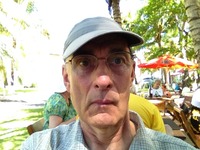
John Guzlowski

more photos (1)

John Guzlowski’s Followers (87)

member photo
member photo
member photo
member photo
member photo
member photo
member photo
member photo
member photo
member photo
member photo
member photo
member photo
member photo
member photo
member photo
member photo
member photo
member photo
member photo
member photo
member photo
member photo
member photo
member photo
member photo
member photo
member photo
member photo
member photo
Eve Castle
830 books | 52 friends

Annette...
68 books | 873 friends

A.C. Fu...
230 books | 595 friends

Kathleen
1,727 books | 135 friends

Mark Towse
106 books | 2,036 friends

Chaya
5,088 books | 204 friends

Jeff Ne...
1,026 books | 486 friends

Jen Julian
832 books | 221 friends

More friends…

John Guzlowski

Goodreads Author


Born
in Vinenberg, Germany
Website

Member Since
December 2007

URL


Over a writing career that spans more than 40 years, John Guzlowski has amassed a significant body of published work in a wide range of genres: poetry, prose, literary criticism, reviews, fiction and nonfiction.

His poems and stories have appeared in such national journals as North American Review, Ontario Review, Rattle, Chattahoochee Review, Atlanta Review, Nimrod, Crab Orchard Review, Marge, Poetry East, Vocabula Review. He was the featured poet in the 2007 edition of Spoon River Poetry Review. Garrison Keillor read Guzlowski's poem "What My Father Believed" on his program The Writers Almanac.

Critical essays by Guzlowski about contemporary American, Polish, and Jewish authors can be found in such journals as Modern Fiction Studies, Polish
...more

To ask John Guzlowski questions, please sign up.

Popular Answered Questions

John Guzlowski I started writing my novel Suitcase Charlie about sixty years ago when I was 7 years old, just a kid.

At that time, I was living in a working-class nei…more
I started writing my novel Suitcase Charlie about sixty years ago when I was 7 years old, just a kid.

At that time, I was living in a working-class neighborhood on the near northwest side of Chicago, an area sometimes called Humboldt Park, sometimes called the Polish Triangle. A lot of my neighbors were Holocaust survivors, World War II refugees, and Displaced Persons. There were hardware-store clerks with Auschwitz tattoos on their wrists, Polish cavalry officers who still mourned for their dead comrades, and women who had walked from Siberia to Iran to escape the Russian Gulag. They were our moms and dads. Some of us kids had been born here in the States, but most of us had come over to America in the late 40s and early 50s on US troop ships when the US started letting us refugees in.

As kids, we knew a lot about fear. We heard about it from our parents. They had seen their mothers and fathers shot, their brothers and sisters put on trains and sent to concentration camps, their childhood friends left behind crying on the side of a road. Most of our parents didn’t tell us about this stuff directly. How could they?

But we felt their fear anyway.

We overheard their stories late at night when they thought we were watching TV in a far off room or sleeping in bed, and that’s when they’d gather around the kitchen table and start remembering the past and all the things that made them fearful. My mom would tell about what happened to her mom and her sister and her sister’s baby when the German’s came to her house in the woods, the rapes and murders.
You could hear the fear in my mom’s voice. She feared everything, the sky in the morning, a drink of water, a sparrow singing in a dream, me whistling some stupid little Mickey Mouse Club tune I picked up on TV. Sometimes when I was a kid, if I started to whistle, she would ask me to stop because she was afraid that that kind of simple act of joy would bring the devil into the house. Really.

My dad was the same way. If he walked into a room where my sister and I were watching some TV show about World War II – even something as innocuous as the sitcom Hogan’s Heroes – and there were some German soldiers on the screen, his hands would clench up into fists, his face would redden in anger, and he would tell us to turn the show off, immediately. Normally the sweetest guy in the world, his fear would turn him toward anger, and he would start telling us about the terrible things the Germans did, the women he saw bayoneted, the friends he saw castrated and beaten to death, the men he saw frozen to death during a simple roll call.

This was what it was like at home for most of my friends and me. To escape our parents’ fear, however, we didn’t have to do much. We just had to go outside and be around other kids. We could forget the war and our parents’ fear with them. We’d laugh, play tag and hide-and-go-seek, climb on fences, play softball in the nearby park, go to the corner story for an ice cream cone or a chocolate soda. You name it. This was in the mid 50s at the height of the baby boom, and there were millions of us kids outside living large and – as my dad liked to say – running around like wild goats!

In the streets with our friends, we didn’t know a thing about fear, didn’t have to think about it.

That is until Suitcase Charlie showed up one day.

It happened in the fall of 1955, October, a Sunday afternoon.

Three young Chicago boys, 13-year old John Schuessler, his 11-year old brother Anton, and their 14-year old friend Bobby Peterson, went to Downtown Chicago, the area called the Loop, to see a matinee of a Disney nature documentary called The African Lion. Today, the parents of the boys probably would take them to the Loop, but back then it was a different story. Their parents knew where they were going, and the mother of the Schuessler boys in fact had picked out the film they would see and given the brothers the money to pay for the tickets. At the time, it wasn’t that unusual for kids to be doing this kind of roaming around on their own. We were “free-range” kids before the term was even invented. Every one of my friends was a latch key kid. Our parents figured that we could pretty much stay out of trouble no matter where we went. We’d take buses to museums, beaches, movies, swimming pools, amusement parks without any kind of parental guidance. There were times we’d even just walk a mile to a movie to save the 10 cents on the bus ride. We’d seldom do this alone, however. Kids had brother and sisters and pals, so we’d do what the Schuessler brothers and their friend Bobby Peterson did.

We’d get on a bus, go downtown, see a movie and hangout down there afterward. There was plenty to do, and most of it didn’t cost a penny: there were free museums, enormous department stories filled with toy departments where you could play for hours with all the toys your parents could never afford to buy you, libraries filled with books and civil war artifacts (real ones), a Greyhound bus depot packed with arcade-style games, a dazzling lake front full of yachts and sailboats, comic book stores, dime stores where barkers would try to sell you impossible non-stick pans and sponges that would clean anything, and skyscrapers like the Prudential Building where you could ride non-stop, lickety-split elevators from the first floor to the 41st floor for free. And if you got tired of all that, you could always stop and look at the wild people in the streets! It was easy for a bunch of parent-free kids to spend an afternoon down in the Loop just goofing off and checking stuff out.

Just like the Schuessler Brothers and their friend Bobby Peterson did.
But the brothers and Bobby never made it home from the Loop that Sunday in October of 1955.

Two days later, their dead bodies were found in a shallow ditch just east of the Des Plaines River. The boys were bound up and naked. Their eyes were closed shut with adhesive tape. Bobby Peterson had been beaten, and the bodies of all three had been thrown out of a vehicle. The coroner pronounced the cause of death to be “asphyxiation by suffocation.”

The city was thrown into a panic.

For the first time, we kids felt the kind of fear outside the house we had seen inside the house. It shook us up. Where before we hung out on the street corners and played games till late in the evening, now we came home when the first street lights came on. We also started spending more time at home or at the homes of our friends, and we stopped doing as many things on our own out on the street: fewer trips to the supermarket or the corner store or the two local movie theaters, The Crystal and The Vision. The street wasn’t the safe place it once had been. Everything changed.

And we were conscious of threat, of danger, of the type of terrible thing that could happen almost immediately to shake us and our world up.
We started watching for the killer of the Schuessler Brothers and Bobby Peterson. We didn’t know his name or what he looked like, nobody did, but we gave him a name and we had a sense of what he might look like. We called him Charlie, and we were sure he hauled around a suitcase, one that he carried dead children in. Just about every evening, as it started getting dark, some kid would look down the street toward the shadows at the end of the block, toward where the park was, and see something in those shadows. The kid would point then and ask in a whisper, “Suitcase Charlie?”

We’d follow his gaze and a minute later we’d be heading for home.
Fast as we could.

(less)
John Guzlowski My favorite fictional couple has to be Ahab and Moby Dick. The way they purse each other. An inspiration.
Average rating: 4.09 · 533 ratings · 107 reviews · 27 distinct worksSimilar authors
Suitcase Charlie: A Noir Cr...

3.91 avg rating — 272 ratings — published 2015 — 6 editions
Rate this book
Clear rating
Little Altar Boy

3.94 avg rating — 78 ratings2 editions
Rate this book
Clear rating
Echoes of Tattered Tongues:...

by
4.63 avg rating — 57 ratings — published 2016 — 5 editions
Rate this book
Clear rating
Lightning and Ashes: Poems

4.95 avg rating — 19 ratings — published 2007
Rate this book
Clear rating
Murdertown

4.43 avg rating — 14 ratings2 editions
Rate this book
Clear rating
Retreat: A Love Story

4.60 avg rating — 10 ratings2 editions
Rate this book
Clear rating
Little Schoolboys

4.40 avg rating — 5 ratings2 editions
Rate this book
Clear rating
Mad Monk Ikkyu

4.75 avg rating — 4 ratings
Rate this book
Clear rating
True Confessions: 1965 to Now

by
it was amazing 5.00 avg rating — 3 ratings
Rate this book
Clear rating
Phantom Limbs

it was amazing 5.00 avg rating — 2 ratings — published 2007
Rate this book
Clear rating
More books by John Guzlowski…

The Day I was Born in a Refugee Camp

The Day I Was Born in a Refugee Camp after the War


My mother washed her face in cold water, tied her hair back, and put on an old dress. 

She said she knew my birth would be hard, that she had given birth before, to my sister, and that then the dirt had flushed out of her body like a rabid dog that had finally snapped its chain. She said as well that there had been storms the day before I was bo

Read more of this blog post »
 •  0 comments  •  flag
Share on Twitter
Published on November 14, 2025 09:40

John’s Recent Updates

John Guzlowski wrote a new blog post

The Day I was Born in a Refugee Camp

The Day I Was Born in a Refugee Camp after the War

My mother washed her face in cold water, tied her hair back, and put on an old dress. She said she Read more of this blog post »
More of John's books…
Quotes by John Guzlowski  (?)
Quotes are added by the Goodreads community and are not verified by Goodreads. (Learn more)

“There was fear too. It moved through his body like an anaconda grown fat and slow on discarded rinds and terror.”
John Guzlowski, Suitcase Charlie: A Noir Crime Thriller

“There are times when a feeling of expectancy comes to me, as if something is there, beneath the surface of my understanding, waiting for me to grasp it. It is the same tantalizing sensation when you almost remember a name, but don't quite reach it. I can feel it when I think of human beings, of the hints of evolution suggested by the removal of wisdom teeth, the narrowing of the jaw no longer needed to chew such roughage as it was accustomed to; the gradual disappearance of hair from the human body; the adjustment of the human eye to the fine print, the swift, colored motion of the twentieth century. The feeling comes, vague and nebulous, when I consider the prolonged adolesence of our species; the rites of birth, marriage and death; all the primitive, barbaric ceremonies streamlined to modern times. Almost, I think, the unreasoning, bestial purity was best. Oh, something is there, waiting for me. Perhaps someday the revelation will burst in upon me and I will see the other side of this monumental grotesque joke. And then I'll laugh. And then I'll know what life is.”
Sylvia Plath, The Unabridged Journals of Sylvia Plath

“I owe them gods
a bottle of whiskey
and a bullet each”
Elancharan Gunasekaran

“There was fear too. It moved through his body like an anaconda grown fat and slow on discarded rinds and terror.”
John Guzlowski, Suitcase Charlie: A Noir Crime Thriller

“I am free and that is why I am lost.”
Franz Kafka

25x33 Liberation Lit — 78 members — last activity Apr 14, 2021 09:51AM
This is a group supporting the idea that there is a paucity of current fiction being written about the era from 1960 to 1980. The tumultuous period ...more
25x33 Poetry nerds — 40 members — last activity Feb 15, 2020 09:09AM
This group is essentially for people who have written poetry books or are perpetual readers of poetry collections. The group aims to promote good poet ...more
No comments have been added yet.