
Classical music lovers discussion
Composers
>
Berg
date newest »
newest »

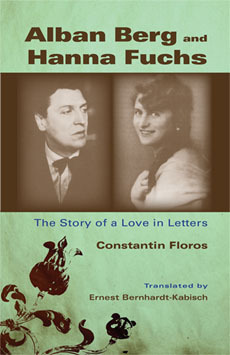
"When, on December 23, 1935, Alban Berg died of blood poisoning at the age of 50 in a hospital in Vienna, few would have guessed that 50 years later he would be reckoned among the classics of the New Music. . . . The international music world is deeply interested in both his work and his personality. This is no surprise, considering that nearly his entire oeuvre is autobiographically determined.". In the fall of 1976, 14 letters by Alban Berg, renowned composer of the Second Viennese School, were discovered in the posthumous papers of Hanna Fuchs-Robettin, wife of a Prague industrialist and sister of Franz Werfel, the well-known Austro-Czech writer. In the 1920s Berg gained international notoriety with his opera Wozzeck and the Lyric Suite, which was largely inspired by his relationship with Fuchs. The secret letters were delivered to Hanna surreptitiously by Theodor Adorno and Alma Mahler Werfel. They were brought to New York by Hanna on her flight from Nazi persecution, and were eventually found in her estate after her death. First discovered by George Perle, then deciphered and transcribed in German by Constantin Floros, they appear in English for the first time.
Constantin Floros, Alban Berg and Hanna Fuchs. The Story of a Love in Letters. Indiana University Press, 2007.
[image error]Posing with a Schoenberg painting (1935)

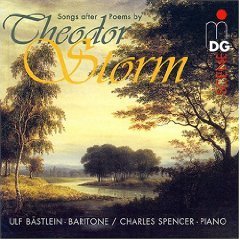
Die Nachtigall
Das macht, es hat die Nachtigall
Die ganze Nacht gesungen;
Da sind von ihrem süßen Schall,
Da sind in Hall und Widerhall
Die Rosen aufgesprungen.
Sie war doch sonst ein wildes Blut;
Nun geht sie tief in Sinnen,
Trägt in der Hand den Sommerhut
Und duldet still der Sonne Glut
Und weiß nicht, was beginnen.
Das macht, es hat die Nachtigall
Die ganze Nacht gesungen;
Da sind von ihrem süßen Schall,
Da sind in Hall und Widerhall
Die Rosen aufgesprungen.
Theodor Storm
 god, i love berg's music. i have the deutsche-grammophone box set of his complete works and i pulled it out last weekend. mostly i was listening to the piano sonata, the three pieces for clarinet and piano, and the lyric suite. completely amazing work.


Alban Berg - Die Nachtigall (by Anne Sofie von Otter)