
Art Lovers discussion
Art Lovers News Corner
>
August
date newest »
newest »
 That looks totally neat. I wonder if she liked the experience. The colors are absolutely spectacular.
 Wow, Ed! That is really cool! I would love to walk through that, it would feel so surreal.
 Love the colors. this leads me to a question - Are paints, color processes better for artists today than when say the Impresssionists were starting?
 Yes indeed they are. I have seen this in my lifetime. This does not mean that every process or medium is equally good, it just means that a lot of pitfalls have been eliminated. (I have to warn you, I am turing into a bit of an art materials geek, so just tell me to keep quiet if I go on too long.)
The auto industry orders pigments in large quantities (much more than art supplies!) and they want to drive down the price and increase the color fastness and advance the chemistry. (It was found that you could duplicate the color of an obsolete synthetic pigment pretty well by replacing an unstable (fading) carbon chain with a stable (non-fading) carbon ring that copied some of the bond geometry and the spectrum.)
For example, there are student grade and professional grade paints. In the old days,the student grades substituted less expensive "hue" colors, which were not lightfast. I have several decades old student paintings where the red has totally washed out. Nowadays, the student grade paints from any of the top manufacturers, merely have slightly less colorant, but are totally lightfast.
Another example. This doesn't affect plein air painting like the Impressionists where all is done at one go, but oil paint cures at an alarmingly slow rate (doesn't stabilize the surface for at least six months, so you have to wait half a year or more before varnishing.) In addition, over time it is glass-brittle, and very subject to coming off flexible supports--like canvas! Artists working in oil have to carefully control the amount of solvent and oil in each succeeding layer, and can only put a thicker, more flexible layer on top of a thinner one. This is why you'll see tiny cracks (or not so tiny cracks) in sixteenth century paintings, and even some twentieth century paintings. The drying times before you can put on a new layer are also very long. And the solvents and media are relatively toxic.
New paint mediums, such as acrylic polymer, are highly flexible, dry immediately, and can change their characteristics from ink-like to watercolor-like to oil-like to plaster-like, depending on a wide variety of mediums and gels. (Almost too many: oil painting is a little simpler) The speed with which they can be worked and the layering and textural possibilities are additional advantages.Not only can you do several layers at one go, they cure enough to be varnished in three days. (Some artists need more time for blending and actually use additives to make the paint dry more slowly).
thanks Ed I learned more than I even thought I didn't know.
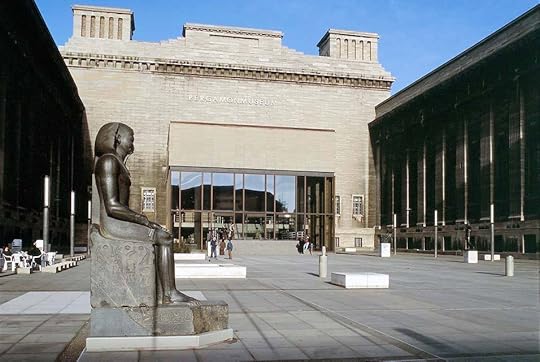
NEW YORK, NY.- A monumental ancient Egyptian statue of a seated pharaoh probably Amenemhat II will be lent to The Metropolitan Museum of Art by Berlins renowned Ägyptisches Museum und Papyrussammlung, Staatliche Museen zu Berlin - Preussischer Kulturbesitz for a period of ten years, beginning this month. The ten-foot-tall, nearly nine-ton, 4,000-year-old sculpture entered the Berlin museums collection in 1837. Because of a construction project now underway to renovate the courtyard on Museumsinsel (Museum Island) where the artwork has most recently been displayed the statue had to be moved, thereby providing the opportunity for this long-term loan. The sculpture will go on view in the Metropolitans Great Hall for approximately one year before it is moved into The Lila Acheson Wallace Galleries of Egyptian Art. The Middle Kingdom sculpture is an outstanding example of ancient Egypt ... More
Oh man, what a a job for art moving specialists!
I would like to see how they move that nine ton work of art. Do you know what it is made of Ed. Looks very massive.
The Changing Face of Portraits Collectors are paying top dollar to be painted by famous artists—even if it means looking silly or grotesque. How an unflattering image became an art-world status symbol
By ELLEN GAMERMAN
The Wall Street Journal
Greek businessman Dakis Joannou was posing for a portrait by artist George Condo when he noticed a tuft of hair sprouting from the side of his head on the canvas. He interrupted the painter.
"I'm not worried about the teeth sticking out of my cheek, but I am worried about the hair sticking out of my face," Mr. Joannou told him.
With a few brush strokes, the artist, who is known for painting surreal faces with screwball features, limited the hair to traditional spots just over the ears of the 71-year-old collector. The work by Mr. Condo, whose canvases typically command $450,000, now hangs in a privileged spot by a fireplace in the living room of Mr. Joannou's Athens home. It's one of three portraits Mr. Condo painted of the collector, who appears alternately with lime-green ears, a bulbous blue clown nose and an endless chin. Mr. Joannou owns them all.
The portrait has long been a symbol of the relationship between an artist and a patron. Throughout most of art history, commissioned portraits ennobled their subjects—showing them surrounded by symbols of wealth and virtue, perched regally on a steed or even transported into a New Testament scene. The artist, who depended on the patron for money and support, was typically happy to oblige any demands.
Today, portraits may be deliberately ugly, filled with palpable angst or defiantly abstract. The works are more about scouring the psychological depths or playing with the concept of portraiture than about illustrating a patron's smooth likeness.
These portraits reflect a shift in the power dynamic between collectors and artists. Contemporary art stars are wealthy and famous in their own right. Many of them view commissions as favors, not a necessary part of business. And collectors are willing to play by portraitists' rules for a canvas they think will reveal something profound about them—or demonstrate their special relationship with a sought-after artist.
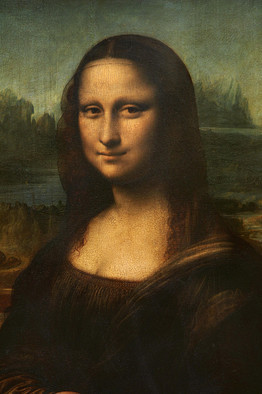
'Mona Lisa'
Leonardo da Vinci, circa 1503-06
One of the world's most famous portraits originated as a commission. After painting the likeness of a Florentine cloth merchant's wife, the artist kept the piece rather than turning it over to the client. He continued working on the painting, using it to experiment with different techniques, says Princeton University Art Museum director James Steward.
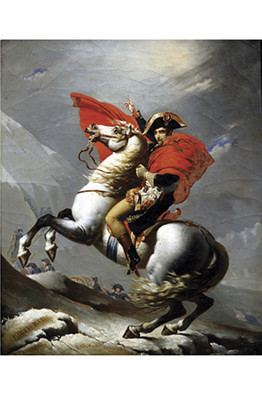
'Bonaparte Crossing the Alps'
Jacques-Louis David, 1801
Aside from the trick of putting people on horses so they'd look taller, this portrait also illustrates how artists in the Romantic period imbued their subjects with emotional power. Turbulence isn't found in the military hero's stoic face, but rather in surrogates around him—a swirling cape, a windswept sky, the steed's bulging eyes, Mr. Steward says.
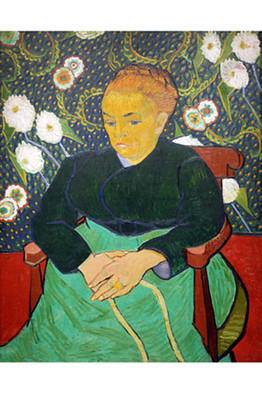
'La Berceuse'
Vincent van Gogh, 1889
In this non-commissioned portrait of a postman's wife in Arles, van Gogh aimed to create a mood, rather than focusing on the character of the sitter. "Working people had increased power and therefore it made sense that they could have their portraits painted even if they didn't pay," says Stephen F. Eisenman, a Northwestern University art history professor.
More... http://online.wsj.com/article/SB10001...
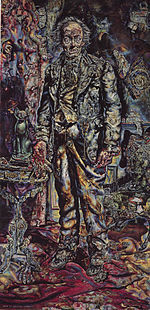
Great post Heather.When I think of unflattering portraits, Ivan Albright comes to mind. He makes Lucian Freud look like Renoir.
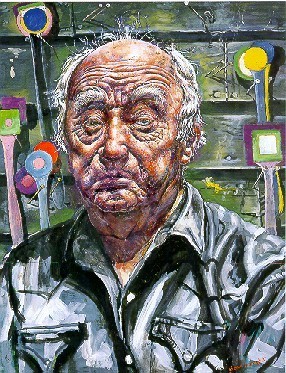
Here's an example:
[image error]
Nothing personal. Here's his self-portrait:
You may have seen his work in the Hollywood movie, Picture of Dorian Gray:
 Good article, Heather. Thanks for the wsj link. There were some wonderful portraits by Chuck Close at the Yale Art Museum about 5 years ago that I loved.
Ed, I won't be asking Ivan Albright to paint my portrait any time soon ;-)
Ed, I won't be asking Ivan Albright to paint my portrait any time soon ;-) That's for sure! I wasn't familiar with the works of Ivan Albright. He definitely does have talent.
 Cool topic, Heather. Portraits should be it's own subject category...
When I think of portraits, I think of, who else, Agnolo Bronzino, but then there's the beautiful portrait of Larry River's mother-in-law at the Whitney.
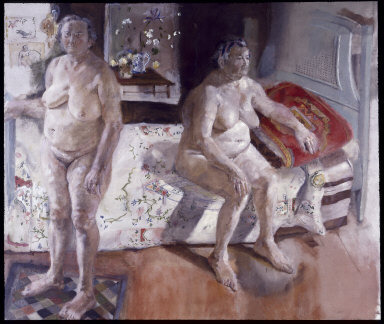
Larry Rivers' portrait of Birdie has fascinated me since high school. Though the nudity may be shocking, it seems to me that it conveys some love and respect for the subject. That might be more about me than, Rivers, though.
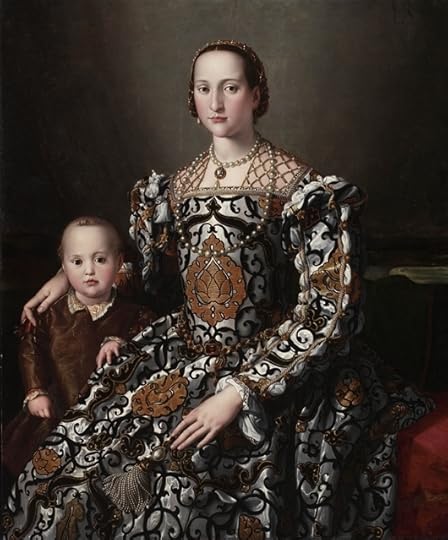
Today when I look at this image of Elenora I'm struck with how young she was when this was painted. The original is a few miles down the road. I'll be going there tomorrow and see what I think.
Plans changed and the DIA visit has been postponed. The DIA (Detroit Institute of Arts) is the 6th largest collection in the states. It would have been larger but a huge collection was sent to the then newly created National Gallery in Washington, D.C. In trying to google this information it's difficult to come up with a precise answer. Museums can be rated on square footage, attendance and size of the collection. One document showed Houston's Museum rated sixth but what matters is that we support museums! Who's bigger and better? One snip quoted Bonnard as saying the best thing about museums are the windows!Here's a link to the Bronzino double portrait in the DIA collection that can be enlarged on your desktop.
http://www.dia.org/object-info/a688c8...
What a neat portrait! I love how you can zoom in on the features and take in the whole thing. Gosh her dress is beautiful. Thanks for the link, Monica!
I could write a book... 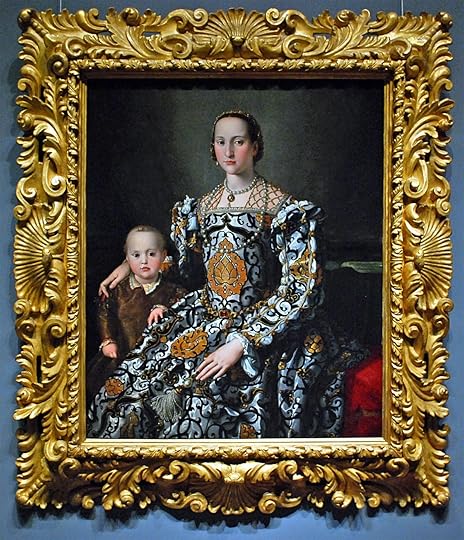
Agnolo Bronzino Eleonora da Toledo with Her Son 1545-50
Interesting to see this was a gift from the Booths. There's lots of 'em around here!
How about that flash program? Pretty cool!
Has Sculpture Become Just Another Pretty Face?By MICHAEL KIMMELMAN
The New York Times
BERLIN — Sometimes on a whim I stop into the Bode Museum here to commune with a tiny clay sculpture of John the Baptist.
It’s in a corner of a nearly always empty room, a bone-white bust, pretty and as androgynous as mid-1970s Berlin-addled David Bowie. The saint’s upturned eyes glow in the hard light through tall windows. Attributed to the 15th-century Luccan artist Matteo Civitali, the sculpture is all exquisite ecstasy and languor.
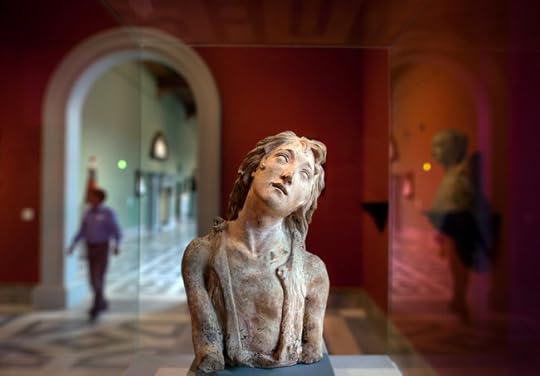
Sometimes it’s not the saint I check on but a sculptured portrait in the same room of the banker Filippo Strozzi — stern like a Roman emperor, the face of rectitude and power — by Benedetto da Maiano, Civitali’s contemporary. Then I usually climb the stairs to admire Houdon’s bust of Gluck, the composer, and ogle a towering pair of craggy German knights, relics of Renaissance pageantry made of painted wood, each taller than the N.B.A. star Dirk Nowitzki.
Mostly, though, I go to the Bode for the silence.
Like a sentry commanding the northern tip of Berlin’s Museum Island, its back turned to the busier Pergamon Museum, the Neues Museum, the Altes Museum and the Alte Nationalgalerie, the Bode seems to attract just a few handfuls of visitors a day. Some go there to see the paintings, coins and Byzantine art. The sculpture rooms are mostly abandoned.
Is it me, or do we seem to have a problem with sculpture today? I don’t mean contemporary sculpture, whose fashionable stars (see Koons, Murakami et alia) pander to our appetite for spectacle and whatever’s new. I don’t mean ancient or even non-Western sculpture, either. I mean traditional European sculpture — celebrities like Bernini and Rodin aside — and American sculpture, too: the enormous universe of stuff we come across in churches and parks, at memorials and in museums like the Bode. The stuff Barnett Newman, the Abstract Expressionist painter, notoriously derided as objects we bump into when backing up to look at a painting.
A few minutes’ walk from the Bode, the Friedrichswerdersche Kirche, the rebuilt neo-Gothic former church designed by Karl Friedrich Schinkel in the 1830s, houses its own sublime assortment of 19th-century sculpture. It’s usually even emptier than the Bode, and it is free to boot. I’ll occasionally spend an hour or so there, feeling small and unimportant before the portraits of Kant and the great German archaeologist Johann Winckelmann. Except for the doleful guards, I rarely encounter another living soul.
I grew up with the smells of plaster dust and clay in my mother’s sculpture studio on Third Avenue. Making a figure out of stone or metal retains its childlike wonder for me. But sculpture skeptics from Leonardo through Hegel and Diderot have cultivated our prejudice against the medium. “Carib art,” is how Baudelaire described sculpture, meaning that even the suavest, most sophisticated works of unearthly virtuosity by Enlightenment paragons like Canova and Thorvaldsen were tainted by the medium’s primitive, cultish origins.
Racism notwithstanding, Baudelaire had a point. Sculpture does still bear something of the burden of its commemorative and didactic origins. It’s too literal, too direct, too steeped in religious ceremony and too complex for a historically amnesiac culture. We prefer the multicolored distractions of illusionism on flat surfaces, flickering in a movie theater or digitized on our laptops and smartphones, or painted on canvas. The marketplace ratifies our myopia, making headlines for megamillion-dollar sales of old master and Impressionist pictures but rarely for premodern sculptures.
Critics bow to fashion and a legacy of lazy disdain, largely avoiding the topic — I’ve done it myself, so I know — and museums only perpetuate the cycle, offering a steady flow of Botticelli, Monet and Rembrandt exhibitions, before which we genuflect like medieval pilgrims praying before sculptured shrines. But sculpture shows that might broaden our horizons, being costly and difficult to mount, are almost rarer than genuine newly discovered Michelangelos.
In an age of special effects, we may also simply no longer know how to feel awe at the sight of sculptured faces by the German genius Tilman Riemenschneider or before a bronze statue by Donatello. We can’t see past the raw materiality and subject matter. Never mind that Donatello may have been the greatest creative genius until Picasso; he long ago got lapped in the public’s imagination by Madame Tussaud, who has given way to “Avatar” in 3-D and Alexander McQueen’s trippy costumed mannequins.
I read the other day that the Metropolitan Museum had decided to stay open late to accommodate the bewildering crowds for its McQueen extravaganza. Mass hysteria is how a friend described it to me. It clearly became the height of fashion for people to stand in the endless line, if only to have been able to say that they stood in the endless line. How many of those people, I asked myself, stopped to look at any of the Met’s sculptures while they were there, or ever had?
How wonderful, I also thought.
I have the Bode to myself.
God I LOVE when Michael Kimmelman writes like this!!!
oh, yes. I was reading through several of his 'postcards' this morning when I found this. I will have to post more...I love the way he writes!
 National Gallery Gauguin attacker strikes again
Four months after she attempted to rip the Gauguin painting “Two Tahitian Women” off of the wall, Susan Burns, 53, slammed Matisse’s “The Plumed Hat” against the wall, damaging the original antique frame. No damage to the painting, which is valued at $2.5 million, was apparent.
http://www.washingtonpost.com/blogs/a...
Isn't there some way to keep this woman out of the building??
Apparently not, she was violating a court order by entering again...so, short of jail time, I guess there ain't much they can do.
Don't they have high security in those museums. Don't they also have a most wanted list of repeat offenders. Jeesh!
They do have high security in that you have to open all bags and purses for inspection on entering. Plus there's always a guard within view - if not a guard in every room, then the guard will be situated where he/she can see the entirety of two rooms simultaneously. I've been told to back away from a painting before when I had my nose practically in it...
Lobstergirl wrote: "They do have high security in that you have to open all bags and purses for inspection on entering. Plus there's always a guard within view - if not a guard in every room, then the guard will be s..."Sometimes you do need to get up close and personal, but my god this woman is a menace tearing the paintings from the frames. How is she allowed back in to the facilities. Or are their different guards there that don't know the circumstances.
The staffing there is very good. I believe the guards are well trained, and take their jobs seriously. Undoubtedly the first time this happened, there must have been staff meetings about it. Whether they have memorized this woman's face, I don't know...
I just would think they have a wanted posters like they used to have in the post office, of offenders of art. And to be on the lookout for some lady about to destroy a possible masterpiece from the wall. How does one slam a painting into the wall. Why isn't she locked up?
Burns, 53, of Alexandria, was being held at D.C. Superior Court, but a court docket indicates that Burns was to be “transferred immediately” from a D.C. jail to St. Elizabeths Hospital “and to be monitored closely.” Burns was charged with unlawful entry, contempt, destruction of property and attempted theft. (Washington Post)
(St. Elizabeths is a mental hospital.)
Lobstergirl wrote: "Burns, 53, of Alexandria, was being held at D.C. Superior Court, but a court docket indicates that Burns was to be “transferred immediately” from a D.C. jail to St. Elizabeths Hospital “and to be m..."So I guess she is not a detriment to society for now...
Problem is there are probably religious zealots who think she's perfectly sane.
"Developing the implied movement of his paintings Breer also started experimenting with animation, first with flip books and then with film. In his first film, Form Phases, 1952, the designs of his paintings were set into motion, morphing from one thing into another and shifting in colour and cinematic space. Form Phases IV, 1954, a tour de force of movement and instability sees forms, colours, lines and actions burst, complement and contradict each other across every square inch of screen. A tension between the moving and still image defines many of these early works: Recreation I, 1956-57 uses a different image for every single frame (24 frames per second), rejecting the supposed reality that traditional film represents and revealing. Breer became ever-concerned with the interplay between abstraction and representation. Fuji, 1974 jumps from filmed footage of Breer’s wife by a train window to a rotoscoped sequence of a ticket collector and countless drawn depictions of Mount Fuji, all of which slip back and forth into and out of abstraction. In Swiss Army Knife with Rats and Pigeons, 1980 the functional form of the knife and its red colour separate and dance around each other before reuniting. The exhibition includes these and other pioneering works from 1952 into the 1990s...."Robert Breer Pioneering Experimental Artist Dies At 85
Harmonious effects"A timely retrospective reveals the lyrical and vital work of an abstract artist with a passion for jazz.
Like Tom Roberts before him, David Aspden (1935-2005) was born in rural England and arrived in Australia about the age of 15...."
Read more:
http://www.smh.com.au/entertainment/a...


 John Hoyland obituary
Prodigiously creative abstract artist whose ultra-vivid work went to painting's extremes
Mel Gooding
guardian.co.uk, Monday 1 August 2011 20.14 BST
"A painter and printmaker of prodigious creative energy and imagination, John Hoyland, who has died aged 76 of complications following heart surgery in 2008, was widely recognised as one of the greatest abstract artists of his time. From the beginning of his career, he unwaveringly championed the centrality of abstraction to the living history of modernist art. "Non-figurative imagery possessed for me," he wrote, "the potential for the most advanced depth of feeling and meaning...."
...Some critics found the uninhibited exuberance of Hoyland's later painting, its superabundance of effects and its technical extremism, overwhelming....
http://www.guardian.co.uk/artanddesig...
http://pillow-mint.blogspot.com/2011/...
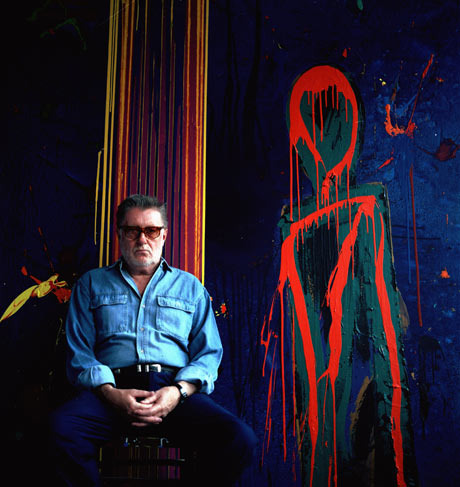
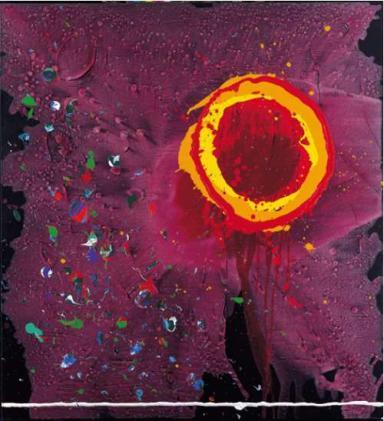


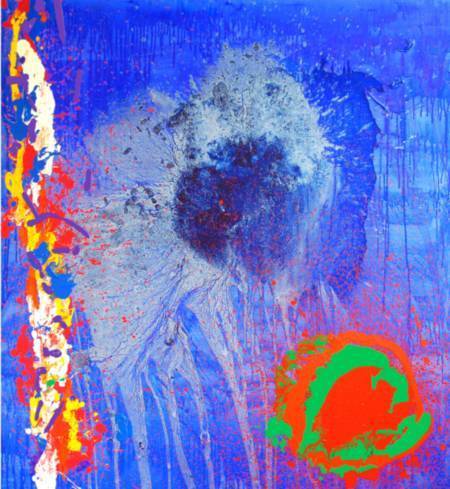 Very interesting work. I like this kind of art, because it is usually whatever the viewer interprets it to be. Thanks, Ed.
Robin wrote: "Very interesting work. I like this kind of art, because it is usually whatever the viewer interprets it to be. Thanks, Ed."
Very interesting work. I like this kind of art, because it is usually whatever the viewer interprets it to be. Thanks, Ed.
Robin wrote: "Very interesting work. I like this kind of art, because it is usually whatever the viewer interprets it to be. Thanks, Ed."I also discovered that there was a very interesting interview where he discussed art with Damien Hirst, that was republished when he died:
RA Magazine Blog: Hoyland and Hirst
Posted: 02 August 2011 by Amy Macpherson RA Website Editor
As a tribute to John Hoyland RA, who died on 31 July, we're posting the conversation between Hoyland and Damien Hirst that appeared in the Autumn 2009 issue of RA Magazine (portrait by Jillian Edelstein). An obituary by Ian Ritchie RA will appear in the Autumn issue of RA Magazine, published 1 September 2011.
http://www.royalacademy.org.uk/ra-mag...
I had never heard of John Hoyland. I really like his work, as Robin said, that is indeed my kind of work. Thanks, Ed.
Heather wrote: "I had never heard of John Hoyland. I really like his work, as Robin said, that is indeed my kind of work. Thanks, Ed."I hadn't either, I have to confess.
It's sad, in that respected English painters seem to be dropping like flies.
But sometimes when an artist dies, a whole new audience starts hearing of them.
That is so true, Ed. Only when the they die then there becomes an interest in their work. But thanks for the data, Ed.
Picasso and beach culture: a cocktail of sand and sensualityJonathan Jones
The Guardian
Amid the new freedoms of the 1920s, Picasso mythologised the beach in works that go far beyond impressionist marine painting
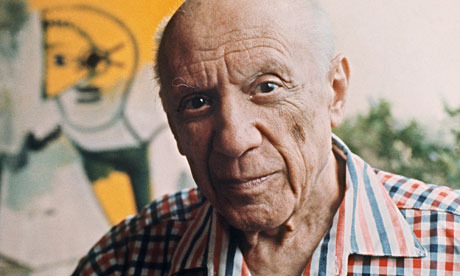
Shades of summer ... Pablo Picasso in Mougins, France. Photograph: Ralph Gatti/AFP/Getty Images
Picasso invented the beach. Well, maybe not single-handedly. But if French 19th-century artists such as Degas defined the traditional seaside, it was Picasso in the 1920s who gave a visual form to the modern hedonism of sand and sensuality sur la plage.
t was in that decade that the French Riviera became the image of sultry decadence, a mythic status it would keep through the 20th century until global resorts offered still steamier thrills. Picasso had money by then, and decamped to the south of France every summer. The 20s Riviera inspired one of the century's definitive novels, Tender is the Night by F Scott Fitzgerald. It also inspired great paintings, as Picasso mythologised the new beach culture in works that go far beyond the elegance of impressionist marine painting.
[image error]
Two Women Running On the Beach, painted in the summer of 1922, is a monument to the new freedoms that swept the world after the first world war. At the time, everywhere from Hollywood to the high street, the stiff conventions of the Victorian age were thrown off. In Picasso's joyous and powerful painting, in the classical style he was then enjoying, women who resemble Greek mythological maenads run in loose Grecian dresses that hang down to reveal big, round breasts; their hair flows free, they hold hands in pure abandon. It must have been a good summer. The sea and sky are slightly different shades of Mediterranean blue: a brilliant cartoon of the seashore.
Picasso's exuberant bathers have male equivalents in his La Flute de Pan, painted the following summer. But here a wistful melancholy intrudes. The men, like lovelorn shepherds in a pastoral poem, are resting in a spot above the blue sea. One even plays the panpipes as they ponder. Perhaps all is not well on the Riviera.
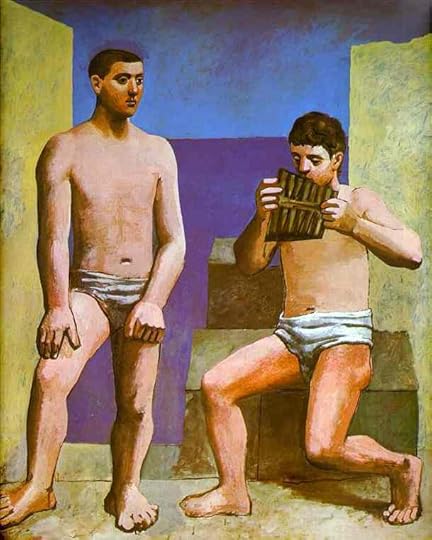
By the summer of 1928, the beach is no longer idyllic at all. Dark emotions cloud the bright day. Picasso turns his big bathers into a stony sculpture, all sharp points and stasis, in one perturbing sketch. That August, in a succession of brutal little pictures, he portrays women playing ball on the beach as crazy monsters, their hair turned to jagged teeth, their gyrations grotesque instead of beautiful.
Not such a good summer. Yet Picasso keeps coming back to the beach. His awe-inspiring Figures Beside the Sea (1931) depicts beach-coloured lovers kissing with sharp cone-shaped tongues, breasts and buttocks isolated as sandy sculptures. The lovers seem to emerge from the sand itself and to solidify through the power of erotic desire.
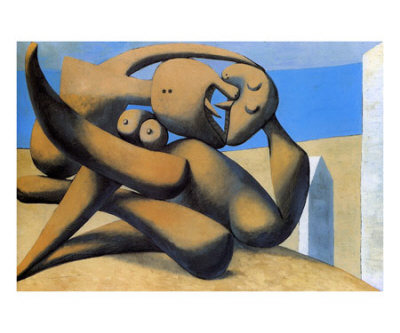
For Picasso, the beach was only ever about one thing: sex. He would keep going there all his life. He cut straight to the heart of modern hedonism, and his intense depiction of fantasy and anguish by the sea is a great visual novel of the pursuit of pleasure on sun-drenched shores.
Heather wrote in March: "Turning a 10-Cent Comic Book Into a Million BucksThis is a lesson for all those parents who threw away their children’s comic books: Last Monday, a copy of Action Comics No. 1, in which Superman..."
John Romita Spider-Man #49 cover art brings $167,300 to lead $4.45+ million Heritage Comics & Comic Art Auction

The original John Romita, Sr. Amazing Spider-Man #49 cover art
DALLAS, TX.- The original John Romita, Sr. Amazing Spider-Man #49 cover art, featuring Spidey dueling the deadly dual menace of Kraven the Hunter and the Vulture brought $167,300 on Thursday, Aug. 18, as the web-slinging top lot in Heritage Auctions’ $4,45+ million Signature® Comics and Comics Art auction. All prices include 19.5% Buyer’s Premium. All told, the auction had a 96.5% sell-through rate by value and 98% by total lots in the auction....
http://artdaily.org/index.asp?int_sec...
Thai abstract sculpture. I really like the Khemrat Kongsook. It evokes the floral designs in Thai Buddhist religious art, but also the ideas of Western modernism.Convoluted logic
An unthought-of relationship between abstract art and Thai culture
Published: 29/08/2011 at 12:00 AM
The golden era of Thai abstract art is brought back to life with an exhibition of 28 sculptures hosted by the Bangkok Art and Culture Centre (BACC)....
http://www.bangkokpost.com/arts-and-c...
[image error]
A work by Khemrat Kongsook.
[image error]
A piece by Chamruang Vichienket.
[image error]
A work by Nonthivathn Chandhanaphalin.
 I'm with you Ed, I really like the Khemrat Kongsook. But I do like the energy in the Chamruang Vichienket.


LISBON.- A young girl walks the inside of Miracoco, an air-filled sculpture by British artist Alan Parkinson, on display Monday, Aug. 1 2011, in downtown Lisbon. AP Photo/Armando Franca.