
The History Book Club discussion
THE FEDERALIST PAPERS
>
WE ARE OPEN - Week One - March 4th - March 11th (2018) - FEDERALIST. NO 1
date newest »
newest »
 Re SS funds.
Borrowed may not be the correct word. I think re-directed is correct. At least as far back as the Eisenhower administration, when the SS were in surplus and the general revenues were in deficit, Congress authorized using surplus SS funds to pay down the deficit. Congress didn't borrow the funds. There was no intention of ever paying it back. The SS bill was intended as a vehicle for current wage earners to support those who are old and unable to work and to remove older workers from the labor force to make way for younger workers. It specifically was not intended to create entitlements. So in the Congressmen's minds, there was no obligation to replace the funds. They were surplus to the then current needs and the same Congresspersons were spending above revenues so they saw no need to bank the surplus and no obligation to repay. As a retiree who paid into the system for more than 50 years, I would contend that was myopic but that's the way she was.
Message 152 was a sad ad homonym and I did not write it. It is clearly an emotive opinion piece. In my opinion anyway.
Bentley, I will try to remember to sign off with Jeffrey T. to help avoid the split personality.
Jeffrey T.
 Mod
Mod
Mod
Mod
https://www.forbes.com/sites/merrillm...
Source: Forbes
And the same subject matter was also reported in the Wall Street Journal:
https://www.wsj.com/articles/SB100014...
Source: Wall Street Journal
How much money has been borrowed from the social security trust fund:
Overview. The Trust Fund represents a legal obligation of the federal government to program beneficiaries. The government has borrowed nearly $2.8 trillion as of 2014 from the Trust Fund and used the money for other purposes.
Excerpt:
Social Security is self-financed, cannot borrow, spends less than one percent on its administrative costs, has a $2.6 trillion surplus which will continue to grow for a number of years, and is off-budget. It does not contribute to the federal deficit or the debt. The Social Security surplus is invested in US Treasuries which enables the federal government to borrow less from other sources. The government borrows these Social Security funds to pay for other government spending — but is obligated to pay interest on these borrowings — and pay back the borrowed funds in full when they are needed by Social Security for benefit payments.
Pay Back the Money Borrowed From Social Security
By Sen. Don Riegle and Lori Hansen Riegle
https://www.huffingtonpost.com/sen-do...
Source: Huffington Post
 Bentley wrote: "Michael - here is the glossary thread - https://www.goodreads.com/topic/show/..."
Thank you!
I am reluctant to keep beating on this horse but just for the record and to recognize the fact, the redirection of SS funds from the purpose for which they were drawn is really an example of waste and fraud. They money was not collected as a general revenue fund but that is what some of it was used for. As such it was taken from my salary and from matching funds paid by my employer and redirected without either of our consent. That not only affected me and my family but made the business less profitable and encouraged automation as a lesser total cost than salary and benefits, resulting in more job loss. I agree with Bentley when he wrote that the government should have done a better job of balancing the budget rather then robing Peter to pay Paull. Jeffrey T.
Mod
And even Charles Krauthammer who is not a liberal called out how they are spinning this to the American people as if nothing is at all wrong with this. Even the Social Security site spins this. Amazing but I regret now using this just as an example (lol).
The budget is not balanced, we are always working with a deficit and now with this potential wall and tax cut - there will be more of a deficit to benefit either the top 1%, corporations and a wall. And everybody complains about poor monetary management in Greece.
Mod
Thank you!"
Remember Michael that message one of each of these threads will have the links posted there. Every message one has the links added at the bottom.
Mod
I did not imply any such thing. I used sources and others also countered your arguments which you have every right to make. Do I think that Social Security would be better off - yes I think that is true. I also think that the government would be better off if they prioritized differently and getting us into wars is probably not one of them.
I think you should reread what others have said and reflect on the merit of the sources and how they interpret these practices. It would behoove the government to develop better monetary practices and balance the budget.
I disagree with you and I think we need to move on. I respect your viewpoint but it is not mine. Let us move on since it is obvious that you will not at the very least see the merit in other viewpoints. We have heard your arguments. There is no reason to keep repeating them here. And of course I respectfully disagree - I will not comment further because there is nothing else to add.
 Bentley wrote: "Jeffrey- I appreciate your thoughts on the subject but there are many folks who have been cited who disagree with the "approach".
 I did not imply any such thing. I used sources and others also co..."
Bently,
In post 122: you state
"Social Security was solvent and would never had any issues if they had not taken money out which they were not allowed to do to pay for other pet projects along the way. I hate when they tout it might run out of money and it is all due to their own fiscal and moral irresponsibility if it does."
This statement is what I am referring to in my response.
SS is not in trouble because of pet projects etc... it is in trouble because the payroll taxes cannot support the benefits.
Mod
Social Security is fully funded and had a surplus which was borrowed against - using your term - I would say raided (lol).
It is that borrowing or raiding that folks disagree with.
Now the surplus is a bunch of IOUs because the surplus was used to pay for wars, etc. Will the IOUs be paid back with interest - probably but that is not the point. Right now it is solvent still despite the surplus being used for pet projects like wars.
Maybe by 2037 what you say might be true - maybe it might need some bolstering then or even now if we have forward thinkers in Congress - but it is solvent now through no help from our politicians.
I agree with Jeffrey T - I personally never gave anybody permission to use the social security I paid in for wars or anything else - but social security - period.
Here is what the social security administration has to say about it. - btw - I have already cited them and others:
"As a result of changes to Social Security enacted in 1983, benefits are now expected to be payable in full on a timely basis until 2037, when the trust fund reserves are projected to become exhausted.
At the point where the reserves are used up, continuing taxes are expected to be enough to pay 76 percent of scheduled benefits.
Thus, the Congress will need to make changes to the scheduled benefits and revenue sources for the program in the future. The Social Security Board of Trustees project that changes equivalent to an immediate reduction in benefits of about 13 percent, or an immediate increase in the combined payroll tax rate from 12.4 percent to 14.4 percent, or some combination of these changes, would be sufficient to allow full payment of the scheduled benefits for the next 75 years.
Since the inception of the Social Security program in 1935, scheduled benefits have always been paid on a timely basis through a series of modifications in the law that will continue. Social Security provides a basic level of monthly income to workers and their families after the workers have reached old age, become disabled, or died. The program now provides benefits to over 50 million people and is financed with the payroll taxes from over 150 million workers and their employers. Further modifications of the program are a certainty as the Congress continues to evolve and shape this program, reflecting the desires of each new generation."
Now do I think that Social Security would have been better off if the surpluses were not borrowed against and were simply invested properly - I think I do. Would I feel better if they were not simply backed by paper IOUs - but were the real surplus - you betcha. But
still maybe in time - even 2037 - Social Security might need to be bolstered - maybe that would have been true anyway - but it is certainly solvent now.
You have certainly repeated your claims and assertions over and over and over again. And you have been responded to by others. I and others disagree with you which is our right. It is also your right to have your opinions.
I am not sure why you are belaboring the point but I am asking you to return to the subject of the thread. Please read our rules and guidelines.
Mod
What we are also encouraging is a reflection of differing ideas and opinions other than your own. If someone disagrees with you, that is ok. And remember we are discussing the Federalist Papers so there will be a lot of topics which dovetail to current events.
But once you have made your point once - we move on. There is no use belaboring the point.
We like hearing from everybody and it is no fun if folks feel that they cannot state and post their opinions without being badgered or hounded. So when the moderator says - ok - let us change the subject or the direction - they want to get things back on track.
https://www.goodreads.com/topic/show/...
Jeffrey wrote: "I am reluctant to keep beating on this horse but just for the record and to recognize the fact, the redirection of SS funds from the purpose for which they were drawn is really an example of waste ..."If this is truly the case then people and employers should be able to bring suit because it seems to me it breaches the intent of the constitution and what it has to say about taxation. Having said this I refuse to leave my future in the hands of the government for exactly this reason. Government (no different here in Canada) do these financial shenanigans and the people at the bottom pay the price. I think it happens more than we know.
Bentley wrote: "I agree Jeffrey T - it is being used sort of as a slush fund to shore up those areas of the budget not able to be funded, I totally agree - it is as if we are being taxed extra to bolster poor mone..."Bentley wrote: "Obama created quite a stir when because the debt ceiling wasn't increased yet that possibly seniors would not receive their checks."
Just once I would like our leadership [president, congress and event the bureaucracy) to say something like, "if we cannot increase the debt ceiling, we will not receive our checks." Why is it always the seniors, the working poor or the disenfranchised that have to pay for the waste at the pig's trough?
Better yet I would like to see our leadership to a founding fathers type thing and declare they would no longer accept pay for working for the country until debt was resolved and the budget under control. Those boys and girls make a lot of dough and hire a lot of expensive help and sometimes show very little for it on both sides of the aisle. (Just a tiny rant!)
Hey Bentley, I made my last two comments before I read to the end of the thread. I believe they speak to the broader issue of constitutionality or even to The Federalist. If not feel free to reclassify or remove them.
Mod
I would like to leave Social Security behind us for now since it seems to be a hot button which has been like beating a dead horse. (lol)
This Canadianfied Yankee agrees. (wink, wink, smile) Notice I coined a word there...
Mod
 Hello. I'm Jerome and interested in the Federalist Papers for two reasons. First, since joining Goodreads, I want to read more classic fiction and classic/topical nonfiction. FP are both classic and topical. Second, I'm interested in being a more educated citizen, as I have concerns about the fragility of democracy. The concern was echoed by Hamilton in FP1:
"...of those men who have overturned the liberties of republics, the greatest number have begun their career by paying an obsequious court to the people; commencing demagogues, and ending tyrants."
Mod
Yes, I agree with what you said in the Hamilton excerpt - something to be concerned about. I think also this is a great undertaking and yet doing one every week is doable, interesting and we will learn a great deal along the way. This should be fun and after a year and a half - I think this group will know each other fairly well and have a good grasp of the Federalist essays.
I applaud you for joining in and we are happy you are here.
Mod
See article and video:
https://www.cnsnews.com/news/article/...
Excerpt:
“Congress is supposed to be a separate, equal branch of government,” he said.
“Read the Constitution. Read the Federalist Papers,” Schumer said.
“One of the main purposes of Congress was to check the power of the executive branch,” he said. “Our Founding Fathers feared an overreaching executive branch, as I know my friend from Nebraska knows, because he cites these things. That responsibility doesn’t fall only on one party. It falls on all of us.”
Mod
Under Trump's watch, national debt tops $21 trillion for first time ever
By KATHRYN WATSON CBS NEWS March 17, 2018, 10:41 AM
About a year ago, President Trump pledged to eliminate the national debt "over a period of eight years." But for the first time in history, the national debt surpassed $21 trillion this week, according to the U.S. Treasury.
The landmark comes shortly after Congress passed, and Mr. Trump signed, a suspension on the federal debt limit last month, allowing the government to borrow an unlimited amount of money until March 1, 2019.
When Mr. Trump took office on Jan. 20, 2017, the national debt was $19.9 trillion, according to U.S. Treasury data. Since then, the GOP-led Congress has passed a $1.5 trillion tax cut bill and a two-year spending deal which, together, are expected to drive the deficit and debt further upward. The Committee for a Responsible Federal Budget estimates annual deficits could top $2.1 trillion per year in the next decade, which would send the national debt soaring even higher.
Remainder of article:
https://www.cbsnews.com/news/under-do...
Source: CBS News
 Bentley wrote: "Rob, fair point. Thank you for the add by the way.
 I feel differently about the media and journalists. I think they try -but now when anything anybody stands for on their personal time and when t..."
When the definitive histories of late 20th Century America are written, I think historians will vilify Rupert Murdoch and his henchmen for debasing the broadcast/social media/streamed news discourse, such as it is. I also think the demise of the Fairness Doctrine in the determination of who is fit and proper to run broadcast/social media/streaming is another big contributor.
Bentley wrote: "Daniel Webster is known for a great quote among many other things "Stick close to the Constitution, miracles do not occur in clusters."
--Daniel Webster
Here is the quote in its entirety:
“Hol..."
It means not all content is equal. In the deluge of information today brought to us by technology advances, we may not be getting more information that is well worth hanging onto. Just because a piece of information is repeated 20x nowadays because of technology - or even 200x or 2,000x - doesn't mean we are likely to receive 20 or 200 or 2,000 times more important content to hang onto. Even if the rate of truly important information among all information stays constant, it would imply we need to filter out 20 or 200 or 2,000 times more chaff than our prior generation.
My suspicion is the absolute rate of production of what is really worth hanging onto may have stayed the same, and that's why Webster said hang onto the Constitution. The implication is we need to also ignore most of the clickbait we come across.
But we can't revere the Constitution just because Webster said to do; each generation must develop its own ownership of the document. Hence why this History Book Club exercise is a good one, and why I agree the resumption of civics education in middle and high schools is a very good idea in pressing need.
Bentley wrote: "Folks, I have placed in the glossary some videos from courses with the late Professor J. Rufus Fears and some presentations of what is a constitutional crisis and are we in one presented by Profess..."Bentley, any time you use the word "glossary" in your posts it would be helpful to include a link; that way interested readers can go immediately to the additional resources you've posted if they have interest.
Richard wrote: "Bentley wrote: "Federalist Paper 1Essay Overview and Summary:
"Alexander Hamilton begins this brilliant discourse on the Constitution of the United States of America by asking his readers to con..."
Of course what you hypothesize can happen. You need a very divided polity, nearly 50/50. Then you need a strategy that recognizes your victory depends on the electoral votes from a small subset of states. In my own amateurish thinking before the 2016 elections I focused on the FONP states (Florida, Ohio, North Carolina, Pennsylvania). Then you look in each state and see whether you can made much more inroads per $ and hour of candidate time in thinly populated precincts. If you can, then you organize your final schedules to hit those targeted populations; and you use "psychographic modeling techniques" to direct ads and Fake News to those populations.
But the first step is you need a truly divided polity. If the population had swung to 60/40 or even 55/45 before the vote, this probably won't work.
Mod
"Stick close to the Constitution, miracles do not occur in clusters."
--Daniel Webster
Here is the quote in its..."
Thank you Cliff
Mod
Message one always has all of the links noted on every thread if you cannot find it but going into the Federalist Papers folder - but a good point.
Cliff wrote: "But we can't revere the Constitution just because Webster said to do; each generation must develop its own ownership of the document. Hence why this History Book Club exercise is a good one, and why I agree the resumption of civics education in middle and high schools is a very good idea in pressing need. "Cliff: Here! Here!
Cliff wrote: "Richard wrote: "Bentley wrote: "Federalist Paper 1Essay Overview and Summary:
"Alexander Hamilton begins this brilliant discourse on the Constitution of the United States of America by asking hi..."
I am wondering what MSG 176 references. Where did the original comment being responded to originate? We need to cut and paste the actual quote we are referencing and get rid of the other material or it will get too confusing as Goodreads only quotes the first line or two in a reply. Just a suggestion to make things easier to follow gang.
Mod
Mod
https://www.abqjournal.com/1088165/in...
Elsewhere I have posted the Channel 4 - UK operation which has resulted in the UK seeking a warrant for Cambridge Analytica. This company has had an impact on our democracy and transparency in voting.
It appears that it had a lot to do with the messaging, fake news, and the psychological profiling of 50 million facebook users for starters.
They also claimed to having everybody's voting profile. Pretty sad if that is the case.
Anyway I have just finished reading Devil's Bargain and I found this write up in the Alburquerque Journal (New Mexico).
I guess Robert Mercer was from New Mexico and went to Sandia High and the University of New Mexico.
Anyway that was way back then - but what I found interesting was his yearbook entry which showed that he was a member of the school's chess, auto and Russian clubs. That nugget was very interesting to me considering that his yacht was parked beside a Russian oligarch's which is being investigated during the campaign.
And of course he is the prime financier of many things - Trump, the campaign, Breitbart News, Cambridge Analytica and the list goes on and on. Mercer is extremely wealthy but his daughter was also on Trump's transition team. There appears to be a lot of connections.
Anyway here is the article showing him at his reunion with his daughter and his high school photo plus: https://www.abqjournal.com/1088165/in...
I wonder if this is what Hamilton was talking about. How would the founding fathers feel about psychologically profiling voters, planting fake news by California Analytica and their connections, and confusing the voters about the candidates and their positions.
This is all new territory. I hope that you all watch the Channel 4 UK videos on Cambridge Analytica because the UK has and they are getting a warrant and the CEO of CA has now been suspended. They were mining Facebook data so Facebook is not off the hook either. And there are multiple whistle blowers.
Is this one of the disastrous mistakes that Hamilton was referring to?
I guess if the investigators follow the money - they will ultimately find out where it leads. This entire saga about California Analytica is absolutely going to be made into a movie sometime. It is outrageous and so extraordinary that no ordinary thriller could top this story as it evolves.
Your thoughts on any of this and how this pertains to our democracy as well as the UK. And how does this map back to warnings from our founding fathers. Even though some of this might have been out of their realm. They could not possibly have even dreamed of an internet and social media.
 by Joshua Green (no photo)
Source(s): Albuquerque Journal, Channel 4 - UK, NY Daily News, Palm Beach Post, The Guardian
Links: https://www.palmbeachpost.com/news/na...
http://www.palmerreport.com/politics/...
http://www.nydailynews.com/news/natio...
https://www.theguardian.com/news/2017...
https://www.channel4.com/news/data-de...
Mod
Trump replaces H.R. McMaster as national security adviser with John Bolton
As you recall, John Bolton was the choice of Rebekah Mercer and her father Robert Mercer who were the financiers of Breitbart, Cambridge Analytica and Trump. He is a hawk which gives me pause.
This is a quote:
"Bolton's hard edged, hawkish views on issues like North Korea, Iraq and Syria make him a controversial pick to become the next national security adviser -- particularly considering that talks with North Korea may soon be possible".
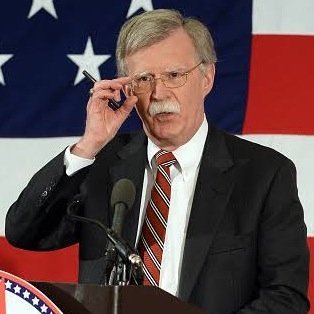
Can you believe it a third National Security Advisor in a year? (Flynn, McMaster, Bolton)? He is going to run out of people who would ever want to serve in this kind of environment.
https://www.cnn.com/2018/03/22/politi...
Discussion Question:
1. What would Hamilton have thought of this revolving door in the Executive Office?
Note:
It was Bolton who blasted just in February that the North Korea sanctions were worthless. I am really worried that this guy will make war and not peace.
From Business Insider: - (all direct quotes - these are scary times - we are bringing back a former George W. Bush official who thinks that the Iraq War was a good decision)
A former member of the George W. Bush administration has called John Bolton, the former US Ambassador to the UN and rumored replacement for National Security Advisor H. R. McMaster, a "dangerous man."
Richard Painter said that Bolton's potential appointment to security advisor role was "an invitation to to war, perhaps nuclear war" and "must be stopped at all costs."
Bolton is known for his hawkish views on the Iraq War and on Iran.
See Newsweek and Business Insider: http://www.newsweek.com/john-bolton-b... and http://www.businessinsider.com/richar...
Mod
Transcript:
Fellow Citizens of the Senate and the House of Representatives:
Among the vicissitudes incident to life, no event could have filled me with greater anxieties than that of which the notification was transmitted by your order, and received on the fourteenth day of the present month. On the one hand, I was summoned by my Country, whose voice I can never hear but with veneration and love, from a retreat which I had chosen with the fondest predilection, and, in my flattering hopes, with an immutable decision, as the asylum of my declining years: a retreat which was rendered every day more necessary as well as more dear to me, by the addition of habit to inclination, and of frequent interruptions in my health to the gradual waste committed on it by time. On the other hand, the magnitude and difficulty of the trust to which the voice of my Country called me, being sufficient to awaken in the wisest and most experienced of her citizens, a distrustful scrutiny into his qualification, could not but overwhelm with dispondence, one, who, inheriting inferior endowments from nature and unpractised in the duties of civil administration, ought to be peculiarly conscious of his own deficencies. In this conflict of emotions, all I dare aver, is, that it has been my faithful study to collect my duty from a just appreciation of every circumstance, by which it might be affected. All I dare hope, is, that, if in executing this task I have been too much swayed by a grateful remembrance of former instances, or by an affectionate sensibility to this transcendent proof, of the confidence of my fellow-citizens; and have thence too little consulted my incapacity as well as disinclination for the weighty and untried cares before me; my error will be palliated by the motives which misled me, and its consequences be judged by my Country, with some share of the partiality in which they originated.
Such being the impressions under which I have, in obedience to the public summons, repaired to the present station; it would be peculiarly improper to omit in this first official Act, my fervent supplications to that Almighty Being who rules over the Universe, who presides in the Councils of Nations, and whose providential aids can supply every human defect, that his benediction may consecrate to the liberties and happiness of the People of the United States, a Government instituted by themselves for these essential purposes: and may enable every instrument employed in its administration to execute with success, the functions allotted to his charge. In tendering this homage to the Great Author of every public and private good, I assure myself that it expresses your sentiments not less than my own; nor those of my fellow-citizens at large, less than either. No People can be bound to acknowledge and adore the invisible hand, which conducts the Affairs of men more than the People of the United States. Every step, by which they have advanced to the character of an independent nation, seems to have been distinguished by some token of providential agency.
And in the important revolution just accomplished in the system of their United Government, the tranquil deliberations and voluntary consent of so many distinct communities, from which the event has resulted, cannot be compared with the means by which most Governments have been established, without some return of pious gratitude along with an humble anticipation of the future blessings which the past seem to presage.
These reflections, arising out of the present crisis, have forced themselves too strongly on my mind to be suppressed. You will join with me I trust in thinking, that there are none under the influence of which, the proceedings of a new and free Government can more auspiciously commence.
By the article establishing the Executive Department, it is made the duty of the President "to recommend to your consideration, such measures as he shall judge necessary and expedient."
The circumstances under which I now meet you, will acquit me from entering into that subject, farther than to refer to the Great Constitutional Charter under which you are assembled; and which, in defining your powers, designates the objects to which your attention is to be given.
It will be more consistent with those circumstances, and far more congenial with the feelings which actuate me, to substitute, in place of a recommendation of particular measures, the tribute that is due to the talents, the rectitude, and the patriotism which adorn the characters selected to devise and adopt them. In these honorable qualifications, I behold the surest pledges, that as on one side, no local prejudices, or attachments; no seperate views, nor party animosities, will misdirect the comprehensive and equal eye which ought to watch over this great assemblage of communities and interests: so, on another, that the foundations of our National policy will be laid in the pure and immutable principles of private morality; and the pre-eminence of a free Government, be exemplified by all the attributes which can win the affections of its Citizens, and command the respect of the world.
I dwell on this prospect with every satisfaction which an ardent love for my Country can inspire: since there is no truth more thoroughly established, than that there exists in the economy and course of nature, an indissoluble union between virtue and happiness, between duty and advantage, between the genuine maxims of an honest and magnanimous policy, and the solid rewards of public prosperity and felicity: Since we ought to be no less persuaded that the propitious smiles of Heaven, can never be expected on a nation that disregards the eternal rules of order and right, which Heaven itself has ordained: And since the preservation of the sacred fire of liberty, and the destiny of the Republican model of Government, are justly considered as deeply, perhaps as finally staked, on the experiment entrusted to the hands of the American people.
Besides the ordinary objects submitted to your care, it will remain with your judgment to decide, how far an exercise of the occasional power delegated by the Fifth article of the Constitution is rendered expedient at the present juncture by the nature of objections which have been urged against the System, or by the degree of inquietude which has given birth to them.
Instead of undertaking particular recommendations on this subject, in which I could be guided by no lights derived from official opportunities, I shall again give way to my entire confidence in your discernment and pursuit of the public good: For I assure myself that whilst you carefully avoid every alteration which might endanger the benefits of an United and effective Government, or which ought to await the future lessons of experience; a reverence for the characteristic rights of freemen, and a regard for the public harmony, will sufficiently influence your deliberations on the question how far the former can be more impregnably fortified, or the latter be safely and advantageously promoted.
To the preceeding observations I have one to add, which will be most properly addressed to the House of Representatives. It concerns myself, and will therefore be as brief as possible. When I was first honoured with a call into the Service of my Country, then on the eve of an arduous struggle for its liberties, the light in which I contemplated my duty required that I should renounce every pecuniary compensation. From this resolution I have in no instance departed.
And being still under the impressions which produced it, I must decline as inapplicable to myself, any share in the personal emoluments, which may be indispensably included in a permanent provision for the Executive Department; and must accordingly pray that the pecuniary estimates for the Station in which I am placed, may, during my continuance in it, be limited to such actual expenditures as the public good may be thought to require.
Having thus imparted to you my sentiments, as they have been awakened by the occasion which brings us together, I shall take my present leave; but not without resorting once more to the benign parent of the human race, in humble supplication that since he has been pleased to favour the American people, with opportunities for deliberating in perfect tranquility, and dispositions for deciding with unparellelled unanimity on a form of Government, for the security of their Union, and the advancement of their happiness; so his divine blessing may be equally conspicuous in the enlarged views, the temperate consultations, and the wise measures on which the success of this Government must depend.
About this speech
April 30, 1789
Source: Miller Center
Washington calls on Congress to avoid local and party partisanship and encourages the adoption of a Bill of Rights, without specifically calling them by name.
The first President demonstrates his reluctance to accept the post, rejects any salary for the execution of his duties, and devotes a considerable part of the speech to his religious beliefs.
Mod
By Laura Beers
Updated 5:28 PM ET, Tue January 29, 2019

CNN)Last week, I took my 7-year-old to see "Hamilton: An American Musical" in London.
We both know the soundtrack nearly by heart, but watching the play live less than a mile from the Palace of Westminster threw the revolutionary success story into new relief.
Several members of the audience laughingly groaned when King George III lamented that fighting with France and Spain was making him blue.
But the comparison that stood out most pointedly to me was not between the politically isolated King George and the current Prime Minister, but between Theresa May and Alexander Hamilton.
Remainder of article:
https://www.cnn.com/2019/01/29/opinio...
Source: CNN
Mod
‘Federalist’ Principles of Governing Are Dead – Consider the Impasse Over ‘The Wall’
Bob Barr |Posted: Jan 02, 2019 12:01 AM

Two hundred and thirty years ago, three of our Founding Fathers authored a series of essays that came to be known as the “Federalist Papers.”
Thomas Jefferson years later characterized these writings as the “best commentary on the principles of government which ever was written.” In other words, “if you want to understand how American government is supposed to function, read the ‘Federalist Papers.’”
Sadly, it appears obvious few, if any, of the key protagonists in today’s political battles between the three branches of our government that were established in that bygone era (which I consider our “Greatest Generation”) have read, much less truly understand the principles embodied in that collection of essays.
Most Americans are at least vaguely familiar with the fact that our federal government is comprised of three branches – Legislative, Executive, and Judicial.
The men who framed our Constitution, however, incorporated into the mechanisms it created many other important principles; including several that were designed expressly to distance our government from that of Great Britain, the country from which we were splitting.
In establishing the position of “President,” for example, our Framers made clear that this person was not to be selected by, or to be a part of, the Legislative Branch. This is distinct from the British model, in which the chief executive is the “Prime Minister”; chosen not by the voters in general election, but by his or her fellow Members of Parliament, and therefore answerable directly to that body.
By contrast, in our country, the president, as the chief executive, is elected by the citizenry at-large (technically, through “electors”), and therefore answerable to the People of the entire country; not to the Legislative Branch.
Conversely, and in another important principle incorporated into the Constitution, Members of the Legislative Branch (the two Houses of Congress) neither answer to nor are to be controlled by the President. Rather, each Member of Congress (whether Representative or Senator) is to reflect and be answerable to the constituents of his or her district or state; not to the President.
While those interests may from time to time coincide, U.S. Representatives and Senators are not serving in that august institution merely to do a president’s bidding.
So, what has changed (other than a profound ignorance of the principles undergirding our constitutional form of government)? Why do Republican Members of Congress by and large consider it their bounden duty to use their powers and responsibilities to do the bidding of a president simply because the person occupying that office is of the same political party as are they? Similarly, why do Democrats operate in the same mode when the White House is occupied by a person with a “D” after their name?
In a word, what has turned our political structure on its head, is the one thing our Founding Fathers disdained and warned us about – party politics. Especially in the closed, two-party system that has constrained politics in America for more than a century and a half, the primary allegiance deemed important to the vast majority of Representatives and Senators now serving, is to the President who happens to be of their same political party. If the president is a Republican, the congressional leaders of that party consider it their obligation to employ their powers to enact his agenda; and failure to toe that line is considered cause for punishment. The Democrats operate in just the same manner.
Thus have the lines between the Executive and Legislative Branches become muddled, if not largely erased; and most Members of Congress now rarely assert a voice or an agenda independent from that of the president. Members not of the president’s party consider it their primary responsibility to oppose the Administration’s agenda; those who share the president’s political affiliation view it as their almost sacred responsibility to do whatever they can to support the agenda of “their” president.
More:
https://townhall.com/columnists/bobba...
Source: Townhall
Mod
Conservatives Need to Love the Filibuster Again
It matters. It really does.
by CHARLES SYKES FEBRUARY 4, 2019 4:01 AM

Huey Long, after his record-breaking filibuster in 1935
Link: https://thebulwark.com/conservatives-...
Source: The Bulwark
Mod
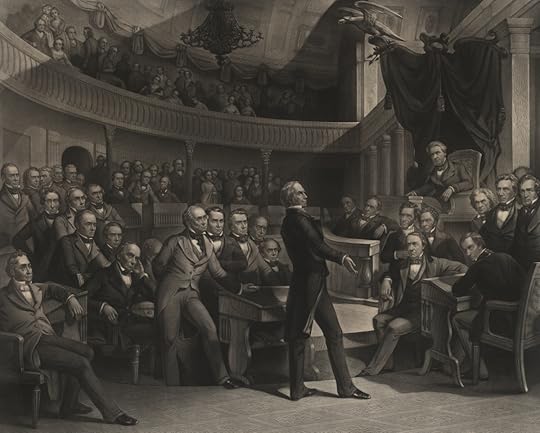
What Congress Lost With The Dying Art Of Deliberation
In his introduction to “The Federalist Papers,” Hamilton discusses two options. For the people to choose a constitution in which they are responsible for deliberating for themselves, “from reflection and choice,” or to be governed by those given power by birth or by “force.”
James Madison believed it was good that our country was physically big because it would encourage more deliberation and, thus better laws.
A bigger country meant more people. If policy decisions were going to affect the whole country, it meant that you had to talk to and convince many people that your policy was good for the whole country.
This required your reason and speech to be more candid, and more applicable to a general population.
Sadly, modern congressmen and women do not debate and deliberate much with one another.
Both the House and the Senate are more often than not empty, with members speaking only to a handful of people in the entire chamber. It’s difficult to have a debate with other members when they aren’t in the room.
Winston Churchill believed the structural design of the House of Commons encourages debate between opposing parties. Each party sits on opposite sides of the room, directly facing each other.
For a politician trying to argue his point, knowing that many people who disagree with him are sitting directly across the hall, forces him to make a more convincing argument and spur a more thoughtful debate.
And every time a member walks in, he or she must choose which side he or she is on. If a member were to change his party or views, he must physically walk across the aisle.
Churchill argued this in his “A Sense of Crowd and Urgency” speech to the House of Commons after bombs had destroyed the original chamber in 1941:
The semi-circular assembly, which appeals to political theorists, enables every individual or every group to move round the centre, adopting various shades of pink according as the weather changes.
I am a convinced supporter of the party system in preference to the group system. I have seen many earnest and ardent Parliaments destroyed by the group system. The party system is much favoured by the oblong form of Chamber. It is easy for an individual to move through those insensible graduations from the Left to Right but the act of crossing the Floor is one which requires serious consideration.
A congressmen’s office used to be his desk in the chamber, listening to the various statesmen, arguing with other members, and creating historic pieces of legislation. They had their committees, but those were not permitted to meet when Congress was in session.
Today, C-SPAN zooms in so viewers can’t see the empty room members of Congress are “arguing” with. This is no longer the deliberative body Hamilton said our Constitution ought to rely on.
Congress has given their authority away by not physically showing up to debate, which is slow, painful work. It’s much easier and faster to add laws to our Federal Register through the president, but that’s a much longer lecture for another time.
Responsibility to restore the power dynamics the founders intended is on the shoulders of the legislative branch. This reform starts with thinking, talking, arguing, and deliberating together about our futures again.
Madeline is a staff writer at the Federalist and the producer of The Federalist Radio Hour
More: https://thefederalist.com/2019/01/22/...
Source: The Federalist
Mod
Please review the posts on this thread and if you are new to the discussion please post regarding your interest in studying and reading the Federalist Papers and we will always respond.
The more folks post - the more exciting the discussion will become.

The History Book Club
Books mentioned in this topic
Devil's Bargain: Steve Bannon, Donald Trump, and the Storming of the Presidency (other topics)Keeping the Tablets: Modern American Conservative Thought (other topics)
The Federalist Papers (other topics)
Saving the Revolution: The Federalist Papers and the American Founding (other topics)
The Federalist Papers (other topics)
More...
Authors mentioned in this topic
Joshua Green (other topics)Charles R. Kesler (other topics)
William F. Buckley Jr. (other topics)
Alexander Hamilton (other topics)
James M. Fallows (other topics)
More...

We shared with you the connections to the current conversation on immigration - not just here in the US but abroad and discussed and presented viewpoints on the hot topics which are being bandied about on the nightly news channels
There are many difficult conversations on immigration, foreign influence and force which need to be discussed by our branches of government and the American people.
I look forward to reading your posts and thoughts about all of the above which Federalist 2 brought front and center.