
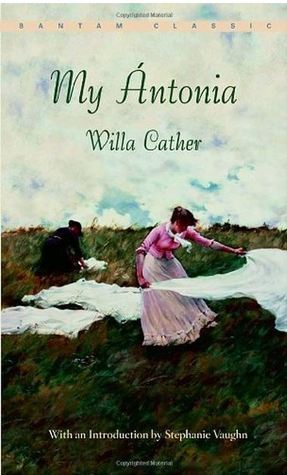
More on this book
Community


Kindle Notes & Highlights


Cather recalled her unsettling first encounter with the prairie: The land was open range and there was almost no fencing. As we drove further and further out into the country, I felt a good deal as if we had come to the end of everything—it was a kind of erasure of personality.
We were talking about what it is like to spend one's childhood in little towns like these, buried in wheat and corn, under stimulating extremes of climate: burning summers when the world lies green and billowy beneath a brilliant sky, when one is fairly stifled in vegetation, in the color and smell of strong weeds and heavy harvests; blustery winters with little snow, when the whole country is stripped bare and gray as sheet-iron. We agreed that no one who had not grown up in a little prairie town could know anything about it. It was a kind of freemasonry, we said.
The only thing very noticeable about Nebraska was that it was still, all day long, Nebraska.
Between that earth and that sky I felt erased, blotted out.
As I looked about me I felt that the grass was the country, as the water is the sea. The red of the grass made all the great prairie the colour of wine-stains, or of certain seaweeds when they are first washed up. And there was so much motion in it; the whole country seemed, somehow, to be running.
Trees were so rare in that country, and they had to make such a hard fight to grow, that we used to feel anxious about them, and visit them as if they were persons.
