
Kindle Notes & Highlights
Read between
February 23 - March 1, 2021

the gospel is not really the gospel unless it is a gospel of grace; in other words, the gospel is only good news if it announces what God has done to save sinners.
These doctrines are important because they take confidence away from any spiritual good that might be thought to reside in man and instead anchor it in the will and power of God alone.
What was once said of liberal churches must now be said of evangelical churches: they seek the world’s wisdom, believe the world’s theology, follow the world’s agenda, and adopt the world’s methods.
According to the world’s theology, sin is merely a dysfunction and salvation means having better self-esteem.
The world’s agenda is personal happiness, so the gospel is presented as a plan for individual fulfillment rather than as a pathway of costly discipleship.
Whatever Happened to the Gospel of Grace? identified six major cultural trends: secularism, humanism, relativism, materialism, pragmatism, and anti-intellectualism or “mindlessness.”

secularism, humanism, relativism, materialism, pragmatism, and anti-intellectualism or “mindlessness.”
In an effort to make newcomers feel comfortable, pastors teach as little theology as possible.
evangelical churches have become much more humanistic. This is inevitable: the less we talk about God, the more we talk about ourselves. Sermon content is determined more by the intended audience than by the sacred Scripture.
many evangelical churches have exchanged godliness for worldliness.
“The Cambridge Declaration”
The Cambridge Declaration is a statement of faith written in 1996 by the Alliance of Confessing Evangelicals, a group of Reformed and Lutheran Evangelicals who were concerned with the state of the Evangelical movement in America, and throughout the world.[1][2]
What happened to the grace of the gospel? It was lost in the church study, when the minister decided to give his people what they wanted rather than what they needed.
When God himself disappears, what replaces him is the self.
“Unwarranted confidence in human ability is a product of the fallen human nature. This false confidence now fills the evangelical world—from the self-esteem gospel to the health and wealth gospel, from those who have transformed the gospel into a product to be sold and sinners into consumers who want to buy, to others who treat Christian faith as being true simply because it works.”
testimonies of saving faith tend to emphasize personal experience rather than the person and work of Jesus Christ.
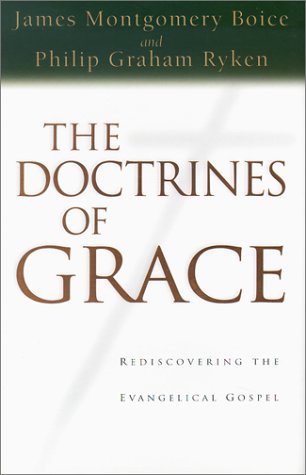
the doctrines of grace preserve the gospel of grace.
shall believe on this his Son Jesus, and shall persevere in this faith and obedience of faith, through this grace, even to the end. . . .
renewed in understanding, inclination, or will, and all his powers, in order that he may rightly understand, think, will, and effect what is truly good. . . .
This is what’s wrong. Man has no power to save himself. Not through any works of himself. It’s only the work of Christ
At the heart of the Arminian position lies the insistence that divine sovereignty must somehow be accommodated to human capability.
The efficacy of the atonement does not rest on Christ’s saving work alone but also on the sinner’s faith and repentance.
Seems pretty insane to me according to the Bible
Try as we may, only God determines our spiritual destiny. We do not.
For Arminianism, human decision making holds a central place in salvation. This results in a theology that is not exclusively God-centered but is distorted in the direction of the self.
salvation is by grace from beginning to end.
Salvation is a gift, in every sense of the word—God’s gift for undeserving sinners who cannot be redeemed apart from God’s saving grace. The gift is given to those to whom God chooses to give it; and although it is offered to everyone, it is not given to everyone. When God does choose to grant this gift, however, he effectively places it in the hands of his child; and once it is received, it can never be lost, stolen, or damaged. Truly, it is the gift that keeps on giving!
Sin has pervaded every part of our physical, mental, and emotional makeup so that there is nothing about us that remains untouched by sin.
Our motives are never entirely pure, and thus to one extent or another all our actions are corrupted by evil desires.
we cannot under-stand our need of Christ until God first gives us spiritual under-standing.
Faith in Christ is not the cause of election but one of its results.
the Holy Spirit, whose inward operation enables sinners to repent and believe in Christ.
the Spirit never fails to accomplish his saving purpose in the mind, the heart, and the will of God’s chosen people.
“All those whom God hath predestinated unto life, and those only, he is pleased, in his appointed and accepted time, effectually to call, by his Word and Spirit, out of that state of sin and death in which they are by nature, to grace and salvation by Jesus Christ; enlightening their minds spiritually and savingly to under-stand the things of God; taking away their heart of stone, and giving unto them an heart of flesh; renewing their wills, and by his almighty power determining them to that which is good, and effectually drawing them to Jesus Christ; yet so as they come most freely, being
...more
It is the faithfulness of Christ, rather than the faithfulness of the Christian, that brings the saints to glory.
salvation is all of grace because it is all of God; and because it is all of God, it is all for his glory.
“Salvation is of the LORD” (Jonah 2:9, KJV).
in their book on divine sovereignty: Ours is a culture in which the tendency is to exalt what is human and diminish what is divine. Even in evangelical circles, we find increasingly attractive a view of God in which God is one of us, as it were, a partner in the unfolding drama of life. But lost in much of this contemporary evangelical theology is the full omniscience, omnipotence, splendor, greatness, supremacy, rulership, and unqualified lordship of God. In contrast, the vision of God affirmed in these pages [their book, Still Sovereign] is of One who reigns supreme over all, whose purposes
...more
Yet God himself has said, “I will not yield my glory to another” (Isa. 48:11).
Is there anything that we can contribute to our salvation? Only the sin from which we need to be saved,
In theology, synergism is the belief that we work together with God to accomplish and apply our salvation.
If man contributes any essential part towards his salvation, he effectively becomes his own savior.
in a fallen world, God’s grace must be irresistible or man’s will can remain forever opposed to God, and the will of the creature overrides the will of the Creator.
To receive the grace of the gospel as God’s grace, we must recover the doctrines of grace.
