
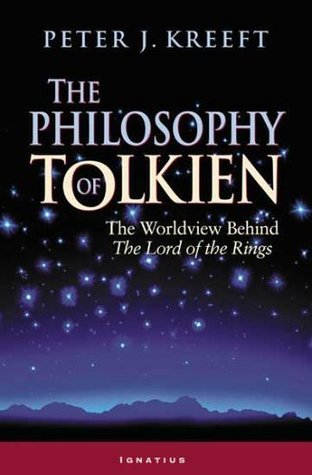
More on this book


Kindle Notes & Highlights

by
Peter Kreeft
Read between
March 7 - March 15, 2025

God seduces our wills but does not force them. As Blaise Pascal says, there is just enough light for seekers and not so much that even nonseekers are compelled against their will.
As C. S. Lewis put it, “What I like about experience is that it is such an honest thing. You may take any number of wrong turnings; but keep your eyes open and you will not be allowed to go very far before the warning signs appear. You may have deceived yourself, but experience is not trying to deceive you. The universe rings true wherever you fairly test it.”2
Paganism tried to understand history in terms of the cycles of nature, but the Bible understands nature in terms of history, as the setting for the drama between man and God and between man and man.
Note the connection between (1) the freedom in man’s life and history, (2) his materiality and temporality, (3) his mortality, and (4) his restless longing (Sehnsucht). Angels are (1) transcendent to history, (2) immaterial, (3) immortal, and (4) complete.
C. S. Lewis writes about the unpredictability of history too: About everything that can be called “the philosophy of history” I am a desperate sceptic. I know nothing of the future, not even whether there will be any future. . . I don’t know whether the human tragi-comedy is now in Act I or Act V, whether our present disorders are those of infancy or old age.6
But there is hope. After Sauron’s defeat Aragorn ushers in a new golden age. Yet this is only temporary. Every victory over evil is. Aragorn’s descendants gradually lose his nobility, and the pattern repeats. The pattern is free, yet it is cyclic: (1) divine blessings, (2) consequent human prosperity, (3) the fall into pride and laziness, (4) consequent decline, (5) disaster, which stirs (6) repentance, which brings as its result (1) divine blessings again. This is the repeated pattern of the history of Israel in the Bible, and it is the universal pattern for the history of all nations. For
...more
There are at least two great eucatastrophes in The Lord of the Rings. The most dramatic one is at the Crack of
Doom. Sam and Frodo are at the end of their road, utterly hopeless and prepared to die. One of Frodo’s fingers has already fallen into the Crack of Doom, surrounded by the Ring and Gollum’s teeth; and the rest of Frodo and Sam are about to follow when Mount Orodruin erupts. But Frodo has completed his Quest: this is his joy. As for Sam, Frodo’s return from what could be called spiritual death is his joy. Sam sees Frodo “pale and worn, and yet himself again. . . . ‘Master!’ cried Sam, and fell upon his knees. In all that ruin of the world, for the moment he felt only joy, great joy. The burden
...more
The nearly miraculous outcome leaves the reader no room for pride or self-righteousness, as many “happy endings” do.
