
More on this book
Community


Kindle Notes & Highlights

by
Neil Shubin
Read between
February 9 - February 10, 2019

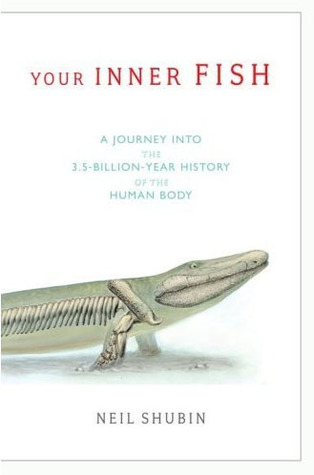
When we study the structure of these joints to assess how one bone moves against another, we see that Tiktaalik was specialized for a rather extraordinary function: it was capable of doing push-ups.
Why would a fish ever want to do a push-up?
What possessed fish to get out of the water or live in the margins? Think of this: virtually every fish swimming in these 375-million-year-old streams was a predator of some kind. Some were up to sixteen feet long, almost twice the size of the largest Tiktaalik. The most common fish species we find alongside Tiktaalik is seven feet long and has a head as wide as a basketball. The teeth are barbs the size of railroad spikes. Would you want to swim in these ancient streams? It is no exaggeration to say that this was a fish-eat-fish world. The strategies to succeed in this setting were pretty
...more
Don’t even bother trying to compare your body plan with a sponge. You could try, but the mere fact that you were trying would reveal something more psychiatric than anatomical.
All animals are the same but different. Like a cake recipe passed down from generation to generation—with enhancements to the cake in each—the recipe that builds our bodies has been passed down, and modified, for eons.
Here’s a humbling thought for all of us worms, fish, and humans: most of life’s history is the story of single-celled creatures.
